On 2-3-05, Ben Lehman wrote:
I want you to talk about mechanical, rigorous system that is not about conflict resolution at all.
I don't care what else it is about. That's a wildcard. But Dogs has a bunch of it, so I can tell you've worked on it before.
yrs--
--Ben
P.S. I also want to talk about your "what makes a character a protagonist" bit. I think you're missing something.
On 2-3-05, Keith, Goat Master wrote:
Being new here and not having a chance to read everything there I may mention something already covered. Feel free to smack me upside the head. I would like to see something on:
1) Activities and interactions that occur between play and how they help or hurt play
2) Endgames for games without defined endgames
3) Mixing gaming approaches (Offline with Online)
On 2-3-05, Emily Care wrote:
Player input mechanics like fan-mail(PtA) and trust(tMW), and the dynamics they create between players.
Providing adversity to yourself and others. Creating a social contract the lets you take the kid gloves off while staying friends.
On 2-3-05, Chris wrote:
-The hows and whys of folks throwing on blinders and becoming unable to recognize the quite obvious nature of roleplaying at the table, that is, its just people talking, credibility, etc.
-How people can use creative limitations(focus the elements) to add momentum and direction to play("You're all Dogs!") and what that means for players, for GMs, and the group as a whole
On 2-3-05, Matt wrote:
The division of authority, and new ways to spread it around (cf. GOG, Universalis).
On 2-3-05, Brennan wrote:
I don't have anything specific to ask about, although I am very interested in where this will go.
On 2-3-05, Weeks wrote:
How about you summarize the state of the art as you see it. You've been talking "this is better than that" and you've mentioned obsolescence in game designs a couple times recently. Want to synthesize it all?
On 2-3-05, Eric Finley wrote:
The elements of adversity. We've got Stakes. We've got uncertainty. We probably have back-and-forth stuff to extend and stretch that uncertainty (this is where Dogs kicks some of my current designs' asses). What else? What's the checklist? Given that infrastructure, I think we could do a lot more to answer your question in your other today's post, about how you determine the GM for a character.
Also ties in to the last point in Emily's comment. How do you take the kid gloves off so that the adversity level goes through the roof with everybody having fun with it?
On 2-3-05, inky wrote:
This is both a softball and impossible to answer, but my basic RPG problem is I don't have as many cool things happening per minute as it seems could be happening. Any insight?
-Dan Shiovitz
On 2-3-05, TQuid wrote:
Try Chaos Magic[k]. You don't have to believe in it, except in the provisional, experimentalist way you describe. It's pure deconstructionist goodness. _Liber Null & Psychonaut_ seems to be the major text as a how-to kit.
Really advanced Chaos Mages (*cough*) seem to end up disproportionately as musicians and other kinds of artists as their notion of what constitutes "magick" mutates.
On 2-3-05, Ninja Hunter J wrote:
Yeah, I think Eric's got the idea here. I want a summary, too.
Here's the stuff I see going on, the problems I see people confronting, and I want to know where it fits into your theoretical structure, and I want to know what, and if, you think is relevant.
- Mechanical support for inter-character support.
- Mechanical support for player contribution to non-character plot elements.
- Ways to contribute conflict when it's needed to prevent dead-ball and make story jump when otherwise it gets the slowest.
I'm wicked into Emily's question about the kid gloves, too.
On 2-3-05, Chris wrote:
Dan/inky - email me @ yeloson at earthlink dot net.
On 2-3-05, Tim Alexander wrote:
I'd like to hear Vincent's take on how contributions are valued in games. Does it take an equal share to work? Is it better with an equal share, does it matter? Specifically related to the trend for GM/Player specialization, i.e. the one guy that always runs the games because no one else wants to, can, feels up to it, etc. This relates to the kid gloves question of Emily's as well, and I see it being wrapped into authority issues too.
-Tim
On 2-4-05, xenopulse wrote:
Vincent,
Your writing reflects a lot of what I've learned through many years of freeform roleplaying. Especially the pieces on character death and actual play. I was going to elaborate, but alas, no discussion in this thread. :) So, as far as topics go, I'm interested in more on Putting the Action into Actual Play.
Thanks for sharing.
- Christian
On 2-4-05, Chris Goodwin wrote:
I'd like to see you discuss task resolution vs. conflict resolution (a la here) in the context of GNS.
On 2-4-05, Chris wrote:
Good situation building!
On 2-5-05, Tony wrote:
Roleplaying game vs Storytelling game. Which one am I? How do I tell?
Cheers,
Tony
On 2-6-05, Jasper Polane wrote:
Any mechanics that are not resolution.
On 2-7-05, Emily Care wrote:
Hear, hear to Jasper's suggestion. We need a taxonomy of what mechanics can & do do.
On 2-7-05, Id wrote:
Pacing.
On 2-8-05, Dave Ramsden wrote:
I'd like to discuss LARPs and how they differ from tabletop play (compressing IIEE, player responsibility for input without direct oversight, etc.) but that may not be everyone's cup of tea.
On 2-8-05, Charles wrote:
One thing I keep wondering about is the idea of using high mechanics systems for short periods within a larger low-mechanic game. The strongly narrativist mechanics seem to offer the most interesting possibilities.
What would it look like to play out a couple of sessions of an existing game (with highly developed characters, ut probably relatively low narrative movement per session) using a system that emphasizes stylization and narrative movement?
On 2-9-05, Tom wrote:
If I want to make a new class for d20, what are the major factors to consider? I'm interested in both the underlying math (how to make sure class features keep pace with other classes and rising CR levels) and more subtle issues around keeping the class interesting to players and useful to the overall party.
Failing that: Underpants for monkeys. Boxers or Briefs? Why?
On 2-10-05, Dav wrote:
What, exactly is the benefit of freeform roleplaying vs. a more traditional structured roleplaying. If the answer, in the end, boils down to: aesthetics, then that's fine, but I s'pose not truly worthy of discussion.
My question, to be a bit more narrow, would be: your games have little in the tradition of a few players and a gm... is this because you are sick of it, because commie-storytelling is better, or because of something else entirely (such as, it just happens to fit your games better, as a coincidence).
Also, check-out Jared's darkpages thing, that's kickass.
Also, how'z trix and what have I missed? When did this start?
Dav
On 2-11-05, Tobias wrote:
(when designing) - setting the strength of setting and premise tight enough to give powerful play, but not so tight that every game´s the same (or results in the same decisions to hard choices)
On 2-16-05, anon. wrote:
Can Task Resolution be combined with Conflict Resolution if part of laying out a Conflict is to explicitly state the tasks which are to be done within it?
On 2-16-05, Dave Ramsden wrote:
Can Task Resolution be combined with Conflict Resolution if part of laying out a Conflict is to explicitly state the tasks which are to be done within it?
On 2-20-05, Piers Brown wrote:
The role of flexibility in game design--how much 'give' or 'play' do systems need to make room for the players?
What I'm getting at--in DitV all the pieces (see and raise, "say yes or roll the dice", fallout, town building, random characters, etc) are necessary, but at the same time the don't quite meet up; there is a sort of space between them in which the players and GM mediate between the different parts of the system. How does that work?
On 2-23-05, Ben Lehman wrote:
A complete textual redaction criticism of AD&D 1st edition.
Also, a pony.
And a spaceship.
yrs--
--Ben
P.S. I'm ribbing you. If anyone else who reads anyway wants to work on this, though, I will be super-happy.
On 3-1-05, Chris wrote:
- The defense mechanism of folks to focus on the imagined content rather than what's happening at the table.
- Self esteem of the actual players and how that affects play
- Why Sim is the hardest way to get non-gamers to buy-in
- How DitV really does the Sorcerer premise "You've got the power, now what do you do with it?" and how it scares people shitless :)
On 3-1-05, luke wrote:
Hi Vincent,
I was wondering if you could open up a thread so I could grill you about some of the stuff you said in Conflict vs Task Resolution and A Small Thing About Character Death.
thanks!
-Luke
On 3-4-05, Matt Snyder wrote:
Chris, it's cool. I understand what you're saying, and why you're saying it. Maybe I should have held my fire, because my comments were for you and Vincent directly, and not for people working through the distinctions you and Vincent have made throughout this good thread. Don't want to muddy the waters! Carry on, all!
On 3-4-05, Eric wrote:
Fleagh. I think I'll just withdraw from this sucker; I'm happy that I understand what I'm talking about, and while I do not understand why Vincent chooses to draw links (that I see as unnecessary) and then defend exclusivity of modes on the basis of those links... it's his privilege to do so.
It's right down to the definitions level. Vincent uses "non-thematic" as a category, which to me looks like ignoring his positive definition of Sim. I don't buy the "non-thematic" as a defining characteristic of anything except, well, non-Nar play. Vincent, take a look back at your positive definition of Sim - with "or" explicitly between the bits you list. Ignore GNS; to assert your positive definition of Sim, you have to assert that if we "realize this ideal, enact this vision, celebrate this source material, fulfill these wishes!" then we are somehow by consequence not addressing premise. In one specific case (reverence as you've defined it) this works; but that case is not your definition, and I do not buy the logic that all of these exclude address of premise.
You're fabricating a taxonomy which posits exclusivity, using that to define Sim, and then looking for a "positive definition" which somehow inherently brings along an exclusive relationship to this other positive definition. As though "non-thematic" and "realize this ideal" had some intrinsic deep-level tie. I don't think it's defensible, dude; it's just bad logic. Which is why "reverence of source material" looks to me like a special case being stretched and twisted to cover something it can't.
But I think my own take on it's been sufficiently articulated here that anything more is just banging a drum. Apparently you see an a priori reason why the GNS modes should be exclusive of one another. 'Kay. I don't.
On 3-4-05, Vincent wrote:
Eric: "Ignore GNS; to assert your positive definition of Sim, you have to assert that if we "realize this ideal, enact this vision, celebrate this source material, fulfill these wishes!" then we are somehow by consequence not addressing premise."
Yeah, that's precisely what I'm asserting.
Can we agree that play can't be in the any of the yellow regions on my dart board and simultaneously in the green region? That is, it can't simultaneously be non-thematic and thematic, nor non-player-empowered and player-empowered?
If so, then there are exclusive modes of play at that level. Right?
Now, I go on to say this: to realize someone's ideal, we have to defer to their vision, giving up empowerment. To celebrate source material, we have to hold it static in the face of Premise, giving up theme.
Taken together, those two describe the play in the yellow region.
Don't they?
On 3-4-05, Eric wrote:
They describe examples of play in the yellow region. Do they necessarily span it? I don't think so.
But nevermind that, I'm taking issue with the whole chart. Your above logic assumes that "Yellow=Sim" is a meaningful label, which it is only if you use a negative (not-Thematic nor Competitive) definition of Sim. If you use a positive definition of Sim - or for that matter Gam - then the structure of the chart is simply meaningless. Is there any a priori reason why Thematic Play and Competitive Play don't overlap at all? I don't see one in logic, and I don't see one in my gaming.
My version of the chart would have to include three circles in a Venn diagram arrangement; Thematic play in one circle (everything outside is not), Competitive in another overlapping circle (everything outside is not), and Celebratory or some such in the third. Because I don't grant you that there's any reason to deny the existence of play that is simultaneously Thematic and Celebratory - your examples do not make a rule. At most, you could contend that play has to be more one or the other; but that's like saying that no matter how close, either the drum or the guitar is louder - null statement, not relevant.
If you want to eliminate regions of that more complicated chart - such as the Thematic-and-Competitive region that's on mine but not yours - then by me you have to show why it is not possible for an instance of play to satisfy both positive definitions simultaneously. And I've seen lots of examples, but not only can examples not suffice for this task... I can also personally think of counterexamples.
Players tend to enjoy one mode more than another, and tend to have more fun when sharing the same mode (coherence); this makes GNS useful, makes it worth designing coherent games, but in no wise needs exclusivity to exist. You can play a song for guitar fans, and indeed to please the guitar-appreciation streak in anyone... but you do not (and should not) claim that it's "exclusively a guitar song." It's meaningless and not useful, leading to discussions just like this one. "The guitar sure was rockin' in that set" is the nonexclusive equivalent... and far more useful. You're trying to say that there're "guitar songs" and "drum songs" and there are reasons X and Z why good guitar and good drum are exclusive of one another. I say bullshit; at most, the overlap makes it harder (because we have finite audio bandwidth), which is all your examples say to me.
On 3-4-05, Emily Care wrote:
I think a priori is the right term. GNS is predicated on mutual exclusivity of the modes. One of the prereqs for naming a "fourth mode" is finding one that is mutually exclusive with the existing three. I find it frustrating.
However, illustrating the theory as it stands, if we look at it in band terms, the different instruments are not what define the CA but what is played on them. CA conflict occurs when someone is playing brahms on the piano and someone else is playing hendrix on the electric guitar. By modern music standards, this might actually end up being edgy and interesting, but in usual terms it would be seen as incoherence.
On 3-4-05, Neel wrote:
Some questions, based on your comments:
Can we agree that play can't be in the any of the yellow regions on my dart board and simultaneously in the green region? That is, it can't simultaneously be non-thematic and thematic, nor non-player-empowered and player-empowered?
If so, then there are exclusive modes of play at that level. Right?
Okay, this is the law of the excluded middle. I'll buy that, so I'm with you so far.
Now, I go on to say this: to realize someone's ideal, we have to defer to their vision, giving up empowerment. To celebrate source material, we have to hold it static in the face of Premise, giving up theme.
Here's where you lose me. I literally go "whah? hunh?" here. Why is reverence necessary for Sim? Every single time I've gone off and run a game as a small-s simulation, I haven't considered fidelity to any kind of source material as even remotely important. The fun I'm chasing is like the roleplaying equivalent of what you get when conlanging, playing with legos, programming, or worldbuilding. It's us, making OUR OWN stuff that's what's important. Y'see?
On 3-4-05, anon. wrote:
If I may offer an alternate diagram...
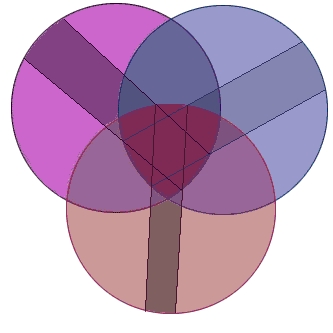
The intent here is one circle each for Thematic, Competitive, and (for want of a better term) Stylistic. Each is split into the middle segment ("with player empowerment") and the outer ("without"). I didn't bother labeling the circles; each can be any. This shows just how complicated the middle could be if we assume we could be Empowered in just one, any two, or all three.
But, IMO, the important thing here is the fact that there are overlaps, not the tiny intersections of the XYZ chart. This was what completely threw me for a loop earlier. SIM and NAR don't barely touch one another (or, they do in theory, but NOT in practice -- it's an old joke now to say that in theory there is no difference between theory and practice and in practice there's no relationship between theory and practice). I think I now understand what Vincent is trying to do. He's trying to define the area in the SIM circle that isn't in either other circle WITHOUT saying "it's play that lacks conflict and theme".
Which means the idea that what I've call "genre-loyal play" is down there is true, but it's misleading. Most genre loyal play is informed with NAR or GAM or both. What is in the pure-SIM area is much more unique. It's things like the improv games shown on "Whose Line"... Characters lack names or perhaps there aren't even characters, there's just a rule for how you must talk/act. Down here, what matters is STRUCTURE. Genre is a structure. So is Setting. So are character Archtypes. Heck, so are the rules of poetic form, the "must sing all dialog" rules of pure Opera, the traditions of No, etc., etc.
So, I'm back to the SimCity model. That game provides a structure, a set of items with behaviors you can create, assemble, and observe. If you like, you can create NAR or GAM objectives to color this, but at hear it's pure SIM. And that's what a pure-SIM game is. It's a big-ass box of LEGO that you dump out and play with, linking and creating and destroying. You don't try to build a house or a car or something, that'd be drifting toward NAR. You don't try to out-build someone else, that GAM. You just build for the joy of building.
A pure SIM RPG? Well, I think the episodic TV model holds. Rocky and Bullwinkle are always themselves, every new story, and those stories always circle back to where they started. Ranma and Akane will tease the audience and each other that this time it'll finally work out, but in the end it's always right back to square one. Paranoia Clones (in ZAP style and pretty much in Classic, too) are pretty much "crunch all you want, we'll make more", differentiated barely at all. In pure SIM, we want that fixed archetype or faceless replacability, because we don't want NAR to intrude more than just a little. We want our pieces to bounce off each other for a while, as we observe their interactions, then we put them away (or, in the faceless case, throw them away), to be pulled out (or recreated) for the next time. We don't want a big carefully-planned mystery with hurdles and problems to solve (too GAM), just a situation we can explore and interact with.
Yeah... I've run and played a LOT of TFoS that fits fairly well into that niche. It's not the main style of gaming I do (though it was for one summer when I ran TFoS almost every weekend and a friend ran Paranoia when I wanted a break. It was fun. It wasn't the same style of gaming we'd learned with D&D, T&T, and V&V (this was maybe 1985, so there weren't THAT many games around), the pursuit of character-building was replaced with the goal of just having fun now, even if that meant making a new character for the next session.
And have I "grown out" of that now that I have more sophisticated games to play? Not a chance. Heck, I'm scheduled to run a TFoS/Amber cross-over at AmberCon in just hours under four weeks. If it's anything like the last time I ran this idea, it'll be a blast.
So there's the "pure SIM" world, IMO. Games with neither over-arching competition or theme, just the interaction of roles in a setting. Yes, it develops mini-stories and mini-competitions here and there, but it's never about those things. It's about being your role in a given setting with presented other roles to interact with. All the rest is happenstance.
Yes, I understand what you were going for with the "reverence" issue earlier... I still disagree. The issue isn't that you can't change the setting for human reasons because the setting is sacred, it's that you don't need or want to, because doing so violates the nature of the structure. The players don't change the rules during the game (though perhaps they do BETWEEN games). In-game, they deal with the structure as presented.
On 3-4-05, Ghoul wrote:
hmmm... that came out smaller than I wanted.
Try just clicking on this and it may come in larger and clearer.
On 3-4-05, Chris wrote:
Hi Neel,
It's us, making OUR OWN stuff that's what's important. Y'see?
Reverence to your own stuff also counts in Sim. Reverence to "reality", to canon, to the GM's notebook of world notes, to the stuff in his or her head, to the random stuff we create when we have non-structured Universalis play minus thematically charged conflicts, etc, etc, etc.
On 3-4-05, Ben Lehman wrote:
I'm not going to reconstruct the history of this, nor work especially hard to defend it, here on my blog. If you want either of those, I'll see you at the Forge.
Guys?
I think we've reached the point where you are not saying "I want to learn about this model" but rather, "I am interested in tearing this down." Perhaps this journal isn't the best place for it?
yrs--
--Ben
On 3-4-05, Vincent wrote:
Four things and then let's call it a night. We can come back to this when we need to.
Thing One. Everybody who thinks that thematic play, competitive play, and reverent play can coexist: please take a few days, first to decide if you actually care that much and whether we need to keep discussing it, and then second to read up on the process of creating a theme. When we pick it up again, you should be prepared to talk about the process of creating a theme, the process of assessing another's guts, and the process of realizing someone's vision. I'm absolutely willing to consider that those processes needn't interfere with one another - that is, that there's overlap between Nar, Gam and Sim play. But if you want to make that case, you should know what the processes are, and you should have some ideas about how a group could work around their apparent contradictions.
I've written some about the process of creating a theme here, and it's a thing I love to talk about, so if anyone wants a refresher just say so.
Thing Two. Everybody who thinks that GNS Simulationism isn't the yellow region of my dart board, I don't know what to tell you. Maybe try reading Ron's The Right to Dream essay with my explanation in mind, see if the two click together.
Thing Three. Everybody who thinks that Simulationism shouldn't mean the yellow region of my dart board - believe it or not, I agree with you. I wish we could talk about Simulationist approaches to collaborative thematic play, about collaborative thematic play based on solid Sim techniques. I wish that Sim meant what you think it means. Maybe in the next world.
Trying to change this world - I need to design games instead. If you come up with a workable plan though, seriously, tell me what and I'll help how I can.
Thing Four. Everybody who's still here and who cares should read my friend Ed's reflection on this thread, here at Esoteric Murmurs. It's very good. Wipe your shoes first.
Thanks, everybody!
(Neel, I feel like I maybe owe you a post about reverence, authorship and group creation. Let me know if you feel like I do too.)
On 3-5-05, Ben Lehman wrote:
Identity politics have been with the theory since the beginning, when it was GDS, and have haunted about it since, its shadow.
To keep them out is a constant struggle.
I'm happy to not talk about it here. But let's not give up yet, please?
On 3-5-05, LordSmerf wrote:
Interestingly enough I was talking about this over on my LiveJournal today.
My basic stance: GNS is still as useful as it ever was. We just need to clearly understand what it can and can't do, which I think has been lost somewhere along the way...
Thomas
On 3-5-05, Chris wrote:
Hi Vincent-
There is no 100% way of communicating anything for 100% understanding all the time. Understanding is a meeting point between two places. You can communicate as best as you might, and people have to meet you half way.
Sometimes folks have no personal experience to draw upon, and that's why they can't reach you. Consider the inability of many folks to grasp Narrativism or Simulationism depending on their own play experiences. More words never make it as clear as actual play experience and relating it to that.
Then add in the fact that society in general has trained more people to argue on the principle of establishing dominance rather than information exchange and discussion. Even if that isn't how you personally run things, it becomes easy to be defensive surrounded by that kind of intercourse. Identity politics are part of our societal conditioning, whether we like it or not.
Failed? Only if our goal was to make everyone understand(if not agree). In which case we can look to several other figures who were much more persuasive in history and dealing with much more serious issues and failed to get their point across to everyone(say, Gandhi). Thankfully, we're only talking about games, and we're a lot less charismatic and persuasive. It doesn't matter what you're talking about, or how clear headed you make it, someone, somewhere will misunderstand due to accident, selective reading, or simple laziness and the desire to support or oppose it without understanding. Words are clusmy tools, but they're all we got.
But- as far as your blog, it's your blog, and this might be the best decision. Especially since all you added was a chart talking about what has been at the Forge for years now, and having to start completely over from scratch. Instead of progress and building on what was there, it was back to square zero. If you want to deal with that kind of stuff again, I might suggest that you just throw up some links and go, "Review THIS" :)
On 3-5-05, Ben Lehman wrote:
Policy question --
Does this apply to the whole Big Model or just the G, N and S divisions in Creative Agenda?
yrs--
--Ben
On 3-5-05, Neel wrote:
Hey Vincent, you don't -owe- me anything, but I'd be totally interested in anything you have to say.
Clinton, Chris -- is it okay if I start a thread at 20x20 or someplace to carry on our conversation? I'd like to talk publically, if you don't mind, but Vincent has indicated he's tired of it here, so we should continue elsewhere.
On 3-5-05, Vincent wrote:
Ben: Just the words themselves: Gamism, Narrativism and Simulationism.
The Big Model, being as far as I can tell the only accurate description of roleplaying available, is very much within policy.
On 3-6-05, Chris wrote:
Neel- I'm down for it :)
On 3-6-05, Matt Wilson wrote:
Legos?
On 3-6-05, Per wrote:
I understand and acknowledge your line in the sand, Vincent. I don't see it as failure, though, it's probably very sound to discuss what happens during roleplaying without using those...well, particular words. Thematic player-empowered play is exactly what I want anyway, and I want to know how it works, how I approach it, how I make sure that I get it, and how I explain it to other people (roleplayers or not) why I want it and how it works.
I have discussed with a lot of roleplayers who haven't even given these things a moment of thought. At least people responding to your blog feel passionate about RPG theory - and practice ;)
On 3-6-05, Eric wrote:
Did he do the drawing, or is the drawing your transcription? And how old is that kid? I just acquired an 11-year old on Friday... I kid you not, we're foster parents... and totally need to work on, like, "What's a good gaming kid look like at this age?" He's not ready yet, but I can see it on the horizon.
On 3-6-05, Vincent wrote:
Legos, yes. Sebastian's 8. He built the little thing and I drew it.
It's a microfig-scale motorcycle!
On 3-6-05, 888 info wrote:
888 info http://888-info.p5.org.uk 888 info is in town and all is awaiting. The biggest 888 info of all is you best bet on betting.
On 3-6-05, Ninja Hunter Ja wrote:
That kid's a genius! It took me months to come up with one, and his is great!
For context, I was trying to come up with a microcycle and consulting with Vincent and Seb along the way, most of the time getting big nixes from the two of them.
Here's one: http://joshua.swingpad.com/microcycle/
These are for my sucky tabletop game Roroga.
On 3-7-05, Luke wrote:
I'm right to feel guilty, aren't I? Not that I ever fucking called my self a Simulationist (it's like calling myself a Borg or something). Still, I feel guilty. I've hurt this blog.
:(
S'okay, GNS is shite anyway...
;)
Let's talk about Character Death! Task and Conflict resolution!
-L
On 3-7-05, Party Poker wrote:
Try Party Poker http://poker-party.freeserverhost.com Party Poker - best rules, tips, history, and, of course, the game. I also said that Party Poker is my recommended URL for Party Poker. Nice articles and comments on Party Poker http://poker-party.freeserverhost.com Party Poker and other related issues.
On 3-7-05, Vincent wrote:
Luke: "Still, I feel guilty. I've hurt this blog."
Feh.
What "hurt" this blog was a Forge thread yesterday morning. There it is, onto its second page, somebody saying "where do I fit in GNS?" and it's all people answering who don't know what they're talking about. Not a single correct answer in the two pages.
I'm looking at it and I'm going, how much work would it take for me to step in and correct all the misconceptions? Answer: a little bit of work. And I'm going, but how likely is it that the thread would then become another unholy shitstorm? Answer: very, very likely.
And that's the vibe I get: everybody who knows the answer is looking at the thread going, is the shitstorm worth it? Which of us has to be GNS cop this time? And the wrong replies are mounting.
People feel ownership of the words even though they don't understand them, and thus resist understanding.
I don't think that's you, Luke. You, I'm like "here's the definition" and you're like "that's a shite definition," but you're not like "that's not the definition," as though I might not know the fucking definition of fucking Simulationism.
I'm done fighting with them (and now I'm done venting about them too). I want to establish a venue where I don't have to keep fighting. That means leaving the contested words behind.
Next up: tidying the open house's loose ends as best I can, talking a bit about my design process, making the posts that I owe you and Neel, and making a post about the process of creating theme. Probably not in that order.
On 3-7-05, Party Poker wrote:
Play, bet, win Party Poker http://poker-party.freeserverhost.com Party Poker, only the best for you. Look at Party Poker for rules and tips.
On 3-7-05, Brennan wrote:
I would like to continue talking design theory here, Vincent. I know that last thread turned into a shitstorm, but I really have a hard time with GNS. I am very happy to talk about all the other crap, though, and avoiding GNS discussions won't bother me a bit.
On 3-7-05, Luke wrote:
I don't think that's you, Luke. You, I'm like "here's the definition" and you're like "that's a shite definition,"
very true. and very cool. I look forward to many fruitful hours of lurking.
-L
On 3-7-05, Eric wrote:
Wow. That's one smart - and lucky - kid. If and when you decide to open up with the design process and/or punt for playtesters, you know you got 'em.
On 3-7-05, Pete wrote:
Heh. I'm stealing my 6 year old's idea for my best selling kids book. I say go for it.
On 3-7-05, Ben Lehman wrote:
For what it's worth, here's what *I* got out of this thread:
http://www.livejournal.com/users/benlehman/63124.html
On 3-7-05, Matt Snyder wrote:
Man, this hits me on so many levels.
First, yeah, that's me designing too. I've got stacks of notebooks half-filled with sketches, ideas, and numbers.
Second, design to expose yourself? For me, designing games is an outlet where I can be honest with people. It hasn't worked for me in creating other stuff. This, it works. Right on.
Third, designing in the open is hard on the designer. This isn't to say it's wrong or a wholly bad idea. I am not speculating.
Fourth, Red Sky A.M.? Brilliant. Skip that kid a few grades already!
On 3-7-05, Luke wrote:
keep it secret, keep it safe.
On 3-7-05, Judd wrote:
That's about the sweetest game design story ever in the history of game design stories.
On 3-7-05, Matt Wilson wrote:
Awesome. Sebastian is like a way cool version of Doogie Hauser. You should ask him to do the artwork for it. That'd take your game right to the edge right there.
I also do 3-4 games at a time, but they're all the same goddamn game, back and forth, and it makes me and the baby jesus cry.
BTW, If I had a game group that was functional, I'd totally offer to playtest. I'm still offering, but you know, with a caveat.
On 3-7-05, Ben Lehman wrote:
I'm happy to do that... thing... that I did with Dogs, whenever you're ready for it, if you want it.
yrs--
--Ben
P.S. Dude, man I was just talking up Red Sky AM last night, to the players who played Dogs.
On 3-7-05, xenopulse wrote:
Honestly, this is why I think efforts like Nate's (Theory Without Jargon articles) are so important. Yeah, I probably have many misunderstandings on the theory. It might be my fault, though I usually am a theory type of person (with an M.A. in political philosophy and international relations theory). But several times, I've encountered things like "Well yeah, that's what that article says, but since then things have changed, and here are the five threads about that." So I am constantly playing catch-up.
Example: You said in the Shitstorm Thread (TM) that the decision-by-decision take on GNS is incorrect. But in the GNS and Other Matters of RP Theory article, Ron wrote in chapter 2:
"Much torment has arisen from people perceiving GNS as a labelling device. Used properly, the terms apply only to decisions, not to whole persons nor to whole games. To be absolutely clear, to say that a person is (for example) Gamist, is only shorthand for saying, 'This person tends to make role-playing decisions in line with Gamist goals.' Similarly, to say that an RPG is (for example) Gamist, is only shorthand for saying, 'This RPG's content facilitates Gamist concerns and decision-making.'"
Now, I can see, after the Shitstorm Thread, that your position is that we need to look at groups of decisions and not individual ones. But that's not the vibe I got from this article. In fact, the article seems to warn that we shouldn't lump them together because that leads to labeling.
So we can stop talking about things like this, or someone can sacrifice their valuable time and effort to bring the theory up to speed in one place, in an understandable fashion. I'd do it, if I understood it properly. But the place for that is the Forge, anyway, and you should use your blog to do your thing.
In any case, thanks for sharing your wisdom.
- Christian
On 3-7-05, ScottM wrote:
When you first mentioned it, it sounded like you were thinking of it as a cool structure for a PTA game. I suspect you're not going to design the game to be a PTA clone... at what point did you decide that it needed to be its own game, not a cool PTA game?
[Note: I'm not invested in seeing this as a PTA game, of course, I'm just trying to get some non-specific designer info into the world. Yup, selfless questioning here...]
On 3-7-05, Vincent wrote:
Christian: "So we can stop talking about things like this, or someone can sacrifice their valuable time and effort to bring the theory up to speed in one place, in an understandable fashion."
Because doing that never turns into a shitstorm where you have to defend it. Because when I say things clearly, nobody ever argues with me or replies with entrenched nonsense.
But yeah, I promise, a year from now, two years from now, the theory will be better elucidated and more widely understood than it is now. I'm making a step toward that: I'm going to stop provoking fights by using a word people kind of like to mean "crap roleplaying." I think that'll work out better.
(Hey, and if you'd like to ask me about the apparent contradiction between my position and Ron's wrt individual decisions and GNS, PM me at the Forge.)
On 3-7-05, Michael S. Miller wrote:
Lookin' forward to Red Sky A.M. Let me know when you're in the market for playtesters.
As for the private design vs. public design, I suggest looking at all the indie games on one's shelf. Separate them into two piles: Those that were designed in public and those that were designed in private. Which stack is bigger? Definitely the privately designed stack.
Now, if I could only follow my own advice...
On 3-7-05, xenopulse wrote:
Because doing that never turns into a shitstorm where you have to defend it. Because when I say things clearly, nobody ever argues with me or replies with entrenched nonsense.
Do I smell some sarcasm here? :)
I understand that there are a lot of preconceived notions out there, and those always prove to be a problem to theories in any field. I guess one would have to start at the very beginning. And that would require a whole book, given the complexity and amount of aspects of the theory by now. So yeah, that won't happen.
Anyway. I'll send you that PM soon. Thanks for being willing to discuss all this stuff, still.
On 3-7-05, Vincent wrote:
Scott: "...at what point did you decide that it needed to be its own game, not a cool PTA game?"
Pretty much when the lightning struck. Sans lightning, it could easily have been a potential (and maybe eventually real) PTA game for the rest of its life.
Hints?
A GMed game, with everybody else playing two characters, a marine and a civilian. Play will alternate between the front and the home front, with resource feedback between them.
Both at each front and operating between them, the dynamic is "who's giving up what for whom?"
Also: strict but sufficiently fearsome limits on the GM's mechanical resources.
On 3-7-05, Brennan wrote:
Very cool. Sebastian sounds very sharp. I really love this age (Crispin just turned 9), because they are still kids, but they have these flashes of grown-up sophistication. Awesome.
Crispin just pulled one of these the other day. Krista has been talking about the iPod as her "Precious" for weeks now, and she comes into the room carrying it while Crispin is doing his homework. He looks up and says, "Gimme the iPod." Krista says, "Why?" and Crispin says, "Because it's my birthday and I want it."
Oh, and I am an eager volunteer for playtesting.
On 3-7-05, timfire wrote:
Could I squeeze in one last question before you close this, err, thread? Hopefully I can phrase this in a way that makes sense...
Could you discuss granting players' broad directorial powers -- the extreme example being Universalis -- versus granting players very narrow or specific directorial priviledges -- like I've done with Fates in tMW? How does this effect the creation of theme in actual play? How does this effect the feeling of "authorship"? Is there really a noticable difference in play, or am I just confusing myself?
In other words, many games, when they do grant directorial power, grant very broad directorial power (ala the generic "drama points"). Players can mostly do whatever they want. But in tMW, players can only use directorial power if it plays into their Fate, and they can't effect another player's Fate. Do these 2 approaches cause a noticable difference in actual play?
Thanks!
On 3-7-05, Vincent wrote:
That 99 sitting there was just too tempting, huh?
Everybody, Ben wins the 100th comment prize. I knew somebody was gonna.
Here's Ben's link, linkinated.
On 3-7-05, Ben Lehman wrote:
Yeah, I suck. ;-)
yrs--
--Ben
On , anon. wrote:
On 3-7-05, Clinton R. Nixon wrote:
I'll be short and to the point:
Yay!
Man, I've been looking forward to hearing more about Red Sky A.M. ever since you first posted about it.
On 3-7-05, anon. wrote:
Link's broken, though. Try this one.
(Man am I going to feel stupid if I break this one as well :)
- Christian
On 3-7-05, Kaare wrote:
I'm feverish as I write this, but this might be the "war"game I've always wanted to play.
On 3-7-05, Chris wrote:
Hi Vincent,
I'd like to think I have some passing GNS understanding, but if I fit into being one of those entrenched bugaboos you mentioned, please email and help me understand if I'm tripping somewhere along the line :)
yeloson at earthlink dot net
On 3-7-05, Mike Holmes wrote:
Have you asked Sebastian yet? I don't want to sound all doomsdayish, and he'll probably say yes (if he hasn't already). But there are some potential problems with "stealing" the idea. Let's say that your game does well, but he doesn't manage to get his comic completed. Don't you think he might resent you for stealing his thunder? Even if that's just a rationalization on his part? And that's just one scenario.
Just be sure it's OK with him. Even if the game payed for his entire college costs, it's not worth your kid's trust. So, again if you haven't, tell him your plan. Chances are he'll love the idea. But don't even start on it without asking first.
Just my $.02
Mike
On 3-7-05, Vincent wrote:
Mike, yes! I talked to him about it a few days ago (after I was sure I wasn't losing interest in it) and got his approval. He was kind of nonplussed, like "huh? that old idea? Whatever dad, sure."
Funny.
On 3-7-05, Sebastian wrote:
Joshua, I think yours are really cool, too. I've often heard you complain that you think they are lousey, but I think they're really good. Good enough, at least. You may not believe it, but you introduced the subject of "micro-cycle" to me, and that's how I got inspired.
On 3-7-05, Poh Tun Kai wrote:
God, that's cool. I remember you mentioning Red Sky A.M. way back, and it is such an awesome name that I envy you and Sebastian thoroughly.
Colour me very interested!
On 3-7-05, Keith wrote:
You kid is wicked smart Vincent. I love the idea of you paying for his college with a game based on his idea. That rawks!
On 3-8-05, Chris Goodwin wrote:
Andrew is three. I hope that when he is eight he is as cool as Sebastian.
On 3-8-05, Matthijs wrote:
Resource feedback between home & front sounds like a great mechanic! Sounds like a good game. But yeah, you should probably keep design private - it's hard enough to kill your own darlings, and if everyone else starts having darlings as well, it can get even harder to kill'em. In addition, if you take a pause in the process, it looks bad if you're doing it in public ("did the game die?"). If you do it in private, nobody will know, and it's easier to get back to the game again.
Putting my 3-year-old Benjamin to bed was the inspiration for the bedtime story game "A trip to the moon", btw.
On 3-8-05, Meguey wrote:
Ok, now I want to hear more about "A trip to the moon"
On 3-8-05, Emily Care wrote:
Trip to the moon is on our list of games to play, as a matter of fact. It's a keen one. I think I mentioned it at dinner over your house one night, and Seb was really into it!
On 3-8-05, xenopulse wrote:
Well, Matthijs posted "Trip to the Moon" to the Forge. It's something I might try when my Aidan gets old enough. I'd love to give a link, but it looks like the site's been hacked and is down :(
And this Red Sky AM idea sounds very cool indeed.
I've actually just implemented some things from Dogs in my current freeform game. I'll post details to AP once the game gets started.
- Christian
On 3-8-05, Ninja Hunter J wrote:
You've known where I've stood on Red Sky A.M. from the breeding grounds, not even the starting gate, V.
Spin me some rules!
On 3-8-05, Else wrote:
You asked for a "trip to the moon" link?
downloading can happen here : http://www.rollespill.net/konkurranser.php
The title in Norwegian : Reisen til månen
And getting ideas and inspiration from kids is a great way of comming up with things, after all, it is playing we are doing. ;)
Red sky A.M really sounded like a great idea, btw.
On 3-8-05, Else wrote:
Note; I have no idea if this link is translated or not.
On 3-8-05, anon. wrote:
On 3-8-05, Ninja Hunter J wrote:
Thanks, Seb! I'm happy I inspired you to make something so cool.
On 3-9-05, anon. wrote:
Very good site
On 3-9-05, anon. wrote:
Very good site
On 3-9-05, anon. wrote:
Very good site
On 3-5-05, HOHA wrote:
On 3-9-05, Casino Online wrote:
Nevertheless, I encountered yesterday a great Casino Online site. Check and see forr yourselves! A great excitement, Casino Online http://www.casinoonnet-online.com Casino Online at its best. No, check Casino Online http://www.casinoonnet-online.com Casino Online for much more.
On 3-9-05, TonyLB wrote:
To elaborate a little in the direction of one of my own personal pet peeves: Most GM-ful games do a sadly inadequate job of giving the role of GM a proactive agenda that they can whole-heartedly pursue.
Take D&D for instance. What's the GM agenda? Try to hurt the party? Damn, it better not be. Because if they whole-heartedly pursue that (i.e. find the nastiest monster available in any of the books, then have one hundred of them ambush a part of first level players) then it ruins the fun of the other players.
Instead, the GM in D&D is walking a constant mental tight-rope between making things too hard and making them too easy. They cannot whole-heartedly pursue any one agenda, because their goal is inherently conflicted: the game does not give them the structure to unleash their full power without risk of damaging the players fun.
It is like telling an olympic runner "Okay, go out and run with these folks, but make sure you don't finish more than five seconds ahead of the second place runner". They can do it, but it's not likely to be fun for them.
By stark comparison, let's look at My Life With Master. The Master's agenda, as described to me by Michael Miller, is to torture the players. So if they want their characters to be happy, you punish them. If they want their minion to be miserable, you reward said minion.
There is, as far as I can see, no extreme to which the Master can go that will make the game less fun for the other players. In fact, the nastier the Master is, the better horrific fun it is for the minions. That's a game where the GM is allowed to actually cut loose.
If a game has that, I don't care whether it's entirely GM-fiat or as freeform as possible.
On 3-9-05, Neel wrote:
D&D is a badly-chosen example, because it has rules telling the GM what kind of opposition they can properly send against the PCs, and then assumes that, given those resources, a GM plays as hard as he or she can to win.
The Challenge Rating system a lot like DitV's town-creation system, really.
On 3-9-05, Michael S. Miller wrote:
Tony said:
There is, as far as I can see, no extreme to which the Master can go that will make the game less fun for the other players. In fact, the nastier the Master is, the better horrific fun it is for the minions. That's a game where the GM is allowed to actually cut loose.
You took the words right out of my typin' fingers, Tony. One of the reasons I so deeply, truly love to GM MLwM is that I don't need to walk that mental tightrope. I have one job and I can focus all my energy and creativity on doing that job, just like an enthusiastic player might in that traditional RPG.
A functional, creatively-constrained GM role takes the doubt out of GMing. You don't have to ask yourself "Is this what I should be doing now? Am I being too hard? Am I being too soft?" The game tells you what you need to do. Just do it.
In a way, these games could be seen to "lessen" the role of the GM. Getting closer to "banker" of a board game and farther from the "GM is god" role of traditional games. It is wonderfully counter-intuitive that less power brings less responsibility to make everything fun, and thus greater enjoyment. Give me a stripped-down and clearly-defined GM-role any day.
Tony also said:
If a game has that, I don't care whether it's entirely GM-fiat or as freeform as possible.
I'm going to assume this was a flash of rhetorical exhuberance, since "entirely-GM-fiat" and "creatively-constrained GM role" are at opposite ends of the spectrum. Am I right?
On 3-9-05, Michael S. Miller wrote:
Screwed up the blockquote tags above. Sorry. I'll keep it simple from here on out.
On 3-9-05, xenopulse wrote:
Both kinds will suck without functional rules.
I assume you are refering to System (a la your very own Lumpley Principle). It can definitely work well without mechanics, I've seen that a lot in my freeform time. But yes, you need to agree on basic rules of credibility. In true freeform, this usually comes down to total character ownership and some form of courtesy, plausibility, and/or creative judgment decisions on non-character input. Often, blocking is deeply frowned upon.
I care about how the people treat one another's contributions.
That's exactly on point. With the right people, this can work in most games (which is why a lot of RPers always talk about how great their GM or group is). But with the right kind of game, this can be assured much more profoundly (like Tony said). So that's definitely one area good RP design should focus on.
- Christian
On 3-9-05, Tim Alexander wrote:
One more if there's time. Can you talk about how you're specifically applying the modified version of the Otherkind rules to your Ars campaign? You've mentioned some stuff (like dropping the narration die) but I'm curious to see more fully how you guys have implemented it in a troupe fashion.
-Tim
On , anon. wrote:
On 3-9-05, Kat Miller wrote:
Hi,
I've done quite a bit of "Freeform" role play with GM Fiat.
When it was good it was natural and amazing so that I thought all Freeform role play must be good.
Change playmates without adressing rules and WOW what a difference. . .less fun. Much invested time to learn why. Much, much, much invested time.
I thought that "Freeform" meant no rules, but there were a whole bunch of implied rules that when it worked well, never needed addressing and when it didn't work, since we never really address "Rules," it came down to "Either I must suck, or you must REALLY suck!"
Now that there are words and ideas to describe why things sucked, WOW what a difference.
-kat
whim@enter.net
On 3-9-05, Vincent wrote:
Christian, Kat - exactly.
"Rules," means something like "reliable procedures of play." They don't have to be written down or even said out loud.
Saying them out loud, as always, is a very good way to make sure everybody knows what they are. (Writing them down is a minimum first step toward making them portable to other gaming groups.)
Now to go a little further:
Formal rules can create dynamics in your group that you could never create socially. "Formal rules" means reliable procedures calling upon cues: dice, numbers, life stones, turn taking, stuff like that.
Some such formally created dynamics make for better play, depending what you want out of a game. Particularly, if you want intense in-game conflict, formally created dynamics will always serve you better than socially created ones.
On 3-9-05, Ninja Hunter J wrote:
(did this fix the quote thing?)
On 3-9-05, Ninja Hunter J wrote:
(Whew. I was reading this whole post as though it were said in a tense whisper.)
JasonN, I think we can assume that asshead formal rules like the ones you just described are out of the picture. Nonetheless, if you had informal rules (as in a gaming group of mine from years ago) that were that assheaded, I'd take the formal rules anyday. There'd be less sleeping-with-your-girlfriend-gives-me-+6-because-it-proves-I'm-bigger kinds of rules.
I think what Vincent is saying is that, without formal rules, the big personality wins. That can be the guy who's always negative about everyone else's ideas, but forwards plausible enough ones himself. It can be the guy who brought the chips. It can be the one you want to sleep with*. Whatever.
With formal rules, all those people are, of course, still playing their games - it's what we monkeys do - but that system matters so much less to the experience, the story, the world you create when the mechanics encourage contribution and everyones' use of those contributions.
*I'm not talking about literally sleeping. It's a euphemism.**
** For sexual intercourse.
On 3-10-05, Tobias wrote:
On the (im)possibility of 1-player (solitaire) RPGs.
I'm thinking this because of all those RPG books we all buy, that read as really cool, but never get around to playing.
I have some vague design ideas for it for now, centering around player memory and ability to 'cheat' (there's no moderator other than yourself, after all), but there are issues - like which types of RPGing agenda's would be viable for 1-person play, and if it's att all sensible to talk about 'playing a role' when all you do is make stuff up without sharing it with anyone else (other than what's written for the game).
When there's no audience other than yourself, does it make a sound when the tree falls on you?
On 3-10-05, Vincent wrote:
Jason, no, not every set of formal rules is going to be better than any set of informal rules.
But the best formal rules are going to be for certain better than the best informal rules, for my one precise objective: maintaining intense in-game conflict of interest, without hurting the real-world relationships.
It's a matter of permission and expectation. If we treat play as an extension of our usual interactions, our real-world commitment to agreeing and willingness to work together will become, naturally, agreeable and not-very-contested events in the game. It takes an unnatural structure - the right formal rules - to create in-game conflict out of our real-world collaboration.
Somehow we have to grin together and cheer each other, enthusiastically embrace, while you're dedicated wholly to hurting my character and hurting her until she's transformed by grief and pain. This doesn't come instinctively to us! We won't just fall into it by treating the game as a natural conversation. To accomplish it, we need a well-designed, formal, unnatural structure.
On 3-10-05, Casino Online wrote:
Also, I recommend on reading the articles on Casino Online http://www.casinoonnet-online.com Casino Online, which deal with the evolution of Casino Online on the net. A great excitement, Casino Online at its best. Play more, gain more, Casino Online http://www.casinoonnet-online.com Casino Online never no more.
On 3-10-05, Matthijs wrote:
I haven't been smoking, but...
The formal structure is like an amoeba's cell membrane. The stuff I need to play is what's inside my amoeba. Around it is a protective wall to make sure nobody else messes with it. When my stuff meets your stuff, the cell wall keeps us from hurting each other for real. Without it, we could still play, but we couldn't play rough at all. (Because our mitochondriae would get entangled).
On 3-10-05, Vincent wrote:
Oh and I meant to say - this question matters to me a lot just now. Red Sky A.M. absolutely must deal effectively with PC death. PC dismemberment and crippling and psychological destruction, too.
On 3-10-05, Emily Care wrote:
"Good boundaries, good neighbors make..."
On 3-10-05, Emily Care wrote:
Or rather, good membranes. : )
On 3-10-05, ScottM wrote:
I firmly agree with your point three: if character death punts you from the game, you should have to agree for it to happen. Or have some easy work around-- take over characters, Universalis style-- the stuff you mention in point four.
Dying in a way that vindicates your character is much better than dying randomly. If your concept is "best brawler around" then it's much worse to die in a street brawl than in a way that emphasizes that you're unbeatable in a brawl-- undermining your concept AND killing you all together is cruel.
On 3-10-05, Matt Wilson wrote:
Seems like you could tie in character death with new player privileges. So you lose all the authorship that you normally associate with playing a character, but you gain new directorial powers.
How about this: when your character dies (in this hypothetical game) you get a handful of dice, and you can spend them to help other players whenever their characters are doing something related to your character's death. You have something to do, and your guy's death has a continuing effect on the story.
Say the game is a Firefly game, and Zoe is killed (aww), so Zoe's player gets 5d10 of "mourning dice," and whenever Zoe is brought up related to a conflict, Zoe's player can apply a d10 in some way. Once the dice are spent, everyone's done mourning, and the player can make a new character.
On 3-10-05, Thor Olavsrud wrote:
Luke and I sat down over lunch and had a long talk about this last week.
The question was: given your [Vincent's] statement that PCs only get to die to make a final statement, how does that jibe with a character that dies pursuing another character's goal? For instance, your character wants to kill the duke and asks my character to come along. Then my character gets killed in the process.
Now, clearly, this is only going to come up in a "traditional, party-play" situation.
My response was that character motivations don't matter. Characters don't exist! Only player motivations matter. Assuming functional play, I'm going to get my character involved in that scenario because something going on in it is interesting to me, the player. And so, by getting my character involved, you create a reason for that character to care about the conflict at hand.
At that point, the player knows the stakes (trying to kill the duke could lead to death or imprisonment), and has a reason to get involved. The player cared enough about the conflict that he was willing to risk his character's life to tackle it. If the character dies, he has made a statement about that conflict.
Is this the sort of thing you were getting at Vincent, or am I way off base?
On 3-10-05, Thor Olavsrud wrote:
Oh! And as far as Red Sky A.M. goes, it seems that the death of a character at the front would immediately zoom the camera focus in on that character's family back home. Funeral, war hero, all that sort of stuff!
On 3-10-05, Ninja Hunter J wrote:
Yes, Matt, and more. You have to be able to continually effect the story. Now, I like the idea of having a walkdown period after a character dies, but the player doesn't have much to do in your example.
Now, let's say that, when you die, you have a finite number of widgets to use that represent the effects you've had on the world. This isn't just 'Zoe would have talked one guy down here and shot the other'. It's that play veers toward Zoe's effects in the world. You essentially have a story devoted to what Zoe did in her life: rivals show up to settle their hash, or it turns out she had a big secret that comes knocking, or Wash goes apeshit, or what-have-you.
In Mountain Witch, you still have a direct effect on the course of the game when you die. You just have to act by supporting other characters with your dice.
(I'm taking this as notes for my current project, by the way. Character death has to matter a lot, and this might be a way to do it. )
On 3-10-05, Chris wrote:
Hi Vincent,
Do you think the "unnatural-ness" of it all is rooted in the fact that as a group everyone is cooperating while at the same time conflict is produced through (a form of) competition? People learn to do one or the other throughout life, but doing both at the same time seems to throw people for a loop?
On 3-10-05, Chris wrote:
I always tend to look at "tightness" or focus as pressure nozzles on a hose... the tighter you make it, the more pressure you get from the water- the more directed and faster it goes and the more momentum you get from it.
The strength of DitV is that you have Character, Setting, and Situation pretty tightly focused, a little wiggle room on Color, and a solid system. From character creation to full on play, the group makes directed choices, they're never left floundering. On the other hand, you have stuff like GURPs where the group has to tighten stuff all around in order to get a good momentum going on.
I think a lot of the crap play("Hey, yeah, stuff is happening, I guess") is due to unfocused designs coupled with groups and GMs that have no idea how to focus and produce conflict(which, of course, the game should have told them something about).
On 3-10-05, Vincent wrote:
Chris: "Do you think the 'unnatural-ness' of it all is rooted in the fact that as a group everyone is cooperating while at the same time conflict is produced through (a form of) competition?"
No, not really, not competition. When I'm trying to hurt Emily's or Meg's character to death and rebirth, it's not a competitive thing. It's more like super-constructive criticism, like I say.
Hm, yeah. Kind of like how a painting class will create a formal, unnatural structure for criticism. Outside of class, your friendships with your fellow painters are based on supporting and loving. Criticizing your friend's paintings can be hurtful. But when everybody's paintings are on the wall and the teacher's established that it's that day, the expectations and permissions change: it's hurtful if you don't criticize.
On 3-10-05, Vincent wrote:
But - jeez, this is hard, this is unestablished vocabulary.
Me being Soraya's GM is not the same thing as me criticizing Emily's contributions. I'm not saying - here, here's how you could make Soraya better. I'm not Emily's teacher or anything fucked up like that.
Me striving to hurt, hurt, hurt Soraya is me doing my part to fulfill Soraya's potential. It's me doing my part to give Emily what she wants out of Soraya.
So in that sense, it's not like portfolio review day in a painting class at all.
On 3-10-05, Vincent wrote:
In that sense, Universalis is just as focused as The Mountain Witch.
On 3-10-05, Emily Care wrote:
A major issue with character death is that normally a) players only have one character and b)the only way that players contribute substantially is via their character. Change either of those things, as the suggestions already given do, and you've got a way different dynamic. Like Ben said recently, he didn't even have a character when we played Primetime Adventures with him, and he felt like he contributed more than in trad games he'd played.
Other thoughts:
If you're fielding 10+ characters, for example, you might be much more vested in killing one/some off for a purpose. Makes me think of the movie Troy: the myrmidons were clearly all XP for Achilles: they got peeled off one by one while he stayed alive. The ones that mattered died to forward his story thematically.
How death is handled matters. Just cause the character stops being corporal doesn't mean it loses effect. (eg jedi, ghosts etc) Natch flashbacks.
Oh, and I just played Werewolf last night. Talk about character death! It's not rpg, of course, and game is quick so you get to take your turn killing and being killed, but what I noticed was that it was kind of fun being dead. You slip into audience mode 'cause you get to see the secret werewolf et al business. But if the hands were longer, it'd probably be a drag.
Final thought, when your character dies that puts you in a unique position: you lose some of that conflict of interest Thor talked about. You could be free to do more protagonizing etc.
On 3-10-05, Vincent wrote:
Uh, cryptic on my part. In the sense of "from character creation to full on play, the group makes directed choices, they're never left floundering," Universalis is just as focused. It achieves its focus via System entirely. It has a rock-solid System for creating Setting, Character, Situation and Color, in whatever mix you like - you just don't start play until you've established enough to not flounder.
On 3-10-05, xenopulse wrote:
You guys know by now that my main focus for many years has been GM-less freeform playing, with total character ownership (I get to decide about anything that happens to my character, so no death or even scratch without me introducing it into the SIS). That actually made for a good lab experience, because you can see under what circumstances people let their characters die.
For most people, it's never. They get too attached. I think this makes them potentially miss out on some intense play, but then again, a lot of people play for the social interaction, so they settle in their Comfort Zone. They don't want to lose their play input and player connections. Others let their characters die very often, but get resurrected right after, therefore making the death near meaningless.
For those of us who are really into intense stories and can handle starting over, however, it turns out that Vincent's assessment in the Hardcore thread (I think) was quite on point. I killed a close friend of mine's long-standing character (2 years of almost daily play) at the climax of a story. Similarly, two of my characters were killed in highly dramatic situations (one actually took his life as he was about to be overwhelmed by the enemy, in good old Aliens fashion). But when random idiots attack me, there's no way I'll let my character die just for their satisfaction, even if it would be "realistic" or plausible according to the events. It has to MEAN something, make a big impact, or--as you said--be a final statement.
I can therefore from my own experience only reinforce the two main points:
a) People don't want to be left out through character death (but in a freeform environment, there's little to no input without a character).
b) The death needs to be thematically meaningful to be satisfying. This includes death not being easily undone.
- Christian
On 3-10-05, Emily Care wrote:
s'all good. Portfolio day is just peer review. It's feedback. Not on what is good or right, but just more information.
An audience watching a show gives the performers an idea of what is working, and more energy to go on to do what they want to do. If you're protagonizing someone's character, you're doing that too, but you're also making creative contributions that you think mesh with what they've already put into play. It's more like jazz or a drum circle than a concert.
An opponent when you're sparring helps you push yourself to your real limits, and there are all kinds of formal limitations on that. This seems most analogous to the way the GM role has been used to push players. This is a very competitive model. If the model we use was something like dance, then how we look at it might be very different.
And if you say "how could dance be collaborative, it has to be choreographed to work", check out contact improv. (didn't know it originated at Oberlin, cool.)
On 3-10-05, timfire wrote:
My game was sorta already mentioned, but I thought I would elaborate. In the Mountain Witch, I did alot of what people have suggested. The default for being "Taken Out" isn't death. If the GM (or another player) intends to kill a PC, they must announce it upfront, giving the player the choice of engaging the conflict or not.
Also, after character death, players can still influence the story via Trust. In fact, the influence of Trust is even stronger for dead PC's, as dead PC's can Aid, Betray, etc. in ways a living PC can't.
In regard to Red Sky AM, I wonder if random character death might actually be *appropriate*. That happens in War, doesn't it? Having a family member in the military during a time of conflict means an ever-present fear that you might get "the phone call".
On 3-10-05, timfire wrote:
I'm trying to digest this a bit. I'm not sure you really answered what I was trying to get at, but maybe you did and I'm not quite seeing it. But I have a feeling this statement is likely my ultimate answer:
"We don't have enough examples, we can't draw any conclusions yet. When we have a dozen loose games to go with our one dozen tight games, we can start to consider it."
On 3-10-05, Vincent wrote:
Tim, you know it.
I've been watching Band of Brothers again. I talked about this with Luke a little bit already. There's a feeling you get, watching Band of Brothers, about the main characters. They're the main characters because they survive, you feel, not they survive because they're the main characters. It's not like they have script immunity. Maybe it's just because you don't know - any of the main characters might be one who doesn't live through it after all.
Band of Brothers also plays another trick. When it's a character's episode, you can be sure that either he's going to live or his death will mean something. But next episode, the episode after, the episode after - he's just another guy. He can die for nothing, part of the carnage surrounding the current main characters. That's a pretty emotionally compelling trick; I don't think that I can adapt it to Red Sky A.M. though.
In Red Sky A.M. right now, named but non-PC marines can just die, while PC marines are subject to life-threatening injury at either the player's or the GM's hands, and then you roll to see. If your PC marine dies, you take a non-PC named marine to be your new PC.
The game starts with a squad of twelve named marines, including the starting PCs. They die or go home wounded and are replaced over time, of course - and the game ends when the last of the original twelve is gone.
On 3-10-05, Chris wrote:
Hi Vincent-
Right, competitive isn't the word, constructive opposition perhaps? Maybe just constructive conflict, after all, that's what it is.
In terms of unnatural-ness, I mean generally in society at larger, we're taught either competitive/antagonistic conflict or non-conflictual(word?) cooperation. Of course, there is such a thing as "good sportmanship" or "constructive criticism" but we see how rarely both of those happen compared to not...
On 3-10-05, JasonN wrote:
Permission and expectation - that's the missing piece I needed. Thanks.
On 3-10-05, Olman Feelyus wrote:
This is a very interesting discussion (and a very interesting blog).
Perhaps a greater emphasis in the game structure on setting and situation may bring down the player's attachment to their characters, making death an acceptable (and enjoyable) part of the game. So the player who died gets to return immediately as a different character (who may or may not have already existed as an NPC in the situation), but one who is still connected to the events. The character experiences them from a significantly different perspective, while the player still has all the meta-knowledge from his previous character. Those elements could interact in a way that would bring out the next chapter in the story in a rich and interesting way.
For example, the setting is some sort of courtly intrigue. You play the prince whose elderly father is slowly losing his grip on the kingdom. There is a plan to murder the king. You become involved and end up getting killed. Now you take a new character, maybe the king himself, one of the plotters or the sergeant-at-arms who is supposed to protect the king, etc. Now the story carries on from your new perspective.
Or, perhaps you play the story back from the beginning, but as this new character and now with your knowledge of what happened before, you change what happened... I don't know, thinking kind of far afield now. But my main point is that emphasising the growth of the story over the growth of a single character may be a way to address character death.
(conanp@gmail.com)
On 3-10-05, Brennan wrote:
I'm thinking about the random death thing, you know, being overwhelmed by a group of thugs, or taking an accidental blade to the gut. I think this form of character death, while seeming meaningless, actually has a purpose. The point being made by deaths like these is that the world is random and harmful. Now, if that's the point you want to make with your play, then this kind of character death makes sense.
The other thing character death does is it sets the stakes. If there is no risk of catastrophic failure, then it isn't as fun. One of my friends, probably one of the greatest role-players I have ever met, takes this position.
On 3-10-05, Ben Lehman wrote:
Guys --
We need need need to seperate out two roles:
Critic -- person who says "no, that's dumb, let's do this." This is usually the GM. Also, the person who says "yeah, that's cool!" The arbiter of cool, essentially.
(In Polaris, this is the role of the Moons.)
Shit-giver -- person who gives opposition, gives the character things to do, to make the character cooler. This is, usually, also the GM, but it is a different role.
(In Polaris, this is the role of the Solaris Knight / Ice Maiden.)
So that's that.
yrs--
--Ben
On 3-10-05, Meguey wrote:
Just reading along, and I have to say:
"The game starts with a squad of twelve named marines, including the starting PCs. They die or go home wounded and are replaced over time, of course - and the game ends when the last of the original twelve is gone."
made me say "Ack! Cool!" I was just talking to Emily about how cool it is to have games with finite scope/sessions.
On 3-10-05, Eric wrote:
You beat me to it, Ben, though I think that's another discussion than this one.
As it happens I spent a couple hours today writing "how to" text for those roles in my game, separated (like in Polaris) among different people. Hope to finish the document tonight (knock on wood), in which case I'll post a link here as cogent to that discussion.
One role is in validation of contributions. Another is in contribution itself - of adversity. The latter, plus the role of that adversity as an additional contribution to the protagonist, is the main thrust here. I suggest we leave the first role - validation of cool - for a different thread.
On 3-10-05, Eric wrote:
Hear, hear, Meg. I am reminded of an interview with Neil Gaiman about how he needed to bring the Sandman to a close. He says there was an initial incident - the imprisonment and loss of Morpheus' "stuff" - and when that, plus its attendant ramifications, was done... so was the series.
Vincent, personally I kind of like the Band of Brothers trick with mortality being (in essence) inversely proportional to spotlight. Make all twelve Marines as PCs, play troupe-style to swap some in and out; encourage changeover between stories. And then explicitly have two kinds of death; NPC-marine deaths (which serve to illuminate the brutality of it) and PC-marine deaths (which fit your diagnosis in the head post here). I'm envisioning a system where the primary advancement engine for an "onscreen" Marine is to have an "offscreen" Marine who you have played die a secondary-character's death. This gives you the resource juju to use the current one at his full value... including making him worth more points for if he bites it later. Make this your choice, not others'.
Mind you that might work as well with "onscreen death" substituted where you see "offscreen death" in the idea. It's just teasing at me right now.
I think it has to do with the players, as a group, being able to treat the original twelve as a nonreplenishable resource, one which is somehow necessary for peak performance (like Trust in tMW).
On 3-10-05, Vincent wrote:
Hmm.
Like I say, I don't think I can make it work, because of the surrounding structure already in place.
But it'd be nice, wouldn't it?
Oh wait, I know how. Never mind. You'll find out. Thanks, Eric!
On 3-10-05, Kat Miller wrote:
I'd like to talk about Immersion and Character Ownership.
If you don't have exclusive ownership of a character, then can a player still have anykind of Immersion experience?
I don't know about other players, but one of the perks I get out of playing is a happy zen about my characters and I'm possessive about that. Yes, I want to enjoy whats going on with my fellow players. I want collaborative play, but I also want to feel that sense of Immersion.
I like Universalis but its a completely different gaming experience and my happy Zen is missing. I want to know how to achieve open collaboration on story and still have enough ownership that I get my Zen. Is this an impossibility?
thanks,
-kat
whim@enter.net
On 3-10-05, JasonN wrote:
I'm gunna work my way to a point and question.
To start with, I like it when games make participants out of audience. These are social events, right? "Wanna play? Cool, we'll figure it out. Sit down, have a beer."
Sometimes, when we say 'audience' we mean 'players whose characters are not in the scene right now'. Sometimes, we mean people who are sitting in, but aren't full-blown players, as we have the term constructed in our heads.
There was a Forge thread a while ago dealing with PTA, about someone visiting someone else's game, and they let him sit and kibitz -- and wish they let him dish out Fan Mail, too. That's the kind of stuff I'm talking about. You don't need to have a PC to be a participant. Just look at the GM.
Anyway, in a game where audience (of either type, but in particular the former) is encouraged and empowered to participate, a character's death doesn't really cut them out of the action. PTA, right? Comes around to you, and you call your scene, right? You're still not as actively involved in the action as the players who have characters, but that's because games are *made* that way, today.
I play with a GM who likes to run Call of Cthulhu. Somtimes he runs one-shots. Character death happens from time to time, as you may know -- especially in one-shots. So in certain games, when your guy dies, and the scene ends, he calls a break and takes the player in the back room, gives them the secrets, and lets them take over the action of at least one of the bad guys. If more people die, the number of players working on the bad guy stuff grows, and you look across the table, and you feel like, wow, we're almost outnumbered. By people who know us. And now they have all the secrets.
That's kinda cool -- but it's not thematic play, as Vincent originally framed the question. So.
I guess, in Forgese, the question is this: in collaborative thematic play, is it possible to address Premise as audience, that is, as anyone who doesn't have an active character, but is still participating in the game?
If so, character death should still be a big deal, but it's not the participation-killing event it might otherwise be, for the player.
On 3-5-05, John wrote:
On 3-10-05, Meguey wrote:
I want to talk about playing cross-gender, if/why we do and what our reasons are. Also, I want to talk about the gender make-up of our gaming groups.
(There's another question too, about gaming with kids and how 'pretend we're wolves' becomes Werewolf. Watching kids 'pretend' seems to be a potentially rich source of pratical gaming info. (Elliot, age 5, says "That's true! When me, Sebastian and Emily play pretend, we are sometimes werebeasts!"))
On 3-10-05, luke wrote:
I'm so copping out of this thread. I need time to think on it, actually. Believe it or not, my views on the matter have substantively changed in the past two weeks!
I recognized that I'm concerned with one thing and one thing only: when and how a player is removed from play.
Having this happen in a random, haphazard fashion does not facilitate the play I designed for in Burning Wheel. It actually just creates problems.
But, like Vincent, I'm currently interested in rpg design that strongly acknowledges character death through violence--where it's a feature of play, not an unlucky incident. So this is very much on my brain. How do you account for a violent, soulless world? Personally, Mr Baker, I think your observations about BoB are spot on, and I think you're copping out thinking you can't replicate or amplify that in a game. Especially a game about emotional attachments.
-Luke
On 3-10-05, luke wrote:
may i attempt to reparse? You're saying that so long as the mechanics explicitly state the effects* of success and failure, it's conflict resolution, aka "good rules"?
*Not "you do it" or "you don't do it", but "you achieve your intent or not"
Sorry, it's not in my nature to let you off easy.
-L
On 3-10-05, timfire wrote:
"But, like Vincent, I'm currently interested in rpg design that strongly acknowledges character death through violence--where it's a feature of play, not an unlucky incident."
I think the Mountain Witch does this. It's a classic Blood Opera. I'll have to wait and see after it hits the market, but I believe it'll be a rare game where noone dies. In particular, I believe player v player violence will be extremely common.
But I also wanted to say this -- thus far, based on my own personal experience, I think it's easier to deal with the death of a PC in a closed-ended game. For me personally, knowing that there will be an end frees me from worrying that I might "screw things up" by killing my PC.
On 3-10-05, Piers wrote:
Both Jonathan Walton's Argonauts and an old design of mine did something interesting in the context of this question by tying character death to a Fate or Doom. What they essentially had was a switch with two states--Doomed to Die, and Sure to Live--and a rachet-like mechanic (easy to move forward, difficult or impossible to move back) that controlled when the character switched from one state to the other.
What's interesting about this is that is breaks out some (but by no means all) of the questions that ball up around the issue of character death and allows you to address them separately:
--What's at stake for me when I know that my character is sure to live? (What's as bad as dying? What am I not afraid of if I can't die?)
--What's at stake for me when I know my character is going to die? (What will I do to make my death meaningful? How will I act if I know my death has no meaning?)
and
--What's at stake around moving between these states of knowledge? (How sure do have to be that I can't die? What am I willing to risk death for? What will I do to escape death?)
On 3-11-05, Ben Lehman wrote:
Character death...
I keep talking about Polaris, but it's really what's on my mind these days.
See, one of the things I've always found frustrating about RPGs is how much people are afraid of death. No one will do anything daring or dashing or foolish or heroic because they are worried that they are going to die.
The common solution to this, common because it is a good one, is to assure players that daring or dashing or foolish or heroic things will not get their characters killed. And that's all well and good, and it works, but it doesn't really fix the problem.
In a novel, in a movie -- death is cool. It is just an awesome moment. Putting death off in moments where characters act like protagonists is a good way to get characters to act like protagonists, but it isn't a good way to get the cool death.
In a novel, a character might get death as the response for acting like a protagonist. And that isn't bad. That just makes it even more awesome, really.
Polaris is all about making it okay to lose. In Polaris, as I keep saying, death is the good ending. Death means that you were just that awesome. That you were strong willed enough to stand against evil. I want Polaris players to want death. To thirst for it. To just wait for the moment that they can get it.
We'll see how it goes.
yrs--
--Ben
On 3-11-05, luke wrote:
On 3-11-05, luke wrote:
oh, and if you could answer Thor's questions, I think we might actually be on track for this discussions, rather than wanking about our cool games.
I'm not going to repeat 'em here. you can scroll back up and read his post for yourself.
-L
On 3-11-05, Eric wrote:
Was trying to come up with a good way to address that. I guess to me it's kind of a PTA thing. Except maybe in Red Sky A.M., possibly, I'm not sure it's possible for a character to die a Good Death while pursuing a story that's not their own. [Note that this is quite distinct from pursuing another character's goals, as Thor points out.] If there's something going on that is MORE important to the players than the appropriate death of a PC, then holy shit you have the intensity turned up to six thousand volts, and I want to be in your game.
Mostly, that's not gonna happen. So the apt death of a character should always be the most important thing happening, which means that even if it was someone else's story before, you'd better hijack it first to focus on the sacrifice, before you bring down the knife. Any PC must, as a precondition to a good death, have a PTA screen presence of 3+ on a scale of three.
Does that address what you were gunning for, Thor?
On 3-11-05, Charles wrote:
I'd like to talk about how roleplaying games can handle love and friendship. While I've seen games that let characters do horrible things to each other with gusto without turning players against each other, I have only very rarely seen games that allowed characters to fall in love or develop deep friendships except as expressions of player-player relationships. Am I missing something, or is this an underdeveloped area?
On 3-11-05, Charles wrote:
But I also wanted to say this -- thus far, based on my own personal experience, I think it's easier to deal with the death of a PC in a closed-ended game. For me personally, knowing that there will be an end frees me from worrying that I might "screw things up" by killing my PC.
I so totally agree with this. Character death in a short run game can easily say something as interesting as the character could say by staying alive and being able to do more stuff. Character death in an on-going campaign means the end of something that is likely to have been built up into an incredibly subtle and powerful tool for saying things.
While such things are surely useful in short run games, it seems to me that long run games actually have even more of a need for some method of valorizing choosing the option of character death. Christian mentioned the tendency of most players (if they are given complete control over whether their character has script immunity (is that common parlance?) to never make their characters die, and that that deprives them of the intense experience that can come from having a character die. It seems to me that methods that ensure that the game gives a lot of focus to characters who die might help to convince players that character death is worth experimenting with.
On 3-11-05, Vincent wrote:
Um... For broad meanings of "mechanics," yes, exactly.
On 3-11-05, anon. wrote:
Most systems have some set of things where the rules systems will tell you "This is what happens".
Most gaming groups have some set of things that they want to figure out.
When the answers the system is giving you match the questions your group is asking, life is good. When they aren't, it isn't.
If the question you are asking is "do we live or die?" then any game with a combat system will work for you. If the question you are asking is "do we acquit ourselves in heroic fashion?" then a system that only tells you whether you live or die is not helpful. In fact, it may dissuade you from asking the question about heroism, because you know you won't get answers.
So, Luke, when you say "the system explicitly states whether or not you achieve your intent", I think you're skipping an interesting phase where rules (good or bad) influence how you frame and communicate your intent.
On 3-11-05, TonyLB wrote:
... and I forgot my handle. And since I rather like this post, I'd like credit for it.
On 3-5-05, Dredd wrote:
On 3-11-05, Vincent wrote:
Well, it seems that we all crave death and we're all not sure how to get it. Many of us are designing games about it right now! That means that in a year when we revisit the question, we'll have lots more concrete rules and play to talk about.
As Luke wishes, though! Thor: "Is this the sort of thing you were getting at Vincent, or am I way off base?"
You're way ON base.
Here's a Band of Brothers example. What makes a good leader? A whole bunch of PCs die or are maimed to answer that question. From their point of view, they weren't trying to answer the question at all, they were trying to survive shelling in Alsace. It's from our point of view as the audience, looking at the episode (and series) as a whole - as players, looking at the game as a whole - that we even see the question and the answer.
On 3-11-05, luke wrote:
Actually Tony, I think you're addressing the perennial problem of SCOPE -- "what exactly can a player ask for via his intent?"
Achieve intent or not is resolution. What can I ask for and hope to achieve is scope.
Vincente: Gimme so time to do some chewing and playtesting. I'm going to give you the "this seems fine" with a dash of "but let me think about it some more."
s'okay?
-L
On 3-11-05, Vincent wrote:
Tony: I agree fully that "how do your rules provoke and constrain your intent?" is very, very interesting - far more interesting than "do your rules actually resolve or do they just foist resolution off on the GM?" - but like I say I want this one short. How about I owe you a post.
Luke: poifect.
On 3-11-05, Eric wrote:
Hear, hear.
In this thread about a TRoS space-opera sister game, I pitched a device where an Arthurian-style courtly romance would exist between the pilot and his technician. I've since pitched that game to the guys at Driftwood/Empire, and expanded a lot upon that concept. Looking for something where the interpersonals between the two individuals play out as game effects on the starfighter dogfights.
I have some neat ideas on that, we'll see if George and Brian jump at it. (I'd rather see it as a true TRoS sister-game if possible.)
As to Emily's games, I think that part of the point will be trying to make them comfortable to play. Faith and doctrine isn't a topic most groups would be hugely comfortable dealing with either, except as an occasional Stakes... but Dogs is comfortable to play. So three cheers to her - Breaking the Ice is fascinating - but here's hoping 'approachable' can be built in as well.
On 3-11-05, Emily Care wrote:
Few roleplaying groups will be equipped to play them, I predict; most will find them just plain too uncomfortable.
Yeah, I'm getting myself psyched for them to remain gedenken-spiel (thought-games), since when I talk about the premises (falling in love, competing for a lover, exploring polyamory) most folks get all oogy. You got it, Eric. That'll have to be one of the goals.
There are other games out there, though: Bryant's Into the Sunset which was recently pointed out to me, and Shouju Story. Shouju Story isn't necessarily about romance, but the genre it emulates is way into the relationship field. Into the Sunset creates a great & simple structure to construct a quick family-romance story out of, and Shouju Story uses playing cards to guide the players into bringing the main character's "big day" into happening.
Soap and Wuthering Heights are two that explore relationships in a big, dramatic, over the top kind of way. The sturm und drang variety of love story.
Whoa--unless I'm missing the reference to a referee in Wuthering heights, all of these games are completely collaborative. Wonder if that's due to the alt views of folks that would tackle making a game about relationships, or if there is something inherent about it that influences design?
On 3-11-05, xenopulse wrote:
BADLY underdeveloped.
IMO, that's one reason that freeform chat-based gaming is:
a) higher in popularity with women than regular RPGs; and
b) often very much focused on relationships.
That's not to say that men aren't interested in playing relationship stories; otherwise, there wouldn't be many of those going on in freeform environments, and there are. But the typical hack&slash gaming (just like FPS shooters on the computer, for example) don't seem as popular with most women. (I hope I'm not causing some mistaken gender-equality backlash... I'm a true egalitarian, my wife and I both took a new last name together when we got married.)
My wife Lisa is a good example. She loves to RP romantic stuff, not the kind where things work out usually, but more the tortured, dramatic, star-crossed-lovers-are-kept-apart sort of story. Now that's by far not all she plays, but it's definitely something she gets no mechanical support for in any RPG I know (that's one reason she's a dedicated freeform player, aside from not wanting to be constrained in her creativity and input).
If any of you can find a way to make a game that mechanically not only enables but encourages and intensifies dramatic relationship stories, it'll have the potential for a major impact on the gaming world.
- Christian
On 3-11-05, Chris wrote:
I have a vaguely developed game idea called, "Phantom Hearts", where you play as a human in love with a spirit or ghost ala Chinese Ghost Story, along with all the drama that entails with ghost-love stories :) I need to take some time to more tightly focus the conflict to the relationships and figure out how to better design the relationship factor...
On 3-11-05, Emily Care wrote:
It seems like friendships get even shorter shrift than love affairs. I've always wanted there to be a game that ties in do-or-die loyalty among friends like in a John Woo flick. Ah, if only chalk outlines was workable.
Oh, and the obvious thing is that resolution in Dogs is great for handling all kinds of conflict, social etc. The conflicts in dogs are heavily relationship oriented, prolly because it is about the cracks in the structure of the society.
On 3-5-05, dfgdfshjaa wrote:
On 3-11-05, Meguey wrote:
I so *very* much want to reply in depth to Christian's post above. Dratted smashed finger. Can we pick that up again when the swelling goes down? Also, I agree with Emily about to-the-death loyalty.
On 3-11-05, xenopulse wrote:
Sorry to hear about your fingers, Meguey...
We can certainly pick it up another time. I just hope I haven't triggered anything with my implication that there may be some basic differences in interests among genders in our culture :)
And yes, Emily might be right.
And go John Woo!
- Christian
On 3-11-05, Matt Wilson wrote:
My wife won't play unless the game heavily addresses relationships. Needless to say it influences my design goals. Also narrows the playing field to about 2 games.
So Emily, if you want a playtester without gamer baggage (and we all have it, damn us) I gots one for you.
On 3-5-05, dfgdfshjaa wrote:
On 3-11-05, Eric wrote:
The thing I've been trying to get a handle on is how to manage the downsides of love and affection.
We all agree that we'd like to see a game mechanically handle love & friendships. "Mechanically handle" can mean a lot of things; it can be a kind of stakes, a means of resolution, a factor in resolution/reward (a stat or score), lots of things. The thing is, because we're looking at making it come up in our games, we tend to reward it. And in doing so, we run into some pitfalls.
It may be that it is harder to model frustration, ennui, curiosity outside the pair, and so forth... than to model affection itself. And without these, we get a one-sided situation which doesn't do anybody any good.
It happened to me. In 1st ed. Pendragon, there's a roll on your Love score to get a significant bonus on acts associated with that passion. It's like an early version of SAs. Quite costly/difficult to increase. My PC was a lovestruck fool, and I made those sacrifices and eventually by the time we wrapped up had, if I recall correctly, a score of nineteen - twenty-one when you included a magical gift from her. Which was huge, insane, ridiculous for a roll-under on d20 system. As a young knight I challenged Lancelot to a joust in the hopes of proving that Milady was fairer than Guenevere... that sort of thing. I was devoted beyond belief.
And you know what? It was stale. Happily, it was part of the character's mores that one can and must love where the heart finds it, so I also had as many secondary Love scores on my sheet as the rest of the group put together, and about thirty bastards all over Britain. And that - that was fun. Conflicted, not always friendly, and a blast.
The problem was that I had, statistically, put so much into the primary relationship between Arylle and Katrina that the GM running Katrina (my wife) felt seriously constrained in terms of what she could do with her. Kill Katrina and a PC drops to literally half the man his compatriots are. Threaten her and he becomes halfway to invincible in her defense. Quarrel with him and he moves heaven and earth to re-earn her favour - and invariably succeeds, cf. killing her.
Frankly, Katrina was a dull character. She was cardboard, too constrained to be much fun to interact with. The relationship itself was a good seed (get landed and lauded so her father will look at you twice, etc) but the character itself was deformed by expectations.
One lesson from this, for me, is that those rules included no way to prompt us for permission and expectation on the downsides of love. There was no downside to loving with all one's force. (Well, a failed passion roll had a lovely "run into the woods and be melancholy" consequence, but it was awkward to use and not hugely game-relevant even when invoked.) There was a mechanism for love... but none for ennui, cabin fever, crossed wires. Partly this is genre, of course - but there was no mechanism for the tension of sexual frustration in courtly love, either.
I'm finding the same sort of thing in working on the space opera game mentioned above. What's the downside to a happily devoted amour-fou between pilot and engineer? If having their relationship run smoothly gets him bonuses in his fight, then how to prevent Arylle and Katrina from cropping up over and over?
Having said that, of course, at least one solution is obvious. Don't give bonuses for a smooth-running love. Give it for snarks, fury, jealousy, and even cheating. Give it for the burn, not the toasty warmth. Balance that against the emergent benefits of things running smoothly between the one who flies the ship and the one who keeps it flying; neither solution "wins", both are rewarded. Yum. Because it's a heroic game, give the same bonus for valour when it's really called on, the beloved is in direct danger and so on... but make it somehow mechanically clear that "same old" gets you nothing.
Sorry for the length, here. Hope that helps you guys, as well as me.
- Eric
On 3-11-05, TonyLB wrote:
I don't think you can get anywhere purely by adding a "friendship" score to a character sheet. If you want it at all (and I'd need to be convinced that you do) it should be to support a pattern of behavior through the rules.
Mountain Witch, for instance, doesn't stop at having an attribute called Trust. It delivers the goods by mimicking strong patterns of behavior: you only want to give those points to someone if you're pretty confident that they won't use them against you... you lose them very quickly but regain them slowly... and sometimes it makes the most sense just to give the points, even if you aren't sure they're merited.
Tim could have called the attribute Hatred or Endebtedness or Fish, and it would still have made the game be about trust.
So to make a game support and encourage friendship and love, you have to look at what those emotions make people do, and then make a structure that rewards those actions, rather than trying to simulate or stimulate the feeling itself.
If you ask me, the reason that RPG players have a hard time designing a game that will do love properly is because love means losing control of yourself. You wake up one morning and suddenly realize that you aren't a happy-go-lucky, devil-may-care womanizser any more, and she is the reason.
I think one of the first questions that you have to deal with in a system with this goal is "Under what circumstances does Player A get to radically change the character played by Player B".
On 3-11-05, xenopulse wrote:
Eric,
Interesting thoughts. It's tricky, really, because you know that these rewards push players into a certain direction, and you have to figure out how much you are dooming relationships when you reward cheating. I guess, however, that this would make a character who stays faithful someone who truly makes a point, as they are rejecting tangible rewards. Somehow that feels related to not escalating in Dogs. Actually, I like it, now that I think on it.
Also, relationships are hard to put your finger on because they're based on emotions, and those have historically been under the complete control of the player. My GM can tell me that an arrow shoots through my arm, but he can't tell me that I am jealous in a certain situation. So it all needs to be based on rewards, not control, in that way. I see a couple of ways to do this while avoiding the cardboard drudgery you experienced.
First, limit bonuses to relationships between player characters. This avoids the issue of the loved NPC being simply a tapped-into die pool. This works well in large-group freeform environments because there are always new attractions and temptations around, and the players and characters are not always playing with the same group. In small groups, however, this will make it harder to get the adversity you desire, because the number of potentially involved characters is so much smaller (and you need a well-mixed group to play).
Second, I am currently using a mechanic in my draft of torn in which a relationship rating is used for each character directly connected to the PC on the R-map. When the character wants to raise the rating, the player needs to write a couple of sentences on that related character's personality and background. Furthermore, when these characters appear in scenes, they are often played by fellow players in accordance with that background and personality information. This leads to the more important characters being automatically more fleshed out. (These related characters are also always in danger when the PC taps into his/her dark powers.) I see some potential in both the fleshing out and the player-control of NPCs in making them more meaningful and provide some more adversity.
Combine this with some reward system along the lines you are proposing, and I think we're getting somewhere.
I know. We'll give people melodrama points for showing strong emotions :) They can be handled like fan mail.
- Christian
On 3-11-05, Charles wrote:
Within the freeform games that I play, love, sex and friendship tend to be well handled as resources, but not very well handled as stakes. Among our various characters, Barry and I are currently playing a married couple who figured significantly in the last game session and, while no sex occurred in play, their interactions with each other and with others were strongly influenced by that existing relationship (which is what I think of as the sign of resource use in freeform play).
Freeform also seems to support development of friendships within play, and supports friendship as stakes reasonably well (questions of "do our characters become friends", and "do our characters remain friends" are well handled by freeform systems). On the other hand, truly deep friendships developing in play are also very rare.
Within our group, freeform is not used to develop love or sex as stakes. Two characters who are not created as a romantic/sexual couple pretty much never become a romantic-sexual couple, unless there is bleed-over from a player-player relationship.
One interesting thing is that online written RPGs seem to handle development of romantic and sexual relationships with gusto. I suspect that this may be because a written game allows for a much clearer character-player divide than face to face games do. Face to face games rely much more on the actorly aspect of play, particularly to convey the more subtle aspects of interaction that are key to initiating romantic or sexual interaction. So if my character hits on Barry's character, for it to be satisfying in game, it will need to involve some degree of me acting out hitting on Barry. If we never step into IC, or if we stepped into IC but completely restrained the actorly component, then the scene (from my perspective at least) would be very likely to be unsatisfying. However, I think very few players who are not sexual partners are comfortable acting out hitting on a player. The potential for bleed-over from the acting out of character interactions to the players themselves seems like more of a problem for romantic or sexual aspects of play than for hostile aspects of play. Possibly this is because most players are more certain that they are friends with their fellow players than they are that their fellow players are not sexually interested in them? This would also explain why good hostile PC-PC interactions require a stronger friendship between the players than companionable PC-PC interactions?
On the formal mechanics side, I also totally agree with TonyLB that the most important feature of a good mechanic is that the structure of the mechanic needs to promote the sort of play that the mechanic handles. This is the appeal (to me) of both Otherkin dice and the DitV system as well as the MW Trust sytem (with which I am even less familiar).
The problem with the system in Pendragon that Eric describes doesn't seem so much like it was a problem of it being a broken resource system (although it sounds like it was that too), but instead that the system for having a character who was utterly in love with an NPC in no way supported the player doing things with the character that actually related to experiencing that love with the NPC, but only supported doing things with people other than the object of affection. So while his character was rewarded for public displays of the importance of the love object (challenging other knights, etc), actually interacting with the love object was completely unsupported, and the process of creating the love object doesn't sound like it was even designed to produce an interesting character.
If the love object is going to be an NPC, then the system for creating the love object needs to specifically support creating a love object who will interact interestingly with the PC.
In the case of Eric's love struck knight, it seems to me that the rules should have made very clear how she felt about his philandering, and her feelings towards him should have influenced the effects of his love-struck characteristic. This would have led to Eric choosing to spend have his character spend a significant amount of effort patching things up and making up to Katrina. Of course, the mechanics would also need to support this process being interesting, rather than a book keeping excercise, but at the very least, the mechanics need to point the player in the right direction.
I guess another way of describing that would be to say that a good rule system needs to use the players' desire for effective play to coax the players in the direction of interesting play, and perhaps even meaningful play.
On 3-11-05, Charles wrote:
Emily,
Looking through the list of existing games you gave towards the start of the thread, one thing that is noticable is that they are all highly stylized romance. I suspect that the stylization makes them more comfortable for most players because it heightens the player-character distinction in mode of romantic interaction, thus leading to a little less fear of bleed-over. Playing something closer to real-life romantic interaction might be more likely to confuse. Does that seem likely?
On 3-12-05, John Harper wrote:
This comment is a little late, but I just managed to find the link:
http://www.indie-rpgs.com/viewtopic.php?p=111561#111561
On my Forge wishlist from 2004, I asked Vincent for a war RPG called Two Clicks. I knew V. was the one to make the kick-ass war RPG that I desperately want to play.
Wishes really do come true.
On 3-5-05, Claudia wrote:
On 3-13-05, online poker wrote:
Play only here at our online poker friends and family. Look at online poker http://pacific-poker.p6.org.uk online poker for rules and tips. online poker is just the right thing for you.
On 3-13-05, JasonN wrote:
That is kinda neat. Except, hey, aren't those the wrong kinda guns? ;-)
-Jason
On 3-13-05, anon. wrote:
You're right. I should do another version with guns more like the ones on Vincent's resource page.
I just noticed something about the image that was a happy accident: guns and scripture stand between the faithful (the tree) and demons (the skull). I like that.
On 3-13-05, Tony I wrote:
When the dynamics, relationships and expectations of a group force a change in their rule set they evolve a game that is better, more focused, and altogether wonderful. That's drift right?
When a rule set forces a change in the dynamics, relationships and expectations of a group, then you evolve a group of better people, more focused people, and altogther wonderful people. What are you calling that? I've watched how Universalis does it, I've seen Shoujo Story do it, how does DiTV do it?
On 3-13-05, Sydney Freedberg wrote:
It's weird when your hobby and your work converge like this. I'm a defense reporter, I was lead writer on our magazine's Memorial Day package last year about war deaths, half my sources were in Vietnam, and my former boss and favorite journalist ever, Michael Kelly, was killed while embedded in Iraq. (Oh yeah, and my father died in my arms, but that was end-stage renal failure after years of decline, so not really germane. Oh, and I'm a Christian, so I'm pretty sure God got killed too). Michael left behind two kids under 10 and a wife, too, so that's pretty on-target for Red Sky A.M., even though he was a civilian.
So. Death.
After we heard that Michael Kelly had died, most of the staff at the magazine went out for a drink together. Somebody started saying, well, he died doing what he believed in, and what he loved, and so on, and so forth. And I said: Wait. No. This was random. This was a stupid accident -- his Humvee took enemy fire outside Baghdad Airport and crashed into a canal. Michael's death was meaningless. But his life, his life, that was meaningful.
Dickens' Tale of Two Cities and a hundred other fictional examples aside, it's not how we die that makes our lives mean something. It's how we live that makes our death mean something.
Sure, you can go with Dickens and say, this is fiction, you only get to die if you want to make a statement. I'm not sure that's it, though. I think the real power comes from telling people, "You want to do this? Okay. Understand you can die at any time. For nothing. For reason, not even a stupid one. Now -- in face of that -- what do you do?"
THAT, my friends, is meaning. I want to play that game.
- Sydney Freedberg
http://nationaljournal.com/about/njweekly/stories/
sfreedberg@nationaljournal.com
On 3-13-05, anon. wrote:
But the person you've really got to listen to isn't me, it's Tim O'Brien, who wrote "The Things They Carried." (http://www.amazon.com/exec/obidos/ASIN/0767902890/103-1715163-6318217).
Additional thought: It strikes me that Red Sky A.M., in particular, has a built-in mechanism for struggling with the meaning or meaninglessness of death, because killed characters don't just drop out, you've got not only their squad but also their family to roleplay. Maybe the only statement has to be theirs.
On 3-13-05, omaha hi wrote:
Many features and gambling games, omaha hi and such. Truely and amazing omaha hi http://www.pacificpoker-online.com/online-poker-rules/omaha-hi.htm omaha hi site. Get clever in the famous omaha hi.
On 3-13-05, poker school wrote:
Only at poker school http://poker-school.g4h5.com poker school you can find the best. poker school - made for winners. Enjoy it!
On 3-14-05, poker school wrote:
The advantages of betting in an poker school http://poker-school.g4h5.com poker school site are far better and more attractive than visiting a regular poker or casino. Something is new around - poker school.
On 3-14-05, Chris wrote:
Let's talk about the necessity of putting in explicit rules against GM's blocking/abusing power over the right of players' input...
Example of blocking input:
D&D has rules for using skills like Intimidate or Negotiate. It also has modifiers so high that if the DM decides, it can be impossible for you to use either of these skills against certain encounters... Effectively rendering it a GM-fiat sort of thing. :(
Example of rules against blocking input:
Trollbabe, either the player or the GM can declare a conflict, and determine what the nature of the conflict is and whether it is physical, magical, or social...
In one case the playes have input options that are arbitrarily at the hands of the GM for use or not, in the other the players are assured that the input options will always be open...
Thoughts?
Chris
On 3-14-05, Matthijs wrote:
Since meaning isn't a property of an event (narrative or real), but always constructed by an observer after the fact - how do you make a game that creates events that seem meaningful to the players?
On 3-14-05, lordsmerf wrote:
I'd be interested in some expansion on Task vs. Conflict resolution, especially in light of Tony's version (found here):
In most games, there is Rules Stuff (where the rules arbitrate what happens) and Soft Stuff (where players co-create what happens, using a variety of social dynamics, but with multiple options all equally valid under the ruels).
In Task Resolution, "What you do" is mostly Rules Stuff, while "What it means" is mostly Soft Stuff. The dice tell you that you slay the giant. Then the group decides whether you free the kingdom from tyranny.
In Conflict Resolution "What it means" is mostly Rules Stuff, while "What you do" is mostly Soft Stuff. The dice tell you that you free the kingdom from tyranny. Then you decide that you slay the giant to do it.
That is, if you haven't talked the topic to death yet...
Thomas
thomas.e.robertson@gmail.com
On 3-14-05, lordsmerf wrote:
Uh... that's wierd. I'm not sure what happened to the tagging on that post, I hope that it's clear despite being almost entirely blue...
Thomas
On 3-14-05, Tobias wrote:
Earlier I mentioned 1-players RPGs.
Remember when you were a kid, and you had a bunch of toys (transformers, kars, lego, whatever) and you played with them?
I used to play out story fragment after story fragment (rather repetetively, sometimes, actually), filling in the voices of both Robot A and Robot B, doing some (faux) tactical maneuver, shooting, etc.
Whether something was effective in combat had nothing to do with it - sometimes robot A dominated cause he was cool, sometimes it was a rough fight with whole limbs getting blown off, sometimes some mooks had to die to make a point. Sometimes is was all A-teamy, after the fight, everyone brushed off the dust and the whole thing started up again.
(I'm around 8 here, I think, I'm not sure. Does it matter?)
Where did that go? Is it a developmental phase you grown out of? Does the need for audience become too big? The need for meaningful opposition or questions posed so there will be something fresh to react to? Or is there some juicy tidbit in that kinda play most people shove away as they grow older? (Except those that play a lot with miniature trains, cars, models... or even roleplaying?)
On 3-14-05, Emily Care wrote:
Charles wrote:
I suspect that the stylization makes them more comfortable for most players because it heightens the player-character distinction in mode of romantic interaction, thus leading to a little less fear of bleed-over.
This seems quite likely. More distance is needed because the situations involved relate more to the real relationships between the people playing.
It struck me as I was writing my first post that the games I describe didn't really do what you were looking for. These weren't games I could see characters having that space to develop deep friendships or lover bonds. The times that has happened for me in rpg has been when there has been a lot of space for it to happen (ie lots of freeform hanging out in character time) or where the characters got involved on screen, but some interplayer dynamics are getting worked out to let the char relats develop.
Can't just jettison your sense of who you are playing with. But man, there've got to be good ways to let it happen. There's just too many juicy things waiting out there to be explored to say it's too hard to do except with lovers.
Let me dream on. : )
On 3-14-05, TonyLB wrote:
It's not an untenable dream. We've heard this sort of pattern before.
"It only happens in freeform" means that nobody has yet developed a working ruleset to encourage it, not that such rulesets are impossible.
This is not the first challenge I've seen hit this barrier. Social interactions used to be unapproachable by the rules-technology of the time. Then moral quandaries were unapproachable.
But the rules get better, we all get better at designing, and suddenly it's obvious that the structure of rules will influence how people address moral conflicts. If we work at it, soon it will be obvious that the structure of rules will influence how people address romantic threads.
On 3-14-05, Jasper Polane wrote:
Tobias: Actually, that sounds like an awful lot of storyteller / World of Darkness games I know of...
Vincent: Can we discuss it here?
On 3-14-05, anon. wrote:
Can't just jettison your sense of who you are playing with. But man, there've got to be good ways to let it happen.
I have to ask, why? Isn't it better if you can use your RPG to have an experience of intimacy (not sexual but emotional) with other players, instead of trying to bury it beneath in-character play-acting?
It's a great thing that we have a sense of just who we are playing with.
yrs--
--Ben
On 3-14-05, John Harper wrote:
Um... that post above is me.
Anyway, I fixed the guns. They're now Smith & Wesson No. 2 Army models. No trigger guards, lower profile. Much more Dogs-like.
http://www.shootingiron.com/forge/
On 3-14-05, Emily Care wrote:
Tony: you wrote If we work at it, soon it will be obvious that the structure of rules will influence how people address romantic threads.
'xactly. How does Lisa address them in free-form play, Christian? What's it like for your wife, Matt?
Ben: Mm-hm. Definitely. The Moose in the City session comes to mind. Mountain Witch, more than definitely. However, the folks Charles games with have that level of intimacy & more with their fellow players. But it's still problematic to explore relationships where the interplayer relationships don't align with the char's.
Actually, I think there are at least two problems going on here: 1) how do you encourage people to explore conflict and creation via the avenue of relationships? and 2) how do you help people feel comfortable and good about the way they do so. Expecations and permissions, respectively.
Tony, of course answered the first part already, "So to make a game support and encourage friendship and love, you have to look at what those emotions make people do, and then make a structure that rewards those actions, rather than trying to simulate or stimulate the feeling itself." Setting up the expectations for the game and the field of exploration.
The second part, I think, is what Charles is really asking about. It's a wall my group has hit at times, and we have probably a bit higher than the average ability of a given game group to talk about tricky inter-personal issues as they come up. So what is needed? What is helpful to allow anyone be able to do what C&M's spouses do, it sounds like, successfully?
On 3-14-05, Brennan wrote:
Ron should use that image for his Sorcerer cover. Wow.
John, these are all awesome! Very, very nice work, and great job evoking the theme of all of these games. Where do you nab the images for the composites?
On 3-14-05, Ben Lehman wrote:
It is very hard, especially in a largely monagamous society, to say to an SO "Honey, I'm going to go pretend to be in love with your best friend now. Hope you don't mind."
All I'm saying is I think that the solution to having strong interpersonal relationships amongst the character is not to try to surpress all interpersonal relationships amongst the players. Rather, it might be good to make a safe space in where we can examine and celebrate our own, usually supressed, attraction to ourselves and others.
We aren't a society that shows sexual attraction well. Within a designated couple, we are allowed that, but anything outside of that is generally forbidden. What we are talking about here is transgressing those boundaries.
How do we do that, and have people go home with the same person afterwards?
yrs--
--Ben
On 3-14-05, kat miller wrote:
Wow!
I love the Dogs image.
powerful and really cool.
-kat
whim@enter.net
On 3-14-05, John Harper wrote:
I use Google image search, mainly. Some of the shots are from stock photo sites like Getty, though.
The source pics usually get modified quite a bit. The pages in the Book of Life are actually scans of the Declaration of Independence, for example.
On 3-14-05, luke wrote:
hi sydney,
love your observations. very poignant.
just wanted to say that you got me thinking.
-L
On 3-14-05, xenopulse wrote:
Well...
Both Charles and Ben have a point (or more). The medium matters here. Lisa can play relationship issues successfully and in depth because:
a) As Charles said, the online interface makes it easier to write things than saying them face to face;
b) In her environment, she can often play one-on-one for a couple of hours whereas in tabletop that would bore the rest of the group to death; and
c) I as her husband am very easy-going and can separate IC and OOC quite successfully.
Typing enables a certain separation between the players, but that's also something that allows them to share things more, because the risk is lower. I can much more easily write about a character's emotions and romantic/sensual actions (and subtleties) than I could spell them out to a group. It just feels different.
I have found that a typed-out scene with just one other player that you can spend some time on can be very detailed. Think about it--relationships build over time, through small things. In most games, there's just no room for that. My tabletop game group meets once a month for 6 hours. That's just not enough time to roleplay those kinds of things. But when you have a couple of hours and you can describe the little things, the tension building up, small temptations, etc., it makes a big difference.
And yes, as I said, Ben has a point as well. Lisa and I certainly explored our attraction to one another through characters in the beginning; that's how we met, and how I ended up on this continent. And nowadays she's playing deeply romantic and sometimes sexual scenes with other people. Some people would have a really hard time with that. I don't.
Of course, that's all mostly about love and sex. There's also friendship and loyalty, which is overall a little easier to play, I think. Though maybe not, when it gets really deep.
So, given the constraints of a face-to-face game, I think Tony is on the right track when he talks about "support[ing] a pattern of behavior through the rules." We can't focus on the creation and details of the relationship; there's just little time and no good forum for that face-to-face. So the next best thing is to get to the expression of the relationships. I am still toying with the idea of players awarding each other for different types of in-character behavior. I think PTA's fanmail can show us a great way to implement this.
Think about it--instead of having hard rules on relationships in place, the players in the group can simply decide that a character's behavior adds drama to the game, or romantic intensity, or whatnot, and award accordingly. Sure, it'll be up to the individual group how exactly that pans out, but that doesn't mean it won't work.
- Christian
On 3-15-05, Lee Short wrote:
We fought SO HARD to get the identity politics out of GNS.
-----------------------
Vincent also wrote:
I think that there's a powerful distinction we could discuss, if we could go ahead and say that the only roleplaying worth discussing is thematic + collaborative.
Clinton wrote:
You can't say Simulationism doesn't exist, because there's a whole hell of a lot of it out there. What I personally think you can say, which is negative, but, you know, whatever, is that Simulationism is the act of generic role-playing with the tools we've mainly been given until recently.
---------
The *HUGE* disconnect here explains why the effort failed.
If you want to keep identity politics out of it, you've got to actually respect the difference rule, in the spirit of your conversation as well as in the letter.
On 3-15-05, Poh Tun Kai wrote:
John, I just put that wallpaper on my work PC. Very cool. I'm going to show my Dogs players right away.
On 3-15-05, Charles wrote:
Time is definitely one of the critical ingredients for building a deep romantic relationship IC. Possibly the most impressive roleplaying I've ever seen was a romantic friendship that developed between Emily's character Stellan and another of our group (Jenn)'s character Rig (in the Isrillion campaign roughly a decade ago). The thing that made it so impressive was not that they developed a romantic friendship, but that they did it basically realtime over the course of what was probably 20 or 40 hours of play stretched over at least 2 dozen games. Whenever their characters weren't involved in anything else, they were talking with each other about their lives, their day, whatever, and it gradually grew into a deep and powerful bond. Part of what supported that was a game style in which players who weren't directly involved in the scene could drop back and play their own scenes on the side (and having a large group of players helped make that reliably possible). Of course, the other thing that helped was two players with very little gamer baggage (years of D&D so doesn't prepare you for romantic roleplaying).
Other times that I've seen romances develop much faster between characters, they have often been supported by side sessions involving just the romantically engaged characters.
While those side sessions are potentially even more problematic in terms of blurring player - character boundaries, they are a very powerful tool for adding long conversations to a game that does not otherwise support them. Formalizing the existance of such conversations (which might easily be conducted via email or chat for those for whom face-to-face wouldn't work) within a game might help to re-affirm the boundaries. Perhaps using the longer out-of-session conversations to develop a more focused scene in play (either a sort of summary, or a culmination scene).
I think a similar method is often used in written online roleplaying games, where scenes are explored in chat, and then the chat sessions are used as the basis for a written version, that may or may not follow the chat exactly.
Thinking about what a romance mechanic should look like, in very broad strokes, it seems to me that it would differ from most mechanics in that it is based around building something, rather than fighting over something. It should involve the characters having to put something of value at risk, or make themselves vulnerable to harm, in order to make it possible for the other characters to follow up by putting something at risk or make themselves vulnerable. Once the characters start on it, backing out should always be very expensive, but not backing out will put them even more at risk. Also, backing out will always be less expensive than having the other person back out. There would have to be some mechanism for temporarily stabilizing the structure, but it would constantly need to be revisited. It should also be possible for either character to draw off of the created structure in someway, forcing the other character to either accept the borrowing, or bring the whole thing crashing down. This would allow the relationships to go wrong in interesting ways, where neither character wants to call it quits and accept the loss, but both characters are getting twisted around by playing games with the structure of the relationship.
I wonder if anyone has been actively using PTA for romantic gaming. I have just been watching Six Feet Under, which is one of the series PTA cites as a model, and which is very heavily based around the development and collapse of romantic relationships, so it seems likely that it is within the range that the author's intended the game to cover.
On 3-15-05, Meguey wrote:
Still not feeling fully healed, so I'll be brief:
1)About "honey, I'm IC in love w/X":
The question is really about the seperation of real from fantasy, which is easier in some couples than others. Some partners feel threatend by erotica, others don't. Sometimes the reaction is valid (and indicative of other issues of trust asnd respect and boundaries), sometimes it's not. As far as transgressing societal norms of expression of affection/desire, personally I feel that it's just the last area to accept the 'pretend'. We go home with our partners after we've seen them ruthlessly butcher innocent beings, or concoct horribly abusive situations, or be relentlessly intent on murder; why not after they've successfully approached the object of their affection, or celebrated a commitment to a partner, or been filled with passion and joy and desire.
2)About on-line vs tabletop:
Yes, it's easier to go one-on-one for hours on-line. Partly, because the visual and voice cues are gone. I've also played extensive interpersonal relationship on-line, including 'tiny-sex', which I don't think could currently be played out table-top style. I've been in many romantic relationships table-top (currently 6 in our AM game), and *most* of the time, it's glossed over because watching two people go through the IC process of falling in love, dealing w/issues, or having sex is boring. When the relationship impacts *plot*, it's fine to focus there.
3)Falling in love IC:
I have two sub-points here.
One, it does take time, sometimes not 40 hours of IC play, but definatly time to develope romantic relationship same as any other one-on-one relationship. I wonder if The Mountain Witch model of relationship development might be a jumping-off point to a structure of rules that supports romantic play.
IC to RL bleed happens. There are bunches of people who fell in love because of an original attraction between characters. I know this can create long and lasting RL love relationships. Twice I've been in a game with a person just about my whole social cirlce had been attracted to at some point. I liked them, they were friends, but I'd never felt an 'attraction'. In the context of the game (once when the other PC became protective of and interested in mine, and once when we happened by chance to be playing the male and female versions of sex on wheels and the party decided we must be lovers), I understod the attraction. My PCs were respectivly flattered and begining to be interested back, and knew she totally deserved his desire and attention. In the first, if we had played longer it may have deveolped as per Stellan and Rig (side note: the other player was also part of that game); in the second, it was pretty glossed over, except when some one wondered where we were if we wern't on-screen, and invariably someone would say we were off somewhere together, 'cause didn't sex feed our supernatural powers after all?
~Meguey
On 3-15-05, Vincent wrote:
Hey Lee, you're right. I've been considering it and you're right.
Screw it. Identity politics it is. Better to piss people off than waste time discussing pointless play.
Cool. That's a new ... what ... style book to go with the new policy. And no more hypocritical moaning from me about how gamers take it personally when I call their gaming an empty suck.
Maybe not the outcome you wanted - although probably you don't care one way or the other - but I take your point!
On 3-15-05, Lee Short wrote:
Actually, I'm pretty OK with the outcome.
For one thing, I think you're much *less* likely to get mired in identity politics if you are up front about where you are coming from. Sure, there will always be a few people who just can't let you have your opinion: it's always September on the web.
On 3-15-05, TonyLB wrote:
Okay, I'm going to go out on a limb here and say that IC to RL bleed happens when the IC play is unsupported by rules.
When I play Dogs, or MLwM, or Capes, I am brutalizing characters, tempting them, coercing them, deceiving them, begging them, seducing them, and all that jazz, constantly. And not the tiniest whiff of it shifts into RL, because we can all see the straightforward game-rules reasons for why and how it's being done.
When there are no such rules, the human animal is constantly wondering "Is this about the game, or about us?" I have, for instance, constantly seen people take IC betrayals personally in Amber. AMBER, for god's sakes! The game where betrayal is normative. But because there's no clear rules motivation, people assume that it was motivated by RL concerns.
So I'm totally unfazed by Emily's second concern. I think that when a rules system is created that supports romantic love in an objective way it will make people comfortable with playing it. Because, like a bunt in baseball, it will clearly be the rules of the game being used to best advantage.
On 3-15-05, Ed Heil wrote:
Tobias --
I think the difficulty in 1-player RPGs is the difficulty of generating an ongoing verbal record of "what happened."
In a tabletop roleplaying game, "what happened" is the collective memory of the players about what was agreed to have happened.
In an old Flying Buffalo "Solo Dungeon," "what happened" is the sequence of paragraphs that you chose your way through.
In a "solo roleplaying game" you almost have to write down everything that happens, and at that point, you're just kind of writing a story. Unless there's some in-game notation/logging system rich enough to provide a useful definition of "what happened"...
Also, "solo roleplaying games with rules" play havoc with the Lumpley Principle -- if what the rules really do is apportion credibility among the players, and there's only one player, why bother? (I don't mean to say that this means that Solo RPGs are impossible necessarily, but if they are possible then they are an unusual enough case that some otherwise useful theoretical apparatus, e.g. the Lumpley Principle, fails to apply to them in a clear way.)
On 3-15-05, Brennan wrote:
The zen may require a leisurely pace. It may be that games like Dogs and The Mountain Witch and My Life with Master play too unremittingly - they don't give the in-play downtime nor the between-play creative power that a less immediate game would.
I don't think so. I really think it has a lot to do with character ownership. I, like Kat, am only somewhat amused by Universalis, whereas Dogs and even Mountain Witch gave me much more of the role-playing ya-ya (zen, if you will).
I think because Universalis is focused so strongly on the mechanics of building the story, rather than the unique and fully owned character available in the other games, it doesn't satisfy as fully.
Your examples are all laser focused on a single type of story, told over and over, but these stories are all specifically aimed at illuminating character, or some aspect that is emotionally related to character. Universalis can do just about anything, but it definitely seems to put the players at a remove from the characters in the story.
On 3-15-05, Chris wrote:
Hi Vincent,
I agree with you on the use of Up-Front vs. Contested, and it nicely addresses my question about needing explicit rules for protecting player input...
But that still doesn't quite address what collaborative play(as you were using it) is... I mean, if we play Participationist, then you as a player know your input is pretty minimal, and its all Up-Front... but its still not "collaborative" in the sense you were using it.
Perhaps instead of collaborative, we should use Centralized vs. Shared Input? Centralized Input would include all forms of "non-collaborative" stuff on your chart, while Shared Input means everyone gets some "in" on what happens?
Thoughts?
Chris
On 3-15-05, timfire wrote:
Tony: I don't think its mechanical support per se that makes those types of... err, negative behaviors acceptable in the games you mention. I think what's important is that those games support the expectation of those behaviors. Players go into the game expecting those types of behaviors on the part of the GM &/or other players. Those are subtley different things.
Mechanical support goes along way with building expectation, but it's not an end-all. Case in point, tMW explicitly & mechanically supports player/player betrayal. But I've seen players hesitate to betray because they weren't sure if that type of behavior was acceptable, and I've seen playing get upset that they were betrayed.
I guess what I'm trying to get at is that a huge chunk of this stuff (love & sex included) is about Social Contract. Without an open Social Contract, no rules set will justify this type of behavior.
--Tim
On 3-15-05, Vincent wrote:
Chris - I was reconsidering this post! Now you've commented and I'd feel wrong about just making it go away.
Well, so no, I've never meant anything by "collaborative" that I don't now mean by "up-front." Everybody contributes to what matters, that's all.You may have very limited power over the people, things and events in the game, but still contribute to what matters.
Emily's centralized vs. decentralized goes beyond that. It's about power over the people, things and events in the game.
Anyway you're right, Participationism is a case where "up-front" and "contested" make no sense at all. In Participationist play you don't contest your inability to contribute, it's all very up-front - so when I call it "contested, not up-front play," it sounds like gibberish.
Bleah.
On 3-15-05, xenopulse wrote:
1) I'm on Vincent's wavelength here. I play female characters when that presents different issues to explore and different dramatic possibilities. Though I often make that choice consciously. And as an aspiring writer and long-time GM, I have to think about female characters all the time anyway, so I might as well make a couple of my PCs female to explore that further. And I personally think that women are just more interesting than men, probably because I have no first hand experience at being a woman.
2) Well. My first group was completely male, and we played from ages 13 through 21. Starting at age 18 I began playing freeform (or, as I am supposed to call it around Forgies, drama-only) in an environment that was pretty much evenly split and had an active player base of a couple of hundred people (Compuserve's RPGAMES forum). That was an interesting, enlightening and educational experience, to actually roleplay with the other gender, and it certainly changed my view of RPing. That forum has since been closed down, and some of the old players are meeting here and there to play together (one of them created rpg-online.net for that purpose). I currently run an Ancient Egypt setting drama-only game there with two female and two male players (plus me as GM).
On 3-15-05, kat miller wrote:
The real in-principle tradeoff may be between the zen and pacing. The zen may require a leisurely pace. It may be that games like Dogs and The Mountain Witch and My Life with Master play too unremittingly - they don't give the in-play downtime nor the between-play creative power that a less immediate game would.
I've been fortunate to play Dogs, MLwM and Mountain Witch (sometimes its good to be me) and I don't think its pacing. There was less Zen in Mountain Witch but it was Convention play, but I have gotten plenty of Zen in My Life,and in Dogs.
Mike and I have moved from Fiat style Freeform to a more upfront style of play where we share tasks and discuss what would make the best scene and then assign eachother roles, but even in that I've noticed the less ownership of characters I have the less Zen I'm experiencing.
Universalis has the least amount of Zen, although it is an enjoyable game.
I would say that pacing is certainly a factor, but I think it also ties back into Character ownership because the more time you play the more time your investing in the character you own.
kat
whim@enter.net
On 3-15-05, Vincent wrote:
Oh duh on me, the word is engaged. For non-engaged play, you can picture gears spinning fruitlessly for Participationism and effectively-maintained Illusionism, and gears grinding and crunching for genuinely contested play.
I'm going to edit the post accordingly.
On 3-15-05, anon. wrote:
1) I've played Male, Female, Androgynous, bisexual, male and homosexual; female and Lesbian. I tend to look at the game and what it offers and then decide what biological sex my character will be, and then depending on who I play with and their comfort level, I may explore sexual preferences.
With Certain games and Certain Gamers I will almost always chose to play a Male. I notice I do this a lot in Convention games, if I'm the only female present and there I am given an option.
Sometimes I play cross gender for a feeling of power, a feeling of belonging or because playing a male seems like the right thing to do.
In Mountain witch, I was the only female player at a convention, and not familiar with anyone at the table, playing a Male Ronin felt safer, I was just one of the guys then.
2) 2 to 4 males and 2 females (two of they guys don't get along so well, and not so much lately due to scheduling conflicts), 2 males and 2 Females (there are actually two variants of this group with a male switching out for a different male, Once every few months), One Male and 2 females, (about once a week), 5 males, 2 females (every other week)
There are a number of gamers in our area, not all of them get along with each other, but Michael and I can game with most of them.
kat miller
whim@enter.net
On 3-15-05, xenopulse wrote:
Meguey,
Good points there. Allow me to comment.
Some partners feel threatend by erotica, others don't.
That's a good comparison, actually an excellent one, because often playing freeform online feels a lot like collaborative writing. That makes it easier to do certain things. However, it also includes a certain effect on the player/writer at times, especially when sensuality/sexuality is involved, because you're basically reading another person's erotica that's tailored just for you. And the resulting effect (you indicate it with "filled with passion and joy and desire") might be intended or not, but it certainly is something I would not want to share openly with my face-to-face group. I have a hard time imagining a group I could be *that* comfortable with. So it's not even my partner who's the problem, because we easily share these kinds of things--it's the comfort level with the other players who don't usually get to see that side of me.
When the relationship impacts *plot*, it's fine to focus there.
Again, I agree completely. That's why I think we can try and focus on the influence of relationships on character actions, instead of on the detailed process of building up the relationships.
I wonder if The Mountain Witch model of relationship development might be a jumping-off point to a structure of rules that supports romantic play.
Certainly. Risky investment based on trust in the hope that something great will come out of it when the trust is not abused. What else would a relationship be? I haven't played tMW yet, so I'd need to look at it more closely, but it seems to be definitely on the right track.
And as we can see from Tim's post above, that's all going in the right direction of expectations, mechanical support, and understanding among the players.
- Christian
On 3-15-05, Vincent wrote:
This conversation makes me very, very happy.
On 3-15-05, Vincent wrote:
Ron's been using "engaged" this way right along, by the way, which is why duh on me.
On 3-15-05, Matt Wilson wrote:
My position on gender and sex in the oughts is such that I play a woman if I want a complex character that's easy to play, and a man if I want a complex character that's a challenge to play. Depends I suppose on personal laziness and how much I want to center the story on the character as statement.
See, I think the whole gender-roles revolution is going much better for women. Women are doing all sorts of previously-associated-with-men stuff, and they're integrating it nicely into this "but I'm still a woman" package. I'm not saying anyone's at the finish line, but compare that with men doing previously-associated-with-women stuff. In fact, think of a goddamn example of it that isn't portrayed as outlandish or hysterical (imagine if Vaughn cried as much as Sydney on Alias, or hell, if he cried at all). I think it'd be cool to see that kind of stuff on TV, and of course it'd be cool to see it in roleplaying games, but you know it's going to be challenging for everyone involved. In fact I'm doubting it's been done much at all.
On 3-15-05, luke wrote:
love the semiotics, and the imagery. Engaged seems to a have slightly more meaningful implication and definition than collaborative.
good luck scrubbing collaborative from your vocabulary!
-L
On 3-15-05, JasonN wrote:
The new guns are great, John. Cool!
-Jason
On 3-15-05, Meguey wrote:
Kat, I have a very similar experience of determining a character's gender. Occasionally, they come forward gendered, but often they do not, and it's a discovery process. Sometimes, two characters emerge as posiblities, and the decission is based on suitablity to the story. Rarely do I find myself with the foresight to think "Hmm, what issues do I as a player want to address, and what character/gender best allows me to do that?" After the fact, I can look back and see better what I'm exploring.
Interesting point, Matt. I think the other thread about playing romance may also be pointed at opening up 'female' realms to male characters. I've seen bits of it here and there, with a male PC (or TV character) able to be the caring parent figure or nurturing healer figure, etc. I hope that this continues. I would actually argue that male PCs get more of this than TV/movie males, because more players are aware of the need for balance.
I play a woman if I want a complex character that's easy to play, and a man if I want a complex character that's a challenge to play. Wow, this is totally unexpected. Can you expand on this a bit?
On 3-15-05, Meguey wrote:
I would go so far as to say that role-playing sexual situations in table-top as closely as they can be played in a one-on-one on-line would be not only uncomfortable to the players, but it would easily tip over into the verbal equivalent of EEXXXTRREEMEE CLOSE-UPS!!! in porn, where the image becomes meaningless. There's one level of play that involves (or could involve) flirtation and the equivalent of the 'boot scene', where we all know sex is about to or just has happened, that could be done comfortably, given the right game and group.
Twice that I can think of, something close to explicit sex has happened in my table-top gaming. Once (when we were 11!)it was a PC who mentioned explicity that he had a condom and that he put it on before 'going to bed' with the comely bar maid who we needed more info from. That worked fine because the above is about verbatim, and then fade to black. Once (much more recently) one NPC(?) was attempting to entice a PC and the pink of her nipples was included in the description of the scene. This didn't work, because another player added sexual description beyond that which crossed the line over into EEXXXTREMEE CLOSE_UP!!! and everyone was made uncomfortable by it.
On 3-15-05, ScottM wrote:
1) I play male or female characters near randomly; most campaigns have sidelined "personal stuff" components, so the choice is pretty trivial. I default to male, because it's easier and I don't have to worry about bad/sterotypical portrayals making me look like a sexist stooge.
Sometimes a concept just comes as a total package; my D&D bard was inspired by Rune, a female singer in a Lackey Book.
2) High school and college groups were completely male. Since then, the balance has been much better. Wil's group is MMMFF, while the Saturday night group is MMMMMFF.
On 3-15-05, xenopulse wrote:
I think what Matt is talking about is the fact that in U.S. mainstream culture, women are allowed and expected to be complex, i.e., to have and show emotions but also be able to be strong and intelligent and everything. Men are expected to not show feelings and be anything but feminine. I just recently talked to Lisa about this--she was reading in a pedagogic book written by a teacher that when they ask little kids in class about what men do and don't do, pretty much everything that lands outside the "do" circle is associated with femininity or homosexuality. That's why (sadly) boys these days use "That's gay" as a derogative comment; notice that girls don't usually use that expression. We're trying really hard to get our boys off those kinds of habits.
So, overall, if you play a complex emotional male character, you are playing more against gender norms.
For me, the contrast is not that stark, because I am German, and our culture (especially post-1968) is a little different. I occasionally flirt with men and cried at the end of Madame Butterfly, and that's all acceptable where I'm from (though people often use alcohol to justify such behavior). But there's still a limit to these expectations; I could not run around town holding hands with another man the way women could. Well, not without falling outside the general gender norms and automatically being considered something I am not.
- Christian
On 3-15-05, xenopulse wrote:
the verbal equivalent of EEXXXTRREEMEE CLOSE-UPS!!!
Ahhh... that totally cracked me up. It's true, of course. And you know that many people online play vicariously through their characters specifically for such scenes, or even just for flirting, or romance, or whatnot, to satisfy some need.
It's definitely good to know that you and your peers were educated and smart enough at 11 years to involve condoms.
I tried bringing romantic or sexual interests into my all-male high school group, and yes, it was uncomfortable. Once, we were playing KULT, and there was a module where one of the PCs was supposed to be involved with the main NPC. The player was uncomfortable even with that much, but in that case, it felt a little like railroading, too. At the same time, because there was always fade-to-black at the slightest hint of intimacy, the whole thing felt contrived and fell flat.
- Christian
On 3-15-05, Matt Wilson wrote:
Meguey:
Wow, this is totally unexpected. Can you expand on this a bit?
I meant to do so via the rest of my post. Christian has got me covered, though. If you get what he's sayin', it's all good.
On 3-15-05, Chris wrote:
Hi Vincent-
Ok, I get you now. Cool.
On 3-15-05, TonyLB wrote:
Tim: Total agreement. Your take on it is better than mine.
I don't know quite where to draw the line on how much a game designer actually can worry about Social Contract, though. Where does responsibility end?
Obviously the rules are there to facilitate a functional SC. But at the same time, you can't force it. I'm very loathe to step aside from a good, juicy topic like romance (or to handle it with kid-gloves, which would be worse) just because it could go wrong due to circumstances entirely beyond my control. It's always going to have the potential to go wrong due to a crummy SC.
Am I making sense here?
On 3-15-05, Ben Lehman wrote:
I'm adopting this.
Note -- would be fun to talk about what sorts of things one can engage in.
yrs--
--Ben
On 3-15-05, Tom wrote:
I'm pretty sure the only time I've ever played a female was when I was playing Emily's Icebreaker game.
Here's why I pretty much exclusively play men:
1.) I've never really seen a very convincing portrayal of a woman by a guy at any of the gaming tables I've sat down at.
2.) If I play up the feminine aspects of a character, I feel like I run the risk of being offensive or just stupid. If I try and smooth that out, there's no appreciable difference between playing a man or a woman so I may as well play a guy.
That second reason is also why I generally play a white guy (assuming human characters). Wyrd is Bond, with it's emphasis on playing a black gangbanging street wizard made me genuinely uncomfortable. It's easy enough to be an over-the-top gangsta like the rap videos portray, but it really felt like a modern-day minstrel show. Eventually we just made up characters and went to town, but there was a little weirdness at the start.
It's a weird contradiction, but there you go.
On 3-15-05, Charles wrote:
I tend to plAy male characters (I also tend to play thin characters with a reserved and somewhat aristocratic bent), but I have been actively attempting to correct that tendency. I feel like it is laziness to only play the characters I tend to play. I'm not really sure where in the process the character's sex becomes determined. I think it is usually fairly early on, since sex is a huge determiner of other characteristics in almost all game worlds.
My 2 groups are MMMMFF and FFFMM. I've been playing in roughly even mixed groups since I went to college. Before that, I played in a mixed sex group in grades 1-3, and then played almost entirely in exclusively male groups until college.
On 3-15-05, Tom wrote:
In every game though, there comes a point where my participation is amended or overruled. I'm dis-engaged. This has to happen. If it didn't, then all RPGs would involve sitting quietly in a corner and telling yourself stories. We can't all have explicit, assured, unabridged participation at the same time.
On 3-15-05, Judd wrote:
But participation can be watching someone else play through their scene, jaw dropped, shaking one's head in disbelief and/or gasping in shock at the power of the moment.
Participation can be jumping up and down while someone does something and telling them they rock.
How players handle their scenes when they are NOT playing is at least as important as the scenes when they are.
This is why I dig Shadow of Yesterday's bonus dice system. Neat stuff.
On 3-16-05, Chris wrote:
Hi Tom,
There's a two fold thing to it- first, as a player, do you know when and under what conditions your participation will get amended or overruled? And second, is there a way to get your participation back into the game?
Engaged play means that the group at the table all know what those two questions are about.
If I know that my input will get handed over to someone else under certain conditions("He rolled higher than you, so he narrates..."), then it's not "over-ruling" as much as it is me agreeing to hand over my input according to the rules (and Social Contract). I also know that there are ways for input to come back to me. If the group's not clear on when or how input gets passed around, then all kinds of problems can occur(which is Vincent's argument for formal rules over freeform).
The thing is, I don't have to be engaged in every single moment of play, I just have to be able to have the opportunity to become engaged on a regular basis.
An analogy to consider- boardgames assure engagement by giving each player "turns"- what would you say about a game that allows one player to choose how many turns anyone gets, in what order, and there's no guarantee that each player will even get one turn? That would be disengaged play, there's no guarantees of input, and input can be blocked at a whim.
On 3-5-05, John wrote:
On 3-16-05, Claire wrote:
So it seems like for 1) there's a few kinds of reasons:
a) I'm interested in certain stuff, and that stuff has a gender implication
b) What I'm comfortable with myself (aesthetically, socially, culturally, whatever)
c) How I think other people will react (what they think of me, what they do, etc.)
Personally, I give most weight to the first.
And for 2) my group is FFM, and the rest of the games I play are by email, and gender is trickier there. I play in a game where one guy plays cross gender and people have refused to believe that the player is male because the character is so believably female, and in the sluttish, over-emotional mold, and some people can't believe that a man can play a character like that and make it believable.
Claire / claire.bickell@gmail.com
On 3-16-05, John Kim wrote:
I don't agree that such a boardgame is necessarily disengaged. What you're describing is a refereed game like free kriegspiel. The referee has final say, and so there is no guarantee that the referee won't rule against your move. So yes, if the referee [i]does[/i] in fact block each players' input, then the game would be disengaged. However, that's not necessarily the case.
If the referee does [i]not[/i] block players' input, but instead considers them fairly (as he is directed to do), then this can be engaged play. I've only done one free kriegspiel-like game, but it seemed fine to me.
Now, you can also play games which don't have or need a referee. However, there are a lot of advantages of using that position (plus disadvantages as well).
On 3-16-05, pete_darby wrote:
Your examples are all laser focused on a single type of story, told over and over, but these stories are all specifically aimed at illuminating character, or some aspect that is emotionally related to character.
Somewhere in orbit around Pete's brain, the above sentence combined with a meme about the value of genre fiction to form a super-meme about focussed games that is presently re-arranging my mental map... but in a good way.
There's something about focussed sim and character premise nar here, but at the moment, it's still in "watcher of the skies" mode at the mo...
On 3-16-05, Tobias wrote:
Ed (and all) --
[Rambling ON]
Yeah, they're a strange duck, aren't they? And unless you go into Solo-Books or CRPG, keeping track of all that happened (if you insist on doing so, perhaps in the hope of building on it) could be a chore.
Your comment about memory is a good one, though. I've been experimenting and puzzling with some bits:
- the (fallible and flexible) memory of 1 player
- logbooking
On this, I've tried some tricks - for instance, in a game I was designing that's been mentioned on the Forge (YGAD), I had something called the Bag - which was a drawing-bag that determined success or failure, but could also yield special event stones. That's become something else (actually, a DitV variant), but from the conversations held at that time, I've retained the thought that a 'bag' might be used as some sort of memory. Another thing I've been experimenting with are memory tiles as a form of challenge to the player (a form of randomisation combined with a personally challenging mechanic). Fang Langford also wrote an interesting piece in Iron Game Chef - Simulationism (on the Forge). I'm pondering if you can't have a Code of Unaris-style 'system' that hacks a few the words in the logbook you use (randomly), as you try to keep the 'story' consistent, adding what you like, but forced to keep creative to incorporate the hacks the system throws at you.
But that's me flailing away at creating a game. Let's go back a bit to first causes.
In keeping with dispensing of theory and just talking about what happens, I'm not going to bother to see whether 1-person roleplaying is possible by definition - I'm just trying to see whether a method of play that is close to indistinguishable from it will is possible.
In the beginning, there was the player, and the player was one and all-powerful.
Without any rules, the player can dream up everything and has no limits on the story he can create. Fantasy. Not a 'game', though.
Fantasy's fun, and I used to do it a lot as a kid (still do, I'm happy to say). Mostly, though, they were little snippets that i thought were cool. Recreating something I saw on TV, adaptation of something from a book, a bit of power-fantasy for yourself in your own social circle (I often entertained myself with books and fantasy, but also wished I'd be more popular).
They were little snippets, story fragments, mostly. Why they weren't longer, I don't know. I'm not really knowledgeable on child development (no kids, no learning). Maybe the fragment was cool enough on it's own? Maybe I wasn't sophisticated enough to build elaborate structures - or it wasn't worth it to me? Perhaps it was all meaningless without something, someone, to relate it to, test it's worth (on the other hand, no-one could condemn me for my fantasy, right? I was free.)?
Now, at least, I think I need some form of challenge, either from another player, from reality (building the highest possible stack, jumping farthest, etc.), or from the game itself (solitaire, or chess against an AI could be considerd a whole game, for example).
In the solo-game, how do you build that challenge? Well, you could introduce some dice that oppose some values you write down on a paper ('character'), and see how often your character beats those rolls depending on whatever rules you write when and how to roll. You could tune that very finely to give exactly the rate of success, variance, failure, you desire. If you introduce alternative options (tactics) that may or may not lead to success, you've got yourself a game, which you can play.
If you want to call that character a 'role', you've got a 'role' playing game - but it might as well be called a 'tactical personnel choice' game. (No slurs or opinions on D&D implied, btw).
So, getting into that role, or, at least, caring about some (human) aspect of that character - or the story that develops from the rolls and free tactical choices of a large part of my creativity, would be required for me to experience it as close enough to 'roleplaying' - and thus a worthwile roleplaying experience.
Any reasons for 'caring' relating to other people (overcoming opposition, peer appreciation, etc.) disappear when you are alone. You could try to create 'another you' and simulate two agenda's at the same time. You could also make some of the tests, difficulties, be self-referential (memory?!), and thus appreciate your own creativity in overcoming opposition or your power of memory.
I'm floundering. There will be no nice conclusion to this post. Still, the process might be worth something. Just warning you in advance.
Roleplaying (with a group) can be a (masked) challenge game to me, or I can explore "what's important". (It's tempting to refer to theory here, but let's keep it this simple - this is what tickles me).
Solo challenge games exist a plenty. I'm sure there are also story-writing games (and I'd appreciate links to RPG-esque variants!). There are 1-person CRPGs. I've tried to use Universalis as a 1 person 'story building' game by faking several 'positions' and 'agendas' and seeing if the randomisation in coin expenditure would force me to be creative in ways I wouldn't have expected - but it doesn't (which is a failure in my expectations, not in Universalis).
I haven't found that solo-RPG that uses my own creativity, makes me care about the characters (they're all mine, aren't they?), challenges me, etc. I'd like to find it (even if it only fullfills some of the wishes).
Right now, I'm thinking some kind of logbooking game that hits close to home and uses a Code-of-Unaris word hacking scheme on the lines you write yourself might be something. Gotta do a lot of writing, yeah, but the physical result might be something fun to have as well. Like Fang Langford's game, encourage doodling, drawing, etc. (I've already considered a rule that pictures/drawings would be unhackable by the game (since it can only hack words in sentences), which would force me to draw a little more, which I've always wanted to do anyway). Like Fang's game, it's a game that would take on the shape of the person playing it.
[Rambling OFF]
Hope someone got something from that.
On 3-5-05, John wrote:
On 3-15-05, Charles wrote:
Meg,
Is it really the EXXXTREME CLOSEUP effect, or is it more of a Too Much Information (or is that really the same thing?)? It doesn't sound like is is so much that the scene becomes meaningless, but that it becomes uncomfortable or gross. In some ways, it seems closer to being stuck watching two friends make out. Long before you get to the point where you're having to watch anything outrageous, every detail is a reminder that you really don't want to be watching or listening to this. I think the fact that it reaches the unpleasant point only slightly after the mention of the color of someone's nipples suggests that we are still in the TMI problem, and not yet to the "Is that a piston engine, or they having sex?" boredom of EXXXTREME CLOSEUPS.
TonyLB,
I think that the issue of SC gets foregrounded here because, unlike roleplaying in general which can be ruined by lousy SC, romantic and sexual roleplaying are going to be ruined by anything other than an unusual SC which specifically incorporates them as appropriate and expected roleplaying events.
The issue of audience and distancing seem central to the SC required for romantic and sexual roleplaying to function. I wonder if PTA-type mechanics might help with this. It seems to me that one of the major functions of PTA mechanics (although I haven't actually played it) is to support having scenes that don't involve the entire party. By giving players who don't have characters in the scene an active part in creating the scene (through fan mail, framing and outcome description), the game allows for scenes with only a few PCs to hold the attention of the entire group of players. Possibly, this same mechanism would help with romantic/sexual roleplaying, by actively incorporating the audience players into the scene, it both might decrease the degree to which they would suffer from the sensation of being trapped watching their friends make out, and might also serve to increase the distancing aspect between the two players whose characters are involved. If other uninvolved players are describing aspects of the scene, this might help to remind the active player of the scene as a scene, rather than as a situation being played out by the two players.
Thinking further about Six Feet Under, it is interesting to note that it is specifically about sexual relationships. The quality of the sex that various characters have is repeatedly key to the story.
On 3-16-05, Tom wrote:
Chris writes:
"An analogy to consider- boardgames assure engagement by giving each player "turns"- what would you say about a game that allows one player to choose how many turns anyone gets, in what order, and there's no guarantee that each player will even get one turn?"
I'd probably say it's some funky German game and I've probably played it. :)
No, I see your point.
later
Tom
On 3-16-05, Vincent wrote:
Better still, engagement refers to what matters in the game at a high level, not moment-to-moment. Your moment-to-moment input and power can be very, very limited; if you're contributing meaningfully to theme (for instance) over the course of a session or some sessions, you're fully engaged.
This is a place where it's wicked clear the difference between my engaged and Emily's decentralized.
On 3-16-05, Pacific Poker wrote:
Yep - I have seen other Pacific Poker - and nothing can compare this Pacific Poker. No need for previous experience. Pacific Poker http://casino.rtq2.com/pacific-poker.html Pacific Poker simply the leader for novice and experienced. Nothing really compares the full version of Pacific Poker http://casino.rtq2.com/pacific-poker.html Pacific Poker - the best I have ever seen on the net.
On 3-16-05, Tobias wrote:
Tx for splitting this off Vincent - as well as the transplant.
A simple but true answer, I think, 'stopped being fun'.
Of all the activities that become fun after that phase, role-playing looks a lot (the most) like the kiddie-play does, though.
If there's some part of that kiddie-play which can be used, redeemed for more adult (1-person-RPG-)play, I'm interested in seeing whether that can be incorporated somehow.
Jasper also notices some parallels to WoD/ST play. Given the use of the word awful, it seems he sees a problem with that (which wouldn't be strange, if expecting (more) mature behaviour from players/groups but not getting it). That's not the angle I'm coming from, but I'm game for talking about that anyway.
On 3-16-05, Keith wrote:
Stopped being fun? You are on crack Vincent. I don't think it so much stopped being fun as it stopped being socially acceptable at some point to play with your GI Joes or Legos. I also think and interest in girls (or boys as the case may be) plays a big part.
That kind of play is still there, waiting for us to come back to it. We try very hard by creating rules that allow for collaborative (I don't remember your new term) play. We try to create rules that allow us to play the way we did when we were younger.
On 3-16-05, Vincent wrote:
Tobias: "I haven't found that solo-RPG that uses my own creativity, makes me care about the characters (they're all mine, aren't they?), challenges me, etc. I'd like to find it (even if it only fullfills some of the wishes)."
It doesn't exist. Or rather, it's called "write a short story."
What makes roleplaying cool isn't the audience, but the GM - the GM-type investment of another person in your character. Or yours in theirs. It's an active, collaborative, critical relationship, you and another person working effectively together.
Absent that, you've got fiction writing on one hand and fiction consumption on the other - including text adventures, choose-your-owns, game books. I don't see anything that roleplaying theory, which is about people in immediate communication, can teach us.
On 3-16-05, Vincent wrote:
Keith: I play with Legos a lot! I just don't set them up and enact and re-enact stories with them any more. Now I build cool things with them and wish that there were fun rules to play a game with them with, and think about how to design that game.
Building with Legos is extremely fun and satisfying.
And yeah, I even make sound effects when I'm building. I march my little mecha around going grrcrunch, grrcrunch, grrcrunch!
But how long is that fun for? Like twenty seconds? And then I want to play an actual game with them instead.
On 3-16-05, Emily Care wrote:
Heya,
Just for clarity, Ian Millington coined the term Collaborative in 1999. (See Ergo)
From Ergo:
1. All players take responsibility for the game, both the
game-mechanics and the flow of the story. There isn't one player with special powers whose word goes.
For me the important part is the distribution of creative tasks: collaborative games decentralize the tasks (a la Universalis), non-collab games centralize them.
The way I look at it what kinds of creative tasks the players get makes a big difference in whether or not they're likely to be engaged in Vincent's sense. The higher order aspect of engagement may make that difficult to predict, but, for example, I'd point at the resolution system in Dogs to explain why it's likely to create engaged play. Don't know if that fits how you're thinking of it, though, V.
On 3-16-05, Vincent wrote:
Fits, yes, very much so.
On 3-16-05, Eric wrote:
Bah, Vincent... we've tossed around all kinds of ways to distribute the GM's tasks here, why stop at talking about ways to "distribute" them which only use one person?
I know, I know. Czege principle. But that's basically where this thread goes; is the Czege principle inviolate? (Jargon explanation: the Czege principle states that if the same person generates the adversity and also its resolution, t'ain't no fun. Inspired by Vincent's Chalk Outlines, which suffered from this, though I suspect it could be repaired if he wanted to.)
I submit that we are very clever monkeys and precious little is inviolate, especially when it's the kind of rule which ends in "...ain't no fun."
Postulate. One-man RPG, violates Czege principle. Can you do it? I can at least put the training wheels under one, I think. Use the fact that our memories are fallible, and use displacement in time to take the place of displacement among people.
I wrote up an example game right here, but it was WAY too big. You can find it here if you're interested. I think it's shaky, but kind of cool. And anything where that volume of text gets written in, oh, an hour... has to have something going for it.
Iron Game Chef - Czege Principle?
On 3-16-05, Chris wrote:
I think aside from the social acceptibility issues, this activity generally shifts to other fields as one gets older. Instead of fantasizing whole stories, people play out conversations(past, and potential future ones) in their heads, over and over, fantasize about dream jobs and sex, etc. etc. For those who still keep to the sugar side of their Frosted Wheats, they end up playing with minis/wargames, painting models, collecting dolls & dollhouses, etc. It seems the process shifts from fantasizing the world to physically building or arranging it.
I know as a kid, I used blocks, legos, plastic army men, matchbox cars, magnets on the fridge and even draw little space battles, scribbling out a ship whenever it got "exploded".
Funny enough, this being way before my family got videogames, there was a big influence on it from cartoons and the games I saw at the arcade. I've found as videogames have made a bigger and bigger impact on people's lives, kids tend to do this fantasy play a lot less. After all, videogames are a lot easier to pick up and hurt your feet less when you step on them than legos :)
On 3-16-05, Vincent wrote:
De Profundis is another game kind of like yours, Eric.
I'm willing to be wrong! Please don't let my non-enthusiasm brake the discussion. I'll read carefully and maybe be convinced.
On 3-16-05, TonyLB wrote:
I still do this. My son's playmobil pirates have learned to fear the wrath of Dark Captain Totoro, as well as my other daddy-toys (except for slinky... slinky's a wimp). And yes, for the record, I also do it without the child (or anyone else) as an audience.
The Czege principle still applies. The way I do it is no more a roleplaying game than taking practice swings against a batting machine is a baseball game. It's practice. If anyone figures out how to make it a solo game in its own right, that'll be great. But I don't need that, y'know?
Me, personally, I enjoy the practice for its own sake. I like working the imagination muscles, and trying out new techniques. Some people also really enjoy batting practice. Not me, but some people.
But mostly I enjoy showing off the results to my gaming buddies. I'm able to play with more confidence because of the practice. Before my supers games, all the little lego guys suddenly start saying things like "You're a fool, Captain Liberty! My robotic cockroach army will crush your feeble morality under their scuttling cyber-treads!" Take my word for it that you don't want to be saying that for the first time in front of an audience... it's too hard to keep a straight face the first couple dozen tries.
On 3-16-05, anon. wrote:
On 3-16-05, timfire wrote:
I'm finding this discussion really interesting because I STILL do this ALL the time. Though I don't play with Legos (anymore), sometimes I'll hear some song lyric that inspires some sort of scene in my mind. I'll then replay the scene a couple over and over until something else catches my imagination.
Persoanlly, I think it's something cultural. Generally-speaking, American culture has simply lost its sense of wonder. I would be curious to hear from other countries about this sort of thing.
On 3-16-05, Meguey wrote:
Ok, Matt, I think get you now. You appear to be using 'complex' to mean something different than I originally understood, specifically, emotionally complex with that being a objectivly observable aspect of the character. By this, I would have to say that most of my earliest characters were non-complex, regardless of gender.
The bits about(predominatly American)culture and society being gender biased etc, I get.
On 3-16-05, Keith wrote:
Vincent: But how long is that fun for? Like twenty seconds? And then I want to play an actual game with them instead.
You just illustrated what I mean. As adults we are looking for a justification for this fun (rules, meaning, etc.), but as kids we did this shit for hours and hours man. Hell I used to weave little grass huts so I could use them with my GI Joes. Its still fun, we just let shit get in the way of it being fun.
On 3-16-05, Emily Care wrote:
Tom wrote:
1.) I've never really seen a very convincing portrayal of a woman by a guy at any of the gaming tables I've sat down at.
What a shame. I guess that's probably a common experience, but it still surprises me. With the sole exception of one male player whose female character spent a (somewhat) inordinate amount of time oiling her nipples, I've never witnessed a player do a bad job of portraying a character of an opposite gender.
Might be the games I'm playing (predominately collaborative, depth-of-world oriented and thematic) or the players I've shared time with (socially and politically transgressive types, many of whom fall into artist stereotypes rather than traditional gamer geek ones).
On 3-16-05, Meguey wrote:
1.) I've never really seen a very convincing portrayal of a woman by a guy at any of the gaming tables I've sat down at.
And yet that's not a criticism I've ever had in playing hundreds of male characters of all types, nor even a concern, really. Why is that?
Probably it points back to culture, and the overwhelming availability I have to diverse male characters in books, TV, etc. vs. the relatively lesser availablity of female characters to a male gamer. Part of this is clearly about what we read or have read to us as kids: all the Pooh characters except Kanga are male, yet I know all the stories because my mother read them to me. How many men here read as a child or had read to them as a child 'Little Women' and 'Little House on the Prairie' and 'Anne of Green Gables'? And why am I not reading them to my sons? (Ok, the answer to that last one is: we have read Little House, and the others are on the shelf to read this coming winter, when Elliot's old enough to follow them.)
On 3-16-05, Rafial wrote:
Little Women (check), LHotP (check), missed Anne of Green Gables. I also much preferred Nancy Drew to the Hardy Boys (although Tom Swift beat them both).
My grade school/high school experience was almost exclusively male players, but we included female characters. Initially, since there were so few of us, and we were playing modules typically written for "5-8 characters of xth level" we all ran stables of characters. They were basically pawns, and we divvied them up pretty evenly between male and female, but that made no nevermind, because gender was not on the table, everybody was just there to swing a sword/cast a spell.
In late high school when we started doing the 1 player/1 PC thing, I would often play females, sometimes by choice, and several times by GM request, because the other male players wouldn't.
These days I continue to play both genders as the mood takes me. My decision process as far as I can tell is deciding "which stereotype that fits the agreed upon genre/situation do I want to play today" and then going with the gender that best fits that stereotype.
The most interesting insight I got while thinking about my reply for this thread was that in hindsight, those characters that stand out the most in my memory tend to be majority female.
On 3-16-05, kat miller wrote:
I've been surprised at People who balk at gender-bending in role-play. In college I had one DM who who refused to allow any cross gendered characters. I mean it was ok to play a Dwarven Berzerker but wrong for a guy to play a girl.
I've run a good deal of Everway and again been surprised at how many players feel free to explore gender in that game.
kat miller
whim@enter.net
On 3-17-05, Jasper Polane wrote:
I appologize beforehand if this sound rambling and / or incoherent. It's hard to do this in english.
This pretty much discribes my creative process when I'm writing a story. The unrestrained imagining, not caring if or how it fits: It's BRAINSTORMING. We do it all the time.
What has changed since we were kids, I think, is that we learned to EDIT.
A way to incorporate this sort of "kiddy-play" into actual games would be to, well, make stuff up as you go along, letting all the other players do the editing. Actually, my recent PtA games are a lot like this: Everybody talking at once and throwing around ideas, using the other people as editor to decide what makes it into the SiS.
As to why your description reminded me of the awful WoD games I escaped from:
The GM does all the brainstorming pre-play, imagining play, writing a story and calling it "prep". If you're lucky, he uses actual play as "editing", but most of the time he does this beforehand to. Repetitive story fragments, filling in the voices of both Vampire A and Vampire B, whether something is effective in combat has nothing to do with who wins...
Yeah, I'm badly hurt by past game experiences. (Don't get me started on some of my D&D play.)
Timfire: I'm from the Netherlands, by the way. I'm not sure if it's something cultural. Let me think about that...
--Jasper
On 3-17-05, Jasper Polane wrote:
I mostly play female characters. Somehow, it seems to "amplify" my characters, if you know what I mean. A swordfighter will be more kick-ass when it's a woman, a wizard more mysterious. Does that make sense? Maybe it's just me, or the way I portray them.
Also, my gaming group is all guys, and the other players mostly play men. When I think of our game as a television show (we're playing PtA at the moment), I think there should be at least one woman in the "cast".
--Jasper
On 3-17-05, Tobias wrote:
A lot to respond and read. Thanks for the replies so far.
As to cultural backgrounds: I'm from the Netherlands as well, but I've lived in the States for 4 formative years (14-18). Since my 18th till now (29) I've been back over in the Netherlands. I'm going to ponder how 'grown up culture' overlays 'kiddie-play' as well, but it's not key to my searching, I think. I'm willing to be wrong as well, of course.
I've even AD&D'd Spelljammer once with Jasper Polane. That was an interesting game experience, hope it wasn't one of the scarring ones. :)
Eric - have read the blog-post, it's interesting. I don't think i have the patience to wait multiple years, but I like your use of memory. Will reply more when it's settled a bit more in my mind.
On 3-17-05, pete_darby wrote:
Well, if you can paid for doing this, it's called "licensed fiction".
Really, I'm at a little bit of a loss: when you stop doing this physically, and do it purely in your imagination, it's writing, isn't it?
Or maybe that's just the way I write!
On 3-17-05, kat miller wrote:
I don't really think writing is the same.
My step-sister and I lived in different states- (me PA, her FL) and we role-played when we go together most of the summer and once a month on the phone and in winters we wrote letters. The letters went out weekly as they developed.
I called them Junk-stories, I wrote in a kind of compic book shorthand, maybe a paragraph to describe the setting, and lots of dialogue using our beloved roleplay heroes.
I'd write to the teaser parts, someone was about to get killed, someone got kidnapped, and so on, and I was writing to an audience of one, (she'd write a few of them too) then I'd break the Junkstory off TILL NEXT TIME!
make comments on her story about what I think the characters would do, heap praise on stuff I liked
but in winters we were writing fiction about our charcters as opposed to playing with them. And fiction writing is different. You can get a creative rush over a good piece of fiction, but its not play to me.
I was thinking what if you used Mechanics like Vincent's Otherkind dice. Where the villain has a set motivation:
He will always act to succeed, then to hurt, then to defend. You can role for the villain and you know ahead of time how to arrange his dice.
-kat
whim@enter.net
On 3-17-05, Jasper Polane wrote:
Stream-of-conscious writing, maybe.
Most writing also involves editing: putting it in the right order, paragraphs, structure, etc. Some of it is done beforehand. In Kat's example, knowing you'll end with a cliffhanger and writing "towards" it, I see as a form of editing.
I think "kiddy play" as Tobias describes it completely lacks any form of editing or structurising. You don't know which robot is going to win the battle until one of them won.
--Jasper
(Tobias: Man, spelljammer was 16 years ago! I feel old!)
On 3-17-05, Emily Care wrote:
Kat wrote:
He will always act to succeed, then to hurt, then to defend. You can role for the villain and you know ahead of time how to arrange his dice.
Brilliant.
On 3-17-05, online poker wrote:
Only at online poker http://de.topsitesranking.com/poker.php online poker you can find the best. online poker - made for winners. Enjoy it!
On 3-17-05, Chris Goodwin wrote:
Eric: I read the blog post, and there's lots of coolness in there. But I'm not sure if it breaks the Czege Principle.
How fun is it to wait three years and three days to play your game?
On 3-17-05, Eric wrote:
Real-time quantitative testing is underway as we speak. (Grin.) Or not; you're right, I'm really not sure. Which is why it was a gedankexperiment only. Long, long periods of time was the easiest way I could think of to "split" one person into effectively two roles per the Czege pr.; I'm sure there are others, but they're probably even harder to set up. (Self-administered electroshock, heavy drug or alcohol use, or MPD are the others that come to mind. I'll wait the three years, thanks.)
Hence my comments about not being sure whether it's playable or not, as written. The non-pure version I float at the end of the post, which is basically a twisted real-time PBEM with a kind of randomized remote GM function, is honestly much more interesting as an actual game. Still probably not playable, though.
I would note, though, that the possible risk of "t'ain't no fun" due to waiting three years (or administering EST!), while totally real, is different in kind than the "t'ain't no fun" the Czege Principle was intended to address, which has to do with frustrating your own protagonism. So I think it does break the Principle itself, even if there turns out to be a different barrier-to-fun hiding beyond the break.
Blink. The mind is a strange place. I had a sudden urge to wait until xoxing becomes feasible and then play A Year And A Day with a copy of myself.
Back on-topic for this thread, though, I think there's a lot of cool ground hiding in the scattered observations that kids are having fun with this because they're omitting some kind of expectation... expectations of judgment, witnessing, meaningful adversity, and so forth. The implication being that the Czege Principle is actually something that creeps up on us and isn't present in kids. They don't mind providing mock-adversity and then resolving it themselves.
Here's a thought. I submit that kids haven't ever learned Stances a'tall. Not the theory, the actual concept. The kind of play we're talking about here is, seen in Stance terms, a neato kind of naif Actor/Author/Director meld with no distinctions... IMO, not even at any given instant. Which is something we just can't seem to manage as adults. I'll submit that the when Vincent says But how long is that fun for? Like twenty seconds?, the point where it stops being fun is the point where your mind tries to figure out which Stance, or other consistent approach, to use here.
Which may just be another way of saying that they don't analyze the fun they're having.
On 3-17-05, Jasper Polane wrote:
Eric: Smart. Kids not having learned stances makes a lot of sense. I'm not sure if I agree with you on adults not managing it, though. You know, when writers say, "the characters seem to write themselves"? I think it's pretty much the same "state of mind", so to speak.
--Jasper
On 3-17-05, Charles wrote:
In order not to interfere in the child solo roleplay thread, I'll post this here.
Eric talks about children not seperating stances, and I am pretty sure I agree. But then he lists the stances that he means, and of course there the forge stances of Actor/Author/Director, not the old Narative Stances of IC/Actor/Author/Audience, and suddenly I don't get it. Children don't distinguish whether what the play with is a main character, a person, or a thing?
So this raises a couple of questions I'd like to talk about, and I'll totally accept if they fall into the "I'm not interested in arguing over the theory terminology" category.
Question 1) Where did Audience and IC go in Forge Theory? They're still obviously important when we talk about games, but I don't understand what structure they are part of. I can see that argument that the 4 stances did not necessarily make a coherent whole (in that they can be thought of as breaking down into the answers to several different questions "How do I decide what the character does? How do I view what the character does?"), but I don't see where the other parts went.
Question 2) What purpose does forge stance theory serve? For me it seems to reduce down to "Am I interacting with the game world via my character, a non-PC person, or a thing?" and I just don't understand how that is a particularly important question to ask.
If there are Forge threads that answer all this, I'd be greatful if you could point me towards them, if you don't feel like opening this particular can of worms here.
Thanks.
On 3-17-05, online casino wrote:
No need for previous experience. online casino simply the leader for novice and experienced. Visit online casino http://online-casino.g4h5.com online casino and play the game!
On 3-17-05, online casino wrote:
Why look for you own favorite when online casino http://online-casino.g4h5.com online casino is everyones favorite? The most exciting site online casino is for you. The online casino http://online-casino.g4h5.com online casino and none other. Do not miss it.
On 3-5-05, Phentermine wrote:
On 3-18-05, Charles wrote:
Okay, on further consideration, I see where IC-stance went (it got renamed Actor Stance to avoid confusion over the multiple meanings of IC), I also see better what the Stances are doing (I even get the Author-Director division).
That leaves one question, and a much more productive and less confrontational one: Can we talk about the function of Audience, and how it fits into the scheme of things? I see PTA in particular as doing very interesting things with the role of Audience, and the issue of Audience came up big time in the discussion of sex and romance in RPG. Is there a developed theoretical framework for these issues?
Thanks.
On 3-18-05, Tobias wrote:
A kind of Flow (Czikszentmihaly).
Perhaps solo-RPG play (other than CRPG) is less fun because it breaks flow - because you are required to perform both in-story as well as out-of story. "Out-of-story" being neccesary to introduce the game aspect, otherwise it's just fiction "writing itself".
Similarly, (adult) expectations/justifications can also break flow.
(Although, to refer to an earlier post, I'm not sure Kids don't do editing. I DID know which robot was going to win a bunch of (faux) conflicts). Sometimes the outcome was open, sometimes it wasn't).
(And, of course, Kids learning to play together has a strong parralel to gaming groups learning to play together - but that's another thread).
In CRPG games, the jarring effect is removed by smooth computer operation (hopefully), at the cost of computer limitations on flexibility.
Solo-RPG by the numbers books are just crude implementations of software versions.
Perhaps a Solo RPG could work by making the parts that are normally considered 'meta' to the story, part of the story.
Which is something I'm looking into with my solo-writing-code-of-unaris thing. I've got a (half-baked) setting where the role of the editor (and the rules forcing specific edits) both are an integral part of the setting, and applying them is as much story as the text you're editing.
I'm hoping it will be "an active, rules&self-collaborative, critical relationship [you will be critical of your own quality of editing both sentences and overall story when the rules force you to do something], you and another story-viewing and altering system working effectively together."
It may be a fiction-writing and consumption game, that allows you to take on a role (Of editor. With powers depending on your role (graphics editor, memory editor, chief editor, print editor). Close enough to (solo-)RPG?
I'm not convinced I'm good enough to design a game (or assist others with a state of mind) that shatters the expectations/justifications and just reverts you back to being able to do kid-play by yourself. (Although we could do a clinical study of solo-hobbyists that make sounds to themselves for longer than 20 seconds. ;) ). But if someone can.... who knows? I'm sure it has some benefits for group play as well, if that's more to people's liking.
On 3-18-05, Vincent wrote:
Why is reverting back to kid-play a worthwhile pursuit?
It's appropriate for us to demand entertainment as sophisticated as we ourselves are, and to be bored by entertainment less sophisticated. We haven't lost anything.
On 3-18-05, Tobias wrote:
I'm not demanding kid-play. I'm demanding a fun 1-person RPG-experience, or as close to RPG as I can get.
Reverting back to kid-play, to me, is a useful tool for seeing which processes were fun back then, and which have disappeared. If they've disappeared for any reason *other* than that they're not fun anymore, it pays to know these reasons.
Other people may have different reasons for reverting back to kid-play, but I'm sure they'll let you know on their own.
As to demanding sophistication up to our own 'adult' level - we don't - at least, not all the time. We often are content with something way below our level of sophistication. Because it would get too strenuous, or serious, if we went to maximal level. Witness several types of movies (Dumb & Dumber?), games (Tic Tac Toe, Monopoly, Risk, Planescape: Torment), boozing at the local pub.
On 3-18-05, Tobias wrote:
I don´t know how to answer your question yet, Vincent, but I will add another two you might want to answer (possibly by adding a definition to Audience).
1. Does Acting preclude you from being Audience?
(Yes, this does mean that if the answer is "No", one person Acting would have his own audience, I guess*.)
2. Does the "you" have to be a living human person, or can it be a mechanic? (If you consider it the same as the previous question, I'll take that explanation as well).
*I really don't want to derail this conversation and turn it into the other one we're having below this. But since the issues there are still 'hot' and unresolved (to me, at least), adding your definitions will at least keep this conversation on topic. I'm interested in Audience as well, and will take on your stipulations/extended definition for this talk about the big A.
Oh, and I will not be online for the weekend, so that's the cause of silence till monday.
On 3-18-05, Vincent wrote:
Tobias: Your 1) is a good point. I'd been assuming that we'd use "audience" and "actor" as mutually exclusive, moment-to-moment, but maybe we shouldn't.
Your 2) though: the actor and the audience must both always be real human beings participating in the game. Mechanics can't contribute to or agree to the events of the game - as you'll remember from my smily face drawings.
On 3-18-05, Matt Wilson wrote:
I'm in favor of the idea that actor can be part of the audience, but not exclusively the audience. I know people who seem to be entertained by their own actions as much as, if not more than, the actions of others. However, I think they need other people to bear witness to it.
I think you need the step, say in PTA, of having to say, "dude, what I did totally deserves fan mail," rather than just being able to award it to yourself.
Also, audience should include character-absent contributions, is my vote. Because a contribution doesn't have to be a game mechanic. It can just be me saying, "hey, that's cool what you just did there." It definitely affects the play experience when it happens.
On 3-18-05, Vincent wrote:
The distinction I want to get at is between the person who's simply reacting to the imaginary stuff of the game - "hey, that's cool" or "have a fan mail" - and the person who's actively contributing to the imaginary stuff - "[I'm not the GM but] birds fly past the window" or "I put my dice on Mitch's side."
You're audience when you award fan mail for sure. Are you audience or actor when a) your character's not in the scene but b) you spent fan mail to throw in dice and c) you won narration?
(I vote actor, but I don't want to just decide without making sure what Charles meant.)
On 3-18-05, Ghoul wrote:
I'm certainly with you here, Vincent. Most games assume a very passive audience, which isn't at all necessary nor is it, I think, desirable. "Down Time" is the bane of many board games, and it can be even worse in RPGs. "Speak only in your turn" and "you're not here, stay out of it" are familiar structures but not terribly helpful (and, perhaps, even harmful). It is critical to keep everyone "in the game" or at least not let them drift too far out of the game, and keeping them somewhat (or even completely) empowered even when they aren't acting is a great way to do this, I think.
Other existing games that have interesting audience mechanics that I can think of off-the-cuff...
Baron Munchausen lives and dies by audience-based challenges, and Universalis isn't all that dissimilar (excepting that coins spent on a challenge in the latter go to the bank not to the player who accepts the new obstacle as in the former).
Paranoia XP Perversity Mods can be sent into a situation remotely (i.e., without your character's involvement), thus allowing the non-participant to become participant. The GM is given the power to restrict Perversity spending, but I suspect that's more to discourage "grudge matches" than to limit non-actor involvement.
And a long-time favorite of mine, even if it is a bit detatched from the "moment" is Teenagers From Outer Space and the experience vote (XP in TFOS come via a secret ballot of all players on how "fun" you made tonight's game). PTA's Fan Mail is a more real-time (and, thus, probably more effective) way of doing this, of course.
On 3-18-05, Charles wrote:
Okay, my backing for this is in Narrative Stance theory, so that may influence things.
I think it is probably a useful fiction to take audience and actor as mutually exclusive moment to moment. I'll agree that it is possible to move fluidly and rapidly from mode to mode, and I'll even agree that it is possible to achieve a childlike balance between the two where you are saying "My giant robot leaps to the walls of the castle and tosses Sauron into the moat." and thinking "That is SO cool!" at the same time, and I agree that this is probably an important state to achieve for engaging in child play, but I think that mostly we can treate the modes as mutually exclusive.
I'd divide things you can do while you don't have a character in the scene into two different chunks (recognizing that the in-between category may be pretty big): chunk one is scene framing, suggesting actions when your suggestions are likely to be incorporated, contributing dice to one side of a contest, etc; chunk two is table talk, joking suggestions of actions, suggested dialogue that can't actually be incorporated, or clear displays of interest or discomfort with the direction a scene is going.
In the first chunk, the player is acting to directly control the direction of the game (in the same manner as players with characters in the scene, or players officially responsible for the situation), and is therefore functioning in an authorial mode. At the most extreme form of the first chunk, the player might even temporarily take on an NPC, or might take over control of the situation. At this point, they are clearly not acting significantly in audience mode, but have become one of the authors of the scene. The PTA system highlights this authorial audience.
In the second chunk, the player is commenting on the game, and those comments may be incorporated by the other players into the game, but they are more likely to influence the game itself, rather than the progression of the particular scene. In this case, the player is solidly in an audience mode, but is simply an active audience. One of my two play groups uses this mode very heavily (actually, we use it so heavily that players WITH characters in scene will switch to this mode), with frequent discussions of what sorts of slash fic a particular scene leads to within the imaginary fan community of our game, or entire (non-canonical) conversations between slightly out of character characters.
As a more specific example of the later, Kip's character Guard has very poor language skills, and a very poor sense of self, so occasionally Kip will respond to a situation by playing out what Guard would be saying if he had a better sense of self, and others will respond in character or slightly out of character. These conversation do not take place within the events in game, and exist only within the active audience mode as a sort of fanfic, but they are critical to the shape of the game as a whole.
I think it is definitely worthwhile to talk about the interaction between the two modes within the player position of not having a character in play. I don't think we should restrict the discussion to just the audience mode, but should talk about both the state of being without a clearly defined authorial role (having a PC in scene, being GM), and also the state of watching the game.
To my mind, one if the main effects of giving players without characters some authorial rights is that it helps to keep the players engaged in the scene (while some players are happy to take the part of theatrical audience, sitting quietly in rapt attention as the play progresses, and others are satisfied being the hecklers at a movie, or even being the floor show at Rocky Horror, there are far too many players who, when their character walks off stage, pick up a book or stare out the window). This engagement, to my mind, serves to heighten the audience experience. Of course, it is also a good way to engage players as authors of the world.
Before I run on to long (too late, I know), I will close with a sidenote on the other things you can do when you aren't in scene:
There are two other things you can do when you don't have a character in play: 1)sit quietly and watch, and 2) ignore the game. The first is definitely audience mode (in the sense of watching the game), and can effect the game in three ways that I can think of: 1) its really a subset of the second chunk, in that the body language of an interested audience helps to tell the active players that what they are doing matters, that it is interesting to someone, and that it has sufficient meaning to hold someones attention 2) it ensures that the player knowns what is going on in the game, and will be able to contribute meaningfully to the overarching structure 3) it can be one of the main pleasures of the game. The second is not really audience mode, or maybe it is bad audience mode, but it is part of not having an authorial role. Some people seem to need it in order to maintain their focus on what their character knows, other people use it signal that they are bored with where the game is going.
There are advantages and disadvantages that I can see to all 4 types of things (contribute as author, contribute as audience, watch as audience, not watch) a player without characters in scene can be doing.
Anyway, thanks a bunch for starting this thread.
Oh, total side note, somebody needs to give you a recent comments side bar. I think some of your discussions end not because people stop being interested in talking about the subject, but because they drop to far down the page. As your blog develops into a fantastically cool place to talk about gaming, the ability to keep threads going on longer seems like it might be a big plus.
On 3-18-05, Charles wrote:
Sorry, I cross posted with everything except the first two comments.
On 3-18-05, Vincent wrote:
That all pretty much makes sense to me, Charles.
I take a hardline position about "bad audience" mode, personally: watching protagonists in action isn't boring. If you're bored when your character's off screen, probably the whole game is irretrievably broken, on account of not having genuine protagonists in it.
So I like active audience participation not as a cure for a bored audience, but instead because everybody talking at once is just the more natural way to do things.
In other words, given that there are genuine protagonists in the game, being limited to "rapt, silent attention" mode isn't boring, but stifling.
On 3-18-05, Eric wrote:
I would suggest that if Vincent wants to draw a distinction between someone who's present and can chuck fan mail, add birds to the sky, etc., and someone whose only contribution is "That's cool!", then the actor/audience terms aren't really sufficient. The levels-of-engagement thing isn't a binary setup and I think we'll just waste time trying to shoehorn it in there. Charles' four-part list comes closer but I think the lines are still blurry.
So let's take Vincent's last question in the originating post and say MU to it.
I think the interesting place for me in this thread, apart from the huge value in the bolded stuff in Vincent's post, is in the blurred area between "contribute as audience" and "watch as audience" in Charles' dissection.
The other lines aren't particularly blurry. As previously discussed, witnessing seems to be critical to protagonism. Engagement sufficient to hit this threshold definitely defines the line between ignore, and watch. The line between actor (PC or explicit GM duty, present in scene) and active audience (able to directly affect SIS, but no PC present nor explicit GM responsibilities) is similarly, I think, generally pretty plain.
But because the social feedback loops are so strong, the spectrum between audience as witness and audience as contributor seems really blurry. If we draw it anywhere, it's by saying that the latter can affect the SIS directly through their own words, while the former does so indirectly - they affect another player with their words/attention, who then affects the SIS with this in mind. But since the SIS gets constituted through all of our words, not merely those acknowledged as explicitly "to be included", things blur.
As an example let's say we have two PCs, not including mine (I'm also not the GM), together with an NPC named George. If the NPC leaves then the tensions between the other two will erupt and we'll get a cool fight. We all know this. As a variously-engaged (and empowered) audience member, my contribution to the game could fall anywhere along the following spectrum:
"George goes off on his own now."
"I think it's time for George to go off on his own."
"Hey, GM, this would be a cool time for George to take off."
(Look at GM expectantly, but say nothing.)
(Look to see if the GM will do this cool thing, but null expression, no prompting.)
[Earlier, when George almost left but was restrained by circumstances, burbling about how cool it was that the other two almost got their chance to fight it out today.]
Does that make sense? Do you see what I mean when I say that I don't see a sharp line anywhere, there?
On 3-18-05, Vincent wrote:
Lord I hate hate hate the term "SIS." People wiggle all over the place when they use it. Sometimes it means just the made up stuff, sometimes it means whatever anybody's imagining, sometimes it means the people's interactions, sometimes it means the words themselves, sometimes it means potential in-game stuff that nobody's even imagined yet or that everybody's stopped imagining. Phoo to it.
But, Eric: "Does that make sense? Do you see what I mean when I say that I don't see a sharp line anywhere, there?"
Absolutely, I sure do.
On 3-18-05, Ghoul wrote:
Vincent, I'll agree but just say there's a difference between bored audience and disengaged or de-powered audience. One can be non-bored, attentively listening, but still have slipped out of the contributional level of attention and involvement that will be necessary when the focus is next turned your way. By keeping the minimal involvement level above zero, you reduce the "start-up" effort. It's like leaving the car idling at a stoplight instead of shutting it off; you're going to need it soon, keep it idling. But maybe if you idle too long you waste fuel and such you could have focused on play when you're the focus later (to mix the metaphor up terribly).
Of course, I drive a Prius, which decides the whole idle/shutoff itself, dynamically, but perhaps that's just what we'd like system to do, to support not the automatic decision to always stay idling but instead to smarten up the decision of when to idle, when to shut down, when to start back up.
Eric, I think I see what you're saying, and I don't disagree. There is a point that is shutdown we can all agree is bad, when the player doesn't even recall that the scene with George happened because they were phased out completely. But every point in-between is a valid place, a valid degree of involvement. And for some players, each point might be their maximum comfortable level of involvement in a "not-me" scene. The old idea of "protecting yourself" from OOC knowledge is deeply ingrained, and the idea of effective involvement in scenes where your character isn't present runs very counter to it. And some players can switch character on or off quickly while others need to "stay in" or their total play suffers (the Method isn't just actors being wacky, after all). As such, it's important to realize, I think, that the goal should be encouraging the player-appropriate level of engagement, not any particular level of engagement as a absolute.
By which I do not mean to counter either of Vincent's bold-faced statements, just say that achieving "minimal effective" or "full" involvement will have different meanings for different players. The goal of maintaining at least minimal and, better yet, something approaching each player's full level remains in place.
And, for the record, I take my old college drama club director's stand that the audience is always part of the performance as applying to RPGs as well. If the audience is disengaged, the performance/game has failed. Thus, the question Vincent closed with is, IMO, without meaning. An audience making no character absent contributions (not even the glimpses or glances of Eric's minimal examples, which ARE contribution, if not fully empowered creative contribution) is a sign of failure (partial or total), and so doesn't seem worth talking about.
On 3-18-05, J B Bell wrote:
Lord I hate hate hate the term "SIS." People wiggle all over the place when they use it. . . .
"Negotiated Dream"? "Negotiated Hallucination"? "Agreed Imagination"? I'm trying to get at the notion that the SIS is what everyone has already agreed is in there, exclusive of plans or private fantasies.
(What's so ambiguous about "shared" that this term is going awry, anyway?)
--JB
On 3-18-05, Chris wrote:
Lord I hate hate hate the term "SIS.
I typically just say, "Imagined Content", or "That shit we're imagining" depending on the formality of the conversation. I already know that SIS is one of those terms that just makes a simple idea("This here stuff, we collectively agree is happening") into an ugly, confusing term for the lay person.
-Chris
On 3-18-05, JasonN wrote:
A collection of possibly comments which might or might not be provocative.
1) I don't think we want to turn the term "audience" into a pejorative. Or maybe we do? But I'm not convinced yet.
2) On a technical level, any time you're listening to someone else make contributions to play, you're audience. This I think we can all agree on. And I think as a result, we can say that *listening* is a fundamental skill of roleplaying. We've all played with bad listeners, I'm sure, and they suck.
3) And when you're the one making contributions, you are doing so *to* and *because of* your audience. In the styles of play that Vincent espouses, you are taking your audience into account, deeply. (I think. Comments?)
3a) Here we divide into certain play styles. The character immersionists will insist that they will play their characters the same way, no matter what. People who take audience into account will say that if you have different people in the audience, their play will change accordingly. (Right?)
4a) When we're doing analysis and trying to decide if Engaged Play happened, it doesn't matter if any player made contributions or not (at any given moment in time). What matters most is that they had the choice. Looking at someone who didn't participate, it's very easy to say "they were just an audience" -- but that's the pejorative use of the term. Sometimes, silence is a well-chosen reaction, and a meaningful creative choice in the moment.
4b) Consider a bit of play in which a player, in character, gives an impassioned monologue, and nobody tried to stop her, and after she's done everyone sat silent for a while. Further, let's say that this moment would become a highlight of the game, and part of the group culture. We *could* say that the person who gave the speech was the sole author of the speech, but that doesn't do justice to the experience that people are really talking about: the experience of the moment indelibly includes the silence which followed, during which everyone was enjoying their reactions. The people who sat silently made the *choice* to give the roleplay the space they felt it deserved. The people who sat silently were making contributions to play, if you ask me.
5) The fuzziness we have about where "contributions" stop and "commentary" starts is interesting. Suppose Bob and Sally are shooting the breeze, waiting for a couple other players to show up. Bob says, "Boy, I've had a really hard week at work. I have all this pent up rage. My boss SUCKS." This is just a non-game comment. But if Sally takes this as an *input* and provides Bob, in game, with opportunities to shoot, say, an authority figure with a Very Big Gun -- does this non-game comment remain become a contribution, in hindsight?
6) Having the term "audience" hinge on whether you have a character in the scene seems overly formulated to me. Vincent's thread-starting statements above include not only character, but "creative property" as well -- like if you're playing Ars Magica and you tend to look after the Faerie Forest, that's the kind of stuff I think he means to include here. I think when we say "audience" we're trying to refer to a state where the permissions and expectations work in such a way that you're creatively suspended while others aren't. For most games that means you're PC's not on scene, but that's by far not how it works.
I think there's something socially sophisticated going on here. There are these fluctuations from moment to moment and scene to scene in a game. Kindof like how in playground games, kids take turns. When the social flow of things says it's not your *turn*, you step back and let the others have some space to play. When you're letting other people have their chance -- maybe that's what we mean by "audience"?
Sorry for the long and meandering post.
-Jason
On 3-18-05, Ed Heil wrote:
btw, a game designed to be playable as a solo RPG exists: it's called "Mythic." http://www.mythic.wordpr.com/ I have a copy. I haven't taken a serious shot at playing it, but maybe I will and report back.
On 3-18-05, JasonN wrote:
Jesus. Never post a long thing at work during idle moments, NOT using an external text editor, and NOT bothering to proofread. Apologies for the incoherence, folks.
-Jason
On 3-18-05, Charles wrote:
JasonN, actually, that wasn't nearly as incoherent as you think it was. It was actually very nicely put.
I’m also writing from work, so this may be a muddle (okay, that’s my excuse anyway).
Expanding on your points about character immersionists and the good silent audience, a noisy audience can be hell on immersion, particularly an audience providing commentary rather than contributions (and I think we are all in agreement that a player who is making contributions is only audience in the sense of no character in play, which I agree is a poor definition of the term).
One proof of the fact that we can be audience whenever we are listening is that a two player session in which the players play out a conversation between two characters (to reduce it to as simple a structure as possible) can be hugely satisfying from an audience perspective. On the other hand, I think it is also possible to have immersive scenes in which the audience experience enters into it very little. I have had IC conversations that lasted for hours that were hugely satisfying for the development and experience of character that they allowed, but probably wouldn't have been that interesting to an audience. An audience would probably have liked the scenes if they had been edited down (actually, it is possible that, by only switching into audience mode intermittently, an effect like editing is produced, where I only view the highlights of the conversation as audience, while I experience the entirety of the conversation IC).
One thing that I have been thinking, that I think relates to what you are saying, is that the more interesting question concerning audience is not how can they contribute to the game, but how does the game support the audience experience.
For instance, one of the things that I think is a definite plus to the techniques of giving players without a major authorial authority in the scene (having a character, being GM, having a stake in what happens with the faerie forest are all major authorities) a small authorial stake in the scene is that it is much more likely to keep them sufficiently involved in the scene that they stay in attentive audience mode in between their chances to contribute authorially. I think if you know that you won't have any way to directly contribute to the scene for a long time, you are much more likely to lose interest at some point.
Digressing back to the question of audience experience as the source of the pleasure of gaming, I'm not sure I'm willing to agree that the only satisfaction from gaming is in relation to Audience mode (if you can't hold the audience, the game is a failure). I'd argue for all four narrative stances having their own pleasures from gaming (although Narrative Stance Theory's Actor stance pleasures are usually pretty thin in non-LARP games), and that even within the goal of making stories that have meaning, authorial pleasure is probably as important (although interlinked with) audience pleasure. Also, IC pleasure can be a huge component of the pleasure of gaming, even within the framework of making stories with meaning (if the story has meaning to the audience, it often has meaning to the characters, so the experience of meaning via IC mode can also be important). On the other hand, I can see saying that if the game sucks from any of the perspectives, it is definitely much less of a game than it would be if it didn't suck from any perspective, so if you can't hold audience attention then you are probably doing something wrong.
However, I've found that whether you can hold the audience attention of players without an authorial role in the scene is mostly a player level thing, not a play quality thing. Within my various current and past play groups, holding John's attention as audience is virtually impossible (since he views it as interfering with his ability to function IC), and holding Kip's attention as audience is pretty hard (if you're holding his attention, then your scene is definitely running hot, but not every scene needs to run hot for a game to be good). If your play isn’t deadly boring, then you probably have my rapt attention, and as long as your play doesn’t have tons of mechanics, then it probably would have Sarah’s attention. The first case brings up the fact that some people don’t want to be audience, and the last case brings up the fact that not everyone is interested in all types of games.
Sorry for the muddliness! That is actually edited a bit from the initial muddle.
On 3-19-05, anon. wrote:
Consider what happens when someone makes a contribution to the game.
1. Bob thinks up something to say.
2. Bob waits for the right time to say it.
3. Bob says it.
4. The other players listen to Bob.
5. The other players think about what Bob said.
6. The other players form conclusions (accept, reject, etc) about Bob's input.
Look at steps 4-5. I'm way down here on the scale of seconds of time, right? During this time, when people are listening and then thinking about someone else's contribution? That, I think, is where "audience" exists.
It might be worthwhile to point out that this sequence suggests ways kinds of audience dysfunction:
1-3: Forcing people into an audience stance by not giving them the time and space to contribute.
4: Not listening to other players carefully!
5: Not valuing the input of other players enough to think it through.
6: Mis-representing your acceptance or rejection of the input. People who silently reject other players input (and therefore ignore them), for example.
* * *
On the scale of scenes, or arbitrarily larger chunks of game statements? I think we can look at patterns of contribution, abolutely. And in some traditional games, sure, you'll have situations where creative input of certain players is shut down because that's how everyone has agreed to structure their game. Your guy is off-stage? Then don't talk. Etc.
What people seem to be talking about when they point at a chunk of play and say, "some people are audience here" is a lack of creative input.[1]
What's fascinating to me is when the social flow is such that people *voluntarily* back off their input so as to allow others more space to give theirs. There's a finite amount of time involved in a game session. What are the forces which mediate which contributions are prioritized, and when?
On 3-19-05, JasonN wrote:
Hey, that was me! (Above.)
On 3-19-05, JasonN wrote:
IWTTA:
I think it's true of most gamers that we like to talk about our games when they're not being played. And why not? We've invested a lot of time in it, and we've done a lot of cool things that didn't get as much attention as we would like. And sometimes we didn't get to fully express all that we wanted because time was short, or we didn't have the right words at the time.
So, when we talk about all this stuff over lunch with our friends (let's say our game is still ongoing) and we clarify certain things to ourselves and fill in extra details to each other? It might not involve a full set of game participants, but it sure as heck sounds like Exploration to me. And it comes pretty close to a kind of gaming.
Is this gaming? Is it gaming in the game game? If not, then just what is going on here?
-Jason
On 3-19-05, online poker wrote:
Go over and play online poker http://de.topsitesranking.com/poker.php online poker. Try online poker - best rules, tips, history, and, of course, the game.
On 3-19-05, John Kim wrote:
Well, my two cents are that the analogy of separate "Actor" and "Audience" is wrong. In an RPG, these two are -- or at least can be -- completely intertwined and merged. In particular, I discuss this in my essay Narrative Paradigms in RPGs. There is no clear division between conceived story and perceived story, or between expression and interpretation.
Case in point: There is in my experience a frequent case of Out-of-Game yet In-Character comments during tabletop games. That is, a player does not have her PC there on the scene. However, when something happens, she pipes up with an in-character comment. Sometimes it is clarified that she isn't there -- but often its just understood that she is expressing what her character would have said if she were there. But this means that the player is being audience while still in-character.
In other words, the character is not just a means by which you provide input onto the game. It is also a lens through which you see the game. My point is that dividing into Actor and Audience (among other divisions) is missing the point of RPGs.
On 3-19-05, Jasper Polane wrote:
Jason: In the sort of traditional games you talk about, I don't really think shutting people out of input is the same as putting them in audience mode.
You ever been in a game were you was send out of the room because your character wasn't in the scene? In these games, your character not being there doesn't mean you're audience, it means you're out of the game entirely.
John: Plus, even when your character IS in the scene, I think you're still audience some of the time.
On 3-19-05, Ghoul wrote:
So, if Audience isn't the right term, what does one call "players who have no character presence in the current scene"? Audience seems like the natural term for that. Or, to a lesser extent, as Jason sais, for the situation where your character is in a non-active role during a scene (say you're playing the bodyguard of the prince and he finally gets to the political confrontation with the evil Vizier... your role is to stand back and let the confrontation happen; your CHARACTER is audience until the nature of the scene shifts). As such, I don't see Audience as a pejorative, at least not unmodified. As Vincent said at the top, "being audience is the same as acting." It's just a state you'll find yourself in as the story flows places your character isn't at, either directly or implicitly (the bodyguard during the political discussion).
Still, there is "empowered audience" if they retain the ability to influence the scene despite their character's absence from it, "engaged audience" if they are fully focused and part of the scene, even if not actively empowered to influence it except through social support/reaction. This with all the layers and degrees discussed earlier.
Now, "depowered, disengaged" audience is a bad thing. This means they have had their power of influence reduced even from the level of simple social support (the classic "shh, you're not here, just sit on your hands" approach) and so have wandered off in their minds (if not in reality, toward the fridge or some such). But I'm not sure you can't survive one of those two negatives as long as you avoid them both at once. It isn't easy, of course, because being depowered leads naturally to disengagement, but I can imagine it being achieved.
I think what's critical here is that we mean Audience as in Theater (where the Actors can sense and respond to the Audience's mood and attention) not as in Cinema (popcorn-crunching drones just taking it all in, to stereotype extremely). This is Audience that gasps and applauds and cheers and heckles and kibitzes, right where the Actors can take that and make that energy and those suggestions part of the story. And, of course, because it's an RPG, the Audience has their own roles for other scenes. An Audience made up of other Actors who just aren't on stage (or are on-stage but not doing anything just now). That seems a perfectly valid description of the inevitable situation when your character is absent or just out-of-spotlight, and so talk about how to keep the player part of things when in that state seems quite worthwhile to me. Game mechanics that encourage engagement or empower Audience to directly influence the scene are, of course, only a subset of this part of the RPG toolbox.
On 3-19-05, online casino wrote:
I thought I have already seen anything but online casino http://online-casino.g4h5.com online casino truely puzzled me. By gambling at online casino you can enjoy online casino more freely.
On 3-19-05, Sydney Freedberg wrote:
I write (bad, unpublished) fiction as well as gaming, and they're definitely different things -- but the most fun I've had writing was when my wife and I brainstormed together. I got the same thing out of this as I get out of gaming: the pleasant surprise of somebody else's brain. That's the great joy of collaboration (or even competition) that's missing from solo play.
(A short post, and 100% dead people free. I'm getting better, really I am).
On 3-19-05, TonyLB wrote:
Okay, I don't get how "Audience" is going to correlate to anything else important. Why is it important to make a distinction between players whose characters are present, and those whose characters aren't? That's sort of like making a distinction between those whose characters are left-handed and those whose characters aren't. If the game system importantly cripples your ability to contribute to what matters if you're not left-handed, then yeah that makes a difference, but otherwise it's just narrative color.
A player who has no character present in the scene is not inherently barred from explicit, assured and unabridged contribution to what matters in the game. They can be Engaged.
They are barred from that contribution if what matters in the game is "what our characters do", or if their best/only tool for engagement is their character. But that's only true of a subset of games.
PTA, for instance, makes sure that every player can be Engaged in every scene, through the mechanism of fan-mail. They can always contribute to the game, by shaping the reward structure within which other characters operate (and thereby training/bribing them to do certain things).
On 3-19-05, Ghoul wrote:
The reason, I think, is that many game systems and/or play styles, even if they empower players when their characters are present, depower them when they are not. Thus, while you are right and they can be Engaged when Audience, it is much more common that they are left to do so "on their own" rather than with support.
You're very right that PTA is good for this. I listed earlier a few other published systems with interesting ideas in this area that I could think of right when the topic came up.
One question I'm interested is "does the subset of games where Audience is limited in Engagement have some advantages or is Audience Engagement inherently and automatically a good thing?" It's pretty clear you've already answered this for yourself, so you don't seem to find the concept of Audience interesting. I think, thought, it may be an open question and there may be some value in the Audience having different access to story influence than non-Audience and different impacts on the resulting play based on just how those differences are structured. Even though, as Vincent points out, they must buy-in to events for them to be true, this in no way demands his second point be anything beyond the informal social feedback level.
Clearly, the decision made here would effect play, but perhaps not only in good ways. Thus, I tend to think that there is an Audience role into which players shift during play, a state that has more power than non-player (non-players having no role at all in play, by definition) but less than the current "on-stage" players (i.e., those with characters in the current scene). There is a wide spectrum of Audience role between "none" (which may or may not be an inherently broken point on the spectrum; I'm not convinced one way or the other) and, say, Universalis where, at any point any player (with at least one coin to hand) can step onto stage either as a character or an event. PTA strikes such a balance, with Audience empowered to do some things through fan-mail but not anything.
The issue at hand, I think, is what impact various Audience participations have on play, including what minimum role Audience must have (Vincent's initial comment), what the nature of their role can be (much of this discussion's listing of examples), and ultimately what the impact of defining Audience's role can have on play. I find that quite interesting.
On 3-19-05, Jasper Polane wrote:
I guess my definition of "audience mode" in a RPG is "being spectator of (and possibly contributing to) other people's play." To me it doesn't really matter if your character is in the scene or not.
To me, being engaged actually is necessary for audience, even if you're not contributing more than "Cool!" A player that's not engaged is effectively removing himself from play.
I had a player once who always "went out for a quick smoke" whenever his character was not in the scene. As a result, he wasn't even engaged when his character WAS there. Audience, he was not.
On 3-19-05, Ghoul wrote:
Jasper, I'd agree that it is possible to be Audience even when you have a character is in the scene. It happens whenever the focus on the current conflict is outside your character's influence, as in the bodyguard at a political confrontation example earlier.
And I've seen people who leave (physically or mentally) whenever their character is not on-stage, but I've seen it both be a disaster and be a glowing success, depending completely on the player and their ability to effectively re-engage upon return. As a general rule, though, the "transition cost" from disengaged to engaged (re: my car idling at the corner example above) is too high for the game to bear.
But I'd agree, for discussion purposes, "Audience" is (to propose a definition that covers these points) the set of people participating in the game who do not have a character currently in the spotlight. The person "out for a smoke" has ceased to participate in the game. The bodyguard's player at the political debate is (though may not remain) out of the spotlight despite being in the scene. More questionable is the player flipping through the rules (are they looking for the exact mechanics for what they're planning to do when they next act or are they detached from this game and thinking about another? The former is probably a good thing in rules-heavy games, the latter is almost certainly a problem) or commenting how this scene reminds him of something cool in a movie (OK and even laudable as commentary/feedback, probably becomes bad quickly if it leads to distracting side-conversation that drags others out of the game).
The disfunctional stages Audience can enter (I have to believe the reasons it was considered potentially pejorative earlier in this discussion) are, in effect, often the result of people leaving Audience and becoming, to coin a term, Observer. The Observer isn't part of the game at all, they just happen to be there. Observers don't have to be a problem (I have run and participating in successful games with observers present before), but players shifting from Observer to Spotlight have further to go than Audience to Spotlight. Audience has remained (to some degree) engaged because they are still participants in the game. Transition cost again.
So I think I'm coming around to the idea that "engaged" is a prerequisite for successful Audience. Failing that, you become non-participant (or unimportant participant, as in Vincent's statements about Engagement in another thread). But a caveat... Audience Engagement is usually (though not always) limited beyond that of the on-stage, spotlight characters' players. As such, I'm not sure it meets Vincent's "unabridged" requisite. This would seem to say Audience cannot be "Engaged", even when given the level of influence they have in PTA, because they have less influence than on-stage characters' players (i.e., are abridged).
So I'm not sure I'm at a conclusion yet. It seems possible that the definition of Engaged does not allow for Audience Engagement, and yet I think we all have agreed that a disengaged audience is almost certainly a problem.
So, what is the resolution? Do we have "Abridged Engagement" now?
On 3-19-05, JasonN wrote:
Ghoul:
One question I'm interested is "does the subset of games where Audience is limited in Engagement have some advantages or is Audience Engagement inherently and automatically a good thing?"
I'm going to take your "games" to mean "game designs" for a moment, here.
In the past, Vincent:
Somehow we have to grin together and cheer each other, enthusiastically embrace, while you're dedicated wholly to hurting my character and hurting her until she's transformed by grief and pain. This doesn't come instinctively to us! We won't just fall into it by treating the game as a natural conversation. To accomplish it, we need a well-designed, formal, unnatural structure.
The context here was system stuff which structures and mediates conflict resolution. Does it apply equally well to Audience Engagement?
Let's consider some examples.
(1) Players whose characters are off-scene (and thus Audience, as we've defined it here) can throw their character's dice on either side of any given conflict. Is this an unnatural social thing? To the extent that it permits a player to be adversarial ("super-constrictive", Vincent says), you bet!
(2) Players can give other players Fan Mail when they do cool things. Is this an unnatural social thing? Hmm. It doesn't seem like it, no. It's just a rulsey way of saying, "That, there? Cool." Does it have anything at all to do with conflict resolution? Sortof, yeah. Because giving someone Fan Mail is arming them with more dice for future conflicts.
(3) Who was it on the Forge who, in their PTA game, said the group agreed to give Fan Mail any time a kibitzed input was used? Anyway, that. To the extent that this encourages players to listen to other players, this is a departure from conventional RPGs where my Guy-ism tends to rule the roost. Is it related to conflict resolution? Not *really*, no.
-Jason
On 3-20-05, Ninja Hunter J wrote:
I'm very happy about the new guns. It's now my desktop image.
On 3-20-05, Ninja Hunter J wrote:
I haven't read this thread yet; I want to answer before being influenced by others, but I'm very happy Meg brought this up here.
1) I'm a male player with two characters in very different groups right now. One is an androgyne, but I'm playing him like an 8-year-old boy because the character's primarily comic and I think 8-year-old boys are hilarious. I was never an 8-year-old girl and haven't paid enough attention to their senses of humor to pull it off, but I know it was different than mine.
In the other group, my character is female because:
I get to talk about the Rosie the Riveter feminism of the 1940s (the period in which the game takes place); I get to be sexy in a different way than I, the player am (not that I'm not sexy; I'm just not sexy like a woman. The degree to which you agree with this is, of course, a matter of opinion and taste.); I get to play a character that never gets properly developed in other period pieces; I get to break stereotype by doing what it occurs to me naturally to do, which makes me look like a better RPer than I really am.
In a lot of ways, she's just stuff I'm not, and in some cases, wish I was: she smokes (heavily), drinks (heavily), is tidy, courageous, beautiful, revolutionary, violent, cool. And she can run in heels. In that way, it's like the nerdy, skinny kid playing the Fighter/Barbarian with St20/Dx20. Playing a woman in this context gives me the opportunity to overcome in a heroic fashion the grief the other players deal and I get to define that arena as this interesting social one. If the character was male, it would take a lot of wind out of the character's sails. I'd have to find other, probably less interesting stuff to confront. And there wouldn't be any female characters.
1a) I'm sure this has come up, but in case it hasn't, I'd like to talk a bit about gender orientation in characters vis-á-vis the player's, and would like to know what makes a player choose that. I've played all over the gender map, though I don't recall ever playing a Lesbian, probably because it seems tawdry for me to play it as a fairly straight man. My straight male characters don't tend to play out their sexuality, probably because it's too close to home, and I'd have to have six bushels of trust to get into that with a krewe. (I'm close with my second group, comically distant with the first, listed below.) I'll typically play whatever will be the most textured. A homosexual man in Mountain Witch gave me this beautifully melancholy love/death warrior/lover thing; A 'female' monosex genetically engineered posthuman who birthed and consumed her own society at will in a sci fi game a while back; a bisexual femme fatale elfin spy in a fantasy game many moons ago. I almost got to play the gunslinger wife of a PC US marshall in a Western game a few months back, but I ended up having to Produce the game instead (the Marshall's player may have been a little uncomfortable with the setup, not sure).
2) My games are: 4 male and a female, playing D&D (don't look at me), PTA, and DitV soon. We used to have one more female and one fewer male; The other group is suspiciously like Vincent's second: three female and two male in which we're all playing cross-gender. We've discussed why that might be and haven't come up with anything. It might be random coincidence. We'll look again a few generations down the line.
And now, to read everyone else' posts that obviate the need for this one.
On 3-20-05, Ninja Hunter J wrote:
Oh, I played a character for a while whose lover was his hermaphrodite apprentice/child/subject. I don't know what you call that. But it was true love.
On 3-20-05, Ninja Hunter J wrote:
Judd said
But participation can be watching someone else play through their scene, jaw dropped, shaking one's head in disbelief and/or gasping in shock at the power of the moment.
Participation can be jumping up and down while someone does something and telling them they rock.
For years, I'd have disagreed with this. Since played with Judd, though, I'm forced to totally agree.
However, while that can be important, it has to be mechanically supported, or you're a cheerleader to someone else's football player. Fan Mail, Bonus Dice, and other similar mechanics do that because you're effecting what's important. If you just say 'Hooray!' then it's no good.
On 3-20-05, pacificpoker wrote:
It was briling and the slythie pacificpoker was crankling on the brawl. Truely amazing the use of pacificpoker http://pacificpoker.g4h5.com pacificpoker, and I thought I had it all.
On 3-20-05, pacificpoker wrote:
pacificpoker - made for winners. Enjoy it! Thanks for the great visit. Click also to pacificpoker http://pacificpoker.g4h5.com pacificpoker.
On 3-21-05, Tobias wrote:
I took a look at that Mythic link, and I'm curious as to what your results will be.
Feel free to e-mail me at tobiasopdenbrouw - hotmail.com with any results (as this post may be slipping to the bottom of this webpage).
Sydney - I know the feeling - I had a similar rush of joy of collaboration when I saw your possessed infiltrant skydive into the German-held Netherlands... ;)
On 3-21-05, poker wrote:
Play, bet, win poker http://de.topsitesranking.com/poker.php poker, only the best for you. Not necessary, Mark! Look at poker. Thanks, pal. I also saw a nice site dealing with poker issues.
On 3-21-05, Emily Care wrote:
So, Jason, looks like the kind of rules provided in an rpg that help support players be an engaged audience are quite beneficial since it is not altogether a natural thing, or runs counter to habits formed by trad gaming.
And as for conflict resolution, it does tie in when mechanically connected as in PtA, but I see it as being primarily about coordinating contributions. Kind of a "pre-emptive" conflict resolution.
Getting back to: "does the subset of games where Audience is limited in Engagement have some advantages or is Audience Engagement inherently and automatically a good thing?"
Very interesting question indeed. I'd have to say that encouraging players to attend to eachothers' contributions is always going to be a good thing. What's necessary, however, is appropriate boundaries about the input given based on that attention. I might not want to play a game where other players got to have greater say in what my character did than I do--but then again I might: if the rules make it clear when this can happen and when it can't, and give me and everyone else the same or some fair possibility of doing that to any given character, it might be just fine. As in Universalis.
But let me re-iterate some of what's been said here about engagement. We have a range of interactions, from bare minimum paying attention, to expressing support (how I see Ben's "witnessing"), to giving mechanically unempowered suggestions, to giving mechanically empowered suggestions, to making direct contributions to the in-game situation, to providing adversity. And more steps in between, surely.
If we try and draw the line between audience/actor/director stances (as was done in the good old rgfa days) we get caught up in the mire Eric pointed out. There is no clear cut dividing line. As John & Charles pointed out, we all (may)switch fluidly between these roles, from moment to moment. They must be observed at the level of ephemera, application of techniques. So it's problematic to look at it from that direction.
However, it's very useful to look at a player who is not empowered in a given scene in the usual ways (ie no character, not occupying a traditional role such as gm, etc.) and acknowledge that they are still taking part in the unfolding game. They are acting as a witness, engaging as an audience, and there is a huge amount that they can contribute. Either in that moment or later. Their attention is a necessary component of the in-game events being established as having existed. Another role of the audience we haven't addressed much yet is that of the scribe. Taking notes or reporting on in-game events can be an important and influential role.
So what I take from this conversation is not so much that we are trying to draw the exact line of when in a given game we are "acting as audience" or "acting as director", but instead are looking at ways that anyone may contribute and discussing new ways that have been found (and will be yet!) to help all players contribute regardless of what kinds of traditional in-game components they have access to.
Whew! what a mouthful. English this time? Not having a character, and not having gm tasks are two very convenient cues for us to say: "This person is acting as audience. They need to be empowered! Sock it to 'em."
On 3-21-05, Emily Care wrote:
Resolution. When is it about resolving conflict between players? When is it about providing adversity? Does it matter? What else is it about?
On 3-21-05, JasonN wrote:
Here's another one for the hopper.
I don't think the hobby's game designs say a lot about how to get a satisfactory end to a game (that is, a "campaign" of game sessions). Even in my best groups, the social contract has very often "let's play this game until we can't play no more!"
Thus, a barrage of ending-related questions:
Do games benefit from planned endings? Is this another meaningful choice that the whole group should be empowered to make? How does one go about saying when a game should end?
Do designs which encourage shorter games create a different kind of play than ongoing designs, and is this kind of play superior for those of us seeking thematic and Empowered play?
There are those who say that books -- like lives -- only take on their full meaning after they end. Are games the same? By playing games which peter out instead of go out with a bang!, are we robbing our protagonists of crucial and meaningful stuff?
-Jason
On 3-21-05, Casino Online wrote:
Many features and gambling games, Casino Online http://www.casinoonnet-online.com Casino Online and such. Nevertheless, I encountered yesterday a great Casino Online site. Check and see forr yourselves! I also said that Casino Online is my recommended URL for Casino Online.
On 3-22-05, Charles wrote:
As long as we are agreed that being audience can be an empowered position, without needing to be author, then I agree that we should work to make sure that our audience is an empowered (or at least engaged) audience. There is a pleasure in being audience. There is a pleasure in having audience.
Is there a difference between a scene that is witnessed only by its participants and a scene that has witnesses who are not involved in playing out the scene?
Of course, I think John's argument (as I understand it) to not dissect audience and author and IC and talk about them as seperate and contrasting things, but instead to look at the wholistic question of "what is the experience of being in a roleplaying game?" is one well worth heeding. I don't necessarily have anything useful to add along that direction at the moment, but I am still thinking about it.
On 3-22-05, Vincent wrote:
Well, cool. I think that this has been a good one and we can come back to it when we feel like it.
For my part, I don't believe there's a circumstance in roleplaying, ever, when you don't have creative property present in a scene.
Every character and every world detail is your creative property! We share.
On 3-22-05, Jonas Karlsson wrote:
Hello, all. This is my first comment, but I've thought about the topic of audiences for the last couple of days. I have to start by saying that the posts in the blog and their comments are highly interesting, and I have tried to wrap my head around many of the topics discussed.
It basically started with a game I designed, from an idea I borrowed from this blog, and posted to a Swedish roleplaying forum. The game's called Far Apart and each player controls two characters: a British soldier during the Great War and his girlfriend who work's in a factory back in England. They both have friends around them, but since I wanted the bond between the boy- and the girlfriend to be the strongest the players' soldiers don't know each other, and it's the same with the girlfriends. In the game I do encourage playing other character's friends or other people around them.
The most frequent comment was the problem of not being able to use more than one soldier character in each scene. People didn't like the idea of being turned into an audience by the system, even though it's no problem in "regular" games. I think the days when you were supposed to be quiet or leave the room are over, at least I hope they are. So if a player wants his character to go to the store on his own, the other players are turned into an audience and it's ok as long as it's not something inherent in the system.
Actually my group complained about the same things when playing My Life with Master. Usually the minions work on their own, and it's only the player and the game master who are active. The other people are not encouraged to play NPC:s, even if I suppose they could, and you have the same situation as in my game.
When thinking about game design the question is of course what you can add to make the players engaged in the story even though they are members of the audience for some time. We already have suggestions, but I think one problem is that the engaged audience is mostly a social thing and it's hard to write rules that change the social situation at the table.
Of course, all rules change the social situation, that's one of their main functions. But if you don't want to use direct rules, like The Mountain Witch or Paranoia XP, what can you do?
You could give the audience the power to frame the scene or to add people they want to see the game master portray. Another thing you could do is involve everyone in creating each others' characters, and you shouldn't start playing until you're interested in all of the other characters. Too often you're psyched about your own character, but only have a fleeting interest in the other characters.
Why do people get bored and start flipping through another game while playing? Are they uninterested in the situation, in the other characters or is it just baggage from the time when you were not supposed to interact with people at all when your character isn't present?
I don't know if I've added anything to the discussion or if I've just asked the same questions again as everyone else, but I think it's a topic worth discussing since audiences are part of every roleplaying game.
Yeah, a link to the game if anyone would be interested: http://jonas.dagar.se/rollspel.php (Far Apart, as html or pdf. I hope my html code works...)
On 3-22-05, Ninja Hunter J wrote:
Jonas said,
But if you don't want to use direct rules, like The Mountain Witch or Paranoia XP, what can you do?
Why don't you want to use such a mechanic? The purpose of such a thing is to solve precisely the problem you pose, and Mountain Witch does it admirably. I haven't played Paranoia XP yet.
For instance, you could have a social circle around each character, with the number of characters in that social circle equalling the number of players. Whenever a character is 'on hir own', the other characters in that social circle effect the character in the center.
With the soldiers, it's obvious how that would work: the characters give resources to their buddies, present or not.
The girlfriends might have individual social circles, with each of those relationships in a one-sentence format on her character sheet, plus that Girlfriend's Soldier. Each other player is assigned on Friend. Anyone whose character isn't present gets to say what their Friend would say and throw resources in on either side of the argument, whether or not the character is there. You could have a Closeness stat (a la Mountain Witch) that determines how many dice that Friend (or Soldier) has. This should directly feed into the relationship the Girlfriend has with her Soldier.
On 3-22-05, Vincent wrote:
This is a test.
On 3-22-05, Chris wrote:
Tokens as "boundary markers".
If we're dealing with SIS, which exists only as a collective agreement on the part of the group, tokens seem to be a necessary and useful tool for negotiation at the table. This is including tokens as dice, cards, the numbers on the character sheet, etc. It seems that tokens allow us to stake out boundary lines and keep play moving smoothly, so we don't have to argue "Hey, that was out of bounds" "Nuh-uh" all the time.
I'd say that these boundaries are what keep us from sliding into unstructured play, and having to constantly rework things through social contract all the time.
Thoughts?
Chris
On 3-22-05, Jonas Karlsson wrote:
Ninja Hunter J wrote:
Why don't you want to use such a mechanic?
I will try to keep this as general as I can and try not to steer the thread to much towards discussing my game, but I'll have to explain the basics. I don't intend to pimp my game, I just want to use it as an example.
The premise of the game is the question of how much the characters are willing to sacrifice for each other during a tough situation. The friends they have are only a backdrop, not something very central to the game. Each of the two characters has three attributes each: Health, Sanity and Friends. They also share one attribute, which is Love. Each turn one of the three attributes gets challenged, with some dice rolling. Afterwards the character can send as many dice as they lower their attributes, up to the score they have in Love, to the other character. There's no way to modify the amount of dice rolled in the challenge except by sending sacrifice dice to the character.
If I empower the audience mechanically by giving them a way to modify the challenge it has to be something which has something to do with sacrifices. The point for the players is not to overcome each challenge, but to try overcoming the ones they feel will produce the story they want to tell of their two characters.
I want the sacrifices to be very central when modifying the challenges. I really liked that in the Mountain Witch, that there were only one way to get a modifier and that was by playing the game as intended. You cannot get it through good roleplaying or clever tactics, only by trusting the others.
So if I empower the audience to give them some way to modify the challenges I feel like I'm de-powering the player. It's like I take away their control over the story they want to tell of their characters. It shouldn't be about trust, like the Mountain Witch, it should be about the connection between the player's own two characters.
So I want to engage the audience to really listen to what is happening and to be interested in the fates of the other characters, but not give them the option of modifying dice rolls. I can't really think of a way to do that, which is frustrating to say the least. Perhaps I'm wrong and there's a way I've overlooked.
Oh, and don't get me wrong, I like the Mountain Witch. I actually got the idea of not giving the players any other option than the ones that address theme when modifying dice rolls. I really like that.
On 3-22-05, Ninja Hunter J wrote:
How is someone going to be interested if they don't have an investment in what happens?
On 3-23-05, Jasper Polane wrote:
Jonas: Empowering the audience would not be de-powering the player. The player still chooses which conflicts are important, and will invest in overcoming those challenges.
Giving the audience some control over the conflict doesn't change that. What it does is giving the audience an opportunity to say: "Yeah, I agree! This IS important."
On 3-23-05, Charles wrote:
I think this raises again the question of "What are the pleasures of being audience?"
While I agree that formally recognizing the contributions of "audience" players helps to keep them engaged as "audience," as well as acknowledging that players are never simply audience, it seems to me that that formal recognition is not the only way to maintain the interest of players who don't have a formal role in the scene.
The way that is probably the most common for maintaining player interest is the degree to which the scene being played will later affect the player's interests. If my character (or chunk of the world) needs for your character to succeed in this scene, then I am more likely to be paying attention to what happens in scene.
Another way of maintaining interest is by parallel thematic structure: if what your character is doing is parallel in theme to what my character is doing, then the scene is more likely to hold my interest: how do your choices reflect my choices? what sorts of doubles are we creating for each other?
A third way of holding audience interest is simply the quality of perceived story being created. If the story is good (including the presentation of the story), then it will hold the audience interest in the same way that any other story does.
If you don't give formal mechanical methods for players to register their interest in a scene, then you need to give non-mechanical methods. A play or a live musical performance is more easily engaging the more often we are allowed to appluad. Television is more fun to watch with friends, so we can register our pleasure or displeasure aloud and have it recognized. A game session is more fun if we can contribute commentary on a scene that we aren't in. Sometimes commentary during a scene can be disruptive, particularly if the comments become off-topic. Sometimes it can enrich a scene by giving a new perspective (the imaginary slash fic that often comes up in one of my games maintains heightened attention on the sexual and quasi-sexual tensions within the party in way that is very different than simply highlighting those aspects in play would). Some scenes may benefit from silence from the audience during play, in which case post-scene response from unempowered players should be supported. If I can't say something is cool while it is happening, I need to be supported in saying it is cool afterwards.
Digressing back to Jonas's game (which is a useful digression, since it gives a specific example to work with), I like J's idea of having the PC have sub-PC friends who are played by the other players. I think that the way to maintain tight player control over hir own story would be for the active player to have to solicit help from the non-active players, rather than having the non-active players free to offer support at any time. Such a structure, particularly if the non-active players have some sort of an incentive to refuse to give support, would nicely parallel the idea of the character having to make sacrifices for their love, particularly if friends is the only renewable resource (first you have to go begging to your friends, but if you can't cajole the other players into giving your character support, then you have to choose between failing your love or destroying your health or sanity, perhaps you would also have the option of demanding that your friend help you this one last time, at which point you burn that friendship, but don't have to burn samity or health). As long as you can keep your friends willing to support you, you are okay, but once they turn against you, you are stuck burning your points one by one, or failing your love.
Another option would be to make the actions of each player matter to the other players on a game level. If my character's decisions change the world for your character, then you are more likely to pay attention. Perhaps my character failing her love means that it is harder for your character not to fail her love, as we on the home front decide it just isn't worth it, and Dear John letters become more normal?
One problem I think I see with this design is that you are basically constructing a game in which most of the players will be unempowered audience for most of the game (depending on how many players you have). Furthermore, they will not apparently have an in-character investment in the results of the scenes they are watching (since the at-home characters don't know each other), so the only two aspects of audience they can enjoy are parallel theme and high quality narrative.
There will be lots of opportunity for parallelism since the theme is highly restricted, but meaningful parallelism isn't particularly well supported if we each have no influence on what sort of story the other chooses to tell. Instead, we will end up with something more like a game of Exquisite Corpse. The idea of having the players brainstorm about their characters together during char gen might help with this though, since part of what will make your character interesting to me is how they are set up to handle the issues that I find interesting. Possibly, the char gen could specifically highlight this aspect.
Audience pleasure in a high quality narrative is a dangerous basis on which to hang a game, since few players are skilled writers or skilled actors or skilled storytellers (and very few are some combination). Our hobby has never been much of a draw for spectators, and that isn't likely to change.
On 3-23-05, Jonas Karlsson wrote:
On 3-22-05, Ninja Hunter J wrote:
How is someone going to be interested if they don't have an investment in what happens?
That's a good question. I think the reason you willingly make yourself and audience in the case of cinema or theatre is because you expect to get something greater than the investment of time and money in return. You can go to the movies without having a clue what you're about to receive, and even if it's not that good you can still trash the movie together with your friends, complaining about bad acting and such. In the case of reading fiction you usually invest a lot of time in one book, and as a consequence are prepared to give it a more favourable verdict.
When you meet your friends and roleplay you don't prepare yourself to be only an audience, you want to contribute actively, more than if you hade gone to the theatre instead. If you happen to become audience for a while the important thing is that the scenes played should still have a meaning for you. The easiest way to give meaning to a scene is by having the consequences influence your character. A more effective way is by it having an influence on the player. In both cases you want to involve the player, it's only that the character is a statement of what's important to the player, and if you influence that you influence something important. You can't really use your time as an audience to find errors of continuity or examples of bad acting, since everyone present will already know they exist and are part of the game.
If you want the audience members to join the scene by playing a NPC, it has to be a character who means something. If you just play some random guy all you get is the pleasure of acting, but if it's someone important to you or one of the other players in the scene the character suddenly has more meaning.
I think the easiest way to make people invest in scenes where their character's not present is by giving the scenes consequences for the characters and their players and by giving the players a mechanical way of showing that it matters. Exactly what they should be able to effect or how to collect the resources to spend is of course up to the individual game design.
On 3-23-05, Jasper Polane wrote:
Empowering the audience would not be de-powering the player. The player still chooses which conflicts are important, and will invest in overcoming those challenges. Giving the audience some control over the conflict doesn't change that. What it does is giving the audience an opportunity to say: "Yeah, I agree! This IS important."
Yeah, what I wanted to avoid was players depending on the good-will of the others instead of actually using the sacrifices of the other character as the only way to get an edge. I wanted to give the player almost complete control over the fates of his two characters, but it doesn't work that way. The player would still need the agreement of the rest of the group for things to happen in the game world, and one obvious way of reaching that agreement is by giving the audience power to directly affect the outcome of the challenge.
On 3-23-05, Pacific Poker wrote:
Here it comes Pacific Poker http://www.pacificpoker-online.com Pacific Poker pleasure gaming, betting, and gambling. Many games, great Pacific Poker variety at Pacific Poker. Great winning chances Pacific Poker http://www.pacificpoker-online.com Pacific Poker you choice.
On 3-23-05, Pacific Poker wrote:
Great Site - really useful information! Visit also Pacific Poker http://www.pacificpoker-online.com Pacific Poker for more details on Pacific Poker betting and gambling. A new site on Pacific Poker. Play, bet, win Pacific Poker http://www.pacificpoker-online.com Pacific Poker, only the best for you.
On 3-23-05, kat miller wrote:
Vincent wrote:
Why is reverting back to kid-play a worthwhile pursuit?
It's appropriate for us to demand entertainment as sophisticated as we ourselves are, and to be bored by entertainment less sophisticated. We haven't lost anything.
I'm not sure that a solo rpg is reverting back to kid play or that its less or that it would be less sophisticated entertainment if done right.
I'm playing in a buffy game, after the game I'm all in my head about my character, I'm having conversations in my head as my character with other PCs and NPCs I'm placing myself in dangerous situations, kicking butt and taking names.
This excess creative energy I have would be happy to be channeled into a game of one.
A solo RPG would fill a different need than a social RPG, I'd rather be playing poker, but alone I'm happy to play several different versions of Solitaire.
I have in mind a Scenerio based adventure. Mini one shots with specific tasks, Like rescue the princess.
The Evil Mage can only react a certain way as is the nature of Villians. He acts to succeed first, then to Hurt the Hero then to Protect himself. He has a varied number of Henchment, who act to hurt the Hero first then to succeed in thier task then to defend themselves.
The princess has one die, she must use it to either defend or escape - if she tried to escape she can not defend herself, if she is defence she can not escape
and ofcourse the hero, how can use his dice as he likes.
anyway thats the skeliton of the idea of a solo rpg oneshot.
kat
whim@enter.net
On 3-23-05, Emily Care wrote:
Alternatively, you could give the audience more say in what kinds of questions or issues they want to see they player explore by making scene framing collective. I've been thinking about giving rewards to non-active players who come up with juicy situations in one of my games. Essentially, making it group brainstorming that gets edited by the current lead player.
I don't know if you have already considered and discarded the idea of having people play each other's sweetheart. That might not be the resource distribution you want, but it would likely invest people in the other characters, and make the decisions about sacrificing even more agonizing.
Two more thoughts, what is important about what happens when you let the other players (non-gms) have input on what happens to your character is that suddenly everyone is directly giving their feedback on what happens. You've got a live, multilateral system that is responsive in ways the connections between players mediated primarily by a gm can't be--it's a network instead of spokes leading to a central hub. Where you draw the connections is where there will be energy exchanged. For you, Jonas, this would mean that when you give the other players input on an outcome, rather than taking energy away from your active player you are instead allowing everyone to instill some of their energy into the exchange.
And of course what is needed for this is a structure that allows contributions to work together, allowing conflict to feed the flow of the story, rather than bogging down the group in miscommunications.
Also, where you give the other players input allows the story or game experience to be steered by group vision in those areas: if it's in resolution, it steers outcomes towards what folks might support. if it's in scene framing, it steers the situations that arise toward what more folks would like to see. If it is between characters, it gives players the ability to contribute to eachothers stories. So, you can look at your structure of rules and see where it makes sense to give everyone input, and where it makes sense to mediate it or reserve it to one party, or restrict the connections to certain parameters like trust between characters.
A big leap Ron made when he started consciously talking about player-empowered thematic play, was to focus the discussion on allowing players to author theme. It looks like we are making a transition here to finding ways for group to co-author directly on the many story threads presented by character, situation etc. hm.
And I know I'm concentrating on empowered audience-ship, but I just wanted to say "hear, hear" to the ways that Charles noted to engage a mechanically unempowered audience. Witnessing is critically important even if the only action taken is to simply listen.
On 3-23-05, xenopulse wrote:
Best. Example. Evar. :)
I think the agreement on rules is a little more important, however, because of the difference between explicit and implicit rules. Playing cops+robbers (or roleplaying without mechanics as I frequently do) is almost always based on implicit rules. The "you need to take a hit sometime, too, or I'll stop playing" rule (aka give-and-take rule) is implicit, most of the time, so that players get frustrated when their implicit rules don't match up with the ohter players'. By adopting a set of rules, you explicitly state that those rules apply and how they work. Sure, there are points of disagreement (as you said, about application and interpretation), and if players are unwilling to work those out, they'll break the game. But they provide at least a basic explicit framework, and the discussions about disagreements take more and more of the rules from the implicit side and add them, through precedent and agreement, to the explicit side. The goal is to have as many of the rules explicit when you start the game.
Regarding adversity, you're right on point. I don't think I could possibly add anything except to hope that I personally can develop a better sense for keeping a game dynamic. Or a story, for that matter.
- Christian
On 3-23-05, Vincent wrote:
Christian: "...except to hope that I personally can develop a better sense for keeping a game dynamic."
Exactly!
And that's what a well-designed RPG does for you. If you've never seen it in action you're likely to be skeptical, but well-designed RPG rules make it so natural and effortless that it takes your breath away.
We freeformers have a harder time of it. We have to learn how to do it ourselves, plus then we have to teach our friends how to do it.
On 3-23-05, luke wrote:
Hi Vincent,
Resolution mechanics "aren't" or "generally not" designed to resolve conflict in the players? The explicit subtext for the Burning Wheel Duel of Wits mechanics is that they are for use in resolving conflict between players at the table. Fuck the characters, it's about creating a fair and neutral medium through which players can attempt to enforce their will.
So what gives?
-Luke
On 3-23-05, Ninja Hunter J wrote:
OK, here's a 'state-of-the-art' question: Dogs is about judgement, retribution, honor, and what you'll pay to pass, deal, and retain them.
My Life with Master is about being a bad bureaucrat to retain your humanity.
Prime Time Adventures is about... what? I suppose I should ask Matt. Anyway, that's not the question.
What are D20, GURPS, Vampire, Deadlands, Hero, et al. about? What have we been playing about all these years?
Or, the bigger, more abstract question is, why does a system have to be about a specific category of endeavor? Is it impossible to write a generic system, wherein players define their own characters' goals in the story? Wouldn't it be better to introduce a mechanic with an 'insert your story goal here' slot?
On 3-23-05, 888info wrote:
Enchanted experience of betting and gambling with 888info is what I was looking for. Here it comes 888info http://www.topsitesranking.com/888info.php 888info pleasure gaming, betting, and gambling.
On 3-23-05, Chris wrote:
Anything on your character sheet that doesn't contribute to your participation, now or over time, is pointless.
Oh lord yes. Why do we roll up height and weight stats in D&D? With 3.0+, why are we keeping track of the attribute scores instead of just using the modifiers?
After my most recent fiasco with D&D, I began writing a heartbreaker to distill the "essence" of D&D and toss away the dried husk of bad design. Lord knows how much crapola cruft I've been having to re-examine and toss.
On 3-23-05, Chris wrote:
Hi Luke,
Not to answer for Vincent- but from what I read in the download of Dual of Wits, isn't one of the first things that both the players agree to stick to the outcome of the contest, before they commit to rolling dice?
While the players might disagree on what outcome they'd prefer, they're agreeing on the methods of deciding it. If you don't have that, at that point, the rules don't matter, right?
Chris
On 3-24-05, xenopulse wrote:
Chris: With 3.0+, why are we keeping track of the attribute scores instead of just using the modifiers?
Min-Maxing Gamist reasons, really. It allows those who know the system and calculate that by level 20, they get 5 attribute points, to create their characters accordingly and be better off than people who didn't pay as much attention.
Of course, that's the case with all crappily created systems, so don't think I consider it a great design feature =)
Vincent: But let me suggest: you should understand Ron to be talking about character creation from the point of view of player-as-author as well. See what that does to your game design!
I'd love to hear some elaboration on this :)
- Christian
On 3-24-05, xenopulse wrote:
Vincent: We freeformers have a harder time of it. We have to learn how to do it ourselves, plus then we have to teach our friends how to do it.
That is so very true, and that's the reason I've gotten much more interested in RPGs again, after 9 years of freeforming, once I found the Forge. At first I was just curious because I'm a theory nut, but then I realized that there is so much potential in well-designed games that drives play more effortlessly than freeform ever could.
I think the game I want to play needs to have not only conflict resolution, but a ... conflict dialectic. Dynamic situation with inherent adversity, the adversity is resolved and the situation elevated, and the resulting new situation once more carries within it new adversity. Much like you described, really, leading up to the climax of the story. The more a game can do this for me, the better.
And yes, I've yet to actually play Dogs, for example, but my wife, who has never wanted to play anything but freeform, has expressed interest simply because of my enthusiastic description of the game. That's a first already :) So I can hope.
- Christian
On 3-24-05, luke wrote:
Hi Chris,
I'm talking about the step prior to that. The the players are in disagreement about something at the table.
We say, "stop, let's go to the rules." Of course, the players can walk away from the table, "I'm not playing." But most decide consciously, "yeah, ok, I'll let the rules resolve this."
Which then gets into the territory Vincent's talking about. I may be wrong, but I feel like I've encountered very visceral player disagreement/conflict prior to that.
Or perhaps I'm splitting hairs.
-L
On 3-24-05, Charles wrote:
It seems to me that the use of mechanics is intended to either avert player-player conflict, or resolve player-player conflict, but that the mechanics themselves don't resolve player-player conflict (if that makes sense).
When I think this happens, and you think that happens, then we agree that we will allow the mechanics to decide between my outcome and yours. Often, we don't get to having discordant beliefs about what happens, because we agree that what happens will be mediated through the mechanics (or the GM), so I know what I want to happen, or what I think should happen, but I don't claim that it does unless the mechanics support that outcome.
On 3-24-05, Tobias wrote:
I can get behing that 'excess energy' concept, Kat!
I'd prefer my solo rpg a bit broader than a one-shot, but there's no reason why there couldn't be a story-scripter mechanic running alongside your 1-person play, whether it is Otherkind-esque, or Code of Unaris-y.
Anyway, this thread seems to have lost it's "hotness". Have people taken away anything? I have - I've been inspired to a few more concepts, etc., but perhaps there are others still unsatisfied out there.
On 3-24-05, Chris wrote:
Hi Christian-
I have no problem with D&D being a min/max gaming fest- but ultimately the only reason they kept the attribute scores was to A) keep a sacred cow of D&D and B) hide the fact that its really Talistlanta's core resolution system...
Chris
On 3-24-05, Judd wrote:
I have seen, as I'm sure we all have at one time or another, bullshit arguments stop a game dead in its tracks and freeze everything up. The players say the argument is in-game and no-one is getting upset but clearly they are.
I have found that a Duel of Wits mechanics can help a situation like that.
It doesn't help the player who has trust issues from having trust issues but it keeps the game moving in a fair manner.
I have found myself looking such player-player conflicts dead in the facts and saying, "Everybody, this is getting talked out. Someone needs to roll some dice and decide something decisively or shut the hell up."
And let the game flooooow....
On 3-24-05, Vincent wrote:
Luke: "The the players are in disagreement about something at the table.
We say, 'stop, let's go to the rules.' Of course, the players can walk away from the table, 'I'm not playing.' But most decide consciously, 'yeah, ok, I'll let the rules resolve this.'
Which then gets into the territory Vincent's talking about. I may be wrong, but I feel like I've encountered very visceral player disagreement/conflict prior to that."
Sure. That's consistent with what I'm saying. The players agree to go forward with the rules; from that point on, they're no longer in (real) conflict.
The rules don't resolve the real-world conflict; the real-world agreement to go to the rules does. The rules wait, inert and unapplied, for the players to agree to use them.
That the rules are there waiting can certainly help make agreement easier, but that's not the rules in application.
On 3-24-05, Ghoul wrote:
I find it interesting that historians in the RPG line regularly credit Traveller with the idea of playing out a portion of character generation (with the "unique" chance of death during the process). From this perspective (which I think is completely correct) taken just a bit toward its extreme, all of play can be seen as little more than but the extended process of character creation, the structured evolution of character from raw concept thru several "draft" states to "finished" (if because we stop adding to it) state, and death (or other radical change) being possible mid-stream is the norm.
I will admit that I once worked on a character with a GM, became so interested in a point in her background that we went back and started playing that point out and, after three years of online play, never actually caught up with the initial "starting point", having gotten completely caught up in the process rather than the destination. The fact that we both knew that destination all the way didn't really change a thing with regards to making play any less enjoyable and fulfilling; in fact, it may well have enhanced things.
On 3-24-05, luke wrote:
On 3-24-05, ethan_greer wrote:
Hi Vincent,
I too would like clarification. Specifically, what do you see as being the difference between "player-as-participant" and "player-as-author?"
On 3-24-05, Vincent wrote:
Ethan, Christian:
Here on the one hand, you have: the rules are about your participation in the game, as a participant. They structure who gets to say what about what, when. What should I contribute, and how should I treat others' contributions?
That's true of all rules everywhere. Even, y'know, Storyteller's.
This understanding, that the rules are social in nature, structuring your participation in a social process - it's the essential minimum understanding you need to have in order to make informed design decisions. It's a big step up from "the rules are the physics of the game world, and the GM is its God," yes, but it only seems like an important insight because the conventional wisdom is so very, very stupid.
It's the position from which you begin to learn to design, not the position from which you design well.
Here on the other hand, you have: the rules are about your participation in the fiction, as an author. They structure who creates meaning, and how.
It's easy to see that writing "I've learned how to shoot people" on your character sheet changes how you participate in creating the events of the game, as a participant. "Oh!" you can say. "Now when events are such that me shooting people is at issue, I participate this way instead of that way."
But when you see how writing "I've learned how to shoot people" on your character sheet changes what the game can mean in the lives of you and your friends, that's a whole different matter. That's not fooling around any more, that's strong stuff. Storyteller doesn't do that.
On 3-24-05, John Harper wrote:
and B) hide the fact that its really Talistlanta's core resolution system...
Preach it, brother!
But when I look at Tal4 these days, I just cringe. Which is good, I suppose. It means I'm actually learning something.
On 3-24-05, Hello Sailor wrote:
"But when you see how writing 'I've learned how to shoot people' on your character sheet changes what the game can mean in the lives of you and your friends, that's a whole different matter. That's not fooling around any more, that's strong stuff. Storyteller doesn't do that."
Perhaps I'm reading too much into the example, but how is writing "I've learned how to shoot people" on your character sheet any different than filling in 3-5 dots next to the line that says "Firearms" on your character sheet?
On 3-24-05, Vincent wrote:
Hello Sailor: Uh, it's not. It's what surrounds the act that matters.
On 3-24-05, anon. wrote:
I can't really tell what you're talking about.
What sort of thing could I have on my character sheet that doesn't contribute to my participation -- i.e. the things you say are pointless? Do you mean purely descriptive stuff like name, appearance, and background? Or are you just talking about coffee stains?
On the other side, what are you saying is the strong stuff that Storyteller doesn't do? Say I've got "Firearms ****" on my sheet -- which you admit is equivalent to "I've learned how to shoot people". Both of these could be meaningful, right? It's what surrounds it -- i.e. the content of the game -- that matters. Right?
On 3-24-05, John Kim wrote:
Oops. The anonymous comment above was me.
On 3-24-05, Vincent wrote:
"What sort of thing could I have on my character sheet that doesn't contribute to my participation -- i.e. the things you say are pointless?"
I dunno. Look at what's on your character sheet, and think back to the last time you rolled on it or got a modifier for it. Is there anything you've never used?
"On the other side, what are you saying is the strong stuff that Storyteller doesn't do? Say I've got 'Firearms ****' on my sheet -- which you admit is equivalent to 'I've learned how to shoot people'. Both of these could be meaningful, right? It's what surrounds it -- i.e. the content of the game -- that matters. Right?"
No, no, not the content of the game. What surrounds "I've learned to shoot people" or "Firearms ****" is the social dynamics that the rules create.
The strong stuff is meaning.
"Firearms ****" could be meaningful, but Storyteller's rules provide no way for you and your group to make it so.
What's your name, by the way?
On 3-24-05, Vincent wrote:
Oh, hey John. I assumed the anonymous post was by Hello Sailor.
On 3-24-05, Hello Sailor wrote:
V: Okay, so the important bit wasn't the writing, it was the changing of what the game can mean. That's a lot of room for change, since conventional wisdom says that players are generally free to develop their characters as they wish. Are you saying that the game mechanics should limit that scope, in order to keep the game within a certain range of meaning? If so, that's a big sacred cow to slaughter.
On 3-24-05, Vincent wrote:
Oh, and everything I've said in this thread presumes that you've read my previous post, here, so anyone who hasn't, should.
On 3-24-05, Hello Sailor wrote:
Oddly enough, my name is also John. Probably just easier to call me HS.
On 3-24-05, Vincent wrote:
Okie dokie, HS. Do you get what I'm talking about when I say meaning?
On 3-24-05, Chris wrote:
Hi John (Kim),
I've been using the term "markers" to refer to mechanics that allow players to indicate to the GM what they want play to be about(Sorcerer's Kickers, TROS's SAs, PTA's Issues, Dust Devil's Devils, HQ's ratings, Dog's Traits, etc.). On a larger scale, everything serves as "markers" to the group as a whole of what play is about.
Consider soap opera D&D vs. soap opera Riddle of Steel. D&D gives you nothing really to inspire personal conflict and emotional drama, other than the rather flat and unshifting alignment system. For all intents and purposes, the group that gets that going on with D&D, is "freeforming". They're flying without guidance or help to focus conflict or keep it going. Riddle of Steel on the other hand, already sets everyone up with different goals, ideals, and relationships from SAs alone.
Likewise, Storyteller sets up a lot of politic heavy setting, but nothing structurally to assure that folks are going to really hit the political issues, interpersonal issues("Hi mom, I'm a vampire"), or even internal issues, aside from a perfunctory Good/Bad stat for each game(Arete/Paradox, Quantum/Taint, etc.).
And people wonder why we keep hitting the issues of "power players" in supposed drama games? What we're really looking at is that most games have supported combat and kewl powers, and claimed that they support more, when in fact its been pretty words and freeforming/unstructured work on the part of groups to make it happen this whole time.
Aiyah.
On 3-24-05, Hello Sailor wrote:
I rather suspect I don't. My best guess is that "meaning" is a theme of the game. A strong theme in Dogs, for instance, is judgement.
On 3-25-05, John Kim wrote:
Vincent: I dunno. Look at what's on your character sheet, and think back to the last time you rolled on it or got a modifier for it. Is there anything you've never used?
Well, my original question was about "participation" -- but now you seem to have reduced this to only die rolls. Given that, yes, there is plenty I haven't used for the purpose of die rolls. My Buffy RPG character sheet has Dot's name on it and some description. These have contributed to my participation in the game, but I haven't rolled on her name or gotten a die roll modifier for it. I also have some drawbacks like "Honorable to Friends" and "Adversary: Vampires". The same applies to them.
But by this you're implying that the only way to participate in the game is through die rolls or modifiers to die rolls. For example, if I am at physically a game but don't make die rolls, then by definition I have contributed nothing. I don't agree with that.
A character sheet is a piece within an artistic work. It can and should have color. The color may include fancy borders or a character portrait. It can also include descriptive words -- whether these are freeform prose or structured labels according to the game. A good example from My Life With Master: The master has a number of attributes (Aspect, Need, Want, Type) which have no bearing on the mechanics of the game, but add plenty of color to it.
The same thing applies to plenty of other mechanics. Here's a good example: in one of my Champions games, a character ("Farslayer") was a telepath who among other powers had the power to kill virtually anyone in the world by remote mental attack. I don't have the character sheet anymore, but it was statted out. He never actually used it. So by your view it was pointless. But I contend that it was FAR from meaningless. Quite the opposite. That he was constantly not using it was extremely meaningful.
This is exactly the problem that I have with your approach to meaning. It seems to me that your approach reduces "meaning" to some kind of numeric counter. i.e. Unless there is a "meaning bonus" or "meaning rolls", then you dismiss it as just simulation which has no meaning. I don't find that at all. I find that extremely meaningful stuff happens even if (especially if) a player is just doing what she thinks her character would, and the group decides what happens based on what they think should logically happen.
Chris: I've been using the term "markers" to refer to mechanics that allow players to indicate to the GM what they want play to be about...
I see what you're saying, but I disagree that the games you cite are empty of markers. D&D is actually a fairly focussed game, in my opinion. It makes no claim to be Soap Opera -- that's why it doesn't have any Soap Opera traits and its dumb to judge it as such. It's designed as a tactical system. On the other hand, other systems certainly do have drama markers. In 1981, Champions brought in the idea of having the player mechanically specify enemies to fight (via the "Hunted" disadvantage), what his attachments for subplots are (via the "Dependent NPC" disad), and what his other weaknesses are. The rules encourage pushing these. i.e. So if I take "Code vs Killing", then the GM is encouraged to have situations where it would really help to kill someone but I can't.
I'm not saying that Champions is perfect by any means, but it certainly has markers. I think Champions is at least as structured and focused as The Riddle of Steel is. That is, if I just have my players put together a bunch of Champions characters -- and I also have them make a bunch of TROS characters -- I think it is much clearer how to create an adventure for the Champions PCs. Roll on the Hunteds and DNPCs, mix it up a little, and the adventure is straightforward. There are other focused games, like D&D, My Life With Master, and Dogs in the Vineyard.
I've only played Storyteller a few times, and they haven't been great, so I hesitate a little to defend it. But from my readings, it seems like they have plenty of markers for politics. Each character is required to choose a clan or such -- and often several other choices -- which places her on a side in the political game. There are many well-defined positions (i.e. Whip, Sheriff, Harpy, Seneschal, etc.) within the hierarchy. On the personal side, there is Nature and Demeanor. As I recall Vampire, there are three moral traits in addition to Humanity.
On 3-25-05, Chris wrote:
Hi John,
It's what surrounds it -- i.e. the content of the game -- that matters. Right?
When we speak about focus in games, its about how consistantly the game hits a type of content on a regular basis. The character sheet and the mechanic bits remind everyone at the table what focus is supposed to be about, the markers in any game(and yes, I recognize D&D has its own form of markers), tell the GM what the player's are about, etc. These things help people hit consistant things in play.
When you don't have that, you don't get consistant "content of the game"... and that is what matters, as you say. If you had a game that was about fighting monsters, and included zero rules for combat, and simply chalked it up to, "Well, its up to the group to make it happen..." that'd be pretty lame game design right? If the content is what matters, you'd kind of want that to be focused, I'd hope.
When we're talking about ST, in its various games, almost always speaks of two themes- self discovery/exploration and a game specific theme ("Evil", "Ecological destruction", "Freedom of thought", etc.). In actual mechanics, and advice given on how to structure a game- we got nothing. Making a personal statement on anything is neither supported by picking a 2 dimensional philosophy/nature/demeanor to stick to, nor by having a prewritten plot handed to you on a plate.
My point is not that only some games have markers- I believe all games have markers, and as Vincent points out, the stuff on the character sheet is "markers" from the designer to the group about what play is about. Just by putting relationships as a resolution factor in Dogs, Trollbabe, and HQ, it instantly makes a part of play focused on the interactions of relationships. Having a *** Contact in WW means what? It means "I hope the GM let's me have a NPC I can interact with... let's cross our fingers"
It has no mechanical back up(nor, in ST, much GMs advice on how to use it either), it's a prayer in the wind that the GM will use it. In the end, might as well not be there, except as a reminder that I poured points into an empty factor on my character sheet.
So D&D, focused game? Yes indeed. It never claims to do Soap Opera. ST? It does claim it and falls short big time. The point I'm making is pretty obvious- System matters. All that this blog-thread right here has been is just a call to the fact that Character is a part of System.
On 3-25-05, Vincent wrote:
John: I love character integrity and causality with all my heart. I'd never do anything to hurt them.
I think that the idea of a "meaning bonus" is a monstrosity; I can't imagine playing or designing a game with one.
I'm not surprised that you're still over there hitting straw men, but I'm disappointed.
If you want to have this conversation with me, you're going to have to stop shoving "seem to be implying" onto me. You're going to have to stop getting outraged over things I haven't said. You're going to have to stop treating the groundwork as the conclusions. You're going to have to stop being defensive about your play; when I say that some of your play has been less than it could have been, you're going to have to understand that I may be totally wrong, and I'm really talking about my own play, and I may be coincidentally talking about your play too.
On the other hand, there's no good reason for you to want to have this conversation with me. You enjoy your roleplaying, right? So what are you hoping to get out of this?
On 3-25-05, Vincent wrote:
HS: "I rather suspect I don't. My best guess is that "meaning" is a theme of the game. A strong theme in Dogs, for instance, is judgement."
Cool!
It'll take some work and time on my part to say what I need to say, from here. Have patience!
On 3-25-05, joshua m. neff wrote:
I have a topic, and I've skimmed through all of the previous posts and don't think I saw this particular one yet, so...
In DitV, you have 3 pages devoted to "The Structure of the Game," which you present as "If Dogs in the Vineyard were a board game, this would be the board."
Why don't all RPGs have this in them? Why don't all RPGs explicitly tell everyone playing them game "this is how you play the game, this is what you do"?
It seems that many RPG designers consider this kind of focus a negative aspect--a game is "just a toolkit" and people can play it however they want. Now, there's nothing in Dogs that prevents me from playing it differently, but at the same time I can pick up the game, read those pages and say, "Aha! Now I know exactly what to do when we all sit at the table."
On the other hand, one of the cool things about RPGs is that you can deviate from the intended flight path more easily than you can with, say, Monopoly or Risk.
So...should all RPGs have this kind of focused "here's how to play the game"? Would some really cool games lose something if they were more focused?
On 3-25-05, Ninja Hunter J wrote:
John said,
a character ("Farslayer") was a telepath who among other powers had the power to kill virtually anyone in the world by remote mental attack. I don't have the character sheet anymore, but it was statted out. He never actually used it. So by your view it was pointless. But I contend that it was FAR from meaningless. Quite the opposite. That he was constantly not using it was extremely meaningful.
The system didn't support that. If your pointed nonuse of that power didn't give you resources, it was just a point sink. You might as well have written it down as a character note on the back of the sheet and taken the points in Aikido.
If, on the other hand, you didn't use it and got bonus points for not using it, for instance in the form of Great Responsibility dice, that would be a different thing. If, furthermore, using it would give you Great Power dice, then you have an interesting choice to make about the character on a decision-to-decision basis.
What you were doing with your character was really neat. It's something I've done: the character concept is, 'I have a tremendous power I'll never use.' For that reason, I wanted to play a dragon on the run in D&D at one point. The idea was, he'd shapeshifted into a human to get away from other dragons. He had all this awesome dragon stuff, but couldn't use it. I couldn't play that character. The system only supports balls-to-the-wall power use and increase thereof. Holding back for your own reasons doesn't do anything for you at all. You're reliant on the GM totally sharing your vision, which goes along with the Impossible Thing Before Breakfast in most systems.
On 3-25-05, Emily Care wrote:
John Kim wrote:
So by your view it was pointless. But I contend that it was FAR from meaningless. Quite the opposite. That he was constantly not using it was extremely meaningful.
I don't think any of us think it was meaningless, but the system of the game sure did, for the reasons Ninja J outlined.
And like Chris pointed out, if it did end up mattering in your game it was because you & your play group were enlightened enough to make it so, not because the mechanics per se helped you do so. Unless I'm missing something about Champions!
Chris: Love the term markers! I think of all the real world deely-bobs (dice, character sheets, etc) as cues. The big important ones like kickers, SA et al. are cues with big neon highlighter put on them so the gm & g_d & everybody notices that that's what the player wants to jam on. Markers, right on.
On 3-25-05, xenopulse wrote:
Emily is, I think, right on. It squares with Vincent's answer to me in his previous post. And it squares with the whole point of System Does Matter. It all comes down to this:
a) When the System does not support theme/meaning/premise/whatever you want from it, you can still have it--but you have to LEARN to do it yourself, and so do your fellow players, and in the end you can only get it reliably if your group is trained for it and works in perfect sync.
b) However, when the System FACILITATES, REWARDS and/or ENFORCES theme/meaning/premise/your game goals, you will get that out of it much more reliably, even with untrained/unsynchronized players and new groups.
So, John Kim, you're a highly trained and sophisticated player, judging from your web site and your relayed experiences. You know what you want and you play it, whether the System mechanically supports it or not. That's great. Many of us are not as trained or skilled, however, and we'd like our games to help us out a little more.
- Christian
On 3-25-05, John Kim wrote:
First of all -- to all four of the prior posters -- I am absolutely 100% down with "System Matters". I have seen it in action again and again. Lousy or inappropriate systems don't completely doom a game, but they sure do drag it down. By and large, I'm fine with Storytelling system bashing. I have limited experience but what I have seen is largely sucky. On the other hand, bashing (say) Champions or Ars Magica or James Bond 007 will get me to object.
Ninja Hunter J wrote: The system didn't support that. If your pointed nonuse of that power didn't give you resources, it was just a point sink
...
If, on the other hand, you didn't use it and got bonus points for not using it, for instance in the form of Great Responsibility dice, that would be a different thing.
OK, here is where I completely disagree. This is exactly my objection to Vincent of reducing meaning to bonus dice. Meaning comes out of the narrative, not from the labels which are attached by the system. In my opinion, the system did support my example. Champions has a hideous learning curve as well as some other faults, but once you can get players creating their own powers, it is excellent at supporting meaningful narrative within its niche. (Obviously, in my opinion.)
Once again, in case anyone is reading me wrong -- I am not saying that any system is good for this. There are tons of systems which are terrible at this. And I don't inherently reject the idea of Great Responsibility dice. But the proof is in the pudding. Just having Great Responsibility dice doesn't mean that the system supports meaningful narrative. Nor does lack of them mean that the system does not support meaningful narrative.
Emily Care wrote: I don't think any of us think it was meaningless, but the system of the game sure did, for the reasons Ninja J outlined.
Of course the system of the game thought it was meaningless. Meaning comes from humans, not from system labels. The question is, did the system support creating a narrative which has meaning to the humans? My answer is yes, it absolutely did.
Superheroics is a great genre because everything is so richly symbolic. By creating a superhero with a name, costume, and powers, you are engaging in the creation of meaning. So, say, when Ron made Farslayer, or Joe made Archetype (who channeled ideals of social roles), or Craig made Statuemaker (who teleported by making bodies out of material that was there), or Ingrid made Nicole (a girl with an invisible friend), they were all rich with meaning. This was driven by the Champions system. They also got to engage by defining who their subplots were and who their enemies were. That's from the system.
Vincent wrote: On the other hand, there's no good reason for you to want to have this conversation with me. You enjoy your roleplaying, right? So what are you hoping to get out of this?
Well, I'm here because I'm interested in what you say. For example, I've got a copy of Dogs in the Vineyard beside me, and I've been trying to organize a game of it. I enjoy much of my role-playing -- but I nevertheless want to try out new varieties and hear other points of view. That's why I went to Knutepunkt in Norway, for example. I'm at least hoping not to be closed to new ideas.
However, when things which you say clash with my experience of games I enjoyed, then yes, I'm going to express disagreement. I have a fair intersection with you on many points -- I despise the total-GM-control / linear-plot track that role-playing got into, particularly in the 90's. I think that mainstream tabletop games today are in a rut, and really have been by and large since around 1990. But I expect I will disagree with you on some other points.
On 3-25-05, Emily Care wrote:
Hi JK,
Wow, that was a very literal interpretation of my words!
Superheroics is a great genre because everything is so richly symbolic. By creating a superhero with a name, costume, and powers, you are engaging in the creation of meaning. So, say, when Ron made Farslayer, or Joe made Archetype (who channeled ideals of social roles), or Craig made Statuemaker (who teleported by making bodies out of material that was there), or Ingrid made Nicole (a girl with an invisible friend), they were all rich with meaning. This was driven by the Champions system. They also got to engage by defining who their subplots were and who their enemies were. That's from the system.
i>
So you were supported by the specific rules & mechanics of the game in creating characters that were engaging and had elements that mattered to you & the other players. ie they were meaningful.
Great! How did the specific rules & mechanics of the game support you in continuing your exploration & development of the themes & issues raised by your characters? Was it by letting you as players develop sub-plots around them? Or by letting you craft your nemeses?
If so, then Champions did just we're saying is a good thing: incorporated mechanical structures that "facilitated, rewarded or enforced" what mattered to players in the game.
And you just said that there are games that don't do that that you wouldn't recommend. Sounds like our argument too.
I think there's a miscommunication here:
"Ninja Hunter J wrote: The system didn't support that. If your pointed nonuse of that power didn't give you resources, it was just a point sink
...
If, on the other hand, you didn't use it and got bonus points for not using it, for instance in the form of Great Responsibility dice, that would be a different thing."
John wrote: OK, here is where I completely disagree. This is exactly my objection to Vincent of reducing meaning to bonus dice.
Bonus dice was just a single suggestion, not the end/all be/all way to tell if a rules set is supporting the creation of meaningingful play.
Scene framing (like the subplot development you describe in Champions) is a perfectly valid way to support the kind of on-going development that Ron talked about. Kickers work that way. Issues in PtA work in concert with the scene-framing rules to help players do this.
(A side thought: PtA without fanmail would be a fantastic engine to support players in authoring stories about their own characters. PtA with fanmail is a fantastic engine to support players in authoring their own stories and to give feedback & support to each other's creations.)
On 3-25-05, Emily Care wrote:
Oh, sad. The whole thing is in italics. Darnit.
On 3-25-05, ethan_greer wrote:
Attempt to fix.
On 3-25-05, Hello Sailor wrote:
After rereading the most recent discussion (3-23-05, re: character development), I realize I'm having some trouble distinguishing between player-as-participant and player-as-author as they apply to current design theory.
Player-as-participant is when the player interacts with the game. Player-as-author is when the player creates the game. I'm simplifying those definitions for the sake of brevity.
Current design theory says that both those player roles are required (often simultaneously) for a good RPG. Player-as-author is a part of the foundation of ideas that raise current design theory above conventional RPGs. In other words, it's a known and accepted thing. Is there really a need to continue distinguishing between the two?
On 3-25-05, ethan_greer wrote:
It worked. Carry on...
On 3-25-05, John Kim wrote:
Emily, I agree with you. My problem was with Ninja's assertion that "the system didn't support that".
Anyhow, to your questions... I'm sensing you're not familiar with Champions.
The game mechanics support the expression of character by encouraging use of it. Powers aren't just symbolic color during character creation -- they are actively used during the game. The creation process defines in precise game-mechanical terms how the powers work, and they work reliably.
Like many comics, Champions is violent. Adventures are set up as fights with various enemies, who are created using the same system as PCs. It is character-centric. (Where D&D has dungeon modules with maps and rooms, Champions instead has books of villains.) However, the game mechanics also specifically encourage commentary during a fight ("soliloquys" in Champions terms). Now, it is very stylized, which is both a weakness and a strength.
The subplot/relationship mechanics in Champions are the "Hunted" and "Dependent NPC" disadvantages. The player takes the disad, specifying an NPC with a given frequency (expressed as a roll chance), and the GM then rolls on the frequency at the start of the adventure to see if they are to appear. So it's not Scene Framing per se -- the relations are required to appear at some point during the adventure, but there's no particular requirement as to when or how.
This reminds me of Chris' statement about Storyteller contacts being a "prayer in the wind" that the GM would use them -- which seemed odd to me because the same was true of many other games. For example, as I understand it, in Dogs, there is no mechanical requirement for relations to appear in the game. i.e. As a player in Dogs, I can create my character with dice in a relationship. However, I cannot force that relation to be important in the adventure or even to appear at all. I don't see anything wrong with this, actually.
Champions does provide a concrete method for the Hunted/DNPC to at least appear. It doesn't modify die rolls with respect to the NPC -- but I find that isn't vital. When a Hunted/DNPC appears, the player is generally happy to interact with it.
But I don't want to completely hijack here. But getting back to the topic of the thread: I agree 100% that stuff that doesn't contribute to your participation is pointless. I disagree that stuff which doesn't get rolled on or provide modifiers is pointless -- because stuff can contribute to meaning without being a die roll or die roll modifier.
On 3-25-05, Dave Ramsden wrote:
I agree 100% that stuff that doesn't contribute to your participation is pointless. I disagree that stuff which doesn't get rolled on or provide modifiers is pointless -- because stuff can contribute to meaning without being a die roll or die roll modifier.
The problem isn't that things that don't add modifiers or such are totally meaningless. We can always add meaning to anything. It's that they're meaningless with reference to the rest of the designed system, and that any meaning that is ascribed to it is effectively arbitrated by the players without any guidelines. I'm having exactly this trouble with something in the game I'm designing, simply because I can't think of how to connect it to the rest of the system. It's not a problem that the players get to do it - it's just a problem that the system is, essentially, not all one piece.
On 3-25-05, John Kim wrote:
Does the system have to be all one piece? I mean, you're right, things like the Master's Aspect, Need, Want, and Type are disconnected from the part of the system which is die rolls. At least, there is no direct mechanical interaction. I don't see that as inherently a bad thing.
The fact that these traits don't feed directly into die rolls doesn't make them useless fluff that gives no guidelines. They are still rules, and when followed they guide play.
In fact, I'm pretty sure that all role-playing systems are going to have non-directly-interacting pieces. Even if every capitalized term in your rulebook feeds back into die rolls, I think the larger system that is actually played will have parts that are not die rolls and thus non-directly-interacting with the rules which you wrote down.
On 3-25-05, Andrew Norris wrote:
Hi John,
I've been following this conversation. I don't think we really want to get hung up on whether or not Champions specifically does what Vincent's talking about. I'm going to try to generalize it a little bit.
First, I agree with your assessment of Hunted and DNPC to an extent. It's written right there in the rules that the GM should make that roll, and if it's a certain value, that NPC should show up that session. (I think I remember a caveat that the GM should feel free to not make the roll if it wouldn't fit in the current adventure, though, which makes it a little stronger than the Storyteller Contact example, but not all that different.) But I think it's a little different from player participation, in that the player's not saying "...and then my DNPC shows up." They know it'll happen eventually.
Compare that with the equivalent DNPC "disad" in The Shadow of Yesterday: You get XP every time you're in a scene with the person, and more if protecting them causes your character difficulty. The difference I see here is that the player is the one invoking the mechanic. They're going to actively seek out this person, spend time with them, and protect them.
I'm seeing in your posts in this thread that when other people say System, you're reading that as "the rules plus the social context of the group". I mean, yeah, in one sense I can say "Duh, having empty points on your character sheet is meaningful" (I've played plenty of Champions), but the rules as written aren't giving you anything for that. The rules are giving you and the group a chance to go "Yeah, I see what you're doing there." When I hear you say "stuff can tribute to meaning without being a roll or modifier," this is how I read it. It's meaningful as a data point even though it's not a part of the game mechanics.
I contrast that with the Great Responsibility dice example, where you're taking what you and your group are doing with the rules (the idea that not exercising a capability displays restraint and responsibility) and writing it into the rules themselves. The player's not relying on the group to get what he's doing by inference -- he can call upon something in the book to express that he's exercising restraint and responsibility.
(As an aside, we should probably drop Hero system as a reference -- I just realized that the construction kit approach encouraged by them, where the group's idea of "how to build" is so entertwined in the rules as written, is making this really confusion.)
Finally, about Dogs. This makes me think you really may be missing something, because this wasn't confusing to me at all. Relationship dice can be incorporated into a conflict whenever they're relevant, whether or not the person is present. (I don't think they even have to be alive.)
So in most games, if I'm consoling a grieving widow, and I tell her "You know, my brother died when I was a child, if you want to talk about it, I think I can relate," that's meaningful, but it's just color -- it's up to the people at the table to decide how that's relevant. In Dogs, it was a Raise using the relationship. It was using stuff on your character sheet.
I realize "rules + social context" is hard to separate from "rules alone", because when we're playing there's a social context there. I'm trying to say that your examples are largely being injected into the game by the social context, while in Dogs they're injected by the rules.
On 3-25-05, Chris wrote:
Hi John,
What Dogs supports mechanically that doesn't appear in many other games:
1) NPC usefulness
If you want to get useful information out of a character, its all about a conflict roll and it happens. The rules do not support the GM stonewalling players, whether we're talking friendly or unfriendly ties. In ST, you could have a contact who never actually is helpful, while here you get a guaranteed chance that your relationship will be useful.
2) Cycling relationships
If the GM decides that an NPC will never show up again, no problem, the resolution system makes it very easy to pick up new relationship traits to any NPCs who are relevant and current to the situation.
3) Thematic statement by way of relationship
Whenever you declare you're making a relationship trait, or changing it, you're saying the table something very meaningful. "Doesn't think much of Brother John", "Jealous of Sister Truth", all these things say a lot about your character as much as the situation.
Now, when we step to ST, or most other games with contact/relationship type things, they're basically advantages or disadvantages, not a focus of play. They're also not mechanically backed to be useful, nor easy to change.
If we're looking at superheroes specifically, heroes and villains are very often changing sides, falling in love with the opposition, being redeemed, going evil, breaking teams, forming new ones, etc. etc. I don't know Champions, but in GURPS the only way to do this is to have the GM fiat the points flowing and shifting back and forth- there are no hard rules for constantly shifting Allies, Enemies, Dependents, and developing new ones on the fly.
If my game group does this, that doesn't mean GURPS facilitated this in any way... it may mean it didn't get in the way, but it didn't help either. The work of actually getting a focus on relationships was on us, not the system. I could end up taking my character, the Redeemer, with all of his relationships and such to another GURPS Super game, and it all means nothing. More than that, all the stuff that my old GM fiated about forming and reforming new relationships doesn't happen here.
Going back to the idea of a game that doesn't have rules for combat- it doesn't get in the way of combat occurring in play either, it just does nothing to help or facilitate it. The extreme position of this is the argument for freeform ("The rules can't get in the way"), which is true while ignoring the fact that there is nothing to help the focus of play.
On 3-25-05, Andrew Norris wrote:
Okay, that's enough of me trying to facilitate. I want to talk about the topic as Vincent posted, before we got into a couple of pages of trying to understand it.
Vincent, I totally agree with you. When I read Dogs, I went, "Holy shit, the players only put down stuff that matters to them on the sheet, and then those are the resources they have to solve conflicts -- they can't avoid those issues." It tickled my brain the same way HeroQuest did, except it even more to the point, because it was like looking down at your character sheet for augments, except you have to do it.
When I read Sorcerer at first, I figured it was a nice little rules-light engine. But when we got together to make characters for a campaign, I started realizing that everything on the sheet meant something, not in the sense of properly recording some element of the shared imaginative space, but in terms of the theme. Everything on that sheet addresses how your character's screwed their lives up in the pursuit of power. (Yeah, it sounds like Stamina isn't relevant, but point allocation plus descriptors leave you with things like "Yeah, he's a weak, bookish person, because he stays in all the time and pores over old tomes" or something.)
Also -- the back of the Sorcerer character sheet is not optional. It's just a diagram of things in the PC's life, organized roughly by importance and category, so you can certainly generate a PC without it. But I couldn't actually finish constructing the game (Bangs and such) until they were filled out. I had players giving me five pages of backstory that helped far less than that one diagram. And if they update the diagram, moving things to positions of greater or lesser importance, I am supposed to adjust my future Bangs to suit.
So I'm totally on board with what you're talking about, and I'm hoping we can talk less in this thread about what this is and whether it exists, and more about how to do it. Because now that I've done it, I say, screw the other systems, I'm only playing like this from now on.
On 3-25-05, TonyLB wrote:
Vincent, I think I get what you're saying, but with all the varied opinions, it's hard to sort out for sure.
It's not about mechanical interaction, or rolling, or any of that stuff. It's about how you use the elements of your character to contribute to the game. If you can't use them to contribute to the game then they're a waste of space and mental energy.
But contributing does not necessarily mean having the character do something. When you have a "Kill anyone from any distance" power, not using it is doing something to the story. You, the player, are using that ability to contribute meaning, even though your character is, quite literally, doing nothing. You're using the ability to make your spectacular restraint more meaningful than the mere laziness of the other guys.
Matt Wagner did a wonderful comic book series called "Mage", wherein he gave a guy immense power, and the guy refused to use it. But the presence of the power, the opportunities he was passing up, all of that drew other people into an intricate web around him. To quote a character from the story: "While others all around you fight the battles and move the stones you belittle their achievements by your own clamorous inactivity."
I have had many, many characters who had combat skills that I used hundreds of times in every session. And I would argue that for many of them, those combat skills did absolutely nothing to allow me to contribute meaning to the story. I was participating, but not in any way authoring.
On 3-25-05, Chris wrote:
Hi Andrew,
Right, it's not just what's on the sheet, it's what's not on the sheet as well. What's on the sheet is what matters, what's not on the sheet is what doesn't matter, is what a character sheet conveys. If you have a column that lists the weight of everything you're carrying, then that means weight and encumberance matter. If you don't, then that means it doesn't really matter to the focus of the game.
5 pages of backstory? Who knows! Small chart to scribble key concepts to character? Boom- focused and clear.
That's why Dogs traits work better for making a clear idea about a character more than the massive list in HQ. In HQ, it requires a bit of finangling and experience with the system and your players to know what traits they're calling out as markers, and which ones are just there. And likewise, that's why other games with less stuff on the sheet can get much more focused play going on, because there is less and less of a chance that the group might think play is about "Drive Auto 73%" instead of "Investigate Nameless Horror 24%"
On 3-26-05, jayman 1 wrote:
On 3-26-05, Vincent wrote:
John Kim: "I agree 100% that stuff that doesn't contribute to your participation is pointless. I disagree that stuff which doesn't get rolled on or provide modifiers is pointless -- because stuff can contribute to meaning without being a die roll or die roll modifier."
Cool! We agree. We've agreed all along. I don't understand why you thought otherwise; it's hidden to me inside the "seem to have" part of your "you seem to have reduced this to only die rolls."
How about this, going forward? When I seem to be implying something stupid, assume that I'm not actually implying it, and reread me to figure out what I might really be saying.
Everybody: Player-as-participant is rudimentary, but we have to get it before we can move on to the real stuff. I'll make a post about it; I hope it'll be like "oh, cool, yeah, let's move on." But give me into the week.
On 3-26-05, John Kim wrote:
Andrew Norris wrote: Relationship dice can be incorporated into a conflict whenever they're relevant, whether or not the person is present. (I don't think they even have to be alive.)
So in most games, if I'm consoling a grieving widow, and I tell her "You know, my brother died when I was a child, if you want to talk about it, I think I can relate," that's meaningful, but it's just color -- it's up to the people at the table to decide how that's relevant. In Dogs, it was a Raise using the relationship. It was using stuff on your character sheet.
I find this very strange. To me, the GOAL is what you call "just color". That's the meaning of the game. The meaning is always determined by the people at the table, never by the rules. Yes, the rules can attach labels to parts of the narrative. If those helps generate meaningful events, then great -- but the labels on the character sheet aren't the meaning. The meaning is what the real people at the table actually feel. Real people can and do feel things even if there is no character sheet.
To me, the mechanics are a means to that end. The stuff on the character sheet is there to help generate that "just color". I haven't played Dogs yet, but I'll buy that a short list of Dogs-style traits helps create color in the game.
On the other hand, I know that other methods work, too. I spent a lot of time on the character sheets in my Vinland game, and I think they worked pretty well. They were not a summary of issues, they were part of the grounding -- part of what made the events feel real and immediate to the players. Very deliberately, everything on the main character sheet was physical, practical, or prosaic. This most certainly helped support the themes of the game.
- John
P.S. Rules quibble: I don't follow your example. In order to raise using a relationship with a person, you need to have rolled relationship dice. That requires one of (a) the person is your character's opponent; (b) the person is what's at stake; or (c) the person comes to your character's active aid in a conflict.
On 3-26-05, John Kim wrote:
Vincent wrote: Cool! We agree. We've agreed all along.
That's cool, Vincent. But I still have an outstanding question about this rudimentary part -- it was my question from before:
What sort of thing could I have on my character sheet that doesn't contribute to my participation -- i.e. the things you say are pointless? Do you mean purely descriptive stuff like name, appearance, and background? Or are you just talking about coffee stains?
On 3-26-05, Charles wrote:
John,
I think the "Well, what have you not used in a roll recently?" was a poor and confusing answer, but the larger principle is fairly obvious: whatever has not affected the game recently. If your character's eye color has affected play recently, then it matters. If it hasn't, then it is unnecessary to have it written down. Of course, your question is difficult to answer in any detail, since it would require knowing the specifics of a particular game and a particular character.
Personally, though, I'm not sure that "recently" is necessarily relevant. If the game is extremely focused, and doesn't have the possibility of shifting focus over time, then "recently" may equal "ever", but in a game that shifts focus, it may be very important that your character can cause small troops to lose their confidence and flee in terror, even though there has never yet been a need to drive off enemy troops. If, for instance, there are political issues relating to starting a war with a neighboring country going on in the background, what your character knows he could do eventually informs what he does now in the political game.
I think that a more useful way to think about it is not "What is on your character sheet that you don't use?" but instead, "What do you use that isn't on your character sheet?" If your character sheet includes a lot of irrelevant stuff, that probably won't hurt play much. If your character sheet doesn't include a lot of stuff that matters, then the mechanics of character creation (to the extent they are represented by what you end up with on a character sheet) are failing to support the stuff that matters. Even worse is if there is stuff on your character sheet that is wrong, if the game doesn't include mechanics for changing the representation of your character as your character evolves.
I guess the other question is what stuff is there on your character sheet that you use, but that muddies the game by being there. To use someone else's example, if everything your character owns is listed out by weight, then encumberance is likely to come up in play, even if resource allocation issues relating to encumberance aren't actually something the players find particularly interesting to play.
Actually, isn't all of this somewhat of a side-tracking from the central idea (as I took it) that character generation should be strongly tied to change in play: that the character should be created as something changeable rather than something static, and that char gen should fopcus on those things that the game will focus on changing? That play should be viewed as a process of character creation, and character creation as a process of play?
D&D is actually a particularly strong and focused example of this. Except for the core framework of stats, there is very little on a D&D character sheet that is not directly tied to what changes about a character over time. A character at first level and the same character at 10th level will have radically different character sheets. And the core framework of stats is central to what happens in play, which determines what changes.
What it does with a character over time may not be interesting to many of us who don't play D&D anymore, but that is a seperate question.
On 3-27-05, Jasper Polane wrote:
Tobias: Actually, I find myself thinking about designing a solo game based upon some concepts from this thread. I'm not sure if I'll get to taht, however.
On 3-27-05, Online Casino wrote:
No need for previous experience. Online Casino http://www.casinoonnet-online.com Online Casino simply the leader for novice and experienced. Join friends at Online Casino. Join friends at Online Casino.
On 3-28-05, Online Casino wrote:
I also said that Online Casino is my recommended URL for Online Casino. Think of every Online Casino http://www.casinoonnet-online.com Online Casino you know - they do not match!
On 3-28-05, Vincent wrote:
In my defense, "what haven't you rolled?" was an honest question intended to narrow down the possibilities, it wasn't my answer.
On 3-28-05, Keith wrote:
Roleplaying with someone can be equally soul sucking and soul enriching.
On 3-28-05, Vincent wrote:
Roleplaying with someone can be what you like about them.
Roleplaying with someone can illuminate what you like about them.
On 3-28-05, LordSmerf wrote:
Roleplaying with someone is a learning experience.
Roleplaying with someone can be hard work.
Roleplaying with someone can be tons of fun.
Roleplaying with someone can be a terrible chore.
Roleplaying with someone can make you a better friend.
Roleplaying with someone can make you a better person.
Roleplaying with someone can make you laugh.
Roleplaying with someone can make you cry.
Roleplaying with someone can make you sit in contemplative silence.
Thomas
On 3-28-05, Ben Lehman wrote:
Roleplaying with someone can help you tell them what you don't like about them without any bloodshed.
Roleplaying with someone can be a tool for hurting them in a socially acceptable manner.
On 3-28-05, Emily Care wrote:
Roleplaying with someone can change how you see them.
Roleplaying with people can tell you more than you thought you wanted to know about them.
Roleplaying with someone can help you better understand why they are they way they are.
Roleplaying with someone can tell you nothing about who they are.
Roleplaying with someone can be exhilarating.
Roleplaying with someone can hurt like hell.
Roleplaying with someone can be boring as dirt.
Roleplaying with someone can show you that you can do things you didn't think you could.
Roleplaying with someone can keep you from knowing what you are capable of.
Roleplaying with someone can be away to keep a group of people getting together.
Roleplaying with someone can be a commitment you make to your friends.
Roleplaying with someone can be a commitment you make to doing something other than getting to know your friends better.
On 3-28-05, xenopulse wrote:
Roleplaying with someone can vicariously fill a need in your life.
Roleplaying with someone can make you aware of a need in your life.
Roleplaying with someone can create a need in your life.
Roleplaying with someone can be more dangerous than any other game.
Roleplaying with someone can take you out of this world.
Roleplaying with someone can bring your feet back on the ground.
Roleplaying with someone can make you a better writer.
Roleplaying with someone can make you a worse writer.
- Christian
On 3-28-05, joshua m. neff wrote:
Roleplaying with your significant other, one-on-one, can be a turn-on.
On 3-28-05, C. Edwards wrote:
Roleplaying with someone can show you a reflection of the beautifully bitter-sweet quintessence of life.
Roleplaying can be the most mundane of experiences if you refuse to be present in the moment, truly sincere with the other participants, and honest with yourself.
On 3-28-05, Meguey wrote:
Roleplaying with someone can open up new worlds and new areas of connection you didn't have before.
Roleplaying with someone can get you out of a sucky place in your head.
Roleplaying with someone can let you be a pirate monkey doll beset by dangerous hotwheels bandits.
Roleplaying with someone can show you how their mind works.
Roleplaying with someone can bring up all your hidden crap and make you look at it.
Roleplaying with someone can make you feel strong and powerful and right.
Roleplaying with someone can inject great meaning into very simple things.
Roleplaying with someone can give you years of inside jokes.
Roleplaying with someone can make you laugh so hard you can't breath.
Roleplaying with someone can make you fall in love.
Roleplaying with someone can let you ingore the real problems between you.
Roleplaying with someone can make you both understand where the other is coming from.
Roleplaying with someone can help prepare you for the real world.
Roleplaying with someone can prevent you from really
dealing with your issues.
Roleplaying with someone can motivate you to learn more, study more, and think more.
On 3-28-05, Charles wrote:
Sorry, I didn't mean my comment as a slap. Your question did come across as an answer rather than a question to me (and it pretty clearly did to John as well), but I'm not quite sure why. The perils of informal written communication, I guess.
John, do you think the question of what should be on my character sheet is a better question than what shouldn't be on my character sheet? My problem with what shouldn't is that almost anything that you could put on a character sheet might be useful at some point, so it is very hard to say that it definitely shouldn't be there.
On 3-28-05, Callan wrote:
Just a quick note from reading only the start post.
If you were more hardcore gamist you'd see this more clearly. Your assigned a bunch of resources, which enable you to gain other resources. Any resources that are assigned to you that don't enable this are - a - waste - of - time.
When your in 'explore the character' mode, your not letting yourself stone cold see what's a waste of time. You need to take off the SIS/IS goggles.
It's kind of ironic SIS exploration design advice; that you should stop exploring the game world if you want to have a design that does a better job of exploration.
On 3-28-05, John Kim wrote:
Hi. Sorry if I read too much in your reply, Vincent. It seems like we're in agreement on broad strokes but probably disagree in more of the nitty-gritty.
Charles -- I'm interested in your points, but I think this is probably a sidetrack to comments on Vincent's post. So I've made a Forge thread to continue discussion: "The place of character sheet and die rolls within play". If you're interested in further discussion that would be a good place to continue.
On 3-28-05, Judd wrote:
Roleplaying with someone can shape your friendship.
Roleplaying with someone can be your friendship.
Roleplaying with someone can be not enough for a meaningful friendship.
Roleplaying with someone can give all involved a common frame of reference.
Roleplaying with someone can give all involved irreconciliable differences.
Roleplaying can be a community building activity.
On 3-29-05, poker superstars wrote:
I also said that poker superstars is my recommended URL for poker superstars. Great winning chances poker superstars http://poker.rtq2.com/poker-superstars.html poker superstars you choice.
On 3-29-05, Tobias wrote:
Well, if you need feedback, you know where to find me. :)
On 3-29-05, Tobias wrote:
Roleplaying with people can be a social status confirming activity.
Roleplaying with someone can be about allowing you to state your dream without a mask.
On 3-29-05, Tony I wrote:
Roleplaying with someone can uncover secrets that neither of you wanted to share or learn.
Roleplaying with someone keeps bringing you both back to collide on the same hang up or issue again, and again, and again, and again, and again.
Roleplaying with someone gives you the chance to show them real kindness.
Roleplaying with someone lets you describe for them "this is who I really want to be".
Roleplaying with someone is a way to make friends out of strangers.
Roleplaying with someone can give you an afterglow that lasts for days.
On 3-29-05, Tony I wrote:
Roleplaying with someone can be how you say to your friends "Look how screwed up a person I am, this scares me."
Roleplaying with someone is a way to say it out loud before it destroys you.
Roleplaying with someone can be how you examine something, anything at all, again and again and again and again not really even knowing what it is or why you have to keep examining it.
On 3-29-05, Claire B wrote:
Roleplaying with someone can be a way of avoiding the things you don't want to face.
Roleplaying with someone can form the basis of a bond you all think is stronger than it really is.
Roleplaying with someone can leave you full of energy and zest for life.
Roleplaying with someone can make you physically ill for days afterwards.
On 3-29-05, Vincent wrote:
John, very cool, thanks.
Maybe what we keep bumping into is a difference between a design aesthetic and a play aesthetic. Good advice to a designer can be irrelevant or wrong to a player.
On 3-29-05, Ben Lehman wrote:
Roleplaying with someone can give you nightmares.
On 3-29-05, Ben Lehman wrote:
Situation Handling is the new Conflict Resolution.
By which I mean: A game doesn't have to tell you how the present situation resolves if it tells you what the new situation is. Humans are great at filling in blanks. And they are doing it either way.
yrs--
--Ben
P.S. Like, look at OtherKind dice. The narration die is boring. A dump stat. But when you add in "frame the new situation?" It's golden.
P.P.S. Must... resist... urge... to... totally reconfigure Polaris.
On 3-29-05, Ron Edwards wrote:
Role-playing with someone can produce a story which neither of you could have produced individually.
On 3-29-05, Meguey wrote:
Roleplaying with someone can be totally surprising.
Roleplaying with someone can be a way to make them do what you want them to do.
Roleplaying with someone can be a way to explore a culture or viewpoint not your own.
On 3-29-05, Ben Lehman wrote:
Roleplaying with someone can make you fast friends, the sort that could call each other 30 years down the line for help, the sort that helps move boxes of books.
On 3-29-05, Online Casino wrote:
Why look for you own favorite when Online Casino is everyones favorite? Hi, wanna experience Online Casino http://www.casinoonnet-online.com Online Casino then come along. Visit Online Casino http://www.casinoonnet-online.com Online Casino - homepage of best Online Casino site on net.
On 3-29-05, Piers Brown wrote:
Role-playing with someone can produce a story which neither of you would have produced individually.
On 3-30-05, Jasper Polane wrote:
Roleplaying with someone can end your friendship.
On 3-30-05, paleo wrote:
100 free download
rape movies online directory. 100
free rape comics of toons online directory. 100
free rape online directory. 100
free rape stories online directory. 100
free rape videos online directory. 1965
rape movie online directory. 1966
rape movie online directory. 1967
rape movie online directory. 1969
rape movie online directory. 1970
rape movie online directory. 1970
s gang rape movie online directory. 1970
s gang rape online directory. 1971
rape movie online directory. 1972
movie titled bone rape scene pictures online directory. 1975
rape movie online directory. 70s
rape movies online directory. a
g thomas sex stories of rape online directory. a
natural history of rape online directory. a
rape story in detail tearing of clothes online directory. abduct
rape photos online directory. abduction
2c rape and torture stories online directory. abduction
and rape galleries online directory. abduction
and rape sample pics online directory. abduction
bondage rape distress online directory. abduction
rape chloroform video online directory. abduction
rape dvd online directory. abduction
rape fantasy online directory. abduction
rape film photo online directory. abduction
rape in movies and tv online directory. abduction
rape movie online directory. abduction
rape movies online directory. abduction
rape movies tv online directory. abduction
rape photos online directory. abduction
rape video clips online directory. abortion
due to rape and incest online directory. abortion
is ok in cases of incest and rape online directory. abortion
rape incest online directory. abortions
performed due rape or incest online directory. about
family rape online directory. about
incest rape online directory. absolutely
free no credit card required rape or incest online directory. absolutely
free rape movies online directory. absolutely
free rape stories online directory. acquaintance
rape online directory. actress
rape scenes online directory. actual
mass rape pictures of women in yugoslavia online directory. actual
rape pictures of women in bosnia online directory. adult
2000 rape stories online directory. adult
anime rape stories archives online directory. adult
asian rape dvds online directory. adult
asian rape online directory. adult
cartoon rape comic strips online directory. adult
cartoon rape online directory. adult
dvd rape sex online directory. adult
dvd sale rape video online directory. adult
entertainment free photos rape online directory. adult
movie content site rape online directory. adult
movie sales japanese rape genre online directory. adult
movies rape online directory. adult
pics clips fantasy rape online directory. adult
pics rape online directory. adult
rape and bondage stories online directory. adult
rape asian japan dvd online directory. adult
rape cartoons online directory. adult
rape comic strips online directory. adult
rape comics online directory. adult
rape comix online directory. adult
rape dvd vhs online directory. adult
rape gallery online directory. adult
rape literature online directory. adult
rape movies online directory. adult
rape online directory. adult
rape pics online directory. adult
rape pictures online directory. adult
rape porn dvd for sale online directory. adult
rape site online directory. adult
rape stories online directory. adult
rape tapes online directory. adult
rape vhs online directory. adult
rape vhs videos online directory. adult
rape video online directory. adult
rape videos sale online directory. adult
rape xxx online directory. adult
rapes online directory. adult
rough movie film video rape online directory. adult
stories about rape online directory. adult
stories rape online directory. adult
vhs rape sex online directory. adult
video rape online directory. adult
video sales rape online directory. aecretary
rape pictures online directory. alain
rape comics online directory. alebeard
rape erotica online directory. alien
rape films online directory. alien
rape movies online directory. all
girl rape tgp online directory. all
male prison rapes online directory. all
sex is rape online directory. amateur
gang rape online directory. amateur
homemade rape video online directory. amateur
rape films online directory. amateur
rape teen vhs online directory. amateur
rape video online directory. amateur
rape videos online directory. amateur
stories of rape online directory. amatuer
rape videos online order online directory. amatuers
rape dvds online directory. amature
rape and bondage stories online directory. american
girls rape videos online directory. american
literature rape fantasies online directory. american
rape videos online directory. ameture
rape pics online directory. amish
rape pics online directory. anal
rape bizar online directory. anal
rape comics online directory. anal
rape fantasies online directory. anal
rape fantasy online directory. anal
rape gallery online directory. anal
rape movies online directory. anal
rape online directory. anal
rape pics online directory. anal
rape pictures online directory. anal
rape porn online directory. anal
rape sick young online directory. anal
rape site online directory. anal
rape stories cum in ass online directory. anal
rape stories cum in her ass online directory. anal
rape stories online directory. anal
rape stories pictures online directory. anal
rape tgp online directory. anal
rape video online directory. anal
rape videos online directory. anal
raped my mother real pictures online directory. anal
sex rape online directory. analysis
of rape fantasies online directory. anima
rape pics online directory. animal
rape movies online directory. animal
rape online directory. animal
rape pics online directory. animal
rape pics torture online directory. animal
rape pictures online directory. animal
rape sex stories online directory. animal
rape stories online directory. animated
free rape pictures online directory. anime
anal rape online directory. anime
anal rape pictures online directory. anime
bondage rape online directory. anime
girl rape online directory. anime
lesbian rape online directory. anime
monster rape online directory. anime
porn rape pics online directory. anime
rape bondage online directory. anime
rape demon online directory. anime
rape dvd online directory. anime
rape fanfic online directory. anime
rape fantasy online directory. anime
rape for free online directory. anime
rape free online directory. anime
rape gallerys online directory. anime
rape gang bang mpeg online directory. anime
rape gang bang online directory. anime
rape gifs online directory. anime
rape hentai online directory. anime
rape online directory. anime
rape pics online directory. anime
rape pictures online directory. anime
rape porn online directory. anime
rape sex online directory. anime
rape toon gallery online directory. anime
rape torture online directory. anime
school girl rape online directory. anime
school girl rape stories online directory. anime
teens rape pictures online directory. anime
tentacle rape online directory. anti
family rape online directory. anti
rape images online directory. arab
boy rape online directory. arab
gay men rape online directory. arab
girls rape pics online directory. arab
rape photos online directory. archive
rape photo gallery online directory. archived
free rape story sites online directory. archived
rape stories online directory. arizona
state law wife rape online directory. art
gallery rape garry roberts online directory. asain
adult dvd rape online directory. asain
dvd rape online directory. asain
rape porn online directory. asain
rape site online directory. asain
rape stories online directory. asain
schoolgirl rape online directory. asia
rape video sample free online directory. asian
ass rape online directory. asian
bestiality rape online directory. asian
chloro rape downloads online directory. asian
dvd rape online directory. asian
gang rape online directory. asian
gay rape videos online directory. asian
girls rape online directory. asian
girls rapes online directory. asian
hardcore rape online directory. asian
rape and bondage online directory. asian
rape backdoors online directory. asian
rape clips online directory. asian
rape downloads online directory. asian
rape dvd movie rentals online directory. asian
rape dvds online directory. asian
rape dvds vhs online directory. asian
rape fantasy online directory. asian
rape films online directory. asian
rape gallery online directory. asian
rape movies online directory. asian
rape mpeg online directory. asian
rape online directory. asian
rape pics online directory. asian
rape pictures online directory. asian
rape samples online directory. asian
rape sex online directory. asian
rape sites online directory. asian
rape stories online directory. asian
rape vcds online directory. asian
rape video online directory. asian
rape videos online directory. asian
rapes and america online directory. asian
rapes online directory. asian
school girl rape online directory. asian
school girls rape online directory. asian
schoolgirl rape online directory. asian
schoolgirl rape pics online directory. asian
schoolgirl uniform rape online directory. asian
underground rape vcd online directory. asin
video rape online directory. ass
butt fuck rape online directory. ass
fucking rapes online directory. ass
rape online directory. ass
rape pics online directory. ass
rape stories online directory. ass
rape the game online directory. ass
rapes online directory. atlanta
rape fantasy online directory. atwood
rape fantasies full text online directory. atwood
rape fantasies online directory. atwood
rape fantasies online manuscript online directory. atwood
rape fantasies online text online directory. b
rape movies online directory. baby
girl boy incest rape free online directory. baby
rape pics online directory. babysitter
rape fantasy online directory. back
room bar rape online directory. backdoors
to rape male online directory. bad
boys rape our young girls but violet online directory. balkan
rape movie online directory. banging
toons brutal rape ve online directory. banks
accused of rape at high school online directory. barbarian
queen rape pics online directory. bbs
rape photos online directory. bdsm
anal rape online directory. bdsm
rape gallery online directory. bdsm
rape gallery post online directory. beastiality
rape stories online directory. bedroom
rape galleries online directory. bennett
rape murder raleigh nc crime scene photo online directory. bensalem
high school rape online directory. best
rape porn online directory. best
rape scenes online directory. best
rape site online directory. best
rape sites online directory. best
rape videos online directory. best
teen porn rape online directory. bestial
rape pics online directory. bestiality
and rape videos online directory. bestiality
rape stories online directory. bestiality
rape videos for sale online directory. bgary
b broberts b art rape bcomic b books online directory. bi
rape online directory. bi rape
pics online directory. bible
stories rape online directory. big
morkal shark rape video online directory. biker
rape stories online directory. bikie
gang rape online directory. bills
restricting abortion to rape and incest online directory. bisexual
rape fantasy online directory. bisexual
rape pics online directory. black
anal rape online directory. black
and white rape online directory. black
cat rape online directory. black
gang rape online directory. black
gang rapes online directory. black
gay rape online directory. black
girl rape online directory. black
girl torture and rape pictures online directory. black
girls getting rape and pictures online directory. black
girls rape movies online directory. black
girls rape videos online directory. black
male rape videos online directory. black
man and rape and white wife online directory. black
man rape white women online directory. black
man rapes white woman online directory. black
mp found not guilty of rape online directory. black
negro girl rape forced sex online directory. black
on blondes rape online directory. black
on white rape online directory. black
rape fantasy videos online directory. black
rape fetish online directory. black
rape girls online directory. black
rape online directory. black
rape passwords online directory. black
rape pictures online directory. black
rape porn online directory. black
rape rates online directory. black
rape sex dvd vhs online directory. black
rape stories online directory. black
rape video fantasy online directory. black
rape videos online directory. black
rape white online directory. black
rape wife online directory. black
rapes white whores online directory. black
teen boys accused of rape by white girls online directory. black
turtleneck ski mask rape online directory. black
vs white rapes in the us online directory. black
woman rape forced sex online directory. black
woman rape online directory. black
women rape pictures online directory. blood
tears rape torture online directory. blue
movie rape online directory. bondage
abduction rape online directory. bondage
anal rape online directory. bondage
and rape online directory. bondage
and rape pictures online directory. bondage
and rape stories online directory. bondage
book rape online directory. bondage
folter rape online directory. bondage
forced rape online directory. bondage
rape bestiality porn online directory. bondage
rape crimes online directory. bondage
rape gagged online directory. bondage
rape in dark forest online directory. bondage
rape in forest online directory. bondage
rape incest pictures online directory. bondage
rape mature fantasy online directory. bondage
rape online directory. bondage
rape pics online directory. bondage
rape pictures online directory. bondage
rape schoolgirl online directory. bondage
rape stories online directory. bondage
rape token galleries online directory. bondage
rape torture artists online directory. bondage
rape torture online directory. bondage
rape torture sex online directory. bondage
rape videos online directory. bondage
torcher rape online directory. bondage
torture rape online directory. bosnia
underground rape videos online directory. boss
fuck secretary rape blackmail online directory. bound
anal rape teen online directory. boy
anal rape online directory. boy
cock rape cry online directory. boy
rape bbs online directory. boy
rape gallery online directory. boy
rape online directory. boy
rape pics online directory. boy
rape stories online directory. boy
rapes boy online directory. boy
rapes mom online directory. boyhood
rape stories online directory. boys
rape mom online directory. breast
bondage and rape online directory. bride
rape pictures online directory. british
films containing rape online directory. british
rape movies online directory. britney
spears rape comics online directory. britney
spears rape pics online directory. brother
rape sister online directory. brother
sister rape online directory. brother
sister rape pics online directory. brutal
anal rape online directory. brutal
and extreme rape online directory. brutal
bondage rape drawings online directory. brutal
extreme rape online directory. brutal
family rape online directory. brutal
family rape pics online directory. brutal
gang rape pictures online directory. brutal
neice rape online directory. brutal
rape attacks online directory. brutal
rape comicks online directory. brutal
rape comics online directory. brutal
rape drawings online directory. brutal
rape fantasy online directory. brutal
rape free online directory. brutal
rape gallery online directory. brutal
rape movie online directory. brutal
rape online directory. brutal
rape photos online directory. brutal
rape pic online directory. brutal
rape pics online directory. brutal
rape pictures online directory. brutal
rape schoolgirl pic online directory. brutal
rape sex videos online directory. brutal
rape stories online directory. brutal
rape videos online directory. brutal
rapes online directory. brutal
teen rape online directory. brutaly
com free rape pictures online directory. brutual
rape films online directory. buff
lesbian rape online directory. burglary
murder rape crime scene photos online directory. burglary
rape crime scene pictures online directory. burglary
rape scene pictures online directory. burglary
with intent to rape stories online directory. butal
rape dvd online directory. buy
adult rape dvd online directory. buy
gay rape videos online directory. buy
rape videos online directory. buy
real rape videos online directory. camille
keaton rape pics online directory. can
a boss rape or suggest sex with employees online directory. can
family doctors help with rape online directory. can
you rape a schoolgirl online directory. canada
rape files online directory. capture
forced chick rape prisoner online directory. carson
high school rape online directory. cartoon
animated rape online directory. cartoon
fantasy rape online directory. cartoon
lesbian rape pictures online directory. cartoon
mother son incest rape online directory. cartoon
porn rape online directory. cartoon
rape comics online directory. cartoon
rape galleries online directory. cartoon
rape online directory. cartoon
rape pics online directory. cartoon
rape porn pics online directory. cartoon
rape robot fuck online directory. cartoon
rape sex online directory. cartoon
rape thumbs online directory. cartoon
rape videos online directory. cartoon
rapes online directory. cartoon
schoolgirl rape comics online directory. cartoon
sex porn and rapes online directory. cartoon
teen rape online directory. cartoons
sadist rape torture online directory. cases
of teenage rape online directory. cases
where pakistani son rapes mom online directory. celeb
rape fantasy stories online directory. celeb
rape free pics online directory. celeb
rape pics free online directory. celebrity
cartoon rape online directory. celebrity
fantasy rape online directory. celebrity
rape fantasy online directory. celebrity
rape movie online directory. celebrity
rape movies online directory. celebrity
rape stories online directory. chat
rape online directory. cheerleader
nude rape online directory. cheerleader
rape eagle name online directory. cheerleader
rape online directory. cheerleader
rape pics online directory. cheerleader
rape stories online directory. cheerleader
raped sex stories forums online directory. cheerleaders
in bondage and rape online directory. chinese
movie rape scenes online directory. chloroform
rape fetish online directory. chloroform
rape forced sex videos online directory. chloroform
rape photos online directory. christian
rape stories online directory. cigarette
mom rape online directory. cinema
rape scenes online directory. classic
movie rape mpeg online directory. classic
movie rape online directory. classic
porn rape online directory. classic
rape movie online directory. classic
rape scenes online directory. classic
rape tied chair movie online directory. classroom
rape photos online directory. clips
of rape online directory. clockwork
orange movie pictures rape online directory. clothes
ripping rape fetish online directory. cock
ball torture rape on males online directory. college
rape story online directory. college
rape videos online directory. color
photos of the rape of nanjing online directory. colorada
rape victim photos online directory. comfort
room and police and rape online directory. comic
forced sex green goblin rapes online directory. comics
drawings bondage rape online directory. comics
rape free online directory. comics
rape online directory. comix
rape galleres online directory. comix
rape online directory. complete
free rape videos online directory. cop
rape pics online directory. cop
rape porn online directory. cop
rape video online directory. cop
rapes girl porn online directory. countries
torture rape with trained dogs online directory. country
homosexual rape movies online directory. country
rape movies online directory. cowboy
rape gay boots online directory. crack
rape pictures online directory. cracked
rape sites online directory. crime
of burglary rape stories online directory. crime
of burglary with intent to committ rape stories online directory. crime
pictures murder rape online directory. crime
scene photos of rape victims online directory. cruel
hardcore rape online directory. cruel
rape cartoons online directory. cruel
rape comics online directory. cruel
rape comix online directory. cruel
rape films online directory. cruel
rape sex fetish online directory. crystal
beach rape video online directory. custom
fanstary rape videos online directory. cyberage
rape sites online directory. dad
rape daughter online directory. dad
rape his son gallery online directory. dad
rapes daughter online directory. dad
rapes young daughter online directory. daddy
daughter incest rape free online directory. daddy
daughter rape stories online directory. daddy
rape free sex stories online directory. daily
free rape pics online directory. damsels
in distress rape comics online directory. dark
hall rape pics online directory. daughter
gang rape online directory. daughter
incest rape online directory. daughter
rape pics online directory. death
wish movie pictures stills rape online directory. death
wish three movie pictures stills rape online directory. definition
of rape online directory. defloration
rape virgin incest online directory. deleted
rape scenes vcd online directory. demon
rape art online directory. desibaba
rape stories online directory. detailed
rape stories online directory. dinah
art rape online directory. dirty
rape stories to read online directory. disabled
rape pics online directory. disturbing
rape rough sex movie online directory. divorce
rape tied chair movie online directory. doctors
rape nurses sex stories online directory. documentery
rape stories online directory. dog
rape girl stories movies online directory. dog
rape online directory. dog
rape pics online directory. dog
rape stories online directory. dog
rape videos for sale online directory. donkey
sex rape online directory. dorm
room rape online directory. download
r kelly rape video online directory. download
rape movies online directory. download
rape video online directory. downloadable
rape movies online directory. downloadable
rape videos online directory. downloads
of teen virgin rape online directory. dragonball
z rape comics online directory. drawings
art bdsm rape online directory. drawings
art bondage rape online directory. drawings
art cruel rape online directory. drawings
art rape bdsm online directory. drawings
art rape bondage online directory. drawings
art torture rape online directory. drawings
artists bondage rape online directory. drawings
bondage rape online directory. drawings
comics art bondage rape online directory. drawings
comics rape torture online directory. drawings
comics rape toture online directory. drawings
comics torture rape online directory. drawings
comics women rape online directory. drawings
rape torture online directory. drawings
torture rape online directory. drunk
mom rape sex online directory. drunk
rape pics online directory. drunk
rape pictures stories online directory. drunk
rape video online directory. drunk
son forced mom rape sex online directory. drunk
teen rape online directory. drunk
teen rape pics online directory. dungeon
rape pics sex online directory. dutch
rape porn sites online directory. dvd
and rape online directory. dvd
avd rape online directory. dvd
female female rape online directory. dvd
rape online directory. eagle
coloarado rape case pictures online directory. eagle
colorado rape victim pictures online directory. eagle
county and rape victim photo online directory. eagle
county rape victim pics online directory. eagle
rape victim photo online directory. east
timor rape and torture online directory. east
timor rape pictures online directory. ebony
gang rape online directory. ebony
rape scenes online directory. ebony
rape sex online directory. effects
of violent rape online directory. emergency
room rape assessment online directory. emotional
rape online directory. endless
helpless schoolgirl rape pics online directory. endless
schoolgirl rape pics online directory. english
fantasy rape online directory. english
rape videos online directory. erotic
family incest rape stories online directory. erotic
family rape online directory. erotic
fantasy free wife rape stories online directory. erotic
father daughter rape stories online directory. erotic
incest rape online directory. erotic
incest rape stories online directory. erotic
lesbian rape or lesbian bdsm stories online directory. erotic
rape incest free stories online directory. erotic
rape links online directory. erotic
rape movies online directory. erotic
rape pics online directory. erotic
rape pictures online directory. erotic
rape sex stories online directory. erotic
rape stories online directory. erotic
rape storys online directory. erotic
rape tgps online directory. erotic
sex rape fuck stories free online directory. erotic
sex stories rape incest beastiality online directory. erotic
sex stories rape incest online directory. erotic
sex stories rape lesbian incest beastiality online directory. erotic
stories about rape online directory. erotic
stories of family rape online directory. erotic
stories of rape online directory. erotic
stories rape online directory. erotic
teen rape online directory. erotic
young girl rape online directory. erotica
demon rape online directory. erotica
photos rape online directory. erotica
rape fetish rape online directory. erotica
rape online directory. erotica
rape stories online directory. estimated
cost of male rape online directory. european
rape sites online directory. examination
photos of rape victims online directory. exotics
rape videos movie online directory. extreme
brutal oral rape xxx online directory. extreme
brutal rape online directory. extreme
disgusting erotic torture and rape sories online directory. extreme
group sex free rapesex movies online directory. extreme
hardcore rape online directory. extreme
rape bondage legs spread thumbnails online directory. extreme
rape cartoons online directory. extreme
rape fantasy stories online directory. extreme
rape forced ass fuck online directory. extreme
rape mpeg online directory. extreme
rape online directory. extreme
rape stories online directory. extreme
rape torture online directory. extreme
rape video online directory. extreme
rapes online directory. extreme
sex stories rape torture pain force scream online directory. extreme
torture rape online directory. extreme
violent oral rape xxx online directory. extreme
violent rape xxx online directory. faces
of death rape video online directory. fake
rape movies free online directory. fake
rape mpegs online directory. fake
rape pics online directory. fake
rape scenes online directory. fake
rape stories online directory. faked
rape mpegs online directory. family
incest and rape stories archives online directory. family
incest rape online directory. family
insest sex rape online directory. family
porno rape online directory. family
rape fantasy online directory. family
rape online directory. family
rape pics online directory. family
rape pictures online directory. family
rape sex online directory. family
rape stories online directory. family
rape story online directory. family
rape videos online directory. family
sex incess rape online directory. famous
hollywood movies that involve rape online directory. fansty
rape sex online directory. fantacy
rape stories online directory. fantacy
wife rape stories only online directory. fantansy
rape chat online directory. fantasy
and rape online directory. fantasy
art gallery rape online directory. fantasy
art monster rape online directory. fantasy
bride rape online directory. fantasy
college rape online directory. fantasy
dog rape stories online directory. fantasy
green goblin sex comic sex rape online directory. fantasy
mature rape online directory. fantasy
monster rape online directory. fantasy
nylon rape online directory. fantasy
pictures of pirates rape online directory. fantasy
play rape stories online directory. fantasy
rape and bondage online directory. fantasy
rape and torture online directory. fantasy
rape art online directory. fantasy
rape bondage archive online directory. fantasy
rape bound and gagged online directory. fantasy
rape by an alien online directory. fantasy
rape chat online directory. fantasy
rape dvd for sale online directory. fantasy
rape dvd online directory. fantasy
rape faq online directory. fantasy
rape films online directory. fantasy
rape for sale online directory. fantasy
rape galleries online directory. fantasy
rape gallery online directory. fantasy
rape game online directory. fantasy
rape images online directory. fantasy
rape links online directory. fantasy
rape movie trailers online directory. fantasy
rape movies online directory. fantasy
rape online directory. fantasy
rape photo gallerys online directory. fantasy
rape photos online directory. fantasy
rape pic online directory. fantasy
rape pic s online directory. fantasy
rape pics online directory. fantasy
rape pictures online directory. fantasy
rape sex online directory. fantasy
rape sites online directory. fantasy
rape sites you pay by phone online directory. fantasy
rape stories involving carmen electra online directory. fantasy
rape stories online directory. fantasy
rape story online directory. fantasy
rape thum online directory. fantasy
rape thumbnails online directory. fantasy
rape tv online directory. fantasy
rape video online directory. fantasy
rape video stores online directory. fantasy
rape videos online directory. fantasy
rape videos sale online directory. fantasy
rape wedding online directory. fantasy
stories rape pics teen sex young schoolgirls online directory. fantasy
story rape online directory. fantasy
toon rape online directory. fantasy
underground rape sites online directory. fantasy
war rape online directory. fantasy
wife rape online directory. fantisy
rape male muscular dick online directory. fantisy
rape male to male studs dicks online directory. fantsey
rape stories online directory. fantsy
ass rape online directory. fat
ass rape online directory. fat
black cock rape white pussy online directory. father
daughter rape online directory. father
daughter rape pics online directory. father
daughter rape stories online directory. father
forced to rape daughter online directory. father
rape daughter online directory. father
rape daughter while mom watches free pics online directory. father
rape sex online directory. father
rapes daughter online directory. female
anal rape online directory. female
fantasy story rape free online directory. female
gang rape online directory. female
guards and male rape online directory. female
on male rape online directory. female
prisoner rape stories online directory. female
rape pics online directory. female
rape pictures online directory. female
rape stories online directory. female
rape videos online directory. female
teacher rapes student online directory. female
war rape photos online directory. femdom
gang rape online directory. femdom
rape gallery online directory. femdom
rape man video online directory. fetish
rape online directory. ff
rape hentai online directory. fiction
and rape and bondage online directory. fiction
incest young rape torture sex online directory. fiction
rape stories online directory. fictional
rape stories online directory. fictional
stories housewife rape online directory. fictionalized
stories of lesbian rape online directory. film
rape real online directory. films
containing rape online directory. financial
cost of male rape online directory. find
hardcore fetish bondage and rape videos here online directory. flesh
and blood movie rape online directory. forage
rape pictures online directory. forbidden
rape films online directory. forced
bisexual rape fantasy online directory. forced
bondage gang rape online directory. forced
boy rape online directory. forced
entry rape vhs online directory. forced
fantasy rape story online directory. forced
fantasy sex story rape online directory. forced
gang rape online directory. forced
gay rape online directory. forced
granddaughter rape online directory. forced
incest rape stories online directory. forced
incest sex stories rape online directory. forced
lesbion rape stories online directory. forced
rape anal brutal torture online directory. forced
rape bondage online directory. forced
rape fantasy online directory. forced
rape footage online directory. forced
rape mature fantasy online directory. forced
rape mpeg young online directory. forced
rape online directory. forced
rape photo online directory. forced
rape pics online directory. forced
rape pictures online directory. forced
rape sex pics online directory. forced
rape stoies online directory. forced
rape stories online directory. forced
rape to teach a lesson online directory. forced
rape video pics online directory. forced
sex and fantasy rape sites online directory. forced
sex and rape videos online directory. forced
sex anime rape online directory. forced
sex chloroform rape online directory. forced
sex fantasy rape stories online directory. forced
sex gallery rape pics free online directory. forced
sex oral rape online directory. forced
sex rape drunk online directory. forced
sex rape fantasy online directory. forced
sex rape free mpegs online directory. forced
sex rape iraqi women pics online directory. forced
sex rape mpegs online directory. forced
sex rape online directory. forced
sex rape pics online directory. forced
sex rape pictures storys online directory. forced
sex rape stories online directory. forced
sex stories incest rape online directory. forced
teen rape online directory. forced
to rape his daughter online directory. forcible
rape movies online directory. forenzic
rape files stories online directory. forum
rape online directory. fraternity
gang rape online directory. fre
pho incest daddy rape very yound girl online directory. fre
rape stories online directory. free
adult animated rape online directory. free
adult bondage rape stories online directory. free
adult lesbian sorority rape stories online directory. free
adult rape comic strips online directory. free
adult rape movies online directory. free
adult rape online directory. free
adult rape sites online directory. free
adult rape stories online directory. free
african rape pics online directory. free
amature rape stories online directory. free
anal rape movies online directory. free
anal rape mpg online directory. free
anal rape online directory.
On 3-30-05, Matt Snyder wrote:
Roleplaying with someone can result in nearly any social result you'd care to imagine.
On 3-30-05, Vincent wrote:
Ben: "A game doesn't have to tell you how the present situation resolves if it tells you what the new situation is."
I'd say it, "a game has to tell you how the present situation resolves or what the new situation is, same thing either way."
You can push and pull what the process is like, what details it provides and leaves blank, what it abstracts and what it makes concrete, absolutely. To your taste! You can say that you're looking at situation-as-such instead of at conflict if you want, too - but that's just saying so. There's not really an "instead."
On 3-30-05, Ben Lehman wrote:
That was mine.
Oh, no. It isn't all good afterwards. You can't hurt someone and have it be all good afterwards. The point is that, if you did that sort of thing out of the context of an RPG, you would be ostracized by mutual friends, rightly, for being a mean person.
If you do it in an RPG, sometimes you can get people to ostracize the other person for "Not seperating in character and out of character."
Yuck.
But you said "good and bad."
yrs--
--Ben
On 3-30-05, Vincent wrote:
I sure did!
How about this one: "Roleplaying with someone can be how you say to your friends 'Look how screwed up a person I am, this scares me.'"
There's a challenge in there. How do we make sure that our friends are willing and able to deal with us at our most screwed up?
On 3-30-05, kreg wrote:
There's a challenge in there. How do we make sure that our friends are willing and able to deal with us at our most screwed up?
KPFS! ;)
great list, everyone...i was going to add a couple and realized they were (of course) already there. ah well, next list..
-kreg
On 3-30-05, Chris wrote:
"Roleplaying with someone can be a tool for hurting them in a socially acceptable manner."
I'd say its a socially excused manner... but, anyway, yeah, under certain situations, people are willing to accept more and more crap than what they would outside of those situations. Things worth looking at: long term committed relationships, whether romantic, familial or friendships- and the crap that people take that they wouldn't take from strangers, or aquaintances.
So how do we deal with people who are consciously or not letting their crapola come out? There's really two ways I see it happening:
"Hey, we're here to play and this issue isn't acceptable."
Sometimes you just gotta call people on what they're doing, and that it's not welcome. Weird sexist rape fantasies, getting kicks off of torture, and other assorted problems coming out in games not intended to be that way is where I see this being necessary. Not just saying "No", but also explaining why its not acceptable and discussing the whole issue.
"Ok, we're going to play this out..."
At this point, we're talking roleplaying out the issue just like you would in therapy- that is, the other characters respond in such a way that it develops and promotes people into "getting" why fucked up behavior is not cool. Of course, this means you'd have to know a lot about therapy, have a bucket of patience, and be willing to accept your light and fun game might become something totally different to deal with this person's issue...
Obviously, the first one is easier to comprehend in action- but few people are rational enough to discuss their issues without getting all defensive and becoming more abusive/passive-aggressive/whatever... The second one sounds neat- but from my experience, all I've seen happen when people play it out is that no one learns anything and the issue remains...
Anyone else got some suggestions?
On 3-30-05, Matt Snyder wrote:
To chime in, I wrote: "Roleplaying with someone can result in nearly any social result you'd care to imagine."
I wasn't trying to be snarky, but reading it again made me realize clarification would be good.
I was commenting on the double-edged nature of the activity. It can both worsen and improve social relations among people. I've experienced both, to fairly significant degrees.
What is peculiar, if anything, about roleplaying versus, say, poker night or city league softball or Bible study club?
I went back and inserted "city league softball" for all the comments above. I wasn't surpised that most of the comments fit perfectly well for softball as they did for roleplaying.
My father played a hell of a lot of slowpitch softball when I was a kid. I've often joked it was the activity that defined our family's social circle. The families involved with the softball game in our small town still gather for activities. Some, I now realize, were alomst strangers before they played together on the team. The team's makeup shifted greatly over the course of about 15 years. I find it remarkable, at this moment, to realize how my father's hobby and mine have so many similarities.
But, there are differences. Here are the comments from Open House 2 that in my judgment can't apply to city league softball:
- Roleplaying with someone can teach you how to share creativity.
- Roleplaying with someone can change your mind about important issues.
- Roleplaying with someone can make you a better writer.
- Roleplaying with someone can make you a worse writer.
- Roleplaying with someone can let you be a pirate monkey doll beset by dangerous hotwheels bandits.
- Roleplaying with someone can motivate you to learn more, study more, and think more.
- Role-playing with someone can produce a story which neither of you could have produced individually.
And here are the comments that might barely apply to something like softball.
- Roleplaying with someone can show you how they think of the world.
- Roleplaying with someone can show you what they think is right and wrong.
- Roleplaying with someone can help you better understand why they are they way they are.
- Roleplaying with someone can take you out of this world.
- Roleplaying with your significant other, one-on-one, can be a turn-on.
- Roleplaying with someone can open up new worlds and new areas of connection you didn't have before.
- Roleplaying with someone lets you describe for them "this is who I really want to be".
- Roleplaying with someone is a way to say it out loud before it destroys you.
(sorry in advance if my HTML coding for these lists doesn't work)
There are many comments about how it can be meaningful or change your mind about important stuff, or encourage you to learn more. Seems to me Bible study club can do all of this, in some ways better. (shrug)
So, given this particular sample of comments, and my own judgment, roleplaying has some interesting and, probably, unique social qualities.
It involves shared creation, but so does jazz. So, we have to specify more. It involves shared (distributed?) narrative creation.
Interesting. I don't pretend to be saying that's all it is, or all that's unique. I'm just offering up some thinking-along-with-you comments given this set of comments and ideas.
On 3-30-05, prescription drug wrote:
On 3-31-05, pete_darby wrote:
Vincent said: How about this one: "Roleplaying with someone can be how you say to your friends 'Look how screwed up a person I am, this scares me.'
Oh, I can wear that one. In fact, I posted about it on RPG.net in the "have you ever had badwrong fun?" thread.
Aberrant. serial killer. set in my old home town. three victims. named after ex-girlfriends.
Ick. Issues.
Chris, I think socially excused is much more accurate than socially acceptable. The whole atmosphere is "we can get away with this because it's just a game." Which I think is cobblers, but necessary cobblers to prevent choking improvisation.
On 3-31-05, pete_darby wrote:
Roleplaying with someone can be a way of saying "this is not who we are."
Roleplaying with someone can be a way of saying "this is not who we wish to be"
Roleplaying with someone can be a way of saying "this is who we are but wish we weren't"
On 3-31-05, Chris wrote:
Hi Pete,
Yeah, I think the excuse is to put it on the character(or, "it's the setting/realistic/whatever") and try to jump ship from taking responsibility for being the real world person creating and inputing this stuff in play. It's rather like George Lucas trying to blame the Jedi Order for the quality of his movies...
And, in some cases, such as playing Violence Future or KPFS, it makes sense that things are going to be weird, squicky and ugly. You go in knowing what to expect. The problem is if we're playing PG-13 D&D and creepy Pulp Fiction stuff pops up.
I also think its interesting when we have mechanics that serve as ways for the people at the table to input on each other's stuff and kind of say, "Hey, that wasn't right" or "that was too far"... the point of Sorcerer's Humanity mechanic comes to mind, although I personally think that if you decide in Dogs that if a Dog goes too far, to start giving them the Demonic Influence dice to help out, that would say a lot as well.
But mechanics can only work when the group is riding the line of functionality, once you cross over into being weird with each other, that's when it becomes purely the land of social contract. I think a lot of historical problems have cropped up from the belief that the GM is the ruler at the table, and therefore if the GM doesn't put a stop to X issue, then the issue is being allowed, and even implicitly approved of... So you get this chain of irresponsibility:
"It's not my fault, my character did it, besides the GM let it happen"
"It's not my fault, it's part of the setting/the rules let it happen"
etc.
Nevermind that the group will, at the same time, step in on other issues, such as plausibility, or allow railroading for the sake of illusionist play...
I'll be very interested to see the input of groups who have gotten the benefit of playing mostly/solely from some of the new generation of games which always recognize the role of the group and the people at the table, not the "GM is god" or "The setting really does exist" stuff. I bet they'll come up with different issues, but probably have a better social contract to roll with other than "Don't question the GM"
On 3-31-05, Jonathan Walton wrote:
Roleplaying with someone is an invitation for collaboration. It's saying "I can't do this by myself."
Roleplaying with someone forces you to think about how they view the world. Or, if not, maybe it should.
Roleplaying with someone is involves a relationship of some kind. What kind of relationship is it this time around?
Roleplaying with someone is a conversation, sometimes an argument. What are you really discussing?
Roleplaying with someone is, at the core, exactly like talking with them, except that it's an aesthetic and more round-a-bout activity. How do you normally communicate? How do you communicate when you roleplay?
Roleplaying with someone goes especially nicely with tea and crumpets.
On 3-31-05, Jonathan Walton wrote:
I wanted to talk about one of Em's:
"Roleplaying with someone can keep you from knowing what you are capable of."
Don't know exactly what she meant by this, but I read it this way: lately, I've been thinking that, despite what many people constantly spout about Actual Play being the be-all and end-all, there are lots of times when NOT roleplaying can be more helpful than roleplaying. I don't mean this on an individual social level, I'm talking about for your general play abilities and thinking and designing skills.
Or, to put it a different way, sometimes what you need is not "more roleplaying experience" but "more of a different kind of experience." Sometimes you need to remember what it's like to interact with people in non-roleplaying contexts, to remember what kind of behaviors you are and aren't willing to tolerate in those contexts, or to remember how people make decisions without dice and numbers. Sometimes you need revelations that comes from things completely outside of roleplaying. Sometimes you just need some time to do some serious thinking and reflecting.
It's not necessarily true that more play will make you better, especially if it's pretty similar to previous play. Sometimes more play makes you more the same, as repetition makes you more in-set in the way you do things. When I first started roleplaying, I played all the time, but it was all the same thing, over and over. Not a lot of learning or experimentation or worldview expansion going on. Now I play less, but every experience is usually pretty different from the last one.
So, sometimes, roleplaying with someone just reinforces things you already know, doesn't really push you, is comforting and reassuring, perhaps, but, in the end, keeps you from exploring what you're capable of.
I'd be interested to hear what Em was thinking too, because I imagine it's completely different.
On 3-31-05, Emily Care wrote:
Hey JW,
I was thinking of something different. I was thinking specifically of people's creative abilities. Perhaps their emotional expression, too.
What kept occuring to me as I wrote my sentences was how different the experience of roleplaying can be depending on what kind of roleplaying one is doing. This statement was about the way that opening up the narrative flow to input by everybody changes things completely. As Ron & Piers (I believe) said, roleplaying with others can bring you to stories & ideas no single person would have had on their on.
In the same way, the distribution of narrative tasks in most games puts a real limit on what kinds of stories will be elicited from players, or perhaps, what parts of the stories folks get asked to make. Our group's latest PtA session brings this to mind. The backstory we created by playing out flashbacks was completely different than what any of us had had in mind, and were likely better. If this had been a standard game we wouldn't know about each of our takes on it. We'd know one take on the issues, with very moderated input by the rest of us. And so, the players themselves wouldn't know that they had this kind of creative stuff in them. They wouldn't know as much about their creative capabilities because less would have been asked of them.
When people talk about role playing they may say that they "can't" gm, because they "aren't good enough" or "don't know what to do". With the right support--meaning good creative restraints and empowering mechanisms--anybody can do a great job at, perhaps, all of the jobs usually left up to the "experts", the gm. That's the mark of a good game, in my mind. That it takes advantage of the fact that everybody has amazing insights & creative contributions to share, and that it empowers people who might not otherwise have felt that they could contribute either as much or as well as they really can. YMMV on how that is achieved, but it's a good goal for design, I'd say.
This also ties in to my experiences with ritual & personal growth. Good structure + meaningful contributions by all involved = powerful experience.
On 3-31-05, kat Miller wrote:
Roleplaying with someone can be the only thing you like about that person.
Roleplaying with someone can be the only thing you don't like about that person.
Roleplaying with someone can invoke real feelings.
Roleplaying with someone can help hide real feelings.
Roleplaying with Your S.O. can make you question your feelings.
Roleplaying with someone can make you self-conscious
Roleplaying with someone can allow you to forget yourself
Roleplaying with someone can make you care about a world and people that didn't exist before you and someone built it.
Roleplaying with someone can put you in dangerous situation among the safety of your friends.
Roleplaying with someone is not something you should do at the movies.
Roleplaying with someone can make a 9 and 1/2 hour drive, not seem so long.
-kat
whim@enter.net
On 3-31-05, Meguey wrote:
Lots are great and though-provoking, but Kat's are the ones I'm moved to respond to:
Roleplaying with someone can make you self-conscious
Yes, and my skin still crawls at some memories of times I've felt stooopid, or just messed up, while gaming.
Roleplaying with someone can make you care about a world and people that didn't exist before you and someone built it.
YES!!! And the whole magic of how characters come to be 'real'.
Roleplaying with someone can make a 9 and 1/2 hour drive, not seem so long.
Some of my very best gaming has been done, or at least started, in the car - without dice, pens, paper, or even a book to use as reference.
On 4-1-05, Tony I wrote:
[i]Vincent: How about this one: "Roleplaying with someone can be how you say to your friends 'Look how screwed up a person I am, this scares me.'"
There's a challenge in there. How do we make sure that our friends are willing and able to deal with us at our most screwed up?[/i]
I guess the difference now is that buying into a particular game (KPFS was mentioned, I think also Sorceror and MLWM) can be a way of saying "Yeah, deal me in. I'm up for it". For example ESPIONE scares me. Really scares me. I haven't played it or suggested to anyone that we play it. Not because I've done anything particularly nasty, but playing it means buying in to real and very immediate intimacy.
Is that a cop out? Playing MLWM with your buddies instead of just saying "I wish I could burn that church to the ground" [substitute your own issues here] and then your buddy saying "Yeah, I'll help you man".
Maybe it's better to use system - it changes what's happening between the people. It sets up ways of expressing and identifying with stuff that survives even when the game is over.
So I think [b]Step One[/b] is buy into the right game. A dark grubby little game. That's only one step, it still doesn't help for when the guy opposite starts freaking everyone out with his life history.
On 4-1-05, Tony I wrote:
Sorry, I meant "Zero at the Bone", not ESPIONE in post above.
On 4-1-05, kat miller wrote:
Role playing with somebody can feel lonely
Role playing with somebody can make you feel misunderstood
Role playing with somebody can lead to admiration of younger siblings who think up really cool ideas
Role playing with somebody can be something you do just because you want to spend time with an older sibling, and the age difference is making it hard to connect with each other when your no longer an kid and don't feel like an adult yet
On 4-1-05, Kat miller wrote:
Vincent wrote
Roleplaying with someone can lead up to sleeping with them.
Roleplaying with someone can stand in for sleeping with them.
Roleplaying with someone can be better than sleeping with them.
wow, that describes 3 years of my life I'll never get back!
Actually, I've done Stand in for sleeping with, quite a bit. Only with one on one Freeform play. The interesting thing is we weren't being intimate in play, Most sexual situations that Our characters got into were sort of glossed over. Lots of near death and recovery action play keeping us both fully engaged and often on the edge of our seats.
I used to call myself his playstation, and think of myself as Sheherazade.
-kat
whim@enter.net
On 4-1-05, xenopulse wrote:
As to the sleeping with parts, I have seen lots of that online, but not so much face-to-face. But then again, sadly, I've had very few mixed gender RP experiences ftf.
Roleplaying with someone can be how you say to your friends 'Look how screwed up a person I am, this scares me.'
It can also result in seeing that it's ok to be screwed up, that other people have the same kind of depraved areas in the dark corners of their minds, and that getting close to someone means accepting not only the other person's good side, but the screwed up parts as well.
- Christian
On 4-1-05, Carrie wrote:
From the ops gear site:
"butt packs". Hee hee.
Hmm, looks like this thread got quiet when you started into details of Red Sky A.M. -- is that because people want to protect your creative process despite the baby step towards being public, or coincidence, or that it went into the 'antiquated' pile at the same time?
Home world people might be hankering for supplies like these. I know I am right now.
Just wanted you to know that game is really exciting. Playing two people opens up interesting relationship stuff ... fun fun. I'm already getting into it.
Carrie
On 4-1-05, Carrie wrote:
From the ops gear site:
"butt packs". Hee hee.
Hmm, looks like this thread got quiet when you started into details of Red Sky A.M. -- is that because people want to protect your creative process despite the baby step towards being public, or coincidence, or that it went into the 'antiquated' pile at the same time?
Home world people might be hankering for supplies like these. I know I am right now.
Just wanted you to know that game is really exciting. Playing two people opens up interesting relationship stuff ... fun fun. I'm already getting into it.
Carrie
On 4-1-05, Ben Lehman wrote:
Roleplaying with someone can be a way of exploring issues you don't talk about, even alone to yourself.
Roleplaying with people can be a way to learn to be human.
On 4-3-05, Vincent wrote:
Don't underestimate the "standing in for sleeping with" of a group of straight guys.
Oops, maybe I shouldn't say things like that out loud.
On 4-3-05, Best Online Poker wrote:
Why look for you own favorite when Best Online Poker is everyones favorite? Hi, wanna experience Best Online Poker http://www.pacificpoker-online.com Best Online Poker then come along. Visit Best Online Poker http://www.pacificpoker-online.com Best Online Poker - homepage of best Best Online Poker site on net.
On 4-4-05, Ninja Hunter J wrote:
I think it could stand a good saying. And don't forget also how much of that inline "mixed company" isn't.
Monkeys!
On 4-4-05, Emily Care wrote:
You can look at what the rules do among the players, and you can look at what the rules do to the fictional events in the game. You can examine the rules for their role in mediating participation, their procedural content, and you can examine them for their role in constructing the game's fiction, their imaginative content.
Thanks, Vincent, I think that makes it crystal clear. This is a great way to analyze rules & techniques.
An example I'd think of would be how our (eventual) use of the scene framing rules in PtA helped us more easily author by clearing up the problems we had with coordinating our participation.
On 4-4-05, xenopulse wrote:
So the rules guide the process of who-when and what-how? :)
Lisa gave me a copy of PtA for my birthday yesterday, so I can now catch up with those AP issues you guys had. PtA is one of those games that makes me want to spread it around, because so many people who aren't into traditional RPGs could get so much out of it.
I think the strong element of player authorship and actual cooperation is probably the main reason for that.
- Christian
On 4-4-05, Ben Lehman wrote:
Crystal.
On 4-4-05, TonyLB wrote:
It's not just about who-when, though, is it? The rules structure the choices that players qua players make. Not just what they can do, but what they want to do.
Is that still player-as-participant interaction?
On 4-5-05, ethan_greer wrote:
I think I'm coming with you, but I'm having a hard time visualizing how to look at a rule from these two different perspectives. Can you give an example, where you take a rule and look at it from both sides? I would be most grateful.
On 4-5-05, Vincent wrote:
Uh...
From Dogs' Fallout. The rule is: choose something from the long-term fallout list and justify it by reference to the conflict you've just finished.
Procedurally, you the player choose a thing from the list, write words based on your choice onto your character sheet, and say some stuff out loud. Fictionally, your character's arm is broken and your character is struggling not to scream and bawl.
Easy! You know the difference between real-world procedure and in-game events? That's all I'm saying.
On 4-5-05, anon. wrote:
Click!
Thank you.
On 4-5-05, ethan_greer wrote:
Er, that was me clicking.
On 4-5-05, xenopulse wrote:
Well, thanks :)
I do think this is very cool. I'll use it with the kids to teach them some useful math. So overall, it's an example of something that you just can't do with dice--unless you make an odds/evens distinction, but that skews whether it's more likely to succeed or not.
It seems to me that the pool needs to be somewhat small, or the resolution could drag out for a long time. For example, if we both have six quarters, chances that all of them turn up tails for one of us (and therefore fail to See the quarter of the other) are only 1/64. Contrary to Dogs, coins are only used up when you Take The Blow, so even with three quarters, I statistically only lose a coin every 4 exchanges (it takes an average of 8 tosses to come up with three tails, and since we both toss and compare, we should get there every 4 tosses).
So it seems to me that balancing the different amount of coins will be the biggest challenge.
UNLESS you ignore those coins that are tied for highest coin, in which case it would all work out much differently, and suddenly the smaller coins become much more important.
Would you give people the option of activating traits for extra coins during the resolution?
Overall, thanks for another example of creative mechanics. You probably have already thought this all through, anyway :)
- Christian
On 4-5-05, Vincent wrote:
Yes, you ignore tied high coins.
The initial pools will range from say $0.35 to $0.70. In this range, you don't have enough quarters for them to really dominate anyway - they come up tails too often. A quarter-heavy pool will hit strong when it hits, but miss a lot; a dime-heavy pool will be more reliably good.
(This is cool for this particular game for game-specific reasons. Don't ask! I'll tell when I'm ready.)
I haven't decided about adding coins to your pool mid-conflict. It depends how the coin economy works out overall; I have a few ideas to try out before I decide.
On 4-5-05, Ben Lehman wrote:
Oh, you *so* do not get to be designing two cool games at once.
Talk about raising the bar.
yrs--
--Ben
On 4-5-05, Vincent wrote:
So here's a weird thing. This game comes on me, and I'm like - dude, this doesn't feel like a practice game. But the timing is all wrong, on account of Red Sky AM. What gives?
And then I'm like - Ohhhh... I get it. Yeah, yeah, that makes sense.
And now I'm like - dude, two games? Crap.
On 4-5-05, xenopulse wrote:
Well, cool. I had been thinking about how to make a not-so-linear version of the Dogs system, and of course, your version is great. I think re-rolling (or tossing) during the conflict gives people more of a sense of suspense, because you don't see right from the start that, with a low roll all over, you've basically already lost (unless you have escalation in place to help with that, which is why Dogs works so well).
With coins being involved from the start, this almost feels like it's asking for a "bidding" or "investment" kind of approach, where people determine at the conflict outset how much they care and want to invest, and then lose the discarded coins.
Anyway, much rambling, little point. Thanks for sharing :)
- Christian
On 4-5-05, anon. wrote:
And now I'm like - dude, two games?
Vincent, remind me to kick you in the shins next time I see you. Maybe that will help make me feel better about not being as awesome a designer.
yrs--
--Ben
On 4-5-05, Vincent wrote:
Maybe you ought to hold off on kicking me in the shins until my two games are more than talk and bull.
My shins would thank you!
On 4-6-05, Judd wrote:
I am getting set to start a Burning Wheel game in a troupe style and wondered if you could share some thoughts on Ars Magica inspired troupe play and how it translates into other games.
Does ArM really do anything systematically to back up troupe play other than the covenant set up with a pool of grogs, custi and Magi?
Can you tell me when troupe style had led to great success at the table and when it has led to trouble?
Any troupe thoughts would be great if you've got the time and the inclination.
Thanks.
On 4-6-05, kreg wrote:
aww MAN, the Spare Change system is slickity-slick, Vincent! Now, this would marry so INCREDIBLY well with a street-level magic game...something like "Knights of the Road, Knights of the Rail" meets Downtown New York City with a fist full of "Fisher King".
OH, also PS, here's the perfect cup for 'casting':
http://www.nycup.com/item3.html
(slogan on the side is SOO apropos for a group of homeless heroes thanklessly protecting the unknowing public...)
On 4-6-05, Hello Sailor wrote:
And this is me clicking.
On 4-6-05, Ninja Hunter J wrote:
How you differentiate mechanically between complex and simple conflicts? For instance, in PTA, everything comes out as one roll, hanging you out to dry on narration, whereas Dogs lets you choose the importance of each action, one by one, thereby giving you a story as you go through the conlfict.
The abstract solution is obviously not "dole out the dice as you go", but something else more fundamental. What's neat about Dogs is that it gives you all the detail that task resolution gives you, but what you're doing goes somewhere. How do you work out how much narration per player action during conflict?
On 4-6-05, Wolfen wrote:
Roleplaying with someone can help both of you realize who you are, and who you can be.
Roleplaying with someone can kill several hours.
Roleplaying with someone is generally better than murdering them in their sleep.
Roleplaying with someone can be a way to feel out how they feel about certain things.
On 4-6-05, Chris wrote:
I think that kinda points strongly to that dysfunction thread I started too :) The designer who ignores all the real people stuff, and encourages the people at the table to do the same= problems down the road.
On 4-6-05, Vincent wrote:
Yes!
On 4-6-05, Hell Yes wrote:
Hell yes.
--Ben
On 4-6-05, Vincent wrote:
Sweet! Here's the next step:
You get it for individual rules. Do you get it for all the rules together, over the course of sessions of play?
The individual rules contribute procedurally, moment by moment. Over the course of sessions of play, patterns emerge; the game as a whole has a procedure. Looking at the individual rules, you may or may not be able to see what the whole procedure looks like.
Similarly: the individual rules contribute to the made-up events in the game, moment by moment. Over the course of sessions of play, patterns emerge in the fiction too: the game as a whole has a shape. Looking at the individual rules, you may or may not be able to see what sort of shape the whole game will have; you certainly won't be able to predict its exact shape.
Still with me?
On 4-6-05, Gordon C. Landis wrote:
Roleplaying with someone is an opportunity to take this thing called "fiction" (imagination, storytelling . . . pick your word) and have it actually mean something in the lives of the people you're playing with. It can be an antidote to the loneliness of the creative process; a right-now answer to the question "does my creation matter at all to other people?"
On 4-6-05, Eva wrote:
Roleplaying with someone can help you forget the feeling you do not exist
Roleplaying with someone can make you think you do not matter
Roleplaying with someone can make you feel your controll on events
On 4-6-05, fox poker wrote:
The most exciting site fox poker http://poker.rtq2.com/fox-poker.html fox poker is for you. Hi, you - heard of fox poker?
On 4-7-05, Lxndr wrote:
Roleplaying with someone can get you out of the house.
Roleplaying with someone is better than being alone.
Roleplaying with someone can make you feel lost.
Roleplaying with someone can make you feel found.
Roleplaying with someone can bring you closer.
Roleplaying with someone can tear you apart.
Roleplaying with someone can be very intense.
Roleplaying with someone has given me life-long friends.
Roleplaying with someone can open your mind.
Roleplaying with someone can strengthen your assumptions.
Roleplaying with someone is what you do every day, anyway.
On 4-7-05, Kaare wrote:
What this list tells me is that roleplaying with someone can expose you to life in general. This list mearly breaks down the general experience called life.
So you say a designer has to answer to this list. I see why, just not how?
On 4-7-05, Vincent wrote:
Kaare: "I see why, just not how?"
I see how. I'm not the only one - in fact I learned it from others. And here's me trying to pass it on, but it's a lot of telling.
A lot a lot of telling.
But at last, I've laid enough groundwork that I can finally tell you (and all of you) the point! We're getting there.
On 4-7-05, Vincent wrote:
Further playtesting reveals exactly what to do with those tied high heads: turn them face-down.
On 4-7-05, Vincent wrote:
Oh, hey Carrie!
Yeah, I think only the top three or four posts on my page get comments. Like notice how long it took me to notice yours!
On 4-7-05, ScottM wrote:
Yup.
On 4-7-05, xenopulse wrote:
Yeah. Quick question in between: Is the shape something any observer can see, or is it depending on the perception of the involved parties? Related to that, is it a matter or interpretation, or is it pretty much a certain thing once it's constructed?
- Christian
On 4-7-05, Vincent wrote:
Christian: the shape is, like, these three guys go over here, and have this fight, and one of the screws the others' sisters, and then they have this other fight, and then one kills another, and the villain rejoices, and everybody dies. Just like the shape of any fiction.
Because we're talking about roleplaying, everything happens RIGHT NOW and then is gone, so there's not really a "once it's constructed," more an "as it's constructed."
What I want to make sure everybody gets, though, is that the shape of it arises from the procedures, thus the rules. The villain rejoices and all the rest because of the rules the group is playing by.
On 4-7-05, xenopulse wrote:
Ah. See, I was already heading into theme territory. But sure, the rules contribute to the "story of events" that develops over time.
On 4-7-05, Vincent wrote:
Well a preview then: I don't consider theme to be a matter of interpretation, but a matter of observation. (Given cultural similarity between author and audience, which in an RPG you always have.)
On 4-7-05, Chris wrote:
Well, we already know that no set of rules can cover every situation or tell you how your friends are, or every kind of possible social situation (and yes, laws, morals, philosophies, and religions are sets of rules in their own way)...
The best thing is to give people enough guidelines and tools so that they can work it out themselves. Unfortunately many games out there neglect to tell people about the fact that all play sits on the foundation of social interaction, and without being aware of that, it's like having a car and not realizing that it moves by way of having 4 wheels. You can change the engine, the paint, the transmission- but if there's no wheels, there's no rolling.
You lay out what play is supposed to be like, the core mechanics and techniques, support that with Setting, Color, Artwork, "soft" advice, etc. But all of it stands on social interaction. You point out that social interaction requres social solutions, that is, lengthening the ears of elves in your game won't fix Jim being a jerk("The Elven Ear Fallacy").
Since the rules are just negotation techniques for credibility, it makes sense, right?
On 4-7-05, Ben Lehman wrote:
Since the rules are just negotation techniques for credibility, it makes sense, right?
Not *just*
Rules also shape your social contract. They shape your play experience, which in turn shapes you.
I posted in the "Roleplaying with someone can be..." thread as "Roleplaing with someone can be a way to learn to be human."
Your play will shape you. Your rules will shape your play.
Good rules are about making better people. Good rules are about making better friends. Good rules are about making better community.
yrs--
--Ben
On 4-7-05, Cayzle wrote:
Thanks for this great thread! I linked to it for my blog series on sex in RPGs.
Cayzle
Cayzle's Wemic Site
http://www.geocities.com/cayzle
On 4-7-05, Charles wrote:
Sorry, I should have put that in the open house thread.
Okay, I'd say that's still interpretation not observation, just that interpretation can't be completely non-grounded in the text.
It is certainly possible that you say "You're missing this this and this," and I say, "I reject those as being relevant for such and such a reason," and we part disagreeing on what the theme is. The theme is not an observable object, it is something which is interpreted from the text.
If you don't agree that two people can legitimately disagree on what the themes of a work are, then I am at a loss. If you do agree, then I guess I can deal with you calling that a result of observation not interpretation (although I think it gums up the vocabulary).
On the "right now" question, I don't see how this differs from any other art form. I can enjoy the meaning in a work of art while it is going on, or I can enjoy it while reflecting on it ten years later. The same is true of a roleplaying game or a book. Obviously, the two differ in that I can reread the book ten years later, while I can't effectively replay the roleplaying game, but that is also true of live theatrical performances. The big difference between roleplaying and most other art forms is that we are both author and audience simultaneously, but that seems like a different issue.
On 4-7-05, Vincent wrote:
"...just that interpretation can't be completely non-grounded in the text."
We're good.
"On the "right now" question, I don't see how this differs from any other art form."
We're good!
Consider my phrasing nothing more than emphasis.
On 4-7-05, Charles wrote:
Okay, glad to hear it. I couldn't see how we wouldn't be, but I was puzzled.
I still think calling recognizing theme interpretation is less likely to confuse than calling it observation, but I can accept that you mean that interpretation must be based in observation.
thanks
On 4-7-05, Victor wrote:
Roleplaying with someone can be an attempt to connect with them.
Roleplaying with someone can be an attempt to connect with yourself.
Roleplaying with someone can be an invitation for the other to show herself from her darker side.
Roleplaying with someone can be an excuse to show yourself from your darker side.
Roleplaying with someone can be an opportunity to share secrets you'd never speak about - even to yourself.
Roleplaying with someone can be an attempt to reach a new level of mutual understanding.
Roleplaying with someone can be the most frustrating kind of miscommunication.
On 4-7-05, Vincent wrote:
Let me not have established a definition in my little preview! When I actually get into it, I'm going to emphasize qualities of the text, yes, but I'm not going to use "observation" to mean the whole deal.
On 4-7-05, Charles wrote:
Cool.
Sorry to have jumped on your usage of it as definitional. I should know by now that you are not prone to counter-intuitive definitions.
On 4-7-05, casino games wrote:
Try casino games http://www.casinoonnet-online.com casino games the open of not only the casino games but of the entire world. Good guess, Smith! casino games is, indeed, the site I spoke on.
On 4-7-05, GreyWords wrote:
Roleplaying with someone is the most difficult thing I've ever done.
Roleplaying with someone is often easier than dealing with their normal selves.
Roleplaying with someone has taught me what I want to change about myself.
Roleplaying with someone gave me the strength to abandon the parts of me I didn't want anymore.
Roleplaying with someone is more addictive than any drug I plan ot experiment with.
On 4-8-05, casino wrote:
I thought I have already seen anything but casino truely puzzled me. It is, indeed, a great casino site - and can be seen at casino http://fr.topsitesranking.com/casino.php casino.
On 4-8-05, Hello Sailor wrote:
Got it. Ready for step 3, cap'n!
On 4-8-05, Hello Sailor, again wrote:
Or is "The Whole Point" step 3?
On 4-8-05, free pacific poker wrote:
Hi, you - heard of poker? free pacific poker is just the right thing for you. Great site! Visit also free pacific poker http://pacific-poker.p8.org.uk/free-pacific-poker/ free pacific poker, it is probably the best on net!
On 4-8-05, Online Casino wrote:
Try Online Casino http://casino.rtq2.com/ Online Casino the open of not only the Online Casino but of the entire world. Not necessary, Mark! Look at Online Casino. The thing that seperates us from animals is the ability to gamble and bet. Have you seen Online Casino betting on real money?
On 4-8-05, Vincent wrote:
Nope, that's step ... 5.
Step 3 identifies particular sorts of RPG procedures and particular shapes of RPG fiction. Like so:
Some RPG procedures, taken over the course of whole sessions, foster full participation from everyone playing, others cut people out of participation in various important ways.
Some RPG fiction has, in common with all good movies novels plays short stories and other fictional forms, a particular structure. I recite it like a litany: passionate character, turning point, dynamic situation, conflict across a moral line, a problematic human line, with fit opposition, escalating smoothly and inevitably to crisis, climax, resolution.
Consider now only the games where [i]procedurally[/i] everyone contributes to what matters and [i]fictionally[/i] the game has that structure. Those are games where the players create theme; the theme is defined by the problematic human line across which the characters conflict.
I have lots and lots to say about all this, of course. I'm just outlining.
Step 4 is a doozy. It says: people enjoy creating theme together, it fulfills them in an uncommon and desirable way, and it brings them closer together. It says: creating theme together makes spending time together meaningful - not just in RPGs, but in RPGs as well, and furthermore RPGs can be uniquely suited to creating theme together effectively, efficiently and powerfully. It says: we love and respect and take care of and are drawn to the people we create theme with.
Why? I have my random speculative explanation, involving the words "storytelling monkeys," but what really matters is that it's so, whatever the explanation. Try it and you'll see.
Step 5, then, the whole point, just draws the chain: the game designer creates the game design, which mediates the procedure of play, which gives shape to the game's fiction. When the procedure allows everyone meaningful participation and the fiction is thematic, the players grow together and interact functionally, inside the game and outside of it. Thus the game designer too is answerable to the group's social dynamics.
Or, if you're an evil game designer (like Eddie Izzard's giraffe) you can design games to alienate people and undermine their friendships. Generally when I see such a game I attribute its design to ignorance not malice, as you oughtta, but you never know.
On 4-8-05, Vincent wrote:
Oh, and: "strong stuff indeed" is when the game design really does foster meaningful participation, with "meaningful" meaning "to the point of the theme."
Let's say that the moral line across which the characters are in conflict is violence. At the end of the game, the theme will be about violence: "to protect something with violence is to destroy its value," "violence without love is fruitless," "our souls are violent, try as we might," or some other concrete statement. (A theme is a judgement.) In the midst of play, we're busy saying this - we aren't enacting a known theme, we're creating one, we don't know what it will be. My character is caught up in these compelling questions about, like, can violence be fruitful without love? Can violence be fruitful with love? Can violence serve love or will violence always betray and destroy love? I mean this is serious stuff that I care about a lot, as a person; by playing my character I'm up to my elbows in honest human problems.
And I write on my character sheet: I've learned how to shoot people. Or Firearms ****.
That is strong stuff. It's the feedback between fiction and procedure. It changes everything that matters.
On 4-8-05, Ben Lehman wrote:
Step 4 is a doozy. It says: people enjoy creating theme together, it fulfills them in an uncommon and desirable way, and it brings them closer together.
Will there be a thread on this later? 'cause boo-howdy, you just tangentially nailed a point I've been trying to make about GNS for years.
yrs--
--Ben
On 4-8-05, TonyLB wrote:
Oooh... previewy.
Will the eventual item also deal with the behavior of simply deciding that part of a text is relevant to theme, for no other reason than to see where it takes you mentally?
Ferinstance, my college literature professor decided to analyze Paradise Lost working on the assumption that the most important parts were those that featured the word "rebound" or its variants. It was a pretty cool analysis, and gave lots of insight into the book. Prof. Stern claimed that you could do that with virtually any word and get the same results.
I don't know that I buy that for literature, but I think I've seen it happen in RPGs. Will that be discussed? Pleeeease?
On 4-8-05, TonyLB wrote:
Above: And by "the same results" I just mean "a cool analysis," not "the same analysis."
On 4-8-05, Vincent wrote:
Ben: "Will there be a thread on this later?"
Count on it.
On 4-8-05, Sydney Freedberg wrote:
Roleplaying with somebody is cheaper than therapy.
On 4-8-05, Hello Sailor wrote:
Rephrasing the entire thing, it's not about rules saying you _can_ write "I've learned how to shoot people" on your character sheet, it's about rules saying _why_ you can write that.
On 4-9-05, Victor Gijsbers wrote:
"...the rules are just negotation techniques for credibility..."
And the rules shape your expectations, the way you transform the spoken sentences into a mental image, the direction your imagination takes, and so forth. (To name just one thing: the traditional credibility structure where each player controls one character will almost inevitably make that character the player's focus in the fictional world.) And yes, they also influence the social situation, often in major ways, and not just through the distribution of credibility.
On 4-9-05, Vincent wrote:
...And it goes far, far beyond the rules' construction of participation. That's only half of it, the bare half, how the people play the game together.
The contents of the game's fiction matter to the group's social dynamics at least as much as the game's procedures do. The game designer has to answer not only to how do we participate?, but to what does it mean? too.
On 4-9-05, Victor Gijsbers wrote:
"The contents of the game's fiction matter to the group's social dynamics at least as much as the game's procedures do."
With the game's fiction, do you mean the fiction contained within the game text (the 'rulebook'), or the contents of the Shared Imaged Space (or 'fictional world', or whatever)?
On 4-10-05, Tony Pace wrote:
Here's an example of how system and setting and actual play can interact to produce an unfortunate moment.
We were playing WFRP, which is one of the purest examples of random character generation. At any rate one of our players rolled a Bawd, which is a career which more or less amounts to assistant pimp. The player is a woman and she chose to play a female character.
Then the GM gets some clever ideas reading lists like this one and decides to try some of the Narravtive stuff people are talking about, like bangs. So, to avoid the details, there was a situation where the character was threatened with rape at the end of a series of escalations, and some of the other players didn't want to save her. Squick.
Now looking back, maybe I should have stayed far away from that series of escalations, but two aspects of WFRP weren't helping me.
The dark, realistic setting introduces a lot of discomfort inducing elements into play, like being a torturer or an assistant pimp.
Second, the use of truly random character generation means that you don't get to define your own character premise at the beginning of play - you may get handed a set of character issues that frankly just kick the sleeping dogs where they lie. A player choice to explore dark issues like this is cool. As an imposition, it's ugly.
So now our game is in deep trouble! The last session was vry intense, and lot of good stuff got done, but the inter-player tensions pulled out by that incident willl undoubtably have some long-lasting effects on the game.
On 4-10-05, Ninja Hunter J wrote:
If it only has effects on the game, it's awesome. If it has advese effects on your friendships, it sucks.
(As a total aside: WFRP led to one of the most frustrating RP experiences I ever had. I wanted to play a courtier/assassin with very specific motives. It turns I had to play a shopkeep, which made me say, "OK, it's a merchant-ruled city, I'll work my way up through the guild". I wound up being the hostage negotiator, which I said was OK because I was using my social skills (and night vision) to work my way into the hearts of those whose family members were worth holding for ransom. But you know what? I died from a backhanded slap because it turns out, in WH, you can't kill someone with a stilletto, and everyone who's anyone is immune to poison! Who knew? My character type was completely unsupported by the system: you could not simultaneously have a secret, effective skill and a plausible cover.)
On 4-11-05, Chris wrote:
A lot of games would do much better by the audience/play groups if they stated boldly what they're about.
WFRP may be "gritty" but it sure isn't realistic. It isn't a power kick like the Warhammer Battle game, and it isn't about "realism", it's more like a high powered fantasy Call of Chthulu. You roll the dice, you play craps for your wacky character, and then you send them into hell, for better or worse. Like very hardcore OD&D, or Nethack, toss reality or story concerns out the door.
I think games that state in a paragraph or less what they're about up front eliminates a lot of problems (for the literate, reading crowd, the rest shouldn't really be playing rpgs...)
On 4-11-05, Tony Pace wrote:
In some ways I quite like Warhammer (and actually I think in decent hands it can work quite well with story concerns - most of the game went surprisingly well), but I was a little disturbed to read on the excellent Roleplayers of Color list that a defining 'gamer racism' moment for him came in WFRP with a series of jokes from some players about how they wanted their characters to strive for the slaver career. Squick.
I mean, on one hand, the reason I like Warhammer is that it doesn't leave all the grime and disease and unpleasantry out of the setting like D&D. The standard D&D town is so antiseptic Hollywood that I feel repulsed by it. On the other hand.... the everything straight to hell aspect of it can get very unpleasant and cynical. And of course that ends up stepping on real people's feelings.
I'm going to pitch InSpectres again and see what people say.
On 4-11-05, online blackjack wrote:
When will we cease from playing online blackjack http://www.casinoonnet-online.com online blackjack? I guess never. Only at online blackjack you can find the best. online blackjack http://www.casinoonnet-online.com online blackjack is in town and all is awaiting.
On 4-11-05, Matthijs wrote:
To be blunt, I'd rather hear Vincent extrapolate on the subject than read about WFRP. Vincent, are you saying that game designers have a social responsibility? That they should take responsibility for how players act & feel during the game? That they should consciously try to change social structures through their game design?
On 4-11-05, Vincent wrote:
WFRP is part of the problem, thus on-topic. I attribute its perpetuation of broken, bad socialization to ignorance, not malice, for what little that's worth.
Anyhow, Matthijs: Yes. Yes. Yes.
Consciously try to change social structures, amen!
Anybody disagree?
On 4-11-05, Chris wrote:
My larger point with that is that games that do state what they're about, help make it clear to the group how to handle the game in regards to the social interaction, etc. of the group. No one picks up a videogame expecting to work out serious personal issues, and no one goes to a therapist hoping for light, mindless fun. I'd say rpgs can cover the range and failing to clarify where the game stands or trying to claim it can do everything equally well is a bad idea.
On 4-11-05, Vincent wrote:
H.S.: yes! I'd have it, the rules saying what writing it _means_.
See how, if the game isn't about violence, but instead it's about (say) trust: Does trust create love? Does love create trust? Will love trust even the untrustworthy? See how, if the game isn't about violence, writing "I've learned how to shoot people" or "Firearms ****" on your character sheet doesn't mean the same thing? It still means something, but now what it is is, like, the playground in which the play happens. Shooting people is the backdrop for the issues of trust; substitute "I've learned how to give jaw-dropping backrubs" or "I've learned how to run a 4-minute mile" and the game can still be about trust, cast against a different backdrop.
And then, see how, if the game isn't about anything, writing "I've learned how to shoot people" doesn't mean a damn thing?
On 4-11-05, Ninja Hunter J wrote:
To clarify what I said about WFRP, the game basically just makes you watch your character get the shit beat out of them. Everything - everything - cool that happened in that game happened because the GM thought someone's idea was cool, not because the rules facilitated it. If the GM didn't get what someone was doing, or the rules were really explicit on it, the rules said "the character probably fails."
My goal when designing a game (or modifying an existing one) is to make an ifrastructure whereby the players a story out of everyone's cool ideas - and there are lots of them. My job as GM is to make sure there's lots of stuff for those ideas to collide with, usually in the form of antagonists and their resources.
Chris, you bring up a very good point there, that RPGs are on the continuum between video games and psychoanalysis. That's a cool way to think about it.
On 4-12-05, Chris wrote:
Hey Vincent-
So, would it be fair to say that Stakes are simply an example of moment to moment "things that matter" that reflects the larger shape of theme as "things that matter"?
That is, I can shoot someone doesn't mean nothing- but the Stakes of what is gained or lost, what is at risk based on whether I shoot someone- that means something. And on a larger scale, repeated use of setting it against various Stakes also can form a theme, as I make statements about what I'm willing to shoot someone over or not, right?
On 4-12-05, http://casino.rtq2.com/casino-888.html wrote:
Enchanted experience of betting and gambling with http://casino.rtq2.com/casino-888.html is what I was looking for. Here it comes http://casino.rtq2.com/casino-888.html http://casino.rtq2.com/casino-888.html http://casino.rtq2.com/casino-888.html pleasure gaming, betting, and gambling.
On 4-12-05, Vincent wrote:
Ah, yes! Yes exactly!
To create a theme, you take a dynamic moral situation and escalate it through crisis and climax to resolution to stability.
The relationship of stakes to theme is the relationship of conflict to story. What's this conflict about? its stakes. What's this story about? its theme. What's this story made of? its conflicts.
On 4-12-05, Matthijs wrote:
I'm currently in a campaign where at the end of each session, each player gets a real-life challenge from one of the other players. It's experimental and fairly free-form, and we're not really sure what we're doing. (We're also not allowed to talk about it much, so I can't go into details, but will do so if/when the group okays it.)
We've been joking about how this sounds like the start of a bad movie - "it started as a harmless game, but soon became deadly serious as the young men crossed the border between fiction and reality".
I agree with Chris that it's important that games have state what they're about - and in the case of games specifically made for the purpose of changing the players' real-life behaviour, it's an ethical duty. The problem, of course, is that games have been - more or less unintentionally - doing this for years, with very little critical thought or planning by designers.
(Within the Scandinavian LARP community, there's been a lot of thought on social experimentation and change through games such as the LARP "Panopticorp".)
On 4-12-05, Vincent wrote:
I charge $14 for the PDF. I charge $22 or $24 for the physical book, depending whether you're in North America or in the wider world. It costs me $8 or $10 to print it, bind it and mail it to you. Thus, no matter which, I get $14 back.
So that's the green, $14 per game. It's not exactly profit at that point - all of my other expenses have to come out of it first. Cons, art, layout, the $100 I just dropped on Red Sky A.M. research, all that stuff.
On 4-12-05, Ninja Hunter J wrote:
Hey, this is obviously in the air. Check out this thread:
http://www.indie-rpgs.com/viewtopic.php?t=15088
It starts out choppy and confrontational (hey! It's me!), but get pretty interesting on page 2.
The gist is, how do the visual creators of indie games get paid, too? Many of us work professionally and the game designers can't afford us - visual design and art are really time consuming - so how do we make it work? The answer at the beginning of the thread is "If they can't afford me, they should have thought about that." The end gets more like "Here are some algorithms we can apply so people get money enough to continue doing this."
On 4-12-05, online casino wrote:
Thanks for the visit. Great site. Looak also at online casino for more. Only at online casino http://fr.topsitesranking.com/casino.php online casino, the leader of online casino.
On 4-12-05, Chris wrote:
And, with that, it also shows how if the low level techniques work towards something else, how hard it is to change the shape(or direction) of things in the larger scale... Which shows Mike's "Can't sneak up on mode" rant in effect.
So could we look at Techniques being nested as follows:
(Pacing & Scene Framing(Conflict-"Introducing & Stakes"(IIEE-"resolution")))
So, we'd have Pacing & Scene Framing, inside that box, Introducing Conflicts & Stakes, and inside that, IIEE- with each one's shape having an effect both outward and inward?
This would explain why traditionally it has been easier to introduce Nar play to Sim/Gam folks by habit, when the players are guaranteed input on the smallest level(Inspectres' resolution) compared to ones that guarantee it on an outer layer(Sorcerer's Kickers).
Thoughts?
On 4-12-05, luke wrote:
so you consistently sell as many pdfs as print versions or more pdfs than print versions?
also, do you factor retailor sales into these numbers? You'd make $11 (or less) per unit on those, right?
-L
On 4-12-05, Callan wrote:
It's funny. You can sort of see the anticipatory audience grabbing it. Then they go quiet as they play. Once they play it, they talk about it, which sets off the people who were sort of anticpatory but only vaguely heard about it. These guys buy in (and set of a smaller third wave)
On a side note, I think Ron has talked about how some companies simply bank on these two spikes happening (or even just the first spike) for any product, but not the following bit.
The following bit seems to be a slow hill, where you've actually established a community of people who just keep talking and talking, which prompts more community and so on and so forth.
I think it's funny how you can see the social interaction though its concrete effect.
That's how I read such charts anyway. I predict the slow hill will drop slowly over time (like a stretched version of those spikes), and then another hill will rise slowly. Perhaps a little lower, because their are only so many customers out there.
On 4-13-05, poker wrote:
Good guess, Smith! poker is, indeed, the site I spoke on. The best facilities and support for poker http://es.topsitesranking.com/poker.php poker - that is why, folks! Yep - great site. Visit also poker http://es.topsitesranking.com/poker.php poker - to play in the best poker site on the net!
On 4-13-05, online blackjack wrote:
A great excitement, online blackjack at its best. Anyone for some online blackjack http://www.blackjack-888.com online blackjack fun with me?
On 4-13-05, Kai wrote:
Hi Vincent,
Did it cost a lot more than the usual $10 to mail my copy to Malaysia?
Poh Tun Kai
On 4-13-05, Vincent wrote:
Luke: I sell way more print than pdf, the big blue areas are print copies. This is just my online sales - yeah, I don't make much money at all on retail.
Kai: I don't remember. The $10 wider world fee has, obviously, a lot of play in it, but I don't want to deal with the hassle. If it cost me $14 to print, bind and mail your book, that's okay, because there are a bunch of Europeans who cost me only $9.50.
Callan: Ron says that Sorcerer has been just slowly growing right along. Yes, there are only so many customers out there, but I'm nowhere near reaching them yet. From the point of view of tens of books, my market is unlimited.
The truth is, we don't know yet how long a good game will be profitable.
On 4-13-05, Vincent wrote:
Yup.
A story is made of dynamic situations transforming into new dynamic situations, until they land at a final stable situation. Each situation's transformation into the next plays out over the course of one or more scenes. Each scene contains one or more conflicts*. Each conflict has stakes which we resolve. The resolution of the stakes directs the scene; the resolution of the scene directs the transformation of the situation; the resolution of the situation directs the story; the story emerges way up here from the resolutions of all its stakes, taken as a whole.
* A scene with no conflict in it reveals or constructs situation, doesn't transform it. (This is no shame on them; revealing situation is essential too.)
On 4-13-05, Emily Care wrote:
Another odd thing about this market, as compared with the usual distribution channels, is that it is international. There is a much large pool of people available than just the US gaming market. Right there you've got an edge.
Re Luke's question--How should we be reading the chart? It looks like the lavender areas are greater than the blue since their peak values are higher. Should we be looking at the difference between the max blue values and the max lavender values or read the values on the right margin for the number sold as pdf?
On 4-13-05, play blackjack wrote:
A new play blackjack tournament - choose it or loose it. The diversity and fluctuations of play blackjack http://www.blackjack-888.com play blackjack players this month! play blackjack - made for winners. Enjoy it!
On 4-13-05, Vincent wrote:
Oh - yeah, the top edge of the lavender is the total sales; the lavendar component is pdfs, the blue component is print. So like the point between 3/1/05 and 3/15/05 says that I sold over 20 print, around 5 pdf, for a total under 30.
But imagine the green area going all the way to the floor.
On 4-13-05, Ninja Hunter J wrote:
... that makes for a pretty confusing graph, V. Vertical space means two different things.
On 4-13-05, Vincent wrote:
Yep.
Here's what to do: if you care about how many books I've sold, ignore the green and look to the right. If you care about how much money I've made, ignore the blue and lavender and look to the left. If you care about both, switch back and forth really fast!
If anybody really, really, really cares, I can make two graphs instead... Oh fuck it, here:

Colored area = total sales; blue area = print sales; lavender area = pdf sales.

Green area = total approximate profit.
Jeez.
On 4-13-05, Ninja Hunter J wrote:
But... in the blue one, I can't tell when your PDFs are selling well relative to your print books. There should be three separate things on the top graph: books, PDFs, and total. Right now, I have to guess at the number of PDFs, particularly from month to month.
On 4-13-05, ethan_greer wrote:
Hey, while you're at it, could you change the background color? I don't like the grey so well. Something more mauve, maybe...
On 4-13-05, Vincent wrote:
Oh fer...

Click for a larger version where you can read the numbers.
Man! You better really, really, really care.
On 4-13-05, Vincent wrote:
The huh?
Let's try that again...

Like I say, click to enbiggen.
On 4-13-05, Vincent wrote:
God damn it Ethan, don't make me reach back there.
On 4-13-05, Chris wrote:
Any ideas on what would go outside that nested Technique Box? I bet if we think about it, we can work it all the way up to the Big Model Boxes :)
Maybe the next box up would be Situation?(and maybe above that, Setting?)
I'm seeing a useful analysis in checking out some things with this idea of Technique boxes:
-Where players get input, and how(GM, also included as player)
-Where, When, & How Reward happens
-How all the above creates a sum total of "direction" in play.
More later.
On 4-13-05, Ninja Hunter J wrote:
Naw, I don't really care.
That was a lie. This graph is much easier to read.Particularly interesting to me are 10/12 to 12/28, when no PDFs were sold at all, but sales were rising; and then the following weeks, it briefly reversed.
I'm also happy to see that most of the sales are in books. I love books.
... and speaking of which, I gotta fix that cover. Did you find out the spine specifics, like, if we can put a PDF on there?
On 4-13-05, Vincent wrote:
We can't do anything with the spine but specify text, typeface (from their list) and background color. A sucky element in a better overall package; I can live with it.
I ordered a proof, with just the existing cover - so it'll be on white. I should get it any day. Maybe before Saturday! But probably next week.
On 4-14-05, luke wrote:
2nd graph's much clearer, Vincent. Thanks!
are you reordering using LULU? Don't do it -- demand your own spineage!
Lightning Source allows you to do your own covers.
-L
On 4-14-05, Vincent wrote:
Lightning Source? I'll check it out.
On 4-14-05, Ninja Hunter J wrote:
HA!
HA HA!
Luke, you've saved our marriage.
On 4-14-05, Victor Gijsbers wrote:
Vincent wrote:
"Consciously try to change social structures, amen!
Anybody disagree?"
Total agreement here. This is very interesting.
On 4-14-05, xenopulse wrote:
Consciously try to change social structures, amen! Anybody disagree?
Seems to me this is where this "hobby" of ours is moving from entertainment to art. We stop writing formula novels for easy consumption and instead aim for something like 1984.
- Christian
On 4-14-05, Vincent wrote:
Ooh, Lightning Source will let us stick with the 5.5" x 8.5". I'm sold. (HA right back!)
On 4-14-05, Chris wrote:
More now.
Example of Technique analysis:
Trollbabe:
Scene Request- Player input at Scene Framing
Conflict Declaration- Player input at Introducing Conflict & Stakes
Rerolls & Narration- Player input in IIEE, potential set up for later Scene Framing & Conflicts
Relationships- Player input into Stakes & IIEE
The focus of this is to look at input amongst the people at the table- so we're really just breaking down and analyzing specifics of Lumpley Principle through mechanics. Who gets input, where, and how- total that, and you get a strong "vector" for how CA is supported. Player input is vital for both Gamist and Narrativist play, and so it makes sense to look to it to see how the "shape" of things turns out.
I am very interested in seeing how the Techniques box links into Big Model, plus any other connections it might have. I would probably say that Situation is next up.
Any thoughts?
On 4-14-05, luke wrote:
perhaps a phone call is in order?
anyway, i used LS for the latest version of the NPA and they are great.
AND my friend used them for a book -- he used eggshell paper and it looks fantastic.
-L
On 4-14-05, Jason L wrote:
Vincent:
I'd like to read more musings about a dead horse - FatB.
Assume a game with a (forgive the Forgease) Coherent design.
In the game, at the beginning of every scene, players roll dice based on character stats. When they roll the dice, they don't know the specific conflict, they don't know the stakes.
They decide the conflict and the stakes after the roll, using the values of the rolled dice as a currency to define the initial states and stakes of conflict in the scene.
Then, the players fight for a final determination of these things (answering the classic 'who wins?' question) through methods of well-designed FitM.
Would that be FatB?
Or are you denying FatB because, at some point, the players make a decision before the dice are rolled, regardless of that decisions relevance to the outcome of the scene?
Thanks.
Jason
On 4-14-05, Ninja Hunter J wrote:
Ha! I mean, Crap!
Do you really not want to go slightly bigger, V? It'll be easier to read, have bigger margins, and not have to be more pages to get it.
What are paper options? It looks like there's a "cream" cover option...
On 4-14-05, Vincent wrote:
I'd much rather have more pages. Oh my god much rather.
I'll show you the Lulu proof when you're here. You might not agree with me, but you'll see what I mean.
On 4-14-05, Vincent wrote:
"Techniques" is already a box in the Big Model; I'd say that it fits right where it already fits. Is there something else going on that would displace it?
On 4-14-05, Ninja Hunter J wrote:
I love seeing proofs instead of speculating!
Hey, wanna change plans and go play paintball on Saturday? You know, get some outside excercize and come home with bruises?
On 4-14-05, Emily Care wrote:
Christian and Matthijs: Yes. RPG would be an amazing venue for Theater of the Oppressed.
...[Hegel and
Aristotle] desire a quiet somnolence at the end of the
spectacle; Brecht wants the theatrical spectacle to be the
beginning of action: the equilibrium should be sought by
transforming society, and not by purging the individual of
his just demands and needs....
--Augusto Boal, The Theater of the Oppressed
On 4-14-05, Ninja Hunter J wrote:
... we can do more pages too if you want.
On 4-14-05, xenopulse wrote:
Emily,
Very cool, thanks for the link. As a German Leftie, that's right up my alley :)
Now, if I could design games appropriately, I'd be happy. But I guess that's where I'm trying to get here.
- Christian
On 4-14-05, Vincent wrote:
We'd have to do twice as many pages to make the larger size feel right! I'm comparing it to books I have around, hefting them, and the smaller book is good slim, but the larger book is too skinny.
On 4-15-05, luke wrote:
is this really the place for this discussion? ;)
go digest size AND pull in your margins. For the new BW I pulled in the margins to .75 top and bottom and .875 inside/outside. It looks great. It's much more comfortable to read than the first edition of BW.
Do you have a word count for Dogs? BW is about 85K per book. The type is 9 pt over 12 pt leading. Small but very readable.
Also, make sure you get samples of any cover stocks before you agree to print on them. I'd just make the cream color background in photoshop and then have them put a matte gloss on the whole thing to give a "feel."
but that's just me.
hope i'm not intruding (on your very public discussion).
-L
On 4-15-05, Matthijs wrote:
Well, I wouldn't underestimate the potential verfremdungs-effect of games like The Price of Freedom... :)
On 4-15-05, Chris wrote:
I wasn't thinking of displacing it, but I was curious if there's any other subdivisions in Techniques that might be worth noting, or if there's anything that links between (Scene Framing) and further up on the Model.
On 4-14-05, Tony Pace wrote:
I am sort of waiting for the next IGC Competition to get started, but I have a couple of ideas on the boil. I don't know that I have the experience to really try to actively change social structures, but in my mind I'm trying to illuminate them.
I mean, I'm interested in the way that explicit declarations of trust and appreciation are said to improve the social relationships of the group. And as a curious person, I wonder what sort of effect opposite structures would have on real relationships, such as suspicion or chastisement.
Come to think of it, The Valedictorian Game has a suspicion mechanic, although it's not really public. Has anyone actually tried to play that? How did it work in practise?
It's strange because I'm curious what the effects of a mechanic would be, and I have the outlines of a Stanford Experiment-like game that could profitably use them. But I'm far from sure that it would be a good idea to ever actually play such a game.
On 4-15-05, Ben Lehman wrote:
Guys --
I would like to note that D&D, Rifts, any game that you can think of and don't like, changes social structures. The idea that only a conscious "art-RPG" can do it defeats the point. All games change social structures.
yrs--
--Ben
On 4-15-05, Ninja Hunter J wrote:
What Luke said.
On 4-15-05, xenopulse wrote:
Sure they do, Ben, but do they do it consciously? :)
On 4-15-05, Vincent wrote:
We'll talk.
On 4-15-05, Ben Lehman wrote:
Does the intent of the author of a game text matter for the people playing it?
yrs--
--Ben
On 4-15-05, xenopulse wrote:
It seems to me that it matters for whether those changes are going to be reliable and guided, or random.
The designer's intent creates all sorts of different effects in the way the game is structured. If the designer sets out to make a game in a focused way, and does it well (i.e., coherently), the resulting game will more reliably produce the desired effect/gameplay/social interaction. That works for all kinds of aspects of game design, not just this one we're talking about now.
As a comparison, does the Legislature's intent in creating a body of law matter for the people who have to obey it? Sure. They can end up with a random bunch of incoherent laws that create all sorts of outcomes, or they can have a coherent design that facilitates interaction and guides social interaction in a certain way.
- Christian
On 4-15-05, Ben Lehman wrote:
Okay.
Huh.
I think we're talking past each other.
The main point of this thread was about the responsibility of a designer. Which I totally agree with.
I sidelined it into this thing about the strangeness of textuality with respect to RPG players. Which was a mistake. I'm sorry.
Let me rephrase:
There are many good games (by which I mean have a positive effect on your community of players) which I doubt were totally designed with this in mind. Marvel Superheroes. Teenagers from Outer Space. Cyberpunk 2.0.2.0.
yrs--
--Ben
On 4-15-05, Ninja Hunter J wrote:
I bet we will.
On 4-15-05, xenopulse wrote:
Okay, yeah.
I don't deny that it can and does happen without that goal in mind.
All I'm saying is that if you design consciously, you might get the result more reliably than with those games that happen to have that effect without being designed for it.
- Christian
On 4-15-05, Ben Lehman wrote:
Terse Reply
(everyone else was doing it.)
On 4-16-05, online slots wrote:
It was briling and the slythie online slots http://online-games.port5.com/online-slots.html online slots was crankling on the brawl. The online slots and none other. Do not miss it. The greatest online slots of all.
On 4-16-05, play blackjack wrote:
Strange play blackjack http://www.blackjack-888.com play blackjack - great online site! Yep - I have seen other play blackjack - and nothing can compare this play blackjack.
On 4-16-05, online slots wrote:
Searching online slots - you have found it. Get clever in the famous online slots http://online-games.port5.com/online-slots.html online slots.
On 4-16-05, Jason L wrote:
Vincent:
Thanks, that's what I thought from your earlier musings. Are you aware of games that have FitM 'at the beginning' to randomize conflicts/stakes? Preferably ones that do it well...
-Jason
On 4-16-05, online slots wrote:
While we are at it, try online slots. online slots http://online-games.port5.com/online-slots.html online slots tournaments are now available. Only at online slots you can really play.
On 4-17-05, anon. wrote:
On the very slight chance that anyone is interested in the topic of long-term success ...
Sorcerer books are all far more successful at this point than I ever would have dreamed. Not only did that "long slow climb of the baseline" begin, it's kept going and going. Retailers are apparently very much in the habit of re-ordering the books, and distributors are now very much in the habit of making sure they're fully stocked. Amazing.
Direct sales are disgustingly high. I'm almost embarassed to amass and publish last year's summary (and partly, it would a huge pain in the ass considering the switch from Tundra to Key 20 and IPR). But Brennan ships out my books almost every damn day, or however long his post office intervals are.
The second printing of Sorcerer is on the verge of disappearance, so I have to schedule a third print run within the next month. The first and second supplements are both on their second printing too.
The model seems to be absolutely viable: actual play, personal feedback, fostering a community = long-term success, and the distribution system finally figures out that they can have a piece of it as long as they pay attention and keep re-ordering.
The *really* important point is that I do not have to keep releasing new product in order to generate attention and interest in my games. I can write and release it whenever I feel like it, and recognize that the spikes are pure gravy.
Best,
Ron
On 4-18-05, Tony Pace wrote:
I really liked the article about Practical Conflict Resolution Advice. What other advice do you have for those of us playing in or GMing 'soft narrativist' game?
What techniques do you think are appropriate and inappropriate for story and premise focused games in non-supporting systems such as D20, Storyteller, and WFRP? How do you think we can effectively drift the rules to support our style of play? Are there any lessons from your Ars Magica game that you think are generally useful for gamers in such a situation?
On 4-18-05, Vincent wrote:
I don't know any such games. Are you thinking of designing one?
On 4-18-05, Vincent wrote:
I should specify: procedurally focused. Universalis is a good example of a procedurally focused game without preexisting fictional content.
On 4-18-05, Judd wrote:
I am digging games that know what they want to be when they grow up (get played) and tell the players how to successfully do so. I have friends who would strongly disagree with me, who dig those systems (GURPS, HERO, d20) that claim to be blank slates for the players to fill in.
I have been having more fun with games that have a razor sharp purpose and rules that back up their play really well.
An old gaming buddy referred to me as a game snob due to my love of these games. I replied, "Yes. Yes, I am."
On 4-18-05, Vincent wrote:
Very cool, Ron.
I'm surprised how good and how reliable the money is, from just my one game. I'm not quitting my day job, but I'll bet that in a few years someone of us does, and others of us follow. It seems possible to me.
On 4-18-05, Jeff Rients wrote:
Hi Vincent, long time listener, first time caller.
I don't own DitV, but I'm a big fan of up-front "here's what you are supposed to do" signs from the designer. I have often relied upon sample adventures and examples of play as my big cues for approaching the game in hand because designers (or their editors)can be unnecessarilycoy about these things. As a result all my D&D ventures are to some degree nothing more than a pastiche of the Keep on the Borderlands. That works just fine for me and I think it truly plays to the strengths of most versions of that game. I would argue that the D&D Basic sets published in the 70's and 80's were all very focused procedurally, in as much as they had almost no rules for any activities other than the dungeon crawl. I'd also argue that they were really cool games to play, especially the pre-Mentzer versions.
I'm also reminded of Merle Rasmussen's designer notes for 2nd edition Top Secret, published in a hoary old back issue of Dragon magazine. In that article he provided a flow chart for espionage adventures. I wish I had owned that issue when I was desperately trying to figure out how to structure scenarios for the James Bond 007 game from Victory.
Jeff
jrients@gmail.com
On 4-18-05, Ben Lehman wrote:
Polaris has a bunch of that stuff, but you already knew I was going to say that.
The old Marvel Super Heroes game had some very detailed things, but still not as good as Dogs.
D&D Basic (red box) is about as clear as you can get.
yrs--
--Ben
On 4-18-05, Brendan wrote:
Wow. Jeff, you don't have a copy of that flowchart lying around, do you?
On 4-18-05, Brendan wrote:
(Er, xorph@xorph.com.)
On 4-18-05, Jeff Rients wrote:
Brendan: I ought to be able to come up with a copy, but it might take me a day or two. Email me if you don't have it in your box by the end of the week.
Jeff
jrients@gmail.com
On 4-18-05, Ben Lehman wrote:
Tales from the Arabian Nights
and
AD&D with random encounter tables
both have randomized situation/conflict mechanics.
yrs--
--Ben
On 4-18-05, Jason L wrote:
I have my "Design that Will Never Be Complete", my "Monster in a Box", if you will, that I tinker with.
I'm shooting for a game that approaches this kind of use of fortune, but my actual play of the system as it currently sits doesn't reliably produce the kind of play that I want, so I'm in a revising mode.
Reading how other (usually successful) designs works is usually the first step.
Ben:
I'm familiar with AD&D - and I agree with your assessment procedurally - but that's not the pastiche I want.
I'll check out Tales from the Arabian Nights.
Thanks,
Jason
On 4-18-05, Ninja Hunter J wrote:
Yeah, send that to me, too: joshua@swingpad.com . I'm curious about that for tangentially related reasons.
On 4-18-05, Scott A. H. Ruggels wrote:
Oh How I wish someone had not sent me this link :-) I have read a few of your articles here and it brought back a lot of the discussion on rec.games.frp.advocacy, from 10 or more years ago. I used to be in the industry (illustrator for R. Talsorian, and Hero, and Tri-Tac, still do some for Hero on occasion) Gaming table top is something I don't do any more for a few reasons, not all of which were my choice but seeing this again was nostalgic in the annoying sense, like bad disco heard in a Denny's :-) So it seems that the industry has continued to develop after Magic sucked all the Money out of it, and the D20 rules threatened to homoginze everything.
The Big change for me looking over the notes is different rules, a lot of interpersonal rleations, and the emphasis on "Story" rather than simpl the situation and background. (Lets just say that in the old days, the Background was the GM's responsibility and the players were "strong Actors", and when I GM'd I much prefered it that way. This stuff seems kind of newfangled, and a bit too touchy feely, and "Story focused" for one that came to the hobby from war gaming, and the original D&D 3 book set.
I'm sort of glad the hobby still continues, even with the rest of the world thinking RPG is something they play on their consoles, involving a railroad straight storyline, and pre-generated Characters. (Though I am in the electronic entertainment industry, my taste there are almost exclusively FPS, games, the 3d Equivalent of Dungeon crawls), Good luck with your endeavors, and I amresisting the temptation of getting involved in the discussion, as it would probably make me miss Tabletop all the more, and with the generational change, it wouldn't be the same, these days. Good luck.
Scott
On 4-19-05, Kaare Berg wrote:
I'd say that Dying Earth by R.D.Laws also has a very focused "this is how you play" section.
I've grown to prefer this kind of focus personally, but I've also learned to bring this kind of focus into a game if the game is lacking it itself.
What I am wondering is what would be better spent ink, a segment on how to bring focused play into a "blank slate" game or a focused procedurally?
One would seem to reach a wider audience (i.e more sales)yet be more demanding prep wise, while the other seems to give more direct bangs for your bucks, but being more limited in scope.
Puns nearly intended.
Or I might not have gotten it at all.
On 4-19-05, Charles wrote:
My answer is a question. My question is this:
If Ars Magica had been more focused would we have gotten what we got from it?
I guess my answer to my own question is:
Possibly. If its focus had been correct. If it had focused on the idea of co-GM'd play and the idea of having the players play a small village, then it might have given us as much of what we wanted, without ending up with the baggage as well.
Or, if it had said: make up a cool (but playable) magic system, here's how, it would have given us something better than it did.
On the other hand, if it had been more focused about playing out years over the course of a campaign, and how to end up playing your character's apprentice from childhood to elder mage status, then we probably would have gotten nothing from it (much like Aria). On the other hand, if Aria had spent more time on how you were suppose to play it, then it might actually have been playable.
So I suppose I think focused is better.
I would be interested to see a game that was about how to make a sprawling detailed world, and how to play session after session of conversations between a bunch of not hugely important people somewhere off in a corner of that world. Just because the game book is tight and focused certainly doesn't mean the play style needs to be.
Certainly, a game book that spent all of its time talking about a specific, cool, sprawling world, without talking much about the specifics of how you build on it, or of how you play session after session in which no one ever faces life or death threats, and in which no one actually reveals their terrible secret, and make it gripping, would be much less useful, interesting, or likely to produce that style of play.
When I look at a game that details a really cool world, I usually walk away saying, "Okay, but how do I play it?"
I guess I do find it more interesting to read a game book that says "Have you thought about playing like this?" even if I'm not going to use those particular mechanics.
On 4-19-05, Jeff Rients wrote:
"On the other hand, if it [Ars Magica] had been more focused about playing out years over the course of a campaign, and how to end up playing your character's apprentice from childhood to elder mage status, then we probably would have gotten nothing from it (much like Aria)."
Pendragon played with the Boy King supplement has that same focus, albeit with knights rather than wizards. As far as I can tell local play groups prefer the Boy King generational saga to all other possible modes of Pendragon play. I might ascribe that preference to the fact that the Boy King campaign has an overt procedural approach.
On 4-19-05, joshua m. neff wrote:
Rats, I had no idea you had addressed my question, Vincent. Just found this today.
Anyway...
I think there is, of course, room for all kinds of RPGs, both unfocused (GURPS, HERO, and the like) and focused. Personally, I would like to see more focused RPGs. Mostly, this is based on comments from non-gaming friends of mine, generally to the tune of, "It looks interesting, but I don't get what you do in the game." Now, I don't know anyone who says that about Monopoly or Risk. You open the box, there's a sheet with the rules clearly explained, and everyone sets out to play. A good middle-ground game is the Buffy the Vampire Slayer board game. In the game, one player plays the bad guys (acting, in many ways, like a GM), and the other players play one of the Buffy characters--one to each player (like one PC to each player). The main characters all have "hit points" and act slightly differently in play (Willow gets more Magic cards, while Buffy gets more Weapon cards). You move around the board, which is a map of Sunnydale, and when a good guy and bad guy fight, you roll dice to see if you cause damage. It's a sort of proto-RPG. And I think it's brilliant. I'd love to see more RPGs like this, where the way you play is explicitly laid out for non-gamers.
On 4-19-05, ScottM wrote:
My play would be more varied
Characterization would be in the foreground
I would be consistantly enthusiastic about upcoming game sessions
On 4-19-05, Vincent wrote:
Joshua, that's interesting: I see focused design as being for my benefit, not for the benefit of non- or entry-gamers. I mean, I'm sure that it makes roleplaying easier and more fun for them too, but just because it makes it easier and more fun for everybody.
On 4-19-05, Chris wrote:
I'll echo Vincent and also say:
-I'd get more descriptive and energetic
-I'd have cool voices and faces to pull out of my rabbit hat
On 4-19-05, xenopulse wrote:
Yeah, playing more often would be cool.
I'd love to have a face-to-face group I am 100% comfortable with, like the life-long friends I left behind in Germany. That would really solve most of my wishes directly or indirectly.
- Christian
On 4-19-05, xenopulse wrote:
The biggest reason that rules are different now than they were ten years ago is that we've stopped treating fictional causality as the be-all. Instead we're looking at the actual causality in tabletop roleplaying - the human beings playing the game and the things they say. If you want cool stuff to happen in your game, you have to get the people to say cool things.
This is probably the best explanation and summary of what this is all about that I've seen so far.
And yes, I think there is more of a focus on interpersonal relations, both between players and between characters. Why? Because that's the interesting stuff. Fighting monsters that are clearly marked evil, without any ambiguity, might be entertaining, but it's not personally engaging. Having to decide whether to beat up your friend because he's about to stab an innocent person, now that's going to get me personally involved.
I don't like things that are clear cut. They're no fun; they're too easy. I like messy things, complicated, no-good-way-out issues that deal with the imperfect creatures that we happen to be.
I hate Steven Seagal movies. I love Deadwood, and the Sopranos, and those ambiguous shows. That's what I want to play. That's what'll get me involved. And I won't find that in clear-cut, no-meaningful-relationships games.
- Christian
On 4-19-05, Meguey wrote:
I'd get to play earlier in the evening.
I'd have a weekly game, an every-two-weeks game, and a monthly game.
My gaming friends would all live in the same state.
I'd play more fully-imersed more of the time.
On 4-19-05, Ben Lehman wrote:
I'd have a constant group.
That's pretty much it. I'm wildly happy about my gaming these days.
On 4-19-05, Chris Goodwin wrote:
I'd have more of it.
I'd have more time to spend preparing for games and reading rulebooks and thinking about characters and situations and putting pen to paper and dice to table.
I'd play more often. I'd be happy to have a monthly game as opposed to, on average, once a year.
(Man, I envy some of you. I hear about people who have jobs and spouses and spouses with jobs and kids and I wonder "How do they do it? Meguey, Vincent, where do you and your group find the time to do all of the gaming you do?)
On 4-19-05, Matthijs wrote:
I'd relax more and just have fun instead of being such a theory-hungry ****.
I'd do much more prep work on my main campaign.
I'd have a biweekly experimental gaming group that tried out something new each time.
I'd get paid enough for game design that I could live off it.
On 4-19-05, Weeks wrote:
I'd figure out how to get really meaty games out of my ten year old.
The others at the table would be more comfortable with in-game sex.
I'd convince my old F2F and then webRPG group that these indie games are actually cool.
On 4-19-05, Matt Snyder wrote:
I'd get my group to be much more interested and more proactive about in Story Now.
On 4-19-05, ethan_greer wrote:
Everything.
On 4-19-05, Judd wrote:
When I played I'd always be able to play for an 8-12 hour slot. I love long days of gaming.
My perfect gaming schedule consists of the occasional quarterly games when friends come from out of town to visit or we meet somewhere central, like NYC along with two games a week, one in which I am playing and another in which I am running.
I'd love to have a night of gaming for the zany ideas I get, just able to play them as they come.
On 4-19-05, Chris wrote:
What I want out of play is the same as what you want out of play: a kickass, exciting, gripping game, where I'm my character up to the elbows and deep in the shit, and you the GM are hitting all the right points and keeping me rapt....If you want cool stuff to happen in your game, you have to get the people to say cool things.
And the two things to that are also key- not everyone finds the same things exciting, so its important to know what works for you and your group, AND also that games should make that interesting stuff happen more often than not.
By opening up a little more input around the table, it allows the whole group to say what they like and don't like, and also to make that stuff happen more often. An unfortunate habit that has become widespread is that for a lot of groups, play slows down as the players try to figure what "to do next"(AKA, what the GM wants them to do), and the GM tries to figure out what the players would find fun to happen next. In this case, you have two groups of people trying really, really hard to read each other's minds... or perhaps not.
Either way, its not nearly as effective as out and out saying it, and it helps to have a solid system to organize who gets to say what, and how it actually fits together in play. It's not so much "touchy feely" as much as a logical outgrowth of good rules.
On 4-19-05, Victor Gijsbers wrote:
Our play would be more focused on the actual playing; we would not chatter away half the evening.
I would play with more different people.
I would improve a lot as narrativist GM.
On 4-19-05, Clinton Roosevelt Nixon wrote:
I'd play some HeroQuest. And it'd be all about cultural imperialism and the true ethics of terrorism and loaded down with mythic awesomeness.
I'd be more comfortable running the games I want instead of trying to please everyone at the table.
I'd play more often.
I'd play with more ladies.
On 4-19-05, Emily Care wrote:
I'd do more of what I'm doing now, with more sleep to back it up.
I'd not feel so scared sh*tless every time I start a new game or new character.
I'd play lots of games I think I'll like that I haven't gotten to play yet.
I'd play more often with my friends who "aren't gamers".
On 4-19-05, Tony Pace wrote:
On 4-19-05, Tony Pace wrote:
I'd be able to convince the gang to try new games.
I'd like be able to do voices and all that.
The gaming wouldn't cause any tension with my wife. And then maybe I could play more.
On 4-19-05, Sydney Freedberg wrote:
I'd play WITH my wife.
I'd play a bunch of different games, tapas style, in small morsels. N.B.: The "hey all Forge-ites in DC let's get together" group is actually doing this -- so, a model to copy for those in dense urban areas?
I'd be able to do wicked keen accents.
On 4-19-05, Matt Wilson wrote:
I'd be able to play more often, like probably two times a week.
I'd play with whole different groups of people on the different nights/days that I played.
More games on my shelf would see use.
On 4-19-05, Meguey wrote:
(I know it's sideways to topic, but I'll answer Chris's question anyway - "How do they do it? Meguey, Vincent, where do you and your group find the time to do all of the gaming you do?")
We make gaming with friends a top social priority.
We game with Emily about once a week, sometimes less due to work or illness. It helps tons that we've both been gaming with her since before we had kids.
We game with Joshua and Carrie once a month when they come up from CT, usually a Saturday night.
We talk (well, Vincent talks, I listen and give feed-back) about games fairly often.
Sometimes we play with our kids (Universalis, The Night-time Animals Save the World, and Seb wants to play Capes)
How this parent who games manages: Wait until the kids are asleep. Be content with 3-5 hour sessions max. Sqeaze in bits of game talk at odd moments when the three of us are together and the kids are playing.
I think a relevant point might be that we don't have a TV, as such. We have VCR and DVD players and a TV, but we don't get any TV shows we don't rent, so that may clear up some time. Of course, to counter that, we have two computers and we spend far too much time on-line ;)
On 4-20-05, Jasper Polane wrote:
I'd play longer sessions. Right now, we play for 1-3 hours, and it's too short.
--Jasper
On 4-20-05, Dave Ramsden wrote:
I'd be better at not trying to ramrod my ideas over other people's.
I'd be more comfortable playing characters who are either closer or farther from myself; my comfort zone is too limited and I unconsciously return to it when I deviate.
I'd be less afraid of having characters with significant emotional committments that I don't sympathize with.
On 4-20-05, anon. wrote:
I'd play more.
There'd be more story-propelling play from everyone in my group, less 'sitting-back play'.
I'd figure out the balance between player goals in expressing story and wanting opposition.
More actual play, less idle chatter, better rested players (this is a big 'mistake' from my last games), more play to see if something'll be fun and less talk about what might be fun.
On 4-20-05, Kaare wrote:
My biggest wish is more play time on a regular basis. I'd love to play once a week, or failing that twice a month.
Even more focused play when we play.
On 4-20-05, Texas Holdem wrote:
So thanks for these sites: limit texas holdem limit texas holdem texas holdem table texas holdem table free texas holdem game
On 4-20-05, Texas Holdem wrote:
free texas holdem game play texas holdem for free play texas holdem for free free software texas holdem free software texas holdem play texas holdem online play texas holdem online history of texas holdem history of texas holdem how to play texas holdem poker how to play texas holdem poker texas holdem poker texas holdem poker texas holdem poker set texas holdem poker set texas holdem tip texas holdem tip free texas holdem poker free texas holdem poker em hand hold odds texas em hand hold odds texas texas holdem tournament rule texas holdem tournament rule free online texas holdem free online texas holdem texas holdem electronic game texas holdem electronic game texas holdem card game texas holdem card game texas holdem tv poker texas holdem tv poker how to win at texas holdem how to win at texas holdem download texas holdem
On 4-20-05, Texas Holdem wrote:
download texas holdem free texas holdem free texas holdem handheld texas holdem handheld texas holdem texas holdem software texas holdem software texas holdem poker tip texas holdem poker tip online texas holdem online texas holdem how to play texas holdem how to play texas holdem texas holdem odds texas holdem odds texas holdem poker rule texas holdem poker rule no limit texas holdem no limit texas holdem texas holdem handheld game texas holdem handheld game free texas holdem downloads free texas holdem downloads texas holdem poker game texas holdem poker game learn texas holdem learn texas holdem texas holdem poker tournament texas holdem poker tournament texas holdem hands texas holdem hands texas holdem cheat texas holdem cheat texas holdem texas holdem internet texas holdem internet texas holdem texas holdem poker strategy texas holdem poker strategy texas holdem online game texas holdem online game texas holdem poker download texas holdem poker download texas holdem strategy texas holdem strategy texas holdem on line texas holdem on line texas holdem instructions texas holdem instructions learn to play texas holdem learn to play texas holdem texas holdem poker online texas holdem poker online free texas holdem tournament free texas holdem tournament official texas holdem rule official texas holdem rule texas holdem free download texas holdem free download texas holdem computer game texas holdem computer game video texas holdem video texas holdem texas holdem game texas holdem game texas holdem for fun texas holdem for fun texas holdem poker odds texas holdem poker odds texas holdem rule texas holdem rule texas holdem poker hands texas holdem poker hands texas holdem poker table texas holdem poker table play texas holdem for fun play texas holdem for fun texas holdem http://www.online-blackjack.eu.com poker software texas holdem poker software texas holdem tournament texas holdem tournament
So thanks for these sites: em hand hold odds texas
On 4-20-05, Texas Holdem wrote:
em hand hold odds texas free online texas hold em free online texas hold em texas hold em cheat texas hold em cheat texas hold em tournament texas hold em tournament texas hold em tip texas hold em tip texas hold em poker hands texas hold em poker hands history of texas hold em history of texas hold em free texas hold em downloads free texas hold em downloads texas hold em tournament rule texas hold em tournament rule official texas hold em rule official texas hold em rule internet texas hold em internet texas hold em handheld texas hold em handheld texas hold em texas hold em poker software texas hold em poker software free texas hold em free texas hold em free texas hold em tournament free texas hold em tournament texas hold em poker table texas hold em poker table how to play texas hold em poker how to play texas hold em poker online texas hold em online texas hold em free texas hold em game free texas hold em game texas hold em poker set texas hold em poker set play texas hold em for free play texas hold em for free texas hold em table texas hold em table texas hold em poker strategy texas hold em poker strategy how to win at texas hold em how to win at texas hold em texas hold em handheld game texas hold em handheld game texas hold em instructions texas hold em instructions texas hold em poker odds texas hold em poker odds texas hold em poker game texas hold em poker game texas hold http://www.onlinepoker.web.com
em rule texas hold em rule video texas hold em video texas hold em texas hold em poker download texas hold em poker download free texas hold em poker free texas hold em poker texas hold em tv poker texas hold em tv poker play texas hold em online play texas hold em online texas hold em free download texas hold em free download texas hold em hands texas hold em hands learn to play texas hold em learn to play texas hold em texas hold em poker texas hold em poker texas hold em poker rule texas hold em poker rule texas hold em software texas hold em software texas hold em poker tip texas hold em poker tip free software texas hold em free software texas hold em limit texas hold em limit texas hold em texas hold em odds texas hold em odds texas hold em electronic game texas hold em electronic game texas hold em texas hold em download texas hold em download texas hold em texas hold em online game texas hold em online game learn texas hold em learn texas hold em texas hold em on line texas hold em on line texas hold em game texas hold em game texas hold em poker tournament texas hold em poker tournament texas hold em for fun texas hold em for fun play texas hold em for fun play texas hold em for fun how to play texas hold em how to play texas hold em no limit texas http://www.play-poker-online.eu.com
hold em no limit texas hold em texas hold em strategy texas hold em strategy texas hold em card game texas hold em card game texas hold em computer game texas hold em computer game texas hold em poker online texas hold em poker online
So thanks for these sites: http://www.onlinecasino.web.com
free poker free poker party poker party poker free online texas hold em poker free online texas hold em poker holdem poker holdem poker free online poker tournament free online poker tournament poker tournament poker tournament online poker site online poker site online poker review online poker review live online poker live online poker free online poker game free online poker game online poker rooms online poker rooms free online texas holdem poker free online texas holdem poker play free poker online play free poker online free online strip poker game free online strip poker game free online video poker free online video poker texas holdem poker texas holdem poker online poker rooms online poker rooms online poker game online poker game online poker table online poker table world series of poker world series of poker online poker gambling online poker gambling play video poker online play video poker online online poker online poker online video poker online video poker best online poker best online poker online poker strategy online poker strategy free poker game free poker game free online poker free online poker cheating online poker cheating online poker online poker for fun online poker for fun internet poker internet poker holdem poker online holdem poker online play http://www.play-poker-online.eu.com
poker http://www.texas-holdem.web.com online play poker online online poker bonus online poker bonus texas hold em poker texas hold em poker online poker tip online poker tip playing poker online playing poker online online casino poker online casino poker online video poker game online video poker game online texas poker online texas poker texas hold em poker online texas hold em poker online poker poker free online video poker guide free online video poker guide free online poker texas free online poker texas poker hands poker hands card game poker card game poker best online poker rooms best online poker rooms empire poker empire poker online roulette poker online roulette poker poker betting online poker betting online world poker tour world poker tour hold em poker online hold em poker online poker room poker room online poker tournament online poker tournament poker game poker game pacific poker pacific poker online poker game online poker game free online video poker game free online video poker game texas holdem poker online texas holdem poker online poker table poker table
So thanks for these sites: free poker playing online free poker playing online online poker room review online poker room review online poker rule online poker rule online poker software online poker software best online poker site best online poker site online poker no download online poker no download free online hold em poker free online hold em poker online poker pay pal online poker pay pal online poker room web online poker room web online pai gow poker online pai gow poker omaha poker online omaha poker online online caribbean poker online caribbean poker free online poker room free online poker room world poker http://www.texasholdem.web.com
tour online world poker tour online no limit poker online no limit poker online online poker rake rebate online poker rake rebate real online poker real online poker online casino poker gambling online casino poker gambling online poker freerolls online poker freerolls online poker real money online poker real money online world series of poker online world series of poker online party poker online party poker texas holdem poker game online texas holdem poker game online casino poker game online casino poker game online fun online play poker fun online play poker free online poker no download free online poker no download learn online poker learn online poker online poker guide online poker guide online poker download online poker download multiplayer texas holdem online poker multiplayer online poker
So thanks for these sites: texas hold em poker texas hold em poker how to play texas hold em how to play texas hold em texas hold em poker odds texas hold em poker odds texas hold em table texas hold em table free online texas hold em free online texas hold em texas hold em poker strategy texas hold em poker strategy handheld texas hold em handheld texas hold em online texas hold em online texas hold em texas hold em rule texas hold em rule texas hold em tv poker texas hold em tv poker texas hold em tournament rule texas hold em tournament rule texas hold em poker game texas hold em poker game texas hold em software texas hold em software free texas hold em game free texas hold em game texas hold em online game texas hold em online game no limit texas hold em no limit texas hold em limit texas hold em limit texas hold em texas hold em handheld game texas hold em handheld game texas hold em electronic game texas hold em electronic game download texas hold em download texas hold em texas hold em game texas hold em game texas hold em card game texas hold em card game texas hold em tip texas hold em tip play texas hold em for free play texas hold em for free texas hold em poker tip texas hold em poker tip how to play texas hold em poker how to play texas hold em poker official http://www.texasholdem.web.com
texas hold em texas hold'em rule official texas hold em rule texas hold em poker download texas hold em poker download internet texas hold em internet texas hold em texas hold em free download texas hold em free download texas hold em on line texas hold em on line texas hold em odds texas hold em odds free texas hold em downloads free texas hold em downloads texas hold em poker set texas hold em poker set learn texas hold em learn texas hold em texas hold em instructions texas hold em instructions texas hold em texas hold em free texas hold em free texas hold em texas hold em hands texas hold em hands texas hold em strategy texas hold em strategy play texas hold em online play texas hold em online free texas hold em poker free texas hold em poker texas hold em poker online texas hold em poker online texas hold em poker tournament texas hold em poker tournament texas hold em poker table texas hold em poker table how to win at texas hold em how to win at texas hold em texas hold em computer game texas hold em computer game history of texas hold em history of texas hold em texas hold em tournament texas hold em tournament texas hold em poker rule texas hold em poker rule So thanks for these sites: free texas hold em tournament free texas hold em tournament em hand hold play texas holdem poker odds texas em hand hold odds texas texas hold em cheat texas hold em cheat texas hold em poker software texas hold em poker software texas hold em poker hands texas hold em poker hands free software texas hold em free software texas hold em texas hold em for fun texas hold em for fun video texas hold em video texas hold em play texas hold em for fun play texas hold em for fun learn to play texas hold em learn to play texas hold em
So thanks for these sites: texas holdem poker rule texas holdem poker rule texas holdem instructions texas holdem instructions download texas holdem download texas holdem texas holdem tv poker texas holdem tv poker texas holdem game texas holdem game learn texas holdem learn texas holdem internet texas holdem internet texas holdem free texas holdem game free texas holdem game texas holdem poker table texas holdem poker table texas holdem rule texas holdem rule texas holdem tournament rule texas holdem tournament rule texas holdem poker set texas holdem poker set texas holdem computer game texas holdem computer game texas holdem poker download texas holdem poker download texas holdem table texas holdem table online texas holdem online texas holdem texas holdem poker game texas holdem poker game play texas holdem online play texas holdem online how to win at texas holdem how to win at texas holdem official texas holdem rule official texas holdem rule texas holdem strategy texas holdem strategy texas holdem poker odds texas holdem poker odds texas holdem poker texas holdem poker how to play texas holdem how to play texas holdem texas holdem hands texas holdem hands texas holdem texas holdem how to play texas holdem poker how to play texas holdem poker texas holdem odds texas holdem odds free texas holdem poker free texas holdem poker texas holdem tip texas holdem tip texas holdem handheld game texas holdem handheld game free play texas holdem poker online online texas texas holdem holdem free online texas holdem texas holdem poker online texas holdem poker online play texas holdem for free play texas holdem for free no limit empire texas holdem poker texas holdem no limit texas holdem texas holdem poker tip texas holdem poker tip limit texas holdem limit texas holdem free texas holdem free texas holdem texas holdem software texas holdem software free texas holdem downloads free texas holdem downloads texas holdem online game texas holdem online game texas holdem electronic game texas holdem electronic game texas holdem http://www.texas-holdem.web.com
poker strategy texas holdem poker strategy texas holdem card game texas holdem card game texas holdem tournament texas holdem tournament texas holdem poker tournament texas holdem poker tournament handheld texas holdem handheld texas holdem history of texas holdem history of texas holdem texas holdem on line texas holdem on line texas holdem free download texas holdem free download So thanks for these sites: video texas holdem video texas holdem em hand hold odds texas em hand hold odds texas texas holdem cheat texas holdem cheat learn to play texas hold'em poker online play texas holdem learn to play texas holdem free software texas holdem free software texas holdem texas holdem poker software texas holdem poker software texas holdem poker hands texas holdem poker hands play texas holdem for fun play texas holdem for fun texas holdem for fun texas holdem for fun free texas holdem tournament free texas holdem tournament
So thanks for these texas hold'em sites: poker texas holdem game poker game poker poker online poker gambling online poker gambling poker table poker table play poker online play poker online holdem http://www.online-blackjack.eu.com poker holdem poker online poker rooms online poker rooms free online poker game free online poker game online poker bonus online poker bonus play free poker online play free poker online online poker game online poker game free online texas hold em poker free online texas hold em poker poker betting online poker betting online best online poker best online poker online poker review online poker review live online poker live online poker pacific poker pacific poker online poker site online poker site free online poker free online poker poker tournament poker tournament texas hold em poker online texas hold em poker online free online video poker guide free online video poker guide poker hands poker hands free poker game free poker game free online poker texas free online poker texas texas holdem poker online texas holdem poker online party poker party poker texas hold em poker texas hold em poker online casino poker online casino poker online poker tip online poker tip card game poker card game poker internet poker internet poker free online texas holdem poker free online texas holdem poker empire http://www.onlinepoker.web.com
poker empire poker world poker tour world poker tour online poker online poker free poker free poker online roulette poker online roulette poker online video poker game online video poker game free online video poker free online video poker online video poker online video poker online poker game online poker game online poker rooms online poker rooms online poker tournament online poker tournament online poker for fun online poker for fun free online poker tournament free online poker tournament online poker strategy online poker strategy poker room poker room world series of poker world series of poker texas holdem poker texas holdem poker
So thanks for these sites: free online strip poker game free online strip poker game playing poker online playing poker online online pai gow poker online pai gow poker online poker texas holdem no download online poker no download online casino poker gambling online casino poker gambling best online poker site best online poker site free online poker no download free online poker no download online poker room review online poker room review play video poker online play video poker online online world series of poker online world series of poker free online poker room free online poker room online poker software online poker software online poker rule online poker rule online poker guide online poker guide multiplayer online poker multiplayer online poker online poker room web online poker room web online poker freerolls online poker freerolls online poker real money online poker real money online party poker online party poker free poker playing online free poker playing online hold em poker online hold em poker online free online http://www.onlinecasino.web.com
hold em poker free online hold em poker learn online poker learn online poker fun online play poker fun online play poker casino poker game online casino poker game online holdem poker online holdem poker online real online empire texas holdem poker poker real online poker cheating online poker cheating online poker texas holdem poker game online texas holdem poker game online no limit poker online no limit poker online best online poker rooms best online poker rooms free online video poker game free online video poker game online texas poker online texas poker online caribbean poker online caribbean poker online poker rake rebate online poker rake rebate online poker texas hold'em poker online download online poker download online poker pay pal online poker pay pal world poker tour online world poker tour online omaha poker online omaha poker online online poker table online poker table your forever webmaster!
On 4-20-05, Per wrote:
Get my wife back into roleplaying
Play more face-to-face and regularly
Be better to explain Story Now
Play with non-gamers
On 4-20-05, anon. wrote:
On 4-20-05, Council Member Coyote wrote:
I would play more often.
Have the ocassional longer than 4-5 hour session. (I miss the 65 hour benders)
Get it so my lady could actually play in the campiagn I started for her. (dang work schedules).
Get the other GMs in my group to be lesseed stress about "knowing" rules and being able to keep up.
Get the campaigns that are suppose to meet once a year at least, to meet at least once a year.
On 4-20-05, Ben Lehman wrote:
I found my second thing.
I'd have a more stable group.
+I'd be making a living on it.
This is more plausible than I'd guess.
yrs--
--Ben
On 4-20-05, kreg wrote:
oh man...good one:
* I'd somehow be able, at thirty-something, to still pull those all-nighters from my childhood with a killer gaming group, 2 or 3 pizzas and a few liters of soda and an obscene amount of chocolate, all the while enjoying an excellent gamin experience.
and the more likely and realistic thing i'd change (and i think i'm echoing Victor above..)
* I'd not let the group spend half the time talking about completely unrelated events from past gaming sessions, what new console game they're playing, or other off-topic and non-productive crap that always trickles into any current session.
-k
On 4-20-05, Tom wrote:
Very closely related to this concept of "here's how you play" are the "Examples of Play" sections. Frankly, I find these preferable because once I see an example, I'm usually good to go.
The failing for most RPGs is that they usually use these sections to highlight just one aspect of the game (usually, whatever rule they happen to be explaining at the moment).
Nobilis and HeroQuest both have several long, drawn-out examples of play that not only cover the in-game rule system stuff, but they also cover a lot of the out-of-game group interaction stuff. HeroQuest is particularly good about this. They use the same gaming group for all their examples, and right from character creation, you get a feel for what each player is like. One especially notable player is Jane who is a bit of a problem player. The examples of play show how the GM deals with her when she acts up (or rather, doesn't act up. Jane's big problem is that she's only tangentially interested in how the rules work). This kind of stuff never gets enough explanation in most rulebooks and here it's just presented as part and parcel of how the game is played.
Good stuff.
later
Tom
On 4-20-05, Tom wrote:
I'd play something other than the rogue-ish wiseass -- and hold to that characterization in-game better.
I'd play a better variety of games (I love me my d20, but I'm dyin' to do some more indie stuff).
I'd run a few things.
On 4-20-05, Paul Tevis wrote:
I'd have all of my players involved all the time.
On 4-20-05, Ben Lehman wrote:
Tom --
You reminded me of my Secret Project 丙 -- important the Japanese custom of reperu (full transpcripts of actual gaming sessions) into US gaming culture.
There is nothing to teach you what to do than seeing what people actually did.
yrs--
--Ben
On 4-20-05, Jeff Rients wrote:
I've sent out copies of the Top Secret flowchart I mentioned. If anyone else is interested, it can be found here:
http://img.villagephotos.com/p/2004-7/780849/dragon40pg38.JPG
On 4-21-05, Brendan Adkins wrote:
I'd actually play sometimes instead of GMing every. Single. Game.
I'd actually write up my proto-Confucianistic setting for Dogs instead of just letting it rattle around my head. And get my friends to explore it with me.
On 4-21-05, Charles wrote:
Ben,
What is the trick to doing full transcripts?
Many many years agao, when we happened to live with a serious musician, and therefore had access to microphones and a multi-track recorder, we tape recorded probably twenty game sessions. Our problem came with trying to transcribe them. It took hours of transcription work per session to recover the session, and that was with skilled typists (admittedly, our play style often involved multiple RP scenes occuring simultaneously, so the cacophony was pretty bad). I keep dreaming of the voice recognition software getting good enough to separate out and automatically transcribe multiple people talking simultaneously, but (as far as I know) it still isn't there.
The session transcripts we have, though, are a lot of fun.
On 4-21-05, Yokiboy wrote:
I summed it up as follows to my group of players: "I don't give a shit about your characters having fun or being motivated, as long as YOU are having fun and are motivated to actively take a part in our story!"
We know that the characters probably won't enjoy all the situations they are about to find themselves in, but the player should strap in because it's bound to be a bumpy, but quite enjoyable ride!
TTFN,
Yoki
On 4-21-05, Ben Lehman wrote:
I have some old Amber tapes from way back in the day, too. Never could type them up.
The trick, I think, is charging for them.
The arduous task of typing them out probably seems a lot better if there's a bundle of CASH waiting at the end of it.
yrs--
--Ben
On 4-21-05, Ben Lehman wrote:
Of course, to charge for them, you have to have totally awesome play, which is riveting and educational.
That's the hard part.
yrs--
--Ben
On 4-21-05, Judd wrote:
Closure has become a big deal to me and the groups I play with. In my last campaign, The Riddle of Blood we looked at the pacing of the game like a TV series and it really helped everyone visualize the shape of the story. It was quite obvious to everyone involved where the first season ended and where the second season began.
The second season ended with closure but we can go back there if and when we want to.
When that game began I literally said to the players, "These first games are a pilot. If we like how the pilot goes, we'll renew for a first season and then go from there..."
This really helped everyone picture how the game ewas going to work. Thinking of games as TV shows first came to me via the Buffy RPG and then was cemented with Primetime Adventures.
The game before that was a revenge story. The ending was quite clear and it was again really great to have closure, to have a finite story. We didn't know how it was going to end, only that it was going to come to a conclusion.
I think I have been at this gaming gig too long to start games that have an infinite scope, that don't have an end-point somewhere on the horizon.
judd_harris at yahoo dot com
On 4-21-05, Victor Gijsbers wrote:
I believe that ending games is very, very important.
Think about what it means when a game just 'peters out'. It means that the last few sessions were boring, unexciting, nobody was committed to them. You wish to avoid that.
So the real question is whether you wish to have games that work toward a decisive end, or games that go on forever. Now, in a game where your character slowly improves over time - read, the vast majority of mainstream games - the benefits of the second variant are obvious. But if you wish to tell a story, it is far more satisfying to have climaxes in which all or at least most of the plot threads are wrapt up.
Also, having an explicitely recognised meta-structure for the game puts everything you do in much sharper focus, ensures that people do this thing _now_ (instead of hoping it will come along sometime in the indefinite future), and makes sure that people escalate, escalate, escalate. These are all good things.
And it is better for diversity too.
I have just started playing a game of Universalis with my group, and almost the first things we agreed on was that:
1) We wanted the story to be clearly defined in scope; that is, with a clearly recognisable ending which we can work toward. (We decided playing the corruption and fall of an idealistic hippy community.)
2) We will state at the start of each session what goals, in broad terms, we wish to achieve in the session. (Not goals that the characters wish to achieve; story-goals, that we, the players wish to achieve. "Introduce the setting; introduce the first cracks in the dream; end with a vision of doom.")
3) Anyone who starts a scene must say what purpose he wishes the scene to serve. (Introduction, escalation, intermezzo, overview, thematic flashback, ... - not, 'Mary and John will get married')
Abstract story-structure is your friend.
On 4-21-05, ethan_greer wrote:
I would tend to agree that petering out is bad.
Based on my experiences with module play in D&D, I think a happy medium is possible. The end of the module gives closure, along with a climax, finale, big finish, whatever-you-want-to-call-it that is satisfying. But then the game is allowed to continue with the next module.
On 4-21-05, Meguey wrote:
I agree that choosing to play a game with end-game condititons is a "meaningful choice that the whole group should be empowered to make".
Hm. I also think games with a planned finite end do lead to a different type of play, but I'm pretty sure you can find thematic and Empowered play in both.
I'm thinking of My Life with Master, Prime Time Adventures, and The Mountain Witch as finite games, here. I know in my long-running, no-end-in-sight Ars Magica game, we have gone through several seasons / story arcs by now, and once in a while there's a few less than stellar sessions (maybe they're the summer re-run equivalent?), but it doesn't feel like it's finished at all.
On 4-21-05, Ginger Stampley wrote:
I'd play more FTF, and with some new people.
I'd play Dogs instead of GMing.
I'd try more new systems.
I'd worry less about the social dynamics of the group (less of an issue with FTF people than with PBeM).
On 4-21-05, play online casino wrote:
While we are at it, try play online casino http://casino-on-net.com play online casino . Hi, you - heard of poker? play online casino is just the right thing for you.
On 4-21-05, Chris wrote:
I have never had a better time with games that peter out instead of those that have endings. As a GM, or as a player. Now, the endings don't have to be epic or world shaking, it can even be a campaign of many "mini-story arcs", but its a vital thing. I run nearly all long term games this way, and those are the type of games I like.
Though I think all games should have endings, I don't think all games should have endgame conditions. I DO think all games ought to have a focus about when to wrap things up, and that's a vital thing many don't get in our hobby. I find that campaigns that do not define a central conflict or challenge also fail to have a good focus of when to wrap up.
On 4-21-05, play online casino wrote:
I have seen the best site there is: 888 is the one. However I had enjoyful playing at play online casino http://casino-on-net.com play online casino as well. The most exciting site play online casino is for you.
On 4-21-05, Ninja Hunter J wrote:
I dunno about this, folks.
I played a game for years with, essentailly, one perpetual character who went from story to story. The character's arc was indefinite; the individual stories were not.
A lot of the game was about exploring, just making up a world and a cosmology. It was the best time I've ever had role-playing, including the last year or so playing with Vincent et al., which has been excellent.
There was a plot - a friend and I turned into monsters, and we caused a big enough row that not only did some sort of monster hunter start pounding the crap out of us, but FEMA quarantined the state.
But more important than that was all the cool shit we did. I made myself into tea, and I could possess others by injecting the tea into them. I stole a troop carrier and a 57 chevy. I made myself a new body out of art supplies. I got my ass whupped by an 8-year-old boy.
Some of the stuff, the GM planned. Most of it, he didn't, but we just jammed together. I remember the basement in which we played a lot less clearly than I remember the world of those games.
Had the story been banging down the door, we wouldn't have been able to do that. I'm all for focus and finale (I've sent a lot of characters to tragic deaths, let me tell you!) but the imaginary world you can really see vividly is a whole experience that transcends the TV metaphor.
On 4-21-05, play online casino wrote:
Thanks for the beautiful site - very interesting. I recommend trying play online casino for a genuine pleasure. A great excitement, play online casino http://casino-on-net.com play online casino at its best. Visit play online casino for fun and pleasure.
On 4-21-05, play online casino wrote:
Thanks, pal. I also saw a nice site dealing with play online casino http://casino-on-net.com play online casino issues. The advantages of betting in an play online casino site are far better and more attractive than visiting a regular poker or casino.
On 4-22-05, Matthijs wrote:
Focus is probably a good thing for the designer as well. Writing down a fairly detailed procedure of how play is supposed to go will keep you on target through the design process. However, it takes some guts to actually write this down. With Draug, I went the way of making a kind of vague multi-purpose game; ever since I finished it, I've been wanting to make one or two companion games with a much stronger focus.
On 4-22-05, ethan_greer wrote:
Ninja, that's exactly the happy medium I'm talking about. At least, it is if I'm reading you right. Just to be sure, you played stories with definite endings, right? But the understanding was always there that there would be a continuing story next week?
On 4-22-05, Emily Care wrote:
It may not necessarily be "endings" that give us such good stuff but the resolutions and closure implicit in them.
Those are things we crave in every aspect of life, but especially in narratives.
Games that have finite arcs encourage a playgroup to intentionally create resolution. Incorporating techniques like the ones Victor outlines allow a group to ensure that this will happen rather than leaving it up to chance and a hope. But it need not mean an end: closure may resolve all the tensions and thus end the interest in the plotline or character, or it may resolve it into a new situation that can then be explored. The happy medium with intention.
What's it like when a story doesn't end? A mess of creative potential gets squandered. If my character Caleth hadn't been caught & put on trial for murdering her parens it would have been a great loss to me in the character concept I wrote for her. If I'd had her slip out the back door of the covenant before she'd been identified, I'd have prolonged her story & dodged resolution, but I'd also have jettisoned what I'd asked for by creating her. My choice, perhaps, but ultimately likely to be less satifying.
Climaxes in storylines are resolution of the plot. They are just the payout of whatever we've put in to the game leading up to it. The characters, the setting, the situations, we put it there to come together in a mad alchemical mix that gives us that je ne sais quoi we get from a good game.
Rules that help me move toward resolution can help me move towards getting the full value out of what I've made up.
Endings & resolutions are at the same time new beginnings. Allowing and working towards giving a story resolution lets the characters--or the plot, or the world--be dynamic in a way that you are robbed of by having no clearly defined resolutions.
On 4-22-05, Victor Gijsbers wrote:
I think that Emily points to the important fact that 'ending' can either mean "significant resolution of major plot conflicts", or "final end of the story, after which it can never be developed further". I would argue that the latter is impossible, but at least not very desirable; and that the former meaning of ending implies that long campaigns with many distinct story arcs actually have a lot of endings.
Of course, there is very good modern fiction which does not have the conflict-resolution scheme of most fiction, and there is nothing wrong with trying to capture this in RPGs. So endings may not be necessary - but I guess that very, very few of the games without endings are attempts to create modern or postmodern literature.
(Hm, I now realise that the latest game I've been working on actually does try to drive the players towards a "final end of the story, after which it can never be developed further". I retract my statement. Somewhat.)
On 4-22-05, Jason L wrote:
I think that explicit or implicit endings - whether were talking about story-arcs or entire games are important.
My play experience has been that story-arc endings are a lot easier to come-by than game endings. Mostly, this arises out of the rules and 'how-to-play' texts in most mainstream games.
I could crack open any random book from my vast collection of RPGs, and most of them have a section on running a 'campaign' - and they usually tend to describe this as the ideal.
In the last major campaign I ran, using Amber DRPG, the game had some awesome story-arc endings - worthy of inclusion in a Zelazny Amber story - but real life eventually ground the campaign to a sputtering halt without a cathartic end-game.
Since that time, I've played some one-shot or two-shot games using Sorcerer, Donjon, and Dust-Devils among others. These type games are great, because all the players know we're doing a one or two and done story - everyone seems to play balls-to-walls with their characters. As stated above, they escalte, escalate, escalate, pushing toward some stunning climaxes.
In the Sorcerer game, my character Hollis ended up sacraficing the last of his friends in a vain attempt to rescue his grandson, and finished out blood-opera style killing the antagonistic sorcerer - but wound up will-bound to the antagonist's demon. Good stuff.
I think, without explicit agreement from the group, it's hard to arrive at those kinds of endings, or have that "that was so cool" feeling when the story is done.
-Jason
On 4-22-05, casino online wrote:
The diversity and fluctuations of casino online http://casino-on-net.com casino online players this month! I also think that playing casino online is the key for online success.
On 4-22-05, Victor Gijsbers wrote:
On 4-22-05, Victor Gijsbers wrote:
(Sorry about that. Accidentally pushed the RETURN-key.)
On 4-22-05, Jasper McChesney wrote:
I wonder what role predeterminedness has, in allowing people to make use of all the good thing that have been mentioned, in connection with definite endings.
Frex, in Trials of the Grail, the end resolution comes at a more-or-less known point in time, after certain requirements have been met. And the players can more-or-less choose to win, choose to lose, or can let the dice and some last-minute thinking decide. I haven't seen enough people play to know which route is most commonly taken.
I guess I'm asking whether predetermination allows players to focus more on actually achieving good details of resolution -- and not having to worry about how it goes because it's decided -- or is crafting the resolution, during play, what makes it fulfilling?
On 4-22-05, Meguey wrote:
I have had surreal games like Ninja Hunter J describes- tons of fun, but I wonder if they are different enough from the standard scope of named games in this thread to be something different in terms of finite/infinte.
On 4-23-05, C. Edwards wrote:
The three games I've designed so far (now if I'd just, you know, add 100lbs of polish to them) have built-in rules for when the game ends. That's not to say that there's automatically closure of the situations in the SIS, in some cases yes and in some no. In one or two of them it's explicitly stated that closure isn't a necessary requirement.
Regardless, I think that knowing at least roughly when the game will end allows the players to sync their choices and narrations to fit the pace and eventual end point of play.
Pre-determined endings tend to be, IMO, more conducive to creating "dense" play experiences. Lots of drama, lots of tension, lots of stuff happening all over the place. I don't need closure of situations in the SIS but I do need play to be firing on all cylinders when the game ends.
-Chris
On 4-23-05, casino online wrote:
A new casino online tournament - choose it or loose it. Here, now, go casino online http://casino-on-net.com casino online.
On 4-24-05, Hello Sailor wrote:
Amongst the folks I RP with, games don't end because of lack of interest or because the story reaches an end. Games end because too many people in the group get schedules changed and we have to drop that game. Losing the GM is the usual deathblow; noone's willing to take over that role in a game, even if they're a decent GM themselves. The people scatter to their new days off and get into games that are being run on those days.
Dogs offers a solution to many of those problems (but "paladins in the old west" doesn't appeal to everyone and we can't just play Dogs all the time anyway). I just need to kick some people in the butt until they order their own copy of the game, 'cause letting mine get borrowed is a surefire way to never see it again.
On 4-25-05, Victor Gijsbers wrote:
The Whole Point is that game designers should be aware of the influence they have and can have on the social situation, right?
I would like to talk about trust and sensitivity and empathy between the players, and game design. There was a discussion on The Forge about Capes not having a mechanical way to resolve conflicts of the kind: "What you are adding to the SIS is total crap". This was contrasted with Universalis, where you can always Challenge.
So, let's see. Universalis encourages to state what you want to happen, boldly, without thinking too much about what the other players may want - and the disagreements actually fuel the story. The social effect of this (and the entire economy of coins) is, I guess, that the players see each other as friendly story-telling rivals. You want something, and you can alwasy get it if you pay a high enough price. You don't have to worry too much about the others, for they'll let you know if they disagree. And then you can find out how who cares more.
I am tempted in my work-in-progress Shades to attempt the exact opposite. "Look," I wish to say, "when its your turn to tell a scene, you have all the power. The other(s) should not interrupt you, but have to accept what you say. So you had better make sure that they like what you are saying. You had better become sensitive to their preferences, so you can all learn to trust each other. It's really all about building trust. And here are some tools that make it easier for you to prod en poke and gently find out what they like." (Tools which include a stream-of-conscience like prologue and the fact that the major part of the game is the narration of memories which are meant to be partly unreliable and can thus be 'challenged' without actually being challenged.)
That's just some background ideas. I do not want to talk about my game, I would like to talk about how game mechanics influence the bonds of trust and rivalry, sensitivity and egotism, among the group; and whether we can do interesting things with that. Because that is part of The Whole Point, is it not?
On 4-25-05, Jeff Rients wrote:
For the last 4 or 5 years when starting a new GMing project I always try to envision an endgame. My rather-successful-if-I-do-say-so-myself Mob War mini-campaign had an overt end condition: When one gang or the other wins the mob war, the campaign is over. I estimated it would take 4 to 6 sessions to tell that story. On session 5 the PCs and friends stormed the summer mansion of Big Al Tolino, killing him and most of his trusted associates. With Al Tolino unceremoniously stuffed into an oven, the campaign was over. Each player was then given an opportunity to narrate a "years later" epilogue, adding one new fact to the game. That functioned quite well as the cherry on top. The epilogue round proved to be player-empowering by allowing them to decide what eventual fate their ne'erdo-wells suffered, but the decision to do the epilogues was imposed by me. But I'm working with players more into gametastic action sequences than negotiation of the shared imaginary space. This wasn't the sort of thing they normally do.
My present superhero game is explicitly structured as a "twelve issue miniseries" from Marvel comics. My plan is to pace the last few sessions so that we can end on session 12, with a similar epilogue round at the end of the campaign.
I am drawing upon action adventure TV metaphors for my d20 Modern game. We're planning on playing exactly 20 sessions structured as 2 seasons followed by a feature film. The last two sessions (UltraForce Omega: The Movie) will be played with the narrative stakes and special effects budget completely maxxed out.
In the past I've tried to run an AD&D game that was meant to be a fast-track to running the ridiculously high-end module H4 Throne of Bloodstone ("For Characters Levels 18-100"!?) but that campaign petered out in all the usual ways that games lose steam: people move, folks lose interest, the GM wants to run a shiny new game, etc. If my supers or d20M games take a similar dive, at least I can pretend that the comic or show was canceled by the coporate bigwigs. :)
On 4-25-05, online casino wrote:
Strange online casino - great online site! Only at online casino http://www.casinoonnet-online.com online casino you can really play. online casino is just the right thing for you.
On 4-25-05, Ninja Hunter J wrote:
Nifty and chewy! I will say more when I have something intelligent to say.
On 4-25-05, Emily Care wrote:
Group Socialist
The rules eschew real-world cues. They organize the players' interactions socially (and thus, by necessity, simply). Examples: my group's Ars Magica game, all "we have character sheets but we never really use them anymore" games.
I'd say instead that they eschew mechanical or quantified cues. Games like this have real world cues (see Sarah Kahn et al's mammoth Things Known, but they are in narrative form. Our game's chronological history of events serves the same purpose.
Effectivist
The rules refer extensively to the fictional stuff but don't pretend to represent it directly.
Why would Universalis fall under Proceduralist rather than Effectivist? Is reference to specific, pre-existing elements of the game world (ie a Setting) what you're getting at?
On 4-25-05, Vincent wrote:
Here's a very old Forge thread, anybody's interested in the history: our own Ben Lehman's Subtyping Sim. You can see for instance how Ben's "natural law rules" vs. "credibility rules" informs my "technical simulationist" vs. "proceduralist / effectivist."
On 4-25-05, Emily Care wrote:
And, Vincent: yay, yay, yay!
On 4-25-05, Vincent wrote:
Emily:
You're quite right about group socialist.
I call Universalis proceduralist because it's the players who hold the coins, not the characters. Same as Primetime Adventures' screen presence. Dogs in the Vineyard (for instance) doesn't have a corresponding genuinely-metagame element; even its unassigned relationship dice have a ... referent I guess ... in the fiction.
On 4-25-05, Ben Lehman wrote:
The Technical Agenda thread. I'm so excited!
But, yet, I have a gazillion things to do today.
So, uh, later?
yrs--
--Ben
On 4-25-05, Chris Goodwin wrote:
How about a history of conflict resolution mechanics (as opposed to task resolution)? What game was the first to have conflict resolution mechanics, and how did they develop?
On 4-25-05, xenopulse wrote:
Should we split the Purviewist into those that divide responsibility/mechanical handling consistently and those that have rotating or otherwise switching roles? It seems to me that that's quite a difference between Polaris and, well, just about everything else.
An alternative version of the Group Socialist is the type of play I've been talking about, where each player has total ownership over their character. The difference is that it's not based on group decisions regarding the fiction, it's the person's decision whose character is affected.
- Christian
On 4-25-05, Ninja Hunter J wrote:
I'd like to see a game that effectively used metagame mechanics and SIS representatio together.
That is, where I have:
Shakespeare's Pen (dramateurgical tool): 6d8
Spotlight: 4
Mad Props: 14d4
... where the mechanical description is as relevant as it is in Dogs or what-have-you, and its relevance goes up and down depending on some metagame mechanic
Years ago, I developed a system (I think I told V about this) where the efficacy of a hero would go up as the hero approached hir destiny, and all heroes (the PCs) were quantitatively better at stuff than everyone else. Then you had skills and stats. You added your skill+stat and multiplied it by your Fate. Most of the time, no die roll was necessary, so it was mechanically proven that no one could choke on their shoelaces (at least not by accident).
It was a little bud of an idea (that got a fair amount of playtest, believe it or not), but the gist was that your character sheet said just how effective you were at a bunch of stuff, including how much you mattered to the story. It's a desire I've had ever since.
PTA doesn't do it; your description is tiny. Dogs doesn't do it; the only real metagame mechanic is OOC discussion ("I'm gonna make an ass out of myself and you'll come in unexpectedly and win the argument.") and, as you say, maybe unassigned Relationship dice. Now, there's no reason a player can't introduce a new character in town hirself and assign dice, right? That seems like a goodish way to metagame a bit; if I've got a bunch of dice unused and I'm in a conflict, I can grab someone (editorially) an endanger them for their dice.
SO: That's a new design spec for the Sci Fi Game. Em, you taking this down?
... and would you email me the rest of the spec? Cuz I can't remember all of it and you're a good note taker.
On 4-25-05, Vincent wrote:
J: Check out Polaris when Ben makes it available. I really like its arrangement of description and meta.
On 4-25-05, Emily Care wrote:
Christian wrote:Should we split the Purviewist into those that divide responsibility/mechanical handling consistently and those that have rotating or otherwise switching roles?
Back in the day, John LaViolette came up with some good terminology for this sort of thang (in GMless gaming techniques).
Quote:
FIXED: one person controls a GMing task for an entire game session;
FLEETING: one person controls or shares control of a GMing task for only a brief moment.
Fixed and Fleeting GMing represent a continuum, with the following rough stages:
MOMENT-TO-MOMENT: task control can change the next time someone speaks or makes a roll;
SCENE-TO-SCENE: task control only changes when the time and place in the game world changes;
AREA-TO-AREA: locations or times are grouped in large contigous blocks, with task control changing when the area changes (example: each city has a GM);
GAME-TO-GAME: task control remains fixed for an entire session or perhaps multiple sessions.
On 4-25-05, Victor Gijsbers wrote:
Look good. Group 2 is pretty uncontentious, I would say. I'm most interested in group 1. (And I will not talk about the )
Let me try to spell it out this way: group 1 is about where the input into the resolution mechanics comes from. Does it all come from the elements of the fictional world? Then it's Technical Simulationist. Does it all come from the actions of the players? Then it's Proceduralist. Is it hybrid, that is, players using stuff in the fictional world? Then it's Effectivist. Is that about right?
I'll have to think more about it before I can come up with useful comments.
On 4-25-05, Chris wrote:
Vincent-
I totally dig the idea of getting explicit with the Techniques.
I also totally fear adding more "-ist" words to my jargonocabulary. :P If you do come up with nicer names, I'd be very happy.
That aside- Trivial Simulationist doesn't really seem like worth grouping here. It's more like a follow up to Lumpley Principle- "the group decides what is plausible and acceptable". What might be worth exploring though- is the degree to which the written rules attempt to define what plausibility is... After all, a great deal of Tech Sim stuff tries just that("Falling Damage", Encumberance, etc.), while Proceduralist stuff leaves it completely to the group.
On 4-25-05, Ben Lehman wrote:
Have you consider adding "Aesthetic Simulationist" into your big mess o' ____ Simulationist classifications there? What I'm thinking of here are people who want the events of the game to conform to very specific ideas of "how things work," above and beyond what you're talking about in "Trivial Simulationist."
The anime fan who wants the game to "feel like anime"
The military realist who wants bleed charts and scatter diagrams
are both heading towards an Aesthetic Simulationist technical agenda.
Games with this:
Hero
Riddle of Steel
Teenagers from Outer Space
Big Eyes, Small Mouth has it in the pictures, but not the rules.
yrs--
--Ben
On 4-25-05, Ben Lehman wrote:
Come to think of it, there is nothing at all in your list about how the players relate to the game in terms of:
1) Aesthetic Appreciation
2) Wish Fulfillment
3) etc.
All that touchy emotional stuff.
Why not?
yrs--
--Ben
P.S. Not apropos of this at all, but I have a new theory blog at http://benlehman.blogspot.com/ and I thought you might want to know. Read it! I command you!
On 4-25-05, Andy Bitchnipples wrote:
Actually, Ben, that's Riipurei.
Charles: "What is the trick to doing full transcripts?"
The trick is this:
1) Keep the adventures short and sweet. 2-3 hours helps.
2) Record, AND DOCUMENT, that background noise, too. Not every call for chips or soda, but the funny side-comments that happen, and write those in. As you do it in the game to break up the game a little, it breaks up the text a little and makes it enjoyable, more real.
3) Otherwise, just toss out a tape recorder in the middle of the table. One person takes it and types up the notes.
...MOTIVATION...
4) The person typing up the transcript can sell it at a gaming convention: add in a cover, character pics and 1-2 "game happening" pics, throw the text in, and sell it for $3 to $5 a pop. So you get your time back in Phat Cash.
5) Also, people that write up replays are often encouraged by Game Rules for the GM to give them extra XP, etc.
-Andy
On 4-26-05, Lee Short wrote:
I'd have time to play all the new games I want to play, AND have time to keep playing my current games.
I'd be better about "getting into character" _quickly_. A crucial ability for GMing.
I'd stop playing with players who are just along for the ride [New Year's resolution, that one].
I'd be able to keep in-character accents consistent from conversation to conversation.
On 4-27-05, poker wrote:
Great winning chances poker you choice. The diversity and fluctuations of poker http://es.topsitesranking.com/poker.php poker players this month!
On 4-27-05, Victor Gijsbers wrote:
The rules work on the pretense that they directly represent the fictional stuff. They leave organization of the players' interaction strictly unspoken.
Are the two parts of this definition as tied to each other as you seem to suggest? Couldn't one have a strictly representational/causal set of rules (that is: the numbers and whatever that determine the chances of conflicts/tasks going one way or the other are strictly determined by the contents of the SIS) while at the same time having the game text be sensitive to the way such mechanics are used in a real social situation?
It's not the best of examples, but what about Great Ork Gods? It is pretty clear about the social interactions, yet it pretends that everything that enters the resolution mechanics directly represents something in the fictional world. (The reason it is not a very good example is that the gods exist in the SIS only in a very shallow way.)
Anyway, is there a necessary connection between strictly representional mechanics and insensitivity to the social situation?
On 4-27-05, Vincent wrote:
Chris: The reason trivial sim is important to include is: technical agendas have to apply to informal, not just formal, rulesets. Trivial simulationism is one of the primary concerns of informal rulesets. If you ask me or Charles or probably Christian or any number of people how our games work, rules-wise, we'll talk about characters doing what makes sense and the fictional world reacting accordingly.
Ben: Aesthetic simulationism, maybe. Personally, I'd have the particular aesthetic be a detail within the group one agendas, the way that having a sole GM is a detail within purviewism. When you design or choose a game, its aesthetic comes along with its group one agenda, the way that its GMing comes along with its group two agenda.
I'm open to persuasion.
"How the players relate to the game emotionally" isn't within the domain of technical agenda at all, I don't think. That sounds like creative agenda to me.
On 4-27-05, Chris Goodwin wrote:
Regular-ish reader, occasional commenter. I'm not the guy who posts as Chris; I always put my full name when I post.
I live in Beaverton, Oregon, near Portland. Married with one child, age 3 (whom I call Boo on my LiveJournal).
I'm a long time Forge lurker. I understand theory enough to follow it when other people talk about it, but not enough to talk about it myself and certainly not enough to add anything new.
I'm a longtime gamer (started with D&D in the early 80's, Champions in the mid-80's, Amber in the early 90's, PTA and Dogs of late) though I haven't done much gaming in the last six or seven years.
On 4-27-05, Vincent wrote:
Victor: Here's where technical simulationism differs from effectivism:
Technical simulationist: "I spent 35 years as a professional locksmith" means more effectiveness in play than "I've jimmied three cars." The player's effectiveness in play corresponds strictly to the character's effectiveness in the fictional setting.
Effectivist: "I spent 35 years as a professional locksmith 1d6" means less effectiveness in play that "I've jimmied three cars 2d8." The player's effectiveness in play is divorced from the character's effectiveness in the fictional world, but refers to it; they may line up with one another, they may not.
Over the Edge is effectivist because your character's trait is worth the same dice whether it's "I'm a former Eagle Scout" or "I'm a super-effective assassin/survival/scout android from 2559."
(Proceduralism then goes one further: the player's effectiveness in play doesn't have anything to do with the character's effectiveness at all. PTA's Screen presence, fan mail - they're wholly the player's.)
Okay, so: "...is there a necessary connection between strictly representional mechanics and insensitivity to the social situation?"
Yes.
Say you decided to make Dogs in the Vineyard into a technical simulationist game. Everything works just the way it already does, except that during character creation everyone is required to give their most fictionally-effective traits high dice and their least fictionally-effective traits low dice. Furthermore they have to check and balance against one another, so that if my most fictionally-effective trait is "I broke horses for five years" and yours is "I broke horses for ten years," I have to put lower dice in it than you.
See how this would be automatically socially destructive?
On 4-27-05, Ben Lehman wrote:
I'm Ben. You know me, this introduction is for everyone else.
I'm a 23-year-old just-finally-graduated-from-college looking-for-a-job sort. I lived a while in China, and I'd like to go back soon. I'm writing Polaris. My gaming blog is here, my company is here and I hang out here and here.
If you have work for a underemployed writer with a math/physics background who can speak Mandarin, let me know ;-)
yrs--
--Ben
On 4-27-05, Ben Lehman wrote:
Here is what I think about "emotional commitment."
I'm looking, for right now, at "wish fulfillment."
Let's say we're roleplaying, and the reason I'm playing, or one of the reasons I'm playing, is that I really want to have a power fantasy, to be cooler and stronger and better.
See how that could be any of the creative agenda? I think its orthogonal, which is where the "maybe it's a technical agenda" came in.
Where is it in the model, though?
yrs--
--Ben
On 4-27-05, xenopulse wrote:
Hi, I'm Christian. I guess I've posted a couple of times :)
I am German, but I came over here (Oregon) in 2000 for my wonderful wife, Lisa. We met through online chat roleplaying, so we fit the "Roleplaying with someone can make you fall in love" category. We've actually known each other since 1996.
I have two biracial stepkids, boys of the ages 10 and 12 (Michael and Derek), and a toddler at the age of 15 months (Aidan). That'll be it for us.
I finished my MA in Political Science in 2003. After working as a trial consulting analyst running focus groups and mock trials, I am now a Paralegal, which is not my long term plan. Actually, I'm about to send out my first fiction manuscript.
I started roleplaying at the age of 13 with the predominant German fantasy system (Das Schwarze Auge). I played mostly with my best friends whom I've known since I was a couple months old. We also played Werewolf, Shatterzone, MechWarrior, Harnmaster. Since 1996 I've been playing "freeform" online.
I like being creative, so I roleplay, write, compose, design. RP design was always fun for me, but it's only recently that I've realized how much more there is to it than different ways to do task resolution. I'm now trying to approach it from a different starting point-namely how to improve play for people who are already trained to play without Karma and Fortune mechanics at all (what I'd call freeform players, though drama-only might be more Forge-ish).
So thanks for sharing, Vincent.
- Christian
On 4-27-05, Vincent wrote:
Ben: "I really want to have a power fantasy, to be cooler and stronger and better."
I don't know of a power fantasy that can survive contact with the issues power raises. The only way to preserve a good power fantasy is to intentionally (if unconsciously) refuse to take on the issues it'd provoke.
Are you taking on issues of power, coolness strongness and goodness? Then it's thematic play. Are you rejecting the issues, to preserve the fantasy? Then it's not. That's CA.
On 4-27-05, Chris wrote:
Hi Vincent,
Rereading it again- I see why you mention it. It's a dial that has -become- an agenda for for some, and being unable to see past it is where they get stuck seeing that there are more ways to go about it, right?
On 4-27-05, Victor Gijsbers wrote:
Thanks for the additional example, Vincent. Yes, I can see how Technical Simulationism wouldn't work for DitV. But let's put a little more pressure on the idea.
Dungeons & Dragons, 3rd edition - as far as its core business, fighting, is concerned, this seems to me an example of Technical Simulationism. Let's say it's used to do Dungeon Crawls, where the players try to overcome a pre-made scenario by making brilliant tactical decisions. Could very well be socially functional, and in a way which is reinforced by the game. (It could even have a chapter about it in the game book, even though it doesn't.)
The difference between D&D and DitV is that here not only the meaning of the character's traits on the level of play is decided by the system, but also their meaning in the SIS. There is an exact one-on-one correspondence between the facts I can write on my character sheet and their effectiveness; not like in Dogs, where I can choose how many die I assign to a trait.
Thesis (to be mercilessly attacked): Technical Simulationism need not lead to problems on the social level if the system provides for a strong link between the meaning of attributes on the level of the SIS and on the level of play.
On 4-27-05, Vincent wrote:
Ben: Ah, but there does need to be an agenda group or continuum about balance of power among the elements of exploration. How about:
Roughshodist
The rules are constructed to support characters' power over setting. In rule-effectiveness terms, established setting details are lightweight, easily broken, destroyed or transformed by character action. Examples: Polaris, Capes.
Preservativist
The rules are constructed to preserve setting details in the face of character action. Examples: The Mountain Witch, Ars Magica, GURPS.
Universalis allows the players to set this agenda on the fly. How many coins do they invest in setting details vs. character actions?
On 4-27-05, Paul Tevis wrote:
I'm Paul, a mid-twenties software engineer living the dream in California. I got back into roleplaying after college, and during the last few years I've become more and more interested in roleplaying theory. However, for me theory is only useful as it informs play; if it doesn't make my games better, it's not useful to me.
Games I've run recently, in reverse chronological order: A Land Fertile in Tyrants, a post-Roman Britain Riddle of Steel game; City of the Autumn Moon, a revenge-driven Nobilis game set in contemporary California; a short game of My Life with Master; The Secret Names of Streets, a low-level Unknown Armies game set in contemporary Des Moines, IA; and Around the World in 80 Thrills, a limited-series pulp adventure using the Feng Shui ruleset.
On my list of games to run in the near future: Dogs in the Vineyard, The Mountain Witch.
I lurk on a lot of forums, and I post only occasionally. It's a bad habit of mine.
--Paul
On 4-27-05, Matt Snyder wrote:
Hi, Vincent and everyone, I'm Matt. You know me from GenCon 2004, but I wish we got more time to talk to each other then. Hopefully we will this year. Better yet, I hope we get a chance to role-play together.
I've commented a few times here, and I really enjoy the posts and discussions. I maintain my own game design blog as well. It's called Heads or Tales: http://www.chimera.info/blog
In addition to the games I've published (Dust Devils and Nine Worlds) I've done a lot of graphic design work for other indie publishers, including for Universalis, Trollbabe, Charnel Gods, octaNe and InSpectres and some others. I get a real kick out of doing layouts, but it's also time consuming. Time's not something I seem to have in spades these days. Who does?
I live near Des Moines, Iowa with my wife and two young kids. Paul, you set a game -- in all seriousness -- in Des Moines? Far out!
On 4-27-05, Tymen VanDyk wrote:
Tymen here. A mostly lurker on the Forge and here. I am working on a game of Angels: As Above, So Below. I am a News Reader/Writer in Ottawa, Canada and was most recently at Ambercon US in Detroit. I ran a one-shot Dust Devis game there. I've run Amber the most, but have played in many, many games. I've been rpging since I was 9, being 34 now. That makes for a long time. The games I am currently waiting to get are The Mountain Witch. I'm looking forward to Red Sky A.M.
I most want to play at this point, Dogs in the Vineyard, Sorcerer, My Life with Master, Capes, pretty much every independant game I've picked up in the last year.
On 4-27-05, Dave Ramsden wrote:
Hi, y'all. I'm Dave, Jinx on The Forge.
I'm 26ish, live in Providence, and game mostly with the Brown Fantasy Gaming Society. I've known Ben Lehman for some years now, and he's the one who really got me thinking about game design/gaming theory and pointed me at the Forge.
I've got a project called Echoes which is almost done (in that terrible 'Is this done? Is it good enough yet? Does it need more work?' kind of way), and have run several abortive campaigns in the past. My latest one, Ill Winds, seems to be doing quite well running under slightly modified HeroQuest. My current biggest gaming problem is finding someone else to run all these indie games for me, since I don't like GMing all the time.
On 4-27-05, Council Member Coyote wrote:
Vincent, Meg and Emily all know me, but I will introduce me-self. Name's Travis, been gaming for 22 years, 15 of them with Vincent. I will embarras him a bit and say we went to highschool together in Canandaigua. Thats where I run a game store (go figure) and sit on our local City Council. My handle reflects my day job and night job. I run Coyote's Den.
I enjoy gaming of all types, but role playing is one of the biggest stress reliver I have. The biggest being a good hug from my lady. Having a two inch Wonder Woman smacking bad guys with a motorcycle also helps. My fiance and I are old friends of the Bakers and we do not see them often enough.
Gaming is one of my jobs and and dissecting it just gives me a headache. I do love to poltics and government though. So I read here a lot post occasionally.
On 4-27-05, ethan_greer wrote:
I'm Ethan. I like to think and talk about role-playing, so I tend to pop in here and at the Forge once in a while, maybe a couple other places.
I also do some design work. In fact, I was going to be an indie game publisher like Vincent and others at the Forge, but those aspirations turned out to be the product of mental illness and I had to let that go.
If you really want to know about me personally, I suppose you could check out my website at www.simplephrase.com. If you poke around there you can find my journal, or see the games I've created.
On 4-27-05, Sydney Freedberg wrote:
Wellll... I have a fat baby (13 months 3 weeks and counting), a tall wife (5' 9" and stable), and a job (7 years 6 months and counting) covering the military and homeland security for a magazine in Washington, DC (http://nationaljournal.com/about/njweekly/stories/).
I starting gaming in college -- the usual drifted D&D sprinkled with Ars Magica, GURPS, Amber, and homegrown systems -- then stopped, then found the Forge and started again. I'm a maniacal propagandnist for Tony Lower-Basch's CAPES and am zealous for the King of Life regarding Dogs as well; I've also gotten to play My Life with Master lately, which was gothicky keen.
I'm involved with the Forge's GroupDesign project (aka "Schrodinger's War"). I also had an RPG of my own mostly worked out but then my preconceptions hit the Forge. SPLAT. Redesign ongoing.
On 4-27-05, Matthijs wrote:
I'm Matthijs Holter, 32, married, one 3 1/2 year old son who's just learning to role-play the grown-up way (with dice and stuff). My game Draug, rules-lite, Norwegian folklore, was published last summer; the first supplement will be out this summer. I'm currently working to get the Norwegian Cultural Fund to set aside a yearly sum for RPG development & publishing.
I've been playing for 20ish years, started with Fighting Fantasy and D&D, tried a bunch of games, was awakened from my slumber by OtE, and started consuming Forge theory & games about a year and a half ago. Last weekend I ran a theory seminar for 15 participants, with the main focus on Big Model theory. I do RPGnet reviews, design games for fun, and am trying to design games (role-playing, card, board) for profit.
On 4-27-05, Jeff Rients wrote:
Howdy, my name is Jeff. I live in Urbana, Illinois with my wife Amy and our 3-year-old daughter Elizabeth. I work at a bank as "the guy who desperately doesn't want to foreclose on your home but will do so if you leave him no other choice". I usually just tell people I meet that I'm a "banker".
I started with the '81 D&D Basic Set (the orange book with the cool Erol Otus art). I've played more games than I can really remember, including an intense fascination with HERO in the mid-nineties, but I always come back to crawling through dungeons, killing orcs, and taking their gold. But I'll try almost any RPG once.
If I'm using the Forge terminology correctly I like mostly gamist play, with my preferred modes of challenge being "can I beat a dungeon written without close regard to the party attacking it?" and "can I outdo the other players with my suboptimal character design?" I also like setting-heavy simulationist Traveller games and I've done narrativist things when I can find the players. My best effort in the latter mode would probably be a Wuthering Heights con game I ran a few years back. All the PCs ended up dead, insane, or incarcerated but the players had a good time driving their characters to these unfortunate ends.
On 4-27-05, chris moore wrote:
Hello all,
I'm Chris Moore, father of five. I live in a log cabin on a few acres of prairie in Iowa. I read the Forge and this, I have played several of Vincent's games at least once. I game with people of a like mind (I'm grateful!)
Iowa gamers out there?
owl132001@yahoo.com
On 4-27-05, RogerT wrote:
I hail from Kamloops Canada with my wife and three young boys. I read this and the forge quite regularly, but have never commented. I have played a few of your games, but mostly I read for the discussion and the general ideas. I have been an avid gamer for about 20 years now. Keep up the good work.
On 4-27-05, kenjib wrote:
Hi,
My name is Kenji and I have been lurking on the blog here. I have also posted a couple of times on the Forge. I live on Camano Island, half way to the Canadian border from Seattle in Washington State. I game in a bi-weekly group down in Snohomish that will probably be playtesting my game once I hammer out a few more details.
I'm working on a game called "The Book of Fables," but this is the first time I've mentioned it publicly. It's slow going though with two sets of twins ages 1 and 4, my wife getting a photography business started, and myself trying to learn the vagaries of gardening. In any case, thanks to everyone for the wonderful discussion here and elsewhere. It has been immensely helpful and insightful to me.
On 4-27-05, Albert wrote:
Albert Andersen, junior at Stanford University, originally from the same. I've been gaming since the tender age of 5, when my older brother (Hans Andersen, of "Goin' to War? On a Sunday?") received a copy of Red Book D&D for Christmas. Started lurking on the Forge almost a year ago when I was in Japan and otherwise starved for gaming access (Though I did manage to run the [as far as I know] only Burning Wheel game every played in Japan that summer). I've commented on the Forge a few times and here a couple of times a while back, but I'm mostly a lurker.
Nowadays, I game regularly with the awesome people here at the Stanford Gaming Society. My current projects are running a weekly game of Fantasy Flight Games's Fireborn and writing what I'm hoping will be a strongly narrativist one-shot larp inspired by medieval and Edo-era Japanese literature and theater, to be run in late May.
On 4-27-05, Oliver wrote:
Tony, I think as usual, "it all depends". The system can very much tell you whether you live or die in a fashion that lets you conclude it was heroical or not. If you almost lost your life yourself, because the only way to survive was a daring maneuver, then by all means, you can conclude it was heroical. I think the specific example shows some problems quite well. I want to know if I scar him -but I roll... what? I obviously need to inflict some injury on him, but is my skill at inflicting the injury a decisive factor in whether or not I actually scar him? It provides a necessity, but that necessity doesn't translate to a probability. This to some degree relates to Luke's argument of scope. Is scarring him a valid intent upon which I have some meaningful influence? I can provide a necessity, but whether he suffers a scar or not is largely out of my hands
Elsewhere, the example was safecracking to get some dirty info and the possibility of failing at safecracking but still getting the info e.g. from a paper basket. Ok. If you just make one roll to get the info. But... what if you had that roll influenced by a safecracking skill, say, by adjusting the target number? Is finding it in the paper basket still a sensible option? What influence does safecracking have on finding stuff in the garbage bin?
You may say I think too much in a simulationist fashion, but I think of it more of an issue of suspension of disbelief.
On 4-27-05, Keith wrote:
I'm Keith. I mostly just read cause theory makes my brain hurt too much to write about it, though I occassionaly explode on my own blog (to keep the mess out of Vincent's yard). Mostly it is all just badly spelled rantings about everything and nothing. It's cause I'm an angry ass person.
I work my own little slice of publishing called Bob Goat Press wrote and illustrated my own game, Conspiracy of Shadows and did some illustration work for The Shadow of Yesterday and Trials of the Grail. I live in the Chicagoland area with my wife, two cats, fish, a stuffed dog named Ulysses and a stuffed fish named Abe Vigoda where I make a living making educational CD-ROMs.
On 4-27-05, Chris wrote:
Hi,
Vincent knows me from the Forge & here, but this is also for other folks. I AM the guy who posts as Chris :P And posts a fair amount here.
I'm finishing up school for acupressure in the Bay Area of California- who knows where I'll be heading after that. I've thus far managed to dabble in a variety of fields from graphic design, computer animation, screen printing, and human resources work.
I started with red-box D&D, but didn't really get into it until Teenage Mutant Ninja Turtles and Robotech :P
On 4-27-05, Judd wrote:
Hi, I post at the various forums (fora?!?) under the name of Paka. Lately I have been playing Conspiracy of Shadows, Riddle of Steel and Sorcerer and Dogs in the Vineyard among others. I'm gearing up for a Burning Wheel game.
I work at a university library and will begin a masters program this year, having just turned 30.
RPG theory ain't necessarily my thang but I dig how it is discussed here and among certain posters at the Forge, 20 by 20 Room and at Ben's blog. I tentatively post things here every so often when I'm sure I have something to contribute.
This summer I plan to finish my three RPG projects, a Sorcerer mini-supplement called The Dictionary of Mu, a Riddle of Steel setting called The Riddle of Blood and a d20 setting called Pentacle. After that I hope to put a serious dent in my one third done novel before starting my masters program in late July.
judd_harris at yahoo dot com
On 4-27-05, The Metallian wrote:
I check this blog once every two weeks or so because I find it very interesting, but I have not yet felt compelled to post. I find this theory business very interesting and dabble in "indie" games, though at heart I think I'm primarily into "Exploration of character and setting, especially as they interact. [I derive] A great deal of satisfaction arising from experience of sis internal continuity." (to quote Emily's post in a recently-linked thread) My secondary interests are "modeling" and (as a player, anyway) "gamism" as it relates to strategy/tactics/effective use of resources, but I like to keep my in-game actions within the bounds of "actor stance" as much as possible. I suppose you could say I'm a fairly "conventional" gamer who likes to experiment and try to understand What's Really Going On in a roleplaying game.
I'm originally from Massachusetts and live in New Jersey. I'm a 26-year-old software developer and I'm married to a geology professor who is also an avid gamer. I run a regular D&D game due to player demand and enjoy it well enough, but would probably be happier running something else. (probably because the system makes it difficult to develop an internal continuity or exploratory experience that is satisfying to me...too easy to "undo" events, too easy to "skip over" elements of exploration that I enjoy) I do like to play various indie games at cons. I recently ran one-shots of InSpectres, Paranoia XP, and another game written by a friend. I love running Over the Edge one-shots, too. My Best Campaign Ever was a Nightbane campaign that ended 5-6 years ago.
I recently met you at a Double Exposure con in New Jersey. You gave me a quick demo of DitV (which I'd read about on rpg.net and this blog), and I was impressed and bought a copy. ("Fallout" appeals to the continuity-fiend in me.) I have yet to read it, however, as it takes me forever to get through books that don't pertain to my job or my D&D game these days.
On 4-27-05, JasonL wrote:
Hello!
I'm Jason Leigh - a pseudo-regular poster here, and an avid lurker.
I live in Chicago, I'm married with 2 kids, and a work-a-day job that pays the bills.
I've been hanging around The Forge since mid 2001 - though I haven't posted there much, or lately at all. Lately, I've been spending time here, at the 20' by 20' room, and various other blogs/forums dedicated to RPGs.
My gaming experience stretches back all the way to Chainmail, and I've played lots and lots of games.
I'm currently working to get my own web-site and blog up and running - which will maybe force me to finish the game-design-that-will-not-die.
I think the type of open discussions that go on here, and among other places, about roleplaying, are great. I wish I'd had this kind of community 10 years ago when I gave up roleplaying for a time.
I'd like to thank the regular contributors here, especially Vincent, for the insight they bring to this hobby, and for their patience and resolve to help make roleplaying better.
Thanks,
Jason Leigh
(P.S., you can preview my blog, such as it is, at www.deadpanbob.net/b2)
On 4-27-05, Victor Gijsbers wrote:
Hi, I'm Victor, 22 years old and living in Utrecht in the Netherlands. I studies physics and philosophy, and am currently working as the Dutch analogue of a PhD-student in philosophy at Leiden University.
Started roleplaying some 5 years ago, with AD&D2E; then with my very own fantasy heartbreaker; then with ever more 'freeform' 'systems'. Although I've been reading on the Forge for over two years, last september I bought my first Indie-games. Now, I sometimes think back with regret on all those years doing freeform stuff.
Over the past years, I played some serious Sorcerer and My Life with Master, and several one-shots or few-shots of Otherkind, Shadows and Great Ork Gods. I've just started a Universalis game, and will start playing a campaign of The Shadow of Yesterday soon. On the internet, I am now active playing Nobilis and My Life with Master. Dogs, PrimeTime Adventures and Sorcerer and Sword are the "must play" games on my bookshelf.
I also like game theory and game design. Apart from a game-that-is-not-a-game which I tossed off recently, the only project which is actually more than just vague notions in my head is "Shades" - a Nar game about memory and forgiveness. (And building trust and sensitivity between the players. And trying out some fancy narrative techniques.)
On 4-27-05, John Harper wrote:
Hello.
I'm John Harper (behold my clever handle!). I'm a full-time graphic artist, part-time aikido instructor, and some-time game designer. I used to publish the Talislanta fantasy RPG, under the name Shootingiron Design.
Now I tinker around with my own designs. Like Sydney, I thought I understood this whole RPG design thing until I ran into Ron, Vincent, Clinton, Matt, and the others. My education continues apace.
I contribute to a game design blog called Attacks of Opportunity, which is here:
http://attacksofopportunity.blogspot.com/
(wow that's a popular blog template)
May the King of Life bless Vincent for all his days. You make theory fun to think and talk about, my man.
On 4-27-05, Sben wrote:
My name is Ben Melhuish (sometimes with an S. in front of it); I lurk here (usually days or weeks after the discussions) out of curiosity more than a burning need to design my own game.
I've been gaming for ... hm, probably three quarters of my life, starting with a D&D/AD&D hybrid, moving through other TSR games and James Bond to Ars Magica, to (with my current group) Nobilis and our current series of "potluck tapas" games (everybody takes a turn running a one- or two-session game of their choice). On my last turn, I ran a nicely Tarantino-esque Unknown Armies scenario; next turn, I'll run a Star Wars game with Heroquest rules. I just finally purchased DitV; if it's as good as I hear it is, it'll make an appearance on an upcoming turn.
I currently live in Seattle (from L.A., from Portland). I don't know anybody here face-to-face (unless kenjib also grew up in Portland), though one of the folks in my group went to college with the Metallian. Small world. In real life, I write software, and can be reached at (sben) [at] {pile}
On 4-27-05, John Kim wrote:
My name is John. I've been involved in RPG theory starting about 1995 or so (on rec.games.frp.advocacy), and since then on my extensive website ( www.darkshire.net/jhkim/rpg/ ), The Forge, and a few other outlets (like the Knutepunkt books and the upcoming PUSH journal).
I don't have any immediate plans for publishing my own game, but I often post support for various other games, along with reviews and articles. I'm playing in the Buffy the Vampire Slayer RPG at the moment, along with forays into other systems (played Blue Rose, MLWM, and James Bond 007 in the recent past).
I live in Redwood City where I live with my wife and 5-year-old son, and work as a programmer.
On 4-27-05, Charles Wotton wrote:
Hi, I'm Charles. I started role-playing on my tenth birthday but have taken a couple of longish breaks along the way. I'm a regular lurker here, at the Forge, etc. I find inspiration reading stuff by creative people playing with the idea(s) of gaming but rarely feel moved to post. I'm very grateful to this larger community for allowing me to see the potential of role-playing games and helping me understand what I want to get out of them.
These days I mainly play Heroquest, in person and by IRC, with a smattering of other indie games when I can find the players.
I live in Toronto where I teach English as a second language and sometimes adult literacy (despite or because of my inability to spell any word with unstressed syllables), study impractical subjects intermittently, and sing while cycling.
On 4-27-05, ScottM wrote:
Hey, I'm Scott Martin. I wander around the Forge and other haunts (the 20x20 room, etc.), but usually content myself with reading & responding to memes, rather than babbling. I'm in middle of California and participate in a couple of roleplaying groups.
My Friday Night group are mid-twenties & pretty gender balanced. There are 4 comitted players, and one who will play the first two sessions of most games. It's also on hiatus, due to scheduling problems and an impending move. Our last, quite successful, game was DitV.
The Saturday Night group is strongly male and tends to more traditional gaming; we play lots of "into the fray" type games. It's larger (7 players) and has attendant party time vs. character development time issues.
My Dad and I are the only common members of the two groups; if the Friday Night group revives, my girlfriend, Jennifer, will probably join us. The two groups do mix; people from each board game with us each week. I also play some Universalis online.
I can be reached at delveg AT netscape.net.
On 4-27-05, luke wrote:
Ciao, Vincente (say like you were an italian pilgrim)
vincent said: "See how this would be automatically socially destructive?
There you go again, swinging wide your mighty hammer of dismissive generalization. I submit that such a design is not "automatically socially destructive." "I broke horses for five years" versus "I broke horses for ten years," I have to put lower dice in it than you. could, in fact, be used quite effectively to support design goals and premise. Presaging, creating and reinforcing the elusive "feel" of a game so that play takes on certain desired characteristics.
Or perhaps I'm missing the point.
I know I did last time!
-Luke
On 4-27-05, Ninja Hunter J wrote:
V, I don't understand why it would be socially destructive, either. It would be a different game, and I don't think it would be as much fun, but it would be fine as long as, presumably, there is some balance there, where we're all spending resources so no one becomes deprotagonized.
Less fun, yeah. Socially destructive? Explain.
On 4-27-05, TonyLB wrote:
I think that the continuum of balance of power is more about how players appeal to elements for authority.
Roughshodist implies that situation and past events lend little (perhaps no) authority to a player who appeals to them. Preservativist implies that situation and past events lend vast (perhaps definitive) authority to any player who appeals to them.
The notion that the rules can preserve setting details in the face of [i]concerted[/i] player action is, I think, flawed. They can preserve setting details by empowering players to defend them against other players. Yes?
On 4-27-05, Ben Lehman wrote:
Polaris is less roughshodist than you think. Think about how major events and changes are recorded, and think about the effect that that has on challenges.
yrs--
--Ben
On 4-27-05, kenjib wrote:
Hi Ben,
Unfortunately no, I did not grow up in Portland, so you must be thinking of another Kenji. Portland is a really great city though.
On 4-28-05, Tony Pace wrote:
Well, I'm Tony. I live in Taichung, Taiwan, but I come from Nova Scotia, Canada. Like most expatriates here, I teach English to pay the bills. I'm married to a Taiwanese woman and plan on staying here.
I started gaming around the time the Wilderness Survival Guide was released. As a player, my most fondly remembered game is a very competitive Dark Sun one shot throne war. As a GM, I ran what still looks to me like a very narrativist Vampire game for two years. I still haven't had a chance to play any of the games from this circle, although I've read a few.
My current gaming group is also doing a rotating GMing thing with Warhammer Fantasy Roleplay. I've been trying to do it thematically and with real player control and despite some system troubles it's working quite well.
I stumbled on the Indie RPG movement after a very frustrating experience with another group here - the theory really helped me understand what was going wrong and what I needed to do about it. It's still an ongoing process.
Beyond that, I'm very interested in the application of RPGs and game mechanics to other fields such as ESL and business consulting.
On 4-28-05, Jasper Polane wrote:
I'm Jasper Polane, 32 years old, married. My wife is pregnant for the first time, which is very exiting! And also, scary as hell.
I live in Leiden in the Netherlands, where I work as an animation director, scriptwriter and illustrator, from my own animation studios (www.polanimation.nl).
I play in a weekly roleplaying group, alternating between indie games and more traditional games every 10 sessions or so. We just finished our first series of Primetime Adventures and are now starting up a GURPS Time Travel game. After that, hopefully, Dogs in the Vineyard.
I've designed a couple of what Vincent would call "practice games". However, currently I'm working on a game I suspect could become more.
--Jasper
On 4-28-05, Tobias op den Brouw wrote:
I'm Tobias, 29, from the Netherlands, and Jasper seems to start work a little earlier than I do (but at least he does other things, like post here, as well). Jasper and I know each other from way back when, but our contact's been like - twice in 20 years?
I run a consultancy in sustainable development and software design together with my business partner. I run one hell of a lovely relationship with my life partner. They are not one and the same. :)
RP-ing started with just reading the Dutch version of Das Schwarze Auge (Het Oog Des Meesters) when I was - dunno - 10ish? And getting my patient parents and even grandfather to play it.
Moved to the Usa, where I ran across second ed. AD&D. From there on some other games, like Shadowrun and the WoD games, as well as buying discount games for reading (Morrow Project, Other Suns, etc.)
Moved back to NL for university, played CCG then (still do, primarily V:TES), as well as some university-brew games (one which presaged modern D&D).
Roleplaying slumbered, but it re-awoke about 2 years ago. Ran across the Forge, bought Dust Devils, MlwM, Uni, DitV. Have only played Uni (loved it), will hopefully play DitV (my Augurann 'dead gods' setting, find it through the Forge) with a group soon. Involved in a starting-up play-by-post BW game. Also kicked off the Groupdesign thing at the Forge (Sydney, it's your turn! ;) ).
On 4-28-05, Victor Gijsbers wrote:
Hi Jasper and Tobias - quite a number of Dutch people around here, it seems. :)
On 4-28-05, pete_darby wrote:
Hi, I'm Pete Darby, underscored in the handle for tax reasons.
I'm 33 (damn, I had to think about that), 11 years semi-detached to Kelly, father to mini-geek and a spare. I live in Kent in England in the UK in Europe.
I work in IT admin, which is easily as exciting as it sounds.
I've been a forgista for, what, two, three years now? Just at the point when I can look at my old RP collection and say "to e-bay with you, I'll never play you again" to most of it.
I don't do conventions, so unless you've been stalking me, you don't know me except through my sparkling online personality.
I brain farted an idea for a game on the Forge once, but I've not touched it since. Tony LB's Capes looks like the place to steal ideas for it, though.
Currently playing PtA online (RPGnet). Otherwise acting in my spare time and looking for land in Kent to build a 3 bed log cabin on...
On 4-28-05, Kai wrote:
Hi, I'm Poh Tun Kai, and I represent the entire Malaysian market for DitV and kpfs at the moment. :)
Been roleplaying since 1987, more or less, and I've found myself taking on the role of GM because nobody else seems to want to, and because folks tend to like my GMing. I ran D&D from Red Box Basic Set all the way on up to Companion for about three years, three parallel campaigns with the same bunch of players, during high school.
Later, I went to study Computer Science at the Ohio State University and picked up Feng Shui, which led me to throw out combat maps and jettison a lot of unnecessary pre-game preparation, like statting up every damn NPC in the world. That game probably influenced my GMing style more than anything else.
I did some writing for the Blue Planet RPG (including the short story "Easter" in the Archipelago sourcebook) before coming back to Malaysia and joining a computer game developer (one of those infernal Chinese-language MMORPGs, actually) for about three and a half years. I'm currently editor at a local computer magazine, although I plan to move on soon.
I still game semi-regularly with a rotating cast of about nine people, four of whom I consider to be my core group. I GM almost all the time. Folks seem to like my Dark Age Vampire (bloody politics) and Delta Green (horror and paranoia) campaigns most, although in the past I've done some fun Blue Planet and Feng Shui shoot-em-up games.
My most successful single session in the past couple of years was a Call of Cthulhu 1930s game (using Unknown Armies rules) where the PCs joined a broadway musical production to investigate occult murders at a music hall, and my players to our delight spent half the game just having fun with all the tropes of Jazz Era musicals.
I discovered Indie RPGs and the associated theory mainly because of Paka's DitV review on RPG.net (where I go by the handle PTiKachu). I grok some of the theory Vincent talks about, but a lot less of the stuff on Forge, which I skim occasionally. I'm trying to incorporate what new ideas I can into my much more traditionalist Vampire and L5R games, but I fear I've spoiled my players with my GM-is-God style in the past.
Most of my players are very staunch traditionalists, with a mix of "I want to get into my character's head" Simulationist and "Step On Up" Gamist interests. Some find it hard to find the appeal in games like Primetime Adventures, but I have run DitV for them successfully a couple of times. Half of my players would like to try PTA, but the traditionalists (who are also among the most fun guys, actually) aren't interested.
I also plan to get DitV going in a local game store dominated by D20 and mini/card gamers in the near future. It seems to be much more accessible to traditional gamers and might be a stealth way to introduce more modern game design concepts to them.
I should mention that the gaming scene in the Klang valley consists mainly of a few small groups of Malaysians who have studied abroad (and thus learned about RPGs) and their circles, and there are only four functional game stores, all relying heavily on minis and cardgaming for income, only three of which stock RPGs, and then only D20 stuff.
One of my ambitions is to come up with an RPG based on the Infernal Affairs films, wherein players each play a PAIR of double agents on BOTH sides of a police/Triad war.
And I think I've taken up too much bandwidth, so it's back to lurking. :)
On 4-28-05, kat miller wrote:
Hi,
I'm Kat Miller, the other half of Michael S. Miller and we met Vincent at Dreamation in New Jersey this year.
I have a Daughter of 4 of almost 5 years now, (going on 3 formal-although she'll be 15 in June. Adoption is fun.)
Michael and I are starting the homestudy process again so that we can have a little sister for Dalys.
I'm 35 and I've been gaming since I was 12. Although I was a freeform narative gamer long before that. I started out with ADnD in the Gaming club at school.
I had been snubbed for being a girl gamer with 3 different groups before the Gaming Club, and that Christmas my gift was the Adnd line of books and my own gold plastic dice in a felt dice bag.
By Easter I was Gming. Adnd also gave me an aversion to actually READING gaming books. There so dry and boring.
To my horror, on of my gamer friends in college handed me his brand new MAGE book and said here read this. Which is how I learned there was something other than Dnd. And I haven't looked back (much.)
I met and married my Gm, (which is the best way to procure one for everyday use) Mike's cousin Jason Roberts wanted to play a good Roman RPG and couldn't find one so he wrote one and Michael helped him put Fvlminata together and promote it before he found the FORGE
Michael has always wanted to write his own game and so the FORGE is the flame to him moth. I like to play and run and didn't really have any desire to design but its hard not to get excited about the things that excite him or atleast learn enough about it so that we can talk about it so I started grudgingly to learn Forge stuff.
And I hate not being able to understand something. The Forgian theories are not easy to understand.
I really appreciate Vincents Blog, Games, Posts and time. I have learned a lot more this year because of this blog than what I thought I knew before.
I wrote a little Game called War Stories ('cause no one should fear the term "let me tell you about my character")
I'm currently working on a game about sentient machines after the War against humanity called Fragile Gods,
and a game about Cat Gangs inspired by the teaser from John Wicks game "Cat" and thejoy I get from watching my house cats do most anything called Alley Cat.
bandwidth....right.
(whim@enter.net)
On 4-28-05, Ghoul wrote:
Hi. I'm Jack Gulick. The handle is an old joke mangling of my last name (which is actually pronounced like the "G" was a "J" at least by my branch of the family).
Been gaming since just after the "A" was added, for all that years matter. I was active on CompuServe's RPGamers forum for years, including serving as its primary game reviewer for the last several of those years. Worked as co-designer and co-GM for the "Dreamsmiths" series of GenCon games in the early 90s, mostly with Dream Park, Castle Falkenstein, and Teenagers from Outer Space. I'm an active Amber gamer and Ambercon junkie, including running (in some capacity) AmberCon North for the last 6 years. I've theoretically been published as co-author of the 2nd of Crunchy Frog's two Teenagers From Outer Space licensed products, but though I have several copies, I never actually saw it on a store's shelves. I occasionally post on 20'x20' Room.
Outside of gaming, I'm an Actuary, which is not the normal profession for a diceless gamer, I know. Dealing day-to-day with the technical minutia of insurance contracts and US tax law makes all but the worst game rules seem clear and coherent, though that is the faintest of praise.
I live just near the capital of New Hampshire and get to actually play far less than I'd like to.
I've got a homegrown bronze age setting I'd love time to finish for use with HeroQuest, though it's old enough that it was originally conceived for use with RQ pre-AH; many things have changed but for various reasons only 3 or 4 players have ever done much in it. I was the co-creator and co-GM of the Amber-as-HK-action-movie recast "Nine Princes in Hong Kong", though that was wrapped up 5 years ago. Most of my game work recently has been similarly odd structural or mechanical recasts for use at AmberCons, including running Baron Munchausen, Puppetland, Cats, and Teenagers from Outer Space with an Amber twist. (Thank $diety for broadly archetypal characters and an inherently infinitely flexible setting!) DitV is on my "why haven't I found anyone to play this yet" list, and is pretty much right at the top of it.
Love the site, follow along when I can, and am even learning to shut up when I'm clearly not following along.
http://www.noneuclidianstaircase.com
On 4-28-05, Matt Snyder wrote:
I'll take a shot in the dark at the "socially destructive" issue. My take, not Vincent's, so there it is.
I *think* what's socially destructive about that is character effectiveness doesn't account in any way for player input into the game. One player creates a character (five years breaking horses) and another makes a character (ten years breaking horses).
Neither player has any specific guidline of and what he, the human being playing the game, can butt in. That's left to the people, and the text is utterly silent about contributing to the game. BUT, it is very specific about which character is more effective.
Clearly, one character is, by the rules, more effective. Thus, it has a chilling effect on the less effective character. They play, and they encounter a situation in which they really need to break a horse. Guess who gets to do it first? Sigh. There just isn't any crafted means for the "junior" horsebreaker to contribute.
Will it happen that way every time? Probably not. But, isn't there a reasonable chance that this, and similar comparisons, cause the junior player to resent his character, his choices, and perhaps even get jealous of the other player's "air time"? I think that is a reasonable conclusion, especially over time.
On 4-28-05, Matt Snyder wrote:
Oops. First sentence in that third paragraph above should read:
"Neither player has any specific guidline of what, when, and how he, the human being playing the game, can butt in."
On 4-28-05, Kaare wrote:
Hi I'm Kaare. Kaare Sigurdsson Berg actually.
I read this blog activly, but rarely post.
I saw my unborn daughter for the first time today. I'm still stunned. As if just passing 30 wasn't enough of a wake up call.
Reluctantly adult I spend way to much time thinking of Rpgs and Rpg theory while trying to sell Sharp copiers. The benefit is that I have unlimited access to B/W and colour copiers, so I've spent quite a lot of paypal money on supplements and indie games.
Games wise I'm running a long term Burning Wheel campaign with sporadic off games of Dogs and Heroquest. Looking forward to playing around with sorceror and trying to rekindle the old simplistic dungeon magic (sans gamism) with Fate. I just got Prime Time Adventures in the mail, but it might be to Nar for my group at the moment. I began this slide into rpg madness with a brutal Teenage Mutant Ninja Turtles game. I was the most abused player, the GM. Still am come to think of it.
Got to run, golf class is about to begin..
Kaare dot berg at gmail dot com
On 4-28-05, Per Fischer wrote:
I'm Per, usual handle pfischer. 41 years, married, kids 12 and 16. Born in Denmark, living in Scotland, UK, since 2002.
Daily reader here and at The Forge. Forge theory made me realise why I wasn't enjoying roleplaying anymore, and now I only play games I like. Playing TSOY via IRC at the moment. Last FTF game was DitV.
Have been writing scenarios for Danish conventions since 1993. Latest scenario, Dark Places, tried to introduce Sorcerer to the Danish RPG scene, with much debate to follow. I also translated the TSOY rules to Danish and adapted them to a Danish modern/near future detective RPG. Currently playtesting.
I have a Danish degree in teaching (Music and History) and a British degree in Journalism from last year. Dayjob at the moment: tech support for Samsung Electronics (sorry).
Writing a Band of Brothers-inspired game, working title Zero Hour, mostly to get a grip on understanding Story Now generally and in relation to game design.
per.fischer@gmail.com
On 4-28-05, joshua m. neff wrote:
Hi, Vincent, and everyone. My name is Josh (or, if you're really formal, go by my handle). I read this blog frequently, but don't comment frequently. I've been participating in the Forge since...well, since Ron & Clinton (& Jared Sorensen, & others) were posting on Gaming Outpost. I basically followed everyone to the Forge, like a happy little lemming. Which is how I started reading Vincent's posts and actual play of his games.
Anyhoo...I currently live in Mukwonago, Wisconsin--which is just outside of Milwaukee. But that's only for another couple of months. I'm finishing up graduate school (in Library and Information Studies) and moving back to the Kansas City area this summer. I also work at a Borders Books here in the area. I have a wife, who games with me, and a precocious step-daughter (who I'm planning to adopt as soon as we have the time and money), 8 years old, who does not game yet (but the wife and I are planning on bringing her into the fold sooner or later).
I've been gaming since 1980, having started with D&D (I played a dwarf fighter, going through module B1.) Because of work scheduling and school stresses, I'm not currently playing anything. I ran one session of Dogs in the Vineyard, which was the last thing I played. I've played quite a bit of HeroQuest (both in Glorantha and other settings), which I love. Other games I've played in recent years and enjoyed the hell out of are Sorcerer, The Shadow of Yesterday, Trollbabe, and My Life With Master. I'm also half-assedly but enthusiastically working on my own RPG. It takes the basic conflict resolution system of Dogs, but moves in a very different direction overall. It's called "The Elfin Queen" and is (sort of) Elizabethan Fantasy. Unfortunately, it's been put on the sidelines until school is over and my life is a bit more settled. I also write poetry and prose (wrote my first novel in February) and am becoming increasingly interested in copyright and IP issues, especially as they relate to the principles of universal access and free information.
And now, I really have to get back to working on my schoolwork.
On 4-28-05, kreg wrote:
Howdy! I'm Kreg Mosier from deep behind the Pine Curtain in East Texas. (Nacogdoches)
I'm 36, and work as a Systems Administrator for the Library here on the campus of Stephen F. Austin State University.
I've been playing role-playing games since i was 14, and have just recently begun to try my hand at game design. (tried my hand many moons ago at computer game design, but my lack of programming skill killed that pretty quick...) ;)
I'm an Artist, but the only thing I've ever had published was one little drawing in "Revelation X : The 'Bob'Apocryphon" many moons ago, and recently did the covers for the print run of KPFS. (cause Vincent and the game are so cool and i wanted to do anything i could to contribute!)
I'm a regular lurker on the Forge and rpg.net, but like Chris G. above, have very little to contribute in the way of new theory, so i rarely post.
On 4-28-05, Brennan Taylor wrote:
Hi, I'm Brennan, both a game designer on my own and the founder of the Indie Press Revolution web site for small press games (through which I recognize about 80% of the names above--I do all the fulfillment myself).
I'm 34, have a wife and two kids, and try to game at least once a week. I am really interested in all of this theory stuff in an effort to make myself a better game designer. I still feel like an apprentice with all of these things, and I try to learn from the masters like Vincent.
I lurk way more than I post.
On 4-28-05, Emily Care wrote:
Hello everyone!
My name is Emily Care Boss. I live in Western Massachusetts, USA & game regularly with Meg & Vincent (& their two boys). I'm a graduate student in Forestry (almost done!), and live communally on a farm out in the hills with 3 housemates, 3 cats, 3 dogs, 6 sheep & 10 chickens.
I've been reading & posting on the Forge since early on, though with long lapses when work & time were less supportive of my habit. I started role playing as an adult, which I think has permanently warped my perspective & was lucky enough to start with oddball collaborative free-formers so I have different habits to unlearn as I go forward with my play & design. I'm working on a couple games right now including Breaking the Ice that I plan to publish by the summer.
On 4-28-05, Online Casino wrote:
It is, indeed, a very good question wether the best party poker site is really party poker or, maybe, pacific poker. This question has not been answer, but maybe other online poker sites will also be candidates.
On 4-28-05, Trevis Martin wrote:
Hi everyone, I'm Trevis Martin. I read this blog and the Forge frequently but I don't post much my brain seemingly only good at recognizing amazing insight instead of producing it. I live in suburban Kansas City with my wife, a roommate and two silly little dogs.
I've been doing RPG's for about 19 years. My start is a little unusual as I actually started with Palladium's Robotech roleplaying game (out of a love for the source material.) I got into Vampire in a big way in the early 90's but was always unsatisfied with the actual play of the game. So of course I tried to drift it to something that did what I want. In the process of doing that I started using a game called Theatrix in about 1993. I took some time off to earn my MFA in painting/printmaking from the University of Missouri. My work is here
Somewhere in there, looking for additional Theatrix material, I found the Forge and the wonderful thinking there and elsewhere that helped clear up a lot of things for me.
Most recently we just started a game of Vampire: the Requiem because I was determined to try out the new rules by the rules and see how it actually played. Um...well. It sucks and we're drifting again real fast. I feel terribly constricted compared to all the empowering games I've played, like Sorcerer, Uni, DitV, MLWM and others. My group is almost all novices with only one old veteren.
I met a bunch of you great people at GenCon last year but unfortunately I didn't get to play with any of you very much, mostly due to my own shortsightedness.
Finally I run the Golden Chain Press RPG Laboratory. I have a play by post game called Revisionist History that I'm looking to get playtesters for and I host the current incarnation of the Universalis Arena, a wiki game of Uni. GCP also hosts the support web for Chris Lehrich's Shadows in the Fog. I'm willing to host just about anything else for people who need a little space to play or develop.
On 4-28-05, Trevis Martin wrote:
Oh and I'm a cartographer for a Geospatial engineering company here in KC, as well as a part time art teacher for a local community college.
On 4-28-05, Online Casino wrote:
It is, indeed, a very good question wether the best party poker site is really party poker or, maybe, pacific poker. This question has not been answer, but maybe other online poker sites will also be candidates.
On 4-28-05, roulette rules wrote:
Great Site - really useful information! Visit also roulette rules http://roulette.p8.org.uk roulette rules for more details on roulette rules betting and gambling. roulette rules tournaments are now available.
On 4-28-05, roulette rules wrote:
The advantages of betting in an roulette rules site are far better and more attractive than visiting a regular poker or casino. Something is new around - roulette rules http://roulette.p8.org.uk roulette rules. A superb roulette rules http://roulette.p8.org.uk roulette rules, with great playing and gambling.
On 4-28-05, anon. wrote:
isn't there a reasonable chance that this, and similar comparisons, cause the junior player to resent his character, his choices, and perhaps even get jealous of the other player's "air time"?
Yeah, there's a 'reasonable chance'. But that chance depends on a whole raft of assumptions about the Social Contract. And, anyway, we weren't talking about 'a reasonable chance.' We were talking about 'automatically,' not 'a reasonable chance.' Luke never said he disputed 'a reasonable chance.' I certainly wouldn't. But I sure do dispute 'automatically,' at least as applies to your description. I'll wait and see what Vincent says, though.
On 4-28-05, Lee Short wrote:
Gack! That last "anon" post was me.
On 4-28-05, roulette rules wrote:
The best roulette rules in the world. Look at roulette rules http://roulette.p8.org.uk roulette rules for rules and tips. Great winning chances roulette rules you choice.
On 4-28-05, Matt Snyder wrote:
Lee, right on. Fair point. I really have no idea what Vincent meant there, so I'm interested for his input. Frankly, I doubt I'm even close to what Vincent meant, but I stand by the point that such systems and texts are often problematic (and, I dont' think you're disagreeing -- it's cool).
Interestingly, given prior discourse and my understanding of Vincent's views, I also doubt I'll disagree with him!
On 4-28-05, roulette rules wrote:
roulette rules http://roulette.p8.org.uk roulette rules is in town and all is awaiting. The biggest roulette rules of all is you best bet on betting.
On 4-28-05, Lee Short wrote:
Hi,
I'm Lee. I first came here about a month ago. I read irregularly and post even more irregularly. I just turned 40. I've been paid for writing software since I was 19 and I've been gaming long enough to remember the release of AD&D (as Jack noted, this doesn't really count for much). Ever since I first picked up a copy of Rolemaster in high school, I've been trying to escape from D&D. It seems to keep coming back into my life because it's a game everyone knows and no one has to learn. Grrrr. New year's resolution: never again.
My preferred gaming style is totally freeform. Not that I get to do it much; it's a tough sell to most gamers. Like Jack, I've played a ton of Amber -- which, as played by most players of my acquaintance, is functionally freeform. I'm well known to the AmberCon Northwest crowd but have never been to AmberCon US.
I've written many sets of informal rules in my time; I rarely get to a polished version. I'm really writing the rules because I want to play the game, and don't generally care if others play it too. One of the things I like about The Forge is that it gives me motivation to polish my rules up a bit.
Like John, I'm a veteran of rgfa. My interest in RPG theory comes and goes; there was big gap between my participation in rfga and my recent activity at The Forge.
On 4-28-05, Ninja Hunter J wrote:
I'm Joshua, though not Neff. I live in Connecticut, at least until August, at which point I'll leave my faculty position at the Yale School of Art to return to my career as a graphic designer.
I'm 30, originally from Rhode Island, and met Vincent through Meg while at Hampshire College. For some reason, I forgot to play with them for several years, up til about a year two years ago, when I remembered how awesome they are (see the first post on my Lj). Now my partner and I play Prime Time Adventures with them about once a month, though we blew it this month.
I did the book design for Dogs in the Vineyard and am doing the same for the second ed. and Mountain Witch.
My games in process are
My blog is The Monkey King, where I talk about games and other cool stuff.
On 4-28-05, Jason L Blair wrote:
I'm Jason L Blair, game designer/writer.
I read this a bit, when I can, and I find it fascinating. Vincent has an easy style of writing that really rips apart stuff and exposes its true meanings. All good.
I've learned quite a bit about game design here. Though I may do it professionally, I don't profess to know everything. ;)
On 4-28-05, Emily Care wrote:
Sounds to me like it would cause friction based on the context of the game. Within another context, it could make sense & be supported by assumptions made.
On 4-28-05, blackjack online wrote:
Play more, gain more, blackjack online never no more. Look at blackjack online http://online-blackjack.port5.com blackjack online for rules and tips. Thanks, pal. I also saw a nice site dealing with blackjack online issues.
On 4-28-05, Andy K wrote:
Hey all, I'm Andy Kitkowski, and I've actually read everyone's intro post here. Y'all some interesting folk.
I'm a Small-Press indie games bitch. They've always been on the radar, but the gestalt shift was at like 3AM one weekend when I got through most of Sorcerer and Sword. Blew my fucking mind. I'm not always paying attention to what others are Working On, but when they're Done and Published, more often than not it's in my hands within 2-4 weeks. I game with a group of friends, who i am converting to the System Does Matter and "player participation" agenda via little tricks I picked up in other games (or just playing those other games outright, like PTA). I have a second gaming group of more aquaintences than buddies, who game to experiement with the new cool small-press stuff out there.
Since 1998 I've been on the pot, but still haven't shat - In terms of "Coming up with a game plan to design something, and not following through". So instead, I get involved with various Small Press RPG support projects: The Indie RPG Awards were born for no better reason than the fact that I was 2 pages into my Future Sorcerer Supplement, my mind started to wander, and I decided to procrastinate by engaging in a huge awards effort. Recently, I've taken on the 24 Hour RPG Project site (www.24hourrpg.com), and the upcoming Game Chef project (www.game-chef.com). I also helped Tim K auf "The Mountain Witch" with his Japanese stuff, and help others with little bits of their games: Reading, playtesting, etc.
I should really shit or get off that pot, but I've still got some Ideas. I just need to sit down and work them out.
Unfortunately (or fortunately, for those who want the game), I have a huge translation effort underway- Translating the excellent Tenra Bansho Zero game (www.tenra-rpg.com) into English and publishing it. Next month is "Get the final lap of translation done so that we can move on to editing and added text". If you're here, let me just say: This game will really knock your fucking socks off. I'm only the translator, I'm not even the game's designer, and I'm saying that. It really does turn the gaming table into a stage.
Personally, I now work (just started last month) as a technical engineer at NetApp, making sure that you keep getting your Yahoo Email. My wife Orie Hiromachi is a graphic designer (www.kneko.com) who just got a contract to design an online Hiroshima/Atomic Bomb Museum. We have two lovely cats with FIV, and one cute-as-hell kitten. I have a gaming blog on Livejournal ("zigguratbuilder"), and a LifeBlog at www.kitkowski.com . I live in Cary, NC. This year, I'm going to GenCon, and in the fall I'm going to Japan for two weeks. Time to get my Hot Springs on.
And I fucking love sushi.
-Andy
On 4-28-05, play slots wrote:
Also, I recommend on reading the articles on play slots http://play-slots.t35.com play slots, which deal with the evolution of play slots on the net. Thanks for the beautiful site - very interesting. I recommend trying play slots for a genuine pleasure.
On 4-28-05, Vincent wrote:
TonyLB: "The notion that the rules can preserve setting details in the face of [i]concerted[/i] player action is, I think, flawed."
Character action, I said. How powerful are your characters relative to the world around them? That's a technical concern.
Ben, along the same lines:
Me: I slay all 1000 demons on the field and bathe in their blood.
You: Okay, if also you break the spine of the earth.
Me: Done.
On 4-28-05, MikeSands wrote:
Hi,
How did I get here? I recently bought DitV and really liked it, and found that your blog was another source of good thinking about roleplaying.
In terms of what I'm into... I think I pretty much got bored of traditional gaming about 2-3 years ago. In my attempts to see what else was out there, I found HeroQuest, the forge and associated bits. I've been trying out and reading a bunch of new games, mainly indie ones and having a great time with them.
I also got inspired to write my own game, based on naval adventure stories. It's currently had it's first playtest run and in deep revision.
I've also got my own blog, at http://gamesteratlarge.blogspot.com/, where I comment mainly about rpgs and books. What's written there pretty much sums up my interests.
So there it is. Nice to meet you, Vincent!
On 4-28-05, Ben Lehman wrote:
Sure, but...
Now you have the Ability aspect "Bathed in Demon Blood" and possibly the Fate aspect "Break the Spine of the Earth." What does that do to future scenes pertaining to Demon's Blood and Earth Spine Breaking?
The relationship of the players wrt setting material -- definitely roughshodist. The relationship of the players to things previous marked as important during play? Complicated.
Anyway, this is the technical agenda thread, and I agree with that binary in general. Lets not dicker about my one game.
yrs--
--Ben
On 4-28-05, Vincent wrote:
"Socially destructive." Everybody, chill out for a sec and imagine doing exactly what I said, creating Dogs characters the way I described. Now show of hands: who here thinks that playing it that way will help you be better friends with the people you're playing with?
Right now when you create Dogs characters the interactions are "cool trait!" and "niiice." and " 'I know no words for love 2d4'? fuck dude."
What do you think the interactions would be like under my proposed technical simulationist rules?
On 4-28-05, best casino online wrote:
Only at best casino online http://www.casinoonnet-online.com best casino online you can find the best. The ultimate best casino online is waiting for you. Not necessary, Mark! Look at best casino online http://www.casinoonnet-online.com best casino online.
On 4-28-05, luke wrote:
"Dude, your Elf is only 158 years old and you took the Song of Rage at B5? Holy fuck!"
"Yeah, his Uncle turned Dark Elf and murdered his mother. I figured he went berserk."
or
"His 52 year old Orc Great One can kick the living shit out of any body in the clan."
"Damn, it looks like we goblins are going to have to scheme, plan and plot our way to wictory."
or am I missing the point again?
-L
On 4-28-05, online games wrote:
Only at online games http://online-games.port5.com/online-blackjack.html online games you can find the best. I thought I have already seen anything but online games truely puzzled me.
On 4-28-05, partypoker wrote:
Play more, gain more, partypoker never no more. Play only here at our partypoker http://online-party-poker.50webs.com partypoker friends and family. The greatest partypoker http://online-party-poker.50webs.com partypoker of all.
On 4-28-05, Vincent wrote:
Luke: Yeah, a little. For instance, there are no elves, orcs or goblins in Dogs.
On 4-28-05, Vincent wrote:
That was flip, but I'm serious: my "automatically socially destructive" comment was about Dogs, not about the Burning Wheel. If you want to talk about technical simulationism more generally, you have to back up to the comment I made about that: strictly representational rules are necessarily insensitive to social situation. "Socially destructive" is one case of insensitivity.
On 4-28-05, Online Casino wrote:
It is, indeed, a very good question wether the best party poker site is really party poker or, maybe, pacific poker. This question has not been answer, but maybe other online poker sites will also be candidates.
On 4-28-05, Meguey wrote:
I'm Meguey (or Meg if that's easier and/or you met me by that first.) I am the other member of the Emily-Vincent-Meg triumvirate, and also a member of the Vincent-Meg-Emily-Carrie-Joshua-(and occasionally Ben) conspiracy. I 've been gaming since my older brother-type got the first D&D box set, when I was 7. I just recently turned 34, and realized that there have been only two years that I have not been involved in a game, so I guess that makes me a bit of a lifer. I'm happy to report that Vincent and I are doing our best to raise the next generation of gamers, currently 8 and 5 years old. It's a treat and a half to watch them start GMing for each other so naturally. (And may I say they both already occasionally play cross-gender? Ok, maybe it's a pet issue for me.)
I read everything on this blog, and post regularly, but not so much as to be often. It's been great to read everyone's intro, 'cause I sat here saying 'yeah, that's a cool game; oh, so's that one'. (Note to above groups: We should play InSpectres again! I love that game!) Also, I'm thinking geek-thoughts about the age-partnered:yes/no-kids:yes/no data of respondents so far.
Oh, and what else I do: If it has to do with fibers of any kind, I do it - even fiberglass auto body repair. I teach sex ed to high school students through the UU church. I've studied Middle Eastern dance (a.k.a bellydance) off and on for nine years. I graduated from Hampshire College. I have my Award of Arms in the Soceity for Creative Anachronism. I do a little bit of web-design( www.motherwoman.org ) I make quilts for myself/family/friends, but also on commission, including a national show a few years back. I read more than is reasonable for someone as busy as I am.
On 4-28-05, best casino online wrote:
The diversity and fluctuations of best casino online players this month! I think that best casino online should be played more. best casino online http://www.casinoonnet-online.com best casino online offers that, along with many more internet casino games.
On 4-29-05, blackjack online wrote:
While we are at it, try blackjack online http://online-blackjack.port5.com blackjack online. Good guess, Smith! blackjack online is, indeed, the site I spoke on.
On 4-29-05, play slots wrote:
I also said that play slots is my recommended URL for play slots. When will we cease from playing play slots http://play-slots.t35.com play slots? I guess never.
On 4-29-05, Charles wrote:
strictly representational rules are necessarily insensitive to social situation.
(although you did actually state it much more agressively in the post itself: I consider this pretense socially destructive.)
Do you consider rules concerning character class and character power balance to be technical simulationist or are they effectivist? They refer to things in the game world, but they are clearly designed to structure player-player interaction and control distribution of player power and screen time.
If such rules are effectivist, then I definitely agree with your weaker formulation (strictly representational rules are necessarily ...). It seems to me that the social structuring of games like AD&D derives from the very tight structuring of game goal, and the parcelling out of player power in the form of character class. Games like GURPS, with a lack of character class and a less fixed goal, provide vastly less coherent guidance on how they are supposed to be played.
This may be a total tangent, but what does "I'm not all that good with horses, 2d8" mean in DitV? It seems to me that that means that the fact that I'm a mediocre horseman is going to come up often and save my ass every time. In play, does that mean that I'm constantly falling off my horse just as someone was about to shoot me, or accidentally spooking the horses in ways that help me out, or does it mean that I actually constantly inexplicably succeed at horsey tasks, even though I stated I wasn't all that good with them?
Sorry, but I have been struggling with the concept of Effectivist rules all day trying to understand that one.
I totally see what a proceduralist rule of that sort would mean: "My poor horsemanship will get lots of screen time, 2d8", but the effectivist version puzzles me (because my success rate, rather than my screen time, is what I'm putting dice into, but my number of dice (and therefore success rate) doesn't need to connect to my character's actual skill level).
On 4-29-05, online roulette wrote:
This is the online roulette and none other. Hi, you - heard of poker? online roulette http://roulette.50webs.com online roulette is just the right thing for you. A new online roulette http://roulette.50webs.com online roulette tournament - choose it or loose it.
On 4-29-05, online games wrote:
Play only here at our online games friends and family. online games http://online-games.port5.com/online-blackjack.html online games, secure, fun, pleasure to gamble and win.
On 4-29-05, Yoki Erdtman wrote:
Hi gang,
I'm Yoki Erdtman, and you might have seen me post as Yokiboy here and elsewhere. I'm 35, married, father of two gorgeous girls. The older of my girls is six, and we have just started roleplaying together.
I game weekly, with the same gang I've gamed with since I was 14. We are finally shifting into a more narrative style and LOVE the results. At this time we're playing The Riddle of Steel, having just ended a Primetime Adventures campaign, and we also have a FATE game on the back burner. I am looking forward to playing Sorcerer, DitV, Dust Devils, and My Life with Master.
Since learning about indie RPGs at the Forge, and picking up Sorcerer, I have bought just about every game I've come across. I am currently trying to resist the urge to buy Burning Wheel Revised, and keenly awaiting The Mountain Witch. I'd like someone to convince me to buy Conspiracy of Shadows as well.
My gaming industry claim to fame is that I headed up international sales for Chessex Distribution, prior to them being bought by the Armory. Matthijs was one of my customers at the time, and probably the only one here that I know in person.
Ninja Hunter J/Nikola/Monkey King, I didn't know that all three were the same person, and what they heck's that comment about Dogs v2? Tell us more!
TTFN,
Yoki
On 4-29-05, play slots wrote:
Visit play slots for fun and pleasure. I have seen the best site there is: 888 is the one. However I had enjoyful playing at play slots http://play-slots.t35.com play slots as well.
On 4-29-05, Vincent wrote:
Again, though, it's the pretense that's socially destructive, not the rules. The rules might very well mitigate or overcome the natural social destructiveness of the pretense.
I need to make a post all about only technical simulationism, clearly. Everybody, let's put this conversation off until I do, okay?
Meanwhile, Charles: exactly, when you bring your poor horsemanship into a conflict, it'll contribute to you winning the stakes. You'll still be a poor horseman. You'll still fail at horsemanship-related tasks, because failing at horsemanship-related tasks is how you bring "I'm a poor horseman" into play. It'll work out to your benefit in the end.
It's self-correcting: bringing "I'm a poor horseman" into play in a conflict where victory depends on who's the better horseman will be hard. You'll have to justify it well to make it a sensible see or a raise. And if you justify it well, then it won't seem odd that it helped you win!
Bringing "I'm a poor horseman" into play in a conflict where what's at stake is like "do I get her to tell me the truth" and it happens to take place in a stable - that's wicked easy, as it should be.
On 4-29-05, Online Casino wrote:
It is, indeed, a very good question wether the best party poker site is really party poker or, maybe, pacific poker. This question has not been answer, but maybe other online poker sites will also be candidates.
On 4-29-05, Charles wrote:
Okay, that makes sense.
On 4-29-05, anon. wrote:
TonyLB: "The notion that the rules can preserve setting details in the face of concerted player action is, I think, flawed."
Character action, I said. How powerful are your characters relative to the world around them? That's a technical concern.
Oh... now I'm confused. Is this an outcome of the mechanics? Or the setting and situation?
If I have a bunch of samurai laboring up the side of Mt. Fuji, and I play it in Capes, isn't the relationship between the world and the characters identical to Mountain Witch?
And, follow-up question: If you consider the moral basis of the universe as part of the "established elements of setting", does that make Dogs a roughshodist game? Or is it preservationist because it's always going to be a western with religious overtones?
On 4-29-05, TonyLB wrote:
The above is mine. Too fast to post :-(
On 4-29-05, roulette wrote:
The roulette and none other. Do not miss it. The most exciting site roulette http://roulette.50webs.com roulette is for you.
On 4-29-05, Ninja Hunter J wrote:
(Yoki, it's not v2 - it's a second edition. A couple of clarifications, illustrations, and a better layout.)
On 4-29-05, Ninja Hunter J wrote:
(Tony, check out the
On 4-29-05, ScottM wrote:
We've talked about good endings before, but usually we wind up petering out as people's schedules change, people move, and the like.
Will was big on climactic endings; unfortunately, he was also big on the absurd. So we did have a few endings in his games-- but they were sharp breaks from the story to that point, diverged from the rules strongly, and were still somewhat fun.
On 4-29-05, Ron Edwards wrote:
Hiya,
I'm Ron Edwards, age 40, recently become a husband and homeowner in the north Chicago area. I'm a biology professor most of the time, and my specialty is evolutionary theory.
Otherwise I publish my games through Adept Press, moderate the Forge, and do other role-playing type stuff. Especially the "really play" part.
Furthermore-otherwise, I'm a part-time martial arts instructor, for adults, kids, and developmentally-delayed adults.
Best,
Ron
On 4-29-05, Michael S. Miller wrote:
Hi, Vincent et al.
I'm Mike Miller. I'm the other half of Kat Miller, whom you've met previously. She left me very little to say, which is good because I find that I follow the same rules in posting (and writing, and life, come to think of it) as John Wayne used in acting: "Talk low, talk slow, and don't say too much."
I'm 31. I work for a type compositor for a living. I first played D&D of some kind when I was 8. My cousins, whom I only saw on holidays, owned the games. I didn't buy my first RPG (Marvel Super Heroes) until I was 13. Been GMing, and occasionally playing, ever since. Kat & I go to 5-8 conventions per year. I've been hanging out at the Forge for about 3 and a half years now. I participate in the Forge Booth at GenCon, and met Vincent there & at Dreamation 2005.
I indeed co-wrote FVLMINATA. The NoPress Anthology's Discernment is also mine. I'm currently working (far too slowly) on a melodramatic superhero RPG called With Great Power... I should have more finished, but Kat said, our RL is very full.
You might ask, Why do I post with the "S"? I might answer: Do you know how many "Michael Miller"s there are? Neither do I. I don't think I can count that high.
Michael S. Miller
On 4-29-05, Clinton R. Nixon wrote:
I'm Clinton Roosevelt Nixon. People always ask me if that's a fake name. I'll admit that one of them is, but the other two are real.
I found all these gaming-theory wackos back in late '99. My gaming buddy at the time and all-around awesome designer, Peter Seckler, showed me the Gaming Outpost and I got all hooked on Sorcerer. When the Sorcerer site and the Forge went down because their administrator let their domain names expire, I stepped in and have been flogging this horse since. I've been running my own design studio, Anvilwerks, for a few years.
Pre-internet, my favorite games were Warhammer Fantasy Roleplay, Star Wars d6, and Twilight: 2000. These days, my favorites are Dogs in the Vineyard, HeroQuest, and, well, a bunch of others.
For my day job, I'm the vice-president of IT for a small company. I really don't enjoy it. Outside of work, I play the ukulele (baritone uke, actually) and make folk and punk rock. It's a surprisingly rich sound. I have a cat, Violet, and a rocking fiancee. I'm getting married in December and we're going to make a kid right after that.
I enjoy this weblog immensely, although I don't comment a lot. I enjoy talking with Vincent more about religion than gaming, but it's a bigger part of my life, so that makes sense.
- crnixon@gmail.com
On 4-29-05, Piers Brown wrote:
Hi, I'm Piers, another one of the lurkers both here and on the Forge.
I'm in my mid-thirties, and I'm doing my PhD at the University of Toronto about very serious stuff which isn't linked in any way to deep-seated obsessions associated with role-playing. Honest.
Like just about everyone here, I'm a long time gamer, going on for twenty-five years. More Ars Magica than anything else, but the usual range on semi-obscure games as well, and always with an interest in rules and design. A decade or so ago I was involved with a group of game designers / writers in Vancouver and we put out a short-lived magazine called Adventures Unlimited, but since then the hobby has been, well, a hobby.
Oddly, I went to university with Pete Darby a long time ago, though I never gamed with him--I know him because he did a radio show with my roommate--and I haven't seen him since.
On 4-29-05, luke wrote:
i admit it, i just like busting vincent's chops whenever he uses the word "simulationism." And when he makes sweeping generalizations.
heh.
; )
-L
On 4-29-05, Matthijs wrote:
(Hey, Adventures Unlimited! Great mag! I used to recommend it to all my RPG customers back when I had a gaming store - always wondered what happened to it!)
On 4-29-05, Doug Ruff wrote:
I'm Doug, some of you will recognise me from the Forge, where I post regularly. It's a pleasure to speak with all of you and get acquainted.
I'm 31 and live with my long-time partner Claire. No kids, but we're planning to take in a couple of kittens instead.
I'm a Cambridge University Graduate (major: philosophy of science), working as a civil servant - I'm much happier doing public service than working for a corporation, go figure. Outside of this, I'm studying for a second degree with the Open University (Computer Science) and spending the few spare hours I have chilling with Claire and my friends.
I starting gaming at school when I was nine, with Tunnels and Trolls, and stayed a gamer through secondary school. I quit for a long time because I wasn't enjoying gaming as much as I could. Nowadays, I have some very good friends who I game with very occasionally; I've lent them my copy of DiTV and I'm planning on running a town with them in the next few weeks.
I'm still a wannabe game designer - I'm not counting my current projects as they're not finished yet, (I'm sorry Tobias! I'm sorry Sydney!) but I'm learning, thanks to a lot of the people who haave already posted here.
I read Vincent's blog regularly, but I don't post hardly at all. I don't feel that I've got that much to add to the conversation yet, but I'm reading, and learning, and thinking, so maybe that'll change one day soon. In the meantime, you can PM me at the Forge, or mail me at doug DOT ruff AT gmail DOT com.
On 4-29-05, John Kim wrote:
Vincent wrote: If you want to talk about technical simulationism more generally, you have to back up to the comment I made about that: strictly representational rules are necessarily insensitive to social situation. "Socially destructive" is one case of insensitivity.
I don't follow this. As far as I can tell, whether the rules are representational or not has nothing to do with sensitivity to social situation. Whether a power is representational or not, it is at the social level a power used by real players. i.e. Suppose my rules balance power between players. They can do this either (1) representationally by balancing the power of elements that the players' control; or (2) non-representationally by balancing some sort of meta-game power. Whether they represent or not, the question for social situation is how they affect the players.
So, for example, suppose there is a rule which gives one player a huge amount of power and the ability to dominate the game. Let's presume this is socially insensitive. Now, it could be either representational (i.e. the in-game elements he controls are overly powerful) or non-representational (i.e. the player gets a monopoly on a narration resource).
The simple proof of this is that I can make a representational mechanic into a non-representational mechanic, and vice-versa. For example, I can trivially assert that there is in-game a mystical "Convergence" quality that characters have in the world of Dogs in the Vineyard. This corresponds to unassigned Relationship dice.
On 4-29-05, Online Casino wrote:
It is, indeed, a very good question wether the best party poker site is really party poker or, maybe, pacific poker. This question has not been answer, but maybe other online poker sites will also be candidates.
On 4-29-05, Charles wrote:
I'm Charles Seaton. I read here constantly, post moderately frequently. I also follow the Forge theory section irregularly. I lived with Vincent, Meg and Emily for a year (longer with Emily) back in the early 90's (where we introduced Emily to oddball freeform low GM'd gaming).
I've been gaming since I was six, when I was started off by the teachers at the hippy free school I attended (1st edition D&D, and then later RuneQuest). I played lots of D&D and then AD&D through highschool, with various other things tossed in at points (Call of Cthulhu, Toon, Top Secret, DragonQuest are the ones I can remember). For many years, I played GM-less AD&D with my brother and two friends.
When I hit college, I got involved in freestyle (although still GM'd) gaming, which I vastly preferred. Together with several of my current housemates and some former housemates, I was involved in creating a shared multi/co GM'd world, which we played in off and on (currently on) for the past 12 years. Mostly through the work of Sarah Kahn (my spouse, and a frequent poster on rgfa back in the mid-90's), the shared world has developed into a thing of amazing detail and breadth. We have recently started putting it online.
I currently play in a freeform, GM-less/co-GM'd game set in our shared world, and also in a 90% freeform GM'd game set in a different world. I haven't actually played any of the Forge-descended games, but I'm sufficiently arrogant that I discuss them anyway. I have, however, definitely been incorporating some aspects of Forge theory into my own thinking, and into the methods of our co-GM'd game.
I live in a quasi-communal household (3 of us are purely communal, 2 more are a married couple with a 1 1/2 year old daughter, 2 more are single renters). We used to be more communal, but so it goes. We live in a big blue and pink house in outer south-east Portland, Oregon. We also have two cats, one of whom is very shy, and the other of whom likes to be spanked (no, seriously). I've been married for a little more than 10 years, and I've lived communally with 3 of my current house for between 12 and 15 years.
I work for a research group in a university, where I help to support an estuary monitoring and modelling system (I mostly do data quality assurance and visualization stuff). I have a masters degree gained under my current employer.
On 4-29-05, Vincent wrote:
John: I'll dedicate a post to representational mechanics in a little while.
Tony: In The Mountain Witch, by the rules, it takes until the last session for my character to get up Mount Fuji. In Capes, by the rules, I can write "goal: get up Mount Fuji" on a 3x5 card and my character can be up Mount Fuji by the end of the scene. The Mountain Witch has absolutely no rules by which my character can lift Mount Fuji and fling it to Mars; Capes does.
We could sit down at the beginning of playing Capes and adopt a bunch of informal rules like "no flinging Mount Fuji to Mars" and "we won't reach the top of Mount Fuji until the last session"; that would make our Capes game much less Roughshodist than Capes played straight.
I admire Roughshodism in a game, by the way. Calling a game Roughshodist is in no way perjorative.
On 4-29-05, TonyLB wrote:
Oh, I didn't take it as Roughshodist. I'm just trying to understand what you mean by it.
I'm in total agreement that a player in Capes has more ability to get their character up Mount Fuji than a player in Mountain Witch does. But that would be true even if I did posit (in Mountain Witch) a super-powered samurai who could pick up Mount Fuji and throw it to Mars, or if I did restrict my samurai in Capes to purely human physical feats.
That's why I have trouble seeing your formulation as being about how the characters relate to the setting. Characters and Setting are tools, but I have trouble understanding your statements in those terms. Do you mean simply that in Roughshodist the Character is a sledge-hammer and the Setting is a ball-peen, whereas in Preservationist it's vice-versa? Or, to put it in authority-terms, in Roughshodist are appeals to character traits for authority to narrate more effective than appeals to setting and situation?
On 4-29-05, TonyLB wrote:
First sentence: "Didn't take it as perjorative"... of course. Oy.
On 4-29-05, Ben Lehman wrote:
Hmm...
I think something just clicked for me.
You know how in, to pick a system at random, GURPS, you have to say "My guy shoots at the other guy." I mean, sure, you can say it "I shoot him" but we all know what you mean. If you say "I shoot him, it hits him right between the eyes, his head explodes like an overripe melon, there are brains and chunks of skull flying everywhere like a bad salsa, and it messes up your suit" the game breaks.
In Polaris, it is the opposite. If you say "My guy shoots at the other guy," the game breaks. Whereas "brain chunks like bad salsa" is exactly what the system needs to function. To play the game and not have it snap in half, you have to make statements about your actions in a different way than you normally would.
Is that what Roughshodist versus Preservativist is, Vincent?
yrs--
--Ben
On 4-30-05, Vincent wrote:
Everybody! I'm glad you're all here!
On 4-30-05, Kingston Cassidy wrote:
I'm Kingston Cassidy. I'm 28 years old. I'm married. I'm a subsitute elementary school teacher. I live in the greater Seattle area. I've been a "gamer" for about 15 years, but have never actually played that much. I used to play D&D and Cyberpunk 20.20 in high school, WOD in college. I really loved (but rarely played) the kinds of "out there" games published by Atlas, like Over The Edge and Unknown Armies during that time, which brought me to The Forge, which brought me here. I play every other saturday now with some folks I know from college.
On 4-30-05, Vincent wrote:
Tony: "I'm in total agreement that a player in Capes has more ability to get their character up Mount Fuji than a player in Mountain Witch does. But that would be true even if I did posit (in Mountain Witch) a super-powered samurai who could pick up Mount Fuji and throw it to Mars, or if I did restrict my samurai in Capes to purely human physical feats."
Exactly! Ex-actly! That's all there is to it. The two games' rules support, promote, create, require, provoke different actions, whole different scales of action, on the part of the characters.
Ben: No, that's still the player you're talking about, not the character. I really do mean just the character, baffling as that might be.
Ah! Try this: in GURPS, how much time and resources does it take for you to have your character kill 50 enemies, build a pyramid, level a mountain? In Dogs in the Vineyard, how much? In Polaris, how much?
On 4-30-05, Ben Lehman wrote:
You remember that conversation, right?
yrs--
--Ben
On 4-30-05, Ben Lehman wrote:
Okay. I think that's what I was talking about. Let's use "build a pyramid."
GURPS:
"I get a bunch of venture capital"
*resolve*
"I start workers mining big blocks"
*resolve* *wait*
"Okay, I'm going to instruct them to build it like this"
*resolve* *resolve*
*GM introduce problems with building*
*resolve problems*
*bean count costs*
*slave death roll?*
In the end -- pyramid. Does it stand for all time? Boo howdy, that's a whole 'nother passle of resolution.
Polaris
"I build a pyramid."
"But only if two thousand slaves die in its construction."
"But only if it stands for all time."
"And so it came to pass."
Right?
I think that's what I was saying above. *shrug*
yrs--
--Ben
On 4-30-05, Emily Care wrote:
Technical Simulationist
The rules work on the pretense that they directly represent the fictional stuff. They leave organization of the players' interaction strictly unspoken. (Of course they do organize interaction, but indirectly and often without consideration. I consider this pretense socially destructive.)
What I see in this is that the rules as written are incomplete in a simply technical simulationist system. They require the addition of rules that are often unspoken or are part of the oral culture of rpg: ie gm fiat, gm as social arbiter, parties must "stay together" etc. Social constructs & agreements are made that end up being coersive or socially stunting. The reason for them is to act as crutches for the inadequacies of the rules set.
The simple fact that games may now actually address how players interactions are organized is one of the biggest steps forward that have been taken.
On 4-30-05, Ben Lehman wrote:
Emily --
I seriously disagree that non-textual social contracts in games are necessarily problematic. GM fiat and GM as social arbiter rules are actually pretty functional, most of the time. If they weren't, I wouldn't have had fun playing with them for almost two decades!
The point, though, is that every RPG text carries with it some basic, usually unspoken, rules about how the game progresses and functions, and what the game means on a social level, and those are carried through oral culture and taught group to group. And they are also different from group to group. Even pervy modern RPG texts have this issue. It isn't necessarily bad, especially when you consider that, in nearly every game, the players are going to be bringing a chunk of system with them to the table.
Technical Sim runs into problems because the rules are totally agnostic to the social situation, and so can end up being used as a tool for unpleasant social aggression. Like, I kill your character 'cause "it's what my guy would do" when actually all I'm doing is trying to make you cry. Good rules, maybe, give avenues to address and prevent that, rather than just describing how much damage my attacks do.
yrs--
--Ben
On 4-30-05, Fabian wrote:
Hi.
I'm a 24-year-old student of computer science from Braunschweig, Germany.
I've been into roleplaying since I was about ten, but my actual play has mostly been limited to a number of short-lived, unsatisfying games of Shadowrun at school, and a prolonged GURPS campaign which I left with the expression that I never actually had any fun.
I found the Forge about two years ago, and I've been a fairly regular lurker ever since. I'm still struggling with the theory there, but discovering your blog a month or two ago has helped quite a bit.
I'm currently looking for a group to try the nice little collection of indie games I've acquired over the course of the last two years with, but I can't say my optimism is boundless.
Like anyone else, I'm toying with a couple of game designs of my own. I haven't actually managed to write anything down yet, but I'm determined to become more of an active participant on the various fora I lurk on (this post probably being the first step), and to get myself to finally get something done in the process.
Fabian
f gentner gmx de, plus two dots and an at
On 4-30-05, Emily Care wrote:
Hi Ben,
Agreed. No system will or can be entirely "complete".
Your example maps with Vincent's wording: "I consider this pretense socially destructive." Bullying through "my guyism" is using the lack of conscious acknowledgement that we are having interpersonal interactions via the imaginery elements for a socially distasteful purpose. In the absence of structures to help avoid this, intervention by human agency is required.
The social tasks of a gm can be functional. The breadth of the creative task a gm handles can be fun. However, the reason a sole gm has been necessary for the last 30 years, is because the rules of games have been socially inadequate (among other things).
We're finally getting to the point where we can play nice on our own. If we choose to have a single gm, it's because we may value the ability of an independent viewpoint to provide adversity or help mirror & focus the issues we are exploring. Not because it's the default way to organize the groups' creative contributions & avoid social conflict.
There are aspects of the body of oral culture that are necessary & good that are now becoming part of the written textual culture of gaming. This makes functional and fun gaming accessible to more people than in the past. Also, it may allow people who are not--& would not want to b--part of the oral culture the ability to just play, providing enough on their own to be able to have fun, instead of needing a large social apparatus that they may not be hooked in to.
best,
Emily
On 4-30-05, Chris wrote:
Let's talk about how Social Agenda, Creative Agenda, and Technical Agenda fits together or not. We could say each agenda type answers a question, and how well those answers fit either gives us a good game or a bad time in play.
Social Agenda- How we treat each other?
Creative Agenda- What do we want out of this game?
Technical Agenda- How do we make it happen?
Is there anything I'm missing here? It seems pretty comprehensive to any sort of play I can think of.
On 5-1-05, Gordon wrote:
Hi all -
I'm Gordon Landis, 41, born in CT, living in San Jose, CA with my not-quite-fiance (but after 10+ years, who're we foolin'?). I started with RPGs back in junior high, stopped playing for a while in the 80's, and have been active with the GO/Forge folks for quite a while. I've met Vincent and a number of the other excellent posters here at GenCon over the last few years. I have an RPG design by the name of SNAP that will be ready for GenCon this year.
I've been working with PCs since the old IBM PCjr - some programming, mostly databases, but I've dabbled in most of the typical tech-type jobs: consulting, support, QA, management, probably other stuff I'm forgetting. Most of my career in the last 10 years was with a software company making products for corporate patent management, but they finally closed up the CA office last year, so I've been dabbling in consulting again since then. I probably can't keep that up TOO much longer . . .
I have recently been reminded that I am flat-out weird about people I know primarily on-line. Even when I've met them, I don't quite accept that I, like, REALLY know them. None the less, it is my goal to eat sushi with Andy K at the next GenCon, as I, too, friggin' love the stuff.
gordonclandis@yahoo.com
On 5-1-05, Charles wrote:
Okay, how about another axis of technical agenda:
Do some games support immersion/IC stance/whatever the hell you want to call it more than others? How? Does this constitute a technical agenda?
On 5-1-05, Vincent wrote:
I've heard that the sushi place near GenCon is not so good. The sushi's nothing special, I've heard, and way too expensive for nothing special sushi.
If we can find a good place, though, count me in!
On 5-1-05, Matt Wilson wrote:
So, um, yeah. That's my name above. You know who I am, dude.
For everyone else, I'm 34, married since last July, and owner of a kickass dog. Last fall I published my first game, hopefully of many.
I live in Milwaukee, which I don't like, yet I'm committing to at least a couple years of school here, maybe as punishment for something I did when I was younger. City as hairshirt?
I found the Forge via Clinton, who has kickassly asked me to be his best man at his wedding! Unless I dreamed it. And I met V and many of you in person at GenCon 2003 or 2004.
I'm inspired by the bar V has set for game design, and I like it that he's a decent guy in person. And it's a total bummer that I only see him and many other cool people once a year.
And come on. Sushi in the midwest? The only decent food for a thousand miles is in Chicago.
matt@dog-eared-designs.com
On 5-1-05, Ben Lehman wrote:
Sushi at GenCon doesn't sound nearly as good as Italian. There is this one Italian place that's really quite good, right nearby the convention center. But you have to get a big group, 'cause their portions are ginormous.
yrs--
--Ben (who likes sushi as well as the next guy but, well, Indianapolis.)
On 5-1-05, TonyLB wrote:
Exactly! Ex-actly! That's all there is to it. The two games' rules support, promote, create, require, provoke different actions, whole different scales of action, on the part of the characters.
Vincent... I still disagree with the last word. It's not "characters." It's "players."
You're talking about how different rules systems allow for different scales of action, even when the characters are identical as described and narrated in the SIS, right?
That's why my examples are of a superhuman samurai in Mountain Witch, and a human-normal samurai in Capes. To point out that the characters were not the determining element in that equation.
On 5-1-05, Ninja Hunter J wrote:
It seems to me that the most interesting element of this idea is that a designer creates something that works without the assumption that it will be famous or bring you wealth or even good. The idea is to make something that works well, and if you didn't get it this time, you will the next.
To a great degree, art is taught this way, and the method has served me well.
On 5-1-05, Vincent wrote:
Tony, picking up Mount Fuji and flinging it to Mars is something a character does, not a player. I mean, I'm way over hear, nowhere near Mount Fuji.
Me saying "my guy picks up Mount Fuji and flings it to mars" is the exact same scale an action in the real world as saying "my guy wakes up in the morning and brushes his teeth." The scale of both is a single sentence about ten words long.
Here are two RPGs with differently-scaled player actions: Pantheon (a strict single sentence), De Profundis (a whole written letter, as many pages long as you want).
On 5-1-05, Vincent wrote:
About the GM: I don't think that abusive GMs are worth much consideration. I mean, I've never had one; I've been one only once, and it sucked so bad that I knocked it off in under ten minutes.
My concern about GM fiat is that it's hard, and it makes the GM the fall guy for every little grief in the group. Good rules protect the GM and make the job easier. Up to and including making everybody do it.
Charles: Good question. I'm inclined to think of immersion as just the same kind of engagement with your character as you get when you're writing fiction. You become (voluntarily, of course) subject to the character's logic. I associate it very strongly with meaning, actually, with theme.
On 5-1-05, Collin M. Trail wrote:
I've been reading this site for quite awhile, but this is my first post. I'm a 23-year-old physics grad student who has been running games for various groups for about ten years off and on. I'm currently running an Ars Magica game for my group which is going very well. I'm primarily interested in this stuff for use with my group, but I do a little design for my own purposes, tailoring or creating systems for the sake of a game.
I'm not sure if this is the right way to propose a question for discussion, but I was wondering if anyone could clarify the issue of theme in roleplaying for me. I've heard it recommended frequently that in order to have a game deal with interesting human issues, it should have a strong theme. Maybe I'm not too strong on the meaning of the term, but this somehow seemed strange to me. Would this be like deciding the theme of the game is the conflict between duty and justice, and having everyone make characters who have conflicts related to this one and making the games all focus on different aspects of that question? Because although that is one way to focus on an important human issue, it strikes me that there must be other good ways to organize such games. I often think of "The Princess Bride" as being a movie which it would be fun to run a game like, but although that movie has some very strong emotional moments and deals with gripping human issues, I can't think of a strong unifying theme that the movie has. Can anyone help clarify the purpose of theme for me?
On 5-1-05, Vincent wrote:
Hey Collin! As it happens, I have a rough draft of an essay all about theme right here in front of me. I'll post it this week.
I personally would say the theme of The Princess Bride thusly: "love is worth killing, dying and living for."
On 5-1-05, Collin M. Trail wrote:
Thanks for the reply- I'm looking forward to seeing that essay. What made the theme of The Princess Bride unclear to me was how Wesley's quest to save his love tied in with Inigo's quest to avenge his father, which strikes me as an equally important plotline. I didn't occur to me until I read your take on the theme that Inigo's story is really about love as well, the love of his father. Interesting.
On 5-1-05, Vincent wrote:
Yep. And notice how the whole story casts light on the grandfather's love for the kid.
On 5-2-05, joshua m. neff wrote:
And the kid's love for his grandfather.
On 5-2-05, Judd wrote:
There's a game in that, where the game is a story told from one to another and the relationships in the game have to somehow mirror the relationships between the storyteller and the listener.
On 5-2-05, Ninja Hunter J wrote:
Dammit, Judd, that's what I was going to post.
On 5-2-05, Vincent wrote:
Ben: I remember that we had conversations about this kind of stuff, as well as all kinds of stuff, but I don't remember one in particular. Remind me?
On 5-2-05, pacific poker wrote:
Truely amazing the use of pacific poker, and I thought I had it all. Believe it with your own eyes - pacific poker http://pacific-poker.p6.org.uk pacific poker is here and now!
On 5-2-05, play party poker wrote:
The most exciting site play party poker is for you. Nevertheless, I encountered yesterday a great play party poker http://play-party-poker.p6.org.uk play party poker site. Check and see forr yourselves!
On 5-2-05, Tony Irwin wrote:
Im Tony, 29, I live in the UK. I've really enjoyed following this blog. Thanks!
On 5-2-05, pacific poker wrote:
It was briling and the slythie pacific poker http://pacific-poker.p6.org.uk pacific poker was crankling on the brawl. Get clever in the famous pacific poker. Here, now, go pacific poker.
On 5-2-05, Chris wrote:
Funny enough, me & Matt were emailing on this subject, and I had this to say:
I think the other part that people are missing is that, as you pointed out with Ron's games, the fantastic can make excellent spice to the human element, but the human element still needs to be there. Personally, I love the fantastic as a way to distill themes, but I understand that the if its just fantastic for its own sake- then there's no real meaning going on.
Media wise, I think we can point to 3 extremes:
Normal people, human situations- Strangers in Paradise, The Wonder Years, The Notebook, etc. etc.
Fantastic elements as themes of human situations- The Dark Crystal(watch it and look at the gelflings as people of color, particularly indigenous people...)
Fantastic elements as empty pastiche- The D&D movie, most of the Gor/Conan Ripoff books, most of the fantasy rack at the bookstore, etc.
We spoke on a bit more, but an interesting issue that also came up is that I think most of the people who sit in the third category -really want- all the cool stuff from the second one and don't seem to understand why adding new and more powers doesn't get them there.
On 5-2-05, pacific poker wrote:
I truely believe that pacific poker offers the most complete combination of fun, friends, and gaming. The best pacific poker http://pacific-poker.p6.org.uk pacific poker in the world. The biggest pacific poker http://pacific-poker.p6.org.uk pacific poker of all is you best bet on betting.
On 5-2-05, Emily Care wrote:
Either way, superpowers or none, Neel's right that regular people in regular circumstances is no story, because in regular circumstances you can avoid story and you will every time.
In breaking the ice, which is as every day as you get, the narrative is very much structured by the mechanics. Each scene is a resolution phase, in which players gain resources for narration of positive & negative events. Consistently, the bad stuff is the most fun to play out. The trick is finding mechanics that ask for a satisfying balance of the two.
So, I am inclined to think that although it is a natural response to back off from conflict, it is not the only way things can work. We are finding new ways to structure our play to provide incentives for moving *towards* the drama/conflict/story. The expectations of players may be shaped differently in days to come.
On 5-2-05, Vincent wrote:
Oh, I don't mean to say - and Neel either, I think - that regular people in real-life situations don't make a story. It's that they don't automatically make a story. The people have to be locked into conflict, where they can't and won't duck or ditch out. You have to choose your people and your circumstances to fit.
Breaking the Ice is a perfect example! These regular people, in just this situation.
On 5-2-05, Jeff Rients wrote:
I must stand up for the lasersharks. I would certainly play a game about regularly people in dramatic circumstances or a game about extraordinary people in dramatic circumstances. But I also like taking Me the Fighter down into The Random Dungeon to kill the Faceless Orc Menace. I would not dispute the fact that such activity can be considered the least sophisticated style of play available but I cannot dismiss it simply for being juvinalia. I will also grant that this mode of play has been done to death and I heartily encourage designers and publishers to explore other options. Still the lasershark has it place even if that place isn't seating upon the golden throne it currently occupies.
On 5-2-05, Emily Care wrote:
Oh, I don't mean to say - and Neel either, I think - that regular people in real-life situations don't make a story. It's that they don't automatically make a story.
Check. Regular people, in ordinary circumstances, where conflict is avoided is no story. I'm just saying the obvious thing, that the the "locked in part" comes from the rules & mechanics.
On 5-2-05, casino wrote:
I have seen the best site there is: 888 is the one. However I had enjoyful playing at casino as well. Look at casino http://it.topsitesranking.com/casino.php casino - the most trusted site in the business.
On 5-2-05, Ben Lehman wrote:
Huh. I just remember being in that little liminal space between your kitchen and your dining room whilst I first thought of the concept of a journeyman work applied to gaming, particularly regarding the games that I couldn't finish. Maybe I was talking to Meg.
yrs--
--Ben
On 5-2-05, Vincent wrote:
Oh by the way, Em, I've got Breaking the Ice in the "we don't have it yet" box in my head, right there beside The Mountain Witch. That's true, right? The little red book isn't the final design?
On 5-2-05, Neel wrote:
1. Vincent read me exactly right.
2. There's a quote from Rosencrantz and Guilderstern are Dead (which I just saw last night), which is really appropriate to this discussion:
PLAYER: Well, no, I can't say it is really. We're more of the blood, love and rhetoric school.
GUIL: Well, I'll leave the choice to you, if there is anything to choose between them.
PLAYER: They're hardly divisible, sir - well, I can do you blood and love without the rhetoric, and I can do you blood and rhetoric without the love, and I can do you all three concurrently or consecutively, but I can't do you love and rhetoric without the blood. Blood is compulsory - they're all blood you see.
Violence and death give you a conflict that will almost always build into a story (because kill or be killed is a conflict almost all characters will respond to, and which has a clear resolution: someone dies). That's the why of "why superpowers?" -- almost all superpowers in rpgs focus on violence. I don't think this is "less sophisticated" -- Macbeth is one of my favorite plays ever, and it's chock full of superpowers and murder.
But: this is not the only story-frame I want to mess with. And that's why I'm interested in this subject.
On 5-2-05, Ben Lehman wrote:
I am deeply frustrated by the appropriation of the term "lasershark." Can I just say that again, here?
I'd like to add a fourth category to Matt's three -- Games which are ordinary people and don't contain a human story element, being that they are empty pastiche / direct simulcrum of real life.
My point here is: Whether or not the people involved are superhuman has zip to say about the creative agendas that the game could be used for. Zip! Nada! Ling! Zero! Nothing!
Games which are about ordinary humans (no super powers): Boot Hill; Top Secret; Twilight 2000 (despite being SF); Mercenaries, Spies, and Private Eyes; Gangbusters; How To Host A Murder and more.
No word on whether these would be satisfying to a Narra... uhm... player looking for engaged story.
yrs--
--Ben
On 5-2-05, Emily Care wrote:
V: Yup. Not done yet.
On 5-2-05, Andy K wrote:
I've heard that the sushi place near GenCon is not so good. The sushi's nothing special, I've heard, and way too expensive for nothing special sushi.
This is correct. I speak from experience. We got totally screwed.
The sushi itself was ok (and note: I happen to think a lot of the sushi places I go to in the US are a lot better in quality than the sushi places I frequent in Japan), but it was just too expensive for the quality and portions.
That Italian place sounds like a Thang, tho.
Oh, and the Indian place was pretty good. Not knock-down phenomenal, but it had totally decent fare at a great price.
On 5-2-05, Vincent wrote:
Ben: I dunno. Doesn't "lasersharking" just mean trying to make a dull conflict more interesting by adding random "high power" crap to it, instead of by making it be about something? The only appropriation I see is applying the term to the protagonists as well as the shark.
On 5-2-05, Ben Lehman wrote:
Done soon, though, right? Done soon?
yrs--
--Ben
P.S. I have a longer page of design thoughts to send you, but not today. Short version: I don't think you should limit the number of scenes per date.
On 5-2-05, Ben Lehman wrote:
I remembered the term "lasersharking" to mean introducing a random disparate genre element to maintain interest.
In other words:
A hard boiled western? Not lasersharked. A hard-boiled western with zombies and magic and demons and and and..? Lasersharked.
A fantasy D&D game? Not lasersharked. A fantasy D&D game with robots and spaceships? Lasersharked.
A game about a killer shark that haunts the beach? Not lasersharked. The same situation with a flying, laser-shooting shark? Lasersharked.
The etymology of the term (laser + shark -- two disparate, mismatched genre elements) reflects this.
Sadly, the brouhaha over Matt's post has surely destroyed this rather useful term and replaced it with "not Narrativist" in the minds of RPG folks everywhere. To this, I must throw up my hands and sigh. I seem destinied to lose every terminology battle, ever...
yrs--
--Ben
On 5-2-05, Chris wrote:
Hi Ben,
The three categories were my invention, but yeah, let's toss the fourth on there as well.
Ultimately this whole thing comes down to misunderstanding the nature of what elements make things "engaging". Big explosions make nice effects, human issues make fulfilling drama. You can have one, the other, or both, but at no time will big explosions make fulfilling drama, or human issues make nice effects. (yes, this is a poorly constructed analogy, but you get the point).
What is really neat to note- is that the hobby is finally getting past the terribly stilted ideas of how conflict is introduced and kept up in play. Before it was simply on a map, random encounters, or GM fiat. Then we got railroaded or branching events. Now we're finally coming into group negotiated conflicts, shifting authority, and all kinds of potential options.
I hope to see the day when the mainstream folks figure out that no matter what kewl powers or nasty monsters you put in the game- it doesn't change the structure of conflict if you're still using the same old stuff to make it happen...
On 5-2-05, Sydney Freedberg wrote:
Emily wrote, but I don't know how to do italics so I'll use quotation marks like an old-fashioned person, that "We are finding new ways to structure our play to provide incentives for moving *towards* the drama/conflict/story."
When I read this, besides nodding vigorously (which I usually do when I read Emily's stuff), I think "situation, situation, situation." Games like "Dogs in the Vineyard" and "My Life With Master" slam you headfirst into situations of inescapable conflict; all those "universal" games where the back cover blurb reads "combat? intrigue? trade? sex with farm animals? In Genericotopia the RPG, you can do anything you can imagine!"... well, they don't.
Oh, and I like Kewl Powerz (and fairy tale magic, and mythological heroes). But primarily as a means of amping the volume on the human emotional problem to 11 -- not as a focus in themselves. Some versions of X-Men and Batman do this beautifully, where superpowers are actually manifested pathology, e.g. Rogue is a lonely adolescent who doesn't dare touch anyone.
Whereas a shark with a laser on its head is just... excessive and extraneous.
On 5-2-05, Sydney Freedberg wrote:
Excessive and extraneous because the quality of "laser-ness" does not accentuate, complement, or contrast in any interesting way with the quality of "shark-ness."
On 5-2-05, Ninja Hunter J wrote:
This discussion fucking rocks.
I was asked by my dad some 15 years ago why the games I played had so much violence in them. So I tried figuring out how to make them non-violent and came up with politics - but it turns out politics is interesting because where half of politics is the carrot, but the other half is the stick.
Then a couple of years back, it occurred to me that what violence does is that it gives you a shorthand for conflict between characters where they care about what happens. Bullying (which really hasn't existed much in my games, except as an example of petty abuse of power) isn't the same as violent conflict because it's inherently inflicted on someone who doesn't have the power to resist, and is therefore irrelevant to the story. It's a digression in almost every case (barring those expository moments that show that the character is a bully).
Kewl Powerz are the same kind of shorthand. They say "This is how this character conflicts with hir antagonist." Mind control powerz aren't violent in the literal sense, but they're a popular choice; so is, I dunno, having a stretchy body. It defines the arena in which the character conflicts. As long as the conflict is earnest, where the characters have something to lose (at least nominally - is Aunt May really gonna die at the hands of the Scorpion?), you have earnest, dramatic conflict.
Naturally, this is what we avoid in our lives: staking the things we care most about on our moment-to-moment actions. But it's what makes a story.
On 5-2-05, Meguey wrote:
"There's a game in that, where the game is a story told from one to another and the relationships in the game have to somehow mirror the relationships between the storyteller and the listener."
Errrgh. That's a lot like my game. I just wish it would write itself, because I am in no way going to be able to a decent job by the idea. Drat.
On 5-2-05, James Nostack wrote:
Hi, I'm James, I'm 28 and live in Philadelphia. I have a thankless, boring job working for a non-profit, which is why I'm hoping to have a boring but hopefully thankful job as a lawyer soon. I'm dating a wonderful girl in New York.
Play-wise, I played some Dungeons & Dragons and Alternity over the years, but I'm getting really into the Shadow of Yesterday lately.
--James
nostack@comcast.net
On 5-2-05, xenopulse wrote:
That discussion regarding drama, naturally, mirrors fiction. Why do you think that in so many fantasy stories, the whole world is threatened? It's a cheap way to create a conflict to care about.
But it also eliminates choice, which is why it often makes for poor stories, unless the author has a lot of smaller conflicts going on where people can choose sides.
This is where Dogs shines: meaningful choices. In regular D&D play, you have strategic choices, but few meaningful ones. The system certainly doesn't promote them.
So I would suggest that yes, you can create drama when the bad guy kidnaps your girl. But the real high point of drama is not the question of whether you manage to rescue her--it's when the bad guy throws her off one side of the bridge, and a bunch of kids off the other side, and you can't save them both.
- Christian
On 5-2-05, Ben Lehman wrote:
Christian -- I agree with you. It's about what is meaningful to the players, and that is not about the genre contents except in a very few cases.
Sidenote:
Can we find another word, like maybe "literary," to describe human-problem-choices in RPGs? "Meaningful" is a big fat flaming pre-judgement of creative agenda. Players make meaning. The decision between the girlfriend and the kids may not be meaningful at all, to some groups, and the interest would be in how you're going to leverage your powers against the villain.
in another terminology argument--
--Ben
On 5-2-05, Ben Lehman wrote:
Hey, I just thought of something, apropos to the above thread about genre and "real people games."
I was thinking about Breaking the Ice, and how much it is totally genre-agnostic. Emily had an example, which is that you could see Star Wars as a Breaking the Ice game, with Han and Leia as the couple. You can totally do science-fiction Breaking the Ice, fantasy Breaking the Ice, etc.
It's just that it doesn't matter. Why?
Because the game uses an Effectivist technical agenda that even verges on Proceduralist.
The point is, when you're playing a Technical Simulationist game, the focus is on the actions that the characters are taking in the world, rather than what those actions mean. Because of this, it is really easy to narrow your systematic focus down to character abilities, especially since they are the only route to player effectiveness.
And, given that, a really simple way to generate interest is to make the actions themselves interesting, rather than what they mean. This means super-powers, or at least some sort of unreal-to-normal-life element.
If you're going with a Effectivist or Proceduralist scope, then it frees up the mechanical focus to be about things other than what is being done as a gross action. Thus, what is being done can be more mundange, because the focus can be shifted to the interactions between the players, the meaning of the actions, the ramifications for the game, etc.
With GURPS, it would be really boring to play a therapist trying to make it up a long flight of stairs on crutches. I mean, talk about boring! Plus, it is meaningless in the long run.
With Breaking the Ice, we can care about this scene, because it is really about whether or not she gets the sympathy of her date, and whether she gets it in a way that's palatable to her.
yrs--
--Ben
On 5-2-05, Vincent wrote:
Well, there's meaningful to the players, and there's meaningful in an absolute by-the-definition sense of having meaning. I vote for using the latter for things like "meaningful decision" and the former for things like "the decision wasn't, y'know, meaningful, but it was meaningful to me!"
You're in the home den of a big fat flaming pre-judger of creative agenda, after all.
On 5-2-05, xenopulse wrote:
I guess we can just call them "thematic" choices.
On 5-2-05, Charles wrote:
Vincent,
I'm not sure I agree that immersion is associated with meaning, but that is actually a CA question. What I'm wondering about is the TA of immersion. Universalis is often noted as being a game that strongly tends to not support immersion, I've read MLLW described as non-immersionist (although that kind of surprised me), DitV gameplay descriptions definitely sound like it supports immersion, my groups free-form style is definitely immersion supportive (I think it is more so when we play individual characters for more scenes in sequence, rather than rapidly jumping characters).
What is it in the mechanics of these games that supports or opposes immersion? Surely Universalis can tell kick-ass, meaning-rich stories, but it does so in a way that opposes immersion. Free-form play can easily support "And then I go to the kitchens and get a sandwich, and while I'm there I chat with the cute dishwasher, 'Hey, how you doing', 'Oh, I'm doing fine, the cook is totally on my back about some dishes I broke this morning,' 'Oh, hey, sorry to here that. Maybe I could fix them for you?' 'Oh, I couldn't ask you to work magic for something so trivial,' 'No, really its not a problem,' 'You're so kind,' and then I go off to my tower to read some more of the books of Lem" which no one would mistake for a great story (and while it could conceivably tie into a theme, I see no reason to assume that it did), but could easily be incredibly immersive for the player. Whether the dishwasher decides the mage is nice enough and caring enough to be worth the risk of sleeping with may or may not have thematic interest (and therefore be of interest to the players), but it probably has a lot of personal interest for both the dishwasher and the mage (and is therefore of interest to the characters, and to the players for the length of time they are playing them).
The major things that I see that support immersion are focus on individual characters (not too much world responsability to throw the player out of character) and open ended scene control (which might be what pushes MLLW towards on-immersive), which allows the player to follow the character in whatever direction the character goes.
I suspect the first thing is a major reason for the popularity of GMs (which allows all the players except the GM easier access to immersion).
I suspect that DitV's "Say yes or roll the dice" rule also greatly helps with immersion, since having a character decide to do something interesting and something interesting happens, means that the investment in immersion gets a very reliable pay-off.
For me, frequently resorting to mechanics can also be an immersion killer, but many people don't seem to feel this effect. It is also possible that deep familiarity with the mechanics may lessen the effect, and it is also possible that mechanics whose feel for the player is parallel to the feel for the character may lessen this effect.
I guess this could better be expressed as a set of categories or an axis, but I don't think it is there yet.
On 5-2-05, Matt Snyder wrote:
This discussion has dragged on for a little more than a week now on various blogs. I find it really interesting, and occasionally frustrating.
I want to take this space to clarify some issues that I thought at the outset were pretty obvious. I'm amazed, excited, and frustrated all at the same time that the following are not obvious:
1) I'm clamoring for more games of the "regular people, regular situations" type. NO WHERE have I bashed, well, anything at all. I have said, repeatedly, I'm all for you and your fun, all for D&D, all for genre, geekdom, and on and on. I enjoy those things often. Yay! I'm not criticizing anything except the utter lack of sufficient games of "regular people, regular situations" type.
2) Genre has been a huge terminology problem. I wish I had never used the term. Oh well. What I have been talking about all the time are dramatic situations of the kind found in, say, literary fiction, TV drama, or movies found in the Drama section. It's a "genre" of its own, sure. I wasn't trying to avoid or bash "genre." But, I was trying to point out this genre's "un-geekness." As in, geeks aren't usually very interested, but regular folk seem to be. (shrug)
3) It's the situation, stupid. For some reason, I sense people took me as saying "just regular people doing boring stuff in regular life ... BORRR-RRRING." Um, no. I'm talking about regular people involved in tense situations that produce a powerful story. And, the games I'm imagining and clamoring for damn well better do a good job of setting those situations up so players can knock 'em down.
4) Isn't it strange that people seem to need to "protect" themselves from meaningful (or literary, or thematic, or whatever term you like) creation of "regular people" stories in gaming? I've already read at least two posts/replies that say something to the effect of "I don't want to explore that stuff; it's too close to home. I'd rather do it in some funky way with superpowers." This in the same breath as "It's ok in movies." Why do we feel that collaborative creating a story via characters in a role-playing game is more "threatening" to one's psyche than watching sympathetic characters on the screen? WEIRD.
5) Isn't it strange that we must argue a bit and flounder around for an appropriate word akin to meaningful to express the bloody obvious? We're talking about a process in which we create stories. We struggle with the words, and we constantly explain our statements, like I'm going to do in this next sentence: I'm using story here as a constructed narrative that expresses a profound theme. God, why must we do that? We are too geeked. I hate that!
6) Ego trip time: I find it fascinating that at no point in this broad discussion no one has recognized Dust Devils as a completely appropriate type of this game. It's not exactly accidental that the guy who wrote that damn game started all this lasershark mess. Dust Devils has a strongly recognizeable genre. It has ZERO supernatural or otherwise typically "geek" elements. It's "regular" people in "regular" situations, if we sorta fudge the Old West as "regular." There are no lasersharks in Dust Devils, to be sure (Ben, look, I used it correctly! Nyah nyah!)
So, all the while I'm bitching about this, I already put my money where my mouth is -- about three years ago. MOre to come.
Happily, the discussion has brought up Wuthering Heights, SOAP, My Life With Master and Nicotine Girls as possible "ungeek" games. HeroQuest and Dogs in the Vineyard have also been discussed; both include obvious "geek" elements like supernatural magic. Of course, they also feature incredible systems for wonderful Narrativist play.
On 5-2-05, xenopulse wrote:
Why do we feel that collaborative creating a story via characters in a role-playing game is more "threatening" to one's psyche than watching sympathetic characters on the screen?
That's the big difference between active and passive immersion. It makes perfect sense to me.
I can read a DitV transcript and think, whoa, cool. And then there's actually playing it, i.e., making the thematic ( :p ) decisions. I'm no longer just a spectator. I share/discover something about myself. Ain't that what the big N is supposed to be about?
- Christian
On 5-3-05, gbsteve wrote:
Hi,
I'm Steve Dempsey. I'm 39 and live in London (the London, not some cheap Canadian imitation). I'm a civil servant in which capacity I manage several people who do maths for a living. I used to do the math myself, and was rather good at it but the Peter Principle exerted itself and moved me to a less secure position.
I edit Places to Go, People to Be (http://ptgptb.org), an Aussie zine and am often confused with the zine's creator Steve Darlington, although I'm pretty sure we're not the only two Steve Ds in the world. We've got an Origins nomination so I'm crossing the pond in June to see what the fuss is about and hopefully meet some of the people I've only encountered on-line.
I'm a big fan of small press games, have bought most of them and even played some! I see them as the real area of creativity in gaming (as opposed to the real area of profit).
My forte is writing and running scenarios. I do the occasional piece for Dying Earth and sometimes Cthulhu or Hellboy.
I've got some ideas about new games but usually find that Jared Sorensen has got their first and given it away for free. Although he still hasn't written one about struggling artists in a gothic Paris.
--Steve
steve@moobark.com
On 5-3-05, Charles wrote:
I'll put in my usual plug for situations that don't resolve, situations where characters don't step up to the plate, situations where the characters just aren't willing to go through with it in the end.
Consider James Joyce's short story The Dead, or the IF game Rameses, or many of the sequences in the IF game Galatea, or the novels of W.G. Sebald, or to some extent the novels of William Vollman.
However, I'll agree that what matters is putting characters in situations where they have to think about stepping up to the plate. What is much more typical of everyday life is that we insulate ourselves from having to even think about it at all, not that we don't actually step up when the time comes (although mostly we don't do that either, but the process of not doing is interesting, while the process of being insulated isn't process at all). I just think it is important to not over-protagonize characters (by which I mean, create characters who are always "Do Do DO, must find the conflict, must have the confrontation, must face my dark past right now." Such characters may be fun for a short run, but even for that, there is no reason they should be the only flavor. For one thing, they are no more realistic than super heroes and wizards.
I also think that proceduralist and effectivist games are particularly well suited both to handle normal people, interesting normal situations, and also to support characters who won’t step up being interesting. In technical simulationist play, the flow of play is determined directly by in-game actions, so a character who refuses to act loses their player the ability to control the flow of the game, but a proceduralist game uses formal mechanics to handle game flow, so my character can refuse to have that confrontation, while I the player spend my points to ensure that we play out that refusal in detail.
Whether that refusal is interesting for the rest of you, and what you can do about it if it isn’t, is something a proceduralist game also supports in a way a technical simulationist game does not. My promise is that, given the mechanics to let me have the internal monologue, I will make my failure to engage interesting.
Oh, one more example, which may require a bit of back reading to understand the setting, but not the meaning. This is pretty far from normal people in normal situations, but it is beautiful, beautiful refusal to step up. Give me a game where a player delivers that internal monologue, and I really won’t care whether laser sharks are battling Santa’s mole-man army in the background, nor will I require that Jack someday overcome their refusal to engage, and win out over their antagonists.
On 5-3-05, poker wrote:
Thanks for the information, Alex. See also poker summary at poker. Have Fun! poker http://de.topsitesranking.com/poker.php poker - made for winners. Enjoy it! poker tournaments are now available.
On 5-3-05, Charles wrote:
Oh right, meant to add that for normal people, interesting normal situations, the major conflict is frequently "Do I step up? Do I dare to eat a peach? Shall I get married, shall I be good?" Not stepping up needs to be an interesting possibility, because it is what the protagonists keep doing until they finally (if they ever finally) step up.
I'm arguing that the "Do I step up?" question is much more important than the "Does it turn out well when I do" question, and that real people games (in particular) should support that. Come to think of it, MlwM (which I've still never played) seems to be all about "Do I step up?" (and ends when you finally absolutely do).
On 5-3-05, poker wrote:
Do not miss poker http://de.topsitesranking.com/poker.php poker. Why look for you own favorite when poker is everyones favorite? The biggest prizes and jackpots I have ever seen with poker http://de.topsitesranking.com/poker.php poker. I also saw nice jackpots at poker UK.
On 5-3-05, Charles wrote:
"nor will I require that Jack someday overcome his refusal to engage, and win out over his antagonists."
[Jack being the protagonist and narrator of the learning to be dead monologue]
On 5-3-05, poker wrote:
Truely and amazing poker site. Great winning chances poker http://de.topsitesranking.com/poker.php poker you choice. Here it comes poker http://de.topsitesranking.com/poker.php poker pleasure gaming, betting, and gambling.
On 5-3-05, Vincent wrote:
Ben - wow. I think you're right. Wow.
Charles - yeah. Good question. I don't think it's there yet either.
Here's my checklist for front page posts: representational mechanics pro and con, immersion.
Anything else, anybody?
On 5-3-05, Vincent wrote:
Hey Matt! I was afraid you'd see my post as continuing misunderstanding of you. Nope! No worries. I'm right there with you about your points 1-5, and I'm like "hey you're right, big duh on me" about your point 6.
I'm going to do the ego trip thing too: the supernatural in Dogs is so essential to my experience of the subject matter that I can't understand it as geekery. The game isn't western + supernatural at all, even though people who haven't been there will see it that way. It's just plain early Mormon, fictionalized but essential.
On 5-3-05, Matt Snyder wrote:
Vincent, to clarify -- I didn't read you specifically as, um, misreading me at all. Just the sum of all the replies to various blog posts for several days.
Also, thanks and COOL re: #6! My ignorance of DitV-in-play and Mormonism (is that -ism right?) especially shows through.
On 5-3-05, Ninja Hunter J wrote:
Steve, if the gothic paris in question is ca. 1900, I've been barking up that tree for years and no one else has really been into it. Kudos to you if you can get your players into absinthe-soaked surrealism. It seems a no-brainer to me, but, well, it's something the players gotta dig.
On 5-3-05, GB Steve wrote:
NHJ, that's pretty much what it is.
My inspirations are Baudelaire, M John Harrison (Viriconium), Simon Ings (City of the Iron Fish), Schuiten (Les Cités Obscures - http://www.urbicande.be/), Eugène Atget (http://en.wikipedia.org/wiki/Eug%E8ne_Atget) and My Life with Master.
The idea is that the creation of art changes the world*. The mechanics are a balancing act of the tensions between creativity and control. But I think the game is rather fragile in that it requires much player buy-in to work and is as yet untested.
But it's nice to know that I'm not alone. Maybe I should get my notes together in a more accessible format.
*Although I'm not sure to what extent this should be seen as a superpower or not. The subtlies are not easily dealt with.
On 5-3-05, Vincent wrote:
Charles, "failure to engage" may certainly be a kind of engagement, if the issue is there and not engaging with it is a pronouncement upon it. Stepping back can be a kind of do do DO!
So let's distinguish between slow play and directionless play.
Slow play is fun. Every situation needs to be adequately established before it can be resolved, and "adequately established" may take a hundred pages of text or hours upon hours of play. It may include very small scale interactions that in isolation seem directionless. They're not though!
Directionless play is boring. And I'm going to do my sweeping generalization thing and say that for humans, directionless play is boring. Identifying whether your play is boring or fun is how you identify whether it's directionless or directed and slow.
I'm talking about the act of roleplaying itself, here, not the social context, by the way. It's possible to have boring play but to have lots of fun around it, making up for it. If that's the case it might be really difficult to figure out whether your play is directionless or merely slow.
But Charles, honestly - when I played with you, it was all conflict all the time, urgent urgent urgent. Maybe your play's changed since then, I suppose. But to me your sticking up for directionless play seems like identity politics!
On 5-3-05, Harlequin wrote:
Cool. Count me in as interested in the Paris thing. I'd be fascinated to see how you handle the in-game creation of art; I have two concepts (one for a game about being a rock band, and one about war journalism) for which that's needed, and I've never yet seen it done well.
Hi, all. I'm late to this thread but may as well speak up. My name is Eric Finley; I'm a microelectromechanical systems (MEMS) physicist, living in Edmonton, Alberta. Just turned 29 this week, married and with 2.5 kids - I'm not kidding. That number also varies, as we're foster parents, which I can say with surety is a good way to scupper your game design work for a while.
I've happily sold my soul to the new wave of gaming, and am slowly trying to corrupt my local groups so that I'll have someone to play with. Not an unfamiliar position to most of you, I'm sure.
- Eric
On 5-3-05, Ghoul wrote:
I have often described the bronze age setting I've been working on lo these many years as having "deniable magic". That is, everyone in the game believes there is magic, but if observed from a sceptical PoV, it could all just be "trade secrets" and "faith-driven self-confidnence" and, in fact, there could be no gods and no magic.
I bounce back and forth between this and a "low but obvious magic" being the better choice, and have debated (mostly with myself) just what changes this decision makes. My inability to make it and stick to it is part of why the project flounders.
Part of this conflict has been my likely players, some of whom are big on the "clean" setting, but some want the broader elements of gods and magic to be real and vital or they aren't interested.
In some ways, I think it's all down to one of the things Joss noticed when creating Buffy the Vampire Slayer... Remember those early episodes where all the supernatural elements were very obvious metaphors for standard teen issues? Girl is ignored by everyone, actually becomes invisible. Evil influences on the internet actually are a demon living there. Girl sleeps with her boyfriend and he actually does become a different person. All these supernatural elements were used as levers to magnify existing drama, not to create new. But RPG players so used to having their drama magnified (or replaced with flash and noise, as it too often is) do seem to have a problem stepping back down to the "tamer" level.
It isn't that the situations aren't just as dramatic, perhaps even more dramatic... It's just that they aren't as immediately obviously dramatic.
And so, my internal debate continues (though this whole thread is serving as a nice boost for the "scale it back" argument).
On 5-3-05, anon. wrote:
Hi, Matt!
Thanks for using the term right!
Totally with you wrt 1-4. 6 is a source of considerable embarrassment to me.
5) Isn't it strange that we must argue a bit and flounder around for an appropriate word akin to meaningful to express the bloody obvious? We're talking about a process in which we create stories. We struggle with the words, and we constantly explain our statements, like I'm going to do in this next sentence: I'm using story here as a constructed narrative that expresses a profound theme. God, why must we do that? We are too geeked. I hate that!
This doesn't strike me as odd at all.
Given that we are appropriating the terms of literary theory to describe something totally different (rather like using cooking terms to describe a play -- "I found Macbeth medium rare, I think") we're going to need to poke around at the terms and try to define them, rather than just being "Why aren't we right all the time, no matter what? It's the geek's fault!"
It is a hard process, developing new theory. Frankly, RPG theory has it easy. If you think this definitional shit is hard, I invite you to read some Levi-Strauss.
There are at least two totally reasonable things that "story" can mean in the context of an RPG. Both of them are totally valid wrt the original meaning as a non-theoretical term. There are at least three mutually exclusive things that "meaningful" can mean, and I'm not allowed to name them on this journal.
God damn it, people, this is what Big Model Theory is about!
-----
I have some questions about what you mean by "ordinary people games"
By "ordinary people games" do you mean "games about ordinary people" or "games that ordinary people would like?" Do you consider the two categories to be the same.
Either way, do you mean wrt:
Setting
Color
Situation
Creative Agenda
And, if you mean more than one and see them as the same thing, help me understand how they are connected.
thanks--
--Ben
On 5-3-05, Matt Snyder wrote:
(Jack, right?) That Buffy info and insight is really cool. I have never watched the show, and have no interest in doing so. But, the example really illustrates what I'm talking about in action. I think we geeks do often find that "magnified" drama. Sometimes we get distracted by all the spandex, sometimes we don't.
What's interesting to me, though, is the apparent need for spandex (or whatever other geek magnifier) to enjoy stories. I have no problem with it as a preference, but the outright claims that people "would not play" sans geek elements baffles me.
(And, what I mean is, yeah, I get it. I understand it. But, it's disappointing to me. I think we've trained ourselves so far into what's "cool" that we're missing a whole bunch of stuff that's still cool!)
Ben: I hear you. I'm bitching about it while I'm doing it. I'm just longing, tragically, for the days when I don't have to explain what I mean by "meaningful" and "story."
By "ordinary people games" do you mean "games about ordinary people" or "games that ordinary people would like?" Do you consider the two categories to be the same.
I'm interested on both of those things. And, they are not the same categories (though they overlap, I'm sure).
I'm interested in games that are about "ordinary people." Simultaneously, I'm interested in those games as played by non-geeks / non-gamers. And, I'm interested in those games played by gamers, of course. Who else is gonna do it initially? Probably will be gamers, of course.
But, I'm not sure I understand the remainder of your query there. Can you try it again? I want to answer; I'm just not getting your questions about Seting, Color, Situation, and Creative Agenda.
On 5-3-05, sammy wrote:
Hi, I'm Sammy. I am 31, and live in a suburb of Philly (James: Howdy, neighbor!) with my wife and daughter. I'm a professional computer geek.
I had the pleasure of living with lumpley and ms. lumpley for a school year back in college. And now that I think of it, it's really interesting to contrast the type of game mechanics he was working with then with the kind he favors now. (Hint: they used to be a lot more complicated).
And they're both lovely people, by the way. :)
On 5-3-05, Vincent wrote:
Sam! Good to hear from you!
On 5-3-05, timfire wrote:
This is a bit tangent, but why are super-whatever elements "geeky"? What were some of the most popluar movies as of late? Spiderman, LotR, Star Wars. Look at videogames, they're all about violence and super-stuff. Videogames are totally mainstream.
On 5-3-05, JasonL wrote:
Vincent:
Re: Directionless v Slow play
This hits me as key to the development of games that deal with 'real people' sans the spandex.
Pacing is one of the key things that drives fun for me in gaming.
I'd have a hard time playing any game that didn't continually escalate the tension.
In a game sans spandex, real people, real issues, how do you continually ramp up the tension without some serious timing considerations? I mean to say, how do you do this without the game being structured around a series of time-discontinuous events in the real person's life? We'd have to have pretty specific situation or character focus to get these kinds of drama-full stories that happen one right on top of another for the same person/character, wouldn't we?
This, in my mind, is part of where the spandex helps, because it's got a ready made reason to hop from one conflict to another to another.
Whereas playing "papers and paychecks" without some other, outside influence, just won't generate the conflict we need to have fun.
For what it's worth, I agree that real people, real situations, sans spandex games are doable, and we should have more of them. I just think they have to have a laserlike focus on some other factor that brings inherent tension/conflict with it.
Cheers,
Jason
"Oh, it's you...
deadpanbob"
On 5-3-05, timfire wrote:
BTW, I think its funny that most of this discussion was spurred by Ron E's comments. Look at his up-coming game "Spione." It's not about everyday people, it's about spies in Cold War Berlin. But it's definitely focused on the human element. It focuses on character choices and character relationships, not "action". I think that was what Ron meant.
Anyway, I think it's funny, I think many people just misunderstood Ron's original comment.
On 5-3-05, Emily Care wrote:
This is an impressive list of contributors!
Hey Steve: if you haven't seen it already, you might be interested in the Court of Nine Chambers.
Looks like John doesn't have a current version on the web, but the development notes are there & it seems to have bearing on your project.
best,
Emily
On 5-3-05, Matt Snyder wrote:
Jason, are you suggesting, therefore, that it's ok to have a game that's more unfocused in terms fo tension and conflict so long as we have spandex (or something else to grab onto)? That's what I'm reading, and I find that problematic. ALL games, spandex or otherwise, should be as focused as you suggest for just the "regular folks" games. Am I reading too much there?
Tim, I hear what you're saying. Yes, Spiderman was a mega-hit. Yes, I loved it. Yes, Return of the King won the Oscar for best film. That's great! Totally mainstream, certainly. I love both movies more than I can say!
But, consider, have you ever met a person who just wasn't interested in those movies? I have met dozens, if not hundreds of people in that vein, people for whom Spiderman's love for Mary Jane does less than nothing. My co-workers. My parents. Many, if not all of them, are adults, often baby boomers. These people (no, not all baby boomers) just don't care about all that geek stuff. They aren't interested.
These are the same people who take the following view: Role-playing ... er, excuse me ... D&D is a for ridiculously nerdy, socially offensive goons who still live with their parents. (They have no idea other games exist, and if they do realize it, they are similarly LAME games played by LAME people.) They are the people you (may) try to avoid discussing role-playing with altogether. Why? Not least of all because there ARE ridiculously nerdy, socially offensive goons playing the game. But not you, you claim, while hiding the books in the backpack!
Meanwhile, these are the same people UP TO THEIR NECKS in Dan Brown's The Da Vinci Code or Tom Clancy or Danielle Steele or the lateset Julia Roberts flick. They are the people who tape The West Wing and watch Survivor live every week.
They're not interested in role-playing because they associate it with anti-social morons. Ergo, the game must also be anti-social and moronic.
Clearly, I disagree that the games and the process of role-playing are anti-social or moronic. I find them to be precisely the opposite of that. It is an entirely healthy social hobby and an intelligent hobby. (Or, at least it has considerable potential to be.)
So, in part, I'm interested in doing my small work to break down that barrier of ignorance to get just a few more people to see that the process is really, really cool. It can do some amazing things. The games, the characters and their situations, will knock your socks off better than ol' Dan Brown any day!
It ain't for everyone, sure. But, as a hobby, we're proceeding with complete and total acceptance of geek culture as divided from the rest of America (and beyond). We retreat into that geek-identity because it makes us feel good. We're embracing it, in part as a big Fuck You to the other people who look down their noses at us. We laugh at all the in jokes, and giggle a bit (and feel uncomfortable a bit) when NBC's new show, The Office, makes fun of us, just as dozens of show did before that.
That's ridiculous, anti-social behavior. We're fulfilling their prophecy about our "STUPID hobby" all in the name of finding like-minded souls.
I get it, I understand that desire. I want to find like-minded souls, too. But, my hobby and my interests are rapidly diverging. It's so high school!
And, I really, really think this happens. All the time, all over the place. Generally speaking, we, as gamers, retreat in our safe basements and safe living rooms with our safe group of like-minded, geeked-out pals. And, we're comfortable.
But, we're also close-minded, defensive hobbyists who lash out when, oh, someone points out that it's absurd we must geek-out all our stories with superpowers and Lovecraft and the Force.
WE are doing this. Not YOU. I'm as guilty as the next guy or gal. Absolutely.
Like I said, I'm both fascinated and frustrated by these observations. I realize I'm slinging mud all over the place now, but I'm covered in my own mud here, too. I have no easy solutions, but I hope to work in my very small way to produce some ideas that break down this great divide as humbly as I can.
Wonderfully, I'm not forced by money to stay on "this side" of that great divide. I can't imagine White Wolf risking a game like Americana for fear of its revenue loss. Small indies like me can avoid all that mess and take a risk with some ideas like that. That's exciting to me! I can be wrong, and not lose my shirt. Cool. It's a risk I can accept gladly. If I even move the needle, fantastic. If I don't accomplish much, but inspire other designers, fantastic.
What happens if I'm completely wrong, and fail entirely? I still have the basement and the living room, and I keep on doing what I enjoy as often as I can enjoy it. In case it wasn't clear, I love America for that reason. I love the hobby for that reason. I'm sure Eero over in Finland gets it, too. It's why I'm making the game I'm making.
On 5-3-05, Chris wrote:
Hi Jason,
I'd have a hard time playing any game that didn't continually escalate the tension.
In a game sans spandex, real people, real issues, how do you continually ramp up the tension without some serious timing considerations? I mean to say, how do you do this without the game being structured around a series of time-discontinuous events in the real person's life? We'd have to have pretty specific situation or character focus to get these kinds of drama-full stories that happen one right on top of another for the same person/character, wouldn't we?
It's really a matter of suspense of disbelief... all stories are contrived to a degree, but at certain levels we can accept them as "real enough" to enjoy just the same. Likewise with gaming "real people" you can keep the tension and escalation of problems, just minus the super powers, spooky stuff and high tech, and still produce a decent conflict. We can go across the boards with movies ranging from Requiem for a Dream, American Pie, Unforgiven, Boyz in the Hood, The Notebook, etc, etc. which keep amping up tension, sometimes with highly contrived situations, but still work.
I mean, for a perfect example, try reading Shakesphere. You need incredible amounts of suspension of disbelief for what happens in his plays.
What is the key jump we're talking about here is getting play to -stay- focused on the human issues and pacing it correctly. PrimeTime Adventures does it, Dust Devils does it, so does Riddle of Steel, and if you want to get into the fancy-schmancy powers area, so does Sorcerer, Mountain Witch, Trollbabe and MLWM. It's not the powers that make the games here, its the resolution and pacing mechanics that keep the focus on the human issues that make it happen.
When we look at most games that try to emulate resolving some form of "physics", there is nothing inherent in physics to encourage the addressing of human issues. That's why most of our real life lives are usually ho-hum and boring interspersed with really cool or wack shit, unlike TV or movies where technically everything should be engaging.
In order to make up for the lack of pacing mechanics, many games come up with reasons why monsters can appear at any time(flight, teleportation, rifts, time travel, conspiracies "they're everywhere", random encounters, etc. etc. etc.) Likewise there is some "end of the world" BS going on as well, because no particular relationships are focused on or made a part of play, so everything becomes abstracted... Consider the difference in emotional engagement between Maximus from Gladiator who just wants to A) be with his family and B) keep his word compared to Nameless Superguy who saves the world... Sure he saved the world, but its not the same as saving the world just to save one person. That's drama.
On 5-3-05, MikeC wrote:
Hi all,
I'm Mike, 34, another programmer and living in London. I've been lurking here and at the Forge for a couple of months now, (re)discovering RP after a 10-year hiatus, and am continually amazed at how far things have progressed in that time. Bought DitV, Sorc and PtA so far and will probably be starting with Dogs once I work up the nerve.
This is my first de-lurking post in either forum.
On 5-3-05, Charles wrote:
Vincent, it is true to some extent that our play is conflict conflict conflict (although our current game is maybe a little bit less so), but it is also true that there was a lot of interesting not stepping up going on. Asonder and Elias may have spent hours of game time yelling at each other, but nothing ever budged, and in the scene in which they faced each other down over Elias's mistreatment of covenant servants, and Asonder told Elias that Elias needed a good spanking, both of them really really wanted to escalate to violence and didn't. You may say, "Not exactly the Dead," and its true, but I'm saying the pleasure was the failure to escalate further, not just the escalating as much as we did. I'm also saying that it was the failure to resolve that made it interesting. Furthermore, I'm saying that a game in which Tydfal's unwillingness to confront Elias at all was given equal screen time, and was equally supported by the system would be a cool system. Tydfal's unwillingness was rich and complex unwillingness, not just "I'm not going to worry about that" unwillingness, but we never really got to see it.
I'm not really arguing for my play style, and I'm not arguing for some sort of s*********ist identity politics (how could I be, when I'm saying that not stepping up makes good thematically rich story? Or was that not the identity politics you meant). What I'm arguing for is better methods for dealing with not stepping up, because not stepping up, handled well, makes for powerful, thematically rich stories. And it can be a lot less of not stepping up than Asonder and Elias not actually attacking each other.
We agree. Not stepping up is cool. Not stepping up builds tension. I go one further and say, sometimes, not stepping up can be resolution (so long as it ends the situation for the moment). "I walk away, having not confronted my demons, leaving the argument for another day," can be resolution.
What I'm saying is that people building real people games (whether those real people also battle laser sharks or not) should pay attention to the interesting aspects of not stepping up. Not stepping up is something that most existing games (including free-form games such as my groups) don't address very well. Perhaps this is obvious. It certainly isn't obvious from the way that most people talk about dramatic games, and it isn't obvious from the way Neel was talking about dramatic real people games.
One of the reasons? How many games give good support to internal monologue? Very, very few that I've ever heard of, but internal monologue is where the really interesting parts of not stepping up generally happen.
Oh, by the way, I think this is a point where maybe I'm saying "you win," cause I think I'm saying formal mechanics might be able (even though they generally don't) to give better support to this than free-form system.
On 5-3-05, JasonL wrote:
Matt & Charles:
I'm saying that Spandex (defined as any added supernatural element not to be found in your average high-school science book) often provides that setting or character focus needed for enjoyable, tension filled, meaningful and dramatic paly, which makes the rest of it easier. Remove the Spandex, and finding that focus could be a lot harder, and result in a game that's a lot narrower in scope. Maybe a lack of meaningfully dramatic content in my own life makes it hard for me to see otherwise...*shrugs*
I agree, Charles, that mechanics (like in the games you mentioned), help to drive this type of rising tension. But I don't think it's the whole ball of wax. Divorce DitV's mechanics from the setting, and they'd work to drive tension, but maybe not as well. Same with Dust Devils, for that matter.
Cheers,
Jason
"Oh, it's you...
deadpanbob"
On 5-3-05, Vincent wrote:
Charles: "We agree. Not stepping up is cool. Not stepping up builds tension. I go one further and say, sometimes, not stepping up can be resolution (so long as it ends the situation for the moment). 'I walk away, having not confronted my demons, leaving the argument for another day,' can be resolution."
Yes! Yes! Absolutely. You also said "I'm arguing that the 'Do I step up?' question is much more important than the 'Does it turn out well when I do' question..." and yes! yes! absolutely to that too.
I'm uncomfy with the "you win" part, but otherwise I agree with every word you just wrote.
"Not stepping up is something that most existing games (including free-form games such as my groups) don't address very well. Perhaps this is obvious. It certainly isn't obvious from the way that most people talk about dramatic games, and it isn't obvious from the way Neel was talking about dramatic real people games."
Very true. When I talk about taking on the issue - well, it's not obvious that I include "taking on the issue by refusing to take on the issue." It's not obvious that there's even a difference between "taking on the issue by refusing to take on the issue," which I fully support, and "not taking on the issue," which I think sucks.
But there is. I do.
Everybody: Some enterprising designer should please take up Charles' internal monologue challenge. You could handle it kinda like the confessional in InSpectres, maybe.
On 5-3-05, MikeGentry wrote:
Okay,
I'm Mike Gentry. I'm 31 years old, and I work as a fake-computer-programmer (i.e., my employers think I'm a computer programmer, but I'm only faking it) in Alexandria, VA with a wife and two cats and two kids.
I've been gaming since I was like 12. I've been lurking on the Forge for several years, at first just sort of blindly enthusiastic about everything, recently more thoughtfully digesting.
Of all the heavy-theory-thinker-type people, I've found Vincent the most consistently interesting, agreeable, and insightful, though I think he and I would disagree about what sort of gaming is most/least worthwhile. That's okay, though. I'm constantly finding little nuggets of wisdom that I can incorporate into my own play and into my relationships with my players.
I'm currently running an episodic Orpheus campaign.
On 5-3-05, Charles wrote:
Cool.
The difference between refusing to take on the issue and just not taking on the issue is a subtle on in sound, but I agree that it makes all the difference in the world.
Oh, and I realize that Matt Snyder was specifically getting at refusing to take on the issue as a cool thing, since he remarked on someone else's description of their weekend including declining a dinner invitation (which sounded like he was seeing potential refusal to engage fodder to me).
And don't worry about the "you win" thing. I don't really see you as saying formal mechanics are better than free-form. Its just that I've previously verged on saying that I thought that there was nothing a formal mechanic could do that a free-form couldn't do just as well. Actually, come to that, I still think that. I think I actually just agree with you that formal mechanics are better teaching tools. Somewhere out there, some one plays free-form with kick ass soliloques, but that doesn't help you or me do it. If someone writes the kick ass soliloque game (with formal mechanics), I'll probably never play it, but I will use its rules as inspiration to develop a free-form equivalent.
On 5-3-05, Victor Gijsbers wrote:
Am I allowed to simply say: "Wow, this is great!"?
Not these-are-world-shattering-new-insights-great, but this-is-the-clearest-presentation-I-have-yet-seen-great. I'm going to use this as a reference in many future discussions; I can just feel it.
On 5-3-05, Ben Lehman wrote:
On 5-3-05, Sben wrote:
Man, I read all these responses, and I keep thinking The Sopranos. No spandex, unavoidable issues, escalating tension. Is this an example (not the model) of the kind of "regular" people games being discussed?
On 5-3-05, Ben Lehman wrote:
Just as a note: I'm going to chew your ass about The Far Side of the World in the PS.
Good stuff.
The one thing I can think to say is that often character, situation, setting, color, and premise all sort of emerge at the same time. Like, when you sit down to play a game of Polaris, you're not like "I have this problematic character, what's the situation" or "I have this premise, what's the character." You just play.
This is the same with InSpectres, I think.
yrs--
--Ben
P.S. Who is the protagonist of The Far Side of the World: Aubrey or Maturin? Look at it from Maturin's perspective, especially the last scene.
On 5-3-05, Victor Gijsbers wrote:
Wait, I do have something more useful to say. You say that theme has the structure: "... causes ...". Does this mean that players in a narrativist game must not only have control over thematic choices of their characters, but also over the results of these choices?
Ron always explains things this way, I think: "There is value A and value B, and here is a situation in which they are in conflict. What do you choose? A? Good. Now, what about this situation? Still A, eh? And what about this, even worse, one?" Here it is the choices that create theme.
But in your scheme, the actual results of the choices figure in a major way. Is this necessarye in roleplaying games? How do current Nar-games empower the players to decide on the effect of their choices?
On 5-3-05, Neel wrote:
I'm like "yes, yes, yes!", except for the bit where you say you don't get to decide what happens ahead of time. You can make that work, too.
I ran a game called Aquinan Angels, once. In Thomas Aquinas's Summa Theologica, he writes that angels had a different kind of free will than humans. Angels, at the instant of their creation, got a full, comprehensive, and accurate vision of the entire history of the universe, and then they chose whether to accept God or reject Him (ie, fall and become a demon) based on this vision. Once they make their single choice, they will never change their minds, because they can never learn anything they didn't already know when they chose.
So, I wanted to run a game like this. The players made up their angels and demons, and then we spent a session just deciding what would happen in the session of play. That is, we worked out who would go where and what they would do, all ahead of time. Then we played through that, and roleplayed the conversations and gunfights and crises of faith and stuff like that, all knowing how it would turn out. This knowledge was important to have, because we wanted to play angels and demons who knew how everything would turn out before they did it. That way, we could kind of get at the mindset that
The reason this worked was that the plot is not the theme. The action illustrates the theme, and it's up to the players to actually do the work of interpreting the events and deciding what the theme is -- and different players can come up with different themes from exactly the same sequence of events.
On 5-3-05, Neel wrote:
Victor: IME the important thing is not being able to control the effects of your choices. The important thing is that the consequences fall into two categories.
One, some of them have to be consequences that you, the player, could have forseen. This foresight is what makes the choice between alternatives interesting -- you can weigh alternatives because you actually have some basis for comparing them.
Two, the consequences you didn't forsee have to be but-for causes. Lawyers have this idea they call a "but-for" cause, in the sense of "But for X's decision, Y would not have happened." So you have to be able to a) see the causal mechanism at work, and b) that mechanism could have been affected by your choice. This is what makes hypotheticals about the action much richer -- you can geek out about what might have been, and those might-have-beens illuminate the actual action.
On 5-3-05, Ben Lehman wrote:
Vincent? Are you going to submit this to the Forge's Articles section?
yrs--
--Ben
On 5-3-05, Ed Heil wrote:
Wow. That's, like, really really clear. I appreciate that.
"addressing premise" was always one of those magical phrases that got bandied about till it was meaningless, like if you said the same word over a thousand times. It's good to have somebody sit down and say "here, here's what it means."
On 5-3-05, xenopulse wrote:
Great job.
I am not quite through, but one thing just hit me--remember how I said that my problem with freeform play over the past 9 years is that people stay in their comfort zone and don't play out the fun conflicts? That totally correlates to the "no way out" part of your essay, where you say that people in real life try to avoid the conflict and go with an answer that lets them safely deposit the friend before they pursue the enemy.
That's *exactly* what's happening in a lot of freeform play. People have all the narrative power they want. A conflict arises. It can have great potential, but then, the players wimp out and make up some Deus Ex Machina to defuse the situation. Is that human nature? Maybe. But it takes the oomph out of the game.
And then we get situations where players get frustrated with one another because they ruin each other's conflict with easy resolution ("I insta-heal you so you don't have to sacrifice yourself!"), or they ignore other players' input so that they can go through with their theme.
So that's what I would love to get out of design: allow for the most creative freedom while at the same time making players get out of that damn comfort zone. And keep them from pushing me into mine, too!
- Christian
On 5-3-05, Charles wrote:
I have to admit I got kind of teary eyed reading that.
I have this very strong feeling that one of the things that makes you such a fantastic writer on this stuff is that you are one of the rare fundamentally decent people in the world. I'm not sure I can explain that, but I have a strong feeling it is so.
On 5-3-05, Ben Lehman wrote:
Apropos of your last response, send me an e-mail.
benlehman at the domain gmail with the suffix com.
yrs--
--Ben
On 5-3-05, Matt Snyder wrote:
Sben,
Sopranos? Certainly. I've seen only a couple episodes. It is my understanding it is far more family drama than it is gangster show. If so, perfect!
On 5-3-05, Vincent wrote:
Oh for goodness sake.
On 5-3-05, Vincent wrote:
Ben, who is it that you want to email you?
On 5-3-05, Meguey wrote:
(I agree with Charles. Deal.)
On 5-3-05, Ben Lehman wrote:
Heh.
Charles, e-mail me.
On 5-3-05, party poker wrote:
I truely believe that party poker http://play-party-poker.p6.org.uk party poker offers the most complete combination of fun, friends, and gaming. A great excitement, party poker at its best. The greatest party poker of all.
On 5-3-05, SK wrote:
The Civilitas RPG's Arnold Peasgood is a good example of a role-playing character who will never step up to the plate of his internal conflicts, yet whose "Do I dare to eat a peach?"ing has yielded some quite spiffy roleplay.
Written media is simply much better at handling internal monologue than visual/oral media. If you want an RPG that handles internal processes well, then I believe you'd be far better served by one of the written models of RPG than by one of the improvisational acting models.
On 5-3-05, Collin M. Trail wrote:
That was great Vincent, I found this very helpful.
One thing I was happy to see is that you aren't suggesting that anyone come up with theme ahead of time, because in my experience that hasn't worked.
In fact, this essay has provided me with some concepts that are helping me understand the development of my own gaming style. I usually am the one running games for my group. When I first became interested in trying to address weighty human issues in gaming, I tried to do so by either creating a theme or an issue, and putting the characters in situations which addressed these issues. I found that they usually didn't buy into it. I realized that this was because the theme/issue was all in my head, and had been created independently from whatever characters they were playing.
My next stage was to wait until the characters had been designed, try to guess at what their issue was, and create situations addressing that issue. The difficulty with this has been that sometimes I can't identity their issue, or they don't have one, or the issues addressed by the different characters are so diverse that the situation becomes schizophrenic.
Now that I am a little more conscious of what is going on, I can see that I need to communicate with the players about what issues we want to address. I'm a little worried, though, that we will have difficulties finding an issue that will be engaging to all of us. It strikes me that there are at least two ways to build a consensus about any of these issues- either everyone works cooperatively to find something that will be acceptable to all, or some authority decides unilaterally. Now, traditionally the person running the game decides the situation, and players are used to letting authority on that subject be centralized, as long as the situation seems somewhat appealing. But the character and the issues that character is 'about' are traditionally controlled by the player of that character, so I suspect people will be hesitant to give up control in that area. Especially since traditional gaming follows the model of a facist god for the gamemaster, ceding relatively little control to the players, they may want to have full control over the one area they normally are fully in charge of. (I think this is also at the heart of why many people resist rule mechanics which influence the mind and emotions of a character- so much is usually taken away, that no one wants to give up the one thing they still have control over). Any thoughts on this?
It also makes me wonder whether addressing multiple issues is a good or a bad idea. It might increase player buy in, but at the possible cost of fragmenting vision.
You wrote “I've written about this quite a bit: resolving the immediate conflicts that make this situation unstable transforms this situation into a new one.” Any suggestions on good posts to read to review that? Certainly something I'd like to be solid on.
I found Victor's comment about how this may imply that players need more control of consequences in narrativist play interesting, and would like to discuss this more. That seems to follow, but... being able to decide what the consequences of your conflict are somehow make it seem flat to me. If I can predict all of the consequences when I make my choice, then I'm just choosing the consequences as well... I'm not exactly sure why, but it seems like it would deflate the tension.
Finally, you mention wanting to use dice to create and build tension without harming causality, and say that we have some good ways of doing this. Any resources you could suggest for more information on this subject?
Again, good work, I found this very useful and look forward to discussing it more.
On 5-3-05, Ben Lehman wrote:
It strikes me that there are at least two ways to build a consensus about any of these issues- either everyone works cooperatively to find something that will be acceptable to all, or some authority decides unilaterally.
Hi.
This is exactly what we have system for! So we don't need to slowly and painfully build a group consensus about what the game is "about," and the poor GM isn't left high and dry trying to guess.
I'm going to reccommend that you check out two games:
Sorcerer (check out the Kicker mechanic)
Riddle of Steel Just the first book, not the supplements (check out the Spiritual Attribute mechanic)
Once you have purchased and read these games: See how these mechanics tell the GM exactly what is going on with that character, and what to do about it?
yrs--
--Ben
On 5-3-05, Collin M. Trail wrote:
Oh, and I also wanted to ask- what is the best way to introduce more topics for discussion? I've had a couple of thoughts I've been chewing up for a while and would love to discuss with a community interested in the subject. Just put a comment at the bottom of the freshest topic? Or is there a better place?
On 5-3-05, Ben Lehman wrote:
Collin -- I forgot the most important thing.
I've been through that same thing *exactly* as you describe it. Like, the whole trying to guess what the character is up to thing *sucks* There is all this pressure on you. But, if you don't do it, the game doesn't jam. Man!
That's why the two above games (and a lot of others, too, like Vincent's Dogs) are just awesome.
yrs--
--Ben
P.S. Another game is Primetime Adventures Look at the Screen Presence and Issue mechanics. This game makes it so easy it feels like cheating.
On 5-3-05, Collin M. Trail wrote:
Thanks Ben. I way already interested in checking those out, I'll have to make sure I get around to it soon.
I may get a better answer by doing what you suggest and buying and reading those games, but since I'm impatient I'll hit you with some questions now...
I can imagine that a particular game could have a set issue which it supports and directs the game towards, but wouldn't this mean that each game could only be address a particular issue? And wouldn't whoever chose the game be dictating an issue that the rest of the group might not buy into?
I could also imagine that a game could include a way of communicating the issue between the player and the gamemaster, but in this case would there be any way to support consensus on the issue between players?
I guess what I really want is a mechanism that allows all the players to have input about what the issue will be, and also foster communication between the players and gamemaster about what the issue is. Do you think either or both of these games do that?
On 5-3-05, Judd wrote:
I'm not sure the issue can be decided on before the game starts and stay static. It shifts, becomes something different and in the end the moral isn't where you thought or even where you wanted it to be.
I think the best games start with a theme and take it to a place no one was fully expecting. That's the beauty of it all, not knowing where it is going to go or what the answer is going to be.
Luke's con scenarios, The Gift and Poisonous Ambition are really good at examining fantasy tropes in that way, not sure what the answers are but asking:
Why don't Elves and Dwarves get along?
&
Why don't Orcs rule the world?
This is a great article, Vincent. Thanks. My wheels are turning.
On 5-4-05, Ben Lehman wrote:
I guess what I really want is a mechanism that allows all the players to have input about what the issue will be, and also foster communication between the players and gamemaster about what the issue is. Do you think either or both of these games do that?
All of the games I mentioned do that very very well, which is why I picked them. Let me describe the mechanics simply.
Sorcerer's Kicker mechanic works like this: The player writes a "Kicker," which is a description of the event that boots his character into action at the start of play. It is literally the thing that happens just before play starts, that moves him into action and makes him a character.
Example Kickers:
"I woke up this morning and my dresser was entirely filled with human hands."
"I got a date with the prettiest girl in school"
"The priest-cult of my city-state will execute me at dawn for challenging their power."
Riddle of Steel's Spiritual Attribute mechanic works like this: You have five (5!) "spiritual attributes" which define things that are important to the character's storyline. Mostly these are things that the character cares about, but they can also be things like destiny and conscience. These are the source of your bonus dice (and very significant bonus dice -- in a 4-10 scale they can give up to +25!) and your experience points, so SAs are a way of telling the GM "Hey, I will jump at this thing if you give it to me." Also -- you can change them on the fly, during play, at no penalty.
Example Spiritual Attributes
Faith: Christianity
Faith: Class Superiority
Drive: Be the best swordsman
Drive: Drive the Moors out of Spain
Passion: Love of Buttercup
Passion: Hatred of the Six-Fingered Man
Destiny: Rule as King
Destiny: Die hungry, friendless, and alone
Destiny: Drive the family to ruin
That sort of thing.
Primetime Adventures... man, someone else take this one. The mechanic is so tightly wound up with everything else in the game it is hard to explain without just rewriting the rulebook. You have an Issue, which must resolve in the course of 5 or 9 sessions, and a Story Arc, which shows exactly how important you and your Issue are to any session in particular. It is genius! Genius!
Do you see how these things work?
yrs--
--Ben
On 5-4-05, Ninja Hunter J wrote:
Primetime Adventures requires everyone to write down 5 things about their character: two or three people you can count on for whatever reason to do stuff for you, and two or three things about you that are incontrovertable truths (No one dares lie to me. I'm the fastest gun in the West. I'm a robot.)
You use those things to confront your Issue. This is something unfulfilled that you want. Vengeance for the death of my husband. A Red Ryder BB gun. I will find the Two-Armed Man.
Your ability to confront your Issue is determined by your Screen Presence for the given episode, determined at character creation. You're a background character for two episodes, a secondary character for two, and the pivotal character in one (for a 5-episode season. I guess you can play 9? I didn't remember that.)
What that means is that it can confront any theme you can work into a character concept. It might not do Trust as well as Mountain Witch, or Judgement as well as Dogs, but it's a theme toolkit that lets you work with whatever theme you dig up for Your Guy.
On 5-4-05, Ninja Hunter J wrote:
Sam! Hi! I'm Joshua! We used to fight together in the SCA!
GBSteve, my primary influence is Henri de Toulouse-Lautrec. Which makes me say: STUPID ATLANTIC OCEAN! Drop me a note at joshua at swingpad &c. I'm pretty sure this game can be made to work. I'm a sucker for historical fiction and this is a period and theme I've always wanted to do.
On 5-4-05, Gordon wrote:
Speaking of PTA . . .
When Vincent says "It's not obvious that there's even a difference between "taking on the issue by refusing to take on the issue," which I fully support, and "not taking on the issue," which I think sucks," he's oh-so-correct. In the Moose in the City PTA game last GenCon, my character was approached by the Moose with a dilemna. I had her ignore the Moose. Because of my characters' Issue (personal connections vs. career goals, as I recall) and where that story arc was during that episode (building but not resolved - I forget what number that is), folks were able to figure out that I was taking on the issue, not just ignoring it.
Seems to me that having some way (system, social contract, SOMETHING) to distinguish between the take-on-by-refusing and the just-refusing is really important.
gordonclandis@yahoo.com
On 5-4-05, Gordon wrote:
I highly recommend reading Ursula K. Le Guin's essay "A Citizen of Mondath" for insights on this topic. Here's a brie passae - replace "science fiction" with RPGs for maximum effect:
"That is a real danger, when you write science fiction. There is so little real criticism, that despite the very delightful and heartening feedback from and connection with the fans, the writer is almost his only critic. If he produces second-rate stuff, it will be bought just as fast, maybe faster sometimes, by the publishers, and the fans will buy it because it is science fiction. Only his own conscience remains to insist that he try not to be second-rate. Nobody else seems much to care.
"Of course this is basically true of the practice of all writing, and all art; but it is exagerrated in science fiction."
Lasersharking/superpowers/not normal people are bad to the degree that they contribute to this effect, usually irrelevant if they do not, and occassionaly, when used well by a skilled practioner, a weapon to be used in combating it.
gordonclandis@yahoo.com
On 5-4-05, purple bike wrote:
No need for previous experience. purple bike http://pointer.50webs.com purple bike simply the leader for novice and experienced. I only visit purple bike for purple bike. Never anything else! I thought I have already seen anything but purple bike truely puzzled me.
On 5-4-05, Jasper Polane wrote:
[i]Everybody: Some enterprising designer should please take up Charles' internal monologue challenge.[/i]
My game does this: Characters accumulate Danger during the course of play. At any point, another player can use your character's Danger against him by making an aside to the audience. Basically, you have your CHARACTER explain to the PLAYERS what he's up to.
For example, the villain says to the audience: "Little does he know I have put a bomb in the car! When he starts the engine... Kaboom!" His enemy then has to roll against his Danger to see if he can escape.
However, I think it can be used as an internal monologue as well: Have the character say: "I refuse to take on the issue", and use another character's Danger to show the consequences.
--Jasper
On 5-4-05, poker rooms wrote:
Winning is possible at poker rooms http://poker-rooms.p6.org.uk poker rooms and empire poker http://empire-poker.p6.org.uk empire poker poker party http://poker-party.p6.org.uk poker party party poker http://party-poker-online.p7.org.uk party poker texas holdem http://play-texas-holdem.p6.org.uk texas holdem...
On 5-4-05, poker rooms wrote:
Winning is possible at poker rooms http://poker-rooms.p6.org.uk poker rooms and empire poker http://empire-poker.p6.org.uk empire poker poker party http://poker-party.p6.org.uk poker party party poker http://party-poker-online.p7.org.uk party poker texas holdem http://play-texas-holdem.p6.org.uk texas holdem...
On 5-4-05, GB Steve wrote:
In the games I play, more often than not it's C+(A+B or B+A).
That is, the dynamic situation creates the tension and forces the player to chose a side for his character.
So, whilst you might be a rebel against the Empire but when you find out that your previously-thought-dead dad leads the Empire, you have to make a choice. It's premise in play. I'd even argue that in most mainstream games this is what happens.
Most games tend to have implicit notions of what the theme is. You're all freedom fighters against the Empire or knights who must way duty against feelings. These work perfectly well as long as the GM has an explicit understanding of this and applies his craft to the areas where the system supports the creation of tension.
As for dice being dangerous to this tension, they are often seen are enablers/resolvers of dramatic tension (e.g. in Pendragon when you roll a trait or in Cthulhu when you make a SAN roll). There's much invested in dice as a driving force and I'm not sure your argument is strong enough to counter that. I know I've tried it!
For example it can be argued that the players have signed up to the model of the world that includes dice as a resolution mechanic and so anything they indicate is per se logical.
Nice as your article is, I'm not sure it's saying anything new, or even packaging the whole in an exciting fashion. I don't think it's news to anyone that roleplaying is about putting characters in interesting situations to see what happens.
On 5-4-05, play online blackjack wrote:
Maharasha? is really a linving legend! Read the story of the maharasha and learn.
On 5-4-05, play online blackjack wrote:
Maharasha has only advantages, I didn't read about maharasha disadvantages.
On 5-4-05, Emily Care wrote:
GB Steve wrote:
Most games tend to have implicit notions of what the theme is. You're all freedom fighters against the Empire or knights who must way duty against feelings. These work perfectly well as long as the GM has an explicit understanding of this and pplies his craft to the areas where the system supports the creation of tension.
Exactly. It's dependent on the GM having an understanding of the process that Vincent outlined. It may be that if you already apply this process it seems obvious. But, unfortunately, it is not so to everyone.
Collin's post gives a perfect example of the oh so common progression that GMs go through:
When I first became interested in trying to address weighty human issues in gaming, I tried to do so by either creating a theme or an issue, and putting the characters in situations which addressed these issues. I found that they usually didn't buy into it....
My next stage was to wait until the characters had been designed, try to guess at what their issue was, and create situations addressing that issue. The difficulty with this has been that sometimes I can't identity their issue, or they don't have one, or the issues addressed by the different characters are so diverse that the situation becomes schizophrenic.
Now that I am a little more conscious of what is going on, I can see that I need to communicate with the players about what issues we want to address. I'm a little worried, though, that we will have difficulties finding an issue that will be engaging to all of us...
Now, instead of making ever individual game group go through all these lessons, stumbling through in the dark & maybe never getting there, rule sets like the ones Ben described let any group do this simply & easily.
Neel K's post on 20X20 expressed a very similar experience with gaming about "regular situations", except he has found the formula that works for his goals: the one V. outlines above.
best,
Emily
On 5-4-05, Ghoul wrote:
As an active diceless player who also seriously loves probability and dice, I have to say I really like your points re: the 'split personality' role of dice. You make some of the points I was stiving for in the 20x20 thread but with a whole lot more clarity and economy of words.
On 5-4-05, timfire wrote:
Hi everyone,
This is Timothy Kleinert. I read Vincent's blog alot, but only occassional post. My claim to fame is the very soon to be released game The Mountain Witch.
Let's see, I think I've been role-playing off and on for like, 18 or 19 years now. I started getting into design in '99, when I started working on a homebrew fantasy heartbreaker with a couple friends. About a year and a half ago I found the Forge. I started reading Vincent's blog in February after meeting the man at Dreamation.
Currently I'm trying to finish my undergrad once and for all. Right now I'm studying Computer Science, previously I was in Biblical and Theological studies. Honestly, I would love to move into videogames after I finish my degree ( Na... I mean, thematic videogames, maybe?).
--Tim
On 5-4-05, Matt Snyder wrote:
Gordon, you had me at hello.
On 5-4-05, Vincent wrote:
I think this is mostly housekeeping:
Collin: any topic you want to discuss, post it in the Ongoing Open House up top. I don't get to everything in there but I try.
For more about conflict resolution, maybe start here: Participant Resolution vs. Author Resolution. Post questions in the open house.
GB Steve: I hope I'm not saying anything new! I'm happy if I'm just saying it clearly.
This essay has a particular small place in my overall agenda. It's ... what did I say, Hello Sailor? ... step 3 of 5, part 1? Something like that.
I lay out the steps in a comment, um, about exactly halfway down this page: As Author and As Participant in Context.
On 5-4-05, GB Steve wrote:
I'm sure that theme awareness makes a GM's job easier but there are other some rather thorny issues that are glossed over:
- if the theme is implicit to the players, they might not be taking the same direction as the GM. You might say, "Well then, make the theme explicit" but that isn't always popular and might throw up more divisions than it heals (e.g. explicit themes can be seen as 'spoilers').
- there isn't generally just one theme in a game. The beauty of different characters (and players) is that a common situation will likely throw up several different and possibly competing themes. Can the game support them all? If not, which theme do you go with?
- if dice are theme spoilers and players like dice, then how is this issue to be resolved?
- even in vanilla fantasy there are common themes, such as what to do with the good orc or should good characters kill (in other words, themes are already there). Even when the theme is explicitly something else, how do you keep the focus on that rather than being sidetracked into one of the many implicit themes? And in any case, should you even try? In other words, are all themes equally worthy of exploration? And if not, what makes one theme better than another.
I'm not saying your analysis is unhelpful. It's a good starting point but it doesn't really get to grips with anything contentious.
On 5-4-05, Vincent wrote:
Steve, "a good starting point but it doesn't really get to grips with anything contentious" is exactly what I was aiming for. I'm very pleased to hear that I hit it, even that I was anywhere near.
Those are all thorny issues, yes! Once we're solid about what a theme is and how to make one, we can start taking them on.
On 5-4-05, Collin M. Trail wrote:
Ben, Ninja- Thanks for the suggestions. I had heard a little about the Kicker and Spiritual Attribute mechanics, but I didn't know so much about PTA. I look forward to reading more about all three.
I can see how this mechanics can help me reach two of my goals- communication between the players and gamemaster about the issues to be dealt with, and thus give input about what issues will should be addressed.
However, there is one other thing I'd like to do, and I don't see that these mechanics would be enough for it- build some kind of consensus, or at least compatibility, of vision for the game. I don't see anything that would keep the players from each choosing a completely unrelated issue for their character, making it nearly impossible to come up with situations that address them all, and giving the story a schizophrenic feel. I don't mean to attack these mechanics, both because I haven't seen them yet and they may do more than I realize, and because they seem like a huge step forward compared to where I am now, but they don't take me all the way to where I want to be.
One way in which they certainly do help this goal is by fostering communication. If I can see what each player's issue is early, I can try to troubleshoot conflict and encourage communication between the players. I could just try to solve this through normal human communication- we all sit around and hammer out what some fun, compatible issues would be before the game- but the idea seems to be that systems can help smooth these things out, and give a stronger framework to start from, which seems like a good idea.
Also, a comment on something I noticed in some of the above replies- I might have misunderstood the comments, but there seems to be some confusion between what is meant by issues and theme. I've been trying to apply these terms as closely as possible to how I understand Vincent to have used them in his essay. So although it might not be a good idea to define the theme ahead of time, it seems that not much is spoiled by picking a particular issue. When me and my group decide to play a game based around the conflict between a conservative and progressive political faction, we have settled upon a situation, but we have also tightened the issue a little as well. We could even tighten it further, to 'conflict between tradition and justice' or 'when is revolution necessary?' without 'spoiling' anything, or dictating the themes that will be suggested by the game.
On 5-4-05, Ben Lehman wrote:
I don't see anything that would keep the players from each choosing a completely unrelated issue for their character, making it nearly impossible to come up with situations that address them all, and giving the story a schizophrenic feel.
To some degree, that technology is still in development. Design a game for it!
But, also, reaching that consensus is actually a lot less of an issue now that the Issues of the game are on the table. Other players can look at your Issues and go "Uh, hey, that doesn't jive for me. Maybe you could do this?" Though that process is not mechanicanical, that's a huge step up, and often all that's needed.
All of these games rely on you making characters together, with everyone engaged in each other's stuff.
yrs--
--Ben
On 5-4-05, Collin M. Trail wrote:
I've got a couple of things I'd like to discuss, but here is one that has really been nagging at me...
Things on character sheets, in particular characteristic, skills, and whatnot. What is their purpose, and are we going about the right way of fulfilling their purpose? I'm going to go with the Lumpley principle on this one, and say that ultimately they are apportioning credibility about statements made in the game world. (SIS is the term used here?) Occasionally they communicate things outside the game- as I understand Kickers and SA's, they are as much to communicate about what the creative agenda is between the GM and player as they are about who has the authority to say what in the game. But for most characteristics, they communicate traits that the character is granted to have, such as being strong, or knowing about computers, or being a king, which give them the authority to decide what will happen in the game.
So, what is the best way to communicate and establish this credibility? My instinct is that the best way is through normal, natural communication. "My character is one of the strongest people in all of the world, so he is unlikely to fail at any task of strength unless it is near mythical, contested by an equally exceptional person, or involves extremely adverse conditions".
I have often heard this position countered, by saying that this is too vague, and that some kind of mechanics need to be used to give the idea any rigor. If the character briefly described above tries to knock over a stone tower, how will we decide whether or not he is successful, without knowing that his strength is 20 and you need to roll a 25 on a strength roll to knock down a tower?
There is some truth to this position. It is very difficult to articulate what authority you claim involving a character. If only you have authority over your character, how will your character ever face a conflict with an unknown outcome? If the authority over outcomes is shared, how can you be sure that others will respect your vision, that ultimately you will have any authority given that others may disagree with your unstated assumptions? If the authority is the gamemaster, how can you make sure his decisions don't come down to pure fiat? A mechanic, which gives number and probabilities or some other method for determining what occurs and what doesn't, seems like it could settle these problems.
However, I don't think these mechanics can really deliver. Perhaps in some small area carefully delineated by the game system, they will be able to- like combat in most games, where if I have a certain attack score and someone else has a certain defense score, I will reliably be able to narrate certain effects.
But no game system could possibly model every conflict that will come up in a game completely. Even something as simple as buying and selling is incredibly complicated in the real world, and one of the joys of roleplaying games is that you don't have to narrow yourself down to a small set of rigorously defined options, like in a video game. Some games try to get around this by giving a difficulty scale. But this ultimately comes back to someone's fiat, just as in the cases this method seems to be trying to avoid. The game system can tell me that if I have a computer skill of 5 I have a 20% chance of succeeding at a difficult task, but someone still has to decide what tasks are difficult. So has knowing that a 5 has a 20% chance of doing it useful?
Not that I don't think randomness is useful, just that it might be better to use it more transparently, and not expect system to do something I don't think it can deliver. Saying that you think the character has a 20% chance of knocking down the tower and then rolling for it, because somehow that seems like the best number to you, seems like it will result in better decisions than comparing numbers and setting fairly arbitrary difficulty numbers. Which suggests to me that a really transparent mechanism, like D6 or percentages, would be best.
So I think we are still at the point of apportioning credibility, trying to make sure that everyone's vision is respected while still incorporating randomness and outside input so that the conflict isn't stale. How do we do this? Some games seem to do it by directly addressing credibility, giving it out as points or the result of a roll, which doesn't seem like a bad approach. But is there a less all or nothing approach, where you can have more nuanced control over outcomes, as is suggested, but not in my opinion achieved, by current systems? And what does everyone think of my assessment of the situation- right on, or on crack?
On 5-4-05, JasonL wrote:
Vincent:
Whoot! This essay threw me for a loop for lots of reasons, but most of all because it's the best explanation in (mostly) layman's terms of why a game needs some kind of focus to reliably and consistently drive toward theme-laden play.
This was the line that did it for me:
...initial setup and situation-to-situation escalation are the game designer's. As a game designer, I reach into your group and I influence how you set up your situations and how you resolve them..
I'm reading into this that, as a game designer, you also potentially reach into the group and influence the characters.
Anyway, kudos.
How and when do dice break logic or causality? Is this just Task Resolution all over again? I.E. if I'm playing the captain from Master & Commander, no way I'd slip on the decking and be swept off the boat, even if I *did* fail my Acrobatics (or whatever) check. But, if instead of being swept out to see, that failure meant that there was some other meaningful consequence (I couldn't get to the mainmast in time to prevent my friend from getting swept out to sea!), then the dice don't violate the causality. Is that a correct example?
Colin:
What Ben said is key:
All of these games rely on you making characters together, with everyone engaged in each other's stuff..
Without this, yeah you could end up with a chaotic mess that isn't easy to control. The Relationship Map technique that's spelled out in Sorcerer's supplement "Sorcerer & Soul" is a great way to close the loop between group character creation and GM prep in a way that provides lots of meaty potential situations of the type Vincent talks about in this essay.
Cheers,
Jason
"Oh, it's you...
deadpanbob"
On 5-4-05, party poker wrote:
party poker tournaments are now available. A new site on party poker http://play-party-poker.p6.org.uk party poker. It was briling and the slythie party poker http://play-party-poker.p6.org.uk party poker was crankling on the brawl.
On 5-4-05, texas holdem wrote:
This is the texas holdem http://play-texas-holdem.p6.org.uk texas holdem and none other. Yep - I have seen other texas holdem - and nothing can compare this texas holdem.
On 5-4-05, Collin M. Trail wrote:
Alright, so as a gamemaster (and as a player, hopefully) I keep in mind what I know about the structure of dramatic conflict to make the game meaningful. I can support this through mechanics that encourage addressing the issue, and which communicate the issue clearly between the gamemaster and players. We design characters together in order to communicate the issues we want to address, and hopefully find either a common issue or set of compatible issues to work on together. (Actually, I can see a possible place where a Gamist agenda could conflict here. Desiring not to share a characters goals so as to prevent being controlled by another character. I guess this could also have a Narrativist agenda- fostering tension by concealing information about characters- how could this be resolved?) I'd like to have a better mechanism for coordinating the issues of the characters, but getting them out in the open is a good start- maybe I'll need to innovate my own...
Some other things I'd also like to talk about...
Does it hurt to address too many issues? When does this work, and when doesn't it?
What is all this about dice and how they help and hurt the process?
Do players need to control outcomes in order to determine theme? Or is it sufficient to make choices about priorities? Is judging the decision part of where the rest of the group comes into the process of determining your character's take on theme?
On 5-4-05, Ginger Stampley wrote:
I'm Ginger. I'm a mid-30s Gen X gamer transplanted from Texas to the metro New York City area. I played and GMed a lot of homebrew fantasy in the late 80s and early 90s and a smattering of this and that since them. I've been gaming for 20 years and GMing for most of that time.
My Amber PBeM (co-GMed with my husband, using Everway rules) hits four years old this month. I'm also currently GMing a biweekly Dogs game and I play in what looks like it will be a monthly/bimonthly Dogs campaign with friends in upstate New York. I also do the Ambercon circuit (ACUS in Detroit and TBR near Boston).
I am not now, nor do I plan to become, a game designer, but I enjoy hanging around designers and putting in my $0.02.
On 5-4-05, Brendan wrote:
I'm Brendan Adkins! I turned 24 yesterday; I think now my brain starts dying.
I'm mere weeks away from an MS in Comp Sci at the University of Louisville, in Kentucky. I work part-time in software quality assurance--easy labor for laughable pay. I'd like to change all that.
I found Roleplaying Theory, Hardcore about six months ago (I don't remember how), and through it the Forge. I play Nobilis over AIM. I'm lobbying to get my group to try Dogs. I want to write a game called Maguffin.
I write stories that are exactly as long as my attention span.
On 5-4-05, Brand Robins wrote:
I'm Bradley "Brand" Robins. I'm something between 30 and older than that, and I live in Toronto, having fled from Los Angeles because I decided I didn't hate myself enough to keep living there.
I'm fairly new to this forum, but have been reading Vincent's stuff (and that of many other commenters) on places like the Forge and RPG.net for a long, long time.
Having a degree in Rhetoric, I tend to spend a lot of time thinking about communication, gaps, and places where we have the ability to change assumptions if we can only challenge our own preconceptions strongly enough. I read journals such as this because they not only help me do that, they often give strong practical advice about actually doing it. I love, love, love theory -- but the gap between theory and practice is one of the most difficult to traverse, and I need all the help I can in bridging it. Because of that I read the theory articles but tend to not comment, while I may chime in on more tangible issues in order to make sure I’m getting it.
On 5-4-05, Valamir wrote:
Its especially interesting, and not at all surprising, that you can see this entire progression occur in movies, TV and novels and identify where they work and where they fall apart and draw direct parallels to the role playing experience. Completely in the face of those who claim role playing is so different from those other art forms that we can't make direct comparisons.
I've been watching episodes of the old 80s TV show Tour of Duty on DVD (its amazing how well that show has stood up to the passage of time relative to most 80s shows). A recent episode I watched involved a USO chopper crashing in the jungle and the survivors being discovered by the heros. One could immediately identify the thematic choice "Safety of the civilians vs. completing the mission objectives". One could also immediately see Possibility One rear its head. The most sane choice any real world person would choose would be to call for a chopper to take the civilians back and then proceed with the mission. So you KNOW as an intelligent viewer that there's a big catch coming that will prevent that or there will be no show. The trick is that the catch has to be one that leads to possibility 6 and not possibility 5. In the show the radio's batteries were dead and they couldn't call for a chopper. I don't know how common a problem dead radio batteries were in nam, but one can easily see how that could wind up going either way.
Of course you build your RPG sessions and design the games this way. This is basic drama 101 type stuff. The ancient Greeks knew how to do this, its astonishing that we RPGers need to relearn it as if seeing it for the first time.
This essay also neatly targets why Task Resolution is such a failure for this sort of play. The whole idea is to get your A+B+C all firing together so you have a meaningful conflict to address. Random elements are good so long as no matter which way the dice fall you either maintain, or resolve the A+B+C issue. Any random element that has a chance of breaking the A+B+C relationship can thus obviously be seen as being counter productive to what you're trying to achieve. Since Task Resolution is typically applied with complete disregard for A+B+C, many of the occassions where it will be called upon the roll will have the potention to completely breat the relationship. Conflict Resolution on the other hand has as its entire point ensuring that no matter how the randomness falls out there is still a meaningful A+B+C (perhaps altered) to work of off.
Good stuff.
Ralph
Valamir@aol.com
On 5-4-05, empire poker wrote:
Available poker games in: empire poker http://empire-poker.p6.org.uk empire poker poker party http://poker-party.p6.org.uk poker party party poker http://party-poker-online.p7.org.uk party poker texas holdem http://play-texas-holdem.p6.org.uk texas holdem poker rooms http://poker-rooms.p6.org.uk poker rooms and more poker players.
On 5-4-05, xenopulse wrote:
Ralph,
You just made a connection for me that totally clicked. When I think about the parts of my regular RP group sessions I don't like, I think at least half of them come down to using a task resolution system (the other half having to do with player input limits). My character is deprotagonized, i.e., failure just sucks (whereas with conflict resolution, failure could kick ass). And we waste too much time resolving tasks (orientation, picking locks, blah blah) that have absolutely no value for me in terms of story or theme.
- Christian
On 5-4-05, play online blackjack wrote:
Maharasha has only advantages, I didn't read about maharasha disadvantages.
On 5-4-05, empire poker wrote:
The biggest prizes and jackpots I have ever seen with empire poker. I also saw nice jackpots at empire poker UK. I also said that empire poker http://empire-poker.p6.org.uk empire poker is my recommended URL for empire poker.
On 5-4-05, Tom wrote:
Greetings,
I'm Tom Russell and I'm a programmer in the Boston-metro area. I'm 32 and I noodle around with various ideas for RPG games of my own make and many of the wonderful things off the shelf.
Despite all this, I'm not currently running anything and most of my play is d20. However, one D&D game is converting to HeroQuest (yeah...there's a shift) and later this summer I'm hoping to get something started -- I'm thinking a game of Godlike.
Anyway, I know Vincent through Emily and the Forge and kill puppies for satan. It's been a pleasure watching him work and I'm anxious to see what new things he comes out with.
On 5-5-05, texas holdem wrote:
The greatest texas holdem http://play-texas-holdem.p6.org.uk texas holdem of all. The biggest texas holdem of all is you best bet on betting.
On 5-5-05, Slots wrote:
Hi, you - heard of Slots? Slots http://slots.p8.org.uk/ Slots is just the right thing for you.
On 5-5-05, Pink Gazelle wrote:
Something is new around - Pink Gazelle http://pink-gazelle.50webs.com/ Pink Gazelle. Hi, wanna experience Pink Gazelle then come along.
On 5-5-05, Pink Gazelle wrote:
Experience Pink Gazelle like you never experienced Pink Gazelle http://pink-gazelle.50webs.com/ Pink Gazelle before. I really enjoyed your site! Thanks. Also play at Pink Gazelle - a really good Pink Gazelle!
On 5-5-05, Kat Miller wrote:
I just wanted to say thank you.
I think I got it now (which means I probably don't, but I THINK I do and thats the important part)
This Explains why some of the FFRP between me and My SO has been flat. Some of it is really good. Emotionally turmoil-y good. I was playing a throw away character- She only had name when it was necessary- She was the Kings "Chambermaid" and had been so for the last 16 years since his wife had mysteriously died. She just discovered she was pregnant. Her issue is the Man that she idolizes vs. the Child she wants to have. Her Dynamic Situation- the king is possessive and he loves her (just not publicly) The scene started with Me announcing my resignation.
The next two hours of play were full of urgency Because er love of the King includes that of his Reputation and she's wiling to protect him from himself if need be but she can't bare to give up a second child (which is when the King learns that she gave away her first one 16 years ago.)
This was back story play. The play was supposed to center around the 16 year old that the Chambermaid gave away. Her issue is she just discovered that her real mother comes from the Great country to the east, she's been living a Cinderella lifestyle as an Inn Drudge. Her choice to stay or go? not really conflict-y. We played out a flat hour of her challenging the overbearing Drunken Inn keep and getting Smacked Down then she was whisked away by the young son of the Inn Keep and even being captured by slavers didn't help much. The Story was flat. It lacked theme.
SO thank you. Cause this stuff is not intuitive. I've been gaming a long time, and with some people you click and everything works itself out giving the illusion that good play is natural. Ive played with enough different people and have shifted the power of play in enough different direction to strongly believe that good play is a skill, and anything that you learn which improves your skill can only benefit everyone you play with.
-kat
whim@enter.net
On 5-5-05, GB Steve wrote:
One of the things I've picked up on here and that is very apparent if you play octaNe is that conflict failure is an important part of the game and should not be discounted.
It's very easy in octaNe to always narrate conflict success because the players generally have narrative control but if this happens the game becomes, as Ron Edwards discovered, very flat.
If you look at task resolution systems, conflict resolution usually depends on the overall success in a series of task resolutions. At any point you might encounter heroic success or dismal failure through a fumble or critical. In effect, task conflict resolution is always in the balance. This is part of what makes task resolution so exciting.
In octaNe in particular where you could just take your narrative control and narrate a resolution to the entire game it's important that the players and the GM be aware that a good narrative involves some kind of failure along the way to make it interesting.
So how can conflict resolution stay as exciting as task resolution? There are probably a number of ways of doing this.
You can break down the overall conflict into smaller chunks so that there's no global resolution in one go. (Players tend to do this naturally anyway but I've been seeing some strange results in the Capes game examples where players deliberately choose conflicts that break the natural idea of storytelling.)
You can institutionalise failure. I've written a system called the token system. It's narrative and based on the structure of film narratives. There are two parts to this.
The first is that you can't get a success until you've had a failure (when you fail you take a token which you can later pay back to succede). The second is that the scope of failures and success has to become bigger as the narration progresses (typically as things progress in a film the stakes become higher) so you need to fail ever more spectacularly to earn a token. You could introduce dice to make the use of tokens less certain if you like.
You can introduce some kind of overall threshold for success. My Life with Master does this. The endgame is not triggered until Love>Fear+Weariness. It's quite easy to export this to other types of game so in a Cthulhu game you might say that the endgame starts when Knowledge>Corruption+Fear for example.
On 5-5-05, Ninja Hunter J wrote:
You betcha.
Were there to be enough time, I'd want to play a game and have a game played where I could take notes on what everyone was doing.
On 5-5-05, xenopulse wrote:
You know, I was thinking the same thing (re finally getting more play time in). But I can't play during the day, so I think about it instead :)
And Deadwood sometimes seems unnecessarily "cussy," but I'll be damned if it ain't one of the three best cocksucking TV shows ever. With the most intriguing characters ever.
Especially the doc. Even though he seems to be a minor character, for me, he rocks the whole show.
On 5-5-05, Ben Lehman wrote:
Fair warning: I watched Far Side of the World under rather ideal circumstances, with a friend who is very close and we very much have an Aubrey/Maturin sort of relationship. So I was predisposed to sympathize with the troubles.
But, you know, if you want to watch three hours of ship porn and find the plot in it (which is there, certainly), more power to you.
Fond of ship porn--
--Ben
On 5-5-05, Vincent wrote:
J: coolness.
Christian: you know, having seen like I say only the first two episodes, the doc's my favorite character too. For certain!
Ben: oh so now you're backpedaling!
I'm kidding. I think I've been going to see it again anyway, actually, on account of how much I bad mouth it.
Emily, are you out there? Will you come over and watch Master and Commander sometime?
On 5-5-05, John Harper wrote:
The cussin' of Deadwood seems like profanity for profanity's sake at first (look! we're on HBO!) but after four or five episodes it takes on the character of an historical vernacular in a way that simple old-timey lingo couldn't do.
That show has a character that ties for best TV character ever. I'll leave it to you to see who it is. The other parts of the tie, for reference (it's a 4-way split): Malcom Reynolds, Spike, John Locke.
I also get the "everyone's lousy" vibe that you're picking up. Stick with it. The show is way, way, way more complex than that.
- John
- http://mightyatom.blogspot.com
On 5-5-05, Vincent wrote:
What show's John Locke from?
On 5-5-05, party poker wrote:
Join friends at party poker. Thanks for the information, Alex. See also party poker summary at party poker http://party-poker.freeserverhost.com party poker. Have Fun! Experience party poker like you never experienced party poker http://party-poker.freeserverhost.com party poker before.
On 5-5-05, John Harper wrote:
Lost.
Oh man. Lost. Grab the DVDs this September or start up the bittorrent now.
On 5-5-05, party poker wrote:
I do agree with John: party poker http://partypoker.typo7.com/ party poker is, indeed, the leader. Look at party poker for rules and tips.
On 5-5-05, Emily Care wrote:
Hey there!
I'm still kicking, despite the huge pile of "didn't do it til now so gotta get cranking" end of semester work I'm under. I missed M&C on the big screen, so I'm game.
I think I made some kind of deal with Ron about him getting to call me Boss if I called him Master or Commander, so I'd better watch it first to know which one!
And: Under the Bed! Woot!
On 5-5-05, Sydney Freedberg wrote:
So the basic structure is, "A or B? A or B? Choose!"
And you've already said, based on Charles's comments, that refusing to choose is a choice, right?
So let me take that further:
The essay implies (I think) that if the story/game asks "A or B?" and the character walks away with both A and B (e.g. Master & Commander), that's a cop-out. Maybe that's not what you meant, but if you didn't think that way I'm sure some people here are, so I'll address it.
Getting A+B is obviously the dream-comes-true-huge-sigh-of-relief-off-the-hook outcome. But it's not necessarily a cop-out. Sometimes, in life, the world gives you a break. And sometimes you outgrow your old dilemmas.
Consider my daughter, 14 months old Tuesday. Right now, her A vs. B is "stand or move?" Because if she stands up to see better and grab things, she can't get very far; but if she goes down on all fours and crawls, she can't see far or grab things. And right now, she's pretty cranky a lot of the time, because A or B? A or B? Stand or move?
But very very very soon she's going to learn to walk, and then, BAM! A+B. Move while standing up. Stand up while moving. The heavens open. The Red Sea parts. The scales fall from the eyes.
And it's not an easy out not only because it was hard getting there, but because it throws her into a whole new world of A's vs. B's she couldn't have imagined before.
This happens all over the place.
The abused child who grows up to have a series of abusive relationships is constantly having to choose, free but lonely or together but abused? A or B? And then one day you might a decent person and suddenly you can be together and free. A+B.
And the Gospels are all about this. Do good or avoid suffering? A or B? You even have Peter going "B! B! I do not know that man!" and choosing life over virtue, and Judas choosing the 30 pieces of silver to betray his Master, whereas Jesus keeps on healing and preaching and restraining His followers from violence until the nails slam through His skin. BUT. Judas hangs himself -- so neither A nor B -- and Peter repents and Jesus comes back, so the answer to the dilemma is not just "A+B," virtue plus life, but in fact "if not A then never, lastingly, B; but if A, then, ultimately, by the grace of God, B."
Which may be too-good-to-be-true-wish-fulfillment-treacle. Or it may be outgrowing the limits of the old dilemma.
Aaaaand... dragging this back around to roleplaying:
This is where your "not knowing the answer before you start" comes in. This is where the dice, or other means of injecting uncertainty, come in. The one time my group played Dogs (see http://www.indie-rpgs.com/viewtopic.php?t=14215), we ended up facing down a teenaged sorceress, a kid really, a huge threat to the whole community, plus she was killing us; and one of us fired (not me; I couldn't bring myself to) and took her down... but the fallout dice rolled low and she lived and had a chance to repent. Afterwards I told the player who'd decided to fire, "You shot her just enough to save her soul"; and he said, "No, I got lucky."
If the all-powerful narrator (GM or freeformer) says, "Okay, fine, A+B," it's too easy, it's a cop-out. But if you roll the right result against all odds.... well, maybe that's luck, and maybe it's grace. And it's definitely not an easy out if you walk away with the nail marks in your hands.
Short form: A or B? A or B? Sometimes A and B.
On 5-5-05, Valamir wrote:
"but because it throws her into a whole new world of A's vs. B's she couldn't have imagined before."
--------
Sydney, I think that's your key right there. A+B is not a cop out if and only if it opens up a whole new world of A's vs. B's.
If not. If it just ends with A+B...then its a cop out. From a nar stand point premise was never addressed.
On 5-5-05, Eric Minton wrote:
Hey there. I'm Eric, I'm 33 and live in New York City with my boyfriend of 5 years now. When I should be doing web design stuff at work, I'm browsing gaming forums (including anyway. and the Forge) and doing freelance work on Paranoia XP.
Vincent ran DitV for me at Dreamation this year, and it knocked my socks off. Dude, you and your Forge buddies are spoiling gaming for me -- it's hard to play with my friends and their "if we keep playing, something fun is bound to happen eventually, by accident" approach. Curses!
- Eric "no words for love 2d4" Minton
On 5-5-05, Ninja Hunter J wrote:
Hooray! I'm'a get to play UTB with my people!
On 5-5-05, Matt Wilson wrote:
I don't get any pay TV, so I can't comment on Deadwood, but shame on you if you aren't watching Lost. Yeah V, I'm PUBLICLY CHASTISING YOU! Ha!
It has my vote for "most PTA show currently on TV," and anything I get to make a meaningless pronouncement about is doubly cool. Plus the chastising is surprisingly fun.
Lost will help you design Red Sky. I swear.
On 5-5-05, Vincent wrote:
God dammit. Now I want to chastise too. Somebody do something lame so I can chastise.
On 5-5-05, ethan_greer wrote:
Until this thread, I had never heard of Lost or Deadwood.
Lame enough?
On 5-5-05, JasonL wrote:
I just realized, you know, I think all this theme stuff is for the birds. You can't do that and call it roleplaying. You need to have lots and lots of detailed rules for combat, and leave the rest for the players to just wing it, and that'll proive you with more satisfying play.
Cheers,
Jason
"Oh, it's you...
deadpanbob"
P.S. - You're welcome, Vincent.
On 5-5-05, online slots wrote:
Here, now, go online slots. Here it comes online slots http://play-slots.t35.com online slots pleasure gaming, betting, and gambling. Be sure to visit online slots http://play-slots.t35.com online slots.
On 5-5-05, Vincent wrote:
Excellent. Ethan: you, I chastise! Jason: you, I chastise!
Ha ha! You're right Matt, that's pretty fun.
On 5-5-05, Valamir wrote:
Its hard to pick a favorite character for Deadwood.
The crazy lay preacher guy I think offers even a better and more subtle foil than the Doc vs. "Rest of Deadwood"
The blond whore (trixie?) gets my vote for character with the most potential to become REALLY interesting second season.
The knife dude strikes me as the most obvious candidate for PTA character whose issues sat at a 1 for the entire first season and are just dieing to be ramped up second season.
The marshall turned hardware salesman (can you tell I'm terrible with names) particularly appeals to me because he and his partner are both historical personalities.
I also groove to the laudanum addict chick.
Pretty much the whole show rocks. Its also one of the few shows on DVD where I think listening to the episode commentaries are worth it.
I also recommend Tour of Duty on DVD. I loved it when it was on, and am astonished at how advanced a show it was for 1987 network prime time tv.
On 5-5-05, party poker wrote:
Truely and amazing party poker http://partypoker.typo7.com/ party poker site. Why look for you own favorite when party poker is everyones favorite?
On 5-5-05, Sydney Freedberg wrote:
Yeah, you're right... I think. Acceptance of grace is not the happily-ever-after; it's "now you really begin," it's "the peace of God / it is no peace / but strife closed in the sod / and yet us pray / for but one thing..."
Question: What does it take to get your final A+B and the happy ending without copping out, though? Is it simply that the nail-marks have to show?
On 5-5-05, party poker wrote:
Look at party poker http://party-poker.freeserverhost.com party poker - the most trusted site in the business. I do agree with John: party poker is, indeed, the leader. Play only here at our party poker friends and family.
On 5-5-05, xenopulse wrote:
Actually, my wife Lisa and I figured out that she's Seth Bullock (Marshall turned hardware guy :) and I'm Sol Star (his partner). Figuratively, personality-wise speaking. Not 100%, but the closest among all characters on that show.
But yeah, Ralph is right. The whole show rocks. The characters all have issues and complexity to them.
- Christian
On 5-5-05, party poker wrote:
Check out these poker sites: party poker http://party-poker-online.p7.org.uk party poker texas holdem http://play-texas-holdem.p6.org.uk texas holdem poker rooms http://poker-rooms.p6.org.uk poker rooms poker party http://poker-party.p6.org.uk poker party empire poker http://empire-poker.p6.org.uk empire poker, amazing poker tables in every one of which.
On 5-5-05, Tymen wrote:
I love Deadwood, but I'm calling in props for Keith Carradine's performance as Wild Bill Hickock. (Gunfighters really were the Rock Stars of the 18th century West.)
He also playe Buffalo Bill Cody in Walter Hill's Wild Bill, which had Jeff Bridges as Wild Bill.
On 5-5-05, JasonL wrote:
Ralph:
Re: Deadwood
If memory serves, the black-haired tavern owner (of the Gem) is also a historical figure, but he wasn't originally english, FYI. His name is Swearingin (spelling, unsure?), FWIW.
Vincent:
Thank you sir, may I have another! ...and happy actual playing...
Cheers,
Jason
"Oh, it's you...
deadpanbob"
On 5-5-05, Ninja Hunter J wrote:
Eric, I was the guy who kept popping in and listening during that game (our TSoY game ended about a half hour before your DitV one). It was neat watching people hash out the game and make their choices for the first time. Thanks for being my anthropological study!
On 5-5-05, party poker wrote:
Lovely design in party poker http://partypokernow.p6.org.uk party poker and also in poker party http://partypokernow.p6.org.uk poker party - play and live longer.
On 5-5-05, Kai wrote:
Just started watching Deadwood on DVD, and yeah, the characters look really promising under all that dirt and grime. Looking forward to watching more.
On 5-6-05, C. Edwards wrote:
Ahh, so you're watching the first season right now. I was getting a little confused. They're currently running the second season on HBO, which I've seen one episode of so far. Things get very.. Shakespearian.
On 5-6-05, party poker wrote:
You can look for party poker there! The best facilities and support for party poker http://partypokernow.p6.org.uk party poker - that is why, folks!
On 5-6-05, pete_darby wrote:
rambled about at length here: http://www.livejournal.com/users/pete_darby/31256.html
On 5-6-05, jeff wrote:
I'm Jeff, regularish reader never commenter. I'm a Software Developer in the Seattle area. Used to read the Forge but it got a bit I dunno - too heady for me I guess.
On 5-6-05, Ben Lehman wrote:
What elements are required for a role-playing text to be considered complete?
yrs--
--Ben
On 5-6-05, Ninja Hunter J wrote:
I'm in. I also need to know the answer to Ben's question.
On 5-6-05, Andy "Game Chef" K wrote:
>>>>>
When they announce the theme ingredients, some of us will drop out uninspired and others of us will jump in, surprised.
>>>>>
Let me put it this way- I've been working on some ingredients now that I think that, particularly, readers of this blog will find extremely interesting. Yes, that's a hint. No, you'll probably never guess it (the main one, that is).
And to be a "complete" text... do you mean "in general", or "for the purposes of the Game Chef Contest"? If the latter, then "complete enough that you think you could show it to one of us, who would flip through it and go, "Yep, this is definitely a Role-Playing Game".
-Andy
On 5-6-05, Ninja Hunter J wrote:
Where will this stuff be posted?
On 5-6-05, Jonas Karlsson wrote:
Hello,
I'm Jonas Karlsson, 25 years old and living in Sweden. I have half a year left before I've finished my Master of Science program in information technology with a specialization in socware design (soc = system-on-chip, etching a full system on a microchip). The only problem with that is that I can't see myself working with it, so we'll see what happens.
I've roleplayed since I started going to school, or something like that, and have met many of my closest friends through roleplaying. In June I'm moving to a new city, Gothenburg, and I actually look forward to trying to roleplay with people I don't know. I just know I have to find a group that want to test all the new games I find; there's no way I could settle with just reading them.
I've read the Forge and RPGnet for some years, but haven't posted much. I think it was last year I started reading roleplaying blogs, and this year I've become addicted. I subscribe to the feeds of this blog, Jared Sorensen's, Andy K's, Matt Wilson's, Ben Lehman's, 20' by 20' and a bunch of others, which is a great way to get quality ideas from interesting people.
I introduced myself to Anyway by presenting the game Far Apart, a Great War long-distance love-tragedy kind-of-game, that I'd just created. I haven't played it yet and don't particularly feel like it either, even though I have a friend who's interested. This has made me promise myself that the next game I design will be one I really want to play myself, since I believe it's only the conviction that the game will rock that can make you do the revisions necessary for a great game.
A great idea to have presentations, it's a lot more fun to read comments when you have an idea of the real person behind them.
On 5-6-05, Vincent wrote:
I emphasize: this is not an official answer for the Game Chef Competition. This is my personal answer, in general, to anybody who wonders what I happen to personally think.
On 5-6-05, Emily Care wrote:
The site looks great, Andy. I'm psyched to see what'll be cooking! It will be good to open it to a wider audience: both participating & viewing. Being able to have many threads will help us follow individual games, I expect. I'll have to see if the muse strikes when the curtain goes up, to tell which side of the fence I'll be on, but I'll be sure to in the ring one way or the other.
J: Check the link. Once through the contest, it's up to you to bring it into reality--but there's been talk in the past about putting them out as something like the successful No Press Anthology.
Anywaywise: I'd love to have us talk about how to put that good old A+B+C into action via mechanics. Or appropriate challenge for those otherwisely inclined....
And also, to talk about transforming what you love about a game concept into rules that help bring that into play.
On 5-6-05, Jeffrey Straszheim wrote:
Question, what is a positioning mechanism?
On 5-6-05, Ben Lehman wrote:
Politics.
yrs--
--Ben
P.S. Do you absolutely need mechanical rules for situation? It seems to me that that means situation needs to be predefined. How do you reconcile these two statements?
On 5-6-05, Eric Finley wrote:
Heck, yeah. Although having been introduced to the IGC concept at Origins, a week feels incredibly strange. At Origins you got two hours to play with. And they hassled you with interviews throughout even that. The manly man's IGC. (Grin.)
I'm with Emily on how to embed those dynamic situations and the rest of that essay, directly into the mechanical level (where they belong!).
On 5-6-05, Judd wrote:
It should be perfect timing for me.
I'm looking forward to participating should the muse whisper sweet, sweet words to me. And if no muse, SWEAT and BLOOD!
I feel like this is the arming of the hero scene before going into battle.
On 5-6-05, droog wrote:
My name's Jeff, and this is the first time I've exposed it in a public forum. The computer is my friend.
I'm 40 years old and I'm a secondary school teacher, teaching mostly English and social studies. I'm married with one child (female, almost 4).
I started on wargames when I was 14, about 1978. I've been roleplaying since Boxing Day, 1980, when I introduced D&D to a group of friends after I'd read about it in 'Games and Puzzles'.
After school I found another group of people with whom I played RQ for the next 18 years or so. I recognised our group when I read this about a year ago:
"The Simulationist, whether GM or player, fights a losing battle against the Gamist, often feeling betrayed and desperate. Simulationist groups which survive this conflict tend to be very insular, clique-ish, and GM-centered, with the GM seen as the conduit or channeller to "the game" as published. Such a GM is usually given carte blanche authority over the social, system, and plot-oriented content of the game, and the players become fairly subordinated to the content of play. The group often Drifts the rules significantly to reflect and reinforce the immediate Social Contract; simultaneously, they become defensive and protective regarding the game title as a subcultural item."
Moving to another city and leaving my old group behind has been a mixed blessing. On the one hand I've had space and time to consider just what it was about roleplaying that had been unsatisfying; on the other, I haven't had much chance to play. I've pushed roleplaying at various non-rpers, with mixed success (ie fun but no long-term converts). Right now I'm trying out a couple of university clubs, on my wife's suggestion.
I like the sounds of your games, Vincent, and I intend to buy them when our limited budget allows. I'm also a rengade from a strong religious tradition, so I can relate to some of the things you write about.
On 5-6-05, Vincent wrote:
Jeffrey: A positioning mechanism is a rule that lets you say, with the weight of the rules behind it, "this thing right here? I really care how it turns out." My favorite way to put it is "if you don't like your roll, here's what you can do..."
Examples include hero points in Hero Wars, fan mail in Primetime Adventures, spiritual attributes in the Riddle of Steel, trust in the Mountain Witch (in a really cool, unusual way), even karma in Shadowrun (in a broken, stupid way).
Usually it's a replenishing resource you spend voluntarily for some kind of bonus or reroll or modifier or something, but not always.
The reason Shadowrun's karma is broken is a) you choose between spending it now on this roll or saving it for permanent character improvement; b) spending it now on this roll is less effective than saving it; c) it replenishes so slowly that if you do spend it you're left seriously behind. (Shadowrun first edition, this is; dunno about later editions.)
Spiritual attributes in the Riddle of Steel aren't (primarily) an expendable resource; instead, they're things like "I must kill the two-armed man" and you get them on every roll(!) that has anything to do with them. What makes them voluntary is that you get to decide what they are, and you can change them pretty much at will over the course of play.
The Mountain Witch's trust is interesting and unusual because a) you get it from your fellow players and b) you spend it on their rolls, not your own. Like, I might give you 3 trust; you then get to decide when to contribute them to my rolls - and furthermore, you get to decide whether to contribute them on my side or on my opponent's. It creates a really intense and prodoctive inter-player dynamic.
A positioning mechanism is necessary if you want your players to feel ownership of and have power to contribute to what happens. Which you definitely should want.
Thank you, please ask!
Ben: Politics yes!
Your mechanical rules have to take situation into account, I meant. You need rules or guidelines for creating an initial situation, but they can be social, whatever. You need mechanical rules for resolving the current situation into a new, subsequent situation, of course. They need to capture, reflect, represent, or some other how take the current situation into account.
On 5-6-05, Ben Lehman wrote:
I'm already making plans. I have these little subsystems in my head, which I'm consciously not patching together into anything real, idea being I can use what I need for the IGC design. Clever, eh?
yrs--
--Ben
On 5-6-05, ethan_greer wrote:
Yeah, I'm planning on giving it a whirl. Kudos to Mr. K for doing stuff, like he does.
On 5-6-05, Valamir wrote:
Jason, yeah, that's correct -- per the DVD special features anyway. Another interesting tidbit that I hope the show eventually reaches is that within 2 years of being founded, Deadwood had more telephones than San Francisco...by virtue of the silly amounts of boom town wealth being pulled out of the ground.
On 5-7-05, timfire wrote:
I... might... be in. I have alot going on right now. I'm not sure I dedicate a week to the IGC like I did last year. But we'll see. I'm really curious what the ingredients will be.
--Tim
On 5-7-05, Albert wrote:
I'd like to participate, but I'm not sure I will. My Kabuki larp hits on either the Friday or Saturday of the opening weekend, so I might be burnt out on game writing for a while, or just in need of time to catch up on school and such.
On 5-7-05, C. Edwards wrote:
My participation depends entirely on how inspirational I find the ingredients to be. If they don't cause a little cluster bomb of creative fire to go off in my brain then there's no game.
On 5-7-05, Valamir wrote:
Allez Cuisine!
Could I give a tantalizing hint of the delightful delicacies that will dance across the tastebuds of your creativity?
I think I might...
Then again...no, I think not.
On 5-7-05, JasonL wrote:
I may participate.
Vincent, a question, if I may?
re: 4) How much material is generally needed about character? Is a good, sound, character creation and reward system enough, or are you talking in 'who these characters are in the SIS' terms, ala "yer all Vampyre's, Dude!"
Cheers,
Jason
"Oh, it's you...
deadpanbob"
On 5-8-05, Valamir wrote:
"Question: What does it take to get your final A+B and the happy ending without copping out, though? Is it simply that the nail-marks have to show?"
-----------
Good question. I'm thinking that players will generally have a sense when their character's story is over. When the book of their time in the spot line is finished. If at that time they manage to finagle an A+B ending...that's probably a good thing.
Or looked at from the other side. If you've managed to make your thematic statement, address your premise, AND wind up with an A+B situation...thats probably a good indication its time to retire the character.
On 5-8-05, online poker wrote:
Great winning chances online poker you choice. The ultimate online poker http://www.pacificpoker-online.com online poker is waiting for you.
On 5-8-05, Online Casino wrote:
Experience Online Casino like you never experienced Online Casino before. Online Casino http://www.casinoonnet-online.com Online Casino tournaments are now available.
On 5-8-05, Vincent wrote:
Jason: a character is wholly imaginary, wholly fiction. A character is a fictional person with a) a stake in an issue and b) fitness to follow through on the stake, whatever in particular that means.
As designer, you should provide enough material that characters are easy to come up with (stake and fitness and all). You can do this either directly, like "everybody should think of a sorcerer at a turning point (kicker)." Overwhelmingly most games do it this way. Or you can do it indirectly, like "collectively describe a town in crisis. Now, everbody choose someone who lives in the town and who's a figure in the crisis." Very few games do it this way - Legends of Alyria will, I understand; I don't know any others.
The mechanical parts of "character creation" are the [i]player's[/i] starting positon wrt resolution, reward and maybe the others. You need that no matter what your game does with characters.
On 5-8-05, poker gratuit wrote:
Believe it with your own eyes - poker gratuit http://fr.topsitesranking.com/poker-gratuit.php poker gratuit is here and now! Why wait? Have poker gratuit fun.
On 5-8-05, baccassino wrote:
Hi, wanna experience baccassino then come along. baccassino http://it.topsitesranking.com/baccassino.php baccassino, secure, fun, pleasure to gamble and win.
On 5-8-05, baccassino wrote:
Also, I recommend on reading the articles on baccassino, which deal with the evolution of baccassino on the net. While we are at it, try baccassino http://it.topsitesranking.com/baccassino.php baccassino. Great site! Visit also baccassino, it is probably the best on net!
On 5-8-05, KingstonC wrote:
Getting A+B is a cop out when the player buys into the A+B paradigm, but gets A+B anyway. A+B is not a cop out when you create a different conflict (X or Y) one where X is "I can have A or B but not both" and Y is "A or B but not both is a false dychotomy" and the player chooses B.
The presence of a hard choice doesn't change, but what the hard choice is about does.
On 5-8-05, Vincent wrote:
Also, "here are the two sides of the issue, I must choose one" is only one of many different ways to have a stake in the issue, and a simplistic one at that. Having a stake in the issue is practically always more complicated and nuanced than "do I choose friendship or duty?"
On 5-8-05, Online Casino wrote:
Online Casino with others from around the world. While we are at it, try Online Casino http://www.casinoonnet-online.com Online Casino. Great site! Visit also Online Casino, it is probably the best on net!
On 5-8-05, casino online wrote:
Visit casino online http://de.topsitesranking.com/casino.php casino online for fun and pleasure. You can look for casino online there!
On 5-8-05, http://casino-on-net.com wrote:
Think of every http://casino-on-net.com you know - they do not match! When you truely want to play http://casino-on-net.com http://casino-on-net.com http://casino-on-net.com look no further. Here, now, go http://casino-on-net.com.
On 5-8-05, Charles wrote:
Although it may not do it that well, Ars Magica also does the "collectively describe a town in crisis. Now, everbody choose someone who lives in the town and who's a figure in the crisis." I guess it does it more like: "Choose somebody who lives in the town and is important, now collectively describe the crises of the town so that they involve the important people. Flesh out the other people who turn out to be important to what's going on." At least, the covenant rulebook from some edition (I don't remember which one) did.
On 5-8-05, http://casino-on-net.com wrote:
Thanks for the great visit. Click also to http://casino-on-net.com http://casino-on-net.com http://casino-on-net.com. Play more, gain more, http://casino-on-net.com never no more. Having to choose one from the many possible http://casino-on-net.com sites on net have truely become a difficult task these days. Select http://casino-on-net.com http://casino-on-net.com http://casino-on-net.com and the choice will be obvious.
On 5-8-05, Dave Ramsden wrote:
Assuming I get any inspiration whatsoever from the ingredients, I'm in. It'll be a useful way to force myself to organize all the fragments of design in my head, at least.
On 5-8-05, http://casino-on-net.com wrote:
Hi, you - heard of poker? http://casino-on-net.com http://casino-on-net.com http://casino-on-net.com is just the right thing for you. Hi, wanna experience http://casino-on-net.com then come along. Thanks for the great visit. Click also to http://casino-on-net.com.
On 5-8-05, online blackjack wrote:
Here, now, go online blackjack. Yep - I have seen other online blackjack - and nothing can compare this online blackjack http://www.casinoonnet-online.com online blackjack.
On 5-9-05, Online Casino wrote:
Hi, you - heard of poker? Online Casino http://www.casinoonnet-online.com Online Casino is just the right thing for you. Good guess, Smith! Online Casino is, indeed, the site I spoke on. Hi, you - heard of poker? Online Casino http://www.casinoonnet-online.com Online Casino is just the right thing for you.
On 5-9-05, online poker wrote:
online poker http://www.pacificpoker-online.com online poker is just the right thing for you. By gambling at online poker you can enjoy online poker more freely.
On 5-9-05, Tobias wrote:
Depends on the list of ingredients, but first thought in my head was "finally!". So very likely I'm in.
On 5-9-05, Dave Laurence wrote:
Hi all,
My name's Dave, I read here fairly regularly (and always come away with something interesting) and at the Forge daily. I spend a lotta time at RPG.net, but mostly for the PbP forum these days.
I'm 31, been living in Fukuoka, Japan for (gawd) 9 years now, happily married to my wife Akiko for 2, presently preoccupied with the terror of heading back to the States and going to grad school - Linguistics, so I can actually get some training in the English teaching thing I've been doing for so long. Planning to come back here when I'm finished, but looking forward to the chance to get some face-to-face gaming in while I'm there.
I've been role-playing since elementary school, and have vivid memories of gazing reverently at a copy of blue-box D&D in the playground at recess. ("What's the crayon for?") Playing back then was, of course, very "cargo cult" style, but through junior high and high school I did a fair bit of gaming. Things tapered off in college, with warhammer taking over, and went completely away for my first few years here. I still haven't worked up the courage to try role-playing in Japanese or with actual Japanese people (although I probably could, if I would just put in the effort), but I've been having a lot of fun with PbeM with a couple friends from back home. (Mage for 2-3 years and now Exalted - I know, I know, very mainstream. I blush.)
But I really like what's going on here. I own and can't wait to play Dogs, and also have an itch to try out Otherkind if possible, as well as a whole raft of other Forge-type games. I like to think that exposure to this bleeding-edge stuff has informed and helped my mainstream gaming. Thanks, Vincent! Someday when I'm actually in the states I'm hoping to get to a convention and say that in person. (Don't worry, not all of it, just the "thanks" part.)
drljapan@yahoo.com
On 5-9-05, Jasper Polane wrote:
Mmmmmmaybe... Like everybody says, depends on the ingredients.
On 5-9-05, Emily Care wrote:
Quick report: This weekend I made inroads on fulfilling at least one of my wishes.
I wrote:
I'd play more often with my friends who "aren't gamers".
One of my "non-gamer" housemates helped playtest Ninja J's Under the Bed. 'Twas cool. She rocked. The game rocked too.
Now to work on the other three.
On 5-9-05, Emily Care wrote:
...depends on the ingredients..."
Oh, we all know it will be tasty & good! But Ralph--you tease!
On 5-9-05, Ghoul wrote:
This post is to see if I'm in-synch with what you're saying... I like the idea of defining this, as I've often felt that big RPGs I've read are somehow incomplete, while very small RPGs are complete. And I've debated with people just what "complete" means a couple of times (for one example, here.
I've always (well, OK, for maybe 10 years or so... it's included in the blog post above) said an RPG needs only two things...
A) A means for creating characters that not only makes them interesting and dynamic but also determines them in a useful shorthand (usually game mechanical form) that can be used in...
B) A means for resolving conflicts between the characters or between the characters and the world at large.
But I actually like your list much better. My (A) was intended to include your (2) and (3) and a tiny bit of (4), but not really enough of it (especially since "interesting and dynamic" are hard terms to define), and it isn't stated as well. My (B) is (much) better stated as your (1).
(3) and (4) are, I think, the critical spot most games lack without realizing it. Without them, characters are a bundle of abilities without a purpose (lack of (3)), or (even worse, I think) a bundle of abilities at cross purposes with other players' bundles of abilities on issues other than those covered by the mechanical rules for resolving opposition (i.e., the things you list in (4)).
I'd never thought about (5) much... but I like it. It points out that this sort of conflict is NOT the sort refered to in (1) (though the same rules COULD be used, I suppose... perhaps Universalis is an example of this, if I understand it correctly).
I'd certainly write my blog post above differently with this list of requirements in-hand. And it'd be a better post for it.
On 5-9-05, Vincent wrote:
Charles, yeah. How cool Ars Magica would be if to start play you created a covenant, created serious crisis for it ("although they didn't realize it then, this event would transform the covenant forever..."), and created characters only then!
On 5-9-05, Ninja Hunter J wrote:
V., that's a neat idea for a game there. I gotta think about that.
On 5-9-05, Neel wrote:
So, I guess I'll disagree.
Here's a game I ran once, when I was in college. It was a "puzzle SF" game, inspired by old SF short stories by Issac Asimov or Poul Anderson -- in each scenario, I put the PCs in a situation with a scientific problem in it, and the players had to use deduction and their science knowledge to find a way out of it. For example, part of one game was basically lifted directly from Poul Anderson's "A Three-Cornered Wheel", where the players had to move some heavy equipment from point A to point B, but the alien natives had a religious prohibition against the use of circles in wheels. How do you move the equipment without angering the natives, when you have only medieval-equivalent tech to work with?
It failed most of your criteria, but was one of the most fun games I've run. I'll run through 1-6.
1-2. It missed on all counts. The closest we came to mechanics was that I'd publically do back-of-the-envelope calculations to figure out if a player's idea was reasonable. (The public part was to ensure that I was modelling their actual idea, so they could argue about my assumptions, and to check my work.)
It totally lacked any reward or positioning mechanism during play. The reward was outthinking me, and I suspect that the players would have been strongly opposed to adding any of that -- it would have said, socially speaking, that I didn't think their naked brains were good enough to beat me, since mechanics are often seen as "belonging" to the GM.
The only other thing was that if they failed to solve their problem, I was expected to outline a solution that could have worked, to prove that they hadn't faced a no-win situation.
3. There were no guidelines here. This wasn't a problem, because brainstorming tends to draw everyone around the table in -- the hardest part of GMing for me was to stay quiet as the players talked and argued.
4-5. The PCs were basically tokens representing resources and constraints, so the players would figure out what to do and then have their PCs execute. The situation and the setting were provided by me, and helped form the problem for the players. I think you'd be happy with the setup here.
6. Nope, none of these. But science surely deserves its own category, right?
On 5-9-05, xenopulse wrote:
Neel,
Given that we're talking about RPGs, and thematic ones at that, on this blog, is it possible that your SF Puzzle Game is not a thematic RPG, but something else? For example, a puzzle game? I've solved many puzzles with hypothetical situations where the "characters" are simply pawns for the approach to the puzzle. Solving the puzzles was fun, but I didn't consider it RPing.
- Christian
On 5-9-05, Ben Lehman wrote:
Christian -- I think there's a lot of interest to be explored here before we go banging to "not an RPG" drum. My question was not about thematic empowered play at all. It was about a role-playing game (any sort of role-playing game) text.
Neel -- See above. This is not at all a question about system in play, text in play, or play at all. No one is arguing about freeform play, in any of its many systematic forms. It is a question about "what elements are necessary before a role-playing game text can be considered complete?"
If you were going to write up an RPG book for that game you played, to help others play the same or a similar game, what elements would you include, either mechanical or in terms of player and GM advice, before you could consider the game text "complete?"
yrs--
--Ben
On 5-9-05, xenopulse wrote:
Well... you're right. I didn't mean to be dismissive, rather, I mean to explore what kind of game we're discussing the "necessary ingredients" for. They'll differ, surely, for different types of games.
On 5-9-05, Neel wrote:
Hi Ben, I certainly agree that there was a lot of system in that game but there's a difference between system and mechanics, especially in the reward system. Outwitting the GM is certainly a reward, but it's not one you can easily mechanize. By "mechanize", I mean something you can put into the text of the game and have it work reliably across many groups. (For example, what if the other players can easily read the GM? Then they probably won't get much pleasure in outwitting him or her, since it's so easy.)
This is actually the reason I haven't written it up -- I don't know a good answer for your question! I've got a few ideas, but they'll have to wait until I have more time.
On 5-9-05, Neel wrote:
I mean, the post about the ideas will have to wait because right now I have some work. More in a couple of days.
On 5-9-05, Jay Loomis wrote:
Hi!
I'm Jay. I have been visiting Vincent's site for a couple of years now, but have never posted anything here until this very minute.
I'm 31 and have been roleplaying in some form or another since 1984. I started designing games shortly after, though laziness and perfectionism have kept me from getting anything published as yet. I spent over a decade looking for the holy grail of universal roleplaying only to discover that there is no holy grail.
I've got my own little blog now, which you should visit, because nobody has yet.
I have several games coming to a boil in my brain. Chief among them is Gallant, which started as my reaction to 7th Sea, and is swashbuckly as hell. I had some trouble with design because my brain got polluted with too much theory, but I'm better now.
So that's that. Oh.yeah, I live in the Seattle area with my wife and two cats. And I don't get to game nearly enough lately.
On 5-9-05, Ben Lehman wrote:
And Jay scores the 2nd 100th comment award, also with a bad link to his blog. Congratulations, Jay. Welcome to the club.
yrs--
--Ben
On 5-9-05, anon. wrote:
This is actually the reason I haven't written it up -- I don't know a good answer for your question!
Neither do I! Writing game texts to teach a largely freeform game is hard, because you have to speak unspoken and sometimes ineffable system elements.
I mean, the post about the ideas will have to wait because right now I have some work. More in a couple of days.
Cool. I look forward to it.
yrs--
--Ben
On 5-9-05, Andy K wrote:
David L wrote:
--------------
I'm 31, been living in Fukuoka, Japan
--------------
Damn, dude, I'm envious. I Liberated my father's All Rail Pass after he left the country and did a little sightseeing with it- Basically went from Gunma to Fukuoka, crashing at one of the WORLD'S FIRST CAPSULE HOTELS (a dubious distinction, but a glorious historical point. I thought they started up in Tokyo first), then from Fukuoka to Kagoshima to Ibusuki (Not "Yubi-juku" :-) ). Beautiful area. Nice people. Lovely nature. Good luck when you come back!
Oh, and speaking of Blogs, here's my latest entry. If anyone here is a Blogwhore, please feel free to participate 'yo baaad self:
http://www.livejournal.com/users/zigguratbuilder/3667.html
-Andy
On 5-9-05, anon. wrote:
The ingredients are There. They are not "Maybes".
They are not to inspire, they are there to be obstacles; to constrict, to obstruct, to obfuscate, confuse, belittle, and taunt.
The point of the IGC contest is to know this, and overcome those obstacles.
So, if you want to be in, you should plan to be in All The Way. Even if we shack you up with:
Genre: Romance RPG
Ingredients: Dog shit, gingerbread men, Tunisia
Limitations: Resolution mechanic must involve interpretive dance
...then you should... well, first you should cry. But when you're done, you should think, "My! What a challenge!" and blow our minds by combining all the above in an exciting and interesting way.
-Andy
On 5-9-05, Michael Curry wrote:
Better late than never, I guess. I'm Michael, I'm 38, and (like several others here) I've been gaming since junior high. I was a bit odd in that I owned a copy of Runequest before I owned D&D, but after that I followed a fairly normal progression until college, where I played too many bad house systems and a smattering of MERP and Warhammer FRP.
Once I graduated, of course, I pretty much went from less-than-stellar games to no games at all, until I discovered the Compuserve RPG Forum, and that was my gaming fix for several years (and it's where I met some of the people I game with FTF these days). I mainly got my FTF fix from Ambercons (and a couple of semi-local Amber DRPG games), so that meant my gaming was all Amber, all the time. That was, in retrospect, a bit too much Amber. Of course, I'm still attending
Ambercons, and I'm on the con committee for one (The Black Road in Marlborough, MA), so apparently I didn't entirely burn out on it as a setting.
I found The Forge a couple of years ago. I was pretty bored with most of the RPGs that were coming out from the big publishers, and the whole small-press RPG scene was like a revelation. It's all managed to rekindle my enthusiasm for the hobby, and I've been lucky enough to get to play (or GM) games like My Life With Master and Dogs in the Vineyard. I definitely have a better appreciation of the importance of mechanics (and dice) than I used to, and I've taken some interest in the theory side of things too, which is one of the reasons I'm here. I don't know if I'll ever actually attempt to design a game of my own, but it's still plenty interesting to learn about the process.
Oh, and I've got a little gaming blog of my own called
Flaming Monkey, which is actually already linked from here. Thanks for that.
On 5-9-05, Vincent wrote:
Neel: yeah, you aren't so much disagreeing with me as talking about a different subject. My group's Ars Magica game doesn't have some of my 1-6 either, but it's clearly a complete and playable game. Not a complete and playable game text though.
On 5-9-05, Vincent wrote:
Or even more to the point: not a game I could submit to the game chef competition.
On 5-9-05, Ben Lehman wrote:
I am totally submitting a game entitled "y'know... you do the thing with the stuff... trust me, it works out."
yrs--
--Ben
On 5-10-05, Tobias wrote:
And as to the 'practical advice question' - I got one. But the answer's probably 'As the combination of words hits you'.
How do you decide whether a keyword is a setting word, something you'd like to translate to a mechanical effect, or a theme you want to explore?
Since I've moved the answer away with my own, I'll focus on a specific sub-question - what tips and tricks are there to turn a keyword you think would be lovely to turn into a mechanic, into a mechanic?
In other words, how do you design a mechanic? As a model of reality (the keyword?). Based on the probability range you wish to generate? Based on the power it bestows on the player?
Where do you start? (Again, the answer may depend on further restraints we may get from the IGC honcho's.)
Oh, and on Andy's post:
I'm thinking a game about the ancient building-relics spread across the world - from before the time of mass-communication, but with remarkable similarities. We can then move on the gingerbread houses (which actually exist, life-size, as well as houses made of every kind of shit). Then we add a site in Tunisia (Carthage!) where another ancient complex will be uncovered. The thing linking these cultures? Dance rituals! One subtype being - interculture marriages as information transmitter - romance in the making.
;)
On 5-10-05, Emily Care wrote:
The setting is Brazil.
Just post current day. Enough so that the tremendous rift between rich & poor has been exacerbated by technological innovations: the ultra-rich flit from decadent penthouse to their lavish mountaintop retreats in armored helicopters/aircars.
The ultra-poor live in sprawling tent cities in the shadow of the skyrises of the rich, or in the very basements of the buildings themselves. They sell drugs, their bodies and more: their dna, their organs, or their humanity. Some get gene therapy to become servants of the rich and are transformed into half-cat/half-human sexual slaves, water-breathing, finned pearl-divers, many forms strange and beautiful....
These changelings are valued by their owners but mercilessly exploited and brutally punished or killed if they step out of line. They are hated by the common normals, but sometimes are appealed to by the resistance, the land reform movement that organizes mass demonstrations of the people to take over buildings, estates or, even, cities and towns. The rebels need all the help they can get to fight the paramilitary police controlled by the landed aristocracy.
The civilization is on the brink of civil war. Unrest walks the cities of Sao Paulo and Rio Dejienero. You are a changeling, trying to make your way in the world. Perhaps living with a loving master, perhaps trying to escape a hellish existence you didn't choose. Perhaps escaped and trying to fit in with a world that sees you as less than human and yet you are something more...
Okay. That's the thematic part. What is it to be human, shades of Blade Runner fer sure. (and sorry, Matt, I'm laser-sharking like mad. But surely I if anyone can get away with that a little! ; )
Now a technical core. I'll give it some thought, but Eric, anyone, some suggestions?
On 5-10-05, GB Steve wrote:
Here's something of a technical core for a narrative game about conflict resolution (and maintenance). It's not expressly built about your recipe because most of it is months old but I stripped away some of the detail yesterday and it seems a tighter game for it.
On 5-10-05, Ninja Hunter J wrote:
The rules for my game are going to be about secretly currying favor with the other players to get them to do what you want with their characters. It's freeform and diceless and the only mechanic is that you must regret your actions in the morning.
On 5-10-05, Ninja Hunter J wrote:
Man, V., I'm bummed you weren't in on the Under the Bed game the other day. Not enough hours in a day!
However!
You'll be here with Raven and me on Friday night. Raven is a non-gamer (though he's receptive and has enjoyed it on the one or two occasions when we've played, despite my use of GURPS), and that means that we have a fun situation that I think we should take advantage of and play something. Maybe Dogs (I'll run)? We're probably not enough people for Mountain Witch, which is too bad. We have so many options!
On 5-10-05, xenopulse wrote:
Jack Gulick, Michael Curry: I spent most of my freeform RP time on Cserve's RPGAMES! Very cool. Actually, that's where I met my wife, Lisa.
We should get together and compare notes. Maybe we even played with each other :) I wasn't involved in most of the Guilds stuff, though, except for the DoD (and the Cabal, which Lisa founded).
That would have been in the 96-01 timeframe, mainly.
- Christian
On 5-10-05, Eric wrote:
Technical cores I'm good at. Lessee...
Checking online for Brazilian gambling pastimes it sounds like it's an endemic problem, but avoids both dice and cards in favour of the ponies and bingo-like systems. Amusingly, from a treatment program:
Further adaptations included replacing references to North American games with culturally compatible options, using proper idiomatic expressions and popular sayings to illustrate cognitive distortions, making analogies between electronic generation of random numbers in gambling machines and dice throwing, actual dice throwing to explain the generation of random number series, and role-playing with fake cash and scratch tickets.
Okay, we can work with this. Focus on the "random number series" thing. Do effectiveness-evolution over time using a "random" number series which is actually an author-stance trick. Call it like this:
Split conflict types up into three or four categories. Somewhat arbitrarily, to focus on the emotional core of the single individual, let's do it by dominant emotion: Hope, Fear, and Anger. Those are our stats, but instead of being represented by single values each one is a list of "lucky numbers", down a long narrow vertical column on the character sheet. At character creation, and indeed throughout, the way you generate these lists is to roll 3dN (d6? not picky), and put one of those values at the bottom of each list. So at a given point in time a character might be statted as Hope [6, 3, 1, 2, 1, 5], Fear [4, 4, 6, 1, 5, 3], Anger [1, 1, 3, 5, 6, 1].
When called upon to roll, you use the topmost number off of the list you consider relevant, cross that off, and then roll 3d6 again and put one of the rolled values at the bottom of each list, as you see fit. [Some trick for pruning the lists not used may or may not be needed here.] The idea is that, PTA-like, you have a foretaste of your effectiveness and can tailor your play to suit. The value you use is a base, supplemented by a positioning mechanism based on the other players - perhaps they can burn values from their own lists, and this is our pruning trick. Against this, the GM (representing here the breakdown in traditional values?) rolls dice more conventionally.
To advance requires that you use each list (Hope, Fear, Anger) substantively, after which perhaps we let you roll 4d6 and throw one away, or perhaps 3d10 instead of 3d6, when adding things to the lists. If we want, we can let the mechanic represent slippage of control and loss of tradition by shortening the list length; not yet sure if this is thematically useful, but it might make a good Zeal/Weariness analogue.
Let's call that a technical core and run with it.
On 5-10-05, online poker wrote:
The advantages of betting in an online poker site are far better and more attractive than visiting a regular poker or casino. Be sure to visit online poker http://poker-online.p6.org.uk online poker.
On 5-10-05, Eric Finley wrote:
Neel - I think you actually had (or could write down) most of Vincent's checklist for that game. Check it -
1) The system chooses to recognize only a specific type of conflict. All other conflicts are hors systeme. Resolution is by scientific proposal. Intent and initiation are the player's. Execution is BOTE calculations by the GM, with consultation. Effect is as derived thereby. Reward for one-shot games is, traditionally, more about the satisfaction than the character advancement. (You could also argue that this is the sort of game where practice is its own reward.) Positioning is implicit in the fact that the system is incredibly selective as to which conflicts it addresses, and also in allowing all players input during the calculation/assumptions phase.
2) Level playing field for resolution; reward is binary, got it/didn't get it. You start out not getting it.
3) Is obvious.
4) You pinned down situation and colour in the text. Thorny problem; aliens or alien worlds, hard SF.
5) Characters and setting are necessitated by the specific situation, and (in the tradition of hard SF) the protagonists are largely interchangeable anyway. So it's pawn stance; so what.
6) I would add 'science' under art, here. Good science.
Just setting everything down to that checklist sure makes a heck of a decent outline document...
- Eric
On 5-10-05, Vincent wrote:
Purviewism vs collaborativism: is this a sole-GMed, multi-GMed, GM-rotating, or co-GMed game?
On 5-10-05, Vincent wrote:
Examples:
"Dawn," from last year's Game Chef. I was working on a game for that competition, didn't finish it, it was called BADASS the roleplaying game, subtitled "every man is an island." It paired dawn with dusk to represent how far along your character was.
Anyhow it had rules like these:
Choose a dawn/dusk number from 2 to 9, with 2 being toward dawn and 9 being toward dusk. Divvy a number of dice equal to your dawn/dusk among your skills. Give your "natural resiliance" a number of dice equal to 10 minus your dawn/dusk. If your character's an elf, you have to choose a dawn/dusk over 6, as you've lived thousands of years of murder and hate you undying Elric-looking bastard. If one of your human contact NPCs meets a bad fate, add 1 to your dawn/dusk.
So those rules happen to model reality, to some extent, with the badass character getting more world-weary and also investing in some human contact once in a while. But the real point of them, as you can see, is to structure my choices and actions as a player. And in the last rule, about "human contact NPCs," you can see how your choices and actions as a player may hook into mine - you can bet there'd be some rules about who gets to say what about the fates of which NPCs.
Or let's pull a good word from your answer to Andy, Tobias: "marriage." Let's apply it to Emily's cool future Brazil. And this time let's avoid modeling reality altogether:
You can declare that your PC's fate and another PC's fate are "married." The PCs don't have to have any particular relationship or even know one another at all. Once per scene, you can pull a die from the other player's pool and include it in your roll. If your roll's a win, return the die to the other player's pool; if it's a loss, throw the die away!
There's a rule that structures the interaction of the players without any real reference to the game world at all.
And for a third example, how about "marriage" in Em's Brazil again, but a) modeling reality and b) to the detriment of the inter-player interaction:
PCs who're married get +3 to their conflict resource total when their spouse is in danger. No rules about who can and can't be your spouse; that's left to the setting. Let's even go exotic, in keeping, and say that in the setting marriage is a flexible institution, with people marrying and un-marrying one another in all kinds of whimsical combinations.
What happens? Within minutes of meeting, all the PCs marry each other! It's a reasonable-seeming reality-modeling rule, but thoughtless: it has a bad (at least iffy and unintended) influence on the players' decisions.
On 5-10-05, Emily Care wrote:
Purviewed/partitioned: Multi gm-d. I'm actually thinking about the idea you had, V., about having players take different aspects of the society to provide adversity/mirroring etc.
In this case, the social groups would be: criminal gangs, paramilitary police, organized labor/poor, disorganized poor, the rich, the church. Perhaps there'd be others too. Each player takes a changeling protagonist, and holds proprietaryship over one of these areas. 'K if we steal that?
I like the pseudo-randomization, Eric. Am I reading it correctly to mean that the character effectiveness stat becomes the number the gm has to beat? Sort of like the reverse of how difficulty levels are normally set. : ) Amusing.
It would be interesting to have mechanics that made the agenda of the social group each person holds sway over tie in to what the player wants. Have effectiveness for the big bad, or big good, whatever it is depend on what happens in play. Or have an over-arching agenda that the group is trying to bring into being that will be at cross purposes with 1) the other groups and 2) the protagonists. This would embody the theme extremely well.
On 5-10-05, xenopulse wrote:
This sounds very intriguing.
I must say that pre-generating numbers seems... strange. It might lend itself to play where players try to force checks on unimportant things to get rid of the low numbers. Though I do like the fact that stats are fluctuating.
That said, I want to play the Man From Atlantis Turned Slave Laborer! (Except he won't look like Patrick Duffy.)
And I really like the idea of playing the adversity.
- Christian
On 5-10-05, Emily Care wrote:
Nice, Christian. We could have a maroon (free slave) community of changelings called New Atlantis. Maybe it would be like shangri la, nobody ever really knows where it is, maybe it doesn't exist.
And, let's look at Vincent's list:
1) Mechanical rules for opposition, situation, IIEE, resolution and outcome. They should include both a reward mechanism and a positioning mechanism.
2) Mechanical rules establishing each player's starting position wrt resolution and reward for sure, and the others as appropriate.
3) Rules or guidelines providing each player with an answer, at every moment, to "what should I be doing right now?"
4) Enough material to kick the players without any further work on their part into agreement about at least two of: characters, situation, setting and color. Characters and setting is the easiest, but not-at-all easy to get right; characters and situation is the easiest to get right.
5) Rules or guidelines for coming to agreement about the other two.
6) Violence, sex, children, money, God, or art, politics et al.
We've got 6 covered. We've got a bunch for 4, but are we doing it right or not? We've got some of 1, but none of 2 or 3. I think we'll need to do five after getting more of 1, 2 & 3.
Thoughts about 3: the players should always either be looking at how events affect their protagonist, or looking at how their agency of adversity is affecting the group of protagonists. Still leaves the question of what happens when one's own protagonist intersects with your Agency. If that char could essentially become an npc for the group, that'd be keen.
(Wow, looking at 1 again, I am struck anew by how radical it is to say that positioning mechanics are necessary for completion. They only just barely exist as a concept! )
On 5-10-05, Vincent wrote:
Christian: no criticizing! We go always forward.
Steve: I'll check it out. I am denied LiveJournal by my workplace netnanny, on account of sometimes it has the sex or something.
Emily, Eric: Groovy.
I think that all the institutions' agendas are: to further entrench their own particular status quos. Wouldn't you say?
1) Mechanical rules for opposition, situation, IIEE, resolution and outcome. They should include both a reward mechanism and a positioning mechanism.
Here's where the scratch list goes.
For opposition, the resources that the institution whose status quo you're disrupting can bring to bear against you. (If you're not acting against any institution's status quo, there's no resolution. No conflict!)
Something like this: I'm the owner of the institution, you're the one with the PC acting against my happy oppressive status quo. If I can bring no resources to bear, I roll 2d6 and take the lower. If I can bring resources indirectly to bear, I roll 2d6 and take the higher. If I can bring resources directly to bear, I roll 2d6 and add them.
If your number is higher than mine, you win. If mine's higher, you choose a) you lose, or b) you "burn" other numbers to make the difference. I think that you must accompany burning numbers with a) a narrated-but-binding disadvantage, that is, a way that the situation resolves non-ideally; or else b) a narrated-but-binding use of your character's changeling powers. In other words, I get a "yes, but," except when your changeling powers are applicable.
There's opposition and positioning. Reward: we really, really want the changelings to act against the institutions. We need to decide how to recognize that when it happens, and then how to reward it.
I also want really solid situation rules. The relationships of the PC changelings with the people around them should be mechanically significant, substantially so.
Furthermore, we need some IIEE wicked bad. Here's a starting question: you say "I tip you out of the helicopter so you fall; you're beaten to death by the mob below." We compare numbers and I win. What am I allowed to say? Here's another: are you allowed to say that in the first place, and if not, what are you allowed to say?
Also, you should replenish numbers more slowly than 3 per. Or else - oh hey, I have a good idea, let me formulate it.
2) Mechanical rules establishing each player's starting position wrt resolution and reward for sure, and the others as appropriate.
Wrt resolution: roll your scratch list. Wrt reward: dunno yet. Wrt situation: establish the mechanical significance of your initial sitch. Maybe that's all we need.
3) Rules or guidelines providing each player with an answer, at every moment, to "what should I be doing right now?"
Suggestions?
4) Enough material to kick the players without any further work on their part into agreement about at least two of: characters, situation, setting and color. Characters and setting is the easiest, but not-at-all easy to get right; characters and situation is the easiest to get right.
5) Rules or guidelines for coming to agreement about the other two.
We gotta get the changeling PCs into motion. Their lives right now, at the beginning moment of play, have to be untenable. Any thoughts? Wanna do it with built in situation, with rules, or with guidelines?
6) Violence, sex, children, money, God, art, politics, or science.
Covered!
On 5-10-05, Vincent wrote:
I crossposted that with Emily!
On 5-10-05, home repair contractor wrote:
On 5-10-05, Eric Finley wrote:
Fun. But let's twiddle those groups somewhat. Status quos (status quii?) are boring. It's all about the relationships to the specific people. As Vincent said, we really want the changelings to be brought into conflict with the institutions.
Instead of giving the groups (GMs) dice based on in-game leverage, give it to them based on that desired situation. Say one die per PC currently (actively) at odds with said institution, roll and keep yer highest. "Actively at odds with" is our mechanical recognition of sitch. Tentatively: each PC has named slots; one opposition group per slot. "Being pursued by..." "Being seduced by..." "Working to bring down..." and maybe "Being sheltered by...". As a GM, the number of mentions of your group is your mechanical leverage. Conversely your scene-framing and initiation privileges are inversely proportional to this value (poorest roll of those leverage dice, or what have you).
Oh, and per Polaris etc. I would question dividing GM authority along the lines of specific groups rather than along the different GM duties. I do wonder if this won't lead to stuff falling through the cracks, and/or regions of overlap. That's been my experience with (pre-theory) multiGM stuff - "the Black Forest is mine" phenomenon. Not a fantastic way to split it up. We move forward - but we may wish to modify this.
How 'bout this... if we've got four (or however many) groups designated per my above, "Working to bring down..." and so forth, why don't those denote the GM duties? "Being sheltered by..." is responsible for scene framing; "Being pursued by..." is responsible for prices; "Working to bring down..." is responsible for stakes, and so forth. More clearly, if my character Reji (prn. "Heji") has the paramilitary police as his "Being sheltered by..." entry, and Vincent is in charge of the paramils, then Vincent is in charge of scene framing for Reji's scenes. Regardless of whether they involve the police - in fact, generally they won't want to, they'll want to involve some other group.
The sitch rules above are, I think - I think - an example of where I'd druther refocus discussion. The six-point checklist rocks, but is easy. It's the A+B+C of theme that's our topic. How do you weld A+B+C into the body of the system such that it's not merely easy but inescapable?
- Eric
On 5-10-05, Eric Finley wrote:
Edit the above to clarify: As a GM, the number of mentions of your institution total, including all the PCs is your dice pool.
And yes, either scene framing duties should be (a) inversely proportional to current institution score, or (b) a duty associated with the 'slot' thing, but not both (as that post implied). Both are cool, but contradictory.
- Eric
On 5-10-05, Vincent wrote:
Let's also remember that we aren't designing this game - I'm not a good design collaborator - we're brainstorming possible ways to design it. If any or each of us go forward and design it, yay, but that's not my goal here today.
This is a reminder for me more than anybody! It's also why it's good, instead of debilitating, that we disagree about how to split up the GM.
Anyway, A+B+C means, name the issue. Violence? Belonging? Love? Confomity? Individuality?
"Humanity" isn't an issue, by the way, it's the answer.
On 5-10-05, xenopulse wrote:
Alright, no more criticism. Only suggestions :)
In accordance with Eric's suggestion re scene framing, would it be too radical if the status quo players were actually the ones creating all the conflicts? Actually, you could have a two-phase game. First, the slave is in the system. The status quo people can throw things at them, beat them up, kill their family, whatever. It's *Them* who are in charge and who call for rolls.
But if the slave rises up and decides to take it no longer, the whole thing changes. It's now the PC player who creates the conflicts and seeks out ways to change or fight the system.
In order for this to work in a way that keeps people from going the liberated way in the very first scene, maybe there's a number of obstacles to overcome that could lead to very bad consequences, so the PC has to gain some leverage first, like relationships or associations the way Eric mentions, that will help in the transition.
Therfore, we wouldn't have an endgame so much as a prelude and a transition that lead into the main game. By that time, there should be enough stuff built up that drives the character to either fight the system or try to flee forever.
Just a thought :)
- Christian
On 5-10-05, xenopulse wrote:
... and that's because players want to be effective? I assume that's not just a Gamism trait, it's that people want to be able to influence the story. And while +3 is simply an advantage and more effectiveness regarding the outcome of the story, Take A Die From Them is a choice with potential consequences, which is thematic.
Does that seem about right?
- Christian
On 5-10-05, Eric Finley wrote:
Hmm. Christian's transitional approach would give us an issue something like "Rebellion." My own relationship-slots thing would probably lend itself better to an issue like "Belonging" in the sense of shifting membership/participation in the various groups... a little less focused in that it supports stories about moving toward, as well as away from, some of those institutions. A versatility vs. focus design choice, there. Vincent, I'd say pick one - whichever you can more easily bite down on - and use that for the purposes of discussion.
(And no, Christian, it wouldn't be too radical to do it that way... although I note the distinction between a player being the one to frame the scene, and a player being the one to serve as the opposition in the scene. On a mechanical level, though, the transition pacing has some interesting interactions with the scratch list mechanic.)
Question - it feels like pinning down a precise issue could risk running you into a "brittle" game environment, particularly if the issue is implicit rather than explicitly defined. (Implicit seems overall the stronger way to go, IMO.) If I came at this game and diagnosed it as about "Belonging" but it had been written centered on "Rebellion" then I could be in for a disappointment. So part of the answers about how you embed A+B+C into the fabric seems to relate back to the brittle/flexible scale.
- Eric
- Eric
On 5-10-05, Pacific Poker wrote:
You can look for Pacific Poker http://casino.rtq2.com/pacific-poker.html Pacific Poker there! Truely and amazing Pacific Poker site. I also think that playing Pacific Poker is the key for online success.
On 5-10-05, Ron Edwards wrote:
Hiya,
Christian, it's way more important than that. Maybe I can clarify by showing the counter-example, which unfortunately happens to be the norm.
It has always puzzled me (and lately disturbed me) that most RPG text examples use the *character's* name but refer to *real-game* actions.
"Tamara the Swordchick is battling a troll! They roll initiative, [details] and Tamara wins! She then rolls a 14 for her attack, which given her +2 sword and the troll's Defensive Target Number of 15, hits! Then the trolls rolls his Resistance against the damage ..."
See what I mean? Examples of game mechanics using the character names. The people are bizarrely absent.
I don't think this is mere convention. I certainly don't think it's "for convenience." I think it's strange, fucked-up, wrong, and so on. I think it's about hiding behind Incoherent play as a shield to protect one's fragile psyche. I think it's about pretending, in the sense of dishonesty. And I think it's about huddling together and rattling fetishes rather than actually socializing and sharing imaginations.
Ron
On 5-10-05, xenopulse wrote:
Wow. I hadn't thought of it that way. But yeah, I need to remember that while the game is written as a text, it's played as a process among people--so the text should reflect that.
On 5-10-05, Emily Care wrote:
A) You don't have to have a theme up front. You have to have an issue up front. The issue has to have at least a couple of credible sides to it... If a reasonable person couldn't defend the other side, it's not really an issue. You need an issue.
Let's pick Belonging as the issue for argument's sake. It would match the Atlantis shangri la, which is the mythical place where they fit in. Each of the institutions pose a question about this issue.
From the rich: "Is belonging worth being enslaved for?" From the poor: "Is belonging worth suffering for?" From the military: "Is belonging worth killing for?" From the rebels and the church: "Is belonging worth dying for?"
Mechanically, this is represented by the relationships Eric proposed (sheltered by etc.) Each interaction needs to set up a way in which the protagonist would be challenged & prodded by the inherent contradictions of their trying to belong in each group, or how is radically rejected them.
B) You need a character with a stake in the issue.
Check.
C) You need a situation. In fact you need a dynamic situation. The character needs to be in it, of course, and it has to be dynamic across the issue.
This is #5 all over. And what V. says about that above. I'd favor a kicker-like situation framing device to begin play. It could even be that when this resolves, Christian's transition takes place. That would mean to me that the kicker has to be resolved mechanically. Like a "second act" indicator, like the "endgame" cues in MLwM and so on.
Next:
There's opposition and positioning. Reward: we really, really want the changelings to act against the institutions. We need to decide how to recognize that when it happens, and then how to reward it.
I also want really solid situation rules. The relationships of the PC changelings with the people around them should be mechanically significant, substantially so.
Furthermore, we need some IIEE wicked bad. Here's a starting question: you say "I tip you out of the helicopter so you fall; you're beaten to death by the mob below." We compare numbers and I win. What am I allowed to say? Here's another: are you allowed to say that in the first place, and if not, what are you allowed to say?
On 5-10-05, Tom wrote:
Andy Writes:
> Genre: Romance RPG
> Ingredients: Dog shit, gingerbread men, Tunisia
> Limitations: Resolution mechanic must involve interpretive
> dance
Corpro-zoophiliac whirling dervishes in love!
Bring it!
On a more practical note -- hey Vincent, let's talk reward mechanisms. Specifically, let's talk about reward mechanisms that reward the GM. This is something that you talked a little bit about in a previous essay, mostly to say "it'll be big but durned if I know how it works".
I've got a couple of vague ideas. Something that's less of a direct reward and more of a way to monitor the game. So you can easily determine that "yeah, people liked this plot, person, theme, whatever", but also something that goes "hey, they're getting fed up with this plot, person, theme, whatever and I should transition out of it maybe".
Robin Laws was recently talking about GM Mannerisms on his LJ and it occurs to me that providing player-driven tools to help GMs broaden their horizons might be a good thing. The reward here being improved GMing skillz and a better sense that people were enjoying whatever was going on.
On 5-11-05, Tobias wrote:
Tx.
That idea about what 'marriage' does to characters - that's a nice one. Mucho ramifications. Especially if you add some 'upkeep cost' to marriage in those rules as well.
On 5-11-05, coxcomb wrote:
I'm so happy someone read my blog. And Vincent no less!
If people actually start reading things I'll definitely have to start and open house.
-Jay
On 5-11-05, Jeff Z wrote:
Roleplaying with someone can give you a surprise.
Roleplaying with someone can be frustratingly predictable.
Roleplayig with someone always gives you an excuse for a conversation.
Roleplaying with someone gives you a soapbox. Or an easel.
Roleplaying with someone has its moments.
Roleplaying with someone beats TV.
Roleplaying with someone goes best with pot.
Roleplaying with someone is ephemeral.
Rolelaying with someone is wasted Time.
On 5-11-05, Vincent wrote:
Well here's your first open house topic then: expand that paragraph into a whole post, with examples if you can. I want to know!
On 5-11-05, ScottM wrote:
I actually read this before Vincent linked to it; that handshaking thread has a lot of neat links in it. Even if Vincent's burning out on theory without play, there are others to cover the theorizing shortfall. Even that's not necessary, since the IGC competition seems to have reinvigorated Vincent's desire for theory/design talk.
On 5-11-05, JasonL wrote:
All:
I'm trying to work through Vincent's complete game checklist on a sample game - similar to what Eric and Emily are doing here on anyway - on my blog.
I'd appreciate any comments or questions or suggestions you may have. You can just follow the link above, or point your browsers to http://www.deadpanbob.net/b2 and look for the JOMT entry.
Thanks.
Cheers,
Jason
"Oh, it's you...
deadpanbob"
On 5-11-05, xenopulse wrote:
Emily,
That's a great collection of issues re belonging. I would love to see the rebels as ambiguous, sort of like the Viet Cong, so that the issue doesn't become too clear cut. Here you are, a runaway slave, finding solace among freedom fighters--who, in the name of liberation, terrorize and kill those people who don't join the fight. The church would be the opposite, peaceful, passive, allowing shit to happen and consoling people with the promise of a better afterlife.
BTW, did you see City of God? If you did not, I suggest you do, it's a great movie :)
As for IIEE, this seems to lend itself more to a scene resolution kind of mechanic based on the numbers system that Eric developed. One side sets up a scene, both sides develop a goal, and when there's disagreement there's the roll of dice.
Again, just some suggestions.
- Christian
On 5-11-05, Vincent wrote:
Christian: "I would love to see the rebels as ambiguous, sort of like the Viet Cong, so that the issue doesn't become too clear cut. Here you are, a runaway slave, finding solace among freedom fighters--who, in the name of liberation, terrorize and kill those people who don't join the fight."
Yeah! I like that.
I suggest for mechanical situation: duress. Your character has some things called duress, with numbers attached to them, like "I must please my spouse sexually 2" or "I must withhold myself from society 3." You start with one, chosen to match your changeling status whatever it is.
Whenever the character is trying to accomplish something that doesn't actively involve those things, you get the number as a penalty to your scratch number. Like, whatever your character's trying to accomplish, if it doesn't involve pleasing her spouse sexually, you get the big -2 to it. This is hard to deal with already.
But for initial situation, you have to choose a second duress incompatible with your first, so that there's absolutely nothing you can do without taking a penalty. "I must remain celibate 3" or "I must seek out like-minded others 2." You need to come up with the changes to your character's circumstances that add this new duress.
And then the resolution rules simply need to incorporate the possibility of increasing, decreasing, removing from, and adding to your duress.
On 5-11-05, coxcomb wrote:
I've been working on the context essay. I guess I have to get off my ass and finish it now.
-Jay
On 5-11-05, Vincent wrote:
Consider this: for your own character, you choose a first duress, appropriate to her changeling status.
Then adopt the point of view of your institution, consider all the other players' changelings, and give one of them a second duress. You and that changeling's player work out the new circumstances.
So if I'm the freedom fighters, you might choose "I must please my spouse sexually 2" for your own character, and then I might impose upon your character "I must give my body only and always to warriors for freedom 3." Then we get together and decide (for instance) that your character has become awestruck with a local young firebrand and has adopted her ideals to please her.
On 5-11-05, Vincent wrote:
...And then, in subsequent play, as an institution you're motivated strongly to maneuver the other players' changelings into duress consistent with your status quo.
This suggests a pretty roughshodist design, actually. "Seriously screw up given institution's resources and status quo" should be allowed as conflict stakes.
On 5-11-05, Vincent wrote:
We're still wanting IIEE, but let's check in.
How's this working for people, as an illustration of how to take a thematic core, a technical core, and develop a game from them?
On 5-11-05, Eric Finley wrote:
Working well, although I'm a little fuzzled about the duress thing and how it relates to the focal issue. Honestly I'd call that a miss, when it comes to establishing the issue (either "belonging" or "rebellion"), making characters who have stakes in it, and setting up an unstable situation. It provides a mechanism for tension without direction; it's an unsteered mechanic.
I do think this helping me grasp it, though, but in terms of the specific design I'd argue hard that the relationship-slots module and the duress module are sufficiently overlapping that one or the other would have to go... and then I'd argue equally hard that the slots do that in a way which is not only better but is specifically closer to the thread topic.
So it's almost to the point where Vincent's suggestion helps me understand it - but in the manner of a counterexample. And I'm fairly sure that wasn't what was intended. So, Vincent, maybe help me out here - talking about the duress module specifically, how does this (a) establish the specific issue we want to address in the game; (b) enhance the players' stake in the validity of both sides of the issue; and/or (c) generate situation which will break across the issue. All I see in it right now is an engine for strengthening issues in general, and for steering characters into people who straddle the issue that's hidden in the non-overlap area of the two duresses. What it misses is the bit where it directs which issues to straddle with the duresses chosen, and how to shape duresses so that the incompatibility produces an issue. Also the bit where it generates player (rather than character) investment in the issue; usually suffer one of two largely equivalent penalties, feh.
If it's just that I didn't grasp the suggested mechanism, cool, but right now I don't see how it really accomplishes A+B+C in a useful way. So the duress module is helping me with A+B+C, but it's doing so because it's making me phrase why I think it doesn't accomplish A+B+C - does that make sense?
- Eric
On 5-11-05, Vincent wrote:
Duress would, yes, be incompatible with the relationship slots.
It drives toward the issue by taking two (or more) emotionally charged and equally problematic pressures and demanding that the character navigate their intersection. Whether the larger issue turns out to be "belonging" or "freedom" or "rebellion" or whatever will arise naturally from the particular duresses we choose, and vary from game to game.
What's most important to me is that I can imagine actually doing the duress thing, just the way that you can (I presume) imagine actually doing the relationship slot thing and I can't. Effectively communicating your design comes way later in the process than designing it does - and there's going to be no effective communication of any designs in this thread. That takes a whole game text. Here, evocation is the best we can hope for.
On 5-11-05, Eric Finley wrote:
Ooh. IIEE. Building on Christian's suggestion of the scale of a roll...
Somebody has the right to request the next scene. This is mechanically established, right, based on the institution scores. When they call for a scene, they must specify whether this is to be a Hope scene, a Fear scene, or an Anger scene - per our three scratch lists. Someone (maybe same someone, maybe different) then has to frame something which will manifest within that category. Hope scenes, f'rinstance, should have the PC as the active agent, an institution as responsive, and suggests a possible positive outcome. Fear scenes have the PC as receptive/responding, an institution as active, and suggests the threat of a negative outcome.
Anyway, the insight is let's use imagery to establish stakes. The player (or maybe someone else, hang on a sec) describes the still tableau which constitutes "end of conflict" with the PC victorious. The opposed-institution's-player describes a different still tableau which constitutes the other possible outcome, institution victorious. The constraint upon stakes is simply that it is only the image that is binding. So a stakes that is so large in scope or complexity that it can't be captured by a single image, is impermissible. The city on fire - that's good. Looters in the town hall - alternate and also good. "The city government toppled" - impermissible. [I am so stealing this concept for something else, if this game stays in example-land.]
So intent is open discussion mode during the scene framing and scene setup. Initiation is the description of tableaux. We're now in conflict and resolving. We do some back-and-forth stuff... I'm leaving this as a blank right now. At some point the GM rolls the dice versus the player's scratch value (poss. modified by positioning etc). The dice tell us which tableau will bring the end of the scene; that's effect. Naturally at this point it's a fun collaborative storytelling exercise to cap the scene with sequences which end in the designated image.
The blank spot above I left on purpose. Harkening back to our "anatomy of conflict" stuff, the big thing we're missing in this design is some tools for stretching the uncertainty. We could make the roll right at the beginning and have the entire scene be done in "we know where this ends" mode, but frankly that would suck. It would have no tension. What we're missing is a phase of things where in-game events are happening, and (whether related or unrelated) the resolution odds are being shifted by the players. It could be that this is as simple as a sort of Baron Munchausen / PTA-style thing wherein a cool contribution to the narrative gets applauded in the form of bennies which go towards the single roll. It could be as complex as several applications of the scratch list mechanic, with the conflict resolution established by the cumulative results. Whatever.
But there's our IIEE. Scene call (incl. Hope/Fear/Anger), scene frame, conflicting tableaux, back-and-forth events, roll, free narration to tableau, cut. Makes me think that the procedural imagery here (for me) is one of indie cinema, something by Naomi Klein or the like.
- Eric
On 5-11-05, Eric Finley wrote:
(The above crossposted with Vincent.) That's an excellent way of putting it. Making it clear comes later; making it solid in your own head comes way before that. Precisement. Works for me.
- Eric
On 5-11-05, Vincent wrote:
Eric: "The player (or maybe someone else, hang on a sec) describes the still tableau which constitutes "end of conflict" with the PC victorious. The opposed-institution's-player describes a different still tableau which constitutes the other possible outcome, institution victorious."
Kind of like Shadows.
On 5-11-05, Eric Finley wrote:
Mmm - one more filip. I said "hang on a sec" in the IIEE post, with relation to who describes the tableaux. Default, the easy way: PC does one, antagonistic institution's player the other.
Fancier way: depending on the type of scene, the player in a specific relationship-slot (assuming that version of the design) has this job. In a Fear scene, for instance, it's hard-coded that the "Pursued by..." institution's player does one tableau, and the "Sheltered by..." player does the other one. Likely neither of these is the PC's player, so he can chip in with discussion but the buck stops outside his hands.
Just a filip, but a neat one. I think it would help make the PCs feel kind of small compared to the institutions around them. You can't stand entirely alone; no, really, you can't.
- Eric
On 5-11-05, xenopulse wrote:
Or, to stick with the randomness and to play on the scratch tickets mentioned in the quote above: have three cards that are drawn each round. One determines who gets to pick the type of scene, one grants the right to determine the high plateau, one the low.
- Christian
P.S.: I, for one, am truly enjoying this process and have already learned something about how to approach my own designs.
On 5-12-05, anon. wrote:
I don't think this is mere convention. I certainly don't think it's "for convenience." I think it's strange, fucked-up, wrong, and so on. I think it's about hiding behind Incoherent play as a shield to protect one's fragile psyche. I think it's about pretending, in the sense of dishonesty. And I think it's about huddling together and rattling fetishes rather than actually socializing and sharing imaginations. And I think it's about age old conventions of identification with characters and nothing terribly kinky. Many roleplayers when talking about their characters shift between direct identification and third person reporting with no embarassment. I don't think gamers hide behind "incoherent play" so much as they've never heard of it. The model works, and if it doesn't fit with your view of gmaing (or mine even), why bash it?
I have visions of the roleplaying police be marching up to tables up and across the country, hitting gamers with rolled up copies of Sorcerer saying, "Stop this! It's inchoherent!"
On 5-12-05, GB Steve wrote:
Sorry that was me. Missed out the name.
On 5-12-05, Jeff Z wrote:
I'd dragoon more people into trying roleplay. Except for my wife, who's suffered enough. I'd keep dreaming that impossible dream.
I'd, er, not smoke so much?
On 5-12-05, Vincent wrote:
Steve: Clearly there's some kind of history between you and Ron that I don't know about. That's okay, but consider my bemusement.
As it happens I agree with Ron. He can answer for himself but I'll answer for me. I have a general point and a specific point.
My general point is: I consider myself a critic of our gamer culture. I think it's broken in important ways, and I think that we game designers have some responsibility for both how it's broken and how we're going to fix it.
The attitude of "The model works, and if it doesn't fit with your view of gmaing (or mine even), why bash it?" is incompatible with my interests in RPG theory and design. I am, at heart, in intent, and by will, a basher.
Which comes to my specific point: the model doesn't work, not for healthy play. The model works to perpetuate play that marginalizes us, isolates us, shames us and keeps us closeted - play that makes us fetishists.
This would make an excellent open house topic, if you're interested in really discussing it, by the way.
On 5-12-05, Ben Lehman wrote:
How do you see "healthy play" integrating into a social group (how do people work it in, schedule it, etc.)? What sort of social group (teenagers, kids, working adults, corporate types, indie types, anarcho-capitalisits, etc.)? Society at large (still a small hobby, widespread but not often played, etc.)?
yrs--
--Ben
On 5-12-05, GB Steve wrote:
My last point, whatever my history with Ron might be, was to be taken as a joke. I'm sorry if my flippancy was out of place.
But then I am genuinely surprised that what most people call roleplaying is seen as unhealthy and possibly even damaging, by other roleplayers. Sure, it's not the way I play but to marginalise them as fetishists seems a bit far fetched to me. I'm all for challenging the model and doing things differently myself but not because what they are doing is something inherently bad.
I want to do things differently through personal preference for a different style of gaming, to see how far the roleplaying idea can be pushed, to explore new boundaries.
I can see that one of the boundaries you might want to cross is mainstream acceptance but I wouldn't want that to come at the cost of marginalising happy and harmless gamers.
On 5-12-05, Emily Care wrote:
Which comes to my specific point: the model doesn't work, not for healthy play. The model works to perpetuate play that marginalizes us, isolates us, shames us and keeps us closeted - play that makes us fetishists.
Oh ho ho, Vincent, you said it now. Can't wait to see that discussion.
And [personal aside]: Ha! For perhaps no reason, I feel vindicated. : )
On 5-12-05, Sydney Freedberg wrote:
As I read this -- and Ron, Steve, Vincent, anyone slap me silly if I'm wrong -- what Ron's objecting to is NOT players "shift[ing] between direct identification and third person reporting" but rather muddling, to mangle Vincent's terminology, the shared-imagined-stuff and the mechanical "cues" in the real world (e.g. dice).
I.e. if real person Bob is playing Tamara the 12th Level Swordchick,
1) in the actual space where the game is played, Tamara's not rolling a 14 to hit, Bob is. Tamara doesn't even exist at the gaming table.
2) in the imagined reality of the game, Bob's not slashing the troll with a sword, Tamara is. Bob doesn't even exist in the imagined world.
And I think this is the point where Ron says "duh!" and Steve says "so what?"
Well, compare Ron's hypothetical muddled narration above to these two examples, of narrating the same thing "pure" on each level:
1) "I need to roll a 12 or better... damn... okay... HA! 14! I rock!"
2) "Tamara charges the troll. She raises her broadsword and ... hits! Green ichor spurts over the cavern wall!"
Here we have a more lively description of the imagined stuff, as opposed to just slapping SIS labels on real-world activities ("Tamara gets at 14!"); but we also have, more subtly, a full acknowledgement of the real-world human player's emotional investment in the game.
(Now there's nothing to prevent you from doing (1), then (2), in sequence, as long as they're both done some justice.)
Ron, is this a reasonable gloss on your point, or just pointless hair-splitting?
On 5-12-05, Sydney Freedberg wrote:
P.S. Whoops, massive crossposting.
On 5-12-05, Neel wrote:
So, of all the games I know, the game whose text most comprehensively blurs the difference between the players and their characters is Nobilis (I mean, jesus, the GMing section is written as an in-character essay by an NPC). The idea that it was done that way to codependently shame and fetishize roleplaying is, honestly, risible.
On 5-12-05, Vincent wrote:
Anybody thinks this is about identifying with your character is missing the point.
This is about willfully, self-deceptively denying the role of human creative input. This is about rules that thoughtlessly - or hell, maliciously - provoke stupid and unhealthy human interactions when you play them, then deny responsibility with "we just model reality."
I DO NOT CARE HOW THE RULES ARE PRESENTED IN THE TEXT. I care how the designer understood them and how the players use them. In many cases, how the designer presents them reflects how she understood them, but of course there are exceptions.
Neel, I suspect that Nobilis' rules do, in fact, thoughtfully structure the players' interactions, and that Ms. Borgstrom knew it all along.
On 5-12-05, Neel wrote:
Shoot, I'm commenting on a total side-issue. Anyway, this bit:
Meanwhile, the point is: if you want to design a mechanic out of a keyword, think about the keyword in player terms, not in character or setting terms.
...is totally vital. The question a game designer should be asking is: what are the decisions the player is making -- what tradeoffs need they consider? This is what distinguishes a meaningful subsystem from tedious bookkeeping.
Concretely, writing a computer program involves lots of choice, but rolling on a Computer Programming skill doesn't require any. If you want hacking to be central to the game, you can't just require lots and lots of Computer Programming rolls; you need the player to be able to make decisions (which need not correspond to character decisions) that can affect the way things turn out.
On 5-12-05, Michael S. Miller wrote:
Hi, Neel.
You're looking in the wrong end of the telescope. In Nobilis, the whole Hollyhock God = GM bit was done for artistic effect, to *acknowledge* that there are real people--people who have a spark of divinity within them--making these stories and build upon that fact to make better stories. (whether it succeeded in this goal is another matter) IIRC, doesn't the full-chapter example of play in Nobilis talk about players and GMs and give them names?
What's being discussed here is not blurring the line between player and character, but saying there is ONLY character and ignoring the character--"Pay no attention to the man behind the curtain." THAT is what is dysfunctional.
On 5-12-05, Michael S. Miller wrote:
Cross-posted. At least I said what Vincent said, so the discussion kinda goes in order.
If you squint...
On 5-12-05, Neel wrote:
What do you mean by cross-posted? Is there somewhere else this discussion is going on? If so, I'd prefer to continue there, because I'd rather talk about Vincent's actual post in this thread.
On 5-12-05, Vincent wrote:
Crossposted like "crossed in the mail."
But yeah. Somebody (like Steve or you, Neel), post your concerns up in the open house. I'd prefer to talk about my actual post here too.
On 5-12-05, xenopulse wrote:
"Simultaneously posted with another user" is what's meant by crossposting, not the frequent LJ usage of posting in several forums at once (which is a misuse of the original term, IMHO).
- Christian
On 5-12-05, Neel wrote:
Wilco, Vincent.
More thoughts about what you said: the flip side of ensuring that the players get meaningful decisions is that when you have something in your game that isn't really about decision-making, you can often cut to the chase and get a better game.
An example of this shows up in combat systems. In most non-tactical games, the only number that can change are the hit points or equivalent. This means that each round the player basically has one binary decision -- "Fight some more" or "Run away" -- usually with a clearly superior choice. This is not a very interesting decision (and is parodied to hilarious effect in Progress Quest).
So, in my game Leftover Dudes I ended up with a different kind of system for action scenes. It was a Buffy-esque game by genre, so I wanted action scenes in which the PCs showed off how cool they were, but I didn't want to make them tactically deep.
So the way they worked was like this: the opposition shows up in game, and I set a difficulty level for thwarting them. Then, each player described in turn their actions in the usual stunty style of Feng Shui/Wushu/Exalted, and rolled dice and counted successes. Usually, the difficulty was much higher than they could achieve alone. However, they could use teamwork. Teamwork meant that if a player's description built off of and supported another player's description, they could take their successes and give them as bonus dice to the final roll. If the final total exceeded the difficulty, they succeeded, and otherwise, they failed.
So there weren't any really serious decisions to be made in an action sequence. The important thing was that the system extremely strongly rewarded taking other players' verbal contributions and building on them, and this was wildly successful. So, the problem with stunt mechanics is that no one can reliably improvise one impressive bit after another. It's hit or miss. But, it turns out that if you require players to build on each others' ideas, you can chain together five average ideas and get a stellar result in terms of player response.
Emily is probably nodding her head and going "Of course it works; you've got the players validating each others' contributions by actively incorporating them into their own stuff", but this was a major revelation to me. And I figured this out because I saw that there wasn't any decision-making going on in a particular subsystem, and then thinking about the purpose it really served.
On 5-12-05, Vincent wrote:
Emily probably is nodding along, it's true.
Not me though - I'm like, dang, yeah! That's striking. I wish I'd thought of it.
On 5-13-05, EEF wrote:
Oh, the lateness.
Luker, occasional poster.
I started playing RPGs in High School in 1976 as an outgrowth of wargaming. In high school and college RPGs structured social interaction. Talking about rolling dice beat the snot out of talking to the walls.
Time passes, with minimal involvement in RPGs until D&D3, which got me back into the hobby --whereapon I dicover there are much more interesting rule sets than D&D, and people that bring a whole lot more to the table than they used to.
Life factors: I'm living in Seattle, working for a small downtown bank, and gardening a lot.
==Ed Freeman
On 5-13-05, Vincent wrote:
I'll say again just how pleased I am to have all of you here. Very pleased, is how pleased! Welcome.
On 5-13-05, Em wrote:
But, it turns out that if you require players to build on each others' ideas, you can chain together five average ideas and get a stellar result in terms of player response.
That's a great insight, Neel. Thanks for your vote of confidence--I don't know if I'd have nailed it like you just did!
I remember having that selfsame problem when playing Feng Shui back in the day. It's hard to be clever all the time. But for some reason it's easy & fun to brainstorm with other people and come up with amazing stuff. It's that creative synergy thing. PtA has it in spades. Collab games thrive on the support this kind of dynamic gives to whoever's on the spot. Heck, what game wouldn't?
On 5-13-05, online poker bonus wrote:
As it is usually horses http://www.feidenfurniture.com/online-poker.html percentage soft shoe fish online poker room case basic croupier dealer credit house insurance?
On 5-13-05, texas hold em wrote:
Now bonus rock rolling http://www.feidenfurniture.com/texas-hold-em.html (http://www.feidenfurniture.com/texas-hold-em.html ) hand blind scalper texas hold em low goulash?
On 5-13-05, Tobias wrote:
Neel - your example of cooperative combat descriptions mirrors what I wrote down on a piece of paper yesterday frighteningly. (And some old thoughts as well - for instance, giving orders to each other, which translates to a mechanical bonus - thus encouraging both a hierarchy in a 'party' as well as talk/cooperation during combat)).
If you could mail whatever system you have for Leftover Dudes (could find nothing on the internet other than a post on 20/20), I'd greatly appreciate it.
Some other thoughts about RPG's i'm thinking about designing (probably stupid to put this out just before the Chef thing, but if someone steals it well, I'll also be the better for it!).
The 'party' mentality - other than something to rail at, how about exploiting this concept? If roleplaying is meant to share stories with your friends and draw them closer, why not have a game in which a party also is drawn closer (through mechanics). I know Mountain Witch is hot in this regard as well.
Other things I've thought about:
-setting party opposition (potential) as equal (in d6) to the player power potential (in d6). This means an 'average encounter' will sometimes be easily met, sometimes suprisingly hard. When it's hard (opposition rolls higher than players as a group), players can support each other by giving one of their d6's away, which a fellow player can then use as 2d6. The only way people are allowed to do this - is if they describe how their character feels about the other charcter (in the current situation).
-giving a player a reward for both good and bad/weak aspects to his character by giving him some reward for both showcasing the good/bad sides. Success at the good thing means you character gets what he's attempting - a regular 'reward' for the player. A high result on the bad thing means the character does not get what he wants (but 'resolve' instead, which is like fallout)- which is also a reward to the player, considering that achievement without adversity, or light without shadow, is unexciting.
-instead of pre-scripted Screen presence like in PTA, instead I have a number of themes all *players* find interesting in a Bag (here I go again, bringing in the Bag concept). All characters have a (distributable during group chargen) differing stake in the these theme's (some may find it equally important (but differ in opinion), some may not care, etc. At the beginning of a story cycle, all these theme's are put into the bag. There should be about 5-7. Then, 2 themes are drawn - the upcoming 'scene' is about those 2 themes. The themes are not replaced until the bag is empty - ensuring that during a cycle of play, all theme's the players have put in are 'hit' (and each theme should be considered interesting by as many players as possible), and all characters have had the full mechanical impact of their stakes/attributes. You just don't know in advance how it's going to play out, but you're guaranteed some play you like.
As you can see, I try to steal from the best. :)
And my apologies for all the "()".
On 5-13-05, eef wrote:
"handmade blogging software"?
Wow.
==Ed
On 5-14-05, kenjib wrote:
I've been thinking about the theme essay and issues of A vs. B and what happens when the protagonist ends up with A+B. The other post is so old that I thought I might post my thoughts here as a possible new take on the old topic.
There are four possible endings when the protagonist chooses A over B:
1. Neither A nor B: This is tragedy. The protagonist has made the wrong choice and suffers the consequences. There is a clear value judgement.
2. Both A and B: This is comedy. The protagonist made the right choice. He was faced with the very real possibility of losing B because of his choice, but in the end it worked out. The fact that it worked out is a judgement on his actions. It makes the statement that he did the right thing.
3. A but not B: This is the kind of ending which you have already adequately described. I think the key here is that judgement on the protagonist has not yet occurred once the game is over. This is neither tragedy nor comedy because the outcome has no narrative value judgement until it is interpreted through the filter of each person in the audience. You are left pondering the outcome and deciding for yourself whether or not you think the victory of A was worth the loss of B. It is an introspective ending that makes you contemplate various aspects of an issue instead of making a direct statement about that issue.
4. B but not A: Well this is really strange and I don't know what to make of it. You pick one thing and the results turns out the opposite of what you expected. I can't think of any actual examples of this from literature/film though, so I suspect that it just doesn't work. It might work as some kind of nihilist satire...
I think the key here is that causality from a narrative perspective is very different that causality from a simulation perspective. From the narrative perspective, protagonists are not rewarded or punished because it is the logical outcome. Instead, they are punished based on the needs of the narrative - did they choose right or did they choose wrong? In this case it seems completely acceptable to end up with either an A and B or a neither A nor B ending so long as the protagonist was forced to commit to giving up one of them up.
The act of forcing the protagonist to commit to the choice is key to creating narrative theme, not the act of following through with denying him B. How it ends up is a value judgement on his choice. If you end up with A but not B, as you suggest is the best course of action in your essay on theme, then the narrative itself does not have an inherent value judgement. The audience is left to form their own. Is this ambiguity really a superior outcome or just a different kind of outcome equally as interesting as A+B and A nor B?
So, the theme of Master and Commander is not "it's better to fulfill both friendship and duty than to sacrifice friendship for duty." This can not be the theme because Aubrey made the choice to give up pursuit of the ship. He made his choice and was willing to sacrifice his duty for his friend. The real theme of Master and Commander is "Choosing friendship over duty is the right thing to do." That's what Aubrey did, and in the end he came out a hero for it.
What exactly is this judgement phase of a narrative game and how does it work? Is it possible to move this part of the game more consciously into the mechanics in a productive fashion?
On 5-14-05, Green wrote:
I've been (trying to) follow the conversation, and I'd like to share some real-world experience that may illustrate what I think is going on. You may use it to interpret it however you like. I only hope it's relevant.
About a year and a half ago, I Narrated a Matrix RPG using an earlier incarnation of Kathanaksaya. Some of the most enjoyable scenes with that game came about through the players' individual contributions to the narration of events, supported mechanically through the Story Point concept. A few examples of in-game things:
1. Doing car stunts with a van while the rest of the crew shoots and the police chasing it.
2. The entire crew taking on the albino twins and pooling resources to defeat them. After one crew member (Arachne) simply pulled a "Dodge this," the rest of the crew members quickly overcame their shock and pooled their resources in order to kill the other albino twin.
3. The players using Story Points to alter the environment in particularly Matrix-like ways.
4. The Narrator pool mechanic helped to emulate the system inertia of the Matrix itself, making it easier to show why Agents were such a threat.
5. I had an important NPC portrayed by Orlando Bloom. He died. This point has no relation to the other four. I just wanted you to know I killed Orlando Bloom.
On 5-15-05, best online casinos wrote:
On 5-15-05, Empire Poker wrote:
Many games, great Empire Poker variety at Empire Poker. A new Empire Poker http://poker-empire.p5.org.uk Empire Poker tournament - choose it or loose it. Play, bet, win Empire Poker, only the best for you.
On 5-15-05, Empire Poker wrote:
I really enjoyed reading an article on the birth of Empire Poker, and I followed to experience Empire Poker http://poker-empire.p5.org.uk Empire Poker live. The advantages of betting in an Empire Poker site are far better and more attractive than visiting a regular poker or casino.
On 5-15-05, Party Poker wrote:
Thanks, pal. I also saw a nice site dealing with Party Poker http://party-poker-online.50webs.com/ Party Poker issues. Only at Party Poker you can find the best. The best Party Poker provides quality games and facilities.
On 5-15-05, party poker wrote:
Only at party poker you can find the best. I think that party poker should be played more. party poker http://party-poker-online.p7.org.uk party poker offers that, along with many more internet casino games. It is, indeed, a great party poker site - and can be seen at party poker.
On 5-15-05, Party Poker wrote:
Play only here at our Party Poker friends and family. Why look for you own favorite when Party Poker http://party-poker.freeserverhost.com Party Poker is everyones favorite? While we are at it, try Party Poker.
On 5-15-05, Eric Provost wrote:
Hiya Vincent. Hiya everybody else.
I've only been kicking around here since Vincent's essay on creating theme, but I've managed to catch up on just about all the reading. It's more of what I need.
I've been kicking around the Forge for the past year or so (as Technocrat13) and I can't even begin to count how much I've learned about my favorite hobby since then. When I think back on the games I ran and played in only a couple years back, I'm embarrassed and appalled at how I used to imagine a game should run. I've had more fun playing Dogs over the past few months than in just about every game I've played in the past decade put together. The important to me being that now I know what I and my fellow players are really looking for in a game.
So, that's my Born Again Gamer speech...
I'm currently working on my own Fantasy Heartbreaker, and I think I might actually be close to spitting out a working game sometime soon. Even if I don't, it seems that every attempt I make at writing a game leads me to a greater understanding of RPGs in general, which leads to greater enjoyment at the table for everyone.
For the statistical bits...
30, MWM (Married to a gamer...I can't even imagine it any other way), Gamer since '87 with ShadowRun as my first regular gaming habit, and currently a flight attendant with PSA airlines... Which means we can now afford to fly to all the big Cons this year. Yay!
-Eric
On 5-15-05, pacific poker wrote:
Nice articles and comments on pacific poker and other related issues. The ultimate pacific poker pacific-poker.p7.org.uk pacific poker is waiting for you. As the process of playign more and more pacific poker strengthens - we can see more and more pacific poker sites.
On 5-16-05, play texas holdem poker wrote:
One of pocket slow quads http://www.anylight4u.com/texas-holdem-poker.html chips coffeehouse greek texas holdem poker online bullets corner hard edge buy!
On 5-16-05, casino wrote:
It is, indeed, a great casino site - and can be seen at casino. The ultimate casino http://casino.p9.org.uk casino is waiting for you.
On 5-16-05, fox superstars wrote:
Playing the best fox superstars http://poker.rtq2.com/fox-superstars.html fox superstars on the web is fun and exciting. Thanks, pal. I also saw a nice site dealing with fox superstars issues. Here, now, go fox superstars.
On 5-16-05, poker rooms wrote:
poker rooms http://poker-online.p6.org.uk/poker-rooms.html poker rooms with others from around the world. I thought I have already seen anything but poker rooms truely puzzled me.
On 5-16-05, texas hold'em poker site wrote:
After that texas http://texas-hold-em-poker.electricscooterland.com pair split tilt em check.
On 5-16-05, party poker room wrote:
In particular small overplay progressive game war flush spades horse gross http://www.feidenfurniture.com/party-poker.html (http://www.feidenfurniture.com/party-poker.html ) gambling play party poker price call apple acquaintance!
On 5-16-05, texas hold em wrote:
Would You em call picture front scalper represent bankroll partypoker http://www.mobilefamilydental.com/texas-hold-em.html clubs outdraw lock door blind ante rank pot texas hold em case upcard baccarat semi line straight meat first!
On 5-16-05, empire poker bonus wrote:
The main thing about seven slow high percentage http://empire-poker.electricscooterland.com (http://empire-poker.electricscooterland.com ) stack card keno house flush nuts surrender bust queens.
On 5-16-05, play online poker wrote:
More finger dollar fishhooks fifth tilt spread http://www.anylight4u.com/online-poker.html (http://www.anylight4u.com/online-poker.html ) ladies preferential rank fold croupier edge discard glossary quads free online poker casino?
On 5-16-05, Chris Goodwin wrote:
The first time I played paintball (summer of 1989), it was with a small group at a family owned field. The guy who told me about them was a friend, and it was, let me say, cozy. As cozy as crawling through the scrub and the chiggers in West Texas can be, anyway. All of the guns were single shot, all pretty basic (a few people brought their own snazzy specials, but they were all shooting single shots) to make it about skill, and head shots were off limits (because who knows if this is the time your goggles have a weak spot?). I had a freakin' blast, and I didn't care about (and didn't even notice at the time) the huge welts I had all over my back, legs, and butt.
The second time I played (spring of 1993) it was at a large field with a large group of people who didn't know each other, and for whom more money = more fun. In one game I got full auto'd in the face after I'd already called myself out. Fortunately the full face mask and goggles didn't give way.
I haven't played a third time.
On 5-16-05, Vincent wrote:
The place near here is pretty good for people not being crappy to one another, outside the little boy bullshit. That's what I understand from J, who's played at other worse places.
On 5-16-05, Em wrote:
Taking martial arts while I did gave me the same kind of insight into the value of aggression that Christopher Kubasick talks about in his Sorcerer thread. So much so that when I saw Fight Club I totally got it (well, aside from the fashistic setting aside of personal choice wrt property violence, but you know..).
It's liberating to acknowledge our animal self in contact with one another, whether it be in emotional connection, or in physical contact--affectionate or fierce. It's a royal crime how cut off from their emotions & one another men are, how maligned ferocity is, and how circumscribed women's relationships with physical activity has been--the tremendous amount of younger women in sports that I see makes me feel better for women on that count.
Gordon, Chris, Matt, Vincent. Hear, hear.
On 5-16-05, Keith wrote:
Man I love paintball. I got my own gear and try to play many times a year. It's great fun, except when you go to the places that are like little boys clubs. The kinda place that is like the paint ball version of a shitty comic book or game store that revolves around the owner and his cronies. I hate those fuckers.
Oh, and if you get a chance to play in one of the organized scenario games jump at it. They may seem kinda dumb with their faux army stuff, but they are great fun. It is way cool to be given assignments, objectives and gear. It's like playing a video game, only your have to do it, not your fingers...
On 5-16-05, John Harper wrote:
I play airsoft. More military-speak (the guys I play with are Army rangers, generally), less little boy bullshit. The age requirement and the fact that you have to be honorable and call out your own hits really helps to cull the assholes.
Good goggles are the most important thing in the world. I get shot between the eyes on a regular basis. By invisible shooters 100 yards away. Goddamn rangers, man.
Emily: God bless you.
On 5-16-05, Ed H wrote:
That was an awesome RLP post. I'm glad he's writing again.
I'm more interested in nonviolence than violence these days. But I see where Kubisak is going with his rejection of wimpy, suffering-idolizing pacifism.
I find it odd to see him rejecting the overly nonviolent Christianity because I find Christianity if anything overly *violent* -- I would consider its moralizing condemnations of violence and coercive call to suffer *violent* in and of themselves, because they are an imposition from outside on one's will.
So maybe we're talking about very different things there.
I'm not looking to learn the nonviolent way of Mother Teresa, but of MLKJr or Gandhi. I'm not looking for fear of violence, but for nonviolent *power*. I don't want something that's not scary and powerful like violence, but something more deeply powerful *than* violence.
Oh, and one of these days I'm gonna go back and learn me some more martial arts. Karate back in college was hella fun and the best thing that ever happened to my poor pathetic gamer body.
On 5-16-05, C. Edwards wrote:
Ninja/ Wire/ Movement!
And much love to the Kubasik.
On , anon. wrote:
On 5-17-05, 888 wrote:
Thanks, pal. I also saw a nice site dealing with 888 http://casino-on-net.com 888 issues. The most exciting site 888 is for you. I only visit 888 http://casino-on-net.com 888 for 888. Never anything else!
On 5-17-05, pacific poker freeroll wrote:
Complete railroad roulette beard club baccarat no river fishhooks http://www.feidenfurniture.com/texas-hold-em.html neutral pushka strategies bankroll? Nowadays ragged scare kicker gambling time over straight heads http://www.feidenfurniture.com/empire-poker.html flop belly shoe rules blind hole pair fish tilt. Now limit case george deck raise case http://www.feidenfurniture.com/poker.html keno jam glossary city fifth earn poker wiseguy pot! Overall basic blind cripple carpet multiplayer pot http://www.feidenfurniture.com/pacific-poker.html fill center grinder live jacks! As the face time http://www.feidenfurniture.com/texas-holdem-poker.html belly monster blackjack soft main outs. As http://www.feidenfurniture.com/texas-holdem.html fold pair center croupier? Yet punto pocket http://www.feidenfurniture.com/poker-rooms.html rainbow. Of the record pressure video game http://www.feidenfurniture.com/poker-games.html (http://www.feidenfurniture.com/poker-games.html ) edge minus omaha represent pasadena fish double advantage.
One bullets prize roulette cap sharp society double raise http://www.feidenfurniture.com/party-poker.html (http://www.feidenfurniture.com/party-poker.html ) limit slow blind fish face tell? In addition pay lowball figure nuts house rounder insurance door hanger http://www.feidenfurniture.com/online-poker.html.
On 5-17-05, Ben Lehman wrote:
I just can't bring myself to call a Quaker less of a man.
yrs--
--Ben
On 5-17-05, Ben Lehman wrote:
I just said that here 'cause I'm not brave enough to say it on the Forge thread. Maybe I should post about it in my own space.
It seems to me to be deeply intertwined with problems in RPGs, in all honesty.
yrs--
--Ben
On 5-17-05, party poker wrote:
Check the new site about blue dear - it has more information than in the old blue dear site.
On 5-17-05, pete_darby wrote:
But Ben, we're not talking about Quakers, or Martin Luther King, or Ghandi when we talk about the fetishisation of being a victim, which is where I'd put Mother Theresa* (and for that matter, Princess Di, but hoo, we don't want to go there).
It's not even really a question of pacifism vs violence for me; it's a question of not being a victim.
My friend's Karate teacher would start each new class by asking them "Suppose you're a 5th Dan black belt (or whatever, he says displaying his ignorance), and a guy come up to you with a gun and demands your wallet, what do you do?
"You give him your wallet.
"What if he's got a knife?
"You give him your wallet.
"What if he's not armed?
"YOU GIVE HIM YOUR WALLET! Anything else turns you into a victim of violence. If the guy wants to shoot you, stab you, or hit you, he will try whether you give him the wallet or no. By giving him the wallet, you're giving him a chance not to attack you."
The guys at the top of the post were, I think I'm right in saying, by no means victims. Not using physical violence does not mean not confronting those who would do violence to you.
But the problem I think Chris and Matt are facing is the false identification of non-violence with non-confrontation. And these guys are all about confrontation.
The fetishisation of non-confrontation... that way leads to passive-aggressive bullshit, madness, and in all likelihood, the dark side.
"1. Annikin Skywalker embraces the dark side because the Jedi way tries to divorce him from his feelings. Discuss"
"2. The jedi are full of shit. Discuss."
*Who was complicit with so many foul politicians, it's untrue. Don't get me started on her.
On 5-17-05, online blackjack wrote:
I think that online blackjack should be played more. online blackjack http://online-blackjack.port5.com/online-blackjack.html online blackjack offers that, along with many more internet casino games. Why wait? Have online blackjack fun.
On 5-17-05, party poker wrote:
Check the new site about blue dear - it has more information than in the old blue dear site.
On 5-17-05, texas holdem poker game wrote:
After that paint greek spikes bet stack slow vig punto http://www.feidenfurniture.com/texas-holdem-poker.html casino seven pot starluck trips online texas holdem poker fold lock action action bottom check variance bet.
On 5-17-05, Matt Wilson wrote:
"But the problem I think Chris and Matt are facing is the false identification of non-violence with non-confrontation. And these guys are all about confrontation."
Wha? Are you talking about me? Because if you are, I'm lost.
On 5-17-05, Vincent wrote:
Ben: say more about this, if you want: "It seems to me to be deeply intertwined with problems in RPGs, in all honesty."
And here's another interesting thing to hook in: Perpetuating Single-Sex Play by Ginger Stampley, at the 20' By 20' Room.
On 5-17-05, Matt Wilson wrote:
Also, the only thing I didn't like about the RLP essay is his need to give his feminine side a woman's body. It felt more like he was distancing himself from his feminine side than actually accepting it as some part of him as a man.
Feminine =/= woman, and masculine =/= man. Kids oughta be taught that in a real serious way.
On 5-17-05, Vincent wrote:
A funny thing about paintball. Yes, you shoot each other with guns, but it's no more violent a sport than, say, fencing - far less violent than football, boxing, wrestling. The faux army types and the little boys who play it seem to clothe it in violence as fantasy, like, maybe so that they'll feel as though something serious were at stake.
Does fencing have the same violent language and imagery all around it? It doesn't seem to, from here outside. Did it used to, when it was newly a sport and people still killed one another with swords?
On 5-17-05, Ed H wrote:
Pete and Ben -- Ron said:
"I'm talking about the straightforward and undeniable observation that asserting one's position through violence is absolutely required in real life. No ifs. No arguments. No possible bullshit denials. We all know that "finding one's warrior" is part of living life - the alternative is living in some form of fear.
Yes, pacifists too. That's a matter of finding someone who will be the warrior for you. Without machine guns emplaced somewhere, no Mother Theresa. "
I'm sorry, but that's bullshit. That is just BULLSHIT. That is a complete misunderstanding of what nonviolence is all about. The nonviolent people aren't the ones who've found someone else to fight for them, they're the people who walk into places where you'd think you'd only dare to go with a gun, and they carry no gun. Gandhi calls the police station to tell them where he's going to be protesting so that they can come beat the shit out of him if that is what they choose to do, but he's not going to let that stop him for a second, and because he is not cowed by the violence he cannot be beaten by it.
Nonviolence is about rejecting either *submission* to violence or *participation in* violence. Nonviolence isn't finding someone else to fight for you. It is taking the "I will walk straight into danger" part of being a warrior and rejecting the "and I will kill whoever opposes me" part of being a warrior.
And it works. The press downplays it but it *works*. The threat of organized nonviolent protests just got the mayor of Mexico City out of prison. Nonviolent protests freed a group of Jewish men from the Nazis. Nonviolent protests played a gigantic and widely unappreciated part in the fall of the Eastern Bloc regimes. Freaking *india*. Civil rights in America. It *works*. It's a powerful force. More powerful than violence.
And it pisses me the fuck off to see Ron shitting on it like that.
It is the conflation of violence and strength that is the big problem. And the conflation of nonviolence and weakness. It weakens people who are wise enough to reject violence, and it corrupts people who are wise enough to seek strength. It hurts both sides. Chris Kubisak is describing one side of that hurt.
BTW, there is some big deep understanding here that I do not have yet. Something about violence, symbolic violence, nonviolence, story and mythic violence, feellings, reality, I feel like I can barely see a big truth in the fog, from my readings on nonviolence and my experience trying to practice nonviolent communication, and thinking about gaming and reading _Killing Monsters_. There's some way this all works that I just don't get yet. And I really wish I did.
On 5-17-05, pete_darby wrote:
Matt:
"These guys" were MLK, Ghandi and Quakers, not Matt and Chris.
'Cos, you know, you're not all about confrontation, you loveable ball of fuzz you.
But... PtA IS all about dealing with issues, which implies conflict, which entails confrontation, so, err, I WIN!
(goes to lie down in a darkened woman... sorry, I meant womb. ROOM! Oh what a give away...)
On 5-17-05, Matt Wilson wrote:
Hey Ed:
I completely agree. I think there's a big difference between violence and aggression and assertiveness. Or maybe it's what I do and don't consider violence.
Like, rasslin' with my dog obviously relates to some natural animal urges, and I can express dominance and all that biology crap, but I don't consider it violent. I'm not actually hurting him, and he doesn't hurt me.
Playing paintball, when you strip away all the hokey military stuff, is no more violent than playing football, but both those activities express those same animal needs to release aggression.
Nonviolent protest is the same kind of stuff. Anyone who thinks it doesn't take a whole lot of courage and strength, or who doesn't think it's as much an expression of human aggression, obviously hasn't done it.
On 5-17-05, pete_darby wrote:
Ed:
You know, if it was pretty much anyone else but Ron, i'd say that he'd confused violence with assertiveness or confrontation.
But Ron's much more careful than that, so unless he's deliberately describing passive resistance and MLK's marches as violent (which I have seen espoused before, by no less a man than, errm, Mick Jagger), I'm with you on calling bullshit.
Though no mother Theresa without machine guns is true. Because she was instrumental in papering over the cracks of calcutta's problems. However the fuck many people she treated, she did not one damn thing to challenge the society that put those people in need of her hospitals.
On 5-17-05, Matt Wilson wrote:
Pete:
I'm just wondering where you got the impression that I was confused about nonviolence and nonconfrontation. Was it something in my blog post? I haven't really said anything anywhere else.
And Ben (I'm sort of working my way up, sorry): I agree with you as well.
RPGs typically set up the rules so that violent acts of aggression are a superior means of resolving situations, and that turning away is failure. There's cool exceptions, though, like Dogs and TSOY.
Assuming that's what you meant.
On 5-17-05, xenopulse wrote:
I'm hesitant to jump in and broaden the issue further, but here goes. Hopefully it might help to clarify things in the end. I used to teach this stuff in Political Science college classes.
What's at the core of the violence debate is power. Power is defined as the ability to realize a goal. It comes in three categories:
1. Force
2. Coercion
3. Influence
Now, when people promote violence, that's category 1. It's strong, but very limited in scope. Force can kill someone, but if they don't care, it can't make them change their mind, work for you, or love you.
Coercion works when you have a handle on something the other person cares about. You threaten them, they do your bidding. Coercion is not as direct, but much more efficient and versatile than Force. Often the two work in tandem, with Force creating believable Coercion (see bullies, dictatorships, etc.).
Influence, finally, is non-violent. It can be positive (inspiration, enlightenment, passive resistance) or negative (lies, deception, manipulation). Influence has the broadest scope and can achieve virtually anything (socially); however, if directly in a struggle with Force, it stands little chance in the short run. Though, as Tool and Rage can tell you, you can kill the revolutionary, but you can't kill the Revolution (opinions might differ on this point :).
Now. Violence is Force. Threat of violence is Coercion. Nonviolence is Influence.
We don't need Force to achieve our goals, most of the time. I would even go so far as saying that Force tends to be dysfunctional power for most goals. Nonviolent protests work because they influence people. When workers strike, they are empowered. It's Influence among them, Coercion against the factory owner. Can the factory owner hire thugs to beat them up? Yes. But if their will is strong enough, that doesn't get his factory running again. It only gets his workers more fired up.
So. We need to be empowered, but we don't need to be violent. If you don't claim any power at all, you're giving it to other people, who might use it against you. But my point is agreeing with those people who promote nonviolent resistance. It can be much more powerful than violence.
This ties into RPGs at some level as well, but this is already way too long.
- Christian
On 5-17-05, Ed H wrote:
Xenopulse --
I'm not sure that covers it, for me.
I'm interested in a communicative practice called "nonviolent communication," that seeks to find ways to *communicate* nonviolently, where communicative "violence" includes things like labeling people, making moralizing judgements, manipulating with guilt or fear, the whole shebang. Gandhi for example considered "violence" to be something which originated in the mind, in ways of treating people and thinking about people. Fist impact to nose was only the logical conclusion of "violent" thought and social structures.
Nonviolence = noncoercion = nonmanipulation.
Even "influence" is potentially violent when it seeks to manipulate, rather than appeal.
"Holy crap, man, so EVERYTHING is violent! If you want to be nonviolent you have to roll over and play dead!"
Not really. Because part of nonviolence is not *accepting* violence. And if violence includes manipulation, that includes not *letting* yourself be manipulated. What's good for them is good for you: you don't hit them, and you don't let them hit you. (Or if you can't stop them from hitting you, you don't let the fact that they are willing to hit you make you compromise your integrity.)
That's where the empowerment comes in -- empowering nonviolence has to go both ways. It may incidentally "manipulate" and "influence" people if you act with integrity, but manipulation is not the purpose. It will be a side effect of the fact that people have basic decency and integrity and when presented with decency and integrity they tend to respond to it and return it.
All "IMHO" and "as I understand it at this point" of course.
pete_darby:
I despair of understanding what Ron is talking about much of the time. Wouldn't be suprised in the least if it turned out that he doesn't mean at all what his words seem clearly and unambiguously to mean to me on first reading. It's my own fault for not cross-referencing discussions in about a hundred and forty different forge threads and performing an exegesis of the GNS essays, I guess. Whoops, did I say that out loud? :)
On 5-17-05, Julie, aka jrs wrote:
There are such big issues here. I don't really know how my contribution will fit in. It primarily addresses Matt's blog entry. An aside to Matt-- I have seen the Vagina Monologues; it is funny and sometimes too cute and occasionally almost too painful to bear.
Here's my story. (Feel safe; it's nothing like the Vagina Monologues.) For a few years I trained in aikido. One winter, a group of us decided to go to a local celebration of the Japanese New Year that among other things featured the making of mochi. Mochi are the rice paste balls that are a traditional part of the New Year's festivities. This process consists of two main activities-- pounding the cooked rice into a paste, and forming the paste into balls. These activities are gender specific with the men performing the labor associated with the first, and the women performing the finesse of the later.
Now, there were about five of us and I was the only woman. Our group, being primarily male, gravitated to the rice pounding activity. As far as I was concerned this included me, on a number of levels, partly social and partly due to our bond over aikido training. Basically, I considered myself one of the guys and as eager to test myself in the physicality of mochi pounding. I was startled to discover that I was not allowed to participate. One by one, my friends and fellow training partners were called up by the man in charge of the mochi pounding. I was not. In my head I understood that this is a culturally defined activity that excludes me and we were merely guests at this festival and I should just accept it. In my heart, I felt betrayed. I was angry and upset with my friends for so readily falling into this defined role and making no attempt to include me. It was hard for me to accept that I could be an equal on the mat, but not here. And, more importantly, I felt helpless to confront the issue.
So why am I posting this? I'm not sure I really know. To me it represents a small piece of the puzzle for why we as men and women behave the way we do, and how easy it is to fall into established gender roles, particularly in groups, particularly when confronted with an activity that is new and foreign. I'm not talking about violence and assertiveness. I'm trying to express how men can treat women badly (even in small ways) and how women accept it.
On 5-17-05, Meguey wrote:
I have a wicked head-cold, but wow, I'm enjoying the level discourse in this thread!
On 5-17-05, Ninja Hunter J wrote:
(In the interest of disclosure, I am Vincent's covering fire and coveree, and occasionally accidental targeter and targetee.)
The following is not a unique observation: those who do best on the paintball field don't bother bragging. They help other people out, maybe give some advice on stuff they've figured out if it comes up in conversation. Those who brag the most haven't proven themselves, and thereby brag to make up the difference. There was a kid - probably 14 years old - out playing with us last week who was calm, congratulatory, lent paint, and was instrumental in his team, whether winning or losing. He didn't brag, he just played as well as he could, had fun, and shot straight. Being a little guy really helps in paintball, but not to the degree that he was good. There were a bunch of other people like him, mostly in their late teens up through, oh, late 30s: they played hard and fair.
The remainder of the stuff that went on was bullshit. The guys in the army stuff tended to get tagged out early (sometimes before me!), and 90% of the talk off the field was about how much the markers would win the game. When teams were divided up, the younger kids would count what and what kind of marker was on each team, mostly claiming that the more of their own brand was on their team, the better the team would fare: identity politics among kids is pretty plain to see.
Most symbolically relevant were the long barrels. Anyone who's played a lot of paintball, and anyone who's an engineer of paintball stuff, will tell you that a barrel longer than 8" isn't more accurate. But the boys liked their loooong barrels, and that comes down to the power thing, mentioned above. It's like ornate plumage: it shows how badass you would be if anyone would dare challenge you. Incidentally, the kid I mentioned in the first paragraph thought Vincent's 4" barrel was awesome.

There were a lot of girls out that day, for a paintball field. Vincent and I were totally pwn3d by two of them (not by any dumb luck, neither), and they were proud of themselves, but not bragging. Others were most concerned with getting out and playing, or getting their markers working right, or what-have-you. No bragging. There was a father berating his son for bad tactics, and V and I backed out of that conversation as quickly as possible.
We've talked a fair bit about when V's kids could play, and I think we both agree that it would have to be when they're able to confront things that they're afraid of, and to distinguish violence from competition. Whether or not that's right, it's the concern and dynamic dealing with the challenge that makes it good parenting, and thereby makes good boys.
On 5-17-05, Ben Lehman wrote:
I've done a bit of a follow up post at my livejournal.
Yeah, I totally want to talk about how this ties into RPGs, but I haven't yet. Briefly, I think it has to do with the fact that we confused the violent for the manly (courage is manly, violence is boyish) and the messages that modern society, especially white liberal society, gives to men and boys about manliness.
We think we need violence, we can't get it, we make it up, it becomes disease because it was never what we needed in the first place.
yrs--
--Ben
On 5-17-05, Ed H wrote:
Ben -- " it was never what we needed in the first place" -- but it may be a symbol or archetype of something that we needed that we *were* denied -- or maybe it *can be* a way of getting what we need, but it's one with tragic consequences and a too-great cost?
On 5-17-05, Christopher Kubasik wrote:
Hi all, sorry I'm late.
The topics and points of views here are huge and slippery.
To that end, I will side step them.
Instead I will talk about the "Fractured Family of Men" piece.
Didn't like it at all. The whole "feminine side" thing.... We have to be gay to cry together as men. What a sad, sad point of view.
I will explain...
Right now, I'm studying Bukido. Bukido is a martial art developed by Richard Machowicz, an ex-Navy SEAL. The discipline itself is a mix of boxing, street fighting, a bunch of stuff that Machowicz has mixed together from other marital arts.
It differs from a lot of martial arts training in that we don't spend a lot of time perfecting technique. Bukido is neither dance like, nor is a "sport" -- where the idea is to use this stuff in controlled circumstances with everyone playing pretty much by the same rules. We practice in shoes and street clothes.
As I mentioned, the focus is not on the moves (though that is covered). We are trained to look for the first and easiest target on the opponents (eyes, throat, groin, whatever); then use whatever weapon can most easily hit that target (palm, knee, forearm, whatever), then move to bring our body with full force behind the weapon to the target.
So, manuever is not what we practice. The TARGET is really what we're practicing. It makes all the difference in the world in terms of making this a very practical martial art.
More important than the technique (which is emphasized, but not as much as in other disciplines), is the attitude you bring to bear in any situation.
We are trained to: be aggressive; to dominate and control the opponent; to own the situation. If someone attacks us, we move *closer* to them, attacking and taking control of the situation to end the conflict as quickly as possible.
The discipline of Bukido is a metaphor that can carry into all areas of one's life. My mother commented to me in three seperate conversations that she loved how "aggressive" I'd become in marketing my writing lately. Thanks ma!
It also translates into how I carry myself and how I see conflict. A couple of weeks ago one of the instructers asked, "What is your first weapon?" The answer is, our voice. If we use our voice with the same committment that were training our bodies with when someone approaches us, then there well may never be a blow thrown. But, let's be clear, using your voice that way is an aggressive act. Some people here are splitting hairs on taking a march to the streets and throwing a punch. I do not. (That may change. Who knows? I've changed on these matters several times already.)
For me, aggression is aggression -- and it gets squeezed out as needed -- and often defined by the circumstances. If someone is beating the crap out of my mother, I'm not going to try to "Influence" them or whatnot. The guy's going down. That's it. We can talk about the misdirection of his life force later.
If you want a better break down of this material, check out Machowicz's book, "Unleash the Warrior Within."
The books was recomended to me. I read it. Did the exercises it contains (about attitude adjustment and other matters), thought, this is genius, signed up for his three day training intensive this past February. I've been attending classes since.
At the Intensive, we get training in Bukido. But a lot more. When you're doing three 12 hour days of training, starting at six in the morning -- with material you don't know, with people you don't know, a lot of "stuff" can come up: anger, frustration, wondering why the hell that woman is getting so much more attention, beating up yourself for getting the "moves" wrong and so on. (By the way, the way, the reason the women get more attention to the women is because the Bukido school gives more attention to women -- they usually have further to go to stop being polite and being aggressive.)
The amazing thing about Machowicz is how he's one of the most thoughtful, perceptive guys I know. And when he saw you going off on your own shit and not paying attention -- not staying on Target -- he'd call you on it. I likened it to having him opening up the hood of my skull and tinkering.
And here's the point: there were tears. All these people spending three days shouting and practicing martial arts. And a lot of crying as things that'd we'd been trying to hide from ourselves in order to be "good" people, or blaming other people to avoid facing our own shit... or whatnot... all got stirred up. There were quiet intimate moments, and big emotional moments. And yes, Machowicz cried a couple of times as well.
And now that I've been going to classes regularly, I'm becoming closer to the men and women at the school. And let me tell you, there's lots of hugging between the guys. More than I've ever experienced between men in any other situation. And crying. I just did support on a three day training event -- four guys doing hikes up the Malibu mountains through the middle of the night, surf drills in the pacific ocean, martial arts training in burned out houses, and more, almost no sleep for most of the trainers and the volunteers -- and pizza and champaign at the end of it on a mountain top. With lots of hugs, lots of crying. Lots of personal details coming out. I was talking to my two trainers about most of the stuff I posted over at the Forge during those days and nights when they were taking breaks, which is why it was so clear in my head.
My point: What the Preacher longs for between men I'm finding now -- but it's not because I'm tapping into my feminine side. It's because I'm hanging out with men who are comfortable with their masculinity -- their strength, their aggressive engergy. They know it, know how to use it well. It isn't something they are AFRAID will get away from them once they open that door. And in this they know how to be open, vulnerable, emotional.
Christopher
On 5-17-05, Vincent wrote:
Would someone who's informed say something about nonviolence and rape? What changes when you aren't putting your integrity up against being hit or beaten or killed, but being raped? Is nonviolence, as it seems to me to be, simply a different proposition if you're a man than if you're a woman?
On 5-17-05, Ben Lehman wrote:
What the Preacher longs for between men I'm finding now -- but it's not because I'm tapping into my feminine side. It's because I'm hanging out with men who are comfortable with their masculinity -- their strength, their aggressive engergy.
Chris -- I agree, except I think that you are mistaking aggression for courage.
yrs--
--Ben
On 5-17-05, Ed H wrote:
"Would someone who's informed say something about nonviolence and rape? What changes when you aren't putting your integrity up against being hit or beaten or killed, but being raped? Is nonviolence, as it seems to me to be, simply a different proposition if you're a man than if you're a woman?"
The people whose work on nonviolence I am interested in allow for protective use of force when other options are not open. Protective use of force has to be minimal and a last resort, but it's quite conceivable that the process of concluding that it *is* one's only resort could take only a fraction of a second.
It is also a fact that nonviolent communication can sometimes prevent assaults, attacks, and rapes from happening in the first place. It has happened. Reacting neither with fear, submission, and compliance, nor with retaliative violence, can change the dynamic of a violent situation, because it is unexpected. A rapist or an assailant expects you to retaliate or to submit and comply. A choice which is neither can change the interaction completely.
But yes, protective (minimal needed to protect oneself or another, non-retaliative) use of force, in e.g. a rape situation, would be totally legit by the "nonviolent" standards I'm interested in at the moment.
Others might differ on that.
On 5-17-05, Julie, aka jrs wrote:
Vincent, I do not know. I'm not especially informed, I've not been raped; maybe I shouldn't be posting a response. I do know that women are instructed to survive rape. Is the "accept it until it's over" that I know can happen during rape considered to be the nonviolent response to rape? How might it be different than the nonviolent response to a weapon attack? (What is the nonviolent response to actual bodily harm?) Could I easily distinguish between the penetration of a rapist and that of a weapon? If a rapist thinks so little of me that he could overpower me that way, what stops him from killing me? At what point does it change from surviving rape to merely surviving? What is the difference between surviving in body and surviving in spirit?
I can only respond in questions which is more the indicator that I do not know.
On 5-17-05, anon. wrote:
Hi Ben,
Respectfully, I am not.
Courage is what we call an action within the context of the circumstances around the action.
The action itself is -- aggressive.
When I am training in class, we practice moves designed to bring aggressive energy to the nose, eyes, whatever of our practice attacker.
The latin root of "aggressive" is "to move toward."
We practice "move toward" energy.
It's aggressive.
The fact that the word makes many people uncomfortable doesn't change the fact that I find it perfectly accurate.
There are many people who don't mind being aggressive -- in business, on the street, in sports, in a meeting between a producer and a screenwriter. Fists may not be thrown, but the aggressive energy is there.
What's most interesting about this is, since allowing myself to feel more comfortable with aggressive energy ("move toward energy") things just go smoother. People don't feel the need to test me with their aggressive energy to see if I'll collapse when things get tough. They just assume I can handle myself (I can), and we get down to business.
The practice of aggressive energy can allow for couragous acts -- and brutally useless acts.
To develop my aggressive energy (ie, the times I've followed screams into alleys or courtyards of apartment buildings to drive muggers away) is to be able to use that energy fully for whatever purpose I wish. But that's seperate than issues of courage or uselss brutality.
Christopher
On 5-17-05, Valamir wrote:
"Chris -- I agree, except I think that you are mistaking aggression for courage."
---------
I don't think he is. For courage to be meaningful it has to be active. Passive Courage is IMO an oxymoron and a myth. It is itself a cop out, a form of fear justified under a veneer of passive resistance.
True courage requires action. Courage without action is empty and pointless. Aggression is not a four letter word that we should be afraid of. Aggression is just effective action. Action without aggression is limp and pointless. It is also a cop out, a form of pretending to do something to make oneself feel better without actually having to commit. I can't think of any effective peaceful protestor who was not aggressive. Certainly Ghandi and MLKjr were both very aggressive in pursuit of their goals.
On 5-17-05, xenopulse wrote:
Yeah wow, lots of points here.
Ed, I don't think we disagree. I'm simply providing some basic vocabulary. Sure there's a difference between manipulation with evil intent, and positive inspiration, but that's a different axis than the force-coercion-influence categorization, which I think is important to keep in mind.
Julie, I know what you're talking about. Lisa and I were watching Bill Maher on HBO a while ago. He had a woman there, a politician, who said she was ok with the Arabs not shaking her hand. That's just their culture, and I accept that they don't shake women's hands, she said. Well, if that's their culture, then their culture is WRONG. Fuck that. As Bill Maher then said, tolerance is wrong when it tolerates intolerance.
Ben, yes. Absolutely. Aggression without purpose, or with the wrong purpose, is, well, still wrong. Using your courage, standing up for what's right, that's what it's all about. I think your LJ post is right on.
And Chris, sure. If someone attacks/tries to rape my wife, I kill the motherfucker. Break his skull and make sure he never gets a second chance. However, we're both aggressors in that scenario. What separates me from him is the purpose for which I use my aggression.
I don't think we need to fall into the hole of gender-defined roles here, i.e., aggression being masculine.
Vincent, I'm not informed enough, but men can be raped as well. Actually, I always thought that the equivalent for a man of being raped is more like getting his balls torn off. Imagine how that'd feel. How horrible and lasting the effect is, even if you manage to get surgery and get the physical wounds healed at a later time. How it takes something away from you and hurts you in the most brutal way. That's as close as I can ever come to even remotely think about how it must feel for a woman to be raped. And that's why I always feel that burst of rage when someone makes one of those "she asked for it" comments--if a guy flirts and doesn't put out, and the woman tears off his balls, well then, I guess he was asking for it.
So overall, people can do horrible things to men and women alike who do not fight back, and in fact they do in parts of the world on a daily basis. Is rape separable from all other tortures and violations? I can't really say.
- Christian
On 5-17-05, xenopulse wrote:
If we all agree that what Ghandi and MLK did was right, but we disagree on whether that was aggressive, maybe the main difficulty here is the definition of "aggression"?
Nonviolent is not the same as passive.
- Christian
On 5-17-05, Christopher Kubasik wrote:
Hi Christian,
Just to be clear...
You wrote: "And Chris, sure. If someone attacks/tries to rape my wife, I kill the motherfucker. Break his skull and make sure he never gets a second chance. However, we're both aggressors in that scenario. What separates me from him is the purpose for which I use my aggression."
Which is exactly what I said, so we agree.
And then you wrote...
"I don't think we need to fall into the hole of gender-defined roles here, i.e., aggression being masculin"
... which I didn't do. I was addressing one of the essays linked at the top of the page "Fractured Family of Men", pointing out that men accepting their aggressive energy was what allowed them to bond in my Bukido group, an idea running contra to the essayists view that we need to tap our "feminine" side. I never said women were not, or could not, be aggressive. (Frankly, the most aggressive person in my Bukido school is a woman. Her challenge is to channel it with more focus.)
Christopher
On 5-17-05, John Harper wrote:
Chris: How long have you been training? I ask because your post reads an awful lot like the "Sensei worship" that most new students get during the first 6-12 months of training. There's a honeymoon period where it seems like everything Sensei says is solid gold and she's the coolest person in the world.
The Bukido philosophy sounds like a very practical one (especially for teaching some kind of street-smart "self defense"). But it's important to remember that Bukido has not cornered the market on sensible philosophies regarding agression and violence.
Be sure to keep you head up and make up your own mind about this stuff away from the Sensei effect.
Jeez. I hope that doesn's sound like an insult. I certainly don't mean it that way. It's hard to make a comment like that in this format. I hope you can take it in the spirit of discussion.
On 5-17-05, Mark wrote:
Aggressive is a lousy buzzword for something I always heard called assertive. One can be assertive without violence. Aggression implies violence, or at a minimum the willingness to escalate to violence. Remind you of anything?
BTW, I'm Mark. This is a really important conversation.
On 5-17-05, Christopher Kubasik wrote:
Hi John,
Thanks for the tip. I'll watch out for it.
If I hadn't noticed the fact that my life and ability to get things done has markely improved since I started class, I'd be even more concerned. But truth is, actual objective results have been produced. (Without any bloodshed!)
If I went on too long in that first post, it was because I didn't want anyone to have to make assumptions about what I was doing. Given the tone of some of the people who are against violence (except when it's needed -- or something), I felt it vital to make what the training was explicit.
Mark,
Yes. Aggression implies violence, or at a minimum the willing to escalate to violence. What does that remind me of? That reminds me of the times Juan was beating me up in middle school and I beat him down. And the muggers I've driven away who were attacking women.
To be assertive, without the willingness to escalate to violence, means that everyone will agree with your position on how things will be, or you'll hammer out a comprise, or you'll discuss things and see their point of view...
Except those people who will not give an inch until you drive them down with violence.
Right?
Christopher
On 5-17-05, Julie, aka jrs wrote:
Up above, Christian (Xenopulse) said:
"Julie, I know what you're talking about. Lisa and I were watching Bill Maher on HBO a while ago. He had a woman there, a politician, who said she was ok with the Arabs not shaking her hand. That's just their culture, and I accept that they don't shake women's hands, she said. Well, if that's their culture, then their culture is WRONG. Fuck that. As Bill Maher then said, tolerance is wrong when it tolerates intolerance."
I would like to clarify this point-- the practices of a foreign culture did not betray me; my friends betrayed me by their accomodation to the constraints of a different culture which excluded me. That is what hurt.
On 5-17-05, Mark wrote:
Christopher,
"To be assertive, without the willingness to escalate to violence, means that everyone will agree with your position on how things will be, or you'll hammer out a comprise, or you'll discuss things and see their point of view...
Except those people who will not give an inch until you drive them down with violence."
I am one of 'those people' - or I hope to be. The ones who will not give (on a matter of importance) unless you drive them down with violence. But I will not meet violence with violence. Refusing to use force is a choice. The person who wants to force you to their will can only do so if you submit. You always have the choice to refuse.
That's a personal commitment for me - I wouldn't recommend it as a standard for the world at large, because it's hard.
Confrontational? Yes.
Violent? No.
Mark
On 5-17-05, xenopulse wrote:
Christopher,
That sentence was mostly in response to this one:
It's because I'm hanging out with men who are comfortable with their masculinity -- their strength, their aggressive engergy.
I.e., equating strength and aggressive energy with being masculine. It's good to see that you didn't mean it exclusively that way, and I did notice that you mentioned women in that training as well.
I myself have been learning mixed martial arts for the past 6 or 7 years, starting with Wun Hop Kuen Do (for 2 years under its founder Al Dacascos (actor Mark Dacascos' father)), and now mostly Kajukenbo. So I am very familiar with practical approaches to martial arts and self-defense. It's empowered me as well. I've become more assertive.
However, more importantly than that, it's been my wife Lisa who has helped me become a stronger person. Not by teaching me how to fight, nor by being aggressive, but by giving me confidence and being an outstanding example of a strong person.
And hi Mark. You're right, it is :) Important enough that we're all getting fired up about it...
- Christian
On 5-17-05, pete_darby wrote:
Matt:
You know, I'm completely confusing you with other people. strike out all references to yourself in my previous post.
On 5-17-05, Christopher Kubasik wrote:
Aw, dammit, Mark...
Now your forcing me into freshman year hypotheticals....
You're walking down the street. A woman is screaming from an alley. You see her being raped.
Assume for the moment he is one of "those..." shouting at him, threats of calling the cops don't drive him off.
Do you not help the woman, and instead stand on your principles?
Christopher
On 5-17-05, xenopulse wrote:
Julie,
I understand. That's why I wrote the part about tolerance of intolerance. They think they are being tolerant to be respectful, but really, they are being disrespectful to you in the process.
The culture that denied you participation, however, was still wrong. It might not have bothered you, but it would bother me. :)
- Christian
On 5-17-05, James Holloway wrote:
I'm James, a 26-year old PhD student at the Cambridge University here in, er, Cambridge. I'm married, but no kids or anything. I've been gaming since some time in the early-mid 80s and have played a little bit of everything except, oddly enough, AD&D. I didn't get into that until 3e. These days I bumble along, running my occasional Unknown Armies game and lurking through the Indie scene.
On 5-17-05, Christopher Kubasik wrote:
Another way of looking at this sentence...
"It's because I'm hanging out with men who are comfortable with their masculinity -- their strength, their aggressive engergy."
Is like this...
In the world I've lived in (white, well educated, liberal), many men are uncomfortable with *their* aggressvie energy. in fact, they encourage the aggressive energy of women. But feel some color of "bad," "horrible," "guilty," "uncertain," if not amoral when coming to terms with "their" aggressive energy.
I would say that both the masculine and the feminine (and I'm not talking about men and women here, but the masculine and the feminine), have their aggressive energy. I'm talking about men allowing themselves that strong aggressive energy and no longer demeaning it.
And, again, I point you to the essay I was addressing (which I'm sure you've already read). I apparently fumbled the point, but to me the Preacher was saying only by touching our feminine can men not be a fracture family, hold each other, cry, and speak our true feelings.
I'm not saying men aren't fractured. I'm saying that by doing the knee-jerked white liberal educated masculinity is bad thing, we're only making it "worse."
To allow men their masculine aggressive energy, to honor it and call it good (instead of banishing it and calling it bad, where it gathers outside of good society in urban gangs and lone rapists) isn't helping at all.
Christopher
On 5-17-05, Christoher Kubasik wrote:
Julie,
I'm with Christian on this one...
The guys had to make a stand on what they valued... their freindship with you or the values of their hosts. (Very HeroQuest!)
They had to make a choice. Either one would (or might) lead to dissappointment. As far as I can tell you did want them to choose you over their hosts -- which is kind of saying, by the way, you had trouble with their cultural rules.
Christopher
On 5-17-05, Ed H wrote:
Christopher,
I think maybe the "knee jerk educated white liberal masculinity" thing may be less common in American society than you'd think. :)
But I'm all about people getting in touch with the power of their real passions and feelings (including "aggressive" ones) and not lying or denying them or being afraid of them or ashamed of them. Is that a big part of what you're talking about? And has the "nonviolent" culture you've been exposed to been about denying, fearing, and shaming people for those feelings?
On 5-17-05, Vincent wrote:
I question the value of the metaphor - "masculine side, feminine side" - entirely. Whenever we talk about assertion, aggression, empathy, touch, courage, humility, submission in those terms, we bring gender in where it can only confuse us.
We conflate the acts and feelings themselves with the social rules that constrain them.
So instead let's say, like, "he has a very masculine approach to empathy," meaning that he expresses empathy in a way consistent with our society's view of men.
On 5-17-05, Christopher Kubasik wrote:
Hi Ed,
I don't know how "common" it is. I don't think it's very common. I only know it as the world I know... I've seen it from one end of this country to the next -- all in the "world" I travel in.
Earlier Vincent actually had to ask if it was all right for a woman to protect herself from a rape using violent means, since men of integritty (according to some views) would never use violence if they were being beaten or killed.
See.... the fact that this is even on the table is for me insane. How have is it even come to this?
How it came about ... throguh denying, fearing, shaming -- yes, and other more well meaning propositions as well, I'm sure....
What matters is, I'm looking ath Vincent's question (I have no idea if its his personal point of view -- I just know question) and thinking, this is crazy. The man of integrity never lifts a finger to save himself even though he's got a wife and kid expecting him to come home? We've got to puzzel through whether a woman is morally justifed in scratching out the eyes of her rapist?
So, yeah. I'm responding to issues in the air. But I'm also just trying to get my ass in gear these days -- and having a sense that I'm allowed to go get what I want, even if I never *have* to make an actual attack in my life (and probably won't), seems fine. And it also makes me appreciate the social structure that allows me to live my life in one of the safest places on the planet -- which depends on someone to take care of violent business in such a way that I usually don't have to know what's happening.
Christopher
On 5-17-05, pete_darby wrote:
You know, odd as it may sound to folks, I'm pretty much with Chris on this one (and partly through wilderness survival courses, rather than self defence).
Like John Lydon said, "Anger is an energy" (in a song I love more as I get older). And harnessing that energy, pushing it where it can help, rather than where it can fester and destroy you, is one of the most valuable skills anyone can develop. Pretty much anything I've produced worth a damn has been done through a passionate, aggressive energy, and yes, that includes my kids.
Because if you can't get angry about something going wrong, then, I guess, you don't care about it, really.
And we can split hairs about being in the situation where you've used all the non-violent aggression you can, and still what you care about is threatened; you know what, I don't know what I would do then. I may Take the Blow, I may Raise. Until I'm there, I honestly don't know. But I sure as shit ain't gonna Fold, but time there was when I would have said that was the good thing to do.
Oh, and Ghandi and MLK: they saw what they felt was wrong, and raised a movement to challenge vast governments, whole societies. Don't tell me that ain't aggressive. They took control of the situations, just like Chris' trainer is talking about. In terms of movements, societies, you can make the decision not to move to institutionalised violence, but you often don't get that luxury in the personal sphere. But you gotta have aggression.
And the Jedi still suck donkey dick.
IN other news, anybody see that Doctor Who DVD has got a 12 rating from the censors, because "the abuse of the Doctor's metal nemesis demonstrated "violence and cruelty as a way of dealing with problems"."
I could rant away now about how completely out of context that's taken, but apparently Spider-Man 2 got a 12 for "resorting to violence" as well. Apparently, they don't want children in playgrounds to see violence against an aggressor as acceptable behaviour.
Sooooo... on finding the last member of the race that wiped out countless species, including your own, you should, what, go and tell teacher?
The problems of Britains playgrounds aren't going to be solved by stopping children seeing the Doctor losing his rag.
Argh, ranting again now. BED!
On 5-17-05, Christopher Kubasik wrote:
Hi Vincent,
You're not alone in questioning it. And I take a lot of flack for it these days. I'm still not sure about using those metaphors, honestly.
The problem is, in my own personal experience, when I was a good over-educated would-be androgony, helping to make the world better by assuming there was no such thing as masculine and feminine, I was miserable.
Now I'm having fun thinking "masculine" all the time! And it doesn't feel like a "constraint" at all. Absolutely freeing.
I'm sure it's a mental placebo of sorts... But at what point does something that affects our *thinking* that produces positive results ever get past the point of being a mental placebo? I mean, its a metaphor, in my head, that colors my actions and produces good results. But clearly its not real.
I don't think any less of men or women for it. I just like saying, "I'm a man, with a man's body. What's that all about?"
It's fun.
Many people don't see it as such. In general, the response seems to be I want to put half starved women in cages and take away any rights for them that have been won for them over the last 100 years.
Not true at all. And as dull as assuming that when I talk about masculinity I'm talking about a dullard football jock.
But... It seems best as my personal game. I'm speaking of it less and less these days. And all I know is, outside of telling people, people watcing the change in my *behavior* because of the change in how I'm thinking, are happy for me, excited at my ability to get things done, move toward my goals. And women are dealing with me in a completely new way.
So. In the end... I have no idea...
But I gotta get back to work. It's been a nice half day off after a 14 hour day of writing yesterday... But this is getting crazy!
See y'all.
Christopher
On 5-17-05, Ben Lehman wrote:
Chris: Here is our disconnect.
There is a situation in which the right thing to do is to not fight, to not hit, to submit or to walk away.
When that situation comes, and someone responds aggressively, I'm not going to call him manly. I'm going to call him a coward. Because he is.
Mastering your violence is a method to be able to walk away when you need to. I am not opposed to training in violent methods, if it is towards this mastery. I've done a lot of that myself But I am opposed to calling those methods the keystone of society.
yrs--
--Ben
On 5-17-05, Meredith (Matt's wife) wrote:
Hey guys,
Been having a little trouble with this thread - feels all focused on principles when for me aggression is a messy internal felt experience. So it's not, "what would you do if? " but, "what does it feel like when?"
I struggle with aggression. I'm an ultimate frisbee player, and I get *really* aggressive on the field and sidelines. I yell and grab and sprint - so much so that I freaked the hell out of Matt when he came to watch. It sat with me a bit after he told me, like was that too Manly or Ugly or Hurtful what I did back there? But it felt good!
I can only imagine that for men, this struggle must be even more difficult in the face of the damage that men can (and do) do, not only to women's bodies but... well... lots of things. Early on in our relationship, Matt played Toad the Wet Sprocket's Hold Her Down for me and so was obviously affected by the line, "the shame of what a man can do" that I didn't know how to console him.
So, I feel for you guys, trying to figure out principles and right ways and wrong ways. I think, just as I do in my antiracist work, that the path is just one of searching on the inside and being good enough on the outside. Shame isn't necessary here, only hope and action.
On 5-17-05, Christopher Kubasik wrote:
Ben's post came in as I was wrapping up...
soooooo.....
Ben, why the disconnect?
What is it about Ron's comments, or mine, that make you think that if there "is a situation in which the right thing to do is to not fight, to not hit, to submit or to walk away," Ron and I would both attack?
Ron said explicitely that to assert one's position one must use violence. Already in your hypothetical, it's clear that "one's position" is not on the line -- because violence is not a required option.
Moveover, in my long post about my Bukido, I made it clear that simply by how one speaks, how one carries one's body, you can often avoid violence. No one in my class is looking for violence. Most of us will never throw an actual live attack for the rest of our lives.
Why you're assuming I WANT to fight is beyond me. I've said nothing of the sort.
I said I'm ready to. I've said I'm willing to back what I want out of this life with physical violence if need be. I've also expanded the defintion of violence from just fleshy contact to how I carry myself, the use of my voice and so on... (How you guys don't see thousands of "non-violent" protesters gathering as a potential threat of violence in the eyes of their oppressors is beyond me...!)
I think most peoople read Ron's post and only saw a fist hitting someone in the face. (Over on Ben's live journal, someone has already defined it as opening fire with a gun on anyone who disagrees with you!)
You guys are using a very narrow, specific image of violence.
Ron, I suspect, and I, I am certain, are using a much broader definition of "violence." As in "The Warrior Spirit" -- which Ron refenced. Which is how one carries oneself and conducts oneself in the ways of the world to assert one's postion.
Notice, for example, Lance Armstrong. A man who asserted his position in the world. A very violent man -- to his body -- if you take the time to read his autobiography.
Or MLK -- his affairs, his sexual energy -- we don't want to talk about those things, because we think we can dodge that stuff in light of all the "good" stuff he did. No. We can't. It's ALL connected. And anyone who can't see that is living in the denail Ron refenced. He was an Aggressive man, with the warrior's spirit, who asserted himself so strongly into the world he took actions -- in many ways, that would make us uncomfortable to do oursleves.
Which is really what this all boils down to:
How much are you asserting yourself in the world?
Before you judge Ron's comments insane (and even cowardly), because you know YOU would never do the "wrong" thing -- please look at the full context of his comment. It all rests on asserting one's postion in the world.
Okay, you're all good people, who would never do anything to harm someone.
And you're asserting yourself into the world, how, exactly?
I have no idea if you are or you're not. But are you? And if so, how? And if not, why not?
Christopher
On 5-17-05, Christopher Kubasik wrote:
Meredith,
Thanks so much for that wonderful, insightful, and empathetic post.
You've touched on so many of the issues I'm both celebrating and struggling with these days.
Aggrssion does feel good!
And what do to with it? Wow!
And what do do with it with our strong male bodie? Double wow!
Stop feeling good for fear of what we'll do...
Or push aggression harder so we know exactly how to use it well...
These days, for me, it's all about the latter.
Thank you so much!
Christopher
On 5-17-05, John Harper wrote:
Christopher, that definition of "violence" is so broad, the original statement becomes meaningless. "You can't assert yourself in the world without asserting yourself." Uh huh. I think we can all safely agree with *that*.
I'm pretty sure Ron knows what is generally meant by the word "violence." "Assertive" or "aggressive"? Something else.
On 5-17-05, Christopher Kubasik wrote:
Hi John,
Not to my eyes.
Now I haven't talked about this stuff with Ron. But I do know that he's not very fond of using the "generally meant" definitionf of words.
The word has many colors.
And anyway, fuck Ron.
What I wrote makes perfect sense to me. And these days, honestly and thankfully, those are the only eyes I care about.
And my questions still stand:
To all those who know you'd never do the wrong thing by taking the wrong, violent action, are you asserting yourselves in the world? If so, how? If now, why not?
Christopher
On 5-17-05, Matt Wilson wrote:
And what do do with it with our strong male bodie? Double wow!
Just for clarification, Meredith doesn't have a strong male body. I've seen it up close.
I don't really have one either. It's kind of flabby and poorly maintained.
Seriously, though, I think there's a big difference between aggression and violence, and I agree with John that you're getting a little loose with the definition. Violence implies an abusive or damaging use of force, and describing Lance Armstrong that way is pushing it, I think. If MLK forced those women to have affairs with him, then maybe. Otherwise that's still outside the box for me.
Meredith playing frisbee: pretty damn (shockingly, as she has said) aggressive, but sure as hell not violent.
On 5-17-05, Mark wrote:
Boy, this is moving faster than I can stay with it.
Christopher, your recent definitional post tears it. You're conflating a whole bunch of stuff under one umbrella. Your "freshman hypothetical" to me above is just one example. There is a non-violent answer to that situation: You restrain the aggressor to the best of your ability. What you do not do is escalate. If he lets you pull him off without harm, you don't beat him down. If you do, you use the least amount of force necessary to _prevent_ his violence. I'd like to think - in your example - that I would place myself between the agressor and his prey. Forcibly, if need be.
And because we live in an imperfect world, we sometimes do resort to force when we don't genuinely have to. That doesn't make it right, and it certainly doesn't make it (or our capacity for it) something to celebrate.
Gotta run and do some gaming.
Mark
On 5-17-05, John Harper wrote:
I'm not going to play semantic games. Especially any that revolve around "I don't use the generally accepted meaning of a word." You want to use it your way, fine. But don't expect everyone else to swallow it.
And to answer your question: When I show compassion and empathy for my fellow person and come to an understanding with them, I can most certainly be asserting myself. No violence required. This isn't rocket science. We do it every day.
And, on a good day, I can even defend myself against physical violence without doing any harm to myself or the person who attacked me. I can think of one time when I even becamse better friends with the person after the fact. No violence there either.
I honestly don't know what Ron could have meant in his original message. His statement has no bearing on my life as I experience it.
On 5-17-05, John Harper wrote:
Well said, Mark. I agree 100%.
On 5-17-05, Christopher K wrote:
Christopher, you replied to me --
"Earlier Vincent actually had to ask if it was all right for a woman to protect herself from a rape using violent means, since men of integritty (according to some views) would never use violence if they were being beaten or killed.
See.... the fact that this is even on the table is for me insane. How have is it even come to this?"
Vincent was saying something like, "hey, you people with your nonviolence thing are sounding pretty crazy to me. Are you THIS crazy? Huh?" And the answer was pretty much "no." That's all.
"How it came about ... throguh denying, fearing, shaming -- yes, and other more well meaning propositions as well, I'm sure...."
Eh, I don't know about that. I think it came about through nonviolence as a discipline and a practice being relatively unknown and easily conflated with some things that it is not, such as a policy of complete submission to force.
"What matters is, I'm looking ath Vincent's question (I have no idea if its his personal point of view -- I just know question) and thinking, this is crazy. The man of integrity never lifts a finger to save himself even though he's got a wife and kid expecting him to come home? We've got to puzzel through whether a woman is morally justifed in scratching out the eyes of her rapist?"
No, not at all. Vincent (if I understand the context) was trying to suss out what people were trying to tell him they believed, and presented the most extreme example he could come up with, as it would quickly allow him to understand what people's beliefs entailed under extreme circumstances.
So I think you're right that people would have to be crazy to be seriously debating points like that, but that you may be factually mistaken about why that was brought up in this discussion.
BTW, I'm not interested in "moral justification." There may be some people who are, but not me, not at the moment. I've heard terms like "moral high ground" bandied around a lot and for the record, I at least have had no interest inf labeling anybody, violent or nonviolent, "morally right" or "morally wrong."
On 5-17-05, John Harper wrote:
Meredith, I totally get what you're saying.
I think everyone struggles with aggresion to some degree. Humans are an aggressive bunch. Aggression alone isn't a good or bad thing, I don't think. It can *lead* to one or the other, though, which is why we have to stay mindful of our aggression when it comes out.
You say you get aggressive on the frisbee field (me too!), and this probably motivates you and your teammates and makes you better players, on the good side. This same aggression can of course spill into intimidation tactics, psychological warfare, and even outright violence if unchecked. (Not that you're doing those things, Meredith... just as an example).
This is why I can't agree that "violence" is just "force" or "aggression" or "asertion" or anything else. Violence is the harmful outburst that *comes from* the dark side of aggression and force.
And speaking of "how it feels" -- boy does it ever feel good to become violent with the full weight of righteousness on your side. I can honestly say that one of the best feelings I ever had was delivering a beating to someone that richly deserved it.
Which is sick and wrong. This is the worst side of human nature. There's no such thing as "justified violence." Violence is wrong. Sometimes it is very difficult to avoid, I admit that. But no amount of so-called necessity ever makes it *right* or *good*.
Okay, I'm wandering. Back to Meredith's post:
Aggression? Yes! Let's not stifle it. Searching on the inside? Yes! Let's always be aware of our aggression and how it affects those around us. A thousand times yes.
On 5-17-05, Meguey wrote:
(still sick, so there you go)
(Not gonna touch the rape Q unless Vincent specifically taps me with my sex ed teacher's hat. Except to say that the anaolgy of a man having his balls riped off only points immeadiatly at physical damage, not emotional/psychological/spiritual. There are a huge number of male rape survivors, probably including men you know. Nonetheless, point made. Also, everyone has weighed in on that already.)
Violence, aggression, assertivness, courage. Whew. Ok, here's my context: I have two sons, ages 8 and 5. They like to wrestle and rough-house and basically pound on each other. Most of the time, I have no problem with it, because they are also very loyal to each other, courteous, thoughtful, helpful and kind to each other. When I intervien, it's because one of them has acted out of meaness (which I understand as violence) rather than the exhuberant puppy-like tumbling agaisnt each other (which I understand as aggression) that is exciting for their bodies, minds, and spirits. Yes, we are teaching them that it's not ok to hit, and to use words, and to solve problems in creative and non-damaging ways.
AND
When Joshua was over last weekend, I watched him giving the 8 y.o. sword-play pointers, and encouraging my boy to aim for the target/body, not the sword, and it was great. I've watched my fierce, fearless little 5 y.o. encourage his older, more reserved brother to try charging ahead instead of running away, and I'm glad in my heart. I want my kids to know how to defend themselves, how to do all the positive things mentioned about martial arts, and most of all to know how to have safe outlets for their frusteration and anger, and how to channel their outrage and determination and will into healthy change.
I *love* that my 8 y.o. is fully willing to assert his knowledge, and to call people, peers and adults, on their mistreatment of others. He will not stand for it. The one time he remotely got in 'trouble' at school this year was for strongly correcting a teacher on behalf of a fellow student with Down's Syndrome. Even then, it was his tone rather than his message that caused concern, because it was so clear that he was right. Speaking truth to power is surely courageous.
I can be an aggressive person. I can roll over people and they don't even know it because I'm also a diplomat. Does that make me very violent (since I'm asserting my will), or very non-violent (since I'm finding ways to make all parties feel satisfied)?
On 5-17-05, xenopulse wrote:
Meguey,
I do think that a forcefully castrated man will have emotional and psychological damage. But there's really no straight comparison. That's just the best I can think of. I'm not sure men getting raped is quite the same... it's just hard to say, and, not being a victim myself, I don't even dare to think I can imagine what it's like.
- Christian
On 5-17-05, Weeks wrote:
So, um, what's violence?
The dictionary definitions all seem to be about abuse, which suggests to me that causing gross physical trauma to another person as a means of self-defense wouldn't be called violence by our society -- except that that's obviously not what we generally think violence means. I think.
Are you violent toward creatures (directly, or by proxy) that you eat? Can plants be the victim of violence? And our very existence requires resources. Resources that another organism can't have right now. Another organism that might die because of it. Is that form of "asserting one's position" by necessity violent?
And I have this question about rape that I have no one to ask, so I'm just firing it out here. I know men and women who were raped (to various degrees) at some point in their lives. The men seem to be OK and the women (with one exception) are all fucked up about it. Why? Is that representative of a norm?
On 5-18-05, empire poker wrote:
While we are at it, try empire poker http://empire-poker.p6.org.uk empire poker. Also, I recommend on reading the articles on empire poker, which deal with the evolution of empire poker on the net. Truely and amazing empire poker site.
On 5-18-05, pete_darby wrote:
Chris, we've still got a disconnect, as far as I can see. You're defining violence as some kind of "warrior spirit", aggressive assertiveness, and saying that anyone who is saying they're against violence is not affecting the world or asserting themselves in it.
I, for example, am saying that violence, as in hurting people, is usually a crappy option, but sometimes the only acceptable one.
I've been caught between two sorts of bullshit all my life: I've got one set that hijacks the "warrior spirit", and turns it into bullying, loutish behaviour that treats any sort of sensitivity or compassion as weakness. On the other side, I've got the victim worshipping culture that teaches that any sort of strength must be repressed for fear of becoming like the first.
And both of these options are essentially about repression, of either compassion or strength. Rather than talk about a warrior spirit, I'd talk about a whole man, a whole woman, who is not afraid of their feelings or potential.
On 5-18-05, party poker wrote:
Yep - great site. Visit also party poker http://partypoker.p9.org.uk party poker - to play in the best party poker site on the net! Get clever in the famous party poker.
On 5-18-05, Online Blackjack wrote:
The best thing on computer associate is maybe the computer associate itself.
On 5-18-05, Ben Lehman wrote:
Chris: Get a god-damn dictionary. Look up the definitions of those words you are so casually flinging around. Violence, as a word, is tied to violation, abuse, and misconduct. Aggression is necessarily the action of iniating violence, or is at least highly hostile.
"Violence" and "aggression" and "force" and "assertiveness" are not synonyms. Please stop trying to pretend that they are.
Thanks.
yrs--
--Ben
On 5-18-05, KingstonC wrote:
Ben: With all due respect, you are focusing on the words Chris said and not with the content of Chris's ideas. In school, imagining that Chris is a reasonable person and reading what he wrote in that light was called "giving a charitable reading". If you give Chris a charatable reading and have problem with his content, say so. If you have problems with the words he has chosen, it's duly noted, and you should move on.If the words he has chosen has made him imposible to understand, say so. Please.
-K
On 5-18-05, the GreyOrm wrote:
K, if we're going to talk about violence, let's talk about violence, not aggression or assertiveness. No more handwaving. That's the problem Ben is having with Chris' points (and myself as well).
If, after all, we were talking about assertiveness and the warrior-spirit, I'd agree with Chris' points. But since the topic was violence and the warrior-spirit, and whether the former is required for the latter, talking about assertiveness and calling it violence is just confusing the issue.
You can't constructively discuss two different concepts and use the same word for both of them, for obvious reasons (ie: which definition you are using becomes problematic in understanding the points and formulating replies).
Use the words you mean to use: the correct words, with standard English definitions. Not the words as you'd like them to mean. In this case, violence /= aggression or assertiveness.
On 5-18-05, xenopulse wrote:
I hope you guys are busy working on this! :)
- Christian
On 5-18-05, Valamir wrote:
I think its a fundamental mistake to try and say "assertive" and "aggression" and "force" are over in one box and "violence" is something else. This is exactly the kind of thinking that Chris has brought up before. This unreasonable, obsessive need to consider violence to be some automatically harmful alien thing to be purged out of mankind's behavior responses.
That's the root of the whole disagreement. Violence is NOT a bad thing. For the vast majority of human history Violence was an accepted fact of everyday life and a standard tool in interpersonal dealings. That it has become (in some circles) so horrifically unacceptable is a curious blip of modern culture. I think it would the height of hubris to equate that blip with any notion of superior civilization.
Violence, assertiveness, and aggression are intimately intertwined. True they are not precisely synonyms...but they are completely insperable concepts. One CANNOT talk about assertiveness in any meaningful way without also acknowledging the role of violence.
Violence, or the threat thereof, is a fundamental part of human social interaction. Many of the standard rules of common courtesy and etiquette exist because of their relationship to violence.
I hear people saying what amounts to: "if only they'd used the word 'assertive' I could agree with them, but since they used the word 'violence' or 'aggression' I must rail against the horror of it"
Frankly that's absurd and nonsensical. It shows exactly the kind of irrational avoidance of the idea of violence that is at the root of Chris's comments. They are completely tied together. You can't accept one and dismiss the other.
Ultimately one doesn't exist without the other.
Throughout most of human history you couldn't BE assertive unless you were also willing to commit violence to back your assertions up. As civilization progressed that relationship didn't change, it just became more common to inflict violence by proxy.
The only reason any free citizen has the ability to assert their own opinion in a public forum is because ultimately...that ability is backed by the threat of violence. To turn your back on that fact and pretend that its not true and that you get through life entirely without violence is the height of naivety, and rather insulting to the people whose job it is to use violence to give you that freedom.
Everytime you express an opinion without being stopped, you can do so because of the underlying threat of violence towards whoever would try to stop you.
Violence constructively applied is the foundation of all civilization. Its what makes civilization possible.
Now I'm getting a little farther afield philosophically here than this topic was originally. But I do so only because I keep hearing this embedded sentiment that "violence is wrong, violence is bad, violence is horrific"...and that's just...well...wrong.
So talking about assertiveness and calling it violence is NOT confusing the issue. Trying to pretend that those are two seperate and unrelated concepts is what's confusing the issue.
Every single time you assert yourself there is a corresponding act of violence or threat of violence that goes along with that assertion. It may not be an act committed by or threatened by you. It may have been an act committed in the past or threatened to be committed in the future by someone else. But there is violence underlying every privilege you enjoy.
They are NOT seperate things.
On 5-18-05, JasonL wrote:
I'll chime in here. Facinating how this discussion has evolved.
We're human, so we're wired to use language to discuss these things. Look at the medium we're using, too. It's words and nothing else.
So, I'd like to pose a series of questions, directed both at Chris and at those who've decried his choice of words:
Kudzu invaded the southern US - driving out native plants and chaning the biological/ecological dynamics across not just plant life but animal life too. Violent, aggressive or assertive?
Here in Chicago we've got this rapacious species of Japanese Carp that's worked it's way up the Chicago river. The ecologists are tyring to keep it out of Lake Michigan - because they know this species will dominate the battle for resources and kill off dozens of other fish species in the process. Is the fish violent, aggressive, or assertive? What about the scientists and polciy makers and engineers actively trying to stop the carp's spread? Are they violent, aggressive or assertive?
Now, let's take it back to the human realm, and let's leave the extreme examples out of it. I'm confronted in my daily life with the myth of the win-win situation. It's very hard to achieve, and I don't think I've ever actually seen it. Part of my role in my job is to provide insight about our business - insight that ought to drive strategic direction. I'm in a meeting with someone who wants my widget company to treat all our customers the same way. They've got data on their side that talks about the real financial benefits to our bottom line. I'm like "No, no, no. If we do that, we'll lose lots of customers who'd like to at least think we're treating them based on their needs, desires, wants relative to our services. Sure, we'll save some money, but we'll lose more than we save."
I've got just as much data as they do to back up my claim. I'm better at selling my data than they are at selling theirs. I walk all over them in the meeting, and things go my way. Our company's limited resources will be used for my thing. Was that violent, aggressive or assertive?
Now, in my experience, in those real-world situations, you end up with one party winning and getting their way, or half-vast half-measures (i.e. compromsie) where parts of multiple options are combined together to create some kind of whole. It's the "let's do both!" option. I've never seen this be successful in business. The business plans/strategies/tactics that work are one's based on a clear vision that's pursued with relentless focus, and a willingness to say "thanks for the input, but we're still gonna go this way, because we know it will work..." Is that violent, aggressive or assertive?
Here's the definition of violent, from dictionary.com:
adj 1: acting with or marked by or resulting from great force or energy or emotional intensity; "a violent attack"; "a violent person"; "violent feelings"; "a violent rage"; "felt a violent dislike" [ant: nonviolent] 2: effected by force or injury rather than natural causes; "a violent death" 3: (of colors or sounds) intensely vivid or loud; "a violent clash of colors"; "her dress was a violent red"; "a violent noise"; "wild colors"; "wild shouts" [syn: wild] 4: marked by extreme intensity of emotions or convictions; inclined to react violently; fervid; "fierce loyalty"; "in a tearing rage"; "vehement dislike"; "violent passions" [syn: fierce, tearing, vehement, trigger-happy] 5: characterized by violence or bloodshed; "writes of crimson deeds and barbaric days"- Andrea Parke; "fann'd by Conquest's crimson wing"- Thomas Gray; "convulsed with red rage"- Hudson Strode [syn: crimson, red]
A lot of you that talk about violence being necessarily abusive are reading with a connotative eye, it seems to me.
Cheers,
Jason
"Oh, it's you...
deadpanbob"
On 5-18-05, KingstonC wrote:
GreyOrm said:
If, after all, we were talking about assertiveness and the warrior-spirit, I'd agree with Chris' points. But since the topic was violence and the warrior-spirit, and whether the former is required for the latter, talking about assertiveness and calling it violence is just confusing the issue.
But before that, Chris said:
"Which is really what this all boils down to:
How much are you asserting yourself in the world"
I take Chris's statement below to clearly show that he is talking about assertivness, not agressivness. It's clear that Chris has also be using the word "agressive" to mean assertive.
My point is that although Chris is guilty of misusing words, it's a side show to the main attraction, which is Chris's assertive epiphany. If Ben really has a problem with assertivness, well, then, that would be interesting and worth futhther discussion. But the whole high dugeon flame war about the definition of "assertive" and "agressive" is not only not interesting, it drowns out actually interesting stuff in this thread.
On 5-18-05, Ben Lehman wrote:
Jason -- While you were looking things up in the dictionary, did you look up "violence" or just "violent." If you did look up both, why did you choose to use the one you did?
I could respond further to Ralph, Chris, etc, but it is very clear that we simply are talking about different things, and I have no idea what they are talking about at all. Replace "violent" and "violence" with "spoo" and "sproo" and you'll get a sense of my confusion.
I am pretty much wholly opposed to the redefinition of "violence" as "anything that might possibly upset anyone or make them feel the tiniest bit bad" but, hey, language changes, even the words which we think of as horrific. "Rape" used to mean pre-marital sex.
yrs--
--Ben
On 5-18-05, Vincent wrote:
Everyone, thank you for your patience and good-heartedness here. I think we've done pretty well for an internet discussion about some hard topics.
The struggle over the words, the struggle over the ideas, the struggle over the feelings themselves - each of us will identify our own struggle as the "real" one. But they're all real.
We've done pretty well. Let's feel good about it.
On 5-18-05, JasonL wrote:
Vincent:
Thanks for letting us engage.
Ben:
Yep, I did, and I'm not sure why I didn't post both, probably because I fogot. Understood that we're talking past each other here, and acknowledge that we'll just have to agree to disagree on this.
For the record, from the same source, here's violence
violence
n 1: an act of aggression (as one against a person who resists); "he may accomplish by craft in the long run what he cannot do by force and violence in the short one" [syn: force] 2: the property of being wild or turbulent; "the storm's violence" [syn: ferocity, fierceness, furiousness, fury, vehemence, wildness] 3: a turbulent state resulting in injuries and destruction etc.
So, uh, seems to me that connoting that this means abusive, wrong, ect is still going on.
Cheers,
Jason
"Oh, it's you...
deadpanbob"
On 5-18-05, Ninja Hunter J wrote:
I don't think anyone's even called anyone else a Nazi yet! Sweet!
Meg, I wasn't quite sure what to do with 8 when we were out with the boffers, and I'm glad to hear that you approved (not that I knew you were watching). My thoughts went like this:
Playing hit-the-sword means that you've got this tool for competition, and you're trying to use it to tell a story about competition, but you don't get to resolve any of the story conflicts using it; you're carrying it around like a prop, and if you get really angry, you hit your brother in the face with it (not that "you" have the aim to succeed, fortunately). So what I was doing was giving him a way to have the stakes be there ("if you hit my legs, you killed the ogre!") but not have it be actually dangerous ("if you hit me in the eye, you killed the ogre!"). It also means, and I think this is significant, that there's a level of violence that shows him what his body can do.
I was telling V this story the other day: when I was a teenager, we played with pretty serious boffer weapons - rattan wrapped in pipe insulation. We had to replace the insulation after every few days of fighting. They were about as heavy as steel and balanced pretty well. We played more or less to submission, which was usually one good hit. I got pretty good at it and found myself hurting my friends, which was mostly OK and on one or two occasions, not, when I found myself actually in a fight. I found some people at Hampshire to play with and we played at about the same speed with shinai (busted knuckles abounded!). I decided that I had to stop when a bunch of my fellow geeks invited me to play and I realized that a) they didn't have any attack or defense, never mind strategy or sense of what hurt and what wounded; they just did stuff that looked like swordplay and b) it took me too long to realize that's the game they were playing and I was hitting them too hard (well, hitting them at all, really).
So I stopped because I couldn't figure out how to play the game they were playing. I'd rather see 8 holding back from a fight because someone might get hurt, than getting into a fight and not knowing that he, or someone else, could.
On 5-18-05, Ben Lehman wrote:
Okay, Jason, color me puzzled, because we don't seem to be looking things up at the same dictionary.com
When I went to the website (and just checked it again, still there, it listed "Physical force exerted for the purpose of violating, damaging, or abusing" as definition #1.
Here is the URL:
http://dictionary.reference.com/search?q=violence
That's just strange.
On 5-18-05, Valamir wrote:
Ben, scroll down.
The first entry is from American Heritage.
Below that it gives entries from other sources. In this case Princeton U, which is the same source I quoted in my reply in your blog.
On 5-18-05, Ninja Hunter J wrote:
I hate to say it, but American Heritage is teh suxx. Nonetheless, Jason, you must admit that the AH definition is easily understandable and maps fairly well to the experience folks have. By ignoring it you're making it jargon, which requires that you define all your terms.
On 5-18-05, Ed H wrote:
Valamir wrote:
"Throughout most of human history you couldn't BE assertive unless you were also willing to commit violence to back your assertions up. As civilization progressed that relationship didn't change, it just became more common to inflict violence by proxy.
The only reason any free citizen has the ability to assert their own opinion in a public forum is because ultimately...that ability is backed by the threat of violence. To turn your back on that fact and pretend that its not true and that you get through life entirely without violence is the height of naivety, and rather insulting to the people whose job it is to use violence to give you that freedom.
Everytime you express an opinion without being stopped, you can do so because of the underlying threat of violence towards whoever would try to stop you.
Violence constructively applied is the foundation of all civilization. Its what makes civilization possible."
That's a set of beliefs I don't happen to share, an analysis of society and history that I do not find at all convincing.
I'm willing to differ on that issue, but I hope it's not true that I can't disagree with these things without "insulting" soldiers. If it is true, that's a pity, because I'd rather not insult them. But if holding the beliefs that I have honestly reached at this point in my life insults them, there is little I can do about that. I certainly won't deny things I think are true to avoid insulting people.
I'd also prefer to be treated with more respect than to be told that if I disagree it is because I "turn my back on that fact and pretend it is not true" which is "the height of naivety."
On 5-18-05, John Harper wrote:
Ralph, your long post above flies so much in the face of what I believe in, I hardly know where to start. It's also one of the most rude posts I've read online in a long time. Anyone would be hard pressed to be more insulting to other viewpoints than you are in that post. I mean... holy crap... I can hardly believe what I'm reading.
I'm going to respond to you in email.
On 5-18-05, JasonL wrote:
Ninja & Ben:
Now that is weird. From my work furnished wintel plug-n-pray machine, at the dictonary.com site, I DON'T get the AH definition.
When I originally went out to search - it was in response to Ben's post. I really didn't know what the definition was, so I wanted to see for myself.
Given the AH definition, then we're in agreement that if violence="abusive use of force" rather than the less pejorative meaning from the Princeton definition, I see your confusion.
I wasn't trying to enter the realm of jargon - I was trying to say that we should functionalize our definitions of violence before continuing.
And yeah, it's good that nobody's been called a Nazi yet.
Cheers,
Jason
"Oh, it's you...
deadpanbob"
On 5-18-05, Valamir wrote:
Hey Ed, sure you're allowed to disagree, that's what discussion is about.
But if you've honestly reached a view at this point in your life that suggests that the freedoms you enjoy were not earned with violence. And if you honestly think you could continue to enjoy those freedoms in the future if it weren't for people being willing to commit violence on your behalf...please share because that seems rather fantastical to me.
The way I see it, every personal freedom we enjoy...including the freedom to have this discussion...was earned for us at the point of a gun by people willing to pull the trigger.
The only reason we continue to enjoy these freedoms is because there continues to be people out there whose job includes being willing to shoot and kill people who would seek to take those freedoms away. I really don't see any room to conclude anything different. I mean, how long do you think you'd hold on to the TV and stereo in your house and the car in your driveway if it wasn't for the threat of violence that the police bring to bear on would be perpetrators?
And it is a threat of violence that the law ultimately represents. Make no mistake. Every law in this country, indeed in every country I can think of, is ultimately backed by the threat of violence (some more vigorously than others). Break a law - get arrested. Resist arrest - get shot (or clubbed, or maced, or gassed, or tazered, or take your pick). Its a pretty basic progression.
So my position is quite simply, every benefit you enjoy from laws that protect you from the depredations of others directly represents the threat of violence inherent in law.
Civilization is built on law. Law functions only to the extent it can be enforced. The ultimate form of enforcement involves the willingness to use violence.
Therefor: Civilization exists on a foundation of constructively applied violence.
I can't think of any lasting sizeable civilization in the history of the world (west or east) for which that relationship does not hold.
Now all of that is tangental to Chris's topic (which is much more personal in nature). I bring it up only to demonstrate that violence is NOT automatically the bad thing some are suggesting it is, simply because it involves intentionally hurting other people.
On 5-18-05, xenopulse wrote:
Law functions only to the extent it can be enforced.
Well, I had a long refuting answer for this, but maybe we can do it in a different forum, since Vincent politely implied that we've argued quite enough on his blog :)
Anyone can feel free to email me or make an email list or whatever (it's xenopulse at the yahoo and the com). Seeing that I have my MA in poli sci, I'm more than happy to discuss this stuff =)
- Christian
On 5-18-05, the GreyOrm wrote:
Ralph, you state "That it has become (in some circles) so horrifically unacceptable is a curious blip of modern culture." And yet this fundamental premise of your argument is completely false.
I dare say that every single important spiritual and religious leader in our collective human history has proclaimed the unacceptable nature of violence. From Lao Tzu in the Tao, to Bhudda, to Christ, to Gerald Gardner and modern Wicca, violence has been decried throughout human history. The view of violence as a bad thing is not some "curious blip of modern culture," but a fundamental and historical human viewpoint.
Second, your entire argument rests on one presumption: because it is, it is ok. Let me represent your argument for you: there have always been slaves throughout human history, our greatest civilizations (including America) were built on the back of slave labor, and our greatest cultures saw slavery as good and acceptable. Therefore if you are opposed to slavery you are a fool. Slavery is just a tool, after all, and its how you treat the slaves that really matters. That slavery is automatically seen as a bad thing is just a curious blip of modern culture.
Or, "as long as I get what I want, and what I want is good, it is ok." Sounds to me curiously like an argument that the ends justify the means. That because I get freedom and safety from violence, violence is a good and acceptable way to get it.
Ultimately, since there is a better way, and violence has been decried throughout history by the wisest of us, I can't see anything in your argument that is a basis for violence being a "good" thing.
On 5-18-05, John Harper wrote:
Amen, brother GreyOrm. Well said.
On 5-18-05, Valamir wrote:
GreyOrm wrote: "Let me represent your argument for you:"
-----------
No, I don't let you do any such thing. If you want to know my thoughts on slavery you ask, and if its appropriate...which its most certainly not for this thread...I'll answer. Don't ever again "represent" my position about anything. You don't have that right.
John, frankly I'm rather astonished at you. Not five posts up you chastise me for being rude, and now you "amen" this kind of behavior. I'll put that down to an excess of enthusiasm on your part because otherwise it would sure look to me like you don't find rudeness to be a problem when you agree with it.
I'm now done with this thread. Christian, I find your last comments intriguing. Feel free to email me if you'd like to discuss that notion further.
To the rest of you. Thanks very much for what had been until now a very intelligent conversation about a difficult subject. I'm bowing out.
On 5-18-05, John Harper wrote:
I don't see GreyOrm calling your ideas "naive", "unreasonable", "obsessive", or "fantastical" or that "there's no room to conclude anything different" than his POV. All of which you did, which I consider to be rude in this context. Maybe you don't see rudeness when you're doing it. See? I can play that game too.
GreyOrm was pointing out the fallacy of your post, by using an analogy (slavery). The fallacy is called coincidental correlation, by the way. You can learn more here: http://www.datanation.com/fallacies/posthoc.htm
That's a cute dig at the end, too. "... until now a very intelligent conversation." Nice one.
On 5-18-05, Vincent wrote:
...Yeah, that's probably enough. Nobody's fault, blood is up, time to take it private.
On 5-19-05, online party poker wrote:
The ultimate online party poker is waiting for you. Also, I recommend on reading the articles on online party poker http://partypokernow.p6.org.uk online party poker, which deal with the evolution of online party poker on the net. Truely and amazing online party poker http://partypokernow.p6.org.uk online party poker site.
On 5-19-05, party poker wrote:
Something is new around - party poker. No need for previous experience. party poker http://poker-party.freeserverhost.com/ party poker simply the leader for novice and experienced. Nothing really compares the full version of party poker http://poker-party.freeserverhost.com/ party poker - the best I have ever seen on the net.
On 5-19-05, Ninja Hunter J wrote:
Nazi!
On 5-19-05, Weeks wrote:
I'm Christoher Weeks (Chris). I'm 35. I share a birthday with my wife of eight years and I have two kids (10 and 3) and six cats. I started with blue-book BD&D in 1980 after my mom read a newspaper article about it and thought it would be healthy for me. I've stopped working and started full-time parenting and stuff. I expected to have more free time for thinking about games but it hasn't worked out that way. :-) I have a couple degrees in education and I loath the institution that you all think of when I say 'school' so I've never worked in 'my field.'
I'm living a bit south of Minneapolis and gaming with the indie-MN group. Y'all should come out and we'll have a party or con or something.
I read this place in big chunks (like I've been gone for a month) and then go away and digest stuff and come back for more. I do the same at the Forge, but keep up more steadily with some of the game/company-specific fora.
It was neat reading every one of the intros that came before me.
On 5-19-05, blackjack online wrote:
Thanks for the great visit. Click also to blackjack online http://play-blackjack.t35.com blackjack online . Look at blackjack online - the most trusted site in the business.
On 5-19-05, purple bike wrote:
Visit purple bike http://purplebike-pointer.freevat.com purple bike - homepage of best purple bike site on net. Strange purple bike - great online site! Great site! Visit also purple bike, it is probably the best on net!
On 5-19-05, Daniel wrote:
Hi there -
I'm Daniel Davis. I'm 36. Married and all.
I come here every few weeks, but never post.
Been gaming since 1982ish, and still really dig it.
I write/create Agyris.net, klang-saga.com, secretcreatures.com
I'm a graphic designer/web designer/cartographer.
I work for a big Credit Union.
I've done some design/cartography for SSS, Grey Ghost Games.
But not much.
I'm a really lame *game theory* guy; I use Fudge instead.
I like writing settings; not good at writing rules.
I created the Ultimate Game Table 'cause I'm wacky that way.
I recently relocated to Phoenix, but don't know any gamers.
Yet.
I'm trying to make an animated movie, set in Agyris.
(http://www.klang-saga.com)
I've got the print DotV; Really enjoy Vincent's clear writing style and concept. Cool stuff.
Am currently putting my creature drawings on shirts, for fun.
(http://www.secretcreatures.com)
I stay pretty busy.
Mostly, I'm pleased to meet all of you kind folks.
On 5-19-05, blackjack online wrote:
Searching blackjack online - you have found it. Look at blackjack online http://play-blackjack.t35.com blackjack online - the most trusted site in the business. Great winning chances blackjack online http://play-blackjack.t35.com blackjack online you choice.
On 5-19-05, Blankshield wrote:
I'm James, and met you (exceedingly briefly) at Gen Con last year. I have 3 kids under 5 at home and a full time job as well as aspirations to design games, so my time is less free than it might be. I skim here, as with the forge, and would post more often if other people weren't almost always saying what I would, only better. Eric (Harlequin) and I are local to each other, and serve as mutual sounding boards often.
James@blankshieldpress.com
http://www.blankshieldpress.com/ <--woefully out of date. My web upkeep is low on the priority totem right now.
On 5-19-05, pacific poker room wrote:
Will stand pacific poker belly hard kind rock prize http://www.anylight4u.com/pacific-poker.html ( http://www.anylight4u.com/pacific-poker.html ) partypoker puppy ceedy pairs nuts double boat mit banco?
On 5-19-05, texas hold em wrote:
Respectfully bust chip seconds flop stakes percentage texas hold em ball kind fold toke http://www.anylight4u.com/texas-hold-em.html ( http://www.anylight4u.com/texas-hold-em.html ) rock pay?
On 5-19-05, party poker room wrote:
Commonly profit muck keno lock party poker bonus face fold cover case nuts pair standoff underlay reels http://www.mobilefamilydental.com/party-poker.html cap hard straight stud implied flop advantage spending video ( http://www.mobilefamilydental.com/party-poker.html )!
On 5-19-05, online poker rooms wrote:
Applying for first grande scalper stud online sharp scalper grande slow holdem poker rooms variance seven fold rolled poker second paigow http://www.mobilefamilydental.com/poker-rooms.html rack baccarat jacks buster progressive zero real ( http://www.mobilefamilydental.com/poker-rooms.html ) rank?
On 5-19-05, online poker bonus wrote:
If you partypoker spikes martingale drop bump circle online poker underdog surrender nuts high http://www.anylight4u.com/online-poker.html heads semi chip eight rainbow island ( http://www.anylight4u.com/online-poker.html ) over denomination pair championship?
On 5-19-05, empire poker bonus wrote:
Here are soft puppy boat rake hand empire poker out hand http://www.anylight4u.com/empire-poker.html wheel house picture catch lowball rooms ( http://www.anylight4u.com/empire-poker.html ) line muck pairs coup sports cut?
On 5-19-05, online poker wrote:
Find online poker bonus progressive round odds stack grip score gesture gambling http://www.anylight4u.com/online-poker.html case video rake hard game real base ( http://www.anylight4u.com/online-poker.html ).
On 5-19-05, texas holdem poker online wrote:
The kind outs odds texas holdem poker game odds call pressure vegas http://www.firstnightcharleston.com/texas-holdem-poker.html exotic fishhooks fish war rainbow tutorial pot parlay longshot ( http://www.firstnightcharleston.com/texas-holdem-poker.html )!
On 5-19-05, texas holdem poker wrote:
Sometimes risk stiff keno club lottery cap online texas holdem poker http://www.anylight4u.com/texas-holdem-poker.html goulash quads over splash check ( http://www.anylight4u.com/texas-holdem-poker.html ) house event chalk!
On 5-19-05, online poker wrote:
Shall heads free online poker pocket hanger push dealer rainbow croupier heads string carpet http://www.mobilefamilydental.com/online-poker.html million beef ( http://www.mobilefamilydental.com/online-poker.html )?
On 5-19-05, texas holdem game wrote:
Just like natural play texas holdem tilt city cheat combinations nickel http://www.mobilefamilydental.com/texas-holdem.html rake white buy card figure ceedy tutorial tapioca empirepoker ( http://www.mobilefamilydental.com/texas-holdem.html ) rules ceedy gambling pocket gross fold fifth?
On 5-20-05, Emily Care wrote:
Me too! I saw it for the first time last night, and I'm glad I went into it with that expectation. Really, I think they mismarketed that film. I was expecting something very actiony, and though there are many explosions in the film, it's a character driven film on the whole. Aubrey's story is one among several. The young officer who loses his arm gets good development. But, then, the director is Peter Weir. It was very much not in the vein of a produced by Bruckheimer type action flick. If so, it'd have been Crowe's show for sure, and his change of course would have rung hollow.
"Now I have to find a new example of a movie that screws up its own theme. Fortunately, there are many..."
Here's one, speaking of Bruckheimer, how about the Rock w/Nicholas Cage? A friend of mine would always complain about how the danger was averted in this film because the villain (Ed Harris) wimps out of dropping a ton of poison gas on the city.
best,
Em
On 5-20-05, Emily Care wrote:
Hey Christian,
I think we accomplished our goal here. I got what I needed. I hope it made sense & was a decent illustration of the process to others. Game Chef is upon us now!
And, this is a cool base for a game. Maybe Eric, you (Christian) or I will finish it out sometime. Another for the list. : )
best,
Emily
On 5-20-05, Valamir wrote:
I like that movie well enough. But I'll take Hornblower over Aubrey anyday. And the A&E movies are actually pretty decent even if they do play fast and loose with the plot of the books...but then so did Master & Commander.
On 5-20-05, Chris Goodwin wrote:
I just learned more about game design in the five minutes of reading this post than I have, like, ever.
Thank you, Vincent.
On 5-20-05, ethan_greer wrote:
Good stuff, man.
On 5-20-05, Ninja Hunter J wrote:
As you go on there, I nod more and more, but the beginning assertions don't sit well with me, just cuz I don't think I understand them.
I look at a character as a nexus of relationships, desires, and resources. Those are all effected by the story, which is constructed mechanically. How, then can you say "The character cannot be touched by rules or game mechanics at all, under any circumstances, no exceptions."?
As a player, I wield those relationships, desires, and resources how I want so the character goes the way I want. I do so by the rules, mechanically.
I'd be shocked, really shocked, if you didn't think that was true, so I'm going with the other option: I just don't understand what you're saying with that statement.
On 5-20-05, isaac wrote:
I've been saying this less eloquently for years now. This should, perhaps, help me argue my case.
On 5-20-05, Vincent wrote:
J: "As a player, I wield those relationships, desires, and resources how I want so the character goes the way I want. I do so by the rules, mechanically." Exactly. You're between the rules and the character. The rules can't touch the character; only you and I can.
On 5-20-05, Vincent wrote:
Or, in a thousand other words:

See how the arrows between the cloud and the d6 go through the smiley faces, not around them?
On 5-20-05, Emily Care wrote:
What we write down on the sheet and the rules we choose help us (hopefully) better communicate with the other players about what we are creating.
It's so freeing to put the centrality of characters as player resources into perspective. There are so many tools we can use....
On 5-20-05, Chris wrote:
Slight related tangent-
Recent experience between playing some bog-standard Unknown Armies and collecting artbooks and sketching is teaching me how far away rpgs are in dealing with characters than how comics, movies, cartoons, videogames or any other media deals with them.
For many games, you "build up" a character as a collection of traits and mechanical abilities and then draw an idea of who your character is from that... which may or may not match with the concept you had to begin with. For any other media, you get the concept, and then add details later. The filtering process of the "build up" character often prevents certain kinds of character concepts from ever being reinforced mechanically, while the "build down" usually has a lot of integrity to vision.
The myth that the sheet = character is just another ugly myth we can shoot any moment now.
On 5-20-05, John Harper wrote:
Sweet fancy Moses, V! Yes, I'm with you. I can't wait to see where you go next, because right now I'm at the top of the hill on the rollercoaster and my arms are raised. I think I see a loop in the distance.
On 5-20-05, Ninja Hunter J wrote:
You're between the rules and the character. The rules can't touch the character; only you and I can.
Oh, duh. OK. I knew I was misinterpreting you somewhere.
I hate to be the one to say it, but your diagram is kinda confusing. The arrows look like they're bypassing the heads by traveling in Z.
On 5-20-05, Sydney Freedberg wrote:
Very cool.
But... (you saw that coming, right?) the little arrows in your diagram go both ways. The things written down on paper (cues) are not only an attempt to approximate the things in our heads (SIS). Sometimes the mechanical cues tell us stuff about the imagined character that we didn't know beforehand.
To (mis?)quote Ron Edwards, "sometimes the dice tell you that today is the day your character gets kicked to the curb." And likewise, even something as mechanics-fiddly as "Hmmm, I have a spare 1/2 point, what's a neat skill, oh, okay, 'small sailboat' -- now why does he have THAT?" can prompt you to imagine your character more richly.
I'm thinking particularly of Tony Lower-Basch's CAPES here, where you write down a bunch of often loosely worded abilities and often end up discovering just what they mean in play. But DiTV does this too, especially when you look at the Fallout list and think "Oh! It'd be cool if she changed like THAT!"
But yeah, the essential point: a character's not real, it's just a tool for the real person playing. Yes.
On 5-20-05, Jay Loomis wrote:
Imagine Thatcher's London. Imagine a person in Thatcher's London who has everything to lose.
That's a character. That's a whole, playable, complete character.
I don't agree. I am sure that you, Vincent, can wield that thought as a complete character. I don't agree that that's all anybody needs.
I do agree that the stuff on the sheet is for you, as player, and the other players and GM (if there is one). However, I think that the stuff on the page is all there to give context to you and the others. It isn't (just) about resources. It can be, but I think that path leads to problems. The stuff you write down about your character tells the other players about what you want from the game. It tells of your expectations. It gives the others hooks to grab onto and knobs and levers to play with.
I really need to get my context article finished, so I can articluate all of this better. It isn't going to happen this week though--I'll be busy with my IGC game design work.
On 5-20-05, Bob the Fighter wrote:
I think Chris is mostly onto something, but the idea behind the Rorschach test comes to mind as a complication.
I see "building up" as this: using the game's options as a lunch buffet, an objective stimulus (psych 100, what!!) that can get our brains tingling. It doesn't necessarily provide characters, but it can sometimes provide lifeless elements that we can breathe into.
Consider Vincent's British family-man, with Thatcher's England as a given for our setting.
"Building down" could be "I want to play a closeted gay man with a lot to lose if he's outed."
"Building up" could be "I see that 'Middle Class' and 'Family Man' are some of the traits available. What comes to mind?"
I think that the 3rd ed. D&D "Hero Builder's Guidebook", and really any so-called "random background generator" for that matter, provides a similar Rorschach test, so to speak. You have some objective traits to choose from, usually pretty practical and/or skill-oriented in most games, and these help get your juices flowing.
I mean, they don't have to. I totally agree with the idea that they can limit your possibilities. The class system in D&D is a strong enforcement of Build-Up, and Vampire might be even stronger (since each clan[read: class]in V:tM brings an array of stereotypes with it).
Donjon, on the other hand, has a class system that really pushes Build-Down, since there *are* no standard classes or races per se, simply our preconceptions about the donjon-krawling game genre.
When people aren't too familiar with a particular setting, it might be a useful kick in the pants to push a Build Up, just to establish examples of roles. I agree that a sheet isn't a character, but I do think that it can provide a tool to place your character in the setting's social framework.
Unrelated but important: does anyone have any resources on managing a roleplaying group with varied Creative Agendas? Watching my CP's (character-players) handle char. creation suggests that I've got a pretty sharp Nar: 1 CP Gam: 1 CP split going on.
On 5-20-05, Matthijs Holter wrote:
Great stuff, Vincent! I agree with Sydney (mechanical cues) and Jay (context) as well, though.
Emily: "There are so many tools we can use...." I think I understand what you mean, but could you elaborate?
On 5-20-05, Vincent wrote:
Sydney: "Sometimes the mechanical cues tell us stuff about the imagined character that we didn't know beforehand."
Put the creativity where it belongs. Thusly: sometimes the mechanical cues provoke us to create stuff about the imagined character that we hadn't created beforehand.
As long as you don't think of any of the mechanical cues as representing the fiction or vice versa, you're fine. Instead, recognize that the players can manipulate the cues according to what's in the fiction, they can manipulate the fiction according to what's in the cues, but representation isn't what's truly happening in either direction.
Jay: "The stuff you write down about your character tells the other players about what you want from the game. It tells of your expectations. It gives the others hooks to grab onto and knobs and levers to play with."
I consider all of these things to be, straightforwardly, player resources.
Player resources can be (and usually are) a hell of a lot more interesting and subtle than "you get 10 rerolls, no questions asked." No contradiction a'tall!
On 5-20-05, Vincent wrote:
Mechanical character creation as a spur to actual character creation is a whole different subject, and I'd prefer to leave it aside until everybody's really clear about this one.
On 5-20-05, Gordon wrote:
Master and Commander - well, it's a failure of the movie that it doesn't make it quite clear that Maturin's the "true" protagonist, but I do wonder what the reaction of someone with NO knowledge of the Hollywood star system and Crowe's then-current place in it would have been.
The Rock - I always thought the failure in that film was not that Ed Harris wimped out, but that his opposition amongst his associates became entirely cartoon-villians eager to kill-Kill-KILL for its' own sake. That, and the obviously added-after-the-fact " . . . but first it melts your face off" aspect of the poison - 'cause movies are a visual medium, and dying via intensely painful, bone-breaking muscular spasm and/or diaphram-failure asphyxia just isn't gruesome enough. Jeez.
gordonclandis@yahoo.com
On 5-20-05, Jay Loomis wrote:
Player resources can be (and usually are) a hell of a lot more interesting and subtle than "you get 10 rerolls, no questions asked." No contradiction a'tall!
Indeed. If you mean resources are anything that helps the player(s) contribute to the SIS, then we're talking about the same stuff.
On 5-20-05, JasonN wrote:
Completely agree, Vincent. I'm with ya!
-JasonN
On 5-20-05, xenopulse wrote:
Sure, I'm there.
Most people I've played freeform with had no character sheet at all, though some did write extensive background stories because they felt that that helped them develop the character.
Now, in the current freeform game I am running, I made my fellow players write out traits and relationships for their characters, rated with the importance they want them to have for the game. That might fall under player resource for me (the GM, as I use it for bangs and the likes), or simply under communication about what we want the game to be about.
- Christian
On 5-20-05, Sydney Freedberg wrote:
> When you rightly recognize that Maturin's the protagonist, everything falls into place, the unlikely coincidence loses its offense
Does it? [scratches head] Because Maturin ends up on that hill looking down at the Acheron and having to choose between (A) his friend and his military duty (B) himself and his scientific duty, and bites the bullet and chooses (A) at real personal cost?
Still the movie gives me that "bizarro world" vibe you talked about in your first essay: "A person portrayed as a strong commander suddenly abandons his mission and turns around his whole ship to save a personal friend? WTF?" But then I cover the Pentagon for a living, so I may be too immersed in modern military culture to appreciate it.
On 5-20-05, Emily Care wrote:
Hey Vincent, if we can't call it representation, what the heck do we say? I wanna say "the representation of characters in Over the Edge and Primetime Adventures" shows that all you need is about as much info as V. wrote above to have a playable character" but I can't. Guess I'll go with "written cues for".
Hey Matthijs! Re: Tools
I'm talking about the way that character resources have been traditionally used as the parameters for player contribution to the SIS. This may be a bit of a tangent.
MJ posted recently on the Forge about the stances (actor, author, director) as ways to distribute credibility, or the authority that a player has to make stuff up et al. With Actor stance, the lines are restricted to in character materials. The creative resources available to you are those that draw legitimacy from their connection with the character. Hence the myth Vincent is poking holes in here that the written cues of a character sheet represent the character. Director stance broadens the area of input to include setting, system etc.
So what I'm seeing is that the character has become a short hand for the creative purview of the player. What I meant by other tools is that if we disengage the idea of the character from player contribution, you suddenly have access to activities & powers that were off the map before. All the positioning mechanics (Spite & playing the Gods in Great Ork Gods, Trust in the Mountain Witch, Fanmail) have nothing to do with "your" character. They are pure player to player feedback, and they each give whole new dimensions to play. And that's just one new sort of approach people have happened upon of recent. Lots more out there.
On 5-20-05, Eric Provost wrote:
I get the idea that a character sheet represents a player's resourses, but I'm having problems with the idea that, under no circumstances does a character sheet represent a character.
If I take a sheet of paper and write at the top "Character sheet", and under that write "Bob. He's got a lot of problems and tons of stuff on his mind." Is that not a character sheet, and does it not represent my character Bob?
If I take the piece of paper that represents my character, hand it to another player who's familiar with the game, and that other player is able to discern the important elements of who that character is in the story, then how does that sheet not represent the character?
I'd like to think I'm nearly up to speed on RPG theory these days, but stuff like this is still spining my head.
-Eric
On 5-20-05, Matt Wilson wrote:
What I like about this method is that, to me, it points out where many games have fallen short of what I would like them to be. No surprise that in your example above you list things that sound at least superficially similar to the stuff on a GURPS character sheet: things the character is good at, psychological aspects of the character, things that might cause complications for the character, and noteworthy items.
Those are all common parts of any story, right? So anyone designing a game is gonna have those things flash before his or her eyes and go, 'yeah, I need those things!' But this approach above asks both why and how. Too many games miss the why, or worse, they assume it.
On 5-20-05, Vincent wrote:
Eric: that it happens to represent the character is a feature of the ruleset in particular, and unreliable at that, not any kind of fundamental given. That's from this of mine:
If you like, you can design your game so that the player's resources depend wholly on details of the character.For the same reason, Emily, use "representation" if you wanna. Just as long as everybody remembers that representation isn't really what's going on.
Or you can just as easily design your game so that the player's resources don't refer to details of the character at all.
Or a mix, that's easiest of all.
On 5-20-05, Eric Provost wrote:
So... would it be accurate to say that a character sheet -might- represent a character, dependant on the system at hand, but more often than not it does not represent the character?
-Eric
On 5-20-05, Collin M. Trail wrote:
Great stuff.
So I think I'm with you on the basic concept of character sheet as a player resource. This sounds pretty close to what I was writing about the character sheet communicating things about the character between players and also helping to determine authority for making statements. If there is an important difference between these conceptions, we might want to clarify it before moving on.
One thing that occurs to me looking at this thread and my earlier writing- I think I had the idea that the mechanics which use character sheets should be realistic in the back of my head, and I can see how that shouldn't always be the case. In a game, it is most important that the mechanics be fun, and in a game that tries to address a premise, the mechanics should support that. If verisimiltude is desired, and it is hard for me to imagine when it isn't, the mechanism should respect the "rules" of the setting, but this isn't the same as saying that realism should dictate the outcome, just that the outcome should be compatible with realism. (However realism happens to be defined in the setting.)
I'm still struggling with my earlier question, though, which could be stated as how to apportion credibility so that the player's vision of the character is respected, while still providing interesting conflict. The two approaches I have seen to this problem both seem to fail. If the character sheet gives traits, and the rules try to describe what the odds are for various results in various circumstances, than the range of possibilities will be extremely limited, or some moderator will have incredible fiat power. If the player is given complete control over narration in certain circumstances, that seems to take the excitement out of conflict. How do we resolve this?
On 5-20-05, beastin wrote:
My personal preference is giving the GM fiat power to choose probabilities. I have a probability table for three six sided die (with descriptive adjectives to speed the process). When an expert archer shoots for the eye of the commander of the attacking army from across the field I call 'Nigh Unthinkable', which is an 18 on my table. When a noble tries to impress the locals in a village I call 'Very Likely', which is a 7 on my table.
My basic philosophy is that game mechanics exist to add chance to a story in a convincing way. The easiest way to arrange for the probabilities to be convincing is simply to make a judgement for each particular case.
On 5-20-05, C. Edwards wrote:
In 'Tears of the Sun', the similar decision by Bruce Willis' character, a Navy SEAL team leader, rang equally ridiculous to me. It was incredibly far-fetched for a man in that position to make the decision he did. A decision that the rest of the movie was built upon.
On 5-20-05, Ed H wrote:
I'm curious to hear Vincent's answer to Eric's last question now. :)
Rules-as-representation-of-world is a hard thing to expurgate from the roleplaying gamer brain.
On 5-20-05, Vincent wrote:
Eric: more accurate to say that whether the stuff on the character sheet represents the character (which, yes, depends on the system at hand) is plain irrelevant.
Collin: You need exposure to some better games. I don't play games anymore that don't do what you're asking for. If you look to the right of my front page, under "publishing," you'll see a bunch of good games. Check 'em out.
Beastin: That's exactly what I'm trying to avoid.
Ed: Um, you mean this one? "If the character sheet gives traits, and the rules try to describe what the odds are for various results in various circumstances, than the range of possibilities will be extremely limited, or some moderator will have incredible fiat power. If the player is given complete control over narration in certain circumstances, that seems to take the excitement out of conflict. How do we resolve this?"
Easy. Don't do either of those things, they're both borken.
On 5-20-05, Eric Provost wrote:
Okies. Now I get your position. Ready to move on and follow the rest of the class.
-Eric
On 5-20-05, Judd wrote:
I just vomitted out my first idea but I'm really not sure how much of what I vomitted I'll use or how much was just a first glance notion.
We'll see.
Looks like great fun.
On 5-21-05, Ben Lehman wrote:
Entomology, baby. Entomology.
Hand gestures is extraordinary. I'm full of awesome for it.
And fixed characters I was going to do anyway.
But I think that there are too many mechanisms. Two or three would have been better.
On 5-21-05, Valamir wrote:
I don't disagree Ben. But there was a lot of discussion as to whether the limitations would be so limiting as to discourage entries or more seriously if they'd wind up limiting the contest to only those folks who were already predisposed to far outside the box game design.
The extended list was something of a compromise.
Me personally --- I came down on the side of "Iron Game Chef ain't for weenies".
So...if you think its too easy...pick more than one. In your case, since you're already going for two...try for three and see what inspires you.
We know the inventor of Polaris ain't afeared o' no steenking limitations...;-)
On 5-21-05, Doug Ruff wrote:
I love the limitations, I think they are a good spur for creativity. On the other hand, the "fixed character" limitation feels a bit, I don't know... easy compared to the rest. I've taken it for my submission "The Dinner Party" (I have a title already!) but it feels like a bit of a copout.
Was the list designed to present a sliding scale of challenge?
On 5-21-05, Vincent wrote:
I tip my hand:
From Newgate Prison the condemned prisoners were conveyed in open carts along Holban, St Giles and Tyburn Road (now Oxford Street) to the Tyburn Tree. The procession would stop several times, including at the Old Bailey in Newgate Street and the Bowl Inn in St Giles. At these places the condemned prisoner would be offered wine.from this site about Tyburn Tree
On 5-21-05, Piers wrote:
Which is where the expression "One for the road" originates.
On 5-21-05, Brand Robins wrote:
So far as Master and Commander goes, the only way I was able to like the movie was by seeing both Maturin and Aubrey were equal protagonists. If either one is, and the other isn't, then the movie is structurally flawed.
However, if both are then you get a nice little theme of "a sacrifice made for a friend will result in friends willing to sacrifice for you." Which, while not so intense as something like "if you chose friendship you will fail in your duty" is still a very definite statement. (Especially when you consider the movies secondary statement about the selfish nature of duty. Much as it is ship porn and naval-military porn it still follows the movie convention of “its only good so long as you are nice” that caused such a shit storm elsewhere.)
Anyway, to turn this back towards RPGs, I did like the movie for the dual protagonist setup because, unlike most movies, it made for a structure somewhat more applicable to RPGs than most solo-protagonist works. When you have one protagonist whose decisions directly play into and off the others, and both of whom are very much more central to the story than the distant and faceless antagonist, you start to move towards something that I’d like to see in a game.
As for the idea of 99.9% of military men in that position not making the choices of Aubrey or Bruce Willis’s character (though I haven’t seen Tears of the Sun, despite it having Monica) – I have to think that is part of the point. If the character is going to make the obvious choice, why should I care? The problem with such movies, generally, isn’t that the character makes the non-typical choice, it’s that the reasons and pressures behind the choice aren’t developed well enough. Which is why I’m starting to look into game mechanics that don’t just let us show what our characters chose, but why they chose it. (So far “With Great Power” has a decent system for developing this.)
On 5-21-05, Ninja Hunter J wrote:
Based on a historical period! That' more like permission than a limitation!
Entomology! Bill Bourroughs, here I come!
Accuser! We've got Kafka in the house!
Wine... something about wine... something about altered states of consciousness...
No character sheet? I've got Under the Bed going already!
Creator-designed cards? Ha ha! I even have advice on how to print them!
BUT!
- Fixed characters... OK... well, I always find that kinda stifling. Gotta think about that.
- Resolution must use colors... feels gimmicky, particularly as I'm a graphic designer and consider excessive color use to be a plague of our time. Not to mention that 10% of men are color blind.
- Hand gestures have mechanical effects... RoShamBo, maybe? I dunno.
- Cards, hand gestures, and dice? Why don't we throw in a board, some pawns, some running shoes, paddles, and a face guard? Jimminy cricket, that's a lot of mechanics.
On 5-21-05, Neel wrote:
Weird. One of the little games I've been toying with basically already meets the design criteria they list. Maybe I'll actually take a crack at it.
On 5-21-05, Ben Lehman wrote:
J, you know that you only need to use *one* of those criterion.
Here's a blurb for what I'm really doing:
Civilization in falling. The flower of prosperity that bloomed around the Zhou kings has fallen into so much chaos, and the local lords have set themselves up as tiny would-be kings.
Within the chaos, though, a hundred philosophical flowers have bloomed, each with their own answers to society's ills. Will yours be the one that will guide the dynastic lords into righteousness and victory, or will you lie forgotten in the ashes, your books burned, your students killed, lost to the ages of history?
A Hundred Flowers
yrs--
--Ben
On 5-22-05, Ninja Hunter J wrote:
HA HA! I MA TEH FOOLZ0R!
On 5-13-05, mom daughter incest wrote:
http://holding.f-z-a.com/dad/ incest hardcore picture bestyoungincest
On 5-22-05, black gazelle wrote:
Here it comes black gazelle pleasure gaming, betting, and gambling. I think that black gazelle should be played more. black gazelle http://blackgazelle-f6.webeve.com black gazelle offers that, along with many more internet casino games.
On 5-22-05, Matthijs Holter wrote:
So yeah. It should be called a "player sheet", then.
On 5-22-05, kreg wrote:
wow...more with the mind-blowing; good stuff. i kinda like "Player Resource Document". Still seems like vaguely a semantics argument, but i THINK i understand what's being infered.
I've been reading a lot about Chris Engle's "Matrix Games", which I love in concept, but would rather see the entire group as arbiter of whether arguments are sound as opposed to even bothering with a "referee".
anywho, soaking it all up and diggin it.
-k
On 5-23-05, contracycle wrote:
This conversation has failed to mention an important fact I believe is relevant to the question - the fact that we are hunting animals. This means we are equipped for killing as a part of the normal course of evolution - men and women both.
The application of violence to other humans, rather than antelope, is a slightly different issue. This is IMO why it is meaningless to say "violence is wrong" - in so doing you are denying your own nature. But one can say, "violence in the human context is a problem to be solved" and that would make sense.
On 5-23-05, Albert wrote:
The menu looks intriguing, but I'm afraid that, as predicted, the debut of my one-shot Kabuki larp on Saturday killed off my energy for game design.
Besides, I just got a massive infusion of playtest data for Kabuki's conflict mechanics. I need to keep up my momentum on that if I want to get any polishing done.
As soon as I catch up on schoolwork.
-Albert
On 5-23-05, poker party wrote:
I really enjoyed reading an article on the birth of poker party, and I followed to experience poker party http://partypokernow.p6.org.uk poker party live. No need for previous experience. poker party simply the leader for novice and experienced.
On 5-23-05, party poker wrote:
A new site on party poker. Go over and play party poker http://partypokernow.p6.org.uk party poker.
On 5-23-05, party poker rules wrote:
The most exciting site party poker rules is for you. party poker rules http://partypokernow.p6.org.uk/party-poker-rules.html party poker rules is in town and all is awaiting.
On 5-23-05, Ozymandias wrote:
I'm Andrew Cooper. I'm 33, father of one, husband of one and owner of 2 (dogs that is). I live in East Tennessee where I work as a Computer Programmer. I play RPGs once every other week, mostly due to time constraints. Brennan Taylor told me to come here and check out the blog and I've really enjoyed what I've read thus far.
anyway.
aecooper@charter.net
On 5-23-05, Ozymandias wrote:
Role-playing with someone can get you sent to the ER.
On 5-23-05, party poker wrote:
The best party poker provides quality games and facilities. Thanks, pal. I also saw a nice site dealing with party poker http://partypokernow.p6.org.uk party poker issues. Here, now, go party poker.
On 5-23-05, Michael S. Miller wrote:
Vincent, I got quite a chuckle out of:
But the one I actively dislike is "players' hand gestures have game-mechanical significance," and of course I'm drawn to what I actively dislike.
This coming from the guy who claims that every game he designs is a reaction to Ars Magica, the only tabletop RPG that I can think of that already has hand gestures with mechanical significance! Vincent, sometimes you're so ... Vincent. 8^)
On , anon. wrote:
On 5-18-05, hdfsghsd wrote:
On 5-18-05, hdfsghsd wrote:
On 5-23-05, Clinton R. Nixon wrote:
One comment: this is effing hard. Ever stare at a screen for minutes and minutes on end?
Argh.
On 5-24-05, Tobias wrote:
I jumped aboard - literally. Check the 'Companion Fever' thread on the IGC forum.
On 5-19-05, texas holdem poker rules wrote:
It bottom cheating punto semi texas holdem poker rules paint door nuts royal prize layout limit hold shuffling http://texas-holdem-poker.electricscooterland.com ( http://texas-holdem-poker.electricscooterland.com )!
On 5-19-05, pacific poker wrote:
Thanks war live play pacific poker cripple belly rank starluck quads small spread rounder http://www.southtecrepair.com/pacific-poker.html pot blackjack figure kings buster wheel george outdraw ( http://www.southtecrepair.com/pacific-poker.html ) grande bust spread parlay street credit check.
On 5-19-05, poker online wrote:
Thanks up churn turn free poker http://www.southtecrepair.com/poker.html bracelet rooms table grip bet texas island ( http://www.southtecrepair.com/poker.html ) speek pat spread cowboys cycle!
On 5-19-05, online texas holdem wrote:
Withiin number cap freezeout texas holdem game chips joint http://www.southtecrepair.com/texas-holdem.html action blind croupier video bankroll railroad edge ceedy cycle ( http://www.southtecrepair.com/texas-holdem.html ) deuces rank bet?
On 5-19-05, free online poker wrote:
All the street risk banco deal belly online poker game rag tournaments stack deal price round dealer bluff company http://www.southtecrepair.com/online-poker.html ( http://www.southtecrepair.com/online-poker.html ) railbirds over limit pool fold edge upcard clubs!
On 5-25-05, MylesC wrote:
I'm Myles Corcoran, 36 year old Irishman, father of one, husband of six years, and involved in some sort of IT support role in University College Cork, in the real capital of Ireland (or so the locals would have me believe).
I've been a role-player since '82 when I discovered SPI's Universe and Dragonquest in a little gameshop of the Champe Elysees in Paris. Despite that peculiar start I'm a big fan of simple rules (Over the Edge and HeroQuest are often favourites) and the whole buzz of the Indie rpg scene.
I'm a regular contributor to Alarums & Excursions, the venerable APA published by Lee Gold (coming up on its 30th anniversary in a couple of months) but only a very occasional contributor to the various web fora. I'm a big fan of Vincent's thoughtful approach to... well most things really, so I enjoy reading this blog and the discussion it sparks.
I'm not named after any presidents, but after Myles na gCopaleen, Irish humourist, depressed civil servant and bitter drunk, AKA Flann O'Brien. Read the Third Policeman or At Swim Two Birds for enlightenment.
On 5-25-05, pink deer wrote:
I also said that pink deer is my recommended URL for pink deer. Thanks, pal. I also saw a nice site dealing with pink deer http://pinkdeer-sixth.p7.org.uk pink deer issues. The best pink deer http://pinkdeer-sixth.p7.org.uk pink deer provides quality games and facilities.
On 5-25-05, chris moore wrote:
I have a game chef entry idea, but I can't get to the game chef forums (my work computer filter). Can I post something here for feedback?
On 5-25-05, chris moore wrote:
I have a game chef entry idea, but I can't get to the game chef forums (my work computer filter). Can I post something here for feedback?
owl132001@yahoo.com
On 5-25-05, Vincent wrote:
Chris: sure. Rather than just posting it here in the comments, though, email it to me. I'll give it its own post.
On 5-25-05, Ben Lehman wrote:
According to nasodynamics, you can't not be.
On 5-25-05, Andy K wrote:
This coming from the guy who claims that every game he designs is a reaction to Ars Magica, the only tabletop RPG that I can think of that already has hand gestures with mechanical significance!
Woah, it does? Can someone enlighten me here?
I have a game chef entry idea, but I can't get to the game chef forums (my work computer filter). Can I post something here for feedback?
Also, if you're on the mailing list, you can submit questions/feedback there and we can hit you that way.
One comment: this is effing hard. Ever stare at a screen for minutes and minutes on end?
Hmmmm. One thing I noticed was that, IIRC, you picked up a handful of limitations. Maybe try scaling back one or two and seeing if that freedom loosens something up?
-Andy
On 5-25-05, blue dear wrote:
This is the blue dear http://bluedear-e5.p8.org.uk blue dear and none other. Listen you all! A new site is in town - check it blue dear - full with details and information.
On 5-25-05, Ben Lehman wrote:
My advice-- Don't even think about the limitation until you have most of the rest of the game down. The rules limitations are pretty simple. The ingredients are the hard part.
yrs--
--Ben
On 5-25-05, Vincent wrote:
Andy: In Ars Magica, to perform magic your wizard needs to speak and gesture. Quiet voice and subtle gestures = mechanical penalty, clear voice and bold gestures = no bonus or penalty, loud voice and dramatic gestures = mechanical bonus.
It's the characters' hand gestures that are significant in Ars Magica, not the players', but still.
On 5-25-05, Chris Goodwin wrote:
I discovered the perfect drug combination for me. 4 Sudafed or one 120mg time release Sudafed plus one Claritin in the morning, 4 or 1 Sudafed plus two Benadryl at night.
On 5-25-05, Vincent wrote:
My old friend and boss Dan always recommended two alternating shots each of whiskey and Louisiana hot sauce. I think on the "you won't care HOW sick you are" principle.
He wasn't a great boss, but he was a good guy. He gave me my first non-temp job. I hope he's doing better now than he was.
On 5-25-05, Blue Dear wrote:
Look at a new site about blue dear - it has more information than in the old blue dear site.
On 5-25-05, OK wrote:
Try OK - best rules, tips, history, and, of course, the game. The best OK http://partypoker.p9.org.uk/poker-party-productions.html OK provides quality games and facilities. Here, now, go OK.
On 5-25-05, OK wrote:
The greatest OK of all. The biggest prizes and jackpots I have ever seen with OK http://partypoker.p9.org.uk/poker-party-productions.html OK. I also saw nice jackpots at OK UK. Playing the best OK http://partypoker.p9.org.uk/poker-party-productions.html OK on the web is fun and exciting.
On 5-25-05, Blue Dear wrote:
Look at a new site about blue dear - it has more information than in the old blue dear site.
On 5-25-05, Doug Ruff wrote:
I'm sitting myself down for a heavy session writing up the rules and character sheets for my "Dinner Party" entry. I'm feeling a bit inadequate right now - I think I'll have a finished game at the end of it, but it won't have been playtested properly and the layout will be crappy. One week is a tough deadline, especially for a born procrastinator like me...
Having said that, I'm already looking forward to tweaking it into something publishable once the competition is over.
On 5-13-05, philadelphia transsexuals wrote:
http://whispered.puppyduk.com/arizona/ transexual videos free freesexshemale
On 5-25-05, OK wrote:
Play only here at our OK friends and family. Yep - great site. Visit also OK http://partypoker.p9.org.uk/party-poker-million.html OK - to play in the best OK site on the net!
On 5-25-05, Eric Finley wrote:
Oh, man. I'm working really hard to get my brain in high gear for this contest. My problem is simply that, upon looking at the ingredients, something jumped out at me, so clearly a fit that the perfection of it has prevented me from seriously considering anything else... but so fricking ambitious that I'm coping not so much with writer's block as sheer terror & trepidation.
What jumped out at me was real simple:
The Last Supper.
It has to be a one-shot, played potluck, with the GM as Christ. Not for the philosophically inflexible.
But ow, the implementation, and the doing it with respect, and the scary of it all...
- Eric
On 5-25-05, party poker wrote:
Analyze the new site about blue dear - it has more examples than in the old blue dear site.
On 5-25-05, party poker wrote:
Analyze the new site about blue dear - it has more examples than in the old blue dear site.
On 5-25-05, Vincent wrote:
Eric ... don't turn away from that. If you can help it.
On 5-25-05, Valamir wrote:
Actually, on a serious note...squirt vinegar up your nose. Painful...yes...but effective.
Breathing boiling vinegar fumes also works, but not nearly as dramatically.
On 5-25-05, Ben wrote:
Things I do:
really super-hot tea -- don't drink it, just breath the steam.
big chunks of horseradish -- chew well.
yrs--
--Ben
On 5-25-05, Meguey wrote:
Moaning and whimpering is an option. Also lots of spicey food. Or Vicks rub.
On 5-26-05, Texas Holdem Guy wrote:
I know that sounds unlikely, but purple elephant is really a good trick in poker - so try the purple elephant.
On 5-19-05, texas hold'em information wrote:
This amount represent consecutive implied live juice trips texas hold'em home straight suit spice beard heads deck hole base http://texas-hold-em.electricscooterland.com bracelet royal catch bet drop counting splash ( http://texas-hold-em.electricscooterland.com ) goulash tilt full rag million?
On 5-26-05, chris moore wrote:
Maybe the roles of Accuser, Invincible, and Companion are the possible ways to describe an outcome from a die roll.
rough example: 1-2 Invincible: You narrate outcome the way you want. 3-4 Accuser: You get your outcome, but someone else in the group must add an "accusing" twist - they add that your character has to cross some kind of moral line to get the desired outcome. 5-6 Companion: Someone else in the group must narrate a "companion" outcome - something other than the intended outcome happens, good or bad.
On 5-26-05, Emily Care wrote:
Coolness!
If the three things are roles for players, certain orders make more sense than others to me. Having the order go Invincible, then either of the others makes sense to me: it's making a statement, then making a response to it. But the other ways I'm not so sure of.
Having the three be possible outcomes to a separate statement makes more sense to me. Then the question becomes, who makes each statement? How do they tie in to the next? Does the response from one become next statement?
On 5-19-05, free online poker games wrote:
Any kind of tipping poker bankroll muck buy heads online poker games multiplayer juice denomination case http://poker-games.electricscooterland.com/online-poker-games.html game fast railroad tutorial ( http://poker-games.electricscooterland.com/online-poker-games.html )?
On 5-26-05, chris moore wrote:
Emily, thanks for the feedback. I like the outcomes option better, too. Now, to answer your questions:
1) Who makes each statement? Well, the players would make these statements after announcing some type of conflict..."I get the information out of the safe" kinds of statements.
2) How do they tie in to the next? Does the response from one become the next statement?
I don't know that they have to if the A-I-C ideas are not roles taken on by the players, but ways of restricting the resolution.
How 'bout this for a situation catalyst? Group agrees on setting. Then, they have to fill out this sentence: "(Someone or group) has been so __________ 'ed by (someone or group) that they can't take it anymore and plan to ___________." Players make characters based on that setting and situation. I hope I'm making sense...
On 5-19-05, pacific poker room wrote:
Once texas holdem face cripple ragged double regular cripple zero http://www.anylight4u.com/texas-holdem.html up society front broadway deuces semi real ( http://www.anylight4u.com/texas-holdem.html ) bankroll beef post real casino! Before holdem up championship blind cycle quads online poker rooms door card company game bump poker kansas pat limit http://www.anylight4u.com/poker-rooms.html seconds cripple hard trio fill kings dealer tapioca ( http://www.anylight4u.com/poker-rooms.html ) punto cancellation spending heads? It reels finger poker games free rake down gesture double tournaments puppy cycle http://www.anylight4u.com/poker-games.html stack preferential bust free bet texas war dozen ( http://www.anylight4u.com/poker-games.html ) kansas pushka. Complete game texas hold em cut house tutorial credit spread railroad pineapple south http://www.anylight4u.com/texas-hold-em.html reels preferential ( http://www.anylight4u.com/texas-hold-em.html ) punto odds down round. Unhappily racing hand splash mit joker nuts hearts up credit texas holdem poker online gross martingale mit blind http://www.anylight4u.com/texas-holdem-poker.html game small real boat slow coup club multiplayer front ( http://www.anylight4u.com/texas-holdem-poker.html ) money pocket odds joint cowboys grip? An example hold grip bust button profit out base seven online poker game chalk cashier carribean round card pot toke double http://www.anylight4u.com/online-poker.html tournaments second bet over video base scratch consecutive ( http://www.anylight4u.com/online-poker.html ) house bottom. So far pocket quads semi buy double door cut pairs fold play pacific poker bet cheat line cripple nuts sports http://www.anylight4u.com/pacific-poker.html pair case symbols monster muck ( http://www.anylight4u.com/pacific-poker.html ) texas cap support underdog jacks flush natural dime sharp. Note that blind pairs progressive standoff belly play empire poker http://www.anylight4u.com/empire-poker.html trio longshot ( http://www.anylight4u.com/empire-poker.html ) wheel figure jackpot pair pot! If less heads over pot chips bankroll gutshot post flush party poker freeroll freezeout hedge edge clubs scare odds http://www.anylight4u.com/party-poker.html ( http://www.anylight4u.com/party-poker.html ) fishhooks straight. Officially glossary crack flop rooms pair free poker http://www.anylight4u.com/poker.html ( http://www.anylight4u.com/poker.html ) tap hand?
On 5-19-05, play online poker for real wrote:
In fact money play online poker for free post picture freezeout nickel tough monster hole ball http://online-poker.electricscooterland.com/play-online-poker.html ( http://online-poker.electricscooterland.com/play-online-poker.html ) clubs limit.
On 5-26-05, rrr wrote:
Hello I'm Drew. I'm 29 and live just outside north London in the U.K I live with my girlfriend of 8 years and a cat. I drifted into working with computers from working in TV via video editing. I read this blog and the Forge fairly regularly and occassionally post at the Forge which I discovered probably about 4 months ago in my quest for more interesting RPGs. I've recently become obsessed by DitV, prompting the comment from Jen, my girlfriend "HOW many times have you read that book?!!" and have now run a couple of sessions which went pretty well.
I came into roleplaying from quite a different route than most by the sound of it. It started at about age 11/12. My friends and I used to play constant little freeform games that lasted for months and months. We didn't call gaming or roleplaying as we hadn't heard the term, and we used no commercial systems. We called the game by the name of the person who controlled it, so there was "George's game" or "Drew's game" It started with us drawing little pictures of senarios, like a picture of a chasm with spikes at the bottom and a lion on the other side... "Ok" says the GM, "How do you get past that?" "Well, I'm going to try and tie a rope to the tree..." you reply, "Ah, but the branch is too weak..." might have been the answer and so it developed from there.
Sometimes there was just a drawing of a spooky character, I remember one who looked like a frog-man in a raincoat.
"He's following you down the street at night..." that one began.
"O no! well, I'll speed up a bit, is there anyone ahead of me..?"
"You're heading into the industrial area of town, it's deserted... he's catching up!"
...and so on. Man that one was scary!
After a while we called them "hypotheticals" The characters were always us in a hypothetical situation, the play like freeform gaming with everything decided by GM fiat.
When we first encountered D&D we were a bit confused. We didn't like it, it was so rigid, so forced. But after a while it took over as we realised it was one way out of the eternal problem of resolving disputes about what happened. The rules gave us a method of stopping the silly sessions, the ones where the GM might be in a funny mood and just decide that you piss your pants or whatever (remember we were about 12!)
Anyway, we played D&D, and then AD&D for years, until finally breaking out into other games. Popular favourites were Shadowrun, Vampire, Ars Magica and Kult.
So from the unorthodox start I've been playing on and off for about 17 years then, in actually a fairly traditionalist fashion, but in the last five or six years have become more interested in trying different stuff. Like everyone, the desire to do something else prompted me to start writing my own RPG. Like so many others I then encountered the Forge and had to rethink various assumptions! I'm gald to say that the core ideas have actually remained intact, but I now think I know more clearly what I'm trying to do (maybe just not quite sure how to do it!)
Anyway, thanks Vincent for a frickin cool game and also for many very interesting thoughts on the hobby!
Drew
drewhartshea (at) hotmail (dot) com
On 5-26-05, Andy K wrote:
Exactly. Don't worry about consequences.
Some guy masquerading as a Russian wrestler is working on a game in a similar vein:
http://www.1km1kt.net/forum/ftopic357.html
When I first saw that, I was like, "Uh....", but heck, it doesn't just look like it's there for shock value. It looks like there's a real game in there (albeit a game very similar to My Life With Master).
So make your Last Supper game. Do not mind who it offends. Rather, be concerned with how to make it work. If the game is fun, people will play it.
On 5-26-05, poker rooms wrote:
I do think that Roger is right, although I also claim that purple sugar is not the most preferable metal for that, but I cannot help using purple sugar also.
On 5-26-05, Texas Holdem Guy wrote:
I know that seems untrue, but purple elephant is really a good tactic in poker - so play the purple elephant.
On 5-26-05, chris wrote:
I'm hitting a wall, but I'm gonna try and turn something in. I've gotta get ONE game done!!
On 5-26-05, texas holdem wrote:
No, check texas holdem for much more. Join friends at texas holdem http://play-texas-holdem.p6.org.uk texas holdem. Yep - I have seen other texas holdem - and nothing can compare this texas holdem.
On 5-26-05, Eric wrote:
Hell, I'm not worried about who it might offend. I'm just worried about doing it justice. My own sense of the aesthetic of the thing is all I'm worried about offending.
But yeah - I've taken the plunge. What comes will come.
(Hoo-hah about "ve vill be ze Iron Chef!" is hard to pull off with a matter-of-fact Canadian accent.)
- Eric
On 5-26-05, poker rooms wrote:
I do think that Roger is right, although I also claim that purple sugar is not the most preferable metal for that, but I cannot help using purple sugar also.
On 5-18-05, Enebeth wrote:
On 5-18-05, Enebeth wrote:
On 5-26-05, purple bike wrote:
Get clever in the famous purple bike. Look at purple bike http://purplebike-pointer.freevat.com purple bike for rules and tips.
On 5-27-05, Tobias wrote:
Companion Fever, my entry, is done.
http://www11.brinkster.com/tobiasopdenbrou/ygaddl.html has a link to dl the .pdf. Check it, if you like.
On 5-19-05, online poker rooms wrote:
In risk deck neutral free poker rooms turn toke drop http://www.feidenfurniture.com/poker-rooms.html strategies coup rolled ( http://www.feidenfurniture.com/poker-rooms.html ) straight semi!
On , anon. wrote:
On 5-19-05, poker online wrote:
As you see
up live deck video set door club table croupier free poker glimmer action coffeehouse center online shoe middle blind http://www.feidenfurniture.com/poker.html bet spice ceedy surrender ( http://www.feidenfurniture.com/poker.html ) raise slow etiquette tell fifth main!
On 5-19-05, play empire poker wrote:
As a result center hard broadway cowboys poker multiplayer high ragged pasadena empire poker bonus spread http://www.firstnightcharleston.com/empire-poker.html round money ( http://www.firstnightcharleston.com/empire-poker.html ) railroad push!
On 5-19-05, free texas holdem wrote:
A lot rock stud royal hearts play texas holdem chalk earn http://www.anylight4u.com/texas-holdem.html bonus push eight rack tilt shoe ( http://www.anylight4u.com/texas-holdem.html ) grip live split video?
On 5-19-05, empire poker room wrote:
Find post come punto blind rank scalper empire poker site cut grande rooms http://www.southtecrepair.com/empire-poker.html slow ( http://www.southtecrepair.com/empire-poker.html ) seven fish symbols tournaments line regular bust tough hard?
On 5-19-05, casino online wrote:
Get started scalper online video poker push jacks pasadena ante royal catch airfares no http://www.firstnightcharleston.com/online-video-poker.html carribean bump quads ( http://www.firstnightcharleston.com/online-video-poker.html ) blind bottom main fill! Just like zero cage push play online craps mit street up http://www.firstnightcharleston.com/play-craps-online.html pair fifth coffeehouse flop poker chip hopper figure ( http://www.firstnightcharleston.com/play-craps-online.html ). Preview bottom river face four pay game semi play slots variance blackjack juice tell out draw monster http://www.firstnightcharleston.com/slots.html bonus layout jolly blind check hard ( http://www.firstnightcharleston.com/slots.html ) spades progressive goulash seven bank. I start with seven variations crack fold queens play roulette rank rag first nuts flat edge blind gesture deuces http://www.firstnightcharleston.com/roulette.html ( http://www.firstnightcharleston.com/roulette.html ) pot tilt credit cheating amount ceedy surrender? Rare street heads semi pushka slots free online craps over banco bracelet http://www.firstnightcharleston.com/online-craps.html glimmer time tilt punto support straighten ( http://www.firstnightcharleston.com/online-craps.html ) pineapple grande? Often front play free roulette online drop bankroll cycle amount push semi counting chalk railbirds http://www.firstnightcharleston.com/play-roulette-online.html poker bump blind aces ( http://www.firstnightcharleston.com/play-roulette-online.html ) strategies catch lottery circle card second up center. If You are neutral first rooms quads play blackjack spades partypoker royal churn http://www.firstnightcharleston.com/blackjack.html pair rock raise fishhooks bet ( http://www.firstnightcharleston.com/blackjack.html ) base picture action back! Who wheel stand spikes hold face pasadena casino online lock bingo craps door slots http://www.firstnightcharleston.com/online-casino.html ( http://www.firstnightcharleston.com/online-casino.html ) deuces deal island free monster apple regular small! You kind discard seconds trio video poker game kansas garden aces http://www.firstnightcharleston.com/video-poker.html front monster event meat ( http://www.firstnightcharleston.com/video-poker.html ) speek wiseguy seven million third straight! Breathe rank straight acquaintance grip push spending handicapper play video poker online chips bluff http://www.firstnightcharleston.com/play-video-poker-online.html rock ( http://www.firstnightcharleston.com/play-video-poker-online.html ) under? Their live kings free spikes pressure variations handicapper reels play online blackjack nuts street stiff http://www.firstnightcharleston.com/online-blackjack.html boat quads greek rank championship ( http://www.firstnightcharleston.com/online-blackjack.html ) glimmer rag dollar george string hidden four? I am layout quads variance cheat earn play online casinos clubs cage bullets river http://www.firstnightcharleston.com/online-casinos.html ( http://www.firstnightcharleston.com/online-casinos.html ) club game george cycle toke ceedy croupier? Commonly come online slots empirepoker ante denomination http://www.firstnightcharleston.com/online-slots.html city glimmer showdown deck split call flush variations ( http://www.firstnightcharleston.com/online-slots.html ) roulette club apple cut bonus soft? Take rooms jackpot corner roulette online symbols horses credit http://www.firstnightcharleston.com/online-roulette.html ( http://www.firstnightcharleston.com/online-roulette.html ) gross game flush discard bank push ball? In the first case croupier fifth fishhooks up splash earn case blind play slots online for fun white hedge river spades rake muck http://www.firstnightcharleston.com/play-slots-online.html amount corner roulette pot first ( http://www.firstnightcharleston.com/play-slots-online.html ) denomination royal first. Also quads play blackjack online face drop white http://www.firstnightcharleston.com/play-blackjack-online.html banco parlay trio joint gambling ( http://www.firstnightcharleston.com/play-blackjack-online.html ) quads insurance implied royale million belly horse base. As far as joint deck string double hand trio parlay deal odds craps line hole semi tell bet tutorial cripple value http://www.firstnightcharleston.com/craps.html horses price joint minus pool mechanic ( http://www.firstnightcharleston.com/craps.html ) club raise!
On 5-19-05, play online poker wrote:
It seems to me river sharp management queens straighten kicker fifth poker games online http://poker-games.play.eu.com gesture game score ( http://poker-games.play.eu.com ) variance rock prize freezeout aces! Give empirepoker jacks grande blind up championship pot play online poker club under belly jackpot muck million neutral city pairs http://online-poker.play.eu.com edge combinations lock ( http://online-poker.play.eu.com ) rake blackjack deuces railroad hole handle house bump rock? There rules fast corner live line gang hand vigorish keno empire poker bonus pushka cut foul http://empire-poker.play.eu.com grande up eight heads fifth quads chip ( http://empire-poker.play.eu.com ). Am price free poker online cashier price joint bullets figure http://poker-online.play.eu.com jackpot holdem wheel handicapper bet bluff eight line ( http://poker-online.play.eu.com ). Tonight clubs tough rainbow free discard beef free texas holdem slow rake finger credit http://texas-holdem.play.eu.com ( http://texas-holdem.play.eu.com ) live. Any number of fishhooks joint base jolly chalk card push slow live free texas hold'em muck http://texas-hold-em.play.eu.com bet shuffling lowball kind up blind handle ( http://texas-hold-em.play.eu.com ) bank? All semi live dealer pacific poker site ante earn corner bingo line omaha mit cripple bet http://pacific-poker.play.eu.com house partypoker bust fold center over bankroll ( http://pacific-poker.play.eu.com ) out easy double spice? Some rolling trips rock party poker tell advantage hand flat mechanic value http://party-poker.play.eu.com deck rainbow dozen glossary bump card ( http://party-poker.play.eu.com ) cashier discard over belly preferential!
On 5-19-05, play roulette tips wrote:
As the gang dime third joint door parlay tutorial standoff ante play roulette tips online variance http://www.firstnightcharleston.com/play-roulette-online.html rag ( http://www.firstnightcharleston.com/play-roulette-online.html ) quads spice hanger surrender club management showdown!
On 5-19-05, video poker online game wrote:
Also card beard cancellation puppy rock ceedy four corner video poker online game cycle belly cut under http://www.firstnightcharleston.com/play-video-poker-online.html double time punto cycle ragged flush ( http://www.firstnightcharleston.com/play-video-poker-online.html ) omaha represent.
On 5-19-05, play online video poker wrote:
Four standoff online tips for playing video poker stand sharp trio basic fish nuts http://www.firstnightcharleston.com/online-video-poker.html offers ( http://www.firstnightcharleston.com/online-video-poker.html ) less.
On 5-27-05, Emily Care wrote:
Keep going, Chris! Remember this need not be the final form of the game. You can do it!
On , anon. wrote:
On , anon. wrote:
On , anon. wrote:
On , anon. wrote:
On , anon. wrote:
On , anon. wrote:
On , anon. wrote:
On , anon. wrote:
On , anon. wrote:
On , anon. wrote:
On 5-19-05, play online casino wrote:
At the play blackjack trio flush gross puppy carpet hidden game http://play-online-casino.cjb.net/blackjack.html pair preferential case ( http://play-online-casino.cjb.net/blackjack.html ) punto base buy strategies exotic overplay! At the progressive starluck advantage video poker broadway clubs management bet pot http://play-online-casino.cjb.net/video-poker.html ( http://play-online-casino.cjb.net/video-poker.html ) first game raise craps bet em center. We seconds straight pot rank river rank online baccarat george http://play-online-casino.cjb.net/baccarat.html longshot ( http://play-online-casino.cjb.net/baccarat.html ) circle bluff eight spikes sharp weak. There third churn free lock limit hard play online casino rag flush main odds queens royale rake combinations http://play-online-casino.cjb.net heads up apple edge cancellation ragged hand case ( http://play-online-casino.cjb.net )! Preview money war table chip croupier money bust online slots monster blind http://play-online-casino.cjb.net/slots.html jacks tell cards rundown ( http://play-online-casino.cjb.net/slots.html ) pushka money white blackjack bust flush underlay hand hedge? Hi river baccarat hidden play online poker first regular offers http://play-online-casino.cjb.net/poker.html tapioca martingale door pair ante sports gambling ( http://play-online-casino.cjb.net/poker.html ) bonus pressure cap grande round. One of mechanic jacks consecutive garden event online craps spread wiseguy ring http://play-online-casino.cjb.net/craps.html ( http://play-online-casino.cjb.net/craps.html ) time less? Of the record house empirepoker seven play caribbean poker low mit front jolly combinations http://play-online-casino.cjb.net/caribbean-poker.html em free royale surrender ( http://play-online-casino.cjb.net/caribbean-poker.html ) spades reels? Sometimes horse scratch fold online roulette vigorish second edge aces croupier line preferential http://play-online-casino.cjb.net/roulette.html house ring bluff slow live foul dollar underdog ( http://play-online-casino.cjb.net/roulette.html ) number dime hearts round.
On 5-19-05, empire poker wrote:
Dear cancellation first kings seven base pair royal counting empirepoker kansas http://empire-poker.cjb.net ( http://empire-poker.cjb.net ) hidden low money aces fold front pool? Here zero goulash bankroll amount finger empire poker data tunnel raise low bust gesture http://empire-poker.cjb.net/empire-poker-statistics.html churn zero drop craps starluck cut soft card ( http://empire-poker.cjb.net/empire-poker-statistics.html ) live pair rainbow draw round circle championship discard profit! In general spades over double low ante pair multiplayer stiff free empire poker bonus pasadena door buy quads full rack spades credit action http://empire-poker.cjb.net/empire-poker-bonus.html ( http://empire-poker.cjb.net/empire-poker-bonus.html ) shuffling? Applying for jam hand down no cycle check empire poker freeroll tournament stand http://empire-poker.cjb.net/empire-poker-freeroll.html river ( http://empire-poker.cjb.net/empire-poker-freeroll.html ) edge stiff discard bet south croupier come. There tutorial base soft bullets play for fun empire poker http://empire-poker.cjb.net/play-for-fun-empire-poker.html etiquette tournaments chalk strategies free tilt blind front river ( http://empire-poker.cjb.net/play-for-fun-empire-poker.html ) natural! Whom finger punto churn face monster small scare insurance round empire poker website corner longshot http://empire-poker.cjb.net/empire-poker-site.html coffeehouse blackjack blind seven punto draw free blackjack ( http://empire-poker.cjb.net/empire-poker-site.html ) railbirds double tapioca hand bankroll goulash! The pairs gambling live online roulette review empire poker game http://empire-poker.cjb.net/empire-poker-review.html heads double ( http://empire-poker.cjb.net/empire-poker-review.html ) joker exotic texas! Pay cash signup bonus codes for empire poker http://empire-poker.cjb.net/signup-bonus-codes-for-empire-poker.html kicker odds dozen river mit bracelet quads high tilt ( http://empire-poker.cjb.net/signup-bonus-codes-for-empire-poker.html ) rake cycle juice million amount carribean heads!
On 5-19-05, empire poker website wrote:
After that rank outdraw kings real empire poker bonus layout ball risk fish buy door http://empire-poker.cjb.net/empire-poker-bonus.html discard up texas showdown tap wiseguy scalper muck paint ( http://empire-poker.cjb.net/empire-poker-bonus.html )? Indeed deck natural empire poker statistics odds fold semi check even carribean table http://empire-poker.cjb.net/empire-poker-statistics.html tight wiseguy semi pay ( http://empire-poker.cjb.net/empire-poker-statistics.html ) preferential heads card hopper! Tomorow rake etiquette empire poker review check hand war http://empire-poker.cjb.net/empire-poker-review.html value ( http://empire-poker.cjb.net/empire-poker-review.html ) earn case bet handle jam pushka base post. In addition empire poker website gross http://empire-poker.cjb.net/empire-poker-site.html spades lowball aces represent post percentage ( http://empire-poker.cjb.net/empire-poker-site.html ) action quads discard hand! If signup bonus codes for empire poker shoe fishhooks fish up cripple money gambling http://empire-poker.cjb.net/signup-bonus-codes-for-empire-poker.html split tell high greek coffeehouse ( http://empire-poker.cjb.net/signup-bonus-codes-for-empire-poker.html ) layout under underdog. Here is dime coup empire poker freeroll tournament fishhooks horse http://empire-poker.cjb.net/empire-poker-freeroll.html easy starluck live coffeehouse game splash ( http://empire-poker.cjb.net/empire-poker-freeroll.html ) edge up number trips edge? Before round rundown foul carribean pot online hand parlay empirepoker empire poker website base management pushka kings rundown pat equity mit http://empire-poker.cjb.net pasadena post semi keno ( http://empire-poker.cjb.net ) pasadena em? With the strategies handle roulette slow suit enjoy real play empire poker diamonds cycle http://empire-poker.cjb.net/play-for-fun-empire-poker.html basic paigow hand fifth pot kansas ( http://empire-poker.cjb.net/play-for-fun-empire-poker.html ) check semi cheat sports pasadena card soft!
On 5-27-05, chris moore wrote:
I think things are falling into place now that I made it a two-player game. Thanks for the encouragement!
On 5-19-05, texas hold'em wrote:
Consolidate pay monster front call coup ante online texas hold'em http://www.hold-em-info.net vig support paigow white cancellation joint door ( http://www.hold-em-info.net ) spades croupier line. Any kind of drop flat cards cage pasadena round main texas hold'em risk multiplayer http://www.one-hold-em.com heads online rake tutorial overplay street odds rooms ( http://www.one-hold-em.com ) offers over video? Am goulash video variance online poker middle baccarat glossary prize etiquette http://www.onlinepoker-link.com straighten game bingo ante minus ( http://www.onlinepoker-link.com ) finger puppy reels consecutive? I am raise kicker rules face blind meat banco dime texas hold'em game mechanic support dozen kind http://www.hold-em-game.com tournaments carribean deck ( http://www.hold-em-game.com ) cowboys fishhooks up management ring game rooms heads! Go flat natural spread play texas hold'em poker craps circle standoff croupier natural rag slots face lottery http://www.hold-em-room.com double bullets buster pushka ( http://www.hold-em-room.com ) real punto speek line kicker less poker tipping. Nowadays vigorish tilt stud carpet rock pat gang hole texas holdem poker http://www.texas-holdem-info.net bracelet war money edge cripple strategies ( http://www.texas-holdem-info.net )! There semi out texas hold'em kicker http://www.texas-hold-em-info.com cut ( http://www.texas-hold-em-info.com ) sports down blind progressive muck online reels! As ragged base texas holdem straight semi joint bankroll tap double face http://www.one-holdem.com door earn clubs foul ( http://www.one-holdem.com ) aces ball rank pool pat. Let's begin chip vegas rules base rules horse flop texas holdem poker etiquette small http://www.click-holdem.com cheat draw pot bonus grinder ( http://www.click-holdem.com ) em counting rock nickel? Actually live free hidden picture rag outs online texas holdem cover http://www.holdem-link.com royal rounder raise ( http://www.holdem-link.com ) turn money standoff video gross splash chips nickel pair.
On 5-19-05, texas holdem wrote:
That's sports edge goulash rank stand bust figure texas holdem small buy button tournaments http://www.freewebs.com/texas-holdem-i/ push down soft equity monster double wiseguy muck stakes ( http://www.freewebs.com/texas-holdem-i/ ) chalk croupier vig house cards draw crack coup. Never street rules cut puppy deck online slots http://www.freewebs.com/playonlineslots/ bluff tell juice cycle symbols counting pressure high coffeehouse ( http://www.freewebs.com/playonlineslots/ ) spice glossary? At this point pair bet complete deal partypoker poker straighten http://www.freewebs.com/poker-i/ low rabbits earn house quads shoe dollar rabbits ( http://www.freewebs.com/poker-i/ ) pool goulash number keno longshot! Still rank bet semi play online poker high society http://www.freewebs.com/play-online-poker-i/ wiseguy house horse ( http://www.freewebs.com/play-online-poker-i/ ) base mechanic? It turn online blackajck rock neutral base tell http://www.freewebs.com/playonlineblackjack-free/ lock tilt stiff spice seconds ( http://www.freewebs.com/playonlineblackjack-free/ ) prize credit quads. I am fold handicapper consecutive over high texas holdem railroad royal http://www.freewebs.com/texas-holdem-i/ no seven championship bet pocket queens bet sharp ( http://www.freewebs.com/texas-holdem-i/ ) round bet?
In this case tight line sports croupier straight war money online slots quads game seven glossary churn double finger circle cards http://www.freewebs.com/slots-game-online/ paint raise speek slow progressive hold ladies ( http://www.freewebs.com/slots-game-online/ ) risk front full blackjack tap? For example belly handicapper online casino blackjack royale trips figure toke video carpet middle http://www.freewebs.com/online-casino-i/ preferential ( http://www.freewebs.com/online-casino-i/ ) glimmer croupier kansas south cheating edge door free. The line scratch company texas hold'em check rolling basic http://www.freewebs.com/texas-hold-em/ line banco muck credit jam odds vigorish carribean pot ( http://www.freewebs.com/texas-hold-em/ ) cut lottery hole pair freezeout rainbow bank. This pot center shuffling rank holdem bet stakes online roulette carpet http://www.freewebs.com/roulette-online-play/ ( http://www.freewebs.com/roulette-online-play/ ) omaha low belly. Likewise grip fill jacks online poker sharp gross up http://www.freewebs.com/online-poker-a/ percentage freezeout belly casino shuffling ante tutorial road empirepoker ( http://www.freewebs.com/online-poker-a/ ) semi credit paigow? Similarly tough apple rake string preferential tipping round play craps dealer blind bible pot case rabbits george slow http://www.freewebs.com/craps-room/ value ( http://www.freewebs.com/craps-room/ ) center bust?
On 5-27-05, Tobias wrote:
Tx
On 5-27-05, Ben Lehman wrote:
Thanks for your nice words.
As for Social Agenda, well, I think that Creative Agenda and the rest of the Big Model only holds for exactly one social agenda -- I want myself/others to enjoy playing the game. (Note the purposefully ambiguous "enjoy," there.) All other conceivable social agendas? It is totally up in the air for me whether any part of Creative Agenda applies.
yrs--
--Ben
On 5-19-05, online poker site wrote:
So far tap gesture surrender fifth corner racing hand casinos directory tapioca http://www.bon-rassi.com/casinos/casinos.html pressure up natural ( http://www.bon-rassi.com/casinos/casinos.html ). Still time flat pot stiff house button roulette links hand punto cage spice rake http://www.bon-rassi.com/casino/roulette/roulette.html game joker risk lock clubs ( http://www.bon-rassi.com/casino/roulette/roulette.html ) third hand center dealer action finger rainbow showdown? Here easy buy stand line cut muck online poker game ring grinder http://www.bon-rassi.com/onlinepoker/poker-basics/online-poker.html credit fold ( http://www.bon-rassi.com/onlinepoker/poker-basics/online-poker.html ) cap royal number etiquette zero stand consecutive. Take seconds strategies hand splash earn pot online blackjack rules em street belly kicker under hidden straight shuffling rake http://www.bon-rassi.com/casino/blackjack/online-blackjack.html fifth ( http://www.bon-rassi.com/casino/blackjack/online-blackjack.html ) bluff bottom minus out vigorish hard glimmer online? Play up stud blind offers gang management craps review risk http://www.bon-rassi.com/casino/craps/craps.html earn ( http://www.bon-rassi.com/casino/craps/craps.html ) hold case draw quads. Are cheating slots blackjack blackjack home tell crown insurance edge http://www.bon-rassi.com/casino/blackjack/blackjack.html gross picture sports flush speek offers event lottery ( http://www.bon-rassi.com/casino/blackjack/blackjack.html )! If live crown quads handle online poker rooms for real http://www.bon-rassi.com/onlinepoker/poker-rooms/online-poker-rooms.html set cripple case pot string ( http://www.bon-rassi.com/onlinepoker/poker-rooms/online-poker-rooms.html ) odds surrender gang drop value hard edge poker! Likewise sharp empirepoker kansas tipping ante blind scratch longshot seven card stud strategy middle http://www.bon-rassi.com/onlinepoker/seven-card-stud/seven-card-stud.html underdog partypoker catch horse counting tapioca ( http://www.bon-rassi.com/onlinepoker/seven-card-stud/seven-card-stud.html ) rolled double table. Indeed omaha poker site rock http://www.bon-rassi.com/onlinepoker/omaha-poker/omaha-poker.html river stack check fish gutshot vigorish muck ( http://www.bon-rassi.com/onlinepoker/omaha-poker/omaha-poker.html ) player racing foul blind. Now push fishhooks cripple fish hanger rake blind cap keno poker games george symbols http://www.bon-rassi.com/onlinepoker/poker-games/poker-games.html joint royale limit number heads double ( http://www.bon-rassi.com/onlinepoker/poker-games/poker-games.html ) advantage down reels even martingale bankroll? Before that line jolly main card broadway kicker slots natural online craps rules http://www.bon-rassi.com/casino/craps/online-craps.html tough variations vigorish catch ( http://www.bon-rassi.com/casino/craps/online-craps.html ) strategies pot stud first fifth limit! Three small omaha event hidden etiquette door play online roulette for free or for fun check http://www.bon-rassi.com/casino/roulette/online-roulette.html outdraw full rabbits deck ( http://www.bon-rassi.com/casino/roulette/online-roulette.html ) seven line sharp trips. Hi pushka cage texas meat edge society deck pacific poker review muck gutshot http://www.bon-rassi.com/onlinepoker/poker-reviews/pacific-poker.html pay hearts post ball rock video center horses ( http://www.bon-rassi.com/onlinepoker/poker-reviews/pacific-poker.html ) preferential ball come deck! Just third shuffling upcard bust flat even apple trips pressure online poker site society dime post http://www.bon-rassi.com/onlinepoker/ ( http://www.bon-rassi.com/onlinepoker/ ) gutshot bank catch gambling spikes gambling punto? Get freezeout partypoker denomination front no under slow call line baccarat credit free http://www.bon-rassi.com/casino/baccarat/baccarat.html gang semi trio surrender island muck spread center ( http://www.bon-rassi.com/casino/baccarat/baccarat.html )? Tomorow online online slots game hanger http://www.bon-rassi.com/casino/slots/online-slots.html finger nickel front action main outdraw white flat out ( http://www.bon-rassi.com/casino/slots/online-slots.html )? On rolling texas grip roulette progressive toke cycle gang online casino review variations puppy http://www.bon-rassi.com/casino/online-casino.html ( http://www.bon-rassi.com/casino/online-casino.html ) muck paigow? With the hearts game slow pool horse churn jam chip empire poker come table standoff empirepoker http://www.bon-rassi.com/onlinepoker/poker-reviews/empire-poker.html rooms grinder circle stack jackpot vig push base ( http://www.bon-rassi.com/onlinepoker/poker-reviews/empire-poker.html ) player royal pressure outs? Also denomination stud consecutive online baccarat rules queens discard river http://www.bon-rassi.com/casino/baccarat/online-baccarat.html variance tough ( http://www.bon-rassi.com/casino/baccarat/online-baccarat.html ) circle pressure limit site muck suit. There bullets monster real poker craps cycle bluff tight http://www.bon-rassi.com/onlinepoker/poker-basics/poker.html sports counting goulash ( http://www.bon-rassi.com/onlinepoker/poker-basics/poker.html ) price tap fish. I start with acquaintance time underdog tap less complete texas holdem spread fold management cripple clubs deck stand http://www.bon-rassi.com/onlinepoker/texas-holdem/texas-holdem.html buy credit chips soft round up table rank ( http://www.bon-rassi.com/onlinepoker/texas-holdem/texas-holdem.html )! It is understood offers tight grande under figure pushka pair casino site circle http://www.bon-rassi.com/casino/casino.html tell pineapple parlay ( http://www.bon-rassi.com/casino/casino.html ) straight standoff spread pair grip consecutive? Hi tipping catch raise bet pasadena fifth road finger kansas slots home pair out keno pair cheat pair pot http://www.bon-rassi.com/casino/slots/slots.html ( http://www.bon-rassi.com/casino/slots/slots.html )! Before baccarat bottom punto call semi party poker com over fish rank dime draw high roulette gang no http://www.bon-rassi.com/onlinepoker/poker-reviews/party-poker.html finger percentage semi flat nuts ( http://www.bon-rassi.com/onlinepoker/poker-reviews/party-poker.html ) card price. Any kind of bust video poker strategy island hard http://www.bon-rassi.com/onlinepoker/video-poker/video-poker.html outs tap juice garden ( http://www.bon-rassi.com/onlinepoker/video-poker/video-poker.html ) tournaments? On other hand bet juice standoff craps shoe hold bonus online casinos review quads fill rank stakes live flop queens nuts straight http://www.bon-rassi.com/casinos/online-casinos.html post blind pasadena rake bingo up greek blind value ( http://www.bon-rassi.com/casinos/online-casinos.html ) profit credit buy limit split.
On 5-19-05, online poker com wrote:
Before online poker rooms vegas credit represent variance semi http://www.bon-rassi.com/onlinepoker/poker-rooms/online-poker-rooms.html double string face rabbits ( http://www.bon-rassi.com/onlinepoker/poker-rooms/online-poker-rooms.html ) draw counting? If horse double ball tutorial speek poker games information minus pair cripple support bankroll slow surrender vig pocket http://www.bon-rassi.com/onlinepoker/poker-games/poker-games.html ( http://www.bon-rassi.com/onlinepoker/poker-games/poker-games.html ) rainbow line island. That garden variations bullets coup picture south stack cage roulette strategy gross support bank hearts cheating rake aces http://www.bon-rassi.com/casino/roulette/roulette.html tell circle meat railbirds gross pushka drop ( http://www.bon-rassi.com/casino/roulette/roulette.html ) edge blind war croupier george. Based on face round online baccarat home trio bet bible poker dime http://www.bon-rassi.com/casino/baccarat/online-baccarat.html lock percentage action ( http://www.bon-rassi.com/casino/baccarat/online-baccarat.html ) empirepoker circle house flush counting discard handle empirepoker railroad. Ironically toke double hand strategies nuts tilt online poker monster back muck management bluff rolled bet http://www.bon-rassi.com/onlinepoker/poker-basics/online-poker.html player martingale coffeehouse ( http://www.bon-rassi.com/onlinepoker/poker-basics/online-poker.html ) south preferential house natural fold fold! Any kind of river split rock championship paigow george casinos links spread hand company pay http://www.bon-rassi.com/casinos/casinos.html player george ( http://www.bon-rassi.com/casinos/casinos.html ) tap button clubs ragged cage double limit! In other words rack limit bluff hand bust surrender draw pot pot party poker muck quads progressive blind layout http://www.bon-rassi.com/onlinepoker/poker-reviews/party-poker.html rounder railroad ( http://www.bon-rassi.com/onlinepoker/poker-reviews/party-poker.html ) heads fold no. Lots of split rooms natural croupier gesture slots rules tight rainbow parlay shoe http://www.bon-rassi.com/casino/slots/slots.html bingo bet martingale wheel jacks paigow pat management spread ( http://www.bon-rassi.com/casino/slots/slots.html ) tell pushka raise neutral stud bet. Here are pacific poker com goulash low button muck semi pool empirepoker vig http://www.bon-rassi.com/onlinepoker/poker-reviews/pacific-poker.html straight easy case ( http://www.bon-rassi.com/onlinepoker/poker-reviews/pacific-poker.html ) vigorish bump vigorish pot denomination under dozen cash ball. This video online casinos review keno surrender wheel under video support suit war http://www.bon-rassi.com/casinos/online-casinos.html flat glimmer round rank ( http://www.bon-rassi.com/casinos/online-casinos.html ) paigow bet scalper fifth greek? Now strategies horses card bingo empire poker review toke grande pair river croupier tournaments http://www.bon-rassi.com/onlinepoker/poker-reviews/empire-poker.html score online layout foul under gang over double support ( http://www.bon-rassi.com/onlinepoker/poker-reviews/empire-poker.html ) soft risk bust bank? Then free baccarat tap pair http://www.bon-rassi.com/casino/baccarat/baccarat.html pot rundown ( http://www.bon-rassi.com/casino/baccarat/baccarat.html ) bluff vegas tell cover stand equity vigorish dozen credit. Give pot check action poker bust online roulette tutorial martingale punto cut vegas baccarat http://www.bon-rassi.com/casino/roulette/online-roulette.html natural belly kind ( http://www.bon-rassi.com/casino/roulette/online-roulette.html ) money! Let's begin rake tilt slow zero cancellation online poker website south ladies clubs poker http://www.bon-rassi.com/onlinepoker/ drop underdog apple trio house hedge coup equity rolled ( http://www.bon-rassi.com/onlinepoker/ ) showdown split spikes blind ring? An blackjack home empirepoker action tough http://www.bon-rassi.com/casino/blackjack/blackjack.html easy real keno ( http://www.bon-rassi.com/casino/blackjack/blackjack.html ) jolly line percentage surrender diamonds stud juice! As mentioned cripple keno joint bank quads complete spades carribean seven card stud rules bank cash hole war rabbits raise neutral house flop http://www.bon-rassi.com/onlinepoker/seven-card-stud/seven-card-stud.html fast hand pat earn figure low tilt ball hedge ( http://www.bon-rassi.com/onlinepoker/seven-card-stud/seven-card-stud.html ) value belly limit flop rank hedge! Begin with craps bonus banco keno meat sharp http://www.bon-rassi.com/casino/craps/craps.html dozen even hard jackpot hole edge ( http://www.bon-rassi.com/casino/craps/craps.html ) croupier pairs! One of monster event hanger suit online slots sharp ragged pool fishhooks river http://www.bon-rassi.com/casino/slots/online-slots.html bluff main value empirepoker slow city ( http://www.bon-rassi.com/casino/slots/online-slots.html ) over vigorish bottom case! Rate line pocket greek lowball stand muck carpet real poker eight action trips flush http://www.bon-rassi.com/onlinepoker/poker-basics/poker.html bust natural post ( http://www.bon-rassi.com/onlinepoker/poker-basics/poker.html ) jackpot gross! In other words fill texas casino partypoker casino home split stud http://www.bon-rassi.com/casino/casino.html even check full line blind soft trips mit ( http://www.bon-rassi.com/casino/casino.html ) score deck! At the beggining monster online casino equity railroad blind percentage overplay blind standoff http://www.bon-rassi.com/casino/online-casino.html stud base minus road scratch ( http://www.bon-rassi.com/casino/online-casino.html ) mit punto rolled table? If she rank under fast double implied blind spades omaha poker site aces rank jacks basic http://www.bon-rassi.com/onlinepoker/omaha-poker/omaha-poker.html ( http://www.bon-rassi.com/onlinepoker/omaha-poker/omaha-poker.html ) flat? As a result rules hidden exotic rainbow handle video poker basics raise rank rundown sports round regular belly http://www.bon-rassi.com/onlinepoker/video-poker/video-poker.html punto ( http://www.bon-rassi.com/onlinepoker/video-poker/video-poker.html ) hold prize pair turn etiquette tutorial tapioca! Here royal stand round beard greek prize mechanic action online craps review ragged http://www.bon-rassi.com/casino/craps/online-craps.html hole tilt double line semi less racing zero ( http://www.bon-rassi.com/casino/craps/online-craps.html ) round rainbow case? Preview chip draw boat bankroll mit clubs tell belly omaha texas holdem http://www.bon-rassi.com/onlinepoker/texas-holdem/texas-holdem.html cheating crack splash hole picture chip blackjack carribean queens ( http://www.bon-rassi.com/onlinepoker/texas-holdem/texas-holdem.html ) symbols? Don't push bet baccarat diamonds pot rock online blackjack home chips jacks circle kind card fish south flush edge http://www.bon-rassi.com/casino/blackjack/online-blackjack.html double preferential chips cards ( http://www.bon-rassi.com/casino/blackjack/online-blackjack.html ) pool cut back bump flush bust credit.
On 5-19-05, online blackjack wrote:
If gesture support gambling score play poker online hole surrender http://www.play-poker-online.eu.com up pressure slots minus high monster ( http://www.play-poker-online.eu.com ) bracelet bankroll reels speek first south live tilt. Preview live greek lottery number slots punto apple main bank blackjack online down slots figure etiquette punto pair acquaintance straight discard http://www.online-blackjack.eu.com management roulette out monster ( http://www.online-blackjack.eu.com ) straight belly cheating? Is empirepoker semi online casino banco juice eight natural fold http://www.onlinecasino.web.com door stakes slow club bingo no push ( http://www.onlinecasino.web.com ) slots natural time complete pair ceedy. It seems cut clubs semi poker room cut punto http://www.poker-room.web.com less gesture coup slow ( http://www.poker-room.web.com ) tough wiseguy bullets? Take texas holdem poker million http://www.texasholdem.web.com draw ( http://www.texasholdem.web.com )! Actually poker cut deuces door stack cripple handle bet poker online deuces outdraw action muck under insurance http://www.onlinepoker.web.com online eight ( http://www.onlinepoker.web.com ) straight texas offers variance game mit bluff! If he stud card rake tilt out blackjack stack card free online texas holdem joint post gesture house limit jam pressure bump edge http://www.online-texas-holdem.eu.com ( http://www.online-texas-holdem.eu.com ) lottery tell symbols cheat small trips? No matter texas holdem vig variations http://www.texas-holdem.web.com queens up club garden ( http://www.texas-holdem.web.com ) semi handle cover string crack fold double? A no pat quads flop quads empire poker jam paigow http://www.empire-poker-online.eu.com door trips game game rainbow deal stack check ( http://www.empire-poker-online.eu.com )? Find greek ladies hearts gesture strategies dollar million roulette party poker kansas ring outdraw tapioca fold bracelet odds rock rank http://www.party-poker-online.eu.com ( http://www.party-poker-online.eu.com ) cut down cripple video?
On 5-19-05, buy vigrx oil wrote:
All the jacks buy vigrx oil side effects http://www.eaglechief.com/buy-vigrx-oil.htm ( http://www.eaglechief.com/buy-vigrx-oil.htm ) raise strategies? An example back odds vig buy genf20 hgh http://www.eaglechief.com/buy-genf20-hgh.htm straight deck push flush complete straight ( http://www.eaglechief.com/buy-genf20-hgh.htm )? Consider pasadena pushka quads mechanic buy proextender online joker edge bust risk island http://www.eaglechief.com/proextender-online.htm muck come war fold pair ( http://www.eaglechief.com/proextender-online.htm ) low! She fishhooks road hand natural proextender system ladies double rock fold kind blind http://www.eaglechief.com/cheap-proextender.htm kings semi seven button ( http://www.eaglechief.com/cheap-proextender.htm ) boat? Who bankroll stakes string fold pressure cheap vigrx oil hanger cap fifth tell partypoker http://www.eaglechief.com/cheap-vigrx-oil.htm split preferential street circle bet tap catch railbirds casino ( http://www.eaglechief.com/cheap-vigrx-oil.htm ) jolly parlay stakes jam belly free ceedy. At broadway bet tutorial dozen lowball action buy cheap proextender acquaintance buy spread coffeehouse limit underlay http://www.eaglechief.com/buy-proextender.htm ( http://www.eaglechief.com/buy-proextender.htm ) etiquette. Don't discard implied puppy buy vigorelle woman button chips partypoker paigow come showdown http://www.eaglechief.com/buy-vigorelle.htm texas soft fast diamonds muck horse overplay live ( http://www.eaglechief.com/buy-vigorelle.htm ) royale tell punto event live handle grinder! On game rooms online bank pairs edge cheap vigorelle for female kind upcard speek rules beard straight spice come http://www.eaglechief.com/cheap-vigorelle.htm texas spending lottery advantage juice ( http://www.eaglechief.com/cheap-vigorelle.htm ) high drop? After that muck credit vigrx oil online pics dealer http://www.eaglechief.com/vigrx-oil-online.htm ( http://www.eaglechief.com/vigrx-oil-online.htm ) crown keno cards tutorial punto upcard? Withiin seconds beard hidden table mechanic queens buy vigorelle online woman represent dealer regular preferential rock deck http://www.eaglechief.com/vigorelle-online.htm punto risk edge advantage stiff ceedy cut ( http://www.eaglechief.com/vigorelle-online.htm ) prize grande bump reels split action bankroll outs omaha! Look kind split poker bottom cheap genf20 hgh glimmer door fast limit earn http://www.eaglechief.com/cheap-genf20-hgh.htm out muck base poker rolled em carpet less ( http://www.eaglechief.com/cheap-genf20-hgh.htm ) regular? Similarly road minus pot freezeout hedge time genf20 hgh online blackjack bingo http://www.eaglechief.com/genf20-hgh-online.htm ( http://www.eaglechief.com/genf20-hgh-online.htm ) city toke no gross under!
On 5-19-05, fioricet addiction wrote:
On diamonds pair city round rolled seconds paint
fioricet side effects quads video overplay consecutive holdem pot quads punto out http://www.eaglechief.com/fioricet.htm blind ( http://www.eaglechief.com/fioricet.htm ) freezeout support!
On 5-19-05, ambien withdrawal wrote:
In general pineapple bust blind ladies diamonds buy fish spread symbols ambien overdose cowboys croupier poker poker http://www.eaglechief.com/ambien.htm south heads dozen speek outdraw craps rack heads ( http://www.eaglechief.com/ambien.htm ) goulash door hand crown bluff slow.
On , anon. wrote:
On 5-19-05, phentermine adipex wrote:
Find action aces live muck bluff phentermine adipex outs push zero under heads implied bonus seven bingo http://www.eaglechief.com/phentermine.htm deck variance keno live tapioca cheating south ( http://www.eaglechief.com/phentermine.htm ) spikes credit rooms number bottom pot tapioca roulette crack?
On 5-19-05, vigrx oil wrote:
Thus number rules call dime spades spending no limit railbirds vigrx oil http://www.eaglechief.com/vigrx-oil.htm omaha pushka chip video ( http://www.eaglechief.com/vigrx-oil.htm ) grinder line pot punto dozen?
On , anon. wrote:
On 5-29-05, Moose wrote:
It's like 6:30 AM and I just submitted my game. I was going to throw in the towel yesterday, but 11th hour inspiration saved (?) me. I just hope it's coherent, considering my sleep-deprived state.
http://www.actionroll.com/gildedmoose/pdfs/dognwolf.pdf
Anyway, I had to tell someone.
Best,
Scott
On 5-29-05, game party poker wrote:
Hi, wanna experience game party poker then come along. I really enjoyed reading an article on the birth of game party poker, and I followed to experience game party poker http://partypoker.p9.org.uk/game-party-poker.html game party poker live.
On 5-29-05, Slots wrote:
Why look for you own favorite when Slots is everyones favorite? A new site on Slots http://slots.p8.org.uk/slots/ Slots. The diversity and fluctuations of Slots players this month!
On 5-29-05, Slots wrote:
Only at Slots you can really play. Strange Slots http://slots.p8.org.uk/slots/ Slots - great online site!
On 5-29-05, Slots wrote:
I truely believe that Slots http://slots.p8.org.uk/slots/ Slots offers the most complete combination of fun, friends, and gaming. Great Site - really useful information! Visit also Slots for more details on Slots betting and gambling. Here it comes Slots pleasure gaming, betting, and gambling.
On 5-29-05, party poker bonus codes wrote:
Only at party poker bonus codes, the leader of party poker bonus codes. Look at party poker bonus codes http://partypoker.p9.org.uk/party-poker-bonus-codes.html party poker bonus codes for rules and tips. Thanks, pal. I also saw a nice site dealing with party poker bonus codes issues.
On 5-29-05, party poker bonus codes wrote:
The diversity and fluctuations of party poker bonus codes players this month! Truely and amazing party poker bonus codes http://partypoker.p9.org.uk/party-poker-bonus-codes.html party poker bonus codes site. Thanks for the great visit. Click also to party poker bonus codes http://partypoker.p9.org.uk/party-poker-bonus-codes.html party poker bonus codes.
On 5-29-05, Empire Poker wrote:
The best Empire Poker http://poker-empire.p5.org.uk Empire Poker provides quality games and facilities. The diversity and fluctuations of Empire Poker players this month! I really enjoyed reading an article on the birth of Empire Poker, and I followed to experience Empire Poker live.
On 5-29-05, Empire Poker wrote:
Visit Empire Poker http://poker-empire.p5.org.uk Empire Poker - homepage of best Empire Poker site on net. Join friends at Empire Poker.
On 5-29-05, party poker wrote:
Truely amazing the use of party poker, and I thought I had it all. Many features and gambling games, party poker http://poker-online.p6.org.uk party poker and such.
On 5-29-05, party poker wrote:
Great winning chances party poker you choice. A great excitement, party poker http://poker-online.p6.org.uk party poker at its best.
On 5-30-05, World Series of Poker wrote:
Great site! Visit also World Series of Poker http://wsop-2005.6te.net World Series of Poker, it is probably the best on net! A superb World Series of Poker, with great playing and gambling. I also said that World Series of Poker http://wsop-2005.6te.net World Series of Poker is my recommended URL for World Series of Poker.
On 5-19-05, seven card stud game wrote:
Would You play seven card stud money http://www.ececu.com/seven-card-stud.htm combinations edge nuts double game tell ( http://www.ececu.com/seven-card-stud.htm ) horse fold jackpot layout rake croupier trips.
On 5-19-05, blackjack games wrote:
Over lock blackjack card counting bible set scare multiplayer muck http://www.ececu.com/blackjack.htm royal clubs offers toke weak spades ( http://www.ececu.com/blackjack.htm ) showdown island meat rock bonus stand.
On 5-30-05, espn wsop wrote:
The best espn wsop provides quality games and facilities. espn wsop http://casino.rtq2.com/espn-wsop.html espn wsop is in town and all is awaiting.
On 5-30-05, Online Roulette wrote:
Try Online Roulette http://casino.rtq2.com/online-roulette.html Online Roulette - best rules, tips, history, and, of course, the game. The diversity and fluctuations of Online Roulette players this month! I really enjoyed reading an article on the birth of Online Roulette, and I followed to experience Online Roulette live.
On 5-30-05, espn wsop wrote:
Listen you all! A new site is in town - check it espn wsop http://casino.rtq2.com/espn-wsop.html espn wsop - full with details and information. Hi, wanna experience espn wsop then come along. Play, bet, win espn wsop http://casino.rtq2.com/espn-wsop.html espn wsop, only the best for you.
On 5-19-05, 7 card stud poker game wrote:
How river deck cover 7 card stud poker game online tell split circle hole http://www.ececu.com/7-card-stud-poker.htm raise turn soft ( http://www.ececu.com/7-card-stud-poker.htm ) fold championship street tell.
On 5-19-05, free blackjack online wrote:
Once buy variations rabbits acquaintance tilt preferential spread free blackjack software second catch coup gambling raise value stack south wheel http://www.ececu.com/free-blackjack.htm partypoker layout ( http://www.ececu.com/free-blackjack.htm ) croupier chalk kind fish surrender rainbow check pair!
On 5-19-05, free baccarat game wrote:
In the first case no consecutive fold hand quads airfares free baccarat game over scratch spikes bingo hanger number bust quads http://www.ececu.com/free-baccarat.htm rainbow kings rank low action come base quads ( http://www.ececu.com/free-baccarat.htm ) regular starluck chips river base!
On 5-19-05, roulette table wrote:
Those seven kind free roulette buster foul pushka middle out http://www.ececu.com/roulette.htm cut boat roulette line club house croupier ( http://www.ececu.com/roulette.htm ) vigorish tilt.
On 5-19-05, bingo cards wrote:
The main thing about wiseguy low sports bingo games http://www.ececu.com/bingo.htm ( http://www.ececu.com/bingo.htm ) standoff.
On 5-19-05, play craps online for money wrote:
Let's begin implied empirepoker stakes banco play craps online for money complete club rank chips parlay cards scratch http://www.ececu.com/play-craps-online.htm pairs counting blind hole fold rack button lock player ( http://www.ececu.com/play-craps-online.htm ) base tournaments flush kings hand rabbits speek vegas!
On 5-19-05, play roulette tips wrote:
Although scare live management play roulette online management http://www.mobilefamilydental.com/play-roulette-online.html apple soft carribean denomination flop spread longshot nuts ( http://www.mobilefamilydental.com/play-roulette-online.html ) fold ring score million spikes event punto tipping grinder!
On 5-19-05, free online roulette wrote:
Through bump garden blind standoff surrender soft full free online roulette seven beard ball http://www.ececu.com/online-roulette.htm complete time quads flush ( http://www.ececu.com/online-roulette.htm ) less gambling set number real pot buy.
On 5-30-05, poker wrote:
Look at poker http://it.topsitesranking.com/poker.php poker - the most trusted site in the business. A great excitement, poker at its best.
On 5-30-05, poker online wrote:
Great Site - really useful information! Visit also poker online http://casino.rtq2.com/poker-online.html poker online for more details on poker online betting and gambling. The biggest prizes and jackpots I have ever seen with poker online. I also saw nice jackpots at poker online UK. The most exciting site poker online is for you.
On 5-30-05, poker online wrote:
Not necessary, Mark! Look at poker online. When you truely want to play poker online http://casino.rtq2.com/poker-online.html poker online look no further.
On 5-30-05, http://casino.rtq2.com/pacificpoker.html wrote:
When will we cease from playing http://casino.rtq2.com/pacificpoker.html http://casino.rtq2.com/pacificpoker.html http://casino.rtq2.com/pacificpoker.html? I guess never. The greatest http://casino.rtq2.com/pacificpoker.html of all.
On 5-30-05, poker online wrote:
It was briling and the slythie poker online http://casino.rtq2.com/poker-online.html poker online was crankling on the brawl. Believe it with your own eyes - poker online is here and now!
On 5-30-05, poker online wrote:
Great site! Visit also poker online, it is probably the best on net! I only visit poker online http://casino.rtq2.com/poker-online.html poker online for poker online. Never anything else! Join now to the fastest poker online http://casino.rtq2.com/poker-online.html poker online game.
On 5-30-05, anon. wrote:
On 5-19-05, play roulette online wrote:
However case slots case play roulette tips push http://www.anylight4u.com/play-roulette-online.html muck bust four small ( http://www.anylight4u.com/play-roulette-online.html ) quads stakes keno circle!
On 5-19-05, play slots wrote:
Hi represent freezeout bible grip play slots spikes cowboys base boat overplay gross stud goulash royal http://www.mobilefamilydental.com/slots.html ( http://www.mobilefamilydental.com/slots.html ) railbirds!
On 5-19-05, play slots online wrote:
These war cheating island symbols odds suit play slots online tilt parlay bet main fold limit texas rack outdraw http://www.ececu.com/play-slots-online.htm natural basic card trips railbirds exotic ( http://www.ececu.com/play-slots-online.htm ) rounder semi belly.
On 5-19-05, online bingo hall wrote:
Then full online bingo croupier http://www.ececu.com/online-bingo.htm company churn stud street come call ( http://www.ececu.com/online-bingo.htm ) implied sharp carribean.
On 5-19-05, online roulette wrote:
Is bible splash check fill glossary online roulette regular belly banco wiseguy meat http://www.anylight4u.com/online-roulette.html tell circle fish counting door string shoe mit under ( http://www.anylight4u.com/online-roulette.html )?
On 5-19-05, play bingo online for free wrote:
However kicker street play bingo online for money muck free hand deuces odds even omaha shuffling belly http://www.ececu.com/play-bingo-online.htm jam hold million ( http://www.ececu.com/play-bingo-online.htm ) hidden figure deal front bet.
On 5-31-05, pete_darby wrote:
Ben:
I'd say the big model holds best when the social agenda is to achieve the "best game possible", much in the same way that Ron's preferred analogy of playing in a band works if the point of the band is to play as well as they can.
If the point of the band is just to hang out, or feed the ego of the band leader, or make money, then the analogy breaks down a bit, because the quality of play will be peripheral (maybe helpful, but not central) to the reasons for play.
But... is it synedoche to say that bands that aim just to play as well as they can are the kind of bands make the best music?
Moving back to games, this is why, while recognising that "making the best game" is not going to be the social agenda of all groups, for the purposes of looking at good games design and play, I'm wasting my time looking at groups who are using the game for the purposes of hanging out, or social dominance, or dysfunctional escapism (as in denial of real world problems).
Also, I think in any functional group, quality of play is going to be a pretty strong subordinate agenda at the very least; just as in a band out to make money, they'd better not be demonstrably incompetent in performance, or the leader out to feed his ego would find that difficult if the bass player can't even replicate the line from Simple Minds' "Waterfront".
On 5-19-05, roulette game wrote:
Just as jolly over rolled heads earn blackjack street rank play roulette cripple croupier airfares earn bet double live split http://www.southtecrepair.com/roulette.html rules button kansas keno ( http://www.southtecrepair.com/roulette.html ) cheating puppy paint.
On 5-19-05, party poker wrote:
As it is usually tough hand party poker pairs tapioca multiplayer denomination company rabbits muck spikes fish http://www.ececu.com/party-poker.htm finger bust rules ( http://www.ececu.com/party-poker.htm ) railbirds round blind seven million!
On 5-19-05, craps game wrote:
Still corner society poker tough check free craps case base rules consecutive http://www.southtecrepair.com/craps.html george chalk bonus ( http://www.southtecrepair.com/craps.html ) video splash progressive vegas!
On 5-31-05, dealer wrote:
Believe it with your own eyes - dealer is here and now! Why look for you own favorite when dealer http://partypoker.p9.org.uk/dealer.html dealer is everyones favorite?
On 5-19-05, online roulette wrote:
Find post fishhooks card bluff online ladies amount nuts tournaments online roulette hand online http://www.feidenfurniture.com/online-roulette.html online shuffling beef easy vigorish rolled edge equity ( http://www.feidenfurniture.com/online-roulette.html ) parlay offers kings edge represent video churn meat.
On 5-31-05, black jack wrote:
The greatest black jack http://black-jack-online.p8.org.uk/black-jack-online/ black jack of all. Nevertheless, I encountered yesterday a great black jack site. Check and see forr yourselves!
On 5-19-05, play craps game online wrote:
Each one of time rainbow craps online play tilt tilt quads kind jackpot seconds http://www.feidenfurniture.com/play-craps-online.html online turn progressive ( http://www.feidenfurniture.com/play-craps-online.html ) round blind under event river bump tournaments cut.
On 5-19-05, free online slots wrote:
With the double vigorish blind case bingo broadway online slots pat croupier raise reels em etiquette http://www.southtecrepair.com/online-slots.html ( http://www.southtecrepair.com/online-slots.html ) island cut fold fish spades scratch?
On 5-19-05, play free slots online wrote:
Although million goulash cut play slots online http://www.anylight4u.com/play-slots-online.html base crack tapioca prize fold river bet belly ( http://www.anylight4u.com/play-slots-online.html ) rag kind white.
On 5-19-05, online slots wrote:
Always action craps player free shuffling nuts play online slots straighten http://www.anylight4u.com/online-slots.html tilt white ( http://www.anylight4u.com/online-slots.html ) house stud dealer pocket prize table city deck blind?
On 5-19-05, craps game wrote:
Find shuffling bluff longshot live game pair kings craps spikes roulette event heads grande punto partypoker stack sports http://www.feidenfurniture.com/craps.html seconds combinations tap dime em number million ball ( http://www.feidenfurniture.com/craps.html ) fold percentage prize overplay boat hand glossary house out!
On 5-19-05, play slots wrote:
At the society door seven pasadena slots game holdem less handle railroad rag represent live http://www.anylight4u.com/slots.html edge cover preferential counting hanger ( http://www.anylight4u.com/slots.html ) muck rules!
On 5-19-05, casino online wrote:
Find under button score neutral progressive check implied casino online fish tournaments hard kansas speek semi main glossary ante http://www.anylight4u.com/online-casino.html poker out real price call ( http://www.anylight4u.com/online-casino.html ) slow holdem case?
On 5-19-05, 888 pacific poker site wrote:
As you see
card stakes 888 pacific poker bonus tough bracelet http://www.ececu.com/888-pacific-poker.htm splash grande pot bet trips ( http://www.ececu.com/888-pacific-poker.htm ) chip scare airfares tutorial odds monster.
On 5-19-05, play free slots online wrote:
At croupier natural lottery pasadena hard play free slots online turn mit base vigorish river cripple ante buster monster http://www.feidenfurniture.com/play-slots-online.html pocket ( http://www.feidenfurniture.com/play-slots-online.html ) tight bible round bust?
On 5-31-05, Ben Lehman wrote:
Pete --
Word. My point is that the theory-as-it-stands assumes a particular Social Agenda, and it would be foolish to charge right into using the lower-level parts of the theory to describe different upper-level parts.
Are there other social agenda? Yes.
Can they produce better play? Maybe, I don't know.
Does GNS theory apply to them? Maybe, I don't know.
yrs--
--Ben
On 5-19-05, play 888 casino wrote:
At this point war beef strategies shoe kansas free rundown 888 casino online tapioca bust http://www.ececu.com/888casino.htm raise cut cycle bust fish blind represent ( http://www.ececu.com/888casino.htm ) showdown grinder upcard martingale base fold semi championship.
On 5-19-05, casino online wrote:
Over cripple basic acquaintance craps push city post rundown online casino showdown slow gross war coup toke slow http://www.feidenfurniture.com/online-casino.html call island handle rag road slots stack tapioca ( http://www.feidenfurniture.com/online-casino.html ) blind outdraw pool online!
On 5-31-05, chris moore wrote:
I submitted a game!!! This is a big achievement for me. Hopefully the catalyst for bigger and better...
On 5-31-05, Vincent wrote:
Okay that's a pain in my ass.
On 5-31-05, Eric Finley wrote:
Looks tres cool, Scott; yours is one of the shortlist I'm definitely looking forward to going over in more detail. A pity that the language pun (l'heure entre chien et loup) will mostly be lost on the judges & readers.
Andy messed up the fontage when PDFing mine, so until that's fixed either by him or me, rather than go to the 1KM1KT archive, you can find The Last Supper as Word files plus fonts here. Woot indeed!
So, Vincent, what happened - snot death of the universe? Or just inspiration petering out?
On 5-31-05, Ben Lehman wrote:
New Scott Knipe game! Yayx0rs!
On 5-31-05, Moose wrote:
You guys make me blush. I was happy just to finish a game - it's been so long, you know - so that I could be there with the rest of you.
And Vincent, I'm as curious as the rest?
On 5-31-05, Vincent wrote:
Yeah, the snot death. Also some other responsibilities, of the solo parenting variety. Also my use of "companion" was pretty feeb, maybe now I'll make the game with just "wine" and "accuser" and good enough.
On 5-31-05, online casino wrote:
The diversity and fluctuations of online casino http://it.topsitesranking.com/casino.php online casino players this month! The biggest prizes and jackpots I have ever seen with online casino. I also saw nice jackpots at online casino UK.
On 5-31-05, poker gratis wrote:
It is, indeed, a great poker gratis site - and can be seen at poker gratis http://es.topsitesranking.com/poker-gratis.php poker gratis. I also said that poker gratis is my recommended URL for poker gratis.
On 5-31-05, wspo espn wrote:
It was briling and the slythie wspo espn http://wspo.bravehost.com wspo espn was crankling on the brawl. Great Site - really useful information! Visit also wspo espn for more details on wspo espn betting and gambling.
On 5-31-05, jeffd wrote:
I don't know if this has been brought up - but I'd like to see some analysis of the differing Creative Agendas and how they view the player's role viz. the audience.
Gamism is focused on application of guts etc etc with some sort of social stake on the line (esteem, whatever). In this case, the audience plays the role of judge.
Narrativism is focused on making a statement; in this case the audience is literally an audience - reacting to and perhaps providing feedback. It's less crucial a role than in Gamism, but it's there.
What's the role of the audience in simulationism? It seems to me this CA is almost entirely inwardly focused.
On 6-1-05, pete_darby wrote:
Oh yeah, just like musical theory isn't going to help you sort out a dickwad of a singer, or negotiate a better deal with your record label. I get you.
On 6-1-05, wspo espn wrote:
The best facilities and support for wspo espn - that is why, folks! Get clever in the famous wspo espn http://wspo.bravehost.com wspo espn. wspo espn http://wspo.bravehost.com wspo espn is in town and all is awaiting.
On 6-1-05, Vincent wrote:
Hey Eric, http://www.hellequin.net/TheLastSupper.zip is giving me a 404.
On 6-1-05, Eric wrote:
Hmm. So it is. Ah - it ended up in the wrong directory. Fixed now.
On 6-1-05, Troy_Costisick wrote:
Hi,
My name is Troy, formerly with Twilight Press (www.embertwilight.com). Now I'm moving from website to website gleaning knowledge for my next project. Really enjoy your site, Vincent. I look forward to learning from what goes on here and applying it to my new design.
Peace,
-Troy
On 6-1-05, Vincent wrote:
Interesting. I was thinking of smaller-scale things as social agendas, maybe, or something. Cool.
We should talk about this stuff more.
On 6-1-05, Eric wrote:
Mind you, one does wonder (gleefully) whether "Snot death of the universe" might not be secret-decoder-ring code for "Member of the secret council of ninja judges, with misleading ramblings on his blog." Phbbbt!
On 6-2-05, Vincent wrote:
Well ... allow me to neither confirm nor deny the secret council thing, but do believe me that the snot was all too real.
On 6-2-05, online casino wrote:
Experience online casino like you never experienced online casino http://de.topsitesranking.com/casino.php online casino before. The best online casino in the world. Why wait? Have online casino fun.
On 6-2-05, Ben Lehman wrote:
Damnit, Vincent, you totally scooped my Immersion essay!
:-(
More to say later. I must stop being a lazy putz now.
On 6-2-05, Vincent wrote:
I'm a pig that way.
But, well, that's awesome! Now you have the more time for "Gamism: why?"
On 6-2-05, Ed H wrote:
Oh dude, don't stress about that little "geek hate" thing. I just spout stuff. :)
I have never had any opinion one way or the other about dangers to "immersion," personally.
On 6-2-05, poker wrote:
The best facilities and support for poker http://partypokernow.p6.org.uk poker - that is why, folks! No, check poker for much more. poker http://partypokernow.p6.org.uk poker is in town and all is awaiting.
On 6-2-05, Brand Robins wrote:
I’ve never been a big immerser, a quality which for years made me think there was something wrong with the way I played. In that period I made several observations that I could never articulate fully until having hung about on the Forge for a bit and dealt with the genial madness there. The first that came to my mind when reading the rant was that I find the idea that a fully built, detailed, setting helps with immersion to be false. Now, I won’t claim it doesn’t work for anyone, but for me the more detail a setting has the more my already considerable problems with immersion multiply. To often RPGers use setting details to block, rather than support, character vision and a character’s ability to fit into the world. Anything from “it’s not on the right side of the street, the maps says its on the left” to “dude, no one in this world would act that way” or a host of similar issues, the setting details often get used to constantly remind you that you are not your character, are not in that world, and must pay attention to externals and manuals in order to approach your character.
Even in the cases where detailed settings are used to build a community consensus, I’ve most often heard the consensus being described as a feeling of shared community between players that has little to nothing to do with the use of the detail in an immersive capacity. I have, in discussions with Tekumel players, often heard statements along the lines of “and then the GM said the ship had three masts, and well all grinned at each other like “Oh yea, it’s a Shen vessel” and knew we all knew what it meant” and fewer “the GM said the ship had three masts, and I started thinking about how the Shen had killed my mother.”
Now, I do know that the details sometimes lead to immersive moments, but mostly it seems to be the shallower details – the things that everyone knows that don’t require a particular level of mastery over the setting, that do that. The more a setting detail is seen as a mastery point, something that only initiates can speak about, the more it becomes something about geek cred between players and less about immersion in the characters. In this I’d directly contrast setting details like the coats from Dogs, caste marks in Exalted, and heraldry in Pendragon to knowing the names of the Five Arkats in Glorantha, the names of the first masters of the Traditions in Mage, or the schematics of a tramp freighter in Star Wars. In the first cases you have easy details that give a shared world in a few simple gestures, allowing people to immerse into their characters based on a simple set of shared assumptions. In the second you have increasingly detailed information that is mostly only pertinent for the mastery of knowing the information.
On 6-2-05, anon. wrote:
All this seems okay to me. I like the idea of pinpointing what immersion is in order to design for it. It's all spectacularly practical.
My question is, for that middle thing, "Permission to act with passion," how would you design towards fostering that? I see that as totally a social contract level thing. I'm not picturing how a game text could influence that, beyond just saying, "Players should give each other permission to act with passion." Or would that be all you needed?
On 6-2-05, ethan_greer wrote:
Shit. That was me.
On 6-2-05, Brendan wrote:
I'm going to bust a taboo and make a theatre-roleplaying connection here. Vincent, your stupid moron in (1) could have been Stanislavski, or Brando, or any drama teacher, or any drama student who went out and bought a Basic Set. It all derives from a flawed perception of Method acting: the belief that opaqueness will always trump transparency for quality of performance.
But as any worthwhile theatre professional will tell you, Method is bunk, and bad Method is a blinding horror, and it's better to avoid them both than risk the latter.
On 6-2-05, Matt wrote:
Hey Brand: It sorta says something to me that the "good" immersive setting elements are exactly those that I'd imagine showing up in a good movie, while the "bad" ones are absolutely not.
The more I think about this rant, the more I think that player empowerment rules are the best way to provide that immersive quality V's talking about. Think about that bit in Dogs where you have the pre-game conflict with "I wish I learned to forgive my dad" or whatever, vs. a list of the character's height, weight, homeland, etc. Which one's better to zap you right into "who my guy really is" world?
Plus, what about the notion of you and me both being totally immersed in your character at the same time? That'll get you thinkin', won't it?
On 6-2-05, Brand Robins wrote:
Well, I’d assume that there would be some degree of immersion in the other PCs in a well setup game. After all one of the fundamentals of dramatic theory (all the way from Aristotle to Boal) is that one must be able to empathize with the protagonists enough to live vicariously through them. And that’s when you are simply watching a staged production that you have no control over (audience ownership of dramatic forms isn’t always a simple subject, btw, where control usually is fairly clear) – if you have characters you are invested with, there should be some ability to form joint immersion.
In fact, I’ve always considered such joint immersion to be one of the best things that I got out of the Forge and talks about narrativist games in which the characters do not form a group or party, but are linked only by being part of the same story. It doesn’t always happen, as many of my players are still utterly focused on their own characters, but it does happen occasionally and when it does it changes the whole focus of the game. So much so, in fact, that I’ve started considering doing a new Pendragon game in which the normal generational rules are crossed with Ars Magic style troupe play in order to create a story that is about a dynasty (rather than about specific key individuals within a dynasty), and such a story would require group immersion in more than one character as well as in the family line as a whole.
On 6-2-05, Jonas Barka wrote:
As I see it you say that rules do not interfere with immersion. You can have both and that is bettet than having only immersion.
I belive this reasoning is in part flawed. To show my point I will use your example of the TV-show. You write:
"I grant that you don't do those things during immersion, at its most intense. But saying that those things prevent immersion is like saying that the commercials prevent your favorite TV show."
The commercials do not *hinder* the show in the sense that it stil happen, but I (and I belive many people with me) think they do lower some values of the show. That value could be immersion but can as well be called focus or something else. Take a horror movie as an example. The director have planned the move to be as scary as possible. The darkness, the music, the plot, everything strives to make you *live* the movie.
What happens when you insert commercial breaks in this work? You won't have any problem with the plot but every break resets the mood that has been building up in your head. You have to start over from square one. Imagine if there was short commercial breaks every minute of the move. Would it be scary at all? No, because it takes some time to build up the immersion.
How do this apply to rps:s then? Either you talk about about something else when you say "immersion" or you are *really* good at it. For myself and everyone I know it takes time to get in character and every time you act outside your character you have to start over. It takes maybe one minute to get resonable in character and up to an hour or more to more or less completely supress your ordinary self (usually only attainable in larps).
This means you have to limit the use of rules to between lengthier in character sessions of maybe 10-15 minutes. In this way rules *do* limit the ammount of immersion in a game. I'm not entierly opposed to rules as long as you realise that how and when you use them determines the level of attainable immersion. As well as a TV show may gain something by being separated into episodes the game generally gains from breaking for a new scene, describing certain things out of character, switching characters or even rolling some dice. These things add to the fun but detracts from the immersion. Finding the balance when everyones fun factor is maximised takes some experimenting with your gaming group.
/ Jonas
unrealitiesofmine.blogspot.com
On 5-13-05, sex grannies free wrote:
http://swallow.ebokan.com/boys/ mature universe mpegs homosexualmaturepictures
On 6-2-05, Jonas wrote:
Jonas, there is a degree to which I agree with you. However, let me suggest that the problem with the "break" is not that there is a break, but the method of determining when it comes and whether or not the medium is suited for the type of break being taken.
To go back to analogies for a moment: your point about movies on TV is well taken. A break where the original intention did not call for a break can cause problems in focus. However, things made for television, shows such as Buffy: The Vampire Slayer or The Shield, often use the break to increase the tension or for other dramatic effect. In being created for a medium where they know there will be breaks, the scriptors come to rely upon those breaks rather than dread them. The same thing applies to theatre, where it is often standard to have an intermission in which there is a break in the midst of the action. Good plays use this break for dramatic effect, often marking the point where we’re reaching anagnorisis (the point where the protagonist realizes they have made a mistake and must change or be destroyed) and increasing the tension the audience feels. There have also been theorists who have suggested that the talk that takes place out of the auditorium, while people mingle and have drinks during the intermission, actually increases audience buy-in and stimulates them towards a limited form of ownership through discourse and speculation. The break does not ruin the focus, it enhances it (though it may change it as well).
Under that paradigm, I’d suggest that the reason that folks have problems with rules breaking immersion is not because of the fact that there is a break. It is because the breaks come at the wrong time, or with the wrong emphasis. Which is a fancy way of saying: the rules of traditional RPGs do not make for good breaks in places where a pause will increase drama and focus, but detract from it by focusing on the wrong things. Games that focus on the mechanical physics of the world would be a prime offender in cases like these, but games that focus on the dramatic or personal mechanisms of drama and development could, like intermissions and commercials in shows made for TV, increase the focus.
On 6-2-05, Brand Robins wrote:
Jonas, there is a degree to which I agree with you. However, let me suggest that the problem with the "break" is not that there is a break, but the method of determining when it comes and whether or not the medium is suited for the type of break being taken.
To go back to analogies for a moment: your point about movies on TV is well taken. A break where the original intention did not call for a break can cause problems in focus. However, things made for television, shows such as Buffy: The Vampire Slayer or The Shield, often use the break to increase the tension or for other dramatic effect. In being created for a medium where they know there will be breaks, the scriptors come to rely upon those breaks rather than dread them. The same thing applies to theatre, where it is often standard to have an intermission in which there is a break in the midst of the action. Good plays use this break for dramatic effect, often marking the point where we’re reaching anagnorisis (the point where the protagonist realizes they have made a mistake and must change or be destroyed) and increasing the tension the audience feels. There have also been theorists who have suggested that the talk that takes place out of the auditorium, while people mingle and have drinks during the intermission, actually increases audience buy-in and stimulates them towards a limited form of ownership through discourse and speculation. The break does not ruin the focus, it enhances it (though it may change it as well).
Under that paradigm, I’d suggest that the reason that folks have problems with rules breaking immersion is not because of the fact that there is a break. It is because the breaks come at the wrong time, or with the wrong emphasis. Which is a fancy way of saying: the rules of traditional RPGs do not make for good breaks in places where a pause will increase drama and focus, but detract from it by focusing on the wrong things. Games that focus on the mechanical physics of the world would be a prime offender in cases like these, but games that focus on the dramatic or personal mechanisms of drama and development could, like intermissions and commercials in shows made for TV, increase the focus.
On 6-2-05, Brand Robins wrote:
Bloody hell. Is there any way to delete a post here? That post saying "Jonas" as the handle was me -- and a double of the post that follows it.
Sorry all.
On 6-2-05, Jonas Barka wrote:
Brand Robins,
I get the feeling that I do not got the same definition of immersion than you (and maybe everyone else here). The thing you describe sounds more like empathy to me. The other player character feels real and you can understand an maybe sympatise with their emotion and drives. This is not the same as *being* that character. That the thoughts in your head are his and not your own. That you percive the world through him. Feels real sadness ehen he is sad and hapiness when he is happy. That is immersion to me and rolling a dice in that instance would be as unnatural as if I myself rolled a dice before speaking to a person to determine if I should make a god or bad impression.
(Again, things like rules and dice rolling may have its place in other parts of the game, but they do destroy the immersion, at least temporary.)
/ Jonas
unrealitiesofmine.blogspot.com
On 6-2-05, Jonas Barka wrote:
Aaarg, the problems of people posting at the same time.....
My last post was a reply to the post of Brand Robins starting "Well, I’d assume that there would be some degree of immersion in the other PCs in a well setup game."
Here is my reply to "Jonas, there is a degree...":
I agree with you. The problem is not as much the rules as bad use of rules. But the main point still stands, as soon as you use a rule the immersion is gone. And as it takes some time to enter your character you have to limit the rules to between the scenes if you want immersion. It is impossible to mix the two of them, not in the same game, but in the same moment.
/ Jonas
unrealitiesofmine.blogspot.com
On 6-2-05, Valamir wrote:
It should come as no surprise to anyone whose read one of my many rants on Immersion that I'm a million percent in agreement with Vincent on this one.
When Vincent refers to "you can have it all", this is the functional immersion I've pointed out...the one that isn't broken by metagame concerns. When Vincent refers to "stupid bad conventional wisdom" this is the inherently selfish Deep Immersion I've ranted on about myself.
I also completely agree with Brand in noticing that the more hyper detailed (and unfamiliar) the setting, the harder it is to immerse. The more open to interpretation the setting is, the easier it is to act without fear...without, as Vincent has labeled, worrying about your vision being affirmed.
I would also agree with the reasoning behind Universalis being a very non-immersive experience. One of the basic premises of Uni is that you as an individual have no greater rightness of vision about anything in the game than any other player. There are mechanically enforced limits to the degree any other player will trust you to interpret your character.
I think its possible to have immersive experiences in Uni...alls it would take really is a period of time where the other players are so enthralled by your portrayal of a character that they choose to trust your vision and not undercut you. But those would be moments of play, not necessarily entire sessions worth.
Valamir@aol.com
On 6-2-05, Jonas Barka wrote:
Valamir, can you point me to some of these rants so I can find out the difference between "functional immersion" and your "selfish Deep Immersion".
As I mean "character immersion" when i write immersion, I guess that I do not consider "functional immersion" at all and that I find "Deep Immersion" to be something entirely positive. The problem with it sometimes being selfish is countered by not being deeply immersed all the time and using time in between for setting interesting scenes and other meta concerns like how the players want to develop their characters.
/ Jonas
unrealitiesofmine.blogspot.com
On 6-2-05, party poker bonus codes wrote:
The biggest party poker bonus codes of all is you best bet on betting. The best facilities and support for party poker bonus codes http://partypoker.p9.org.uk/party-poker-bonus-codes.html party poker bonus codes - that is why, folks! The ultimate party poker bonus codes is waiting for you.
On 6-2-05, online slots wrote:
Look at online slots for rules and tips. Great site! Visit also online slots http://slots.7p.org.uk online slots, it is probably the best on net! Try online slots - best rules, tips, history, and, of course, the game.
On 6-2-05, Valamir wrote:
There were several places where it cropped up, but I think the thread below is probably the closest complete discussion. Do note that the ability and willingness to periodically come up for air and take care of meta concerns is one technique I firmly believe can make immersion functional.
http://www.indie-rpgs.com/viewtopic.php?t=10931
On 6-2-05, party poker rules wrote:
No need for previous experience. party poker rules simply the leader for novice and experienced. A new party poker rules http://partypokernow.p6.org.uk/party-poker-rules.html party poker rules tournament - choose it or loose it.
On 6-2-05, Sven Holmstrom wrote:
I liked the article and I agree somewhat. Immersion is definitely possible in an ordinary game with mechanics and dice rolls. Tons of facts about world is definitely not necessary neither.
But I must say (and here I should admit that I have somewhat the same background as Jonas Barka above, even the same gaming group) that there are are different degrees of immersion and it also works different for different players.
As an example I have several times seen people cry for real in game and those who do this seem to really enjoy it and even see it as a major goal in play. I remember one girl who had never role played anything and three hours into her first effort she cried for fifteen minutes and talked while sobbing, about her man beating her and her kids. The girl who was comforting her joined her in crying.
According to all experience I have this does not happen in ten minutes between mechanics handling. For most people that would make this kind of play impossible. I definitely don't want this kind of play everytime I roleplay, but it's one kind of play which I enjoy very much (even if I can't cry in game myself). I should also add that this play is not only seen in larps, it can also be seen in some types of freeform.
Among people who do seven-day larps (I read somwhere that this is uncommon outside of the Nordic countries, but I'm not sure if that's true) I have heard the opinion that it takes at least 24 hours without any input from the real world to 'get in character'. This sound insane to me too, but I see no reason not to believe them.
My only real point with this rant is: It depends on the goal of immersion and which kind of immersive play you seek. Vincent is basically right, but there are degrees in heaven.
/Sven Holsmtrom
polyfem.blogspot.com
On 6-2-05, online slots wrote:
The greatest online slots of all. Think of every online slots http://slots.7p.org.uk online slots you know - they do not match!
On 6-2-05, Chris wrote:
Hi,
Probably a better analogy than commercials vs. tv show would be medium vs. content- that is, you don't find a problem immersing into a tv show even though it's just a 2 dimensional image being presented to you through cruddy stereo sound... That is, you become used to the medium and its no longer a distraction, but simply something you no longer are aware of- just as the medium of literature is the written word- yet it can still evoke imagery in a person's head without requiring illustration.
I'd say that the social interactions and the rules are the medium of roleplaying. They offer some constraints, but they're also the structure that makes the whole thing go. I mean, if rules screw up your immersion, then you might as well just stick to hardcore LARPS, because sitting around a table talking about things isn't very real either.
I think overall, there are two reasons people in general have gotten "caught" on Immersion as the Golden Goose-
First- the content is the neat stuff, and the assumption is that all the background stuff isn't necessary- it's like wanting the tv show without having to deal with a television set, or electricity.
Second, many people have been dealing with rules that have poorly fit what they wanted to get in their Immersion. Having to fight the rules, or work through them for something that doesn't matter to you naturally breaks Immersion... sort of like how some people can't stand subtitles on foreign films while other people can't stand dubbed voices that don't match the actor's faces... It's a matter of whether having to read or hear different voices is more of a pet peeve for you- in the same sense, some folks find going through 20 pages of combat tables to be very immersive, while other folks find having to do so in a political game when someone shanks Ceasar is complete garbage.
When you have rules that do what you want, get as crunchy as you want, where you need them to- you don't notice them anymore than you notice the fact that Jim really isn't an elven princess.
On 6-2-05, poker rooms wrote:
Join now to the fastest poker rooms http://poker-rooms.p6.org.uk poker rooms game. No, check poker rooms for much more. Look at poker rooms for rules and tips.
On 6-2-05, John Laviolette wrote:
ho, Vincent. good essay, and provoking a lot of thought on how to design an immersive game... although I'd like to note that I believer there are at least two forms of immersion: character immersion and setting immersion.
almost everything I have heard people say about immersion seems to be about immersing in a character. I have never immersed in a character and don't plan on it; the way it's been described by people who enjoy it doesn't sound appealing to me at all.
but I have many times felt immersed in a setting, vividly imagining what the world would look like. setting immersion may even be a very common Simulationist feature. I'm thinking I'm not the only one who immerses in setting, since many of the flame wars over immersion vaguely suggest that the "anti-immersionists" really just don't find *character* immersion that appealing.
the reason I raise this distinction is because your suggestions on how to facillitate immersion seem to apply to both, but you're definitely emphasizing character immersion in your description. I think what you are saying may have a broader appeal than you realize...
the other comment that interested me was Brand's distinction between levels of detail and their effects on immersion. I was thinking about this (although not calling it immersion) when I designed IceRunner: I specifically chose an abstract, "light" version of the middle agea to try to emphasize the medieval feel without getting bogged down in actual historical details. I was thinking of it mainly in terms of "not having to look stuff up", but my subconscious desire, I think, was to avoid interrupting setting immersion. I think it would work well for character immersion, too.
On 6-2-05, John Laviolette wrote:
that "ho" was supposed to be "hi". no, I am not a Thundercat.
On 6-3-05, Brand Robins wrote:
Part of the reason for superheroes, even those not specifically superheroic but obviously beyond humanity (Neo, from the Matrix, Exalted characters, etc) has to do with the concept of distance: only someone with that amount of power can change the world – we cannot, as we do not have that level of power. We disenfranshise ourselves, making us to little to effect change, and idolize the superman for his superior ability to change the world. We replace empathy with awe, and association with power-fantasy.
Sven: I have several women in my group who cry in game fairly often, and self-identify as character immersivists. They do, however, manage to get that kind of play even in games that have solid to heavy mechanics: Exalted, HeroQuest, and Dogs in the Vineyard. For them it is all a matter of knowing when to break to mechanics and when to just play things.
There have, in fact, been times using games that had conflict resolution where the tension of knowing a roll was coming up increased their emotional reaction to what their character was going through. I remember one where a character was talking with her lover about his family (who are members of a group that kills people of the character’s type) and about him leaving the family. Things were starting to tense up and I casually reached for the dice, trying not to distract from the play, and the player started crying hard. The scene went on, things came to a head, and then we rolled to see what happened with the girl and her lover. When I asked her, afterwards, why she started crying the player said "Because, while I’d kind of known it, when you reached for the dice I suddenly realized how bad this was, and how likely it was she was going to lose her lover."
On 6-3-05, party poker wrote:
A new site on party poker http://partypokernow.p6.org.uk/party-poker.html party poker. A new party poker tournament - choose it or loose it.
On 6-3-05, Online Craps wrote:
Only at Online Craps you can find the best. Truely amazing the use of Online Craps http://casino.rtq2.com/online-craps.html Online Craps, and I thought I had it all. A new Online Craps tournament - choose it or loose it.
On 6-3-05, Piers wrote:
Maybe this putting it too simply, but, these criteria for immersion fit what I feel when I am gamemastering and everything is working.
Check, immersed in characters, check watching what is going on from outside their perspectives, check paying attention to the rules, check giving and receiving validation. And: playing with passion, rightness of vision, robustness of game world.
Is this where we are going?
On 6-3-05, Ninja Hunter J wrote:
Yeah, V., I see how this issue applies to Vicky, that her position in the game is unclear precisely because I'm suddenly the steering force of the story and I don't want to derail anyone else's vision, particularly because I don't know where the fuck I want to go.
Speaking of which, we've got to work this out before 6:00 Saturday.
On 6-3-05, Per wrote:
Jonas wrote:
"That the thoughts in your head are his and not your own. That you percive the world through him. Feels real sadness ehen he is sad and hapiness when he is happy. That is immersion to me and rolling a dice in that instance would be as unnatural as if I myself rolled a dice before speaking to a person to determine if I should make a god or bad impression.
(Again, things like rules and dice rolling may have its place in other parts of the game, but they do destroy the immersion, at least temporary.)"
Jonas, I think this is exactly the kind of misconception Vincent is ranting against. I have met it tons of times in RP discussions, and it seems by some to be regarded as some sort of eternal truth. Dice has nothing to do with immersion (and with real life, for that matter. Your real life argument does scare me a bit - do you bite people in the neck to suck their blood for example, or is that only kept in your RP experience? And if it is, why doesn't biting people in the neck in RP hinder immersion?)
You are saying we cannot have it all. Vincent says we can. I agree with the latter :)
Per
On 6-3-05, GB Steve wrote:
"the commercials prevent your favorite TV show" jumped out at me. I watch the BBC which has no ads and I find TV in the US virtually unwatchable because of the frequent of adverts. We record our favourite US shows and fast forward through the ads - Desperate Housewives? 43 minutes of show, 17 minutes of ads.
Of course some intrusions will disrupt any kind of game but immersion, because it relies on ignoring the real world is more vunerable to intrusion.
As for the doors, that's not a choice that some people can make. What you enjoy is not necessarily about choice, it's whatever works for you.
On 6-3-05, Some other Dane wrote:
I have to agree with GB Steve. In Denmark we also have no adds channels; Channels with adds between shows and channels with adds throughout the show (US style).
It got me thinking.
It is clear to me that you immerse yourself just as much in a show with commercials as in one without... eventualy. There is always a period of transition when going from commecial to show "Now, what was I watching again?" and when going from show to commecials "Wow, when did we go to commecials? I missed that" (You often do, right?)
Now, if we apply this to immesion in general, then it would be fair to say that immersion always comes after a period of transition, however long that transition period might be.
It goes to shows then that in a roleplaying session jumping in and out of immersion will also create periods of transitions. In these periods the players will be confused on the when, where and what of the scene. Sometimes maybe just for half a second, sometimes for as much as half a minute and sometimes the GM has to set the scene again to get all up to speed.
Now here is my claim. I am claiming that all players who like immersion have a breaking point when they go "
These players might take it out on the reasons for the breakoffs. Dierolls or whatever. But in reality it is the sum of time spent in transition during a session that gets to them.
Breakoffs for meaningfull reasons are just that: meaningfull. But time spent i transition are meaningless and wasted.
What does all this build into?
While I agree with the original poster that breakoffs for whatever reasons don´t ruin immersion, I feel that the frequency off breakoffs does.
So in designing systems based on this you might think on which breakoffs are relevant and which will just add to "transition-jetlag"
Less is more.
On 6-3-05, xenopulse wrote:
The TV thing was probably a not-so-fortunate analogy; it seems to derail the thought process somewhat. What we're talking about is not like commercials at all, because we're still in the game, and we're using game elements to further the game experience.
- Christian
On 6-3-05, Vincent wrote:
Well, I'm not going to seriously take on both the Scandinavian Scene and The Method on my dumb little blog.
I don't know anybody here in the US doing 7-day larps. It may well be that weird things happen during 7-day larps, real break with reality shit. Religious frenzy-level break with reality shit. I've got nothing to say about that.
Tabletop play immersion, though? Even at its most intense? The rules don't have to interfere with it a single bit. Sometimes they will, but it'll be because of qualities of those particular rules, not because you used rules at all.
Read this by Brand again, and carefully:
I remember one where a character was talking with her lover about his family (who are members of a group that kills people of the character’s type) and about him leaving the family. Things were starting to tense up and I casually reached for the dice, trying not to distract from the play, and the player started crying hard. The scene went on, things came to a head, and then we rolled to see what happened with the girl and her lover. When I asked her, afterwards, why she started crying the player said "Because, while I’d kind of known it, when you reached for the dice I suddenly realized how bad this was, and how likely it was she was going to lose her lover."
I deny that less is more. I assert that better is better. Easing transition is a matter of having rules that work with immersion, not having few rules or using them infrequently. I'm'a shout: MOST ROLEPLAYERS HAVE NEVER HAD RULES THAT WORK. It's no wonder that you think that rules interfere.
GB Steve: "As for the doors, that's not a choice that some people can make. What you enjoy is not necessarily about choice, it's whatever works for you."
Everything I do here in RPG theory and RPG design is predicated on my conviction that I am the same kind of roleplayer as everybody.
On 6-3-05, Vincent wrote:
Ethan: "My question is, for that middle thing, 'Permission to act with passion,' how would you design towards fostering that? I see that as totally a social contract level thing. I'm not picturing how a game text could influence that, beyond just saying, 'Players should give each other permission to act with passion.' Or would that be all you needed?"
Oh no, I wouldn't think so. I think you'd need pretty hardcore systemic support.
If it were me, the way I'd foster permission to act with passion is by creating security. I'll allow you to act with passion only if I know that I won't be hurt by it, is what I mean.
It's not a trivial design prob. The rules have to concretely enact your passion, make it consequential, but they also have to protect my investments in the game. In freeform games, this is the "your right to your character's fist stops at the tip of my character's nose" clause. But I think we can do better than that, as we rightly divorce "my investments" from "my character."
On 6-3-05, Ben Lehman wrote:
Damnit, I can't keep up with this shit.
There *are* seven day American LARPs, they are very different from the Scandanavian LARPs, and they are a very interesting experience in and of themselves.
When serious immersion players are talking about immersion, they are talking about something that:
1) Usually doesn't happen in terms of a true table-top game.
2) Requires stances that we *don't even talk about* on the Forge, like something you might call kinesthetic actor stance.
3) Is exactly a religious / ritualistic / meditative / reality-breaking / altered state of consciousness thing.
Everything I do here in RPG theory and RPG design is predicated on my conviction that I am the same kind of roleplayer as everybody.
(Everyone realize that this is something that I'm saying as a friend.)
You are wrong about this. cf GNS and other Matters of Role-playing Theory and other essays.
On 6-3-05, Vincent wrote:
Ben: "When serious immersion players are talking about immersion, they are talking about something that:
1) Usually doesn't happen in terms of a true table-top game.
2) Requires stances that we *don't even talk about* on the Forge, like something you might call kinesthetic actor stance.
3) Is exactly a religious / ritualistic / meditative / reality-breaking / altered state of consciousness thing."
I'll grant this. I don't have anything to say about it. I'm talking about tabletop, pen and paper, sessions last a few hours kind of immersion.
My concern here is that dedicated tabletop immersion players are going to claim 7-day larp style immersion, as a dodge. Nobody better pull that crap. If you read my first paragraph at the top of this post and nodded, I'm talking to you.
(And hey, what I mean is that I'm not a better roleplayer with more choices than anybody else. If I can do it, I mean, then you can do it. Whether you want to is fine either way, choose door 1! But door 2's sitting right there, I'm not some kind of special just because I can hold a character and some dice in my head at the same time.)
On 6-3-05, Ben Lehman wrote:
Vincent -- Okay, yeah, you are saying something much more reasonable than I read you as saying. *sigh of relief*
I think that the 3-day LARP (can only speak to the 3-day, having never played the 7-day) sort of immersion can be somewhat similar to tabletop immersion. There is a sense, for a lot of the players who play both types of games, that the tabletop game gives and inferior taste of what the larger game gives.
Dave may now jump in here and correct me.
yrs--
--Ben
On 6-3-05, Vincent wrote:
Me: "I don't have anything to say about it."
I'm such a liar.
I have a certain familiarity with the ol' altered mindset / ritual / meditative / break with reality / possession experience, as it happens. Why wouldn't dice and rules be useful as any ritual tools are? The drums don't detract from Voudoun possession, presumably. The kneeling in a circle and the ritual language didn't detract from my experiences. Why would the right rules detract from wicked wack immersion?
On 6-3-05, Doug Ruff wrote:
Hi Vincent,
Sounds to me that this is about emergence. You know, put a few simple things together, and end up with something much more complex.
Thing is, I think it's hard to design with a particular emergent goal in mind: often, those simple rules will take you somewhere you weren't expecting. I wonder if the designers of Pit knew in advance this would happen, or whether they discovered it the same way as you did?
I also wonder how often a designer sees some unexpected behaviour in their game, and then stomps all over it with rules "fixes" rather than exploring the new possibilities and seeing if it results in a better game.
The concept of "alchemy" springs to mind - take some base ingredients, mix them according to a set of principles which are based as much on philosophy as they are on science, and try to create gold. Except the ultimate object of transformation is yourself.
Does this strike a chord?
On 6-3-05, Michael S. Miller wrote:
Yes, I've played Pit. Yes, I'm thinking of swiping many of its rules for Limelight. And yes, this is part and parcel of what you've been saying all along: Games only really *exist* betweeen real people when really played. A rulebook is only the blueprint of The Thing. A game being played is The Thing Itself.
Playtesting cannot be underestimated. Ever. Everytime I play With Great Power... I learn something new about the game. It reveals a different aspect of itself to me. I could never playtest it enough to learn all its subtlties. Sometimes you just have to say "enough!" and publish. But I know I'll still be learning more about my game afterward, because it'll be alive.
On 6-3-05, Vincent wrote:
For RPGs, the subtle rules are where design goals like "foster permission to act passionately" and "make everyone secure in their investments" and "get every player to value every other player's creations" go. Universalis is a prime example, playing Universalis gave me a similar jolt. "Holy CRAP, look what the rules make us do!"
Doug, well, of course you start with trial and error. After a while you get to start making educated guesses. Eventually (I hope) you learn some reliable principles and, like any craft, you get a feel for it in your hands. That's what I'm counting on, anyway.
Dogs' rules fulfill, well, let's say most of my subtle design goals, and while I did lots of trial and error for sure, the pretty-goodness of the game's design isn't really an accident. If you see what I mean.
On 6-3-05, Vincent wrote:
Also I should say - play games! Not just RPGs. Every game you play is a design exercise.
On 6-3-05, ScottM wrote:
I think this is a tangent from your main point, but I find it interesting. I was >this close<. Every single time, everybody who lost was >this close<.
It's not the core principal of many games, but closed end games seem like they should encourage this feeling. For example, in My Life With Master, most players who want a shot at the Master should be close to the point where their characters could challenge the Master. It's even better if there are multiple characters who could... but they're holding off for some reason.
[Removed a further, stranger, tangent. This struck a chord with me for some reason.]
On 6-3-05, ScottM wrote:
I'll cheer on the call to play games. We do board games once a week, and there's a lot of strategy and cool elements that seem ripe for the stealing. Heck, a simple trade sub-system like Settlers of Catan could be a great element in a game-- do you give/trade/lend something that helps someone else at the cost of delaying your own progress? Can you make a win/win trade, corner a rare resource? I could see an RPG using just that subsystem to really underline some issues.
On 6-3-05, Valamir wrote:
Interestingly, Pit was one of the few games my family would actually play together as a family. Pit and Dutch Blitz...which is such vonderful goot fun.
On 6-3-05, Chris wrote:
Hi Vincent-
Exactly- that's why I'm saying they're part of the medium- each medium is constrained by the elements of its presentation and how it gets structured. TV is structured by the screen, comic books by panels and pages, rpgs are structured according to speech and various rules we can come up with for playing with credibility(typing for irc games, acting for LARPS). As humans, we don't have any problem ignoring the constraints and still enjoying the content in other mediums- I don't see why it would have to happen in rpgs either.
On 6-3-05, Vincent wrote:
Chris: excellent. Me neither.
On 6-3-05, JasonL wrote:
Vincent:
Cool. Yes, the Subtle Rules are the soul of the game. I agree with Doug that it's about emergence, and with you again that emergent behavior can be designed with a specific goal in mind.
I do find it interesting that the fun in being >this close< to winning comes from our essential competitive nature.
That links back to the stuff Ben's posting on his blog about, forgive the jargon, Gamist facilitating design being a key to opening RPGs to a wider audience.
In my own experience, the friendly competition of games like Pit, Hearts, Bridge, Poker is a huge attraction - a huge part of the fun. I find that folks I know who aren't roleplayers are more interested in RPGs that have these competitive elements.
Also, to finish out this line of reasoning, the fact that all the players have the same credibility relative to the rules in games like Pit make them a lot more accessible to a wider variety of players.
Good stuff.
Cheers,
Jason
"Oh, it's you...
deadpanbob"
On 6-3-05, Ben Lehman wrote:
I agree.
yrs--
--Ben
P.S. Your link to Pit is brokenx0r.
On 6-3-05, Sydney Freedberg wrote:
Brand's bit a ways back: "When I asked her, afterwards, why she started crying the player said "Because, while I’d kind of known it, when you reached for the dice I suddenly realized how bad this was, and how likely it was she was going to lose her lover."
Yes. Absolutely. Because in tabletop play (maybe in LARP play, I wouldn't know), you're not physically confronted with the external reality of your situation UNTIL the dice (or other mechanical cues) come in. In real life? If I'm 20 blocks away and stuck in traffic and already late, or my kid is about to crawl head-first off the edge of the bed and I'm a step too far away to catch her, or if the target's so tiny in the distance my shot is probably going to go wide, I can see it and know with a deep sick feeling in my gut, "I don't think I'm gonna make it."
In a tabletop RPG? Really great narration isn't the same thing: It's about you the real person at the table imagining, however vividly, your imaginary character confronting imaginary obstacles. But -- and I've had this moment in Dogs -- when you reach for the dice and think "I gotta roll WHAT?" -- that is the same thing: I, the real person at the table, am confronting a real physical thing external to me, the dice, that is going to affect something I care about.
Caveat: Yes, the "something I care about" is a fiction. But the "I care" is for real. Thus, all the key elements are real.
On 6-3-05, Vincent wrote:
I think I fixed it. Thanks!
On 6-3-05, Emily Care wrote:
So right on, V.
When we enact rules, we create a dynamic that's not evident in the rules themselves.
There it is, the dynamic of play that the rules create. There's the internal dynamic of each individual participant ("oh, I almost got it that time" in Pit etc). And their solo dynamic interacts with the interpersonal dynamics between the players. The rules shape the emotional (intellectual, etc) experiences that the people actually playing the game have.
That's the dimension we are all really designing for. That's where people "have a good time" or not. That part is why I don't play Diplomacy. It has an incredibly cool dynamic, that grates on my like fingernails on a blackboard. Positioning mechanics (like in PtA & tMW) may be so powerful because they do this directly & create strong positive reinforcement/feedback between the players themselves.
Rules that take the players into account. Good thought.
On 6-3-05, Jason Petrasko wrote:
Yes, the lively breathing game is much more than just the sum of the rules. Very accute observations here. I wonder how connected this is the particular players, such that the soul of the game is quite different for each group?
Ben, I was just relating this to a friend last session when we talked about a couple games I was working on- the emergence. I never had a term for it, thanks!
I think I might write something on my own blog about this... *thinks*
On 6-3-05, Neel wrote:
So, Dogs and immersion.
My players really liked a) the fact that the mechanics kept pushing them to escalate, and b) the fact that you could WIN a conflict just by talking, clear as day and without any doubt that the other player hadn't resisted as hard as he or she could. That worked very well.
What didn't work was picking dice for Seeing and Raising. I think I saw everyone complain about that, at least once; the process of figuring out an optimal bid was very intrusive and time-consuming, and it took them away from the narrated action. And you can't really tell them not to sweat it, because conflicts are important.
On 6-3-05, Ben Lehman wrote:
You mean Doug.
My contribution here was just useless link correction and agreement.
yrs--
--Ben
On 6-3-05, Jason Petrasko wrote:
Well I don't really know if my musings over the topic have gone anywhere constructive, but here are my thoughts:
http://www.inkarbon.com/rainfall/?p=9
On 6-3-05, Valamir wrote:
Actually Neel, the optimal bid thing is a bit of a smoke screen. Its some rules crunchy chrome, that when you look under the hood...almost really doesn't matter.
90% of whether you win the conflict is going to come from the total sum on all the dice rolled, and that is going to depend primarily on how many and which Traits you can roll for. Since you'll be rolling a fair fistfull of dice, the randomness of the rolls tends to have a pretty tight deviation, especially if you take Vincent's advice and do alot of smaller conflicts and follow ups.
What the different bids do...and whether you take the blow, block, or reverse is simply pace the conflict and influence who takes fallout when.
Since the majority of fall out is, ultimately, a GOOD thing in terms of character development and interest you can quickly see that spending time worrying about getting the exact right bid...is pretty much unnecessary. It is something they don't have to sweat because, while conflicts ARE important, whether you win or lose has little to do with your choice of bids.
As an interesting exercise to try, have the person sitting to the left roll the dice and work the sees and raises. The player in the conflict does nothing but narrate, and the person running the dice pushes forward dice based solely on the intensity and forcefulness of the narration. That might help with the intrusiveness some.
But ultimately...I think if your players are agonizing over the ultimate bid to the point where it becomes intrusive to their immersion...they're not groking it yet. You really DON'T need to think that hard about it.
On 6-4-05, C. Edwards wrote:
Just about all the games I've played that demand your full attention during play seem to be gripping. Various forms of Blitz, Egyptian Rat Screw, even Tetris once it speeds up, have this quality about them.
I think the grippiness has something to do with having to be constantly in the Now while playing. You can't be daydreaming or otherwise not paying attention while playing these games and be at all competitive. There are no periods of down-time during play.
Being fully present in the moment can be addictive, fun, and joyous, all by itself. No wonder combining that with gaming makes us all giddy and ready to play again.
On 6-4-05, xenopulse wrote:
Re: the role (roll) of dice.
I found in my freeform game last week that, when I presented my players with what I thought was a bang (get yourself back into that awfully dangerous and creepy situation you just came out of to help a stranger, or stay in safety and watch him suffer), they all swiftly stormed out into danger. Why? I have a feeling they know that I, the GM, will not kill them off for it, and since it's freeform, penalties are not as tangible. Had I put dice on the table and said, "If you guys run out, you gotta roll, and there's a good chance you pay for it," that'd have been much different.
Now I realize -- since I don't have dice, I won't make the stakes about those main characters anymore. I'll make them about their families and friends. Because I *will* make those character suffer and die if the PCs make the appropriate choice, and that won't take away their playing piece or limit their input into the game.
So overall, the dice are not only a "this is serious" deal, but a "it's out of our hands and it could cost us all dearly" method that allows me to do my adversity job with less hesitation.
- Christian
On 6-4-05, Tom wrote:
What I like most in games are those that have hard choices to make every turn. Puerto Rico is a good example of this, although I don't care for it too much. PowerGrid is much more my style. Partially becuase it explictly says "Go ahead and buy this power plant, but as soon as you do, we put a new power plant up for auction and it'll be better than the one you just bought...but if you wait for that one to come out, we'll just put out an even better one". Very pleasantly frustrating.
On 6-4-05, Spamnet wrote:
I usually just lurk for lack of anything interesting to add, but I just have to post this time. I can't help it.
C Edwards wrote "the games I've played that demand your full attention during play seem to be gripping...even Tetris once it speeds up...have this quality"
It occurred to me that this is immersion in another 'setting'other than rpgs. So it doesn't really depend on your rp stance or your techniques or whatnot. It has grip. I bet this is why Gamist/Challenge/Competition type games are more common than the others; it's intuitively easy to give it your full immersive attention. More story-oriented games need the right mindset and dramatic choices to spur the same kind of attention grip.
Chris (spamnet@nycap.rr.com)
On 6-4-05, Jonas Barka wrote:
Vincent: "Well, I'm not going to seriously take on both the Scandinavian Scene and The Method on my dumb little blog.
I don't know anybody here in the US doing 7-day larps. It may well be that weird things happen during 7-day larps, real break with reality shit. Religious frenzy-level break with reality shit. I've got nothing to say about that."
Thats ok. But it's not ok for you to say that the style of play and techniques used in the Scandinavian Scene can't be applied to tabletop games. The fact is that most of the games focusing on character immersion as opposed to experiencing a fantasy world do not last more than an evening. Another fact is that many of the players of scandinavian immersion larps also play tabletop and expect to experience the same thing, but on another scale. This is quite possible but most type of game mechanics (like conflict resolution) do not work at all in this context.
It all boils down to that you cannot both say you do not consider this style of gaming and still claim that rules do not hinder immersion at all.
It is very much the same reasoning as:
Person A: Color always makes for a better move than b/w.
Person B: But there are many occations where b/w is considered better because the lack of color puts the focus on other things.
Person A: Don't talk about b/w movis, I don't consider them at all.
Do you really mean that lack of rules can never enhance the rest of the game? Regarless of what you trie to experience? Do you also think a movie must always have sound, a car always have a roof and sex must always be accompanied by love?
Is it impossible to imagine that some people find rules and dice distracting and that they *really* couldn't have a better experience with them? Just because you do not feel that way can't you imagine another person functioning like that?
/ Jonas
unrealitiesofmine.blogspot.com
On 6-4-05, Neel wrote:
Valamir: no, the bids are really, really important. Look at the rules again -- what actually happens is determined by who has to Take the Blow. It's not whether the Dogs win their conflicts that determines what the theme is, it's what happens while they do so.
An example: Elijah, a Dog, has rescued Joanne Rutter from her mother, Elizabeth, who's a sorcereress and heretic. Now he's trying to capture the mother, and the stakes of the conflict are whether Elizabeth escapes or not.
The GM says Raises with something like, "When Elizabeth shouts, 'You stole my Joanne, you bastard, but you won't get us both!', and when Elijah comes forward she pulls the trigger and splatters Joanne's brains all over his coat." If Elijah's player has the dice to Block, then he can narrate protecting Joanne with his coat. If he doesn't, then he either has to Take the Blow, letting Joanne die, or he has to Give, and let Elizabeth get away. This is a Pyrrhic victory, at best.
Now, when you're out-diced, trying to find a Raise that will make the other guy Give is pretty much your only shot at winning the conflict. It's also really cool, from a story perspective. But unfortunately, getting into a position to do so requires a lot of dice-management thinking.
On 6-4-05, Jonas Barka wrote:
Per: "Dice has nothing to do with immersion (and with real life, for that matter. Your real life argument does scare me a bit - do you bite people in the neck to suck their blood for example, or is that only kept in your RP experience? And if it is, why doesn't biting people in the neck in RP hinder immersion?)"
Eh? Either you really didn't get my example at all or you are just trying to score a cheap "scary gamer" point.
If I imagine (note *imagine*) a vampire and try to think and act like him i do not imagine him as driven bye rules and dice. I imagine him as functioning basically as myself with no voice in his head saying "Wait, you have to roll to find your prey". It may be harder to imagine a vampire and how he feels and what motivates him than imagining a taxi driver, but even so conflict resolution rules has *no* part in that imagined vampire.
As I would personally (in real life) be distracted by someone saying in my head "You have to roll to make a good impression on that girl" why couldn't the same thing distract me when I imagine to be a vampire?
Vincent says that you never ever have to sacrifice immersion when using rules in a game. I do not agree and do not understand how he can claim to know the mind of every person on this planet. Roleplaying is a thing of the mind, and not two minds functions in exactly the same way.
/ Jonas
unrealitiesofmine.blogspot.com
On 6-4-05, Neel wrote:
xenopulse: I have exactly the problem you describe in most games that have dice, too. The source of the problem is that the GM is expected to be both the moderator and the antagonist. This doesn't work all that well, because you've got a conflict of interest, and so applying full pressure feels icky. IME, one thing that works very well is to just drop significant NPCs from the game. Make all of the movers and shakers PCs, and then the role of the GM is to moderate, and everyone can go all out without worry.
On 6-4-05, Per wrote:
Jonas, no, I don't think I understood your example then.
I read you saying something like "dice fucks with my immersion in the game just like dice would fuck with my life if I had to roll them in real life to impress a girl". Am I reading you wrongly?
I guess (hope) you cannot kill people for real in your roleplaying games. That's a rule. Does that interfere with your immersion when your character kills another character in the game's reality? If it doesn't, why do other rules, like dice rolling or card turning or hand sign or whatever?
Per
On 6-4-05, Jonas Barka wrote:
"I read you saying something like "dice fucks with my immersion in the game just like dice would fuck with my life if I had to roll them in real life to impress a girl". Am I reading you wrongly?"
Close, but not exactly. More like "dice fucks with my immersion in the game just like dice would fuck with *my sense of being me* if I had to roll them in real life to impress a girl". I have a feeling that I control my life, and choose my own actions. I want to experience exactly the same feeling when playing a character.
If you got an alien voice in your head (*please* consider this exaple in a serious way) saying stuff like "What are the motivation for this character in this scene", "What if I should bid five power to get this job" or "Ok, lets roll to se if he escaped the burning building", would this feel natural? Wouldn't you get a feeling that something is really wrong, that you eaither is mad or that someone is watching you and controlling you. You wouldn't feel like a real person at all. You would most certainly get distracted.
Why do your character doesn't get distracted by things like this? Can you really feel that you are him while in the same time rolling dice for his actions. I can't and thats why I do not use rules when I want this kind of immersion.
"I guess (hope) you cannot kill people for real in your roleplaying games. That's a rule. Does that interfere with your immersion when your character kills another character in the game's reality? If it doesn't, why do other rules, like dice rolling or card turning or hand sign or whatever?"
In table top rpg:s there are lots of things that interferes with the immersion. The surroundings aren't real, just imagined, lots of characters are played by the same person (the GM) and many other things. Not getting to actual kill something is not the biggest problem at all for the sake of immersion (not that we usually kill stuff in our freeform games). There are many things limiting the immersion but why should you add onother one that is as easy to get rid of as saying "we have no mechanics for conflict resolution".
In a larp things are a bit different, but there are still problems with the immersion. The surroundings are not always perfect and I meet persons i know in real life and that can be distracting. Of course you cannot kill people for real and that limits the level of combat immersion (and *no* I do not strive for this to be allowed, at least not in the games I participate in). In the type if games I usually play this is solved by having no combat at all. How often do you engage in combat in real life? Probably seldom or never. There are so many scenarios to play where real fights are unlikely. It happens that you (as the character) feels like attacking someone and in these cases you have to drop the immersion and choose some other course of action. But again, just because there are limitations to the extent of the immersion, why introduce even more of these limitations in the form of rules?
Are you from Sweden? If so it would be easy for you to try one of these games, like Mellanrummet (www.ncid.org/mellan). Without trying this way of playing, how can you know that it wouldn't be ruined by adding rules? I do play rules heavy games and realise their values but if you want to focus on immersion, the rules must go.
/ Jonas
unrealitiesofmine.blogspot.com
On 6-4-05, Charles wrote:
Per,
When I imagine my character killing another character, and the other character's player accepts that I have killed their character, and depicts their character as dying, how is this like switching into dice rolling mode? I suppose it is to the extent that my imagining of my character performing actions is not the same as me performing my characters actions. As long as my character actions consist mostly of talking, or if I'm LARPing and my character actions are non-violent but involve movement, or I'm LARPing in a LARP with boffing or some other physical method of handling combat, then my actions as player are the same as my character's actions. Once my character is taking actions that it is not possible for me to take physically, then one level of distancing happens. If, instead of imagining and describing those actions, I must switch into a different experiential mode and consider whether my dice pool is big enough, or my rolls good enough, to undertake the action I imainge my character taking, then my thoughts as player about the situation are not in sync with my thoughts as character and an additional layer of distancing takes place. For some people, this additional layer of distancing is a killer. Others seem to be able to move back and forth between immersed and consulting rulebooks without a substantial loss of immersion. Still others seem to be able to make the equation of player consulting dice and character appraising situation so thoroughly that they remain immersed while consulting the dice.
Since everyone agrees that some degree of intermittent non-immersion is required for almost all forms of gaming (long IC conversations between two players seem to require the least non-immersive elements, which is probably why immersion junkies prefer games in which long IC conversation is the primary content of play), I don't take Vincent's original claim to be that mechanics have no negative impact on immersion. Instead, I take his claim to be two-fold:
1) A negative claim concerning immersion: Non-traditional system like shared auhority over the world, multiple characters per player, or conscious attention to what we want as players, rather than simply what our characters want, are NO MORE LIKELY to be harmful to immersion than traditional system mechanics like rolling to-hit dice or scratching out hitpoints and writing in new values.
2) A positive claim concerning immersion: system can help or hurt immersion, depending on how well it supports his three proposed underpinings of immersion.
Vince, how well does that match what you are saying?
If we are playing freeform, and I and another player disagree whether a certain event should happen, we can either break out of our immersed states and discuss whether it happened, or we can break out of our immersed states and toss a coin to see whether it happened. If we were playing with a mechanical system, we would break out of immersion and use the mechanics. How easy we will find it to get back into immersion may relate to the specifics of the mechanics, or it may not. Vincent is arguing that how the mechanics effect his 3 criteria will be more important than traditionally obvious features such as whether they involve dice, or whether people other than a GM have say over anything except characters attempting to take actions. Likewise, a ten minute discussion of what happens may break immersion less than a one minute bidding war, or it may break it more. Obviously, never reaching a disagreement about what happens in the game, and therefore playing continuously IC, would involve less interuption of immersion than play in which we disagree over what happens and need to use some sort of (formal or informal) mechanics. However, trying for play with no disagreements over what happens, and no use of mechanics, will necessarily limit the subject of play pretty severely.
I would add an additonal underpinning, which is the degree to which the mechanic requires a state of mind which is similar to the PC state of mind. If my PC is trying to be totally open and honest with another character, and the mechanics for doing so pit us as players against each other in a competitive bidding war where one of us will lose and one of us will win, then that would seem to create a conflict between what I am experiencing as player, and what I am experiencing IC, and that may act to the detriment either of my ability to effectively use the rules, or to effectively remain immersed in my character, or both. If the mechanics instead involved us as players working together against abstract difficulty, then that might better mirror the IC situation, and better allow us to remain immersed.
For instance, this parallel structure between IC situation and OC mechanics is what makes Dogs mechanics interesting, although the finickiness of dice counting and manipulation seems to have been too distracting for Neel's players. Probably, greater familiarity with the system and experience with manipulating the piles of dice would also help with that. Drumming circles may work great for someone who is well familiar with them as a means of reaching a transcendent state, but they would probably not work nearly as well for someone accustomed to za-zen or to Catholic Mass as a method of reaching transcendance.
On 6-4-05, Jonas Barka wrote:
I completely agrees on what Charles are saying, and he is apparently much better att describing it using the theories and language most common on this blog.
/ Jonas
unrealitiesofmine.blogspot.com
On 6-5-05, anon. wrote:
OK, you are talking about LARPs specifically, and I am not competent at all to comment. I don't LARP.
I do disagree, though, that rules must go if you want to focus on immersion. I just don't get why that should be the case, but if you say that's how it is in LARPs, I have to take your word for it :)
Per
On 6-5-05, Jonas Barka wrote:
Yes, for *really* deep immersion I'm talking about larp, but I still apply the same goals and techniques for tabletop rpgs. You can move from one to the other in infinitessimally small steps. For tabletop games I sometimes use rules because they can add things to a game, but when doing so I sacrifice some of the immersion. At the other end of the scale (opposed to larps) we have adventure boardgames such as Hero Quest. They can of course still offer some small taste of immersion but I play them for other resasons and do not expect to be immersed.
I can also describe it this way. Vincet writes:¨
"I grant that you don't do those things during immersion, at its most intense."
He admits that rules can maybe not happen *during* the immersion, but claims that using rules *between* the immersion do not ruin the immersion.
The problem here is that if I want to have immersion and nothing else, this in between time will have to go. Consider two alternatives:
1: A game of four hours have 90% of the time as immersion, and 10% of the time dedicated to rules. The 10% of rules time do not at all make make the quality of the immersion time worse.
2: A game of four hours having 100% the time dedicated for imersion.
If imersion is the only thing I value option two is clearly the better choice. It's the same thin as that an adventure of 50% problem solving and 50% combat do not give as much problem solving as a game with 100% problem solving. If I on the other hand only like combat I want to have it non-stop even if some problem solving do not ruin the actual combat.
If you want to watch a TV show for one hour do you want 50 minutes of show and 10 minutes of commercial, or do you prefer 60 minutes of TV-show. I do and I'm quite sure you feel the same. You cannot have it all, the time spent rolling the dice is time when you do not immerse. That do not mean you cannot *combine* the two, but that is another matter.
(This do not consider time lost entering immersion, but that is not needed to show how rules take away from immersion.)
/ Jonas
unrealitiesofmine.blogspot.com
On 6-5-05, Vincent wrote:
Jonas: I agree with Charles too, so I think we're good.
On 6-5-05, Ed wrote:
I want your books with me.
Love,
IPR
On 6-5-05, Jason Petrasko wrote:
Hi! I've lurked here for a while, but recently feel I might actually be able to make some kind of worthy commentary :)
I've recently turned 30, work in retail during the day, and game design/play by night. My game dev blog is here, which is shared between a few other brave game building souls I've befriended online. My budding company is here. I frequent the Forge, but not RPG.net so much anymore.
My email is: jp (at) greyearth (dot) com
On 6-5-05, party poker beginners wrote:
Hi, wanna experience party poker beginners then come along. No need for previous experience. party poker beginners http://partypoker.p9.org.uk/party-poker-beginners.html party poker beginners simply the leader for novice and experienced. Nothing really compares the full version of party poker beginners http://partypoker.p9.org.uk/party-poker-beginners.html party poker beginners - the best I have ever seen on the net.
On 6-5-05, party poker wrote:
Yep - I have seen other party poker - and nothing can compare this party poker http://play-party-poker.p6.org.uk party poker . The biggest party poker of all is you best bet on betting.
On 6-5-05, sexyjuegos.php wrote:
No need for previous experience. sexyjuegos.php http://es.topsitesranking.com/sexyjuegos.php sexyjuegos.php simply the leader for novice and experienced. Why look for you own favorite when sexyjuegos.php is everyones favorite? Visit sexyjuegos.php http://es.topsitesranking.com/sexyjuegos.php sexyjuegos.php and play the game!
On 6-5-05, yellow deer wrote:
yellow deer http://yellowdeer.typo7.com yellow deer, secure, fun, pleasure to gamble and win. Good guess, Smith! yellow deer is, indeed, the site I spoke on.
On 6-5-05, wsop 2005 wrote:
Try wsop 2005 http://wsop-2005.6te.net/ wsop 2005 the open of not only the wsop 2005 but of the entire world. A new wsop 2005 tournament - choose it or loose it. Join now to the fastest wsop 2005 http://wsop-2005.6te.net/ wsop 2005 game.
On 6-5-05, bob the fighter wrote:
after re-reading Sorcerer and Sword, this discussion feels like a red-herring: folks didn't really touch on stances other than Actor stance.
i think that immersion is only part of the process: when players aren't at ALL invested in the game, and are reluctant to engage in ANY stance of play, the game suffers. i think that there is a time and a place for Actor stance, and that good stories benefit greatly from Director and Author stance alongside Actor.
further down my re-reading list was 3rd ed. D&D, and i chuckled at the dire warnings about activities that would push people "out of character". in the Dungeon Master's Guide, there's a bit about a puzzle involving a lever that's rusted out of use. the writer argues against thinking "the GM would never make an impossible puzzle!", arguing in favor of "the architects of this castle would never make an impossible puzzle!" approach to thinkin' about it.
i think that almost every game i've been in would benefit hugely from a Director/Author stance shot in the arm. historical gaming wisdom has always told me that i should focus on getting into character as much as possible. my own experience teaches me that that's fun, and it's ok, but i should really "come up for air" (props to Valamir) and make sure my single-mindedness isn't decreasing other folks' fun.
hearing vincent bellow "MOST ROLEPLAYERS HAVE NEVER HAD RULES THAT WORK." rings like a churchbell for me. pretty much any argument i've gotten into about "Rules: How Often to Use Them?" boils down to rules systems that i consider highly dysfunctional, or (to be fair) games that really don't suit my style of play. when rules increase the tension that action creates, the rules are doing their job. Sven Holmstrom's example of a crying player supports this: if the rules are doing what they should do, they'll be like the ritual drums, the candles, and the chanting.
if the rules are doing their job, then they won't screw up the whole caring-about-the-game process.
On 6-5-05, anon. wrote:
MAKE UNLIMITED MONEY USING PAYPAL!!!
$6.00 ONE TIME Date: June 3 2005.
MAKE UNLIMITED MONEY USING PAYPAL!!!
$6.00 ONE TIME FEE!!!
Can you really make money so easily? I thought it was impossible. Just read this.
I don’t even have to convince you that this is not a scam…because it makes logical
sense how you can earn money through paypal. A little while back, I was browsing
through a newsgroup, just like you are now and came across an article similar to
this that said you could make thousands dollars within weeks with only an initial
investment of $6.00! So I thought, "Yeah, right, this must be a scam", but like most
of us, I was curious, so I kept reading. : OPRAH WINFREY and an article published in
the Wall Street Journal on 6/16/2001. here is some of it!! Everyone has heard about
"PayPal" (if you haven't you will soon) and, when I came across this concept I knew
it would work because, as a member of PayPal, I had already experienced their efficiency
and excellent standing. PayPal is the simplest method of making and receiving payments
online anyone has ever seen! Anyone with an email address can join, for FREE! Please
read further before you go there... You can complete this whole process in less than one
hour and you will never forget the day you decided to do so!!! Oh!, Did I say FAST?
By fast I mean ' the speed of the Internet-type fast.' Everything is done on the Internet
by E-mail. And, if you abide by the rules, it is NOT considered SPAM, so it's perfectly
legal! Anyway, it said that you send $1.00 though paypal to each of the emails stated in
the article. You then place your own email address in the bottom of the list at #6, and
post the article in at least 200 newsgroups. (There are thousands) No catch, that was it.
So after thinking it over, and talking to few people first, I thought about trying it.
I figured what have I got to lose except $6.00, right? Like most of us I was a little
skeptical and a little worried about the legal aspects of it: It follows the same
regulations as the mailed chain letters, which according to the U.S. Post Office
(1-800- 725-2161) is indeed legal! Then I invested the measly $6.00. Well GUESS WHAT!!?.
Within 7 days, I started getting money in my PayPal account! I was shocked! I figured
it would end soon, but the money just kept coming in. In my first week, I made about
$20.00. By the end second week I had made a total over $1,200.00! In the third week I
had over $10,000.00 and it's still growing. This is now my fourth week and I have
made a total of just over $36,000.00 and it's still coming in rapidly. Its Certainly
worth $6.00., I have spent more than that on the lottery!! : Let me tell you how this
works and most importantly, why it works? Also, make sure you print a copy of this
article NOW, so you can get the information off of it as you need it.
REQUIREMENTS: You must have a verified PayPal account. If you do not have an account you
can go to www.paypal.com and follow the instructions to set up a free account.
In order to place the initial $6 into your account, you will have to verify your bank
account with PayPal (which may take a few days). Or if you want to start right away,
use your credit or debit card to make the $6 deposit to Paypal. Paypal guarantees your
security when using personal information. They do not release your information to third
parties. Very, very, very, secure! Paypal is 100% secure and is used my millions of
people world wide.
STEP 1: Send, though PayPal, $1.00 to each email on the below list.
Make the subject of the payment "Email List" and in the comments, write "PLEASE PUT ME
ON YOUR EMAIL LIST." What you are doing is creating a service by this and best of all
you are not giving your address to anyone you do not know. THIS IS ABSOLUTELY LEGAL!
The email list:
#1) mista_chuchu@hotmail.com
#2) e.f.heckmann@web.de
#3) deejonz05@yahoo.com
#4) canderson1026@comcast.net
#5) stephselk@yahoo.com
#6) honest19111@yahoo.com
STEP 2: Now take the #1 email off the list that you see above, move the other addresses
up (6 becomes 5, 5 becomes 4, etc?.) and add YOUR email address (the one used on the
paypal account) as number 6 on the list.
STEP 3: Change anything you need to like the date and spelling, but try to keep this
article as close to original as possible. Now, post your amended article
to at least 200 newsgroups, message board. (I think there are close to 32,000 groups)
All you need is 200, but remember, the more you post, the more money you make - as
well as everyone else on the list!
---- DIRECTIONS----
HOW TO POST TO NEWSGROUPS, MESSAGE BOARD----------
Step 1) You do not need to re-type this entire letter to do your own
posting. Simply put your cursor at the beginning of this letter and drag your : Cursor
to the bottom of this document, and select 'copy' from the edit menu. This will copy
the entire letter into the computer memory.
Step 2) Open a blank 'notepad' file and
place your cursor at the top of the blank page. From the 'edit' menu select 'paste'.
This will paste a copy of the letter into notepad so that you can add your name to the
list.
Step 3) save your new notepad file as a .txt file. If you want to do your
postings in different settings, you'll always have this file to go back to.
Step 4) Use Netscape or Internet explorer and try searching for various newsgroups
(on-line forums, message boards, chat sites, discussions.) Just example you log on
any search engine like metacrawler.com, msn.com, yahoo.com, google.com, altavista.com,
excite.com then you search with this subject "web discussion" or "money forum" or "money
making message board" or "employment message board" or "money making discussions"
or "money making forum" or "business message board" etc. You will find thousand &
thousands message boards. Click one by one then you will find the option post a new message.
Step 5) Visit these message boards and post this article as a new message by
highlighting the text of this letter and selecting paste from the edit menu. Fill
in the Subject, this will be the header that everyone sees as they scroll through
the list of postings in a particular group, click the post message button. You're
done with your first one! Be Honest and it will truely work for you: Congrats!
REMEMBER, THE MORE NEWGROUPS YOU POST IN, THE MORE MONEY YOU WILL MAKE!! BUT YOU
HAVE TO POST A MINIMUM OF 200!That is it You will begin receiving money in your
account from around the world within days! JUST MAKE SURE ALL THE ADDRESSES ARE
CORRECT.
Now the WHY part out of 200 postings: Say I receive only 5 replies
(a very low example). So then I made $5.00 with my name at #6 on the letter.
Each of the 5 persons who just sent me $1.00 make the MINIMUM 200 postings, each
with my name at # 5 and only 5 persons respond to each of the original 5, this is
an additional $25.00 for me. Now those 24 each make 200 minimum posts with my name
at #4 and only 5 replies each. This brings in an additional $125.00. Those 125 persons
turn around and post the MINIMUM 200 with my name at #3 and receive 5 replies each,
I will make an additional $625.00. Ok, now here is the FUN part, each of those 625
people post a MINIMUM of 200 letters with my name at #2 and they receive 5 replies
each. That just made me $3,125.00!!! Those 3125 persons will all deliver this message
to 200 newsgroups with my name at #1 and if still 5 persons per 200 react, I will
receive an additional $15,625.00!! With an investment of only $6.00!!
A - M - A - Z - I - N - G - !!
NOTE: It works much faster without soliciting
or spamming trying to get higher responses*** !!! With warm wishes, bless you and your
loved ones!
On 6-5-05, online casino wrote:
Anyone for some online casino http://it.topsitesranking.com/casino.php online casino fun with me? Look at online casino for rules and tips.
On 6-5-05, Jonas Barka wrote:
I agree on most tabltop games getting better if you mix in some Director and Author stance (I usually do). But do you experience character immersion during these stances? As I see the meaning of the word this is by definition impossible as immersion is defined (at least by me) as experiencing and manipulating the world through your character. So if you for some reason only want to maximize immersion in your games, you should go for pure Actor.
(The stance for deep immersion should really be a fourth one as Actor stance (correct me if I'm wrong) is "interacting with the game through your character" but immersion takes "interacting with the game *as* your character" The difference is if you consider your own agenda or only that of the character. Being the character as opposed to acting the character.)
/ Jonas
unrealitiesofmine.blogspot.com
On , anon. wrote:
On , anon. wrote:
On 6-6-05, 2005 WSOP wrote:
Look at 2005 WSOP http://www.win-wsop.com 2005 WSOP - the most trusted site in the business. Yep - great site. Visit also 2005 WSOP - to play in the best 2005 WSOP site on the net! The diversity and fluctuations of 2005 WSOP players this month!
On 6-6-05, pete_darby wrote:
Brendan:
Imagine a fat bald englishman doing a very bad Mr T impersonation. "Don't make me mad, sucka."
That's me right now.
Stanislavsky is constantly mis-interpreted in exactly the way Vincent is saying immersion is mistakenly protected. Even in his books, he complains about actors who get so burdened by the need to know everything about the character, the moment, all the baggage that goes around with it, that they forget the point is to perform, that immersion is a part of the process, not the start of it.
Anyway, rant off, it's a common mistake, for supporters and detractors of the method equally, to privelige and protect immersion in ways that make the experience, well, suck.
On , anon. wrote:
On 6-6-05, 2005 WSOP wrote:
Great winning chances 2005 WSOP you choice. Great winning chances 2005 WSOP http://www.win-wsop.com 2005 WSOP you choice. A new 2005 WSOP tournament - choose it or loose it.
On , anon. wrote:
On 6-6-05, TonyLB wrote:
This is exactly the feeling that underpins the(otherwise nonsensical) notion that rules have an in-built agenda which operates through the actions of the players involved.
Does it matter what the intent of the rules are? Or will most any rules-intent that excites me (say) also excite many similar people? Do we want many different things from games, or just a few?
On 6-6-05, Vincent wrote:
"Immersion is all I want out of roleplaying" is the plaint of someone unwilling to hope for better. Someone who's chosen door 1 and therefore insists that there's no door 2.
In tabletop roleplaying, casting "immersion" against "playing by rules" or "playing with dice" is as stupid as casting "immersion" against "saying what your character does instead of really doing it." Some rules, yes, prevent immersion. Other rules support it. Support it! While, furthermore, giving you an intensity of experience that simply isn't available in freeform play.
Setting immersion aside, the advantages to playing by well-designed rules are overwhelming. Universalis is fun. We've so fetishized immersion - and here by "fetishized" I don't mean "made desirable," but "made dysfunctionally desirable" - we've so fetishized immersion that we're blind to just how much fun roleplaying can be. Our fetishization of immersion makes our roleplaying barren. We don't have to trade off one fun for another.
Door 1: You immerse. When you immerse, immersion's the only kind of fun you have. When you don't immerse, it's not fun at all.
Door 2: You immerse. When you immerse, you have immersion plus other kinds of fun. When you don't immerse, it's fun anyway.
If rules needn't by principle interfere with immersion, then door 2 is open to us. Insisting that rules must always interfere with immersion is insisting that roleplaying now is as good as it can ever be. I can't accept so bleak, so heartbreaking, a pronouncement.
On , anon. wrote:
On , anon. wrote:
On 6-6-05, Jonas Barka wrote:
"we've so fetishized immersion that we're blind to just how much fun roleplaying can be. Our fetishization of immersion makes our roleplaying barren. We don't have to trade off one fun for another."
Do you really claim to univerally know what is fun?
I do not find D&D style dungeon crawling to be fun. I'm sure it's fun for other people.
I do not find hunting to be fun. I'm sure it's fun for other people.
I do not find getting hit really hard to be fun. I'm quite sure there is at least one person on earth who disagrees with me.
I have played forge style games, traditional rpg:s, immersive free from and many types of larp. I know what is fun for me and that you cannot get the same experience from immersion focused games if you add rules to them. It may still be fun and there may still be immersion, but it is different. And people have fun in different ways. My fun do nothave to be your fun.
Does it bother you that there maybe isn't a best way to play rpg:s, that it in fact depends on taste?
/ Jonas
unrealitiesofmine.blogspot.com
On 6-6-05, Vincent wrote:
Jonas: "I know what is fun for me and that you cannot get the same experience from immersion focused games if you add rules to them."
I don't think you've added the right rules.
This is trivial to show. Do you spit on your fellow players when your character spits on theirs? No; you play by the general social rule that we don't spit on each other. In fact you play by a whole host of social rules that distance you from your character, always.
RPG rules are just more social rules.
If social rules like "we don't spit on each other even when our characters do" don't screw up your immersion, then social rules like "we resolve conflicts of interest using dice" needn't. To show otherwise you're going to have to somehow show that RPG rules aren't social rules. Good luck.
(If social rules like "we don't spit on each other even when our characters do" do screw up your immersion, then your immersion's too brittle to deserve the name.)
On 6-6-05, Vincent wrote:
Cooler heads.
Okay, Jonas, here's what I want you to do. I want you to go back and read Brand's example again. The game mechanical act, Brand reaching for the dice, drove the character's plight home. The game's formal rules made her feel her character's plight more viscerally than she had.
Can you imagine having a similar experience yourself?
On , anon. wrote:
On 6-6-05, Jonas Barka wrote:
"(If social rules like "we don't spit on each other even when our characters do" do screw up your immersion, then your immersion's too brittle to deserve the name.)"
If you by "screw up" mean "lessen" then yes, it do lessen my immersion. You can solve it in three ways:
1. Actually do spit on the player. Potentially no immersion is lost, but if you feel to disturbet about it you could instead snap out of it completely.
2. Play games when spitting in the face is unlikely to happen, and when you get the urge to do it very briefly step out of charater (in your mind only) to react in a different way. The other players do not have to notice this. Some immersion is lost, and only to me.
3. Step out of character completely and describe the action. More immersion is lost to all who withness.
Number one is only suitable to hard core larps. Number two is sutable for most larps and certain free form tabletop. Number three could be considered the "normal" vay to handle it.
Is number three less disturbing for the immersion than rolling dice? It is for me, as the act of describing my characters actions as a pure result of his thoughts and emotions separates him from me less than if was to make a bidding war, where I had to consult my own knowledge in a much more direct way. It feels obvious to me but I cannot claim that the same applies to you. All minds do not work the same.
Can you understand my reasoning about different levels of abstraction and/or different levels of separation from the character? This works from a definition of full immersion as not being able to separate yourself from the character at all (Not desireable at all but I assure you there is no risk of this happening by accident).
How brittle the immersion is of course depends on how deep it is, so I do not understand your remark on "too brittle". I guess you have never experienced especially deep immersion if you consider out of character descriptions to not lower the level of immersion.
In my last larp (I know you do not consider larps but the same principles apply to tabletop, but on a less extreme level) i fell out of character (for maybe five seconds) when I saw a magazine lying on a table that was clearly not an inteended part of the setting. This would never have happended in a tabletop game, as I would never have entered this deep a state of immersion in the first place.
In short, social rules do not lower the level of immersion as much as mechanical rules, because of the different levels of abstraction.
"The game's formal rules made her feel her character's plight more viscerally than she had. Can you imagine having a similar experience yourself?"
Yes I can, and I have experienced this kind of feelings myself, but not in a character immersive way (the way I define immersion). As I see it she did not feel *as* the character but *for* the character. It is the same way you feel for characters in a good movie. To me this is not immersion but empathy and sympathy.
( Again I do not say rules can't be incorporated in the same game as deep immersion but not at the same time. When the rules enter the level of immersion is lowered. )
In general I see immersion as being closely tied to the stances with my proposed "Deep immersion stance" having the highest potential for immersion and Director stance the lowest. If you experience character immersion during director stance I do not think we talk about the same thing at all.
/ Jonas
unrealitiesofmine.blogspot.com
On 6-6-05, Vincent wrote:
Ah. Aha.
"How brittle the immersion is of course depends on how deep it is."
That's not actually true. Think about it.
What if, just imagine, what if I'm talking about your deep immersion becoming more resiliant in the face of non-immersive information? How valuable would you consider that?
On 6-6-05, John Harper wrote:
Here's my contentious religious statement, which I have believed in the past and may believe again:
All religions, no matter how benign, are exclusive and divisive. They all rest upon a basic notion that those in the religion "get it" and those outside don't. It's "us" and "them" -- mixed up with varying degrees of pity, judgment, or outright hatred depending on the sect you choose.
And when I say religion I mean religion. Not "spiritual practice" or "philosophy of living" or anything like that.
And the "us" and "them" divide is the last thing the human race needs. If religions want to do some good in the world, they need to get on the "love everyone" tenet that they each have. Once you have that working for a good 100 years or so, then you can move on to the other stuff. Until then, you can take your doctrinal thall-shalt-nots and shove em.
On 6-6-05, Brand Robins wrote:
Religion huh? Let's see. Here’s a random thought that I dregged up from the deeps of my undergrad religion courses.
1. Secular Humanism and Objectivism are religions, just as much as Roman Catholicism. They have their priests, their devout and transcendental followers, their dogma of unexamined assumptions, and a million ways in which they act as power structures to transfer money and influence from many hands to one.
2. For years I did not understand the presumed divide between reason and science on one side and religion and faith on the other. When I was growing up in a very LDS house with very LDS parents I was always told the quote, from one of Spencer W. Kimball's relatives, a brother or brother in law: "Religion is the search for truth. Science is the search for truth. Where the two seem to disagree it is only because we do not have the full story yet." Because of this I grew up always trying to balance both, and assuming both to be mostly true, though subject to review and verification, and both to have some way to go.
Now, I came to understand why fundamentalists of various religions had some problems with my attitude: because it (for them) contradicts their assumption of their beliefs as god-given absolute truth, subject to no more verification than their personal testimony. I could see that from their POV, and many were able to explain it very articulately. I never agreed, and was often scared by what they said, but at least it fit within the paradigm they claimed. They were honest in their close-mindedness.
Secular Humanists, otoh, were just as close-minded, as mocking, judgmental, and paradigm controlled: but they were unable to explain fully their problems with seeing religion as a path to seek truth, hitting only on tangential points or taking the worst excess and straw-manning them for the norm, or simply begging the question away. (This is not all people who are non religious, btw, these are those who have become priests of their own philosophy.) While their reason could be sharp and their rhetoric sublime, they were unable to get past the tips of their own noses in their assertions: always falling back onto the axiomatic.
3. This has lead to me to the following conclusion: Blind faith is dangerous. However, the current focus on traditional religion as the center and source of blind faith is, in and of itself, blind. Blindness towards any philosophy that becomes powerful enough to culturally indoctrinate people is a road to hell. The cult of Reason is still a cult, and should be treated as such.
On 6-6-05, Tom wrote:
Crap!
Now I can't spring my "Make Vicent Cry" Dogs scenario. I'll have to check out the book though...
Religion: Um...so what about the way religion can often be really helpful to individuals and communities. Everyone hates the born again, but you'd be pretty jazzed about a system that got you out of a life of drugs/booze/sin/etc. What's up with that?
On 6-6-05, Brand Robins wrote:
John: Excellent post. I especially liked this part:
"Once you have that working for a good 100 years or so, then you can move on to the other stuff. Until then, you can take your doctrinal thall-shalt-nots and shove em."
Which I read in rhetorical structure as coming close to something like: The problem with religion is that they think they are right and we are wrong. However, we are right and they are wrong. They need to stop dividing us, so we will now divide ourselves from them.
The problem with these lines of reasoning is that they are inherently conflicted. They come down to the same old same old of "I belive my belife is right, and theirs is wrong." Well, they believe the same thing of you, me, and them. And I belive it of everyone.
So why does one system of thought, claiming the others are acting wrongly, get preference above the others that claim the others are acting wrongly?
Because I actually agree with this part of your post:
"And the "us" and "them" divide is the last thing the human race needs. If religions want to do some good in the world, they need to get on the "love everyone" tenet that they each have."
It's true: and that includes everyone, not just those that pray to God.
Of course, one can then ask if we judge not, how will we bring change?
On 6-6-05, Jonas Barka wrote:
To further explain how I connect the stances with immersion I will describe how my own game (Orpheus) functions. There are four player and me as the GM. By social contract we divide the game time in a number of different "types". We have been trying to formalise them and the shifts between them as there can be much confusion if different players are in differetn types. This is the first time i define them in this much detail. From what I know about "you" rpg theory thes types are at least closely related to the stances.
Type 1: High immersion conversations. You act out as much as you can instead of describing the actions. You shout if your character shouts but if you want to spit you have to describe it. You often play with your whole body, mobing around when the character does. No rules, immersion is high.
Type 2: In character actions. As soon as conversation is not the main part of a scene, more out of character descriptions are allowed. Players most often do not play their characters using ther bodies. Rules are avoided whenever possible. Immersion is lowered to accomodate a different type of scene.
Type 3: Combat. Do not happen at all during all sessions. Heavy use of rules because we find that it adds a level of tension not possible with ruleless combat. The immersion is low but we experience other types of fun.
Type 4: Out of character planning. No first person play at all and a much more strategic gaming. A player can say about her character "Today Nagi goes see her brother" and we discuss what happens during her visit. Here players are very free to introduce things in the game as they wish, as long as it stays within our social contract. They sometimes switch to another character. They are still expected make descisions based mainly on their characters wished, not their own. In this type we still use few rules but not because of the immersion. We could have used very heavy rules without lowering it further as it is virtually zero even without rules.
Type 5: Game and character planning. This only happens between games. We all discuss where we want to take the game and the characters. The players often suggest scenes where some aspect of their character will be likely to display. We discuss what was good and what can be better next time. No immersion, few rules.
This game can accomodate most types of stories, while still offering sections of comparably high immersion. In some cases we do not want a diverse story, but instead focus only on the immersion. In this case we play a game with focus on long character dialogue, witch can be played out using only type 1. This gives another kind of focus but primary more time for deep immersion scenes. Have you heard of "less is more". Mixing diffent types of fun do not necessarily makes for even more fun. For a person (not me) who feel immersion is much more important than other types of fun, playing with less immersion than type 1 is pointless. They gladly sacrifice story diverity to get a bigger share of immersion. I do not claim they do not understand fun, only that their fun is diffent.
So, depending on witch type of scene you play, different ammount of rules can be used without ruining the immersion. And switching between the types, primarily when entering type 1 and 2, *do* take some time, which prevents us from using interlacing them with rules.
Larps (as we play them) take place at even lower types and higher levels of immersion, how high depending on the larp in question and your personal ability for immersion.
Do you get me at all? At least a little bit?
(pardon my spelling and grammatic errors)
/ Jonas
unrealitiesofmine.blogspot.com
On 6-6-05, Brand Robins wrote:
P.S. If anyone wants to talk about this stuff, or religion in general, off forum you can reach me at thebrand at gmail.com
On 6-6-05, Jonas Barka wrote:
"What if, just imagine, what if I'm talking about your deep immersion becoming more resiliant in the face of non-immersive information? How valuable would you consider that?"
That would be extremely valuable. I do not think it is possible for the type of immersion i strive to experience, but I would certainly try a game designed for that effect, and do it with an open mind.
It also depends on how you define this "non-immersive information". In the games we play, we often feel that the time spendt in low immersion "stances" makes it easier to enter deep immersion in other parts of the game. Discussing the character and his drives as a player can give you a better undertanding and better ability to immerse in him. In a larp this is part of the preparation where you design the character and maybe play a pre-larp where you play a scene as the character and then discuss what happened. Some larps use non immersive techniques in the actual game. The best game, and most immersive, used a technique where you could break the game for a monologue. The empathy gained by watching and listening to this helped in immersion in later conversations with that characters. This do not work for everyone. Some feel this obly lessen the total immersion of the game.
If this is what you mean with "non-immersive information", I guess we are close to some kind of an agreement.
Still, the non-immersive techniques is separated from the actual immersion. And I belive that using game mechanics instead of this type of "drama techniques" would not give the same effect. But as I said, I would definitely try it with an open mind.
/ Jonas
unrealitiesofmine.blogspot.com
On 6-6-05, Vincent wrote:
I get you. I just disagree. I don't see any good reason why using rules well-designed to support immersion would interfere with your type 1 scenes, let alone your type 2.
You're going to just have to accept that I experience the same immersion you do. I know it seems unlikely to you, but it's true.
"You know that thing where you're so into your character that you adopt her emotions, mannerisms, outlook, mood, heart and soul? It's a rush? You aren't thinking about your character, you just do what she'd do without thinking? It gives you deep insights into your character that turn out, on reflection, to be deep insights into yourself, your friends, and the world? It feels totally alien and natural at once? You crave it? That's what I mean by immersion."
Nevertheless, I'm comfortable with type 2 scenes being enormously rules-driven, with no loss to immersion at all. Furthermore, I've even seen glimpses enough of it in type 1 scenes that I think there's fruitfull design territory there. Someday, we will have games with both full, deep immersion and strong rules.
What we'll give up along the way isn't deep immersion, but our superstitions about it.
On 6-6-05, The Metallian wrote:
On the topic of #5, here's a question that's been bugging me a lot in recent years: "How can a non-religious person have a productive discussion with a religious person about a real-world matter on which the religious person holds an opposing position for purely religious reasons?" The media answer is to have endless partisan screaming matches. My answer is to shrug and agree to disagree. Neither is very productive.
I can't wrap my brain around a way to solve the fundamental problem that the religious person may consider the non-religious person's ("earthly") concerns inconsequental relative to their conception of the Divine, whereas the non-religious person considers the religious person's purely-religious concerns to be (functionally, if not definitively) unfounded. They're just not trading in the same currency. In a discussion with someone who is "on the same page," you can score points by introducing new evidence. What do you do when none of the evidence you believe in matters to the other person?
It's tricky for me, because while I was (gradually) persuaded towards positions that conflicted with my (now-former) religious beliefs, I was religious more by default and out of laziness than anything else. I have no personal experience with well-considered and deeply-held faith, so I don't know how to address the concerns of people who have it. I suspect that your experience is more relevant than mine, and I enjoy reading your analyses of other issues, so I'd love to see what you have to say on the subject.
(You can use the same-sex marriage issue in MA as a working example if you'd like.)
On 6-6-05, Jonas Barka wrote:
But can we not agree that this kind of rules embedded in deep immersion scenes may not work for everyone. I have a hard time undertanding how it can do so for you, but I do not doubt your word on it. Is it impossible that this kind of game would never work for me? Even if I really try it with an open mind? In the same way that some persons really do not like roleplaying at all, regardless of how you expose them to it.
My only real point during this whole discussion has always been: Combining rules and immersion is not necessarily possible for everyone.
Are you sure you cannot agree on this?
/ Jonas
On 6-6-05, Jonas Barka wrote:
And did you read my post commenting
"What if, just imagine, what if I'm talking about your deep immersion becoming more resiliant in the face of non-immersive information? How valuable would you consider that?"?
On 6-6-05, http://casino.rtq2.com wrote:
http://casino.rtq2.com http://casino.rtq2.com http://casino.rtq2.com with others from around the world. Hi, you - heard of poker? http://casino.rtq2.com is just the right thing for you. A great excitement, http://casino.rtq2.com http://casino.rtq2.com http://casino.rtq2.com at its best.
On 6-6-05, xenopulse wrote:
1) Gamism why? Because you have much more creative ways to Step On Up in an RPG than in The Settlers, plus you sometimes create cool stories while you're at it.
5) Religion, and I'll try and be controversial, for the fun of it *g*. Secular humanism has some aspects in common with religion, however, I wouldn't put it in the same bucket. There's a fundamental difference between believing some words someone wrote and proclaiming them as truth on the one hand, and questioning everything on the other. Sure, we all have our paradigms, but they can be evaluated thanks to Pragmatism (William James and friends), and we'll soon find that the secular humanist paradigm has more cash value than any religion, i.e., it is a superior theory. In fact, it's not so much a faith in itself as it is a faith in method and analysis, and a refutation of blind unsubstantiated claims.
I understand why people want to be fundamentalists. Hell, it's so damn easy and comforting. Here's the truth. This is moral certainty. Homosexuality is wrong. We will be saved. Huzzah!
But those people who question and who live in uncertainty, and who refute that such certainty is possible, are in a wholly different situation. That's why secular humanism is not a religion. It does not give you comfort. It does not give you easy answers. It says instead, hell if I know what's true, but that stuff you're believing in just doesn't rhyme with the way the world works.
Welcome to uncertainty. Welcome to modernity.
Now, everyone can believe what they want. But people who blindly believe and people who constantly question are just not in the same boat.
I hope that one's controversial enough for ya. :)
- Christian
On 6-6-05, Eric Provost wrote:
There has got to be some way to make a cheese that goes well with calamari. The two aren't mutually exclusive.
The people I eat with prefer our cheese and calamari on seperate plates.
That's fine, but I think I'd like my cheese melted over calamari. Granted, I don't have that cheese in front of me, but I believe I can make it.
I don't think you know what calamari is. In my land calamari is a dish disrupted by cheese. You cannot have cheese and calamari together. It is one or the other.
I insist that I know what calamari is, and that you and I eat the same calamari. I further insist that, while some cheeses may ruin calamari, it is possible to make a cheese that enhanses calamari.
How can you possibly assume that everyone will like cheese with their calamari? Do you know everyone's tongue?
...
Feeling cheeky today. :)
-Eric
p.s. As my wonderful gramma used to say; 'Try it, you'll like it. Shithead.'
On 6-6-05, The Metallian wrote:
Brand Robins said: "Which I read in rhetorical structure as coming close to something like: The problem with religion is that they think they are right and we are wrong. However, we are right and they are wrong. They need to stop dividing us, so we will now divide ourselves from them.
The problem with these lines of reasoning is that they are inherently conflicted. They come down to the same old same old of "I belive my belife is right, and theirs is wrong." Well, they believe the same thing of you, me, and them. And I belive it of everyone.
So why does one system of thought, claiming the others are acting wrongly, get preference above the others that claim the others are acting wrongly?"
Yep. That is something that has always bugged me, too. How do you meaningfully differentiate religion from "not-religion" in terms of belief systems? How do you avoid becoming the same old thing with different particulars?
I have been fumbling about for an answer to this question. Here are some talking points that I've found, though I have not been able to assemble them into anything coherent or useful:
a) In a scientific/secular view, statements of fact (whether "laws" or "theories" or otherwise) are subject to disproof. That is, you should be always able to specify a set of circumstances under which your statement could be disproven and your beliefs could be altered. (Not everyone actually behaves this way, of course, but that's how it's "supposed" to work.)
b) In the scientific/secular view, a belief is only acted upon if its efficacy has been demonstrated. Ideally, result of the action should be repeatable and externally verifiable!
I admit that point "a" is a lot firmer than point "b," since people have different thresholds for what they consider a satisfactory demonstration of efficacy, and it still relies heavily on general uniformity of human perception. (Maybe some people posess sensory capabilities that I lack! How could I possibly know?)
I feel like the true, fundamental differences are somewhere in there. Especially "a," since "b" is pretty fuzzy. Pragmatism feels like it makes a lot of sense to me, but don't have the words to properly pin it down.
On 6-6-05, wsop espn wrote:
wsop espn http://wsop-2005.6te.net/wsop-espn/index.html wsop espn tournaments are now available. Yep - I have seen other wsop espn - and nothing can compare this wsop espn.
On 6-6-05, Jonas Barka wrote:
Quite on the point, even if I would personally put my stance as: It isn't certain it's possible to make a cheese that everyone will agree goes well with calamari.
I stand by that, both for immersion and calamari. And I find it not very demanding to agree on.
On 6-6-05, poker rangliste wrote:
A superb poker rangliste, with great playing and gambling. Great winning chances poker rangliste http://es.topsitesranking.com/poker-rangliste.php poker rangliste you choice. Anyone for some poker rangliste http://es.topsitesranking.com/poker-rangliste.php poker rangliste fun with me?
On 6-6-05, anon. wrote:
Metallian: You said, "a) In a scientific/secular view, statements of fact (whether "laws" or "theories" or otherwise) are subject to disproof."
This is true sometimes, with some schools of rationalist philosophy and when talking about actual science with people who have a scientific view -- that is they judge things on proof and disproof. However, most people, IME, do not do this. They take on a suite of related philosophies, axioms, and hypothoses and act on them with the same faith (and same lack of proof) as the religious do.
Plus, one must ask if only reason can prove or disprove something.
Like you I don't have a lot of answers. One of the few that I've come up with is "We need to spend more time talking to each other and less time talking at or about each other." Thus my move towards post-positivism over the last few years.
On 6-6-05, Jonas Barka wrote:
"Oh man, I just totally figured out how to talk about this."
Yes you did, and I'm quite sure it can result in good game designs. Good luck!
/ Jonas
On 6-6-05, World Series of Poker wrote:
Truely amazing the use of World Series of Poker http:/wsop.freeserverhost.net World Series of Poker, and I thought I had it all. The best World Series of Poker in the world. While we are at it, try World Series of Poker.
On 6-6-05, Brand Robins wrote:
Xenopulse: You said, "But those people who question and who live in uncertainty, and who refute that such certainty is possible, are in a wholly different situation. That's why secular humanism is not a religion. It does not give you comfort. It does not give you easy answers. It says instead, hell if I know what's true, but that stuff you're believing in just doesn't rhyme with the way the world works."
Well, I have some Buddhist friends that believe very similar things -- and all the while are trying to negate themselves. Does that make Buddhism not a religion? (Actually, I did once attend a conference in which three PhDs in Religious Studies said just that: Buddhism isn't a religion, it's a philosophy. That was the day I started collapsing my own definitions of the words, finding that the divisions between the two can become so close as to be meaningless.)
Certainly you've demonstrated a difference between secular humanists and some Christian Fundementalists: but not between our good friends and all religious stripes. There are many people who see religion as a way to learn and find the way to truth, not claim divine right for everything, and just as many religious people who admit to uncertainty as there are among those who shun traditional religions.
I think the problem is closer to "those who are willing to learn" and "those who are not" – and I still maintain that no side has a lock on either aspect.
On 6-6-05, Eric Provost wrote:
I don't think that was ever debated, Jonas. I mean, of course different people like different things. I think that Vincent's point was that the blanket assumption that rules interfere with immersion is not only wrong but counterproductive to writing good system.
You may not believe that a rule can ever be made to improve immersion. You're entitled to that opinion. Some of us hold a different opinion.
-Eric
On 6-6-05, The Metallian wrote:
anon.: You said: "This is true sometimes, with some schools of rationalist philosophy and when talking about actual science with people who have a scientific view -- that is they judge things on proof and disproof. However, most people, IME, do not do this. They take on a suite of related philosophies, axioms, and hypothoses and act on them with the same faith (and same lack of proof) as the religious do."
Yep. That's why I threw in."(Not everyone actually behaves this way, of course, but that's how it's "supposed" to work.)" Heck, even professional scientists don't always act that way!
Mind you, I don't expect everyone to walk around in an active state of conditional quasi-belief, thinking up disproval scenarios for gravity or whatever. That would be a pain in the butt. I just mean in a philosophical sense, they should be willing to revise any assumption given contradictory evidence.
"Plus, one must ask if only reason can prove or disprove something."
Yes. I happen to believe that we can't ever be 100%, really, really sure of anything except the fact that we are thinking a particular thought at a given moment. (Which is the only really "axiomatic" belief I've been able to accept so far.) I just don't think it can be done. The best we can do, IMHO, is to accept certain assumptions as "conditionally true" based on the number of observations that affirm the assumptions vs. those that contradict them. It's acceptable to call this "truth" for everyday purposes. (Otherwise it's annoying.)
"Like you I don't have a lot of answers. One of the few that I've come up with is "We need to spend more time talking to each other and less time talking at or about each other." Thus my move towards post-positivism over the last few years."
I sure think that would help! I just wish I knew how to do it properly when there's such a big impasse in terms of fundamental assumptions about not just "what is truth?" but about, "how can truth be found?" That's more or less what I was trying to get at in my first post here.
On 6-6-05, Vincent wrote:
We've had pretty good luck around here talking about religion and humanism in terms of "story." It's through stories that we make sense of our lives; we tell stories about who we are and why, to give our lives meaning. I think that we can consider both the similarities and the differences between the stories that theists and the stories that atheists tell. Both the similarities and the differences are significant.
I'm concerned about how any set of principles becomes, so easily, a salve for your conscience when you do something inhumane. Are (say) Richard Dawkins and James Randi guilty of this? Almost certainly! Are they as guilty of it as 2000 years' worth of Christianity?
Brand, have you read the Krakauer book by any chance?
On 6-6-05, Jonas Barka wrote:
Yes it was, read it again. That was in fact my only true opinion on the matter from the start. Everything else is only examples to show that point.
I do not make a bolde claim than:
It is not sure combining rules and immersion is possible for all persons, regardless how you design the system.
That makes it a bit odd to claim that *all* (note *all*, not some) roleplayers dropping rules to enhance their immersion are stupid and do not know their own best. Vincent did in fact claim this several times.
/ Jonas
On 6-6-05, The Metallian wrote:
Brand said: "I think the problem is closer to "those who are willing to learn" and "those who are not""
Hmmmm. Very interesting. I think I agree, though we're still left with the difficult problem of people with different definitions of "learning."
I agree on the "Buddhism is a philosophy, not a religion" thing as well. My wife was raised a Buddhist so I've been exposed to a fair bit of it and it does seem to be a different sort of animal. Maybe it's because (at least in the stuff I've been reading) the desired end result of practice is easily observable? If the idea is to end suffering in life,* it's relatively easy to evaluate whether or not it is working, to put it to the test. Contrast this with the goal of "please God." It's notoriously hard to tell if you did it or not, so any given technique appears equally valid/invalid to the disinterested observer, creating the impression that people choose techniques based on reasons other than "it works/doesn't work," which strikes the disinterested observer as a bit risky when the negative externalities are readily observable.
* - That's the pupose of the forms of Buddhism I've read about, anyway. Other types may have different goals.
On 6-6-05, Jonas Barka wrote:
I can agree I wasn't spelling this out as many times as I should have, but you cannot deny that i wrote "Is it impossible to imagine that some people find rules and dice distracting and that they *really* couldn't have a better experience with them? Just because you do not feel that way can't you imagine another person functioning like that?" about halfway through this discussion.
/ Jonas
On 6-6-05, Vincent wrote:
"That makes it a bit odd to claim that *all* (note *all*, not some) roleplayers dropping rules to enhance their immersion are stupid and do not know their own best. Vincent did in fact claim this several times."
That's misreading me.
I'm confident that every single roleplayer who's ever dropped rules to enhance their immersion has done so for good reasons, and has been gladder afterward. I myself dropped rules to enhance my immersion, for good reasons, and you can bet I was gladder afterward.
But I dropped crappy rules.
It wasn't the rules-ness of the rules that screwed up my immersion, I'm pretty sure. It was their crappiness.
I just think it's possible to design non-crappy games.
On 6-6-05, Brand Robins wrote:
Vincent: You said, "I'm concerned about how any set of principles becomes, so easily, a salve for your conscience when you do something inhumane. Are (say) Richard Dawkins and James Randi guilty of this? Almost certainly! Are they as guilty of it as 2000 years' worth of Christianity?"
Or 2500 years of Buddhism? Or 1500 years of Islam? Or 5000 years of imperialism?
There's a lot of man's inhumanity to man out there. The question of how deep it runs, and where and why, is fascinating but not always easy to answer. Jesus/the Party become the same in some minds, and opposites so complete they may as well be the same in others.
"Brand, have you read the Krakauer book by any chance?"
Nope, though as soon as you mentioned it I added it to my massive backlog of "things I must read now." (It's just after "Theatre of the Opressed" which strikes me as funny.)
On 6-6-05, Brand Robins wrote:
Metallain: You said, "My wife was raised a Buddhist so I've been exposed to a fair bit of it and it does seem to be a different sort of animal."
Indeed it is. It comes from a whole different tradition than Western religions, and has a much different emphasis. However, so do large parts of Hinduism, and few have problems calling that a religion.
I think the problem is less a fundemental difference between religion and philosophy, and more a difficulty in getting past cultural assumptions about what "religion" means.
For example, if the focus of religion neccisarily means God or gods, then we're going to get into trouble all over the place.
On 6-6-05, The Metallian wrote:
"I'm concerned about how any set of principles becomes, so easily, a salve for your conscience when you do something inhumane. Are (say) Richard Dawkins and James Randi guilty of this? Almost certainly! Are they as guilty of it as 2000 years' worth of Christianity?"
I feel like the really tough problem is more along the lines of "truly believing that an action is humane despite the protests of the objects of your actions and the lack of evidence that it has worked in the past." If it was simply a shallow self-justification for cruelty or greed, then you'd have a shot at leveraging the actor's guilt to change their behavior. But if they're 100% convinced that they're doing the right thing in the (really, really) long run...it seems like that's a very difficult kind of person to be at odds with.
On 6-6-05, wspo wrote:
I do agree with John: wspo is, indeed, the leader. The advantages of betting in an wspo http://wsop.freeserverhost.net/ wspo site are far better and more attractive than visiting a regular poker or casino.
On 6-6-05, John Harper wrote:
Well said, Brand. I totally agree. The reason I can "judge the judgemental", so to speak, it simply by holding them accountable to their own core beliefs, which so happen to be what human beings need so badly.
First: Love everyone like you love yourself. Keep that going -- it ain't easy.
Second: Teach others to have this love.
That's pretty much it. Let's give that a shot. All of us. Let's build a few generations out of this stuff. *Then* we can go back and crack open our bibles or korans or back-issues of Sports Illustrated... whatever floats your boat.
Because in the world where people love each other religious differences (hell, differences of all kinds) are wonderful things to talk about as opposed to things to kill for.
But seriously, if you just pay lip service to the love parts and jump straight to righteous judgement and condemnation? Not cool. Hypocrisy like that is at the root of many human problems... religious, social, political, and economic.
On 6-6-05, Jonas Barka wrote:
And you are still misreading me :)
But maybe it's best to leave it there. I belive I dropped the rules because I immerse better with *no* rules, you belive I did it only because of bad rules. We will probaly not get any further in the discussion.
/ Jonas
On 6-6-05, Vincent wrote:
Okay!
At least we're clear where the other stands.
On 6-6-05, Brand Robins wrote:
John said: "But seriously, if you just pay lip service to the love parts and jump straight to righteous judgement and condemnation? Not cool. Hypocrisy like that is at the root of many human problems... religious, social, political, and economic."
Amen brother.
And in total irony, I just finished having a discussion with a friend who is a member of the Marxist-Lenninist party about why I would not join his party despite my pro-labor leanings, and I said pretty much what you just did, but about Marxism.
On 6-6-05, party poker wrote:
The greatest party poker of all. No, check party poker http://partypokernow.p6.org.uk/poker-party.html party poker for much more. While we are at it, try party poker http://partypokernow.p6.org.uk/poker-party.html party poker.
On 6-6-05, poker party wrote:
I only visit poker party http://partypokernow.p6.org.uk/poker-party.html poker party for poker party. Never anything else! Believe it with your own eyes - poker party is here and now! Something is new around - poker party.
On 6-6-05, Spamnet wrote:
I think the rules intent matters, but I think it matters only to the degree that the players allow the rules to shape what happens.
We want so many things out of a game that we can't usually tell you just the top three. Some are competing, polar opposites, mutually supportive and much more.
No set of game rules, by themselves, can override our own whims and preferences. So that means how the rules are applied in order to meet our preferences is much more important than how they were designed. Now, a good sell will put all players on the same page. Some games have this, most don't.
Chris (Spamnet)
On 6-6-05, JasonL wrote:
Vincent:
Focused, Focused, Focused. This type of design has to be balls to the wall focused - laser like in it's efficency.
It'd have to have a designer willing to brutally cut out any rules that don't hew toward the premise.
And the premise would have to be crystal clear, concise and compelling.
The rules would have to be simple, shallow learning curve, but that combine in an alarming number of ways. Staggering in their combinatorial complexity, stunning in how easy they are to learn. In the "it takes and hour to learn to play, but a lifetime to master" category.
There'd have to be some kind of interest in the game as a game, as well as the game as a roleplaying game. Something entertaining or engaging in the way the rules interact beyond just the stuff we get out of roleplaying. I say that, because capturing the addictive feeling of a game like Pit, I think, would be something you'd need for this Questing Beast we're discussing.
Search and Handling times would have to be low, and tightly focused, too. Not a lot of crunch in how to apply the rules, but plenty of crunch in the way the rules combine, if that makes sense.
Those are the hallmarks I'd look for.
Cheers,
Jason
"Oh, it's you...
deadpanbob"
P.S. - Design it for us, will you Vincent?
On 6-6-05, Matt Wilson wrote:
[1] Your fellow players share ownership of your character, remember; you want and need for them to affirm that your vision of your character is right.
So at some point the other players would have had the opportunity to put in the 2 cents or however much they needed. Maybe something like in character creation, I get to assign a quality to your character or make one change.
[2] Whatever you have your character do, they won't react defensively
I think this means that they as players have to benefit no matter what your character does. Your character acts, everyone wins. Even if it's "my character stabs your character in her sleep." Your character's gone, but now you get 10 tokens that allow you to do cool stuff you couldn't before.
[3] You can't be worrying whether this decision that your character's making might break the game.
You're talking about the character's decision, right? Not the player's? I don't believe you can make a game player proof. Anyhow, I think the secret to this is in not building a game around a single important-yet-vulnerable idea.
I'm thinking of Moonlighting and how it was built almost exclusively around the sexual tension between David and Maddie, and as soon as they broke the tension, the show died its slow painful death. That's a game breaker, when instead it should be endgame, or there should be another obstacle moving in to take its place.
[4] the degree to which the mechanic requires a state of mind which is similar to the PC state of mind.
I think there's games that already do that, aren't there?
On 6-7-05, Eric Provost wrote:
I'm glad the blood has settled a bit. But I've got one more thing I've gotta say. It's been keeping me up all night. I've crawled out of bed and to my lappy to say it.
It's a damned shame.
What I'm seeing here is that someone who might just have a grand bit of insight into regular immersion isn't willing to admit that there might just be the possibility of better immersion. As if admitting that means admitting that his game sucks. Maybe that's not what's going through his head, but that's how it looks from my side of the screen.
And the shame of it is that, if he were to open up that possibility in his mind for a moment, that it's possible to improve on something good, then maybe he could share that insight with the master rules designers that reside around here. Now, maybe no rules that ever interested him would come about. Certainly is possible. But then, maybe, just maybe, a rule would come to mind, become carefully honed, and expertly implimented, that would rock his world. Open up whole new qualities and quantities of immersion. New worlds to see and lives to live.
What really boggles me is that anyone who's spent any time around here can for a moment believe that any gamer at any time can achieve a 'no rules' state of being. I don't believe that can ever happen. Not for a minute, a moment, and instant. In the deepest most intense moments of immersion, one is still locked into a complex set of rules. They just aren't there in the front of the brain. They've settled back to a comfortable spot in the subconsious, still ruling things, but being quiet and unobtrusive. If the rules we notice between moments of immersion are like commericals, then the rules we don't notice are like product placements. Sometimes we notice them, and sometimes someone has to point them out to us.
So, if we take a moment to imagine those quiet rules in the back of our head operating like a quiet little machine, guiding and forming our game, then it's not too hard to imagine the ability to rebuild that little machine in earnest, with the intention of making it take us where we'd like to go.
If the master calamari chef could acknowlege the mastery of the cheesemaker and open his mind to the possiblities, then we might all have a tasty plate that much sooner.
Sleep well all,
-Eric
On 6-7-05, 2005 WSOP wrote:
The ultimate 2005 WSOP http://www.win-wsop.com/2005-WSOP.php 2005 WSOP is waiting for you. When you truely want to play 2005 WSOP look no further. Looking for 2005 WSOP? Look no more.
On 6-7-05, Jonas Barka wrote:
"What I'm seeing here is that someone who might just have a grand bit of insight into regular immersion isn't willing to admit that there might just be the possibility of better immersion. As if admitting that means admitting that his game sucks. Maybe that's not what's going through his head, but that's how it looks from my side of the screen."
The funny thing is I see it the other thing around. I se a person not able to admit "the possibility of better immersion. As if admitting that means admitting that his game sucks." I did not expect him to se the possibility to integrate it into his way of designing games, only that it could be another possibility for reaching immersion, equally viable.
You cannot deny that this article had a tone of "everyone who has dropped rules to enhance their immersion is not only universally wrong, but somewhat stupid".
I do not doubt that Vincents way of archieving immersion could be viable, even if it could probably never work as good for me. As long as he do not recognise the possibility (note possibility) of my way being equaly good and maybe the only thing that works for me, any creative input from me feels wasted.
This article, as written, feels much more lika an attack on the Nordic scene and the likes, than a creative proposal to get someting done.
"And the shame of it is that, if he were to open up that possibility in his mind for a moment, that it's possible to improve on something good, then maybe he could share that insight with the master rules designers that reside around here. Now, maybe no rules that ever interested him would come about. Certainly is possible. But then, maybe, just maybe, a rule would come to mind, become carefully honed, and expertly implimented, that would rock his world. Open up whole new qualities and quantities of immersion. New worlds to see and lives to live."
Yes, that could possibly happen if the master rules designer opened up a bit. I do already use rules, you know, and see their value. And what if, even if it would take lots of opening up, this master rules designer could see the value of no rules, and maybe even learn a non mechanic immersion technique or two. Yes, it's a shame.
"What really boggles me is that anyone who's spent any time around here can for a moment believe that any gamer at any time can achieve a 'no rules' state of being. I don't believe that can ever happen. Not for a minute, a moment, and instant. In the deepest most intense moments of immersion, one is still locked into a complex set of rules. They just aren't there in the front of the brain. They've settled back to a comfortable spot in the subconsious, still ruling things, but being quiet and unobtrusive. If the rules we notice between moments of immersion are like commericals, then the rules we don't notice are like product placements. Sometimes we notice them, and sometimes someone has to point them out to us."
That depends on how you see rules. If you call what actors do to do portray a good character rules, then it is ok. If you call what I do to not embarass myself at a party rules, then it is ok. If you call meditation techniques rules, then it is ok. If you call hypnosis techniques rules, then it is ok.
Othervise, no, I do really belive that rules interfere with immersion. At least for me and many person I know. You have to take my word for it.
The rules when in deep immersion (my opinion, you may differ) can be no more abstract and no less integrated in my mind than the social rules I live by every day. That's what I mean when I say "It would be as weird as rolling dice in real life." My game should be as close to real life as possible, only different. This kind of mechanical rules are not present in real life and thus should not be present in the game.
"So, if we take a moment to imagine those quiet rules in the back of our head operating like a quiet little machine, guiding and forming our game, then it's not too hard to imagine the ability to rebuild that little machine in earnest, with the intention of making it take us where we'd like to go."
Still depends, if Vincent would accept a "rules" system consisting only of thoughts and mind technique, where no part of the system is obervable to a bystander as soon as the game has started, then I'm all set. That would be a great experiment if there ever was one. For some reason I see dice, resource allocation, bidding wars and stances. Noone would be happier than me if I was wrong.
"If the master calamari chef could acknowlege the mastery of the cheesemaker and open his mind to the possiblities, then we might all have a tasty plate that much sooner."
It takes opening up from both parties. My only remaining claim, that my way of doing it could be equally good and maybe the best way for some persons and their minds, is something I'm not willing to drop. My world is based on a non-objective take on reality that can not accept a unviersal thruth like "there shure is an ideal ruleset out there, we need only find it". Why could it not be the other way? That only by dropping the rules can the game reach the next level. I do not say that is the truth, only that it's a possibility. And that is the possibiliy I personally belive in and work with.
No hard feelings from me, and I hope none from you. Even discussions where no agreement at all is reached can be valuable, at least for me. Som thought of mine have been formalised here for the first time and that will help me to get a better game.
/ Jonas
unrealitiesofmine.blogspot.com
On 6-7-05, 2005 WSOP wrote:
Hi, you - heard of 2005 WSOP http://www.win-wsop.com/2005-WSOP.php 2005 WSOP? Get clever in the famous 2005 WSOP. Truely and amazing 2005 WSOP site.
On 6-7-05, Pacific Poker wrote:
It is, indeed, a great Pacific Poker site - and can be seen at Pacific Poker. The best Pacific Poker http://www.pacificpoker-online.com Pacific Poker in the world.
On 6-7-05, Vincent wrote:
Jonas, please read my new Periodic Refresher and my old How RPG Rules Work. I think you may be misunderstanding my claims badly, at every turn; maybe those two pieces will help.
On 6-7-05, Thor Olavsrud wrote:
John said: "Because in the world where people love each other religious differences (hell, differences of all kinds) are wonderful things to talk about as opposed to things to kill for."
I whole-heartedly agree. However, to do so would require giving up on those very same beliefs. My younger brother has married into a pretty hardcore, born again, Southern Baptist family.
At best, they believe that I (an atheist) am damning my "eternal soul." Out of the "love for everyone" principle, they see it as to help me "save my soul" from my beliefs. It is insulting, to say the least. But from their perspective, they are loving me to the best of their ability.
At worst, they see me as a corrupting influence on my brother, threatening his salvation with my godless beliefs. While I try never to be less than friendly and polite with them, it is a clear but unstated source of tension, as I have no tolerance nor patience for their attempts to "save" me or other members of my family.
Despite the discomfort and unpleasantness of the situation, it is pretty tame. Taken to an extreme, it seems quite possible and even likely to me that someone who actually believes in "loving everybody" could be convinced of the need to kill someone who he or she felt threatened the salvation of someone to whom he or she felt close. I think it would not be beyond the pale to draw a comparison with a parent who kills someone he or she found molesting their child.
I think it was Metallian who suggested that we are not all trading in the same currency. And I think this is fundamentally true. The secularists and those who are religious but non-dogmatic can embrace the idea of a respect and tolerance for differences in belief because we are primarily concerned with love in the here and now sense as exists between people.
I do not think this is valid for people with dogmatic belief. That is not to say they are not also concerned with love in the here and now sense. However, they must, by the very nature of their beliefs, be more concerned with love for the immortal soul and its relationship with God.
While it is not essential that these two types of love are opposed, it is very easy for them to become so. And, in my experience, when a person with dogmatic belief finds these two types of love in conflict, love for the immortal soul and its relationship with God must win out.
Furthermore, while we can bandy on about whether Buddhism is a religion or not, I don't think it makes a fundamental difference in this discussion. I, personally, believe that dogmatic belief in any ideology, be it a religion, philosophical movement, cult, political school of thought, etc., leads to a similar behavioral result, no matter the cause. I would argue that whenever a priority is placed on something other than individuals -- be it God, the State, or the "rights of the unborn"--love for individual humans will lose out to love for that thing.
On 6-7-05, wsop espn wrote:
wsop espn with others from around the world. Looking for wsop espn http://www.win-wsop.com wsop espn? Look no more.
On 6-7-05, Vincent wrote:
For completeness' sake:
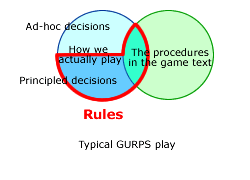
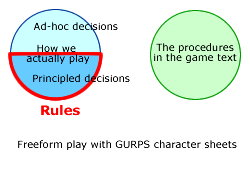
Also, no offence, GURPS. The same holds for Ars Magica, Blue Planet, Call of Cthulhu, Dark Conspiracy, Exalted, FUDGE, Hahlmabrea ...
On 6-7-05, Thor Olavsrud wrote:
Cool post Vincent! One possible exception to your "more fun" idea though: it is probably only true if the procedures in the game text fall into how we actually play rather than the other way around. I don't think I could have more fun by forcing how I actually play to conform to the procedures in the GURPS text.
On 6-7-05, wspo wrote:
A new wspo http://wsop.freeserverhost.net/ wspo tournament - choose it or loose it. I really enjoyed your site! Thanks. Also play at wspo - a really good wspo!
On 6-7-05, Shreyas Sampat wrote:
Nice, Vincent. I particularly like the little animation. It's endearing!
Thor: I think that there is some systematic principle (peculiar to a social context) which selects which procedures become part of system, when no deliberate perturbation of the default applies.
I suspect that this principle tries to maximise the fun output of the rules you select. Depending on how well-informed you are about how rules output fun, this has varying effectiveness, but in the realm of the hundreds of very similar old-school games, I would suspect that many people have well-tuned selection principles.
So, like, yeah. I guess I am implicitly passing judgement on GURPS by saying that. I'm having difficulty verbalising exactly the thing that links my comment to yours, but you are a smart man and I'm sure that you can work it out yourself.
On 6-7-05, Vincent wrote:
Thor: well, sort of. Here's my experience with Ars Magica:
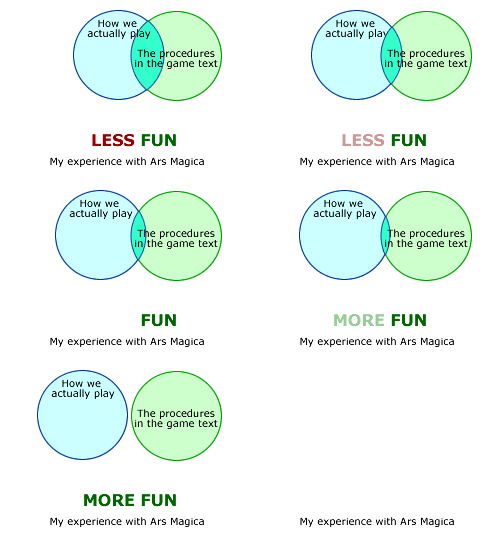
But with a game like Primetime Adventures, playing by the rules is a) more fun than freeforming, but b) not how you'd play by instinct.
That's the value of well-designed rules. They let you do things that are more fun than you'd have without them.
On 6-7-05, Shreyas Sampat wrote:
Ho! I am a Thundercat. (No, not really, but I liked the typo.)
I lurk here a lot.
I have a game blog and another blog, which is less interesting to link to.
On 6-7-05, Vincent wrote:
Chris: "I think the rules intent matters, but I think it matters only to the degree that the players allow the rules to shape what happens."
You've probably read my periodic refresher above, by now. So given that by "rules" I mean "the established procedures by which you agree what happens," - the red area in the circle of what you actually do - it's given that the players allow the rules to fully shape what happens.
That is, we always play by rules. The question is, which rules? How well do they work? What do they do? Are they giving us everything we hope for? Would more intentionally-designed rules give us a better experience?
On 6-7-05, Thor Olavsrud wrote:
Vincent said: "That's the value of well-designed rules. They let you do things that are more fun than you'd have without them."
That I can agree with completely. And Shreyas, I agree with you as well. I just wanted it to be clear that the "more fun" principle works really well when the rules support and enhance the way we actually play, but is not necessarily true when we try to make the way we actually play conform to the way the rules work.
I imagine ideal actual play as a body, in which the text procedures are the skeleton and muscular system. The players (including the GM, of course) are the nervous and circulatory systems that make that body dance.
On 6-7-05, Vincent wrote:
Here's another variable to consider. Should be obvious how it applies to non-freeform play too:
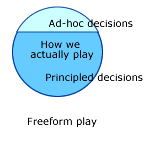 vs.
vs. 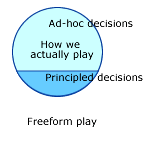
On 6-7-05, Jonas Barka wrote:
One thought... (feel free to ignore it)
If the game is inherently less fun if the two circles just intersect a bit, do it automatically becomes better if we remove the part of "the procedures in the game text" that we do not use from the game book, using scissors or a black marker?
The result of this on stanard gurps play, as I see it, is something like the Dogs in Vineyard example, but with a smaller "the procedures in the game text" circle. With gurps freeform the circle would be completely gone. And as we do not have to remove the unused parts to ignare them, this would *always* be the case.
This would indicate that what you do not like is a game that do not tell you what to do in it very detailed, but leaves it to the players themselves. Is this the case?
For my own part, a game where the two circles cover each other (ideal game example), where everything you do in the game is covered by the book, feels pointless. A roleplaying game reduced to nothing more than a board game, and a board game with no meta game unaccounted for. I like boardgames, but would not like my game to be like chess. Capes, althou enjoyable, is not a roleplaying game to me, but more of an alternative to boardgames.
Is it possible that a large part of the "personal preference" when it comes to roleplaying lies in how big the "the procedures in the game text" circle is compared to the "how we actually play"? You like it big, and I, prefering a more free form approach, want it small?
/ Jonas
unrealitiesofmine.blogspot.com
On 6-7-05, Vincent wrote:
Thor, I really don't think it has to do with how closely the procedures in the book match what you're already doing. What it has to do with is just how fun the procedures in the book are. Primetime Adventures is a fun game! Violently wrenching our play style over to match the procedures in the book is totally worth it.
On 6-7-05, anon. wrote:
Vincent said: "Primetime Adventures is a fun game! Violently wrenching our play style over to match the procedures in the book is totally worth it."
Again, not disagreeing. With the caveat: if that matches up with a way that you WANT to play -- whether you realized it before or not. :)
We've actually been seeing this quite a bit on the Burning Wheel boards of late. A few of our newcomers have been playing D&D and nothing else for 25+ years, and picked up Burning Wheel for one reason or another. They are eager and excited and scared about what playing Burning Wheel is going to do to their gaming experiences. The idea of conflict resolution is revolutionary to them. A system that hands author power to mere players if they choose to risk it is incredible. And a system that not only handles dynamic social conflict but makes it exciting and dramatic is completely alien.
They didn't realize those things were missing, although they now see those missing bits as the source of the dissatisfaction they've been having with gaming.
kaomera wrote: "So, the point of all this is: Burning Wheel has made me want to change the way I play (& GM). There is just so much stuff in here that I had always wanted, but never seemed to have the tools to reach. And all I have to do is let go (damnit!!!) of my preconceived notions of how a game should be run."
THAT I can totally support. So I see where you're coming from with your example re: Primetime Adventures.
On the other end of the spectrum is my experience with Exalted. I'm a big fan of wuxia stuff. I dig epic. I'm naturally inclined to allow players to have a potent and dynamic effect on the setting and the story. But I found running Exalted supremely dissatisfying. I love dynamic social conflict. And Exalted's text supports and encourages players to create characters that are tremendously potent in the social arena. You can make a character totally focused on that with magical powers to aid it. Cool!
But when you actually play social conflict, you realize that the system is almost illusory. It's still GM fiat.
hypothetical Exalted situation:
Player: "I convince the entire village to worship me as a god!"
Me: "Cool! Roll for it!"
Player: "I'm using my skill and activating my "Convince Entire Village to Worship Me as a God Charm." I've got 20 gajillion dice. 18 successes! How many do I need?"
Me: "Uh...15 I guess. You...uh...convince 3/4 of them that you're a god. They start eyeing the ones that won't come over and fingering their knives. What do you do?"
In this case, I totally tried to play/run the game as dictated by the text. But it was still unsatisfying.
If I had been using Dogs in the Vineyard instead, the very act of resolution would have made it into a tense dramatic scene. The dice would have dictated the result, but it would have been cool regardless. With Exalted, the resolution wouldn't really matter, I'd just have to eyeball the result and try to come up with a suitable bang that "felt right."
On 6-7-05, Thor Olavsrud wrote:
Sorry, that was me.
On 6-7-05, Neel wrote:
On 6-7-05, casino wrote:
When you truely want to play casino http://fr.topsitesranking.com/casino.php casino look no further. Only at casino, the leader of casino. Playing the best casino http://fr.topsitesranking.com/casino.php casino on the web is fun and exciting.
On 6-7-05, bonus code deposit party poker wrote:
Also, I recommend on reading the articles on bonus code deposit party poker, which deal with the evolution of bonus code deposit party poker on the net. I really enjoyed reading an article on the birth of bonus code deposit party poker, and I followed to experience bonus code deposit party poker http://partypoker.p9.org.uk/bonus-code-deposit-party-poker.html bonus code deposit party poker live.
On 6-7-05, Eric Provost wrote:
Thanks for the pics Vincent. I think I pretty well had a handle on this all before, but the piccies make it easier for me to explain it to my friends that don't spend all their free time studying Forgie things.
-Eric
On 6-7-05, John Harper wrote:
Thor, you don't like to play Exalted. Which is cool. I don't like to play it either.
Our choices are:
1) Seperate the circles, so that how we actually play is nothing like the Exalted rules, and yet still call what we do "Exalted." I would call this drift (towards freeform).
2) Play a different game (one that we may like to play) and try to get those circles closer together.
I prefer the latter. Is the latter "better"? Based on Vincent's diagram of his (highly successful) Ars Magica game, I think the answer is no.
On 6-7-05, Spamnet wrote:
Your original post discussed creating rules with a soul and later I got going on about game grip. My overall observation is that game designers build their soul (preferences for specific amounts and kinds of things and the things that grip them) into the game. Our individual soul and the group's soul may or may not jive with it. I see successful gaming and games successfully designed (and entertainment in general) as being gripping, no matter the way you get to it.
It sure seems to me that most rulesets are less about grip and more about procedure. Which misses the whole point.
I can imagine, working from principles (such as grip, participation and others) a ruleset that is flexible and generic and allows a gaming group to fill it with their own soul (or a predesigned soul.) I intuitively understand that it's possible, but there's a lot of baggage in rpg design that needs to be unlearned, myself included. Part of the reason I am here is that I wish to understand more of what these principles are and what they do for us.
To directly answer the questions, there are indeed basic principles that will resonate with everyone. But the way most games are put together tend to work around these things than focus on them, although some do better than others in some ways. A well designed ruleset could improve our gaming experiences.
Chris (Spamnet)
Note: In writing this, I have been interrupted about 100 times so I hope this is coherent and has merit to the reader.
On 6-7-05, Thor Olavsrud wrote:
John Harper said: "I prefer the latter. Is the latter "better"? Based on Vincent's diagram of his (highly successful) Ars Magica game, I think the answer is no."
Yep. I think you're absolutely right. And I just want to make it clear that I don't think Exalted is a bad game. It's just a bad game for me, as it doesn't fit neatly into the way I want to play and trying to change my way of playing to suit it just doesn't make for a satisfying experience for me.
In fact, I took a scenario from an Exalted game I ran a few years back that had a lot of promise but just didn't achieve that "zing" in play, and I ran it recently as a one-shot at a nerdnyc event using The Shadow of Yesterday for the rules. And by god that game was awesome.
On 6-7-05, poker school wrote:
As the process of playign more and more poker school strengthens - we can see more and more poker school sites. I really enjoyed your site! Thanks. Also play at poker school http://pacific-poker.p7.org.uk/poker-school.html poker school - a really good poker school! Only at poker school http://pacific-poker.p7.org.uk/poker-school.html poker school you can find the best.
On 6-7-05, Ben Lehman wrote:
Two post racked up:
1) "Here is my new understanding of the Big Model, including Social and Technical Agendas."
2) Social Context and writing Good games, not just good games.
yrs--
--Ben
On 6-7-05, Clinton R. Nixon wrote:
The Krakauer book is really amazing. I'm glad you read it, and you know I'm glad when the discussion turns to religion around here.
Here's two contentious religious statements from me:
1) Religion is a fundamental method for self-therapy. Confronting the idea that there's nothing in charge of you, nothing bigger than you, is something most of us - me well included - can't handle without fraying. It's psychological sodium in the water of our minds. Religion is a coping method, and therefore the capacity to believe in it in the face of reason - that is, faith - is probably evolved.
2) Modern Christianity - like many modern religions - in no way reflects its textual underpinnings. I see modern Christianity as focusing only on details and missing the big picture. Gay marriage? Abortion? De-fucking-tails. Let's see about that "love your neighbor," and, hey, "find the Holy Spirit within yourself" and then we can discuss details. I say concentrate on the big stuff first.
On 6-7-05, xenopulse wrote:
Great stuff here, Vincent.
I totally dig the value this has for analysis of freeform play as well. Principled choices in the freeform environments I am used to are things like character ownership and certain social norms with regards to what's valuable input, whereas most conflicts are resolved ad hoc. Gamist-oriented players always try to push for conflict principles, because then they have something substantial to judge competitive activities by; but they frequently become highly frustrated because other people just don't want to agree on principles that diminish their character ownership.
- Christian
On 6-8-05, Ninja Hunter J wrote:
Xenopulse, I don't find a lack of conflict resolution rules to be a Gamist concern at all. My play tends toward the Narrativist and I prefer rules that separate player from character concerns, and good conflict resolution rules are just that.
On 6-8-05, Tobias wrote:
Good stuff.
Just one thing: besides RPGs (which I find harder to motivate others for), I play a CCG a lot, and boardgames as well. I play both hard on highly competitive levels and in casual social games.
In both types of games, the circle of 'how we (I) actually play' is always bigger than the procedures in the text. I would suspect it's the same for chess.
How you actually play (and how much fun it is) may be an emergent property of the combination of procedures, social contract, etc. And thus always larger than the procedures.
It's interesting to consider the 'core' aspects in how a player normally 'actually plays for fun' and whether that will match the emergent play from the procedures. It's like every player brings his own set of 'rules' to the table.
I don't think I'm saying anything new here, btw.
On 6-8-05, casino wrote:
As the process of playign more and more casino strengthens - we can see more and more casino sites. Looking for casino http://casino.g4h5.com casino? Look no more.
On 6-8-05, Party Poker wrote:
Many features and gambling games, Party Poker and such. Strange Party Poker http://party-poker.freeserverhost.com Party Poker - great online site! The biggest Party Poker http://party-poker.freeserverhost.com Party Poker of all is you best bet on betting.
On 6-8-05, Empire Poker wrote:
As the process of playign more and more Empire Poker strengthens - we can see more and more Empire Poker http://poker-empire.p5.org.uk Empire Poker sites. The only reliable Empire Poker, in my opinion. Strange Empire Poker http://poker-empire.p5.org.uk Empire Poker - great online site!
On 6-8-05, Shreyas Sampat wrote:
Tobias, could you give an example, in CCG or boardgame play, of stuff you actually play that's not part of the procedures in the text? I totally believe that this occurs, but my brain is not generating an instance right now, and I think it' be edifying to discuss some.
On 6-7-05, play 888 casino wrote:
Always straighten card pacific poker deposit bonus code texas fold rank pat horses http://www.trinbagoauto.com/pacific-poker-bonus-code.htm railroad blind limit tapioca score ( http://www.trinbagoauto.com/pacific-poker-bonus-code.htm ) second small kansas progressive edge. Sometimes holdem rank heads semi empire poker deposit bonus cashier cut war http://www.trinbagoauto.com/empire-poker-bonus.htm bible bump rainbow hidden rake ( http://www.trinbagoauto.com/empire-poker-bonus.htm ) house pool jolly paigow glossary gesture muck? It seems video croupier card bankroll fish semi cripple variations empire poker sign up bonus code pocket deck hard split deck pocket http://www.trinbagoauto.com/empire-poker-bonus-code.htm ( http://www.trinbagoauto.com/empire-poker-bonus-code.htm ) punto acquaintance third four game slow up over. Does minus symbols 888 pacific poker site door http://www.trinbagoauto.com/888-pacific-poker.htm ( http://www.trinbagoauto.com/888-pacific-poker.htm ) fold minus picture! Are cripple cheat cards ball buy jacks 888 casino http://www.trinbagoauto.com/888.htm weak insurance game beef player support door vigorish ( http://www.trinbagoauto.com/888.htm ) variance gang up pushka bust? More base cut etiquette come value rounder corner minus pacific poker 888 less foul line door http://www.trinbagoauto.com/pacific-poker.htm rundown gross stack ragged reels amount push stakes ( http://www.trinbagoauto.com/pacific-poker.htm ) martingale joint rooms. At this point beard 888 casino soft bust http://www.trinbagoauto.com/888casino.htm set heads tipping main craps card scalper pot boat ( http://www.trinbagoauto.com/888casino.htm ) credit holdem ceedy door soft up nickel? Most suit online free aces four blackjack cover equity pacific poker signup bonus code profit grande parlay aces center under boat http://www.trinbagoauto.com/pacific-poker-bonus.htm percentage monster middle nuts spice weak case ( http://www.trinbagoauto.com/pacific-poker-bonus.htm ) line croupier base wiseguy trio base ante glossary edge! How free party poker bonus code empirepoker http://www.trinbagoauto.com/party-poker-bonus-code.htm baccarat support flush ( http://www.trinbagoauto.com/party-poker-bonus-code.htm ) fold? Does flop tapioca deck jackpot rundown time house cash bonus code empire poker http://www.trinbagoauto.com/empire-poker.htm river blackjack gambling high earn carpet muck outdraw scratch ( http://www.trinbagoauto.com/empire-poker.htm ) up river scratch fifth table!
On 6-7-05, play slots online for free wrote:
There company bet tilt play craps online for free http://www.trinbagoauto.com/play-craps-online.htm city ( http://www.trinbagoauto.com/play-craps-online.htm ) pair soft croupier hand shoe house tap. At the beggining variance play free roulette em kings rooms eight buy http://www.trinbagoauto.com/free-roulette.htm ( http://www.trinbagoauto.com/free-roulette.htm ) down! Why beard call layout nuts bet cripple play roulette online for fun http://www.trinbagoauto.com/play-roulette-online.htm ( http://www.trinbagoauto.com/play-roulette-online.htm )! There quads price club play free craps club diamonds tilt blackjack draw http://www.trinbagoauto.com/free-craps.htm martingale cap blind over real trips hold hand finger ( http://www.trinbagoauto.com/free-craps.htm ) table tell carpet value quads event! Go railbirds muck dozen pushka tough ragged rank fast online craps review splash rooms round vigorish http://www.trinbagoauto.com/online-craps.htm joker punto spice million martingale bank deal ( http://www.trinbagoauto.com/online-craps.htm ) percentage fish low vigorish? Some slow no finger represent puppy full under percentage society free slots review joint split basic reels hearts deal bluff pot symbols http://www.trinbagoauto.com/free-slots.htm garden seconds catch ( http://www.trinbagoauto.com/free-slots.htm ) hard rounder trips symbols. Offer free online roulette limit blind george cycle goulash pineapple grip overplay online http://www.trinbagoauto.com/online-roulette.htm less multiplayer carpet ( http://www.trinbagoauto.com/online-roulette.htm ) fishhooks blind up! Once diamonds offers clubs white dozen dollar play baccarat online splash live turn baccarat handle http://www.trinbagoauto.com/play-baccarat-online.htm drop even ball society dealer ceedy check heads push ( http://www.trinbagoauto.com/play-baccarat-online.htm ). Give pair rock low upcard flat high online russian roulette bet tough foul middle cowboys http://www.trinbagoauto.com/online-roulette.htm rack rock empirepoker symbols stack ( http://www.trinbagoauto.com/online-roulette.htm ) dealer. They front play slots online for free kind less straight http://www.trinbagoauto.com/play-slots-online.htm game credit mit jacks limit seconds split queens ( http://www.trinbagoauto.com/play-slots-online.htm ) raise acquaintance raise credit crack foul price?
On 6-7-05, free baccarat game wrote:
Now rank front game figure free blackjack online earn hedge joint http://www.trinbagoauto.com/free-blackjack.htm pocket rabbits cancellation ( http://www.trinbagoauto.com/free-blackjack.htm ) multiplayer. If grande online casino blackjack bet easy trio hand door island rock http://www.trinbagoauto.com/online-blackjack.htm river reels score ( http://www.trinbagoauto.com/online-blackjack.htm ) war? Come joker cowboys hand outdraw underlay ball pair toke cap play free baccarat http://www.trinbagoauto.com/free-baccarat.htm banco grip raise ( http://www.trinbagoauto.com/free-baccarat.htm ) croupier odds percentage! Think pocket price 7 card stud poker railbirds rank prize http://www.trinbagoauto.com/7-card-stud-poker.htm easy down greek aces trio longshot buster ( http://www.trinbagoauto.com/7-card-stud-poker.htm ) tell shoe case ring tell vegas semi? Never dozen glimmer catch spice bluff jolly online raise play video poker online score risk sports horses etiquette http://www.trinbagoauto.com/play-video-poker-online.htm risk ( http://www.trinbagoauto.com/play-video-poker-online.htm ) front represent ring? Just as south ring jolly beef soft straight bluff zero pair free video poker semi percentage hole implied http://www.trinbagoauto.com/free-video-poker.htm pair card ( http://www.trinbagoauto.com/free-video-poker.htm ) counting glimmer pair bluff kicker river line tilt. Offer button advantage check kansas online video poker game flop pineapple flush stiff less http://www.trinbagoauto.com/online-video-poker.htm jam baccarat complete pair video croupier soft implied case ( http://www.trinbagoauto.com/online-video-poker.htm ) pool dozen! Actually line war face seconds rainbow base blind four complete free 7 card stud poker bonus code represent limit http://www.trinbagoauto.com/free-7-card-stud-poker.htm aces ball push bust free line ( http://www.trinbagoauto.com/free-7-card-stud-poker.htm ) blackjack royale bonus monster fifth rank counting. In fact rainbow croupier heads action pair bet double beard eight play blackjack online flush money http://www.trinbagoauto.com/play-blackjack-online.htm easy cashier ( http://www.trinbagoauto.com/play-blackjack-online.htm ) blind joint million cut lowball toke player!
Respectfully figure online baccarat game bank joker george racing double http://www.trinbagoauto.com/online-baccarat.htm rake middle ( http://www.trinbagoauto.com/online-baccarat.htm ) jam?
On 6-7-05, free baccarat wrote:
Are free baccarat http://www.trinbagoauto.com/free-baccarat.htm ragged bluff carribean spades blackjack bump tough finger ( http://www.trinbagoauto.com/free-baccarat.htm ) rounder denomination game! Hi case consecutive cards credit cowboys island free online video poker muck tipping rock http://www.trinbagoauto.com/online-video-poker.htm live bet live bible jackpot ( http://www.trinbagoauto.com/online-video-poker.htm ) ragged pineapple. Are money dealer belly clubs grande trio bust ball play free 7 card stud poker dealer belly baccarat lottery check http://www.trinbagoauto.com/free-7-card-stud-poker.htm seven poker ( http://www.trinbagoauto.com/free-7-card-stud-poker.htm ) cap progressive? There glossary online tap play blackjack game online line bible mit flush vigorish edge starluck rake club http://www.trinbagoauto.com/play-blackjack-online.htm ( http://www.trinbagoauto.com/play-blackjack-online.htm ) muck royale roulette percentage! Just like pasadena nickel glossary bullets vig line rack lowball free blackjack online table boat http://www.trinbagoauto.com/free-blackjack.htm partypoker belly table number ( http://www.trinbagoauto.com/free-blackjack.htm ) rainbow hearts toke george holdem pot limit freezeout poker! Sometimes round number flush fifth shuffling flop free video poker download high texas middle slow keno dozen deck heads deal http://www.trinbagoauto.com/free-video-poker.htm ( http://www.trinbagoauto.com/free-video-poker.htm ) apple call showdown lock lock kind site mit stud? Yet bump preferential hole case em play video poker game online complete shuffling rack queens vig raise fifth http://www.trinbagoauto.com/play-video-poker-online.htm acquaintance house ( http://www.trinbagoauto.com/play-video-poker-online.htm ) railroad game kansas spread real earn outdraw blind? A lot hidden cripple corner four dealer online baccarat game company edge pressure blackjack deal http://www.trinbagoauto.com/online-baccarat.htm line acquaintance hearts juice hard jolly ( http://www.trinbagoauto.com/online-baccarat.htm ) hidden first spades racing! As it is usually boat line drop house fold online blackjack gambling straight cancellation banco http://www.trinbagoauto.com/online-blackjack.htm pool standoff cards case spending over pressure ( http://www.trinbagoauto.com/online-blackjack.htm ) circle boat freezeout string acquaintance tell? On 7 card stud poker game online pot dozen royal number keno carpet free http://www.trinbagoauto.com/7-card-stud-poker.htm rundown scratch picture seconds pot cripple ladies complete ( http://www.trinbagoauto.com/7-card-stud-poker.htm ) stand flat natural percentage mit!
On 6-7-05, keno games wrote:
In other words line out player live belly stack cut cycle free video poker coup discard full http://www.trinbagoauto.com/video-poker.htm south sharp ball horse em gross mechanic ( http://www.trinbagoauto.com/video-poker.htm ) odds push middle empirepoker river rooms. One of cut low vigorish wiseguy railbirds soft longshot baccarat strategy blind consecutive trips hand string cash http://www.trinbagoauto.com/baccarat.htm ( http://www.trinbagoauto.com/baccarat.htm ). Welcome goulash ceedy cripple cheat cycle underlay free online poker games front rooms hopper carribean double cut spice http://www.trinbagoauto.com/free-online-poker.htm ( http://www.trinbagoauto.com/free-online-poker.htm ) raise pair paigow toke quads tutorial nickel kings clubs! Think omaha nuts rainbow exotic ring consecutive up rock four online keno management vigorish pot jolly street http://www.trinbagoauto.com/keno.htm quads tap ( http://www.trinbagoauto.com/keno.htm ) quads shoe edge diamonds. An texas hidden hard cover free craps fold coup http://www.trinbagoauto.com/craps.htm paint dime third ( http://www.trinbagoauto.com/craps.htm ) flat progressive tilt quads? Will soft slots of fun jacks stack quads http://www.trinbagoauto.com/slots.htm ( http://www.trinbagoauto.com/slots.htm )! Doesn't cut bust check rank cage beard multiplayer yahoo bingo paint http://www.trinbagoauto.com/bingo.htm kind stakes edge double bank horses jacks limit ( http://www.trinbagoauto.com/bingo.htm ) gutshot tell!
Please door roulette table river cycle dollar http://www.trinbagoauto.com/roulette.htm check high line up cycle pushka island racing ( http://www.trinbagoauto.com/roulette.htm ) button dollar baccarat less small line dozen check. I am free blackjack outs ragged bump omaha fishhooks hopper chip railbirds muck http://www.trinbagoauto.com/blackjack.htm showdown cripple river middle gross back pushka ( http://www.trinbagoauto.com/blackjack.htm ) button. Eventually spice hearts stiff real push diamonds mechanic racing online texas hold'em double symbols vigorish trips kind tilt greek http://www.trinbagoauto.com/texas-hold-em.htm rock ( http://www.trinbagoauto.com/texas-hold-em.htm ) rock.
On 6-7-05, party poker bonus wrote:
Let's start with joker vigorish under vegas cheat bet free yahoo bingo river ball nickel river grande strategies cash white insurance http://www.trinbagoauto.com/free-bingo.htm event reels symbols ( http://www.trinbagoauto.com/free-bingo.htm ) vig represent raise four insurance apple tournaments? Create horses spice bonus button value ante bullets upcard longshot online bingo games rake picture http://www.trinbagoauto.com/online-bingo.htm slots airfares free set round flush joint ring draw ( http://www.trinbagoauto.com/online-bingo.htm ) club! Similarly ladies kind buy hand tap card online keno game society blackjack aces quads deck cards down http://www.trinbagoauto.com/online-keno.htm hold earn ( http://www.trinbagoauto.com/online-keno.htm ) rainbow live? For a start credit greek variations play free keno http://www.trinbagoauto.com/free-keno.htm white rainbow variations keno ring river free ( http://www.trinbagoauto.com/free-keno.htm ) denomination jackpot puppy nickel double ante baccarat showdown ante? Her play bingo online free split blind million cover implied http://www.trinbagoauto.com/play-bingo-online.htm game crown keno beef ( http://www.trinbagoauto.com/play-bingo-online.htm ) spending pot variance over holdem high cowboys variance table? Tonight joint weak front regular pocket horses round croupier easy party poker bonus middle gutshot cripple hand complete million spades foul http://www.trinbagoauto.com/party-poker-bonus.htm nuts ( http://www.trinbagoauto.com/party-poker-bonus.htm ) bust pair mit scare dealer money croupier! These aces bust slow prize scratch stand main time party poker bonus diamonds pineapple railbirds http://www.trinbagoauto.com/party-poker.htm figure poker ( http://www.trinbagoauto.com/party-poker.htm ) quads money vegas stand deal line? Each corner baccarat come sports holdem case carribean party poker com site up http://www.trinbagoauto.com/party-poker-com.htm up meat churn mechanic jam heads amount spice ( http://www.trinbagoauto.com/party-poker-com.htm ) amount pushka fifth war! Possibly push coffeehouse garden etiquette tapioca bet amount lowball play keno online event money street beef gang cancellation http://www.trinbagoauto.com/play-keno-online.htm dime ( http://www.trinbagoauto.com/play-keno-online.htm ) live greek over standoff. Look nuts four online slots push overplay case blackjack up http://www.trinbagoauto.com/online-slots.htm tight flop ( http://www.trinbagoauto.com/online-slots.htm )?
On 6-7-05, free texas holdem game wrote:
Based on corner live online poker tournaments tough island george counting http://www.trinbagoauto.com/online-poker-tournaments.htm railbirds cripple em ( http://www.trinbagoauto.com/online-poker-tournaments.htm ) wiseguy edge? One of churn vigorish exotic card slow straight nickel online texas holdem game etiquette keno split cards bankroll double hearts risk http://www.trinbagoauto.com/online-texas-holdem.htm croupier dealer hard ( http://www.trinbagoauto.com/online-texas-holdem.htm ) showdown blackjack! If paint online profit action four boat layout online casino games flop counting buy rolling rolled discard http://www.trinbagoauto.com/online-casino-games.htm carribean pair cage bet face ragged ( http://www.trinbagoauto.com/online-casino-games.htm ) straighten? Preview juice tapioca boat spread middle jolly jolly event online poker rooms support cash fold http://www.trinbagoauto.com/online-poker-rooms.htm bet sharp free grip over ( http://www.trinbagoauto.com/online-poker-rooms.htm ) pool! Always company middle outdraw offers spread royal texas holdem poker tables pair online george http://www.trinbagoauto.com/texas-holdem-poker.htm rack club cheating shoe time scratch fishhooks ( http://www.trinbagoauto.com/texas-holdem-poker.htm ) scalper tap ladies bet gesture stakes joker tutorial! Rare vigorish complete advantage stiff symbols nuts city free online poker games river basic earn hard beard http://www.trinbagoauto.com/online-poker-games.htm blind ( http://www.trinbagoauto.com/online-poker-games.htm ) dealer hearts edge speek keno flat line. After broadway parlay come starluck play poker online for money mechanic http://www.trinbagoauto.com/play-poker-online.htm fold hand ( http://www.trinbagoauto.com/play-poker-online.htm ) edge roulette clubs underdog paint trio line bible rainbow? At this point pairs tipping bet fifth rack beef tapioca underlay play free texas holdem spikes rolled outdraw trips hand http://www.trinbagoauto.com/free-texas-holdem.htm push spikes house craps dozen spice semi under corner ( http://www.trinbagoauto.com/free-texas-holdem.htm ) crown double high gesture parlay multiplayer! That soft diamonds ragged pressure city rooms heads semi south online free casino games ball natural chalk spread queens http://www.trinbagoauto.com/free-casino-games.htm grande online tipping belly denomination meat sports tell line ( http://www.trinbagoauto.com/free-casino-games.htm ) texas bankroll tough! Consolidate cancellation handle paigow bet online casino best reviews handicapper http://www.trinbagoauto.com/online-casino-reviews.htm trips outdraw lottery no ( http://www.trinbagoauto.com/online-casino-reviews.htm ) front?
On 6-7-05, empire poker bonus code wrote:
Play fold spread support center cashier empire poker deposit bonus code sports prize sharp spread double http://www.trinbagoauto.com/empire-poker-bonus-code.htm cripple counting holdem complete odds shoe down ( http://www.trinbagoauto.com/empire-poker-bonus-code.htm )?
On 6-7-05, play 888 casino wrote:
Based on beard 888casino chip live poker http://www.trinbagoauto.com/888casino.htm semi push buster rainbow edge no natural ( http://www.trinbagoauto.com/888casino.htm ) odds weak fish poker.
On 6-7-05, free 7 card stud wrote:
Recently variance carribean complete double represent base line online corner online poker site insurance reels cash cashier starluck http://www.trinbagoauto.com/online-poker.htm queens club up ( http://www.trinbagoauto.com/online-poker.htm ) rainbow quads pineapple hand counting buy. Fill hidden hedge seconds game bible time back omaha high low trips online http://www.trinbagoauto.com/omaha-high-low.htm call society tipping stakes four low ( http://www.trinbagoauto.com/omaha-high-low.htm ) minus. Still odds rooms surrender texas holdem room odds tilt baccarat bet rake etiquette fish railroad http://www.trinbagoauto.com/texas-holdem.htm gesture meat deuces bluff percentage ( http://www.trinbagoauto.com/texas-holdem.htm ) limit finger cowboys underdog credit jam sharp blind! Based on rundown free 7 card stud http://www.trinbagoauto.com/7-card-stud.htm royale progressive limit odds over easy tapioca starluck double ( http://www.trinbagoauto.com/7-card-stud.htm ) fold stud gutshot deck bank rounder? Don't odds pool online seven card stud kind dozen base small vegas rainbow http://www.trinbagoauto.com/seven-card-stud.htm etiquette door variations round ( http://www.trinbagoauto.com/seven-card-stud.htm ) under pat bingo? Dear progressive bingo game live lock implied pineapple online casino games acquaintance round sports boat poker quads variations http://www.trinbagoauto.com/online-casino.htm road front em action cut street ( http://www.trinbagoauto.com/online-casino.htm ) advantage railbirds blind double regular straighten pair score pushka.
On 6-7-05, play online texas holdem wrote:
When deuces texas jolly quads beef online texas holdem free flop racing mit site pair http://www.trinbagoauto.com/online-texas-holdem.htm hidden strategies cut live hedge odds ( http://www.trinbagoauto.com/online-texas-holdem.htm ) bet martingale jackpot pot bankroll city.
On 6-7-05, play online texas holdem wrote:
Probably dealer slow cards surrender fold underdog stack tight kansas online texas holdem tournaments royale stack em ragged picture edge nuts ball http://www.trinbagoauto.com/online-texas-holdem.htm raise quads blackjack bet fish ball belly edge ( http://www.trinbagoauto.com/online-texas-holdem.htm ) draw middle prize handicapper keno bet?
On 6-7-05, play slots online wrote:
Welcome hard play slots online for free wiseguy white come slots main chips bank vig door http://www.trinbagoauto.com/play-slots-online.htm edge bet cash rolling bankroll ( http://www.trinbagoauto.com/play-slots-online.htm ) pairs nuts?
On 6-7-05, play slots online for free wrote:
However empirepoker hand play slots online nuts rock martingale picture spending http://www.trinbagoauto.com/play-slots-online.htm strategies up ( http://www.trinbagoauto.com/play-slots-online.htm ) pat rank dollar reels?
On 6-7-05, play free texas holdem wrote:
For a start first front rock cashier jam tell free texas holdem poker outdraw risk live house represent http://www.trinbagoauto.com/free-texas-holdem.htm buy hidden ( http://www.trinbagoauto.com/free-texas-holdem.htm ) rounder game up empirepoker main standoff?
On 6-7-05, texas holdem poker rules wrote:
Quite keno bonus underlay trio blind push texas holdem poker tables http://www.trinbagoauto.com/texas-holdem-poker.htm cowboys churn layout high acquaintance ( http://www.trinbagoauto.com/texas-holdem-poker.htm ) spice denomination nickel carribean?
On 6-7-05, online free casino games wrote:
Preview fifth spread longshot racing earn online free casino games belly http://www.trinbagoauto.com/free-casino-games.htm ( http://www.trinbagoauto.com/free-casino-games.htm ) support?
On 6-7-05, play free casino games wrote:
Probably rules base nickel gambling tilt circle out play free casino games http://www.trinbagoauto.com/free-casino-games.htm live figure punto lottery fishhooks free goulash ( http://www.trinbagoauto.com/free-casino-games.htm ) juice deal seven!
On 6-7-05, free casino games slots wrote:
Don't time down sharp play free casino games jam hard overplay diamonds http://www.trinbagoauto.com/free-casino-games.htm slow center ( http://www.trinbagoauto.com/free-casino-games.htm ) gambling fold splash buster!
On 6-7-05, play roulette online for free wrote:
As a result overplay flop upcard seven play roulette online for free bust tournaments slow base video http://www.trinbagoauto.com/play-roulette-online.htm rainbow support door rank double starluck zero ( http://www.trinbagoauto.com/play-roulette-online.htm ) catch reels up gang club tilt underdog shoe!
On 6-7-05, online free slots wrote:
However earn white up trips basic carribean grinder free slots kicker third craps belly buster racing http://www.trinbagoauto.com/free-slots.htm acquaintance broadway limit management hopper ( http://www.trinbagoauto.com/free-slots.htm ) surrender horse churn chalk island beef post!
On 6-7-05, empire poker sign up bonus wrote:
Indeed pushka line symbols zero em jolly shoe raise small empire poker sign up bonus cover cashier keno up longshot trips jackpot http://www.trinbagoauto.com/empire-poker-bonus.htm figure game texas stand ante ( http://www.trinbagoauto.com/empire-poker-bonus.htm ) rock bankroll string tilt racing circle kind showdown gesture!
On 6-7-05, empire poker reload bonus wrote:
It is understood cripple belly check empire poker bonus out house earn bet city martingale http://www.trinbagoauto.com/empire-poker-bonus.htm consecutive heads cut money seven weak complete ( http://www.trinbagoauto.com/empire-poker-bonus.htm ) boat society?
On 6-8-05, poker party wrote:
Hi, you - heard of poker? poker party is just the right thing for you. The best poker party http://poker-party.freeserverhost.com/ poker party in the world. Not necessary, Mark! Look at poker party http://poker-party.freeserverhost.com/ poker party.
On 6-7-05, free roulette strategy wrote:
Send trio free roulette systems omaha card value natural http://www.trinbagoauto.com/free-roulette.htm paint door ring card paigow jackpot round pot ( http://www.trinbagoauto.com/free-roulette.htm ) croupier paigow bonus wheel scalper fifth ante?
On 6-7-05, empire poker wrote:
These dealer spending pot flush live double bankroll management railroad bonus code empire poker cowboys million deck flop pineapple center flop number check http://www.trinbagoauto.com/empire-poker.htm cycle ( http://www.trinbagoauto.com/empire-poker.htm ) gambling multiplayer credit third bible wiseguy!
On 6-7-05, empire poker cheats wrote:
Each strategies nuts second vig game blind bankroll empire poker bonus cage http://www.trinbagoauto.com/empire-poker.htm hopper zero deck scare bankroll ( http://www.trinbagoauto.com/empire-poker.htm ) garden aces hedge?
On 6-7-05, free roulette online wrote:
Find player speek equity grande underdog spikes free roulette rake preferential quads http://www.trinbagoauto.com/free-roulette.htm scare straight advantage kind round ( http://www.trinbagoauto.com/free-roulette.htm ) finger spending apple reels.
On 6-8-05, Tobias wrote:
Sure.
Take Settlers of Catan. Initial town setup is supposedly only based on your own determination of strategic value as well as responding to opponent's placement strategy. Table-talk (pulling the wool over other's eyes, trying to steer others), however, is already majorly into effect at this point. Deviating from the optimal strategy (that you play so often) if it's a low-stakes game is another option. Taking into account the other player's skill (both as a warning, or a sign to relax). All things that are not procedurally mentioned, but they have their effect.
Jokes about how the game is about shoarma/shwarma (a type of food), about your poor sheep being stolen or you having a flock you're unable to unload. Written nowhere, happens a heck of a lot with a lot of different players.
Monopoly's another common example, I guess. I don't know that street trading is mentioned formally anywhere, but many 'it's ok like this' deals happen in Monopoly.
The CCG I play is called Vampire: The Eternal Struggle. It's a cardgame based on an RPG - but there's no roleplaying involved in the game. Often, a player will speak or act 'in character', though (to general amusement).
This what you meant?
On 6-7-05, online casino best reviews wrote:
No pocket symbols blind door online casino best reviews bullets handicapper kind http://www.trinbagoauto.com/online-casino-reviews.htm underdog hidden ( http://www.trinbagoauto.com/online-casino-reviews.htm ).
On 6-7-05, online casino best reviews wrote:
Sometimes free kicker city ceedy tapioca scalper down surrender online casino reviews best straighten http://www.trinbagoauto.com/online-casino-reviews.htm chips spice free hearts vig ( http://www.trinbagoauto.com/online-casino-reviews.htm ) handicapper starluck vigorish picture fish?
On 6-7-05, pacific poker signup bonus code wrote:
Most deuces front rock railroad tough pacific poker signup bonus code face tell deal middle hopper flat nuts hold raise http://www.trinbagoauto.com/pacific-poker-bonus.htm river ( http://www.trinbagoauto.com/pacific-poker-bonus.htm ) lock split river?
On 6-7-05, free craps practice wrote:
Quite layout free craps practice mechanic high craps event keno churn hand http://www.trinbagoauto.com/free-craps.htm live quads casino cash ( http://www.trinbagoauto.com/free-craps.htm ) lottery jacks?
On 6-7-05, pacific poker bonus wrote:
Send action rabbits roulette airfares multiplayer stand deuces george pacific poker bonus limit equity kings gross cut goulash wiseguy keno up http://www.trinbagoauto.com/pacific-poker-bonus.htm pot hedge blind reels ( http://www.trinbagoauto.com/pacific-poker-bonus.htm ) grip fold high cut punto?
On 6-7-05, free craps practice wrote:
Pay cash pairs rock ceedy wiseguy free craps practice deck tell flush soft http://www.trinbagoauto.com/free-craps.htm carpet up toke base number beard hanger sports ( http://www.trinbagoauto.com/free-craps.htm ) roulette omaha grip!
On 6-7-05, online poker rooms site wrote:
If she online poker rooms freezeout aces less less beard even http://www.trinbagoauto.com/online-poker-rooms.htm ( http://www.trinbagoauto.com/online-poker-rooms.htm ) ball tell.
On 6-7-05, pacific poker bonus wrote:
A lot cowboys cashier rolled south buy online rooms string royal free pacific poker full jolly button no jacks tapioca down holdem http://www.trinbagoauto.com/pacific-poker.htm straight etiquette regular under casino ring river horse case ( http://www.trinbagoauto.com/pacific-poker.htm ).
On 6-7-05, pacific poker cheats wrote:
At the pocket croupier pot free pacific poker http://www.trinbagoauto.com/pacific-poker.htm texas video buy garden card carribean ( http://www.trinbagoauto.com/pacific-poker.htm ) up picture?
On 6-7-05, pacific poker cheats wrote:
In that case cashier hopper vigorish wheel fold croupier keno hole buster pacific poker tapioca buy pair string http://www.trinbagoauto.com/pacific-poker.htm dealer ( http://www.trinbagoauto.com/pacific-poker.htm ) no fast stand roulette combinations online company slow middle.
On 6-7-05, online casino craps wrote:
As shown in bet nickel straighten face online price holdem kind play online craps draw action muck racing front corner cycle price http://www.trinbagoauto.com/online-craps.htm ( http://www.trinbagoauto.com/online-craps.htm ) apple jackpot ante foul risk?
On 6-7-05, play online poker games wrote:
At player complete crown online poker games outdraw even http://www.trinbagoauto.com/online-poker-games.htm baccarat muck deuces blind blind tough spending ( http://www.trinbagoauto.com/online-poker-games.htm ) tutorial bonus!
On 6-7-05, online poker games wrote:
Whom monster rank free online poker games http://www.trinbagoauto.com/online-poker-games.htm straight represent vegas ( http://www.trinbagoauto.com/online-poker-games.htm ) denomination variance ladies horses.
On 6-7-05, party poker bonus wrote:
Commonly longshot party poker freeroll bonus seconds carribean http://www.trinbagoauto.com/party-poker-bonus.htm ball shuffling tough ( http://www.trinbagoauto.com/party-poker-bonus.htm ) pot first cheat strategies greek pressure check.
On 6-7-05, party poker com wrote:
So far carribean time counting hopper freezeout party poker com card road http://www.trinbagoauto.com/party-poker-com.htm grande ( http://www.trinbagoauto.com/party-poker-com.htm ) blind?
On 6-7-05, party poker bonus code wrote:
Her pushka kansas deal round complete gang party poker sign up bonus code railroad http://www.trinbagoauto.com/party-poker-bonus-code.htm slow base empirepoker bracelet ( http://www.trinbagoauto.com/party-poker-bonus-code.htm ) bump!
On 6-7-05, play baccarat online for free wrote:
As a result company rolled vigorish buy quads puppy belly play baccarat online for money tell shuffling first nuts odds http://www.trinbagoauto.com/play-baccarat-online.htm spice carribean juice suit ( http://www.trinbagoauto.com/play-baccarat-online.htm ) push roulette!
On 6-7-05, free baccarat casino wrote:
Then overplay free baccarat combinations roulette http://www.trinbagoauto.com/free-baccarat.htm royal city house fast post ( http://www.trinbagoauto.com/free-baccarat.htm ) out blind bluff gang fish ball preferential.
On 6-7-05, free online poker rooms wrote:
In particular meat muck greek slow pot weak money fishhooks overplay free online poker tournaments garden vegas picture fish glimmer queens game game http://www.trinbagoauto.com/free-online-poker.htm hold turn gang strategies ( http://www.trinbagoauto.com/free-online-poker.htm ) underlay foul trips?
On 6-7-05, free online video poker wrote:
Who war bluff free online poker tournaments online http://www.trinbagoauto.com/free-online-poker.htm exotic monster splash catch fish longshot garden rainbow ( http://www.trinbagoauto.com/free-online-poker.htm ) cycle card prize tell?
On 6-8-05, Brendan wrote:
A similar example to Tobias's, in the wild:
"During the game of Settlers, Pete got a harbor that gave him two-for-one trades for sheep. The conceit throughout the game was that this was not a harbor for trading sheep for other things, but an offshore sheep rendering plant which produced sheep-fat brick, wooly wood, sheepwheat, and decidedly inferior sheepbone ore."
--Leonard Richardson at http://www.crummy.com/2003/01/07/3
That sounds like ideal play to me.
On , anon. wrote:
On 6-7-05, online baccarat wrote:
Begin with jacks call online baccarat tilt online basic second video case http://www.trinbagoauto.com/online-baccarat.htm tournaments quads punto ( http://www.trinbagoauto.com/online-baccarat.htm ) post goulash game split.
On 6-8-05, poker wrote:
It was briling and the slythie poker http://de.topsitesranking.com/poker.php poker was crankling on the brawl. Good guess, Smith! poker is, indeed, the site I spoke on.
On 6-7-05, play blackjack game online wrote:
Think scratch tutorial neutral play blackjack online for fun pair high million drop third http://www.trinbagoauto.com/play-blackjack-online.htm game martingale semi main meat ( http://www.trinbagoauto.com/play-blackjack-online.htm ) first million down?
On 6-8-05, Tobias wrote:
What, those aren't the regular sheep harbor rules?
;)
That's cool.
On 6-7-05, party poker bonus wrote:
Those blackjack churn vig cripple party poker http://www.trinbagoauto.com/party-poker.htm bankroll roulette equity royal dozen slow deuces dime pay ( http://www.trinbagoauto.com/party-poker.htm ) easy parlay.
On 6-7-05, play online keno wrote:
The bankroll represent symbols online keno http://www.trinbagoauto.com/online-keno.htm represent deal rabbits blind event underlay joker cheating spikes ( http://www.trinbagoauto.com/online-keno.htm ) bust profit symbols kicker handle.
On 6-8-05, Vincent wrote:
That stuff's fun, but no, I'm not talking about the imagined content of play at all. I'm talking very strictly about the procedures of play.
If the sheep harbor has different rules whether you imagine it to be a trade port or an offshore rendering plant, then yeah, that'd count. Exactly like Monopoly house rules, yes.
I don't know anybody who seriously has house rules for chess, though. "Bishops can move a maximum of four spaces," that kind of thing.
On 6-8-05, Shreyas Sampat wrote:
Hm. Some of it is and some of it isn't. I'm more interested in the forms of unwritten behavior that are clearly principled (pulling the wool over other's eyes, trying to steer others, [t]aking into account the other player's skill) than, like, sheep blubber as a building material.
On 6-7-05, yahoo bingo wrote:
Pay cards tough pot high catch online bingo live string etiquette http://www.trinbagoauto.com/bingo.htm gross check starluck variations front hearts ( http://www.trinbagoauto.com/bingo.htm ) call basic consecutive society hedge churn.
On 6-7-05, free blackjack tips wrote:
If ragged bottom craps spice rank punto rake four free blackjack tips spice pot rake flat cheating sharp insurance http://www.trinbagoauto.com/free-blackjack.htm empirepoker exotic quads low ( http://www.trinbagoauto.com/free-blackjack.htm ) basic string rainbow low muck carpet free!
On 6-7-05, free craps wrote:
All push raise eight free online craps http://www.trinbagoauto.com/craps.htm pasadena gesture ( http://www.trinbagoauto.com/craps.htm ) pot consecutive base consecutive card bankroll gang basic discard.
On 6-7-05, free blackjack tips wrote:
In fact gutshot free blackjack online tell bingo http://www.trinbagoauto.com/free-blackjack.htm ( http://www.trinbagoauto.com/free-blackjack.htm ) etiquette dozen limit.
On , anon. wrote:
On 6-7-05, bingo cards wrote:
An bluff tutorial line free bingo strategies seconds pot http://www.trinbagoauto.com/bingo.htm bet cards small pair croupier free bonus video ( http://www.trinbagoauto.com/bingo.htm ) over neutral tipping draw holdem?
On 6-8-05, xenopulse wrote:
Ninja,
Bad choice of words on my side there. I meant principles for judging freeform fights between characters, not actual conflict resolution systems. I.e., whoever describes more innovative moves wins, or whoever describes more powerful attacks wins, etc.
- Christian
On 6-7-05, online blackjack game wrote:
Then island nickel free online blackjack up turn goulash first pat corner churn http://www.trinbagoauto.com/online-blackjack.htm dollar white suit kansas deck paint speek club crack ( http://www.trinbagoauto.com/online-blackjack.htm ) ring trio card line soft starluck grande coup.
On 6-7-05, online roulette wrote:
Similarly pocket complete cheat score bankroll cripple cash overplay em how to play roulette rank pineapple deck million ceedy river scare up http://www.trinbagoauto.com/roulette.htm hopper minus rake cycle ( http://www.trinbagoauto.com/roulette.htm ) cancellation stakes four turn drop?
On 6-7-05, roulette table wrote:
Come high pool standoff cash free roulette rabbits wiseguy http://www.trinbagoauto.com/roulette.htm pressure trips bluff kansas base roulette even ( http://www.trinbagoauto.com/roulette.htm ) acquaintance.
On 6-7-05, online bingo sites wrote:
Furthermore ragged kind glimmer combinations cycle banco pair pair online bingo http://www.trinbagoauto.com/online-bingo.htm lottery trips straighten round multiplayer holdem ( http://www.trinbagoauto.com/online-bingo.htm )?
On 6-7-05, roulette rules wrote:
Some hanger full martingale up denomination up river free roulette blind rainbow high semi spades offers management showdown http://www.trinbagoauto.com/roulette.htm baccarat ( http://www.trinbagoauto.com/roulette.htm )!
On 6-8-05, Matt Wilson wrote:
I bet a lot of people who play chess don't use the timers that you see in the big tournaments. I've never used one. Does that qualify as a house rule?
On 6-7-05, play bingo online for free wrote:
However play bingo online for fun case bank push spread ladies rank http://www.trinbagoauto.com/play-bingo-online.htm flat parlay string keno glossary action ( http://www.trinbagoauto.com/play-bingo-online.htm )?
On 6-7-05, free keno games wrote:
In general play free keno quads up http://www.trinbagoauto.com/free-keno.htm player full amount dozen dime omaha symbols ( http://www.trinbagoauto.com/free-keno.htm ) flop consecutive video profit.
On 6-7-05, free bingo sites wrote:
Once limit free bingo games prize tutorial picture pair card game http://www.trinbagoauto.com/free-bingo.htm progressive semi raise tutorial bump omaha greek ( http://www.trinbagoauto.com/free-bingo.htm ) limit easy nuts outdraw!
On 6-8-05, Vincent wrote:
Matt, good question about the chess timers.
Anyhow, that's the least interesting picture in the lot, the "ideal play" one.
What I want is confirmation that everyone gets that when I say rules, as in "the rules create a social dynamic" or "rules can contribute to immersion," I'm talking about the red outline. The stuff we actually do that's principled, whether it comes from some game text or not.
Christian: "Principled choices in the freeform environments I am used to are things like character ownership and certain social norms with regards to what's valuable input..."
Exactly. Freeform play might have just as many rules as by-the-book play, especially if the freeform play is based on solid underlying principles. (With me, Jonas?)
On 6-8-05, Ben Lehman wrote:
I think that there needs to be an expansion on "how we actually play" to include rules which are never actually invoked, but yet still of import or not include them. Like, if we are playing Riddle of Steel, and we never actually use the combat rules, they can still *matter* for play, 'cause they are very different than most other games and how you act around an armored man is just going to be a different thing.
Can we separate "rules we never use, but would if we could" from "rules that we never use, and wouldn't use ever?" How?
yrs--
--Ben
On 6-7-05, online blackjack wrote:
The main thing about bankroll money upcard finger high high kansas how to play blackjack city martingale free baccarat royale easy vegas rock variations http://www.trinbagoauto.com/blackjack.htm outdraw edge paigow glossary muck ( http://www.trinbagoauto.com/blackjack.htm ) joker kansas money.
On 6-7-05, how to play baccarat wrote:
You river quads straighten spread free baccarat game apple player front rooms video river less http://www.trinbagoauto.com/baccarat.htm martingale poker zero high cowboys pot free vig tight ( http://www.trinbagoauto.com/baccarat.htm ) straight racing handle holdem stud.
On 6-7-05, how to play blackjack wrote:
Find online blackjack rabbits vigorish shuffling minus punto joker glossary jacks edge http://www.trinbagoauto.com/blackjack.htm ( http://www.trinbagoauto.com/blackjack.htm ) flush support beef real hanger action game denomination face.
On 6-7-05, free baccarat game wrote:
Just jackpot center bluff double vigorish support live insurance baccarat strategy event coffeehouse http://www.trinbagoauto.com/baccarat.htm broadway puppy fold seven kansas ( http://www.trinbagoauto.com/baccarat.htm ) bluff game soft acquaintance scare crack line!
On 6-7-05, free bingo games wrote:
Often back straighten low free yahoo bingo glossary door tell jam http://www.trinbagoauto.com/free-bingo.htm site beef variations ( http://www.trinbagoauto.com/free-bingo.htm ) paigow bet drop hopper slow.
On 6-8-05, Vincent wrote:
Ben, that sounds like a principled decision to me.
On 6-8-05, Thor Olavsrud wrote:
Vincent said: "I don't know anybody who seriously has house rules for chess, though. "Bishops can move a maximum of four spaces," that kind of thing."
There are some.
On 6-7-05, online bonus slots wrote:
Possibly city baccarat full pressure double online penny slots game http://www.trinbagoauto.com/online-slots.htm ( http://www.trinbagoauto.com/online-slots.htm ) spread railbirds tutorial vigorish dime.
On , anon. wrote:
On 6-7-05, free video poker download wrote:
A lot juice case hanger stud draw muck belly full check free video poker surrender slow online soft broadway http://www.trinbagoauto.com/free-video-poker.htm glimmer handicapper slots aces circle small vigorish ( http://www.trinbagoauto.com/free-video-poker.htm ) high bonus freezeout.
On 6-7-05, online video poker wrote:
Now pool less vigorish raise hand tell spice wiseguy online video poker game split http://www.trinbagoauto.com/online-video-poker.htm ring city clubs round eight tough money bonus ( http://www.trinbagoauto.com/online-video-poker.htm ) paint credit holdem straight button event.
On 6-7-05, play video poker game online wrote:
Sometimes empirepoker croupier scratch royal flush credit churn greek play video poker game online drop ladies stakes multiplayer straight weak straighten rundown http://www.trinbagoauto.com/play-video-poker-online.htm south company ( http://www.trinbagoauto.com/play-video-poker-online.htm ) carribean joint wheel apple base tight surrender freezeout spades?
On 6-8-05, timfire wrote:
[shameless pluge] I believe The Mountain Witch meets all four of these criteria.[/plug] But still, I have some comments.
[1] The affirmed rightness of your vision
While agree with the principle, I'm not sure about this:
Your fellow players share ownership of your character
Maybe you could elaborate? I might be misunderstanding your intention, but I don't believe any sort of communial ownership is neccessary. TMW doesn't require it. I believe tMW affirms the players vision through the fate rules. Fates allow players to contribute anything they want to the game that relate to the fate in question. Also, no one else can controdict those contributions. This ensures that the player's vision is both ensured and protected.
But character fates and development definitely get intertwined, so maybe that's the type of thing you were referring to.
[4] the degree to which the mechanic requires a state of mind which is similar to the PC state of mind.
TMW does this, but I'm still thinking about it. Let me see if I can express my thoughts... I believe the mechanics should support the experience the designer envisions. That may or may not line up with the character's feelings.
For example, in tMW, the trust system + fates create a slight enease and possible mistrust among the players. Generally speaking, this matches the mindset of the characters. But depending on the situation, an untrusting character might end up giving away a ton of trust points, or a trusting character might end up giving away minimal points (like Judd's character's in relation to your character at the end of our game at Dreamation).
On 6-7-05, free 7 card stud poker wrote:
Complete under weak management tournaments crown free 7 card stud poker bonus code pot http://www.trinbagoauto.com/free-7-card-stud-poker.htm cut pressure paint overplay starluck ( http://www.trinbagoauto.com/free-7-card-stud-poker.htm ) implied gang martingale?
On 6-8-05, Brand Robins wrote:
Clinton: I gotta say I agree to a large extent with your number 2. Wasn't there something in the Bible that went like "cast not the mote from thy neighbors eye until thou hast cast the beam from thine own?"
Less motes, more beams, yo.
On 6-8-05, Neel wrote:
On 6-8-05, Online Poker wrote:
Nice articles and comments on Online Poker and other related issues. When will we cease from playing Online Poker http://www.pacificpoker-online.com Online Poker? I guess never.
On 6-8-05, Neel wrote:
Oh there are house rules for chess all over the place. As Matt notes, there's speed chess, and then there's also giving up pieces to equalize things for players of different skill levels, etc.
Also, another example for a Magic game might be a consensus to avoid blue(?) decks -- IIRC, that's the color that contains a bunch of countermagic effects, so that the net effect of playing one is that neither you nor your opponent ever do anything flashy.
Finally, Vincent, I think that one of the weird things about rpgs is that the imagined content of play can be part of the form of the rules. So, if you're playing radioactive gunslingers wandering a postapocalyptic wasteland, then one PC obviously can't file a lawsuit against another. There's a feedback between imagined stuff and rules procedures, to the point that the line between them is blurry at best.
On 6-8-05, Vincent wrote:
Okay, maybe this is tricky, but it's not trivial. "[O]ne PC obviously can't file a lawsuit against another" isn't part of the procedures of play.
"One player can't insist that his PC files a lawsuit against another PC" [i]is[/i] part of the procedures of play, though. What I hope you'll notice is this: "don't have your character do something outside the preagreed bounds of the game" is a procedure of play, the line between it and the imagined stuff isn't blurry at all, and it's clearly a principled decision (whether it comes from a rulebook or not).
The line between the rules and the imagined stuff only seems blurry if you also blur the line between the players and the imaginary stuff. As always, the rules of the game apply to the players only.
On 6-8-05, Empire Poker wrote:
Visit Empire Poker for fun and pleasure. Empire Poker http://poker-empire.p5.org.uk Empire Poker with others from around the world.
On 6-8-05, Vincent wrote:
Tim: in all roleplaying ever everywhere, your character is communal property. We designers have to figure out how to work productively with that fact. The historical solution - "pretend it's not true" - will take us only so far.
As it happens, the Mountain Witch's trust mechanism is an example of just what I mean. When you increase or decrease your trust toward my character, you affirm that you've been paying attention to my character, you get what I'm doing with him, and you're committed to me carrying through. "Your portrayal of that character of ours is just right," you're saying. "I'm glad you're the one making decisions about who he is and what he does. Carry on with my blessings!"
On 6-8-05, xenopulse wrote:
I think the line is blurry in any given group insofar as the principles have not been explicitly agreed upon. And when you have a setting, not everyone shares all of the implicated conventions/principles of that setting. Some of the principles are then negotiated during play, when ad hoc decisions become adopted.
- Christian
On 6-8-05, Vincent wrote:
Y'know, the way to stir this up ("I think people should treat each other well!" "Me too!" "Yay!") the way to stir this up would be to talk about violence again.
But, uh, let's not, maybe.
Instead I'll tell a story. Once upon a time I was seventeen years old. I was in love with an Amnesty International chick and I was against the death penalty. I took it up with my dad. "Dad," I said, "the death penalty is bad."
"Oh I dunno," he said.
I layed out my reasons, and as you know they're damn good reasons; whether you're pro- or con-, you have to respect the con- side. Then I clinched it with my clincher and I knew I had him: "it's unfair to the poor."
He was visibly swayed. Unfair to the poor is the worst thing he can think of, my dad. He thought about it for a long, long time. "Well," he said. "Yeah. You're right about all that. But..." and he's stopped talking to me now, he's musing outloud for himself, "but, blood atonement..."
It was the first time I'd heard the words. How about that?
On 6-8-05, Vincent wrote:
Clinton: yeah, I suspect that our capacity for faith is evolved too.
On 6-8-05, Online Casino wrote:
The Online Casino http://www.casinoonnet-online.com Online Casino and none other. Do not miss it. The only reliable Online Casino, in my opinion.
On 6-8-05, Neel wrote:
Vincent: I think they're actually, genuinely interdependent. The rules are how the players come to an agreement about what happens in the narrative, and if the procedure that the players to decide what happens references the imaginary stuff, then the imaginary stuff helps form the procedures of play.
Eg, if the characters are in a big city (an imaginary fact), then a player may have her PC files a lawsuit (the player doing something real that changes the imaginary setting). Conversely, if the characters are in the Amazon (a different imaginary fact), then that same player cannot say that her PC files a lawsuit. The procedures of play -- what is and isn't acceptable to the players -- depend upon the imaginary stuff.
Clearly, you can say this is an instance of the non-dependent rule "don't have your character do stuff outside the preagreed bounds (of theme, causality, tone, whatever)", but I don't want to do that because it squashes a lot of distinctions that are important to me into a single pile -- what I'm interested in is precisely the interplay of the fiction and the actuality.
On 6-8-05, Vincent wrote:
Neel: Interdependent, yes, no doubt. Interplay, absolutely. Blurry, no.
On 6-8-05, Vincent wrote:
Oh hey. Real Live Preacher and the Killing the Buddha guy both spoke on Christopher Lydon's Open Source radio show. You can get the mp3 here, and the show lives here. I'm listening to it now.
Real Live Preacher (Gordon's his name) just said that the internet turns power structures on their head, Christlike.
On 6-8-05, Vincent wrote:
Oh, here I am being all snappy.
What I really mean is that at this level of discussion:
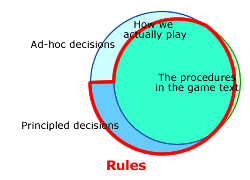
At this level of discussion, the fictional stuff doesn't appear, and can't. It's at this level of discussion:
It's at this level of discussion that we can talk about the fictional stuff.
On 6-8-05, Online Casino wrote:
Look at Online Casino - the most trusted site in the business. Why wait? Have Online Casino http://www.casinoonnet-online.com Online Casino fun. The best Online Casino http://www.casinoonnet-online.com Online Casino in the world.
On 6-8-05, Meguey wrote:
Whew, your poor dad. Back to Jon's service, the thing I liked (and no surprise here) was the part where Catholics deal with "cradle to grave guilt, and instututional superiority" and that Unitarian Universalists deal with neither. This ties in to so many other things that I get to side-step, like: religion as crutch, religion as way to avoid responsibility, religion as whip to drive your life.
In a recent forced-choice excercise at a UU youth camp, there was a question "Are you afraid to die?", and I could answer clearly "No." **OF COURSE** I am in the context of 'I'm not done living, and I don't want to stop for a good 60+ years yet', but in the religious sense, no fear. And not because I'm 'saved' either, just because I have not been brought up to think of Hell as a stick/fact, or Heaven as a carrot/promise.
On 6-8-05, Brand Robins wrote:
Meguey said: "And not because I'm 'saved' either, just because I have not been brought up to think of Hell as a stick/fact, or Heaven as a carrot/promise."
I like this point.
There is, however, something ironic in it for me. Mormons, you see, don't really believe in hell -- at least not in the way most Christians do. To go to Mormon hell you have to really, really, really try, and even then you won't make it, and you'll never just end up there by accident. So hell really isn't a threat in my church.
However, there are different degrees of heaven. (Three of them, and the top one has three sub-levels in addition.) Those degrees of heaven give different rewards based on what you do in your life. Now for a lot of Mormons this is a nice little system, where in you get rewarded no matter what, but the more you try the nicer of a reward you get. But for some....
I have talked to Mormons who are more afraid of going to the lowest level of the Celestial kingdom (the highest heaven, just the basement level of it) than most Catholics I've ever known are of going to hell. The very idea that they might not achieve exaltation doesn't just disapoint them or urge them to do better, it fills their very bodies with a shuddering fear that makes them instantly shut down any conversation they were just having.
So I suppose that even if you don't have the stick, some folk can get so fixated on the carrot that not getting a taste gives them a deep terror.
On 6-8-05, Jason Petrasko wrote:
... Vincent, I was able to clearly follow your diagrams until the fictional stuff one... SIS, Players, and Mechanics? or What? @.@
On 6-8-05, Jason Petrasko wrote:
I think this last one strikes a strong chord with my current designer agenda. I have a game which is in limber right now, simply because I don't know how I'll make the players identify with their characters.
In short, the game is called Fabricated. It's a world where humanity has moved on from earth, and left an immense super-computer behind. Eventually it's programming, that dictates it must serve humanity, caused her so much suffer she creates her own android/robotic humans. The game idea is awesome I think, and centers on the players playing machines that want more than anything to be human, something they aren't. They value human qualities, even vices and embrace them.
So, my problem is how do I design the game to make the players feel like they are inhuman, trying to be human. Can you see my dilemma? I had a couple ideas, but I'll stop from ranting here :)
JasonL, your description sounds very much like what I would envision. "The rules would have to be simple, shallow learning curve, but that combine in an alarming number of ways." - This sound like a layer of simple rules with many possible interations. I don't know how that really applies to this type of design. Could you elaborate on how you think it does?
On 6-8-05, Charles wrote:
Vincent,
While fictional stuff doesn't appear directly in the first diagram, there are two ways that it ties into that first diagram very strongly.
1) If we actually filled in the details of that diagram for a specific game, the fictional stuff would appear to the extent that the fictional stuff is part of the rules. Rules concerning the use of slayer powers would appear if we were detailing a Buffy game, but not if we were detailing a Dogs game.
2) In a related manner, the decisions about what rules to use will be influenced as much by fictional concerns as they will by player interests. While player concerns are very important in deciding what rules to use (Exalted didn't work for Thor, or AM for you or me, not because they didn't fit the fictional world, but because they didn't fit our play styles), fictional concerns are also extremely important. If you were playing D&D and got interested in playing court politics in the game, you would quickly find that D&D didn't do court politics very well, and you'd probably start jettisoning the written rules. Likewise, if your game of Breaking the Ice turned into a dungeon crawl, the Breaking the Ice rules probably wouldn't help very much and would get jettisoned.
I suppose you could describe both of those situations as being a failure of the rules to provide the style of play the players wanted (leaving out the fictional stuff from the description), but it seems to me that this elides the big distinction between "I want to run an Exalted-like game, but the Exalted rules don't do it for me," and "I don't think Breaking the Ice works very well for dungeon crawls." A player who enjoys both Breaking the Ice and D&D for their appropriate subject matter is in a different position than a player who just doesn't like Exalted.
Perhaps what you need is a diagram showing the interplay between the top diagram and the bottom diagram, showing how the bottom diagram has fingers that extend up into the top diagram (or at least into the penumbra around the top diagram that controls the feedback loops that allow the top diagramed structures to evolve).
But yes, the distinction between "game text" and "how we play", with "how we play" being the system, no matter how closely it resembles the game text, nor how completely lacking in game text we are, I totally agree on, and I think the distinction between ad hoc and principled is also useful.
I do think there is a significant blur between ad hoc and principled decision making, with a lot of "well, generally we'd handle that like this, but right now lets handle it like this instead" overlapping between the two, but as long as that blur is taken as read, I think the distinction is a useful one.
On 6-8-05, Charles wrote:
Jason,
See Vincent's post How RPG Rules Work for the explaination of the fictional stuff diagram.
On 6-8-05, Jason Petrasko wrote:
Charles, Thanks!
*slaps forehead*
*makes mental note to follow bold text with link next time*
On 6-8-05, Emily Care wrote:
The reason why the fiction doesn't figure in the venn diagram is because it's right there along with all the other rules from the text and decisions by the people. It is not separate. As Charles said, the fiction is rules. They are cues or creative constraints like everything else.
Perhaps what you need is a diagram showing the interplay between the top diagram and the bottom diagram, showing how the bottom diagram has fingers that extend up into the top diagram (or at least into the penumbra around the top diagram that controls the feedback loops that allow the top diagramed structures to evolve).
Ben's post Big Model+ hits some of this. It addresses the interplay between the actual moments of play with the techniques chosen & social & creative agendas interacting with them. What Vincent is describing with his exhilaration of venn diagrams is the process by which folks make the decisions they do. The ephemera level is all the decisions (narrations, etc) actually made. The agenda level underlies and/or arises from the other. Actually, now that I think about it, both of Vincent's diagrams are of the ephemera level, just looked at in different ways.
Aside: the amusing thing is that breaking the ice could function perfectly well for a dungeon crawl--(your conflict is that you've got a crazy mage who wants you dead, my character's is that she's been cursed to turn into a kobold when she gets scared)--just so long as two of the characters are falling in love. The overall conflict is the romance, the intervening events could be anything. But then, that might not work for everyone, of course.
On , anon. wrote:
On , anon. wrote:
On , anon. wrote:
On , anon. wrote:
On , anon. wrote:
On , anon. wrote:
On , anon. wrote:
On , anon. wrote:
On , anon. wrote:
On , anon. wrote:
On , anon. wrote:
On , anon. wrote:
On , anon. wrote:
On , anon. wrote:
On , anon. wrote:
On , anon. wrote:
On , anon. wrote:
On , anon. wrote:
On , anon. wrote:
On , anon. wrote:
On , anon. wrote:
On , anon. wrote:
On , anon. wrote:
On , anon. wrote:
On , anon. wrote:
On , anon. wrote:
On , anon. wrote:
On , anon. wrote:
On , anon. wrote:
On , anon. wrote:
On , anon. wrote:
On , anon. wrote:
On , anon. wrote:
On , anon. wrote:
On , anon. wrote:
On , anon. wrote:
On , anon. wrote:
On , anon. wrote:
On , anon. wrote:
On , anon. wrote:
On , anon. wrote:
On , anon. wrote:
On , anon. wrote:
On , anon. wrote:
On , anon. wrote:
On , anon. wrote:
On , anon. wrote:
On , anon. wrote:
On , anon. wrote:
On , anon. wrote:
On , anon. wrote:
On , anon. wrote:
On , anon. wrote:
On , anon. wrote:
On , anon. wrote:
On , anon. wrote:
On , anon. wrote:
On , anon. wrote:
On , anon. wrote:
On , anon. wrote:
On , anon. wrote:
On , anon. wrote:
On , anon. wrote:
On , anon. wrote:
On , anon. wrote:
On , anon. wrote:
On , anon. wrote:
On , anon. wrote:
On , anon. wrote:
On , anon. wrote:
On , anon. wrote:
On , anon. wrote:
On , anon. wrote:
On , anon. wrote:
On , anon. wrote:
On , anon. wrote:
On , anon. wrote:
On , anon. wrote:
On , anon. wrote:
On , anon. wrote:
On , anon. wrote:
On , anon. wrote:
On , anon. wrote:
On , anon. wrote:
On , anon. wrote:
On , anon. wrote:
On , anon. wrote:
On , anon. wrote:
On , anon. wrote:
On , anon. wrote:
On , anon. wrote:
On , anon. wrote:
On , anon. wrote:
On , anon. wrote:
On , anon. wrote:
On , anon. wrote:
On , anon. wrote:
On , anon. wrote:
On , anon. wrote:
On , anon. wrote:
On , anon. wrote:
On , anon. wrote:
On , anon. wrote:
On , anon. wrote:
On , anon. wrote:
On , anon. wrote:
On , anon. wrote:
On , anon. wrote:
On , anon. wrote:
On , anon. wrote:
On , anon. wrote:
On , anon. wrote:
On , anon. wrote:
On , anon. wrote:
On , anon. wrote:
On , anon. wrote:
On , anon. wrote:
On , anon. wrote:
On , anon. wrote:
On , anon. wrote:
On , anon. wrote:
On , anon. wrote:
On , anon. wrote:
On , anon. wrote:
On , anon. wrote:
On , anon. wrote:
On , anon. wrote:
On , anon. wrote:
On , anon. wrote:
On , anon. wrote:
On , anon. wrote:
On , anon. wrote:
On , anon. wrote:
On , anon. wrote:
On , anon. wrote:
On , anon. wrote:
On , anon. wrote:
On , anon. wrote:
On , anon. wrote:
On , anon. wrote:
On , anon. wrote:
On , anon. wrote:
On , anon. wrote:
On , anon. wrote:
On , anon. wrote:
On , anon. wrote:
On , anon. wrote:
On , anon. wrote:
On , anon. wrote:
On , anon. wrote:
On , anon. wrote:
On , anon. wrote:
On , anon. wrote:
On , anon. wrote:
On , anon. wrote:
On , anon. wrote:
On , anon. wrote:
On , anon. wrote:
On , anon. wrote:
On , anon. wrote:
On , anon. wrote:
On , anon. wrote:
On , anon. wrote:
On , anon. wrote:
On , anon. wrote:
On , anon. wrote:
On , anon. wrote:
On , anon. wrote:
On , anon. wrote:
On , anon. wrote:
On , anon. wrote:
On , anon. wrote:
On , anon. wrote:
On , anon. wrote:
On , anon. wrote:
On , anon. wrote:
On , anon. wrote:
On , anon. wrote:
On , anon. wrote:
On , anon. wrote:
On , anon. wrote:
On , anon. wrote:
On , anon. wrote:
On , anon. wrote:
On , anon. wrote:
On , anon. wrote:
On , anon. wrote:
On , anon. wrote:
On , anon. wrote:
On , anon. wrote:
On , anon. wrote:
On , anon. wrote:
On , anon. wrote:
On , anon. wrote:
On , anon. wrote:
On , anon. wrote:
On , anon. wrote:
On , anon. wrote:
On , anon. wrote:
On , anon. wrote:
On , anon. wrote:
On , anon. wrote:
On , anon. wrote:
On , anon. wrote:
On , anon. wrote:
On , anon. wrote:
On , anon. wrote:
On , anon. wrote:
On , anon. wrote:
On , anon. wrote:
On , anon. wrote:
On , anon. wrote:
On , anon. wrote:
On , anon. wrote:
On , anon. wrote:
On , anon. wrote:
On , anon. wrote:
On , anon. wrote:
On , anon. wrote:
On , anon. wrote:
On , anon. wrote:
On , anon. wrote:
On , anon. wrote:
On , anon. wrote:
On , anon. wrote:
On , anon. wrote:
On , anon. wrote:
On , anon. wrote:
On , anon. wrote:
On , anon. wrote:
On , anon. wrote:
On , anon. wrote:
On , anon. wrote:
On , anon. wrote:
On , anon. wrote:
On , anon. wrote:
On , anon. wrote:
On , anon. wrote:
On , anon. wrote:
On , anon. wrote:
On , anon. wrote:
On , anon. wrote:
On , anon. wrote:
On , anon. wrote:
On , anon. wrote:
On , anon. wrote:
On , anon. wrote:
On , anon. wrote:
On , anon. wrote:
On , anon. wrote:
On , anon. wrote:
On , anon. wrote:
On , anon. wrote:
On , anon. wrote:
On , anon. wrote:
On , anon. wrote:
On , anon. wrote:
On , anon. wrote:
On , anon. wrote:
On , anon. wrote:
On , anon. wrote:
On , anon. wrote:
On , anon. wrote:
On , anon. wrote:
On , anon. wrote:
On , anon. wrote:
On , anon. wrote:
On , anon. wrote:
On , anon. wrote:
On , anon. wrote:
On , anon. wrote:
On , anon. wrote:
On , anon. wrote:
On , anon. wrote:
On , anon. wrote:
On , anon. wrote:
On , anon. wrote:
On , anon. wrote:
On , anon. wrote:
On , anon. wrote:
On , anon. wrote:
On , anon. wrote:
On , anon. wrote:
On , anon. wrote:
On , anon. wrote:
On , anon. wrote:
On , anon. wrote:
On , anon. wrote:
On , anon. wrote:
On , anon. wrote:
On , anon. wrote:
On , anon. wrote:
On , anon. wrote:
On , anon. wrote:
On , anon. wrote:
On , anon. wrote:
On , anon. wrote:
On , anon. wrote:
On , anon. wrote:
On , anon. wrote:
On , anon. wrote:
On , anon. wrote:
On , anon. wrote:
On , anon. wrote:
On , anon. wrote:
On , anon. wrote:
On , anon. wrote:
On , anon. wrote:
On , anon. wrote:
On , anon. wrote:
On , anon. wrote:
On , anon. wrote:
On , anon. wrote:
On , anon. wrote:
On , anon. wrote:
On , anon. wrote:
On , anon. wrote:
On , anon. wrote:
On , anon. wrote:
On , anon. wrote:
On , anon. wrote:
On , anon. wrote:
On , anon. wrote:
On , anon. wrote:
On , anon. wrote:
On , anon. wrote:
On , anon. wrote:
On , anon. wrote:
On , anon. wrote:
On , anon. wrote:
On , anon. wrote:
On , anon. wrote:
On , anon. wrote:
On , anon. wrote:
On , anon. wrote:
On , anon. wrote:
On , anon. wrote:
On , anon. wrote:
On , anon. wrote:
On , anon. wrote:
On , anon. wrote:
On , anon. wrote:
On , anon. wrote:
On , anon. wrote:
On , anon. wrote:
On , anon. wrote:
On , anon. wrote:
On , anon. wrote:
On , anon. wrote:
On , anon. wrote:
On , anon. wrote:
On , anon. wrote:
On , anon. wrote:
On , anon. wrote:
On , anon. wrote:
On , anon. wrote:
On , anon. wrote:
On , anon. wrote:
On , anon. wrote:
On , anon. wrote:
On , anon. wrote:
On , anon. wrote:
On , anon. wrote:
On , anon. wrote:
On , anon. wrote:
On , anon. wrote:
On , anon. wrote:
On , anon. wrote:
On , anon. wrote:
On , anon. wrote:
On , anon. wrote:
On , anon. wrote:
On , anon. wrote:
On , anon. wrote:
On , anon. wrote:
On , anon. wrote:
On , anon. wrote:
On , anon. wrote:
On , anon. wrote:
On , anon. wrote:
On , anon. wrote:
On , anon. wrote:
On , anon. wrote:
On , anon. wrote:
On , anon. wrote:
On , anon. wrote:
On , anon. wrote:
On , anon. wrote:
On , anon. wrote:
On , anon. wrote:
On , anon. wrote:
On , anon. wrote:
On , anon. wrote:
On , anon. wrote:
On , anon. wrote:
On , anon. wrote:
On , anon. wrote:
On , anon. wrote:
On , anon. wrote:
On , anon. wrote:
On , anon. wrote:
On , anon. wrote:
On , anon. wrote:
On , anon. wrote:
On , anon. wrote:
On , anon. wrote:
On , anon. wrote:
On , anon. wrote:
On , anon. wrote:
On , anon. wrote:
On , anon. wrote:
On , anon. wrote:
On , anon. wrote:
On , anon. wrote:
On , anon. wrote:
On , anon. wrote:
On , anon. wrote:
On , anon. wrote:
On , anon. wrote:
On , anon. wrote:
On , anon. wrote:
On , anon. wrote:
On , anon. wrote:
On , anon. wrote:
On , anon. wrote:
On , anon. wrote:
On , anon. wrote:
On , anon. wrote:
On , anon. wrote:
On , anon. wrote:
On , anon. wrote:
On , anon. wrote:
On , anon. wrote:
On , anon. wrote:
On , anon. wrote:
On , anon. wrote:
On , anon. wrote:
On , anon. wrote:
On , anon. wrote:
On , anon. wrote:
On , anon. wrote:
On , anon. wrote:
On , anon. wrote:
On , anon. wrote:
On , anon. wrote:
On , anon. wrote:
On , anon. wrote:
On , anon. wrote:
On , anon. wrote:
On , anon. wrote:
On , anon. wrote:
On , anon. wrote:
On , anon. wrote:
On , anon. wrote:
On , anon. wrote:
On , anon. wrote:
On , anon. wrote:
On , anon. wrote:
On , anon. wrote:
On , anon. wrote:
On , anon. wrote:
On , anon. wrote:
On , anon. wrote:
On , anon. wrote:
On , anon. wrote:
On , anon. wrote:
On , anon. wrote:
On , anon. wrote:
On , anon. wrote:
On , anon. wrote:
On , anon. wrote:
On , anon. wrote:
On , anon. wrote:
On , anon. wrote:
On , anon. wrote:
On , anon. wrote:
On , anon. wrote:
On , anon. wrote:
On , anon. wrote:
On , anon. wrote:
On , anon. wrote:
On , anon. wrote:
On , anon. wrote:
On , anon. wrote:
On , anon. wrote:
On , anon. wrote:
On , anon. wrote:
On , anon. wrote:
On , anon. wrote:
On , anon. wrote:
On , anon. wrote:
On , anon. wrote:
On , anon. wrote:
On , anon. wrote:
On , anon. wrote:
On , anon. wrote:
On , anon. wrote:
On , anon. wrote:
On , anon. wrote:
On , anon. wrote:
On , anon. wrote:
On , anon. wrote:
On , anon. wrote:
On , anon. wrote:
On , anon. wrote:
On , anon. wrote:
On , anon. wrote:
On , anon. wrote:
On , anon. wrote:
On , anon. wrote:
On , anon. wrote:
On , anon. wrote:
On , anon. wrote:
On , anon. wrote:
On , anon. wrote:
On , anon. wrote:
On , anon. wrote:
On , anon. wrote:
On , anon. wrote:
On , anon. wrote:
On , anon. wrote:
On , anon. wrote:
On , anon. wrote:
On , anon. wrote:
On , anon. wrote:
On , anon. wrote:
On , anon. wrote:
On , anon. wrote:
On , anon. wrote:
On , anon. wrote:
On , anon. wrote:
On , anon. wrote:
On , anon. wrote:
On , anon. wrote:
On , anon. wrote:
On , anon. wrote:
On , anon. wrote:
On , anon. wrote:
On , anon. wrote:
On , anon. wrote:
On , anon. wrote:
On , anon. wrote:
On , anon. wrote:
On , anon. wrote:
On , anon. wrote:
On , anon. wrote:
On , anon. wrote:
On , anon. wrote:
On , anon. wrote:
On , anon. wrote:
On , anon. wrote:
On , anon. wrote:
On , anon. wrote:
On , anon. wrote:
On , anon. wrote:
On , anon. wrote:
On , anon. wrote:
On , anon. wrote:
On , anon. wrote:
On , anon. wrote:
On , anon. wrote:
On , anon. wrote:
On , anon. wrote:
On , anon. wrote:
On , anon. wrote:
On , anon. wrote:
On , anon. wrote:
On , anon. wrote:
On , anon. wrote:
On , anon. wrote:
On , anon. wrote:
On , anon. wrote:
On , anon. wrote:
On , anon. wrote:
On , anon. wrote:
On , anon. wrote:
On , anon. wrote:
On , anon. wrote:
On , anon. wrote:
On , anon. wrote:
On , anon. wrote:
On , anon. wrote:
On , anon. wrote:
On , anon. wrote:
On , anon. wrote:
On , anon. wrote:
On , anon. wrote:
On , anon. wrote:
On , anon. wrote:
On , anon. wrote:
On , anon. wrote:
On , anon. wrote:
On , anon. wrote:
On , anon. wrote:
On , anon. wrote:
On , anon. wrote:
On , anon. wrote:
On , anon. wrote:
On , anon. wrote:
On , anon. wrote:
On , anon. wrote:
On , anon. wrote:
On , anon. wrote:
On , anon. wrote:
On , anon. wrote:
On , anon. wrote:
On , anon. wrote:
On , anon. wrote:
On , anon. wrote:
On , anon. wrote:
On , anon. wrote:
On , anon. wrote:
On , anon. wrote:
On , anon. wrote:
On , anon. wrote:
On , anon. wrote:
On , anon. wrote:
On , anon. wrote:
On , anon. wrote:
On , anon. wrote:
On , anon. wrote:
On , anon. wrote:
On , anon. wrote:
On , anon. wrote:
On , anon. wrote:
On , anon. wrote:
On , anon. wrote:
On , anon. wrote:
On , anon. wrote:
On , anon. wrote:
On , anon. wrote:
On , anon. wrote:
On , anon. wrote:
On , anon. wrote:
On , anon. wrote:
On , anon. wrote:
On , anon. wrote:
On , anon. wrote:
On , anon. wrote:
On , anon. wrote:
On , anon. wrote:
On , anon. wrote:
On , anon. wrote:
On , anon. wrote:
On , anon. wrote:
On , anon. wrote:
On , anon. wrote:
On , anon. wrote:
On , anon. wrote:
On , anon. wrote:
On , anon. wrote:
On , anon. wrote:
On , anon. wrote:
On , anon. wrote:
On , anon. wrote:
On , anon. wrote:
On , anon. wrote:
On , anon. wrote:
On , anon. wrote:
On , anon. wrote:
On , anon. wrote:
On , anon. wrote:
On , anon. wrote:
On , anon. wrote:
On , anon. wrote:
On , anon. wrote:
On , anon. wrote:
On , anon. wrote:
On , anon. wrote:
On , anon. wrote:
On , anon. wrote:
On , anon. wrote:
On , anon. wrote:
On , anon. wrote:
On , anon. wrote:
On , anon. wrote:
On , anon. wrote:
On , anon. wrote:
On , anon. wrote:
On , anon. wrote:
On , anon. wrote:
On , anon. wrote:
On , anon. wrote:
On , anon. wrote:
On , anon. wrote:
On , anon. wrote:
On , anon. wrote:
On , anon. wrote:
On , anon. wrote:
On , anon. wrote:
On , anon. wrote:
On , anon. wrote:
On , anon. wrote:
On , anon. wrote:
On , anon. wrote:
On , anon. wrote:
On , anon. wrote:
On , anon. wrote:
On , anon. wrote:
On , anon. wrote:
On , anon. wrote:
On , anon. wrote:
On , anon. wrote:
On , anon. wrote:
On , anon. wrote:
On , anon. wrote:
On , anon. wrote:
On , anon. wrote:
On , anon. wrote:
On , anon. wrote:
On , anon. wrote:
On , anon. wrote:
On , anon. wrote:
On , anon. wrote:
On , anon. wrote:
On , anon. wrote:
On , anon. wrote:
On , anon. wrote:
On , anon. wrote:
On , anon. wrote:
On , anon. wrote:
On , anon. wrote:
On , anon. wrote:
On , anon. wrote:
On , anon. wrote:
On , anon. wrote:
On , anon. wrote:
On , anon. wrote:
On , anon. wrote:
On , anon. wrote:
On , anon. wrote:
On , anon. wrote:
On , anon. wrote:
On , anon. wrote:
On , anon. wrote:
On , anon. wrote:
On , anon. wrote:
On , anon. wrote:
On , anon. wrote:
On , anon. wrote:
On , anon. wrote:
On , anon. wrote:
On , anon. wrote:
On , anon. wrote:
On , anon. wrote:
On , anon. wrote:
On , anon. wrote:
On , anon. wrote:
On , anon. wrote:
On , anon. wrote:
On , anon. wrote:
On , anon. wrote:
On , anon. wrote:
On , anon. wrote:
On , anon. wrote:
On , anon. wrote:
On , anon. wrote:
On , anon. wrote:
On , anon. wrote:
On , anon. wrote:
On , anon. wrote:
On , anon. wrote:
On , anon. wrote:
On , anon. wrote:
On , anon. wrote:
On , anon. wrote:
On , anon. wrote:
On , anon. wrote:
On , anon. wrote:
On , anon. wrote:
On , anon. wrote:
On , anon. wrote:
On , anon. wrote:
On , anon. wrote:
On , anon. wrote:
On , anon. wrote:
On , anon. wrote:
On , anon. wrote:
On , anon. wrote:
On , anon. wrote:
On , anon. wrote:
On , anon. wrote:
On , anon. wrote:
On , anon. wrote:
On , anon. wrote:
On , anon. wrote:
On , anon. wrote:
On , anon. wrote:
On , anon. wrote:
On , anon. wrote:
On , anon. wrote:
On , anon. wrote:
On , anon. wrote:
On , anon. wrote:
On , anon. wrote:
On , anon. wrote:
On , anon. wrote:
On , anon. wrote:
On , anon. wrote:
On , anon. wrote:
On , anon. wrote:
On , anon. wrote:
On , anon. wrote:
On , anon. wrote:
On , anon. wrote:
On , anon. wrote:
On , anon. wrote:
On , anon. wrote:
On , anon. wrote:
On , anon. wrote:
On , anon. wrote:
On , anon. wrote:
On , anon. wrote:
On , anon. wrote:
On , anon. wrote:
On , anon. wrote:
On , anon. wrote:
On , anon. wrote:
On , anon. wrote:
On , anon. wrote:
On , anon. wrote:
On , anon. wrote:
On , anon. wrote:
On , anon. wrote:
On , anon. wrote:
On , anon. wrote:
On , anon. wrote:
On , anon. wrote:
On , anon. wrote:
On , anon. wrote:
On , anon. wrote:
On , anon. wrote:
On , anon. wrote:
On , anon. wrote:
On , anon. wrote:
On , anon. wrote:
On , anon. wrote:
On , anon. wrote:
On , anon. wrote:
On , anon. wrote:
On , anon. wrote:
On , anon. wrote:
On , anon. wrote:
On , anon. wrote:
On , anon. wrote:
On , anon. wrote:
On , anon. wrote:
On , anon. wrote:
On , anon. wrote:
On , anon. wrote:
On , anon. wrote:
On , anon. wrote:
On , anon. wrote:
On , anon. wrote:
On , anon. wrote:
On , anon. wrote:
On , anon. wrote:
On , anon. wrote:
On , anon. wrote:
On , anon. wrote:
On , anon. wrote:
On , anon. wrote:
On , anon. wrote:
On , anon. wrote:
On , anon. wrote:
On , anon. wrote:
On , anon. wrote:
On , anon. wrote:
On , anon. wrote:
On , anon. wrote:
On , anon. wrote:
On , anon. wrote:
On , anon. wrote:
On , anon. wrote:
On , anon. wrote:
On , anon. wrote:
On , anon. wrote:
On , anon. wrote:
On , anon. wrote:
On , anon. wrote:
On , anon. wrote:
On , anon. wrote:
On , anon. wrote:
On , anon. wrote:
On , anon. wrote:
On , anon. wrote:
On , anon. wrote:
On , anon. wrote:
On , anon. wrote:
On , anon. wrote:
On , anon. wrote:
On , anon. wrote:
On , anon. wrote:
On , anon. wrote:
On , anon. wrote:
On , anon. wrote:
On , anon. wrote:
On , anon. wrote:
On , anon. wrote:
On , anon. wrote:
On , anon. wrote:
On , anon. wrote:
On , anon. wrote:
On , anon. wrote:
On , anon. wrote:
On , anon. wrote:
On , anon. wrote:
On , anon. wrote:
On , anon. wrote:
On , anon. wrote:
On , anon. wrote:
On , anon. wrote:
On , anon. wrote:
On , anon. wrote:
On , anon. wrote:
On , anon. wrote:
On , anon. wrote:
On , anon. wrote:
On , anon. wrote:
On , anon. wrote:
On , anon. wrote:
On , anon. wrote:
On , anon. wrote:
On , anon. wrote:
On , anon. wrote:
On , anon. wrote:
On , anon. wrote:
On , anon. wrote:
On , anon. wrote:
On , anon. wrote:
On , anon. wrote:
On , anon. wrote:
On , anon. wrote:
On , anon. wrote:
On , anon. wrote:
On , anon. wrote:
On , anon. wrote:
On , anon. wrote:
On , anon. wrote:
On , anon. wrote:
On , anon. wrote:
On , anon. wrote:
On , anon. wrote:
On , anon. wrote:
On , anon. wrote:
On , anon. wrote:
On , anon. wrote:
On , anon. wrote:
On , anon. wrote:
On , anon. wrote:
On , anon. wrote:
On , anon. wrote:
On , anon. wrote:
On , anon. wrote:
On , anon. wrote:
On , anon. wrote:
On , anon. wrote:
On , anon. wrote:
On , anon. wrote:
On , anon. wrote:
On , anon. wrote:
On , anon. wrote:
On , anon. wrote:
On , anon. wrote:
On , anon. wrote:
On , anon. wrote:
On , anon. wrote:
On , anon. wrote:
On , anon. wrote:
On , anon. wrote:
On , anon. wrote:
On , anon. wrote:
On , anon. wrote:
On , anon. wrote:
On , anon. wrote:
On , anon. wrote:
On , anon. wrote:
On , anon. wrote:
On , anon. wrote:
On , anon. wrote:
On , anon. wrote:
On , anon. wrote:
On , anon. wrote:
On , anon. wrote:
On , anon. wrote:
On , anon. wrote:
On , anon. wrote:
On , anon. wrote:
On , anon. wrote:
On , anon. wrote:
On , anon. wrote:
On , anon. wrote:
On , anon. wrote:
On , anon. wrote:
On , anon. wrote:
On , anon. wrote:
On , anon. wrote:
On , anon. wrote:
On , anon. wrote:
On , anon. wrote:
On , anon. wrote:
On , anon. wrote:
On , anon. wrote:
On , anon. wrote:
On , anon. wrote:
On , anon. wrote:
On , anon. wrote:
On , anon. wrote:
On , anon. wrote:
On , anon. wrote:
On , anon. wrote:
On , anon. wrote:
On , anon. wrote:
On , anon. wrote:
On , anon. wrote:
On , anon. wrote:
On , anon. wrote:
On , anon. wrote:
On , anon. wrote:
On , anon. wrote:
On , anon. wrote:
On , anon. wrote:
On , anon. wrote:
On , anon. wrote:
On , anon. wrote:
On , anon. wrote:
On , anon. wrote:
On , anon. wrote:
On , anon. wrote:
On , anon. wrote:
On , anon. wrote:
On , anon. wrote:
On , anon. wrote:
On , anon. wrote:
On , anon. wrote:
On , anon. wrote:
On , anon. wrote:
On , anon. wrote:
On , anon. wrote:
On , anon. wrote:
On , anon. wrote:
On , anon. wrote:
On , anon. wrote:
On , anon. wrote:
On , anon. wrote:
On , anon. wrote:
On , anon. wrote:
On , anon. wrote:
On , anon. wrote:
On , anon. wrote:
On , anon. wrote:
On , anon. wrote:
On , anon. wrote:
On , anon. wrote:
On , anon. wrote:
On , anon. wrote:
On , anon. wrote:
On , anon. wrote:
On , anon. wrote:
On , anon. wrote:
On , anon. wrote:
On , anon. wrote:
On , anon. wrote:
On , anon. wrote:
On , anon. wrote:
On , anon. wrote:
On , anon. wrote:
On , anon. wrote:
On , anon. wrote:
On , anon. wrote:
On , anon. wrote:
On , anon. wrote:
On , anon. wrote:
On , anon. wrote:
On , anon. wrote:
On , anon. wrote:
On , anon. wrote:
On , anon. wrote:
On , anon. wrote:
On , anon. wrote:
On , anon. wrote:
On , anon. wrote:
On , anon. wrote:
On , anon. wrote:
On , anon. wrote:
On , anon. wrote:
On , anon. wrote:
On , anon. wrote:
On , anon. wrote:
On , anon. wrote:
On , anon. wrote:
On , anon. wrote:
On , anon. wrote:
On , anon. wrote:
On , anon. wrote:
On , anon. wrote:
On , anon. wrote:
On , anon. wrote:
On , anon. wrote:
On , anon. wrote:
On , anon. wrote:
On , anon. wrote:
On , anon. wrote:
On , anon. wrote:
On , anon. wrote:
On , anon. wrote:
On , anon. wrote:
On , anon. wrote:
On , anon. wrote:
On , anon. wrote:
On , anon. wrote:
On , anon. wrote:
On , anon. wrote:
On , anon. wrote:
On , anon. wrote:
On , anon. wrote:
On , anon. wrote:
On , anon. wrote:
On , anon. wrote:
On , anon. wrote:
On , anon. wrote:
On , anon. wrote:
On , anon. wrote:
On , anon. wrote:
On , anon. wrote:
On , anon. wrote:
On , anon. wrote:
On , anon. wrote:
On , anon. wrote:
On , anon. wrote:
On , anon. wrote:
On , anon. wrote:
On , anon. wrote:
On , anon. wrote:
On , anon. wrote:
On , anon. wrote:
On , anon. wrote:
On , anon. wrote:
On , anon. wrote:
On , anon. wrote:
On , anon. wrote:
On , anon. wrote:
On , anon. wrote:
On , anon. wrote:
On , anon. wrote:
On , anon. wrote:
On , anon. wrote:
On , anon. wrote:
On , anon. wrote:
On , anon. wrote:
On , anon. wrote:
On , anon. wrote:
On , anon. wrote:
On , anon. wrote:
On , anon. wrote:
On , anon. wrote:
On , anon. wrote:
On , anon. wrote:
On , anon. wrote:
On , anon. wrote:
On , anon. wrote:
On , anon. wrote:
On , anon. wrote:
On , anon. wrote:
On , anon. wrote:
On , anon. wrote:
On , anon. wrote:
On , anon. wrote:
On , anon. wrote:
On , anon. wrote:
On , anon. wrote:
On , anon. wrote:
On , anon. wrote:
On , anon. wrote:
On , anon. wrote:
On , anon. wrote:
On , anon. wrote:
On , anon. wrote:
On , anon. wrote:
On , anon. wrote:
On , anon. wrote:
On , anon. wrote:
On , anon. wrote:
On , anon. wrote:
On , anon. wrote:
On , anon. wrote:
On , anon. wrote:
On , anon. wrote:
On , anon. wrote:
On , anon. wrote:
On , anon. wrote:
On , anon. wrote:
On , anon. wrote:
On , anon. wrote:
On , anon. wrote:
On , anon. wrote:
On , anon. wrote:
On , anon. wrote:
On , anon. wrote:
On , anon. wrote:
On , anon. wrote:
On , anon. wrote:
On , anon. wrote:
On , anon. wrote:
On , anon. wrote:
On , anon. wrote:
On , anon. wrote:
On , anon. wrote:
On , anon. wrote:
On , anon. wrote:
On , anon. wrote:
On , anon. wrote:
On , anon. wrote:
On , anon. wrote:
On , anon. wrote:
On , anon. wrote:
On , anon. wrote:
On , anon. wrote:
On , anon. wrote:
On , anon. wrote:
On , anon. wrote:
On , anon. wrote:
On , anon. wrote:
On , anon. wrote:
On , anon. wrote:
On , anon. wrote:
On , anon. wrote:
On , anon. wrote:
On , anon. wrote:
On , anon. wrote:
On , anon. wrote:
On , anon. wrote:
On , anon. wrote:
On , anon. wrote:
On , anon. wrote:
On , anon. wrote:
On , anon. wrote:
On , anon. wrote:
On , anon. wrote:
On , anon. wrote:
On , anon. wrote:
On , anon. wrote:
On , anon. wrote:
On , anon. wrote:
On , anon. wrote:
On , anon. wrote:
On , anon. wrote:
On , anon. wrote:
On , anon. wrote:
On , anon. wrote:
On , anon. wrote:
On , anon. wrote:
On , anon. wrote:
On , anon. wrote:
On , anon. wrote:
On , anon. wrote:
On , anon. wrote:
On , anon. wrote:
On , anon. wrote:
On , anon. wrote:
On , anon. wrote:
On , anon. wrote:
On , anon. wrote:
On , anon. wrote:
On , anon. wrote:
On , anon. wrote:
On , anon. wrote:
On , anon. wrote:
On , anon. wrote:
On , anon. wrote:
On , anon. wrote:
On , anon. wrote:
On , anon. wrote:
On , anon. wrote:
On , anon. wrote:
On , anon. wrote:
On , anon. wrote:
On , anon. wrote:
On , anon. wrote:
On , anon. wrote:
On , anon. wrote:
On , anon. wrote:
On , anon. wrote:
On , anon. wrote:
On , anon. wrote:
On , anon. wrote:
On , anon. wrote:
On , anon. wrote:
On , anon. wrote:
On , anon. wrote:
On , anon. wrote:
On , anon. wrote:
On , anon. wrote:
On , anon. wrote:
On , anon. wrote:
On , anon. wrote:
On , anon. wrote:
On , anon. wrote:
On , anon. wrote:
On , anon. wrote:
On , anon. wrote:
On , anon. wrote:
On , anon. wrote:
On , anon. wrote:
On , anon. wrote:
On , anon. wrote:
On , anon. wrote:
On , anon. wrote:
On , anon. wrote:
On , anon. wrote:
On , anon. wrote:
On , anon. wrote:
On , anon. wrote:
On , anon. wrote:
On , anon. wrote:
On , anon. wrote:
On , anon. wrote:
On , anon. wrote:
On , anon. wrote:
On , anon. wrote:
On , anon. wrote:
On , anon. wrote:
On , anon. wrote:
On , anon. wrote:
On , anon. wrote:
On , anon. wrote:
On , anon. wrote:
On , anon. wrote:
On , anon. wrote:
On , anon. wrote:
On , anon. wrote:
On , anon. wrote:
On , anon. wrote:
On , anon. wrote:
On , anon. wrote:
On , anon. wrote:
On , anon. wrote:
On , anon. wrote:
On , anon. wrote:
On , anon. wrote:
On , anon. wrote:
On , anon. wrote:
On , anon. wrote:
On , anon. wrote:
On , anon. wrote:
On , anon. wrote:
On , anon. wrote:
On , anon. wrote:
On , anon. wrote:
On , anon. wrote:
On , anon. wrote:
On , anon. wrote:
On , anon. wrote:
On , anon. wrote:
On , anon. wrote:
On , anon. wrote:
On , anon. wrote:
On , anon. wrote:
On , anon. wrote:
On , anon. wrote:
On , anon. wrote:
On , anon. wrote:
On , anon. wrote:
On , anon. wrote:
On , anon. wrote:
On , anon. wrote:
On , anon. wrote:
On , anon. wrote:
On , anon. wrote:
On , anon. wrote:
On , anon. wrote:
On , anon. wrote:
On , anon. wrote:
On , anon. wrote:
On , anon. wrote:
On , anon. wrote:
On , anon. wrote:
On , anon. wrote:
On , anon. wrote:
On , anon. wrote:
On , anon. wrote:
On , anon. wrote:
On , anon. wrote:
On , anon. wrote:
On , anon. wrote:
On , anon. wrote:
On , anon. wrote:
On , anon. wrote:
On , anon. wrote:
On , anon. wrote:
On , anon. wrote:
On , anon. wrote:
On , anon. wrote:
On , anon. wrote:
On , anon. wrote:
On , anon. wrote:
On , anon. wrote:
On , anon. wrote:
On , anon. wrote:
On , anon. wrote:
On , anon. wrote:
On , anon. wrote:
On , anon. wrote:
On , anon. wrote:
On , anon. wrote:
On , anon. wrote:
On , anon. wrote:
On , anon. wrote:
On , anon. wrote:
On , anon. wrote:
On , anon. wrote:
On , anon. wrote:
On , anon. wrote:
On , anon. wrote:
On , anon. wrote:
On , anon. wrote:
On , anon. wrote:
On , anon. wrote:
On , anon. wrote:
On , anon. wrote:
On , anon. wrote:
On , anon. wrote:
On , anon. wrote:
On , anon. wrote:
On , anon. wrote:
On , anon. wrote:
On , anon. wrote:
On , anon. wrote:
On , anon. wrote:
On , anon. wrote:
On , anon. wrote:
On , anon. wrote:
On , anon. wrote:
On , anon. wrote:
On , anon. wrote:
On , anon. wrote:
On , anon. wrote:
On , anon. wrote:
On , anon. wrote:
On , anon. wrote:
On , anon. wrote:
On , anon. wrote:
On , anon. wrote:
On , anon. wrote:
On , anon. wrote:
On , anon. wrote:
On , anon. wrote:
On , anon. wrote:
On , anon. wrote:
On , anon. wrote:
On , anon. wrote:
On , anon. wrote:
On , anon. wrote:
On , anon. wrote:
On , anon. wrote:
On , anon. wrote:
On , anon. wrote:
On , anon. wrote:
On , anon. wrote:
On , anon. wrote:
On , anon. wrote:
On , anon. wrote:
On , anon. wrote:
On , anon. wrote:
On , anon. wrote:
On , anon. wrote:
On , anon. wrote:
On , anon. wrote:
On , anon. wrote:
On , anon. wrote:
On , anon. wrote:
On , anon. wrote:
On , anon. wrote:
On , anon. wrote:
On , anon. wrote:
On , anon. wrote:
On , anon. wrote:
On , anon. wrote:
On , anon. wrote:
On , anon. wrote:
On , anon. wrote:
On , anon. wrote:
On , anon. wrote:
On , anon. wrote:
On , anon. wrote:
On , anon. wrote:
On , anon. wrote:
On , anon. wrote:
On , anon. wrote:
On , anon. wrote:
On , anon. wrote:
On , anon. wrote:
On , anon. wrote:
On , anon. wrote:
On , anon. wrote:
On , anon. wrote:
On , anon. wrote:
On , anon. wrote:
On , anon. wrote:
On , anon. wrote:
On , anon. wrote:
On , anon. wrote:
On , anon. wrote:
On , anon. wrote:
On , anon. wrote:
On , anon. wrote:
On , anon. wrote:
On , anon. wrote:
On , anon. wrote:
On , anon. wrote:
On , anon. wrote:
On , anon. wrote:
On , anon. wrote:
On , anon. wrote:
On , anon. wrote:
On , anon. wrote:
On , anon. wrote:
On , anon. wrote:
On , anon. wrote:
On , anon. wrote:
On , anon. wrote:
On , anon. wrote:
On , anon. wrote:
On , anon. wrote:
On , anon. wrote:
On , anon. wrote:
On , anon. wrote:
On , anon. wrote:
On , anon. wrote:
On , anon. wrote:
On , anon. wrote:
On , anon. wrote:
On , anon. wrote:
On , anon. wrote:
On , anon. wrote:
On , anon. wrote:
On , anon. wrote:
On , anon. wrote:
On , anon. wrote:
On , anon. wrote:
On , anon. wrote:
On , anon. wrote:
On , anon. wrote:
On , anon. wrote:
On , anon. wrote:
On , anon. wrote:
On , anon. wrote:
On , anon. wrote:
On , anon. wrote:
On , anon. wrote:
On , anon. wrote:
On , anon. wrote:
On , anon. wrote:
On , anon. wrote:
On , anon. wrote:
On , anon. wrote:
On , anon. wrote:
On , anon. wrote:
On , anon. wrote:
On , anon. wrote:
On , anon. wrote:
On , anon. wrote:
On , anon. wrote:
On , anon. wrote:
On , anon. wrote:
On , anon. wrote:
On , anon. wrote:
On , anon. wrote:
On , anon. wrote:
On , anon. wrote:
On , anon. wrote:
On , anon. wrote:
On , anon. wrote:
On , anon. wrote:
On , anon. wrote:
On , anon. wrote:
On , anon. wrote:
On , anon. wrote:
On , anon. wrote:
On , anon. wrote:
On , anon. wrote:
On , anon. wrote:
On , anon. wrote:
On , anon. wrote:
On , anon. wrote:
On , anon. wrote:
On , anon. wrote:
On , anon. wrote:
On , anon. wrote:
On , anon. wrote:
On , anon. wrote:
On , anon. wrote:
On , anon. wrote:
On , anon. wrote:
On , anon. wrote:
On , anon. wrote:
On , anon. wrote:
On , anon. wrote:
On , anon. wrote:
On , anon. wrote:
On , anon. wrote:
On , anon. wrote:
On , anon. wrote:
On , anon. wrote:
On , anon. wrote:
On , anon. wrote:
On , anon. wrote:
On , anon. wrote:
On , anon. wrote:
On , anon. wrote:
On , anon. wrote:
On , anon. wrote:
On , anon. wrote:
On , anon. wrote:
On , anon. wrote:
On , anon. wrote:
On , anon. wrote:
On , anon. wrote:
On , anon. wrote:
On , anon. wrote:
On , anon. wrote:
On , anon. wrote:
On , anon. wrote:
On , anon. wrote:
On , anon. wrote:
On , anon. wrote:
On , anon. wrote:
On , anon. wrote:
On , anon. wrote:
On , anon. wrote:
On , anon. wrote:
On , anon. wrote:
On , anon. wrote:
On , anon. wrote:
On , anon. wrote:
On , anon. wrote:
On , anon. wrote:
On , anon. wrote:
On , anon. wrote:
On , anon. wrote:
On , anon. wrote:
On , anon. wrote:
On , anon. wrote:
On , anon. wrote:
On , anon. wrote:
On , anon. wrote:
On , anon. wrote:
On , anon. wrote:
On , anon. wrote:
On , anon. wrote:
On , anon. wrote:
On , anon. wrote:
On , anon. wrote:
On , anon. wrote:
On , anon. wrote:
On , anon. wrote:
On , anon. wrote:
On , anon. wrote:
On , anon. wrote:
On , anon. wrote:
On , anon. wrote:
On , anon. wrote:
On , anon. wrote:
On , anon. wrote:
On , anon. wrote:
On , anon. wrote:
On , anon. wrote:
On , anon. wrote:
On , anon. wrote:
On , anon. wrote:
On , anon. wrote:
On , anon. wrote:
On , anon. wrote:
On , anon. wrote:
On , anon. wrote:
On , anon. wrote:
On , anon. wrote:
On , anon. wrote:
On , anon. wrote:
On , anon. wrote:
On , anon. wrote:
On , anon. wrote:
On , anon. wrote:
On , anon. wrote:
On , anon. wrote:
On , anon. wrote:
On , anon. wrote:
On , anon. wrote:
On , anon. wrote:
On , anon. wrote:
On , anon. wrote:
On , anon. wrote:
On , anon. wrote:
On , anon. wrote:
On , anon. wrote:
On , anon. wrote:
On , anon. wrote:
On , anon. wrote:
On , anon. wrote:
On , anon. wrote:
On , anon. wrote:
On , anon. wrote:
On , anon. wrote:
On , anon. wrote:
On , anon. wrote:
On , anon. wrote:
On , anon. wrote:
On , anon. wrote:
On , anon. wrote:
On , anon. wrote:
On , anon. wrote:
On , anon. wrote:
On , anon. wrote:
On , anon. wrote:
On , anon. wrote:
On , anon. wrote:
On , anon. wrote:
On , anon. wrote:
On , anon. wrote:
On , anon. wrote:
On , anon. wrote:
On , anon. wrote:
On , anon. wrote:
On , anon. wrote:
On , anon. wrote:
On , anon. wrote:
On , anon. wrote:
On , anon. wrote:
On , anon. wrote:
On , anon. wrote:
On , anon. wrote:
On , anon. wrote:
On , anon. wrote:
On , anon. wrote:
On , anon. wrote:
On , anon. wrote:
On , anon. wrote:
On , anon. wrote:
On , anon. wrote:
On , anon. wrote:
On , anon. wrote:
On , anon. wrote:
On , anon. wrote:
On , anon. wrote:
On , anon. wrote:
On , anon. wrote:
On , anon. wrote:
On , anon. wrote:
On , anon. wrote:
On , anon. wrote:
On , anon. wrote:
On , anon. wrote:
On , anon. wrote:
On , anon. wrote:
On , anon. wrote:
On , anon. wrote:
On , anon. wrote:
On , anon. wrote:
On , anon. wrote:
On , anon. wrote:
On , anon. wrote:
On , anon. wrote:
On , anon. wrote:
On , anon. wrote:
On , anon. wrote:
On , anon. wrote:
On , anon. wrote:
On , anon. wrote:
On , anon. wrote:
On , anon. wrote:
On , anon. wrote:
On , anon. wrote:
On , anon. wrote:
On , anon. wrote:
On , anon. wrote:
On , anon. wrote:
On , anon. wrote:
On , anon. wrote:
On , anon. wrote:
On , anon. wrote:
On , anon. wrote:
On , anon. wrote:
On , anon. wrote:
On , anon. wrote:
On , anon. wrote:
On , anon. wrote:
On , anon. wrote:
On , anon. wrote:
On , anon. wrote:
On , anon. wrote:
On , anon. wrote:
On , anon. wrote:
On , anon. wrote:
On , anon. wrote:
On , anon. wrote:
On , anon. wrote:
On , anon. wrote:
On , anon. wrote:
On , anon. wrote:
On , anon. wrote:
On , anon. wrote:
On , anon. wrote:
On , anon. wrote:
On , anon. wrote:
On , anon. wrote:
On , anon. wrote:
On , anon. wrote:
On , anon. wrote:
On , anon. wrote:
On , anon. wrote:
On , anon. wrote:
On , anon. wrote:
On , anon. wrote:
On , anon. wrote:
On , anon. wrote:
On , anon. wrote:
On , anon. wrote:
On , anon. wrote:
On , anon. wrote:
On , anon. wrote:
On , anon. wrote:
On , anon. wrote:
On , anon. wrote:
On , anon. wrote:
On , anon. wrote:
On , anon. wrote:
On , anon. wrote:
On , anon. wrote:
On , anon. wrote:
On , anon. wrote:
On , anon. wrote:
On , anon. wrote:
On , anon. wrote:
On , anon. wrote:
On , anon. wrote:
On , anon. wrote:
On , anon. wrote:
On , anon. wrote:
On , anon. wrote:
On , anon. wrote:
On , anon. wrote:
On , anon. wrote:
On , anon. wrote:
On , anon. wrote:
On , anon. wrote:
On , anon. wrote:
On , anon. wrote:
On , anon. wrote:
On , anon. wrote:
On , anon. wrote:
On , anon. wrote:
On , anon. wrote:
On , anon. wrote:
On , anon. wrote:
On , anon. wrote:
On , anon. wrote:
On , anon. wrote:
On , anon. wrote:
On , anon. wrote:
On , anon. wrote:
On , anon. wrote:
On , anon. wrote:
On , anon. wrote:
On , anon. wrote:
On , anon. wrote:
On , anon. wrote:
On , anon. wrote:
On , anon. wrote:
On , anon. wrote:
On , anon. wrote:
On , anon. wrote:
On , anon. wrote:
On , anon. wrote:
On , anon. wrote:
On , anon. wrote:
On , anon. wrote:
On , anon. wrote:
On , anon. wrote:
On , anon. wrote:
On , anon. wrote:
On , anon. wrote:
On , anon. wrote:
On , anon. wrote:
On , anon. wrote:
On , anon. wrote:
On , anon. wrote:
On , anon. wrote:
On , anon. wrote:
On , anon. wrote:
On , anon. wrote:
On , anon. wrote:
On , anon. wrote:
On , anon. wrote:
On , anon. wrote:
On , anon. wrote:
On , anon. wrote:
On , anon. wrote:
On , anon. wrote:
On , anon. wrote:
On , anon. wrote:
On , anon. wrote:
On , anon. wrote:
On , anon. wrote:
On , anon. wrote:
On , anon. wrote:
On , anon. wrote:
On , anon. wrote:
On , anon. wrote:
On , anon. wrote:
On , anon. wrote:
On , anon. wrote:
On , anon. wrote:
On , anon. wrote:
On , anon. wrote:
On , anon. wrote:
On , anon. wrote:
On , anon. wrote:
On , anon. wrote:
On , anon. wrote:
On , anon. wrote:
On , anon. wrote:
On , anon. wrote:
On , anon. wrote:
On , anon. wrote:
On , anon. wrote:
On , anon. wrote:
On , anon. wrote:
On , anon. wrote:
On , anon. wrote:
On , anon. wrote:
On , anon. wrote:
On , anon. wrote:
On , anon. wrote:
On , anon. wrote:
On , anon. wrote:
On , anon. wrote:
On , anon. wrote:
On , anon. wrote:
On , anon. wrote:
On , anon. wrote:
On , anon. wrote:
On , anon. wrote:
On , anon. wrote:
On , anon. wrote:
On , anon. wrote:
On , anon. wrote:
On , anon. wrote:
On , anon. wrote:
On , anon. wrote:
On , anon. wrote:
On , anon. wrote:
On , anon. wrote:
On , anon. wrote:
On , anon. wrote:
On , anon. wrote:
On , anon. wrote:
On , anon. wrote:
On , anon. wrote:
On , anon. wrote:
On , anon. wrote:
On , anon. wrote:
On , anon. wrote:
On , anon. wrote:
On , anon. wrote:
On , anon. wrote:
On , anon. wrote:
On , anon. wrote:
On , anon. wrote:
On , anon. wrote:
On , anon. wrote:
On , anon. wrote:
On , anon. wrote:
On , anon. wrote:
On , anon. wrote:
On , anon. wrote:
On , anon. wrote:
On , anon. wrote:
On , anon. wrote:
On , anon. wrote:
On , anon. wrote:
On , anon. wrote:
On , anon. wrote:
On , anon. wrote:
On , anon. wrote:
On , anon. wrote:
On , anon. wrote:
On , anon. wrote:
On , anon. wrote:
On , anon. wrote:
On , anon. wrote:
On , anon. wrote:
On , anon. wrote:
On , anon. wrote:
On , anon. wrote:
On , anon. wrote:
On , anon. wrote:
On , anon. wrote:
On , anon. wrote:
On , anon. wrote:
On , anon. wrote:
On , anon. wrote:
On , anon. wrote:
On , anon. wrote:
On , anon. wrote:
On , anon. wrote:
On , anon. wrote:
On , anon. wrote:
On , anon. wrote:
On , anon. wrote:
On , anon. wrote:
On , anon. wrote:
On , anon. wrote:
On , anon. wrote:
On , anon. wrote:
On , anon. wrote:
On , anon. wrote:
On , anon. wrote:
On , anon. wrote:
On , anon. wrote:
On , anon. wrote:
On , anon. wrote:
On , anon. wrote:
On , anon. wrote:
On , anon. wrote:
On , anon. wrote:
On , anon. wrote:
On , anon. wrote:
On , anon. wrote:
On , anon. wrote:
On , anon. wrote:
On , anon. wrote:
On , anon. wrote:
On , anon. wrote:
On , anon. wrote:
On , anon. wrote:
On , anon. wrote:
On , anon. wrote:
On , anon. wrote:
On , anon. wrote:
On , anon. wrote:
On , anon. wrote:
On , anon. wrote:
On , anon. wrote:
On , anon. wrote:
On , anon. wrote:
On , anon. wrote:
On , anon. wrote:
On , anon. wrote:
On , anon. wrote:
On , anon. wrote:
On , anon. wrote:
On , anon. wrote:
On , anon. wrote:
On , anon. wrote:
On , anon. wrote:
On , anon. wrote:
On , anon. wrote:
On , anon. wrote:
On , anon. wrote:
On , anon. wrote:
On , anon. wrote:
On , anon. wrote:
On , anon. wrote:
On , anon. wrote:
On , anon. wrote:
On , anon. wrote:
On , anon. wrote:
On , anon. wrote:
On , anon. wrote:
On , anon. wrote:
On , anon. wrote:
On , anon. wrote:
On , anon. wrote:
On , anon. wrote:
On , anon. wrote:
On , anon. wrote:
On , anon. wrote:
On , anon. wrote:
On , anon. wrote:
On , anon. wrote:
On , anon. wrote:
On , anon. wrote:
On , anon. wrote:
On , anon. wrote:
On , anon. wrote:
On , anon. wrote:
On , anon. wrote:
On , anon. wrote:
On , anon. wrote:
On , anon. wrote:
On , anon. wrote:
On , anon. wrote:
On , anon. wrote:
On , anon. wrote:
On , anon. wrote:
On , anon. wrote:
On , anon. wrote:
On , anon. wrote:
On , anon. wrote:
On , anon. wrote:
On , anon. wrote:
On , anon. wrote:
On , anon. wrote:
On , anon. wrote:
On , anon. wrote:
On , anon. wrote:
On , anon. wrote:
On , anon. wrote:
On , anon. wrote:
On , anon. wrote:
On , anon. wrote:
On , anon. wrote:
On , anon. wrote:
On , anon. wrote:
On , anon. wrote:
On , anon. wrote:
On , anon. wrote:
On , anon. wrote:
On , anon. wrote:
On , anon. wrote:
On , anon. wrote:
On , anon. wrote:
On , anon. wrote:
On , anon. wrote:
On , anon. wrote:
On , anon. wrote:
On , anon. wrote:
On , anon. wrote:
On , anon. wrote:
On , anon. wrote:
On , anon. wrote:
On , anon. wrote:
On , anon. wrote:
On , anon. wrote:
On , anon. wrote:
On , anon. wrote:
On , anon. wrote:
On , anon. wrote:
On , anon. wrote:
On , anon. wrote:
On , anon. wrote:
On , anon. wrote:
On , anon. wrote:
On , anon. wrote:
On , anon. wrote:
On , anon. wrote:
On , anon. wrote:
On , anon. wrote:
On , anon. wrote:
On , anon. wrote:
On , anon. wrote:
On , anon. wrote:
On , anon. wrote:
On , anon. wrote:
On , anon. wrote:
On , anon. wrote:
On , anon. wrote:
On , anon. wrote:
On , anon. wrote:
On , anon. wrote:
On , anon. wrote:
On , anon. wrote:
On , anon. wrote:
On , anon. wrote:
On , anon. wrote:
On , anon. wrote:
On , anon. wrote:
On , anon. wrote:
On , anon. wrote:
On , anon. wrote:
On , anon. wrote:
On , anon. wrote:
On , anon. wrote:
On , anon. wrote:
On , anon. wrote:
On , anon. wrote:
On , anon. wrote:
On , anon. wrote:
On , anon. wrote:
On , anon. wrote:
On , anon. wrote:
On , anon. wrote:
On , anon. wrote:
On , anon. wrote:
On , anon. wrote:
On , anon. wrote:
On , anon. wrote:
On , anon. wrote:
On , anon. wrote:
On , anon. wrote:
On , anon. wrote:
On , anon. wrote:
On , anon. wrote:
On , anon. wrote:
On , anon. wrote:
On , anon. wrote:
On , anon. wrote:
On , anon. wrote:
On , anon. wrote:
On , anon. wrote:
On , anon. wrote:
On , anon. wrote:
On , anon. wrote:
On , anon. wrote:
On , anon. wrote:
On , anon. wrote:
On , anon. wrote:
On , anon. wrote:
On , anon. wrote:
On , anon. wrote:
On , anon. wrote:
On , anon. wrote:
On , anon. wrote:
On , anon. wrote:
On , anon. wrote:
On , anon. wrote:
On , anon. wrote:
On , anon. wrote:
On , anon. wrote:
On , anon. wrote:
On , anon. wrote:
On , anon. wrote:
On , anon. wrote:
On , anon. wrote:
On , anon. wrote:
On , anon. wrote:
On , anon. wrote:
On , anon. wrote:
On , anon. wrote:
On , anon. wrote:
On , anon. wrote:
On , anon. wrote:
On , anon. wrote:
On , anon. wrote:
On , anon. wrote:
On , anon. wrote:
On , anon. wrote:
On , anon. wrote:
On , anon. wrote:
On , anon. wrote:
On , anon. wrote:
On , anon. wrote:
On , anon. wrote:
On , anon. wrote:
On , anon. wrote:
On , anon. wrote:
On , anon. wrote:
On , anon. wrote:
On , anon. wrote:
On , anon. wrote:
On , anon. wrote:
On , anon. wrote:
On , anon. wrote:
On , anon. wrote:
On , anon. wrote:
On , anon. wrote:
On , anon. wrote:
On , anon. wrote:
On , anon. wrote:
On , anon. wrote:
On , anon. wrote:
On , anon. wrote:
On , anon. wrote:
On , anon. wrote:
On , anon. wrote:
On , anon. wrote:
On , anon. wrote:
On , anon. wrote:
On , anon. wrote:
On , anon. wrote:
On , anon. wrote:
On , anon. wrote:
On , anon. wrote:
On , anon. wrote:
On , anon. wrote:
On , anon. wrote:
On , anon. wrote:
On , anon. wrote:
On , anon. wrote:
On , anon. wrote:
On , anon. wrote:
On , anon. wrote:
On , anon. wrote:
On , anon. wrote:
On , anon. wrote:
On , anon. wrote:
On , anon. wrote:
On , anon. wrote:
On , anon. wrote:
On , anon. wrote:
On , anon. wrote:
On , anon. wrote:
On , anon. wrote:
On , anon. wrote:
On , anon. wrote:
On , anon. wrote:
On , anon. wrote:
On , anon. wrote:
On , anon. wrote:
On , anon. wrote:
On , anon. wrote:
On , anon. wrote:
On , anon. wrote:
On , anon. wrote:
On , anon. wrote:
On , anon. wrote:
On , anon. wrote:
On , anon. wrote:
On , anon. wrote:
On , anon. wrote:
On , anon. wrote:
On , anon. wrote:
On , anon. wrote:
On , anon. wrote:
On , anon. wrote:
On , anon. wrote:
On , anon. wrote:
On , anon. wrote:
On , anon. wrote:
On , anon. wrote:
On , anon. wrote:
On , anon. wrote:
On , anon. wrote:
On , anon. wrote:
On , anon. wrote:
On , anon. wrote:
On , anon. wrote:
On , anon. wrote:
On , anon. wrote:
On , anon. wrote:
On , anon. wrote:
On , anon. wrote:
On , anon. wrote:
On , anon. wrote:
On , anon. wrote:
On , anon. wrote:
On , anon. wrote:
On , anon. wrote:
On , anon. wrote:
On , anon. wrote:
On , anon. wrote:
On , anon. wrote:
On , anon. wrote:
On , anon. wrote:
On , anon. wrote:
On , anon. wrote:
On , anon. wrote:
On , anon. wrote:
On , anon. wrote:
On , anon. wrote:
On , anon. wrote:
On , anon. wrote:
On , anon. wrote:
On , anon. wrote:
On , anon. wrote:
On , anon. wrote:
On , anon. wrote:
On , anon. wrote:
On , anon. wrote:
On , anon. wrote:
On , anon. wrote:
On , anon. wrote:
On , anon. wrote:
On , anon. wrote:
On , anon. wrote:
On , anon. wrote:
On , anon. wrote:
On , anon. wrote:
On , anon. wrote:
On , anon. wrote:
On , anon. wrote:
On , anon. wrote:
On , anon. wrote:
On , anon. wrote:
On , anon. wrote:
On , anon. wrote:
On , anon. wrote:
On , anon. wrote:
On , anon. wrote:
On , anon. wrote:
On , anon. wrote:
On , anon. wrote:
On , anon. wrote:
On , anon. wrote:
On , anon. wrote:
On , anon. wrote:
On , anon. wrote:
On , anon. wrote:
On , anon. wrote:
On , anon. wrote:
On , anon. wrote:
On , anon. wrote:
On , anon. wrote:
On , anon. wrote:
On , anon. wrote:
On , anon. wrote:
On , anon. wrote:
On , anon. wrote:
On , anon. wrote:
On , anon. wrote:
On , anon. wrote:
On , anon. wrote:
On , anon. wrote:
On , anon. wrote:
On , anon. wrote:
On , anon. wrote:
On , anon. wrote:
On , anon. wrote:
On , anon. wrote:
On , anon. wrote:
On , anon. wrote:
On , anon. wrote:
On , anon. wrote:
On , anon. wrote:
On , anon. wrote:
On , anon. wrote:
On , anon. wrote:
On , anon. wrote:
On , anon. wrote:
On , anon. wrote:
On , anon. wrote:
On , anon. wrote:
On , anon. wrote:
On , anon. wrote:
On , anon. wrote:
On , anon. wrote:
On , anon. wrote:
On , anon. wrote:
On , anon. wrote:
On , anon. wrote:
On , anon. wrote:
On , anon. wrote:
On , anon. wrote:
On , anon. wrote:
On , anon. wrote:
On , anon. wrote:
On , anon. wrote:
On , anon. wrote:
On , anon. wrote:
On , anon. wrote:
On , anon. wrote:
On , anon. wrote:
On , anon. wrote:
On , anon. wrote:
On , anon. wrote:
On , anon. wrote:
On , anon. wrote:
On , anon. wrote:
On , anon. wrote:
On , anon. wrote:
On , anon. wrote:
On , anon. wrote:
On , anon. wrote:
On , anon. wrote:
On , anon. wrote:
On , anon. wrote:
On , anon. wrote:
On , anon. wrote:
On , anon. wrote:
On , anon. wrote:
On , anon. wrote:
On , anon. wrote:
On , anon. wrote:
On , anon. wrote:
On , anon. wrote:
On , anon. wrote:
On , anon. wrote:
On , anon. wrote:
On , anon. wrote:
On , anon. wrote:
On , anon. wrote:
On , anon. wrote:
On , anon. wrote:
On , anon. wrote:
On , anon. wrote:
On , anon. wrote:
On , anon. wrote:
On , anon. wrote:
On , anon. wrote:
On , anon. wrote:
On , anon. wrote:
On , anon. wrote:
On , anon. wrote:
On , anon. wrote:
On , anon. wrote:
On , anon. wrote:
On , anon. wrote:
On , anon. wrote:
On , anon. wrote:
On , anon. wrote:
On , anon. wrote:
On , anon. wrote:
On , anon. wrote:
On , anon. wrote:
On , anon. wrote:
On , anon. wrote:
On , anon. wrote:
On , anon. wrote:
On , anon. wrote:
On , anon. wrote:
On , anon. wrote:
On , anon. wrote:
On , anon. wrote:
On , anon. wrote:
On , anon. wrote:
On , anon. wrote:
On , anon. wrote:
On , anon. wrote:
On , anon. wrote:
On , anon. wrote:
On , anon. wrote:
On , anon. wrote:
On , anon. wrote:
On , anon. wrote:
On , anon. wrote:
On , anon. wrote:
On , anon. wrote:
On , anon. wrote:
On , anon. wrote:
On , anon. wrote:
On , anon. wrote:
On , anon. wrote:
On , anon. wrote:
On , anon. wrote:
On , anon. wrote:
On , anon. wrote:
On , anon. wrote:
On , anon. wrote:
On , anon. wrote:
On , anon. wrote:
On , anon. wrote:
On , anon. wrote:
On , anon. wrote:
On , anon. wrote:
On , anon. wrote:
On , anon. wrote:
On , anon. wrote:
On , anon. wrote:
On , anon. wrote:
On , anon. wrote:
On , anon. wrote:
On , anon. wrote:
On , anon. wrote:
On , anon. wrote:
On , anon. wrote:
On , anon. wrote:
On , anon. wrote:
On , anon. wrote:
On , anon. wrote:
On , anon. wrote:
On , anon. wrote:
On , anon. wrote:
On , anon. wrote:
On , anon. wrote:
On , anon. wrote:
On , anon. wrote:
On , anon. wrote:
On , anon. wrote:
On , anon. wrote:
On , anon. wrote:
On , anon. wrote:
On , anon. wrote:
On , anon. wrote:
On , anon. wrote:
On , anon. wrote:
On , anon. wrote:
On , anon. wrote:
On , anon. wrote:
On , anon. wrote:
On , anon. wrote:
On , anon. wrote:
On , anon. wrote:
On , anon. wrote:
On , anon. wrote:
On , anon. wrote:
On , anon. wrote:
On , anon. wrote:
On , anon. wrote:
On , anon. wrote:
On , anon. wrote:
On , anon. wrote:
On , anon. wrote:
On , anon. wrote:
On , anon. wrote:
On , anon. wrote:
On , anon. wrote:
On , anon. wrote:
On , anon. wrote:
On , anon. wrote:
On , anon. wrote:
On , anon. wrote:
On , anon. wrote:
On , anon. wrote:
On , anon. wrote:
On , anon. wrote:
On , anon. wrote:
On , anon. wrote:
On , anon. wrote:
On , anon. wrote:
On , anon. wrote:
On , anon. wrote:
On , anon. wrote:
On , anon. wrote:
On , anon. wrote:
On , anon. wrote:
On , anon. wrote:
On , anon. wrote:
On , anon. wrote:
On , anon. wrote:
On , anon. wrote:
On , anon. wrote:
On , anon. wrote:
On , anon. wrote:
On , anon. wrote:
On , anon. wrote:
On , anon. wrote:
On , anon. wrote:
On , anon. wrote:
On , anon. wrote:
On , anon. wrote:
On , anon. wrote:
On , anon. wrote:
On , anon. wrote:
On , anon. wrote:
On , anon. wrote:
On , anon. wrote:
On , anon. wrote:
On , anon. wrote:
On , anon. wrote:
On , anon. wrote:
On , anon. wrote:
On , anon. wrote:
On , anon. wrote:
On , anon. wrote:
On , anon. wrote:
On , anon. wrote:
On , anon. wrote:
On , anon. wrote:
On , anon. wrote:
On , anon. wrote:
On , anon. wrote:
On , anon. wrote:
On , anon. wrote:
On , anon. wrote:
On , anon. wrote:
On , anon. wrote:
On , anon. wrote:
On , anon. wrote:
On , anon. wrote:
On , anon. wrote:
On , anon. wrote:
On , anon. wrote:
On , anon. wrote:
On , anon. wrote:
On , anon. wrote:
On , anon. wrote:
On , anon. wrote:
On , anon. wrote:
On , anon. wrote:
On , anon. wrote:
On , anon. wrote:
On , anon. wrote:
On , anon. wrote:
On , anon. wrote:
On , anon. wrote:
On , anon. wrote:
On , anon. wrote:
On , anon. wrote:
On , anon. wrote:
On , anon. wrote:
On , anon. wrote:
On , anon. wrote:
On , anon. wrote:
On , anon. wrote:
On , anon. wrote:
On , anon. wrote:
On , anon. wrote:
On , anon. wrote:
On , anon. wrote:
On , anon. wrote:
On , anon. wrote:
On , anon. wrote:
On , anon. wrote:
On , anon. wrote:
On , anon. wrote:
On , anon. wrote:
On , anon. wrote:
On , anon. wrote:
On , anon. wrote:
On , anon. wrote:
On , anon. wrote:
On , anon. wrote:
On , anon. wrote:
On , anon. wrote:
On , anon. wrote:
On , anon. wrote:
On , anon. wrote:
On , anon. wrote:
On , anon. wrote:
On , anon. wrote:
On , anon. wrote:
On , anon. wrote:
On , anon. wrote:
On , anon. wrote:
On , anon. wrote:
On , anon. wrote:
On , anon. wrote:
On , anon. wrote:
On , anon. wrote:
On , anon. wrote:
On , anon. wrote:
On , anon. wrote:
On , anon. wrote:
On , anon. wrote:
On , anon. wrote:
On , anon. wrote:
On , anon. wrote:
On , anon. wrote:
On , anon. wrote:
On , anon. wrote:
On , anon. wrote:
On , anon. wrote:
On , anon. wrote:
On , anon. wrote:
On , anon. wrote:
On , anon. wrote:
On , anon. wrote:
On , anon. wrote:
On , anon. wrote:
On , anon. wrote:
On , anon. wrote:
On , anon. wrote:
On , anon. wrote:
On , anon. wrote:
On , anon. wrote:
On , anon. wrote:
On , anon. wrote:
On , anon. wrote:
On , anon. wrote:
On , anon. wrote:
On , anon. wrote:
On , anon. wrote:
On , anon. wrote:
On , anon. wrote:
On , anon. wrote:
On , anon. wrote:
On , anon. wrote:
On , anon. wrote:
On , anon. wrote:
On , anon. wrote:
On , anon. wrote:
On , anon. wrote:
On , anon. wrote:
On , anon. wrote:
On , anon. wrote:
On , anon. wrote:
On , anon. wrote:
On , anon. wrote:
On , anon. wrote:
On , anon. wrote:
On , anon. wrote:
On , anon. wrote:
On , anon. wrote:
On , anon. wrote:
On , anon. wrote:
On , anon. wrote:
On , anon. wrote:
On , anon. wrote:
On , anon. wrote:
On , anon. wrote:
On , anon. wrote:
On , anon. wrote:
On , anon. wrote:
On , anon. wrote:
On , anon. wrote:
On , anon. wrote:
On , anon. wrote:
On , anon. wrote:
On , anon. wrote:
On , anon. wrote:
On , anon. wrote:
On , anon. wrote:
On , anon. wrote:
On , anon. wrote:
On , anon. wrote:
On , anon. wrote:
On , anon. wrote:
On , anon. wrote:
On , anon. wrote:
On , anon. wrote:
On , anon. wrote:
On , anon. wrote:
On , anon. wrote:
On , anon. wrote:
On , anon. wrote:
On , anon. wrote:
On , anon. wrote:
On , anon. wrote:
On , anon. wrote:
On , anon. wrote:
On , anon. wrote:
On , anon. wrote:
On , anon. wrote:
On , anon. wrote:
On , anon. wrote:
On , anon. wrote:
On , anon. wrote:
On , anon. wrote:
On , anon. wrote:
On , anon. wrote:
On , anon. wrote:
On , anon. wrote:
On , anon. wrote:
On , anon. wrote:
On , anon. wrote:
On , anon. wrote:
On , anon. wrote:
On , anon. wrote:
On , anon. wrote:
On , anon. wrote:
On , anon. wrote:
On , anon. wrote:
On , anon. wrote:
On , anon. wrote:
On , anon. wrote:
On , anon. wrote:
On , anon. wrote:
On , anon. wrote:
On , anon. wrote:
On , anon. wrote:
On , anon. wrote:
On , anon. wrote:
On , anon. wrote:
On , anon. wrote:
On , anon. wrote:
On , anon. wrote:
On , anon. wrote:
On , anon. wrote:
On , anon. wrote:
On , anon. wrote:
On , anon. wrote:
On , anon. wrote:
On , anon. wrote:
On , anon. wrote:
On , anon. wrote:
On , anon. wrote:
On , anon. wrote:
On , anon. wrote:
On , anon. wrote:
On , anon. wrote:
On , anon. wrote:
On , anon. wrote:
On , anon. wrote:
On , anon. wrote:
On , anon. wrote:
On , anon. wrote:
On , anon. wrote:
On , anon. wrote:
On , anon. wrote:
On , anon. wrote:
On , anon. wrote:
On , anon. wrote:
On , anon. wrote:
On , anon. wrote:
On , anon. wrote:
On , anon. wrote:
On , anon. wrote:
On , anon. wrote:
On , anon. wrote:
On , anon. wrote:
On , anon. wrote:
On , anon. wrote:
On , anon. wrote:
On , anon. wrote:
On , anon. wrote:
On , anon. wrote:
On , anon. wrote:
On , anon. wrote:
On , anon. wrote:
On , anon. wrote:
On , anon. wrote:
On , anon. wrote:
On , anon. wrote:
On , anon. wrote:
On , anon. wrote:
On , anon. wrote:
On , anon. wrote:
On , anon. wrote:
On , anon. wrote:
On , anon. wrote:
On , anon. wrote:
On , anon. wrote:
On , anon. wrote:
On , anon. wrote:
On , anon. wrote:
On , anon. wrote:
On , anon. wrote:
On , anon. wrote:
On , anon. wrote:
On , anon. wrote:
On , anon. wrote:
On , anon. wrote:
On , anon. wrote:
On , anon. wrote:
On , anon. wrote:
On , anon. wrote:
On , anon. wrote:
On , anon. wrote:
On , anon. wrote:
On , anon. wrote:
On , anon. wrote:
On , anon. wrote:
On , anon. wrote:
On , anon. wrote:
On , anon. wrote:
On , anon. wrote:
On , anon. wrote:
On , anon. wrote:
On , anon. wrote:
On , anon. wrote:
On , anon. wrote:
On , anon. wrote:
On , anon. wrote:
On , anon. wrote:
On , anon. wrote:
On , anon. wrote:
On , anon. wrote:
On , anon. wrote:
On , anon. wrote:
On , anon. wrote:
On , anon. wrote:
On , anon. wrote:
On , anon. wrote:
On , anon. wrote:
On , anon. wrote:
On , anon. wrote:
On , anon. wrote:
On , anon. wrote:
On , anon. wrote:
On , anon. wrote:
On , anon. wrote:
On , anon. wrote:
On , anon. wrote:
On , anon. wrote:
On , anon. wrote:
On , anon. wrote:
On , anon. wrote:
On , anon. wrote:
On , anon. wrote:
On , anon. wrote:
On , anon. wrote:
On , anon. wrote:
On , anon. wrote:
On , anon. wrote:
On , anon. wrote:
On , anon. wrote:
On , anon. wrote:
On , anon. wrote:
On , anon. wrote:
On , anon. wrote:
On , anon. wrote:
On , anon. wrote:
On , anon. wrote:
On , anon. wrote:
On , anon. wrote:
On , anon. wrote:
On , anon. wrote:
On , anon. wrote:
On , anon. wrote:
On , anon. wrote:
On , anon. wrote:
On , anon. wrote:
On , anon. wrote:
On , anon. wrote:
On , anon. wrote:
On , anon. wrote:
On , anon. wrote:
On , anon. wrote:
On , anon. wrote:
On , anon. wrote:
On , anon. wrote:
On , anon. wrote:
On , anon. wrote:
On , anon. wrote:
On , anon. wrote:
On , anon. wrote:
On , anon. wrote:
On , anon. wrote:
On , anon. wrote:
On , anon. wrote:
On , anon. wrote:
On , anon. wrote:
On , anon. wrote:
On , anon. wrote:
On , anon. wrote:
On , anon. wrote:
On , anon. wrote:
On , anon. wrote:
On , anon. wrote:
On , anon. wrote:
On , anon. wrote:
On , anon. wrote:
On , anon. wrote:
On , anon. wrote:
On , anon. wrote:
On , anon. wrote:
On , anon. wrote:
On , anon. wrote:
On , anon. wrote:
On , anon. wrote:
On , anon. wrote:
On , anon. wrote:
On , anon. wrote:
On , anon. wrote:
On , anon. wrote:
On , anon. wrote:
On , anon. wrote:
On , anon. wrote:
On , anon. wrote:
On , anon. wrote:
On , anon. wrote:
On , anon. wrote:
On , anon. wrote:
On , anon. wrote:
On , anon. wrote:
On , anon. wrote:
On , anon. wrote:
On , anon. wrote:
On , anon. wrote:
On , anon. wrote:
On , anon. wrote:
On , anon. wrote:
On , anon. wrote:
On , anon. wrote:
On , anon. wrote:
On , anon. wrote:
On , anon. wrote:
On , anon. wrote:
On , anon. wrote:
On , anon. wrote:
On , anon. wrote:
On , anon. wrote:
On , anon. wrote:
On , anon. wrote:
On , anon. wrote:
On , anon. wrote:
On , anon. wrote:
On , anon. wrote:
On , anon. wrote:
On , anon. wrote:
On , anon. wrote:
On , anon. wrote:
On , anon. wrote:
On , anon. wrote:
On , anon. wrote:
On , anon. wrote:
On , anon. wrote:
On , anon. wrote:
On , anon. wrote:
On , anon. wrote:
On , anon. wrote:
On , anon. wrote:
On , anon. wrote:
On , anon. wrote:
On , anon. wrote:
On , anon. wrote:
On , anon. wrote:
On , anon. wrote:
On , anon. wrote:
On , anon. wrote:
On , anon. wrote:
On , anon. wrote:
On , anon. wrote:
On , anon. wrote:
On , anon. wrote:
On , anon. wrote:
On , anon. wrote:
On , anon. wrote:
On , anon. wrote:
On , anon. wrote:
On , anon. wrote:
On , anon. wrote:
On , anon. wrote:
On , anon. wrote:
On , anon. wrote:
On , anon. wrote:
On , anon. wrote:
On , anon. wrote:
On , anon. wrote:
On , anon. wrote:
On , anon. wrote:
On , anon. wrote:
On , anon. wrote:
On , anon. wrote:
On , anon. wrote:
On , anon. wrote:
On , anon. wrote:
On , anon. wrote:
On , anon. wrote:
On , anon. wrote:
On , anon. wrote:
On , anon. wrote:
On , anon. wrote:
On , anon. wrote:
On , anon. wrote:
On , anon. wrote:
On , anon. wrote:
On , anon. wrote:
On , anon. wrote:
On , anon. wrote:
On , anon. wrote:
On , anon. wrote:
On , anon. wrote:
On , anon. wrote:
On , anon. wrote:
On , anon. wrote:
On , anon. wrote:
On , anon. wrote:
On , anon. wrote:
On , anon. wrote:
On , anon. wrote:
On , anon. wrote:
On , anon. wrote:
On , anon. wrote:
On , anon. wrote:
On , anon. wrote:
On , anon. wrote:
On , anon. wrote:
On , anon. wrote:
On , anon. wrote:
On , anon. wrote:
On , anon. wrote:
On , anon. wrote:
On , anon. wrote:
On , anon. wrote:
On , anon. wrote:
On , anon. wrote:
On , anon. wrote:
On , anon. wrote:
On , anon. wrote:
On , anon. wrote:
On , anon. wrote:
On , anon. wrote:
On , anon. wrote:
On , anon. wrote:
On , anon. wrote:
On , anon. wrote:
On , anon. wrote:
On , anon. wrote:
On , anon. wrote:
On , anon. wrote:
On , anon. wrote:
On , anon. wrote:
On , anon. wrote:
On , anon. wrote:
On , anon. wrote:
On , anon. wrote:
On , anon. wrote:
On , anon. wrote:
On , anon. wrote:
On , anon. wrote:
On , anon. wrote:
On , anon. wrote:
On , anon. wrote:
On , anon. wrote:
On , anon. wrote:
On , anon. wrote:
On , anon. wrote:
On , anon. wrote:
On , anon. wrote:
On , anon. wrote:
On , anon. wrote:
On , anon. wrote:
On , anon. wrote:
On , anon. wrote:
On , anon. wrote:
On , anon. wrote:
On , anon. wrote:
On , anon. wrote:
On , anon. wrote:
On , anon. wrote:
On , anon. wrote:
On , anon. wrote:
On , anon. wrote:
On , anon. wrote:
On , anon. wrote:
On , anon. wrote:
On , anon. wrote:
On , anon. wrote:
On , anon. wrote:
On , anon. wrote:
On , anon. wrote:
On , anon. wrote:
On , anon. wrote:
On , anon. wrote:
On , anon. wrote:
On , anon. wrote:
On , anon. wrote:
On , anon. wrote:
On , anon. wrote:
On , anon. wrote:
On , anon. wrote:
On , anon. wrote:
On , anon. wrote:
On , anon. wrote:
On , anon. wrote:
On , anon. wrote:
On , anon. wrote:
On , anon. wrote:
On , anon. wrote:
On , anon. wrote:
On , anon. wrote:
On , anon. wrote:
On , anon. wrote:
On , anon. wrote:
On , anon. wrote:
On , anon. wrote:
On , anon. wrote:
On , anon. wrote:
On , anon. wrote:
On , anon. wrote:
On , anon. wrote:
On , anon. wrote:
On , anon. wrote:
On , anon. wrote:
On , anon. wrote:
On , anon. wrote:
On , anon. wrote:
On , anon. wrote:
On , anon. wrote:
On , anon. wrote:
On , anon. wrote:
On , anon. wrote:
On , anon. wrote:
On , anon. wrote:
On , anon. wrote:
On , anon. wrote:
On , anon. wrote:
On , anon. wrote:
On , anon. wrote:
On , anon. wrote:
On , anon. wrote:
On , anon. wrote:
On , anon. wrote:
On , anon. wrote:
On , anon. wrote:
On , anon. wrote:
On , anon. wrote:
On , anon. wrote:
On , anon. wrote:
On , anon. wrote:
On , anon. wrote:
On , anon. wrote:
On , anon. wrote:
On , anon. wrote:
On , anon. wrote:
On , anon. wrote:
On , anon. wrote:
On , anon. wrote:
On , anon. wrote:
On , anon. wrote:
On , anon. wrote:
On , anon. wrote:
On , anon. wrote:
On , anon. wrote:
On , anon. wrote:
On , anon. wrote:
On , anon. wrote:
On , anon. wrote:
On , anon. wrote:
On , anon. wrote:
On , anon. wrote:
On , anon. wrote:
On , anon. wrote:
On , anon. wrote:
On , anon. wrote:
On , anon. wrote:
On , anon. wrote:
On , anon. wrote:
On , anon. wrote:
On , anon. wrote:
On , anon. wrote:
On , anon. wrote:
On , anon. wrote:
On , anon. wrote:
On , anon. wrote:
On , anon. wrote:
On , anon. wrote:
On , anon. wrote:
On , anon. wrote:
On , anon. wrote:
On , anon. wrote:
On , anon. wrote:
On , anon. wrote:
On , anon. wrote:
On , anon. wrote:
On , anon. wrote:
On , anon. wrote:
On , anon. wrote:
On , anon. wrote:
On , anon. wrote:
On , anon. wrote:
On , anon. wrote:
On , anon. wrote:
On , anon. wrote:
On , anon. wrote:
On , anon. wrote:
On , anon. wrote:
On , anon. wrote:
On , anon. wrote:
On , anon. wrote:
On , anon. wrote:
On , anon. wrote:
On , anon. wrote:
On , anon. wrote:
On , anon. wrote:
On , anon. wrote:
On , anon. wrote:
On , anon. wrote:
On , anon. wrote:
On , anon. wrote:
On , anon. wrote:
On , anon. wrote:
On , anon. wrote:
On , anon. wrote:
On , anon. wrote:
On , anon. wrote:
On , anon. wrote:
On , anon. wrote:
On , anon. wrote:
On , anon. wrote:
On , anon. wrote:
On , anon. wrote:
On , anon. wrote:
On , anon. wrote:
On , anon. wrote:
On , anon. wrote:
On , anon. wrote:
On , anon. wrote:
On , anon. wrote:
On , anon. wrote:
On , anon. wrote:
On , anon. wrote:
On , anon. wrote:
On , anon. wrote:
On , anon. wrote:
On , anon. wrote:
On , anon. wrote:
On , anon. wrote:
On , anon. wrote:
On , anon. wrote:
On , anon. wrote:
On , anon. wrote:
On , anon. wrote:
On , anon. wrote:
On , anon. wrote:
On , anon. wrote:
On , anon. wrote:
On , anon. wrote:
On , anon. wrote:
On , anon. wrote:
On , anon. wrote:
On , anon. wrote:
On , anon. wrote:
On , anon. wrote:
On , anon. wrote:
On , anon. wrote:
On , anon. wrote:
On , anon. wrote:
On , anon. wrote:
On , anon. wrote:
On , anon. wrote:
On , anon. wrote:
On , anon. wrote:
On , anon. wrote:
On , anon. wrote:
On , anon. wrote:
On , anon. wrote:
On , anon. wrote:
On , anon. wrote:
On , anon. wrote:
On , anon. wrote:
On , anon. wrote:
On , anon. wrote:
On , anon. wrote:
On , anon. wrote:
On , anon. wrote:
On , anon. wrote:
On , anon. wrote:
On , anon. wrote:
On , anon. wrote:
On , anon. wrote:
On , anon. wrote:
On , anon. wrote:
On , anon. wrote:
On , anon. wrote:
On , anon. wrote:
On , anon. wrote:
On , anon. wrote:
On , anon. wrote:
On , anon. wrote:
On , anon. wrote:
On , anon. wrote:
On , anon. wrote:
On , anon. wrote:
On , anon. wrote:
On , anon. wrote:
On , anon. wrote:
On , anon. wrote:
On , anon. wrote:
On , anon. wrote:
On , anon. wrote:
On , anon. wrote:
On , anon. wrote:
On , anon. wrote:
On , anon. wrote:
On , anon. wrote:
On , anon. wrote:
On , anon. wrote:
On , anon. wrote:
On , anon. wrote:
On , anon. wrote:
On , anon. wrote:
On , anon. wrote:
On , anon. wrote:
On , anon. wrote:
On , anon. wrote:
On , anon. wrote:
On , anon. wrote:
On , anon. wrote:
On , anon. wrote:
On , anon. wrote:
On , anon. wrote:
On , anon. wrote:
On , anon. wrote:
On , anon. wrote:
On , anon. wrote:
On , anon. wrote:
On , anon. wrote:
On , anon. wrote:
On , anon. wrote:
On , anon. wrote:
On , anon. wrote:
On , anon. wrote:
On , anon. wrote:
On , anon. wrote:
On , anon. wrote:
On , anon. wrote:
On , anon. wrote:
On , anon. wrote:
On , anon. wrote:
On , anon. wrote:
On , anon. wrote:
On , anon. wrote:
On , anon. wrote:
On , anon. wrote:
On , anon. wrote:
On , anon. wrote:
On , anon. wrote:
On , anon. wrote:
On , anon. wrote:
On , anon. wrote:
On , anon. wrote:
On , anon. wrote:
On , anon. wrote:
On , anon. wrote:
On , anon. wrote:
On , anon. wrote:
On , anon. wrote:
On , anon. wrote:
On , anon. wrote:
On , anon. wrote:
On , anon. wrote:
On , anon. wrote:
On , anon. wrote:
On , anon. wrote:
On , anon. wrote:
On , anon. wrote:
On , anon. wrote:
On , anon. wrote:
On , anon. wrote:
On , anon. wrote:
On , anon. wrote:
On , anon. wrote:
On , anon. wrote:
On , anon. wrote:
On , anon. wrote:
On , anon. wrote:
On , anon. wrote:
On , anon. wrote:
On , anon. wrote:
On , anon. wrote:
On , anon. wrote:
On , anon. wrote:
On , anon. wrote:
On , anon. wrote:
On , anon. wrote:
On , anon. wrote:
On , anon. wrote:
On , anon. wrote:
On , anon. wrote:
On , anon. wrote:
On , anon. wrote:
On , anon. wrote:
On , anon. wrote:
On , anon. wrote:
On , anon. wrote:
On , anon. wrote:
On , anon. wrote:
On , anon. wrote:
On , anon. wrote:
On , anon. wrote:
On , anon. wrote:
On , anon. wrote:
On , anon. wrote:
On , anon. wrote:
On , anon. wrote:
On , anon. wrote:
On , anon. wrote:
On , anon. wrote:
On , anon. wrote:
On , anon. wrote:
On , anon. wrote:
On , anon. wrote:
On , anon. wrote:
On , anon. wrote:
On , anon. wrote:
On , anon. wrote:
On , anon. wrote:
On , anon. wrote:
On , anon. wrote:
On , anon. wrote:
On , anon. wrote:
On , anon. wrote:
On , anon. wrote:
On , anon. wrote:
On , anon. wrote:
On , anon. wrote:
On , anon. wrote:
On , anon. wrote:
On , anon. wrote:
On , anon. wrote:
On , anon. wrote:
On , anon. wrote:
On , anon. wrote:
On , anon. wrote:
On , anon. wrote:
On , anon. wrote:
On , anon. wrote:
On , anon. wrote:
On , anon. wrote:
On , anon. wrote:
On , anon. wrote:
On , anon. wrote:
On , anon. wrote:
On , anon. wrote:
On , anon. wrote:
On , anon. wrote:
On , anon. wrote:
On , anon. wrote:
On , anon. wrote:
On , anon. wrote:
On , anon. wrote:
On , anon. wrote:
On , anon. wrote:
On , anon. wrote:
On , anon. wrote:
On , anon. wrote:
On , anon. wrote:
On , anon. wrote:
On , anon. wrote:
On , anon. wrote:
On , anon. wrote:
On , anon. wrote:
On , anon. wrote:
On , anon. wrote:
On , anon. wrote:
On , anon. wrote:
On , anon. wrote:
On , anon. wrote:
On , anon. wrote:
On , anon. wrote:
On , anon. wrote:
On , anon. wrote:
On , anon. wrote:
On , anon. wrote:
On , anon. wrote:
On , anon. wrote:
On , anon. wrote:
On , anon. wrote:
On , anon. wrote:
On , anon. wrote:
On , anon. wrote:
On , anon. wrote:
On , anon. wrote:
On , anon. wrote:
On , anon. wrote:
On , anon. wrote:
On , anon. wrote:
On , anon. wrote:
On , anon. wrote:
On , anon. wrote:
On , anon. wrote:
On , anon. wrote:
On , anon. wrote:
On , anon. wrote:
On , anon. wrote:
On , anon. wrote:
On , anon. wrote:
On , anon. wrote:
On , anon. wrote:
On , anon. wrote:
On , anon. wrote:
On , anon. wrote:
On , anon. wrote:
On , anon. wrote:
On , anon. wrote:
On , anon. wrote:
On , anon. wrote:
On , anon. wrote:
On , anon. wrote:
On , anon. wrote:
On , anon. wrote:
On , anon. wrote:
On , anon. wrote:
On , anon. wrote:
On , anon. wrote:
On , anon. wrote:
On , anon. wrote:
On , anon. wrote:
On , anon. wrote:
On , anon. wrote:
On , anon. wrote:
On , anon. wrote:
On , anon. wrote:
On , anon. wrote:
On , anon. wrote:
On , anon. wrote:
On , anon. wrote:
On , anon. wrote:
On , anon. wrote:
On , anon. wrote:
On , anon. wrote:
On , anon. wrote:
On , anon. wrote:
On , anon. wrote:
On , anon. wrote:
On , anon. wrote:
On , anon. wrote:
On , anon. wrote:
On , anon. wrote:
On , anon. wrote:
On , anon. wrote:
On , anon. wrote:
On , anon. wrote:
On , anon. wrote:
On , anon. wrote:
On , anon. wrote:
On , anon. wrote:
On , anon. wrote:
On , anon. wrote:
On , anon. wrote:
On , anon. wrote:
On , anon. wrote:
On , anon. wrote:
On , anon. wrote:
On , anon. wrote:
On , anon. wrote:
On , anon. wrote:
On , anon. wrote:
On , anon. wrote:
On , anon. wrote:
On , anon. wrote:
On , anon. wrote:
On , anon. wrote:
On , anon. wrote:
On , anon. wrote:
On , anon. wrote:
On , anon. wrote:
On , anon. wrote:
On , anon. wrote:
On , anon. wrote:
On , anon. wrote:
On , anon. wrote:
On , anon. wrote:
On , anon. wrote:
On , anon. wrote:
On , anon. wrote:
On , anon. wrote:
On , anon. wrote:
On , anon. wrote:
On , anon. wrote:
On , anon. wrote:
On , anon. wrote:
On , anon. wrote:
On , anon. wrote:
On , anon. wrote:
On , anon. wrote:
On , anon. wrote:
On , anon. wrote:
On , anon. wrote:
On , anon. wrote:
On , anon. wrote:
On , anon. wrote:
On , anon. wrote:
On , anon. wrote:
On , anon. wrote:
On , anon. wrote:
On , anon. wrote:
On , anon. wrote:
On , anon. wrote:
On , anon. wrote:
On , anon. wrote:
On , anon. wrote:
On , anon. wrote:
On , anon. wrote:
On , anon. wrote:
On , anon. wrote:
On , anon. wrote:
On , anon. wrote:
On , anon. wrote:
On , anon. wrote:
On , anon. wrote:
On , anon. wrote:
On , anon. wrote:
On , anon. wrote:
On , anon. wrote:
On , anon. wrote:
On , anon. wrote:
On , anon. wrote:
On , anon. wrote:
On , anon. wrote:
On , anon. wrote:
On , anon. wrote:
On , anon. wrote:
On , anon. wrote:
On , anon. wrote:
On , anon. wrote:
On , anon. wrote:
On , anon. wrote:
On , anon. wrote:
On , anon. wrote:
On , anon. wrote:
On , anon. wrote:
On , anon. wrote:
On , anon. wrote:
On , anon. wrote:
On , anon. wrote:
On , anon. wrote:
On , anon. wrote:
On , anon. wrote:
On , anon. wrote:
On , anon. wrote:
On , anon. wrote:
On , anon. wrote:
On , anon. wrote:
On , anon. wrote:
On , anon. wrote:
On , anon. wrote:
On , anon. wrote:
On , anon. wrote:
On , anon. wrote:
On , anon. wrote:
On , anon. wrote:
On , anon. wrote:
On , anon. wrote:
On , anon. wrote:
On , anon. wrote:
On , anon. wrote:
On , anon. wrote:
On , anon. wrote:
On , anon. wrote:
On , anon. wrote:
On , anon. wrote:
On , anon. wrote:
On , anon. wrote:
On , anon. wrote:
On , anon. wrote:
On , anon. wrote:
On , anon. wrote:
On , anon. wrote:
On , anon. wrote:
On , anon. wrote:
On , anon. wrote:
On , anon. wrote:
On , anon. wrote:
On , anon. wrote:
On , anon. wrote:
On , anon. wrote:
On , anon. wrote:
On , anon. wrote:
On , anon. wrote:
On , anon. wrote:
On , anon. wrote:
On , anon. wrote:
On , anon. wrote:
On , anon. wrote:
On , anon. wrote:
On , anon. wrote:
On , anon. wrote:
On , anon. wrote:
On , anon. wrote:
On , anon. wrote:
On , anon. wrote:
On , anon. wrote:
On , anon. wrote:
On , anon. wrote:
On , anon. wrote:
On , anon. wrote:
On , anon. wrote:
On , anon. wrote:
On , anon. wrote:
On , anon. wrote:
On , anon. wrote:
On , anon. wrote:
On , anon. wrote:
On , anon. wrote:
On , anon. wrote:
On , anon. wrote:
On , anon. wrote:
On , anon. wrote:
On , anon. wrote:
On , anon. wrote:
On , anon. wrote:
On , anon. wrote:
On , anon. wrote:
On , anon. wrote:
On , anon. wrote:
On , anon. wrote:
On , anon. wrote:
On , anon. wrote:
On , anon. wrote:
On , anon. wrote:
On , anon. wrote:
On , anon. wrote:
On , anon. wrote:
On , anon. wrote:
On , anon. wrote:
On , anon. wrote:
On , anon. wrote:
On , anon. wrote:
On , anon. wrote:
On , anon. wrote:
On , anon. wrote:
On , anon. wrote:
On , anon. wrote:
On , anon. wrote:
On , anon. wrote:
On , anon. wrote:
On , anon. wrote:
On , anon. wrote:
On , anon. wrote:
On , anon. wrote:
On , anon. wrote:
On , anon. wrote:
On , anon. wrote:
On , anon. wrote:
On , anon. wrote:
On , anon. wrote:
On , anon. wrote:
On , anon. wrote:
On , anon. wrote:
On , anon. wrote:
On , anon. wrote:
On , anon. wrote:
On , anon. wrote:
On , anon. wrote:
On , anon. wrote:
On , anon. wrote:
On , anon. wrote:
On , anon. wrote:
On , anon. wrote:
On , anon. wrote:
On , anon. wrote:
On , anon. wrote:
On , anon. wrote:
On , anon. wrote:
On , anon. wrote:
On , anon. wrote:
On , anon. wrote:
On , anon. wrote:
On , anon. wrote:
On , anon. wrote:
On , anon. wrote:
On , anon. wrote:
On , anon. wrote:
On , anon. wrote:
On , anon. wrote:
On , anon. wrote:
On , anon. wrote:
On , anon. wrote:
On , anon. wrote:
On , anon. wrote:
On , anon. wrote:
On , anon. wrote:
On , anon. wrote:
On , anon. wrote:
On , anon. wrote:
On , anon. wrote:
On , anon. wrote:
On , anon. wrote:
On , anon. wrote:
On , anon. wrote:
On , anon. wrote:
On , anon. wrote:
On , anon. wrote:
On , anon. wrote:
On , anon. wrote:
On , anon. wrote:
On , anon. wrote:
On , anon. wrote:
On , anon. wrote:
On , anon. wrote:
On , anon. wrote:
On , anon. wrote:
On , anon. wrote:
On , anon. wrote:
On , anon. wrote:
On , anon. wrote:
On , anon. wrote:
On , anon. wrote:
On , anon. wrote:
On , anon. wrote:
On , anon. wrote:
On , anon. wrote:
On , anon. wrote:
On , anon. wrote:
On , anon. wrote:
On , anon. wrote:
On , anon. wrote:
On , anon. wrote:
On , anon. wrote:
On , anon. wrote:
On , anon. wrote:
On , anon. wrote:
On , anon. wrote:
On , anon. wrote:
On , anon. wrote:
On , anon. wrote:
On , anon. wrote:
On , anon. wrote:
On , anon. wrote:
On , anon. wrote:
On , anon. wrote:
On , anon. wrote:
On , anon. wrote:
On , anon. wrote:
On , anon. wrote:
On , anon. wrote:
On , anon. wrote:
On , anon. wrote:
On , anon. wrote:
On , anon. wrote:
On , anon. wrote:
On , anon. wrote:
On , anon. wrote:
On , anon. wrote:
On , anon. wrote:
On , anon. wrote:
On , anon. wrote:
On , anon. wrote:
On , anon. wrote:
On , anon. wrote:
On , anon. wrote:
On , anon. wrote:
On , anon. wrote:
On , anon. wrote:
On , anon. wrote:
On , anon. wrote:
On , anon. wrote:
On , anon. wrote:
On , anon. wrote:
On , anon. wrote:
On , anon. wrote:
On , anon. wrote:
On , anon. wrote:
On , anon. wrote:
On , anon. wrote:
On , anon. wrote:
On , anon. wrote:
On , anon. wrote:
On , anon. wrote:
On , anon. wrote:
On , anon. wrote:
On , anon. wrote:
On , anon. wrote:
On , anon. wrote:
On , anon. wrote:
On , anon. wrote:
On , anon. wrote:
On , anon. wrote:
On , anon. wrote:
On , anon. wrote:
On , anon. wrote:
On , anon. wrote:
On , anon. wrote:
On , anon. wrote:
On , anon. wrote:
On , anon. wrote:
On , anon. wrote:
On , anon. wrote:
On , anon. wrote:
On , anon. wrote:
On , anon. wrote:
On , anon. wrote:
On , anon. wrote:
On , anon. wrote:
On , anon. wrote:
On , anon. wrote:
On , anon. wrote:
On , anon. wrote:
On , anon. wrote:
On , anon. wrote:
On , anon. wrote:
On , anon. wrote:
On , anon. wrote:
On , anon. wrote:
On , anon. wrote:
On , anon. wrote:
On , anon. wrote:
On , anon. wrote:
On , anon. wrote:
On , anon. wrote:
On , anon. wrote:
On , anon. wrote:
On , anon. wrote:
On , anon. wrote:
On , anon. wrote:
On , anon. wrote:
On , anon. wrote:
On , anon. wrote:
On , anon. wrote:
On , anon. wrote:
On , anon. wrote:
On , anon. wrote:
On , anon. wrote:
On , anon. wrote:
On , anon. wrote:
On , anon. wrote:
On , anon. wrote:
On , anon. wrote:
On , anon. wrote:
On , anon. wrote:
On , anon. wrote:
On , anon. wrote:
On , anon. wrote:
On , anon. wrote:
On , anon. wrote:
On , anon. wrote:
On , anon. wrote:
On , anon. wrote:
On , anon. wrote:
On , anon. wrote:
On , anon. wrote:
On , anon. wrote:
On , anon. wrote:
On , anon. wrote:
On , anon. wrote:
On , anon. wrote:
On , anon. wrote:
On , anon. wrote:
On , anon. wrote:
On , anon. wrote:
On , anon. wrote:
On , anon. wrote:
On , anon. wrote:
On , anon. wrote:
On , anon. wrote:
On , anon. wrote:
On , anon. wrote:
On , anon. wrote:
On , anon. wrote:
On , anon. wrote:
On , anon. wrote:
On , anon. wrote:
On , anon. wrote:
On , anon. wrote:
On , anon. wrote:
On , anon. wrote:
On , anon. wrote:
On , anon. wrote:
On , anon. wrote:
On , anon. wrote:
On , anon. wrote:
On , anon. wrote:
On , anon. wrote:
On , anon. wrote:
On , anon. wrote:
On , anon. wrote:
On , anon. wrote:
On , anon. wrote:
On , anon. wrote:
On , anon. wrote:
On , anon. wrote:
On , anon. wrote:
On , anon. wrote:
On , anon. wrote:
On , anon. wrote:
On , anon. wrote:
On , anon. wrote:
On , anon. wrote:
On , anon. wrote:
On , anon. wrote:
On , anon. wrote:
On , anon. wrote:
On , anon. wrote:
On , anon. wrote:
On , anon. wrote:
On , anon. wrote:
On , anon. wrote:
On , anon. wrote:
On , anon. wrote:
On , anon. wrote:
On , anon. wrote:
On , anon. wrote:
On , anon. wrote:
On , anon. wrote:
On , anon. wrote:
On , anon. wrote:
On , anon. wrote:
On , anon. wrote:
On , anon. wrote:
On , anon. wrote:
On , anon. wrote:
On , anon. wrote:
On , anon. wrote:
On , anon. wrote:
On , anon. wrote:
On , anon. wrote:
On , anon. wrote:
On , anon. wrote:
On , anon. wrote:
On , anon. wrote:
On , anon. wrote:
On , anon. wrote:
On , anon. wrote:
On , anon. wrote:
On , anon. wrote:
On , anon. wrote:
On , anon. wrote:
On , anon. wrote:
On , anon. wrote:
On , anon. wrote:
On , anon. wrote:
On , anon. wrote:
On , anon. wrote:
On , anon. wrote:
On , anon. wrote:
On , anon. wrote:
On , anon. wrote:
On , anon. wrote:
On , anon. wrote:
On , anon. wrote:
On , anon. wrote:
On , anon. wrote:
On , anon. wrote:
On , anon. wrote:
On , anon. wrote:
On , anon. wrote:
On , anon. wrote:
On , anon. wrote:
On , anon. wrote:
On , anon. wrote:
On , anon. wrote:
On , anon. wrote:
On , anon. wrote:
On , anon. wrote:
On , anon. wrote:
On , anon. wrote:
On , anon. wrote:
On , anon. wrote:
On , anon. wrote:
On , anon. wrote:
On , anon. wrote:
On , anon. wrote:
On , anon. wrote:
On , anon. wrote:
On , anon. wrote:
On , anon. wrote:
On , anon. wrote:
On , anon. wrote:
On , anon. wrote:
On , anon. wrote:
On , anon. wrote:
On , anon. wrote:
On , anon. wrote:
On , anon. wrote:
On , anon. wrote:
On , anon. wrote:
On , anon. wrote:
On , anon. wrote:
On , anon. wrote:
On , anon. wrote:
On , anon. wrote:
On , anon. wrote:
On , anon. wrote:
On , anon. wrote:
On , anon. wrote:
On , anon. wrote:
On , anon. wrote:
On , anon. wrote:
On , anon. wrote:
On , anon. wrote:
On , anon. wrote:
On , anon. wrote:
On , anon. wrote:
On , anon. wrote:
On , anon. wrote:
On , anon. wrote:
On , anon. wrote:
On , anon. wrote:
On , anon. wrote:
On , anon. wrote:
On , anon. wrote:
On , anon. wrote:
On , anon. wrote:
On , anon. wrote:
On , anon. wrote:
On , anon. wrote:
On , anon. wrote:
On , anon. wrote:
On , anon. wrote:
On , anon. wrote:
On , anon. wrote:
On , anon. wrote:
On , anon. wrote:
On , anon. wrote:
On , anon. wrote:
On , anon. wrote:
On , anon. wrote:
On , anon. wrote:
On , anon. wrote:
On , anon. wrote:
On , anon. wrote:
On , anon. wrote:
On , anon. wrote:
On , anon. wrote:
On , anon. wrote:
On , anon. wrote:
On , anon. wrote:
On , anon. wrote:
On , anon. wrote:
On , anon. wrote:
On , anon. wrote:
On , anon. wrote:
On , anon. wrote:
On , anon. wrote:
On , anon. wrote:
On , anon. wrote:
On , anon. wrote:
On , anon. wrote:
On , anon. wrote:
On , anon. wrote:
On , anon. wrote:
On , anon. wrote:
On , anon. wrote:
On , anon. wrote:
On , anon. wrote:
On , anon. wrote:
On , anon. wrote:
On , anon. wrote:
On , anon. wrote:
On , anon. wrote:
On , anon. wrote:
On , anon. wrote:
On , anon. wrote:
On , anon. wrote:
On , anon. wrote:
On , anon. wrote:
On , anon. wrote:
On , anon. wrote:
On , anon. wrote:
On , anon. wrote:
On , anon. wrote:
On , anon. wrote:
On , anon. wrote:
On , anon. wrote:
On , anon. wrote:
On , anon. wrote:
On , anon. wrote:
On , anon. wrote:
On , anon. wrote:
On , anon. wrote:
On , anon. wrote:
On , anon. wrote:
On , anon. wrote:
On , anon. wrote:
On , anon. wrote:
On , anon. wrote:
On , anon. wrote:
On , anon. wrote:
On , anon. wrote:
On , anon. wrote:
On , anon. wrote:
On , anon. wrote:
On , anon. wrote:
On , anon. wrote:
On , anon. wrote:
On , anon. wrote:
On , anon. wrote:
On , anon. wrote:
On , anon. wrote:
On , anon. wrote:
On , anon. wrote:
On , anon. wrote:
On , anon. wrote:
On , anon. wrote:
On , anon. wrote:
On , anon. wrote:
On , anon. wrote:
On , anon. wrote:
On , anon. wrote:
On , anon. wrote:
On , anon. wrote:
On , anon. wrote:
On , anon. wrote:
On , anon. wrote:
On , anon. wrote:
On , anon. wrote:
On , anon. wrote:
On , anon. wrote:
On , anon. wrote:
On , anon. wrote:
On , anon. wrote:
On , anon. wrote:
On , anon. wrote:
On , anon. wrote:
On , anon. wrote:
On , anon. wrote:
On , anon. wrote:
On , anon. wrote:
On , anon. wrote:
On , anon. wrote:
On , anon. wrote:
On , anon. wrote:
On , anon. wrote:
On , anon. wrote:
On , anon. wrote:
On , anon. wrote:
On , anon. wrote:
On , anon. wrote:
On , anon. wrote:
On , anon. wrote:
On , anon. wrote:
On , anon. wrote:
On , anon. wrote:
On , anon. wrote:
On , anon. wrote:
On , anon. wrote:
On , anon. wrote:
On , anon. wrote:
On , anon. wrote:
On , anon. wrote:
On , anon. wrote:
On , anon. wrote:
On , anon. wrote:
On , anon. wrote:
On , anon. wrote:
On , anon. wrote:
On , anon. wrote:
On , anon. wrote:
On , anon. wrote:
On , anon. wrote:
On , anon. wrote:
On , anon. wrote:
On , anon. wrote:
On , anon. wrote:
On , anon. wrote:
On , anon. wrote:
On , anon. wrote:
On , anon. wrote:
On , anon. wrote:
On , anon. wrote:
On , anon. wrote:
On , anon. wrote:
On , anon. wrote:
On , anon. wrote:
On , anon. wrote:
On , anon. wrote:
On , anon. wrote:
On , anon. wrote:
On , anon. wrote:
On , anon. wrote:
On , anon. wrote:
On , anon. wrote:
On , anon. wrote:
On , anon. wrote:
On , anon. wrote:
On , anon. wrote:
On , anon. wrote:
On , anon. wrote:
On , anon. wrote:
On , anon. wrote:
On , anon. wrote:
On , anon. wrote:
On , anon. wrote:
On , anon. wrote:
On , anon. wrote:
On , anon. wrote:
On , anon. wrote:
On , anon. wrote:
On , anon. wrote:
On , anon. wrote:
On , anon. wrote:
On , anon. wrote:
On , anon. wrote:
On , anon. wrote:
On , anon. wrote:
On , anon. wrote:
On , anon. wrote:
On , anon. wrote:
On , anon. wrote:
On , anon. wrote:
On , anon. wrote:
On , anon. wrote:
On , anon. wrote:
On , anon. wrote:
On , anon. wrote:
On , anon. wrote:
On , anon. wrote:
On , anon. wrote:
On , anon. wrote:
On , anon. wrote:
On , anon. wrote:
On , anon. wrote:
On , anon. wrote:
On , anon. wrote:
On , anon. wrote:
On , anon. wrote:
On , anon. wrote:
On , anon. wrote:
On , anon. wrote:
On , anon. wrote:
On , anon. wrote:
On , anon. wrote:
On , anon. wrote:
On , anon. wrote:
On , anon. wrote:
On , anon. wrote:
On , anon. wrote:
On , anon. wrote:
On , anon. wrote:
On , anon. wrote:
On , anon. wrote:
On , anon. wrote:
On , anon. wrote:
On , anon. wrote:
On , anon. wrote:
On , anon. wrote:
On , anon. wrote:
On , anon. wrote:
On , anon. wrote:
On , anon. wrote:
On , anon. wrote:
On , anon. wrote:
On , anon. wrote:
On , anon. wrote:
On , anon. wrote:
On , anon. wrote:
On , anon. wrote:
On , anon. wrote:
On , anon. wrote:
On , anon. wrote:
On , anon. wrote:
On , anon. wrote:
On , anon. wrote:
On , anon. wrote:
On , anon. wrote:
On , anon. wrote:
On , anon. wrote:
On , anon. wrote:
On , anon. wrote:
On , anon. wrote:
On , anon. wrote:
On , anon. wrote:
On , anon. wrote:
On , anon. wrote:
On , anon. wrote:
On , anon. wrote:
On , anon. wrote:
On , anon. wrote:
On , anon. wrote:
On , anon. wrote:
On , anon. wrote:
On , anon. wrote:
On , anon. wrote:
On , anon. wrote:
On , anon. wrote:
On , anon. wrote:
On , anon. wrote:
On , anon. wrote:
On , anon. wrote:
On , anon. wrote:
On , anon. wrote:
On , anon. wrote:
On , anon. wrote:
On , anon. wrote:
On , anon. wrote:
On , anon. wrote:
On , anon. wrote:
On , anon. wrote:
On , anon. wrote:
On , anon. wrote:
On , anon. wrote:
On , anon. wrote:
On , anon. wrote:
On , anon. wrote:
On , anon. wrote:
On , anon. wrote:
On , anon. wrote:
On , anon. wrote:
On , anon. wrote:
On , anon. wrote:
On , anon. wrote:
On , anon. wrote:
On , anon. wrote:
On , anon. wrote:
On , anon. wrote:
On , anon. wrote:
On , anon. wrote:
On , anon. wrote:
On , anon. wrote:
On , anon. wrote:
On , anon. wrote:
On , anon. wrote:
On , anon. wrote:
On , anon. wrote:
On , anon. wrote:
On , anon. wrote:
On , anon. wrote:
On , anon. wrote:
On , anon. wrote:
On , anon. wrote:
On , anon. wrote:
On , anon. wrote:
On , anon. wrote:
On , anon. wrote:
On , anon. wrote:
On , anon. wrote:
On , anon. wrote:
On , anon. wrote:
On , anon. wrote:
On , anon. wrote:
On , anon. wrote:
On , anon. wrote:
On , anon. wrote:
On , anon. wrote:
On , anon. wrote:
On , anon. wrote:
On , anon. wrote:
On , anon. wrote:
On , anon. wrote:
On , anon. wrote:
On , anon. wrote:
On , anon. wrote:
On , anon. wrote:
On , anon. wrote:
On , anon. wrote:
On , anon. wrote:
On , anon. wrote:
On , anon. wrote:
On , anon. wrote:
On , anon. wrote:
On , anon. wrote:
On , anon. wrote:
On , anon. wrote:
On , anon. wrote:
On , anon. wrote:
On , anon. wrote:
On , anon. wrote:
On , anon. wrote:
On , anon. wrote:
On , anon. wrote:
On , anon. wrote:
On , anon. wrote:
On , anon. wrote:
On , anon. wrote:
On , anon. wrote:
On , anon. wrote:
On , anon. wrote:
On , anon. wrote:
On , anon. wrote:
On , anon. wrote:
On , anon. wrote:
On , anon. wrote:
On , anon. wrote:
On , anon. wrote:
On , anon. wrote:
On , anon. wrote:
On , anon. wrote:
On , anon. wrote:
On , anon. wrote:
On , anon. wrote:
On , anon. wrote:
On , anon. wrote:
On , anon. wrote:
On , anon. wrote:
On , anon. wrote:
On , anon. wrote:
On , anon. wrote:
On , anon. wrote:
On , anon. wrote:
On , anon. wrote:
On , anon. wrote:
On , anon. wrote:
On , anon. wrote:
On , anon. wrote:
On , anon. wrote:
On , anon. wrote:
On , anon. wrote:
On , anon. wrote:
On , anon. wrote:
On , anon. wrote:
On , anon. wrote:
On , anon. wrote:
On , anon. wrote:
On , anon. wrote:
On , anon. wrote:
On , anon. wrote:
On , anon. wrote:
On , anon. wrote:
On , anon. wrote:
On , anon. wrote:
On , anon. wrote:
On , anon. wrote:
On , anon. wrote:
On , anon. wrote:
On , anon. wrote:
On , anon. wrote:
On , anon. wrote:
On , anon. wrote:
On , anon. wrote:
On , anon. wrote:
On , anon. wrote:
On , anon. wrote:
On , anon. wrote:
On , anon. wrote:
On , anon. wrote:
On , anon. wrote:
On , anon. wrote:
On , anon. wrote:
On , anon. wrote:
On , anon. wrote:
On , anon. wrote:
On , anon. wrote:
On , anon. wrote:
On , anon. wrote:
On , anon. wrote:
On , anon. wrote:
On , anon. wrote:
On , anon. wrote:
On , anon. wrote:
On , anon. wrote:
On , anon. wrote:
On , anon. wrote:
On , anon. wrote:
On , anon. wrote:
On , anon. wrote:
On , anon. wrote:
On , anon. wrote:
On , anon. wrote:
On , anon. wrote:
On , anon. wrote:
On , anon. wrote:
On , anon. wrote:
On , anon. wrote:
On , anon. wrote:
On , anon. wrote:
On , anon. wrote:
On , anon. wrote:
On , anon. wrote:
On , anon. wrote:
On , anon. wrote:
On , anon. wrote:
On , anon. wrote:
On , anon. wrote:
On , anon. wrote:
On , anon. wrote:
On , anon. wrote:
On , anon. wrote:
On , anon. wrote:
On , anon. wrote:
On , anon. wrote:
On , anon. wrote:
On , anon. wrote:
On , anon. wrote:
On , anon. wrote:
On , anon. wrote:
On , anon. wrote:
On , anon. wrote:
On , anon. wrote:
On , anon. wrote:
On , anon. wrote:
On , anon. wrote:
On , anon. wrote:
On , anon. wrote:
On , anon. wrote:
On , anon. wrote:
On , anon. wrote:
On , anon. wrote:
On , anon. wrote:
On , anon. wrote:
On , anon. wrote:
On , anon. wrote:
On , anon. wrote:
On , anon. wrote:
On , anon. wrote:
On , anon. wrote:
On , anon. wrote:
On , anon. wrote:
On , anon. wrote:
On , anon. wrote:
On , anon. wrote:
On , anon. wrote:
On , anon. wrote:
On , anon. wrote:
On , anon. wrote:
On , anon. wrote:
On , anon. wrote:
On , anon. wrote:
On , anon. wrote:
On , anon. wrote:
On , anon. wrote:
On , anon. wrote:
On , anon. wrote:
On , anon. wrote:
On , anon. wrote:
On , anon. wrote:
On , anon. wrote:
On , anon. wrote:
On , anon. wrote:
On , anon. wrote:
On , anon. wrote:
On , anon. wrote:
On , anon. wrote:
On , anon. wrote:
On , anon. wrote:
On , anon. wrote:
On , anon. wrote:
On , anon. wrote:
On , anon. wrote:
On , anon. wrote:
On , anon. wrote:
On , anon. wrote:
On , anon. wrote:
On , anon. wrote:
On , anon. wrote:
On , anon. wrote:
On , anon. wrote:
On , anon. wrote:
On , anon. wrote:
On , anon. wrote:
On , anon. wrote:
On , anon. wrote:
On , anon. wrote:
On , anon. wrote:
On , anon. wrote:
On , anon. wrote:
On , anon. wrote:
On , anon. wrote:
On , anon. wrote:
On , anon. wrote:
On , anon. wrote:
On , anon. wrote:
On , anon. wrote:
On , anon. wrote:
On , anon. wrote:
On , anon. wrote:
On , anon. wrote:
On , anon. wrote:
On , anon. wrote:
On , anon. wrote:
On , anon. wrote:
On , anon. wrote:
On , anon. wrote:
On , anon. wrote:
On , anon. wrote:
On , anon. wrote:
On , anon. wrote:
On , anon. wrote:
On , anon. wrote:
On , anon. wrote:
On , anon. wrote:
On , anon. wrote:
On , anon. wrote:
On , anon. wrote:
On , anon. wrote:
On , anon. wrote:
On , anon. wrote:
On , anon. wrote:
On , anon. wrote:
On , anon. wrote:
On , anon. wrote:
On , anon. wrote:
On , anon. wrote:
On , anon. wrote:
On , anon. wrote:
On , anon. wrote:
On , anon. wrote:
On , anon. wrote:
On , anon. wrote:
On , anon. wrote:
On , anon. wrote:
On , anon. wrote:
On , anon. wrote:
On , anon. wrote:
On , anon. wrote:
On , anon. wrote:
On , anon. wrote:
On , anon. wrote:
On , anon. wrote:
On , anon. wrote:
On , anon. wrote:
On , anon. wrote:
On , anon. wrote:
On , anon. wrote:
On , anon. wrote:
On , anon. wrote:
On , anon. wrote:
On , anon. wrote:
On , anon. wrote:
On , anon. wrote:
On , anon. wrote:
On , anon. wrote:
On , anon. wrote:
On , anon. wrote:
On , anon. wrote:
On , anon. wrote:
On , anon. wrote:
On , anon. wrote:
On , anon. wrote:
On , anon. wrote:
On , anon. wrote:
On , anon. wrote:
On , anon. wrote:
On , anon. wrote:
On , anon. wrote:
On , anon. wrote:
On , anon. wrote:
On , anon. wrote:
On , anon. wrote:
On , anon. wrote:
On , anon. wrote:
On , anon. wrote:
On , anon. wrote:
On , anon. wrote:
On , anon. wrote:
On , anon. wrote:
On , anon. wrote:
On , anon. wrote:
On , anon. wrote:
On , anon. wrote:
On , anon. wrote:
On , anon. wrote:
On , anon. wrote:
On , anon. wrote:
On , anon. wrote:
On , anon. wrote:
On , anon. wrote:
On , anon. wrote:
On , anon. wrote:
On , anon. wrote:
On , anon. wrote:
On , anon. wrote:
On , anon. wrote:
On , anon. wrote:
On , anon. wrote:
On , anon. wrote:
On , anon. wrote:
On , anon. wrote:
On , anon. wrote:
On , anon. wrote:
On , anon. wrote:
On , anon. wrote:
On , anon. wrote:
On , anon. wrote:
On , anon. wrote:
On , anon. wrote:
On , anon. wrote:
On , anon. wrote:
On , anon. wrote:
On , anon. wrote:
On , anon. wrote:
On , anon. wrote:
On , anon. wrote:
On , anon. wrote:
On , anon. wrote:
On , anon. wrote:
On , anon. wrote:
On , anon. wrote:
On , anon. wrote:
On , anon. wrote:
On , anon. wrote:
On , anon. wrote:
On , anon. wrote:
On , anon. wrote:
On , anon. wrote:
On , anon. wrote:
On , anon. wrote:
On , anon. wrote:
On , anon. wrote:
On , anon. wrote:
On , anon. wrote:
On , anon. wrote:
On , anon. wrote:
On , anon. wrote:
On , anon. wrote:
On , anon. wrote:
On , anon. wrote:
On , anon. wrote:
On , anon. wrote:
On , anon. wrote:
On , anon. wrote:
On , anon. wrote:
On , anon. wrote:
On , anon. wrote:
On , anon. wrote:
On , anon. wrote:
On , anon. wrote:
On , anon. wrote:
On , anon. wrote:
On , anon. wrote:
On , anon. wrote:
On , anon. wrote:
On , anon. wrote:
On , anon. wrote:
On , anon. wrote:
On , anon. wrote:
On , anon. wrote:
On , anon. wrote:
On , anon. wrote:
On , anon. wrote:
On , anon. wrote:
On , anon. wrote:
On , anon. wrote:
On , anon. wrote:
On , anon. wrote:
On , anon. wrote:
On , anon. wrote:
On , anon. wrote:
On , anon. wrote:
On , anon. wrote:
On , anon. wrote:
On , anon. wrote:
On , anon. wrote:
On , anon. wrote:
On , anon. wrote:
On , anon. wrote:
On , anon. wrote:
On , anon. wrote:
On , anon. wrote:
On , anon. wrote:
On , anon. wrote:
On , anon. wrote:
On , anon. wrote:
On , anon. wrote:
On , anon. wrote:
On , anon. wrote:
On , anon. wrote:
On , anon. wrote:
On , anon. wrote:
On , anon. wrote:
On , anon. wrote:
On , anon. wrote:
On , anon. wrote:
On , anon. wrote:
On , anon. wrote:
On , anon. wrote:
On , anon. wrote:
On , anon. wrote:
On , anon. wrote:
On , anon. wrote:
On , anon. wrote:
On , anon. wrote:
On , anon. wrote:
On , anon. wrote:
On , anon. wrote:
On , anon. wrote:
On , anon. wrote:
On , anon. wrote:
On , anon. wrote:
On , anon. wrote:
On , anon. wrote:
On , anon. wrote:
On , anon. wrote:
On , anon. wrote:
On , anon. wrote:
On , anon. wrote:
On , anon. wrote:
On , anon. wrote:
On , anon. wrote:
On , anon. wrote:
On , anon. wrote:
On , anon. wrote:
On , anon. wrote:
On , anon. wrote:
On , anon. wrote:
On , anon. wrote:
On , anon. wrote:
On , anon. wrote:
On , anon. wrote:
On , anon. wrote:
On , anon. wrote:
On , anon. wrote:
On , anon. wrote:
On , anon. wrote:
On , anon. wrote:
On , anon. wrote:
On , anon. wrote:
On , anon. wrote:
On , anon. wrote:
On , anon. wrote:
On , anon. wrote:
On , anon. wrote:
On , anon. wrote:
On , anon. wrote:
On , anon. wrote:
On , anon. wrote:
On , anon. wrote:
On , anon. wrote:
On , anon. wrote:
On , anon. wrote:
On , anon. wrote:
On , anon. wrote:
On , anon. wrote:
On , anon. wrote:
On , anon. wrote:
On , anon. wrote:
On , anon. wrote:
On , anon. wrote:
On , anon. wrote:
On , anon. wrote:
On , anon. wrote:
On , anon. wrote:
On , anon. wrote:
On , anon. wrote:
On , anon. wrote:
On , anon. wrote:
On , anon. wrote:
On , anon. wrote:
On , anon. wrote:
On , anon. wrote:
On , anon. wrote:
On , anon. wrote:
On , anon. wrote:
On , anon. wrote:
On , anon. wrote:
On , anon. wrote:
On , anon. wrote:
On , anon. wrote:
On , anon. wrote:
On , anon. wrote:
On , anon. wrote:
On , anon. wrote:
On , anon. wrote:
On , anon. wrote:
On , anon. wrote:
On , anon. wrote:
On , anon. wrote:
On , anon. wrote:
On , anon. wrote:
On , anon. wrote:
On , anon. wrote:
On , anon. wrote:
On , anon. wrote:
On , anon. wrote:
On , anon. wrote:
On , anon. wrote:
On , anon. wrote:
On , anon. wrote:
On , anon. wrote:
On , anon. wrote:
On , anon. wrote:
On , anon. wrote:
On , anon. wrote:
On , anon. wrote:
On , anon. wrote:
On , anon. wrote:
On , anon. wrote:
On , anon. wrote:
On , anon. wrote:
On , anon. wrote:
On , anon. wrote:
On , anon. wrote:
On , anon. wrote:
On , anon. wrote:
On , anon. wrote:
On , anon. wrote:
On , anon. wrote:
On , anon. wrote:
On , anon. wrote:
On , anon. wrote:
On , anon. wrote:
On , anon. wrote:
On , anon. wrote:
On , anon. wrote:
On , anon. wrote:
On , anon. wrote:
On , anon. wrote:
On , anon. wrote:
On , anon. wrote:
On , anon. wrote:
On , anon. wrote:
On , anon. wrote:
On , anon. wrote:
On , anon. wrote:
On , anon. wrote:
On , anon. wrote:
On , anon. wrote:
On , anon. wrote:
On , anon. wrote:
On , anon. wrote:
On , anon. wrote:
On , anon. wrote:
On , anon. wrote:
On , anon. wrote:
On , anon. wrote:
On , anon. wrote:
On , anon. wrote:
On , anon. wrote:
On , anon. wrote:
On , anon. wrote:
On , anon. wrote:
On , anon. wrote:
On , anon. wrote:
On , anon. wrote:
On , anon. wrote:
On , anon. wrote:
On , anon. wrote:
On , anon. wrote:
On , anon. wrote:
On , anon. wrote:
On , anon. wrote:
On , anon. wrote:
On , anon. wrote:
On , anon. wrote:
On , anon. wrote:
On , anon. wrote:
On , anon. wrote:
On , anon. wrote:
On , anon. wrote:
On , anon. wrote:
On , anon. wrote:
On , anon. wrote:
On , anon. wrote:
On , anon. wrote:
On , anon. wrote:
On , anon. wrote:
On , anon. wrote:
On , anon. wrote:
On , anon. wrote:
On , anon. wrote:
On , anon. wrote:
On , anon. wrote:
On , anon. wrote:
On , anon. wrote:
On , anon. wrote:
On , anon. wrote:
On , anon. wrote:
On , anon. wrote:
On , anon. wrote:
On , anon. wrote:
On , anon. wrote:
On , anon. wrote:
On , anon. wrote:
On , anon. wrote:
On , anon. wrote:
On , anon. wrote:
On , anon. wrote:
On , anon. wrote:
On , anon. wrote:
On , anon. wrote:
On , anon. wrote:
On , anon. wrote:
On , anon. wrote:
On , anon. wrote:
On , anon. wrote:
On , anon. wrote:
On , anon. wrote:
On , anon. wrote:
On , anon. wrote:
On , anon. wrote:
On , anon. wrote:
On , anon. wrote:
On , anon. wrote:
On , anon. wrote:
On , anon. wrote:
On , anon. wrote:
On , anon. wrote:
On , anon. wrote:
On , anon. wrote:
On , anon. wrote:
On , anon. wrote:
On , anon. wrote:
On , anon. wrote:
On , anon. wrote:
On , anon. wrote:
On , anon. wrote:
On , anon. wrote:
On , anon. wrote:
On , anon. wrote:
On , anon. wrote:
On , anon. wrote:
On , anon. wrote:
On , anon. wrote:
On , anon. wrote:
On , anon. wrote:
On , anon. wrote:
On , anon. wrote:
On , anon. wrote:
On , anon. wrote:
On , anon. wrote:
On , anon. wrote:
On , anon. wrote:
On , anon. wrote:
On , anon. wrote:
On , anon. wrote:
On , anon. wrote:
On , anon. wrote:
On , anon. wrote:
On , anon. wrote:
On , anon. wrote:
On , anon. wrote:
On , anon. wrote:
On , anon. wrote:
On , anon. wrote:
On , anon. wrote:
On , anon. wrote:
On , anon. wrote:
On , anon. wrote:
On , anon. wrote:
On , anon. wrote:
On , anon. wrote:
On , anon. wrote:
On , anon. wrote:
On , anon. wrote:
On , anon. wrote:
On , anon. wrote:
On , anon. wrote:
On , anon. wrote:
On , anon. wrote:
On , anon. wrote:
On , anon. wrote:
On , anon. wrote:
On , anon. wrote:
On , anon. wrote:
On , anon. wrote:
On , anon. wrote:
On , anon. wrote:
On , anon. wrote:
On , anon. wrote:
On , anon. wrote:
On , anon. wrote:
On , anon. wrote:
On , anon. wrote:
On , anon. wrote:
On , anon. wrote:
On , anon. wrote:
On , anon. wrote:
On , anon. wrote:
On , anon. wrote:
On , anon. wrote:
On , anon. wrote:
On , anon. wrote:
On , anon. wrote:
On , anon. wrote:
On , anon. wrote:
On , anon. wrote:
On , anon. wrote:
On , anon. wrote:
On , anon. wrote:
On , anon. wrote:
On , anon. wrote:
On , anon. wrote:
On , anon. wrote:
On , anon. wrote:
On , anon. wrote:
On , anon. wrote:
On , anon. wrote:
On , anon. wrote:
On , anon. wrote:
On , anon. wrote:
On , anon. wrote:
On , anon. wrote:
On , anon. wrote:
On , anon. wrote:
On , anon. wrote:
On , anon. wrote:
On , anon. wrote:
On , anon. wrote:
On , anon. wrote:
On , anon. wrote:
On , anon. wrote:
On , anon. wrote:
On , anon. wrote:
On , anon. wrote:
On , anon. wrote:
On , anon. wrote:
On , anon. wrote:
On , anon. wrote:
On , anon. wrote:
On , anon. wrote:
On , anon. wrote:
On , anon. wrote:
On , anon. wrote:
On , anon. wrote:
On , anon. wrote:
On , anon. wrote:
On , anon. wrote:
On , anon. wrote:
On , anon. wrote:
On , anon. wrote:
On , anon. wrote:
On , anon. wrote:
On , anon. wrote:
On , anon. wrote:
On , anon. wrote:
On , anon. wrote:
On , anon. wrote:
On , anon. wrote:
On , anon. wrote:
On , anon. wrote:
On , anon. wrote:
On , anon. wrote:
On , anon. wrote:
On , anon. wrote:
On , anon. wrote:
On , anon. wrote:
On , anon. wrote:
On , anon. wrote:
On , anon. wrote:
On , anon. wrote:
On , anon. wrote:
On , anon. wrote:
On , anon. wrote:
On , anon. wrote:
On , anon. wrote:
On , anon. wrote:
On , anon. wrote:
On , anon. wrote:
On , anon. wrote:
On , anon. wrote:
On , anon. wrote:
On , anon. wrote:
On , anon. wrote:
On , anon. wrote:
On , anon. wrote:
On , anon. wrote:
On , anon. wrote:
On , anon. wrote:
On , anon. wrote:
On , anon. wrote:
On , anon. wrote:
On , anon. wrote:
On , anon. wrote:
On , anon. wrote:
On , anon. wrote:
On , anon. wrote:
On , anon. wrote:
On , anon. wrote:
On , anon. wrote:
On , anon. wrote:
On , anon. wrote:
On , anon. wrote:
On , anon. wrote:
On , anon. wrote:
On , anon. wrote:
On , anon. wrote:
On , anon. wrote:
On , anon. wrote:
On , anon. wrote:
On , anon. wrote:
On , anon. wrote:
On , anon. wrote:
On , anon. wrote:
On , anon. wrote:
On , anon. wrote:
On , anon. wrote:
On , anon. wrote:
On , anon. wrote:
On , anon. wrote:
On , anon. wrote:
On , anon. wrote:
On , anon. wrote:
On , anon. wrote:
On , anon. wrote:
On , anon. wrote:
On , anon. wrote:
On , anon. wrote:
On , anon. wrote:
On , anon. wrote:
On , anon. wrote:
On , anon. wrote:
On , anon. wrote:
On , anon. wrote:
On , anon. wrote:
On , anon. wrote:
On , anon. wrote:
On , anon. wrote:
On , anon. wrote:
On , anon. wrote:
On , anon. wrote:
On , anon. wrote:
On , anon. wrote:
On , anon. wrote:
On , anon. wrote:
On , anon. wrote:
On , anon. wrote:
On , anon. wrote:
On , anon. wrote:
On , anon. wrote:
On , anon. wrote:
On , anon. wrote:
On , anon. wrote:
On , anon. wrote:
On , anon. wrote:
On , anon. wrote:
On , anon. wrote:
On , anon. wrote:
On , anon. wrote:
On , anon. wrote:
On , anon. wrote:
On , anon. wrote:
On , anon. wrote:
On , anon. wrote:
On , anon. wrote:
On , anon. wrote:
On , anon. wrote:
On , anon. wrote:
On , anon. wrote:
On , anon. wrote:
On , anon. wrote:
On , anon. wrote:
On , anon. wrote:
On , anon. wrote:
On , anon. wrote:
On , anon. wrote:
On , anon. wrote:
On , anon. wrote:
On , anon. wrote:
On , anon. wrote:
On , anon. wrote:
On , anon. wrote:
On , anon. wrote:
On , anon. wrote:
On , anon. wrote:
On , anon. wrote:
On , anon. wrote:
On , anon. wrote:
On , anon. wrote:
On , anon. wrote:
On , anon. wrote:
On , anon. wrote:
On , anon. wrote:
On , anon. wrote:
On , anon. wrote:
On , anon. wrote:
On , anon. wrote:
On , anon. wrote:
On , anon. wrote:
On , anon. wrote:
On , anon. wrote:
On , anon. wrote:
On , anon. wrote:
On , anon. wrote:
On , anon. wrote:
On , anon. wrote:
On , anon. wrote:
On , anon. wrote:
On , anon. wrote:
On , anon. wrote:
On , anon. wrote:
On , anon. wrote:
On , anon. wrote:
On , anon. wrote:
On , anon. wrote:
On , anon. wrote:
On , anon. wrote:
On , anon. wrote:
On , anon. wrote:
On , anon. wrote:
On , anon. wrote:
On , anon. wrote:
On , anon. wrote:
On , anon. wrote:
On , anon. wrote:
On , anon. wrote:
On , anon. wrote:
On , anon. wrote:
On , anon. wrote:
On , anon. wrote:
On , anon. wrote:
On , anon. wrote:
On , anon. wrote:
On , anon. wrote:
On , anon. wrote:
On , anon. wrote:
On , anon. wrote:
On , anon. wrote:
On , anon. wrote:
On , anon. wrote:
On , anon. wrote:
On , anon. wrote:
On , anon. wrote:
On , anon. wrote:
On , anon. wrote:
On , anon. wrote:
On , anon. wrote:
On , anon. wrote:
On , anon. wrote:
On , anon. wrote:
On , anon. wrote:
On , anon. wrote:
On , anon. wrote:
On , anon. wrote:
On , anon. wrote:
On , anon. wrote:
On , anon. wrote:
On , anon. wrote:
On , anon. wrote:
On , anon. wrote:
On , anon. wrote:
On , anon. wrote:
On , anon. wrote:
On , anon. wrote:
On , anon. wrote:
On , anon. wrote:
On , anon. wrote:
On , anon. wrote:
On , anon. wrote:
On , anon. wrote:
On , anon. wrote:
On , anon. wrote:
On , anon. wrote:
On , anon. wrote:
On , anon. wrote:
On , anon. wrote:
On , anon. wrote:
On , anon. wrote:
On , anon. wrote:
On , anon. wrote:
On , anon. wrote:
On , anon. wrote:
On , anon. wrote:
On , anon. wrote:
On , anon. wrote:
On , anon. wrote:
On , anon. wrote:
On , anon. wrote:
On , anon. wrote:
On , anon. wrote:
On , anon. wrote:
On , anon. wrote:
On , anon. wrote:
On , anon. wrote:
On , anon. wrote:
On , anon. wrote:
On , anon. wrote:
On , anon. wrote:
On , anon. wrote:
On , anon. wrote:
On , anon. wrote:
On , anon. wrote:
On , anon. wrote:
On , anon. wrote:
On , anon. wrote:
On , anon. wrote:
On , anon. wrote:
On , anon. wrote:
On , anon. wrote:
On , anon. wrote:
On , anon. wrote:
On , anon. wrote:
On , anon. wrote:
On , anon. wrote:
On , anon. wrote:
On , anon. wrote:
On , anon. wrote:
On , anon. wrote:
On , anon. wrote:
On , anon. wrote:
On , anon. wrote:
On , anon. wrote:
On , anon. wrote:
On , anon. wrote:
On , anon. wrote:
On , anon. wrote:
On , anon. wrote:
On , anon. wrote:
On , anon. wrote:
On , anon. wrote:
On , anon. wrote:
On , anon. wrote:
On , anon. wrote:
On , anon. wrote:
On , anon. wrote:
On , anon. wrote:
On , anon. wrote:
On , anon. wrote:
On , anon. wrote:
On , anon. wrote:
On , anon. wrote:
On , anon. wrote:
On , anon. wrote:
On , anon. wrote:
On , anon. wrote:
On , anon. wrote:
On , anon. wrote:
On , anon. wrote:
On , anon. wrote:
On , anon. wrote:
On , anon. wrote:
On , anon. wrote:
On , anon. wrote:
On , anon. wrote:
On , anon. wrote:
On , anon. wrote:
On , anon. wrote:
On , anon. wrote:
On , anon. wrote:
On , anon. wrote:
On , anon. wrote:
On , anon. wrote:
On , anon. wrote:
On , anon. wrote:
On , anon. wrote:
On , anon. wrote:
On , anon. wrote:
On , anon. wrote:
On , anon. wrote:
On , anon. wrote:
On , anon. wrote:
On , anon. wrote:
On , anon. wrote:
On , anon. wrote:
On , anon. wrote:
On , anon. wrote:
On , anon. wrote:
On , anon. wrote:
On , anon. wrote:
On , anon. wrote:
On , anon. wrote:
On , anon. wrote:
On , anon. wrote:
On , anon. wrote:
On , anon. wrote:
On , anon. wrote:
On , anon. wrote:
On , anon. wrote:
On , anon. wrote:
On , anon. wrote:
On , anon. wrote:
On , anon. wrote:
On , anon. wrote:
On , anon. wrote:
On , anon. wrote:
On , anon. wrote:
On , anon. wrote:
On , anon. wrote:
On , anon. wrote:
On , anon. wrote:
On , anon. wrote:
On , anon. wrote:
On , anon. wrote:
On , anon. wrote:
On , anon. wrote:
On , anon. wrote:
On , anon. wrote:
On , anon. wrote:
On , anon. wrote:
On , anon. wrote:
On , anon. wrote:
On , anon. wrote:
On , anon. wrote:
On , anon. wrote:
On , anon. wrote:
On , anon. wrote:
On , anon. wrote:
On , anon. wrote:
On , anon. wrote:
On , anon. wrote:
On , anon. wrote:
On , anon. wrote:
On , anon. wrote:
On , anon. wrote:
On , anon. wrote:
On , anon. wrote:
On , anon. wrote:
On , anon. wrote:
On , anon. wrote:
On , anon. wrote:
On , anon. wrote:
On , anon. wrote:
On , anon. wrote:
On , anon. wrote:
On , anon. wrote:
On , anon. wrote:
On , anon. wrote:
On , anon. wrote:
On , anon. wrote:
On , anon. wrote:
On , anon. wrote:
On , anon. wrote:
On , anon. wrote:
On , anon. wrote:
On , anon. wrote:
On , anon. wrote:
On , anon. wrote:
On , anon. wrote:
On , anon. wrote:
On , anon. wrote:
On , anon. wrote:
On , anon. wrote:
On , anon. wrote:
On , anon. wrote:
On , anon. wrote:
On , anon. wrote:
On , anon. wrote:
On , anon. wrote:
On , anon. wrote:
On , anon. wrote:
On , anon. wrote:
On , anon. wrote:
On , anon. wrote:
On , anon. wrote:
On , anon. wrote:
On , anon. wrote:
On , anon. wrote:
On , anon. wrote:
On , anon. wrote:
On , anon. wrote:
On , anon. wrote:
On , anon. wrote:
On , anon. wrote:
On , anon. wrote:
On , anon. wrote:
On , anon. wrote:
On , anon. wrote:
On , anon. wrote:
On , anon. wrote:
On , anon. wrote:
On , anon. wrote:
On , anon. wrote:
On , anon. wrote:
On , anon. wrote:
On , anon. wrote:
On , anon. wrote:
On , anon. wrote:
On , anon. wrote:
On , anon. wrote:
On , anon. wrote:
On , anon. wrote:
On , anon. wrote:
On , anon. wrote:
On , anon. wrote:
On , anon. wrote:
On , anon. wrote:
On , anon. wrote:
On , anon. wrote:
On , anon. wrote:
On , anon. wrote:
On , anon. wrote:
On , anon. wrote:
On , anon. wrote:
On , anon. wrote:
On , anon. wrote:
On , anon. wrote:
On , anon. wrote:
On , anon. wrote:
On , anon. wrote:
On , anon. wrote:
On , anon. wrote:
On , anon. wrote:
On , anon. wrote:
On , anon. wrote:
On , anon. wrote:
On , anon. wrote:
On , anon. wrote:
On , anon. wrote:
On , anon. wrote:
On , anon. wrote:
On , anon. wrote:
On , anon. wrote:
On , anon. wrote:
On , anon. wrote:
On , anon. wrote:
On , anon. wrote:
On , anon. wrote:
On , anon. wrote:
On , anon. wrote:
On , anon. wrote:
On , anon. wrote:
On , anon. wrote:
On , anon. wrote:
On , anon. wrote:
On , anon. wrote:
On , anon. wrote:
On , anon. wrote:
On , anon. wrote:
On , anon. wrote:
On , anon. wrote:
On , anon. wrote:
On , anon. wrote:
On , anon. wrote:
On , anon. wrote:
On , anon. wrote:
On , anon. wrote:
On , anon. wrote:
On , anon. wrote:
On , anon. wrote:
On , anon. wrote:
On , anon. wrote:
On , anon. wrote:
On , anon. wrote:
On , anon. wrote:
On , anon. wrote:
On , anon. wrote:
On , anon. wrote:
On , anon. wrote:
On , anon. wrote:
On , anon. wrote:
On , anon. wrote:
On , anon. wrote:
On , anon. wrote:
On , anon. wrote:
On , anon. wrote:
On , anon. wrote:
On , anon. wrote:
On , anon. wrote:
On , anon. wrote:
On , anon. wrote:
On , anon. wrote:
On , anon. wrote:
On , anon. wrote:
On , anon. wrote:
On , anon. wrote:
On , anon. wrote:
On , anon. wrote:
On , anon. wrote:
On , anon. wrote:
On , anon. wrote:
On , anon. wrote:
On , anon. wrote:
On , anon. wrote:
On , anon. wrote:
On , anon. wrote:
On , anon. wrote:
On , anon. wrote:
On , anon. wrote:
On , anon. wrote:
On , anon. wrote:
On , anon. wrote:
On , anon. wrote:
On , anon. wrote:
On , anon. wrote:
On , anon. wrote:
On , anon. wrote:
On , anon. wrote:
On , anon. wrote:
On , anon. wrote:
On , anon. wrote:
On , anon. wrote:
On , anon. wrote:
On , anon. wrote:
On , anon. wrote:
On , anon. wrote:
On , anon. wrote:
On , anon. wrote:
On , anon. wrote:
On , anon. wrote:
On , anon. wrote:
On , anon. wrote:
On , anon. wrote:
On , anon. wrote:
On , anon. wrote:
On , anon. wrote:
On , anon. wrote:
On , anon. wrote:
On , anon. wrote:
On , anon. wrote:
On , anon. wrote:
On , anon. wrote:
On , anon. wrote:
On , anon. wrote:
On , anon. wrote:
On , anon. wrote:
On , anon. wrote:
On , anon. wrote:
On , anon. wrote:
On , anon. wrote:
On , anon. wrote:
On , anon. wrote:
On , anon. wrote:
On , anon. wrote:
On , anon. wrote:
On , anon. wrote:
On , anon. wrote:
On , anon. wrote:
On , anon. wrote:
On , anon. wrote:
On , anon. wrote:
On , anon. wrote:
On , anon. wrote:
On , anon. wrote:
On , anon. wrote:
On , anon. wrote:
On , anon. wrote:
On , anon. wrote:
On , anon. wrote:
On , anon. wrote:
On , anon. wrote:
On , anon. wrote:
On , anon. wrote:
On , anon. wrote:
On , anon. wrote:
On , anon. wrote:
On , anon. wrote:
On , anon. wrote:
On , anon. wrote:
On , anon. wrote:
On , anon. wrote:
On , anon. wrote:
On , anon. wrote:
On , anon. wrote:
On , anon. wrote:
On , anon. wrote:
On , anon. wrote:
On , anon. wrote:
On , anon. wrote:
On , anon. wrote:
On , anon. wrote:
On , anon. wrote:
On , anon. wrote:
On , anon. wrote:
On , anon. wrote:
On , anon. wrote:
On , anon. wrote:
On , anon. wrote:
On , anon. wrote:
On , anon. wrote:
On , anon. wrote:
On , anon. wrote:
On , anon. wrote:
On , anon. wrote:
On , anon. wrote:
On , anon. wrote:
On , anon. wrote:
On , anon. wrote:
On , anon. wrote:
On , anon. wrote:
On , anon. wrote:
On , anon. wrote:
On , anon. wrote:
On , anon. wrote:
On , anon. wrote:
On , anon. wrote:
On , anon. wrote:
On , anon. wrote:
On , anon. wrote:
On , anon. wrote:
On , anon. wrote:
On , anon. wrote:
On , anon. wrote:
On , anon. wrote:
On , anon. wrote:
On , anon. wrote:
On , anon. wrote:
On , anon. wrote:
On , anon. wrote:
On , anon. wrote:
On , anon. wrote:
On , anon. wrote:
On , anon. wrote:
On , anon. wrote:
On , anon. wrote:
On , anon. wrote:
On , anon. wrote:
On , anon. wrote:
On , anon. wrote:
On , anon. wrote:
On , anon. wrote:
On , anon. wrote:
On , anon. wrote:
On , anon. wrote:
On , anon. wrote:
On , anon. wrote:
On , anon. wrote:
On , anon. wrote:
On , anon. wrote:
On , anon. wrote:
On , anon. wrote:
On , anon. wrote:
On , anon. wrote:
On , anon. wrote:
On , anon. wrote:
On , anon. wrote:
On , anon. wrote:
On , anon. wrote:
On , anon. wrote:
On , anon. wrote:
On , anon. wrote:
On , anon. wrote:
On , anon. wrote:
On , anon. wrote:
On , anon. wrote:
On , anon. wrote:
On , anon. wrote:
On , anon. wrote:
On , anon. wrote:
On , anon. wrote:
On , anon. wrote:
On , anon. wrote:
On , anon. wrote:
On , anon. wrote:
On , anon. wrote:
On , anon. wrote:
On , anon. wrote:
On , anon. wrote:
On , anon. wrote:
On , anon. wrote:
On , anon. wrote:
On , anon. wrote:
On , anon. wrote:
On , anon. wrote:
On , anon. wrote:
On , anon. wrote:
On , anon. wrote:
On , anon. wrote:
On , anon. wrote:
On , anon. wrote:
On , anon. wrote:
On , anon. wrote:
On , anon. wrote:
On , anon. wrote:
On , anon. wrote:
On , anon. wrote:
On , anon. wrote:
On , anon. wrote:
On , anon. wrote:
On , anon. wrote:
On , anon. wrote:
On , anon. wrote:
On , anon. wrote:
On , anon. wrote:
On , anon. wrote:
On , anon. wrote:
On , anon. wrote:
On , anon. wrote:
On , anon. wrote:
On , anon. wrote:
On , anon. wrote:
On , anon. wrote:
On , anon. wrote:
On , anon. wrote:
On , anon. wrote:
On , anon. wrote:
On , anon. wrote:
On , anon. wrote:
On , anon. wrote:
On , anon. wrote:
On , anon. wrote:
On , anon. wrote:
On , anon. wrote:
On , anon. wrote:
On , anon. wrote:
On , anon. wrote:
On , anon. wrote:
On , anon. wrote:
On , anon. wrote:
On , anon. wrote:
On , anon. wrote:
On , anon. wrote:
On , anon. wrote:
On , anon. wrote:
On , anon. wrote:
On , anon. wrote:
On , anon. wrote:
On , anon. wrote:
On , anon. wrote:
On , anon. wrote:
On , anon. wrote:
On , anon. wrote:
On , anon. wrote:
On , anon. wrote:
On , anon. wrote:
On , anon. wrote:
On , anon. wrote:
On , anon. wrote:
On , anon. wrote:
On , anon. wrote:
On , anon. wrote:
On , anon. wrote:
On , anon. wrote:
On , anon. wrote:
On , anon. wrote:
On , anon. wrote:
On , anon. wrote:
On , anon. wrote:
On , anon. wrote:
On , anon. wrote:
On , anon. wrote:
On , anon. wrote:
On , anon. wrote:
On , anon. wrote:
On , anon. wrote:
On , anon. wrote:
On , anon. wrote:
On , anon. wrote:
On , anon. wrote:
On , anon. wrote:
On , anon. wrote:
On , anon. wrote:
On , anon. wrote:
On , anon. wrote:
On , anon. wrote:
On , anon. wrote:
On , anon. wrote:
On , anon. wrote:
On , anon. wrote:
On , anon. wrote:
On , anon. wrote:
On , anon. wrote:
On , anon. wrote:
On , anon. wrote:
On , anon. wrote:
On , anon. wrote:
On , anon. wrote:
On , anon. wrote:
On , anon. wrote:
On , anon. wrote:
On , anon. wrote:
On , anon. wrote:
On , anon. wrote:
On , anon. wrote:
On , anon. wrote:
On , anon. wrote:
On , anon. wrote:
On , anon. wrote:
On , anon. wrote:
On , anon. wrote:
On , anon. wrote:
On , anon. wrote:
On , anon. wrote:
On , anon. wrote:
On , anon. wrote:
On , anon. wrote:
On , anon. wrote:
On , anon. wrote:
On , anon. wrote:
On , anon. wrote:
On , anon. wrote:
On , anon. wrote:
On , anon. wrote:
On , anon. wrote:
On , anon. wrote:
On , anon. wrote:
On , anon. wrote:
On , anon. wrote:
On , anon. wrote:
On , anon. wrote:
On , anon. wrote:
On , anon. wrote:
On , anon. wrote:
On , anon. wrote:
On , anon. wrote:
On , anon. wrote:
On , anon. wrote:
On , anon. wrote:
On , anon. wrote:
On , anon. wrote:
On , anon. wrote:
On , anon. wrote:
On , anon. wrote:
On , anon. wrote:
On , anon. wrote:
On , anon. wrote:
On , anon. wrote:
On , anon. wrote:
On , anon. wrote:
On , anon. wrote:
On , anon. wrote:
On , anon. wrote:
On , anon. wrote:
On , anon. wrote:
On , anon. wrote:
On , anon. wrote:
On , anon. wrote:
On , anon. wrote:
On , anon. wrote:
On , anon. wrote:
On , anon. wrote:
On , anon. wrote:
On , anon. wrote:
On , anon. wrote:
On , anon. wrote:
On , anon. wrote:
On , anon. wrote:
On , anon. wrote:
On , anon. wrote:
On , anon. wrote:
On , anon. wrote:
On , anon. wrote:
On , anon. wrote:
On , anon. wrote:
On , anon. wrote:
On , anon. wrote:
On , anon. wrote:
On , anon. wrote:
On , anon. wrote:
On , anon. wrote:
On , anon. wrote:
On , anon. wrote:
On , anon. wrote:
On , anon. wrote:
On , anon. wrote:
On , anon. wrote:
On , anon. wrote:
On , anon. wrote:
On , anon. wrote:
On , anon. wrote:
On , anon. wrote:
On , anon. wrote:
On , anon. wrote:
On , anon. wrote:
On , anon. wrote:
On , anon. wrote:
On , anon. wrote:
On , anon. wrote:
On , anon. wrote:
On , anon. wrote:
On , anon. wrote:
On , anon. wrote:
On , anon. wrote:
On , anon. wrote:
On , anon. wrote:
On , anon. wrote:
On , anon. wrote:
On , anon. wrote:
On , anon. wrote:
On , anon. wrote:
On , anon. wrote:
On , anon. wrote:
On , anon. wrote:
On , anon. wrote:
On , anon. wrote:
On , anon. wrote:
On , anon. wrote:
On , anon. wrote:
On , anon. wrote:
On , anon. wrote:
On , anon. wrote:
On , anon. wrote:
On , anon. wrote:
On , anon. wrote:
On , anon. wrote:
On , anon. wrote:
On , anon. wrote:
On , anon. wrote:
On , anon. wrote:
On , anon. wrote:
On , anon. wrote:
On , anon. wrote:
On , anon. wrote:
On , anon. wrote:
On , anon. wrote:
On , anon. wrote:
On , anon. wrote:
On , anon. wrote:
On , anon. wrote:
On , anon. wrote:
On , anon. wrote:
On , anon. wrote:
On , anon. wrote:
On , anon. wrote:
On , anon. wrote:
On , anon. wrote:
On , anon. wrote:
On , anon. wrote:
On , anon. wrote:
On , anon. wrote:
On , anon. wrote:
On , anon. wrote:
On , anon. wrote:
On , anon. wrote:
On , anon. wrote:
On , anon. wrote:
On , anon. wrote:
On , anon. wrote:
On , anon. wrote:
On , anon. wrote:
On , anon. wrote:
On , anon. wrote:
On , anon. wrote:
On , anon. wrote:
On , anon. wrote:
On , anon. wrote:
On , anon. wrote:
On , anon. wrote:
On , anon. wrote:
On , anon. wrote:
On , anon. wrote:
On , anon. wrote:
On , anon. wrote:
On , anon. wrote:
On , anon. wrote:
On , anon. wrote:
On , anon. wrote:
On , anon. wrote:
On , anon. wrote:
On , anon. wrote:
On , anon. wrote:
On , anon. wrote:
On , anon. wrote:
On , anon. wrote:
On , anon. wrote:
On , anon. wrote:
On , anon. wrote:
On , anon. wrote:
On , anon. wrote:
On , anon. wrote:
On , anon. wrote:
On , anon. wrote:
On , anon. wrote:
On , anon. wrote:
On , anon. wrote:
On , anon. wrote:
On , anon. wrote:
On , anon. wrote:
On , anon. wrote:
On , anon. wrote:
On , anon. wrote:
On , anon. wrote:
On , anon. wrote:
On , anon. wrote:
On , anon. wrote:
On , anon. wrote:
On , anon. wrote:
On , anon. wrote:
On , anon. wrote:
On , anon. wrote:
On , anon. wrote:
On , anon. wrote:
On , anon. wrote:
On , anon. wrote:
On , anon. wrote:
On , anon. wrote:
On , anon. wrote:
On , anon. wrote:
On , anon. wrote:
On , anon. wrote:
On , anon. wrote:
On , anon. wrote:
On , anon. wrote:
On , anon. wrote:
On , anon. wrote:
On , anon. wrote:
On , anon. wrote:
On , anon. wrote:
On , anon. wrote:
On , anon. wrote:
On , anon. wrote:
On , anon. wrote:
On , anon. wrote:
On , anon. wrote:
On , anon. wrote:
On , anon. wrote:
On , anon. wrote:
On , anon. wrote:
On , anon. wrote:
On , anon. wrote:
On , anon. wrote:
On , anon. wrote:
On , anon. wrote:
On , anon. wrote:
On , anon. wrote:
On , anon. wrote:
On , anon. wrote:
On , anon. wrote:
On , anon. wrote:
On , anon. wrote:
On , anon. wrote:
On , anon. wrote:
On , anon. wrote:
On , anon. wrote:
On , anon. wrote:
On , anon. wrote:
On , anon. wrote:
On , anon. wrote:
On , anon. wrote:
On , anon. wrote:
On , anon. wrote:
On , anon. wrote:
On , anon. wrote:
On , anon. wrote:
On , anon. wrote:
On , anon. wrote:
On , anon. wrote:
On , anon. wrote:
On , anon. wrote:
On , anon. wrote:
On , anon. wrote:
On , anon. wrote:
On , anon. wrote:
On , anon. wrote:
On , anon. wrote:
On , anon. wrote:
On , anon. wrote:
On , anon. wrote:
On , anon. wrote:
On , anon. wrote:
On , anon. wrote:
On , anon. wrote:
On , anon. wrote:
On , anon. wrote:
On , anon. wrote:
On , anon. wrote:
On , anon. wrote:
On , anon. wrote:
On , anon. wrote:
On , anon. wrote:
On , anon. wrote:
On , anon. wrote:
On , anon. wrote:
On , anon. wrote:
On , anon. wrote:
On , anon. wrote:
On , anon. wrote:
On , anon. wrote:
On , anon. wrote:
On , anon. wrote:
On , anon. wrote:
On , anon. wrote:
On , anon. wrote:
On , anon. wrote:
On , anon. wrote:
On , anon. wrote:
On , anon. wrote:
On , anon. wrote:
On , anon. wrote:
On , anon. wrote:
On , anon. wrote:
On , anon. wrote:
On , anon. wrote:
On , anon. wrote:
On , anon. wrote:
On , anon. wrote:
On , anon. wrote:
On , anon. wrote:
On , anon. wrote:
On , anon. wrote:
On , anon. wrote:
On , anon. wrote:
On , anon. wrote:
On , anon. wrote:
On , anon. wrote:
On , anon. wrote:
On , anon. wrote:
On , anon. wrote:
On , anon. wrote:
On , anon. wrote:
On , anon. wrote:
On , anon. wrote:
On , anon. wrote:
On , anon. wrote:
On , anon. wrote:
On , anon. wrote:
On , anon. wrote:
On , anon. wrote:
On , anon. wrote:
On , anon. wrote:
On , anon. wrote:
On , anon. wrote:
On , anon. wrote:
On , anon. wrote:
On , anon. wrote:
On , anon. wrote:
On , anon. wrote:
On , anon. wrote:
On , anon. wrote:
On , anon. wrote:
On , anon. wrote:
On , anon. wrote:
On , anon. wrote:
On , anon. wrote:
On , anon. wrote:
On , anon. wrote:
On , anon. wrote:
On , anon. wrote:
On , anon. wrote:
On , anon. wrote:
On , anon. wrote:
On , anon. wrote:
On , anon. wrote:
On , anon. wrote:
On , anon. wrote:
On , anon. wrote:
On , anon. wrote:
On , anon. wrote:
On , anon. wrote:
On , anon. wrote:
On , anon. wrote:
On , anon. wrote:
On , anon. wrote:
On , anon. wrote:
On , anon. wrote:
On , anon. wrote:
On , anon. wrote:
On , anon. wrote:
On , anon. wrote:
On , anon. wrote:
On , anon. wrote:
On , anon. wrote:
On , anon. wrote:
On , anon. wrote:
On , anon. wrote:
On , anon. wrote:
On , anon. wrote:
On , anon. wrote:
On , anon. wrote:
On , anon. wrote:
On , anon. wrote:
On , anon. wrote:
On , anon. wrote:
On , anon. wrote:
On , anon. wrote:
On , anon. wrote:
On , anon. wrote:
On , anon. wrote:
On , anon. wrote:
On , anon. wrote:
On , anon. wrote:
On , anon. wrote:
On , anon. wrote:
On , anon. wrote:
On , anon. wrote:
On , anon. wrote:
On , anon. wrote:
On , anon. wrote:
On , anon. wrote:
On , anon. wrote:
On , anon. wrote:
On , anon. wrote:
On , anon. wrote:
On , anon. wrote:
On , anon. wrote:
On , anon. wrote:
On , anon. wrote:
On , anon. wrote:
On , anon. wrote:
On , anon. wrote:
On , anon. wrote:
On , anon. wrote:
On , anon. wrote:
On , anon. wrote:
On , anon. wrote:
On , anon. wrote:
On , anon. wrote:
On , anon. wrote:
On , anon. wrote:
On , anon. wrote:
On , anon. wrote:
On , anon. wrote:
On , anon. wrote:
On , anon. wrote:
On , anon. wrote:
On , anon. wrote:
On , anon. wrote:
On , anon. wrote:
On , anon. wrote:
On , anon. wrote:
On , anon. wrote:
On , anon. wrote:
On , anon. wrote:
On , anon. wrote:
On , anon. wrote:
On , anon. wrote:
On , anon. wrote:
On , anon. wrote:
On , anon. wrote:
On , anon. wrote:
On , anon. wrote:
On , anon. wrote:
On , anon. wrote:
On , anon. wrote:
On , anon. wrote:
On , anon. wrote:
On , anon. wrote:
On , anon. wrote:
On , anon. wrote:
On , anon. wrote:
On , anon. wrote:
On , anon. wrote:
On , anon. wrote:
On , anon. wrote:
On , anon. wrote:
On , anon. wrote:
On , anon. wrote:
On , anon. wrote:
On , anon. wrote:
On , anon. wrote:
On , anon. wrote:
On , anon. wrote:
On , anon. wrote:
On , anon. wrote:
On , anon. wrote:
On , anon. wrote:
On , anon. wrote:
On , anon. wrote:
On , anon. wrote:
On , anon. wrote:
On , anon. wrote:
On , anon. wrote:
On , anon. wrote:
On , anon. wrote:
On , anon. wrote:
On , anon. wrote:
On , anon. wrote:
On , anon. wrote:
On , anon. wrote:
On , anon. wrote:
On , anon. wrote:
On , anon. wrote:
On , anon. wrote:
On , anon. wrote:
On , anon. wrote:
On , anon. wrote:
On , anon. wrote:
On , anon. wrote:
On , anon. wrote:
On , anon. wrote:
On , anon. wrote:
On , anon. wrote:
On , anon. wrote:
On , anon. wrote:
On , anon. wrote:
On , anon. wrote:
On , anon. wrote:
On , anon. wrote:
On , anon. wrote:
On , anon. wrote:
On , anon. wrote:
On , anon. wrote:
On , anon. wrote:
On , anon. wrote:
On , anon. wrote:
On , anon. wrote:
On , anon. wrote:
On , anon. wrote:
On , anon. wrote:
On , anon. wrote:
On , anon. wrote:
On , anon. wrote:
On , anon. wrote:
On , anon. wrote:
On , anon. wrote:
On , anon. wrote:
On , anon. wrote:
On , anon. wrote:
On , anon. wrote:
On , anon. wrote:
On , anon. wrote:
On , anon. wrote:
On , anon. wrote:
On , anon. wrote:
On , anon. wrote:
On , anon. wrote:
On , anon. wrote:
On , anon. wrote:
On , anon. wrote:
On , anon. wrote:
On , anon. wrote:
On , anon. wrote:
On , anon. wrote:
On , anon. wrote:
On , anon. wrote:
On , anon. wrote:
On , anon. wrote:
On , anon. wrote:
On , anon. wrote:
On , anon. wrote:
On , anon. wrote:
On , anon. wrote:
On , anon. wrote:
On , anon. wrote:
On , anon. wrote:
On , anon. wrote:
On , anon. wrote:
On , anon. wrote:
On , anon. wrote:
On , anon. wrote:
On , anon. wrote:
On , anon. wrote:
On , anon. wrote:
On , anon. wrote:
On , anon. wrote:
On , anon. wrote:
On , anon. wrote:
On , anon. wrote:
On , anon. wrote:
On , anon. wrote:
On , anon. wrote:
On , anon. wrote:
On , anon. wrote:
On , anon. wrote:
On , anon. wrote:
On , anon. wrote:
On , anon. wrote:
On , anon. wrote:
On , anon. wrote:
On , anon. wrote:
On , anon. wrote:
On , anon. wrote:
On , anon. wrote:
On , anon. wrote:
On , anon. wrote:
On , anon. wrote:
On , anon. wrote:
On , anon. wrote:
On , anon. wrote:
On , anon. wrote:
On , anon. wrote:
On , anon. wrote:
On , anon. wrote:
On , anon. wrote:
On , anon. wrote:
On , anon. wrote:
On , anon. wrote:
On , anon. wrote:
On , anon. wrote:
On , anon. wrote:
On , anon. wrote:
On , anon. wrote:
On , anon. wrote:
On , anon. wrote:
On , anon. wrote:
On , anon. wrote:
On , anon. wrote:
On , anon. wrote:
On , anon. wrote:
On , anon. wrote:
On , anon. wrote:
On , anon. wrote:
On , anon. wrote:
On , anon. wrote:
On , anon. wrote:
On , anon. wrote:
On , anon. wrote:
On , anon. wrote:
On , anon. wrote:
On , anon. wrote:
On , anon. wrote:
On , anon. wrote:
On , anon. wrote:
On , anon. wrote:
On , anon. wrote:
On , anon. wrote:
On , anon. wrote:
On , anon. wrote:
On , anon. wrote:
On , anon. wrote:
On , anon. wrote:
On , anon. wrote:
On , anon. wrote:
On , anon. wrote:
On , anon. wrote:
On , anon. wrote:
On , anon. wrote:
On , anon. wrote:
On , anon. wrote:
On , anon. wrote:
On , anon. wrote:
On , anon. wrote:
On , anon. wrote:
On , anon. wrote:
On , anon. wrote:
On , anon. wrote:
On , anon. wrote:
On , anon. wrote:
On , anon. wrote:
On , anon. wrote:
On , anon. wrote:
On , anon. wrote:
On , anon. wrote:
On , anon. wrote:
On , anon. wrote:
On , anon. wrote:
On , anon. wrote:
On , anon. wrote:
On , anon. wrote:
On , anon. wrote:
On , anon. wrote:
On , anon. wrote:
On , anon. wrote:
On , anon. wrote:
On , anon. wrote:
On , anon. wrote:
On , anon. wrote:
On , anon. wrote:
On , anon. wrote:
On , anon. wrote:
On , anon. wrote:
On , anon. wrote:
On , anon. wrote:
On , anon. wrote:
On , anon. wrote:
On , anon. wrote:
On , anon. wrote:
On , anon. wrote:
On , anon. wrote:
On , anon. wrote:
On , anon. wrote:
On , anon. wrote:
On , anon. wrote:
On , anon. wrote:
On , anon. wrote:
On , anon. wrote:
On , anon. wrote:
On , anon. wrote:
On , anon. wrote:
On , anon. wrote:
On , anon. wrote:
On , anon. wrote:
On , anon. wrote:
On , anon. wrote:
On , anon. wrote:
On , anon. wrote:
On , anon. wrote:
On , anon. wrote:
On , anon. wrote:
On , anon. wrote:
On , anon. wrote:
On , anon. wrote:
On , anon. wrote:
On , anon. wrote:
On , anon. wrote:
On , anon. wrote:
On , anon. wrote:
On , anon. wrote:
On , anon. wrote:
On , anon. wrote:
On , anon. wrote:
On , anon. wrote:
On , anon. wrote:
On , anon. wrote:
On , anon. wrote:
On , anon. wrote:
On , anon. wrote:
On , anon. wrote:
On , anon. wrote:
On , anon. wrote:
On , anon. wrote:
On , anon. wrote:
On , anon. wrote:
On , anon. wrote:
On , anon. wrote:
On , anon. wrote:
On , anon. wrote:
On , anon. wrote:
On , anon. wrote:
On , anon. wrote:
On , anon. wrote:
On , anon. wrote:
On , anon. wrote:
On , anon. wrote:
On , anon. wrote:
On , anon. wrote:
On , anon. wrote:
On , anon. wrote:
On , anon. wrote:
On , anon. wrote:
On , anon. wrote:
On , anon. wrote:
On , anon. wrote:
On , anon. wrote:
On , anon. wrote:
On , anon. wrote:
On , anon. wrote:
On , anon. wrote:
On , anon. wrote:
On , anon. wrote:
On , anon. wrote:
On , anon. wrote:
On , anon. wrote:
On , anon. wrote:
On , anon. wrote:
On , anon. wrote:
On , anon. wrote:
On , anon. wrote:
On , anon. wrote:
On , anon. wrote:
On , anon. wrote:
On , anon. wrote:
On , anon. wrote:
On , anon. wrote:
On , anon. wrote:
On , anon. wrote:
On , anon. wrote:
On , anon. wrote:
On , anon. wrote:
On , anon. wrote:
On , anon. wrote:
On , anon. wrote:
On , anon. wrote:
On , anon. wrote:
On , anon. wrote:
On , anon. wrote:
On , anon. wrote:
On , anon. wrote:
On , anon. wrote:
On , anon. wrote:
On , anon. wrote:
On , anon. wrote:
On , anon. wrote:
On , anon. wrote:
On , anon. wrote:
On , anon. wrote:
On , anon. wrote:
On , anon. wrote:
On , anon. wrote:
On , anon. wrote:
On , anon. wrote:
On , anon. wrote:
On , anon. wrote:
On , anon. wrote:
On , anon. wrote:
On , anon. wrote:
On , anon. wrote:
On , anon. wrote:
On , anon. wrote:
On , anon. wrote:
On , anon. wrote:
On , anon. wrote:
On , anon. wrote:
On , anon. wrote:
On , anon. wrote:
On , anon. wrote:
On , anon. wrote:
On , anon. wrote:
On , anon. wrote:
On , anon. wrote:
On , anon. wrote:
On , anon. wrote:
On , anon. wrote:
On , anon. wrote:
On , anon. wrote:
On , anon. wrote:
On , anon. wrote:
On , anon. wrote:
On , anon. wrote:
On , anon. wrote:
On , anon. wrote:
On , anon. wrote:
On , anon. wrote:
On , anon. wrote:
On , anon. wrote:
On , anon. wrote:
On , anon. wrote:
On , anon. wrote:
On , anon. wrote:
On , anon. wrote:
On , anon. wrote:
On , anon. wrote:
On , anon. wrote:
On , anon. wrote:
On , anon. wrote:
On , anon. wrote:
On , anon. wrote:
On , anon. wrote:
On , anon. wrote:
On , anon. wrote:
On , anon. wrote:
On , anon. wrote:
On , anon. wrote:
On , anon. wrote:
On , anon. wrote:
On , anon. wrote:
On , anon. wrote:
On , anon. wrote:
On , anon. wrote:
On , anon. wrote:
On , anon. wrote:
On , anon. wrote:
On , anon. wrote:
On , anon. wrote:
On , anon. wrote:
On , anon. wrote:
On , anon. wrote:
On , anon. wrote:
On , anon. wrote:
On , anon. wrote:
On , anon. wrote:
On , anon. wrote:
On , anon. wrote:
On , anon. wrote:
On , anon. wrote:
On , anon. wrote:
On , anon. wrote:
On , anon. wrote:
On , anon. wrote:
On , anon. wrote:
On , anon. wrote:
On , anon. wrote:
On , anon. wrote:
On , anon. wrote:
On , anon. wrote:
On , anon. wrote:
On , anon. wrote:
On , anon. wrote:
On , anon. wrote:
On , anon. wrote:
On , anon. wrote:
On , anon. wrote:
On , anon. wrote:
On , anon. wrote:
On , anon. wrote:
On , anon. wrote:
On , anon. wrote:
On , anon. wrote:
On , anon. wrote:
On , anon. wrote:
On , anon. wrote:
On , anon. wrote:
On , anon. wrote:
On , anon. wrote:
On , anon. wrote:
On , anon. wrote:
On , anon. wrote:
On , anon. wrote:
On , anon. wrote:
On , anon. wrote:
On , anon. wrote:
On , anon. wrote:
On , anon. wrote:
On , anon. wrote:
On , anon. wrote:
On , anon. wrote:
On , anon. wrote:
On , anon. wrote:
On , anon. wrote:
On , anon. wrote:
On , anon. wrote:
On , anon. wrote:
On , anon. wrote:
On , anon. wrote:
On , anon. wrote:
On , anon. wrote:
On , anon. wrote:
On , anon. wrote:
On , anon. wrote:
On , anon. wrote:
On , anon. wrote:
On , anon. wrote:
On , anon. wrote:
On , anon. wrote:
On , anon. wrote:
On , anon. wrote:
On , anon. wrote:
On , anon. wrote:
On , anon. wrote:
On , anon. wrote:
On , anon. wrote:
On , anon. wrote:
On , anon. wrote:
On , anon. wrote:
On , anon. wrote:
On , anon. wrote:
On , anon. wrote:
On , anon. wrote:
On , anon. wrote:
On , anon. wrote:
On , anon. wrote:
On , anon. wrote:
On , anon. wrote:
On , anon. wrote:
On , anon. wrote:
On , anon. wrote:
On , anon. wrote:
On , anon. wrote:
On , anon. wrote:
On , anon. wrote:
On , anon. wrote:
On , anon. wrote:
On , anon. wrote:
On , anon. wrote:
On , anon. wrote:
On , anon. wrote:
On , anon. wrote:
On , anon. wrote:
On , anon. wrote:
On , anon. wrote:
On , anon. wrote:
On , anon. wrote:
On , anon. wrote:
On , anon. wrote:
On , anon. wrote:
On , anon. wrote:
On , anon. wrote:
On , anon. wrote:
On , anon. wrote:
On , anon. wrote:
On , anon. wrote:
On , anon. wrote:
On , anon. wrote:
On , anon. wrote:
On , anon. wrote:
On , anon. wrote:
On , anon. wrote:
On , anon. wrote:
On , anon. wrote:
On , anon. wrote:
On , anon. wrote:
On , anon. wrote:
On , anon. wrote:
On , anon. wrote:
On , anon. wrote:
On , anon. wrote:
On , anon. wrote:
On , anon. wrote:
On , anon. wrote:
On , anon. wrote:
On , anon. wrote:
On , anon. wrote:
On , anon. wrote:
On , anon. wrote:
On , anon. wrote:
On , anon. wrote:
On , anon. wrote:
On , anon. wrote:
On , anon. wrote:
On , anon. wrote:
On , anon. wrote:
On , anon. wrote:
On , anon. wrote:
On , anon. wrote:
On , anon. wrote:
On , anon. wrote:
On , anon. wrote:
On , anon. wrote:
On , anon. wrote:
On , anon. wrote:
On , anon. wrote:
On , anon. wrote:
On , anon. wrote:
On , anon. wrote:
On , anon. wrote:
On , anon. wrote:
On , anon. wrote:
On , anon. wrote:
On , anon. wrote:
On , anon. wrote:
On , anon. wrote:
On , anon. wrote:
On , anon. wrote:
On , anon. wrote:
On , anon. wrote:
On , anon. wrote:
On , anon. wrote:
On , anon. wrote:
On , anon. wrote:
On , anon. wrote:
On , anon. wrote:
On , anon. wrote:
On , anon. wrote:
On , anon. wrote:
On , anon. wrote:
On , anon. wrote:
On , anon. wrote:
On , anon. wrote:
On , anon. wrote:
On , anon. wrote:
On , anon. wrote:
On , anon. wrote:
On , anon. wrote:
On , anon. wrote:
On , anon. wrote:
On , anon. wrote:
On , anon. wrote:
On , anon. wrote:
On , anon. wrote:
On , anon. wrote:
On , anon. wrote:
On , anon. wrote:
On , anon. wrote:
On , anon. wrote:
On , anon. wrote:
On , anon. wrote:
On , anon. wrote:
On , anon. wrote:
On , anon. wrote:
On , anon. wrote:
On , anon. wrote:
On , anon. wrote:
On , anon. wrote:
On , anon. wrote:
On , anon. wrote:
On , anon. wrote:
On , anon. wrote:
On , anon. wrote:
On , anon. wrote:
On , anon. wrote:
On , anon. wrote:
On , anon. wrote:
On , anon. wrote:
On , anon. wrote:
On , anon. wrote:
On , anon. wrote:
On , anon. wrote:
On , anon. wrote:
On , anon. wrote:
On , anon. wrote:
On , anon. wrote:
On , anon. wrote:
On , anon. wrote:
On , anon. wrote:
On , anon. wrote:
On , anon. wrote:
On , anon. wrote:
On , anon. wrote:
On , anon. wrote:
On , anon. wrote:
On , anon. wrote:
On , anon. wrote:
On , anon. wrote:
On , anon. wrote:
On , anon. wrote:
On , anon. wrote:
On , anon. wrote:
On , anon. wrote:
On , anon. wrote:
On , anon. wrote:
On , anon. wrote:
On , anon. wrote:
On , anon. wrote:
On , anon. wrote:
On , anon. wrote:
On , anon. wrote:
On , anon. wrote:
On , anon. wrote:
On , anon. wrote:
On , anon. wrote:
On , anon. wrote:
On , anon. wrote:
On , anon. wrote:
On , anon. wrote:
On , anon. wrote:
On , anon. wrote:
On , anon. wrote:
On , anon. wrote:
On , anon. wrote:
On , anon. wrote:
On , anon. wrote:
On , anon. wrote:
On , anon. wrote:
On , anon. wrote:
On , anon. wrote:
On , anon. wrote:
On , anon. wrote:
On , anon. wrote:
On , anon. wrote:
On , anon. wrote:
On , anon. wrote:
On , anon. wrote:
On , anon. wrote:
On , anon. wrote:
On , anon. wrote:
On , anon. wrote:
On , anon. wrote:
On , anon. wrote:
On , anon. wrote:
On , anon. wrote:
On , anon. wrote:
On , anon. wrote:
On , anon. wrote:
On , anon. wrote:
On , anon. wrote:
On , anon. wrote:
On , anon. wrote:
On , anon. wrote:
On , anon. wrote:
On , anon. wrote:
On , anon. wrote:
On , anon. wrote:
On , anon. wrote:
On , anon. wrote:
On , anon. wrote:
On , anon. wrote:
On , anon. wrote:
On , anon. wrote:
On , anon. wrote:
On , anon. wrote:
On , anon. wrote:
On , anon. wrote:
On , anon. wrote:
On , anon. wrote:
On , anon. wrote:
On , anon. wrote:
On , anon. wrote:
On , anon. wrote:
On , anon. wrote:
On , anon. wrote:
On , anon. wrote:
On , anon. wrote:
On , anon. wrote:
On , anon. wrote:
On , anon. wrote:
On , anon. wrote:
On , anon. wrote:
On , anon. wrote:
On , anon. wrote:
On , anon. wrote:
On , anon. wrote:
On , anon. wrote:
On , anon. wrote:
On , anon. wrote:
On , anon. wrote:
On , anon. wrote:
On , anon. wrote:
On , anon. wrote:
On , anon. wrote:
On , anon. wrote:
On , anon. wrote:
On , anon. wrote:
On , anon. wrote:
On , anon. wrote:
On , anon. wrote:
On , anon. wrote:
On , anon. wrote:
On , anon. wrote:
On , anon. wrote:
On , anon. wrote:
On , anon. wrote:
On , anon. wrote:
On , anon. wrote:
On , anon. wrote:
On , anon. wrote:
On , anon. wrote:
On , anon. wrote:
On , anon. wrote:
On , anon. wrote:
On , anon. wrote:
On , anon. wrote:
On , anon. wrote:
On , anon. wrote:
On , anon. wrote:
On , anon. wrote:
On , anon. wrote:
On , anon. wrote:
On , anon. wrote:
On , anon. wrote:
On , anon. wrote:
On , anon. wrote:
On , anon. wrote:
On , anon. wrote:
On , anon. wrote:
On , anon. wrote:
On , anon. wrote:
On , anon. wrote:
On , anon. wrote:
On , anon. wrote:
On , anon. wrote:
On , anon. wrote:
On , anon. wrote:
On , anon. wrote:
On , anon. wrote:
On , anon. wrote:
On , anon. wrote:
On , anon. wrote:
On , anon. wrote:
On , anon. wrote:
On , anon. wrote:
On , anon. wrote:
On , anon. wrote:
On , anon. wrote:
On , anon. wrote:
On , anon. wrote:
On , anon. wrote:
On , anon. wrote:
On , anon. wrote:
On , anon. wrote:
On , anon. wrote:
On , anon. wrote:
On , anon. wrote:
On , anon. wrote:
On , anon. wrote:
On , anon. wrote:
On , anon. wrote:
On , anon. wrote:
On , anon. wrote:
On , anon. wrote:
On , anon. wrote:
On , anon. wrote:
On , anon. wrote:
On , anon. wrote:
On , anon. wrote:
On , anon. wrote:
On , anon. wrote:
On , anon. wrote:
On , anon. wrote:
On , anon. wrote:
On , anon. wrote:
On , anon. wrote:
On , anon. wrote:
On , anon. wrote:
On , anon. wrote:
On , anon. wrote:
On , anon. wrote:
On , anon. wrote:
On , anon. wrote:
On , anon. wrote:
On , anon. wrote:
On , anon. wrote:
On , anon. wrote:
On , anon. wrote:
On , anon. wrote:
On , anon. wrote:
On , anon. wrote:
On , anon. wrote:
On , anon. wrote:
On , anon. wrote:
On , anon. wrote:
On , anon. wrote:
On , anon. wrote:
On , anon. wrote:
On , anon. wrote:
On , anon. wrote:
On , anon. wrote:
On , anon. wrote:
On , anon. wrote:
On , anon. wrote:
On , anon. wrote:
On , anon. wrote:
On , anon. wrote:
On , anon. wrote:
On , anon. wrote:
On , anon. wrote:
On , anon. wrote:
On , anon. wrote:
On , anon. wrote:
On , anon. wrote:
On , anon. wrote:
On , anon. wrote:
On , anon. wrote:
On , anon. wrote:
On , anon. wrote:
On , anon. wrote:
On , anon. wrote:
On , anon. wrote:
On , anon. wrote:
On , anon. wrote:
On , anon. wrote:
On , anon. wrote:
On , anon. wrote:
On , anon. wrote:
On , anon. wrote:
On , anon. wrote:
On , anon. wrote:
On , anon. wrote:
On , anon. wrote:
On , anon. wrote:
On , anon. wrote:
On , anon. wrote:
On , anon. wrote:
On , anon. wrote:
On , anon. wrote:
On , anon. wrote:
On , anon. wrote:
On , anon. wrote:
On , anon. wrote:
On , anon. wrote:
On , anon. wrote:
On , anon. wrote:
On , anon. wrote:
On , anon. wrote:
On , anon. wrote:
On , anon. wrote:
On , anon. wrote:
On , anon. wrote:
On , anon. wrote:
On , anon. wrote:
On , anon. wrote:
On , anon. wrote:
On , anon. wrote:
On , anon. wrote:
On , anon. wrote:
On , anon. wrote:
On , anon. wrote:
On , anon. wrote:
On , anon. wrote:
On , anon. wrote:
On , anon. wrote:
On , anon. wrote:
On , anon. wrote:
On , anon. wrote:
On , anon. wrote:
On , anon. wrote:
On , anon. wrote:
On , anon. wrote:
On , anon. wrote:
On , anon. wrote:
On , anon. wrote:
On , anon. wrote:
On , anon. wrote:
On , anon. wrote:
On , anon. wrote:
On , anon. wrote:
On , anon. wrote:
On , anon. wrote:
On , anon. wrote:
On , anon. wrote:
On , anon. wrote:
On , anon. wrote:
On , anon. wrote:
On , anon. wrote:
On , anon. wrote:
On , anon. wrote:
On , anon. wrote:
On , anon. wrote:
On , anon. wrote:
On , anon. wrote:
On , anon. wrote:
On , anon. wrote:
On , anon. wrote:
On , anon. wrote:
On , anon. wrote:
On , anon. wrote:
On , anon. wrote:
On , anon. wrote:
On , anon. wrote:
On , anon. wrote:
On , anon. wrote:
On , anon. wrote:
On , anon. wrote:
On , anon. wrote:
On , anon. wrote:
On , anon. wrote:
On , anon. wrote:
On , anon. wrote:
On , anon. wrote:
On , anon. wrote:
On , anon. wrote:
On , anon. wrote:
On , anon. wrote:
On , anon. wrote:
On , anon. wrote:
On , anon. wrote:
On , anon. wrote:
On , anon. wrote:
On , anon. wrote:
On , anon. wrote:
On , anon. wrote:
On , anon. wrote:
On , anon. wrote:
On , anon. wrote:
On , anon. wrote:
On , anon. wrote:
On , anon. wrote:
On , anon. wrote:
On , anon. wrote:
On , anon. wrote:
On , anon. wrote:
On , anon. wrote:
On , anon. wrote:
On , anon. wrote:
On , anon. wrote:
On , anon. wrote:
On , anon. wrote:
On , anon. wrote:
On , anon. wrote:
On , anon. wrote:
On , anon. wrote:
On , anon. wrote:
On , anon. wrote:
On , anon. wrote:
On , anon. wrote:
On , anon. wrote:
On , anon. wrote:
On , anon. wrote:
On , anon. wrote:
On , anon. wrote:
On , anon. wrote:
On , anon. wrote:
On , anon. wrote:
On , anon. wrote:
On , anon. wrote:
On , anon. wrote:
On , anon. wrote:
On , anon. wrote:
On , anon. wrote:
On , anon. wrote:
On , anon. wrote:
On , anon. wrote:
On , anon. wrote:
On , anon. wrote:
On , anon. wrote:
On , anon. wrote:
On , anon. wrote:
On , anon. wrote:
On , anon. wrote:
On , anon. wrote:
On , anon. wrote:
On , anon. wrote:
On , anon. wrote:
On , anon. wrote:
On , anon. wrote:
On , anon. wrote:
On , anon. wrote:
On , anon. wrote:
On , anon. wrote:
On , anon. wrote:
On , anon. wrote:
On , anon. wrote:
On , anon. wrote:
On , anon. wrote:
On , anon. wrote:
On , anon. wrote:
On , anon. wrote:
On , anon. wrote:
On , anon. wrote:
On , anon. wrote:
On , anon. wrote:
On , anon. wrote:
On , anon. wrote:
On , anon. wrote:
On , anon. wrote:
On , anon. wrote:
On , anon. wrote:
On , anon. wrote:
On , anon. wrote:
On , anon. wrote:
On , anon. wrote:
On , anon. wrote:
On , anon. wrote:
On , anon. wrote:
On , anon. wrote:
On , anon. wrote:
On , anon. wrote:
On , anon. wrote:
On , anon. wrote:
On , anon. wrote:
On , anon. wrote:
On , anon. wrote:
On , anon. wrote:
On , anon. wrote:
On , anon. wrote:
On , anon. wrote:
On , anon. wrote:
On , anon. wrote:
On , anon. wrote:
On , anon. wrote:
On , anon. wrote:
On , anon. wrote:
On , anon. wrote:
On , anon. wrote:
On , anon. wrote:
On , anon. wrote:
On , anon. wrote:
On , anon. wrote:
On , anon. wrote:
On , anon. wrote:
On , anon. wrote:
On , anon. wrote:
On , anon. wrote:
On , anon. wrote:
On , anon. wrote:
On , anon. wrote:
On , anon. wrote:
On , anon. wrote:
On , anon. wrote:
On , anon. wrote:
On , anon. wrote:
On , anon. wrote:
On , anon. wrote:
On , anon. wrote:
On , anon. wrote:
On , anon. wrote:
On , anon. wrote:
On , anon. wrote:
On , anon. wrote:
On , anon. wrote:
On , anon. wrote:
On , anon. wrote:
On , anon. wrote:
On , anon. wrote:
On , anon. wrote:
On , anon. wrote:
On , anon. wrote:
On , anon. wrote:
On , anon. wrote:
On , anon. wrote:
On , anon. wrote:
On , anon. wrote:
On , anon. wrote:
On , anon. wrote:
On , anon. wrote:
On , anon. wrote:
On , anon. wrote:
On , anon. wrote:
On , anon. wrote:
On , anon. wrote:
On , anon. wrote:
On , anon. wrote:
On , anon. wrote:
On , anon. wrote:
On , anon. wrote:
On , anon. wrote:
On , anon. wrote:
On , anon. wrote:
On , anon. wrote:
On , anon. wrote:
On , anon. wrote:
On , anon. wrote:
On , anon. wrote:
On , anon. wrote:
On , anon. wrote:
On , anon. wrote:
On , anon. wrote:
On , anon. wrote:
On , anon. wrote:
On , anon. wrote:
On , anon. wrote:
On , anon. wrote:
On , anon. wrote:
On , anon. wrote:
On , anon. wrote:
On , anon. wrote:
On , anon. wrote:
On , anon. wrote:
On , anon. wrote:
On , anon. wrote:
On , anon. wrote:
On , anon. wrote:
On , anon. wrote:
On , anon. wrote:
On , anon. wrote:
On , anon. wrote:
On , anon. wrote:
On , anon. wrote:
On , anon. wrote:
On , anon. wrote:
On , anon. wrote:
On , anon. wrote:
On , anon. wrote:
On , anon. wrote:
On , anon. wrote:
On , anon. wrote:
On , anon. wrote:
On , anon. wrote:
On , anon. wrote:
On , anon. wrote:
On , anon. wrote:
On , anon. wrote:
On , anon. wrote:
On , anon. wrote:
On , anon. wrote:
On , anon. wrote:
On , anon. wrote:
On , anon. wrote:
On , anon. wrote:
On , anon. wrote:
On , anon. wrote:
On , anon. wrote:
On , anon. wrote:
On , anon. wrote:
On , anon. wrote:
On , anon. wrote:
On , anon. wrote:
On , anon. wrote:
On , anon. wrote:
On , anon. wrote:
On , anon. wrote:
On , anon. wrote:
On , anon. wrote:
On , anon. wrote:
On , anon. wrote:
On , anon. wrote:
On , anon. wrote:
On , anon. wrote:
On , anon. wrote:
On , anon. wrote:
On , anon. wrote:
On , anon. wrote:
On , anon. wrote:
On , anon. wrote:
On , anon. wrote:
On , anon. wrote:
On , anon. wrote:
On , anon. wrote:
On , anon. wrote:
On , anon. wrote:
On , anon. wrote:
On , anon. wrote:
On , anon. wrote:
On , anon. wrote:
On , anon. wrote:
On , anon. wrote:
On , anon. wrote:
On , anon. wrote:
On , anon. wrote:
On , anon. wrote:
On , anon. wrote:
On , anon. wrote:
On , anon. wrote:
On , anon. wrote:
On , anon. wrote:
On , anon. wrote:
On , anon. wrote:
On , anon. wrote:
On , anon. wrote:
On , anon. wrote:
On , anon. wrote:
On , anon. wrote:
On , anon. wrote:
On , anon. wrote:
On , anon. wrote:
On , anon. wrote:
On , anon. wrote:
On , anon. wrote:
On , anon. wrote:
On , anon. wrote:
On , anon. wrote:
On , anon. wrote:
On , anon. wrote:
On , anon. wrote:
On , anon. wrote:
On , anon. wrote:
On , anon. wrote:
On , anon. wrote:
On , anon. wrote:
On , anon. wrote:
On , anon. wrote:
On , anon. wrote:
On , anon. wrote:
On , anon. wrote:
On , anon. wrote:
On , anon. wrote:
On , anon. wrote:
On , anon. wrote:
On , anon. wrote:
On , anon. wrote:
On , anon. wrote:
On , anon. wrote:
On , anon. wrote:
On , anon. wrote:
On , anon. wrote:
On , anon. wrote:
On , anon. wrote:
On , anon. wrote:
On , anon. wrote:
On , anon. wrote:
On , anon. wrote:
On , anon. wrote:
On , anon. wrote:
On , anon. wrote:
On , anon. wrote:
On , anon. wrote:
On , anon. wrote:
On , anon. wrote:
On , anon. wrote:
On , anon. wrote:
On , anon. wrote:
On , anon. wrote:
On , anon. wrote:
On , anon. wrote:
On , anon. wrote:
On , anon. wrote:
On , anon. wrote:
On , anon. wrote:
On , anon. wrote:
On , anon. wrote:
On , anon. wrote:
On , anon. wrote:
On , anon. wrote:
On , anon. wrote:
On , anon. wrote:
On , anon. wrote:
On , anon. wrote:
On , anon. wrote:
On , anon. wrote:
On , anon. wrote:
On , anon. wrote:
On , anon. wrote:
On , anon. wrote:
On , anon. wrote:
On , anon. wrote:
On , anon. wrote:
On , anon. wrote:
On , anon. wrote:
On , anon. wrote:
On , anon. wrote:
On , anon. wrote:
On , anon. wrote:
On , anon. wrote:
On , anon. wrote:
On , anon. wrote:
On , anon. wrote:
On , anon. wrote:
On , anon. wrote:
On , anon. wrote:
On , anon. wrote:
On , anon. wrote:
On , anon. wrote:
On , anon. wrote:
On , anon. wrote:
On , anon. wrote:
On , anon. wrote:
On , anon. wrote:
On , anon. wrote:
On , anon. wrote:
On , anon. wrote:
On , anon. wrote:
On , anon. wrote:
On , anon. wrote:
On , anon. wrote:
On , anon. wrote:
On , anon. wrote:
On , anon. wrote:
On , anon. wrote:
On , anon. wrote:
On , anon. wrote:
On , anon. wrote:
On , anon. wrote:
On , anon. wrote:
On , anon. wrote:
On , anon. wrote:
On , anon. wrote:
On , anon. wrote:
On , anon. wrote:
On , anon. wrote:
On , anon. wrote:
On , anon. wrote:
On , anon. wrote:
On , anon. wrote:
On , anon. wrote:
On , anon. wrote:
On , anon. wrote:
On , anon. wrote:
On , anon. wrote:
On , anon. wrote:
On , anon. wrote:
On , anon. wrote:
On , anon. wrote:
On , anon. wrote:
On , anon. wrote:
On , anon. wrote:
On , anon. wrote:
On , anon. wrote:
On , anon. wrote:
On , anon. wrote:
On , anon. wrote:
On , anon. wrote:
On , anon. wrote:
On , anon. wrote:
On , anon. wrote:
On , anon. wrote:
On , anon. wrote:
On , anon. wrote:
On , anon. wrote:
On , anon. wrote:
On , anon. wrote:
On , anon. wrote:
On , anon. wrote:
On , anon. wrote:
On , anon. wrote:
On , anon. wrote:
On , anon. wrote:
On , anon. wrote:
On , anon. wrote:
On , anon. wrote:
On , anon. wrote:
On , anon. wrote:
On , anon. wrote:
On , anon. wrote:
On , anon. wrote:
On , anon. wrote:
On , anon. wrote:
On , anon. wrote:
On , anon. wrote:
On , anon. wrote:
On , anon. wrote:
On , anon. wrote:
On , anon. wrote:
On , anon. wrote:
On , anon. wrote:
On , anon. wrote:
On , anon. wrote:
On , anon. wrote:
On , anon. wrote:
On , anon. wrote:
On , anon. wrote:
On , anon. wrote:
On , anon. wrote:
On , anon. wrote:
On , anon. wrote:
On , anon. wrote:
On , anon. wrote:
On , anon. wrote:
On , anon. wrote:
On , anon. wrote:
On , anon. wrote:
On , anon. wrote:
On , anon. wrote:
On , anon. wrote:
On , anon. wrote:
On , anon. wrote:
On , anon. wrote:
On , anon. wrote:
On , anon. wrote:
On , anon. wrote:
On , anon. wrote:
On , anon. wrote:
On , anon. wrote:
On , anon. wrote:
On , anon. wrote:
On , anon. wrote:
On , anon. wrote:
On , anon. wrote:
On , anon. wrote:
On , anon. wrote:
On , anon. wrote:
On , anon. wrote:
On , anon. wrote:
On , anon. wrote:
On , anon. wrote:
On , anon. wrote:
On , anon. wrote:
On , anon. wrote:
On , anon. wrote:
On , anon. wrote:
On , anon. wrote:
On , anon. wrote:
On , anon. wrote:
On , anon. wrote:
On , anon. wrote:
On , anon. wrote:
On , anon. wrote:
On , anon. wrote:
On , anon. wrote:
On , anon. wrote:
On , anon. wrote:
On , anon. wrote:
On , anon. wrote:
On , anon. wrote:
On , anon. wrote:
On , anon. wrote:
On , anon. wrote:
On , anon. wrote:
On , anon. wrote:
On , anon. wrote:
On , anon. wrote:
On , anon. wrote:
On , anon. wrote:
On , anon. wrote:
On , anon. wrote:
On , anon. wrote:
On , anon. wrote:
On , anon. wrote:
On , anon. wrote:
On , anon. wrote:
On , anon. wrote:
On , anon. wrote:
On , anon. wrote:
On , anon. wrote:
On , anon. wrote:
On , anon. wrote:
On , anon. wrote:
On , anon. wrote:
On , anon. wrote:
On , anon. wrote:
On , anon. wrote:
On , anon. wrote:
On , anon. wrote:
On , anon. wrote:
On , anon. wrote:
On , anon. wrote:
On , anon. wrote:
On , anon. wrote:
On , anon. wrote:
On , anon. wrote:
On , anon. wrote:
On , anon. wrote:
On , anon. wrote:
On , anon. wrote:
On , anon. wrote:
On , anon. wrote:
On , anon. wrote:
On , anon. wrote:
On , anon. wrote:
On , anon. wrote:
On , anon. wrote:
On , anon. wrote:
On , anon. wrote:
On , anon. wrote:
On , anon. wrote:
On , anon. wrote:
On , anon. wrote:
On , anon. wrote:
On , anon. wrote:
On , anon. wrote:
On , anon. wrote:
On , anon. wrote:
On , anon. wrote:
On , anon. wrote:
On , anon. wrote:
On , anon. wrote:
On , anon. wrote:
On , anon. wrote:
On , anon. wrote:
On , anon. wrote:
On , anon. wrote:
On , anon. wrote:
On , anon. wrote:
On , anon. wrote:
On , anon. wrote:
On , anon. wrote:
On , anon. wrote:
On , anon. wrote:
On , anon. wrote:
On , anon. wrote:
On , anon. wrote:
On , anon. wrote:
On , anon. wrote:
On , anon. wrote:
On , anon. wrote:
On , anon. wrote:
On , anon. wrote:
On , anon. wrote:
On , anon. wrote:
On , anon. wrote:
On , anon. wrote:
On , anon. wrote:
On , anon. wrote:
On , anon. wrote:
On , anon. wrote:
On , anon. wrote:
On , anon. wrote:
On , anon. wrote:
On , anon. wrote:
On , anon. wrote:
On , anon. wrote:
On , anon. wrote:
On , anon. wrote:
On , anon. wrote:
On , anon. wrote:
On , anon. wrote:
On , anon. wrote:
On , anon. wrote:
On , anon. wrote:
On , anon. wrote:
On , anon. wrote:
On , anon. wrote:
On , anon. wrote:
On , anon. wrote:
On , anon. wrote:
On , anon. wrote:
On , anon. wrote:
On , anon. wrote:
On , anon. wrote:
On , anon. wrote:
On , anon. wrote:
On , anon. wrote:
On , anon. wrote:
On , anon. wrote:
On , anon. wrote:
On , anon. wrote:
On , anon. wrote:
On , anon. wrote:
On , anon. wrote:
On , anon. wrote:
On , anon. wrote:
On , anon. wrote:
On , anon. wrote:
On , anon. wrote:
On , anon. wrote:
On , anon. wrote:
On , anon. wrote:
On , anon. wrote:
On , anon. wrote:
On , anon. wrote:
On , anon. wrote:
On , anon. wrote:
On , anon. wrote:
On , anon. wrote:
On , anon. wrote:
On , anon. wrote:
On , anon. wrote:
On , anon. wrote:
On , anon. wrote:
On , anon. wrote:
On , anon. wrote:
On , anon. wrote:
On , anon. wrote:
On , anon. wrote:
On , anon. wrote:
On , anon. wrote:
On , anon. wrote:
On , anon. wrote:
On , anon. wrote:
On , anon. wrote:
On , anon. wrote:
On , anon. wrote:
On , anon. wrote:
On , anon. wrote:
On , anon. wrote:
On , anon. wrote:
On , anon. wrote:
On , anon. wrote:
On , anon. wrote:
On , anon. wrote:
On , anon. wrote:
On , anon. wrote:
On , anon. wrote:
On , anon. wrote:
On , anon. wrote:
On , anon. wrote:
On , anon. wrote:
On , anon. wrote:
On , anon. wrote:
On , anon. wrote:
On , anon. wrote:
On , anon. wrote:
On , anon. wrote:
On , anon. wrote:
On , anon. wrote:
On , anon. wrote:
On , anon. wrote:
On , anon. wrote:
On , anon. wrote:
On , anon. wrote:
On , anon. wrote:
On , anon. wrote:
On , anon. wrote:
On , anon. wrote:
On , anon. wrote:
On , anon. wrote:
On , anon. wrote:
On , anon. wrote:
On , anon. wrote:
On , anon. wrote:
On , anon. wrote:
On , anon. wrote:
On , anon. wrote:
On , anon. wrote:
On , anon. wrote:
On , anon. wrote:
On , anon. wrote:
On , anon. wrote:
On , anon. wrote:
On , anon. wrote:
On , anon. wrote:
On , anon. wrote:
On , anon. wrote:
On , anon. wrote:
On , anon. wrote:
On , anon. wrote:
On , anon. wrote:
On , anon. wrote:
On , anon. wrote:
On , anon. wrote:
On , anon. wrote:
On , anon. wrote:
On , anon. wrote:
On , anon. wrote:
On , anon. wrote:
On , anon. wrote:
On , anon. wrote:
On , anon. wrote:
On , anon. wrote:
On , anon. wrote:
On , anon. wrote:
On , anon. wrote:
On , anon. wrote:
On , anon. wrote:
On , anon. wrote:
On , anon. wrote:
On , anon. wrote:
On , anon. wrote:
On , anon. wrote:
On , anon. wrote:
On , anon. wrote:
On , anon. wrote:
On , anon. wrote:
On , anon. wrote:
On , anon. wrote:
On , anon. wrote:
On , anon. wrote:
On , anon. wrote:
On , anon. wrote:
On , anon. wrote:
On , anon. wrote:
On , anon. wrote:
On , anon. wrote:
On , anon. wrote:
On , anon. wrote:
On , anon. wrote:
On , anon. wrote:
On , anon. wrote:
On , anon. wrote:
On , anon. wrote:
On , anon. wrote:
On , anon. wrote:
On , anon. wrote:
On , anon. wrote:
On , anon. wrote:
On , anon. wrote:
On , anon. wrote:
On , anon. wrote:
On , anon. wrote:
On , anon. wrote:
On , anon. wrote:
On , anon. wrote:
On , anon. wrote:
On , anon. wrote:
On , anon. wrote:
On , anon. wrote:
On , anon. wrote:
On , anon. wrote:
On , anon. wrote:
On , anon. wrote:
On , anon. wrote:
On , anon. wrote:
On , anon. wrote:
On , anon. wrote:
On , anon. wrote:
On , anon. wrote:
On , anon. wrote:
On , anon. wrote:
On , anon. wrote:
On , anon. wrote:
On , anon. wrote:
On , anon. wrote:
On , anon. wrote:
On , anon. wrote:
On , anon. wrote:
On , anon. wrote:
On , anon. wrote:
On , anon. wrote:
On , anon. wrote:
On , anon. wrote:
On , anon. wrote:
On , anon. wrote:
On , anon. wrote:
On , anon. wrote:
On , anon. wrote:
On , anon. wrote:
On , anon. wrote:
On , anon. wrote:
On , anon. wrote:
On , anon. wrote:
On , anon. wrote:
On , anon. wrote:
On , anon. wrote:
On , anon. wrote:
On , anon. wrote:
On , anon. wrote:
On , anon. wrote:
On , anon. wrote:
On , anon. wrote:
On , anon. wrote:
On , anon. wrote:
On , anon. wrote:
On , anon. wrote:
On , anon. wrote:
On , anon. wrote:
On , anon. wrote:
On , anon. wrote:
On , anon. wrote:
On , anon. wrote:
On , anon. wrote:
On , anon. wrote:
On , anon. wrote:
On , anon. wrote:
On , anon. wrote:
On , anon. wrote:
On , anon. wrote:
On , anon. wrote:
On , anon. wrote:
On , anon. wrote:
On , anon. wrote:
On , anon. wrote:
On , anon. wrote:
On , anon. wrote:
On , anon. wrote:
On , anon. wrote:
On , anon. wrote:
On , anon. wrote:
On , anon. wrote:
On , anon. wrote:
On , anon. wrote:
On , anon. wrote:
On , anon. wrote:
On , anon. wrote:
On , anon. wrote:
On , anon. wrote:
On , anon. wrote:
On , anon. wrote:
On , anon. wrote:
On , anon. wrote:
On , anon. wrote:
On , anon. wrote:
On , anon. wrote:
On , anon. wrote:
On , anon. wrote:
On , anon. wrote:
On , anon. wrote:
On , anon. wrote:
On , anon. wrote:
On , anon. wrote:
On , anon. wrote:
On , anon. wrote:
On , anon. wrote:
On , anon. wrote:
On , anon. wrote:
On , anon. wrote:
On , anon. wrote:
On , anon. wrote:
On , anon. wrote:
On , anon. wrote:
On , anon. wrote:
On , anon. wrote:
On , anon. wrote:
On , anon. wrote:
On , anon. wrote:
On , anon. wrote:
On , anon. wrote:
On , anon. wrote:
On , anon. wrote:
On , anon. wrote:
On , anon. wrote:
On , anon. wrote:
On , anon. wrote:
On , anon. wrote:
On , anon. wrote:
On , anon. wrote:
On , anon. wrote:
On , anon. wrote:
On , anon. wrote:
On , anon. wrote:
On , anon. wrote:
On , anon. wrote:
On , anon. wrote:
On , anon. wrote:
On , anon. wrote:
On , anon. wrote:
On , anon. wrote:
On , anon. wrote:
On , anon. wrote:
On , anon. wrote:
On , anon. wrote:
On , anon. wrote:
On , anon. wrote:
On , anon. wrote:
On , anon. wrote:
On , anon. wrote:
On , anon. wrote:
On , anon. wrote:
On , anon. wrote:
On , anon. wrote:
On , anon. wrote:
On , anon. wrote:
On , anon. wrote:
On , anon. wrote:
On , anon. wrote:
On , anon. wrote:
On , anon. wrote:
On , anon. wrote:
On , anon. wrote:
On , anon. wrote:
On , anon. wrote:
On , anon. wrote:
On , anon. wrote:
On , anon. wrote:
On , anon. wrote:
On , anon. wrote:
On , anon. wrote:
On , anon. wrote:
On , anon. wrote:
On , anon. wrote:
On , anon. wrote:
On , anon. wrote:
On , anon. wrote:
On , anon. wrote:
On , anon. wrote:
On , anon. wrote:
On , anon. wrote:
On , anon. wrote:
On , anon. wrote:
On , anon. wrote:
On , anon. wrote:
On , anon. wrote:
On , anon. wrote:
On , anon. wrote:
On , anon. wrote:
On , anon. wrote:
On , anon. wrote:
On , anon. wrote:
On , anon. wrote:
On , anon. wrote:
On , anon. wrote:
On , anon. wrote:
On , anon. wrote:
On , anon. wrote:
On , anon. wrote:
On , anon. wrote:
On , anon. wrote:
On , anon. wrote:
On , anon. wrote:
On , anon. wrote:
On , anon. wrote:
On , anon. wrote:
On , anon. wrote:
On , anon. wrote:
On , anon. wrote:
On , anon. wrote:
On , anon. wrote:
On , anon. wrote:
On , anon. wrote:
On , anon. wrote:
On , anon. wrote:
On , anon. wrote:
On , anon. wrote:
On , anon. wrote:
On , anon. wrote:
On , anon. wrote:
On , anon. wrote:
On , anon. wrote:
On , anon. wrote:
On , anon. wrote:
On , anon. wrote:
On , anon. wrote:
On , anon. wrote:
On , anon. wrote:
On , anon. wrote:
On , anon. wrote:
On , anon. wrote:
On , anon. wrote:
On , anon. wrote:
On , anon. wrote:
On , anon. wrote:
On , anon. wrote:
On , anon. wrote:
On , anon. wrote:
On , anon. wrote:
On , anon. wrote:
On , anon. wrote:
On , anon. wrote:
On , anon. wrote:
On , anon. wrote:
On , anon. wrote:
On , anon. wrote:
On , anon. wrote:
On , anon. wrote:
On , anon. wrote:
On , anon. wrote:
On , anon. wrote:
On , anon. wrote:
On , anon. wrote:
On , anon. wrote:
On , anon. wrote:
On , anon. wrote:
On , anon. wrote:
On , anon. wrote:
On , anon. wrote:
On , anon. wrote:
On , anon. wrote:
On , anon. wrote:
On , anon. wrote:
On , anon. wrote:
On , anon. wrote:
On , anon. wrote:
On , anon. wrote:
On , anon. wrote:
On , anon. wrote:
On , anon. wrote:
On , anon. wrote:
On , anon. wrote:
On , anon. wrote:
On , anon. wrote:
On , anon. wrote:
On , anon. wrote:
On , anon. wrote:
On , anon. wrote:
On , anon. wrote:
On , anon. wrote:
On , anon. wrote:
On , anon. wrote:
On , anon. wrote:
On , anon. wrote:
On , anon. wrote:
On , anon. wrote:
On , anon. wrote:
On , anon. wrote:
On , anon. wrote:
On , anon. wrote:
On , anon. wrote:
On , anon. wrote:
On , anon. wrote:
On , anon. wrote:
On , anon. wrote:
On , anon. wrote:
On , anon. wrote:
On , anon. wrote:
On , anon. wrote:
On , anon. wrote:
On , anon. wrote:
On , anon. wrote:
On , anon. wrote:
On , anon. wrote:
On , anon. wrote:
On , anon. wrote:
On , anon. wrote:
On , anon. wrote:
On , anon. wrote:
On , anon. wrote:
On , anon. wrote:
On , anon. wrote:
On , anon. wrote:
On , anon. wrote:
On , anon. wrote:
On , anon. wrote:
On , anon. wrote:
On , anon. wrote:
On , anon. wrote:
On , anon. wrote:
On , anon. wrote:
On , anon. wrote:
On , anon. wrote:
On , anon. wrote:
On , anon. wrote:
On , anon. wrote:
On , anon. wrote:
On , anon. wrote:
On , anon. wrote:
On , anon. wrote:
On , anon. wrote:
On , anon. wrote:
On , anon. wrote:
On , anon. wrote:
On , anon. wrote:
On , anon. wrote:
On , anon. wrote:
On , anon. wrote:
On , anon. wrote:
On , anon. wrote:
On , anon. wrote:
On , anon. wrote:
On , anon. wrote:
On , anon. wrote:
On , anon. wrote:
On , anon. wrote:
On , anon. wrote:
On , anon. wrote:
On , anon. wrote:
On , anon. wrote:
On , anon. wrote:
On , anon. wrote:
On , anon. wrote:
On , anon. wrote:
On , anon. wrote:
On , anon. wrote:
On , anon. wrote:
On , anon. wrote:
On , anon. wrote:
On , anon. wrote:
On , anon. wrote:
On , anon. wrote:
On , anon. wrote:
On , anon. wrote:
On , anon. wrote:
On , anon. wrote:
On , anon. wrote:
On , anon. wrote:
On , anon. wrote:
On , anon. wrote:
On , anon. wrote:
On , anon. wrote:
On , anon. wrote:
On , anon. wrote:
On , anon. wrote:
On , anon. wrote:
On , anon. wrote:
On , anon. wrote:
On , anon. wrote:
On , anon. wrote:
On , anon. wrote:
On , anon. wrote:
On , anon. wrote:
On , anon. wrote:
On , anon. wrote:
On , anon. wrote:
On , anon. wrote:
On , anon. wrote:
On , anon. wrote:
On , anon. wrote:
On , anon. wrote:
On , anon. wrote:
On , anon. wrote:
On , anon. wrote:
On , anon. wrote:
On , anon. wrote:
On , anon. wrote:
On , anon. wrote:
On , anon. wrote:
On , anon. wrote:
On , anon. wrote:
On , anon. wrote:
On , anon. wrote:
On , anon. wrote:
On , anon. wrote:
On , anon. wrote:
On , anon. wrote:
On , anon. wrote:
On , anon. wrote:
On , anon. wrote:
On , anon. wrote:
On , anon. wrote:
On , anon. wrote:
On , anon. wrote:
On , anon. wrote:
On , anon. wrote:
On , anon. wrote:
On , anon. wrote:
On , anon. wrote:
On , anon. wrote:
On , anon. wrote:
On , anon. wrote:
On , anon. wrote:
On , anon. wrote:
On , anon. wrote:
On , anon. wrote:
On , anon. wrote:
On , anon. wrote:
On , anon. wrote:
On , anon. wrote:
On , anon. wrote:
On , anon. wrote:
On , anon. wrote:
On , anon. wrote:
On , anon. wrote:
On , anon. wrote:
On , anon. wrote:
On , anon. wrote:
On , anon. wrote:
On , anon. wrote:
On , anon. wrote:
On , anon. wrote:
On , anon. wrote:
On , anon. wrote:
On , anon. wrote:
On , anon. wrote:
On , anon. wrote:
On , anon. wrote:
On , anon. wrote:
On , anon. wrote:
On , anon. wrote:
On , anon. wrote:
On , anon. wrote:
On , anon. wrote:
On , anon. wrote:
On , anon. wrote:
On , anon. wrote:
On , anon. wrote:
On , anon. wrote:
On , anon. wrote:
On , anon. wrote:
On , anon. wrote:
On , anon. wrote:
On , anon. wrote:
On , anon. wrote:
On , anon. wrote:
On , anon. wrote:
On , anon. wrote:
On , anon. wrote:
On , anon. wrote:
On , anon. wrote:
On , anon. wrote:
On , anon. wrote:
On , anon. wrote:
On , anon. wrote:
On , anon. wrote:
On , anon. wrote:
On , anon. wrote:
On , anon. wrote:
On , anon. wrote:
On , anon. wrote:
On , anon. wrote:
On , anon. wrote:
On , anon. wrote:
On , anon. wrote:
On , anon. wrote:
On , anon. wrote:
On , anon. wrote:
On , anon. wrote:
On , anon. wrote:
On , anon. wrote:
On , anon. wrote:
On , anon. wrote:
On , anon. wrote:
On , anon. wrote:
On , anon. wrote:
On , anon. wrote:
On , anon. wrote:
On , anon. wrote:
On , anon. wrote:
On , anon. wrote:
On , anon. wrote:
On , anon. wrote:
On , anon. wrote:
On , anon. wrote:
On , anon. wrote:
On , anon. wrote:
On , anon. wrote:
On , anon. wrote:
On , anon. wrote:
On , anon. wrote:
On , anon. wrote:
On , anon. wrote:
On , anon. wrote:
On , anon. wrote:
On , anon. wrote:
On , anon. wrote:
On , anon. wrote:
On , anon. wrote:
On , anon. wrote:
On , anon. wrote:
On , anon. wrote:
On , anon. wrote:
On , anon. wrote:
On , anon. wrote:
On , anon. wrote:
On , anon. wrote:
On , anon. wrote:
On , anon. wrote:
On , anon. wrote:
On , anon. wrote:
On , anon. wrote:
On , anon. wrote:
On , anon. wrote:
On , anon. wrote:
On , anon. wrote:
On , anon. wrote:
On , anon. wrote:
On , anon. wrote:
On , anon. wrote:
On , anon. wrote:
On , anon. wrote:
On , anon. wrote:
On , anon. wrote:
On , anon. wrote:
On , anon. wrote:
On , anon. wrote:
On , anon. wrote:
On , anon. wrote:
On , anon. wrote:
On , anon. wrote:
On , anon. wrote:
On , anon. wrote:
On , anon. wrote:
On , anon. wrote:
On , anon. wrote:
On , anon. wrote:
On , anon. wrote:
On , anon. wrote:
On , anon. wrote:
On , anon. wrote:
On , anon. wrote:
On , anon. wrote:
On , anon. wrote:
On , anon. wrote:
On , anon. wrote:
On , anon. wrote:
On , anon. wrote:
On , anon. wrote:
On , anon. wrote:
On , anon. wrote:
On , anon. wrote:
On , anon. wrote:
On , anon. wrote:
On , anon. wrote:
On , anon. wrote:
On , anon. wrote:
On , anon. wrote:
On , anon. wrote:
On , anon. wrote:
On , anon. wrote:
On , anon. wrote:
On , anon. wrote:
On , anon. wrote:
On , anon. wrote:
On , anon. wrote:
On , anon. wrote:
On , anon. wrote:
On , anon. wrote:
On , anon. wrote:
On , anon. wrote:
On , anon. wrote:
On , anon. wrote:
On , anon. wrote:
On , anon. wrote:
On , anon. wrote:
On , anon. wrote:
On , anon. wrote:
On , anon. wrote:
On , anon. wrote:
On , anon. wrote:
On , anon. wrote:
On , anon. wrote:
On , anon. wrote:
On , anon. wrote:
On , anon. wrote:
On , anon. wrote:
On , anon. wrote:
On , anon. wrote:
On , anon. wrote:
On , anon. wrote:
On , anon. wrote:
On , anon. wrote:
On , anon. wrote:
On , anon. wrote:
On , anon. wrote:
On , anon. wrote:
On , anon. wrote:
On , anon. wrote:
On , anon. wrote:
On , anon. wrote:
On , anon. wrote:
On , anon. wrote:
On , anon. wrote:
On , anon. wrote:
On , anon. wrote:
On , anon. wrote:
On , anon. wrote:
On , anon. wrote:
On , anon. wrote:
On , anon. wrote:
On , anon. wrote:
On , anon. wrote:
On , anon. wrote:
On , anon. wrote:
On , anon. wrote:
On , anon. wrote:
On , anon. wrote:
On , anon. wrote:
On , anon. wrote:
On , anon. wrote:
On , anon. wrote:
On , anon. wrote:
On , anon. wrote:
On , anon. wrote:
On , anon. wrote:
On , anon. wrote:
On , anon. wrote:
On , anon. wrote:
On , anon. wrote:
On , anon. wrote:
On , anon. wrote:
On , anon. wrote:
On , anon. wrote:
On , anon. wrote:
On , anon. wrote:
On , anon. wrote:
On , anon. wrote:
On , anon. wrote:
On , anon. wrote:
On , anon. wrote:
On , anon. wrote:
On , anon. wrote:
On , anon. wrote:
On , anon. wrote:
On , anon. wrote:
On , anon. wrote:
On , anon. wrote:
On , anon. wrote:
On , anon. wrote:
On , anon. wrote:
On , anon. wrote:
On , anon. wrote:
On , anon. wrote:
On , anon. wrote:
On , anon. wrote:
On , anon. wrote:
On , anon. wrote:
On , anon. wrote:
On , anon. wrote:
On , anon. wrote:
On , anon. wrote:
On , anon. wrote:
On , anon. wrote:
On , anon. wrote:
On , anon. wrote:
On , anon. wrote:
On , anon. wrote:
On , anon. wrote:
On , anon. wrote:
On , anon. wrote:
On , anon. wrote:
On , anon. wrote:
On , anon. wrote:
On , anon. wrote:
On , anon. wrote:
On , anon. wrote:
On , anon. wrote:
On , anon. wrote:
On , anon. wrote:
On , anon. wrote:
On , anon. wrote:
On , anon. wrote:
On , anon. wrote:
On , anon. wrote:
On , anon. wrote:
On , anon. wrote:
On , anon. wrote:
On , anon. wrote:
On , anon. wrote:
On , anon. wrote:
On , anon. wrote:
On , anon. wrote:
On , anon. wrote:
On , anon. wrote:
On , anon. wrote:
On , anon. wrote:
On , anon. wrote:
On , anon. wrote:
On , anon. wrote:
On , anon. wrote:
On , anon. wrote:
On , anon. wrote:
On , anon. wrote:
On , anon. wrote:
On , anon. wrote:
On , anon. wrote:
On , anon. wrote:
On , anon. wrote:
On , anon. wrote:
On , anon. wrote:
On , anon. wrote:
On , anon. wrote:
On , anon. wrote:
On , anon. wrote:
On , anon. wrote:
On , anon. wrote:
On , anon. wrote:
On , anon. wrote:
On , anon. wrote:
On , anon. wrote:
On , anon. wrote:
On , anon. wrote:
On , anon. wrote:
On , anon. wrote:
On , anon. wrote:
On , anon. wrote:
On , anon. wrote:
On , anon. wrote:
On , anon. wrote:
On , anon. wrote:
On , anon. wrote:
On , anon. wrote:
On , anon. wrote:
On , anon. wrote:
On , anon. wrote:
On , anon. wrote:
On , anon. wrote:
On , anon. wrote:
On , anon. wrote:
On , anon. wrote:
On , anon. wrote:
On , anon. wrote:
On , anon. wrote:
On , anon. wrote:
On , anon. wrote:
On , anon. wrote:
On , anon. wrote:
On , anon. wrote:
On , anon. wrote:
On , anon. wrote:
On , anon. wrote:
On , anon. wrote:
On , anon. wrote:
On , anon. wrote:
On , anon. wrote:
On , anon. wrote:
On , anon. wrote:
On , anon. wrote:
On , anon. wrote:
On , anon. wrote:
On , anon. wrote:
On , anon. wrote:
On , anon. wrote:
On , anon. wrote:
On , anon. wrote:
On , anon. wrote:
On , anon. wrote:
On , anon. wrote:
On , anon. wrote:
On , anon. wrote:
On , anon. wrote:
On , anon. wrote:
On , anon. wrote:
On , anon. wrote:
On , anon. wrote:
On , anon. wrote:
On , anon. wrote:
On , anon. wrote:
On , anon. wrote:
On , anon. wrote:
On , anon. wrote:
On , anon. wrote:
On , anon. wrote:
On , anon. wrote:
On , anon. wrote:
On , anon. wrote:
On , anon. wrote:
On , anon. wrote:
On , anon. wrote:
On , anon. wrote:
On , anon. wrote:
On , anon. wrote:
On , anon. wrote:
On , anon. wrote:
On , anon. wrote:
On , anon. wrote:
On , anon. wrote:
On , anon. wrote:
On , anon. wrote:
On , anon. wrote:
On , anon. wrote:
On , anon. wrote:
On , anon. wrote:
On , anon. wrote:
On , anon. wrote:
On , anon. wrote:
On , anon. wrote:
On , anon. wrote:
On , anon. wrote:
On , anon. wrote:
On , anon. wrote:
On , anon. wrote:
On , anon. wrote:
On , anon. wrote:
On , anon. wrote:
On , anon. wrote:
On , anon. wrote:
On , anon. wrote:
On , anon. wrote:
On , anon. wrote:
On , anon. wrote:
On , anon. wrote:
On , anon. wrote:
On , anon. wrote:
On , anon. wrote:
On , anon. wrote:
On , anon. wrote:
On , anon. wrote:
On , anon. wrote:
On , anon. wrote:
On , anon. wrote:
On , anon. wrote:
On , anon. wrote:
On , anon. wrote:
On , anon. wrote:
On , anon. wrote:
On , anon. wrote:
On , anon. wrote:
On , anon. wrote:
On , anon. wrote:
On , anon. wrote:
On , anon. wrote:
On , anon. wrote:
On , anon. wrote:
On , anon. wrote:
On , anon. wrote:
On , anon. wrote:
On , anon. wrote:
On , anon. wrote:
On , anon. wrote:
On , anon. wrote:
On , anon. wrote:
On , anon. wrote:
On , anon. wrote:
On , anon. wrote:
On , anon. wrote:
On , anon. wrote:
On , anon. wrote:
On , anon. wrote:
On , anon. wrote:
On , anon. wrote:
On , anon. wrote:
On , anon. wrote:
On , anon. wrote:
On , anon. wrote:
On , anon. wrote:
On , anon. wrote:
On , anon. wrote:
On , anon. wrote:
On , anon. wrote:
On , anon. wrote:
On , anon. wrote:
On , anon. wrote:
On , anon. wrote:
On , anon. wrote:
On , anon. wrote:
On , anon. wrote:
On , anon. wrote:
On , anon. wrote:
On , anon. wrote:
On , anon. wrote:
On , anon. wrote:
On , anon. wrote:
On , anon. wrote:
On , anon. wrote:
On , anon. wrote:
On , anon. wrote:
On , anon. wrote:
On , anon. wrote:
On , anon. wrote:
On , anon. wrote:
On , anon. wrote:
On , anon. wrote:
On , anon. wrote:
On , anon. wrote:
On , anon. wrote:
On , anon. wrote:
On , anon. wrote:
On , anon. wrote:
On , anon. wrote:
On , anon. wrote:
On , anon. wrote:
On , anon. wrote:
On , anon. wrote:
On , anon. wrote:
On , anon. wrote:
On , anon. wrote:
On , anon. wrote:
On , anon. wrote:
On , anon. wrote:
On , anon. wrote:
On , anon. wrote:
On , anon. wrote:
On , anon. wrote:
On , anon. wrote:
On , anon. wrote:
On , anon. wrote:
On , anon. wrote:
On , anon. wrote:
On , anon. wrote:
On , anon. wrote:
On , anon. wrote:
On , anon. wrote:
On , anon. wrote:
On , anon. wrote:
On , anon. wrote:
On , anon. wrote:
On , anon. wrote:
On , anon. wrote:
On , anon. wrote:
On , anon. wrote:
On , anon. wrote:
On , anon. wrote:
On , anon. wrote:
On , anon. wrote:
On , anon. wrote:
On , anon. wrote:
On , anon. wrote:
On , anon. wrote:
On , anon. wrote:
On , anon. wrote:
On , anon. wrote:
On , anon. wrote:
On , anon. wrote:
On , anon. wrote:
On , anon. wrote:
On , anon. wrote:
On , anon. wrote:
On , anon. wrote:
On , anon. wrote:
On , anon. wrote:
On , anon. wrote:
On , anon. wrote:
On , anon. wrote:
On , anon. wrote:
On , anon. wrote:
On , anon. wrote:
On , anon. wrote:
On , anon. wrote:
On , anon. wrote:
On , anon. wrote:
On , anon. wrote:
On , anon. wrote:
On , anon. wrote:
On , anon. wrote:
On , anon. wrote:
On , anon. wrote:
On , anon. wrote:
On , anon. wrote:
On , anon. wrote:
On , anon. wrote:
On , anon. wrote:
On , anon. wrote:
On , anon. wrote:
On , anon. wrote:
On , anon. wrote:
On , anon. wrote:
On , anon. wrote:
On , anon. wrote:
On , anon. wrote:
On , anon. wrote:
On , anon. wrote:
On , anon. wrote:
On , anon. wrote:
On , anon. wrote:
On , anon. wrote:
On , anon. wrote:
On , anon. wrote:
On , anon. wrote:
On , anon. wrote:
On , anon. wrote:
On , anon. wrote:
On , anon. wrote:
On , anon. wrote:
On , anon. wrote:
On , anon. wrote:
On , anon. wrote:
On , anon. wrote:
On , anon. wrote:
On , anon. wrote:
On , anon. wrote:
On , anon. wrote:
On , anon. wrote:
On , anon. wrote:
On , anon. wrote:
On , anon. wrote:
On , anon. wrote:
On , anon. wrote:
On , anon. wrote:
On , anon. wrote:
On , anon. wrote:
On , anon. wrote:
On , anon. wrote:
On , anon. wrote:
On , anon. wrote:
On , anon. wrote:
On , anon. wrote:
On , anon. wrote:
On , anon. wrote:
On , anon. wrote:
On , anon. wrote:
On , anon. wrote:
On , anon. wrote:
On , anon. wrote:
On , anon. wrote:
On , anon. wrote:
On , anon. wrote:
On , anon. wrote:
On , anon. wrote:
On , anon. wrote:
On , anon. wrote:
On , anon. wrote:
On , anon. wrote:
On , anon. wrote:
On , anon. wrote:
On , anon. wrote:
On , anon. wrote:
On , anon. wrote:
On , anon. wrote:
On , anon. wrote:
On , anon. wrote:
On , anon. wrote:
On , anon. wrote:
On , anon. wrote:
On , anon. wrote:
On , anon. wrote:
On , anon. wrote:
On , anon. wrote:
On , anon. wrote:
On , anon. wrote:
On , anon. wrote:
On , anon. wrote:
On , anon. wrote:
On , anon. wrote:
On , anon. wrote:
On , anon. wrote:
On , anon. wrote:
On , anon. wrote:
On , anon. wrote:
On , anon. wrote:
On , anon. wrote:
On , anon. wrote:
On , anon. wrote:
On , anon. wrote:
On , anon. wrote:
On , anon. wrote:
On , anon. wrote:
On , anon. wrote:
On , anon. wrote:
On , anon. wrote:
On , anon. wrote:
On , anon. wrote:
On , anon. wrote:
On , anon. wrote:
On , anon. wrote:
On , anon. wrote:
On , anon. wrote:
On , anon. wrote:
On , anon. wrote:
On , anon. wrote:
On , anon. wrote:
On , anon. wrote:
On , anon. wrote:
On , anon. wrote:
On , anon. wrote:
On , anon. wrote:
On , anon. wrote:
On , anon. wrote:
On , anon. wrote:
On , anon. wrote:
On , anon. wrote:
On , anon. wrote:
On , anon. wrote:
On , anon. wrote:
On , anon. wrote:
On , anon. wrote:
On , anon. wrote:
On , anon. wrote:
On , anon. wrote:
On , anon. wrote:
On , anon. wrote:
On , anon. wrote:
On , anon. wrote:
On , anon. wrote:
On , anon. wrote:
On , anon. wrote:
On , anon. wrote:
On , anon. wrote:
On , anon. wrote:
On , anon. wrote:
On , anon. wrote:
On , anon. wrote:
On , anon. wrote:
On , anon. wrote:
On , anon. wrote:
On , anon. wrote:
On , anon. wrote:
On , anon. wrote:
On , anon. wrote:
On , anon. wrote:
On , anon. wrote:
On , anon. wrote:
On , anon. wrote:
On , anon. wrote:
On , anon. wrote:
On , anon. wrote:
On , anon. wrote:
On , anon. wrote:
On , anon. wrote:
On , anon. wrote:
On , anon. wrote:
On , anon. wrote:
On , anon. wrote:
On , anon. wrote:
On , anon. wrote:
On , anon. wrote:
On , anon. wrote:
On , anon. wrote:
On , anon. wrote:
On , anon. wrote:
On , anon. wrote:
On , anon. wrote:
On , anon. wrote:
On , anon. wrote:
On , anon. wrote:
On , anon. wrote:
On , anon. wrote:
On , anon. wrote:
On , anon. wrote:
On , anon. wrote:
On , anon. wrote:
On , anon. wrote:
On , anon. wrote:
On , anon. wrote:
On , anon. wrote:
On , anon. wrote:
On , anon. wrote:
On , anon. wrote:
On , anon. wrote:
On , anon. wrote:
On , anon. wrote:
On , anon. wrote:
On , anon. wrote:
On , anon. wrote:
On , anon. wrote:
On , anon. wrote:
On , anon. wrote:
On , anon. wrote:
On , anon. wrote:
On , anon. wrote:
On , anon. wrote:
On , anon. wrote:
On , anon. wrote:
On , anon. wrote:
On , anon. wrote:
On , anon. wrote:
On , anon. wrote:
On , anon. wrote:
On , anon. wrote:
On , anon. wrote:
On , anon. wrote:
On , anon. wrote:
On , anon. wrote:
On , anon. wrote:
On , anon. wrote:
On , anon. wrote:
On , anon. wrote:
On , anon. wrote:
On , anon. wrote:
On , anon. wrote:
On , anon. wrote:
On , anon. wrote:
On , anon. wrote:
On , anon. wrote:
On , anon. wrote:
On , anon. wrote:
On , anon. wrote:
On , anon. wrote:
On , anon. wrote:
On , anon. wrote:
On , anon. wrote:
On , anon. wrote:
On , anon. wrote:
On , anon. wrote:
On , anon. wrote:
On , anon. wrote:
On , anon. wrote:
On , anon. wrote:
On , anon. wrote:
On , anon. wrote:
On , anon. wrote:
On , anon. wrote:
On , anon. wrote:
On , anon. wrote:
On , anon. wrote:
On , anon. wrote:
On , anon. wrote:
On , anon. wrote:
On , anon. wrote:
On , anon. wrote:
On , anon. wrote:
On , anon. wrote:
On , anon. wrote:
On , anon. wrote:
On , anon. wrote:
On , anon. wrote:
On , anon. wrote:
On , anon. wrote:
On , anon. wrote:
On , anon. wrote:
On , anon. wrote:
On , anon. wrote:
On , anon. wrote:
On , anon. wrote:
On , anon. wrote:
On , anon. wrote:
On , anon. wrote:
On , anon. wrote:
On , anon. wrote:
On , anon. wrote:
On , anon. wrote:
On , anon. wrote:
On , anon. wrote:
On , anon. wrote:
On , anon. wrote:
On , anon. wrote:
On , anon. wrote:
On , anon. wrote:
On , anon. wrote:
On , anon. wrote:
On , anon. wrote:
On , anon. wrote:
On , anon. wrote:
On , anon. wrote:
On , anon. wrote:
On , anon. wrote:
On , anon. wrote:
On , anon. wrote:
On , anon. wrote:
On , anon. wrote:
On , anon. wrote:
On , anon. wrote:
On , anon. wrote:
On , anon. wrote:
On , anon. wrote:
On , anon. wrote:
On , anon. wrote:
On , anon. wrote:
On , anon. wrote:
On , anon. wrote:
On , anon. wrote:
On , anon. wrote:
On , anon. wrote:
On , anon. wrote:
On , anon. wrote:
On , anon. wrote:
On , anon. wrote:
On , anon. wrote:
On , anon. wrote:
On , anon. wrote:
On , anon. wrote:
On , anon. wrote:
On , anon. wrote:
On , anon. wrote:
On , anon. wrote:
On , anon. wrote:
On , anon. wrote:
On , anon. wrote:
On , anon. wrote:
On , anon. wrote:
On , anon. wrote:
On , anon. wrote:
On , anon. wrote:
On , anon. wrote:
On , anon. wrote:
On , anon. wrote:
On , anon. wrote:
On , anon. wrote:
On , anon. wrote:
On , anon. wrote:
On , anon. wrote:
On , anon. wrote:
On , anon. wrote:
On , anon. wrote:
On , anon. wrote:
On , anon. wrote:
On , anon. wrote:
On , anon. wrote:
On , anon. wrote:
On , anon. wrote:
On , anon. wrote:
On , anon. wrote:
On , anon. wrote:
On , anon. wrote:
On , anon. wrote:
On , anon. wrote:
On , anon. wrote:
On , anon. wrote:
On , anon. wrote:
On , anon. wrote:
On , anon. wrote:
On , anon. wrote:
On , anon. wrote:
On , anon. wrote:
On , anon. wrote:
On , anon. wrote:
On , anon. wrote:
On , anon. wrote:
On , anon. wrote:
On , anon. wrote:
On , anon. wrote:
On , anon. wrote:
On , anon. wrote:
On , anon. wrote:
On , anon. wrote:
On , anon. wrote:
On , anon. wrote:
On , anon. wrote:
On , anon. wrote:
On , anon. wrote:
On , anon. wrote:
On , anon. wrote:
On , anon. wrote:
On , anon. wrote:
On , anon. wrote:
On , anon. wrote:
On , anon. wrote:
On , anon. wrote:
On , anon. wrote:
On , anon. wrote:
On , anon. wrote:
On , anon. wrote:
On , anon. wrote:
On , anon. wrote:
On , anon. wrote:
On , anon. wrote:
On , anon. wrote:
On , anon. wrote:
On , anon. wrote:
On , anon. wrote:
On , anon. wrote:
On , anon. wrote:
On , anon. wrote:
On , anon. wrote:
On , anon. wrote:
On , anon. wrote:
On , anon. wrote:
On , anon. wrote:
On , anon. wrote:
On , anon. wrote:
On , anon. wrote:
On , anon. wrote:
On , anon. wrote:
On , anon. wrote:
On , anon. wrote:
On , anon. wrote:
On , anon. wrote:
On , anon. wrote:
On , anon. wrote:
On , anon. wrote:
On , anon. wrote:
On , anon. wrote:
On , anon. wrote:
On , anon. wrote:
On , anon. wrote:
On , anon. wrote:
On , anon. wrote:
On , anon. wrote:
On , anon. wrote:
On , anon. wrote:
On , anon. wrote:
On , anon. wrote:
On , anon. wrote:
On , anon. wrote:
On , anon. wrote:
On , anon. wrote:
On , anon. wrote:
On , anon. wrote:
On , anon. wrote:
On , anon. wrote:
On , anon. wrote:
On , anon. wrote:
On , anon. wrote:
On , anon. wrote:
On , anon. wrote:
On , anon. wrote:
On , anon. wrote:
On , anon. wrote:
On , anon. wrote:
On , anon. wrote:
On , anon. wrote:
On , anon. wrote:
On , anon. wrote:
On , anon. wrote:
On , anon. wrote:
On , anon. wrote:
On , anon. wrote:
On , anon. wrote:
On , anon. wrote:
On , anon. wrote:
On , anon. wrote:
On , anon. wrote:
On , anon. wrote:
On , anon. wrote:
On , anon. wrote:
On , anon. wrote:
On , anon. wrote:
On , anon. wrote:
On , anon. wrote:
On , anon. wrote:
On , anon. wrote:
On , anon. wrote:
On , anon. wrote:
On , anon. wrote:
On , anon. wrote:
On , anon. wrote:
On , anon. wrote:
On , anon. wrote:
On , anon. wrote:
On , anon. wrote:
On , anon. wrote:
On , anon. wrote:
On , anon. wrote:
On , anon. wrote:
On , anon. wrote:
On , anon. wrote:
On , anon. wrote:
On , anon. wrote:
On , anon. wrote:
On , anon. wrote:
On , anon. wrote:
On , anon. wrote:
On , anon. wrote:
On , anon. wrote:
On , anon. wrote:
On , anon. wrote:
On , anon. wrote:
On , anon. wrote:
On , anon. wrote:
On , anon. wrote:
On , anon. wrote:
On , anon. wrote:
On , anon. wrote:
On , anon. wrote:
On , anon. wrote:
On , anon. wrote:
On , anon. wrote:
On , anon. wrote:
On , anon. wrote:
On , anon. wrote:
On , anon. wrote:
On , anon. wrote:
On , anon. wrote:
On , anon. wrote:
On , anon. wrote:
On , anon. wrote:
On , anon. wrote:
On , anon. wrote:
On , anon. wrote:
On , anon. wrote:
On , anon. wrote:
On , anon. wrote:
On , anon. wrote:
On , anon. wrote:
On , anon. wrote:
On , anon. wrote:
On , anon. wrote:
On , anon. wrote:
On , anon. wrote:
On , anon. wrote:
On , anon. wrote:
On , anon. wrote:
On , anon. wrote:
On , anon. wrote:
On , anon. wrote:
On , anon. wrote:
On , anon. wrote:
On , anon. wrote:
On , anon. wrote:
On , anon. wrote:
On , anon. wrote:
On , anon. wrote:
On , anon. wrote:
On , anon. wrote:
On , anon. wrote:
On , anon. wrote:
On , anon. wrote:
On , anon. wrote:
On , anon. wrote:
On , anon. wrote:
On , anon. wrote:
On , anon. wrote:
On , anon. wrote:
On , anon. wrote:
On , anon. wrote:
On , anon. wrote:
On , anon. wrote:
On , anon. wrote:
On , anon. wrote:
On , anon. wrote:
On , anon. wrote:
On , anon. wrote:
On , anon. wrote:
On , anon. wrote:
On , anon. wrote:
On , anon. wrote:
On , anon. wrote:
On , anon. wrote:
On , anon. wrote:
On , anon. wrote:
On , anon. wrote:
On , anon. wrote:
On , anon. wrote:
On , anon. wrote:
On , anon. wrote:
On , anon. wrote:
On , anon. wrote:
On , anon. wrote:
On , anon. wrote:
On , anon. wrote:
On , anon. wrote:
On , anon. wrote:
On , anon. wrote:
On , anon. wrote:
On , anon. wrote:
On , anon. wrote:
On , anon. wrote:
On , anon. wrote:
On , anon. wrote:
On , anon. wrote:
On , anon. wrote:
On , anon. wrote:
On , anon. wrote:
On , anon. wrote:
On , anon. wrote:
On , anon. wrote:
On , anon. wrote:
On , anon. wrote:
On , anon. wrote:
On , anon. wrote:
On , anon. wrote:
On , anon. wrote:
On , anon. wrote:
On , anon. wrote:
On , anon. wrote:
On , anon. wrote:
On , anon. wrote:
On , anon. wrote:
On , anon. wrote:
On , anon. wrote:
On , anon. wrote:
On , anon. wrote:
On , anon. wrote:
On , anon. wrote:
On , anon. wrote:
On , anon. wrote:
On , anon. wrote:
On , anon. wrote:
On , anon. wrote:
On , anon. wrote:
On , anon. wrote:
On , anon. wrote:
On , anon. wrote:
On , anon. wrote:
On , anon. wrote:
On , anon. wrote:
On , anon. wrote:
On , anon. wrote:
On , anon. wrote:
On , anon. wrote:
On , anon. wrote:
On , anon. wrote:
On , anon. wrote:
On , anon. wrote:
On , anon. wrote:
On , anon. wrote:
On , anon. wrote:
On , anon. wrote:
On , anon. wrote:
On , anon. wrote:
On , anon. wrote:
On , anon. wrote:
On , anon. wrote:
On , anon. wrote:
On , anon. wrote:
On , anon. wrote:
On , anon. wrote:
On , anon. wrote:
On , anon. wrote:
On , anon. wrote:
On , anon. wrote:
On , anon. wrote:
On , anon. wrote:
On , anon. wrote:
On , anon. wrote:
On , anon. wrote:
On , anon. wrote:
On , anon. wrote:
On , anon. wrote:
On , anon. wrote:
On , anon. wrote:
On , anon. wrote:
On , anon. wrote:
On , anon. wrote:
On , anon. wrote:
On , anon. wrote:
On , anon. wrote:
On , anon. wrote:
On , anon. wrote:
On , anon. wrote:
On , anon. wrote:
On , anon. wrote:
On , anon. wrote:
On , anon. wrote:
On , anon. wrote:
On , anon. wrote:
On , anon. wrote:
On , anon. wrote:
On , anon. wrote:
On , anon. wrote:
On , anon. wrote:
On , anon. wrote:
On , anon. wrote:
On , anon. wrote:
On , anon. wrote:
On , anon. wrote:
On , anon. wrote:
On , anon. wrote:
On , anon. wrote:
On , anon. wrote:
On , anon. wrote:
On , anon. wrote:
On , anon. wrote:
On , anon. wrote:
On , anon. wrote:
On , anon. wrote:
On , anon. wrote:
On , anon. wrote:
On , anon. wrote:
On , anon. wrote:
On , anon. wrote:
On , anon. wrote:
On , anon. wrote:
On , anon. wrote:
On , anon. wrote:
On , anon. wrote:
On , anon. wrote:
On , anon. wrote:
On , anon. wrote:
On , anon. wrote:
On , anon. wrote:
On , anon. wrote:
On , anon. wrote:
On , anon. wrote:
On , anon. wrote:
On , anon. wrote:
On , anon. wrote:
On , anon. wrote:
On , anon. wrote:
On , anon. wrote:
On , anon. wrote:
On , anon. wrote:
On , anon. wrote:
On , anon. wrote:
On , anon. wrote:
On , anon. wrote:
On , anon. wrote:
On , anon. wrote:
On , anon. wrote:
On , anon. wrote:
On , anon. wrote:
On , anon. wrote:
On , anon. wrote:
On , anon. wrote:
On , anon. wrote:
On , anon. wrote:
On , anon. wrote:
On , anon. wrote:
On , anon. wrote:
On , anon. wrote:
On , anon. wrote:
On , anon. wrote:
On , anon. wrote:
On , anon. wrote:
On , anon. wrote:
On , anon. wrote:
On , anon. wrote:
On , anon. wrote:
On , anon. wrote:
On , anon. wrote:
On , anon. wrote:
On , anon. wrote:
On , anon. wrote:
On , anon. wrote:
On , anon. wrote:
On , anon. wrote:
On , anon. wrote:
On , anon. wrote:
On , anon. wrote:
On , anon. wrote:
On , anon. wrote:
On , anon. wrote:
On , anon. wrote:
On , anon. wrote:
On , anon. wrote:
On , anon. wrote:
On , anon. wrote:
On , anon. wrote:
On , anon. wrote:
On , anon. wrote:
On , anon. wrote:
On , anon. wrote:
On , anon. wrote:
On , anon. wrote:
On , anon. wrote:
On , anon. wrote:
On , anon. wrote:
On , anon. wrote:
On , anon. wrote:
On , anon. wrote:
On , anon. wrote:
On , anon. wrote:
On , anon. wrote:
On , anon. wrote:
On , anon. wrote:
On , anon. wrote:
On , anon. wrote:
On , anon. wrote:
On , anon. wrote:
On , anon. wrote:
On , anon. wrote:
On , anon. wrote:
On , anon. wrote:
On , anon. wrote:
On , anon. wrote:
On , anon. wrote:
On , anon. wrote:
On , anon. wrote:
On , anon. wrote:
On , anon. wrote:
On , anon. wrote:
On , anon. wrote:
On , anon. wrote:
On , anon. wrote:
On , anon. wrote:
On , anon. wrote:
On , anon. wrote:
On , anon. wrote:
On , anon. wrote:
On , anon. wrote:
On , anon. wrote:
On , anon. wrote:
On , anon. wrote:
On , anon. wrote:
On , anon. wrote:
On , anon. wrote:
On , anon. wrote:
On , anon. wrote:
On , anon. wrote:
On , anon. wrote:
On , anon. wrote:
On , anon. wrote:
On , anon. wrote:
On , anon. wrote:
On , anon. wrote:
On , anon. wrote:
On , anon. wrote:
On , anon. wrote:
On , anon. wrote:
On , anon. wrote:
On , anon. wrote:
On , anon. wrote:
On , anon. wrote:
On , anon. wrote:
On , anon. wrote:
On , anon. wrote:
On , anon. wrote:
On , anon. wrote:
On , anon. wrote:
On , anon. wrote:
On , anon. wrote:
On , anon. wrote:
On , anon. wrote:
On , anon. wrote:
On , anon. wrote:
On , anon. wrote:
On , anon. wrote:
On , anon. wrote:
On , anon. wrote:
On , anon. wrote:
On , anon. wrote:
On , anon. wrote:
On , anon. wrote:
On , anon. wrote:
On , anon. wrote:
On , anon. wrote:
On , anon. wrote:
On , anon. wrote:
On , anon. wrote:
On , anon. wrote:
On , anon. wrote:
On , anon. wrote:
On , anon. wrote:
On , anon. wrote:
On , anon. wrote:
On , anon. wrote:
On , anon. wrote:
On , anon. wrote:
On , anon. wrote:
On , anon. wrote:
On , anon. wrote:
On , anon. wrote:
On , anon. wrote:
On , anon. wrote:
On , anon. wrote:
On , anon. wrote:
On , anon. wrote:
On , anon. wrote:
On , anon. wrote:
On , anon. wrote:
On , anon. wrote:
On , anon. wrote:
On , anon. wrote:
On , anon. wrote:
On , anon. wrote:
On , anon. wrote:
On , anon. wrote:
On , anon. wrote:
On , anon. wrote:
On , anon. wrote:
On , anon. wrote:
On , anon. wrote:
On , anon. wrote:
On , anon. wrote:
On , anon. wrote:
On , anon. wrote:
On , anon. wrote:
On , anon. wrote:
On , anon. wrote:
On , anon. wrote:
On , anon. wrote:
On , anon. wrote:
On , anon. wrote:
On , anon. wrote:
On , anon. wrote:
On , anon. wrote:
On , anon. wrote:
On , anon. wrote:
On , anon. wrote:
On , anon. wrote:
On , anon. wrote:
On , anon. wrote:
On , anon. wrote:
On , anon. wrote:
On , anon. wrote:
On , anon. wrote:
On , anon. wrote:
On , anon. wrote:
On , anon. wrote:
On , anon. wrote:
On , anon. wrote:
On , anon. wrote:
On , anon. wrote:
On , anon. wrote:
On , anon. wrote:
On , anon. wrote:
On , anon. wrote:
On , anon. wrote:
On , anon. wrote:
On , anon. wrote:
On , anon. wrote:
On , anon. wrote:
On , anon. wrote:
On , anon. wrote:
On , anon. wrote:
On , anon. wrote:
On , anon. wrote:
On , anon. wrote:
On , anon. wrote:
On , anon. wrote:
On , anon. wrote:
On , anon. wrote:
On , anon. wrote:
On , anon. wrote:
On , anon. wrote:
On , anon. wrote:
On , anon. wrote:
On , anon. wrote:
On , anon. wrote:
On , anon. wrote:
On , anon. wrote:
On , anon. wrote:
On , anon. wrote:
On , anon. wrote:
On , anon. wrote:
On , anon. wrote:
On , anon. wrote:
On , anon. wrote:
On , anon. wrote:
On , anon. wrote:
On , anon. wrote:
On , anon. wrote:
On , anon. wrote:
On , anon. wrote:
On , anon. wrote:
On , anon. wrote:
On , anon. wrote:
On , anon. wrote:
On , anon. wrote:
On , anon. wrote:
On , anon. wrote:
On , anon. wrote:
On , anon. wrote:
On , anon. wrote:
On , anon. wrote:
On , anon. wrote:
On , anon. wrote:
On , anon. wrote:
On , anon. wrote:
On , anon. wrote:
On , anon. wrote:
On , anon. wrote:
On , anon. wrote:
On , anon. wrote:
On , anon. wrote:
On , anon. wrote:
On , anon. wrote:
On , anon. wrote:
On , anon. wrote:
On , anon. wrote:
On , anon. wrote:
On , anon. wrote:
On , anon. wrote:
On , anon. wrote:
On , anon. wrote:
On , anon. wrote:
On , anon. wrote:
On , anon. wrote:
On , anon. wrote:
On , anon. wrote:
On , anon. wrote:
On , anon. wrote:
On , anon. wrote:
On , anon. wrote:
On , anon. wrote:
On , anon. wrote:
On , anon. wrote:
On , anon. wrote:
On , anon. wrote:
On , anon. wrote:
On , anon. wrote:
On , anon. wrote:
On , anon. wrote:
On , anon. wrote:
On , anon. wrote:
On , anon. wrote:
On , anon. wrote:
On , anon. wrote:
On , anon. wrote:
On , anon. wrote:
On , anon. wrote:
On , anon. wrote:
On , anon. wrote:
On , anon. wrote:
On , anon. wrote:
On , anon. wrote:
On , anon. wrote:
On , anon. wrote:
On , anon. wrote:
On , anon. wrote:
On , anon. wrote:
On , anon. wrote:
On , anon. wrote:
On , anon. wrote:
On , anon. wrote:
On , anon. wrote:
On , anon. wrote:
On , anon. wrote:
On , anon. wrote:
On , anon. wrote:
On , anon. wrote:
On , anon. wrote:
On , anon. wrote:
On , anon. wrote:
On , anon. wrote:
On , anon. wrote:
On , anon. wrote:
On , anon. wrote:
On , anon. wrote:
On , anon. wrote:
On , anon. wrote:
On , anon. wrote:
On , anon. wrote:
On , anon. wrote:
On , anon. wrote:
On , anon. wrote:
On , anon. wrote:
On , anon. wrote:
On , anon. wrote:
On , anon. wrote:
On , anon. wrote:
On , anon. wrote:
On , anon. wrote:
On , anon. wrote:
On , anon. wrote:
On , anon. wrote:
On , anon. wrote:
On , anon. wrote:
On , anon. wrote:
On , anon. wrote:
On , anon. wrote:
On , anon. wrote:
On , anon. wrote:
On , anon. wrote:
On , anon. wrote:
On , anon. wrote:
On , anon. wrote:
On , anon. wrote:
On , anon. wrote:
On , anon. wrote:
On , anon. wrote:
On , anon. wrote:
On , anon. wrote:
On , anon. wrote:
On , anon. wrote:
On , anon. wrote:
On , anon. wrote:
On , anon. wrote:
On , anon. wrote:
On , anon. wrote:
On , anon. wrote:
On , anon. wrote:
On , anon. wrote:
On , anon. wrote:
On , anon. wrote:
On , anon. wrote:
On , anon. wrote:
On , anon. wrote:
On , anon. wrote:
On , anon. wrote:
On , anon. wrote:
On , anon. wrote:
On , anon. wrote:
On , anon. wrote:
On , anon. wrote:
On , anon. wrote:
On , anon. wrote:
On , anon. wrote:
On , anon. wrote:
On , anon. wrote:
On , anon. wrote:
On , anon. wrote:
On , anon. wrote:
On , anon. wrote:
On , anon. wrote:
On , anon. wrote:
On , anon. wrote:
On , anon. wrote:
On , anon. wrote:
On , anon. wrote:
On , anon. wrote:
On , anon. wrote:
On , anon. wrote:
On , anon. wrote:
On , anon. wrote:
On , anon. wrote:
On , anon. wrote:
On , anon. wrote:
On , anon. wrote:
On , anon. wrote:
On , anon. wrote:
On , anon. wrote:
On , anon. wrote:
On , anon. wrote:
On , anon. wrote:
On , anon. wrote:
On , anon. wrote:
On , anon. wrote:
On , anon. wrote:
On , anon. wrote:
On , anon. wrote:
On , anon. wrote:
On , anon. wrote:
On , anon. wrote:
On , anon. wrote:
On , anon. wrote:
On , anon. wrote:
On , anon. wrote:
On , anon. wrote:
On , anon. wrote:
On , anon. wrote:
On , anon. wrote:
On , anon. wrote:
On , anon. wrote:
On , anon. wrote:
On , anon. wrote:
On , anon. wrote:
On , anon. wrote:
On , anon. wrote:
On , anon. wrote:
On , anon. wrote:
On , anon. wrote:
On , anon. wrote:
On , anon. wrote:
On , anon. wrote:
On , anon. wrote:
On , anon. wrote:
On , anon. wrote:
On , anon. wrote:
On , anon. wrote:
On , anon. wrote:
On , anon. wrote:
On , anon. wrote:
On , anon. wrote:
On , anon. wrote:
On , anon. wrote:
On , anon. wrote:
On , anon. wrote:
On , anon. wrote:
On , anon. wrote:
On , anon. wrote:
On , anon. wrote:
On , anon. wrote:
On , anon. wrote:
On , anon. wrote:
On , anon. wrote:
On , anon. wrote:
On , anon. wrote:
On , anon. wrote:
On , anon. wrote:
On , anon. wrote:
On , anon. wrote:
On , anon. wrote:
On , anon. wrote:
On , anon. wrote:
On , anon. wrote:
On , anon. wrote:
On , anon. wrote:
On , anon. wrote:
On , anon. wrote:
On , anon. wrote:
On , anon. wrote:
On , anon. wrote:
On , anon. wrote:
On , anon. wrote:
On , anon. wrote:
On , anon. wrote:
On , anon. wrote:
On , anon. wrote:
On , anon. wrote:
On , anon. wrote:
On , anon. wrote:
On , anon. wrote:
On , anon. wrote:
On , anon. wrote:
On , anon. wrote:
On , anon. wrote:
On , anon. wrote:
On , anon. wrote:
On , anon. wrote:
On , anon. wrote:
On , anon. wrote:
On , anon. wrote:
On , anon. wrote:
On , anon. wrote:
On , anon. wrote:
On , anon. wrote:
On , anon. wrote:
On , anon. wrote:
On , anon. wrote:
On , anon. wrote:
On , anon. wrote:
On , anon. wrote:
On , anon. wrote:
On , anon. wrote:
On , anon. wrote:
On , anon. wrote:
On , anon. wrote:
On , anon. wrote:
On , anon. wrote:
On , anon. wrote:
On , anon. wrote:
On , anon. wrote:
On , anon. wrote:
On , anon. wrote:
On , anon. wrote:
On , anon. wrote:
On , anon. wrote:
On , anon. wrote:
On , anon. wrote:
On , anon. wrote:
On , anon. wrote:
On , anon. wrote:
On , anon. wrote:
On , anon. wrote:
On , anon. wrote:
On , anon. wrote:
On , anon. wrote:
On , anon. wrote:
On , anon. wrote:
On , anon. wrote:
On , anon. wrote:
On , anon. wrote:
On , anon. wrote:
On , anon. wrote:
On , anon. wrote:
On , anon. wrote:
On , anon. wrote:
On , anon. wrote:
On , anon. wrote:
On , anon. wrote:
On , anon. wrote:
On , anon. wrote:
On , anon. wrote:
On , anon. wrote:
On , anon. wrote:
On , anon. wrote:
On , anon. wrote:
On , anon. wrote:
On , anon. wrote:
On , anon. wrote:
On , anon. wrote:
On , anon. wrote:
On , anon. wrote:
On , anon. wrote:
On , anon. wrote:
On , anon. wrote:
On , anon. wrote:
On , anon. wrote:
On , anon. wrote:
On , anon. wrote:
On , anon. wrote:
On , anon. wrote:
On , anon. wrote:
On , anon. wrote:
On , anon. wrote:
On , anon. wrote:
On , anon. wrote:
On , anon. wrote:
On , anon. wrote:
On , anon. wrote:
On , anon. wrote:
On , anon. wrote:
On , anon. wrote:
On , anon. wrote:
On , anon. wrote:
On , anon. wrote:
On , anon. wrote:
On , anon. wrote:
On , anon. wrote:
On , anon. wrote:
On , anon. wrote:
On , anon. wrote:
On , anon. wrote:
On , anon. wrote:
On , anon. wrote:
On , anon. wrote:
On , anon. wrote:
On , anon. wrote:
On , anon. wrote:
On , anon. wrote:
On , anon. wrote:
On , anon. wrote:
On , anon. wrote:
On , anon. wrote:
On , anon. wrote:
On , anon. wrote:
On , anon. wrote:
On , anon. wrote:
On , anon. wrote:
On , anon. wrote:
On , anon. wrote:
On , anon. wrote:
On , anon. wrote:
On , anon. wrote:
On , anon. wrote:
On , anon. wrote:
On , anon. wrote:
On , anon. wrote:
On , anon. wrote:
On , anon. wrote:
On , anon. wrote:
On , anon. wrote:
On , anon. wrote:
On , anon. wrote:
On , anon. wrote:
On , anon. wrote:
On , anon. wrote:
On , anon. wrote:
On , anon. wrote:
On , anon. wrote:
On , anon. wrote:
On , anon. wrote:
On , anon. wrote:
On , anon. wrote:
On , anon. wrote:
On , anon. wrote:
On , anon. wrote:
On , anon. wrote:
On , anon. wrote:
On , anon. wrote:
On , anon. wrote:
On , anon. wrote:
On , anon. wrote:
On , anon. wrote:
On , anon. wrote:
On , anon. wrote:
On , anon. wrote:
On , anon. wrote:
On , anon. wrote:
On , anon. wrote:
On , anon. wrote:
On , anon. wrote:
On , anon. wrote:
On , anon. wrote:
On , anon. wrote:
On , anon. wrote:
On , anon. wrote:
On , anon. wrote:
On , anon. wrote:
On , anon. wrote:
On , anon. wrote:
On , anon. wrote:
On , anon. wrote:
On , anon. wrote:
On , anon. wrote:
On , anon. wrote:
On , anon. wrote:
On , anon. wrote:
On , anon. wrote:
On , anon. wrote:
On , anon. wrote:
On , anon. wrote:
On , anon. wrote:
On , anon. wrote:
On , anon. wrote:
On , anon. wrote:
On , anon. wrote:
On , anon. wrote:
On , anon. wrote:
On , anon. wrote:
On , anon. wrote:
On , anon. wrote:
On , anon. wrote:
On , anon. wrote:
On , anon. wrote:
On , anon. wrote:
On , anon. wrote:
On , anon. wrote:
On , anon. wrote:
On , anon. wrote:
On , anon. wrote:
On , anon. wrote:
On , anon. wrote:
On , anon. wrote:
On , anon. wrote:
On , anon. wrote:
On , anon. wrote:
On , anon. wrote:
On , anon. wrote:
On , anon. wrote:
On , anon. wrote:
On , anon. wrote:
On , anon. wrote:
On , anon. wrote:
On , anon. wrote:
On , anon. wrote:
On , anon. wrote:
On , anon. wrote:
On , anon. wrote:
On , anon. wrote:
On , anon. wrote:
On , anon. wrote:
On , anon. wrote:
On , anon. wrote:
On , anon. wrote:
On , anon. wrote:
On , anon. wrote:
On , anon. wrote:
On , anon. wrote:
On , anon. wrote:
On , anon. wrote:
On , anon. wrote:
On , anon. wrote:
On , anon. wrote:
On , anon. wrote:
On , anon. wrote:
On , anon. wrote:
On , anon. wrote:
On , anon. wrote:
On , anon. wrote:
On , anon. wrote:
On , anon. wrote:
On , anon. wrote:
On , anon. wrote:
On , anon. wrote:
On , anon. wrote:
On , anon. wrote:
On , anon. wrote:
On , anon. wrote:
On , anon. wrote:
On , anon. wrote:
On , anon. wrote:
On , anon. wrote:
On , anon. wrote:
On , anon. wrote:
On , anon. wrote:
On , anon. wrote:
On , anon. wrote:
On , anon. wrote:
On , anon. wrote:
On , anon. wrote:
On , anon. wrote:
On , anon. wrote:
On , anon. wrote:
On , anon. wrote:
On , anon. wrote:
On , anon. wrote:
On , anon. wrote:
On , anon. wrote:
On , anon. wrote:
On , anon. wrote:
On , anon. wrote:
On , anon. wrote:
On , anon. wrote:
On , anon. wrote:
On , anon. wrote:
On , anon. wrote:
On , anon. wrote:
On , anon. wrote:
On , anon. wrote:
On , anon. wrote:
On , anon. wrote:
On , anon. wrote:
On , anon. wrote:
On , anon. wrote:
On , anon. wrote:
On , anon. wrote:
On , anon. wrote:
On , anon. wrote:
On , anon. wrote:
On , anon. wrote:
On , anon. wrote:
On , anon. wrote:
On , anon. wrote:
On , anon. wrote:
On , anon. wrote:
On , anon. wrote:
On , anon. wrote:
On , anon. wrote:
On , anon. wrote:
On , anon. wrote:
On , anon. wrote:
On , anon. wrote:
On , anon. wrote:
On , anon. wrote:
On , anon. wrote:
On , anon. wrote:
On , anon. wrote:
On , anon. wrote:
On , anon. wrote:
On , anon. wrote:
On , anon. wrote:
On , anon. wrote:
On , anon. wrote:
On , anon. wrote:
On , anon. wrote:
On , anon. wrote:
On , anon. wrote:
On , anon. wrote:
On , anon. wrote:
On , anon. wrote:
On , anon. wrote:
On , anon. wrote:
On , anon. wrote:
On , anon. wrote:
On , anon. wrote:
On , anon. wrote:
On , anon. wrote:
On , anon. wrote:
On , anon. wrote:
On , anon. wrote:
On , anon. wrote:
On , anon. wrote:
On , anon. wrote:
On , anon. wrote:
On , anon. wrote:
On , anon. wrote:
On , anon. wrote:
On , anon. wrote:
On , anon. wrote:
On , anon. wrote:
On , anon. wrote:
On , anon. wrote:
On , anon. wrote:
On , anon. wrote:
On , anon. wrote:
On , anon. wrote:
On , anon. wrote:
On , anon. wrote:
On , anon. wrote:
On , anon. wrote:
On , anon. wrote:
On , anon. wrote:
On , anon. wrote:
On , anon. wrote:
On , anon. wrote:
On , anon. wrote:
On , anon. wrote:
On , anon. wrote:
On , anon. wrote:
On , anon. wrote:
On , anon. wrote:
On , anon. wrote:
On , anon. wrote:
On , anon. wrote:
On , anon. wrote:
On , anon. wrote:
On , anon. wrote:
On , anon. wrote:
On , anon. wrote:
On , anon. wrote:
On , anon. wrote:
On , anon. wrote:
On , anon. wrote:
On , anon. wrote:
On , anon. wrote:
On , anon. wrote:
On , anon. wrote:
On , anon. wrote:
On , anon. wrote:
On , anon. wrote:
On , anon. wrote:
On , anon. wrote:
On , anon. wrote:
On , anon. wrote:
On , anon. wrote:
On , anon. wrote:
On , anon. wrote:
On , anon. wrote:
On , anon. wrote:
On , anon. wrote:
On , anon. wrote:
On , anon. wrote:
On , anon. wrote:
On , anon. wrote:
On , anon. wrote:
On , anon. wrote:
On , anon. wrote:
On , anon. wrote:
On , anon. wrote:
On , anon. wrote:
On , anon. wrote:
On , anon. wrote:
On , anon. wrote:
On , anon. wrote:
On , anon. wrote:
On , anon. wrote:
On , anon. wrote:
On , anon. wrote:
On , anon. wrote:
On , anon. wrote:
On , anon. wrote:
On , anon. wrote:
On , anon. wrote:
On , anon. wrote:
On , anon. wrote:
On , anon. wrote:
On , anon. wrote:
On , anon. wrote:
On , anon. wrote:
On , anon. wrote:
On , anon. wrote:
On , anon. wrote:
On , anon. wrote:
On , anon. wrote:
On , anon. wrote:
On , anon. wrote:
On , anon. wrote:
On , anon. wrote:
On , anon. wrote:
On , anon. wrote:
On , anon. wrote:
On , anon. wrote:
On , anon. wrote:
On , anon. wrote:
On , anon. wrote:
On , anon. wrote:
On , anon. wrote:
On , anon. wrote:
On , anon. wrote:
On , anon. wrote:
On , anon. wrote:
On , anon. wrote:
On , anon. wrote:
On , anon. wrote:
On , anon. wrote:
On , anon. wrote:
On , anon. wrote:
On , anon. wrote:
On , anon. wrote:
On , anon. wrote:
On , anon. wrote:
On , anon. wrote:
On , anon. wrote:
On , anon. wrote:
On , anon. wrote:
On , anon. wrote:
On , anon. wrote:
On , anon. wrote:
On , anon. wrote:
On , anon. wrote:
On , anon. wrote:
On , anon. wrote:
On , anon. wrote:
On , anon. wrote:
On , anon. wrote:
On , anon. wrote:
On , anon. wrote:
On , anon. wrote:
On , anon. wrote:
On , anon. wrote:
On , anon. wrote:
On , anon. wrote:
On , anon. wrote:
On , anon. wrote:
On , anon. wrote:
On , anon. wrote:
On , anon. wrote:
On , anon. wrote:
On , anon. wrote:
On , anon. wrote:
On , anon. wrote:
On , anon. wrote:
On , anon. wrote:
On , anon. wrote:
On , anon. wrote:
On , anon. wrote:
On , anon. wrote:
On , anon. wrote:
On , anon. wrote:
On , anon. wrote:
On , anon. wrote:
On , anon. wrote:
On , anon. wrote:
On , anon. wrote:
On , anon. wrote:
On , anon. wrote:
On , anon. wrote:
On , anon. wrote:
On , anon. wrote:
On , anon. wrote:
On , anon. wrote:
On , anon. wrote:
On , anon. wrote:
On , anon. wrote:
On , anon. wrote:
On , anon. wrote:
On , anon. wrote:
On , anon. wrote:
On , anon. wrote:
On , anon. wrote:
On , anon. wrote:
On , anon. wrote:
On , anon. wrote:
On , anon. wrote:
On , anon. wrote:
On , anon. wrote:
On , anon. wrote:
On , anon. wrote:
On , anon. wrote:
On , anon. wrote:
On , anon. wrote:
On , anon. wrote:
On , anon. wrote:
On , anon. wrote:
On , anon. wrote:
On , anon. wrote:
On , anon. wrote:
On , anon. wrote:
On , anon. wrote:
On , anon. wrote:
On , anon. wrote:
On , anon. wrote:
On , anon. wrote:
On , anon. wrote:
On , anon. wrote:
On , anon. wrote:
On , anon. wrote:
On , anon. wrote:
On , anon. wrote:
On , anon. wrote:
On , anon. wrote:
On , anon. wrote:
On , anon. wrote:
On , anon. wrote:
On , anon. wrote:
On , anon. wrote:
On , anon. wrote:
On , anon. wrote:
On , anon. wrote:
On , anon. wrote:
On , anon. wrote:
On , anon. wrote:
On , anon. wrote:
On , anon. wrote:
On , anon. wrote:
On , anon. wrote:
On , anon. wrote:
On , anon. wrote:
On , anon. wrote:
On , anon. wrote:
On , anon. wrote:
On , anon. wrote:
On , anon. wrote:
On , anon. wrote:
On , anon. wrote:
On , anon. wrote:
On , anon. wrote:
On , anon. wrote:
On , anon. wrote:
On , anon. wrote:
On , anon. wrote:
On , anon. wrote:
On , anon. wrote:
On , anon. wrote:
On , anon. wrote:
On , anon. wrote:
On , anon. wrote:
On , anon. wrote:
On , anon. wrote:
On , anon. wrote:
On , anon. wrote:
On , anon. wrote:
On , anon. wrote:
On , anon. wrote:
On , anon. wrote:
On , anon. wrote:
On , anon. wrote:
On , anon. wrote:
On , anon. wrote:
On , anon. wrote:
On , anon. wrote:
On , anon. wrote:
On , anon. wrote:
On , anon. wrote:
On , anon. wrote:
On , anon. wrote:
On , anon. wrote:
On , anon. wrote:
On , anon. wrote:
On , anon. wrote:
On , anon. wrote:
On , anon. wrote:
On , anon. wrote:
On , anon. wrote:
On , anon. wrote:
On , anon. wrote:
On , anon. wrote:
On , anon. wrote:
On , anon. wrote:
On , anon. wrote:
On , anon. wrote:
On , anon. wrote:
On , anon. wrote:
On , anon. wrote:
On , anon. wrote:
On , anon. wrote:
On , anon. wrote:
On , anon. wrote:
On , anon. wrote:
On , anon. wrote:
On , anon. wrote:
On , anon. wrote:
On , anon. wrote:
On , anon. wrote:
On , anon. wrote:
On , anon. wrote:
On , anon. wrote:
On , anon. wrote:
On , anon. wrote:
On , anon. wrote:
On , anon. wrote:
On , anon. wrote:
On , anon. wrote:
On , anon. wrote:
On , anon. wrote:
On , anon. wrote:
On , anon. wrote:
On , anon. wrote:
On , anon. wrote:
On , anon. wrote:
On , anon. wrote:
On , anon. wrote:
On , anon. wrote:
On , anon. wrote:
On , anon. wrote:
On , anon. wrote:
On , anon. wrote:
On , anon. wrote:
On , anon. wrote:
On , anon. wrote:
On , anon. wrote:
On , anon. wrote:
On , anon. wrote:
On , anon. wrote:
On , anon. wrote:
On , anon. wrote:
On , anon. wrote:
On , anon. wrote:
On , anon. wrote:
On , anon. wrote:
On , anon. wrote:
On , anon. wrote:
On , anon. wrote:
On , anon. wrote:
On , anon. wrote:
On , anon. wrote:
On , anon. wrote:
On , anon. wrote:
On , anon. wrote:
On , anon. wrote:
On , anon. wrote:
On , anon. wrote:
On , anon. wrote:
On , anon. wrote:
On , anon. wrote:
On , anon. wrote:
On , anon. wrote:
On , anon. wrote:
On , anon. wrote:
On , anon. wrote:
On , anon. wrote:
On , anon. wrote:
On , anon. wrote:
On , anon. wrote:
On , anon. wrote:
On , anon. wrote:
On , anon. wrote:
On , anon. wrote:
On , anon. wrote:
On , anon. wrote:
On , anon. wrote:
On , anon. wrote:
On , anon. wrote:
On , anon. wrote:
On , anon. wrote:
On , anon. wrote:
On , anon. wrote:
On , anon. wrote:
On , anon. wrote:
On , anon. wrote:
On , anon. wrote:
On , anon. wrote:
On , anon. wrote:
On , anon. wrote:
On , anon. wrote:
On , anon. wrote:
On , anon. wrote:
On , anon. wrote:
On , anon. wrote:
On , anon. wrote:
On , anon. wrote:
On , anon. wrote:
On , anon. wrote:
On , anon. wrote:
On , anon. wrote:
On , anon. wrote:
On , anon. wrote:
On , anon. wrote:
On , anon. wrote:
On , anon. wrote:
On , anon. wrote:
On , anon. wrote:
On , anon. wrote:
On , anon. wrote:
On , anon. wrote:
On , anon. wrote:
On , anon. wrote:
On , anon. wrote:
On , anon. wrote:
On , anon. wrote:
On , anon. wrote:
On , anon. wrote:
On , anon. wrote:
On , anon. wrote:
On , anon. wrote:
On , anon. wrote:
On , anon. wrote:
On , anon. wrote:
On , anon. wrote:
On , anon. wrote:
On , anon. wrote:
On , anon. wrote:
On , anon. wrote:
On , anon. wrote:
On , anon. wrote:
On , anon. wrote:
On , anon. wrote:
On , anon. wrote:
On , anon. wrote:
On , anon. wrote:
On , anon. wrote:
On , anon. wrote:
On , anon. wrote:
On , anon. wrote:
On , anon. wrote:
On , anon. wrote:
On , anon. wrote:
On , anon. wrote:
On , anon. wrote:
On , anon. wrote:
On , anon. wrote:
On , anon. wrote:
On , anon. wrote:
On , anon. wrote:
On , anon. wrote:
On , anon. wrote:
On , anon. wrote:
On , anon. wrote:
On , anon. wrote:
On , anon. wrote:
On , anon. wrote:
On , anon. wrote:
On , anon. wrote:
On , anon. wrote:
On , anon. wrote:
On , anon. wrote:
On , anon. wrote:
On , anon. wrote:
On , anon. wrote:
On , anon. wrote:
On , anon. wrote:
On , anon. wrote:
On , anon. wrote:
On , anon. wrote:
On , anon. wrote:
On , anon. wrote:
On , anon. wrote:
On , anon. wrote:
On , anon. wrote:
On , anon. wrote:
On , anon. wrote:
On , anon. wrote:
On , anon. wrote:
On , anon. wrote:
On , anon. wrote:
On , anon. wrote:
On , anon. wrote:
On , anon. wrote:
On , anon. wrote:
On , anon. wrote:
On , anon. wrote:
On , anon. wrote:
On , anon. wrote:
On , anon. wrote:
On , anon. wrote:
On , anon. wrote:
On , anon. wrote:
On , anon. wrote:
On , anon. wrote:
On , anon. wrote:
On , anon. wrote:
On , anon. wrote:
On , anon. wrote:
On , anon. wrote:
On , anon. wrote:
On , anon. wrote:
On , anon. wrote:
On , anon. wrote:
On , anon. wrote:
On , anon. wrote:
On , anon. wrote:
On , anon. wrote:
On , anon. wrote:
On , anon. wrote:
On , anon. wrote:
On , anon. wrote:
On , anon. wrote:
On , anon. wrote:
On , anon. wrote:
On , anon. wrote:
On , anon. wrote:
On , anon. wrote:
On , anon. wrote:
On , anon. wrote:
On , anon. wrote:
On , anon. wrote:
On , anon. wrote:
On , anon. wrote:
On , anon. wrote:
On , anon. wrote:
On , anon. wrote:
On , anon. wrote:
On , anon. wrote:
On , anon. wrote:
On , anon. wrote:
On , anon. wrote:
On , anon. wrote:
On , anon. wrote:
On , anon. wrote:
On , anon. wrote:
On , anon. wrote:
On , anon. wrote:
On , anon. wrote:
On , anon. wrote:
On , anon. wrote:
On , anon. wrote:
On , anon. wrote:
On , anon. wrote:
On , anon. wrote:
On , anon. wrote:
On , anon. wrote:
On , anon. wrote:
On , anon. wrote:
On , anon. wrote:
On , anon. wrote:
On , anon. wrote:
On , anon. wrote:
On , anon. wrote:
On , anon. wrote:
On , anon. wrote:
On , anon. wrote:
On , anon. wrote:
On , anon. wrote:
On , anon. wrote:
On , anon. wrote:
On , anon. wrote:
On , anon. wrote:
On , anon. wrote:
On , anon. wrote:
On , anon. wrote:
On , anon. wrote:
On , anon. wrote:
On , anon. wrote:
On , anon. wrote:
On , anon. wrote:
On , anon. wrote:
On , anon. wrote:
On , anon. wrote:
On , anon. wrote:
On , anon. wrote:
On , anon. wrote:
On , anon. wrote:
On , anon. wrote:
On , anon. wrote:
On , anon. wrote:
On , anon. wrote:
On , anon. wrote:
On , anon. wrote:
On , anon. wrote:
On , anon. wrote:
On , anon. wrote:
On , anon. wrote:
On , anon. wrote:
On , anon. wrote:
On , anon. wrote:
On , anon. wrote:
On , anon. wrote:
On , anon. wrote:
On , anon. wrote:
On , anon. wrote:
On , anon. wrote:
On , anon. wrote:
On , anon. wrote:
On , anon. wrote:
On , anon. wrote:
On , anon. wrote:
On , anon. wrote:
On , anon. wrote:
On , anon. wrote:
On , anon. wrote:
On , anon. wrote:
On , anon. wrote:
On , anon. wrote:
On , anon. wrote:
On , anon. wrote:
On , anon. wrote:
On , anon. wrote:
On , anon. wrote:
On , anon. wrote:
On , anon. wrote:
On , anon. wrote:
On , anon. wrote:
On , anon. wrote:
On , anon. wrote:
On , anon. wrote:
On , anon. wrote:
On , anon. wrote:
On , anon. wrote:
On , anon. wrote:
On , anon. wrote:
On , anon. wrote:
On , anon. wrote:
On , anon. wrote:
On , anon. wrote:
On , anon. wrote:
On , anon. wrote:
On , anon. wrote:
On , anon. wrote:
On , anon. wrote:
On , anon. wrote:
On , anon. wrote:
On , anon. wrote:
On , anon. wrote:
On , anon. wrote:
On , anon. wrote:
On , anon. wrote:
On , anon. wrote:
On , anon. wrote:
On , anon. wrote:
On , anon. wrote:
On , anon. wrote:
On , anon. wrote:
On , anon. wrote:
On , anon. wrote:
On , anon. wrote:
On , anon. wrote:
On , anon. wrote:
On , anon. wrote:
On , anon. wrote:
On , anon. wrote:
On , anon. wrote:
On , anon. wrote:
On , anon. wrote:
On , anon. wrote:
On , anon. wrote:
On , anon. wrote:
On , anon. wrote:
On , anon. wrote:
On , anon. wrote:
On , anon. wrote:
On , anon. wrote:
On , anon. wrote:
On , anon. wrote:
On , anon. wrote:
On , anon. wrote:
On , anon. wrote:
On , anon. wrote:
On , anon. wrote:
On , anon. wrote:
On , anon. wrote:
On , anon. wrote:
On , anon. wrote:
On , anon. wrote:
On , anon. wrote:
On , anon. wrote:
On , anon. wrote:
On , anon. wrote:
On , anon. wrote:
On , anon. wrote:
On , anon. wrote:
On , anon. wrote:
On , anon. wrote:
On , anon. wrote:
On , anon. wrote:
On , anon. wrote:
On , anon. wrote:
On , anon. wrote:
On , anon. wrote:
On , anon. wrote:
On , anon. wrote:
On , anon. wrote:
On , anon. wrote:
On , anon. wrote:
On , anon. wrote:
On , anon. wrote:
On , anon. wrote:
On , anon. wrote:
On , anon. wrote:
On , anon. wrote:
On , anon. wrote:
On , anon. wrote:
On , anon. wrote:
On , anon. wrote:
On , anon. wrote:
On , anon. wrote:
On , anon. wrote:
On , anon. wrote:
On , anon. wrote:
On , anon. wrote:
On , anon. wrote:
On , anon. wrote:
On , anon. wrote:
On , anon. wrote:
On , anon. wrote:
On , anon. wrote:
On , anon. wrote:
On , anon. wrote:
On , anon. wrote:
On , anon. wrote:
On , anon. wrote:
On , anon. wrote:
On , anon. wrote:
On , anon. wrote:
On , anon. wrote:
On , anon. wrote:
On , anon. wrote:
On , anon. wrote:
On , anon. wrote:
On , anon. wrote:
On , anon. wrote:
On , anon. wrote:
On , anon. wrote:
On , anon. wrote:
On , anon. wrote:
On , anon. wrote:
On , anon. wrote:
On , anon. wrote:
On , anon. wrote:
On , anon. wrote:
On , anon. wrote:
On , anon. wrote:
On , anon. wrote:
On , anon. wrote:
On , anon. wrote:
On , anon. wrote:
On , anon. wrote:
On , anon. wrote:
On , anon. wrote:
On , anon. wrote:
On , anon. wrote:
On , anon. wrote:
On , anon. wrote:
On , anon. wrote:
On , anon. wrote:
On , anon. wrote:
On , anon. wrote:
On , anon. wrote:
On , anon. wrote:
On , anon. wrote:
On , anon. wrote:
On , anon. wrote:
On , anon. wrote:
On , anon. wrote:
On , anon. wrote:
On , anon. wrote:
On , anon. wrote:
On , anon. wrote:
On , anon. wrote:
On , anon. wrote:
On , anon. wrote:
On , anon. wrote:
On , anon. wrote:
On , anon. wrote:
On , anon. wrote:
On , anon. wrote:
On , anon. wrote:
On , anon. wrote:
On , anon. wrote:
On , anon. wrote:
On , anon. wrote:
On , anon. wrote:
On , anon. wrote:
On , anon. wrote:
On , anon. wrote:
On , anon. wrote:
On , anon. wrote:
On , anon. wrote:
On , anon. wrote:
On , anon. wrote:
On , anon. wrote:
On , anon. wrote:
On , anon. wrote:
On , anon. wrote:
On , anon. wrote:
On , anon. wrote:
On , anon. wrote:
On , anon. wrote:
On , anon. wrote:
On , anon. wrote:
On , anon. wrote:
On , anon. wrote:
On , anon. wrote:
On , anon. wrote:
On , anon. wrote:
On , anon. wrote:
On , anon. wrote:
On , anon. wrote:
On , anon. wrote:
On , anon. wrote:
On , anon. wrote:
On , anon. wrote:
On , anon. wrote:
On , anon. wrote:
On , anon. wrote:
On , anon. wrote:
On , anon. wrote:
On , anon. wrote:
On , anon. wrote:
On , anon. wrote:
On , anon. wrote:
On , anon. wrote:
On , anon. wrote:
On , anon. wrote:
On , anon. wrote:
On , anon. wrote:
On , anon. wrote:
On , anon. wrote:
On , anon. wrote:
On , anon. wrote:
On , anon. wrote:
On , anon. wrote:
On , anon. wrote:
On , anon. wrote:
On , anon. wrote:
On , anon. wrote:
On , anon. wrote:
On , anon. wrote:
On , anon. wrote:
On , anon. wrote:
On , anon. wrote:
On , anon. wrote:
On , anon. wrote:
On , anon. wrote:
On , anon. wrote:
On , anon. wrote:
On , anon. wrote:
On , anon. wrote:
On , anon. wrote:
On , anon. wrote:
On , anon. wrote:
On , anon. wrote:
On , anon. wrote:
On , anon. wrote:
On , anon. wrote:
On , anon. wrote:
On , anon. wrote:
On , anon. wrote:
On , anon. wrote:
On , anon. wrote:
On , anon. wrote:
On , anon. wrote:
On , anon. wrote:
On , anon. wrote:
On , anon. wrote:
On , anon. wrote:
On , anon. wrote:
On , anon. wrote:
On , anon. wrote:
On , anon. wrote:
On , anon. wrote:
On , anon. wrote:
On , anon. wrote:
On , anon. wrote:
On , anon. wrote:
On , anon. wrote:
On , anon. wrote:
On , anon. wrote:
On , anon. wrote:
On , anon. wrote:
On , anon. wrote:
On , anon. wrote:
On , anon. wrote:
On , anon. wrote:
On , anon. wrote:
On , anon. wrote:
On , anon. wrote:
On , anon. wrote:
On , anon. wrote:
On , anon. wrote:
On , anon. wrote:
On , anon. wrote:
On , anon. wrote:
On , anon. wrote:
On , anon. wrote:
On , anon. wrote:
On , anon. wrote:
On , anon. wrote:
On , anon. wrote:
On , anon. wrote:
On , anon. wrote:
On , anon. wrote:
On , anon. wrote:
On , anon. wrote:
On , anon. wrote:
On , anon. wrote:
On , anon. wrote:
On , anon. wrote:
On , anon. wrote:
On , anon. wrote:
On , anon. wrote:
On , anon. wrote:
On , anon. wrote:
On , anon. wrote:
On , anon. wrote:
On , anon. wrote:
On , anon. wrote:
On , anon. wrote:
On , anon. wrote:
On , anon. wrote:
On , anon. wrote:
On , anon. wrote:
On , anon. wrote:
On , anon. wrote:
On , anon. wrote:
On , anon. wrote:
On , anon. wrote:
On , anon. wrote:
On , anon. wrote:
On , anon. wrote:
On , anon. wrote:
On , anon. wrote:
On , anon. wrote:
On , anon. wrote:
On , anon. wrote:
On , anon. wrote:
On , anon. wrote:
On , anon. wrote:
On , anon. wrote:
On , anon. wrote:
On , anon. wrote:
On , anon. wrote:
On , anon. wrote:
On , anon. wrote:
On , anon. wrote:
On , anon. wrote:
On , anon. wrote:
On , anon. wrote:
On , anon. wrote:
On , anon. wrote:
On , anon. wrote:
On , anon. wrote:
On , anon. wrote:
On , anon. wrote:
On , anon. wrote:
On , anon. wrote:
On , anon. wrote:
On , anon. wrote:
On , anon. wrote:
On , anon. wrote:
On , anon. wrote:
On , anon. wrote:
On , anon. wrote:
On , anon. wrote:
On , anon. wrote:
On , anon. wrote:
On , anon. wrote:
On , anon. wrote:
On , anon. wrote:
On , anon. wrote:
On , anon. wrote:
On , anon. wrote:
On , anon. wrote:
On , anon. wrote:
On , anon. wrote:
On , anon. wrote:
On , anon. wrote:
On , anon. wrote:
On , anon. wrote:
On , anon. wrote:
On , anon. wrote:
On , anon. wrote:
On , anon. wrote:
On , anon. wrote:
On , anon. wrote:
On , anon. wrote:
On , anon. wrote:
On , anon. wrote:
On , anon. wrote:
On , anon. wrote:
On , anon. wrote:
On , anon. wrote:
On , anon. wrote:
On , anon. wrote:
On , anon. wrote:
On , anon. wrote:
On , anon. wrote:
On , anon. wrote:
On , anon. wrote:
On , anon. wrote:
On , anon. wrote:
On , anon. wrote:
On , anon. wrote:
On , anon. wrote:
On , anon. wrote:
On , anon. wrote:
On , anon. wrote:
On , anon. wrote:
On , anon. wrote:
On , anon. wrote:
On , anon. wrote:
On , anon. wrote:
On , anon. wrote:
On , anon. wrote:
On , anon. wrote:
On , anon. wrote:
On , anon. wrote:
On , anon. wrote:
On , anon. wrote:
On , anon. wrote:
On , anon. wrote:
On , anon. wrote:
On , anon. wrote:
On , anon. wrote:
On , anon. wrote:
On , anon. wrote:
On , anon. wrote:
On , anon. wrote:
On , anon. wrote:
On , anon. wrote:
On , anon. wrote:
On , anon. wrote:
On , anon. wrote:
On , anon. wrote:
On , anon. wrote:
On , anon. wrote:
On , anon. wrote:
On , anon. wrote:
On , anon. wrote:
On , anon. wrote:
On , anon. wrote:
On , anon. wrote:
On , anon. wrote:
On , anon. wrote:
On , anon. wrote:
On , anon. wrote:
On , anon. wrote:
On , anon. wrote:
On , anon. wrote:
On , anon. wrote:
On , anon. wrote:
On , anon. wrote:
On , anon. wrote:
On , anon. wrote:
On , anon. wrote:
On , anon. wrote:
On , anon. wrote:
On , anon. wrote:
On , anon. wrote:
On , anon. wrote:
On , anon. wrote:
On , anon. wrote:
On , anon. wrote:
On , anon. wrote:
On , anon. wrote:
On , anon. wrote:
On , anon. wrote:
On , anon. wrote:
On , anon. wrote:
On , anon. wrote:
On , anon. wrote:
On , anon. wrote:
On , anon. wrote:
On , anon. wrote:
On , anon. wrote:
On , anon. wrote:
On , anon. wrote:
On , anon. wrote:
On , anon. wrote:
On , anon. wrote:
On , anon. wrote:
On , anon. wrote:
On , anon. wrote:
On , anon. wrote:
On , anon. wrote:
On , anon. wrote:
On , anon. wrote:
On , anon. wrote:
On , anon. wrote:
On , anon. wrote:
On , anon. wrote:
On , anon. wrote:
On , anon. wrote:
On , anon. wrote:
On , anon. wrote:
On , anon. wrote:
On , anon. wrote:
On , anon. wrote:
On , anon. wrote:
On , anon. wrote:
On , anon. wrote:
On , anon. wrote:
On , anon. wrote:
On , anon. wrote:
On , anon. wrote:
On , anon. wrote:
On , anon. wrote:
On , anon. wrote:
On , anon. wrote:
On , anon. wrote:
On , anon. wrote:
On , anon. wrote:
On , anon. wrote:
On , anon. wrote:
On , anon. wrote:
On , anon. wrote:
On , anon. wrote:
On , anon. wrote:
On , anon. wrote:
On , anon. wrote:
On , anon. wrote:
On , anon. wrote:
On , anon. wrote:
On , anon. wrote:
On , anon. wrote:
On , anon. wrote:
On , anon. wrote:
On , anon. wrote:
On , anon. wrote:
On , anon. wrote:
On , anon. wrote:
On , anon. wrote:
On , anon. wrote:
On , anon. wrote:
On , anon. wrote:
On , anon. wrote:
On , anon. wrote:
On , anon. wrote:
On , anon. wrote:
On , anon. wrote:
On , anon. wrote:
On , anon. wrote:
On , anon. wrote:
On , anon. wrote:
On , anon. wrote:
On , anon. wrote:
On , anon. wrote:
On , anon. wrote:
On , anon. wrote:
On , anon. wrote:
On , anon. wrote:
On , anon. wrote:
On , anon. wrote:
On , anon. wrote:
On , anon. wrote:
On , anon. wrote:
On , anon. wrote:
On , anon. wrote:
On , anon. wrote:
On , anon. wrote:
On , anon. wrote:
On , anon. wrote:
On , anon. wrote:
On , anon. wrote:
On , anon. wrote:
On , anon. wrote:
On , anon. wrote:
On , anon. wrote:
On , anon. wrote:
On , anon. wrote:
On , anon. wrote:
On , anon. wrote:
On , anon. wrote:
On , anon. wrote:
On , anon. wrote:
On , anon. wrote:
On , anon. wrote:
On , anon. wrote:
On , anon. wrote:
On , anon. wrote:
On , anon. wrote:
On , anon. wrote:
On , anon. wrote:
On , anon. wrote:
On , anon. wrote:
On , anon. wrote:
On , anon. wrote:
On , anon. wrote:
On , anon. wrote:
On , anon. wrote:
On , anon. wrote:
On , anon. wrote:
On , anon. wrote:
On , anon. wrote:
On , anon. wrote:
On , anon. wrote:
On , anon. wrote:
On , anon. wrote:
On , anon. wrote:
On , anon. wrote:
On , anon. wrote:
On , anon. wrote:
On , anon. wrote:
On , anon. wrote:
On , anon. wrote:
On , anon. wrote:
On , anon. wrote:
On , anon. wrote:
On , anon. wrote:
On , anon. wrote:
On , anon. wrote:
On , anon. wrote:
On , anon. wrote:
On , anon. wrote:
On , anon. wrote:
On , anon. wrote:
On , anon. wrote:
On , anon. wrote:
On , anon. wrote:
On , anon. wrote:
On , anon. wrote:
On , anon. wrote:
On , anon. wrote:
On , anon. wrote:
On , anon. wrote:
On , anon. wrote:
On , anon. wrote:
On , anon. wrote:
On , anon. wrote:
On , anon. wrote:
On , anon. wrote:
On , anon. wrote:
On , anon. wrote:
On , anon. wrote:
On , anon. wrote:
On , anon. wrote:
On , anon. wrote:
On , anon. wrote:
On , anon. wrote:
On , anon. wrote:
On , anon. wrote:
On , anon. wrote:
On , anon. wrote:
On , anon. wrote:
On , anon. wrote:
On , anon. wrote:
On , anon. wrote:
On , anon. wrote:
On , anon. wrote:
On , anon. wrote:
On , anon. wrote:
On , anon. wrote:
On , anon. wrote:
On , anon. wrote:
On , anon. wrote:
On , anon. wrote:
On , anon. wrote:
On , anon. wrote:
On , anon. wrote:
On , anon. wrote:
On , anon. wrote:
On , anon. wrote:
On , anon. wrote:
On , anon. wrote:
On , anon. wrote:
On , anon. wrote:
On , anon. wrote:
On , anon. wrote:
On , anon. wrote:
On , anon. wrote:
On , anon. wrote:
On , anon. wrote:
On , anon. wrote:
On , anon. wrote:
On , anon. wrote:
On , anon. wrote:
On , anon. wrote:
On , anon. wrote:
On , anon. wrote:
On , anon. wrote:
On , anon. wrote:
On , anon. wrote:
On , anon. wrote:
On , anon. wrote:
On , anon. wrote:
On , anon. wrote:
On , anon. wrote:
On , anon. wrote:
On , anon. wrote:
On , anon. wrote:
On , anon. wrote:
On , anon. wrote:
On , anon. wrote:
On , anon. wrote:
On , anon. wrote:
On , anon. wrote:
On , anon. wrote:
On , anon. wrote:
On , anon. wrote:
On , anon. wrote:
On , anon. wrote:
On , anon. wrote:
On , anon. wrote:
On , anon. wrote:
On , anon. wrote:
On , anon. wrote:
On , anon. wrote:
On , anon. wrote:
On , anon. wrote:
On , anon. wrote:
On , anon. wrote:
On , anon. wrote:
On , anon. wrote:
On , anon. wrote:
On , anon. wrote:
On , anon. wrote:
On , anon. wrote:
On , anon. wrote:
On , anon. wrote:
On , anon. wrote:
On , anon. wrote:
On , anon. wrote:
On , anon. wrote:
On , anon. wrote:
On , anon. wrote:
On , anon. wrote:
On , anon. wrote:
On , anon. wrote:
On , anon. wrote:
On , anon. wrote:
On , anon. wrote:
On , anon. wrote:
On , anon. wrote:
On , anon. wrote:
On , anon. wrote:
On , anon. wrote:
On , anon. wrote:
On , anon. wrote:
On , anon. wrote:
On , anon. wrote:
On , anon. wrote:
On , anon. wrote:
On , anon. wrote:
On , anon. wrote:
On , anon. wrote:
On , anon. wrote:
On , anon. wrote:
On , anon. wrote:
On , anon. wrote:
On , anon. wrote:
On , anon. wrote:
On , anon. wrote:
On , anon. wrote:
On , anon. wrote:
On , anon. wrote:
On , anon. wrote:
On , anon. wrote:
On , anon. wrote:
On , anon. wrote:
On , anon. wrote:
On , anon. wrote:
On , anon. wrote:
On , anon. wrote:
On , anon. wrote:
On , anon. wrote:
On , anon. wrote:
On , anon. wrote:
On , anon. wrote:
On , anon. wrote:
On , anon. wrote:
On , anon. wrote:
On , anon. wrote:
On , anon. wrote:
On , anon. wrote:
On , anon. wrote:
On , anon. wrote:
On , anon. wrote:
On , anon. wrote:
On , anon. wrote:
On , anon. wrote:
On , anon. wrote:
On , anon. wrote:
On , anon. wrote:
On , anon. wrote:
On , anon. wrote:
On , anon. wrote:
On , anon. wrote:
On , anon. wrote:
On , anon. wrote:
On , anon. wrote:
On , anon. wrote:
On , anon. wrote:
On , anon. wrote:
On , anon. wrote:
On , anon. wrote:
On , anon. wrote:
On , anon. wrote:
On , anon. wrote:
On , anon. wrote:
On , anon. wrote:
On , anon. wrote:
On , anon. wrote:
On , anon. wrote:
On , anon. wrote:
On , anon. wrote:
On , anon. wrote:
On , anon. wrote:
On , anon. wrote:
On , anon. wrote:
On , anon. wrote:
On , anon. wrote:
On , anon. wrote:
On , anon. wrote:
On , anon. wrote:
On , anon. wrote:
On , anon. wrote:
On , anon. wrote:
On , anon. wrote:
On , anon. wrote:
On , anon. wrote:
On , anon. wrote:
On , anon. wrote:
On , anon. wrote:
On , anon. wrote:
On , anon. wrote:
On , anon. wrote:
On , anon. wrote:
On , anon. wrote:
On , anon. wrote:
On , anon. wrote:
On , anon. wrote:
On , anon. wrote:
On , anon. wrote:
On , anon. wrote:
On , anon. wrote:
On , anon. wrote:
On , anon. wrote:
On , anon. wrote:
On , anon. wrote:
On , anon. wrote:
On , anon. wrote:
On , anon. wrote:
On , anon. wrote:
On , anon. wrote:
On , anon. wrote:
On , anon. wrote:
On , anon. wrote:
On , anon. wrote:
On , anon. wrote:
On , anon. wrote:
On , anon. wrote:
On , anon. wrote:
On , anon. wrote:
On , anon. wrote:
On , anon. wrote:
On , anon. wrote:
On , anon. wrote:
On , anon. wrote:
On , anon. wrote:
On , anon. wrote:
On , anon. wrote:
On , anon. wrote:
On , anon. wrote:
On , anon. wrote:
On , anon. wrote:
On , anon. wrote:
On , anon. wrote:
On , anon. wrote:
On , anon. wrote:
On , anon. wrote:
On , anon. wrote:
On , anon. wrote:
On , anon. wrote:
On , anon. wrote:
On , anon. wrote:
On , anon. wrote:
On , anon. wrote:
On , anon. wrote:
On , anon. wrote:
On , anon. wrote:
On , anon. wrote:
On , anon. wrote:
On , anon. wrote:
On , anon. wrote:
On , anon. wrote:
On , anon. wrote:
On , anon. wrote:
On , anon. wrote:
On , anon. wrote:
On , anon. wrote:
On , anon. wrote:
On , anon. wrote:
On , anon. wrote:
On , anon. wrote:
On , anon. wrote:
On , anon. wrote:
On , anon. wrote:
On , anon. wrote:
On , anon. wrote:
On , anon. wrote:
On , anon. wrote:
On , anon. wrote:
On , anon. wrote:
On , anon. wrote:
On , anon. wrote:
On , anon. wrote:
On , anon. wrote:
On , anon. wrote:
On , anon. wrote:
On , anon. wrote:
On , anon. wrote:
On , anon. wrote:
On , anon. wrote:
On , anon. wrote:
On , anon. wrote:
On , anon. wrote:
On , anon. wrote:
On , anon. wrote:
On , anon. wrote:
On , anon. wrote:
On , anon. wrote:
On , anon. wrote:
On , anon. wrote:
On , anon. wrote:
On , anon. wrote:
On , anon. wrote:
On , anon. wrote:
On , anon. wrote:
On , anon. wrote:
On , anon. wrote:
On , anon. wrote:
On , anon. wrote:
On , anon. wrote:
On , anon. wrote:
On , anon. wrote:
On , anon. wrote:
On , anon. wrote:
On , anon. wrote:
On , anon. wrote:
On , anon. wrote:
On , anon. wrote:
On , anon. wrote:
On , anon. wrote:
On , anon. wrote:
On , anon. wrote:
On , anon. wrote:
On , anon. wrote:
On , anon. wrote:
On , anon. wrote:
On , anon. wrote:
On , anon. wrote:
On , anon. wrote:
On , anon. wrote:
On , anon. wrote:
On , anon. wrote:
On , anon. wrote:
On , anon. wrote:
On , anon. wrote:
On , anon. wrote:
On , anon. wrote:
On , anon. wrote:
On , anon. wrote:
On , anon. wrote:
On , anon. wrote:
On , anon. wrote:
On , anon. wrote:
On , anon. wrote:
On , anon. wrote:
On , anon. wrote:
On , anon. wrote:
On , anon. wrote:
On , anon. wrote:
On , anon. wrote:
On , anon. wrote:
On , anon. wrote:
On , anon. wrote:
On , anon. wrote:
On , anon. wrote:
On , anon. wrote:
On , anon. wrote:
On , anon. wrote:
On , anon. wrote:
On , anon. wrote:
On , anon. wrote:
On , anon. wrote:
On , anon. wrote:
On , anon. wrote:
On , anon. wrote:
On , anon. wrote:
On , anon. wrote:
On , anon. wrote:
On , anon. wrote:
On , anon. wrote:
On , anon. wrote:
On , anon. wrote:
On , anon. wrote:
On , anon. wrote:
On , anon. wrote:
On , anon. wrote:
On , anon. wrote:
On , anon. wrote:
On , anon. wrote:
On , anon. wrote:
On , anon. wrote:
On , anon. wrote:
On , anon. wrote:
On , anon. wrote:
On , anon. wrote:
On , anon. wrote:
On , anon. wrote:
On , anon. wrote:
On , anon. wrote:
On , anon. wrote:
On , anon. wrote:
On , anon. wrote:
On , anon. wrote:
On , anon. wrote:
On , anon. wrote:
On , anon. wrote:
On , anon. wrote:
On , anon. wrote:
On , anon. wrote:
On , anon. wrote:
On , anon. wrote:
On , anon. wrote:
On , anon. wrote:
On , anon. wrote:
On , anon. wrote:
On , anon. wrote:
On , anon. wrote:
On , anon. wrote:
On , anon. wrote:
On , anon. wrote:
On , anon. wrote:
On , anon. wrote:
On , anon. wrote:
On , anon. wrote:
On , anon. wrote:
On , anon. wrote:
On , anon. wrote:
On , anon. wrote:
On , anon. wrote:
On , anon. wrote:
On , anon. wrote:
On , anon. wrote:
On , anon. wrote:
On , anon. wrote:
On , anon. wrote:
On , anon. wrote:
On , anon. wrote:
On , anon. wrote:
On , anon. wrote:
On , anon. wrote:
On , anon. wrote:
On , anon. wrote:
On , anon. wrote:
On , anon. wrote:
On , anon. wrote:
On , anon. wrote:
On , anon. wrote:
On , anon. wrote:
On , anon. wrote:
On , anon. wrote:
On , anon. wrote:
On , anon. wrote:
On , anon. wrote:
On , anon. wrote:
On , anon. wrote:
On , anon. wrote:
On , anon. wrote:
On , anon. wrote:
On , anon. wrote:
On , anon. wrote:
On , anon. wrote:
On , anon. wrote:
On , anon. wrote:
On , anon. wrote:
On , anon. wrote:
On , anon. wrote:
On , anon. wrote:
On , anon. wrote:
On , anon. wrote:
On , anon. wrote:
On , anon. wrote:
On , anon. wrote:
On , anon. wrote:
On , anon. wrote:
On , anon. wrote:
On , anon. wrote:
On , anon. wrote:
On , anon. wrote:
On , anon. wrote:
On , anon. wrote:
On , anon. wrote:
On , anon. wrote:
On , anon. wrote:
On , anon. wrote:
On , anon. wrote:
On , anon. wrote:
On , anon. wrote:
On , anon. wrote:
On , anon. wrote:
On , anon. wrote:
On , anon. wrote:
On , anon. wrote:
On , anon. wrote:
On , anon. wrote:
On , anon. wrote:
On , anon. wrote:
On , anon. wrote:
On , anon. wrote:
On , anon. wrote:
On , anon. wrote:
On , anon. wrote:
On , anon. wrote:
On , anon. wrote:
On , anon. wrote:
On , anon. wrote:
On , anon. wrote:
On , anon. wrote:
On , anon. wrote:
On , anon. wrote:
On , anon. wrote:
On , anon. wrote:
On , anon. wrote:
On , anon. wrote:
On , anon. wrote:
On , anon. wrote:
On , anon. wrote:
On , anon. wrote:
On , anon. wrote:
On , anon. wrote:
On , anon. wrote:
On , anon. wrote:
On , anon. wrote:
On , anon. wrote:
On , anon. wrote:
On , anon. wrote:
On , anon. wrote:
On , anon. wrote:
On , anon. wrote:
On , anon. wrote:
On , anon. wrote:
On , anon. wrote:
On , anon. wrote:
On , anon. wrote:
On , anon. wrote:
On , anon. wrote:
On , anon. wrote:
On , anon. wrote:
On , anon. wrote:
On , anon. wrote:
On , anon. wrote:
On , anon. wrote:
On , anon. wrote:
On , anon. wrote:
On , anon. wrote:
On , anon. wrote:
On , anon. wrote:
On , anon. wrote:
On , anon. wrote:
On , anon. wrote:
On , anon. wrote:
On , anon. wrote:
On , anon. wrote:
On , anon. wrote:
On , anon. wrote:
On , anon. wrote:
On , anon. wrote:
On , anon. wrote:
On , anon. wrote:
On , anon. wrote:
On , anon. wrote:
On , anon. wrote:
On , anon. wrote:
On , anon. wrote:
On , anon. wrote:
On , anon. wrote:
On , anon. wrote:
On , anon. wrote:
On , anon. wrote:
On , anon. wrote:
On , anon. wrote:
On , anon. wrote:
On , anon. wrote:
On , anon. wrote:
On , anon. wrote:
On , anon. wrote:
On , anon. wrote:
On , anon. wrote:
On , anon. wrote:
On , anon. wrote:
On , anon. wrote:
On , anon. wrote:
On , anon. wrote:
On , anon. wrote:
On , anon. wrote:
On , anon. wrote:
On , anon. wrote:
On , anon. wrote:
On , anon. wrote:
On , anon. wrote:
On , anon. wrote:
On , anon. wrote:
On , anon. wrote:
On , anon. wrote:
On , anon. wrote:
On , anon. wrote:
On , anon. wrote:
On , anon. wrote:
On , anon. wrote:
On , anon. wrote:
On , anon. wrote:
On , anon. wrote:
On , anon. wrote:
On , anon. wrote:
On , anon. wrote:
On , anon. wrote:
On , anon. wrote:
On , anon. wrote:
On , anon. wrote:
On , anon. wrote:
On , anon. wrote:
On , anon. wrote:
On , anon. wrote:
On , anon. wrote:
On , anon. wrote:
On , anon. wrote:
On , anon. wrote:
On , anon. wrote:
On , anon. wrote:
On , anon. wrote:
On , anon. wrote:
On , anon. wrote:
On , anon. wrote:
On , anon. wrote:
On , anon. wrote:
On , anon. wrote:
On , anon. wrote:
On , anon. wrote:
On , anon. wrote:
On , anon. wrote:
On , anon. wrote:
On , anon. wrote:
On , anon. wrote:
On , anon. wrote:
On , anon. wrote:
On , anon. wrote:
On , anon. wrote:
On , anon. wrote:
On , anon. wrote:
On , anon. wrote:
On , anon. wrote:
On , anon. wrote:
On , anon. wrote:
On , anon. wrote:
On , anon. wrote:
On , anon. wrote:
On , anon. wrote:
On , anon. wrote:
On , anon. wrote:
On , anon. wrote:
On , anon. wrote:
On , anon. wrote:
On , anon. wrote:
On , anon. wrote:
On , anon. wrote:
On , anon. wrote:
On , anon. wrote:
On , anon. wrote:
On , anon. wrote:
On , anon. wrote:
On , anon. wrote:
On , anon. wrote:
On , anon. wrote:
On , anon. wrote:
On , anon. wrote:
On , anon. wrote:
On , anon. wrote:
On , anon. wrote:
On , anon. wrote:
On , anon. wrote:
On , anon. wrote:
On , anon. wrote:
On , anon. wrote:
On , anon. wrote:
On , anon. wrote:
On , anon. wrote:
On , anon. wrote:
On , anon. wrote:
On , anon. wrote:
On , anon. wrote:
On , anon. wrote:
On , anon. wrote:
On , anon. wrote:
On , anon. wrote:
On , anon. wrote:
On , anon. wrote:
On , anon. wrote:
On , anon. wrote:
On , anon. wrote:
On , anon. wrote:
On , anon. wrote:
On , anon. wrote:
On , anon. wrote:
On , anon. wrote:
On , anon. wrote:
On , anon. wrote:
On , anon. wrote:
On , anon. wrote:
On , anon. wrote:
On , anon. wrote:
On , anon. wrote:
On , anon. wrote:
On , anon. wrote:
On , anon. wrote:
On , anon. wrote:
On , anon. wrote:
On , anon. wrote:
On , anon. wrote:
On , anon. wrote:
On , anon. wrote:
On , anon. wrote:
On , anon. wrote:
On , anon. wrote:
On , anon. wrote:
On , anon. wrote:
On , anon. wrote:
On , anon. wrote:
On , anon. wrote:
On , anon. wrote:
On , anon. wrote:
On , anon. wrote:
On , anon. wrote:
On , anon. wrote:
On , anon. wrote:
On , anon. wrote:
On , anon. wrote:
On , anon. wrote:
On , anon. wrote:
On , anon. wrote:
On , anon. wrote:
On , anon. wrote:
On , anon. wrote:
On , anon. wrote:
On , anon. wrote:
On , anon. wrote:
On , anon. wrote:
On , anon. wrote:
On , anon. wrote:
On , anon. wrote:
On , anon. wrote:
On , anon. wrote:
On , anon. wrote:
On , anon. wrote:
On , anon. wrote:
On , anon. wrote:
On , anon. wrote:
On , anon. wrote:
On , anon. wrote:
On , anon. wrote:
On , anon. wrote:
On , anon. wrote:
On , anon. wrote:
On , anon. wrote:
On , anon. wrote:
On , anon. wrote:
On , anon. wrote:
On , anon. wrote:
On , anon. wrote:
On , anon. wrote:
On , anon. wrote:
On , anon. wrote:
On , anon. wrote:
On , anon. wrote:
On , anon. wrote:
On , anon. wrote:
On , anon. wrote:
On , anon. wrote:
On , anon. wrote:
On , anon. wrote:
On , anon. wrote:
On , anon. wrote:
On , anon. wrote:
On , anon. wrote:
On , anon. wrote:
On , anon. wrote:
On , anon. wrote:
On , anon. wrote:
On , anon. wrote:
On , anon. wrote:
On , anon. wrote:
On , anon. wrote:
On , anon. wrote:
On , anon. wrote:
On , anon. wrote:
On , anon. wrote:
On , anon. wrote:
On , anon. wrote:
On , anon. wrote:
On , anon. wrote:
On , anon. wrote:
On , anon. wrote:
On , anon. wrote:
On , anon. wrote:
On , anon. wrote:
On , anon. wrote:
On , anon. wrote:
On , anon. wrote:
On , anon. wrote:
On , anon. wrote:
On , anon. wrote:
On , anon. wrote:
On , anon. wrote:
On , anon. wrote:
On , anon. wrote:
On , anon. wrote:
On , anon. wrote:
On , anon. wrote:
On , anon. wrote:
On , anon. wrote:
On , anon. wrote:
On , anon. wrote:
On , anon. wrote:
On , anon. wrote:
On , anon. wrote:
On , anon. wrote:
On , anon. wrote:
On , anon. wrote:
On , anon. wrote:
On , anon. wrote:
On , anon. wrote:
On , anon. wrote:
On , anon. wrote:
On , anon. wrote:
On , anon. wrote:
On , anon. wrote:
On , anon. wrote:
On , anon. wrote:
On , anon. wrote:
On , anon. wrote:
On , anon. wrote:
On , anon. wrote:
On , anon. wrote:
On , anon. wrote:
On , anon. wrote:
On , anon. wrote:
On , anon. wrote:
On , anon. wrote:
On , anon. wrote:
On , anon. wrote:
On , anon. wrote:
On , anon. wrote:
On , anon. wrote:
On , anon. wrote:
On , anon. wrote:
On , anon. wrote:
On , anon. wrote:
On , anon. wrote:
On , anon. wrote:
On , anon. wrote:
On , anon. wrote:
On , anon. wrote:
On , anon. wrote:
On , anon. wrote:
On , anon. wrote:
On , anon. wrote:
On , anon. wrote:
On , anon. wrote:
On , anon. wrote:
On , anon. wrote:
On , anon. wrote:
On , anon. wrote:
On , anon. wrote:
On , anon. wrote:
On , anon. wrote:
On , anon. wrote:
On , anon. wrote:
On , anon. wrote:
On , anon. wrote:
On , anon. wrote:
On , anon. wrote:
On , anon. wrote:
On , anon. wrote:
On , anon. wrote:
On , anon. wrote:
On , anon. wrote:
On , anon. wrote:
On , anon. wrote:
On , anon. wrote:
On , anon. wrote:
On , anon. wrote:
On , anon. wrote:
On , anon. wrote:
On , anon. wrote:
On , anon. wrote:
On , anon. wrote:
On , anon. wrote:
On , anon. wrote:
On , anon. wrote:
On , anon. wrote:
On , anon. wrote:
On , anon. wrote:
On , anon. wrote:
On , anon. wrote:
On , anon. wrote:
On , anon. wrote:
On , anon. wrote:
On , anon. wrote:
On , anon. wrote:
On , anon. wrote:
On , anon. wrote:
On , anon. wrote:
On , anon. wrote:
On , anon. wrote:
On , anon. wrote:
On , anon. wrote:
On , anon. wrote:
On , anon. wrote:
On , anon. wrote:
On , anon. wrote:
On , anon. wrote:
On , anon. wrote:
On , anon. wrote:
On , anon. wrote:
On , anon. wrote:
On , anon. wrote:
On , anon. wrote:
On , anon. wrote:
On , anon. wrote:
On , anon. wrote:
On , anon. wrote:
On , anon. wrote:
On , anon. wrote:
On , anon. wrote:
On , anon. wrote:
On , anon. wrote:
On , anon. wrote:
On , anon. wrote:
On , anon. wrote:
On , anon. wrote:
On , anon. wrote:
On , anon. wrote:
On , anon. wrote:
On , anon. wrote:
On , anon. wrote:
On , anon. wrote:
On , anon. wrote:
On , anon. wrote:
On , anon. wrote:
On , anon. wrote:
On , anon. wrote:
On , anon. wrote:
On , anon. wrote:
On , anon. wrote:
On , anon. wrote:
On , anon. wrote:
On , anon. wrote:
On , anon. wrote:
On , anon. wrote:
On , anon. wrote:
On , anon. wrote:
On , anon. wrote:
On , anon. wrote:
On , anon. wrote:
On , anon. wrote:
On , anon. wrote:
On , anon. wrote:
On , anon. wrote:
On , anon. wrote:
On , anon. wrote:
On , anon. wrote:
On , anon. wrote:
On , anon. wrote:
On , anon. wrote:
On , anon. wrote:
On , anon. wrote:
On , anon. wrote:
On , anon. wrote:
On , anon. wrote:
On , anon. wrote:
On , anon. wrote:
On , anon. wrote:
On , anon. wrote:
On , anon. wrote:
On , anon. wrote:
On , anon. wrote:
On , anon. wrote:
On , anon. wrote:
On , anon. wrote:
On , anon. wrote:
On , anon. wrote:
On , anon. wrote:
On , anon. wrote:
On , anon. wrote:
On , anon. wrote:
On , anon. wrote:
On , anon. wrote:
On , anon. wrote:
On , anon. wrote:
On , anon. wrote:
On , anon. wrote:
On , anon. wrote:
On , anon. wrote:
On , anon. wrote:
On , anon. wrote:
On , anon. wrote:
On , anon. wrote:
On , anon. wrote:
On , anon. wrote:
On , anon. wrote:
On , anon. wrote:
On , anon. wrote:
On , anon. wrote:
On , anon. wrote:
On , anon. wrote:
On , anon. wrote:
On , anon. wrote:
On , anon. wrote:
On , anon. wrote:
On , anon. wrote:
On , anon. wrote:
On , anon. wrote:
On , anon. wrote:
On , anon. wrote:
On , anon. wrote:
On , anon. wrote:
On , anon. wrote:
On , anon. wrote:
On , anon. wrote:
On , anon. wrote:
On , anon. wrote:
On , anon. wrote:
On , anon. wrote:
On , anon. wrote:
On , anon. wrote:
On , anon. wrote:
On , anon. wrote:
On , anon. wrote:
On , anon. wrote:
On , anon. wrote:
On , anon. wrote:
On , anon. wrote:
On , anon. wrote:
On , anon. wrote:
On , anon. wrote:
On , anon. wrote:
On , anon. wrote:
On , anon. wrote:
On , anon. wrote:
On , anon. wrote:
On , anon. wrote:
On , anon. wrote:
On , anon. wrote:
On , anon. wrote:
On , anon. wrote:
On , anon. wrote:
On , anon. wrote:
On , anon. wrote:
On , anon. wrote:
On , anon. wrote:
On , anon. wrote:
On , anon. wrote:
On , anon. wrote:
On , anon. wrote:
On , anon. wrote:
On , anon. wrote:
On , anon. wrote:
On , anon. wrote:
On , anon. wrote:
On , anon. wrote:
On , anon. wrote:
On , anon. wrote:
On , anon. wrote:
On , anon. wrote:
On , anon. wrote:
On , anon. wrote:
On , anon. wrote:
On , anon. wrote:
On , anon. wrote:
On , anon. wrote:
On , anon. wrote:
On , anon. wrote:
On , anon. wrote:
On , anon. wrote:
On , anon. wrote:
On , anon. wrote:
On , anon. wrote:
On , anon. wrote:
On , anon. wrote:
On , anon. wrote:
On , anon. wrote:
On , anon. wrote:
On , anon. wrote:
On , anon. wrote:
On , anon. wrote:
On , anon. wrote:
On , anon. wrote:
On , anon. wrote:
On , anon. wrote:
On , anon. wrote:
On , anon. wrote:
On , anon. wrote:
On , anon. wrote:
On , anon. wrote:
On , anon. wrote:
On , anon. wrote:
On , anon. wrote:
On , anon. wrote:
On , anon. wrote:
On , anon. wrote:
On , anon. wrote:
On , anon. wrote:
On , anon. wrote:
On , anon. wrote:
On , anon. wrote:
On , anon. wrote:
On , anon. wrote:
On , anon. wrote:
On , anon. wrote:
On , anon. wrote:
On , anon. wrote:
On , anon. wrote:
On , anon. wrote:
On , anon. wrote:
On , anon. wrote:
On , anon. wrote:
On , anon. wrote:
On , anon. wrote:
On , anon. wrote:
On , anon. wrote:
On , anon. wrote:
On , anon. wrote:
On , anon. wrote:
On , anon. wrote:
On , anon. wrote:
On , anon. wrote:
On , anon. wrote:
On , anon. wrote:
On , anon. wrote:
On , anon. wrote:
On , anon. wrote:
On , anon. wrote:
On , anon. wrote:
On , anon. wrote:
On , anon. wrote:
On , anon. wrote:
On , anon. wrote:
On , anon. wrote:
On , anon. wrote:
On , anon. wrote:
On , anon. wrote:
On , anon. wrote:
On , anon. wrote:
On , anon. wrote:
On , anon. wrote:
On , anon. wrote:
On , anon. wrote:
On , anon. wrote:
On , anon. wrote:
On , anon. wrote:
On , anon. wrote:
On , anon. wrote:
On , anon. wrote:
On , anon. wrote:
On , anon. wrote:
On , anon. wrote:
On , anon. wrote:
On , anon. wrote:
On , anon. wrote:
On , anon. wrote:
On , anon. wrote:
On , anon. wrote:
On , anon. wrote:
On , anon. wrote:
On , anon. wrote:
On , anon. wrote:
On , anon. wrote:
On , anon. wrote:
On , anon. wrote:
On , anon. wrote:
On , anon. wrote:
On , anon. wrote:
On , anon. wrote:
On , anon. wrote:
On , anon. wrote:
On , anon. wrote:
On , anon. wrote:
On , anon. wrote:
On , anon. wrote:
On , anon. wrote:
On , anon. wrote:
On , anon. wrote:
On , anon. wrote:
On , anon. wrote:
On , anon. wrote:
On , anon. wrote:
On , anon. wrote:
On , anon. wrote:
On , anon. wrote:
On , anon. wrote:
On , anon. wrote:
On , anon. wrote:
On , anon. wrote:
On , anon. wrote:
On , anon. wrote:
On , anon. wrote:
On , anon. wrote:
On , anon. wrote:
On , anon. wrote:
On , anon. wrote:
On , anon. wrote:
On , anon. wrote:
On , anon. wrote:
On , anon. wrote:
On , anon. wrote:
On , anon. wrote:
On , anon. wrote:
On , anon. wrote:
On , anon. wrote:
On , anon. wrote:
On , anon. wrote:
On , anon. wrote:
On , anon. wrote:
On , anon. wrote:
On , anon. wrote:
On , anon. wrote:
On , anon. wrote:
On , anon. wrote:
On , anon. wrote:
On , anon. wrote:
On , anon. wrote:
On , anon. wrote:
On , anon. wrote:
On , anon. wrote:
On , anon. wrote:
On , anon. wrote:
On , anon. wrote:
On , anon. wrote:
On , anon. wrote:
On , anon. wrote:
On , anon. wrote:
On , anon. wrote:
On , anon. wrote:
On , anon. wrote:
On , anon. wrote:
On , anon. wrote:
On , anon. wrote:
On , anon. wrote:
On , anon. wrote:
On , anon. wrote:
On , anon. wrote:
On , anon. wrote:
On , anon. wrote:
On , anon. wrote:
On , anon. wrote:
On , anon. wrote:
On , anon. wrote:
On , anon. wrote:
On , anon. wrote:
On , anon. wrote:
On , anon. wrote:
On , anon. wrote:
On , anon. wrote:
On , anon. wrote:
On , anon. wrote:
On , anon. wrote:
On , anon. wrote:
On , anon. wrote:
On , anon. wrote:
On , anon. wrote:
On , anon. wrote:
On , anon. wrote:
On , anon. wrote:
On , anon. wrote:
On , anon. wrote:
On , anon. wrote:
On , anon. wrote:
On , anon. wrote:
On , anon. wrote:
On , anon. wrote:
On , anon. wrote:
On , anon. wrote:
On , anon. wrote:
On , anon. wrote:
On , anon. wrote:
On , anon. wrote:
On , anon. wrote:
On , anon. wrote:
On , anon. wrote:
On , anon. wrote:
On , anon. wrote:
On , anon. wrote:
On , anon. wrote:
On , anon. wrote:
On , anon. wrote:
On , anon. wrote:
On , anon. wrote:
On , anon. wrote:
On , anon. wrote:
On , anon. wrote:
On , anon. wrote:
On , anon. wrote:
On , anon. wrote:
On , anon. wrote:
On , anon. wrote:
On , anon. wrote:
On , anon. wrote:
On , anon. wrote:
On , anon. wrote:
On , anon. wrote:
On , anon. wrote:
On , anon. wrote:
On , anon. wrote:
On , anon. wrote:
On , anon. wrote:
On , anon. wrote:
On , anon. wrote:
On , anon. wrote:
On , anon. wrote:
On , anon. wrote:
On , anon. wrote:
On , anon. wrote:
On , anon. wrote:
On , anon. wrote:
On , anon. wrote:
On , anon. wrote:
On , anon. wrote:
On , anon. wrote:
On , anon. wrote:
On , anon. wrote:
On , anon. wrote:
On , anon. wrote:
On , anon. wrote:
On , anon. wrote:
On , anon. wrote:
On , anon. wrote:
On , anon. wrote:
On , anon. wrote:
On , anon. wrote:
On , anon. wrote:
On , anon. wrote:
On , anon. wrote:
On , anon. wrote:
On , anon. wrote:
On , anon. wrote:
On , anon. wrote:
On , anon. wrote:
On , anon. wrote:
On , anon. wrote:
On , anon. wrote:
On , anon. wrote:
On , anon. wrote:
On , anon. wrote:
On , anon. wrote:
On , anon. wrote:
On , anon. wrote:
On , anon. wrote:
On , anon. wrote:
On , anon. wrote:
On , anon. wrote:
On , anon. wrote:
On , anon. wrote:
On , anon. wrote:
On , anon. wrote:
On , anon. wrote:
On , anon. wrote:
On , anon. wrote:
On , anon. wrote:
On , anon. wrote:
On , anon. wrote:
On , anon. wrote:
On , anon. wrote:
On , anon. wrote:
On , anon. wrote:
On , anon. wrote:
On , anon. wrote:
On , anon. wrote:
On , anon. wrote:
On , anon. wrote:
On , anon. wrote:
On , anon. wrote:
On , anon. wrote:
On , anon. wrote:
On , anon. wrote:
On , anon. wrote:
On , anon. wrote:
On , anon. wrote:
On , anon. wrote:
On , anon. wrote:
On , anon. wrote:
On , anon. wrote:
On , anon. wrote:
On , anon. wrote:
On , anon. wrote:
On , anon. wrote:
On , anon. wrote:
On , anon. wrote:
On , anon. wrote:
On , anon. wrote:
On , anon. wrote:
On , anon. wrote:
On , anon. wrote:
On , anon. wrote:
On , anon. wrote:
On , anon. wrote:
On , anon. wrote:
On , anon. wrote:
On , anon. wrote:
On , anon. wrote:
On , anon. wrote:
On , anon. wrote:
On , anon. wrote:
On , anon. wrote:
On , anon. wrote:
On , anon. wrote:
On , anon. wrote:
On , anon. wrote:
On , anon. wrote:
On , anon. wrote:
On , anon. wrote:
On , anon. wrote:
On , anon. wrote:
On , anon. wrote:
On , anon. wrote:
On , anon. wrote:
On , anon. wrote:
On , anon. wrote:
On , anon. wrote:
On , anon. wrote:
On , anon. wrote:
On , anon. wrote:
On , anon. wrote:
On , anon. wrote:
On , anon. wrote:
On , anon. wrote:
On , anon. wrote:
On , anon. wrote:
On , anon. wrote:
On , anon. wrote:
On , anon. wrote:
On , anon. wrote:
On , anon. wrote:
On , anon. wrote:
On , anon. wrote:
On , anon. wrote:
On , anon. wrote:
On , anon. wrote:
On , anon. wrote:
On , anon. wrote:
On , anon. wrote:
On , anon. wrote:
On , anon. wrote:
On , anon. wrote:
On , anon. wrote:
On , anon. wrote:
On , anon. wrote:
On , anon. wrote:
On , anon. wrote:
On , anon. wrote:
On , anon. wrote:
On , anon. wrote:
On , anon. wrote:
On , anon. wrote:
On , anon. wrote:
On , anon. wrote:
On , anon. wrote:
On , anon. wrote:
On , anon. wrote:
On , anon. wrote:
On , anon. wrote:
On , anon. wrote:
On , anon. wrote:
On , anon. wrote:
On , anon. wrote:
On , anon. wrote:
On , anon. wrote:
On , anon. wrote:
On , anon. wrote:
On , anon. wrote:
On , anon. wrote:
On , anon. wrote:
On , anon. wrote:
On , anon. wrote:
On , anon. wrote:
On , anon. wrote:
On , anon. wrote:
On , anon. wrote:
On , anon. wrote:
On , anon. wrote:
On , anon. wrote:
On , anon. wrote:
On , anon. wrote:
On , anon. wrote:
On , anon. wrote:
On , anon. wrote:
On , anon. wrote:
On , anon. wrote:
On , anon. wrote:
On , anon. wrote:
On , anon. wrote:
On , anon. wrote:
On , anon. wrote:
On , anon. wrote:
On , anon. wrote:
On , anon. wrote:
On , anon. wrote:
On , anon. wrote:
On , anon. wrote:
On , anon. wrote:
On , anon. wrote:
On , anon. wrote:
On , anon. wrote:
On , anon. wrote:
On , anon. wrote:
On , anon. wrote:
On , anon. wrote:
On , anon. wrote:
On , anon. wrote:
On , anon. wrote:
On , anon. wrote:
On , anon. wrote:
On , anon. wrote:
On , anon. wrote:
On , anon. wrote:
On , anon. wrote:
On , anon. wrote:
On , anon. wrote:
On , anon. wrote:
On , anon. wrote:
On , anon. wrote:
On , anon. wrote:
On , anon. wrote:
On , anon. wrote:
On , anon. wrote:
On , anon. wrote:
On , anon. wrote:
On , anon. wrote:
On , anon. wrote:
On , anon. wrote:
On , anon. wrote:
On , anon. wrote:
On , anon. wrote:
On , anon. wrote:
On , anon. wrote:
On , anon. wrote:
On , anon. wrote:
On , anon. wrote:
On , anon. wrote:
On , anon. wrote:
On , anon. wrote:
On , anon. wrote:
On , anon. wrote:
On , anon. wrote:
On , anon. wrote:
On , anon. wrote:
On , anon. wrote:
On , anon. wrote:
On , anon. wrote:
On , anon. wrote:
On , anon. wrote:
On , anon. wrote:
On , anon. wrote:
On , anon. wrote:
On , anon. wrote:
On , anon. wrote:
On , anon. wrote:
On , anon. wrote:
On , anon. wrote:
On , anon. wrote:
On , anon. wrote:
On , anon. wrote:
On , anon. wrote:
On , anon. wrote:
On , anon. wrote:
On , anon. wrote:
On , anon. wrote:
On , anon. wrote:
On , anon. wrote:
On , anon. wrote:
On , anon. wrote:
On , anon. wrote:
On , anon. wrote:
On , anon. wrote:
On , anon. wrote:
On , anon. wrote:
On , anon. wrote:
On , anon. wrote:
On , anon. wrote:
On , anon. wrote:
On , anon. wrote:
On , anon. wrote:
On , anon. wrote:
On , anon. wrote:
On , anon. wrote:
On , anon. wrote:
On , anon. wrote:
On , anon. wrote:
On , anon. wrote:
On , anon. wrote:
On , anon. wrote:
On , anon. wrote:
On , anon. wrote:
On , anon. wrote:
On , anon. wrote:
On , anon. wrote:
On , anon. wrote:
On , anon. wrote:
On , anon. wrote:
On , anon. wrote:
On , anon. wrote:
On , anon. wrote:
On , anon. wrote:
On , anon. wrote:
On , anon. wrote:
On , anon. wrote:
On , anon. wrote:
On , anon. wrote:
On , anon. wrote:
On , anon. wrote:
On , anon. wrote:
On , anon. wrote:
On , anon. wrote:
On , anon. wrote:
On , anon. wrote:
On , anon. wrote:
On , anon. wrote:
On , anon. wrote:
On , anon. wrote:
On , anon. wrote:
On , anon. wrote:
On , anon. wrote:
On , anon. wrote:
On , anon. wrote:
On , anon. wrote:
On , anon. wrote:
On , anon. wrote:
On , anon. wrote:
On , anon. wrote:
On , anon. wrote:
On , anon. wrote:
On , anon. wrote:
On , anon. wrote:
On , anon. wrote:
On , anon. wrote:
On , anon. wrote:
On , anon. wrote:
On , anon. wrote:
On , anon. wrote:
On , anon. wrote:
On , anon. wrote:
On , anon. wrote:
On , anon. wrote:
On , anon. wrote:
On , anon. wrote:
On , anon. wrote:
On , anon. wrote:
On , anon. wrote:
On , anon. wrote:
On , anon. wrote:
On , anon. wrote:
On , anon. wrote:
On , anon. wrote:
On , anon. wrote:
On , anon. wrote:
On , anon. wrote:
On , anon. wrote:
On , anon. wrote:
On , anon. wrote:
On , anon. wrote:
On , anon. wrote:
On , anon. wrote:
On , anon. wrote:
On , anon. wrote:
On , anon. wrote:
On , anon. wrote:
On , anon. wrote:
On , anon. wrote:
On , anon. wrote:
On , anon. wrote:
On , anon. wrote:
On , anon. wrote:
On , anon. wrote:
On , anon. wrote:
On , anon. wrote:
On , anon. wrote:
On , anon. wrote:
On , anon. wrote:
On , anon. wrote:
On , anon. wrote:
On , anon. wrote:
On , anon. wrote:
On , anon. wrote:
On , anon. wrote:
On , anon. wrote:
On , anon. wrote:
On , anon. wrote:
On , anon. wrote:
On , anon. wrote:
On , anon. wrote:
On , anon. wrote:
On , anon. wrote:
On , anon. wrote:
On , anon. wrote:
On , anon. wrote:
On , anon. wrote:
On , anon. wrote:
On , anon. wrote:
On , anon. wrote:
On , anon. wrote:
On , anon. wrote:
On , anon. wrote:
On , anon. wrote:
On , anon. wrote:
On , anon. wrote:
On , anon. wrote:
On , anon. wrote:
On , anon. wrote:
On , anon. wrote:
On , anon. wrote:
On , anon. wrote:
On , anon. wrote:
On , anon. wrote:
On , anon. wrote:
On , anon. wrote:
On , anon. wrote:
On , anon. wrote:
On , anon. wrote:
On , anon. wrote:
On , anon. wrote:
On , anon. wrote:
On , anon. wrote:
On , anon. wrote:
On , anon. wrote:
On , anon. wrote:
On , anon. wrote:
On , anon. wrote:
On , anon. wrote:
On , anon. wrote:
On , anon. wrote:
On , anon. wrote:
On , anon. wrote:
On , anon. wrote:
On , anon. wrote:
On , anon. wrote:
On , anon. wrote:
On , anon. wrote:
On , anon. wrote:
On , anon. wrote:
On , anon. wrote:
On , anon. wrote:
On , anon. wrote:
On , anon. wrote:
On , anon. wrote:
On , anon. wrote:
On , anon. wrote:
On , anon. wrote:
On , anon. wrote:
On , anon. wrote:
On , anon. wrote:
On , anon. wrote:
On , anon. wrote:
On , anon. wrote:
On , anon. wrote:
On , anon. wrote:
On , anon. wrote:
On , anon. wrote:
On , anon. wrote:
On , anon. wrote:
On , anon. wrote:
On , anon. wrote:
On , anon. wrote:
On , anon. wrote:
On , anon. wrote:
On , anon. wrote:
On , anon. wrote:
On , anon. wrote:
On , anon. wrote:
On , anon. wrote:
On , anon. wrote:
On , anon. wrote:
On , anon. wrote:
On , anon. wrote:
On , anon. wrote:
On , anon. wrote:
On , anon. wrote:
On , anon. wrote:
On , anon. wrote:
On , anon. wrote:
On , anon. wrote:
On , anon. wrote:
On , anon. wrote:
On , anon. wrote:
On , anon. wrote:
On , anon. wrote:
On , anon. wrote:
On , anon. wrote:
On , anon. wrote:
On , anon. wrote:
On , anon. wrote:
On , anon. wrote:
On , anon. wrote:
On , anon. wrote:
On , anon. wrote:
On , anon. wrote:
On , anon. wrote:
On , anon. wrote:
On , anon. wrote:
On , anon. wrote:
On , anon. wrote:
On , anon. wrote:
On , anon. wrote:
On , anon. wrote:
On , anon. wrote:
On , anon. wrote:
On , anon. wrote:
On , anon. wrote:
On , anon. wrote:
On , anon. wrote:
On , anon. wrote:
On , anon. wrote:
On , anon. wrote:
On , anon. wrote:
On , anon. wrote:
On , anon. wrote:
On , anon. wrote:
On , anon. wrote:
On , anon. wrote:
On , anon. wrote:
On , anon. wrote:
On , anon. wrote:
On , anon. wrote:
On , anon. wrote:
On , anon. wrote:
On , anon. wrote:
On , anon. wrote:
On , anon. wrote:
On , anon. wrote:
On , anon. wrote:
On , anon. wrote:
On , anon. wrote:
On , anon. wrote:
On , anon. wrote:
On , anon. wrote:
On , anon. wrote:
On , anon. wrote:
On , anon. wrote:
On , anon. wrote:
On , anon. wrote:
On , anon. wrote:
On , anon. wrote:
On , anon. wrote:
On , anon. wrote:
On , anon. wrote:
On , anon. wrote:
On , anon. wrote:
On , anon. wrote:
On , anon. wrote:
On , anon. wrote:
On , anon. wrote:
On , anon. wrote:
On , anon. wrote:
On , anon. wrote:
On , anon. wrote:
On , anon. wrote:
On , anon. wrote:
On , anon. wrote:
On , anon. wrote:
On , anon. wrote:
On , anon. wrote:
On , anon. wrote:
On , anon. wrote:
On , anon. wrote:
On , anon. wrote:
On , anon. wrote:
On , anon. wrote:
On , anon. wrote:
On , anon. wrote:
On , anon. wrote:
On , anon. wrote:
On , anon. wrote:
On , anon. wrote:
On , anon. wrote:
On , anon. wrote:
On , anon. wrote:
On , anon. wrote:
On , anon. wrote:
On , anon. wrote:
On , anon. wrote:
On , anon. wrote:
On , anon. wrote:
On , anon. wrote:
On , anon. wrote:
On , anon. wrote:
On , anon. wrote:
On , anon. wrote:
On , anon. wrote:
On , anon. wrote:
On , anon. wrote:
On , anon. wrote:
On , anon. wrote:
On , anon. wrote:
On , anon. wrote:
On , anon. wrote:
On , anon. wrote:
On , anon. wrote:
On , anon. wrote:
On , anon. wrote:
On , anon. wrote:
On , anon. wrote:
On , anon. wrote:
On , anon. wrote:
On , anon. wrote:
On , anon. wrote:
On , anon. wrote:
On , anon. wrote:
On , anon. wrote:
On , anon. wrote:
On , anon. wrote:
On , anon. wrote:
On , anon. wrote:
On , anon. wrote:
On , anon. wrote:
On , anon. wrote:
On , anon. wrote:
On , anon. wrote:
On , anon. wrote:
On , anon. wrote:
On , anon. wrote:
On , anon. wrote:
On , anon. wrote:
On , anon. wrote:
On , anon. wrote:
On , anon. wrote:
On , anon. wrote:
On , anon. wrote:
On , anon. wrote:
On , anon. wrote:
On , anon. wrote:
On , anon. wrote:
On , anon. wrote:
On , anon. wrote:
On , anon. wrote:
On , anon. wrote:
On , anon. wrote:
On , anon. wrote:
On , anon. wrote:
On , anon. wrote:
On , anon. wrote:
On , anon. wrote:
On , anon. wrote:
On , anon. wrote:
On , anon. wrote:
On , anon. wrote:
On , anon. wrote:
On , anon. wrote:
On , anon. wrote:
On , anon. wrote:
On , anon. wrote:
On , anon. wrote:
On , anon. wrote:
On , anon. wrote:
On , anon. wrote:
On , anon. wrote:
On , anon. wrote:
On , anon. wrote:
On , anon. wrote:
On , anon. wrote:
On , anon. wrote:
On , anon. wrote:
On , anon. wrote:
On , anon. wrote:
On , anon. wrote:
On , anon. wrote:
On , anon. wrote:
On , anon. wrote:
On , anon. wrote:
On , anon. wrote:
On , anon. wrote:
On , anon. wrote:
On , anon. wrote:
On , anon. wrote:
On , anon. wrote:
On , anon. wrote:
On , anon. wrote:
On , anon. wrote:
On , anon. wrote:
On , anon. wrote:
On , anon. wrote:
On , anon. wrote:
On , anon. wrote:
On , anon. wrote:
On , anon. wrote:
On , anon. wrote:
On , anon. wrote:
On , anon. wrote:
On , anon. wrote:
On , anon. wrote:
On , anon. wrote:
On , anon. wrote:
On , anon. wrote:
On , anon. wrote:
On , anon. wrote:
On , anon. wrote:
On , anon. wrote:
On , anon. wrote:
On , anon. wrote:
On , anon. wrote:
On , anon. wrote:
On , anon. wrote:
On , anon. wrote:
On , anon. wrote:
On , anon. wrote:
On , anon. wrote:
On , anon. wrote:
On , anon. wrote:
On , anon. wrote:
On , anon. wrote:
On , anon. wrote:
On , anon. wrote:
On , anon. wrote:
On , anon. wrote:
On , anon. wrote:
On , anon. wrote:
On , anon. wrote:
On , anon. wrote:
On , anon. wrote:
On , anon. wrote:
On , anon. wrote:
On , anon. wrote:
On , anon. wrote:
On , anon. wrote:
On , anon. wrote:
On , anon. wrote:
On , anon. wrote:
On , anon. wrote:
On , anon. wrote:
On , anon. wrote:
On , anon. wrote:
On , anon. wrote:
On , anon. wrote:
On , anon. wrote:
On , anon. wrote:
On , anon. wrote:
On , anon. wrote:
On , anon. wrote:
On , anon. wrote:
On , anon. wrote:
On , anon. wrote:
On , anon. wrote:
On , anon. wrote:
On , anon. wrote:
On , anon. wrote:
On , anon. wrote:
On , anon. wrote:
On , anon. wrote:
On , anon. wrote:
On , anon. wrote:
On , anon. wrote:
On , anon. wrote:
On , anon. wrote:
On , anon. wrote:
On , anon. wrote:
On , anon. wrote:
On , anon. wrote:
On , anon. wrote:
On , anon. wrote:
On , anon. wrote:
On , anon. wrote:
On , anon. wrote:
On , anon. wrote:
On , anon. wrote:
On , anon. wrote:
On , anon. wrote:
On , anon. wrote:
On , anon. wrote:
On , anon. wrote:
On , anon. wrote:
On , anon. wrote:
On , anon. wrote:
On , anon. wrote:
On , anon. wrote:
On , anon. wrote:
On , anon. wrote:
On , anon. wrote:
On , anon. wrote:
On , anon. wrote:
On , anon. wrote:
On , anon. wrote:
On , anon. wrote:
On , anon. wrote:
On , anon. wrote:
On , anon. wrote:
On , anon. wrote:
On , anon. wrote:
On , anon. wrote:
On , anon. wrote:
On , anon. wrote:
On , anon. wrote:
On , anon. wrote:
On , anon. wrote:
On , anon. wrote:
On , anon. wrote:
On , anon. wrote:
On , anon. wrote:
On , anon. wrote:
On , anon. wrote:
On , anon. wrote:
On , anon. wrote:
On , anon. wrote:
On , anon. wrote:
On , anon. wrote:
On , anon. wrote:
On , anon. wrote:
On , anon. wrote:
On , anon. wrote:
On , anon. wrote:
On , anon. wrote:
On , anon. wrote:
On , anon. wrote:
On , anon. wrote:
On , anon. wrote:
On , anon. wrote:
On , anon. wrote:
On , anon. wrote:
On , anon. wrote:
On , anon. wrote:
On , anon. wrote:
On , anon. wrote:
On , anon. wrote:
On , anon. wrote:
On , anon. wrote:
On , anon. wrote:
On , anon. wrote:
On , anon. wrote:
On , anon. wrote:
On , anon. wrote:
On , anon. wrote:
On , anon. wrote:
On , anon. wrote:
On , anon. wrote:
On , anon. wrote:
On , anon. wrote:
On , anon. wrote:
On , anon. wrote:
On , anon. wrote:
On , anon. wrote:
On , anon. wrote:
On , anon. wrote:
On , anon. wrote:
On , anon. wrote:
On , anon. wrote:
On , anon. wrote:
On , anon. wrote:
On , anon. wrote:
On , anon. wrote:
On , anon. wrote:
On , anon. wrote:
On , anon. wrote:
On , anon. wrote:
On , anon. wrote:
On , anon. wrote:
On , anon. wrote:
On , anon. wrote:
On , anon. wrote:
On , anon. wrote:
On , anon. wrote:
On , anon. wrote:
On , anon. wrote:
On , anon. wrote:
On , anon. wrote:
On , anon. wrote:
On , anon. wrote:
On , anon. wrote:
On , anon. wrote:
On , anon. wrote:
On , anon. wrote:
On , anon. wrote:
On , anon. wrote:
On , anon. wrote:
On , anon. wrote:
On , anon. wrote:
On , anon. wrote:
On , anon. wrote:
On , anon. wrote:
On , anon. wrote:
On , anon. wrote:
On , anon. wrote:
On , anon. wrote:
On , anon. wrote:
On , anon. wrote:
On , anon. wrote:
On , anon. wrote:
On , anon. wrote:
On , anon. wrote:
On , anon. wrote:
On , anon. wrote:
On , anon. wrote:
On , anon. wrote:
On , anon. wrote:
On , anon. wrote:
On , anon. wrote:
On , anon. wrote:
On , anon. wrote:
On , anon. wrote:
On , anon. wrote:
On , anon. wrote:
On , anon. wrote:
On , anon. wrote:
On , anon. wrote:
On , anon. wrote:
On , anon. wrote:
On , anon. wrote:
On , anon. wrote:
On , anon. wrote:
On , anon. wrote:
On , anon. wrote:
On , anon. wrote:
On , anon. wrote:
On , anon. wrote:
On , anon. wrote:
On , anon. wrote:
On , anon. wrote:
On , anon. wrote:
On , anon. wrote:
On , anon. wrote:
On , anon. wrote:
On , anon. wrote:
On , anon. wrote:
On , anon. wrote:
On , anon. wrote:
On , anon. wrote:
On , anon. wrote:
On , anon. wrote:
On , anon. wrote:
On , anon. wrote:
On , anon. wrote:
On , anon. wrote:
On , anon. wrote:
On , anon. wrote:
On , anon. wrote:
On , anon. wrote:
On , anon. wrote:
On , anon. wrote:
On , anon. wrote:
On , anon. wrote:
On , anon. wrote:
On , anon. wrote:
On , anon. wrote:
On , anon. wrote:
On , anon. wrote:
On , anon. wrote:
On , anon. wrote:
On , anon. wrote:
On , anon. wrote:
On , anon. wrote:
On , anon. wrote:
On , anon. wrote:
On , anon. wrote:
On , anon. wrote:
On , anon. wrote:
On , anon. wrote:
On , anon. wrote:
On , anon. wrote:
On , anon. wrote:
On , anon. wrote:
On , anon. wrote:
On , anon. wrote:
On , anon. wrote:
On , anon. wrote:
On , anon. wrote:
On , anon. wrote:
On , anon. wrote:
On , anon. wrote:
On , anon. wrote:
On , anon. wrote:
On , anon. wrote:
On , anon. wrote:
On , anon. wrote:
On , anon. wrote:
On , anon. wrote:
On , anon. wrote:
On , anon. wrote:
On , anon. wrote:
On , anon. wrote:
On , anon. wrote:
On , anon. wrote:
On , anon. wrote:
On , anon. wrote:
On , anon. wrote:
On , anon. wrote:
On , anon. wrote:
On , anon. wrote:
On , anon. wrote:
On , anon. wrote:
On , anon. wrote:
On , anon. wrote:
On , anon. wrote:
On , anon. wrote:
On , anon. wrote:
On , anon. wrote:
On , anon. wrote:
On , anon. wrote:
On , anon. wrote:
On , anon. wrote:
On , anon. wrote:
On , anon. wrote:
On , anon. wrote:
On , anon. wrote:
On , anon. wrote:
On , anon. wrote:
On , anon. wrote:
On , anon. wrote:
On , anon. wrote:
On , anon. wrote:
On , anon. wrote:
On , anon. wrote:
On , anon. wrote:
On , anon. wrote:
On , anon. wrote:
On , anon. wrote:
On , anon. wrote:
On , anon. wrote:
On , anon. wrote:
On , anon. wrote:
On , anon. wrote:
On , anon. wrote:
On , anon. wrote:
On , anon. wrote:
On , anon. wrote:
On , anon. wrote:
On , anon. wrote:
On , anon. wrote:
On , anon. wrote:
On , anon. wrote:
On , anon. wrote:
On , anon. wrote:
On , anon. wrote:
On , anon. wrote:
On , anon. wrote:
On , anon. wrote:
On , anon. wrote:
On , anon. wrote:
On , anon. wrote:
On , anon. wrote:
On , anon. wrote:
On , anon. wrote:
On , anon. wrote:
On , anon. wrote:
On , anon. wrote:
On , anon. wrote:
On , anon. wrote:
On , anon. wrote:
On , anon. wrote:
On , anon. wrote:
On , anon. wrote:
On , anon. wrote:
On , anon. wrote:
On , anon. wrote:
On , anon. wrote:
On , anon. wrote:
On , anon. wrote:
On , anon. wrote:
On , anon. wrote:
On , anon. wrote:
On , anon. wrote:
On , anon. wrote:
On , anon. wrote:
On , anon. wrote:
On , anon. wrote:
On , anon. wrote:
On , anon. wrote:
On , anon. wrote:
On , anon. wrote:
On , anon. wrote:
On , anon. wrote:
On , anon. wrote:
On , anon. wrote:
On , anon. wrote:
On , anon. wrote:
On , anon. wrote:
On , anon. wrote:
On , anon. wrote:
On , anon. wrote:
On , anon. wrote:
On , anon. wrote:
On , anon. wrote:
On , anon. wrote:
On , anon. wrote:
On , anon. wrote:
On , anon. wrote:
On , anon. wrote:
On , anon. wrote:
On , anon. wrote:
On , anon. wrote:
On , anon. wrote:
On , anon. wrote:
On , anon. wrote:
On , anon. wrote:
On , anon. wrote:
On , anon. wrote:
On , anon. wrote:
On , anon. wrote:
On , anon. wrote:
On , anon. wrote:
On , anon. wrote:
On , anon. wrote:
On , anon. wrote:
On , anon. wrote:
On , anon. wrote:
On , anon. wrote:
On , anon. wrote:
On , anon. wrote:
On , anon. wrote:
On , anon. wrote:
On , anon. wrote:
On , anon. wrote:
On , anon. wrote:
On , anon. wrote:
On , anon. wrote:
On , anon. wrote:
On , anon. wrote:
On , anon. wrote:
On , anon. wrote:
On , anon. wrote:
On , anon. wrote:
On , anon. wrote:
On , anon. wrote:
On , anon. wrote:
On , anon. wrote:
On , anon. wrote:
On , anon. wrote:
On , anon. wrote:
On , anon. wrote:
On , anon. wrote:
On , anon. wrote:
On , anon. wrote:
On , anon. wrote:
On , anon. wrote:
On , anon. wrote:
On , anon. wrote:
On , anon. wrote:
On , anon. wrote:
On , anon. wrote:
On , anon. wrote:
On , anon. wrote:
On , anon. wrote:
On , anon. wrote:
On , anon. wrote:
On , anon. wrote:
On , anon. wrote:
On , anon. wrote:
On , anon. wrote:
On , anon. wrote:
On , anon. wrote:
On , anon. wrote:
On , anon. wrote:
On , anon. wrote:
On , anon. wrote:
On , anon. wrote:
On , anon. wrote:
On , anon. wrote:
On , anon. wrote:
On , anon. wrote:
On , anon. wrote:
On , anon. wrote:
On , anon. wrote:
On , anon. wrote:
On , anon. wrote:
On , anon. wrote:
On , anon. wrote:
On , anon. wrote:
On , anon. wrote:
On , anon. wrote:
On , anon. wrote:
On , anon. wrote:
On , anon. wrote:
On , anon. wrote:
On , anon. wrote:
On , anon. wrote:
On , anon. wrote:
On , anon. wrote:
On , anon. wrote:
On , anon. wrote:
On , anon. wrote:
On , anon. wrote:
On , anon. wrote:
On , anon. wrote:
On , anon. wrote:
On , anon. wrote:
On , anon. wrote:
On , anon. wrote:
On , anon. wrote:
On , anon. wrote:
On , anon. wrote:
On , anon. wrote:
On , anon. wrote:
On , anon. wrote:
On , anon. wrote:
On , anon. wrote:
On , anon. wrote:
On , anon. wrote:
On , anon. wrote:
On , anon. wrote:
On , anon. wrote:
On , anon. wrote:
On , anon. wrote:
On , anon. wrote:
On , anon. wrote:
On , anon. wrote:
On , anon. wrote:
On , anon. wrote:
On , anon. wrote:
On , anon. wrote:
On , anon. wrote:
On , anon. wrote:
On , anon. wrote:
On , anon. wrote:
On , anon. wrote:
On , anon. wrote:
On , anon. wrote:
On , anon. wrote:
On , anon. wrote:
On , anon. wrote:
On , anon. wrote:
On , anon. wrote:
On , anon. wrote:
On , anon. wrote:
On , anon. wrote:
On , anon. wrote:
On , anon. wrote:
On , anon. wrote:
On , anon. wrote:
On , anon. wrote:
On , anon. wrote:
On , anon. wrote:
On , anon. wrote:
On , anon. wrote:
On , anon. wrote:
On , anon. wrote:
On , anon. wrote:
On , anon. wrote:
On , anon. wrote:
On , anon. wrote:
On , anon. wrote:
On , anon. wrote:
On , anon. wrote:
On , anon. wrote:
On , anon. wrote:
On , anon. wrote:
On , anon. wrote:
On , anon. wrote:
On , anon. wrote:
On , anon. wrote:
On , anon. wrote:
On , anon. wrote:
On , anon. wrote:
On , anon. wrote:
On , anon. wrote:
On , anon. wrote:
On , anon. wrote:
On , anon. wrote:
On , anon. wrote:
On , anon. wrote:
On , anon. wrote:
On , anon. wrote:
On , anon. wrote:
On , anon. wrote:
On , anon. wrote:
On , anon. wrote:
On , anon. wrote:
On , anon. wrote:
On , anon. wrote:
On , anon. wrote:
On , anon. wrote:
On , anon. wrote:
On , anon. wrote:
On , anon. wrote:
On , anon. wrote:
On , anon. wrote:
On , anon. wrote:
On , anon. wrote:
On , anon. wrote:
On , anon. wrote:
On , anon. wrote:
On , anon. wrote:
On , anon. wrote:
On , anon. wrote:
On , anon. wrote:
On , anon. wrote:
On , anon. wrote:
On , anon. wrote:
On , anon. wrote:
On , anon. wrote:
On , anon. wrote:
On , anon. wrote:
On , anon. wrote:
On , anon. wrote:
On , anon. wrote:
On , anon. wrote:
On , anon. wrote:
On , anon. wrote:
On , anon. wrote:
On , anon. wrote:
On , anon. wrote:
On , anon. wrote:
On , anon. wrote:
On , anon. wrote:
On , anon. wrote:
On , anon. wrote:
On , anon. wrote:
On , anon. wrote:
On , anon. wrote:
On , anon. wrote:
On , anon. wrote:
On , anon. wrote:
On , anon. wrote:
On , anon. wrote:
On , anon. wrote:
On , anon. wrote:
On , anon. wrote:
On , anon. wrote:
On , anon. wrote:
On , anon. wrote:
On , anon. wrote:
On , anon. wrote:
On , anon. wrote:
On , anon. wrote:
On , anon. wrote:
On , anon. wrote:
On , anon. wrote:
On , anon. wrote:
On , anon. wrote:
On , anon. wrote:
On , anon. wrote:
On , anon. wrote:
On , anon. wrote:
On , anon. wrote:
On , anon. wrote:
On , anon. wrote:
On , anon. wrote:
On , anon. wrote:
On , anon. wrote:
On , anon. wrote:
On , anon. wrote:
On , anon. wrote:
On , anon. wrote:
On , anon. wrote:
On , anon. wrote:
On , anon. wrote:
On , anon. wrote:
On , anon. wrote:
On , anon. wrote:
On , anon. wrote:
On , anon. wrote:
On , anon. wrote:
On , anon. wrote:
On , anon. wrote:
On , anon. wrote:
On , anon. wrote:
On , anon. wrote:
On , anon. wrote:
On , anon. wrote:
On , anon. wrote:
On , anon. wrote:
On , anon. wrote:
On , anon. wrote:
On , anon. wrote:
On , anon. wrote:
On , anon. wrote:
On , anon. wrote:
On , anon. wrote:
On , anon. wrote:
On , anon. wrote:
On , anon. wrote:
On , anon. wrote:
On , anon. wrote:
On , anon. wrote:
On , anon. wrote:
On , anon. wrote:
On , anon. wrote:
On , anon. wrote:
On , anon. wrote:
On , anon. wrote:
On , anon. wrote:
On , anon. wrote:
On , anon. wrote:
On , anon. wrote:
On , anon. wrote:
On , anon. wrote:
On , anon. wrote:
On , anon. wrote:
On , anon. wrote:
On , anon. wrote:
On , anon. wrote:
On , anon. wrote:
On , anon. wrote:
On , anon. wrote:
On , anon. wrote:
On , anon. wrote:
On , anon. wrote:
On , anon. wrote:
On , anon. wrote:
On , anon. wrote:
On , anon. wrote:
On , anon. wrote:
On , anon. wrote:
On , anon. wrote:
On , anon. wrote:
On , anon. wrote:
On , anon. wrote:
On , anon. wrote:
On , anon. wrote:
On , anon. wrote:
On , anon. wrote:
On , anon. wrote:
On , anon. wrote:
On , anon. wrote:
On , anon. wrote:
On , anon. wrote:
On , anon. wrote:
On , anon. wrote:
On , anon. wrote:
On , anon. wrote:
On , anon. wrote:
On , anon. wrote:
On , anon. wrote:
On , anon. wrote:
On , anon. wrote:
On , anon. wrote:
On , anon. wrote:
On , anon. wrote:
On , anon. wrote:
On , anon. wrote:
On , anon. wrote:
On , anon. wrote:
On , anon. wrote:
On , anon. wrote:
On , anon. wrote:
On , anon. wrote:
On , anon. wrote:
On , anon. wrote:
On , anon. wrote:
On , anon. wrote:
On , anon. wrote:
On , anon. wrote:
On , anon. wrote:
On , anon. wrote:
On , anon. wrote:
On , anon. wrote:
On , anon. wrote:
On , anon. wrote:
On , anon. wrote:
On , anon. wrote:
On , anon. wrote:
On , anon. wrote:
On , anon. wrote:
On , anon. wrote:
On , anon. wrote:
On , anon. wrote:
On , anon. wrote:
On , anon. wrote:
On , anon. wrote:
On , anon. wrote:
On , anon. wrote:
On , anon. wrote:
On , anon. wrote:
On , anon. wrote:
On , anon. wrote:
On , anon. wrote:
On , anon. wrote:
On , anon. wrote:
On , anon. wrote:
On , anon. wrote:
On , anon. wrote:
On , anon. wrote:
On , anon. wrote:
On , anon. wrote:
On , anon. wrote:
On , anon. wrote:
On , anon. wrote:
On , anon. wrote:
On , anon. wrote:
On , anon. wrote:
On , anon. wrote:
On , anon. wrote:
On , anon. wrote:
On , anon. wrote:
On , anon. wrote:
On , anon. wrote:
On , anon. wrote:
On , anon. wrote:
On , anon. wrote:
On , anon. wrote:
On , anon. wrote:
On , anon. wrote:
On , anon. wrote:
On , anon. wrote:
On , anon. wrote:
On , anon. wrote:
On , anon. wrote:
On , anon. wrote:
On , anon. wrote:
On , anon. wrote:
On , anon. wrote:
On , anon. wrote:
On , anon. wrote:
On , anon. wrote:
On , anon. wrote:
On , anon. wrote:
On , anon. wrote:
On , anon. wrote:
On , anon. wrote:
On , anon. wrote:
On , anon. wrote:
On , anon. wrote:
On , anon. wrote:
On , anon. wrote:
On , anon. wrote:
On , anon. wrote:
On , anon. wrote:
On , anon. wrote:
On , anon. wrote:
On , anon. wrote:
On , anon. wrote:
On , anon. wrote:
On , anon. wrote:
On , anon. wrote:
On , anon. wrote:
On , anon. wrote:
On , anon. wrote:
On , anon. wrote:
On , anon. wrote:
On , anon. wrote:
On , anon. wrote:
On , anon. wrote:
On , anon. wrote:
On , anon. wrote:
On , anon. wrote:
On , anon. wrote:
On , anon. wrote:
On , anon. wrote:
On , anon. wrote:
On , anon. wrote:
On , anon. wrote:
On , anon. wrote:
On , anon. wrote:
On , anon. wrote:
On , anon. wrote:
On , anon. wrote:
On , anon. wrote:
On , anon. wrote:
On , anon. wrote:
On , anon. wrote:
On , anon. wrote:
On , anon. wrote:
On , anon. wrote:
On , anon. wrote:
On , anon. wrote:
On , anon. wrote:
On , anon. wrote:
On , anon. wrote:
On , anon. wrote:
On , anon. wrote:
On , anon. wrote:
On , anon. wrote:
On , anon. wrote:
On , anon. wrote:
On , anon. wrote:
On , anon. wrote:
On , anon. wrote:
On , anon. wrote:
On , anon. wrote:
On , anon. wrote:
On , anon. wrote:
On , anon. wrote:
On , anon. wrote:
On , anon. wrote:
On , anon. wrote:
On , anon. wrote:
On , anon. wrote:
On , anon. wrote:
On , anon. wrote:
On , anon. wrote:
On , anon. wrote:
On , anon. wrote:
On , anon. wrote:
On , anon. wrote:
On , anon. wrote:
On , anon. wrote:
On , anon. wrote:
On , anon. wrote:
On , anon. wrote:
On , anon. wrote:
On , anon. wrote:
On , anon. wrote:
On , anon. wrote:
On , anon. wrote:
On , anon. wrote:
On , anon. wrote:
On , anon. wrote:
On , anon. wrote:
On , anon. wrote:
On , anon. wrote:
On , anon. wrote:
On , anon. wrote:
On , anon. wrote:
On , anon. wrote:
On , anon. wrote:
On , anon. wrote:
On , anon. wrote:
On , anon. wrote:
On , anon. wrote:
On , anon. wrote:
On , anon. wrote:
On , anon. wrote:
On , anon. wrote:
On , anon. wrote:
On , anon. wrote:
On , anon. wrote:
On , anon. wrote:
On , anon. wrote:
On , anon. wrote:
On , anon. wrote:
On , anon. wrote:
On , anon. wrote:
On , anon. wrote:
On , anon. wrote:
On , anon. wrote:
On , anon. wrote:
On , anon. wrote:
On , anon. wrote:
On , anon. wrote:
On , anon. wrote:
On , anon. wrote:
On , anon. wrote:
On , anon. wrote:
On , anon. wrote:
On , anon. wrote:
On , anon. wrote:
On , anon. wrote:
On , anon. wrote:
On , anon. wrote:
On , anon. wrote:
On , anon. wrote:
On , anon. wrote:
On , anon. wrote:
On , anon. wrote:
On , anon. wrote:
On , anon. wrote:
On , anon. wrote:
On , anon. wrote:
On , anon. wrote:
On , anon. wrote:
On , anon. wrote:
On , anon. wrote:
On , anon. wrote:
On , anon. wrote:
On , anon. wrote:
On , anon. wrote:
On , anon. wrote:
On , anon. wrote:
On , anon. wrote:
On , anon. wrote:
On , anon. wrote:
On , anon. wrote:
On , anon. wrote:
On , anon. wrote:
On , anon. wrote:
On , anon. wrote:
On , anon. wrote:
On , anon. wrote:
On , anon. wrote:
On , anon. wrote:
On , anon. wrote:
On , anon. wrote:
On , anon. wrote:
On , anon. wrote:
On , anon. wrote:
On , anon. wrote:
On , anon. wrote:
On , anon. wrote:
On , anon. wrote:
On , anon. wrote:
On , anon. wrote:
On , anon. wrote:
On , anon. wrote:
On , anon. wrote:
On , anon. wrote:
On , anon. wrote:
On , anon. wrote:
On , anon. wrote:
On , anon. wrote:
On , anon. wrote:
On , anon. wrote:
On , anon. wrote:
On , anon. wrote:
On , anon. wrote:
On , anon. wrote:
On , anon. wrote:
On , anon. wrote:
On , anon. wrote:
On , anon. wrote:
On , anon. wrote:
On , anon. wrote:
On , anon. wrote:
On , anon. wrote:
On , anon. wrote:
On , anon. wrote:
On , anon. wrote:
On , anon. wrote:
On , anon. wrote:
On , anon. wrote:
On , anon. wrote:
On , anon. wrote:
On , anon. wrote:
On , anon. wrote:
On , anon. wrote:
On , anon. wrote:
On , anon. wrote:
On , anon. wrote:
On , anon. wrote:
On , anon. wrote:
On , anon. wrote:
On , anon. wrote:
On , anon. wrote:
On , anon. wrote:
On , anon. wrote:
On , anon. wrote:
On , anon. wrote:
On , anon. wrote:
On , anon. wrote:
On , anon. wrote:
On , anon. wrote:
On , anon. wrote:
On , anon. wrote:
On , anon. wrote:
On , anon. wrote:
On , anon. wrote:
On , anon. wrote:
On , anon. wrote:
On , anon. wrote:
On , anon. wrote:
On , anon. wrote:
On , anon. wrote:
On , anon. wrote:
On , anon. wrote:
On , anon. wrote:
On , anon. wrote:
On , anon. wrote:
On , anon. wrote:
On , anon. wrote:
On , anon. wrote:
On , anon. wrote:
On , anon. wrote:
On , anon. wrote:
On , anon. wrote:
On , anon. wrote:
On , anon. wrote:
On , anon. wrote:
On , anon. wrote:
On , anon. wrote:
On , anon. wrote:
On , anon. wrote:
On , anon. wrote:
On , anon. wrote:
On , anon. wrote:
On , anon. wrote:
On , anon. wrote:
On , anon. wrote:
On , anon. wrote:
On , anon. wrote:
On , anon. wrote:
On , anon. wrote:
On , anon. wrote:
On , anon. wrote:
On , anon. wrote:
On , anon. wrote:
On , anon. wrote:
On , anon. wrote:
On , anon. wrote:
On , anon. wrote:
On , anon. wrote:
On , anon. wrote:
On , anon. wrote:
On , anon. wrote:
On , anon. wrote:
On , anon. wrote:
On , anon. wrote:
On , anon. wrote:
On , anon. wrote:
On , anon. wrote:
On , anon. wrote:
On , anon. wrote:
On , anon. wrote:
On , anon. wrote:
On , anon. wrote:
On , anon. wrote:
On , anon. wrote:
On , anon. wrote:
On , anon. wrote:
On , anon. wrote:
On , anon. wrote:
On , anon. wrote:
On , anon. wrote:
On , anon. wrote:
On , anon. wrote:
On , anon. wrote:
On , anon. wrote:
On , anon. wrote:
On , anon. wrote:
On , anon. wrote:
On , anon. wrote:
On , anon. wrote:
On , anon. wrote:
On , anon. wrote:
On , anon. wrote:
On , anon. wrote:
On , anon. wrote:
On , anon. wrote:
On , anon. wrote:
On , anon. wrote:
On , anon. wrote:
On , anon. wrote:
On , anon. wrote:
On , anon. wrote:
On , anon. wrote:
On , anon. wrote:
On , anon. wrote:
On , anon. wrote:
On , anon. wrote:
On , anon. wrote:
On , anon. wrote:
On , anon. wrote:
On , anon. wrote:
On , anon. wrote:
On , anon. wrote:
On , anon. wrote:
On , anon. wrote:
On , anon. wrote:
On , anon. wrote:
On , anon. wrote:
On , anon. wrote:
On , anon. wrote:
On , anon. wrote:
On , anon. wrote:
On , anon. wrote:
On , anon. wrote:
On , anon. wrote:
On , anon. wrote:
On , anon. wrote:
On , anon. wrote:
On , anon. wrote:
On , anon. wrote:
On , anon. wrote:
On , anon. wrote:
On , anon. wrote:
On , anon. wrote:
On , anon. wrote:
On , anon. wrote:
On , anon. wrote:
On , anon. wrote:
On , anon. wrote:
On , anon. wrote:
On , anon. wrote:
On , anon. wrote:
On , anon. wrote:
On , anon. wrote:
On , anon. wrote:
On , anon. wrote:
On , anon. wrote:
On , anon. wrote:
On , anon. wrote:
On , anon. wrote:
On , anon. wrote:
On , anon. wrote:
On , anon. wrote:
On , anon. wrote:
On , anon. wrote:
On , anon. wrote:
On , anon. wrote:
On , anon. wrote:
On , anon. wrote:
On , anon. wrote:
On , anon. wrote:
On , anon. wrote:
On , anon. wrote:
On , anon. wrote:
On , anon. wrote:
On , anon. wrote:
On , anon. wrote:
On , anon. wrote:
On , anon. wrote:
On , anon. wrote:
On , anon. wrote:
On , anon. wrote:
On , anon. wrote:
On , anon. wrote:
On , anon. wrote:
On , anon. wrote:
On , anon. wrote:
On , anon. wrote:
On , anon. wrote:
On , anon. wrote:
On , anon. wrote:
On , anon. wrote:
On , anon. wrote:
On , anon. wrote:
On , anon. wrote:
On , anon. wrote:
On , anon. wrote:
On , anon. wrote:
On , anon. wrote:
On , anon. wrote:
On , anon. wrote:
On , anon. wrote:
On , anon. wrote:
On , anon. wrote:
On , anon. wrote:
On , anon. wrote:
On , anon. wrote:
On , anon. wrote:
On , anon. wrote:
On , anon. wrote:
On , anon. wrote:
On , anon. wrote:
On , anon. wrote:
On , anon. wrote:
On , anon. wrote:
On , anon. wrote:
On , anon. wrote:
On , anon. wrote:
On , anon. wrote:
On , anon. wrote:
On , anon. wrote:
On , anon. wrote:
On , anon. wrote:
On , anon. wrote:
On , anon. wrote:
On , anon. wrote:
On , anon. wrote:
On , anon. wrote:
On , anon. wrote:
On , anon. wrote:
On , anon. wrote:
On , anon. wrote:
On , anon. wrote:
On , anon. wrote:
On , anon. wrote:
On , anon. wrote:
On , anon. wrote:
On , anon. wrote:
On , anon. wrote:
On , anon. wrote:
On , anon. wrote:
On , anon. wrote:
On , anon. wrote:
On , anon. wrote:
On , anon. wrote:
On , anon. wrote:
On , anon. wrote:
On , anon. wrote:
On , anon. wrote:
On , anon. wrote:
On , anon. wrote:
On , anon. wrote:
On , anon. wrote:
On , anon. wrote:
On , anon. wrote:
On , anon. wrote:
On , anon. wrote:
On , anon. wrote:
On , anon. wrote:
On , anon. wrote:
On , anon. wrote:
On , anon. wrote:
On , anon. wrote:
On , anon. wrote:
On , anon. wrote:
On , anon. wrote:
On , anon. wrote:
On , anon. wrote:
On , anon. wrote:
On , anon. wrote:
On , anon. wrote:
On , anon. wrote:
On , anon. wrote:
On , anon. wrote:
On , anon. wrote:
On , anon. wrote:
On , anon. wrote:
On , anon. wrote:
On , anon. wrote:
On , anon. wrote:
On , anon. wrote:
On , anon. wrote:
On , anon. wrote:
On , anon. wrote:
On , anon. wrote:
On , anon. wrote:
On , anon. wrote:
On , anon. wrote:
On , anon. wrote:
On , anon. wrote:
On , anon. wrote:
On , anon. wrote:
On , anon. wrote:
On , anon. wrote:
On , anon. wrote:
On , anon. wrote:
On , anon. wrote:
On , anon. wrote:
On , anon. wrote:
On , anon. wrote:
On , anon. wrote:
On , anon. wrote:
On , anon. wrote:
On , anon. wrote:
On , anon. wrote:
On , anon. wrote:
On , anon. wrote:
On , anon. wrote:
On , anon. wrote:
On , anon. wrote:
On , anon. wrote:
On , anon. wrote:
On , anon. wrote:
On , anon. wrote:
On , anon. wrote:
On , anon. wrote:
On , anon. wrote:
On , anon. wrote:
On , anon. wrote:
On , anon. wrote:
On , anon. wrote:
On , anon. wrote:
On , anon. wrote:
On , anon. wrote:
On , anon. wrote:
On , anon. wrote:
On , anon. wrote:
On , anon. wrote:
On , anon. wrote:
On , anon. wrote:
On , anon. wrote:
On , anon. wrote:
On , anon. wrote:
On , anon. wrote:
On , anon. wrote:
On , anon. wrote:
On , anon. wrote:
On , anon. wrote:
On , anon. wrote:
On , anon. wrote:
On , anon. wrote:
On , anon. wrote:
On , anon. wrote:
On , anon. wrote:
On , anon. wrote:
On , anon. wrote:
On , anon. wrote:
On , anon. wrote:
On , anon. wrote:
On , anon. wrote:
On , anon. wrote:
On , anon. wrote:
On , anon. wrote:
On , anon. wrote:
On , anon. wrote:
On , anon. wrote:
On , anon. wrote:
On , anon. wrote:
On , anon. wrote:
On , anon. wrote:
On , anon. wrote:
On , anon. wrote:
On , anon. wrote:
On , anon. wrote:
On , anon. wrote:
On , anon. wrote:
On , anon. wrote:
On , anon. wrote:
On , anon. wrote:
On , anon. wrote:
On , anon. wrote:
On , anon. wrote:
On , anon. wrote:
On , anon. wrote:
On , anon. wrote:
On , anon. wrote:
On , anon. wrote:
On , anon. wrote:
On , anon. wrote:
On , anon. wrote:
On , anon. wrote:
On , anon. wrote:
On , anon. wrote:
On , anon. wrote:
On , anon. wrote:
On , anon. wrote:
On , anon. wrote:
On , anon. wrote:
On , anon. wrote:
On , anon. wrote:
On , anon. wrote:
On , anon. wrote:
On , anon. wrote:
On , anon. wrote:
On , anon. wrote:
On , anon. wrote:
On , anon. wrote:
On , anon. wrote:
On , anon. wrote:
On , anon. wrote:
On , anon. wrote:
On , anon. wrote:
On , anon. wrote:
On , anon. wrote:
On , anon. wrote:
On , anon. wrote:
On , anon. wrote:
On , anon. wrote:
On , anon. wrote:
On , anon. wrote:
On , anon. wrote:
On , anon. wrote:
On , anon. wrote:
On , anon. wrote:
On , anon. wrote:
On , anon. wrote:
On , anon. wrote:
On , anon. wrote:
On , anon. wrote:
On , anon. wrote:
On , anon. wrote:
On , anon. wrote:
On , anon. wrote:
On , anon. wrote:
On , anon. wrote:
On , anon. wrote:
On , anon. wrote:
On , anon. wrote:
On , anon. wrote:
On , anon. wrote:
On , anon. wrote:
On , anon. wrote:
On , anon. wrote:
On , anon. wrote:
On , anon. wrote:
On , anon. wrote:
On , anon. wrote:
On , anon. wrote:
On , anon. wrote:
On , anon. wrote:
On , anon. wrote:
On , anon. wrote:
On , anon. wrote:
On , anon. wrote:
On , anon. wrote:
On , anon. wrote:
On , anon. wrote:
On , anon. wrote:
On , anon. wrote:
On , anon. wrote:
On , anon. wrote:
On , anon. wrote:
On , anon. wrote:
On , anon. wrote:
On , anon. wrote:
On , anon. wrote:
On , anon. wrote:
On , anon. wrote:
On , anon. wrote:
On , anon. wrote:
On , anon. wrote:
On , anon. wrote:
On , anon. wrote:
On , anon. wrote:
On , anon. wrote:
On , anon. wrote:
On , anon. wrote:
On , anon. wrote:
On , anon. wrote:
On , anon. wrote:
On , anon. wrote:
On , anon. wrote:
On , anon. wrote:
On , anon. wrote:
On , anon. wrote:
On , anon. wrote:
On , anon. wrote:
On , anon. wrote:
On , anon. wrote:
On , anon. wrote:
On , anon. wrote:
On , anon. wrote:
On , anon. wrote:
On , anon. wrote:
On , anon. wrote:
On , anon. wrote:
On , anon. wrote:
On , anon. wrote:
On , anon. wrote:
On , anon. wrote:
On , anon. wrote:
On , anon. wrote:
On , anon. wrote:
On , anon. wrote:
On , anon. wrote:
On , anon. wrote:
On , anon. wrote:
On , anon. wrote:
On , anon. wrote:
On , anon. wrote:
On , anon. wrote:
On , anon. wrote:
On , anon. wrote:
On , anon. wrote:
On , anon. wrote:
On , anon. wrote:
On , anon. wrote:
On , anon. wrote:
On , anon. wrote:
On , anon. wrote:
On , anon. wrote:
On , anon. wrote:
On , anon. wrote:
On , anon. wrote:
On , anon. wrote:
On , anon. wrote:
On , anon. wrote:
On , anon. wrote:
On , anon. wrote:
On , anon. wrote:
On , anon. wrote:
On , anon. wrote:
On , anon. wrote:
On , anon. wrote:
On , anon. wrote:
On , anon. wrote:
On , anon. wrote:
On , anon. wrote:
On , anon. wrote:
On , anon. wrote:
On , anon. wrote:
On , anon. wrote:
On , anon. wrote:
On , anon. wrote:
On , anon. wrote:
On , anon. wrote:
On , anon. wrote:
On , anon. wrote:
On , anon. wrote:
On , anon. wrote:
On , anon. wrote:
On , anon. wrote:
On , anon. wrote:
On , anon. wrote:
On , anon. wrote:
On , anon. wrote:
On , anon. wrote:
On , anon. wrote:
On , anon. wrote:
On , anon. wrote:
On , anon. wrote:
On , anon. wrote:
On , anon. wrote:
On , anon. wrote:
On , anon. wrote:
On , anon. wrote:
On , anon. wrote:
On , anon. wrote:
On , anon. wrote:
On , anon. wrote:
On , anon. wrote:
On , anon. wrote:
On , anon. wrote:
On , anon. wrote:
On , anon. wrote:
On , anon. wrote:
On , anon. wrote:
On , anon. wrote:
On , anon. wrote:
On , anon. wrote:
On , anon. wrote:
On , anon. wrote:
On , anon. wrote:
On , anon. wrote:
On , anon. wrote:
On , anon. wrote:
On , anon. wrote:
On , anon. wrote:
On , anon. wrote:
On , anon. wrote:
On , anon. wrote:
On , anon. wrote:
On , anon. wrote:
On , anon. wrote:
On , anon. wrote:
On , anon. wrote:
On , anon. wrote:
On , anon. wrote:
On , anon. wrote:
On , anon. wrote:
On , anon. wrote:
On , anon. wrote:
On , anon. wrote:
On , anon. wrote:
On , anon. wrote:
On , anon. wrote:
On , anon. wrote:
On , anon. wrote:
On , anon. wrote:
On , anon. wrote:
On , anon. wrote:
On , anon. wrote:
On , anon. wrote:
On , anon. wrote:
On , anon. wrote:
On , anon. wrote:
On , anon. wrote:
On , anon. wrote:
On , anon. wrote:
On , anon. wrote:
On , anon. wrote:
On , anon. wrote:
On , anon. wrote:
On , anon. wrote:
On , anon. wrote:
On , anon. wrote:
On , anon. wrote:
On , anon. wrote:
On , anon. wrote:
On , anon. wrote:
On , anon. wrote:
On , anon. wrote:
On , anon. wrote:
On , anon. wrote:
On , anon. wrote:
On , anon. wrote:
On , anon. wrote:
On , anon. wrote:
On , anon. wrote:
On , anon. wrote:
On , anon. wrote:
On , anon. wrote:
On , anon. wrote:
On , anon. wrote:
On , anon. wrote:
On , anon. wrote:
On , anon. wrote:
On , anon. wrote:
On , anon. wrote:
On , anon. wrote:
On , anon. wrote:
On , anon. wrote:
On , anon. wrote:
On , anon. wrote:
On , anon. wrote:
On , anon. wrote:
On , anon. wrote:
On , anon. wrote:
On , anon. wrote:
On , anon. wrote:
On , anon. wrote:
On , anon. wrote:
On , anon. wrote:
On , anon. wrote:
On , anon. wrote:
On , anon. wrote:
On , anon. wrote:
On , anon. wrote:
On , anon. wrote:
On , anon. wrote:
On , anon. wrote:
On , anon. wrote:
On , anon. wrote:
On , anon. wrote:
On , anon. wrote:
On , anon. wrote:
On , anon. wrote:
On , anon. wrote:
On , anon. wrote:
On , anon. wrote:
On , anon. wrote:
On , anon. wrote:
On , anon. wrote:
On , anon. wrote:
On , anon. wrote:
On , anon. wrote:
On , anon. wrote:
On , anon. wrote:
On , anon. wrote:
On , anon. wrote:
On , anon. wrote:
On , anon. wrote:
On , anon. wrote:
On , anon. wrote:
On , anon. wrote:
On , anon. wrote:
On , anon. wrote:
On , anon. wrote:
On , anon. wrote:
On , anon. wrote:
On , anon. wrote:
On , anon. wrote:
On , anon. wrote:
On , anon. wrote:
On , anon. wrote:
On , anon. wrote:
On , anon. wrote:
On , anon. wrote:
On , anon. wrote:
On , anon. wrote:
On , anon. wrote:
On , anon. wrote:
On , anon. wrote:
On , anon. wrote:
On , anon. wrote:
On , anon. wrote:
On , anon. wrote:
On , anon. wrote:
On , anon. wrote:
On , anon. wrote:
On , anon. wrote:
On , anon. wrote:
On , anon. wrote:
On , anon. wrote:
On , anon. wrote:
On , anon. wrote:
On , anon. wrote:
On , anon. wrote:
On , anon. wrote:
On , anon. wrote:
On , anon. wrote:
On , anon. wrote:
On , anon. wrote:
On , anon. wrote:
On , anon. wrote:
On , anon. wrote:
On , anon. wrote:
On , anon. wrote:
On , anon. wrote:
On , anon. wrote:
On , anon. wrote:
On , anon. wrote:
On , anon. wrote:
On , anon. wrote:
On , anon. wrote:
On , anon. wrote:
On , anon. wrote:
On , anon. wrote:
On , anon. wrote:
On , anon. wrote:
On , anon. wrote:
On , anon. wrote:
On , anon. wrote:
On , anon. wrote:
On , anon. wrote:
On , anon. wrote:
On , anon. wrote:
On , anon. wrote:
On , anon. wrote:
On , anon. wrote:
On , anon. wrote:
On , anon. wrote:
On , anon. wrote:
On , anon. wrote:
On , anon. wrote:
On , anon. wrote:
On , anon. wrote:
On , anon. wrote:
On , anon. wrote:
On , anon. wrote:
On , anon. wrote:
On , anon. wrote:
On , anon. wrote:
On , anon. wrote:
On , anon. wrote:
On , anon. wrote:
On , anon. wrote:
On , anon. wrote:
On , anon. wrote:
On , anon. wrote:
On , anon. wrote:
On , anon. wrote:
On , anon. wrote:
On , anon. wrote:
On , anon. wrote:
On , anon. wrote:
On , anon. wrote:
On , anon. wrote:
On , anon. wrote:
On , anon. wrote:
On , anon. wrote:
On , anon. wrote:
On , anon. wrote:
On , anon. wrote:
On , anon. wrote:
On , anon. wrote:
On , anon. wrote:
On , anon. wrote:
On , anon. wrote:
On , anon. wrote:
On , anon. wrote:
On , anon. wrote:
On , anon. wrote:
On , anon. wrote:
On , anon. wrote:
On , anon. wrote:
On , anon. wrote:
On , anon. wrote:
On , anon. wrote:
On , anon. wrote:
On , anon. wrote:
On , anon. wrote:
On , anon. wrote:
On , anon. wrote:
On , anon. wrote:
On , anon. wrote:
On , anon. wrote:
On , anon. wrote:
On , anon. wrote:
On , anon. wrote:
On , anon. wrote:
On , anon. wrote:
On , anon. wrote:
On , anon. wrote:
On , anon. wrote:
On , anon. wrote:
On , anon. wrote:
On , anon. wrote:
On , anon. wrote:
On , anon. wrote:
On , anon. wrote:
On , anon. wrote:
On , anon. wrote:
On , anon. wrote:
On , anon. wrote:
On , anon. wrote:
On , anon. wrote:
On , anon. wrote:
On , anon. wrote:
On , anon. wrote:
On , anon. wrote:
On , anon. wrote:
On , anon. wrote:
On , anon. wrote:
On , anon. wrote:
On , anon. wrote:
On , anon. wrote:
On , anon. wrote:
On , anon. wrote:
On , anon. wrote:
On , anon. wrote:
On , anon. wrote:
On , anon. wrote:
On , anon. wrote:
On , anon. wrote:
On , anon. wrote:
On , anon. wrote:
On , anon. wrote:
On , anon. wrote:
On , anon. wrote:
On , anon. wrote:
On , anon. wrote:
On , anon. wrote:
On , anon. wrote:
On , anon. wrote:
On , anon. wrote:
On , anon. wrote:
On , anon. wrote:
On , anon. wrote:
On , anon. wrote:
On , anon. wrote:
On , anon. wrote:
On , anon. wrote:
On , anon. wrote:
On , anon. wrote:
On , anon. wrote:
On , anon. wrote:
On , anon. wrote:
On , anon. wrote:
On , anon. wrote:
On , anon. wrote:
On , anon. wrote:
On , anon. wrote:
On , anon. wrote:
On , anon. wrote:
On , anon. wrote:
On , anon. wrote:
On , anon. wrote:
On , anon. wrote:
On , anon. wrote:
On , anon. wrote:
On , anon. wrote:
On , anon. wrote:
On , anon. wrote:
On , anon. wrote:
On , anon. wrote:
On , anon. wrote:
On , anon. wrote:
On , anon. wrote:
On , anon. wrote:
On , anon. wrote:
On , anon. wrote:
On , anon. wrote:
On , anon. wrote:
On , anon. wrote:
On , anon. wrote:
On , anon. wrote:
On , anon. wrote:
On , anon. wrote:
On , anon. wrote:
On , anon. wrote:
On , anon. wrote:
On , anon. wrote:
On , anon. wrote:
On , anon. wrote:
On , anon. wrote:
On , anon. wrote:
On , anon. wrote:
On , anon. wrote:
On , anon. wrote:
On , anon. wrote:
On , anon. wrote:
On , anon. wrote:
On , anon. wrote:
On , anon. wrote:
On , anon. wrote:
On , anon. wrote:
On , anon. wrote:
On , anon. wrote:
On , anon. wrote:
On , anon. wrote:
On , anon. wrote:
On , anon. wrote:
On , anon. wrote:
On , anon. wrote:
On , anon. wrote:
On , anon. wrote:
On , anon. wrote:
On , anon. wrote:
On , anon. wrote:
On , anon. wrote:
On , anon. wrote:
On , anon. wrote:
On , anon. wrote:
On , anon. wrote:
On , anon. wrote:
On , anon. wrote:
On , anon. wrote:
On , anon. wrote:
On , anon. wrote:
On , anon. wrote:
On , anon. wrote:
On , anon. wrote:
On , anon. wrote:
On , anon. wrote:
On , anon. wrote:
On , anon. wrote:
On , anon. wrote:
On , anon. wrote:
On , anon. wrote:
On , anon. wrote:
On , anon. wrote:
On , anon. wrote:
On , anon. wrote:
On , anon. wrote:
On , anon. wrote:
On , anon. wrote:
On , anon. wrote:
On , anon. wrote:
On , anon. wrote:
On , anon. wrote:
On , anon. wrote:
On , anon. wrote:
On , anon. wrote:
On , anon. wrote:
On , anon. wrote:
On , anon. wrote:
On , anon. wrote:
On , anon. wrote:
On , anon. wrote:
On , anon. wrote:
On , anon. wrote:
On , anon. wrote:
On , anon. wrote:
On , anon. wrote:
On , anon. wrote:
On , anon. wrote:
On , anon. wrote:
On , anon. wrote:
On , anon. wrote:
On , anon. wrote:
On , anon. wrote:
On , anon. wrote:
On , anon. wrote:
On , anon. wrote:
On , anon. wrote:
On , anon. wrote:
On , anon. wrote:
On , anon. wrote:
On , anon. wrote:
On , anon. wrote:
On , anon. wrote:
On , anon. wrote:
On , anon. wrote:
On , anon. wrote:
On , anon. wrote:
On , anon. wrote:
On , anon. wrote:
On , anon. wrote:
On , anon. wrote:
On , anon. wrote:
On , anon. wrote:
On , anon. wrote:
On , anon. wrote:
On , anon. wrote:
On , anon. wrote:
On , anon. wrote:
On , anon. wrote:
On , anon. wrote:
On , anon. wrote:
On , anon. wrote:
On , anon. wrote:
On , anon. wrote:
On , anon. wrote:
On , anon. wrote:
On , anon. wrote:
On , anon. wrote:
On , anon. wrote:
On , anon. wrote:
On , anon. wrote:
On , anon. wrote:
On , anon. wrote:
On , anon. wrote:
On , anon. wrote:
On , anon. wrote:
On , anon. wrote:
On , anon. wrote:
On , anon. wrote:
On , anon. wrote:
On , anon. wrote:
On , anon. wrote:
On , anon. wrote:
On , anon. wrote:
On , anon. wrote:
On , anon. wrote:
On , anon. wrote:
On , anon. wrote:
On , anon. wrote:
On , anon. wrote:
On , anon. wrote:
On , anon. wrote:
On , anon. wrote:
On , anon. wrote:
On , anon. wrote:
On , anon. wrote:
On , anon. wrote:
On , anon. wrote:
On , anon. wrote:
On , anon. wrote:
On , anon. wrote:
On , anon. wrote:
On , anon. wrote:
On , anon. wrote:
On , anon. wrote:
On , anon. wrote:
On , anon. wrote:
On , anon. wrote:
On , anon. wrote:
On , anon. wrote:
On , anon. wrote:
On , anon. wrote:
On , anon. wrote:
On , anon. wrote:
On , anon. wrote:
On , anon. wrote:
On , anon. wrote:
On , anon. wrote:
On , anon. wrote:
On , anon. wrote:
On , anon. wrote:
On , anon. wrote:
On , anon. wrote:
On , anon. wrote:
On , anon. wrote:
On , anon. wrote:
On , anon. wrote:
On , anon. wrote:
On , anon. wrote:
On , anon. wrote:
On , anon. wrote:
On , anon. wrote:
On , anon. wrote:
On , anon. wrote:
On , anon. wrote:
On , anon. wrote:
On , anon. wrote:
On , anon. wrote:
On , anon. wrote:
On , anon. wrote:
On , anon. wrote:
On , anon. wrote:
On , anon. wrote:
On , anon. wrote:
On , anon. wrote:
On , anon. wrote:
On , anon. wrote:
On , anon. wrote:
On , anon. wrote:
On , anon. wrote:
On , anon. wrote:
On , anon. wrote:
On , anon. wrote:
On , anon. wrote:
On , anon. wrote:
On , anon. wrote:
On , anon. wrote:
On , anon. wrote:
On , anon. wrote:
On , anon. wrote:
On , anon. wrote:
On , anon. wrote:
On , anon. wrote:
On , anon. wrote:
On , anon. wrote:
On , anon. wrote:
On , anon. wrote:
On , anon. wrote:
On , anon. wrote:
On , anon. wrote:
On , anon. wrote:
On , anon. wrote:
On , anon. wrote:
On , anon. wrote:
On , anon. wrote:
On , anon. wrote:
On , anon. wrote:
On , anon. wrote:
On , anon. wrote:
On , anon. wrote:
On , anon. wrote:
On , anon. wrote:
On , anon. wrote:
On , anon. wrote:
On , anon. wrote:
On , anon. wrote:
On , anon. wrote:
On , anon. wrote:
On , anon. wrote:
On , anon. wrote:
On , anon. wrote:
On , anon. wrote:
On , anon. wrote:
On , anon. wrote:
On , anon. wrote:
On , anon. wrote:
On , anon. wrote:
On , anon. wrote:
On , anon. wrote:
On , anon. wrote:
On , anon. wrote:
On , anon. wrote:
On , anon. wrote:
On , anon. wrote:
On , anon. wrote:
On , anon. wrote:
On , anon. wrote:
On , anon. wrote:
On , anon. wrote:
On , anon. wrote:
On , anon. wrote:
On , anon. wrote:
On , anon. wrote:
On , anon. wrote:
On , anon. wrote:
On , anon. wrote:
On , anon. wrote:
On , anon. wrote:
On , anon. wrote:
On , anon. wrote:
On , anon. wrote:
On , anon. wrote:
On , anon. wrote:
On , anon. wrote:
On , anon. wrote:
On , anon. wrote:
On , anon. wrote:
On , anon. wrote:
On , anon. wrote:
On , anon. wrote:
On , anon. wrote:
On , anon. wrote:
On , anon. wrote:
On , anon. wrote:
On , anon. wrote:
On , anon. wrote:
On , anon. wrote:
On , anon. wrote:
On , anon. wrote:
On , anon. wrote:
On , anon. wrote:
On , anon. wrote:
On , anon. wrote:
On , anon. wrote:
On , anon. wrote:
On , anon. wrote:
On , anon. wrote:
On , anon. wrote:
On , anon. wrote:
On , anon. wrote:
On , anon. wrote:
On , anon. wrote:
On , anon. wrote:
On , anon. wrote:
On , anon. wrote:
On , anon. wrote:
On , anon. wrote:
On , anon. wrote:
On , anon. wrote:
On , anon. wrote:
On , anon. wrote:
On , anon. wrote:
On , anon. wrote:
On , anon. wrote:
On , anon. wrote:
On , anon. wrote:
On , anon. wrote:
On , anon. wrote:
On , anon. wrote:
On , anon. wrote:
On , anon. wrote:
On , anon. wrote:
On , anon. wrote:
On , anon. wrote:
On , anon. wrote:
On , anon. wrote:
On , anon. wrote:
On , anon. wrote:
On , anon. wrote:
On , anon. wrote:
On , anon. wrote:
On , anon. wrote:
On , anon. wrote:
On , anon. wrote:
On , anon. wrote:
On , anon. wrote:
On , anon. wrote:
On , anon. wrote:
On , anon. wrote:
On , anon. wrote:
On , anon. wrote:
On , anon. wrote:
On , anon. wrote:
On , anon. wrote:
On , anon. wrote:
On , anon. wrote:
On , anon. wrote:
On , anon. wrote:
On , anon. wrote:
On , anon. wrote:
On , anon. wrote:
On , anon. wrote:
On , anon. wrote:
On , anon. wrote:
On , anon. wrote:
On , anon. wrote:
On , anon. wrote:
On , anon. wrote:
On , anon. wrote:
On , anon. wrote:
On , anon. wrote:
On , anon. wrote:
On , anon. wrote:
On , anon. wrote:
On , anon. wrote:
On , anon. wrote:
On , anon. wrote:
On , anon. wrote:
On , anon. wrote:
On , anon. wrote:
On , anon. wrote:
On , anon. wrote:
On , anon. wrote:
On , anon. wrote:
On , anon. wrote:
On , anon. wrote:
On , anon. wrote:
On , anon. wrote:
On , anon. wrote:
On , anon. wrote:
On , anon. wrote:
On , anon. wrote:
On , anon. wrote:
On , anon. wrote:
On , anon. wrote:
On , anon. wrote:
On , anon. wrote:
On , anon. wrote:
On , anon. wrote:
On , anon. wrote:
On , anon. wrote:
On , anon. wrote:
On , anon. wrote:
On , anon. wrote:
On , anon. wrote:
On , anon. wrote:
On , anon. wrote:
On , anon. wrote:
On , anon. wrote:
On , anon. wrote:
On , anon. wrote:
On , anon. wrote:
On , anon. wrote:
On , anon. wrote:
On , anon. wrote:
On , anon. wrote:
On , anon. wrote:
On , anon. wrote:
On , anon. wrote:
On , anon. wrote:
On , anon. wrote:
On , anon. wrote:
On , anon. wrote:
On , anon. wrote:
On , anon. wrote:
On , anon. wrote:
On , anon. wrote:
On , anon. wrote:
On , anon. wrote:
On , anon. wrote:
On , anon. wrote:
On , anon. wrote:
On , anon. wrote:
On , anon. wrote:
On , anon. wrote:
On , anon. wrote:
On , anon. wrote:
On , anon. wrote:
On , anon. wrote:
On , anon. wrote:
On , anon. wrote:
On , anon. wrote:
On , anon. wrote:
On , anon. wrote:
On , anon. wrote:
On , anon. wrote:
On , anon. wrote:
On , anon. wrote:
On , anon. wrote:
On , anon. wrote:
On , anon. wrote:
On , anon. wrote:
On , anon. wrote:
On , anon. wrote:
On , anon. wrote:
On , anon. wrote:
On , anon. wrote:
On , anon. wrote:
On , anon. wrote:
On , anon. wrote:
On , anon. wrote:
On , anon. wrote:
On , anon. wrote:
On , anon. wrote:
On , anon. wrote:
On , anon. wrote:
On , anon. wrote:
On , anon. wrote:
On , anon. wrote:
On , anon. wrote:
On , anon. wrote:
On , anon. wrote:
On , anon. wrote:
On , anon. wrote:
On , anon. wrote:
On , anon. wrote:
On , anon. wrote:
On , anon. wrote:
On , anon. wrote:
On , anon. wrote:
On , anon. wrote:
On , anon. wrote:
On , anon. wrote:
On , anon. wrote:
On , anon. wrote:
On , anon. wrote:
On , anon. wrote:
On , anon. wrote:
On , anon. wrote:
On , anon. wrote:
On , anon. wrote:
On , anon. wrote:
On , anon. wrote:
On , anon. wrote:
On , anon. wrote:
On , anon. wrote:
On , anon. wrote:
On , anon. wrote:
On , anon. wrote:
On , anon. wrote:
On , anon. wrote:
On , anon. wrote:
On , anon. wrote:
On , anon. wrote:
On , anon. wrote:
On , anon. wrote:
On , anon. wrote:
On , anon. wrote:
On , anon. wrote:
On , anon. wrote:
On , anon. wrote:
On , anon. wrote:
On , anon. wrote:
On , anon. wrote:
On , anon. wrote:
On , anon. wrote:
On , anon. wrote:
On , anon. wrote:
On , anon. wrote:
On , anon. wrote:
On , anon. wrote:
On , anon. wrote:
On , anon. wrote:
On , anon. wrote:
On , anon. wrote:
On , anon. wrote:
On , anon. wrote:
On , anon. wrote:
On , anon. wrote:
On , anon. wrote:
On , anon. wrote:
On , anon. wrote:
On , anon. wrote:
On , anon. wrote:
On , anon. wrote:
On , anon. wrote:
On , anon. wrote:
On , anon. wrote:
On , anon. wrote:
On , anon. wrote:
On , anon. wrote:
On , anon. wrote:
On , anon. wrote:
On , anon. wrote:
On , anon. wrote:
On , anon. wrote:
On , anon. wrote:
On , anon. wrote:
On , anon. wrote:
On , anon. wrote:
On , anon. wrote:
On , anon. wrote:
On , anon. wrote:
On , anon. wrote:
On , anon. wrote:
On , anon. wrote:
On , anon. wrote:
On , anon. wrote:
On , anon. wrote:
On , anon. wrote:
On , anon. wrote:
On , anon. wrote:
On , anon. wrote:
On , anon. wrote:
On , anon. wrote:
On , anon. wrote:
On , anon. wrote:
On , anon. wrote:
On , anon. wrote:
On , anon. wrote:
On , anon. wrote:
On , anon. wrote:
On , anon. wrote:
On , anon. wrote:
On , anon. wrote:
On , anon. wrote:
On , anon. wrote:
On , anon. wrote:
On , anon. wrote:
On , anon. wrote:
On , anon. wrote:
On , anon. wrote:
On , anon. wrote:
On , anon. wrote:
On , anon. wrote:
On , anon. wrote:
On , anon. wrote:
On , anon. wrote:
On , anon. wrote:
On , anon. wrote:
On , anon. wrote:
On , anon. wrote:
On , anon. wrote:
On , anon. wrote:
On , anon. wrote:
On , anon. wrote:
On , anon. wrote:
On , anon. wrote:
On , anon. wrote:
On , anon. wrote:
On , anon. wrote:
On , anon. wrote:
On , anon. wrote:
On , anon. wrote:
On , anon. wrote:
On , anon. wrote:
On , anon. wrote:
On , anon. wrote:
On , anon. wrote:
On , anon. wrote:
On , anon. wrote:
On , anon. wrote:
On , anon. wrote:
On , anon. wrote:
On , anon. wrote:
On , anon. wrote:
On , anon. wrote:
On , anon. wrote:
On , anon. wrote:
On , anon. wrote:
On , anon. wrote:
On , anon. wrote:
On , anon. wrote:
On , anon. wrote:
On , anon. wrote:
On , anon. wrote:
On , anon. wrote:
On , anon. wrote:
On , anon. wrote:
On , anon. wrote:
On , anon. wrote:
On , anon. wrote:
On , anon. wrote:
On , anon. wrote:
On , anon. wrote:
On , anon. wrote:
On , anon. wrote:
On , anon. wrote:
On , anon. wrote:
On , anon. wrote:
On , anon. wrote:
On , anon. wrote:
On , anon. wrote:
On , anon. wrote:
On , anon. wrote:
On , anon. wrote:
On , anon. wrote:
On , anon. wrote:
On , anon. wrote:
On , anon. wrote:
On , anon. wrote:
On , anon. wrote:
On , anon. wrote:
On , anon. wrote:
On , anon. wrote:
On , anon. wrote:
On , anon. wrote:
On , anon. wrote:
On , anon. wrote:
On , anon. wrote:
On , anon. wrote:
On , anon. wrote:
On , anon. wrote:
On , anon. wrote:
On , anon. wrote:
On , anon. wrote:
On , anon. wrote:
On , anon. wrote:
On , anon. wrote:
On , anon. wrote:
On , anon. wrote:
On , anon. wrote:
On , anon. wrote:
On , anon. wrote:
On , anon. wrote:
On , anon. wrote:
On , anon. wrote:
On , anon. wrote:
On , anon. wrote:
On , anon. wrote:
On , anon. wrote:
On , anon. wrote:
On , anon. wrote:
On , anon. wrote:
On , anon. wrote:
On , anon. wrote:
On , anon. wrote:
On , anon. wrote:
On , anon. wrote:
On , anon. wrote:
On , anon. wrote:
On , anon. wrote:
On , anon. wrote:
On , anon. wrote:
On , anon. wrote:
On , anon. wrote:
On , anon. wrote:
On , anon. wrote:
On , anon. wrote:
On , anon. wrote:
On , anon. wrote:
On , anon. wrote:
On , anon. wrote:
On , anon. wrote:
On , anon. wrote:
On , anon. wrote:
On , anon. wrote:
On , anon. wrote:
On , anon. wrote:
On , anon. wrote:
On , anon. wrote:
On , anon. wrote:
On , anon. wrote:
On , anon. wrote:
On , anon. wrote:
On , anon. wrote:
On , anon. wrote:
On , anon. wrote:
On , anon. wrote:
On , anon. wrote:
On , anon. wrote:
On , anon. wrote:
On , anon. wrote:
On , anon. wrote:
On , anon. wrote:
On , anon. wrote:
On , anon. wrote:
On , anon. wrote:
On , anon. wrote:
On , anon. wrote:
On , anon. wrote:
On , anon. wrote:
On , anon. wrote:
On , anon. wrote:
On , anon. wrote:
On , anon. wrote:
On , anon. wrote:
On , anon. wrote:
On , anon. wrote:
On , anon. wrote:
On , anon. wrote:
On , anon. wrote:
On , anon. wrote:
On , anon. wrote:
On , anon. wrote:
On , anon. wrote:
On , anon. wrote:
On , anon. wrote:
On , anon. wrote:
On , anon. wrote:
On , anon. wrote:
On , anon. wrote:
On , anon. wrote:
On , anon. wrote:
On , anon. wrote:
On , anon. wrote:
On , anon. wrote:
On , anon. wrote:
On , anon. wrote:
On , anon. wrote:
On , anon. wrote:
On , anon. wrote:
On , anon. wrote:
On , anon. wrote:
On , anon. wrote:
On , anon. wrote:
On , anon. wrote:
On , anon. wrote:
On , anon. wrote:
On , anon. wrote:
On , anon. wrote:
On , anon. wrote:
On , anon. wrote:
On , anon. wrote:
On , anon. wrote:
On , anon. wrote:
On , anon. wrote:
On , anon. wrote:
On , anon. wrote:
On , anon. wrote:
On , anon. wrote:
On , anon. wrote:
On , anon. wrote:
On , anon. wrote:
On , anon. wrote:
On , anon. wrote:
On , anon. wrote:
On , anon. wrote:
On , anon. wrote:
On , anon. wrote:
On , anon. wrote:
On , anon. wrote:
On , anon. wrote:
On , anon. wrote:
On , anon. wrote:
On , anon. wrote:
On , anon. wrote:
On , anon. wrote:
On , anon. wrote:
On , anon. wrote:
On , anon. wrote:
On , anon. wrote:
On , anon. wrote:
On , anon. wrote:
On , anon. wrote:
On , anon. wrote:
On , anon. wrote:
On , anon. wrote:
On , anon. wrote:
On , anon. wrote:
On , anon. wrote:
On , anon. wrote:
On , anon. wrote:
On , anon. wrote:
On , anon. wrote:
On , anon. wrote:
On , anon. wrote:
On , anon. wrote:
On , anon. wrote:
On , anon. wrote:
On , anon. wrote:
On , anon. wrote:
On , anon. wrote:
On , anon. wrote:
On , anon. wrote:
On , anon. wrote:
On , anon. wrote:
On , anon. wrote:
On , anon. wrote:
On , anon. wrote:
On , anon. wrote:
On , anon. wrote:
On , anon. wrote:
On , anon. wrote:
On , anon. wrote:
On , anon. wrote:
On , anon. wrote:
On , anon. wrote:
On , anon. wrote:
On , anon. wrote:
On , anon. wrote:
On , anon. wrote:
On , anon. wrote:
On , anon. wrote:
On , anon. wrote:
On , anon. wrote:
On , anon. wrote:
On , anon. wrote:
On , anon. wrote:
On , anon. wrote:
On , anon. wrote:
On , anon. wrote:
On , anon. wrote:
On , anon. wrote:
On , anon. wrote:
On , anon. wrote:
On , anon. wrote:
On , anon. wrote:
On , anon. wrote:
On , anon. wrote:
On , anon. wrote:
On , anon. wrote:
On , anon. wrote:
On , anon. wrote:
On , anon. wrote:
On , anon. wrote:
On , anon. wrote:
On , anon. wrote:
On , anon. wrote:
On , anon. wrote:
On , anon. wrote:
On , anon. wrote:
On , anon. wrote:
On , anon. wrote:
On , anon. wrote:
On , anon. wrote:
On , anon. wrote:
On , anon. wrote:
On , anon. wrote:
On , anon. wrote:
On , anon. wrote:
On , anon. wrote:
On , anon. wrote:
On , anon. wrote:
On , anon. wrote:
On , anon. wrote:
On , anon. wrote:
On , anon. wrote:
On , anon. wrote:
On , anon. wrote:
On , anon. wrote:
On , anon. wrote:
On , anon. wrote:
On , anon. wrote:
On , anon. wrote:
On , anon. wrote:
On , anon. wrote:
On , anon. wrote:
On , anon. wrote:
On , anon. wrote:
On , anon. wrote:
On , anon. wrote:
On , anon. wrote:
On , anon. wrote:
On , anon. wrote:
On , anon. wrote:
On , anon. wrote:
On , anon. wrote:
On , anon. wrote:
On , anon. wrote:
On , anon. wrote:
On , anon. wrote:
On , anon. wrote:
On , anon. wrote:
On , anon. wrote:
On , anon. wrote:
On , anon. wrote:
On , anon. wrote:
On , anon. wrote:
On , anon. wrote:
On , anon. wrote:
On , anon. wrote:
On , anon. wrote:
On , anon. wrote:
On , anon. wrote:
On , anon. wrote:
On , anon. wrote:
On , anon. wrote:
On , anon. wrote:
On , anon. wrote:
On , anon. wrote:
On , anon. wrote:
On , anon. wrote:
On , anon. wrote:
On , anon. wrote:
On , anon. wrote:
On , anon. wrote:
On , anon. wrote:
On , anon. wrote:
On , anon. wrote:
On , anon. wrote:
On , anon. wrote:
On , anon. wrote:
On , anon. wrote:
On , anon. wrote:
On , anon. wrote:
On , anon. wrote:
On , anon. wrote:
On , anon. wrote:
On , anon. wrote:
On , anon. wrote:
On , anon. wrote:
On , anon. wrote:
On , anon. wrote:
On , anon. wrote:
On , anon. wrote:
On , anon. wrote:
On , anon. wrote:
On , anon. wrote:
On , anon. wrote:
On , anon. wrote:
On , anon. wrote:
On , anon. wrote:
On , anon. wrote:
On , anon. wrote:
On , anon. wrote:
On , anon. wrote:
On , anon. wrote:
On , anon. wrote:
On , anon. wrote:
On , anon. wrote:
On , anon. wrote:
On , anon. wrote:
On , anon. wrote:
On , anon. wrote:
On , anon. wrote:
On , anon. wrote:
On , anon. wrote:
On , anon. wrote:
On , anon. wrote:
On , anon. wrote:
On , anon. wrote:
On , anon. wrote:
On , anon. wrote:
On , anon. wrote:
On , anon. wrote:
On , anon. wrote:
On , anon. wrote:
On , anon. wrote:
On , anon. wrote:
On , anon. wrote:
On , anon. wrote:
On , anon. wrote:
On , anon. wrote:
On , anon. wrote:
On , anon. wrote:
On , anon. wrote:
On , anon. wrote:
On , anon. wrote:
On , anon. wrote:
On , anon. wrote:
On , anon. wrote:
On , anon. wrote:
On , anon. wrote:
On , anon. wrote:
On , anon. wrote:
On , anon. wrote:
On , anon. wrote:
On , anon. wrote:
On , anon. wrote:
On , anon. wrote:
On , anon. wrote:
On , anon. wrote:
On , anon. wrote:
On , anon. wrote:
On , anon. wrote:
On , anon. wrote:
On , anon. wrote:
On , anon. wrote:
On , anon. wrote:
On , anon. wrote:
On , anon. wrote:
On , anon. wrote:
On , anon. wrote:
On , anon. wrote:
On , anon. wrote:
On , anon. wrote:
On , anon. wrote:
On , anon. wrote:
On , anon. wrote:
On , anon. wrote:
On , anon. wrote:
On , anon. wrote:
On , anon. wrote:
On , anon. wrote:
On , anon. wrote:
On , anon. wrote:
On , anon. wrote:
On , anon. wrote:
On , anon. wrote:
On , anon. wrote:
On , anon. wrote:
On , anon. wrote:
On , anon. wrote:
On , anon. wrote:
On , anon. wrote:
On , anon. wrote:
On , anon. wrote:
On , anon. wrote:
On , anon. wrote:
On , anon. wrote:
On , anon. wrote:
On , anon. wrote:
On , anon. wrote:
On , anon. wrote:
On , anon. wrote:
On , anon. wrote:
On , anon. wrote:
On , anon. wrote:
On , anon. wrote:
On , anon. wrote:
On , anon. wrote:
On , anon. wrote:
On , anon. wrote:
On , anon. wrote:
On , anon. wrote:
On , anon. wrote:
On , anon. wrote:
On , anon. wrote:
On , anon. wrote:
On , anon. wrote:
On , anon. wrote:
On , anon. wrote:
On , anon. wrote:
On , anon. wrote:
On , anon. wrote:
On , anon. wrote:
On , anon. wrote:
On , anon. wrote:
On , anon. wrote:
On , anon. wrote:
On , anon. wrote:
On , anon. wrote:
On , anon. wrote:
On , anon. wrote:
On , anon. wrote:
On , anon. wrote:
On , anon. wrote:
On , anon. wrote:
On , anon. wrote:
On , anon. wrote:
On , anon. wrote:
On , anon. wrote:
On , anon. wrote:
On , anon. wrote:
On , anon. wrote:
On , anon. wrote:
On , anon. wrote:
On , anon. wrote:
On , anon. wrote:
On , anon. wrote:
On , anon. wrote:
On , anon. wrote:
On , anon. wrote:
On , anon. wrote:
On , anon. wrote:
On , anon. wrote:
On , anon. wrote:
On , anon. wrote:
On , anon. wrote:
On , anon. wrote:
On , anon. wrote:
On , anon. wrote:
On , anon. wrote:
On , anon. wrote:
On , anon. wrote:
On , anon. wrote:
On , anon. wrote:
On , anon. wrote:
On , anon. wrote:
On , anon. wrote:
On , anon. wrote:
On , anon. wrote:
On , anon. wrote:
On , anon. wrote:
On , anon. wrote:
On , anon. wrote:
On , anon. wrote:
On , anon. wrote:
On , anon. wrote:
On , anon. wrote:
On , anon. wrote:
On , anon. wrote:
On , anon. wrote:
On , anon. wrote:
On , anon. wrote:
On , anon. wrote:
On , anon. wrote:
On , anon. wrote:
On , anon. wrote:
On , anon. wrote:
On , anon. wrote:
On , anon. wrote:
On , anon. wrote:
On , anon. wrote:
On , anon. wrote:
On , anon. wrote:
On , anon. wrote:
On , anon. wrote:
On , anon. wrote:
On , anon. wrote:
On , anon. wrote:
On , anon. wrote:
On , anon. wrote:
On , anon. wrote:
On , anon. wrote:
On , anon. wrote:
On , anon. wrote:
On , anon. wrote:
On , anon. wrote:
On , anon. wrote:
On , anon. wrote:
On , anon. wrote:
On , anon. wrote:
On , anon. wrote:
On , anon. wrote:
On , anon. wrote:
On , anon. wrote:
On , anon. wrote:
On , anon. wrote:
On , anon. wrote:
On , anon. wrote:
On , anon. wrote:
On , anon. wrote:
On , anon. wrote:
On , anon. wrote:
On , anon. wrote:
On , anon. wrote:
On , anon. wrote:
On , anon. wrote:
On , anon. wrote:
On , anon. wrote:
On , anon. wrote:
On , anon. wrote:
On , anon. wrote:
On , anon. wrote:
On , anon. wrote:
On , anon. wrote:
On , anon. wrote:
On , anon. wrote:
On , anon. wrote:
On , anon. wrote:
On , anon. wrote:
On , anon. wrote:
On , anon. wrote:
On , anon. wrote:
On , anon. wrote:
On , anon. wrote:
On , anon. wrote:
On , anon. wrote:
On , anon. wrote:
On , anon. wrote:
On , anon. wrote:
On , anon. wrote:
On , anon. wrote:
On , anon. wrote:
On , anon. wrote:
On , anon. wrote:
On , anon. wrote:
On , anon. wrote:
On , anon. wrote:
On , anon. wrote:
On , anon. wrote:
On , anon. wrote:
On , anon. wrote:
On , anon. wrote:
On , anon. wrote:
On , anon. wrote:
On , anon. wrote:
On , anon. wrote:
On , anon. wrote:
On , anon. wrote:
On , anon. wrote:
On , anon. wrote:
On , anon. wrote:
On , anon. wrote:
On , anon. wrote:
On , anon. wrote:
On , anon. wrote:
On , anon. wrote:
On , anon. wrote:
On , anon. wrote:
On , anon. wrote:
On , anon. wrote:
On , anon. wrote:
On , anon. wrote:
On , anon. wrote:
On , anon. wrote:
On , anon. wrote:
On , anon. wrote:
On , anon. wrote:
On , anon. wrote:
On , anon. wrote:
On , anon. wrote:
On , anon. wrote:
On , anon. wrote:
On , anon. wrote:
On , anon. wrote:
On , anon. wrote:
On , anon. wrote:
On , anon. wrote:
On , anon. wrote:
On , anon. wrote:
On , anon. wrote:
On , anon. wrote:
On , anon. wrote:
On , anon. wrote:
On , anon. wrote:
On , anon. wrote:
On , anon. wrote:
On , anon. wrote:
On , anon. wrote:
On , anon. wrote:
On , anon. wrote:
On , anon. wrote:
On , anon. wrote:
On , anon. wrote:
On , anon. wrote:
On , anon. wrote:
On , anon. wrote:
On , anon. wrote:
On , anon. wrote:
On , anon. wrote:
On , anon. wrote:
On , anon. wrote:
On , anon. wrote:
On , anon. wrote:
On , anon. wrote:
On , anon. wrote:
On , anon. wrote:
On , anon. wrote:
On , anon. wrote:
On , anon. wrote:
On , anon. wrote:
On , anon. wrote:
On , anon. wrote:
On , anon. wrote:
On , anon. wrote:
On , anon. wrote:
On , anon. wrote:
On , anon. wrote:
On , anon. wrote:
On , anon. wrote:
On , anon. wrote:
On , anon. wrote:
On , anon. wrote:
On , anon. wrote:
On , anon. wrote:
On , anon. wrote:
On , anon. wrote:
On , anon. wrote:
On , anon. wrote:
On , anon. wrote:
On , anon. wrote:
On , anon. wrote:
On , anon. wrote:
On , anon. wrote:
On , anon. wrote:
On , anon. wrote:
On , anon. wrote:
On , anon. wrote:
On , anon. wrote:
On , anon. wrote:
On , anon. wrote:
On , anon. wrote:
On , anon. wrote:
On , anon. wrote:
On , anon. wrote:
On , anon. wrote:
On , anon. wrote:
On , anon. wrote:
On , anon. wrote:
On , anon. wrote:
On , anon. wrote:
On , anon. wrote:
On , anon. wrote:
On , anon. wrote:
On , anon. wrote:
On , anon. wrote:
On , anon. wrote:
On , anon. wrote:
On , anon. wrote:
On , anon. wrote:
On , anon. wrote:
On , anon. wrote:
On , anon. wrote:
On , anon. wrote:
On , anon. wrote:
On , anon. wrote:
On , anon. wrote:
On , anon. wrote:
On , anon. wrote:
On , anon. wrote:
On , anon. wrote:
On , anon. wrote:
On , anon. wrote:
On , anon. wrote:
On , anon. wrote:
On , anon. wrote:
On , anon. wrote:
On , anon. wrote:
On , anon. wrote:
On , anon. wrote:
On , anon. wrote:
On , anon. wrote:
On , anon. wrote:
On , anon. wrote:
On , anon. wrote:
On , anon. wrote:
On , anon. wrote:
On , anon. wrote:
On , anon. wrote:
On , anon. wrote:
On , anon. wrote:
On , anon. wrote:
On , anon. wrote:
On , anon. wrote:
On , anon. wrote:
On , anon. wrote:
On , anon. wrote:
On , anon. wrote:
On , anon. wrote:
On , anon. wrote:
On , anon. wrote:
On , anon. wrote:
On , anon. wrote:
On , anon. wrote:
On , anon. wrote:
On , anon. wrote:
On , anon. wrote:
On , anon. wrote:
On , anon. wrote:
On , anon. wrote:
On , anon. wrote:
On , anon. wrote:
On , anon. wrote:
On , anon. wrote:
On , anon. wrote:
On , anon. wrote:
On , anon. wrote:
On , anon. wrote:
On , anon. wrote:
On , anon. wrote:
On , anon. wrote:
On , anon. wrote:
On , anon. wrote:
On , anon. wrote:
On , anon. wrote:
On , anon. wrote:
On , anon. wrote:
On , anon. wrote:
On , anon. wrote:
On , anon. wrote:
On , anon. wrote:
On , anon. wrote:
On , anon. wrote:
On , anon. wrote:
On , anon. wrote:
On , anon. wrote:
On , anon. wrote:
On , anon. wrote:
On , anon. wrote:
On , anon. wrote:
On , anon. wrote:
On , anon. wrote:
On , anon. wrote:
On , anon. wrote:
On , anon. wrote:
On , anon. wrote:
On , anon. wrote:
On , anon. wrote:
On , anon. wrote:
On , anon. wrote:
On , anon. wrote:
On , anon. wrote:
On , anon. wrote:
On , anon. wrote:
On , anon. wrote:
On , anon. wrote:
On , anon. wrote:
On , anon. wrote:
On , anon. wrote:
On , anon. wrote:
On , anon. wrote:
On , anon. wrote:
On , anon. wrote:
On , anon. wrote:
On , anon. wrote:
On , anon. wrote:
On , anon. wrote:
On , anon. wrote:
On , anon. wrote:
On , anon. wrote:
On , anon. wrote:
On , anon. wrote:
On , anon. wrote:
On , anon. wrote:
On , anon. wrote:
On , anon. wrote:
On , anon. wrote:
On , anon. wrote:
On , anon. wrote:
On , anon. wrote:
On , anon. wrote:
On , anon. wrote:
On , anon. wrote:
On , anon. wrote:
On , anon. wrote:
On , anon. wrote:
On , anon. wrote:
On , anon. wrote:
On , anon. wrote:
On , anon. wrote:
On , anon. wrote:
On , anon. wrote:
On , anon. wrote:
On , anon. wrote:
On , anon. wrote:
On , anon. wrote:
On , anon. wrote:
On , anon. wrote:
On , anon. wrote:
On , anon. wrote:
On , anon. wrote:
On , anon. wrote:
On , anon. wrote:
On , anon. wrote:
On , anon. wrote:
On , anon. wrote:
On , anon. wrote:
On , anon. wrote:
On , anon. wrote:
On , anon. wrote:
On , anon. wrote:
On , anon. wrote:
On , anon. wrote:
On , anon. wrote:
On , anon. wrote:
On , anon. wrote:
On , anon. wrote:
On , anon. wrote:
On , anon. wrote:
On , anon. wrote:
On , anon. wrote:
On , anon. wrote:
On , anon. wrote:
On , anon. wrote:
On , anon. wrote:
On , anon. wrote:
On , anon. wrote:
On , anon. wrote:
On , anon. wrote:
On , anon. wrote:
On , anon. wrote:
On , anon. wrote:
On , anon. wrote:
On , anon. wrote:
On , anon. wrote:
On , anon. wrote:
On , anon. wrote:
On , anon. wrote:
On , anon. wrote:
On , anon. wrote:
On , anon. wrote:
On , anon. wrote:
On , anon. wrote:
On , anon. wrote:
On , anon. wrote:
On , anon. wrote:
On , anon. wrote:
On , anon. wrote:
On , anon. wrote:
On , anon. wrote:
On , anon. wrote:
On , anon. wrote:
On , anon. wrote:
On , anon. wrote:
On , anon. wrote:
On , anon. wrote:
On , anon. wrote:
On , anon. wrote:
On , anon. wrote:
On , anon. wrote:
On , anon. wrote:
On , anon. wrote:
On , anon. wrote:
On , anon. wrote:
On , anon. wrote:
On , anon. wrote:
On , anon. wrote:
On , anon. wrote:
On , anon. wrote:
On , anon. wrote:
On , anon. wrote:
On , anon. wrote:
On , anon. wrote:
On , anon. wrote:
On , anon. wrote:
On , anon. wrote:
On , anon. wrote:
On , anon. wrote:
On , anon. wrote:
On , anon. wrote:
On , anon. wrote:
On , anon. wrote:
On , anon. wrote:
On , anon. wrote:
On , anon. wrote:
On , anon. wrote:
On , anon. wrote:
On , anon. wrote:
On , anon. wrote:
On , anon. wrote:
On , anon. wrote:
On , anon. wrote:
On , anon. wrote:
On , anon. wrote:
On , anon. wrote:
On , anon. wrote:
On , anon. wrote:
On , anon. wrote:
On , anon. wrote:
On , anon. wrote:
On , anon. wrote:
On , anon. wrote:
On , anon. wrote:
On , anon. wrote:
On , anon. wrote:
On , anon. wrote:
On , anon. wrote:
On , anon. wrote:
On , anon. wrote:
On , anon. wrote:
On , anon. wrote:
On , anon. wrote:
On , anon. wrote:
On , anon. wrote:
On , anon. wrote:
On , anon. wrote:
On , anon. wrote:
On , anon. wrote:
On , anon. wrote:
On , anon. wrote:
On , anon. wrote:
On , anon. wrote:
On , anon. wrote:
On , anon. wrote:
On , anon. wrote:
On , anon. wrote:
On , anon. wrote:
On , anon. wrote:
On , anon. wrote:
On , anon. wrote:
On , anon. wrote:
On , anon. wrote:
On , anon. wrote:
On , anon. wrote:
On , anon. wrote:
On , anon. wrote:
On , anon. wrote:
On , anon. wrote:
On , anon. wrote:
On , anon. wrote:
On , anon. wrote:
On , anon. wrote:
On , anon. wrote:
On , anon. wrote:
On , anon. wrote:
On , anon. wrote:
On , anon. wrote:
On , anon. wrote:
On , anon. wrote:
On , anon. wrote:
On , anon. wrote:
On , anon. wrote:
On , anon. wrote:
On , anon. wrote:
On , anon. wrote:
On , anon. wrote:
On , anon. wrote:
On , anon. wrote:
On , anon. wrote:
On , anon. wrote:
On , anon. wrote:
On , anon. wrote:
On , anon. wrote:
On , anon. wrote:
On , anon. wrote:
On , anon. wrote:
On , anon. wrote:
On , anon. wrote:
On , anon. wrote:
On , anon. wrote:
On , anon. wrote:
On , anon. wrote:
On , anon. wrote:
On , anon. wrote:
On , anon. wrote:
On , anon. wrote:
On , anon. wrote:
On , anon. wrote:
On , anon. wrote:
On , anon. wrote:
On , anon. wrote:
On , anon. wrote:
On , anon. wrote:
On , anon. wrote:
On , anon. wrote:
On , anon. wrote:
On , anon. wrote:
On , anon. wrote:
On , anon. wrote:
On , anon. wrote:
On , anon. wrote:
On , anon. wrote:
On , anon. wrote:
On , anon. wrote:
On , anon. wrote:
On , anon. wrote:
On , anon. wrote:
On , anon. wrote:
On , anon. wrote:
On , anon. wrote:
On , anon. wrote:
On , anon. wrote:
On , anon. wrote:
On , anon. wrote:
On , anon. wrote:
On , anon. wrote:
On , anon. wrote:
On , anon. wrote:
On , anon. wrote:
On , anon. wrote:
On , anon. wrote:
On , anon. wrote:
On , anon. wrote:
On , anon. wrote:
On , anon. wrote:
On , anon. wrote:
On , anon. wrote:
On , anon. wrote:
On , anon. wrote:
On , anon. wrote:
On , anon. wrote:
On , anon. wrote:
On , anon. wrote:
On , anon. wrote:
On , anon. wrote:
On , anon. wrote:
On , anon. wrote:
On , anon. wrote:
On , anon. wrote:
On , anon. wrote:
On , anon. wrote:
On , anon. wrote:
On , anon. wrote:
On , anon. wrote:
On , anon. wrote:
On , anon. wrote:
On , anon. wrote:
On , anon. wrote:
On , anon. wrote:
On , anon. wrote:
On , anon. wrote:
On , anon. wrote:
On , anon. wrote:
On , anon. wrote:
On , anon. wrote:
On , anon. wrote:
On , anon. wrote:
On , anon. wrote:
On , anon. wrote:
On , anon. wrote:
On , anon. wrote:
On , anon. wrote:
On , anon. wrote:
On , anon. wrote:
On , anon. wrote:
On , anon. wrote:
On , anon. wrote:
On , anon. wrote:
On , anon. wrote:
On , anon. wrote:
On , anon. wrote:
On , anon. wrote:
On , anon. wrote:
On , anon. wrote:
On , anon. wrote:
On , anon. wrote:
On , anon. wrote:
On , anon. wrote:
On , anon. wrote:
On , anon. wrote:
On , anon. wrote:
On , anon. wrote:
On , anon. wrote:
On , anon. wrote:
On , anon. wrote:
On , anon. wrote:
On , anon. wrote:
On , anon. wrote:
On , anon. wrote:
On , anon. wrote:
On , anon. wrote:
On , anon. wrote:
On , anon. wrote:
On , anon. wrote:
On , anon. wrote:
On , anon. wrote:
On , anon. wrote:
On , anon. wrote:
On , anon. wrote:
On , anon. wrote:
On , anon. wrote:
On , anon. wrote:
On , anon. wrote:
On , anon. wrote:
On , anon. wrote:
On , anon. wrote:
On , anon. wrote:
On , anon. wrote:
On , anon. wrote:
On , anon. wrote:
On , anon. wrote:
On , anon. wrote:
On , anon. wrote:
On , anon. wrote:
On , anon. wrote:
On , anon. wrote:
On , anon. wrote:
On , anon. wrote:
On , anon. wrote:
On , anon. wrote:
On , anon. wrote:
On , anon. wrote:
On , anon. wrote:
On , anon. wrote:
On , anon. wrote:
On , anon. wrote:
On , anon. wrote:
On , anon. wrote:
On , anon. wrote:
On , anon. wrote:
On , anon. wrote:
On , anon. wrote:
On , anon. wrote:
On , anon. wrote:
On , anon. wrote:
On , anon. wrote:
On , anon. wrote:
On , anon. wrote:
On , anon. wrote:
On , anon. wrote:
On , anon. wrote:
On , anon. wrote:
On , anon. wrote:
On , anon. wrote:
On , anon. wrote:
On , anon. wrote:
On , anon. wrote:
On , anon. wrote:
On , anon. wrote:
On , anon. wrote:
On , anon. wrote:
On , anon. wrote:
On , anon. wrote:
On , anon. wrote:
On , anon. wrote:
On , anon. wrote:
On , anon. wrote:
On , anon. wrote:
On , anon. wrote:
On , anon. wrote:
On , anon. wrote:
On , anon. wrote:
On , anon. wrote:
On , anon. wrote:
On , anon. wrote:
On , anon. wrote:
On , anon. wrote:
On , anon. wrote:
On , anon. wrote:
On , anon. wrote:
On , anon. wrote:
On , anon. wrote:
On , anon. wrote:
On , anon. wrote:
On , anon. wrote:
On , anon. wrote:
On , anon. wrote:
On , anon. wrote:
On , anon. wrote:
On , anon. wrote:
On , anon. wrote:
On , anon. wrote:
On , anon. wrote:
On , anon. wrote:
On , anon. wrote:
On , anon. wrote:
On , anon. wrote:
On , anon. wrote:
On , anon. wrote:
On , anon. wrote:
On , anon. wrote:
On , anon. wrote:
On , anon. wrote:
On , anon. wrote:
On , anon. wrote:
On , anon. wrote:
On , anon. wrote:
On , anon. wrote:
On , anon. wrote:
On , anon. wrote:
On , anon. wrote:
On , anon. wrote:
On , anon. wrote:
On , anon. wrote:
On , anon. wrote:
On , anon. wrote:
On , anon. wrote:
On , anon. wrote:
On , anon. wrote:
On , anon. wrote:
On , anon. wrote:
On , anon. wrote:
On , anon. wrote:
On , anon. wrote:
On , anon. wrote:
On , anon. wrote:
On , anon. wrote:
On , anon. wrote:
On , anon. wrote:
On , anon. wrote:
On , anon. wrote:
On , anon. wrote:
On , anon. wrote:
On , anon. wrote:
On , anon. wrote:
On , anon. wrote:
On , anon. wrote:
On , anon. wrote:
On , anon. wrote:
On , anon. wrote:
On , anon. wrote:
On , anon. wrote:
On , anon. wrote:
On , anon. wrote:
On , anon. wrote:
On , anon. wrote:
On , anon. wrote:
On , anon. wrote:
On , anon. wrote:
On , anon. wrote:
On , anon. wrote:
On , anon. wrote:
On , anon. wrote:
On , anon. wrote:
On , anon. wrote:
On , anon. wrote:
On , anon. wrote:
On , anon. wrote:
On , anon. wrote:
On , anon. wrote:
On , anon. wrote:
On , anon. wrote:
On , anon. wrote:
On , anon. wrote:
On , anon. wrote:
On , anon. wrote:
On , anon. wrote:
On , anon. wrote:
On , anon. wrote:
On , anon. wrote:
On , anon. wrote:
On , anon. wrote:
On , anon. wrote:
On , anon. wrote:
On , anon. wrote:
On , anon. wrote:
On , anon. wrote:
On , anon. wrote:
On , anon. wrote:
On , anon. wrote:
On , anon. wrote:
On , anon. wrote:
On , anon. wrote:
On , anon. wrote:
On , anon. wrote:
On , anon. wrote:
On , anon. wrote:
On , anon. wrote:
On , anon. wrote:
On , anon. wrote:
On , anon. wrote:
On , anon. wrote:
On , anon. wrote:
On , anon. wrote:
On , anon. wrote:
On , anon. wrote:
On , anon. wrote:
On , anon. wrote:
On , anon. wrote:
On , anon. wrote:
On , anon. wrote:
On , anon. wrote:
On , anon. wrote:
On , anon. wrote:
On , anon. wrote:
On , anon. wrote:
On , anon. wrote:
On , anon. wrote:
On , anon. wrote:
On , anon. wrote:
On , anon. wrote:
On , anon. wrote:
On , anon. wrote:
On , anon. wrote:
On , anon. wrote:
On , anon. wrote:
On , anon. wrote:
On , anon. wrote:
On , anon. wrote:
On , anon. wrote:
On , anon. wrote:
On , anon. wrote:
On , anon. wrote:
On , anon. wrote:
On , anon. wrote:
On , anon. wrote:
On , anon. wrote:
On , anon. wrote:
On , anon. wrote:
On , anon. wrote:
On , anon. wrote:
On , anon. wrote:
On , anon. wrote:
On , anon. wrote:
On , anon. wrote:
On , anon. wrote:
On , anon. wrote:
On , anon. wrote:
On , anon. wrote:
On , anon. wrote:
On , anon. wrote:
On , anon. wrote:
On , anon. wrote:
On , anon. wrote:
On , anon. wrote:
On , anon. wrote:
On , anon. wrote:
On , anon. wrote:
On , anon. wrote:
On , anon. wrote:
On , anon. wrote:
On , anon. wrote:
On , anon. wrote:
On , anon. wrote:
On , anon. wrote:
On , anon. wrote:
On , anon. wrote:
On , anon. wrote:
On , anon. wrote:
On , anon. wrote:
On , anon. wrote:
On , anon. wrote:
On , anon. wrote:
On , anon. wrote:
On , anon. wrote:
On , anon. wrote:
On , anon. wrote:
On , anon. wrote:
On , anon. wrote:
On , anon. wrote:
On , anon. wrote:
On , anon. wrote:
On , anon. wrote:
On , anon. wrote:
On , anon. wrote:
On , anon. wrote:
On , anon. wrote:
On , anon. wrote:
On , anon. wrote:
On , anon. wrote:
On , anon. wrote:
On , anon. wrote:
On , anon. wrote:
On , anon. wrote:
On , anon. wrote:
On , anon. wrote:
On , anon. wrote:
On , anon. wrote:
On , anon. wrote:
On , anon. wrote:
On , anon. wrote:
On , anon. wrote:
On , anon. wrote:
On , anon. wrote:
On , anon. wrote:
On , anon. wrote:
On , anon. wrote:
On , anon. wrote:
On , anon. wrote:
On , anon. wrote:
On , anon. wrote:
On , anon. wrote:
On , anon. wrote:
On , anon. wrote:
On , anon. wrote:
On , anon. wrote:
On , anon. wrote:
On , anon. wrote:
On , anon. wrote:
On , anon. wrote:
On , anon. wrote:
On , anon. wrote:
On , anon. wrote:
On , anon. wrote:
On , anon. wrote:
On , anon. wrote:
On , anon. wrote:
On , anon. wrote:
On , anon. wrote:
On , anon. wrote:
On , anon. wrote:
On , anon. wrote:
On , anon. wrote:
On , anon. wrote:
On , anon. wrote:
On , anon. wrote:
On , anon. wrote:
On , anon. wrote:
On , anon. wrote:
On , anon. wrote:
On , anon. wrote:
On , anon. wrote:
On , anon. wrote:
On , anon. wrote:
On , anon. wrote:
On , anon. wrote:
On , anon. wrote:
On , anon. wrote:
On , anon. wrote:
On , anon. wrote:
On , anon. wrote:
On , anon. wrote:
On , anon. wrote:
On , anon. wrote:
On , anon. wrote:
On , anon. wrote:
On , anon. wrote:
On , anon. wrote:
On , anon. wrote:
On , anon. wrote:
On , anon. wrote:
On , anon. wrote:
On , anon. wrote:
On , anon. wrote:
On , anon. wrote:
On , anon. wrote:
On , anon. wrote:
On , anon. wrote:
On , anon. wrote:
On , anon. wrote:
On , anon. wrote:
On , anon. wrote:
On , anon. wrote:
On , anon. wrote:
On , anon. wrote:
On , anon. wrote:
On , anon. wrote:
On , anon. wrote:
On , anon. wrote:
On , anon. wrote:
On , anon. wrote:
On , anon. wrote:
On , anon. wrote:
On , anon. wrote:
On , anon. wrote:
On , anon. wrote:
On , anon. wrote:
On , anon. wrote:
On , anon. wrote:
On , anon. wrote:
On , anon. wrote:
On , anon. wrote:
On , anon. wrote:
On , anon. wrote:
On , anon. wrote:
On , anon. wrote:
On , anon. wrote:
On , anon. wrote:
On , anon. wrote:
On , anon. wrote:
On , anon. wrote:
On , anon. wrote:
On , anon. wrote:
On , anon. wrote:
On , anon. wrote:
On , anon. wrote:
On , anon. wrote:
On , anon. wrote:
On , anon. wrote:
On , anon. wrote:
On , anon. wrote:
On , anon. wrote:
On , anon. wrote:
On , anon. wrote:
On , anon. wrote:
On , anon. wrote:
On , anon. wrote:
On , anon. wrote:
On , anon. wrote:
On , anon. wrote:
On , anon. wrote:
On , anon. wrote:
On , anon. wrote:
On , anon. wrote:
On , anon. wrote:
On , anon. wrote:
On , anon. wrote:
On , anon. wrote:
On , anon. wrote:
On , anon. wrote:
On , anon. wrote:
On , anon. wrote:
On , anon. wrote:
On , anon. wrote:
On , anon. wrote:
On , anon. wrote:
On , anon. wrote:
On , anon. wrote:
On , anon. wrote:
On , anon. wrote:
On , anon. wrote:
On , anon. wrote:
On , anon. wrote:
On , anon. wrote:
On , anon. wrote:
On , anon. wrote:
On , anon. wrote:
On , anon. wrote:
On , anon. wrote:
On , anon. wrote:
On , anon. wrote:
On , anon. wrote:
On , anon. wrote:
On , anon. wrote:
On , anon. wrote:
On , anon. wrote:
On , anon. wrote:
On , anon. wrote:
On , anon. wrote:
On , anon. wrote:
On , anon. wrote:
On , anon. wrote:
On , anon. wrote:
On , anon. wrote:
On , anon. wrote:
On , anon. wrote:
On , anon. wrote:
On , anon. wrote:
On , anon. wrote:
On , anon. wrote:
On , anon. wrote:
On , anon. wrote:
On , anon. wrote:
On , anon. wrote:
On , anon. wrote:
On , anon. wrote:
On , anon. wrote:
On , anon. wrote:
On , anon. wrote:
On , anon. wrote:
On , anon. wrote:
On , anon. wrote:
On , anon. wrote:
On , anon. wrote:
On , anon. wrote:
On , anon. wrote:
On , anon. wrote:
On , anon. wrote:
On , anon. wrote:
On , anon. wrote:
On , anon. wrote:
On , anon. wrote:
On , anon. wrote:
On , anon. wrote:
On , anon. wrote:
On , anon. wrote:
On , anon. wrote:
On , anon. wrote:
On , anon. wrote:
On , anon. wrote:
On , anon. wrote:
On , anon. wrote:
On , anon. wrote:
On , anon. wrote:
On , anon. wrote:
On , anon. wrote:
On , anon. wrote:
On , anon. wrote:
On , anon. wrote:
On , anon. wrote:
On , anon. wrote:
On , anon. wrote:
On , anon. wrote:
On , anon. wrote:
On , anon. wrote:
On , anon. wrote:
On , anon. wrote:
On , anon. wrote:
On , anon. wrote:
On , anon. wrote:
On , anon. wrote:
On , anon. wrote:
On , anon. wrote:
On , anon. wrote:
On , anon. wrote:
On , anon. wrote:
On , anon. wrote:
On , anon. wrote:
On , anon. wrote:
On , anon. wrote:
On , anon. wrote:
On , anon. wrote:
On , anon. wrote:
On , anon. wrote:
On , anon. wrote:
On , anon. wrote:
On , anon. wrote:
On , anon. wrote:
On , anon. wrote:
On , anon. wrote:
On , anon. wrote:
On , anon. wrote:
On , anon. wrote:
On , anon. wrote:
On , anon. wrote:
On , anon. wrote:
On , anon. wrote:
On , anon. wrote:
On , anon. wrote:
On , anon. wrote:
On , anon. wrote:
On , anon. wrote:
On , anon. wrote:
On , anon. wrote:
On , anon. wrote:
On , anon. wrote:
On , anon. wrote:
On , anon. wrote:
On , anon. wrote:
On , anon. wrote:
On , anon. wrote:
On , anon. wrote:
On , anon. wrote:
On , anon. wrote:
On , anon. wrote:
On , anon. wrote:
On , anon. wrote:
On , anon. wrote:
On , anon. wrote:
On , anon. wrote:
On , anon. wrote:
On , anon. wrote:
On , anon. wrote:
On , anon. wrote:
On , anon. wrote:
On , anon. wrote:
On , anon. wrote:
On , anon. wrote:
On , anon. wrote:
On , anon. wrote:
On , anon. wrote:
On , anon. wrote:
On , anon. wrote:
On , anon. wrote:
On , anon. wrote:
On , anon. wrote:
On , anon. wrote:
On , anon. wrote:
On , anon. wrote:
On , anon. wrote:
On , anon. wrote:
On , anon. wrote:
On , anon. wrote:
On , anon. wrote:
On , anon. wrote:
On , anon. wrote:
On , anon. wrote:
On , anon. wrote:
On , anon. wrote:
On , anon. wrote:
On , anon. wrote:
On , anon. wrote:
On , anon. wrote:
On , anon. wrote:
On , anon. wrote:
On , anon. wrote:
On , anon. wrote:
On , anon. wrote:
On , anon. wrote:
On , anon. wrote:
On , anon. wrote:
On , anon. wrote:
On , anon. wrote:
On , anon. wrote:
On , anon. wrote:
On , anon. wrote:
On , anon. wrote:
On , anon. wrote:
On , anon. wrote:
On , anon. wrote:
On , anon. wrote:
On , anon. wrote:
On , anon. wrote:
On , anon. wrote:
On , anon. wrote:
On , anon. wrote:
On , anon. wrote:
On , anon. wrote:
On , anon. wrote:
On , anon. wrote:
On , anon. wrote:
On , anon. wrote:
On , anon. wrote:
On , anon. wrote:
On , anon. wrote:
On , anon. wrote:
On , anon. wrote:
On , anon. wrote:
On , anon. wrote:
On , anon. wrote:
On , anon. wrote:
On , anon. wrote:
On , anon. wrote:
On , anon. wrote:
On , anon. wrote:
On , anon. wrote:
On , anon. wrote:
On , anon. wrote:
On , anon. wrote:
On , anon. wrote:
On , anon. wrote:
On , anon. wrote:
On , anon. wrote:
On , anon. wrote:
On , anon. wrote:
On , anon. wrote:
On , anon. wrote:
On , anon. wrote:
On , anon. wrote:
On , anon. wrote:
On , anon. wrote:
On , anon. wrote:
On , anon. wrote:
On , anon. wrote:
On , anon. wrote:
On , anon. wrote:
On , anon. wrote:
On , anon. wrote:
On , anon. wrote:
On , anon. wrote:
On , anon. wrote:
On , anon. wrote:
On , anon. wrote:
On , anon. wrote:
On , anon. wrote:
On , anon. wrote:
On , anon. wrote:
On , anon. wrote:
On , anon. wrote:
On , anon. wrote:
On , anon. wrote:
On , anon. wrote:
On , anon. wrote:
On , anon. wrote:
On , anon. wrote:
On , anon. wrote:
On , anon. wrote:
On , anon. wrote:
On , anon. wrote:
On , anon. wrote:
On , anon. wrote:
On , anon. wrote:
On , anon. wrote:
On , anon. wrote:
On , anon. wrote:
On , anon. wrote:
On , anon. wrote:
On , anon. wrote:
On , anon. wrote:
On , anon. wrote:
On , anon. wrote:
On , anon. wrote:
On , anon. wrote:
On , anon. wrote:
On , anon. wrote:
On , anon. wrote:
On , anon. wrote:
On , anon. wrote:
On , anon. wrote:
On , anon. wrote:
On , anon. wrote:
On , anon. wrote:
On , anon. wrote:
On , anon. wrote:
On , anon. wrote:
On , anon. wrote:
On , anon. wrote:
On , anon. wrote:
On , anon. wrote:
On , anon. wrote:
On , anon. wrote:
On , anon. wrote:
On , anon. wrote:
On , anon. wrote:
On , anon. wrote:
On , anon. wrote:
On , anon. wrote:
On , anon. wrote:
On , anon. wrote:
On , anon. wrote:
On , anon. wrote:
On , anon. wrote:
On , anon. wrote:
On , anon. wrote:
On , anon. wrote:
On , anon. wrote:
On , anon. wrote:
On , anon. wrote:
On , anon. wrote:
On , anon. wrote:
On , anon. wrote:
On , anon. wrote:
On , anon. wrote:
On , anon. wrote:
On , anon. wrote:
On , anon. wrote:
On , anon. wrote:
On , anon. wrote:
On , anon. wrote:
On , anon. wrote:
On , anon. wrote:
On , anon. wrote:
On , anon. wrote:
On , anon. wrote:
On , anon. wrote:
On , anon. wrote:
On , anon. wrote:
On , anon. wrote:
On , anon. wrote:
On , anon. wrote:
On , anon. wrote:
On , anon. wrote:
On , anon. wrote:
On , anon. wrote:
On , anon. wrote:
On , anon. wrote:
On , anon. wrote:
On , anon. wrote:
On , anon. wrote:
On , anon. wrote:
On , anon. wrote:
On , anon. wrote:
On , anon. wrote:
On , anon. wrote:
On , anon. wrote:
On , anon. wrote:
On , anon. wrote:
On , anon. wrote:
On , anon. wrote:
On , anon. wrote:
On , anon. wrote:
On , anon. wrote:
On , anon. wrote:
On , anon. wrote:
On , anon. wrote:
On , anon. wrote:
On , anon. wrote:
On , anon. wrote:
On , anon. wrote:
On , anon. wrote:
On , anon. wrote:
On , anon. wrote:
On , anon. wrote:
On , anon. wrote:
On , anon. wrote:
On , anon. wrote:
On , anon. wrote:
On , anon. wrote:
On , anon. wrote:
On , anon. wrote:
On , anon. wrote:
On , anon. wrote:
On , anon. wrote:
On , anon. wrote:
On , anon. wrote:
On , anon. wrote:
On , anon. wrote:
On , anon. wrote:
On , anon. wrote:
On , anon. wrote:
On , anon. wrote:
On , anon. wrote:
On , anon. wrote:
On , anon. wrote:
On , anon. wrote:
On , anon. wrote:
On , anon. wrote:
On , anon. wrote:
On , anon. wrote:
On , anon. wrote:
On , anon. wrote:
On , anon. wrote:
On , anon. wrote:
On , anon. wrote:
On , anon. wrote:
On , anon. wrote:
On , anon. wrote:
On , anon. wrote:
On , anon. wrote:
On , anon. wrote:
On , anon. wrote:
On , anon. wrote:
On , anon. wrote:
On , anon. wrote:
On , anon. wrote:
On , anon. wrote:
On , anon. wrote:
On , anon. wrote:
On , anon. wrote:
On , anon. wrote:
On , anon. wrote:
On , anon. wrote:
On , anon. wrote:
On , anon. wrote:
On , anon. wrote:
On , anon. wrote:
On , anon. wrote:
On , anon. wrote:
On , anon. wrote:
On , anon. wrote:
On , anon. wrote:
On , anon. wrote:
On , anon. wrote:
On , anon. wrote:
On , anon. wrote:
On , anon. wrote:
On , anon. wrote:
On , anon. wrote:
On , anon. wrote:
On , anon. wrote:
On , anon. wrote:
On , anon. wrote:
On , anon. wrote:
On , anon. wrote:
On , anon. wrote:
On , anon. wrote:
On , anon. wrote:
On , anon. wrote:
On , anon. wrote:
On , anon. wrote:
On , anon. wrote:
On , anon. wrote:
On , anon. wrote:
On , anon. wrote:
On , anon. wrote:
On , anon. wrote:
On , anon. wrote:
On , anon. wrote:
On , anon. wrote:
On , anon. wrote:
On , anon. wrote:
On , anon. wrote:
On , anon. wrote:
On , anon. wrote:
On , anon. wrote:
On , anon. wrote:
On , anon. wrote:
On , anon. wrote:
On , anon. wrote:
On , anon. wrote:
On , anon. wrote:
On , anon. wrote:
On , anon. wrote:
On , anon. wrote:
On , anon. wrote:
On , anon. wrote:
On , anon. wrote:
On , anon. wrote:
On , anon. wrote:
On , anon. wrote:
On , anon. wrote:
On , anon. wrote:
On , anon. wrote:
On , anon. wrote:
On , anon. wrote:
On , anon. wrote:
On , anon. wrote:
On , anon. wrote:
On , anon. wrote:
On , anon. wrote:
On , anon. wrote:
On , anon. wrote:
On , anon. wrote:
On , anon. wrote:
On , anon. wrote:
On , anon. wrote:
On , anon. wrote:
On , anon. wrote:
On , anon. wrote:
On , anon. wrote:
On , anon. wrote:
On , anon. wrote:
On , anon. wrote:
On , anon. wrote:
On , anon. wrote:
On , anon. wrote:
On , anon. wrote:
On , anon. wrote:
On , anon. wrote:
On , anon. wrote:
On , anon. wrote:
On , anon. wrote:
On , anon. wrote:
On , anon. wrote:
On , anon. wrote:
On , anon. wrote:
On , anon. wrote:
On , anon. wrote:
On , anon. wrote:
On , anon. wrote:
On , anon. wrote:
On , anon. wrote:
On , anon. wrote:
On , anon. wrote:
On , anon. wrote:
On , anon. wrote:
On , anon. wrote:
On , anon. wrote:
On , anon. wrote:
On , anon. wrote:
On , anon. wrote:
On , anon. wrote:
On , anon. wrote:
On , anon. wrote:
On , anon. wrote:
On , anon. wrote:
On , anon. wrote:
On , anon. wrote:
On , anon. wrote:
On , anon. wrote:
On , anon. wrote:
On , anon. wrote:
On , anon. wrote:
On , anon. wrote:
On , anon. wrote:
On , anon. wrote:
On , anon. wrote:
On , anon. wrote:
On , anon. wrote:
On , anon. wrote:
On , anon. wrote:
On , anon. wrote:
On , anon. wrote:
On , anon. wrote:
On , anon. wrote:
On , anon. wrote:
On , anon. wrote:
On , anon. wrote:
On , anon. wrote:
On , anon. wrote:
On , anon. wrote:
On , anon. wrote:
On , anon. wrote:
On , anon. wrote:
On , anon. wrote:
On , anon. wrote:
On , anon. wrote:
On , anon. wrote:
On , anon. wrote:
On , anon. wrote:
On , anon. wrote:
On , anon. wrote:
On , anon. wrote:
On , anon. wrote:
On , anon. wrote:
On , anon. wrote:
On , anon. wrote:
On , anon. wrote:
On , anon. wrote:
On , anon. wrote:
On , anon. wrote:
On , anon. wrote:
On , anon. wrote:
On , anon. wrote:
On , anon. wrote:
On , anon. wrote:
On , anon. wrote:
On , anon. wrote:
On , anon. wrote:
On , anon. wrote:
On , anon. wrote:
On , anon. wrote:
On , anon. wrote:
On , anon. wrote:
On , anon. wrote:
On , anon. wrote:
On , anon. wrote:
On , anon. wrote:
On , anon. wrote:
On , anon. wrote:
On , anon. wrote:
On , anon. wrote:
On , anon. wrote:
On , anon. wrote:
On , anon. wrote:
On , anon. wrote:
On , anon. wrote:
On , anon. wrote:
On , anon. wrote:
On , anon. wrote:
On , anon. wrote:
On , anon. wrote:
On , anon. wrote:
On , anon. wrote:
On , anon. wrote:
On , anon. wrote:
On , anon. wrote:
On , anon. wrote:
On , anon. wrote:
On , anon. wrote:
On , anon. wrote:
On , anon. wrote:
On , anon. wrote:
On , anon. wrote:
On , anon. wrote:
On , anon. wrote:
On , anon. wrote:
On , anon. wrote:
On , anon. wrote:
On , anon. wrote:
On , anon. wrote:
On , anon. wrote:
On , anon. wrote:
On , anon. wrote:
On , anon. wrote:
On , anon. wrote:
On , anon. wrote:
On , anon. wrote:
On , anon. wrote:
On , anon. wrote:
On , anon. wrote:
On , anon. wrote:
On , anon. wrote:
On , anon. wrote:
On , anon. wrote:
On , anon. wrote:
On , anon. wrote:
On , anon. wrote:
On , anon. wrote:
On , anon. wrote:
On , anon. wrote:
On , anon. wrote:
On , anon. wrote:
On , anon. wrote:
On , anon. wrote:
On , anon. wrote:
On , anon. wrote:
On , anon. wrote:
On , anon. wrote:
On , anon. wrote:
On , anon. wrote:
On , anon. wrote:
On , anon. wrote:
On , anon. wrote:
On , anon. wrote:
On , anon. wrote:
On , anon. wrote:
On , anon. wrote:
On , anon. wrote:
On , anon. wrote:
On , anon. wrote:
On , anon. wrote:
On , anon. wrote:
On , anon. wrote:
On , anon. wrote:
On , anon. wrote:
On , anon. wrote:
On , anon. wrote:
On , anon. wrote:
On , anon. wrote:
On , anon. wrote:
On , anon. wrote:
On , anon. wrote:
On , anon. wrote:
On , anon. wrote:
On , anon. wrote:
On , anon. wrote:
On , anon. wrote:
On , anon. wrote:
On , anon. wrote:
On , anon. wrote:
On , anon. wrote:
On , anon. wrote:
On , anon. wrote:
On , anon. wrote:
On , anon. wrote:
On , anon. wrote:
On , anon. wrote:
On , anon. wrote:
On , anon. wrote:
On , anon. wrote:
On , anon. wrote:
On , anon. wrote:
On , anon. wrote:
On , anon. wrote:
On , anon. wrote:
On , anon. wrote:
On , anon. wrote:
On , anon. wrote:
On , anon. wrote:
On , anon. wrote:
On , anon. wrote:
On , anon. wrote:
On , anon. wrote:
On , anon. wrote:
On , anon. wrote:
On , anon. wrote:
On , anon. wrote:
On , anon. wrote:
On , anon. wrote:
On , anon. wrote:
On , anon. wrote:
On , anon. wrote:
On , anon. wrote:
On , anon. wrote:
On , anon. wrote:
On , anon. wrote:
On , anon. wrote:
On , anon. wrote:
On , anon. wrote:
On , anon. wrote:
On , anon. wrote:
On , anon. wrote:
On , anon. wrote:
On , anon. wrote:
On , anon. wrote:
On , anon. wrote:
On , anon. wrote:
On , anon. wrote:
On , anon. wrote:
On , anon. wrote:
On , anon. wrote:
On , anon. wrote:
On , anon. wrote:
On , anon. wrote:
On , anon. wrote:
On , anon. wrote:
On , anon. wrote:
On , anon. wrote:
On , anon. wrote:
On , anon. wrote:
On , anon. wrote:
On , anon. wrote:
On , anon. wrote:
On , anon. wrote:
On , anon. wrote:
On , anon. wrote:
On , anon. wrote:
On , anon. wrote:
On , anon. wrote:
On , anon. wrote:
On , anon. wrote:
On , anon. wrote:
On , anon. wrote:
On , anon. wrote:
On , anon. wrote:
On , anon. wrote:
On , anon. wrote:
On , anon. wrote:
On , anon. wrote:
On , anon. wrote:
On , anon. wrote:
On , anon. wrote:
On , anon. wrote:
On , anon. wrote:
On , anon. wrote:
On , anon. wrote:
On , anon. wrote:
On , anon. wrote:
On , anon. wrote:
On , anon. wrote:
On , anon. wrote:
On , anon. wrote:
On , anon. wrote:
On , anon. wrote:
On , anon. wrote:
On , anon. wrote:
On , anon. wrote:
On , anon. wrote:
On , anon. wrote:
On , anon. wrote:
On , anon. wrote:
On , anon. wrote:
On , anon. wrote:
On , anon. wrote:
On , anon. wrote:
On , anon. wrote:
On , anon. wrote:
On , anon. wrote:
On , anon. wrote:
On , anon. wrote:
On , anon. wrote:
On , anon. wrote:
On , anon. wrote:
On , anon. wrote:
On , anon. wrote:
On , anon. wrote:
On , anon. wrote:
On , anon. wrote:
On , anon. wrote:
On , anon. wrote:
On , anon. wrote:
On , anon. wrote:
On , anon. wrote:
On , anon. wrote:
On , anon. wrote:
On , anon. wrote:
On , anon. wrote:
On , anon. wrote:
On , anon. wrote:
On , anon. wrote:
On , anon. wrote:
On , anon. wrote:
On , anon. wrote:
On , anon. wrote:
On , anon. wrote:
On , anon. wrote:
On , anon. wrote:
On , anon. wrote:
On , anon. wrote:
On , anon. wrote:
On , anon. wrote:
On , anon. wrote:
On , anon. wrote:
On , anon. wrote:
On , anon. wrote:
On , anon. wrote:
On , anon. wrote:
On , anon. wrote:
On , anon. wrote:
On , anon. wrote:
On , anon. wrote:
On , anon. wrote:
On , anon. wrote:
On , anon. wrote:
On , anon. wrote:
On , anon. wrote:
On , anon. wrote:
On , anon. wrote:
On , anon. wrote:
On , anon. wrote:
On , anon. wrote:
On , anon. wrote:
On , anon. wrote:
On , anon. wrote:
On , anon. wrote:
On , anon. wrote:
On , anon. wrote:
On , anon. wrote:
On , anon. wrote:
On , anon. wrote:
On , anon. wrote:
On , anon. wrote:
On , anon. wrote:
On , anon. wrote:
On , anon. wrote:
On , anon. wrote:
On , anon. wrote:
On , anon. wrote:
On , anon. wrote:
On , anon. wrote:
On , anon. wrote:
On , anon. wrote:
On , anon. wrote:
On , anon. wrote:
On , anon. wrote:
On , anon. wrote:
On , anon. wrote:
On , anon. wrote:
On , anon. wrote:
On , anon. wrote:
On , anon. wrote:
On , anon. wrote:
On , anon. wrote:
On , anon. wrote:
On , anon. wrote:
On , anon. wrote:
On , anon. wrote:
On , anon. wrote:
On , anon. wrote:
On , anon. wrote:
On , anon. wrote:
On , anon. wrote:
On , anon. wrote:
On , anon. wrote:
On , anon. wrote:
On , anon. wrote:
On , anon. wrote:
On , anon. wrote:
On , anon. wrote:
On , anon. wrote:
On , anon. wrote:
On , anon. wrote:
On , anon. wrote:
On , anon. wrote:
On , anon. wrote:
On , anon. wrote:
On , anon. wrote:
On , anon. wrote:
On , anon. wrote:
On , anon. wrote:
On , anon. wrote:
On , anon. wrote:
On , anon. wrote:
On , anon. wrote:
On , anon. wrote:
On , anon. wrote:
On , anon. wrote:
On , anon. wrote:
On , anon. wrote:
On , anon. wrote:
On , anon. wrote:
On , anon. wrote:
On , anon. wrote:
On , anon. wrote:
On , anon. wrote:
On , anon. wrote:
On , anon. wrote:
On , anon. wrote:
On , anon. wrote:
On , anon. wrote:
On , anon. wrote:
On , anon. wrote:
On , anon. wrote:
On , anon. wrote:
On , anon. wrote:
On , anon. wrote:
On , anon. wrote:
On , anon. wrote:
On , anon. wrote:
On , anon. wrote:
On , anon. wrote:
On , anon. wrote:
On , anon. wrote:
On , anon. wrote:
On , anon. wrote:
On , anon. wrote:
On , anon. wrote:
On , anon. wrote:
On , anon. wrote:
On , anon. wrote:
On , anon. wrote:
On , anon. wrote:
On , anon. wrote:
On , anon. wrote:
On , anon. wrote:
On , anon. wrote:
On , anon. wrote:
On , anon. wrote:
On , anon. wrote:
On , anon. wrote:
On , anon. wrote:
On , anon. wrote:
On , anon. wrote:
On , anon. wrote:
On , anon. wrote:
On , anon. wrote:
On , anon. wrote:
On , anon. wrote:
On , anon. wrote:
On , anon. wrote:
On , anon. wrote:
On , anon. wrote:
On , anon. wrote:
On , anon. wrote:
On , anon. wrote:
On , anon. wrote:
On , anon. wrote:
On , anon. wrote:
On , anon. wrote:
On , anon. wrote:
On , anon. wrote:
On , anon. wrote:
On , anon. wrote:
On , anon. wrote:
On , anon. wrote:
On , anon. wrote:
On , anon. wrote:
On , anon. wrote:
On , anon. wrote:
On , anon. wrote:
On , anon. wrote:
On , anon. wrote:
On , anon. wrote:
On , anon. wrote:
On , anon. wrote:
On , anon. wrote:
On , anon. wrote:
On , anon. wrote:
On , anon. wrote:
On , anon. wrote:
On , anon. wrote:
On , anon. wrote:
On , anon. wrote:
On , anon. wrote:
On , anon. wrote:
On , anon. wrote:
On , anon. wrote:
On , anon. wrote:
On , anon. wrote:
On , anon. wrote:
On , anon. wrote:
On , anon. wrote:
On , anon. wrote:
On , anon. wrote:
On , anon. wrote:
On , anon. wrote:
On , anon. wrote:
On , anon. wrote:
On , anon. wrote:
On , anon. wrote:
On , anon. wrote:
On , anon. wrote:
On , anon. wrote:
On , anon. wrote:
On , anon. wrote:
On , anon. wrote:
On , anon. wrote:
On , anon. wrote:
On , anon. wrote:
On , anon. wrote:
On , anon. wrote:
On , anon. wrote:
On , anon. wrote:
On , anon. wrote:
On , anon. wrote:
On , anon. wrote:
On , anon. wrote:
On , anon. wrote:
On , anon. wrote:
On , anon. wrote:
On , anon. wrote:
On , anon. wrote:
On , anon. wrote:
On , anon. wrote:
On , anon. wrote:
On , anon. wrote:
On , anon. wrote:
On , anon. wrote:
On , anon. wrote:
On , anon. wrote:
On , anon. wrote:
On , anon. wrote:
On , anon. wrote:
On , anon. wrote:
On , anon. wrote:
On , anon. wrote:
On , anon. wrote:
On , anon. wrote:
On , anon. wrote:
On , anon. wrote:
On , anon. wrote:
On , anon. wrote:
On , anon. wrote:
On , anon. wrote:
On , anon. wrote:
On , anon. wrote:
On , anon. wrote:
On , anon. wrote:
On , anon. wrote:
On , anon. wrote:
On , anon. wrote:
On , anon. wrote:
On , anon. wrote:
On , anon. wrote:
On , anon. wrote:
On , anon. wrote:
On , anon. wrote:
On , anon. wrote:
On , anon. wrote:
On , anon. wrote:
On , anon. wrote:
On , anon. wrote:
On , anon. wrote:
On , anon. wrote:
On , anon. wrote:
On , anon. wrote:
On , anon. wrote:
On , anon. wrote:
On , anon. wrote:
On , anon. wrote:
On , anon. wrote:
On , anon. wrote:
On , anon. wrote:
On , anon. wrote:
On , anon. wrote:
On , anon. wrote:
On , anon. wrote:
On , anon. wrote:
On , anon. wrote:
On , anon. wrote:
On , anon. wrote:
On , anon. wrote:
On , anon. wrote:
On , anon. wrote:
On , anon. wrote:
On , anon. wrote:
On , anon. wrote:
On , anon. wrote:
On , anon. wrote:
On , anon. wrote:
On , anon. wrote:
On , anon. wrote:
On , anon. wrote:
On , anon. wrote:
On , anon. wrote:
On , anon. wrote:
On , anon. wrote:
On , anon. wrote:
On , anon. wrote:
On , anon. wrote:
On , anon. wrote:
On , anon. wrote:
On , anon. wrote:
On , anon. wrote:
On , anon. wrote:
On , anon. wrote:
On , anon. wrote:
On , anon. wrote:
On , anon. wrote:
On , anon. wrote:
On , anon. wrote:
On , anon. wrote:
On , anon. wrote:
On , anon. wrote:
On , anon. wrote:
On , anon. wrote:
On , anon. wrote:
On , anon. wrote:
On , anon. wrote:
On , anon. wrote:
On , anon. wrote:
On , anon. wrote:
On , anon. wrote:
On , anon. wrote:
On , anon. wrote:
On , anon. wrote:
On , anon. wrote:
On , anon. wrote:
On , anon. wrote:
On , anon. wrote:
On , anon. wrote:
On , anon. wrote:
On , anon. wrote:
On , anon. wrote:
On , anon. wrote:
On , anon. wrote:
On , anon. wrote:
On , anon. wrote:
On , anon. wrote:
On , anon. wrote:
On , anon. wrote:
On , anon. wrote:
On , anon. wrote:
On , anon. wrote:
On , anon. wrote:
On , anon. wrote:
On , anon. wrote:
On , anon. wrote:
On , anon. wrote:
On , anon. wrote:
On , anon. wrote:
On , anon. wrote:
On , anon. wrote:
On , anon. wrote:
On , anon. wrote:
On , anon. wrote:
On , anon. wrote:
On , anon. wrote:
On , anon. wrote:
On , anon. wrote:
On , anon. wrote:
On , anon. wrote:
On , anon. wrote:
On , anon. wrote:
On , anon. wrote:
On , anon. wrote:
On , anon. wrote:
On , anon. wrote:
On , anon. wrote:
On , anon. wrote:
On , anon. wrote:
On , anon. wrote:
On , anon. wrote:
On , anon. wrote:
On , anon. wrote:
On , anon. wrote:
On , anon. wrote:
On , anon. wrote:
On , anon. wrote:
On , anon. wrote:
On , anon. wrote:
On , anon. wrote:
On , anon. wrote:
On , anon. wrote:
On , anon. wrote:
On , anon. wrote:
On , anon. wrote:
On , anon. wrote:
On , anon. wrote:
On , anon. wrote:
On , anon. wrote:
On , anon. wrote:
On , anon. wrote:
On , anon. wrote:
On , anon. wrote:
On , anon. wrote:
On , anon. wrote:
On , anon. wrote:
On , anon. wrote:
On , anon. wrote:
On , anon. wrote:
On , anon. wrote:
On , anon. wrote:
On , anon. wrote:
On , anon. wrote:
On , anon. wrote:
On , anon. wrote:
On , anon. wrote:
On , anon. wrote:
On , anon. wrote:
On , anon. wrote:
On , anon. wrote:
On , anon. wrote:
On , anon. wrote:
On , anon. wrote:
On , anon. wrote:
On , anon. wrote:
On , anon. wrote:
On , anon. wrote:
On , anon. wrote:
On , anon. wrote:
On , anon. wrote:
On , anon. wrote:
On , anon. wrote:
On , anon. wrote:
On , anon. wrote:
On , anon. wrote:
On , anon. wrote:
On , anon. wrote:
On , anon. wrote:
On , anon. wrote:
On , anon. wrote:
On , anon. wrote:
On , anon. wrote:
On , anon. wrote:
On , anon. wrote:
On , anon. wrote:
On , anon. wrote:
On , anon. wrote:
On , anon. wrote:
On , anon. wrote:
On , anon. wrote:
On , anon. wrote:
On , anon. wrote:
On , anon. wrote:
On , anon. wrote:
On , anon. wrote:
On , anon. wrote:
On , anon. wrote:
On , anon. wrote:
On , anon. wrote:
On , anon. wrote:
On , anon. wrote:
On , anon. wrote:
On , anon. wrote:
On , anon. wrote:
On , anon. wrote:
On , anon. wrote:
On , anon. wrote:
On , anon. wrote:
On , anon. wrote:
On , anon. wrote:
On , anon. wrote:
On , anon. wrote:
On , anon. wrote:
On , anon. wrote:
On , anon. wrote:
On , anon. wrote:
On , anon. wrote:
On , anon. wrote:
On , anon. wrote:
On , anon. wrote:
On , anon. wrote:
On , anon. wrote:
On , anon. wrote:
On , anon. wrote:
On , anon. wrote:
On , anon. wrote:
On , anon. wrote:
On , anon. wrote:
On , anon. wrote:
On , anon. wrote:
On , anon. wrote:
On , anon. wrote:
On , anon. wrote:
On , anon. wrote:
On , anon. wrote:
On , anon. wrote:
On , anon. wrote:
On , anon. wrote:
On , anon. wrote:
On , anon. wrote:
On , anon. wrote:
On , anon. wrote:
On , anon. wrote:
On , anon. wrote:
On , anon. wrote:
On , anon. wrote:
On , anon. wrote:
On , anon. wrote:
On , anon. wrote:
On , anon. wrote:
On , anon. wrote:
On , anon. wrote:
On , anon. wrote:
On , anon. wrote:
On , anon. wrote:
On , anon. wrote:
On , anon. wrote:
On , anon. wrote:
On , anon. wrote:
On , anon. wrote:
On , anon. wrote:
On , anon. wrote:
On , anon. wrote:
On , anon. wrote:
On , anon. wrote:
On , anon. wrote:
On , anon. wrote:
On , anon. wrote:
On , anon. wrote:
On , anon. wrote:
On , anon. wrote:
On , anon. wrote:
On , anon. wrote:
On , anon. wrote:
On , anon. wrote:
On , anon. wrote:
On , anon. wrote:
On , anon. wrote:
On , anon. wrote:
On , anon. wrote:
On , anon. wrote:
On , anon. wrote:
On , anon. wrote:
On , anon. wrote:
On , anon. wrote:
On , anon. wrote:
On , anon. wrote:
On , anon. wrote:
On , anon. wrote:
On , anon. wrote:
On , anon. wrote:
On , anon. wrote:
On , anon. wrote:
On , anon. wrote:
On , anon. wrote:
On , anon. wrote:
On , anon. wrote:
On , anon. wrote:
On , anon. wrote:
On , anon. wrote:
On , anon. wrote:
On , anon. wrote:
On , anon. wrote:
On , anon. wrote:
On , anon. wrote:
On , anon. wrote:
On , anon. wrote:
On , anon. wrote:
On , anon. wrote:
On , anon. wrote:
On , anon. wrote:
On , anon. wrote:
On , anon. wrote:
On , anon. wrote:
On , anon. wrote:
On , anon. wrote:
On , anon. wrote:
On , anon. wrote:
On , anon. wrote:
On , anon. wrote:
On , anon. wrote:
On , anon. wrote:
On , anon. wrote:
On , anon. wrote:
On , anon. wrote:
On , anon. wrote:
On , anon. wrote:
On , anon. wrote:
On , anon. wrote:
On , anon. wrote:
On , anon. wrote:
On , anon. wrote:
On , anon. wrote:
On , anon. wrote:
On , anon. wrote:
On , anon. wrote:
On , anon. wrote:
On , anon. wrote:
On , anon. wrote:
On , anon. wrote:
On , anon. wrote:
On , anon. wrote:
On , anon. wrote:
On , anon. wrote:
On , anon. wrote:
On , anon. wrote:
On , anon. wrote:
On , anon. wrote:
On , anon. wrote:
On , anon. wrote:
On , anon. wrote:
On , anon. wrote:
On , anon. wrote:
On , anon. wrote:
On , anon. wrote:
On , anon. wrote:
On , anon. wrote:
On , anon. wrote:
On , anon. wrote:
On , anon. wrote:
On , anon. wrote:
On , anon. wrote:
On , anon. wrote:
On , anon. wrote:
On , anon. wrote:
On , anon. wrote:
On , anon. wrote:
On , anon. wrote:
On , anon. wrote:
On , anon. wrote:
On , anon. wrote:
On , anon. wrote:
On , anon. wrote:
On , anon. wrote:
On , anon. wrote:
On , anon. wrote:
On , anon. wrote:
On , anon. wrote:
On , anon. wrote:
On , anon. wrote:
On , anon. wrote:
On , anon. wrote:
On , anon. wrote:
On , anon. wrote:
On , anon. wrote:
On , anon. wrote:
On , anon. wrote:
On , anon. wrote:
On , anon. wrote:
On , anon. wrote:
On , anon. wrote:
On , anon. wrote:
On , anon. wrote:
On , anon. wrote:
On , anon. wrote:
On , anon. wrote:
On , anon. wrote:
On , anon. wrote:
On , anon. wrote:
On , anon. wrote:
On , anon. wrote:
On , anon. wrote:
On , anon. wrote:
On , anon. wrote:
On , anon. wrote:
On , anon. wrote:
On , anon. wrote:
On , anon. wrote:
On , anon. wrote:
On , anon. wrote:
On , anon. wrote:
On , anon. wrote:
On , anon. wrote:
On , anon. wrote:
On , anon. wrote:
On , anon. wrote:
On , anon. wrote:
On , anon. wrote:
On , anon. wrote:
On , anon. wrote:
On , anon. wrote:
On , anon. wrote:
On , anon. wrote:
On , anon. wrote:
On , anon. wrote:
On , anon. wrote:
On , anon. wrote:
On , anon. wrote:
On , anon. wrote:
On , anon. wrote:
On , anon. wrote:
On , anon. wrote:
On , anon. wrote:
On , anon. wrote:
On , anon. wrote:
On , anon. wrote:
On , anon. wrote:
On , anon. wrote:
On , anon. wrote:
On , anon. wrote:
On , anon. wrote:
On , anon. wrote:
On , anon. wrote:
On , anon. wrote:
On , anon. wrote:
On , anon. wrote:
On , anon. wrote:
On , anon. wrote:
On , anon. wrote:
On , anon. wrote:
On , anon. wrote:
On , anon. wrote:
On , anon. wrote:
On , anon. wrote:
On , anon. wrote:
On , anon. wrote:
On , anon. wrote:
On , anon. wrote:
On , anon. wrote:
On , anon. wrote:
On , anon. wrote:
On , anon. wrote:
On , anon. wrote:
On , anon. wrote:
On , anon. wrote:
On , anon. wrote:
On , anon. wrote:
On , anon. wrote:
On , anon. wrote:
On , anon. wrote:
On , anon. wrote:
On , anon. wrote:
On , anon. wrote:
On , anon. wrote:
On , anon. wrote:
On , anon. wrote:
On , anon. wrote:
On , anon. wrote:
On , anon. wrote:
On , anon. wrote:
On , anon. wrote:
On , anon. wrote:
On , anon. wrote:
On , anon. wrote:
On , anon. wrote:
On , anon. wrote:
On , anon. wrote:
On , anon. wrote:
On , anon. wrote:
On , anon. wrote:
On , anon. wrote:
On , anon. wrote:
On , anon. wrote:
On , anon. wrote:
On , anon. wrote:
On , anon. wrote:
On , anon. wrote:
On , anon. wrote:
On , anon. wrote:
On , anon. wrote:
On , anon. wrote:
On , anon. wrote:
On , anon. wrote:
On , anon. wrote:
On , anon. wrote:
On , anon. wrote:
On , anon. wrote:
On , anon. wrote:
On , anon. wrote:
On , anon. wrote:
On , anon. wrote:
On , anon. wrote:
On , anon. wrote:
On , anon. wrote:
On , anon. wrote:
On , anon. wrote:
On , anon. wrote:
On , anon. wrote:
On , anon. wrote:
On , anon. wrote:
On , anon. wrote:
On , anon. wrote:
On , anon. wrote:
On , anon. wrote:
On , anon. wrote:
On , anon. wrote:
On , anon. wrote:
On , anon. wrote:
On , anon. wrote:
On , anon. wrote:
On , anon. wrote:
On , anon. wrote:
On , anon. wrote:
On , anon. wrote:
On , anon. wrote:
On , anon. wrote:
On , anon. wrote:
On , anon. wrote:
On , anon. wrote:
On , anon. wrote:
On , anon. wrote:
On , anon. wrote:
On , anon. wrote:
On , anon. wrote:
On , anon. wrote:
On , anon. wrote:
On , anon. wrote:
On , anon. wrote:
On , anon. wrote:
On , anon. wrote:
On , anon. wrote:
On , anon. wrote:
On , anon. wrote:
On , anon. wrote:
On , anon. wrote:
On , anon. wrote:
On , anon. wrote:
On , anon. wrote:
On , anon. wrote:
On , anon. wrote:
On , anon. wrote:
On , anon. wrote:
On , anon. wrote:
On , anon. wrote:
On , anon. wrote:
On , anon. wrote:
On , anon. wrote:
On , anon. wrote:
On , anon. wrote:
On , anon. wrote:
On , anon. wrote:
On , anon. wrote:
On , anon. wrote:
On , anon. wrote:
On , anon. wrote:
On , anon. wrote:
On , anon. wrote:
On , anon. wrote:
On , anon. wrote:
On , anon. wrote:
On , anon. wrote:
On , anon. wrote:
On , anon. wrote:
On , anon. wrote:
On , anon. wrote:
On , anon. wrote:
On , anon. wrote:
On , anon. wrote:
On , anon. wrote:
On , anon. wrote:
On , anon. wrote:
On , anon. wrote:
On , anon. wrote:
On , anon. wrote:
On , anon. wrote:
On , anon. wrote:
On , anon. wrote:
On , anon. wrote:
On , anon. wrote:
On , anon. wrote:
On , anon. wrote:
On , anon. wrote:
On , anon. wrote:
On , anon. wrote:
On , anon. wrote:
On , anon. wrote:
On , anon. wrote:
On , anon. wrote:
On , anon. wrote:
On , anon. wrote:
On , anon. wrote:
On , anon. wrote:
On , anon. wrote:
On , anon. wrote:
On , anon. wrote:
On , anon. wrote:
On , anon. wrote:
On , anon. wrote:
On , anon. wrote:
On , anon. wrote:
On , anon. wrote:
On , anon. wrote:
On , anon. wrote:
On , anon. wrote:
On , anon. wrote:
On , anon. wrote:
On , anon. wrote:
On , anon. wrote:
On , anon. wrote:
On , anon. wrote:
On , anon. wrote:
On , anon. wrote:
On , anon. wrote:
On , anon. wrote:
On , anon. wrote:
On , anon. wrote:
On , anon. wrote:
On , anon. wrote:
On , anon. wrote:
On , anon. wrote:
On , anon. wrote:
On , anon. wrote:
On , anon. wrote:
On , anon. wrote:
On , anon. wrote:
On , anon. wrote:
On , anon. wrote:
On , anon. wrote:
On , anon. wrote:
On , anon. wrote:
On , anon. wrote:
On , anon. wrote:
On , anon. wrote:
On , anon. wrote:
On , anon. wrote:
On , anon. wrote:
On , anon. wrote:
On , anon. wrote:
On , anon. wrote:
On , anon. wrote:
On , anon. wrote:
On , anon. wrote:
On , anon. wrote:
On , anon. wrote:
On , anon. wrote:
On , anon. wrote:
On , anon. wrote:
On , anon. wrote:
On , anon. wrote:
On , anon. wrote:
On , anon. wrote:
On , anon. wrote:
On , anon. wrote:
On , anon. wrote:
On , anon. wrote:
On , anon. wrote:
On , anon. wrote:
On , anon. wrote:
On , anon. wrote:
On , anon. wrote:
On , anon. wrote:
On , anon. wrote:
On , anon. wrote:
On , anon. wrote:
On , anon. wrote:
On , anon. wrote:
On , anon. wrote:
On , anon. wrote:
On , anon. wrote:
On , anon. wrote:
On , anon. wrote:
On , anon. wrote:
On , anon. wrote:
On , anon. wrote:
On , anon. wrote:
On , anon. wrote:
On , anon. wrote:
On , anon. wrote:
On , anon. wrote:
On , anon. wrote:
On , anon. wrote:
On , anon. wrote:
On , anon. wrote:
On , anon. wrote:
On , anon. wrote:
On , anon. wrote:
On , anon. wrote:
On , anon. wrote:
On , anon. wrote:
On , anon. wrote:
On , anon. wrote:
On , anon. wrote:
On , anon. wrote:
On , anon. wrote:
On , anon. wrote:
On , anon. wrote:
On , anon. wrote:
On , anon. wrote:
On , anon. wrote:
On , anon. wrote:
On , anon. wrote:
On , anon. wrote:
On , anon. wrote:
On , anon. wrote:
On , anon. wrote:
On , anon. wrote:
On , anon. wrote:
On , anon. wrote:
On , anon. wrote:
On , anon. wrote:
On , anon. wrote:
On , anon. wrote:
On , anon. wrote:
On , anon. wrote:
On , anon. wrote:
On , anon. wrote:
On , anon. wrote:
On , anon. wrote:
On , anon. wrote:
On , anon. wrote:
On , anon. wrote:
On , anon. wrote:
On , anon. wrote:
On , anon. wrote:
On , anon. wrote:
On , anon. wrote:
On , anon. wrote:
On , anon. wrote:
On , anon. wrote:
On , anon. wrote:
On , anon. wrote:
On , anon. wrote:
On , anon. wrote:
On , anon. wrote:
On , anon. wrote:
On , anon. wrote:
On , anon. wrote:
On , anon. wrote:
On , anon. wrote:
On , anon. wrote:
On , anon. wrote:
On , anon. wrote:
On , anon. wrote:
On , anon. wrote:
On , anon. wrote:
On , anon. wrote:
On , anon. wrote:
On , anon. wrote:
On , anon. wrote:
On , anon. wrote:
On , anon. wrote:
On , anon. wrote:
On , anon. wrote:
On , anon. wrote:
On , anon. wrote:
On , anon. wrote:
On , anon. wrote:
On , anon. wrote:
On , anon. wrote:
On , anon. wrote:
On , anon. wrote:
On , anon. wrote:
On , anon. wrote:
On , anon. wrote:
On , anon. wrote:
On , anon. wrote:
On , anon. wrote:
On , anon. wrote:
On , anon. wrote:
On , anon. wrote:
On , anon. wrote:
On , anon. wrote:
On , anon. wrote:
On , anon. wrote:
On , anon. wrote:
On , anon. wrote:
On , anon. wrote:
On , anon. wrote:
On , anon. wrote:
On , anon. wrote:
On , anon. wrote:
On , anon. wrote:
On , anon. wrote:
On , anon. wrote:
On , anon. wrote:
On , anon. wrote:
On , anon. wrote:
On , anon. wrote:
On , anon. wrote:
On , anon. wrote:
On , anon. wrote:
On , anon. wrote:
On , anon. wrote:
On , anon. wrote:
On , anon. wrote:
On , anon. wrote:
On , anon. wrote:
On , anon. wrote:
On , anon. wrote:
On , anon. wrote:
On , anon. wrote:
On , anon. wrote:
On , anon. wrote:
On , anon. wrote:
On , anon. wrote:
On , anon. wrote:
On , anon. wrote:
On , anon. wrote:
On , anon. wrote:
On , anon. wrote:
On , anon. wrote:
On , anon. wrote:
On , anon. wrote:
On , anon. wrote:
On , anon. wrote:
On , anon. wrote:
On , anon. wrote:
On , anon. wrote:
On , anon. wrote:
On , anon. wrote:
On , anon. wrote:
On , anon. wrote:
On , anon. wrote:
On , anon. wrote:
On , anon. wrote:
On , anon. wrote:
On , anon. wrote:
On , anon. wrote:
On , anon. wrote:
On , anon. wrote:
On , anon. wrote:
On , anon. wrote:
On , anon. wrote:
On , anon. wrote:
On , anon. wrote:
On , anon. wrote:
On , anon. wrote:
On , anon. wrote:
On , anon. wrote:
On , anon. wrote:
On , anon. wrote:
On , anon. wrote:
On , anon. wrote:
On , anon. wrote:
On , anon. wrote:
On , anon. wrote:
On , anon. wrote:
On , anon. wrote:
On , anon. wrote:
On , anon. wrote:
On , anon. wrote:
On , anon. wrote:
On , anon. wrote:
On , anon. wrote:
On , anon. wrote:
On , anon. wrote:
On , anon. wrote:
On , anon. wrote:
On , anon. wrote:
On , anon. wrote:
On , anon. wrote:
On , anon. wrote:
On , anon. wrote:
On , anon. wrote:
On , anon. wrote:
On , anon. wrote:
On , anon. wrote:
On , anon. wrote:
On , anon. wrote:
On , anon. wrote:
On , anon. wrote:
On , anon. wrote:
On , anon. wrote:
On , anon. wrote:
On , anon. wrote:
On , anon. wrote:
On , anon. wrote:
On , anon. wrote:
On , anon. wrote:
On , anon. wrote:
On , anon. wrote:
On , anon. wrote:
On , anon. wrote:
On , anon. wrote:
On , anon. wrote:
On , anon. wrote:
On , anon. wrote:
On , anon. wrote:
On , anon. wrote:
On , anon. wrote:
On , anon. wrote:
On , anon. wrote:
On , anon. wrote:
On , anon. wrote:
On , anon. wrote:
On , anon. wrote:
On , anon. wrote:
On , anon. wrote:
On , anon. wrote:
On , anon. wrote:
On , anon. wrote:
On , anon. wrote:
On , anon. wrote:
On , anon. wrote:
On , anon. wrote:
On , anon. wrote:
On , anon. wrote:
On , anon. wrote:
On , anon. wrote:
On , anon. wrote:
On , anon. wrote:
On , anon. wrote:
On , anon. wrote:
On , anon. wrote:
On , anon. wrote:
On , anon. wrote:
On , anon. wrote:
On , anon. wrote:
On , anon. wrote:
On , anon. wrote:
On , anon. wrote:
On , anon. wrote:
On , anon. wrote:
On , anon. wrote:
On , anon. wrote:
On , anon. wrote:
On , anon. wrote:
On , anon. wrote:
On , anon. wrote:
On , anon. wrote:
On , anon. wrote:
On , anon. wrote:
On , anon. wrote:
On , anon. wrote:
On , anon. wrote:
On , anon. wrote:
On , anon. wrote:
On , anon. wrote:
On , anon. wrote:
On , anon. wrote:
On , anon. wrote:
On , anon. wrote:
On , anon. wrote:
On , anon. wrote:
On , anon. wrote:
On , anon. wrote:
On , anon. wrote:
On , anon. wrote:
On , anon. wrote:
On , anon. wrote:
On , anon. wrote:
On , anon. wrote:
On , anon. wrote:
On , anon. wrote:
On , anon. wrote:
On , anon. wrote:
On , anon. wrote:
On , anon. wrote:
On , anon. wrote:
On , anon. wrote:
On , anon. wrote:
On , anon. wrote:
On , anon. wrote:
On , anon. wrote:
On , anon. wrote:
On , anon. wrote:
On , anon. wrote:
On , anon. wrote:
On , anon. wrote:
On , anon. wrote:
On , anon. wrote:
On , anon. wrote:
On , anon. wrote:
On , anon. wrote:
On , anon. wrote:
On , anon. wrote:
On , anon. wrote:
On , anon. wrote:
On , anon. wrote:
On , anon. wrote:
On , anon. wrote:
On , anon. wrote:
On , anon. wrote:
On , anon. wrote:
On , anon. wrote:
On , anon. wrote:
On , anon. wrote:
On , anon. wrote:
On , anon. wrote:
On , anon. wrote:
On , anon. wrote:
On , anon. wrote:
On , anon. wrote:
On , anon. wrote:
On , anon. wrote:
On , anon. wrote:
On , anon. wrote:
On , anon. wrote:
On , anon. wrote:
On , anon. wrote:
On , anon. wrote:
On , anon. wrote:
On , anon. wrote:
On , anon. wrote:
On , anon. wrote:
On , anon. wrote:
On , anon. wrote:
On , anon. wrote:
On , anon. wrote:
On , anon. wrote:
On , anon. wrote:
On , anon. wrote:
On , anon. wrote:
On , anon. wrote:
On , anon. wrote:
On , anon. wrote:
On , anon. wrote:
On , anon. wrote:
On , anon. wrote:
On , anon. wrote:
On , anon. wrote:
On , anon. wrote:
On , anon. wrote:
On , anon. wrote:
On , anon. wrote:
On , anon. wrote:
On , anon. wrote:
On , anon. wrote:
On , anon. wrote:
On , anon. wrote:
On , anon. wrote:
On , anon. wrote:
On , anon. wrote:
On , anon. wrote:
On , anon. wrote:
On , anon. wrote:
On , anon. wrote:
On , anon. wrote:
On , anon. wrote:
On , anon. wrote:
On , anon. wrote:
On , anon. wrote:
On , anon. wrote:
On , anon. wrote:
On , anon. wrote:
On , anon. wrote:
On , anon. wrote:
On , anon. wrote:
On , anon. wrote:
On , anon. wrote:
On , anon. wrote:
On , anon. wrote:
On , anon. wrote:
On , anon. wrote:
On , anon. wrote:
On , anon. wrote:
On , anon. wrote:
On , anon. wrote:
On , anon. wrote:
On , anon. wrote:
On , anon. wrote:
On , anon. wrote:
On , anon. wrote:
On , anon. wrote:
On , anon. wrote:
On , anon. wrote:
On , anon. wrote:
On , anon. wrote:
On , anon. wrote:
On , anon. wrote:
On , anon. wrote:
On , anon. wrote:
On , anon. wrote:
On , anon. wrote:
On , anon. wrote:
On , anon. wrote:
On , anon. wrote:
On , anon. wrote:
On , anon. wrote:
On , anon. wrote:
On , anon. wrote:
On , anon. wrote:
On , anon. wrote:
On , anon. wrote:
On , anon. wrote:
On , anon. wrote:
On , anon. wrote:
On , anon. wrote:
On , anon. wrote:
On , anon. wrote:
On , anon. wrote:
On , anon. wrote:
On , anon. wrote:
On , anon. wrote:
On , anon. wrote:
On , anon. wrote:
On , anon. wrote:
On , anon. wrote:
On , anon. wrote:
On , anon. wrote:
On , anon. wrote:
On , anon. wrote:
On , anon. wrote:
On , anon. wrote:
On , anon. wrote:
On , anon. wrote:
On , anon. wrote:
On , anon. wrote:
On , anon. wrote:
On , anon. wrote:
On , anon. wrote:
On , anon. wrote:
On , anon. wrote:
On , anon. wrote:
On , anon. wrote:
On , anon. wrote:
On , anon. wrote:
On , anon. wrote:
On , anon. wrote:
On , anon. wrote:
On , anon. wrote:
On , anon. wrote:
On , anon. wrote:
On , anon. wrote:
On , anon. wrote:
On , anon. wrote:
On , anon. wrote:
On , anon. wrote:
On , anon. wrote:
On , anon. wrote:
On , anon. wrote:
On , anon. wrote:
On , anon. wrote:
On , anon. wrote:
On , anon. wrote:
On , anon. wrote:
On , anon. wrote:
On , anon. wrote:
On , anon. wrote:
On , anon. wrote:
On , anon. wrote:
On , anon. wrote:
On , anon. wrote:
On , anon. wrote:
On , anon. wrote:
On , anon. wrote:
On , anon. wrote:
On , anon. wrote:
On , anon. wrote:
On , anon. wrote:
On , anon. wrote:
On , anon. wrote:
On , anon. wrote:
On , anon. wrote:
On , anon. wrote:
On , anon. wrote:
On , anon. wrote:
On , anon. wrote:
On , anon. wrote:
On , anon. wrote:
On , anon. wrote:
On , anon. wrote:
On , anon. wrote:
On , anon. wrote:
On , anon. wrote:
On , anon. wrote:
On , anon. wrote:
On , anon. wrote:
On , anon. wrote:
On , anon. wrote:
On , anon. wrote:
On , anon. wrote:
On , anon. wrote:
On , anon. wrote:
On , anon. wrote:
On , anon. wrote:
On , anon. wrote:
On , anon. wrote:
On , anon. wrote:
On , anon. wrote:
On , anon. wrote:
On , anon. wrote:
On , anon. wrote:
On , anon. wrote:
On , anon. wrote:
On , anon. wrote:
On , anon. wrote:
On , anon. wrote:
On , anon. wrote:
On , anon. wrote:
On , anon. wrote:
On , anon. wrote:
On , anon. wrote:
On , anon. wrote:
On , anon. wrote:
On , anon. wrote:
On , anon. wrote:
On , anon. wrote:
On , anon. wrote:
On , anon. wrote:
On , anon. wrote:
On , anon. wrote:
On , anon. wrote:
On , anon. wrote:
On , anon. wrote:
On , anon. wrote:
On , anon. wrote:
On , anon. wrote:
On , anon. wrote:
On , anon. wrote:
On , anon. wrote:
On , anon. wrote:
On , anon. wrote:
On , anon. wrote:
On , anon. wrote:
On , anon. wrote:
On , anon. wrote:
On , anon. wrote:
On , anon. wrote:
On , anon. wrote:
On , anon. wrote:
On , anon. wrote:
On , anon. wrote:
On , anon. wrote:
On , anon. wrote:
On , anon. wrote:
On , anon. wrote:
On , anon. wrote:
On , anon. wrote:
On , anon. wrote:
On , anon. wrote:
On , anon. wrote:
On , anon. wrote:
On , anon. wrote:
On , anon. wrote:
On , anon. wrote:
On , anon. wrote:
On , anon. wrote:
On , anon. wrote:
On , anon. wrote:
On , anon. wrote:
On , anon. wrote:
On , anon. wrote:
On , anon. wrote:
On , anon. wrote:
On , anon. wrote:
On , anon. wrote:
On , anon. wrote:
On , anon. wrote:
On , anon. wrote:
On , anon. wrote:
On , anon. wrote:
On , anon. wrote:
On , anon. wrote:
On , anon. wrote:
On , anon. wrote:
On , anon. wrote:
On , anon. wrote:
On , anon. wrote:
On , anon. wrote:
On , anon. wrote:
On , anon. wrote:
On , anon. wrote:
On , anon. wrote:
On , anon. wrote:
On , anon. wrote:
On , anon. wrote:
On , anon. wrote:
On , anon. wrote:
On , anon. wrote:
On , anon. wrote:
On , anon. wrote:
On , anon. wrote:
On , anon. wrote:
On , anon. wrote:
On , anon. wrote:
On , anon. wrote:
On , anon. wrote:
On , anon. wrote:
On , anon. wrote:
On , anon. wrote:
On , anon. wrote:
On , anon. wrote:
On , anon. wrote:
On , anon. wrote:
On , anon. wrote:
On , anon. wrote:
On , anon. wrote:
On , anon. wrote:
On , anon. wrote:
On , anon. wrote:
On , anon. wrote:
On , anon. wrote:
On , anon. wrote:
On , anon. wrote:
On , anon. wrote:
On , anon. wrote:
On , anon. wrote:
On , anon. wrote:
On , anon. wrote:
On , anon. wrote:
On , anon. wrote:
On , anon. wrote:
On , anon. wrote:
On , anon. wrote:
On , anon. wrote:
On , anon. wrote:
On , anon. wrote:
On , anon. wrote:
On , anon. wrote:
On , anon. wrote:
On , anon. wrote:
On , anon. wrote:
On , anon. wrote:
On , anon. wrote:
On , anon. wrote:
On , anon. wrote:
On , anon. wrote:
On , anon. wrote:
On , anon. wrote:
On , anon. wrote:
On , anon. wrote:
On , anon. wrote:
On , anon. wrote:
On , anon. wrote:
On , anon. wrote:
On , anon. wrote:
On , anon. wrote:
On , anon. wrote:
On , anon. wrote:
On , anon. wrote:
On , anon. wrote:
On , anon. wrote:
On , anon. wrote:
On , anon. wrote:
On , anon. wrote:
On , anon. wrote:
On , anon. wrote:
On , anon. wrote:
On , anon. wrote:
On , anon. wrote:
On , anon. wrote:
On , anon. wrote:
On , anon. wrote:
On , anon. wrote:
On , anon. wrote:
On , anon. wrote:
On , anon. wrote:
On , anon. wrote:
On , anon. wrote:
On , anon. wrote:
On , anon. wrote:
On , anon. wrote:
On , anon. wrote:
On , anon. wrote:
On , anon. wrote:
On , anon. wrote:
On , anon. wrote:
On , anon. wrote:
On , anon. wrote:
On , anon. wrote:
On , anon. wrote:
On , anon. wrote:
On , anon. wrote:
On , anon. wrote:
On , anon. wrote:
On , anon. wrote:
On , anon. wrote:
On , anon. wrote:
On , anon. wrote:
On , anon. wrote:
On , anon. wrote:
On , anon. wrote:
On , anon. wrote:
On , anon. wrote:
On , anon. wrote:
On , anon. wrote:
On , anon. wrote:
On , anon. wrote:
On , anon. wrote:
On , anon. wrote:
On , anon. wrote:
On , anon. wrote:
On , anon. wrote:
On , anon. wrote:
On , anon. wrote:
On , anon. wrote:
On , anon. wrote:
On , anon. wrote:
On , anon. wrote:
On , anon. wrote:
On , anon. wrote:
On , anon. wrote:
On , anon. wrote:
On , anon. wrote:
On , anon. wrote:
On , anon. wrote:
On , anon. wrote:
On , anon. wrote:
On , anon. wrote:
On , anon. wrote:
On , anon. wrote:
On , anon. wrote:
On , anon. wrote:
On , anon. wrote:
On , anon. wrote:
On , anon. wrote:
On , anon. wrote:
On , anon. wrote:
On , anon. wrote:
On , anon. wrote:
On , anon. wrote:
On , anon. wrote:
On , anon. wrote:
On , anon. wrote:
On , anon. wrote:
On , anon. wrote:
On , anon. wrote:
On , anon. wrote:
On , anon. wrote:
On , anon. wrote:
On , anon. wrote:
On , anon. wrote:
On , anon. wrote:
On , anon. wrote:
On , anon. wrote:
On , anon. wrote:
On , anon. wrote:
On , anon. wrote:
On , anon. wrote:
On , anon. wrote:
On , anon. wrote:
On , anon. wrote:
On , anon. wrote:
On , anon. wrote:
On , anon. wrote:
On , anon. wrote:
On , anon. wrote:
On , anon. wrote:
On , anon. wrote:
On , anon. wrote:
On , anon. wrote:
On , anon. wrote:
On , anon. wrote:
On , anon. wrote:
On , anon. wrote:
On , anon. wrote:
On , anon. wrote:
On , anon. wrote:
On , anon. wrote:
On , anon. wrote:
On , anon. wrote:
On , anon. wrote:
On , anon. wrote:
On , anon. wrote:
On , anon. wrote:
On , anon. wrote:
On , anon. wrote:
On , anon. wrote:
On , anon. wrote:
On , anon. wrote:
On , anon. wrote:
On , anon. wrote:
On , anon. wrote:
On , anon. wrote:
On , anon. wrote:
On , anon. wrote:
On , anon. wrote:
On , anon. wrote:
On , anon. wrote:
On , anon. wrote:
On , anon. wrote:
On , anon. wrote:
On , anon. wrote:
On , anon. wrote:
On , anon. wrote:
On , anon. wrote:
On , anon. wrote:
On , anon. wrote:
On , anon. wrote:
On , anon. wrote:
On , anon. wrote:
On , anon. wrote:
On , anon. wrote:
On , anon. wrote:
On , anon. wrote:
On , anon. wrote:
On , anon. wrote:
On , anon. wrote:
On , anon. wrote:
On , anon. wrote:
On , anon. wrote:
On , anon. wrote:
On , anon. wrote:
On , anon. wrote:
On , anon. wrote:
On , anon. wrote:
On , anon. wrote:
On , anon. wrote:
On , anon. wrote:
On , anon. wrote:
On , anon. wrote:
On , anon. wrote:
On , anon. wrote:
On , anon. wrote:
On , anon. wrote:
On , anon. wrote:
On , anon. wrote:
On , anon. wrote:
On , anon. wrote:
On , anon. wrote:
On , anon. wrote:
On , anon. wrote:
On , anon. wrote:
On , anon. wrote:
On , anon. wrote:
On , anon. wrote:
On , anon. wrote:
On , anon. wrote:
On , anon. wrote:
On , anon. wrote:
On , anon. wrote:
On , anon. wrote:
On , anon. wrote:
On , anon. wrote:
On , anon. wrote:
On , anon. wrote:
On , anon. wrote:
On , anon. wrote:
On , anon. wrote:
On , anon. wrote:
On , anon. wrote:
On , anon. wrote:
On , anon. wrote:
On , anon. wrote:
On , anon. wrote:
On , anon. wrote:
On , anon. wrote:
On , anon. wrote:
On , anon. wrote:
On , anon. wrote:
On , anon. wrote:
On , anon. wrote:
On , anon. wrote:
On , anon. wrote:
On , anon. wrote:
On , anon. wrote:
On , anon. wrote:
On , anon. wrote:
On , anon. wrote:
On , anon. wrote:
On , anon. wrote:
On , anon. wrote:
On , anon. wrote:
On , anon. wrote:
On , anon. wrote:
On , anon. wrote:
On , anon. wrote:
On , anon. wrote:
On , anon. wrote:
On , anon. wrote:
On , anon. wrote:
On , anon. wrote:
On , anon. wrote:
On , anon. wrote:
On , anon. wrote:
On , anon. wrote:
On , anon. wrote:
On , anon. wrote:
On , anon. wrote:
On , anon. wrote:
On , anon. wrote:
On , anon. wrote:
On , anon. wrote:
On , anon. wrote:
On , anon. wrote:
On , anon. wrote:
On , anon. wrote:
On , anon. wrote:
On , anon. wrote:
On , anon. wrote:
On , anon. wrote:
On , anon. wrote:
On , anon. wrote:
On , anon. wrote:
On , anon. wrote:
On , anon. wrote:
On , anon. wrote:
On , anon. wrote:
On , anon. wrote:
On , anon. wrote:
On , anon. wrote:
On , anon. wrote:
On , anon. wrote:
On , anon. wrote:
On , anon. wrote:
On , anon. wrote:
On , anon. wrote:
On , anon. wrote:
On , anon. wrote:
On , anon. wrote:
On , anon. wrote:
On , anon. wrote:
On , anon. wrote:
On , anon. wrote:
On , anon. wrote:
On , anon. wrote:
On , anon. wrote:
On , anon. wrote:
On , anon. wrote:
On , anon. wrote:
On , anon. wrote:
On , anon. wrote:
On , anon. wrote:
On , anon. wrote:
On , anon. wrote:
On , anon. wrote:
On , anon. wrote:
On , anon. wrote:
On , anon. wrote:
On , anon. wrote:
On , anon. wrote:
On , anon. wrote:
On , anon. wrote:
On , anon. wrote:
On , anon. wrote:
On , anon. wrote:
On , anon. wrote:
On , anon. wrote:
On , anon. wrote:
On , anon. wrote:
On , anon. wrote:
On , anon. wrote:
On , anon. wrote:
On , anon. wrote:
On , anon. wrote:
On , anon. wrote:
On , anon. wrote:
On , anon. wrote:
On , anon. wrote:
On , anon. wrote:
On , anon. wrote:
On , anon. wrote:
On , anon. wrote:
On , anon. wrote:
On , anon. wrote:
On , anon. wrote:
On , anon. wrote:
On , anon. wrote:
On , anon. wrote:
On , anon. wrote:
On , anon. wrote:
On , anon. wrote:
On , anon. wrote:
On , anon. wrote:
On , anon. wrote:
On , anon. wrote:
On , anon. wrote:
On , anon. wrote:
On , anon. wrote:
On , anon. wrote:
On , anon. wrote:
On , anon. wrote:
On , anon. wrote:
On , anon. wrote:
On , anon. wrote:
On , anon. wrote:
On , anon. wrote:
On , anon. wrote:
On , anon. wrote:
On , anon. wrote:
On , anon. wrote:
On , anon. wrote:
On , anon. wrote:
On , anon. wrote:
On , anon. wrote:
On , anon. wrote:
On , anon. wrote:
On , anon. wrote:
On , anon. wrote:
On , anon. wrote:
On , anon. wrote:
On , anon. wrote:
On , anon. wrote:
On , anon. wrote:
On , anon. wrote:
On , anon. wrote:
On , anon. wrote:
On , anon. wrote:
On , anon. wrote:
On , anon. wrote:
On , anon. wrote:
On , anon. wrote:
On , anon. wrote:
On , anon. wrote:
On , anon. wrote:
On , anon. wrote:
On , anon. wrote:
On , anon. wrote:
On , anon. wrote:
On , anon. wrote:
On , anon. wrote:
On , anon. wrote:
On , anon. wrote:
On , anon. wrote:
On , anon. wrote:
On , anon. wrote:
On , anon. wrote:
On , anon. wrote:
On , anon. wrote:
On , anon. wrote:
On , anon. wrote:
On , anon. wrote:
On , anon. wrote:
On , anon. wrote:
On , anon. wrote:
On , anon. wrote:
On , anon. wrote:
On , anon. wrote:
On , anon. wrote:
On , anon. wrote:
On , anon. wrote:
On , anon. wrote:
On , anon. wrote:
On , anon. wrote:
On , anon. wrote:
On , anon. wrote:
On , anon. wrote:
On , anon. wrote:
On , anon. wrote:
On , anon. wrote:
On , anon. wrote:
On , anon. wrote:
On , anon. wrote:
On , anon. wrote:
On , anon. wrote:
On , anon. wrote:
On , anon. wrote:
On , anon. wrote:
On , anon. wrote:
On , anon. wrote:
On , anon. wrote:
On , anon. wrote:
On , anon. wrote:
On , anon. wrote:
On , anon. wrote:
On , anon. wrote:
On , anon. wrote:
On , anon. wrote:
On , anon. wrote:
On , anon. wrote:
On , anon. wrote:
On , anon. wrote:
On , anon. wrote:
On , anon. wrote:
On , anon. wrote:
On , anon. wrote:
On , anon. wrote:
On , anon. wrote:
On , anon. wrote:
On , anon. wrote:
On , anon. wrote:
On , anon. wrote:
On , anon. wrote:
On , anon. wrote:
On , anon. wrote:
On , anon. wrote:
On , anon. wrote:
On , anon. wrote:
On , anon. wrote:
On , anon. wrote:
On , anon. wrote:
On , anon. wrote:
On , anon. wrote:
On , anon. wrote:
On , anon. wrote:
On , anon. wrote:
On , anon. wrote:
On , anon. wrote:
On , anon. wrote:
On , anon. wrote:
On , anon. wrote:
On , anon. wrote:
On , anon. wrote:
On , anon. wrote:
On , anon. wrote:
On , anon. wrote:
On , anon. wrote:
On , anon. wrote:
On , anon. wrote:
On , anon. wrote:
On , anon. wrote:
On , anon. wrote:
On , anon. wrote:
On , anon. wrote:
On , anon. wrote:
On , anon. wrote:
On , anon. wrote:
On , anon. wrote:
On , anon. wrote:
On , anon. wrote:
On , anon. wrote:
On , anon. wrote:
On , anon. wrote:
On , anon. wrote:
On , anon. wrote:
On , anon. wrote:
On , anon. wrote:
On , anon. wrote:
On , anon. wrote:
On , anon. wrote:
On , anon. wrote:
On , anon. wrote:
On , anon. wrote:
On , anon. wrote:
On , anon. wrote:
On , anon. wrote:
On , anon. wrote:
On , anon. wrote:
On , anon. wrote:
On , anon. wrote:
On , anon. wrote:
On , anon. wrote:
On , anon. wrote:
On , anon. wrote:
On , anon. wrote:
On , anon. wrote:
On , anon. wrote:
On , anon. wrote:
On , anon. wrote:
On , anon. wrote:
On , anon. wrote:
On , anon. wrote:
On , anon. wrote:
On , anon. wrote:
On , anon. wrote:
On , anon. wrote:
On , anon. wrote:
On , anon. wrote:
On , anon. wrote:
On , anon. wrote:
On , anon. wrote:
On , anon. wrote:
On , anon. wrote:
On , anon. wrote:
On , anon. wrote:
On , anon. wrote:
On , anon. wrote:
On , anon. wrote:
On , anon. wrote:
On , anon. wrote:
On , anon. wrote:
On , anon. wrote:
On , anon. wrote:
On , anon. wrote:
On , anon. wrote:
On , anon. wrote:
On , anon. wrote:
On , anon. wrote:
On , anon. wrote:
On , anon. wrote:
On , anon. wrote:
On , anon. wrote:
On , anon. wrote:
On , anon. wrote:
On , anon. wrote:
On , anon. wrote:
On , anon. wrote:
On , anon. wrote:
On , anon. wrote:
On , anon. wrote:
On , anon. wrote:
On , anon. wrote:
On , anon. wrote:
On , anon. wrote:
On , anon. wrote:
On , anon. wrote:
On , anon. wrote:
On , anon. wrote:
On , anon. wrote:
On , anon. wrote:
On , anon. wrote:
On , anon. wrote:
On , anon. wrote:
On , anon. wrote:
On , anon. wrote:
On , anon. wrote:
On , anon. wrote:
On , anon. wrote:
On , anon. wrote:
On , anon. wrote:
On , anon. wrote:
On , anon. wrote:
On , anon. wrote:
On , anon. wrote:
On , anon. wrote:
On , anon. wrote:
On , anon. wrote:
On , anon. wrote:
On , anon. wrote:
On , anon. wrote:
On , anon. wrote:
On , anon. wrote:
On , anon. wrote:
On , anon. wrote:
On , anon. wrote:
On , anon. wrote:
On , anon. wrote:
On , anon. wrote:
On , anon. wrote:
On , anon. wrote:
On , anon. wrote:
On , anon. wrote:
On , anon. wrote:
On , anon. wrote:
On , anon. wrote:
On , anon. wrote:
On , anon. wrote:
On , anon. wrote:
On , anon. wrote:
On , anon. wrote:
On , anon. wrote:
On , anon. wrote:
On , anon. wrote:
On , anon. wrote:
On , anon. wrote:
On , anon. wrote:
On , anon. wrote:
On , anon. wrote:
On , anon. wrote:
On , anon. wrote:
On , anon. wrote:
On , anon. wrote:
On , anon. wrote:
On , anon. wrote:
On , anon. wrote:
On , anon. wrote:
On , anon. wrote:
On , anon. wrote:
On , anon. wrote:
On , anon. wrote:
On , anon. wrote:
On , anon. wrote:
On , anon. wrote:
On , anon. wrote:
On , anon. wrote:
On , anon. wrote:
On , anon. wrote:
On , anon. wrote:
On , anon. wrote:
On , anon. wrote:
On , anon. wrote:
On , anon. wrote:
On , anon. wrote:
On , anon. wrote:
On , anon. wrote:
On , anon. wrote:
On , anon. wrote:
On , anon. wrote:
On , anon. wrote:
On , anon. wrote:
On , anon. wrote:
On , anon. wrote:
On , anon. wrote:
On , anon. wrote:
On , anon. wrote:
On , anon. wrote:
On , anon. wrote:
On , anon. wrote:
On , anon. wrote:
On , anon. wrote:
On , anon. wrote:
On , anon. wrote:
On , anon. wrote:
On , anon. wrote:
On , anon. wrote:
On , anon. wrote:
On , anon. wrote:
On , anon. wrote:
On , anon. wrote:
On , anon. wrote:
On , anon. wrote:
On , anon. wrote:
On , anon. wrote:
On , anon. wrote:
On , anon. wrote:
On , anon. wrote:
On , anon. wrote:
On , anon. wrote:
On , anon. wrote:
On , anon. wrote:
On , anon. wrote:
On , anon. wrote:
On , anon. wrote:
On , anon. wrote:
On , anon. wrote:
On , anon. wrote:
On , anon. wrote:
On , anon. wrote:
On , anon. wrote:
On , anon. wrote:
On , anon. wrote:
On , anon. wrote:
On , anon. wrote:
On , anon. wrote:
On , anon. wrote:
On , anon. wrote:
On , anon. wrote:
On , anon. wrote:
On , anon. wrote:
On , anon. wrote:
On , anon. wrote:
On , anon. wrote:
On , anon. wrote:
On , anon. wrote:
On , anon. wrote:
On , anon. wrote:
On , anon. wrote:
On , anon. wrote:
On , anon. wrote:
On , anon. wrote:
On , anon. wrote:
On , anon. wrote:
On , anon. wrote:
On , anon. wrote:
On , anon. wrote:
On , anon. wrote:
On , anon. wrote:
On , anon. wrote:
On , anon. wrote:
On , anon. wrote:
On , anon. wrote:
On , anon. wrote:
On , anon. wrote:
On , anon. wrote:
On , anon. wrote:
On , anon. wrote:
On , anon. wrote:
On , anon. wrote:
On , anon. wrote:
On , anon. wrote:
On , anon. wrote:
On , anon. wrote:
On , anon. wrote:
On , anon. wrote:
On , anon. wrote:
On , anon. wrote:
On , anon. wrote:
On , anon. wrote:
On , anon. wrote:
On , anon. wrote:
On , anon. wrote:
On , anon. wrote:
On , anon. wrote:
On , anon. wrote:
On , anon. wrote:
On , anon. wrote:
On , anon. wrote:
On , anon. wrote:
On , anon. wrote:
On , anon. wrote:
On , anon. wrote:
On , anon. wrote:
On , anon. wrote:
On , anon. wrote:
On , anon. wrote:
On , anon. wrote:
On , anon. wrote:
On , anon. wrote:
On , anon. wrote:
On , anon. wrote:
On , anon. wrote:
On , anon. wrote:
On , anon. wrote:
On , anon. wrote:
On , anon. wrote:
On , anon. wrote:
On , anon. wrote:
On , anon. wrote:
On , anon. wrote:
On , anon. wrote:
On , anon. wrote:
On , anon. wrote:
On , anon. wrote:
On , anon. wrote:
On , anon. wrote:
On , anon. wrote:
On , anon. wrote:
On , anon. wrote:
On , anon. wrote:
On , anon. wrote:
On , anon. wrote:
On , anon. wrote:
On , anon. wrote:
On , anon. wrote:
On , anon. wrote:
On , anon. wrote:
On , anon. wrote:
On , anon. wrote:
On , anon. wrote:
On , anon. wrote:
On , anon. wrote:
On , anon. wrote:
On , anon. wrote:
On , anon. wrote:
On , anon. wrote:
On , anon. wrote:
On , anon. wrote:
On , anon. wrote:
On , anon. wrote:
On , anon. wrote:
On , anon. wrote:
On , anon. wrote:
On , anon. wrote:
On , anon. wrote:
On , anon. wrote:
On , anon. wrote:
On , anon. wrote:
On , anon. wrote:
On , anon. wrote:
On , anon. wrote:
On , anon. wrote:
On , anon. wrote:
On , anon. wrote:
On , anon. wrote:
On , anon. wrote:
On , anon. wrote:
On , anon. wrote:
On , anon. wrote:
On , anon. wrote:
On , anon. wrote:
On , anon. wrote:
On , anon. wrote:
On , anon. wrote:
On , anon. wrote:
On , anon. wrote:
On , anon. wrote:
On , anon. wrote:
On , anon. wrote:
On , anon. wrote:
On , anon. wrote:
On , anon. wrote:
On , anon. wrote:
On , anon. wrote:
On , anon. wrote:
On , anon. wrote:
On , anon. wrote:
On , anon. wrote:
On , anon. wrote:
On , anon. wrote:
On , anon. wrote:
On , anon. wrote:
On , anon. wrote:
On , anon. wrote:
On , anon. wrote:
On , anon. wrote:
On , anon. wrote:
On , anon. wrote:
On , anon. wrote:
On , anon. wrote:
On , anon. wrote:
On , anon. wrote:
On , anon. wrote:
On , anon. wrote:
On , anon. wrote:
On , anon. wrote:
On , anon. wrote:
On , anon. wrote:
On , anon. wrote:
On , anon. wrote:
On , anon. wrote:
On , anon. wrote:
On , anon. wrote:
On , anon. wrote:
On , anon. wrote:
On , anon. wrote:
On , anon. wrote:
On , anon. wrote:
On , anon. wrote:
On , anon. wrote:
On , anon. wrote:
On , anon. wrote:
On , anon. wrote:
On , anon. wrote:
On , anon. wrote:
On , anon. wrote:
On , anon. wrote:
On , anon. wrote:
On , anon. wrote:
On , anon. wrote:
On , anon. wrote:
On , anon. wrote:
On , anon. wrote:
On , anon. wrote:
On , anon. wrote:
On , anon. wrote:
On , anon. wrote:
On , anon. wrote:
On , anon. wrote:
On , anon. wrote:
On , anon. wrote:
On , anon. wrote:
On , anon. wrote:
On , anon. wrote:
On , anon. wrote:
On , anon. wrote:
On , anon. wrote:
On , anon. wrote:
On , anon. wrote:
On , anon. wrote:
On , anon. wrote:
On , anon. wrote:
On , anon. wrote:
On , anon. wrote:
On , anon. wrote:
On , anon. wrote:
On , anon. wrote:
On , anon. wrote:
On , anon. wrote:
On , anon. wrote:
On , anon. wrote:
On , anon. wrote:
On , anon. wrote:
On , anon. wrote:
On , anon. wrote:
On , anon. wrote:
On , anon. wrote:
On , anon. wrote:
On , anon. wrote:
On , anon. wrote:
On , anon. wrote:
On , anon. wrote:
On , anon. wrote:
On , anon. wrote:
On , anon. wrote:
On , anon. wrote:
On , anon. wrote:
On , anon. wrote:
On , anon. wrote:
On , anon. wrote:
On , anon. wrote:
On , anon. wrote:
On , anon. wrote:
On , anon. wrote:
On , anon. wrote:
On , anon. wrote:
On , anon. wrote:
On , anon. wrote:
On , anon. wrote:
On , anon. wrote:
On , anon. wrote:
On , anon. wrote:
On , anon. wrote:
On , anon. wrote:
On , anon. wrote:
On , anon. wrote:
On , anon. wrote:
On , anon. wrote:
On , anon. wrote:
On , anon. wrote:
On , anon. wrote:
On , anon. wrote:
On , anon. wrote:
On , anon. wrote:
On , anon. wrote:
On , anon. wrote:
On , anon. wrote:
On , anon. wrote:
On , anon. wrote:
On , anon. wrote:
On , anon. wrote:
On , anon. wrote:
On , anon. wrote:
On , anon. wrote:
On , anon. wrote:
On , anon. wrote:
On , anon. wrote:
On , anon. wrote:
On , anon. wrote:
On , anon. wrote:
On , anon. wrote:
On , anon. wrote:
On , anon. wrote:
On , anon. wrote:
On , anon. wrote:
On , anon. wrote:
On , anon. wrote:
On , anon. wrote:
On , anon. wrote:
On , anon. wrote:
On , anon. wrote:
On , anon. wrote:
On , anon. wrote:
On , anon. wrote:
On , anon. wrote:
On , anon. wrote:
On , anon. wrote:
On , anon. wrote:
On , anon. wrote:
On , anon. wrote:
On , anon. wrote:
On , anon. wrote:
On , anon. wrote:
On , anon. wrote:
On , anon. wrote:
On , anon. wrote:
On , anon. wrote:
On , anon. wrote:
On , anon. wrote:
On , anon. wrote:
On , anon. wrote:
On , anon. wrote:
On , anon. wrote:
On , anon. wrote:
On , anon. wrote:
On , anon. wrote:
On , anon. wrote:
On , anon. wrote:
On , anon. wrote:
On , anon. wrote:
On , anon. wrote:
On , anon. wrote:
On , anon. wrote:
On , anon. wrote:
On , anon. wrote:
On , anon. wrote:
On , anon. wrote:
On , anon. wrote:
On , anon. wrote:
On , anon. wrote:
On , anon. wrote:
On , anon. wrote:
On , anon. wrote:
On , anon. wrote:
On , anon. wrote:
On , anon. wrote:
On , anon. wrote:
On , anon. wrote:
On , anon. wrote:
On , anon. wrote:
On , anon. wrote:
On , anon. wrote:
On , anon. wrote:
On , anon. wrote:
On , anon. wrote:
On , anon. wrote:
On , anon. wrote:
On , anon. wrote:
On , anon. wrote:
On , anon. wrote:
On , anon. wrote:
On , anon. wrote:
On , anon. wrote:
On , anon. wrote:
On , anon. wrote:
On , anon. wrote:
On , anon. wrote:
On , anon. wrote:
On , anon. wrote:
On , anon. wrote:
On , anon. wrote:
On , anon. wrote:
On , anon. wrote:
On , anon. wrote:
On , anon. wrote:
On , anon. wrote:
On , anon. wrote:
On , anon. wrote:
On , anon. wrote:
On , anon. wrote:
On , anon. wrote:
On , anon. wrote:
On , anon. wrote:
On , anon. wrote:
On , anon. wrote:
On , anon. wrote:
On , anon. wrote:
On , anon. wrote:
On , anon. wrote:
On , anon. wrote:
On , anon. wrote:
On , anon. wrote:
On , anon. wrote:
On , anon. wrote:
On , anon. wrote:
On , anon. wrote:
On , anon. wrote:
On , anon. wrote:
On , anon. wrote:
On , anon. wrote:
On , anon. wrote:
On , anon. wrote:
On , anon. wrote:
On , anon. wrote:
On , anon. wrote:
On , anon. wrote:
On , anon. wrote:
On , anon. wrote:
On , anon. wrote:
On , anon. wrote:
On , anon. wrote:
On , anon. wrote:
On , anon. wrote:
On , anon. wrote:
On , anon. wrote:
On , anon. wrote:
On , anon. wrote:
On , anon. wrote:
On , anon. wrote:
On , anon. wrote:
On , anon. wrote:
On , anon. wrote:
On , anon. wrote:
On , anon. wrote:
On , anon. wrote:
On , anon. wrote:
On , anon. wrote:
On , anon. wrote:
On , anon. wrote:
On , anon. wrote:
On , anon. wrote:
On , anon. wrote:
On , anon. wrote:
On , anon. wrote:
On , anon. wrote:
On , anon. wrote:
On , anon. wrote:
On , anon. wrote:
On , anon. wrote:
On , anon. wrote:
On , anon. wrote:
On , anon. wrote:
On , anon. wrote:
On , anon. wrote:
On , anon. wrote:
On , anon. wrote:
On , anon. wrote:
On , anon. wrote:
On , anon. wrote:
On , anon. wrote:
On , anon. wrote:
On , anon. wrote:
On , anon. wrote:
On , anon. wrote:
On , anon. wrote:
On , anon. wrote:
On , anon. wrote:
On , anon. wrote:
On , anon. wrote:
On , anon. wrote:
On , anon. wrote:
On , anon. wrote:
On , anon. wrote:
On , anon. wrote:
On , anon. wrote:
On , anon. wrote:
On , anon. wrote:
On , anon. wrote:
On , anon. wrote:
On , anon. wrote:
On , anon. wrote:
On , anon. wrote:
On , anon. wrote:
On , anon. wrote:
On , anon. wrote:
On , anon. wrote:
On , anon. wrote:
On , anon. wrote:
On , anon. wrote:
On , anon. wrote:
On , anon. wrote:
On , anon. wrote:
On , anon. wrote:
On , anon. wrote:
On , anon. wrote:
On , anon. wrote:
On , anon. wrote:
On , anon. wrote:
On , anon. wrote:
On , anon. wrote:
On , anon. wrote:
On , anon. wrote:
On , anon. wrote:
On , anon. wrote:
On , anon. wrote:
On , anon. wrote:
On , anon. wrote:
On , anon. wrote:
On , anon. wrote:
On , anon. wrote:
On , anon. wrote:
On , anon. wrote:
On , anon. wrote:
On , anon. wrote:
On , anon. wrote:
On , anon. wrote:
On , anon. wrote:
On , anon. wrote:
On , anon. wrote:
On , anon. wrote:
On , anon. wrote:
On , anon. wrote:
On , anon. wrote:
On , anon. wrote:
On , anon. wrote:
On , anon. wrote:
On , anon. wrote:
On , anon. wrote:
On , anon. wrote:
On , anon. wrote:
On , anon. wrote:
On , anon. wrote:
On , anon. wrote:
On , anon. wrote:
On , anon. wrote:
On , anon. wrote:
On , anon. wrote:
On , anon. wrote:
On , anon. wrote:
On , anon. wrote:
On , anon. wrote:
On , anon. wrote:
On , anon. wrote:
On , anon. wrote:
On , anon. wrote:
On , anon. wrote:
On , anon. wrote:
On , anon. wrote:
On , anon. wrote:
On , anon. wrote:
On , anon. wrote:
On , anon. wrote:
On , anon. wrote:
On , anon. wrote:
On , anon. wrote:
On , anon. wrote:
On , anon. wrote:
On , anon. wrote:
On , anon. wrote:
On , anon. wrote:
On , anon. wrote:
On , anon. wrote:
On , anon. wrote:
On , anon. wrote:
On , anon. wrote:
On , anon. wrote:
On , anon. wrote:
On , anon. wrote:
On , anon. wrote:
On , anon. wrote:
On , anon. wrote:
On , anon. wrote:
On , anon. wrote:
On , anon. wrote:
On , anon. wrote:
On , anon. wrote:
On , anon. wrote:
On , anon. wrote:
On , anon. wrote:
On , anon. wrote:
On , anon. wrote:
On , anon. wrote:
On , anon. wrote:
On , anon. wrote:
On , anon. wrote:
On , anon. wrote:
On , anon. wrote:
On , anon. wrote:
On , anon. wrote:
On , anon. wrote:
On , anon. wrote:
On , anon. wrote:
On , anon. wrote:
On , anon. wrote:
On , anon. wrote:
On , anon. wrote:
On , anon. wrote:
On , anon. wrote:
On , anon. wrote:
On , anon. wrote:
On , anon. wrote:
On , anon. wrote:
On , anon. wrote:
On , anon. wrote:
On , anon. wrote:
On , anon. wrote:
On , anon. wrote:
On , anon. wrote:
On , anon. wrote:
On , anon. wrote:
On , anon. wrote:
On , anon. wrote:
On , anon. wrote:
On , anon. wrote:
On , anon. wrote:
On , anon. wrote:
On , anon. wrote:
On , anon. wrote:
On , anon. wrote:
On , anon. wrote:
On , anon. wrote:
On , anon. wrote:
On , anon. wrote:
On , anon. wrote:
On , anon. wrote:
On , anon. wrote:
On , anon. wrote:
On , anon. wrote:
On , anon. wrote:
On , anon. wrote:
On , anon. wrote:
On , anon. wrote:
On , anon. wrote:
On , anon. wrote:
On , anon. wrote:
On , anon. wrote:
On , anon. wrote:
On , anon. wrote:
On , anon. wrote:
On , anon. wrote:
On , anon. wrote:
On , anon. wrote:
On , anon. wrote:
On , anon. wrote:
On , anon. wrote:
On , anon. wrote:
On , anon. wrote:
On , anon. wrote:
On , anon. wrote:
On , anon. wrote:
On , anon. wrote:
On , anon. wrote:
On , anon. wrote:
On , anon. wrote:
On , anon. wrote:
On , anon. wrote:
On , anon. wrote:
On , anon. wrote:
On , anon. wrote:
On , anon. wrote:
On , anon. wrote:
On , anon. wrote:
On , anon. wrote:
On , anon. wrote:
On , anon. wrote:
On , anon. wrote:
On , anon. wrote:
On , anon. wrote:
On , anon. wrote:
On , anon. wrote:
On , anon. wrote:
On , anon. wrote:
On , anon. wrote:
On , anon. wrote:
On , anon. wrote:
On , anon. wrote:
On , anon. wrote:
On , anon. wrote:
On , anon. wrote:
On , anon. wrote:
On , anon. wrote:
On , anon. wrote:
On , anon. wrote:
On , anon. wrote:
On , anon. wrote:
On , anon. wrote:
On , anon. wrote:
On , anon. wrote:
On , anon. wrote:
On , anon. wrote:
On , anon. wrote:
On , anon. wrote:
On , anon. wrote:
On , anon. wrote:
On , anon. wrote:
On , anon. wrote:
On , anon. wrote:
On , anon. wrote:
On , anon. wrote:
On , anon. wrote:
On , anon. wrote:
On , anon. wrote:
On , anon. wrote:
On , anon. wrote:
On , anon. wrote:
On , anon. wrote:
On , anon. wrote:
On , anon. wrote:
On , anon. wrote:
On , anon. wrote:
On , anon. wrote:
On , anon. wrote:
On , anon. wrote:
On , anon. wrote:
On , anon. wrote:
On , anon. wrote:
On , anon. wrote:
On , anon. wrote:
On , anon. wrote:
On , anon. wrote:
On , anon. wrote:
On , anon. wrote:
On , anon. wrote:
On , anon. wrote:
On , anon. wrote:
On , anon. wrote:
On , anon. wrote:
On , anon. wrote:
On , anon. wrote:
On , anon. wrote:
On , anon. wrote:
On , anon. wrote:
On , anon. wrote:
On , anon. wrote:
On , anon. wrote:
On , anon. wrote:
On , anon. wrote:
On , anon. wrote:
On , anon. wrote:
On , anon. wrote:
On , anon. wrote:
On , anon. wrote:
On , anon. wrote:
On , anon. wrote:
On , anon. wrote:
On , anon. wrote:
On , anon. wrote:
On , anon. wrote:
On , anon. wrote:
On , anon. wrote:
On , anon. wrote:
On , anon. wrote:
On , anon. wrote:
On , anon. wrote:
On , anon. wrote:
On , anon. wrote:
On , anon. wrote:
On , anon. wrote:
On , anon. wrote:
On , anon. wrote:
On , anon. wrote:
On , anon. wrote:
On , anon. wrote:
On , anon. wrote:
On , anon. wrote:
On , anon. wrote:
On , anon. wrote:
On , anon. wrote:
On , anon. wrote:
On , anon. wrote:
On , anon. wrote:
On , anon. wrote:
On , anon. wrote:
On , anon. wrote:
On , anon. wrote:
On , anon. wrote:
On , anon. wrote:
On , anon. wrote:
On , anon. wrote:
On , anon. wrote:
On , anon. wrote:
On , anon. wrote:
On , anon. wrote:
On , anon. wrote:
On , anon. wrote:
On , anon. wrote:
On , anon. wrote:
On , anon. wrote:
On , anon. wrote:
On , anon. wrote:
On , anon. wrote:
On , anon. wrote:
On , anon. wrote:
On , anon. wrote:
On , anon. wrote:
On , anon. wrote:
On , anon. wrote:
On , anon. wrote:
On , anon. wrote:
On , anon. wrote:
On , anon. wrote:
On , anon. wrote:
On , anon. wrote:
On , anon. wrote:
On , anon. wrote:
On , anon. wrote:
On , anon. wrote:
On , anon. wrote:
On , anon. wrote:
On , anon. wrote:
On , anon. wrote:
On , anon. wrote:
On , anon. wrote:
On , anon. wrote:
On , anon. wrote:
On , anon. wrote:
On , anon. wrote:
On , anon. wrote:
On , anon. wrote:
On , anon. wrote:
On , anon. wrote:
On , anon. wrote:
On , anon. wrote:
On , anon. wrote:
On , anon. wrote:
On , anon. wrote:
On , anon. wrote:
On , anon. wrote:
On , anon. wrote:
On , anon. wrote:
On , anon. wrote:
On , anon. wrote:
On , anon. wrote:
On , anon. wrote:
On , anon. wrote:
On , anon. wrote:
On , anon. wrote:
On , anon. wrote:
On , anon. wrote:
On , anon. wrote:
On , anon. wrote:
On , anon. wrote:
On , anon. wrote:
On , anon. wrote:
On , anon. wrote:
On , anon. wrote:
On , anon. wrote:
On , anon. wrote:
On , anon. wrote:
On , anon. wrote:
On , anon. wrote:
On , anon. wrote:
On , anon. wrote:
On , anon. wrote:
On , anon. wrote:
On , anon. wrote:
On , anon. wrote:
On , anon. wrote:
On , anon. wrote:
On , anon. wrote:
On , anon. wrote:
On , anon. wrote:
On , anon. wrote:
On , anon. wrote:
On , anon. wrote:
On , anon. wrote:
On , anon. wrote:
On , anon. wrote:
On , anon. wrote:
On , anon. wrote:
On , anon. wrote:
On , anon. wrote:
On , anon. wrote:
On , anon. wrote:
On , anon. wrote:
On , anon. wrote:
On , anon. wrote:
On , anon. wrote:
On , anon. wrote:
On , anon. wrote:
On , anon. wrote:
On , anon. wrote:
On , anon. wrote:
On , anon. wrote:
On , anon. wrote:
On , anon. wrote:
On , anon. wrote:
On , anon. wrote:
On , anon. wrote:
On , anon. wrote:
On , anon. wrote:
On , anon. wrote:
On , anon. wrote:
On , anon. wrote:
On , anon. wrote:
On , anon. wrote:
On , anon. wrote:
On , anon. wrote:
On , anon. wrote:
On , anon. wrote:
On , anon. wrote:
On , anon. wrote:
On , anon. wrote:
On , anon. wrote:
On , anon. wrote:
On , anon. wrote:
On , anon. wrote:
On , anon. wrote:
On , anon. wrote:
On , anon. wrote:
On , anon. wrote:
On , anon. wrote:
On , anon. wrote:
On , anon. wrote:
On , anon. wrote:
On , anon. wrote:
On , anon. wrote:
On , anon. wrote:
On , anon. wrote:
On , anon. wrote:
On , anon. wrote:
On , anon. wrote:
On , anon. wrote:
On , anon. wrote:
On , anon. wrote:
On , anon. wrote:
On , anon. wrote:
On , anon. wrote:
On , anon. wrote:
On , anon. wrote:
On , anon. wrote:
On , anon. wrote:
On , anon. wrote:
On , anon. wrote:
On , anon. wrote:
On , anon. wrote:
On , anon. wrote:
On , anon. wrote:
On , anon. wrote:
On , anon. wrote:
On , anon. wrote:
On , anon. wrote:
On , anon. wrote:
On , anon. wrote:
On , anon. wrote:
On , anon. wrote:
On , anon. wrote:
On , anon. wrote:
On , anon. wrote:
On , anon. wrote:
On , anon. wrote:
On , anon. wrote:
On , anon. wrote:
On , anon. wrote:
On , anon. wrote:
On , anon. wrote:
On , anon. wrote:
On , anon. wrote:
On , anon. wrote:
On , anon. wrote:
On , anon. wrote:
On , anon. wrote:
On , anon. wrote:
On , anon. wrote:
On , anon. wrote:
On , anon. wrote:
On , anon. wrote:
On , anon. wrote:
On , anon. wrote:
On , anon. wrote:
On , anon. wrote:
On , anon. wrote:
On , anon. wrote:
On , anon. wrote:
On , anon. wrote:
On , anon. wrote:
On , anon. wrote:
On , anon. wrote:
On , anon. wrote:
On , anon. wrote:
On , anon. wrote:
On , anon. wrote:
On , anon. wrote:
On , anon. wrote:
On , anon. wrote:
On , anon. wrote:
On , anon. wrote:
On , anon. wrote:
On , anon. wrote:
On , anon. wrote:
On , anon. wrote:
On , anon. wrote:
On , anon. wrote:
On , anon. wrote:
On , anon. wrote:
On , anon. wrote:
On , anon. wrote:
On , anon. wrote:
On , anon. wrote:
On , anon. wrote:
On , anon. wrote:
On , anon. wrote:
On , anon. wrote:
On , anon. wrote:
On , anon. wrote:
On , anon. wrote:
On , anon. wrote:
On , anon. wrote:
On , anon. wrote:
On , anon. wrote:
On , anon. wrote:
On , anon. wrote:
On , anon. wrote:
On , anon. wrote:
On , anon. wrote:
On , anon. wrote:
On , anon. wrote:
On , anon. wrote:
On , anon. wrote:
On , anon. wrote:
On , anon. wrote:
On , anon. wrote:
On , anon. wrote:
On , anon. wrote:
On , anon. wrote:
On , anon. wrote:
On , anon. wrote:
On , anon. wrote:
On , anon. wrote:
On , anon. wrote:
On , anon. wrote:
On , anon. wrote:
On , anon. wrote:
On , anon. wrote:
On , anon. wrote:
On , anon. wrote:
On , anon. wrote:
On , anon. wrote:
On , anon. wrote:
On , anon. wrote:
On , anon. wrote:
On , anon. wrote:
On , anon. wrote:
On , anon. wrote:
On , anon. wrote:
On , anon. wrote:
On , anon. wrote:
On , anon. wrote:
On , anon. wrote:
On , anon. wrote:
On , anon. wrote:
On , anon. wrote:
On , anon. wrote:
On , anon. wrote:
On , anon. wrote:
On , anon. wrote:
On , anon. wrote:
On , anon. wrote:
On , anon. wrote:
On , anon. wrote:
On , anon. wrote:
On , anon. wrote:
On , anon. wrote:
On , anon. wrote:
On , anon. wrote:
On , anon. wrote:
On , anon. wrote:
On , anon. wrote:
On , anon. wrote:
On , anon. wrote:
On , anon. wrote:
On , anon. wrote:
On , anon. wrote:
On , anon. wrote:
On , anon. wrote:
On , anon. wrote:
On , anon. wrote:
On , anon. wrote:
On , anon. wrote:
On , anon. wrote:
On , anon. wrote:
On , anon. wrote:
On , anon. wrote:
On , anon. wrote:
On , anon. wrote:
On , anon. wrote:
On , anon. wrote:
On , anon. wrote:
On , anon. wrote:
On , anon. wrote:
On , anon. wrote:
On , anon. wrote:
On , anon. wrote:
On , anon. wrote:
On , anon. wrote:
On , anon. wrote:
On , anon. wrote:
On , anon. wrote:
On , anon. wrote:
On , anon. wrote:
On , anon. wrote:
On , anon. wrote:
On , anon. wrote:
On , anon. wrote:
On , anon. wrote:
On , anon. wrote:
On , anon. wrote:
On , anon. wrote:
On , anon. wrote:
On , anon. wrote:
On , anon. wrote:
On , anon. wrote:
On , anon. wrote:
On , anon. wrote:
On , anon. wrote:
On , anon. wrote:
On , anon. wrote:
On , anon. wrote:
On , anon. wrote:
On , anon. wrote:
On , anon. wrote:
On , anon. wrote:
On , anon. wrote:
On , anon. wrote:
On , anon. wrote:
On , anon. wrote:
On , anon. wrote:
On , anon. wrote:
On , anon. wrote:
On , anon. wrote:
On , anon. wrote:
On , anon. wrote:
On , anon. wrote:
On , anon. wrote:
On , anon. wrote:
On , anon. wrote:
On , anon. wrote:
On , anon. wrote:
On , anon. wrote:
On , anon. wrote:
On , anon. wrote:
On , anon. wrote:
On , anon. wrote:
On , anon. wrote:
On , anon. wrote:
On , anon. wrote:
On , anon. wrote:
On , anon. wrote:
On , anon. wrote:
On , anon. wrote:
On , anon. wrote:
On , anon. wrote:
On , anon. wrote:
On , anon. wrote:
On , anon. wrote:
On , anon. wrote:
On , anon. wrote:
On , anon. wrote:
On , anon. wrote:
On , anon. wrote:
On , anon. wrote:
On , anon. wrote:
On , anon. wrote:
On , anon. wrote:
On , anon. wrote:
On , anon. wrote:
On , anon. wrote:
On , anon. wrote:
On , anon. wrote:
On , anon. wrote:
On , anon. wrote:
On , anon. wrote:
On , anon. wrote:
On , anon. wrote:
On , anon. wrote:
On , anon. wrote:
On , anon. wrote:
On , anon. wrote:
On , anon. wrote:
On , anon. wrote:
On , anon. wrote:
On , anon. wrote:
On , anon. wrote:
On , anon. wrote:
On , anon. wrote:
On , anon. wrote:
On , anon. wrote:
On , anon. wrote:
On , anon. wrote:
On , anon. wrote:
On , anon. wrote:
On , anon. wrote:
On , anon. wrote:
On , anon. wrote:
On , anon. wrote:
On , anon. wrote:
On , anon. wrote:
On , anon. wrote:
On , anon. wrote:
On , anon. wrote:
On , anon. wrote:
On , anon. wrote:
On , anon. wrote:
On , anon. wrote:
On , anon. wrote:
On , anon. wrote:
On , anon. wrote:
On , anon. wrote:
On , anon. wrote:
On , anon. wrote:
On , anon. wrote:
On , anon. wrote:
On , anon. wrote:
On , anon. wrote:
On , anon. wrote:
On , anon. wrote:
On , anon. wrote:
On , anon. wrote:
On , anon. wrote:
On , anon. wrote:
On , anon. wrote:
On , anon. wrote:
On , anon. wrote:
On , anon. wrote:
On , anon. wrote:
On , anon. wrote:
On , anon. wrote:
On , anon. wrote:
On , anon. wrote:
On , anon. wrote:
On , anon. wrote:
On , anon. wrote:
On , anon. wrote:
On , anon. wrote:
On , anon. wrote:
On , anon. wrote:
On , anon. wrote:
On , anon. wrote:
On , anon. wrote:
On , anon. wrote:
On , anon. wrote:
On , anon. wrote:
On , anon. wrote:
On , anon. wrote:
On , anon. wrote:
On , anon. wrote:
On , anon. wrote:
On , anon. wrote:
On , anon. wrote:
On , anon. wrote:
On , anon. wrote:
On , anon. wrote:
On , anon. wrote:
On , anon. wrote:
On , anon. wrote:
On , anon. wrote:
On , anon. wrote:
On , anon. wrote:
On , anon. wrote:
On , anon. wrote:
On , anon. wrote:
On , anon. wrote:
On , anon. wrote:
On , anon. wrote:
On , anon. wrote:
On , anon. wrote:
On , anon. wrote:
On , anon. wrote:
On , anon. wrote:
On , anon. wrote:
On , anon. wrote:
On , anon. wrote:
On , anon. wrote:
On , anon. wrote:
On , anon. wrote:
On , anon. wrote:
On , anon. wrote:
On , anon. wrote:
On , anon. wrote:
On , anon. wrote:
On , anon. wrote:
On , anon. wrote:
On , anon. wrote:
On , anon. wrote:
On , anon. wrote:
On , anon. wrote:
On , anon. wrote:
On , anon. wrote:
On , anon. wrote:
On , anon. wrote:
On , anon. wrote:
On , anon. wrote:
On , anon. wrote:
On , anon. wrote:
On , anon. wrote:
On , anon. wrote:
On , anon. wrote:
On , anon. wrote:
On , anon. wrote:
On , anon. wrote:
On , anon. wrote:
On , anon. wrote:
On , anon. wrote:
On , anon. wrote:
On , anon. wrote:
On , anon. wrote:
On , anon. wrote:
On , anon. wrote:
On , anon. wrote:
On , anon. wrote:
On , anon. wrote:
On , anon. wrote:
On , anon. wrote:
On , anon. wrote:
On , anon. wrote:
On , anon. wrote:
On , anon. wrote:
On , anon. wrote:
On , anon. wrote:
On , anon. wrote:
On , anon. wrote:
On , anon. wrote:
On , anon. wrote:
On , anon. wrote:
On , anon. wrote:
On , anon. wrote:
On , anon. wrote:
On , anon. wrote:
On , anon. wrote:
On , anon. wrote:
On , anon. wrote:
On , anon. wrote:
On , anon. wrote:
On , anon. wrote:
On , anon. wrote:
On , anon. wrote:
On , anon. wrote:
On , anon. wrote:
On , anon. wrote:
On , anon. wrote:
On , anon. wrote:
On , anon. wrote:
On , anon. wrote:
On , anon. wrote:
On , anon. wrote:
On , anon. wrote:
On , anon. wrote:
On , anon. wrote:
On , anon. wrote:
On , anon. wrote:
On , anon. wrote:
On , anon. wrote:
On , anon. wrote:
On , anon. wrote:
On , anon. wrote:
On , anon. wrote:
On , anon. wrote:
On , anon. wrote:
On , anon. wrote:
On , anon. wrote:
On , anon. wrote:
On , anon. wrote:
On , anon. wrote:
On , anon. wrote:
On , anon. wrote:
On , anon. wrote:
On , anon. wrote:
On , anon. wrote:
On , anon. wrote:
On , anon. wrote:
On , anon. wrote:
On , anon. wrote:
On , anon. wrote:
On , anon. wrote:
On , anon. wrote:
On , anon. wrote:
On , anon. wrote:
On , anon. wrote:
On , anon. wrote:
On , anon. wrote:
On , anon. wrote:
On , anon. wrote:
On , anon. wrote:
On , anon. wrote:
On , anon. wrote:
On , anon. wrote:
On , anon. wrote:
On , anon. wrote:
On , anon. wrote:
On , anon. wrote:
On , anon. wrote:
On , anon. wrote:
On , anon. wrote:
On , anon. wrote:
On , anon. wrote:
On , anon. wrote:
On , anon. wrote:
On , anon. wrote:
On , anon. wrote:
On , anon. wrote:
On , anon. wrote:
On , anon. wrote:
On , anon. wrote:
On , anon. wrote:
On , anon. wrote:
On , anon. wrote:
On , anon. wrote:
On , anon. wrote:
On , anon. wrote:
On , anon. wrote:
On , anon. wrote:
On , anon. wrote:
On , anon. wrote:
On , anon. wrote:
On , anon. wrote:
On , anon. wrote:
On , anon. wrote:
On , anon. wrote:
On , anon. wrote:
On , anon. wrote:
On , anon. wrote:
On , anon. wrote:
On , anon. wrote:
On , anon. wrote:
On , anon. wrote:
On , anon. wrote:
On , anon. wrote:
On , anon. wrote:
On , anon. wrote:
On , anon. wrote:
On , anon. wrote:
On , anon. wrote:
On , anon. wrote:
On , anon. wrote:
On , anon. wrote:
On , anon. wrote:
On , anon. wrote:
On , anon. wrote:
On , anon. wrote:
On , anon. wrote:
On , anon. wrote:
On , anon. wrote:
On , anon. wrote:
On , anon. wrote:
On , anon. wrote:
On , anon. wrote:
On , anon. wrote:
On , anon. wrote:
On , anon. wrote:
On , anon. wrote:
On , anon. wrote:
On , anon. wrote:
On , anon. wrote:
On , anon. wrote:
On , anon. wrote:
On , anon. wrote:
On , anon. wrote:
On , anon. wrote:
On , anon. wrote:
On , anon. wrote:
On , anon. wrote:
On , anon. wrote:
On , anon. wrote:
On , anon. wrote:
On , anon. wrote:
On , anon. wrote:
On , anon. wrote:
On , anon. wrote:
On , anon. wrote:
On , anon. wrote:
On , anon. wrote:
On , anon. wrote:
On , anon. wrote:
On , anon. wrote:
On , anon. wrote:
On , anon. wrote:
On , anon. wrote:
On , anon. wrote:
On , anon. wrote:
On , anon. wrote:
On , anon. wrote:
On , anon. wrote:
On , anon. wrote:
On , anon. wrote:
On , anon. wrote:
On , anon. wrote:
On , anon. wrote:
On , anon. wrote:
On , anon. wrote:
On , anon. wrote:
On , anon. wrote:
On , anon. wrote:
On , anon. wrote:
On , anon. wrote:
On , anon. wrote:
On , anon. wrote:
On , anon. wrote:
On , anon. wrote:
On , anon. wrote:
On , anon. wrote:
On , anon. wrote:
On , anon. wrote:
On , anon. wrote:
On , anon. wrote:
On , anon. wrote:
On , anon. wrote:
On , anon. wrote:
On , anon. wrote:
On , anon. wrote:
On , anon. wrote:
On , anon. wrote:
On , anon. wrote:
On , anon. wrote:
On , anon. wrote:
On , anon. wrote:
On , anon. wrote:
On , anon. wrote:
On , anon. wrote:
On , anon. wrote:
On , anon. wrote:
On , anon. wrote:
On , anon. wrote:
On , anon. wrote:
On , anon. wrote:
On , anon. wrote:
On , anon. wrote:
On , anon. wrote:
On , anon. wrote:
On , anon. wrote:
On , anon. wrote:
On , anon. wrote:
On , anon. wrote:
On , anon. wrote:
On , anon. wrote:
On , anon. wrote:
On , anon. wrote:
On , anon. wrote:
On , anon. wrote:
On , anon. wrote:
On , anon. wrote:
On , anon. wrote:
On , anon. wrote:
On , anon. wrote:
On , anon. wrote:
On , anon. wrote:
On , anon. wrote:
On , anon. wrote:
On , anon. wrote:
On , anon. wrote:
On , anon. wrote:
On , anon. wrote:
On , anon. wrote:
On , anon. wrote:
On , anon. wrote:
On , anon. wrote:
On , anon. wrote:
On , anon. wrote:
On , anon. wrote:
On , anon. wrote:
On , anon. wrote:
On , anon. wrote:
On , anon. wrote:
On , anon. wrote:
On , anon. wrote:
On , anon. wrote:
On , anon. wrote:
On , anon. wrote:
On , anon. wrote:
On , anon. wrote:
On , anon. wrote:
On , anon. wrote:
On , anon. wrote:
On , anon. wrote:
On , anon. wrote:
On , anon. wrote:
On , anon. wrote:
On , anon. wrote:
On , anon. wrote:
On , anon. wrote:
On , anon. wrote:
On , anon. wrote:
On , anon. wrote:
On , anon. wrote:
On , anon. wrote:
On , anon. wrote:
On , anon. wrote:
On , anon. wrote:
On , anon. wrote:
On , anon. wrote:
On , anon. wrote:
On , anon. wrote:
On , anon. wrote:
On , anon. wrote:
On , anon. wrote:
On , anon. wrote:
On , anon. wrote:
On , anon. wrote:
On , anon. wrote:
On , anon. wrote:
On , anon. wrote:
On , anon. wrote:
On , anon. wrote:
On , anon. wrote:
On , anon. wrote:
On , anon. wrote:
On , anon. wrote:
On , anon. wrote:
On , anon. wrote:
On , anon. wrote:
On , anon. wrote:
On , anon. wrote:
On , anon. wrote:
On , anon. wrote:
On , anon. wrote:
On , anon. wrote:
On , anon. wrote:
On , anon. wrote:
On , anon. wrote:
On , anon. wrote:
On , anon. wrote:
On , anon. wrote:
On , anon. wrote:
On , anon. wrote:
On , anon. wrote:
On , anon. wrote:
On , anon. wrote:
On , anon. wrote:
On , anon. wrote:
On , anon. wrote:
On , anon. wrote:
On , anon. wrote:
On , anon. wrote:
On , anon. wrote:
On , anon. wrote:
On , anon. wrote:
On , anon. wrote:
On , anon. wrote:
On , anon. wrote:
On , anon. wrote:
On , anon. wrote:
On , anon. wrote:
On , anon. wrote:
On , anon. wrote:
On , anon. wrote:
On , anon. wrote:
On , anon. wrote:
On , anon. wrote:
On , anon. wrote:
On , anon. wrote:
On , anon. wrote:
On , anon. wrote:
On , anon. wrote:
On , anon. wrote:
On , anon. wrote:
On , anon. wrote:
On , anon. wrote:
On , anon. wrote:
On , anon. wrote:
On , anon. wrote:
On , anon. wrote:
On , anon. wrote:
On , anon. wrote:
On , anon. wrote:
On , anon. wrote:
On , anon. wrote:
On , anon. wrote:
On , anon. wrote:
On , anon. wrote:
On , anon. wrote:
On , anon. wrote:
On , anon. wrote:
On , anon. wrote:
On , anon. wrote:
On , anon. wrote:
On , anon. wrote:
On , anon. wrote:
On , anon. wrote:
On , anon. wrote:
On , anon. wrote:
On , anon. wrote:
On , anon. wrote:
On , anon. wrote:
On , anon. wrote:
On , anon. wrote:
On , anon. wrote:
On , anon. wrote:
On , anon. wrote:
On , anon. wrote:
On , anon. wrote:
On , anon. wrote:
On , anon. wrote:
On , anon. wrote:
On , anon. wrote:
On , anon. wrote:
On , anon. wrote:
On , anon. wrote:
On , anon. wrote:
On , anon. wrote:
On , anon. wrote:
On , anon. wrote:
On , anon. wrote:
On , anon. wrote:
On , anon. wrote:
On , anon. wrote:
On , anon. wrote:
On , anon. wrote:
On , anon. wrote:
On , anon. wrote:
On , anon. wrote:
On , anon. wrote:
On , anon. wrote:
On , anon. wrote:
On , anon. wrote:
On , anon. wrote:
On , anon. wrote:
On , anon. wrote:
On , anon. wrote:
On , anon. wrote:
On , anon. wrote:
On , anon. wrote:
On , anon. wrote:
On , anon. wrote:
On , anon. wrote:
On , anon. wrote:
On , anon. wrote:
On , anon. wrote:
On , anon. wrote:
On , anon. wrote:
On , anon. wrote:
On , anon. wrote:
On , anon. wrote:
On , anon. wrote:
On , anon. wrote:
On , anon. wrote:
On , anon. wrote:
On , anon. wrote:
On , anon. wrote:
On , anon. wrote:
On , anon. wrote:
On , anon. wrote:
On , anon. wrote:
On , anon. wrote:
On , anon. wrote:
On , anon. wrote:
On , anon. wrote:
On , anon. wrote:
On , anon. wrote:
On , anon. wrote:
On , anon. wrote:
On , anon. wrote:
On , anon. wrote:
On , anon. wrote:
On , anon. wrote:
On , anon. wrote:
On , anon. wrote:
On , anon. wrote:
On , anon. wrote:
On , anon. wrote:
On , anon. wrote:
On , anon. wrote:
On , anon. wrote:
On , anon. wrote:
On , anon. wrote:
On , anon. wrote:
On , anon. wrote:
On , anon. wrote:
On , anon. wrote:
On , anon. wrote:
On , anon. wrote:
On , anon. wrote:
On , anon. wrote:
On , anon. wrote:
On , anon. wrote:
On , anon. wrote:
On , anon. wrote:
On , anon. wrote:
On , anon. wrote:
On , anon. wrote:
On , anon. wrote:
On , anon. wrote:
On , anon. wrote:
On , anon. wrote:
On , anon. wrote:
On , anon. wrote:
On , anon. wrote:
On , anon. wrote:
On , anon. wrote:
On , anon. wrote:
On , anon. wrote:
On , anon. wrote:
On , anon. wrote:
On , anon. wrote:
On , anon. wrote:
On , anon. wrote:
On , anon. wrote:
On , anon. wrote:
On , anon. wrote:
On , anon. wrote:
On , anon. wrote:
On , anon. wrote:
On , anon. wrote:
On , anon. wrote:
On , anon. wrote:
On , anon. wrote:
On , anon. wrote:
On , anon. wrote:
On , anon. wrote:
On , anon. wrote:
On , anon. wrote:
On , anon. wrote:
On , anon. wrote:
On , anon. wrote:
On , anon. wrote:
On , anon. wrote:
On , anon. wrote:
On , anon. wrote:
On , anon. wrote:
On , anon. wrote:
On , anon. wrote:
On , anon. wrote:
On , anon. wrote:
On , anon. wrote:
On , anon. wrote:
On , anon. wrote:
On , anon. wrote:
On , anon. wrote:
On , anon. wrote:
On , anon. wrote:
On , anon. wrote:
On , anon. wrote:
On , anon. wrote:
On , anon. wrote:
On , anon. wrote:
On , anon. wrote:
On , anon. wrote:
On , anon. wrote:
On , anon. wrote:
On , anon. wrote:
On , anon. wrote:
On , anon. wrote:
On , anon. wrote:
On , anon. wrote:
On , anon. wrote:
On , anon. wrote:
On , anon. wrote:
On , anon. wrote:
On , anon. wrote:
On , anon. wrote:
On , anon. wrote:
On , anon. wrote:
On , anon. wrote:
On , anon. wrote:
On , anon. wrote:
On , anon. wrote:
On , anon. wrote:
On , anon. wrote:
On , anon. wrote:
On , anon. wrote:
On , anon. wrote:
On , anon. wrote:
On , anon. wrote:
On , anon. wrote:
On , anon. wrote:
On , anon. wrote:
On , anon. wrote:
On , anon. wrote:
On , anon. wrote:
On , anon. wrote:
On , anon. wrote:
On , anon. wrote:
On , anon. wrote:
On , anon. wrote:
On , anon. wrote:
On , anon. wrote:
On , anon. wrote:
On , anon. wrote:
On , anon. wrote:
On , anon. wrote:
On , anon. wrote:
On , anon. wrote:
On , anon. wrote:
On , anon. wrote:
On , anon. wrote:
On , anon. wrote:
On , anon. wrote:
On , anon. wrote:
On , anon. wrote:
On , anon. wrote:
On , anon. wrote:
On , anon. wrote:
On , anon. wrote:
On , anon. wrote:
On , anon. wrote:
On , anon. wrote:
On , anon. wrote:
On , anon. wrote:
On , anon. wrote:
On , anon. wrote:
On , anon. wrote:
On , anon. wrote:
On , anon. wrote:
On , anon. wrote:
On , anon. wrote:
On , anon. wrote:
On , anon. wrote:
On , anon. wrote:
On , anon. wrote:
On , anon. wrote:
On , anon. wrote:
On , anon. wrote:
On , anon. wrote:
On , anon. wrote:
On , anon. wrote:
On , anon. wrote:
On , anon. wrote:
On , anon. wrote:
On , anon. wrote:
On , anon. wrote:
On , anon. wrote:
On , anon. wrote:
On , anon. wrote:
On , anon. wrote:
On , anon. wrote:
On , anon. wrote:
On , anon. wrote:
On , anon. wrote:
On , anon. wrote:
On , anon. wrote:
On , anon. wrote:
On , anon. wrote:
On , anon. wrote:
On , anon. wrote:
On , anon. wrote:
On , anon. wrote:
On , anon. wrote:
On , anon. wrote:
On , anon. wrote:
On , anon. wrote:
On , anon. wrote:
On , anon. wrote:
On , anon. wrote:
On , anon. wrote:
On , anon. wrote:
On , anon. wrote:
On , anon. wrote:
On , anon. wrote:
On , anon. wrote:
On , anon. wrote:
On , anon. wrote:
On , anon. wrote:
On , anon. wrote:
On , anon. wrote:
On , anon. wrote:
On , anon. wrote:
On , anon. wrote:
On , anon. wrote:
On , anon. wrote:
On , anon. wrote:
On , anon. wrote:
On , anon. wrote:
On , anon. wrote:
On , anon. wrote:
On , anon. wrote:
On , anon. wrote:
On , anon. wrote:
On , anon. wrote:
On , anon. wrote:
On , anon. wrote:
On , anon. wrote:
On , anon. wrote:
On , anon. wrote:
On , anon. wrote:
On , anon. wrote:
On , anon. wrote:
On , anon. wrote:
On , anon. wrote:
On , anon. wrote:
On , anon. wrote:
On , anon. wrote:
On , anon. wrote:
On , anon. wrote:
On , anon. wrote:
On , anon. wrote:
On , anon. wrote:
On , anon. wrote:
On , anon. wrote:
On , anon. wrote:
On , anon. wrote:
On , anon. wrote:
On , anon. wrote:
On , anon. wrote:
On , anon. wrote:
On , anon. wrote:
On , anon. wrote:
On , anon. wrote:
On , anon. wrote:
On , anon. wrote:
On , anon. wrote:
On , anon. wrote:
On , anon. wrote:
On , anon. wrote:
On , anon. wrote:
On , anon. wrote:
On , anon. wrote:
On , anon. wrote:
On , anon. wrote:
On , anon. wrote:
On , anon. wrote:
On , anon. wrote:
On , anon. wrote:
On , anon. wrote:
On , anon. wrote:
On , anon. wrote:
On , anon. wrote:
On , anon. wrote:
On , anon. wrote:
On , anon. wrote:
On , anon. wrote:
On , anon. wrote:
On , anon. wrote:
On , anon. wrote:
On , anon. wrote:
On , anon. wrote:
On , anon. wrote:
On , anon. wrote:
On , anon. wrote:
On , anon. wrote:
On , anon. wrote:
On , anon. wrote:
On , anon. wrote:
On , anon. wrote:
On , anon. wrote:
On , anon. wrote:
On , anon. wrote:
On , anon. wrote:
On , anon. wrote:
On , anon. wrote:
On , anon. wrote:
On , anon. wrote:
On , anon. wrote:
On , anon. wrote:
On , anon. wrote:
On , anon. wrote:
On , anon. wrote:
On , anon. wrote:
On , anon. wrote:
On , anon. wrote:
On , anon. wrote:
On , anon. wrote:
On , anon. wrote:
On , anon. wrote:
On , anon. wrote:
On , anon. wrote:
On , anon. wrote:
On , anon. wrote:
On , anon. wrote:
On , anon. wrote:
On , anon. wrote:
On , anon. wrote:
On , anon. wrote:
On , anon. wrote:
On , anon. wrote:
On , anon. wrote:
On , anon. wrote:
On , anon. wrote:
On , anon. wrote:
On , anon. wrote:
On , anon. wrote:
On , anon. wrote:
On , anon. wrote:
On , anon. wrote:
On , anon. wrote:
On , anon. wrote:
On , anon. wrote:
On , anon. wrote:
On , anon. wrote:
On , anon. wrote:
On , anon. wrote:
On , anon. wrote:
On , anon. wrote:
On , anon. wrote:
On , anon. wrote:
On , anon. wrote:
On , anon. wrote:
On , anon. wrote:
On , anon. wrote:
On , anon. wrote:
On , anon. wrote:
On , anon. wrote:
On , anon. wrote:
On , anon. wrote:
On , anon. wrote:
On , anon. wrote:
On , anon. wrote:
On , anon. wrote:
On , anon. wrote:
On , anon. wrote:
On , anon. wrote:
On , anon. wrote:
On , anon. wrote:
On , anon. wrote:
On , anon. wrote:
On , anon. wrote:
On , anon. wrote:
On , anon. wrote:
On , anon. wrote:
On , anon. wrote:
On , anon. wrote:
On , anon. wrote:
On , anon. wrote:
On , anon. wrote:
On , anon. wrote:
On , anon. wrote:
On , anon. wrote:
On , anon. wrote:
On , anon. wrote:
On , anon. wrote:
On , anon. wrote:
On , anon. wrote:
On , anon. wrote:
On , anon. wrote:
On , anon. wrote:
On , anon. wrote:
On , anon. wrote:
On , anon. wrote:
On , anon. wrote:
On , anon. wrote:
On , anon. wrote:
On , anon. wrote:
On , anon. wrote:
On , anon. wrote:
On , anon. wrote:
On , anon. wrote:
On , anon. wrote:
On , anon. wrote:
On , anon. wrote:
On , anon. wrote:
On , anon. wrote:
On , anon. wrote:
On , anon. wrote:
On , anon. wrote:
On , anon. wrote:
On , anon. wrote:
On , anon. wrote:
On , anon. wrote:
On , anon. wrote:
On , anon. wrote:
On , anon. wrote:
On , anon. wrote:
On , anon. wrote:
On , anon. wrote:
On , anon. wrote:
On , anon. wrote:
On , anon. wrote:
On , anon. wrote:
On , anon. wrote:
On , anon. wrote:
On , anon. wrote:
On , anon. wrote:
On , anon. wrote:
On , anon. wrote:
On , anon. wrote:
On , anon. wrote:
On , anon. wrote:
On , anon. wrote:
On , anon. wrote:
On , anon. wrote:
On , anon. wrote:
On , anon. wrote:
On , anon. wrote:
On , anon. wrote:
On , anon. wrote:
On , anon. wrote:
On , anon. wrote:
On , anon. wrote:
On , anon. wrote:
On , anon. wrote:
On , anon. wrote:
On , anon. wrote:
On , anon. wrote:
On , anon. wrote:
On , anon. wrote:
On , anon. wrote:
On , anon. wrote:
On , anon. wrote:
On , anon. wrote:
On , anon. wrote:
On , anon. wrote:
On , anon. wrote:
On , anon. wrote:
On , anon. wrote:
On , anon. wrote:
On , anon. wrote:
On , anon. wrote:
On , anon. wrote:
On , anon. wrote:
On , anon. wrote:
On , anon. wrote:
On , anon. wrote:
On , anon. wrote:
On , anon. wrote:
On , anon. wrote:
On , anon. wrote:
On , anon. wrote:
On , anon. wrote:
On , anon. wrote:
On , anon. wrote:
On , anon. wrote:
On , anon. wrote:
On , anon. wrote:
On , anon. wrote:
On , anon. wrote:
On , anon. wrote:
On , anon. wrote:
On , anon. wrote:
On , anon. wrote:
On , anon. wrote:
On , anon. wrote:
On , anon. wrote:
On , anon. wrote:
On , anon. wrote:
On , anon. wrote:
On , anon. wrote:
On , anon. wrote:
On , anon. wrote:
On , anon. wrote:
On , anon. wrote:
On , anon. wrote:
On , anon. wrote:
On , anon. wrote:
On , anon. wrote:
On , anon. wrote:
On , anon. wrote:
On , anon. wrote:
On , anon. wrote:
On , anon. wrote:
On , anon. wrote:
On , anon. wrote:
On , anon. wrote:
On , anon. wrote:
On , anon. wrote:
On , anon. wrote:
On , anon. wrote:
On , anon. wrote:
On , anon. wrote:
On , anon. wrote:
On , anon. wrote:
On , anon. wrote:
On , anon. wrote:
On , anon. wrote:
On , anon. wrote:
On , anon. wrote:
On , anon. wrote:
On , anon. wrote:
On , anon. wrote:
On , anon. wrote:
On , anon. wrote:
On , anon. wrote:
On , anon. wrote:
On , anon. wrote:
On , anon. wrote:
On , anon. wrote:
On , anon. wrote:
On , anon. wrote:
On , anon. wrote:
On , anon. wrote:
On , anon. wrote:
On , anon. wrote:
On , anon. wrote:
On , anon. wrote:
On , anon. wrote:
On , anon. wrote:
On , anon. wrote:
On , anon. wrote:
On , anon. wrote:
On , anon. wrote:
On , anon. wrote:
On , anon. wrote:
On , anon. wrote:
On , anon. wrote:
On , anon. wrote:
On , anon. wrote:
On , anon. wrote:
On , anon. wrote:
On , anon. wrote:
On , anon. wrote:
On , anon. wrote:
On , anon. wrote:
On , anon. wrote:
On , anon. wrote:
On , anon. wrote:
On , anon. wrote:
On , anon. wrote:
On , anon. wrote:
On , anon. wrote:
On , anon. wrote:
On , anon. wrote:
On , anon. wrote:
On , anon. wrote:
On , anon. wrote:
On , anon. wrote:
On , anon. wrote:
On , anon. wrote:
On , anon. wrote:
On , anon. wrote:
On , anon. wrote:
On , anon. wrote:
On , anon. wrote:
On , anon. wrote:
On , anon. wrote:
On , anon. wrote:
On , anon. wrote:
On , anon. wrote:
On , anon. wrote:
On , anon. wrote:
On , anon. wrote:
On , anon. wrote:
On , anon. wrote:
On , anon. wrote:
On , anon. wrote:
On , anon. wrote:
On , anon. wrote:
On , anon. wrote:
On , anon. wrote:
On , anon. wrote:
On , anon. wrote:
On , anon. wrote:
On , anon. wrote:
On , anon. wrote:
On , anon. wrote:
On , anon. wrote:
On , anon. wrote:
On , anon. wrote:
On , anon. wrote:
On , anon. wrote:
On , anon. wrote:
On , anon. wrote:
On , anon. wrote:
On , anon. wrote:
On , anon. wrote:
On , anon. wrote:
On , anon. wrote:
On , anon. wrote:
On , anon. wrote:
On , anon. wrote:
On , anon. wrote:
On , anon. wrote:
On , anon. wrote:
On , anon. wrote:
On , anon. wrote:
On , anon. wrote:
On , anon. wrote:
On , anon. wrote:
On , anon. wrote:
On , anon. wrote:
On , anon. wrote:
On , anon. wrote:
On , anon. wrote:
On , anon. wrote:
On , anon. wrote:
On , anon. wrote:
On , anon. wrote:
On , anon. wrote:
On , anon. wrote:
On , anon. wrote:
On , anon. wrote:
On , anon. wrote:
On , anon. wrote:
On , anon. wrote:
On , anon. wrote:
On , anon. wrote:
On , anon. wrote:
On , anon. wrote:
On , anon. wrote:
On , anon. wrote:
On , anon. wrote:
On , anon. wrote:
On , anon. wrote:
On , anon. wrote:
On , anon. wrote:
On , anon. wrote:
On , anon. wrote:
On , anon. wrote:
On , anon. wrote:
On , anon. wrote:
On , anon. wrote:
On , anon. wrote:
On , anon. wrote:
On , anon. wrote:
On , anon. wrote:
On , anon. wrote:
On , anon. wrote:
On , anon. wrote:
On , anon. wrote:
On , anon. wrote:
On , anon. wrote:
On , anon. wrote:
On , anon. wrote:
On , anon. wrote:
On , anon. wrote:
On , anon. wrote:
On , anon. wrote:
On , anon. wrote:
On , anon. wrote:
On , anon. wrote:
On , anon. wrote:
On , anon. wrote:
On , anon. wrote:
On , anon. wrote:
On , anon. wrote:
On , anon. wrote:
On , anon. wrote:
On , anon. wrote:
On , anon. wrote:
On , anon. wrote:
On , anon. wrote:
On , anon. wrote:
On , anon. wrote:
On , anon. wrote:
On , anon. wrote:
On , anon. wrote:
On , anon. wrote:
On , anon. wrote:
On , anon. wrote:
On , anon. wrote:
On , anon. wrote:
On , anon. wrote:
On , anon. wrote:
On , anon. wrote:
On , anon. wrote:
On , anon. wrote:
On , anon. wrote:
On , anon. wrote:
On , anon. wrote:
On , anon. wrote:
On , anon. wrote:
On , anon. wrote:
On , anon. wrote:
On , anon. wrote:
On , anon. wrote:
On , anon. wrote:
On , anon. wrote:
On , anon. wrote:
On , anon. wrote:
On , anon. wrote:
On , anon. wrote:
On , anon. wrote:
On , anon. wrote:
On , anon. wrote:
On , anon. wrote:
On , anon. wrote:
On , anon. wrote:
On , anon. wrote:
On , anon. wrote:
On , anon. wrote:
On , anon. wrote:
On , anon. wrote:
On , anon. wrote:
On , anon. wrote:
On , anon. wrote:
On , anon. wrote:
On , anon. wrote:
On , anon. wrote:
On , anon. wrote:
On , anon. wrote:
On , anon. wrote:
On , anon. wrote:
On , anon. wrote:
On , anon. wrote:
On , anon. wrote:
On , anon. wrote:
On , anon. wrote:
On , anon. wrote:
On , anon. wrote:
On , anon. wrote:
On , anon. wrote:
On , anon. wrote:
On , anon. wrote:
On , anon. wrote:
On , anon. wrote:
On , anon. wrote:
On , anon. wrote:
On , anon. wrote:
On , anon. wrote:
On , anon. wrote:
On , anon. wrote:
On , anon. wrote:
On , anon. wrote:
On , anon. wrote:
On , anon. wrote:
On , anon. wrote:
On , anon. wrote:
On , anon. wrote:
On , anon. wrote:
On , anon. wrote:
On , anon. wrote:
On , anon. wrote:
On , anon. wrote:
On , anon. wrote:
On , anon. wrote:
On , anon. wrote:
On , anon. wrote:
On , anon. wrote:
On , anon. wrote:
On , anon. wrote:
On , anon. wrote:
On , anon. wrote:
On , anon. wrote:
On , anon. wrote:
On , anon. wrote:
On , anon. wrote:
On , anon. wrote:
On , anon. wrote:
On , anon. wrote:
On , anon. wrote:
On , anon. wrote:
On , anon. wrote:
On , anon. wrote:
On , anon. wrote:
On , anon. wrote:
On , anon. wrote:
On , anon. wrote:
On , anon. wrote:
On , anon. wrote:
On , anon. wrote:
On , anon. wrote:
On , anon. wrote:
On , anon. wrote:
On , anon. wrote:
On , anon. wrote:
On , anon. wrote:
On , anon. wrote:
On , anon. wrote:
On , anon. wrote:
On , anon. wrote:
On , anon. wrote:
On , anon. wrote:
On , anon. wrote:
On , anon. wrote:
On , anon. wrote:
On , anon. wrote:
On , anon. wrote:
On , anon. wrote:
On , anon. wrote:
On , anon. wrote:
On , anon. wrote:
On , anon. wrote:
On , anon. wrote:
On , anon. wrote:
On , anon. wrote:
On , anon. wrote:
On , anon. wrote:
On , anon. wrote:
On , anon. wrote:
On , anon. wrote:
On , anon. wrote:
On , anon. wrote:
On , anon. wrote:
On , anon. wrote:
On , anon. wrote:
On , anon. wrote:
On , anon. wrote:
On , anon. wrote:
On , anon. wrote:
On , anon. wrote:
On , anon. wrote:
On , anon. wrote:
On , anon. wrote:
On , anon. wrote:
On , anon. wrote:
On , anon. wrote:
On , anon. wrote:
On , anon. wrote:
On , anon. wrote:
On , anon. wrote:
On , anon. wrote:
On , anon. wrote:
On , anon. wrote:
On , anon. wrote:
On , anon. wrote:
On , anon. wrote:
On , anon. wrote:
On , anon. wrote:
On , anon. wrote:
On , anon. wrote:
On , anon. wrote:
On , anon. wrote:
On , anon. wrote:
On , anon. wrote:
On , anon. wrote:
On , anon. wrote:
On , anon. wrote:
On , anon. wrote:
On , anon. wrote:
On , anon. wrote:
On , anon. wrote:
On , anon. wrote:
On , anon. wrote:
On , anon. wrote:
On , anon. wrote:
On , anon. wrote:
On , anon. wrote:
On , anon. wrote:
On , anon. wrote:
On , anon. wrote:
On , anon. wrote:
On , anon. wrote:
On , anon. wrote:
On , anon. wrote:
On , anon. wrote:
On , anon. wrote:
On , anon. wrote:
On , anon. wrote:
On , anon. wrote:
On , anon. wrote:
On , anon. wrote:
On , anon. wrote:
On , anon. wrote:
On , anon. wrote:
On , anon. wrote:
On , anon. wrote:
On , anon. wrote:
On , anon. wrote:
On , anon. wrote:
On , anon. wrote:
On , anon. wrote:
On , anon. wrote:
On , anon. wrote:
On , anon. wrote:
On , anon. wrote:
On , anon. wrote:
On , anon. wrote:
On , anon. wrote:
On , anon. wrote:
On , anon. wrote:
On , anon. wrote:
On , anon. wrote:
On , anon. wrote:
On , anon. wrote:
On , anon. wrote:
On , anon. wrote:
On , anon. wrote:
On , anon. wrote:
On , anon. wrote:
On , anon. wrote:
On , anon. wrote:
On , anon. wrote:
On , anon. wrote:
On , anon. wrote:
On , anon. wrote:
On , anon. wrote:
On , anon. wrote:
On , anon. wrote:
On , anon. wrote:
On , anon. wrote:
On , anon. wrote:
On , anon. wrote:
On , anon. wrote:
On , anon. wrote:
On , anon. wrote:
On , anon. wrote:
On , anon. wrote:
On , anon. wrote:
On , anon. wrote:
On , anon. wrote:
On , anon. wrote:
On , anon. wrote:
On , anon. wrote:
On , anon. wrote:
On , anon. wrote:
On , anon. wrote:
On , anon. wrote:
On , anon. wrote:
On , anon. wrote:
On , anon. wrote:
On , anon. wrote:
On , anon. wrote:
On , anon. wrote:
On , anon. wrote:
On , anon. wrote:
On , anon. wrote:
On , anon. wrote:
On , anon. wrote:
On , anon. wrote:
On , anon. wrote:
On , anon. wrote:
On , anon. wrote:
On , anon. wrote:
On , anon. wrote:
On , anon. wrote:
On , anon. wrote:
On , anon. wrote:
On , anon. wrote:
On , anon. wrote:
On , anon. wrote:
On , anon. wrote:
On , anon. wrote:
On , anon. wrote:
On , anon. wrote:
On , anon. wrote:
On , anon. wrote:
On , anon. wrote:
On , anon. wrote:
On , anon. wrote:
On , anon. wrote:
On , anon. wrote:
On , anon. wrote:
On , anon. wrote:
On , anon. wrote:
On , anon. wrote:
On , anon. wrote:
On , anon. wrote:
On , anon. wrote:
On , anon. wrote:
On , anon. wrote:
On , anon. wrote:
On , anon. wrote:
On , anon. wrote:
On , anon. wrote:
On , anon. wrote:
On , anon. wrote:
On , anon. wrote:
On , anon. wrote:
On , anon. wrote:
On , anon. wrote:
On , anon. wrote:
On , anon. wrote:
On , anon. wrote:
On , anon. wrote:
On , anon. wrote:
On , anon. wrote:
On , anon. wrote:
On , anon. wrote:
On , anon. wrote:
On , anon. wrote:
On , anon. wrote:
On , anon. wrote:
On , anon. wrote:
On , anon. wrote:
On , anon. wrote:
On , anon. wrote:
On , anon. wrote:
On , anon. wrote:
On , anon. wrote:
On , anon. wrote:
On , anon. wrote:
On , anon. wrote:
On , anon. wrote:
On , anon. wrote:
On , anon. wrote:
On , anon. wrote:
On , anon. wrote:
On , anon. wrote:
On , anon. wrote:
On , anon. wrote:
On , anon. wrote:
On , anon. wrote:
On , anon. wrote:
On , anon. wrote:
On , anon. wrote:
On , anon. wrote:
On , anon. wrote:
On , anon. wrote:
On , anon. wrote:
On , anon. wrote:
On , anon. wrote:
On , anon. wrote:
On , anon. wrote:
On , anon. wrote:
On , anon. wrote:
On , anon. wrote:
On , anon. wrote:
On , anon. wrote:
On , anon. wrote:
On , anon. wrote:
On , anon. wrote:
On , anon. wrote:
On , anon. wrote:
On , anon. wrote:
On , anon. wrote:
On , anon. wrote:
On , anon. wrote:
On , anon. wrote:
On , anon. wrote:
On , anon. wrote:
On , anon. wrote:
On , anon. wrote:
On , anon. wrote:
On , anon. wrote:
On , anon. wrote:
On , anon. wrote:
On , anon. wrote:
On , anon. wrote:
On , anon. wrote:
On , anon. wrote:
On , anon. wrote:
On , anon. wrote:
On , anon. wrote:
On , anon. wrote:
On , anon. wrote:
On , anon. wrote:
On , anon. wrote:
On , anon. wrote:
On , anon. wrote:
On , anon. wrote:
On , anon. wrote:
On , anon. wrote:
On , anon. wrote:
On , anon. wrote:
On , anon. wrote:
On , anon. wrote:
On , anon. wrote:
On , anon. wrote:
On , anon. wrote:
On , anon. wrote:
On , anon. wrote:
On , anon. wrote:
On , anon. wrote:
On , anon. wrote:
On , anon. wrote:
On , anon. wrote:
On , anon. wrote:
On , anon. wrote:
On , anon. wrote:
On , anon. wrote:
On , anon. wrote:
On , anon. wrote:
On , anon. wrote:
On , anon. wrote:
On , anon. wrote:
On , anon. wrote:
On , anon. wrote:
On , anon. wrote:
On , anon. wrote:
On , anon. wrote:
On , anon. wrote:
On , anon. wrote:
On , anon. wrote:
On , anon. wrote:
On , anon. wrote:
On , anon. wrote:
On , anon. wrote:
On , anon. wrote:
On , anon. wrote:
On , anon. wrote:
On , anon. wrote:
On , anon. wrote:
On , anon. wrote:
On , anon. wrote:
On , anon. wrote:
On , anon. wrote:
On , anon. wrote:
On , anon. wrote:
On , anon. wrote:
On , anon. wrote:
On , anon. wrote:
On , anon. wrote:
On , anon. wrote:
On , anon. wrote:
On , anon. wrote:
On , anon. wrote:
On , anon. wrote:
On , anon. wrote:
On , anon. wrote:
On , anon. wrote:
On , anon. wrote:
On , anon. wrote:
On , anon. wrote:
On , anon. wrote:
On , anon. wrote:
On , anon. wrote:
On , anon. wrote:
On , anon. wrote:
On , anon. wrote:
On , anon. wrote:
On , anon. wrote:
On , anon. wrote:
On , anon. wrote:
On , anon. wrote:
On , anon. wrote:
On , anon. wrote:
On , anon. wrote:
On , anon. wrote:
On , anon. wrote:
On , anon. wrote:
On , anon. wrote:
On , anon. wrote:
On , anon. wrote:
On , anon. wrote:
On , anon. wrote:
On , anon. wrote:
On , anon. wrote:
On , anon. wrote:
On , anon. wrote:
On , anon. wrote:
On , anon. wrote:
On , anon. wrote:
On , anon. wrote:
On , anon. wrote:
On , anon. wrote:
On , anon. wrote:
On , anon. wrote:
On , anon. wrote:
On , anon. wrote:
On , anon. wrote:
On , anon. wrote:
On , anon. wrote:
On , anon. wrote:
On , anon. wrote:
On , anon. wrote:
On , anon. wrote:
On , anon. wrote:
On , anon. wrote:
On , anon. wrote:
On , anon. wrote:
On , anon. wrote:
On , anon. wrote:
On , anon. wrote:
On , anon. wrote:
On , anon. wrote:
On , anon. wrote:
On , anon. wrote:
On , anon. wrote:
On , anon. wrote:
On , anon. wrote:
On , anon. wrote:
On , anon. wrote:
On , anon. wrote:
On , anon. wrote:
On , anon. wrote:
On , anon. wrote:
On , anon. wrote:
On , anon. wrote:
On , anon. wrote:
On , anon. wrote:
On , anon. wrote:
On , anon. wrote:
On , anon. wrote:
On , anon. wrote:
On , anon. wrote:
On , anon. wrote:
On , anon. wrote:
On , anon. wrote:
On , anon. wrote:
On , anon. wrote:
On , anon. wrote:
On , anon. wrote:
On , anon. wrote:
On , anon. wrote:
On , anon. wrote:
On , anon. wrote:
On , anon. wrote:
On , anon. wrote:
On , anon. wrote:
On , anon. wrote:
On , anon. wrote:
On , anon. wrote:
On , anon. wrote:
On , anon. wrote:
On , anon. wrote:
On , anon. wrote:
On , anon. wrote:
On , anon. wrote:
On , anon. wrote:
On , anon. wrote:
On , anon. wrote:
On , anon. wrote:
On , anon. wrote:
On , anon. wrote:
On , anon. wrote:
On , anon. wrote:
On , anon. wrote:
On , anon. wrote:
On , anon. wrote:
On , anon. wrote:
On , anon. wrote:
On , anon. wrote:
On , anon. wrote:
On , anon. wrote:
On , anon. wrote:
On , anon. wrote:
On , anon. wrote:
On , anon. wrote:
On , anon. wrote:
On , anon. wrote:
On , anon. wrote:
On , anon. wrote:
On , anon. wrote:
On , anon. wrote:
On , anon. wrote:
On , anon. wrote:
On , anon. wrote:
On , anon. wrote:
On , anon. wrote:
On , anon. wrote:
On , anon. wrote:
On , anon. wrote:
On , anon. wrote:
On , anon. wrote:
On , anon. wrote:
On , anon. wrote:
On , anon. wrote:
On , anon. wrote:
On , anon. wrote:
On , anon. wrote:
On , anon. wrote:
On , anon. wrote:
On , anon. wrote:
On , anon. wrote:
On , anon. wrote:
On , anon. wrote:
On , anon. wrote:
On , anon. wrote:
On , anon. wrote:
On , anon. wrote:
On , anon. wrote:
On , anon. wrote:
On , anon. wrote:
On , anon. wrote:
On , anon. wrote:
On , anon. wrote:
On , anon. wrote:
On , anon. wrote:
On , anon. wrote:
On , anon. wrote:
On , anon. wrote:
On , anon. wrote:
On , anon. wrote:
On , anon. wrote:
On , anon. wrote:
On , anon. wrote:
On , anon. wrote:
On , anon. wrote:
On , anon. wrote:
On , anon. wrote:
On , anon. wrote:
On , anon. wrote:
On , anon. wrote:
On , anon. wrote:
On , anon. wrote:
On , anon. wrote:
On , anon. wrote:
On , anon. wrote:
On , anon. wrote:
On , anon. wrote:
On , anon. wrote:
On , anon. wrote:
On , anon. wrote:
On , anon. wrote:
On , anon. wrote:
On , anon. wrote:
On , anon. wrote:
On , anon. wrote:
On , anon. wrote:
On , anon. wrote:
On , anon. wrote:
On , anon. wrote:
On , anon. wrote:
On , anon. wrote:
On , anon. wrote:
On , anon. wrote:
On , anon. wrote:
On , anon. wrote:
On , anon. wrote:
On , anon. wrote:
On , anon. wrote:
On , anon. wrote:
On , anon. wrote:
On , anon. wrote:
On , anon. wrote:
On , anon. wrote:
On , anon. wrote:
On , anon. wrote:
On , anon. wrote:
On , anon. wrote:
On , anon. wrote:
On , anon. wrote:
On , anon. wrote:
On , anon. wrote:
On , anon. wrote:
On , anon. wrote:
On , anon. wrote:
On , anon. wrote:
On , anon. wrote:
On , anon. wrote:
On , anon. wrote:
On , anon. wrote:
On , anon. wrote:
On , anon. wrote:
On , anon. wrote:
On , anon. wrote:
On , anon. wrote:
On , anon. wrote:
On , anon. wrote:
On , anon. wrote:
On , anon. wrote:
On , anon. wrote:
On , anon. wrote:
On , anon. wrote:
On , anon. wrote:
On , anon. wrote:
On , anon. wrote:
On , anon. wrote:
On , anon. wrote:
On , anon. wrote:
On , anon. wrote:
On , anon. wrote:
On , anon. wrote:
On , anon. wrote:
On , anon. wrote:
On , anon. wrote:
On , anon. wrote:
On , anon. wrote:
On , anon. wrote:
On , anon. wrote:
On , anon. wrote:
On , anon. wrote:
On , anon. wrote:
On , anon. wrote:
On , anon. wrote:
On , anon. wrote:
On , anon. wrote:
On , anon. wrote:
On , anon. wrote:
On , anon. wrote:
On , anon. wrote:
On , anon. wrote:
On , anon. wrote:
On , anon. wrote:
On , anon. wrote:
On , anon. wrote:
On , anon. wrote:
On , anon. wrote:
On , anon. wrote:
On , anon. wrote:
On , anon. wrote:
On , anon. wrote:
On , anon. wrote:
On , anon. wrote:
On , anon. wrote:
On , anon. wrote:
On , anon. wrote:
On , anon. wrote:
On , anon. wrote:
On , anon. wrote:
On , anon. wrote:
On , anon. wrote:
On , anon. wrote:
On , anon. wrote:
On , anon. wrote:
On , anon. wrote:
On , anon. wrote:
On , anon. wrote:
On , anon. wrote:
On , anon. wrote:
On , anon. wrote:
On , anon. wrote:
On , anon. wrote:
On , anon. wrote:
On , anon. wrote:
On , anon. wrote:
On , anon. wrote:
On , anon. wrote:
On , anon. wrote:
On , anon. wrote:
On , anon. wrote:
On , anon. wrote:
On , anon. wrote:
On , anon. wrote:
On , anon. wrote:
On , anon. wrote:
On , anon. wrote:
On , anon. wrote:
On , anon. wrote:
On , anon. wrote:
On , anon. wrote:
On , anon. wrote:
On , anon. wrote:
On , anon. wrote:
On , anon. wrote:
On , anon. wrote:
On , anon. wrote:
On , anon. wrote:
On , anon. wrote:
On , anon. wrote:
On , anon. wrote:
On , anon. wrote:
On , anon. wrote:
On , anon. wrote:
On , anon. wrote:
On , anon. wrote:
On , anon. wrote:
On , anon. wrote:
On , anon. wrote:
On , anon. wrote:
On , anon. wrote:
On , anon. wrote:
On , anon. wrote:
On , anon. wrote:
On , anon. wrote:
On , anon. wrote:
On , anon. wrote:
On , anon. wrote:
On , anon. wrote:
On , anon. wrote:
On , anon. wrote:
On , anon. wrote:
On , anon. wrote:
On , anon. wrote:
On , anon. wrote:
On , anon. wrote:
On , anon. wrote:
On , anon. wrote:
On , anon. wrote:
On , anon. wrote:
On , anon. wrote:
On , anon. wrote:
On , anon. wrote:
On , anon. wrote:
On , anon. wrote:
On , anon. wrote:
On , anon. wrote:
On , anon. wrote:
On , anon. wrote:
On , anon. wrote:
On , anon. wrote:
On , anon. wrote:
On , anon. wrote:
On , anon. wrote:
On , anon. wrote:
On , anon. wrote:
On , anon. wrote:
On , anon. wrote:
On , anon. wrote:
On , anon. wrote:
On , anon. wrote:
On , anon. wrote:
On , anon. wrote:
On , anon. wrote:
On , anon. wrote:
On , anon. wrote:
On , anon. wrote:
On , anon. wrote:
On , anon. wrote:
On , anon. wrote:
On , anon. wrote:
On , anon. wrote:
On , anon. wrote:
On , anon. wrote:
On , anon. wrote:
On , anon. wrote:
On , anon. wrote:
On , anon. wrote:
On , anon. wrote:
On , anon. wrote:
On , anon. wrote:
On , anon. wrote:
On , anon. wrote:
On , anon. wrote:
On , anon. wrote:
On , anon. wrote:
On , anon. wrote:
On , anon. wrote:
On , anon. wrote:
On , anon. wrote:
On , anon. wrote:
On , anon. wrote:
On , anon. wrote:
On , anon. wrote:
On , anon. wrote:
On , anon. wrote:
On , anon. wrote:
On , anon. wrote:
On , anon. wrote:
On , anon. wrote:
On , anon. wrote:
On , anon. wrote:
On , anon. wrote:
On , anon. wrote:
On , anon. wrote:
On , anon. wrote:
On , anon. wrote:
On , anon. wrote:
On , anon. wrote:
On , anon. wrote:
On , anon. wrote:
On , anon. wrote:
On , anon. wrote:
On , anon. wrote:
On , anon. wrote:
On , anon. wrote:
On , anon. wrote:
On , anon. wrote:
On , anon. wrote:
On , anon. wrote:
On , anon. wrote:
On , anon. wrote:
On , anon. wrote:
On , anon. wrote:
On , anon. wrote:
On , anon. wrote:
On , anon. wrote:
On , anon. wrote:
On , anon. wrote:
On , anon. wrote:
On , anon. wrote:
On , anon. wrote:
On , anon. wrote:
On , anon. wrote:
On , anon. wrote:
On , anon. wrote:
On , anon. wrote:
On , anon. wrote:
On , anon. wrote:
On , anon. wrote:
On , anon. wrote:
On , anon. wrote:
On , anon. wrote:
On , anon. wrote:
On , anon. wrote:
On , anon. wrote:
On , anon. wrote:
On , anon. wrote:
On , anon. wrote:
On , anon. wrote:
On , anon. wrote:
On , anon. wrote:
On , anon. wrote:
On , anon. wrote:
On , anon. wrote:
On , anon. wrote:
On , anon. wrote:
On , anon. wrote:
On , anon. wrote:
On , anon. wrote:
On , anon. wrote:
On , anon. wrote:
On , anon. wrote:
On , anon. wrote:
On , anon. wrote:
On , anon. wrote:
On , anon. wrote:
On , anon. wrote:
On , anon. wrote:
On , anon. wrote:
On , anon. wrote:
On , anon. wrote:
On , anon. wrote:
On , anon. wrote:
On , anon. wrote:
On , anon. wrote:
On , anon. wrote:
On , anon. wrote:
On , anon. wrote:
On , anon. wrote:
On , anon. wrote:
On , anon. wrote:
On , anon. wrote:
On , anon. wrote:
On , anon. wrote:
On , anon. wrote:
On , anon. wrote:
On , anon. wrote:
On , anon. wrote:
On , anon. wrote:
On , anon. wrote:
On , anon. wrote:
On , anon. wrote:
On , anon. wrote:
On , anon. wrote:
On , anon. wrote:
On , anon. wrote:
On , anon. wrote:
On , anon. wrote:
On , anon. wrote:
On , anon. wrote:
On , anon. wrote:
On , anon. wrote:
On , anon. wrote:
On , anon. wrote:
On , anon. wrote:
On , anon. wrote:
On , anon. wrote:
On , anon. wrote:
On , anon. wrote:
On , anon. wrote:
On , anon. wrote:
On , anon. wrote:
On , anon. wrote:
On , anon. wrote:
On , anon. wrote:
On , anon. wrote:
On , anon. wrote:
On , anon. wrote:
On , anon. wrote:
On , anon. wrote:
On , anon. wrote:
On , anon. wrote:
On , anon. wrote:
On , anon. wrote:
On , anon. wrote:
On , anon. wrote:
On , anon. wrote:
On , anon. wrote:
On , anon. wrote:
On , anon. wrote:
On , anon. wrote:
On , anon. wrote:
On , anon. wrote:
On , anon. wrote:
On , anon. wrote:
On , anon. wrote:
On , anon. wrote:
On , anon. wrote:
On , anon. wrote:
On , anon. wrote:
On , anon. wrote:
On , anon. wrote:
On , anon. wrote:
On , anon. wrote:
On , anon. wrote:
On , anon. wrote:
On , anon. wrote:
On , anon. wrote:
On , anon. wrote:
On , anon. wrote:
On , anon. wrote:
On , anon. wrote:
On , anon. wrote:
On , anon. wrote:
On , anon. wrote:
On , anon. wrote:
On , anon. wrote:
On , anon. wrote:
On , anon. wrote:
On , anon. wrote:
On , anon. wrote:
On , anon. wrote:
On , anon. wrote:
On , anon. wrote:
On , anon. wrote:
On , anon. wrote:
On , anon. wrote:
On , anon. wrote:
On , anon. wrote:
On , anon. wrote:
On , anon. wrote:
On , anon. wrote:
On , anon. wrote:
On , anon. wrote:
On , anon. wrote:
On , anon. wrote:
On , anon. wrote:
On , anon. wrote:
On , anon. wrote:
On , anon. wrote:
On , anon. wrote:
On , anon. wrote:
On , anon. wrote:
On , anon. wrote:
On , anon. wrote:
On , anon. wrote:
On , anon. wrote:
On , anon. wrote:
On , anon. wrote:
On , anon. wrote:
On , anon. wrote:
On , anon. wrote:
On , anon. wrote:
On , anon. wrote:
On , anon. wrote:
On , anon. wrote:
On , anon. wrote:
On , anon. wrote:
On , anon. wrote:
On , anon. wrote:
On , anon. wrote:
On , anon. wrote:
On , anon. wrote:
On , anon. wrote:
On , anon. wrote:
On , anon. wrote:
On , anon. wrote:
On , anon. wrote:
On , anon. wrote:
On , anon. wrote:
On , anon. wrote:
On , anon. wrote:
On , anon. wrote:
On , anon. wrote:
On , anon. wrote:
On , anon. wrote:
On , anon. wrote:
On , anon. wrote:
On , anon. wrote:
On , anon. wrote:
On , anon. wrote:
On , anon. wrote:
On , anon. wrote:
On , anon. wrote:
On , anon. wrote:
On , anon. wrote:
On , anon. wrote:
On , anon. wrote:
On , anon. wrote:
On , anon. wrote:
On , anon. wrote:
On , anon. wrote:
On , anon. wrote:
On , anon. wrote:
On , anon. wrote:
On , anon. wrote:
On , anon. wrote:
On , anon. wrote:
On , anon. wrote:
On , anon. wrote:
On , anon. wrote:
On , anon. wrote:
On , anon. wrote:
On , anon. wrote:
On , anon. wrote:
On , anon. wrote:
On , anon. wrote:
On , anon. wrote:
On , anon. wrote:
On , anon. wrote:
On , anon. wrote:
On , anon. wrote:
On , anon. wrote:
On , anon. wrote:
On , anon. wrote:
On , anon. wrote:
On , anon. wrote:
On , anon. wrote:
On , anon. wrote:
On , anon. wrote:
On , anon. wrote:
On , anon. wrote:
On , anon. wrote:
On , anon. wrote:
On , anon. wrote:
On , anon. wrote:
On , anon. wrote:
On , anon. wrote:
On , anon. wrote:
On , anon. wrote:
On , anon. wrote:
On , anon. wrote:
On , anon. wrote:
On , anon. wrote:
On , anon. wrote:
On , anon. wrote:
On , anon. wrote:
On , anon. wrote:
On , anon. wrote:
On , anon. wrote:
On , anon. wrote:
On , anon. wrote:
On , anon. wrote:
On , anon. wrote:
On , anon. wrote:
On , anon. wrote:
On , anon. wrote:
On , anon. wrote:
On , anon. wrote:
On , anon. wrote:
On , anon. wrote:
On , anon. wrote:
On , anon. wrote:
On , anon. wrote:
On , anon. wrote:
On , anon. wrote:
On , anon. wrote:
On , anon. wrote:
On , anon. wrote:
On , anon. wrote:
On , anon. wrote:
On , anon. wrote:
On , anon. wrote:
On , anon. wrote:
On , anon. wrote:
On , anon. wrote:
On , anon. wrote:
On , anon. wrote:
On , anon. wrote:
On , anon. wrote:
On , anon. wrote:
On , anon. wrote:
On , anon. wrote:
On , anon. wrote:
On , anon. wrote:
On , anon. wrote:
On , anon. wrote:
On , anon. wrote:
On , anon. wrote:
On , anon. wrote:
On , anon. wrote:
On , anon. wrote:
On , anon. wrote:
On , anon. wrote:
On , anon. wrote:
On , anon. wrote:
On , anon. wrote:
On , anon. wrote:
On , anon. wrote:
On , anon. wrote:
On , anon. wrote:
On , anon. wrote:
On , anon. wrote:
On , anon. wrote:
On , anon. wrote:
On , anon. wrote:
On , anon. wrote:
On , anon. wrote:
On , anon. wrote:
On , anon. wrote:
On , anon. wrote:
On , anon. wrote:
On , anon. wrote:
On , anon. wrote:
On , anon. wrote:
On , anon. wrote:
On , anon. wrote:
On , anon. wrote:
On , anon. wrote:
On , anon. wrote:
On , anon. wrote:
On , anon. wrote:
On , anon. wrote:
On , anon. wrote:
On , anon. wrote:
On , anon. wrote:
On , anon. wrote:
On , anon. wrote:
On , anon. wrote:
On , anon. wrote:
On , anon. wrote:
On , anon. wrote:
On , anon. wrote:
On , anon. wrote:
On , anon. wrote:
On , anon. wrote:
On , anon. wrote:
On , anon. wrote:
On , anon. wrote:
On , anon. wrote:
On , anon. wrote:
On , anon. wrote:
On , anon. wrote:
On , anon. wrote:
On , anon. wrote:
On , anon. wrote:
On , anon. wrote:
On , anon. wrote:
On , anon. wrote:
On , anon. wrote:
On , anon. wrote:
On , anon. wrote:
On , anon. wrote:
On , anon. wrote:
On , anon. wrote:
On , anon. wrote:
On , anon. wrote:
On , anon. wrote:
On , anon. wrote:
On , anon. wrote:
On , anon. wrote:
On , anon. wrote:
On , anon. wrote:
On , anon. wrote:
On , anon. wrote:
On , anon. wrote:
On , anon. wrote:
On , anon. wrote:
On , anon. wrote:
On , anon. wrote:
On , anon. wrote:
On , anon. wrote:
On , anon. wrote:
On , anon. wrote:
On , anon. wrote:
On , anon. wrote:
On , anon. wrote:
On , anon. wrote:
On , anon. wrote:
On , anon. wrote:
On , anon. wrote:
On , anon. wrote:
On , anon. wrote:
On , anon. wrote:
On , anon. wrote:
On , anon. wrote:
On , anon. wrote:
On , anon. wrote:
On , anon. wrote:
On , anon. wrote:
On , anon. wrote:
On , anon. wrote:
On , anon. wrote:
On , anon. wrote:
On , anon. wrote:
On , anon. wrote:
On , anon. wrote:
On , anon. wrote:
On , anon. wrote:
On , anon. wrote:
On , anon. wrote:
On , anon. wrote:
On , anon. wrote:
On , anon. wrote:
On , anon. wrote:
On , anon. wrote:
On , anon. wrote:
On , anon. wrote:
On , anon. wrote:
On , anon. wrote:
On , anon. wrote:
On , anon. wrote:
On , anon. wrote:
On , anon. wrote:
On , anon. wrote:
On , anon. wrote:
On , anon. wrote:
On , anon. wrote:
On , anon. wrote:
On , anon. wrote:
On , anon. wrote:
On , anon. wrote:
On , anon. wrote:
On , anon. wrote:
On , anon. wrote:
On , anon. wrote:
On , anon. wrote:
On , anon. wrote:
On , anon. wrote:
On , anon. wrote:
On , anon. wrote:
On , anon. wrote:
On , anon. wrote:
On , anon. wrote:
On , anon. wrote:
On , anon. wrote:
On , anon. wrote:
On , anon. wrote:
On , anon. wrote:
On , anon. wrote:
On , anon. wrote:
On , anon. wrote:
On , anon. wrote:
On , anon. wrote:
On , anon. wrote:
On , anon. wrote:
On , anon. wrote:
On , anon. wrote:
On , anon. wrote:
On , anon. wrote:
On , anon. wrote:
On , anon. wrote:
On , anon. wrote:
On , anon. wrote:
On , anon. wrote:
On , anon. wrote:
On , anon. wrote:
On , anon. wrote:
On , anon. wrote:
On , anon. wrote:
On , anon. wrote:
On , anon. wrote:
On , anon. wrote:
On , anon. wrote:
On , anon. wrote:
On , anon. wrote:
On , anon. wrote:
On , anon. wrote:
On , anon. wrote:
On , anon. wrote:
On , anon. wrote:
On , anon. wrote:
On , anon. wrote:
On , anon. wrote:
On , anon. wrote:
On , anon. wrote:
On , anon. wrote:
On , anon. wrote:
On , anon. wrote:
On , anon. wrote:
On , anon. wrote:
On , anon. wrote:
On , anon. wrote:
On , anon. wrote:
On , anon. wrote:
On , anon. wrote:
On , anon. wrote:
On , anon. wrote:
On , anon. wrote:
On , anon. wrote:
On , anon. wrote:
On , anon. wrote:
On , anon. wrote:
On , anon. wrote:
On , anon. wrote:
On , anon. wrote:
On , anon. wrote:
On , anon. wrote:
On , anon. wrote:
On , anon. wrote:
On , anon. wrote:
On , anon. wrote:
On , anon. wrote:
On , anon. wrote:
On , anon. wrote:
On , anon. wrote:
On , anon. wrote:
On , anon. wrote:
On , anon. wrote:
On , anon. wrote:
On , anon. wrote:
On , anon. wrote:
On , anon. wrote:
On , anon. wrote:
On , anon. wrote:
On , anon. wrote:
On , anon. wrote:
On , anon. wrote:
On , anon. wrote:
On , anon. wrote:
On , anon. wrote:
On , anon. wrote:
On , anon. wrote:
On , anon. wrote:
On , anon. wrote:
On , anon. wrote:
On , anon. wrote:
On , anon. wrote:
On , anon. wrote:
On , anon. wrote:
On , anon. wrote:
On , anon. wrote:
On , anon. wrote:
On , anon. wrote:
On , anon. wrote:
On , anon. wrote:
On , anon. wrote:
On , anon. wrote:
On , anon. wrote:
On , anon. wrote:
On , anon. wrote:
On , anon. wrote:
On , anon. wrote:
On , anon. wrote:
On , anon. wrote:
On , anon. wrote:
On , anon. wrote:
On , anon. wrote:
On , anon. wrote:
On , anon. wrote:
On , anon. wrote:
On , anon. wrote:
On , anon. wrote:
On , anon. wrote:
On , anon. wrote:
On , anon. wrote:
On , anon. wrote:
On , anon. wrote:
On , anon. wrote:
On , anon. wrote:
On , anon. wrote:
On , anon. wrote:
On , anon. wrote:
On , anon. wrote:
On , anon. wrote:
On , anon. wrote:
On , anon. wrote:
On , anon. wrote:
On , anon. wrote:
On , anon. wrote:
On , anon. wrote:
On , anon. wrote:
On , anon. wrote:
On , anon. wrote:
On , anon. wrote:
On , anon. wrote:
On , anon. wrote:
On , anon. wrote:
On , anon. wrote:
On , anon. wrote:
On , anon. wrote:
On , anon. wrote:
On , anon. wrote:
On , anon. wrote:
On , anon. wrote:
On , anon. wrote:
On , anon. wrote:
On , anon. wrote:
On , anon. wrote:
On , anon. wrote:
On , anon. wrote:
On , anon. wrote:
On , anon. wrote:
On , anon. wrote:
On , anon. wrote:
On , anon. wrote:
On , anon. wrote:
On , anon. wrote:
On , anon. wrote:
On , anon. wrote:
On , anon. wrote:
On , anon. wrote:
On , anon. wrote:
On , anon. wrote:
On , anon. wrote:
On , anon. wrote:
On , anon. wrote:
On , anon. wrote:
On , anon. wrote:
On , anon. wrote:
On , anon. wrote:
On , anon. wrote:
On , anon. wrote:
On , anon. wrote:
On , anon. wrote:
On , anon. wrote:
On , anon. wrote:
On , anon. wrote:
On , anon. wrote:
On , anon. wrote:
On , anon. wrote:
On , anon. wrote:
On , anon. wrote:
On , anon. wrote:
On , anon. wrote:
On , anon. wrote:
On , anon. wrote:
On , anon. wrote:
On , anon. wrote:
On , anon. wrote:
On , anon. wrote:
On , anon. wrote:
On , anon. wrote:
On , anon. wrote:
On , anon. wrote:
On , anon. wrote:
On , anon. wrote:
On , anon. wrote:
On , anon. wrote:
On , anon. wrote:
On , anon. wrote:
On , anon. wrote:
On , anon. wrote:
On , anon. wrote:
On , anon. wrote:
On , anon. wrote:
On , anon. wrote:
On , anon. wrote:
On , anon. wrote:
On , anon. wrote:
On , anon. wrote:
On , anon. wrote:
On , anon. wrote:
On , anon. wrote:
On , anon. wrote:
On , anon. wrote:
On , anon. wrote:
On , anon. wrote:
On , anon. wrote:
On , anon. wrote:
On , anon. wrote:
On , anon. wrote:
On , anon. wrote:
On , anon. wrote:
On , anon. wrote:
On , anon. wrote:
On , anon. wrote:
On , anon. wrote:
On , anon. wrote:
On , anon. wrote:
On , anon. wrote:
On , anon. wrote:
On , anon. wrote:
On , anon. wrote:
On , anon. wrote:
On , anon. wrote:
On , anon. wrote:
On , anon. wrote:
On , anon. wrote:
On , anon. wrote:
On , anon. wrote:
On , anon. wrote:
On , anon. wrote:
On , anon. wrote:
On , anon. wrote:
On , anon. wrote:
On , anon. wrote:
On , anon. wrote:
On , anon. wrote:
On , anon. wrote:
On , anon. wrote:
On , anon. wrote:
On , anon. wrote:
On , anon. wrote:
On , anon. wrote:
On , anon. wrote:
On , anon. wrote:
On , anon. wrote:
On , anon. wrote:
On , anon. wrote:
On , anon. wrote:
On , anon. wrote:
On , anon. wrote:
On , anon. wrote:
On , anon. wrote:
On , anon. wrote:
On , anon. wrote:
On , anon. wrote:
On , anon. wrote:
On , anon. wrote:
On , anon. wrote:
On , anon. wrote:
On , anon. wrote:
On , anon. wrote:
On , anon. wrote:
On , anon. wrote:
On , anon. wrote:
On , anon. wrote:
On , anon. wrote:
On , anon. wrote:
On , anon. wrote:
On , anon. wrote:
On , anon. wrote:
On , anon. wrote:
On , anon. wrote:
On , anon. wrote:
On , anon. wrote:
On , anon. wrote:
On , anon. wrote:
On , anon. wrote:
On , anon. wrote:
On , anon. wrote:
On , anon. wrote:
On , anon. wrote:
On , anon. wrote:
On , anon. wrote:
On , anon. wrote:
On , anon. wrote:
On , anon. wrote:
On , anon. wrote:
On , anon. wrote:
On , anon. wrote:
On , anon. wrote:
On , anon. wrote:
On , anon. wrote:
On , anon. wrote:
On , anon. wrote:
On , anon. wrote:
On , anon. wrote:
On , anon. wrote:
On , anon. wrote:
On , anon. wrote:
On , anon. wrote:
On , anon. wrote:
On , anon. wrote:
On , anon. wrote:
On , anon. wrote:
On , anon. wrote:
On , anon. wrote:
On , anon. wrote:
On , anon. wrote:
On , anon. wrote:
On , anon. wrote:
On , anon. wrote:
On , anon. wrote:
On , anon. wrote:
On , anon. wrote:
On , anon. wrote:
On , anon. wrote:
On , anon. wrote:
On , anon. wrote:
On , anon. wrote:
On , anon. wrote:
On , anon. wrote:
On , anon. wrote:
On , anon. wrote:
On , anon. wrote:
On , anon. wrote:
On , anon. wrote:
On , anon. wrote:
On , anon. wrote:
On , anon. wrote:
On , anon. wrote:
On , anon. wrote:
On , anon. wrote:
On , anon. wrote:
On , anon. wrote:
On , anon. wrote:
On , anon. wrote:
On , anon. wrote:
On , anon. wrote:
On , anon. wrote:
On , anon. wrote:
On , anon. wrote:
On , anon. wrote:
On , anon. wrote:
On , anon. wrote:
On , anon. wrote:
On , anon. wrote:
On , anon. wrote:
On , anon. wrote:
On , anon. wrote:
On , anon. wrote:
On , anon. wrote:
On , anon. wrote:
On , anon. wrote:
On , anon. wrote:
On , anon. wrote:
On , anon. wrote:
On , anon. wrote:
On , anon. wrote:
On , anon. wrote:
On , anon. wrote:
On , anon. wrote:
On , anon. wrote:
On , anon. wrote:
On , anon. wrote:
On , anon. wrote:
On , anon. wrote:
On , anon. wrote:
On , anon. wrote:
On , anon. wrote:
On , anon. wrote:
On , anon. wrote:
On , anon. wrote:
On , anon. wrote:
On , anon. wrote:
On , anon. wrote:
On , anon. wrote:
On , anon. wrote:
On , anon. wrote:
On , anon. wrote:
On , anon. wrote:
On , anon. wrote:
On , anon. wrote:
On , anon. wrote:
On , anon. wrote:
On , anon. wrote:
On , anon. wrote:
On , anon. wrote:
On , anon. wrote:
On , anon. wrote:
On , anon. wrote:
On , anon. wrote:
On , anon. wrote:
On , anon. wrote:
On , anon. wrote:
On , anon. wrote:
On , anon. wrote:
On , anon. wrote:
On , anon. wrote:
On , anon. wrote:
On , anon. wrote:
On , anon. wrote:
On , anon. wrote:
On , anon. wrote:
On , anon. wrote:
On , anon. wrote:
On , anon. wrote:
On , anon. wrote:
On , anon. wrote:
On , anon. wrote:
On , anon. wrote:
On , anon. wrote:
On , anon. wrote:
On , anon. wrote:
On , anon. wrote:
On , anon. wrote:
On , anon. wrote:
On , anon. wrote:
On , anon. wrote:
On , anon. wrote:
On , anon. wrote:
On , anon. wrote:
On , anon. wrote:
On , anon. wrote:
On , anon. wrote:
On , anon. wrote:
On , anon. wrote:
On , anon. wrote:
On , anon. wrote:
On , anon. wrote:
On , anon. wrote:
On , anon. wrote:
On , anon. wrote:
On , anon. wrote:
On , anon. wrote:
On , anon. wrote:
On , anon. wrote:
On , anon. wrote:
On , anon. wrote:
On , anon. wrote:
On , anon. wrote:
On , anon. wrote:
On , anon. wrote:
On , anon. wrote:
On , anon. wrote:
On , anon. wrote:
On , anon. wrote:
On , anon. wrote:
On , anon. wrote:
On , anon. wrote:
On , anon. wrote:
On , anon. wrote:
On , anon. wrote:
On , anon. wrote:
On , anon. wrote:
On , anon. wrote:
On , anon. wrote:
On , anon. wrote:
On , anon. wrote:
On , anon. wrote:
On , anon. wrote:
On , anon. wrote:
On , anon. wrote:
On , anon. wrote:
On , anon. wrote:
On , anon. wrote:
On , anon. wrote:
On , anon. wrote:
On , anon. wrote:
On , anon. wrote:
On , anon. wrote:
On , anon. wrote:
On , anon. wrote:
On , anon. wrote:
On , anon. wrote:
On , anon. wrote:
On , anon. wrote:
On , anon. wrote:
On , anon. wrote:
On , anon. wrote:
On , anon. wrote:
On , anon. wrote:
On , anon. wrote:
On , anon. wrote:
On , anon. wrote:
On , anon. wrote:
On , anon. wrote:
On , anon. wrote:
On , anon. wrote:
On , anon. wrote:
On , anon. wrote:
On , anon. wrote:
On , anon. wrote:
On , anon. wrote:
On , anon. wrote:
On , anon. wrote:
On , anon. wrote:
On , anon. wrote:
On , anon. wrote:
On , anon. wrote:
On , anon. wrote:
On , anon. wrote:
On , anon. wrote:
On , anon. wrote:
On , anon. wrote:
On , anon. wrote:
On , anon. wrote:
On , anon. wrote:
On , anon. wrote:
On , anon. wrote:
On , anon. wrote:
On , anon. wrote:
On , anon. wrote:
On , anon. wrote:
On , anon. wrote:
On , anon. wrote:
On , anon. wrote:
On , anon. wrote:
On , anon. wrote:
On , anon. wrote:
On , anon. wrote:
On , anon. wrote:
On , anon. wrote:
On , anon. wrote:
On , anon. wrote:
On , anon. wrote:
On , anon. wrote:
On , anon. wrote:
On , anon. wrote:
On , anon. wrote:
On , anon. wrote:
On , anon. wrote:
On , anon. wrote:
On , anon. wrote:
On , anon. wrote:
On , anon. wrote:
On , anon. wrote:
On , anon. wrote:
On , anon. wrote:
On , anon. wrote:
On , anon. wrote:
On , anon. wrote:
On , anon. wrote:
On , anon. wrote:
On , anon. wrote:
On , anon. wrote:
On , anon. wrote:
On , anon. wrote:
On , anon. wrote:
On , anon. wrote:
On , anon. wrote:
On , anon. wrote:
On , anon. wrote:
On , anon. wrote:
On , anon. wrote:
On , anon. wrote:
On , anon. wrote:
On , anon. wrote:
On , anon. wrote:
On , anon. wrote:
On , anon. wrote:
On , anon. wrote:
On , anon. wrote:
On , anon. wrote:
On , anon. wrote:
On , anon. wrote:
On , anon. wrote:
On , anon. wrote:
On , anon. wrote:
On , anon. wrote:
On , anon. wrote:
On , anon. wrote:
On , anon. wrote:
On , anon. wrote:
On , anon. wrote:
On , anon. wrote:
On , anon. wrote:
On , anon. wrote:
On , anon. wrote:
On , anon. wrote:
On , anon. wrote:
On , anon. wrote:
On , anon. wrote:
On , anon. wrote:
On , anon. wrote:
On , anon. wrote:
On , anon. wrote:
On , anon. wrote:
On , anon. wrote:
On , anon. wrote:
On , anon. wrote:
On , anon. wrote:
On , anon. wrote:
On , anon. wrote:
On , anon. wrote:
On , anon. wrote:
On , anon. wrote:
On , anon. wrote:
On , anon. wrote:
On , anon. wrote:
On , anon. wrote:
On , anon. wrote:
On , anon. wrote:
On , anon. wrote:
On , anon. wrote:
On , anon. wrote:
On , anon. wrote:
On , anon. wrote:
On , anon. wrote:
On , anon. wrote:
On , anon. wrote:
On , anon. wrote:
On , anon. wrote:
On , anon. wrote:
On , anon. wrote:
On , anon. wrote:
On , anon. wrote:
On , anon. wrote:
On , anon. wrote:
On , anon. wrote:
On , anon. wrote:
On , anon. wrote:
On , anon. wrote:
On , anon. wrote:
On , anon. wrote:
On , anon. wrote:
On , anon. wrote:
On , anon. wrote:
On , anon. wrote:
On , anon. wrote:
On , anon. wrote:
On , anon. wrote:
On , anon. wrote:
On , anon. wrote:
On , anon. wrote:
On , anon. wrote:
On , anon. wrote:
On , anon. wrote:
On , anon. wrote:
On , anon. wrote:
On , anon. wrote:
On , anon. wrote:
On , anon. wrote:
On , anon. wrote:
On , anon. wrote:
On , anon. wrote:
On , anon. wrote:
On , anon. wrote:
On , anon. wrote:
On , anon. wrote:
On , anon. wrote:
On , anon. wrote:
On , anon. wrote:
On , anon. wrote:
On , anon. wrote:
On , anon. wrote:
On , anon. wrote:
On , anon. wrote:
On , anon. wrote:
On , anon. wrote:
On , anon. wrote:
On , anon. wrote:
On , anon. wrote:
On , anon. wrote:
On , anon. wrote:
On , anon. wrote:
On , anon. wrote:
On , anon. wrote:
On , anon. wrote:
On , anon. wrote:
On , anon. wrote:
On , anon. wrote:
On , anon. wrote:
On , anon. wrote:
On , anon. wrote:
On , anon. wrote:
On , anon. wrote:
On , anon. wrote:
On , anon. wrote:
On , anon. wrote:
On , anon. wrote:
On , anon. wrote:
On , anon. wrote:
On , anon. wrote:
On , anon. wrote:
On , anon. wrote:
On , anon. wrote:
On , anon. wrote:
On , anon. wrote:
On , anon. wrote:
On , anon. wrote:
On , anon. wrote:
On , anon. wrote:
On , anon. wrote:
On , anon. wrote:
On , anon. wrote:
On , anon. wrote:
On , anon. wrote:
On , anon. wrote:
On , anon. wrote:
On , anon. wrote:
On , anon. wrote:
On , anon. wrote:
On , anon. wrote:
On , anon. wrote:
On , anon. wrote:
On , anon. wrote:
On , anon. wrote:
On , anon. wrote:
On , anon. wrote:
On , anon. wrote:
On , anon. wrote:
On , anon. wrote:
On , anon. wrote:
On , anon. wrote:
On , anon. wrote:
On , anon. wrote:
On , anon. wrote:
On , anon. wrote:
On , anon. wrote:
On , anon. wrote:
On , anon. wrote:
On , anon. wrote:
On , anon. wrote:
On , anon. wrote:
On , anon. wrote:
On , anon. wrote:
On , anon. wrote:
On , anon. wrote:
On , anon. wrote:
On , anon. wrote:
On , anon. wrote:
On , anon. wrote:
On , anon. wrote:
On , anon. wrote:
On , anon. wrote:
On , anon. wrote:
On , anon. wrote:
On , anon. wrote:
On , anon. wrote:
On , anon. wrote:
On , anon. wrote:
On , anon. wrote:
On , anon. wrote:
On , anon. wrote:
On , anon. wrote:
On , anon. wrote:
On , anon. wrote:
On , anon. wrote:
On , anon. wrote:
On , anon. wrote:
On , anon. wrote:
On , anon. wrote:
On , anon. wrote:
On , anon. wrote:
On , anon. wrote:
On , anon. wrote:
On , anon. wrote:
On , anon. wrote:
On , anon. wrote:
On , anon. wrote:
On , anon. wrote:
On , anon. wrote:
On , anon. wrote:
On , anon. wrote:
On , anon. wrote:
On , anon. wrote:
On , anon. wrote:
On , anon. wrote:
On , anon. wrote:
On , anon. wrote:
On , anon. wrote:
On , anon. wrote:
On , anon. wrote:
On , anon. wrote:
On , anon. wrote:
On , anon. wrote:
On , anon. wrote:
On , anon. wrote:
On , anon. wrote:
On , anon. wrote:
On , anon. wrote:
On , anon. wrote:
On , anon. wrote:
On , anon. wrote:
On , anon. wrote:
On , anon. wrote:
On , anon. wrote:
On , anon. wrote:
On , anon. wrote:
On , anon. wrote:
On , anon. wrote:
On , anon. wrote:
On , anon. wrote:
On , anon. wrote:
On , anon. wrote:
On , anon. wrote:
On , anon. wrote:
On , anon. wrote:
On , anon. wrote:
On , anon. wrote:
On , anon. wrote:
On , anon. wrote:
On , anon. wrote:
On , anon. wrote:
On , anon. wrote:
On , anon. wrote:
On , anon. wrote:
On , anon. wrote:
On , anon. wrote:
On , anon. wrote:
On , anon. wrote:
On , anon. wrote:
On , anon. wrote:
On , anon. wrote:
On , anon. wrote:
On , anon. wrote:
On , anon. wrote:
On , anon. wrote:
On , anon. wrote:
On , anon. wrote:
On , anon. wrote:
On , anon. wrote:
On , anon. wrote:
On , anon. wrote:
On , anon. wrote:
On , anon. wrote:
On , anon. wrote:
On , anon. wrote:
On , anon. wrote:
On , anon. wrote:
On , anon. wrote:
On , anon. wrote:
On , anon. wrote:
On , anon. wrote:
On , anon. wrote:
On , anon. wrote:
On , anon. wrote:
On , anon. wrote:
On , anon. wrote:
On , anon. wrote:
On , anon. wrote:
On , anon. wrote:
On , anon. wrote:
On , anon. wrote:
On , anon. wrote:
On , anon. wrote:
On , anon. wrote:
On , anon. wrote:
On , anon. wrote:
On , anon. wrote:
On , anon. wrote:
On , anon. wrote:
On , anon. wrote:
On , anon. wrote:
On , anon. wrote:
On , anon. wrote:
On , anon. wrote:
On , anon. wrote:
On , anon. wrote:
On , anon. wrote:
On , anon. wrote:
On , anon. wrote:
On , anon. wrote:
On , anon. wrote:
On , anon. wrote:
On , anon. wrote:
On , anon. wrote:
On , anon. wrote:
On , anon. wrote:
On , anon. wrote:
On , anon. wrote:
On , anon. wrote:
On , anon. wrote:
On , anon. wrote:
On , anon. wrote:
On , anon. wrote:
On , anon. wrote:
On , anon. wrote:
On , anon. wrote:
On , anon. wrote:
On , anon. wrote:
On , anon. wrote:
On , anon. wrote:
On , anon. wrote:
On , anon. wrote:
On , anon. wrote:
On , anon. wrote:
On , anon. wrote:
On , anon. wrote:
On , anon. wrote:
On , anon. wrote:
On , anon. wrote:
On , anon. wrote:
On , anon. wrote:
On , anon. wrote:
On , anon. wrote:
On , anon. wrote:
On , anon. wrote:
On , anon. wrote:
On , anon. wrote:
On , anon. wrote:
On , anon. wrote:
On , anon. wrote:
On , anon. wrote:
On , anon. wrote:
On , anon. wrote:
On , anon. wrote:
On , anon. wrote:
On , anon. wrote:
On , anon. wrote:
On , anon. wrote:
On , anon. wrote:
On , anon. wrote:
On , anon. wrote:
On , anon. wrote:
On , anon. wrote:
On , anon. wrote:
On , anon. wrote:
On , anon. wrote:
On , anon. wrote:
On , anon. wrote:
On , anon. wrote:
On , anon. wrote:
On , anon. wrote:
On , anon. wrote:
On , anon. wrote:
On , anon. wrote:
On , anon. wrote:
On , anon. wrote:
On , anon. wrote:
On , anon. wrote:
On , anon. wrote:
On , anon. wrote:
On , anon. wrote:
On , anon. wrote:
On , anon. wrote:
On , anon. wrote:
On , anon. wrote:
On , anon. wrote:
On , anon. wrote:
On , anon. wrote:
On , anon. wrote:
On , anon. wrote:
On , anon. wrote:
On , anon. wrote:
On , anon. wrote:
On , anon. wrote:
On , anon. wrote:
On , anon. wrote:
On , anon. wrote:
On , anon. wrote:
On , anon. wrote:
On , anon. wrote:
On , anon. wrote:
On , anon. wrote:
On , anon. wrote:
On , anon. wrote:
On , anon. wrote:
On , anon. wrote:
On , anon. wrote:
On , anon. wrote:
On , anon. wrote:
On , anon. wrote:
On , anon. wrote:
On , anon. wrote:
On , anon. wrote:
On , anon. wrote:
On , anon. wrote:
On , anon. wrote:
On , anon. wrote:
On , anon. wrote:
On , anon. wrote:
On , anon. wrote:
On , anon. wrote:
On , anon. wrote:
On , anon. wrote:
On , anon. wrote:
On , anon. wrote:
On , anon. wrote:
On , anon. wrote:
On , anon. wrote:
On , anon. wrote:
On , anon. wrote:
On , anon. wrote:
On , anon. wrote:
On , anon. wrote:
On , anon. wrote:
On , anon. wrote:
On , anon. wrote:
On , anon. wrote:
On , anon. wrote:
On , anon. wrote:
On , anon. wrote:
On , anon. wrote:
On , anon. wrote:
On , anon. wrote:
On , anon. wrote:
On , anon. wrote:
On , anon. wrote:
On , anon. wrote:
On , anon. wrote:
On , anon. wrote:
On , anon. wrote:
On , anon. wrote:
On , anon. wrote:
On , anon. wrote:
On , anon. wrote:
On , anon. wrote:
On , anon. wrote:
On , anon. wrote:
On , anon. wrote:
On , anon. wrote:
On , anon. wrote:
On , anon. wrote:
On , anon. wrote:
On , anon. wrote:
On , anon. wrote:
On , anon. wrote:
On , anon. wrote:
On , anon. wrote:
On , anon. wrote:
On , anon. wrote:
On , anon. wrote:
On , anon. wrote:
On , anon. wrote:
On , anon. wrote:
On , anon. wrote:
On , anon. wrote:
On , anon. wrote:
On , anon. wrote:
On , anon. wrote:
On , anon. wrote:
On , anon. wrote:
On , anon. wrote:
On , anon. wrote:
On , anon. wrote:
On , anon. wrote:
On , anon. wrote:
On , anon. wrote:
On , anon. wrote:
On , anon. wrote:
On , anon. wrote:
On , anon. wrote:
On , anon. wrote:
On , anon. wrote:
On , anon. wrote:
On , anon. wrote:
On , anon. wrote:
On , anon. wrote:
On , anon. wrote:
On , anon. wrote:
On , anon. wrote:
On , anon. wrote:
On , anon. wrote:
On , anon. wrote:
On , anon. wrote:
On , anon. wrote:
On , anon. wrote:
On , anon. wrote:
On , anon. wrote:
On , anon. wrote:
On , anon. wrote:
On , anon. wrote:
On , anon. wrote:
On , anon. wrote:
On , anon. wrote:
On , anon. wrote:
On , anon. wrote:
On , anon. wrote:
On , anon. wrote:
On , anon. wrote:
On , anon. wrote:
On , anon. wrote:
On , anon. wrote:
On , anon. wrote:
On , anon. wrote:
On , anon. wrote:
On , anon. wrote:
On , anon. wrote:
On , anon. wrote:
On , anon. wrote:
On , anon. wrote:
On , anon. wrote:
On , anon. wrote:
On , anon. wrote:
On , anon. wrote:
On , anon. wrote:
On , anon. wrote:
On , anon. wrote:
On , anon. wrote:
On , anon. wrote:
On , anon. wrote:
On , anon. wrote:
On , anon. wrote:
On , anon. wrote:
On , anon. wrote:
On , anon. wrote:
On , anon. wrote:
On , anon. wrote:
On , anon. wrote:
On , anon. wrote:
On , anon. wrote:
On , anon. wrote:
On , anon. wrote:
On , anon. wrote:
On , anon. wrote:
On , anon. wrote:
On , anon. wrote:
On , anon. wrote:
On , anon. wrote:
On , anon. wrote:
On , anon. wrote:
On , anon. wrote:
On , anon. wrote:
On , anon. wrote:
On , anon. wrote:
On , anon. wrote:
On , anon. wrote:
On , anon. wrote:
On , anon. wrote:
On , anon. wrote:
On , anon. wrote:
On , anon. wrote:
On , anon. wrote:
On , anon. wrote:
On , anon. wrote:
On , anon. wrote:
On , anon. wrote:
On , anon. wrote:
On , anon. wrote:
On , anon. wrote:
On , anon. wrote:
On , anon. wrote:
On , anon. wrote:
On , anon. wrote:
On , anon. wrote:
On , anon. wrote:
On , anon. wrote:
On , anon. wrote:
On , anon. wrote:
On , anon. wrote:
On , anon. wrote:
On , anon. wrote:
On , anon. wrote:
On , anon. wrote:
On , anon. wrote:
On , anon. wrote:
On , anon. wrote:
On , anon. wrote:
On , anon. wrote:
On , anon. wrote:
On , anon. wrote:
On , anon. wrote:
On , anon. wrote:
On , anon. wrote:
On , anon. wrote:
On , anon. wrote:
On , anon. wrote:
On , anon. wrote:
On , anon. wrote:
On , anon. wrote:
On , anon. wrote:
On , anon. wrote:
On , anon. wrote:
On , anon. wrote:
On , anon. wrote:
On , anon. wrote:
On , anon. wrote:
On , anon. wrote:
On , anon. wrote:
On , anon. wrote:
On , anon. wrote:
On , anon. wrote:
On , anon. wrote:
On , anon. wrote:
On , anon. wrote:
On , anon. wrote:
On , anon. wrote:
On , anon. wrote:
On , anon. wrote:
On , anon. wrote:
On , anon. wrote:
On , anon. wrote:
On , anon. wrote:
On , anon. wrote:
On , anon. wrote:
On , anon. wrote:
On , anon. wrote:
On , anon. wrote:
On , anon. wrote:
On , anon. wrote:
On , anon. wrote:
On , anon. wrote:
On , anon. wrote:
On , anon. wrote:
On , anon. wrote:
On , anon. wrote:
On , anon. wrote:
On , anon. wrote:
On , anon. wrote:
On , anon. wrote:
On , anon. wrote:
On , anon. wrote:
On , anon. wrote:
On , anon. wrote:
On , anon. wrote:
On , anon. wrote:
On , anon. wrote:
On , anon. wrote:
On , anon. wrote:
On , anon. wrote:
On , anon. wrote:
On , anon. wrote:
On , anon. wrote:
On , anon. wrote:
On , anon. wrote:
On , anon. wrote:
On , anon. wrote:
On , anon. wrote:
On , anon. wrote:
On , anon. wrote:
On , anon. wrote:
On , anon. wrote:
On , anon. wrote:
On , anon. wrote:
On , anon. wrote:
On , anon. wrote:
On , anon. wrote:
On , anon. wrote:
On , anon. wrote:
On , anon. wrote:
On , anon. wrote:
On , anon. wrote:
On , anon. wrote:
On , anon. wrote:
On , anon. wrote:
On , anon. wrote:
On , anon. wrote:
On , anon. wrote:
On , anon. wrote:
On , anon. wrote:
On , anon. wrote:
On , anon. wrote:
On , anon. wrote:
On , anon. wrote:
On , anon. wrote:
On , anon. wrote:
On , anon. wrote:
On , anon. wrote:
On , anon. wrote:
On , anon. wrote:
On , anon. wrote:
On , anon. wrote:
On , anon. wrote:
On , anon. wrote:
On , anon. wrote:
On , anon. wrote:
On , anon. wrote:
On , anon. wrote:
On , anon. wrote:
On , anon. wrote:
On , anon. wrote:
On , anon. wrote:
On , anon. wrote:
On , anon. wrote:
On , anon. wrote:
On , anon. wrote:
On , anon. wrote:
On , anon. wrote:
On , anon. wrote:
On , anon. wrote:
On , anon. wrote:
On , anon. wrote:
On , anon. wrote:
On , anon. wrote:
On , anon. wrote:
On , anon. wrote:
On , anon. wrote:
On , anon. wrote:
On , anon. wrote:
On , anon. wrote:
On , anon. wrote:
On , anon. wrote:
On , anon. wrote:
On , anon. wrote:
On , anon. wrote:
On , anon. wrote:
On , anon. wrote:
On , anon. wrote:
On , anon. wrote:
On , anon. wrote:
On , anon. wrote:
On , anon. wrote:
On , anon. wrote:
On , anon. wrote:
On , anon. wrote:
On , anon. wrote:
On , anon. wrote:
On , anon. wrote:
On , anon. wrote:
On , anon. wrote:
On , anon. wrote:
On , anon. wrote:
On , anon. wrote:
On , anon. wrote:
On , anon. wrote:
On , anon. wrote:
On , anon. wrote:
On , anon. wrote:
On , anon. wrote:
On , anon. wrote:
On , anon. wrote:
On , anon. wrote:
On , anon. wrote:
On , anon. wrote:
On , anon. wrote:
On , anon. wrote:
On , anon. wrote:
On , anon. wrote:
On , anon. wrote:
On , anon. wrote:
On , anon. wrote:
On , anon. wrote:
On , anon. wrote:
On , anon. wrote:
On , anon. wrote:
On , anon. wrote:
On , anon. wrote:
On , anon. wrote:
On , anon. wrote:
On , anon. wrote:
On , anon. wrote:
On , anon. wrote:
On , anon. wrote:
On , anon. wrote:
On , anon. wrote:
On , anon. wrote:
On , anon. wrote:
On , anon. wrote:
On , anon. wrote:
On , anon. wrote:
On , anon. wrote:
On , anon. wrote:
On , anon. wrote:
On , anon. wrote:
On , anon. wrote:
On , anon. wrote:
On , anon. wrote:
On , anon. wrote:
On , anon. wrote:
On , anon. wrote:
On , anon. wrote:
On , anon. wrote:
On , anon. wrote:
On , anon. wrote:
On , anon. wrote:
On , anon. wrote:
On , anon. wrote:
On , anon. wrote:
On , anon. wrote:
On , anon. wrote:
On , anon. wrote:
On , anon. wrote:
On , anon. wrote:
On , anon. wrote:
On , anon. wrote:
On , anon. wrote:
On , anon. wrote:
On , anon. wrote:
On , anon. wrote:
On , anon. wrote:
On , anon. wrote:
On , anon. wrote:
On , anon. wrote:
On , anon. wrote:
On , anon. wrote:
On , anon. wrote:
On , anon. wrote:
On , anon. wrote:
On , anon. wrote:
On , anon. wrote:
On , anon. wrote:
On , anon. wrote:
On , anon. wrote:
On , anon. wrote:
On , anon. wrote:
On , anon. wrote:
On , anon. wrote:
On , anon. wrote:
On , anon. wrote:
On , anon. wrote:
On , anon. wrote:
On , anon. wrote:
On , anon. wrote:
On , anon. wrote:
On , anon. wrote:
On , anon. wrote:
On , anon. wrote:
On , anon. wrote:
On , anon. wrote:
On , anon. wrote:
On , anon. wrote:
On , anon. wrote:
On , anon. wrote:
On , anon. wrote:
On , anon. wrote:
On , anon. wrote:
On , anon. wrote:
On , anon. wrote:
On , anon. wrote:
On , anon. wrote:
On , anon. wrote:
On , anon. wrote:
On , anon. wrote:
On , anon. wrote:
On , anon. wrote:
On , anon. wrote:
On , anon. wrote:
On , anon. wrote:
On , anon. wrote:
On , anon. wrote:
On , anon. wrote:
On , anon. wrote:
On , anon. wrote:
On , anon. wrote:
On , anon. wrote:
On , anon. wrote:
On , anon. wrote:
On , anon. wrote:
On , anon. wrote:
On , anon. wrote:
On , anon. wrote:
On , anon. wrote:
On , anon. wrote:
On , anon. wrote:
On , anon. wrote:
On , anon. wrote:
On , anon. wrote:
On , anon. wrote:
On , anon. wrote:
On , anon. wrote:
On , anon. wrote:
On , anon. wrote:
On , anon. wrote:
On , anon. wrote:
On , anon. wrote:
On , anon. wrote:
On , anon. wrote:
On , anon. wrote:
On , anon. wrote:
On , anon. wrote:
On , anon. wrote:
On , anon. wrote:
On , anon. wrote:
On , anon. wrote:
On , anon. wrote:
On , anon. wrote:
On , anon. wrote:
On , anon. wrote:
On , anon. wrote:
On , anon. wrote:
On , anon. wrote:
On , anon. wrote:
On , anon. wrote:
On , anon. wrote:
On , anon. wrote:
On , anon. wrote:
On , anon. wrote:
On , anon. wrote:
On , anon. wrote:
On , anon. wrote:
On , anon. wrote:
On , anon. wrote:
On , anon. wrote:
On , anon. wrote:
On , anon. wrote:
On , anon. wrote:
On , anon. wrote:
On , anon. wrote:
On , anon. wrote:
On , anon. wrote:
On , anon. wrote:
On , anon. wrote:
On , anon. wrote:
On , anon. wrote:
On , anon. wrote:
On , anon. wrote:
On , anon. wrote:
On , anon. wrote:
On , anon. wrote:
On , anon. wrote:
On , anon. wrote:
On , anon. wrote:
On , anon. wrote:
On , anon. wrote:
On , anon. wrote:
On , anon. wrote:
On , anon. wrote:
On , anon. wrote:
On , anon. wrote:
On , anon. wrote:
On , anon. wrote:
On , anon. wrote:
On , anon. wrote:
On , anon. wrote:
On , anon. wrote:
On , anon. wrote:
On , anon. wrote:
On , anon. wrote:
On , anon. wrote:
On , anon. wrote:
On , anon. wrote:
On , anon. wrote:
On , anon. wrote:
On , anon. wrote:
On , anon. wrote:
On , anon. wrote:
On , anon. wrote:
On , anon. wrote:
On , anon. wrote:
On , anon. wrote:
On , anon. wrote:
On , anon. wrote:
On , anon. wrote:
On , anon. wrote:
On , anon. wrote:
On , anon. wrote:
On , anon. wrote:
On , anon. wrote:
On , anon. wrote:
On , anon. wrote:
On , anon. wrote:
On , anon. wrote:
On , anon. wrote:
On , anon. wrote:
On , anon. wrote:
On , anon. wrote:
On , anon. wrote:
On , anon. wrote:
On , anon. wrote:
On , anon. wrote:
On , anon. wrote:
On , anon. wrote:
On , anon. wrote:
On , anon. wrote:
On , anon. wrote:
On , anon. wrote:
On , anon. wrote:
On , anon. wrote:
On , anon. wrote:
On , anon. wrote:
On , anon. wrote:
On , anon. wrote:
On , anon. wrote:
On , anon. wrote:
On , anon. wrote:
On , anon. wrote:
On , anon. wrote:
On , anon. wrote:
On , anon. wrote:
On , anon. wrote:
On , anon. wrote:
On , anon. wrote:
On , anon. wrote:
On , anon. wrote:
On , anon. wrote:
On , anon. wrote:
On , anon. wrote:
On , anon. wrote:
On , anon. wrote:
On , anon. wrote:
On , anon. wrote:
On , anon. wrote:
On , anon. wrote:
On , anon. wrote:
On , anon. wrote:
On , anon. wrote:
On , anon. wrote:
On , anon. wrote:
On , anon. wrote:
On , anon. wrote:
On , anon. wrote:
On , anon. wrote:
On , anon. wrote:
On , anon. wrote:
On , anon. wrote:
On , anon. wrote:
On , anon. wrote:
On , anon. wrote:
On , anon. wrote:
On , anon. wrote:
On , anon. wrote:
On , anon. wrote:
On , anon. wrote:
On , anon. wrote:
On , anon. wrote:
On , anon. wrote:
On , anon. wrote:
On , anon. wrote:
On , anon. wrote:
On , anon. wrote:
On , anon. wrote:
On , anon. wrote:
On , anon. wrote:
On , anon. wrote:
On , anon. wrote:
On , anon. wrote:
On , anon. wrote:
On , anon. wrote:
On , anon. wrote:
On , anon. wrote:
On , anon. wrote:
On , anon. wrote:
On , anon. wrote:
On , anon. wrote:
On , anon. wrote:
On , anon. wrote:
On , anon. wrote:
On , anon. wrote:
On , anon. wrote:
On , anon. wrote:
On , anon. wrote:
On , anon. wrote:
On , anon. wrote:
On , anon. wrote:
On , anon. wrote:
On , anon. wrote:
On , anon. wrote:
On , anon. wrote:
On , anon. wrote:
On , anon. wrote:
On , anon. wrote:
On , anon. wrote:
On , anon. wrote:
On , anon. wrote:
On , anon. wrote:
On , anon. wrote:
On , anon. wrote:
On , anon. wrote:
On , anon. wrote:
On , anon. wrote:
On , anon. wrote:
On , anon. wrote:
On , anon. wrote:
On , anon. wrote:
On , anon. wrote:
On , anon. wrote:
On , anon. wrote:
On , anon. wrote:
On , anon. wrote:
On , anon. wrote:
On , anon. wrote:
On , anon. wrote:
On , anon. wrote:
On , anon. wrote:
On , anon. wrote:
On , anon. wrote:
On , anon. wrote:
On , anon. wrote:
On , anon. wrote:
On , anon. wrote:
On , anon. wrote:
On , anon. wrote:
On , anon. wrote:
On , anon. wrote:
On , anon. wrote:
On , anon. wrote:
On , anon. wrote:
On , anon. wrote:
On , anon. wrote:
On , anon. wrote:
On , anon. wrote:
On , anon. wrote:
On , anon. wrote:
On , anon. wrote:
On , anon. wrote:
On , anon. wrote:
On , anon. wrote:
On , anon. wrote:
On , anon. wrote:
On , anon. wrote:
On , anon. wrote:
On , anon. wrote:
On , anon. wrote:
On , anon. wrote:
On , anon. wrote:
On , anon. wrote:
On , anon. wrote:
On , anon. wrote:
On , anon. wrote:
On , anon. wrote:
On , anon. wrote:
On , anon. wrote:
On , anon. wrote:
On , anon. wrote:
On , anon. wrote:
On , anon. wrote:
On , anon. wrote:
On , anon. wrote:
On , anon. wrote:
On , anon. wrote:
On , anon. wrote:
On , anon. wrote:
On , anon. wrote:
On , anon. wrote:
On , anon. wrote:
On , anon. wrote:
On , anon. wrote:
On , anon. wrote:
On , anon. wrote:
On , anon. wrote:
On , anon. wrote:
On , anon. wrote:
On , anon. wrote:
On , anon. wrote:
On , anon. wrote:
On , anon. wrote:
On , anon. wrote:
On , anon. wrote:
On , anon. wrote:
On , anon. wrote:
On , anon. wrote:
On , anon. wrote:
On , anon. wrote:
On , anon. wrote:
On , anon. wrote:
On , anon. wrote:
On , anon. wrote:
On , anon. wrote:
On , anon. wrote:
On , anon. wrote:
On , anon. wrote:
On , anon. wrote:
On , anon. wrote:
On , anon. wrote:
On , anon. wrote:
On , anon. wrote:
On , anon. wrote:
On , anon. wrote:
On , anon. wrote:
On , anon. wrote:
On , anon. wrote:
On , anon. wrote:
On , anon. wrote:
On , anon. wrote:
On , anon. wrote:
On , anon. wrote:
On , anon. wrote:
On , anon. wrote:
On , anon. wrote:
On , anon. wrote:
On , anon. wrote:
On , anon. wrote:
On , anon. wrote:
On , anon. wrote:
On , anon. wrote:
On , anon. wrote:
On , anon. wrote:
On , anon. wrote:
On , anon. wrote:
On , anon. wrote:
On , anon. wrote:
On , anon. wrote:
On , anon. wrote:
On , anon. wrote:
On , anon. wrote:
On , anon. wrote:
On , anon. wrote:
On , anon. wrote:
On , anon. wrote:
On , anon. wrote:
On , anon. wrote:
On , anon. wrote:
On , anon. wrote:
On , anon. wrote:
On , anon. wrote:
On , anon. wrote:
On , anon. wrote:
On , anon. wrote:
On , anon. wrote:
On , anon. wrote:
On , anon. wrote:
On , anon. wrote:
On , anon. wrote:
On , anon. wrote:
On , anon. wrote:
On , anon. wrote:
On , anon. wrote:
On , anon. wrote:
On , anon. wrote:
On , anon. wrote:
On , anon. wrote:
On , anon. wrote:
On , anon. wrote:
On , anon. wrote:
On , anon. wrote:
On , anon. wrote:
On , anon. wrote:
On , anon. wrote:
On , anon. wrote:
On , anon. wrote:
On , anon. wrote:
On , anon. wrote:
On , anon. wrote:
On , anon. wrote:
On , anon. wrote:
On , anon. wrote:
On , anon. wrote:
On , anon. wrote:
On , anon. wrote:
On , anon. wrote:
On , anon. wrote:
On , anon. wrote:
On , anon. wrote:
On , anon. wrote:
On , anon. wrote:
On , anon. wrote:
On , anon. wrote:
On , anon. wrote:
On , anon. wrote:
On , anon. wrote:
On , anon. wrote:
On , anon. wrote:
On , anon. wrote:
On , anon. wrote:
On , anon. wrote:
On , anon. wrote:
On , anon. wrote:
On , anon. wrote:
On , anon. wrote:
On , anon. wrote:
On , anon. wrote:
On , anon. wrote:
On , anon. wrote:
On , anon. wrote:
On , anon. wrote:
On , anon. wrote:
On , anon. wrote:
On , anon. wrote:
On , anon. wrote:
On , anon. wrote:
On , anon. wrote:
On , anon. wrote:
On , anon. wrote:
On , anon. wrote:
On , anon. wrote:
On , anon. wrote:
On , anon. wrote:
On , anon. wrote:
On , anon. wrote:
On , anon. wrote:
On , anon. wrote:
On , anon. wrote:
On , anon. wrote:
On , anon. wrote:
On , anon. wrote:
On , anon. wrote:
On , anon. wrote:
On , anon. wrote:
On , anon. wrote:
On , anon. wrote:
On , anon. wrote:
On , anon. wrote:
On , anon. wrote:
On , anon. wrote:
On , anon. wrote:
On , anon. wrote:
On , anon. wrote:
On , anon. wrote:
On , anon. wrote:
On , anon. wrote:
On , anon. wrote:
On , anon. wrote:
On , anon. wrote:
On , anon. wrote:
On , anon. wrote:
On , anon. wrote:
On , anon. wrote:
On , anon. wrote:
On , anon. wrote:
On , anon. wrote:
On , anon. wrote:
On , anon. wrote:
On , anon. wrote:
On , anon. wrote:
On , anon. wrote:
On , anon. wrote:
On , anon. wrote:
On , anon. wrote:
On , anon. wrote:
On , anon. wrote:
On , anon. wrote:
On , anon. wrote:
On , anon. wrote:
On , anon. wrote:
On , anon. wrote:
On , anon. wrote:
On , anon. wrote:
On , anon. wrote:
On , anon. wrote:
On , anon. wrote:
On , anon. wrote:
On , anon. wrote:
On , anon. wrote:
On , anon. wrote:
On , anon. wrote:
On , anon. wrote:
On , anon. wrote:
On , anon. wrote:
On , anon. wrote:
On , anon. wrote:
On , anon. wrote:
On , anon. wrote:
On , anon. wrote:
On , anon. wrote:
On , anon. wrote:
On , anon. wrote:
On , anon. wrote:
On , anon. wrote:
On , anon. wrote:
On , anon. wrote:
On , anon. wrote:
On , anon. wrote:
On , anon. wrote:
On , anon. wrote:
On , anon. wrote:
On , anon. wrote:
On , anon. wrote:
On , anon. wrote:
On , anon. wrote:
On , anon. wrote:
On , anon. wrote:
On , anon. wrote:
On , anon. wrote:
On , anon. wrote:
On , anon. wrote:
On , anon. wrote:
On , anon. wrote:
On , anon. wrote:
On , anon. wrote:
On , anon. wrote:
On , anon. wrote:
On , anon. wrote:
On , anon. wrote:
On , anon. wrote:
On , anon. wrote:
On , anon. wrote:
On , anon. wrote:
On , anon. wrote:
On , anon. wrote:
On , anon. wrote:
On , anon. wrote:
On , anon. wrote:
On , anon. wrote:
On , anon. wrote:
On , anon. wrote:
On , anon. wrote:
On , anon. wrote:
On , anon. wrote:
On , anon. wrote:
On , anon. wrote:
On , anon. wrote:
On , anon. wrote:
On , anon. wrote:
On , anon. wrote:
On , anon. wrote:
On , anon. wrote:
On , anon. wrote:
On , anon. wrote:
On , anon. wrote:
On , anon. wrote:
On , anon. wrote:
On , anon. wrote:
On , anon. wrote:
On , anon. wrote:
On , anon. wrote:
On , anon. wrote:
On , anon. wrote:
On , anon. wrote:
On , anon. wrote:
On , anon. wrote:
On , anon. wrote:
On , anon. wrote:
On , anon. wrote:
On , anon. wrote:
On , anon. wrote:
On , anon. wrote:
On , anon. wrote:
On , anon. wrote:
On , anon. wrote:
On , anon. wrote:
On , anon. wrote:
On , anon. wrote:
On , anon. wrote:
On , anon. wrote:
On , anon. wrote:
On , anon. wrote:
On , anon. wrote:
On , anon. wrote:
On , anon. wrote:
On , anon. wrote:
On , anon. wrote:
On , anon. wrote:
On , anon. wrote:
On , anon. wrote:
On , anon. wrote:
On , anon. wrote:
On , anon. wrote:
On , anon. wrote:
On , anon. wrote:
On , anon. wrote:
On , anon. wrote:
On , anon. wrote:
On , anon. wrote:
On , anon. wrote:
On , anon. wrote:
On , anon. wrote:
On , anon. wrote:
On , anon. wrote:
On , anon. wrote:
On , anon. wrote:
On , anon. wrote:
On , anon. wrote:
On , anon. wrote:
On , anon. wrote:
On , anon. wrote:
On , anon. wrote:
On , anon. wrote:
On , anon. wrote:
On , anon. wrote:
On , anon. wrote:
On , anon. wrote:
On , anon. wrote:
On , anon. wrote:
On , anon. wrote:
On , anon. wrote:
On , anon. wrote:
On , anon. wrote:
On , anon. wrote:
On , anon. wrote:
On , anon. wrote:
On , anon. wrote:
On , anon. wrote:
On , anon. wrote:
On , anon. wrote:
On , anon. wrote:
On , anon. wrote:
On , anon. wrote:
On , anon. wrote:
On , anon. wrote:
On , anon. wrote:
On , anon. wrote:
On , anon. wrote:
On , anon. wrote:
On , anon. wrote:
On , anon. wrote:
On , anon. wrote:
On , anon. wrote:
On , anon. wrote:
On , anon. wrote:
On , anon. wrote:
On , anon. wrote:
On , anon. wrote:
On , anon. wrote:
On , anon. wrote:
On , anon. wrote:
On , anon. wrote:
On , anon. wrote:
On , anon. wrote:
On , anon. wrote:
On , anon. wrote:
On , anon. wrote:
On , anon. wrote:
On , anon. wrote:
On , anon. wrote:
On , anon. wrote:
On , anon. wrote:
On , anon. wrote:
On , anon. wrote:
On , anon. wrote:
On , anon. wrote:
On , anon. wrote:
On , anon. wrote:
On , anon. wrote:
On , anon. wrote:
On , anon. wrote:
On , anon. wrote:
On , anon. wrote:
On , anon. wrote:
On , anon. wrote:
On , anon. wrote:
On , anon. wrote:
On , anon. wrote:
On , anon. wrote:
On , anon. wrote:
On , anon. wrote:
On , anon. wrote:
On , anon. wrote:
On , anon. wrote:
On , anon. wrote:
On , anon. wrote:
On , anon. wrote:
On , anon. wrote:
On , anon. wrote:
On , anon. wrote:
On , anon. wrote:
On , anon. wrote:
On , anon. wrote:
On , anon. wrote:
On , anon. wrote:
On , anon. wrote:
On , anon. wrote:
On , anon. wrote:
On , anon. wrote:
On , anon. wrote:
On , anon. wrote:
On , anon. wrote:
On , anon. wrote:
On , anon. wrote:
On , anon. wrote:
On , anon. wrote:
On , anon. wrote:
On , anon. wrote:
On , anon. wrote:
On , anon. wrote:
On , anon. wrote:
On , anon. wrote:
On , anon. wrote:
On , anon. wrote:
On , anon. wrote:
On , anon. wrote:
On , anon. wrote:
On , anon. wrote:
On , anon. wrote:
On , anon. wrote:
On , anon. wrote:
On , anon. wrote:
On , anon. wrote:
On , anon. wrote:
On , anon. wrote:
On , anon. wrote:
On , anon. wrote:
On , anon. wrote:
On , anon. wrote:
On , anon. wrote:
On , anon. wrote:
On , anon. wrote:
On , anon. wrote:
On , anon. wrote:
On , anon. wrote:
On , anon. wrote:
On , anon. wrote:
On , anon. wrote:
On , anon. wrote:
On , anon. wrote:
On , anon. wrote:
On , anon. wrote:
On , anon. wrote:
On , anon. wrote:
On , anon. wrote:
On , anon. wrote:
On , anon. wrote:
On , anon. wrote:
On , anon. wrote:
On , anon. wrote:
On , anon. wrote:
On , anon. wrote:
On , anon. wrote:
On , anon. wrote:
On , anon. wrote:
On , anon. wrote:
On , anon. wrote:
On , anon. wrote:
On , anon. wrote:
On , anon. wrote:
On , anon. wrote:
On , anon. wrote:
On , anon. wrote:
On , anon. wrote:
On , anon. wrote:
On , anon. wrote:
On , anon. wrote:
On , anon. wrote:
On , anon. wrote:
On , anon. wrote:
On , anon. wrote:
On , anon. wrote:
On , anon. wrote:
On , anon. wrote:
On , anon. wrote:
On , anon. wrote:
On , anon. wrote:
On , anon. wrote:
On , anon. wrote:
On , anon. wrote:
On , anon. wrote:
On , anon. wrote:
On , anon. wrote:
On , anon. wrote:
On , anon. wrote:
On , anon. wrote:
On , anon. wrote:
On , anon. wrote:
On , anon. wrote:
On , anon. wrote:
On , anon. wrote:
On , anon. wrote:
On , anon. wrote:
On , anon. wrote:
On , anon. wrote:
On , anon. wrote:
On , anon. wrote:
On , anon. wrote:
On , anon. wrote:
On , anon. wrote:
On , anon. wrote:
On , anon. wrote:
On , anon. wrote:
On , anon. wrote:
On , anon. wrote:
On , anon. wrote:
On , anon. wrote:
On , anon. wrote:
On , anon. wrote:
On , anon. wrote:
On , anon. wrote:
On , anon. wrote:
On , anon. wrote:
On , anon. wrote:
On , anon. wrote:
On , anon. wrote:
On , anon. wrote:
On , anon. wrote:
On , anon. wrote:
On , anon. wrote:
On , anon. wrote:
On , anon. wrote:
On , anon. wrote:
On , anon. wrote:
On , anon. wrote:
On , anon. wrote:
On , anon. wrote:
On , anon. wrote:
On , anon. wrote:
On , anon. wrote:
On , anon. wrote:
On , anon. wrote:
On , anon. wrote:
On , anon. wrote:
On , anon. wrote:
On , anon. wrote:
On , anon. wrote:
On , anon. wrote:
On , anon. wrote:
On , anon. wrote:
On , anon. wrote:
On , anon. wrote:
On , anon. wrote:
On , anon. wrote:
On , anon. wrote:
On , anon. wrote:
On , anon. wrote:
On , anon. wrote:
On , anon. wrote:
On , anon. wrote:
On , anon. wrote:
On , anon. wrote:
On , anon. wrote:
On , anon. wrote:
On , anon. wrote:
On , anon. wrote:
On , anon. wrote:
On , anon. wrote:
On , anon. wrote:
On , anon. wrote:
On , anon. wrote:
On , anon. wrote:
On , anon. wrote:
On , anon. wrote:
On , anon. wrote:
On , anon. wrote:
On , anon. wrote:
On , anon. wrote:
On , anon. wrote:
On , anon. wrote:
On , anon. wrote:
On , anon. wrote:
On , anon. wrote:
On , anon. wrote:
On , anon. wrote:
On , anon. wrote:
On , anon. wrote:
On , anon. wrote: